Tag Archives: #TelevisionHistory

A Taste of Milwaukee Nostalgia: Leon’s (1942), Happy Days (1974), and an Enduring American Tradition.

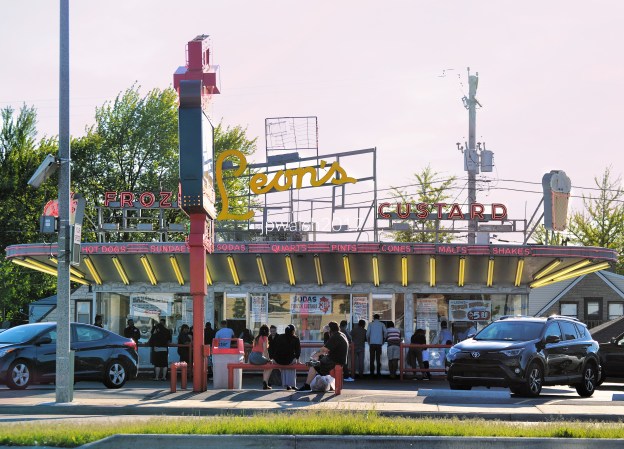
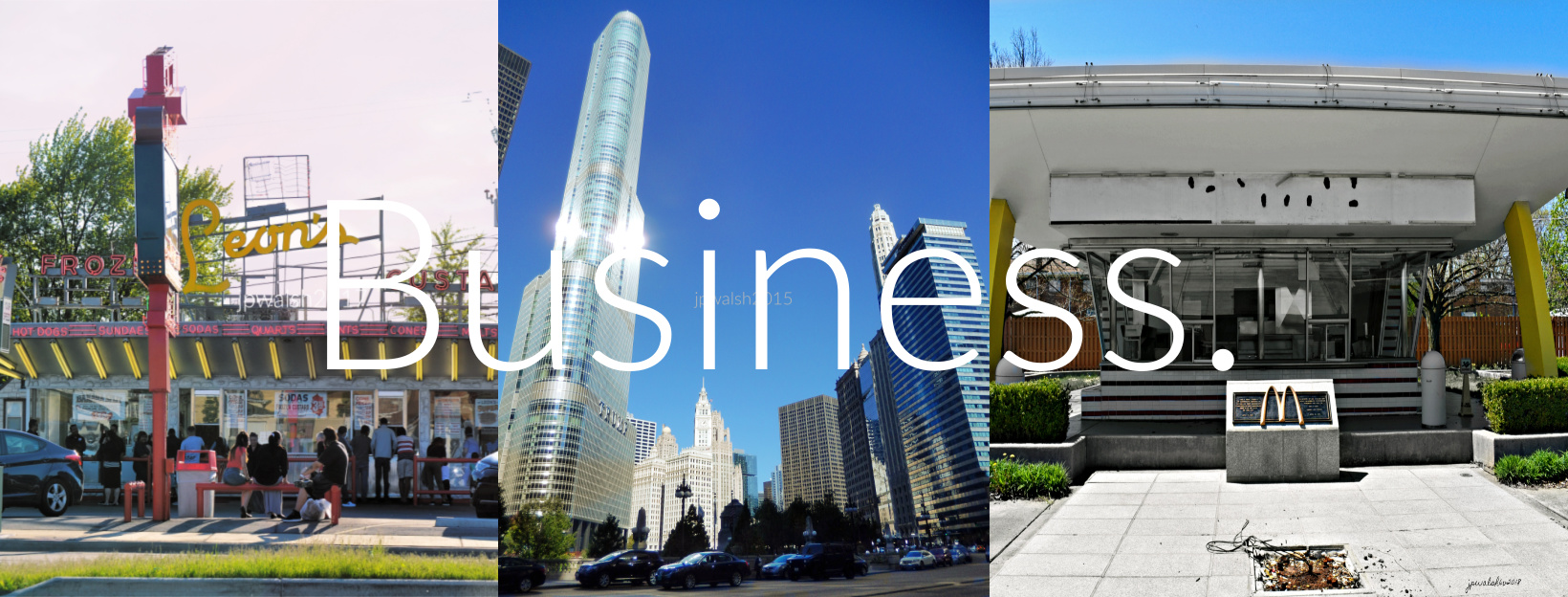
FEATURE image: Late afternoon at Leon’s Frozen Custard in Milwaukee, Wisconsin. June 2017. Author’s photograph. (4.53mb, DSC_0728).

Leon’s Frozen Custard is more than a beloved Milwaukee drive-in. Its remarkable continuity since 1942 and its influence on the creation of Arnold’s Drive-In in television’s Happy Days make it a living link between mid-century Americana, local business history, and popular culture.
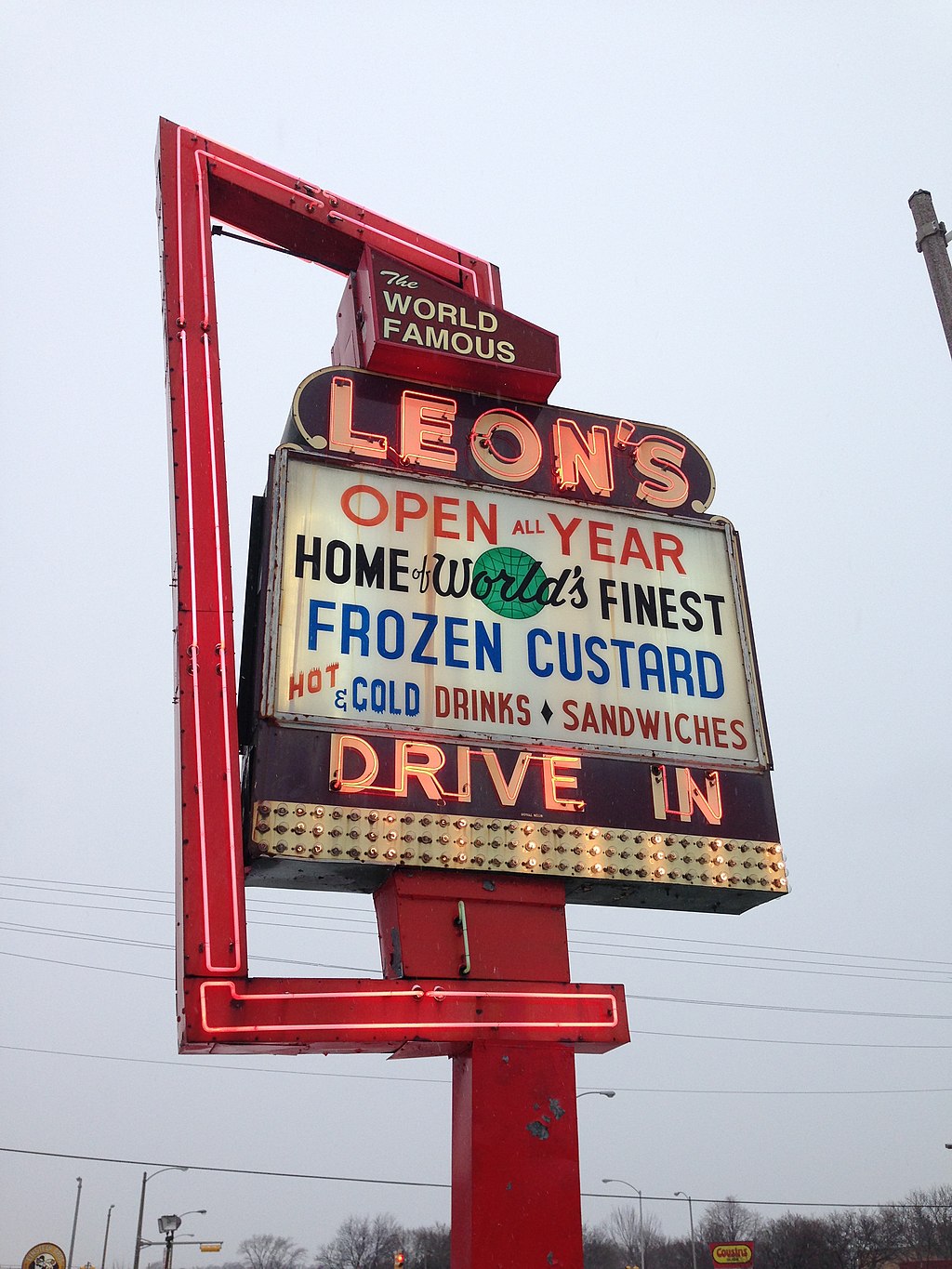
Leon’s original sign. By victorgrigas – Own work, CC BY-SA 3.0.

Leon’s is a family-owned drive-in in Milwaukee, Wisconsin, that opened 83 years ago – in 1942. The building was remodeled in the early 50’s and is what is seen today. Leon’s was inspiration for the original Arnold’s Drive-In in the 1970’s ABC television sitcom, Happy Days, that was also set during the 1950’s in Milwaukee, Wisconsin.

The building was remodeled in the early 1950s, giving it much of the appearance it maintains today.
The World Famous Leon’s. “The World Famous Leon’s” by nixter is licensed under CC BY-NC 2.0.

Leon’s served as the inspiration for Arnold’s Drive-In, the iconic gathering place featured in Happy Days, the hit television series set in 1950s Milwaukee.

The Happy Days season 2 intro settles into the warm glow of Arnold’s Drive‑In, where the cast dances, jokes, and moves through the set like regulars in a familiar hangout. The sequence plays over a freshly recorded version of “Rock Around the Clock”, a choice that instantly anchors the show in a 1950s jukebox mood. The season 2 also marks a shift in the show’s rising star power: Henry Winkler’s Arthur “Fonzie” Fonzarelli steps into the opening credits beside Ron Howard, reflecting what would be his iconic popularity with viewers.

Although the tune is the same one Bill Haley & His Comets first cut in 1954, the version heard in Happy Days wasn’t that original hit. The song had begun modestly as the B‑side of a single that only reached No. 23, but everything changed when it blasted through the opening credits of Blackboard Jungle in 1955. Practically overnight, it became a cultural earthquake, soaring to No. 1 that July and helping ignite the rock‑and‑roll era.

Nearly twenty years later, in the fall of 1973, ABC asked the band to re‑record the song specifically for the new TV series. When Happy Days became an instant sensation, viewers went hunting for the version they heard each week—only to discover it wasn’t sold in stores. Their search sent them back to the original 1954 single instead, giving that two‑decades‑old record an unexpected second wind and pushing it back into the Top 40 in 1974, a rare encore for a rock‑and‑roll classic.

Leon’s is a gateway into the broader cultural phenomenon of Happy Days, including its Milwaukee setting, characters, theme song, and enduring popularity.
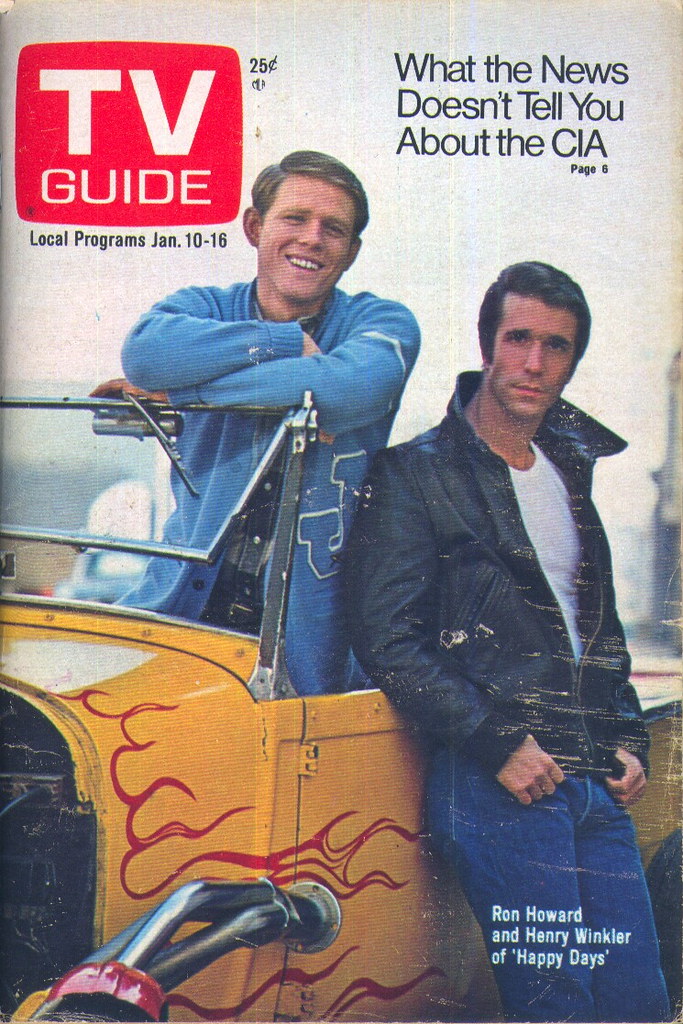
Fonzi played by Henry Winkler was a new character for the ABC TV series. He had just 6 lines in the first episode of “Happy Days” whose debut broadcast was January 15, 1974. In the series, Fonzie’s full name was Arthur Fonzarelli and called that by Richie’s mom. The original family name of series’ creator Garry Marshall (1923-2016) was Masciarelli and changed before Garry was born by his father, a man of Italian descent. “TV Guide #1189” by trainman74 is licensed under CC BY-NC 2.0.

At the 2024 Emmy Awards on September 15, Ron Howard and Henry Winkler reunited to mark Happy Days’ 50th anniversary. The longtime friends presented the award for Outstanding Directing for a Comedy Series from a lovingly recreated Arnold’s Drive‑In set, complete with a vintage jukebox, red‑leather booths, and classic sports pennants.
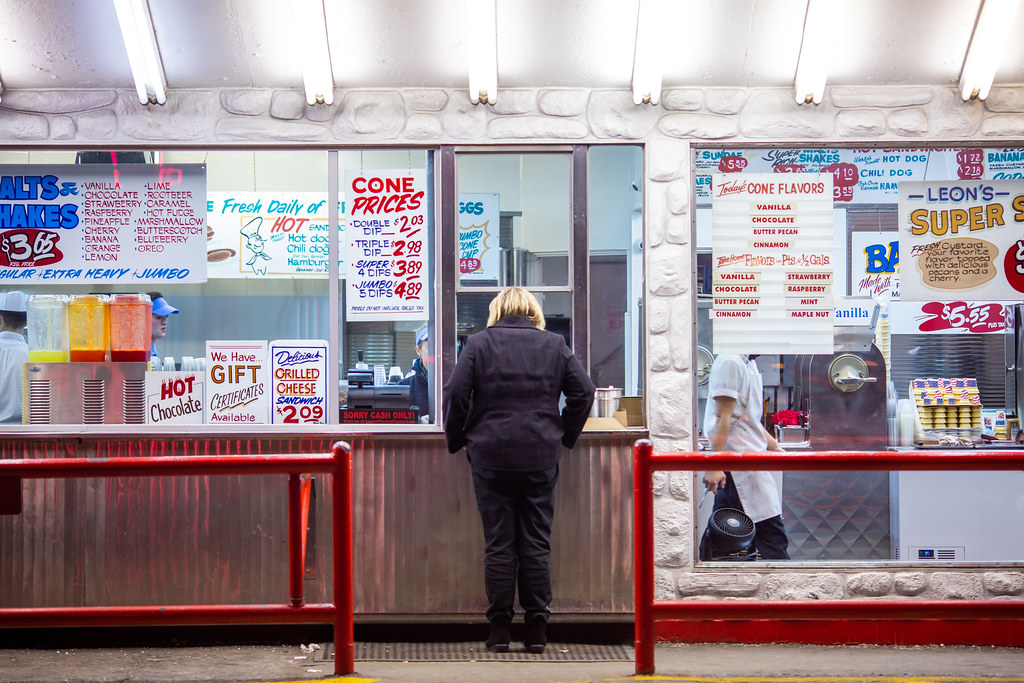
Ordering at Leon’s. “World Famous Leon’s Frozen Custard” by Thomas Hawk is licensed under CC BY-NC 2.0.

Leon’s is still owned and operated by the original family. The main focus of the business is, and always has been, to serve the freshest and finest frozen custard available anywhere. The business is open all year round and they have full soda fountain service, a sandwich menu, daily special flavors and take-out service.
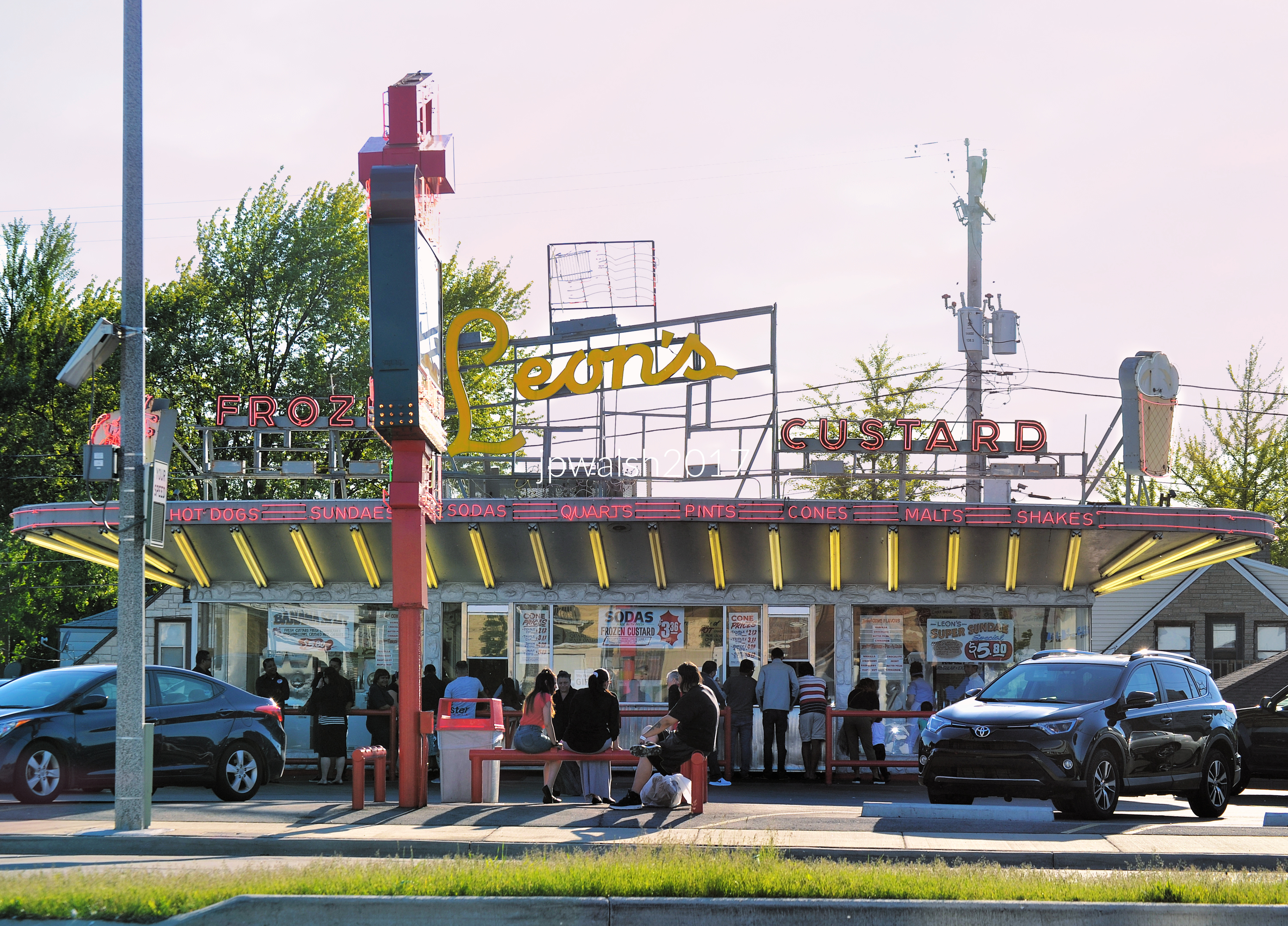
June 2017. Late afternoon at Leon’s, Milwaukee, Wisconsin. Leon’s was inspiration for Arnold’s on Happy Days, a popular 1970’s TV series set in Milwaukee in the 1950’s. Author’s photograph. 4.53 mb
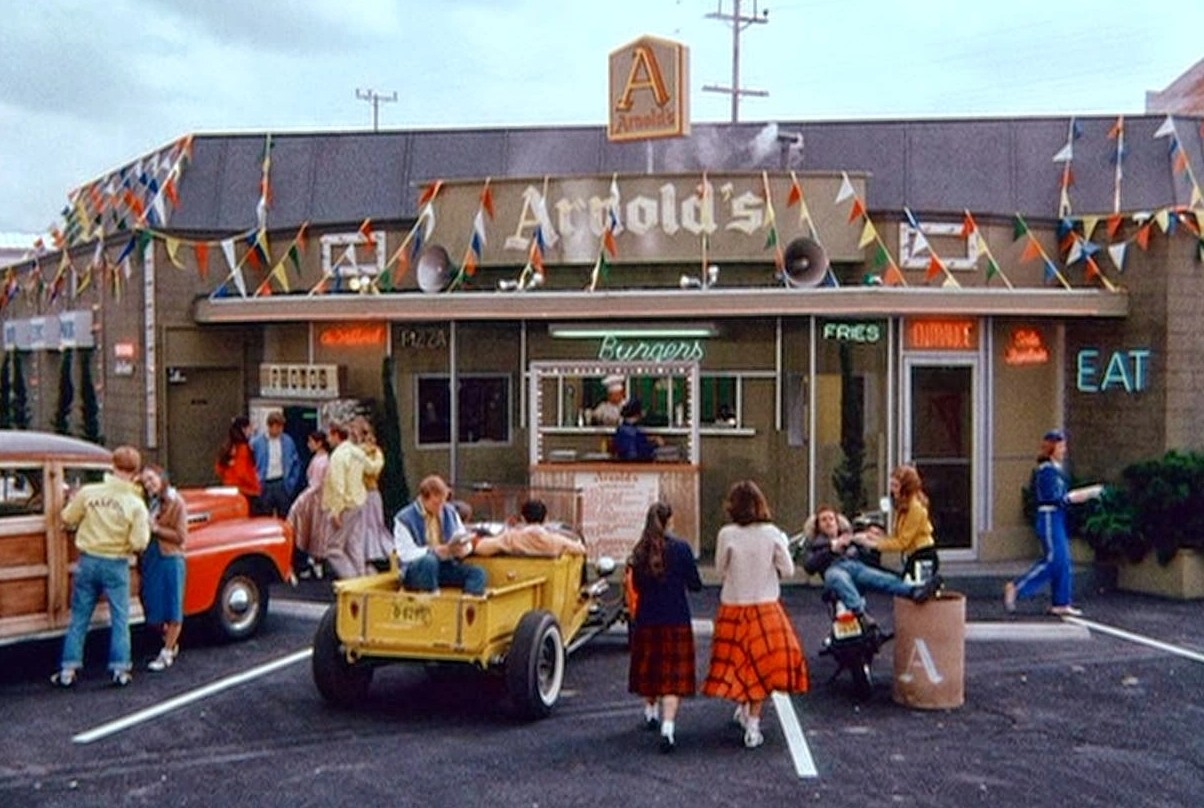
Arnold’s was the name of the local Milwaukee drive-in hang out for most of the characters in Happy Days. Fair Use.

Ron Howard Signs On (1973)

At just 19 years old, Ron Howard signed a seven‑year contract to star in Happy Days. At the time, he was juggling an unusually heavy load: filming American Graffiti, attending USC, and mapping out an early directing career.

Becoming Richie Cunningham

Cast as Richie Cunningham, Howard earned $3,500 per episode—roughly $25,000 in 2025 dollars. He had already played Richie once before, in the February 1972 Love, American Style segment that inspired the new series, but still had to audition again for the TV version. At the first read‑through, Howard reunited with Anson Williams (“Potsie”) and Marion Ross (Richie’s mother)—both of whom had appeared with him in the Love, American Style pilot. He also met the rest of the soon‑to‑be iconic cast: Tom Bosley (“Richie’s dad”), Donny Most (“Ralph Malph”), and Henry Winkler, a 28‑year‑old Yale School of Drama graduate who would become “Fonzie”

A 1970s TV Powerhouse

Alongside M*A*S*H, All in the Family, The Mary Tyler Moore Show, and The Bob Newhart Show, Happy Days became one of the defining sitcoms of the 1970s. It aired for 11 seasons from January 15, 1974, to July 19, 1984 on the ABC network. There was a total of 255 half-hour episodes.

The enduring success of Leon’s reflects the survival of a classic American drive-in tradition that has largely disappeared elsewhere.

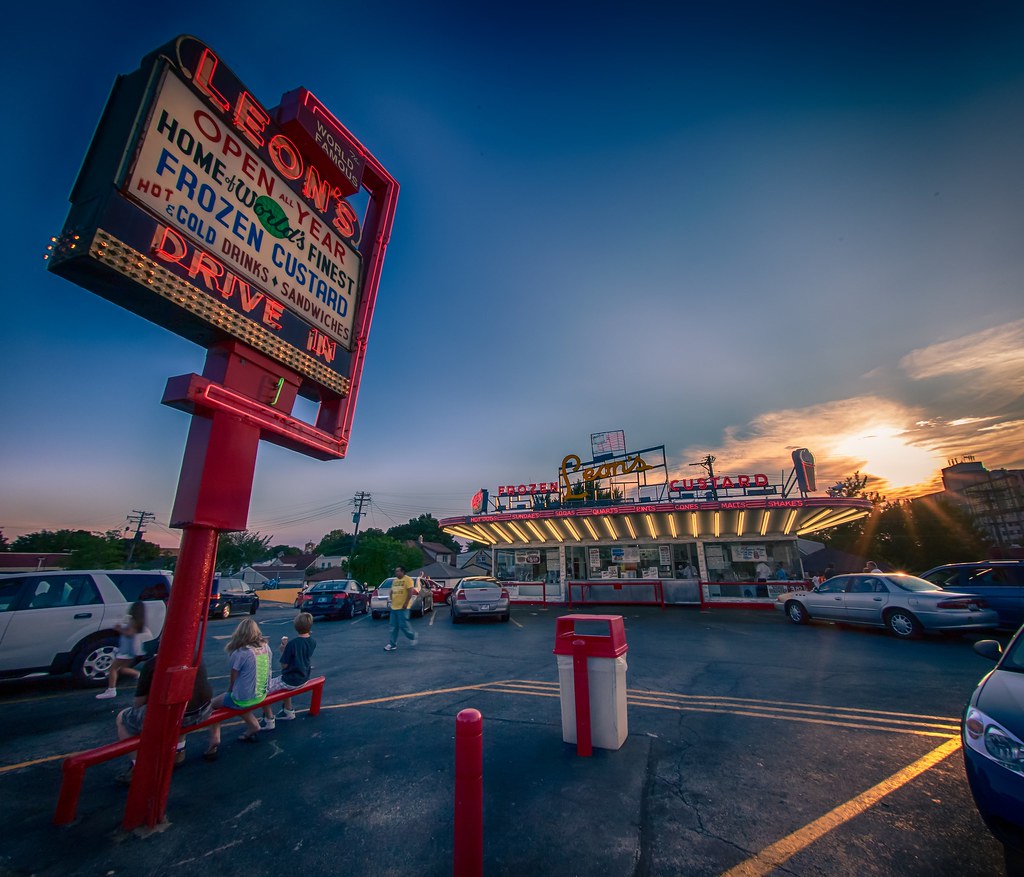
Leon’s at night. “Leon’s” by joseph a is licensed under CC BY-NC-SA 2.0.

SOURCES:

Ron Howard & Clint Howard , The Boys A Memoir of Hollywood and Family, William Morrow, 2021, pp. 275-277.

https://leonsfrozencustardmke.com/ – retrieved March 2, 2025.

https://happydays.fandom.com/wiki/Arnold%27s_Drive-In – retrieved March 20, 2025.

100 Years of The Three Stooges (1922-2022): Vaudeville, Columbia Pictures, and the Enduring Appeal of American Slapstick.

FEATURE IMAGE: A classic publicity still from the 1940 The Three Stooges short film, A Plumbing We Will Go. In this celebrated short, the Stooges pose as professional plumbers to evade the police, only to completely destroy the infrastructure of an upscale mansion. While working on the upstairs bathroom, Curly proceeds to build a labyrinth of pipes that completely traps him inside the bathtub area. In this specific behind-the-scenes promotional shot, the trio leans heavily into their vaudeville roots, playfully treating their disastrous plumbing gear like show business equipment with Curly Howard using a shower attachment as a mock microphone; Moe Howard holding piping, mimicking an old-style broadcaster or telephone operator; and Larry leaning in to listen in. PHOTO: Jerry (Curley) Howard, Moe Howard and Larry Fine are The Three Stooges. “The Three Stooges” by twm1340 is licensed under CC BY-SA 2.0.

A century after their founding in 1922, The Three Stooges remain among the most enduring acts in American popular entertainment, their unique blend of slapstick comedy, physical performance, and anarchic humor transcending generations and demonstrating the lasting appeal of vaudeville traditions in film and television.

A Plumbing We Will Go (1940) is widely considered by film historians and fans to be one of the absolute best entries in the Stooges’ library. Curly Howard himself regularly cited it as his personal favorite out of the 190 shorts they filmed for Columbia Pictures.

Complete Filmography: Every Title Card in The Three Stooges (1934-1959)

Moe and Larry appeared in all of them. Curly in 19; Shemp in 6; and Joe in 1.

The Stooges began in 1922 as part of a vaudeville act called “Ted Healy and his Stooges.” It started with two stooges originally – brothers Moe and Shemp Howard. Larry Fine joined the act in 1925 or shortly thereafter. Their first Hollywood feature (with Ted Healy) was called Soup to Nuts in 1930. The Stooges worked with Healy until 1934. In that time Shemp broke off on his own to work for Warner Bros. Vitaphone and Jerry Howard, Moe’s younger brother, joined the act as Curly.

Between 1934 and 1958 The Three Stooges made over 90 two-reel shorts featuring their ribald comedy. Starting in 1934 and until the end of the 1950s, The Three Stooges had 26 different opening credits.

This title card is from The Big Idea (1934), the fifth and final short film that Ted Healy and his Stooges made to fulfill their studio contract with Metro-Goldwyn-Mayer (MGM). Though often confused with their 1930 Fox feature Soup to Nuts, this specific short marks the exact turning point where the iconic trio finally split from Healy to establish their own legacy.

MGM used this series of comedy shorts primarily to repurpose deleted musical numbers and stock footage from big-budget feature films like Dancing Lady (1933) and Going Hollywood (1933). By the time The Big Idea was released in May 1934, the Stooges had already finished shooting their scenes and were physically walking out the door to start their independent careers.

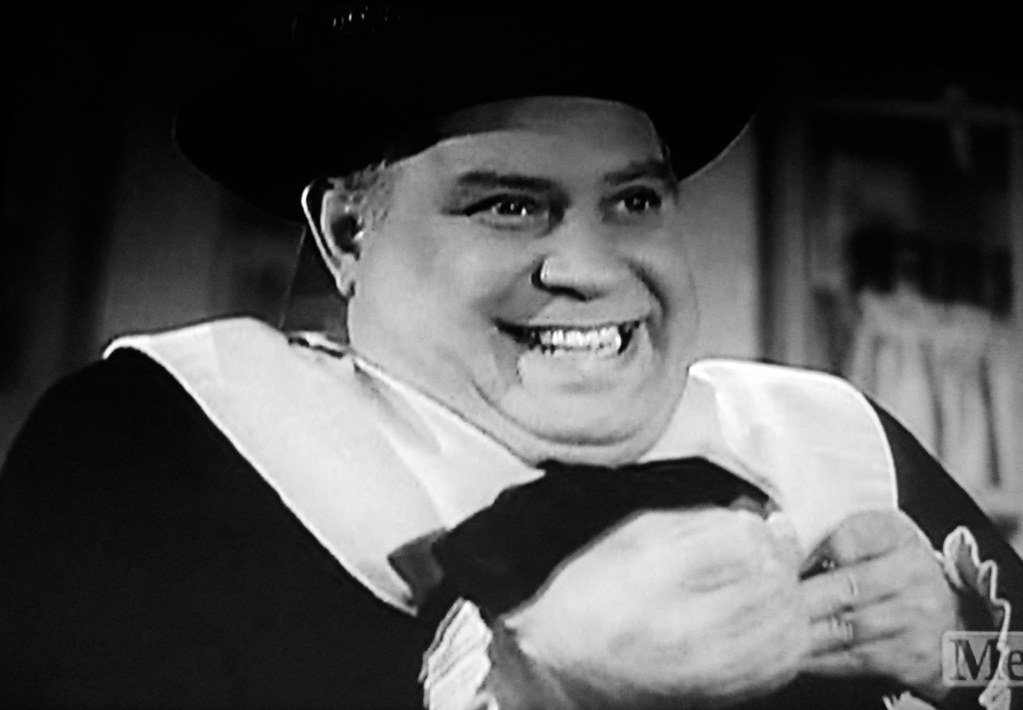
Shemp Howard was the original third member of the act and the star of their 1930 film Soup to Nuts. He walked out much earlier, in August 1932, because he completely ran out of patience for Healy. His departure opened the door for his younger brother, Jerry, to shave his head and step in as “Curly.” PHOTO: “The Big Idea (1934)” by twm1340 is licensed under CC BY-SA 2.0

In chronological order, all The Stooges’ opening credits from 1934 to 1958.

All opening credits and major brand updates IN BOLD:
1934 1 2 3 4
1935 5 6 7 8 9 10
1936 11
1937 12
1939 13
1940 14 15
1943 16
1945 17 18
1946 19 (Last Curly) 20 (Shemp)
1947 21
1950 22
1952 23
1953 24 25
1958 26 (Joe Besser)

In 1934 there were 4 updates; 6 in 1935; 1 each in 1936, 1937, and 1939; 2 in 1940; 1 in 1943; and 2 in 1945. The 9th (1935), 12th (1937), and 13th (1939) versions were significant brand updates for the Stooges’ opening credits. In 1946 there were 2 updates – Curly’s last and Shemp’s first. In the postwar years there were less updates – one each in 1947, 1950, 1952, and 1953.

Moe’s brother, Curly, died in 1952 after a long illness. Shemp died suddenly from a heart attack in 1955. Though Curly and Shemp’s comedy styles are very different from one another, they are both equally very funny. Though similar in body type to Curly, Joe Besser brought his own unique comic personality to the act from 1956 to 1958. Joe Besser passed away in 1988.

Shemp in the 1949 The Three Stooges short film, Who Done It? The Stooges play private investigators for the “Alert Detective Agency” who are hired to find a missing millionaire. While searching a spooky mansion, Shemp tries to look through a large vintage bellows camera to check for fingerprints. looking through the lens, Moe steps directly in front of it. Terrified by the extreme close-up of Moe’s face, Shemp screams: “Moe! Larry! Help! There was an ugly-looking thing staring right at me, it was horrible!”.

In Wham-Bam-Slam! (1955), Shemp is suffering from a terrible case of “bad nerves” and a brutal toothache. To help him recover before a big family camping trip, Moe and Larry try out a series of eccentric home remedies—including a cold foot bath meant to soothe his anxiety.

In August 1932, when Shemp left Ted Healy and his Stooges, was it a good move? Free from Healy’s control, Shemp immediately landed a lucrative solo contract at Vitaphone Studios in 1933. He spent the next 14 years becoming a highly successful, stable, and well-paid Hollywood character actor, appearing in major comedies alongside stars like Abbott and Costello and W.C. Fields. He only rejoined the Stooges much later in 1946 out of deep family loyalty to help his brother Moe after Curly suffered a career-ending stroke. PHOTO: The Official Stooges Flickr Photographer In Action” by Larry He’s So Fine is licensed under CC BY-NC 2.0.

While audiences recognize Besser for his short-lived, late-career stint as the third member of The Three Stooges (from 1957 to 1959 replacing Shemp Howard who replaced Curly Howard), classic television enthusiasts frequently cite Joe Besser in his signature role as Oswald “Stinky” Davis on The Abbott and Costello Show as his finest comedic hour. PHOTO: “Joe Besser as Stinky Davis – Abbott and Costello TV show 9367” by Brechtbug is licensed under CC BY-NC-ND 2.0.

In 1959 Columbia Pictures released Three Stooges shorts for the first time on television. TV broadcasts in the 1960’s brought a new generation of fans to The Stooges. In 1970 The Stooges were scheduled for a new TV sitcom series but Larry Fine had a paralyzing stroke in January of that year..

Columbia Pictures’ “Torch Lady” logo is inextricably linked to The Three Stooges, serving as the visual gateway to over 190 classic short films produced for exclusively for Columbia Pictures between 1934 and 1957. The emblem represents the era that spanned across the careers of all the primary Stooges—Moe, Larry, Curly, Shemp, and Joe Besser—as they built their timeless legacy under the Columbia banner. This particular bronze casting is located embedded in the granite paving of Leicester Square in London, England. Leicester Square is widely celebrated as the historic heart of the United Kingdom’s cinema scene and the primary home for star-studded film premieres. PHOTO: “Hand prints in Leicester Square, London – Columbia Pictures – Torch Lady” by ell brown is licensed under CC BY 2.0.

Both Larry and Moe died in 1975. Eight years later, in 1983, The Three Stooges were inducted onto the Hollywood Walk of Fame.

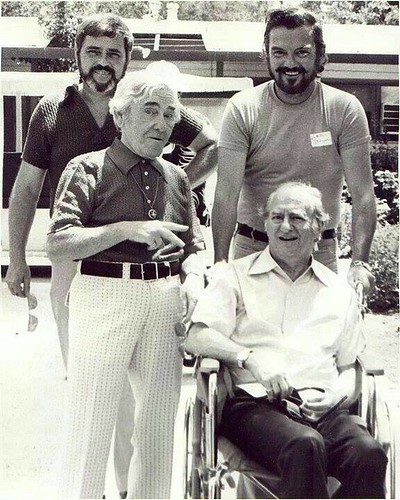
In 1973, at the Motion Picture & Television Country House and Hospital in Woodland Hills, Los Angeles, California, Moe is jokingly preparing his iconic two-finger eye poke gesture toward Larry’s face, showing that their classic humor was alive and well. In January 1970, Larry Fine suffered a paralyzing stroke that ended the Three Stooges as a performing act. He moved into the Motion Picture Country House for long-term care. Moe Howard remained a deeply loyal friend and visited Larry constantly at the facility. With The Stooges are members of the Star Trek TV series, “Scotty” Scott (James Doohan) and Klingon Captain Koloth (William Campbell).  PHOTO: “Star Trek James Doohan, William Campbell squire of gothos, stooges Moe Howard Larry Fine” by Sal Ami is licensed under CC BY 2.0.