
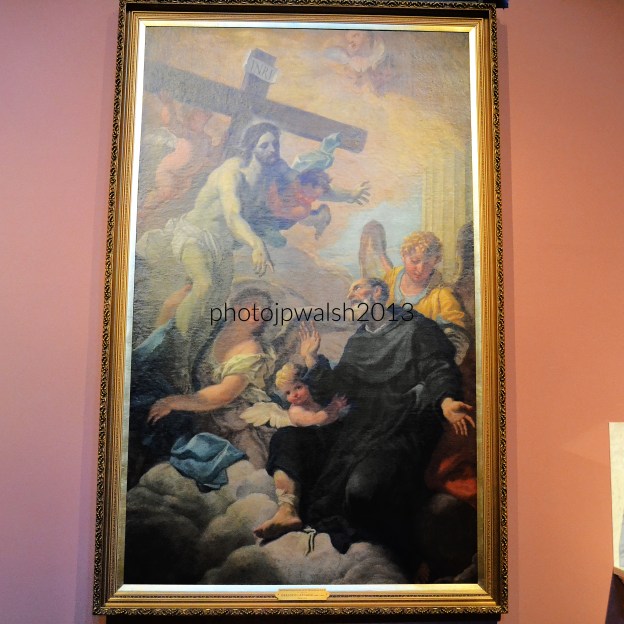
FEATURE image: At the National Shrine of St. Peregrine at Our Lady of Sorrows Basilica on Chicago’s west side is a painting attributed to the late 17th century painter, Gregorio Lazzarini (1665-1740) entitled Jesus the Healer; St. Peregrine, OSM the Helper. December 2013. Author’s photograph. 3.89mb DSC_0218 (1).
St. Peregrine Laziosi’s enduring significance lies in his transformation from a hot-headed opponent of the Church into a holy servant whose own miraculous healing from a cancerous tumor made him a lasting symbol of hope, healing, and intercession for those facing cancer and other life-threatening illnesses. His medieval life story is connected to the continuing ministry of his shrine in Chicago.
Peregrine Laziosi grew up in Forli near Ravenna in Italy. Peregrine came from a very wealthy family who lived in the town in which half the population was for being part of the Papal States and half were against. Peregrine’s family, and thus Peregrine as a young man, was against the pope’s political rule.
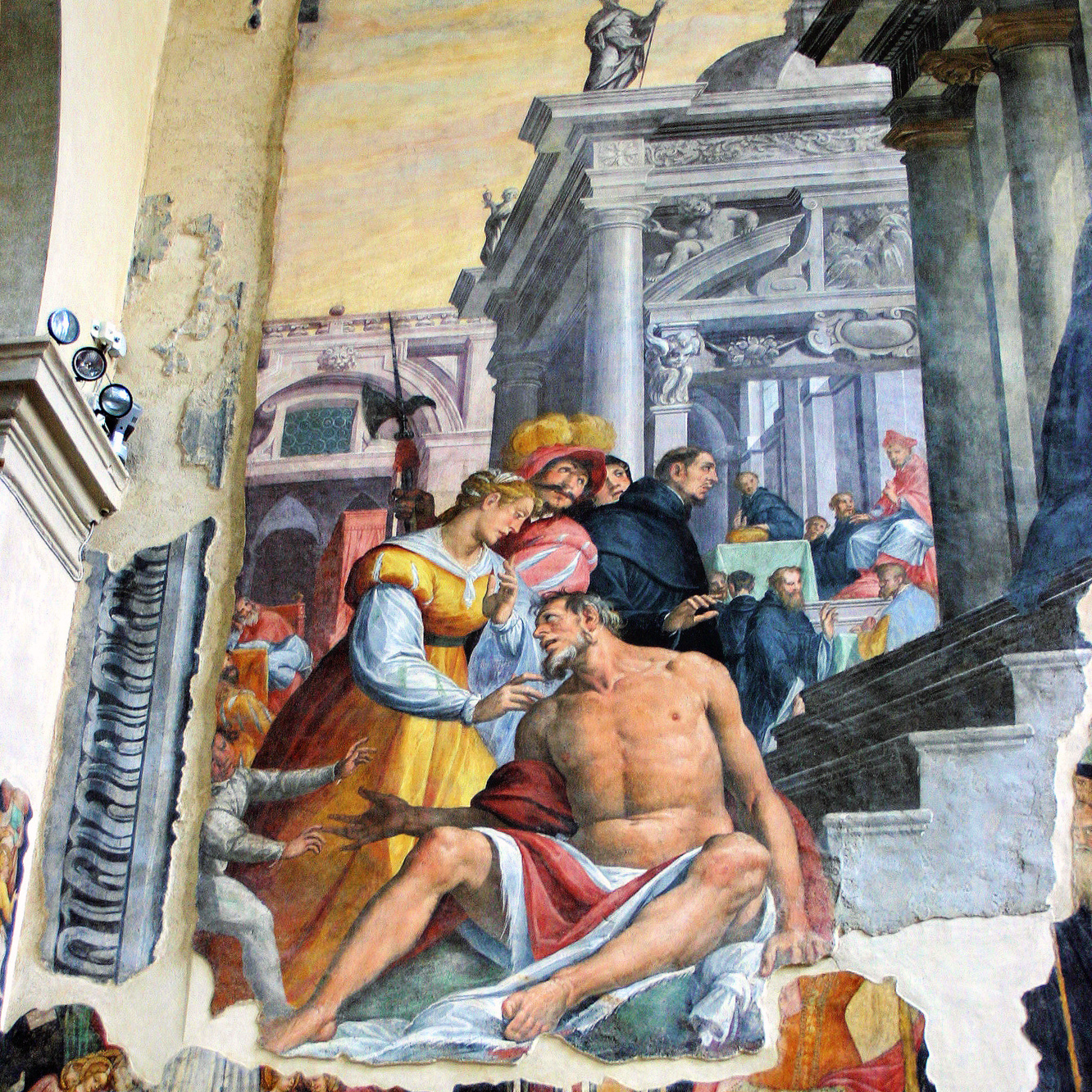
Pope Alexander IV (1254-1261), pope at the time of the birth of Saint Peregrine, is depicted in a fresco in San Marco in Milan, Italy. On September 26, 1255, Alexander IV had canonized Saint Clare of Assisi, founder of the second order of Franciscans, known as the Poor Clares. The following month, on October 29, 1255, Alexander IV, in his bull Benigna Operatio, declared that the stigmata of Saint Francis of Assisi (who was canonized in 1228) was a fact of the pope’s “own knowledge.” Public domain.
Guelphs and Ghibellines.
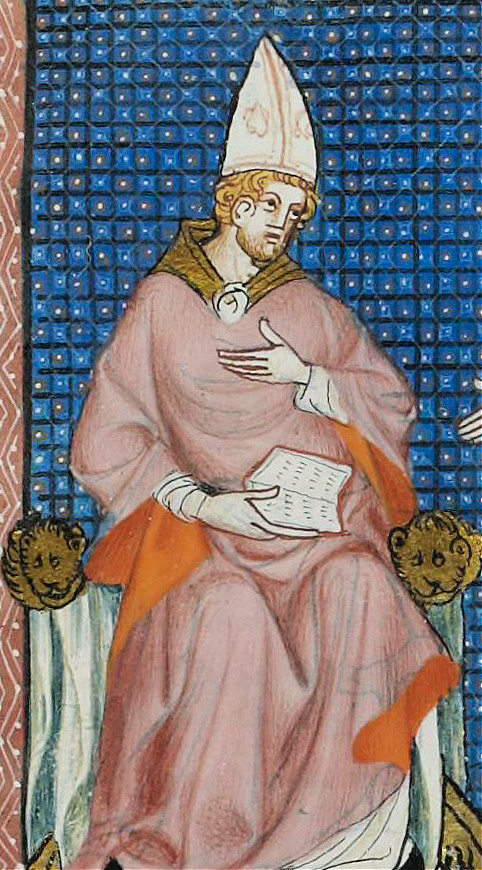
14th century Illumination on parchment of Pope Martin IV, c. 1335. From the manuscript Vie et miracles de saint Louis. Bibliothèque Nationale de France. Born Simon de Brion (c. 1210 –1285), Martin IV was the last French pope to stay in Rome before the papacy moved to Avignon. He ruled the Papal States from 1281 to 1285. Public Domain.
Filippo Benizzi (1233-1285), fifth general superior of the Servants of Mary (Servite Order), was assigned by Pope Martin IV to go to Forli to try to bring together the two sides. The Servites were a mendicant order that embraced poverty and devoted to preaching and encouraging devotion to the Virgin Mary. General Superior Benizzi was the Order’s chief propagator and organizer. In Forli, the pro-pope group was called Guelphs and pro-Holy Roman Emperor group was called Ghibellines. A political meeting was called where Fr. Benizzi would meet the two sides. Benizzi is also reputed to have healed a leper when in the town by giving him his tunic to wear. The Guelphs represented the interests of wealthy merchants, bankers, and urban elites who viewed the Empire as a threat to their free trade and dominance. This group later split into Black (radical) Guelphs and White (moderate) Guelphs. The Ghibellines represented the landed aristocracy who favored traditional hierarchical structures and sought imperial protection against the expanding papal states that fostered smaller, autonomous communes and free trade practices representing the “new money” merchant class.
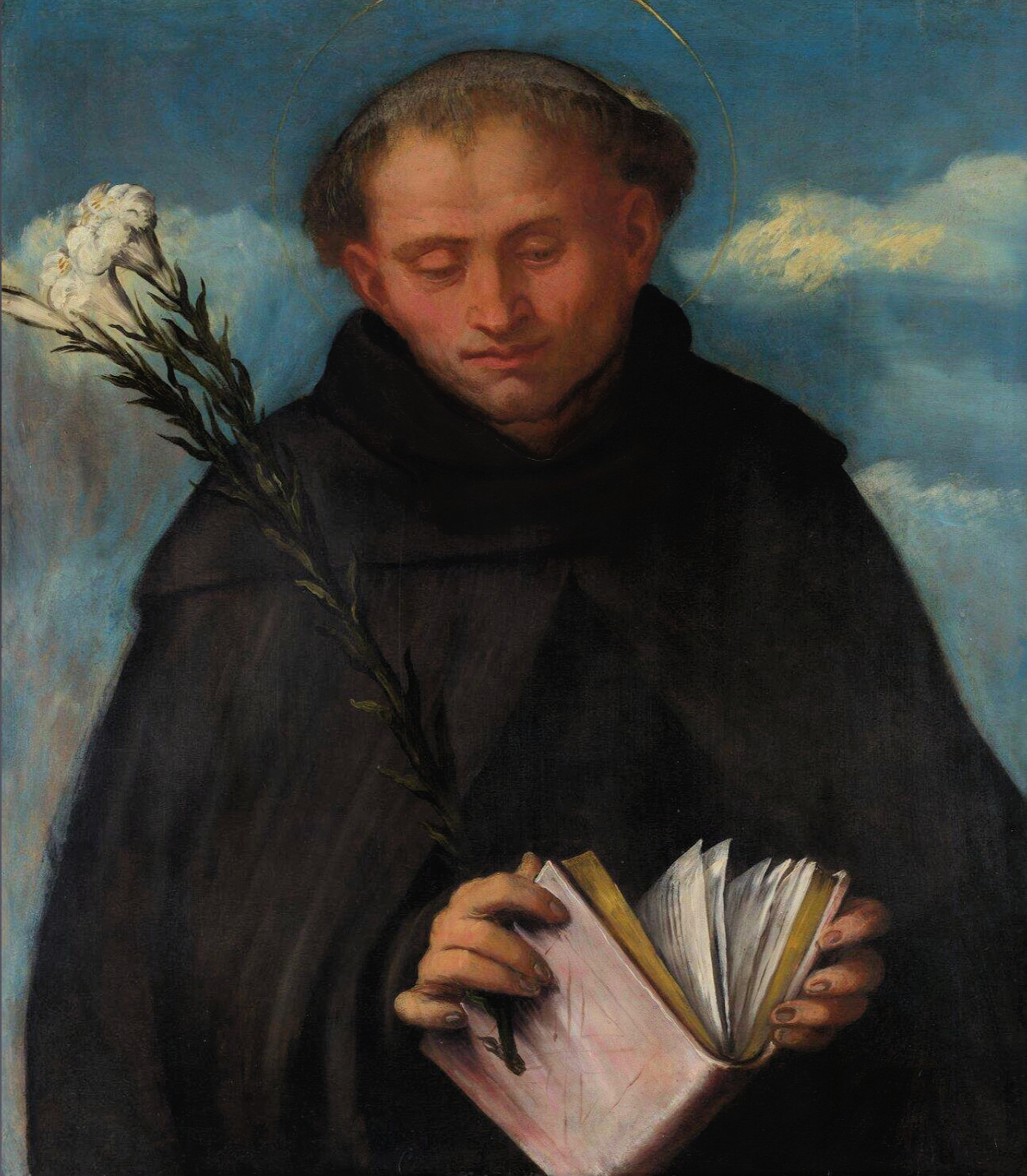
Saint Filippo Benizzi, Girolamo Romanino (c,1484-c.1560), c.1524, High Altarpiece, S. Alessandro, Brescia. oil on wood, 74.2 × 64.9 cm, The National Gallery London. Benizzi wears the black scapular, tunic and cowl of his Order. Saint Filippo Benizzi’s body is in the church of the Servants of Mary in Todi, Umbria. He was beatified by Pope Leo X in 1516 and made a saint by Pope Clement X in 1671. see – Girolamo Romanino | Saint Filippo Benizzi | NG297.5 | National Gallery, London – retrieved Jan. 27, 2026.
St. Peregrine born in Forlì, Italy, came from a wealthy family aligned against papal political authority during the bitter Guelph-Ghibelline conflicts. As an 18-year-old, he joined a hostile crowd confronting St. Filippo Benizzi, the Servite leader and papal representative, and even struck him physically. Peregrine repented and moved by Benizzi’s forgiveness and charity, joined the Servite Order, and eventually became a priest.
At the meeting, the crowds that gathered spewed insults at the friar and 18-year-old Peregrine, son of a Ghibelline leader, was among them. They chased the Servite General out of Forli with insults and violence and Peregrine physically struck him. Soon after, Peregrine regretted his violent actions and sought out his victim to apologize. Filippo Benizzi greeted Peregrine with charity which made a lasting impression on the young man. A few years later, Peregrine Laziosi joined the Servites in Siena and became a priest.
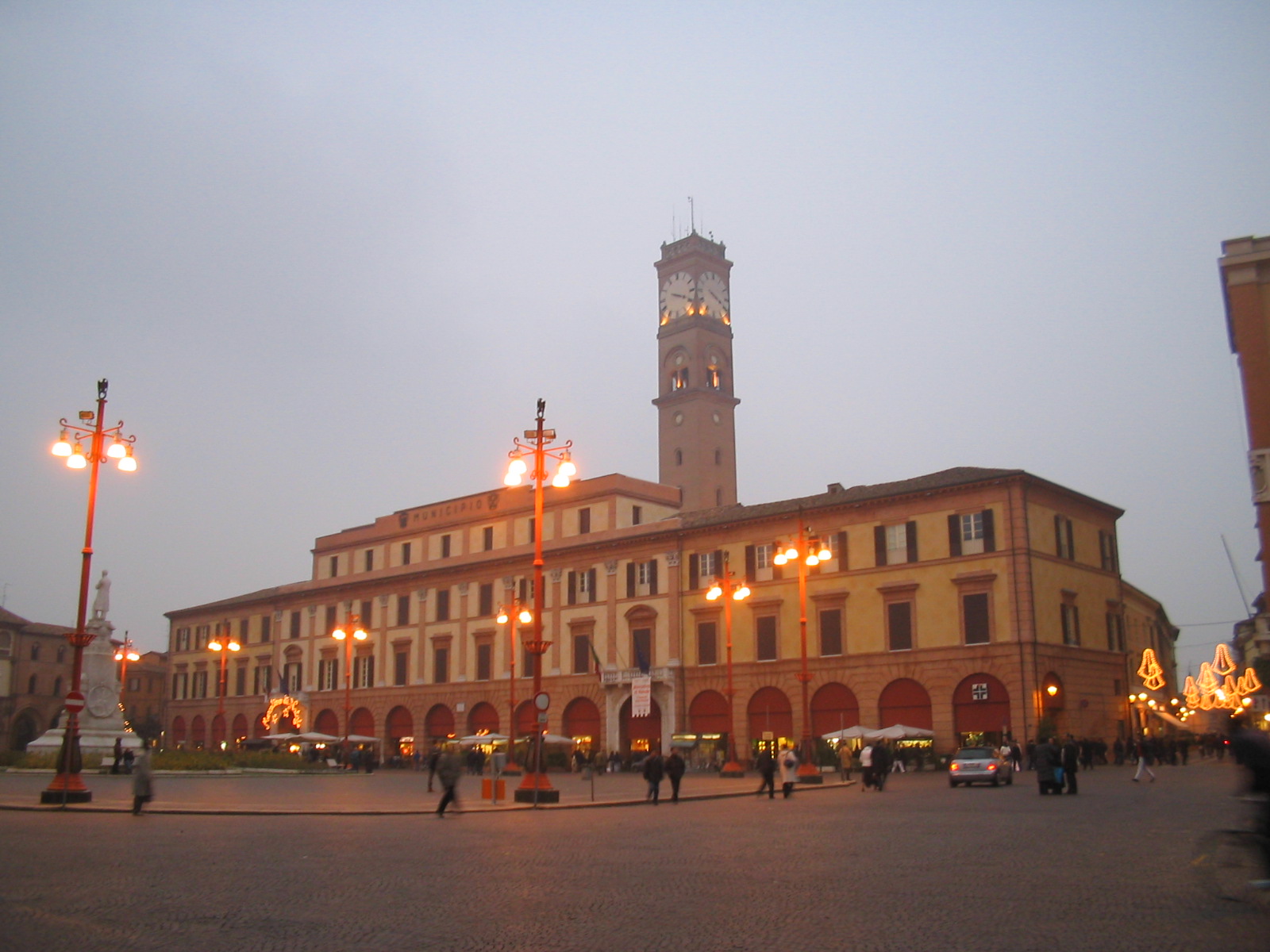
Piazza Aurelio Saffi (main square), Forli, Italy. PHOTO: “Main square SAFFI Forli Italy December-2004” by Ivanwiki is licensed under CC BY-SA 3.0.
Peregrine was sent back to Forli, founded a new Servite house, and became popular for his preaching and well known for charitable work.
Returning to Forlì, Peregrine founded a Servite house and became known for a lifetime of preaching and charitable works.
Miraculous cure.
Saints are often famous for their miracle-working powers. In the case of St Peregrine, he is known for being the recipient of a miracle. At 60 years old, Peregrine found he had a cancerous tumor on his right leg. The doctors had given up hope of a cure and decided to amputate the leg. The night before the operation St. Peregrine had a vision. It is the one depicted in the shrine’s painting: St. Peregrine seeing Jesus descend from the cross to touch and heal his leg.
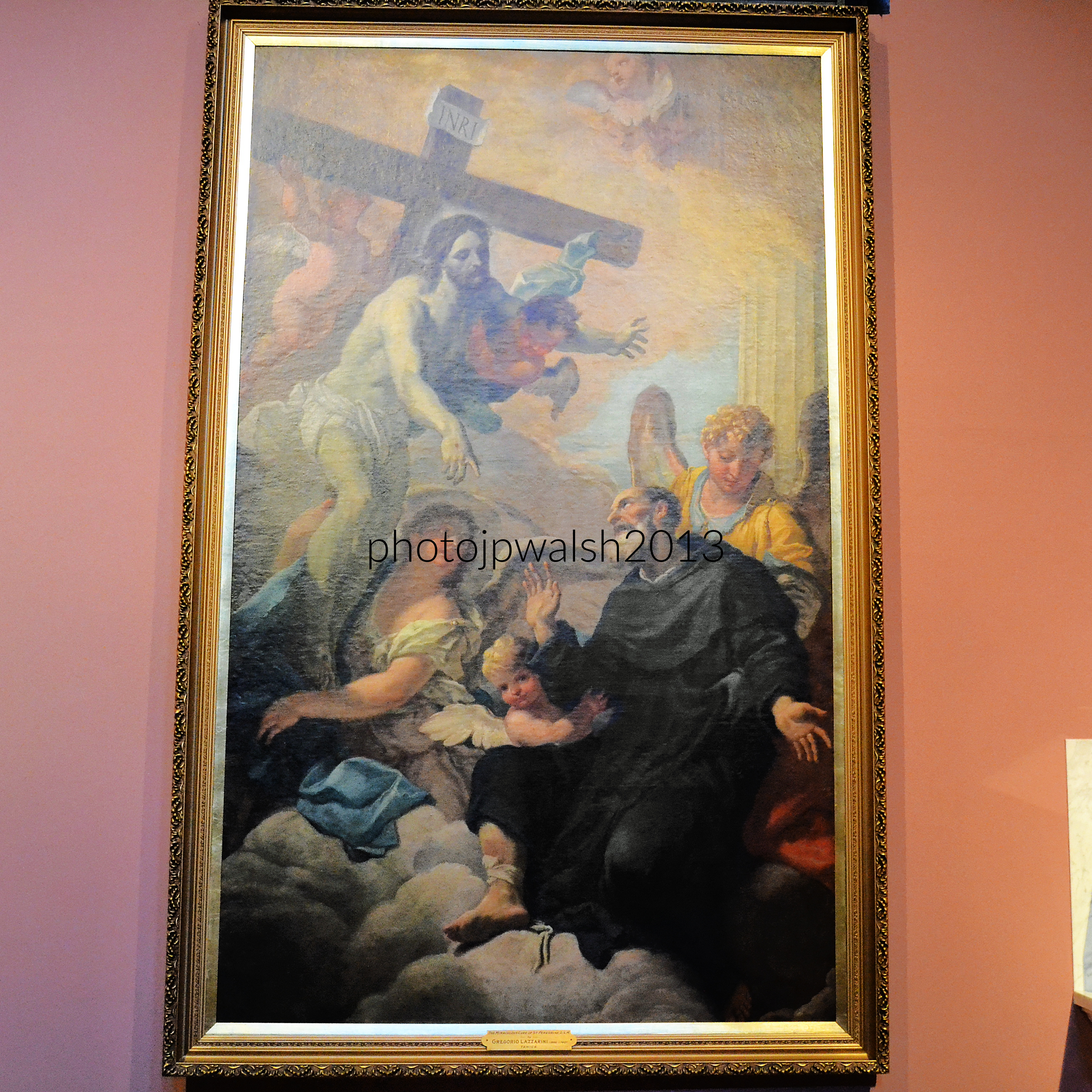
The artwork depicts the healing miracle of his tumorous leg experienced by St. Peregrine Laziosi.
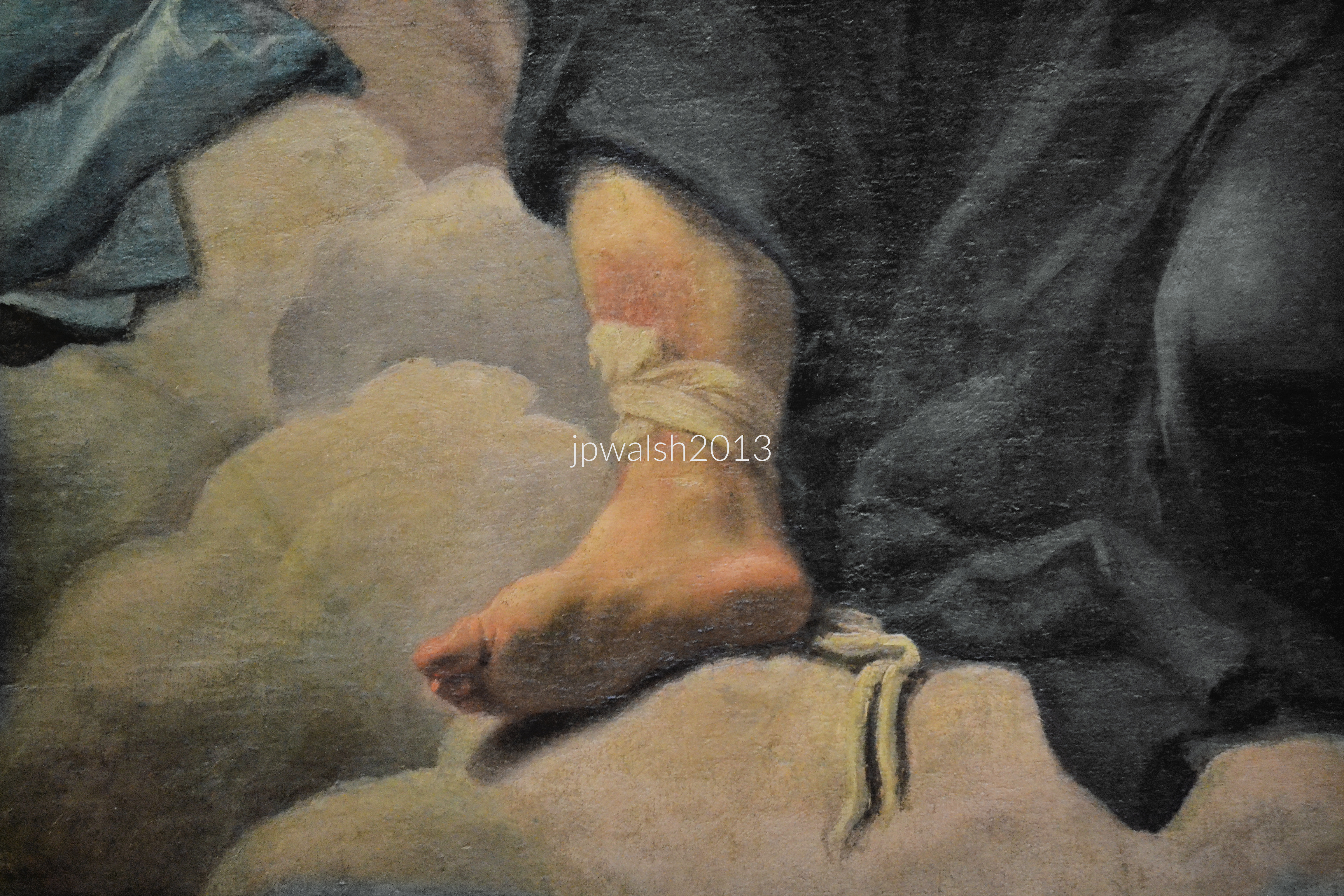
Detail of painting depicting St. Peregrine’s tumorous leg that was miraculously cured by Jesus Christ in a vision in 1320. Author’s photograph. 5.09mb DSC_0246 (1)
When the doctors arrived the next day to perform the operation, they found that Peregrine had been completely cured, an event unexplained by medical science. The news spread like wildfire through the town. St. Peregrine died of fever 25 years later on May 1, 1345, in his mid 80’s. After his death people who were sick and cured attributed it to St. Peregrine’s miraculous intercession, particularly when it was a life-threatening disease. His saintly cult grew – Peregrine is patron saint of cancer and other life-threatening maladies – and his image often shows him exposing his own tumorous leg that was miraculously cured by Christ.
Around age sixty, Peregrine developed a cancerous tumor in his leg, and doctors planned an amputation. On the eve of the operation, he experienced a vision of Christ descending from the Cross and healing him. The next day, the tumor had disappeared, a cure described as unexplained by medical science.
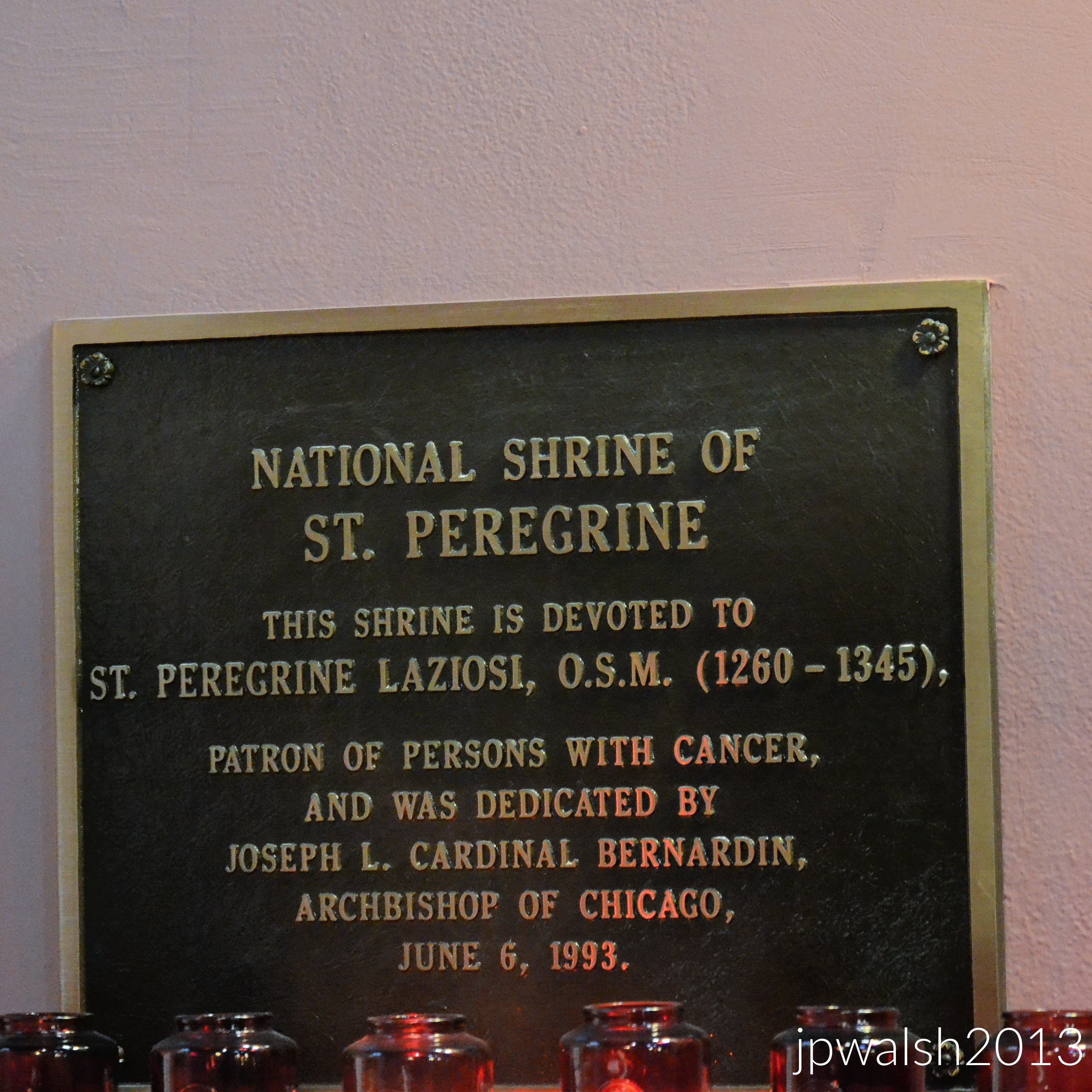
The shrine through prayer, blessing, pilgrimage, reconciliation and evangelization, accompanies those persons who live with serious illness, traditionally cancer, and their caregivers, as they seek to find healing, support, peace and God in their daily lives. There is also a relic of St. Peregrine Laziosi at the shrine. Author’s photograph. 2.74mbDSC_0260 (1)
After his death in 1345, devotion to St. Peregrine grew as many attributed healings to his intercession were made. He became the patron saint of cancer patients and those suffering from other grave illnesses, often depicted exposing his miraculously healed leg.
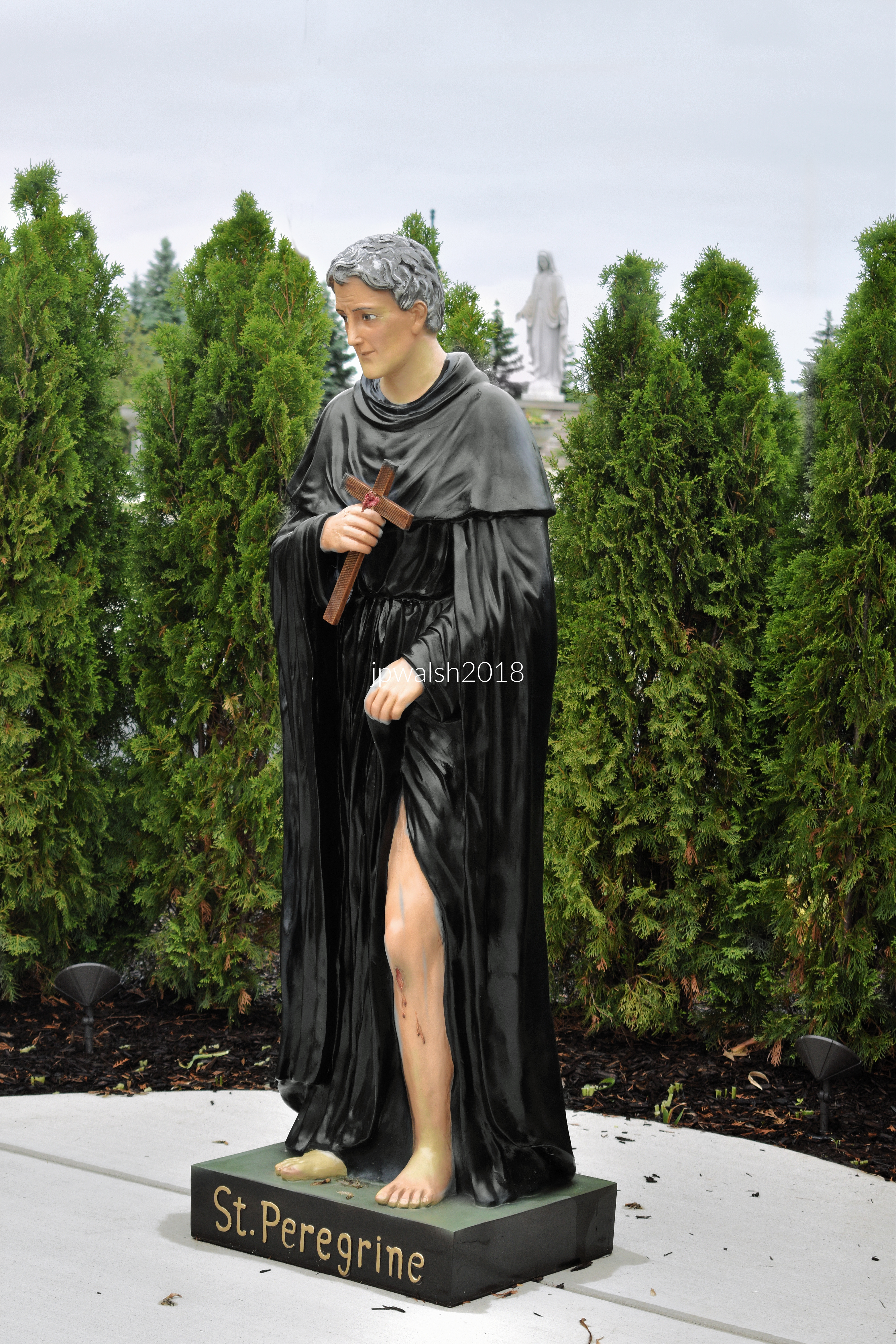
Statue of St. Peregrine Laziosi in an outdoor garden near to the Shrine of Christ’s Passion, St. John, Indiana. June 2018. Author’s photograph. 89% 7.93mb DSC_9062

