

FEATURE image: The 1947 Hollywood glamour portrait of Marlene Dietrich, photographed by A.L. “Whitey” Schafer, Paramount Pictures’ head of still photography since 1941. Photo Credit: Photograph by A.L. “Whitey” Schafer / Paramount Pictures (1947). Status: Public Domain. This image is a Hollywood publicity still distributed freely to the press without a copyright notice, subsequently failing to meet statutory registration and renewal requirements under pre-1978 U.S. copyright law.
In the 1930s and 1940s, the Hollywood “glamour machine” relied on innovative studio photographers like A.L. “Whitey” Schafer and László Willinger to systematically transform actresses into larger-than-life, idealized icons.

This portrait of A.L. “Whitey” Schafer dates from about May 1936 and was taken by an unknown photographer. Captured shortly after Schafer’s appointment as head of Columbia Pictures’ still photography department, the image reflects his rising stature within the industry. He had assumed the position at Columbia in 1935 following the death of department chief William Fraker. As was customary for newly promoted studio executives, Schafer sat for a series of professional publicity portraits created by fellow photographers in the studio’s own portrait gallery. The photograph presents Schafer as not merely a technician behind the camera but conveys his personal warmth as one of the key visual architects of Hollywood’s star-making machinery during the studio era. Photo Credit: Photographer Unknown / Columbia Pictures (May 1936). Status: Public Domain. This image is an official studio promotional portrait distributed freely to trade publications and the press without a formal copyright notice or subsequent registration.
Born in in Salt Lake City and growing up in California, A.L. “Whitey” Schafer ran the leading portrait gallery at Columbia in the 1930’s and early 1940’s. His work contributed to the emerging stardom of Rita Hayworth. “Whitey” Schafer was one of Hollywood’s elite studio photographers, becoming head of Paramount’s still photography department in 1941. A visionary technician as well as an accomplished artist, Schafer wrote extensively about photographic lighting and portrait design, publishing his influential manual Portraiture Simplified in 1941. He believed that successful portraiture depended upon disciplined composition, arguing that a portrait was much like a symphony, with every element supporting a single focal point. For Schafer, that center of interest was always the subject’s head, and the highest light in the image should direct the viewer’s eye there.
That philosophy is evident in his celebrated 1947 portrait of Marlene Dietrich, where a carefully placed key light transforms her blonde hair into a radiant halo, separating her from the background and drawing immediate attention to her face. The result is both technically precise and emotionally compelling, demonstrating Schafer’s mastery of the glamour style that defined Hollywood’s Golden Age.
“Whitey” Schafer wrote an important book on glamour photography
Photographer A. L. “Whitey” Schafer started shooting stills in 1923 and continued in that line of work at Columbia Pictures when he moved there in 1932. Personally outgoing, Schafer was appointed head of the still photography department at Columbia in 1935. In the 1940’s Shafer wrote copiously on his craft and advocated for techniques in glamour photography that are seen in this Dietrich color portrait.
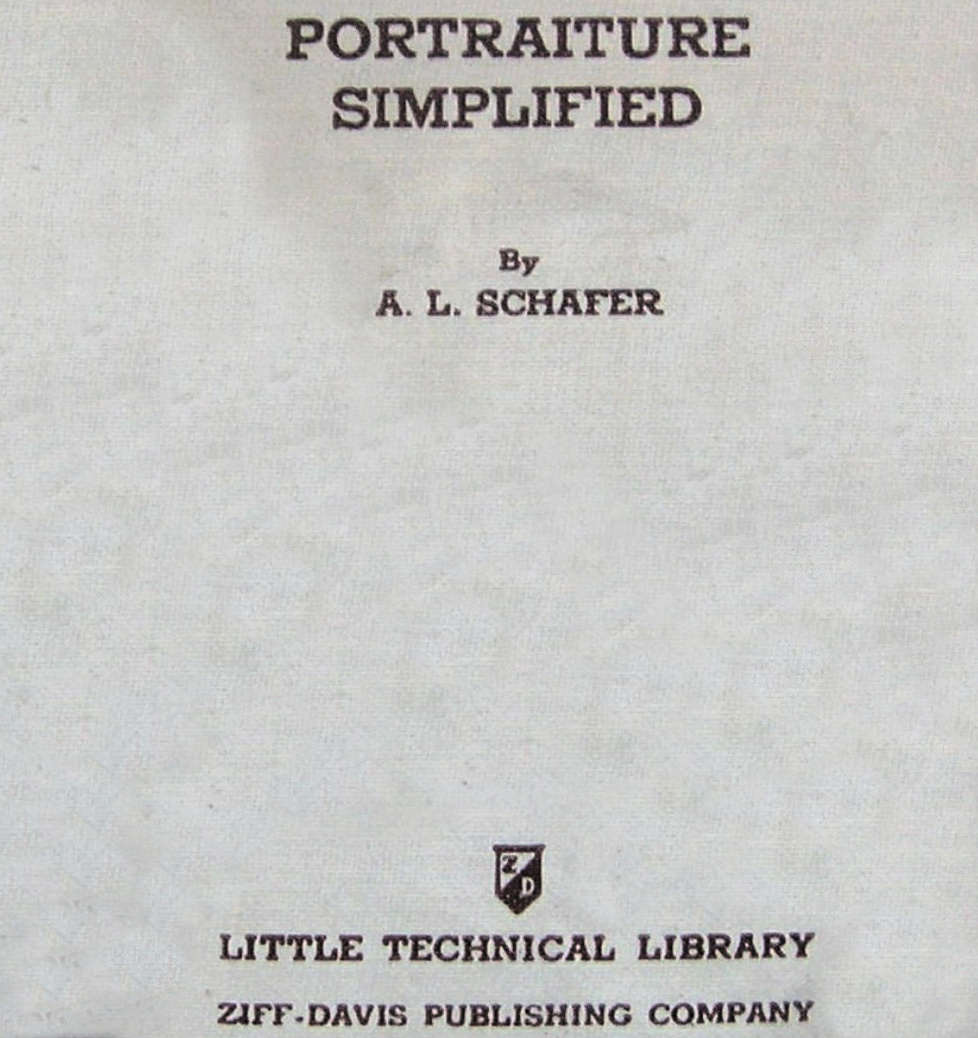
In 1941 Schafer published Portraiture Simplified, a book in which he argues that “portraiture’s purpose is the realization of character realistically.” Among his technical observations Schafer wrote elsewhere that “composing a portrait is comparable to writing a symphony. There must be a center of interest, and in all portraits this naturally must be the head, or your purpose is defeated. Therefore, the highest light should be on the head.” Author’s photograph.
In 1941 Schafer replaced Eugene Richee (1896-1972) as department head of still photography at Paramount Studios. Schafer remained in that position where he photographed the stars until he died at 49 years old in an accident in 1951.
MARLENE DIETRICH
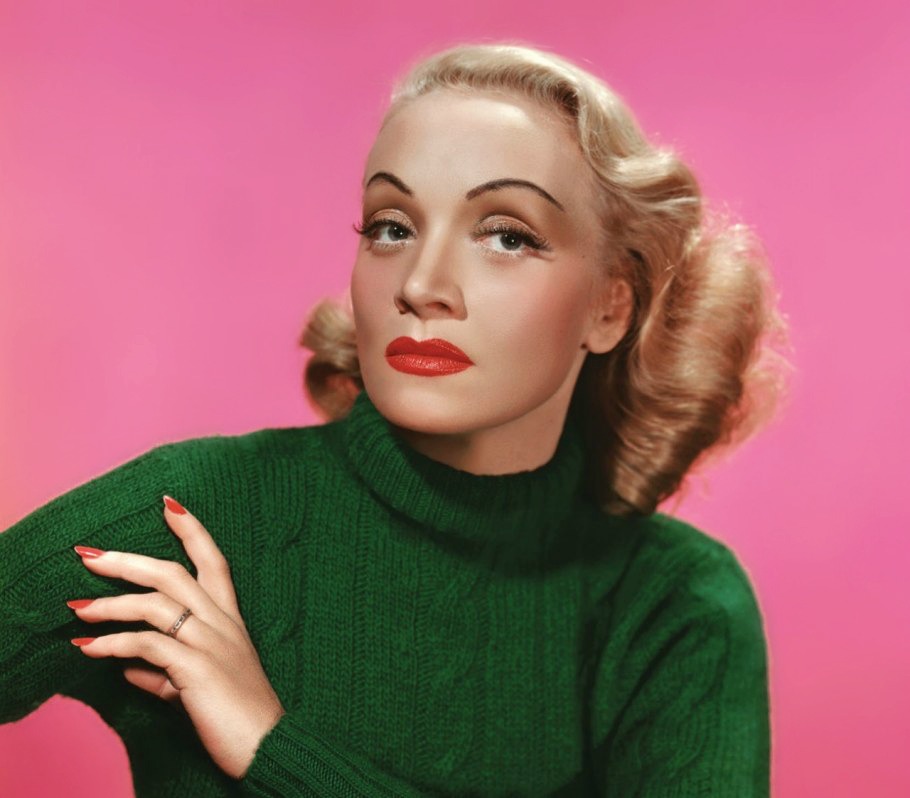
The 1947 Hollywood glamour portrait of Marlene Dietrich (1901, Berlin – 1992, Paris), photographed by Paramount Pictures’ head of still photography A.L. “Whitey” Schafer, perfectly captures the intersection of postwar studio publicity, advanced color-imaging technology, and the meticulous construction of screen mythology. By 1947, the forty-six-year-old Dietrich was mounting a major cinematic comeback after years devoted to entertaining Allied troops during World War II. The image was created to promote her return film, Golden Earrings (1947), Paramount’s romantic spy thriller so-starring Ray Milland and one of the most important projects of her postwar career.
Produced using the tri-chrome Cabro process to simulate the rich visual impact of Technicolor, the portrait reveals the dramatic reinvention of Dietrich’s screen image. Gone is much of the shadow-drenched femme fatale persona associated with her celebrated 1930s collaborations with director Josef von Sternberg. In its place stands a radiant, golden-haloed blonde wearing a green turtleneck sweater whose precisely penciled arc eyebrows, lifted in a knowing, seductive expression, project confidence and sophistication. High, sculpted cheekbones, luminous skin, and vivid red lipstick matched to her polished fingernails create striking accents of color that reinforce both glamour and modernity.
Historically, the photograph marks a crucial turning point in Dietrich’s career. It demonstrated that her unique screen magnetism could transition seamlessly from the classic black-and-white era into the vibrant color culture of the postwar entertainment industry. At the same time, it remains a textbook example of Schafer’s mastery of Hollywood commercial photography, illustrating how a single carefully engineered image could reposition an established actress not as a fading star, but as a timeless contemporary icon.
The film’s song, “Golden Earrings,” with music by Victor Young (1900-1956) and lyrics by Ray Evans (1915-2007) and Jay Livingston (1915-2001) was sung in the movie by actor Murvyn Vye (1915-1976). It was a hit recording in 1947-48 by Peggy Lee. See- https://digital.library.unt.edu/ark:/67531/metadc1633213/m1/#track/4
1940s blondes
Like other leading ladies in the 1940’s, the Hollywood glamour machine transformed Dietrich into a golden-haloed blond which accentuated her magnificent cheekbones and sultry eyes under penciled-arc eyebrows and painted nails that A.L. “Whitey” Schafer’s color portrait makes evident.
It was also in 1947—the same year that the photograph was made— that Dietrich received the Medal of Freedom. Dietrich called it her life’s proudest achievement.
While Golden Earrings was a decent film, its main purpose was to provide the actress with a job. It led into her next project—the 1948 American romantic comedy A Foreign Affair directed by Billy Wilder. That film made Dietrich a top star again.
From Paramount Pictures, A Foreign Affair is a 1948 American romantic comedy-drama film directed by Billy Wilder. The film made Marlene Dietrich a top star in the post-war years.
Following Dietrich’s meteoric rise at Paramount Pictures starting in 1930 her acting parts later stagnated as film directors —including Josef von Sternberg and others—seemed to use her more as a piece of expensive cinematic scenery than as a serious dramatic actress.
ELIZABETH TAYLOR
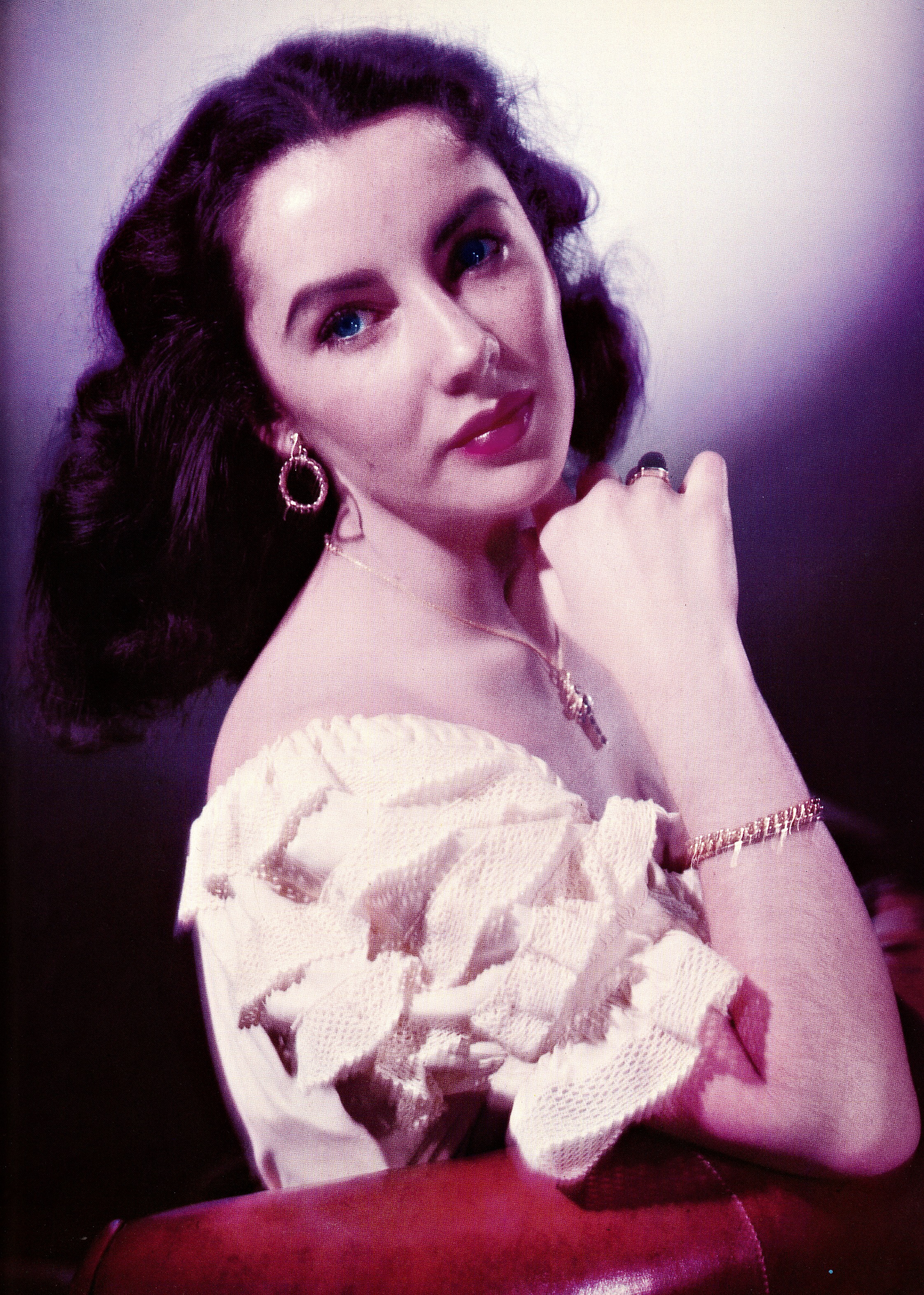
1949 color portrait of Elizabeth Taylor, taken by photographer Hymie Fink for M-G-M, represents the dawn of her transition from a beloved child star into Hollywood’s definitive adult beauty. Photo Credit: Photograph by Hymie Fink / M-G-M (1949). Status: Public Domain. This image is a Hollywood studio promotional handout distributed widely to the press without a formal copyright notice or subsequent registration under pre-1978 U.S. copyright law.
In 1949, Elizabeth Taylor was only 17 years old, yet she had already spent nearly a decade before the cameras. After making her film debut at age ten, she spent the 1940s under contract to Metro-Goldwyn-Mayer, growing up before the public eye.
By the end of the decade, M-G-M’s powerful publicity machine recognized that Taylor possessed a striking beauty that seemed far beyond her years. Determined to transition her from celebrated child star to adult leading lady, the studio staged a series of glamorous portrait sessions that showcased her most distinctive features. Though not especially known for projecting a warm or gentle personal demeanor, Taylor could be photographed in ways that softened and refined her public image carefully constructed by the studio. Through dramatic lighting, rich color photography, elegant jewelry, and sophisticated gowns, photographers emphasized her legendary violet-blue eyes and luxuriant dark hair, presenting her not as a teenager but as Hollywood’s newest screen beauty.
In 1950 Elizabeth Taylor co-starred in Father of the Bride, M-G-M’s comedy film that was nominated for three Academy Awards. It was directed by Vincente Minnelli.
Portraits such as this one by Hymie Fink were part of a calculated effort to prepare audiences for Taylor’s next chapter. That campaign culminated in her breakthrough adult role as Kay Banks in Vincente Minnelli’s hit comedy Father of the Bride (1950). The young actress whom moviegoers had watched mature on screen was now being introduced as a poised and romantic leading woman, ready to enter a new phase of stardom at the dawn of the 1950s.
By prioritizing high-contrast lighting, bold colorization, and curated personal archetypes over realistic character study, these pioneering still photographers manufactured the enduring, sensuous visual mythology of the Golden Age star.
WHO IS HYMIE FINK? HIS IDENTITY REMAINS A MYSTERY
Who was Elizabeth Taylor’s photographer, Hymie Fink? Was Hymie Fink a studio photographer? Freelancer? Pseudonym for an unknown talent or combination of unknown talents?
Unlike studio heads like Whitey Schafer or László Willinger, Hymie Fink is a mysterious figure in Hollywood history. His name consistently appeared alongside the industry’s biggest stars from the late 1930s until his sudden death in the mid-1950s.
His name appears among the stars starting in the late 1930’s until his death. It was announced by Hedda Hopper when she ended her newspaper gossip column for September 28, 1956, with the epitaph: “Hymie Fink, one of the sweetest men in Hollywood, died of a heart attack on Jane Wyman’s TV set. Hymie photographed every star and every major event in (Hollywood) for twenty-five years.”
Fink was celebrated as an exceptionally warm, ubiquitous presence in the film community. His lens captured Taylor with an intimate, soft, yet vibrant quality that perfectly bridged the gap between raw star power and youthful innocence.
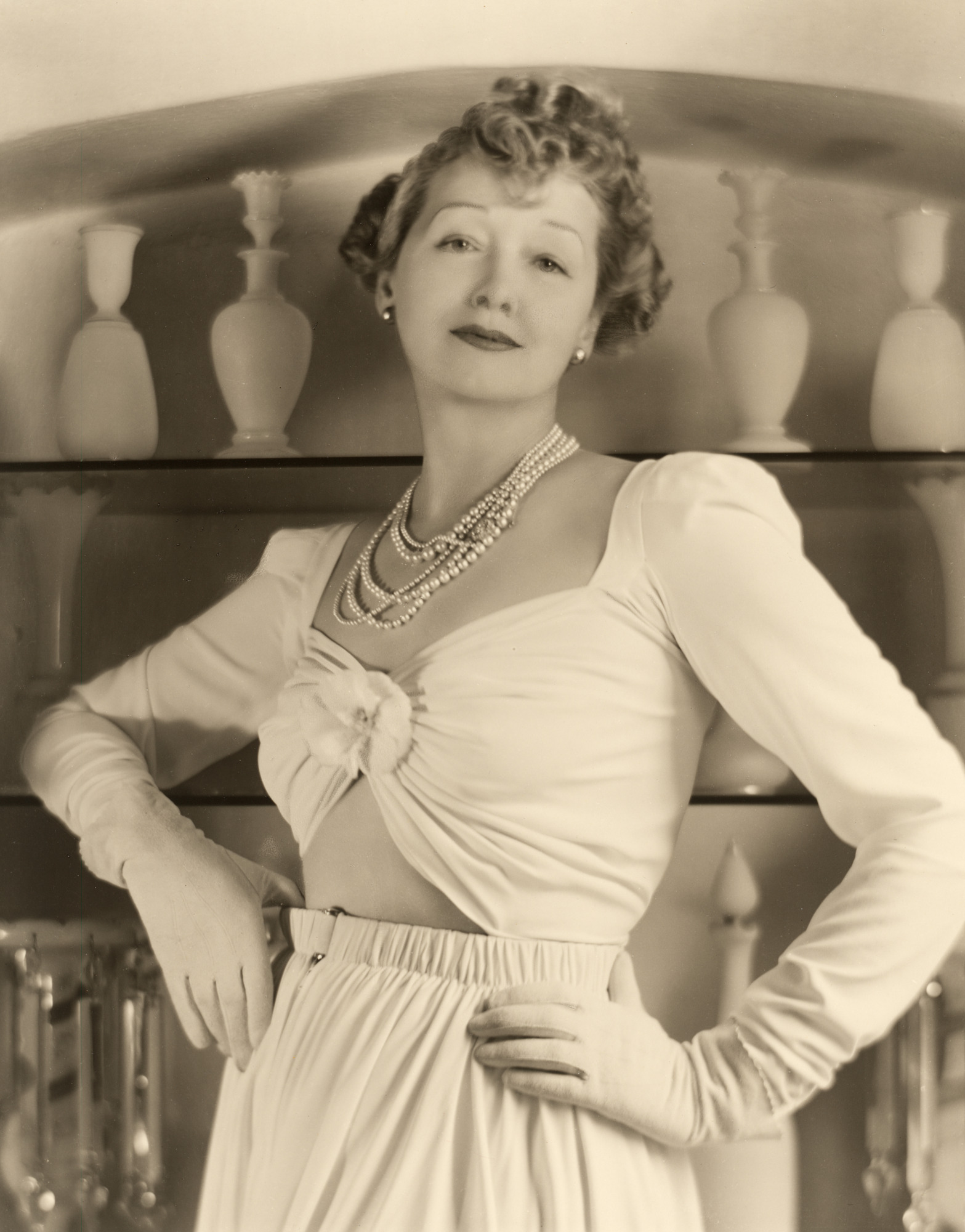
Hedda Hopper (1885-1966) was a powerful voice in Hollywood whose gossip columns were read by tens of millions. PHOTO: “Hedda Hopper” by Baron Adolph de Meyer, 1 Sep 1868 – 6 Jan 1946 is marked with CC0 1.0.
LANA TURNER
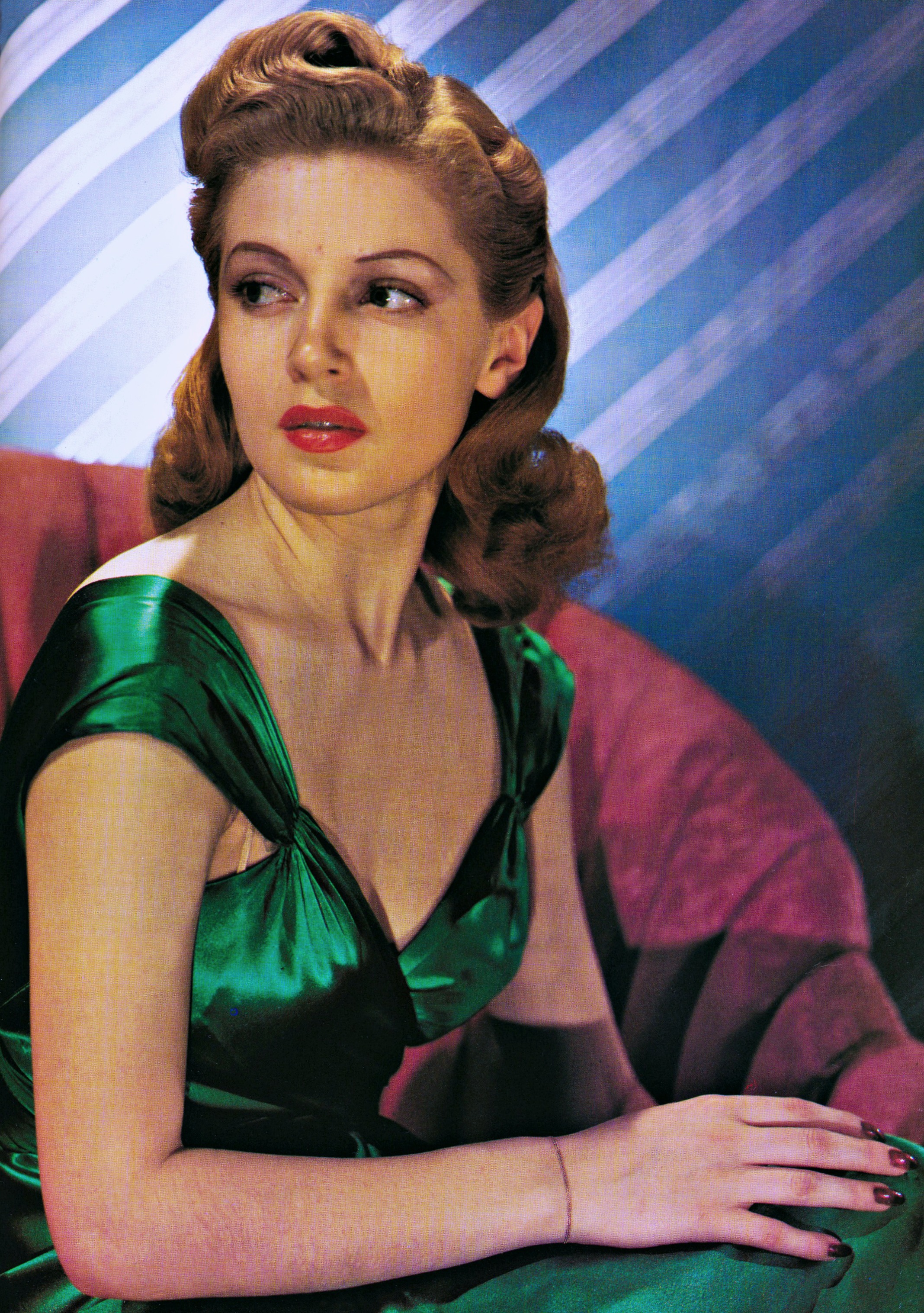
This 1939 color portrait of Lana Turner, taken by Hungarian-born photographer László Willinger for M-G-M, captures a fascinating and brief transitional moment in the actress’s early career before she became a household name. Photo Credit: Photograph by László Willinger / M-G-M (1939). Status: Public Domain. This image is a Hollywood studio promotional handout distributed freely to the press without a formal copyright notice or subsequent registration under pre-1978 U.S. copyright law.
Though pop culture legend remembers Lana Turner as the definitive platinum blonde of the 1940s, this unretouched 1939 photograph catches her at 18 years old as a striking redhead from Idaho named Julia Jean Turner.
Lana Turner had been discovered three years earlier at 15 years old. Her legendary discovery in a malt shop near Hollywood High School where she was a student, has entered the annals of show-biz mythology. After William R. Wilkerson (publisher of The Hollywood Reporter) spotted a 15-year-old Turner at the Top Hat Malt Shop, he referred her directly to legendary actor-turned-talent-agent Zeppo Marx. Marx did not sign her to a film contract himself; instead, he acted as her representative and immediately brought her into an interview with director Mervyn LeRoy. The immediate result of her discovery was a movie contract at Warner Bros. This is where she made her quick, star-making debut in They Won’t Forget (1937) – and audiences didn’t.
“America’s Sweater Sweetheart”
The title of Lana Turner’s first film in 1937 for Warner Brothers was They Won’t Forget. The title proved prophetic for Lana Turner’s Hollywood career as she went on to make over 50 glamorous films, most of them at M-G-M.
Lana Turner was only 16 years old when she made her film debut in a role totaling barely five minutes of screen time. Yet a brief scene of little more than 20 seconds, in which she walked down a sidewalk wearing a tight-fitting sweater and cocked beret, transformed her into an overnight sensation and one of Hollywood’s first modern sex symbols. The impact of that fleeting appearance was so great that gossip columnist Walter Winchell (1897-1972) christened Turner “America’s Sweater Sweetheart.” More importantly, it demonstrated Hollywood’s extraordinary ability to manufacture stardom through a single carefully crafted image. For the next twenty years, numerous actresses would adopt similar wardrobe styles in the hope of achieving the same sudden breakthrough that launched Turner’s career.
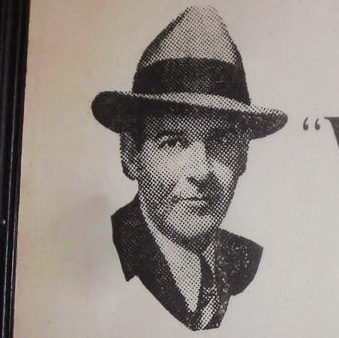
Walter Winchell was an influential newspaper gossip columnist and radio news commentator. PHOTO: “Walters Winchell Julius 1” by Goosefriend is licensed under CC BY 2.0.
László Willinger
Hungarian-born photographer László Willinger started his professional career in Vienna, Austria. He left Europe for America in 1937 where he joined M-G-M that same year. Soon after, he made his lush shot of 18-year-old Lana Turner in a silky green dress seated on a red divan (or chair) with her head turned and looking to one side with slightly bloodshot eyes.
Willinger’s color portrait of red-headed Lana Turner emphasizes the sensuality of her personality manifested in her full red sensuous lips and painted nails. In 1944, László Willinger left MGM and established his own photography studio in Hollywood. For the next 40 years he successfully practiced his craft among the Hollywood set.
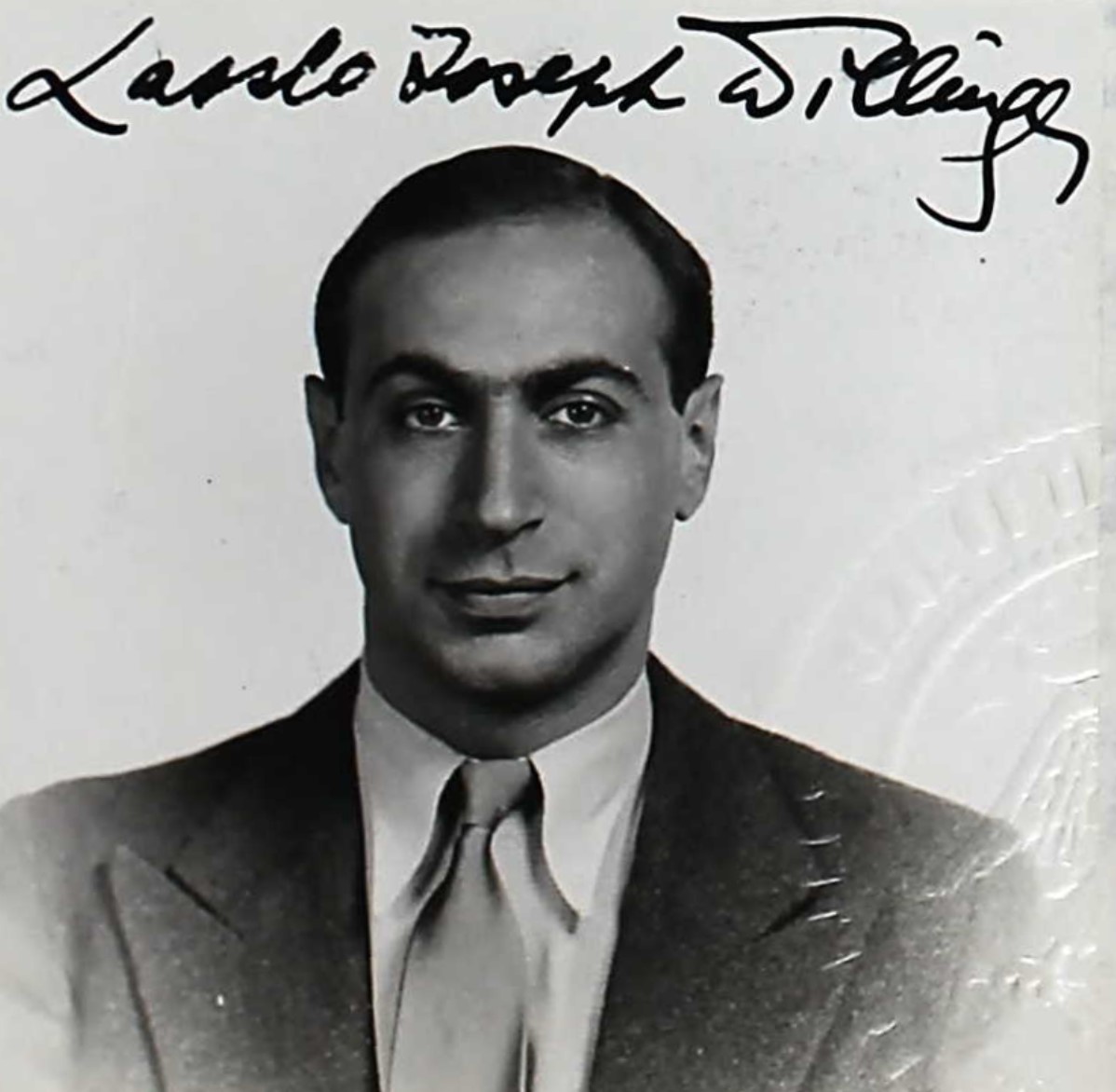
László Willinger’s portrait photography career of film stars and celebrities started in 1937. Public Domain.
New Jean Harlow?
Turner did not arrive at MGM until 1938. When Mervyn LeRoy left Warner Bros. to accept a high-paying executive producer position at Metro-Goldwyn-Mayer, he brought his young protégée right along with him. MGM subsequently bought out her contract, bumped her weekly salary, and began heavily promoting her as their new rising siren. Turner was under contract with M-G-M at this exact moment in 1939 when the studio’s powerful “glamour machine” was actively trying to groom her to become the next Jean Harlow. The star image engineered by Willinger here leans heavily into intense, mature sensuality rather than teenage innocence. Lana Turner followed the sex-bomb script to full force in 1941 when the studio dyed her hair whitish blonde for Ziegfeld Girl. Lana, co-starring with Judy Garland and Hedy Lamarr, stole the show.
The video features the unforgettable staircase climax from Ziegfeld Girl (1941) that transformed Lana Turner into a top tier M-G-M star as she delivers one of the defining moments of Hollywood melodrama. Turner plays Sheila Regan, a humble department store elevator operator transformed almost overnight into a glamorous star of the Ziegfeld Follies. Yet the success that promises everything ultimately takes everything from her. Drawn into a world of wealth, luxury, and excess, Sheila loses her career, her health, and the love of Gilbert, played by James Stewart. Terminally ill and nearly destitute, she slips away from her sickbed to attend the opening night performance of a friend, watching from the shadows of a theater balcony.
As she prepares to leave, the strains of her signature number, “You Stepped Out of a Dream,” drift through the theater. Bent with exhaustion and grief, Sheila clings to the railing, seemingly defeated. Then instinct takes over. Conditioned by years of performing, she straightens her posture, lifts her chin, and once again becomes the perfect Ziegfeld showgirl. Clad in a stunning black gown and trailing a fur coat behind her, she glides down the grand staircase with breathtaking poise and hypnotic elegance. For a few fleeting moments, the audience sees the star she once was.
But it is her final performance. The instant she reaches the lobby floor, the illusion vanishes. Her failing heart gives out, and she collapses. The scene crystallizes the film’s central message: that fame, when pursued at the expense of love, happiness, and authenticity, can exact a devastating price.
The sequence also proved pivotal in Lana Turner’s real-life career. Her commanding presence during the staircase descent overshadowed even fellow stars Hedy Lamarr and Judy Garland, convincing MGM executives that Turner possessed the screen power of a major leading lady. The moment became one of classic Hollywood’s most celebrated images. For years afterward, whenever Turner entered fashionable nightclubs, orchestras would often greet her by playing “You Stepped Out of a Dream,” forever linking the actress to the role that elevated her into the highest ranks of stardom.
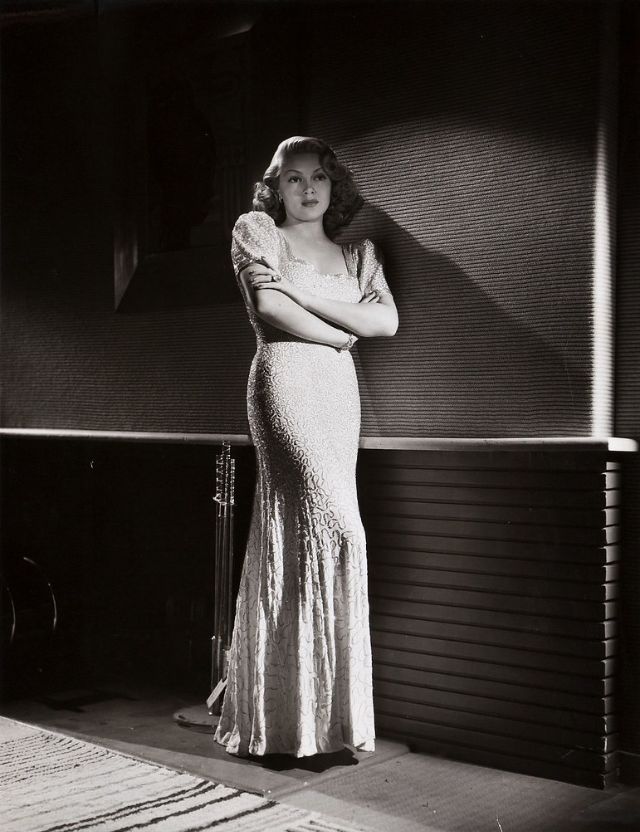
A 1941 black-and-white promotional portrait of Lana Turner, captured by MGM staff photographer Eric Carpenter for the musical drama Ziegfeld Girl, represents a definitive structural pivot in her career. This shot formally buried her old overnight moniker as “America’s Sweater Sweetheart” from her Warner Bros. discovery days. Carpenter treats her body as a living sculpture, cementing a manufactured archetype of smoldering elegance and peak dramatic star power. This is the exact moment Metro-Goldwyn-Mayer fully initiated her transformation into a classic Hollywood goddess. Photo Credit: Photograph by Eric Carpenter / M-G-M (1941). Status: Public Domain. This image is a Hollywood studio promotional handout distributed freely to the press without a formal copyright notice or subsequent registration under pre-1978 U.S. copyright law.
Conclusion
Ultimately, whether using László Willinger’s saturated jewel tones or Eric Carpenter’s sculpted black-and-white shadows, Golden Age Hollywood operated on a singular commercial mandate: manufacturing desire to sell movie tickets. As technologies shifted and public tastes evolved from pre-war vamps to post-war modern sirens, studio titans strategically engineered the changing visual archetypes of Marlene Dietrich, Elizabeth Taylor, and Lana Turner. By leveraging advanced color processes and dramatic gallery lighting, pioneering photographers transformed ordinary talent into untouchable cinematic deities. These meticulously curated glamour portraits did more than just attract eyeballs; they constructed an enduring visual mythology that remains the gold standard of stardom today.



