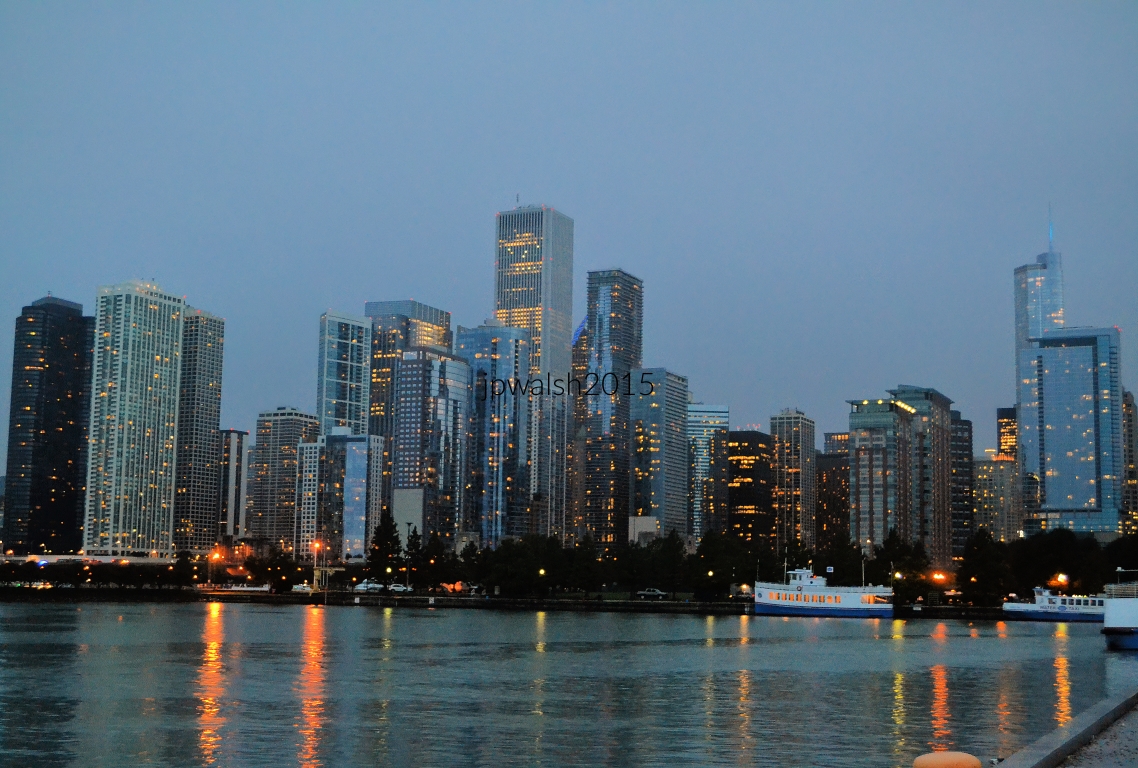
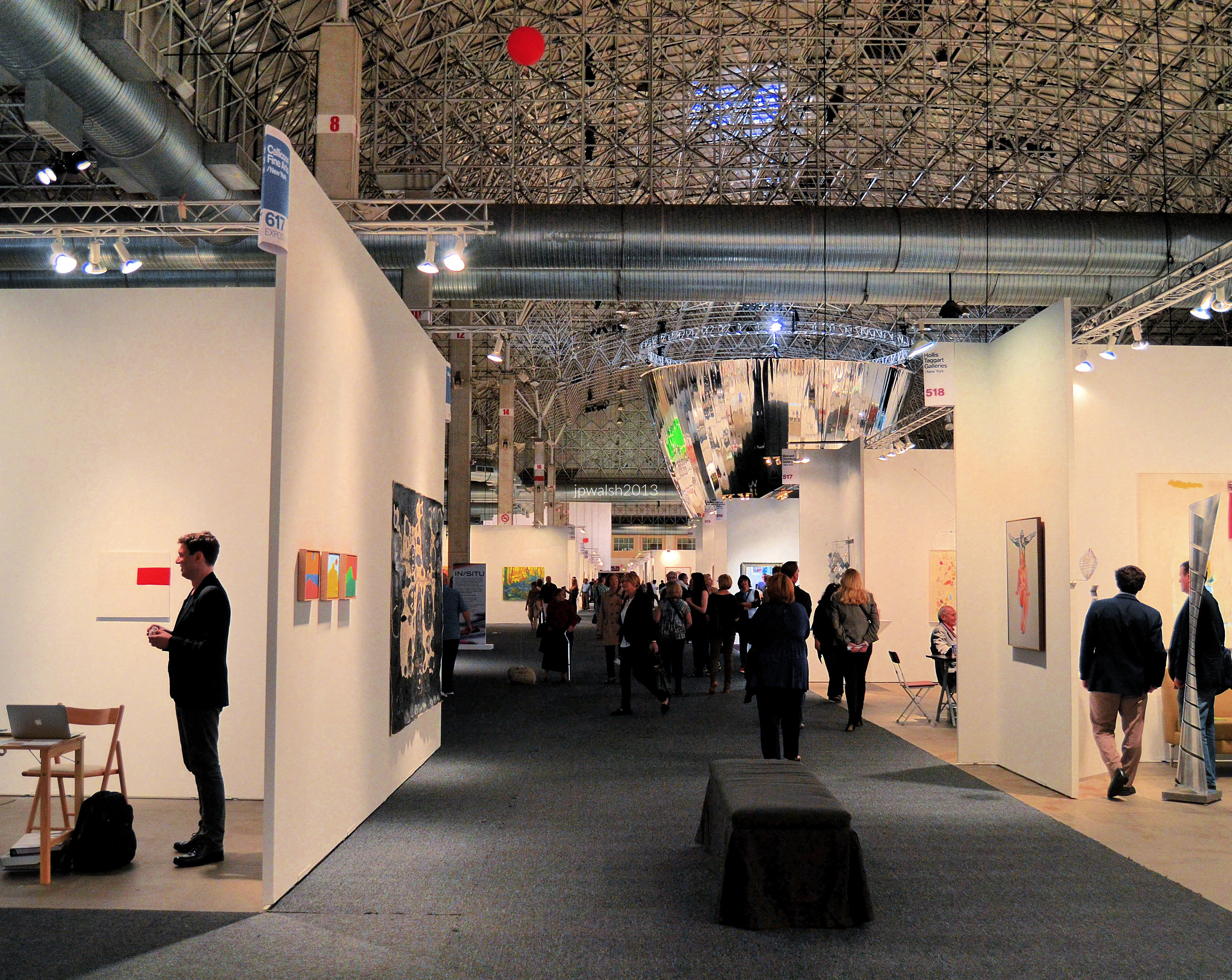
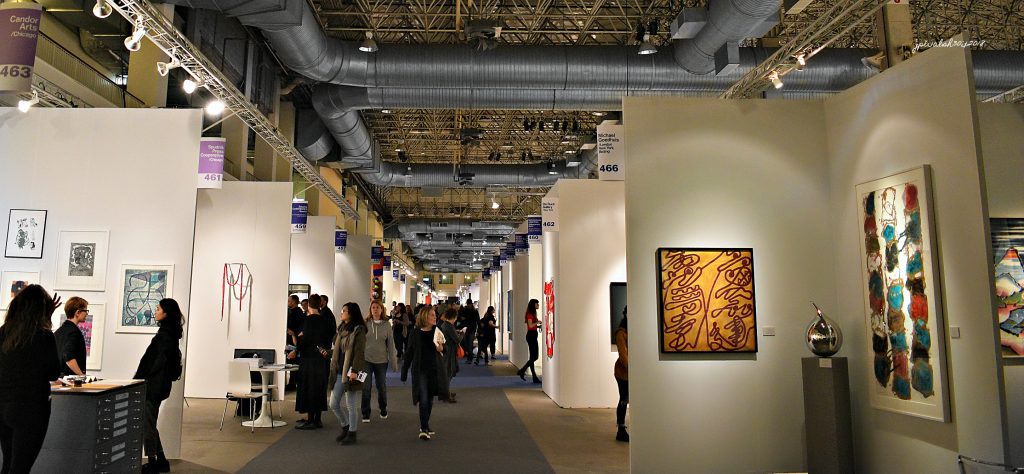
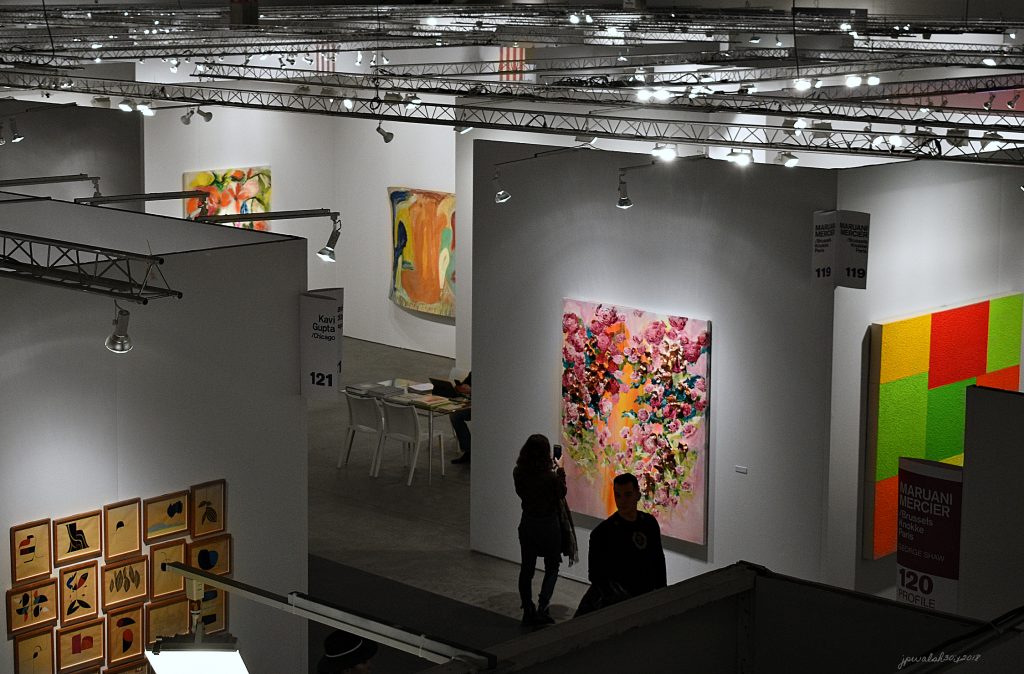
FEATURE image: EXPO CHICAGO 2018, Festival Hall, Navy Pier.
EXPO CHICAGO 2018 demonstrates how Chicago functions as a global crossroads for contemporary and modern art, bringing together international galleries, artists, and audiences while transforming Navy Pier’s Festival Hall into a temporary museum of worldwide creative exchange and experimentation.
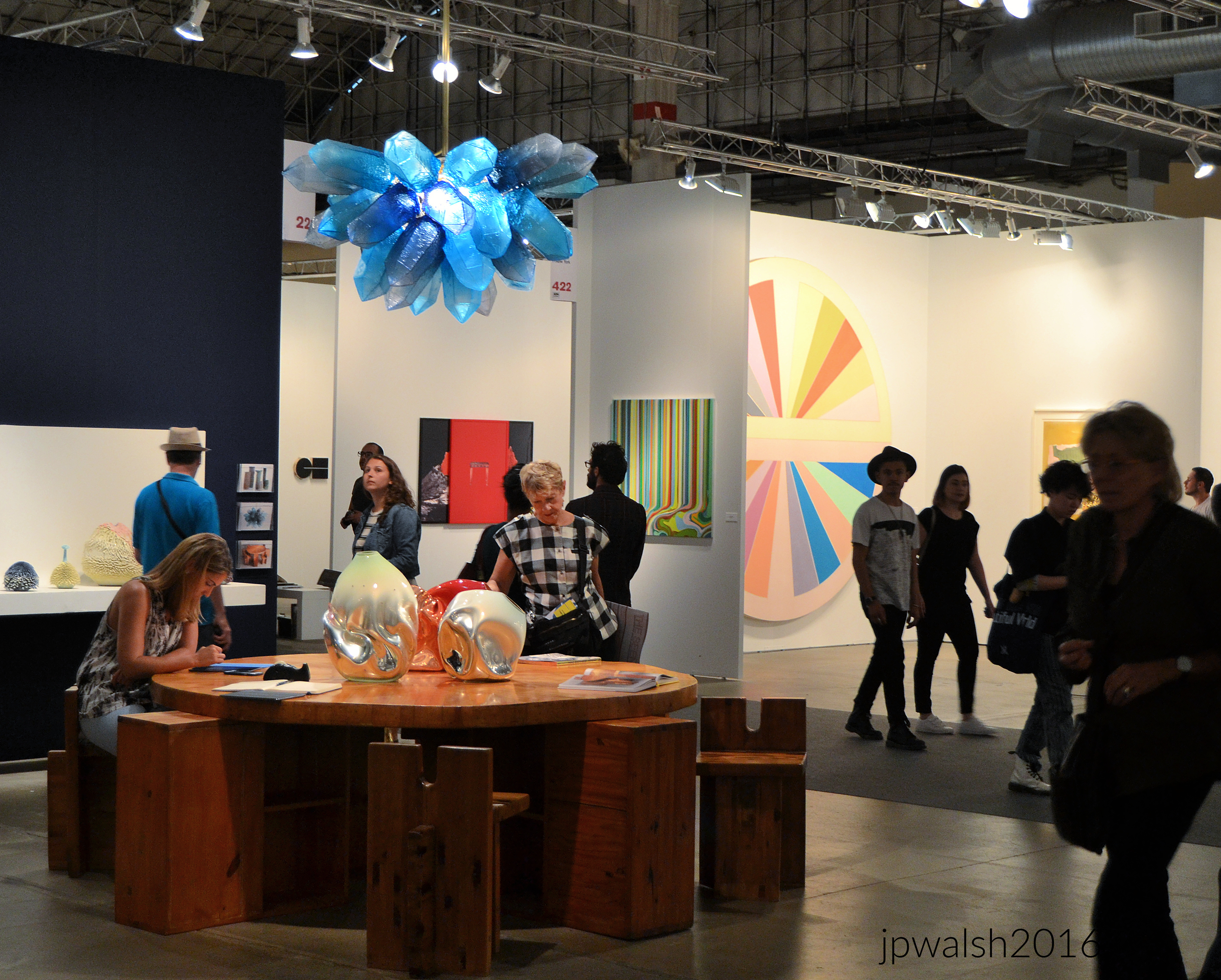
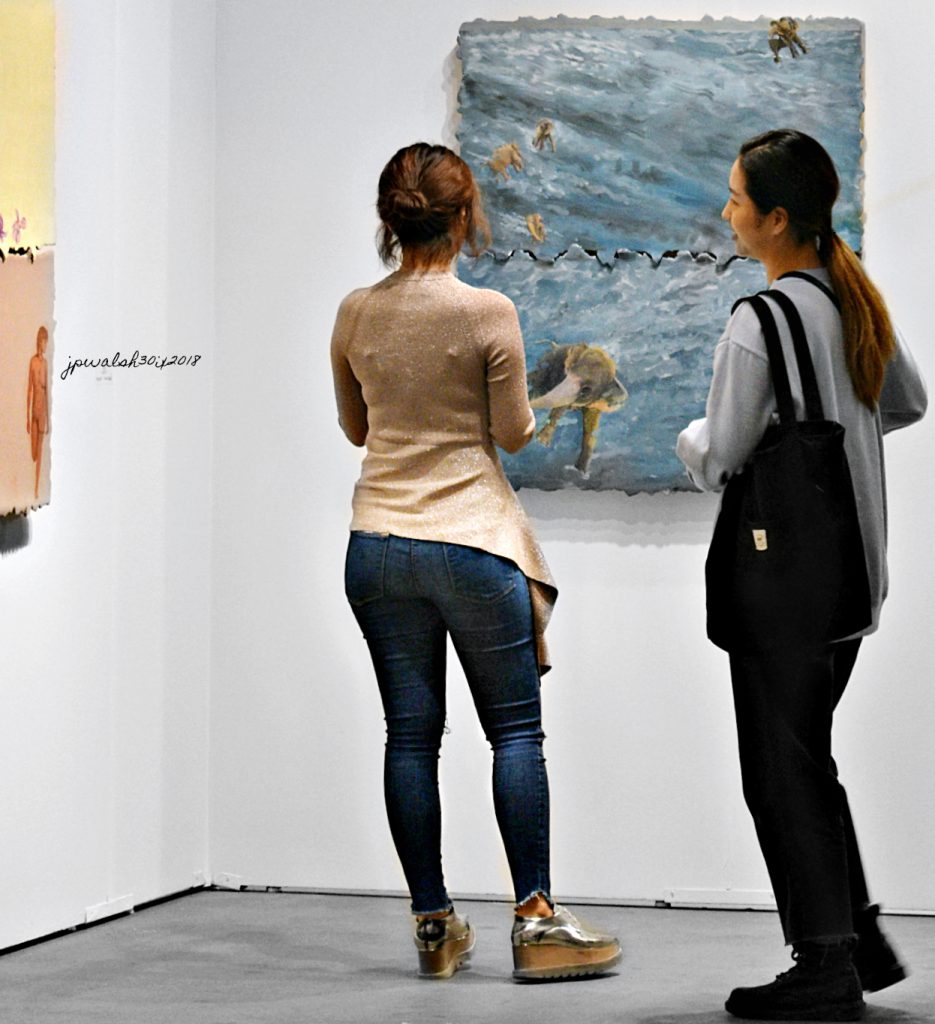
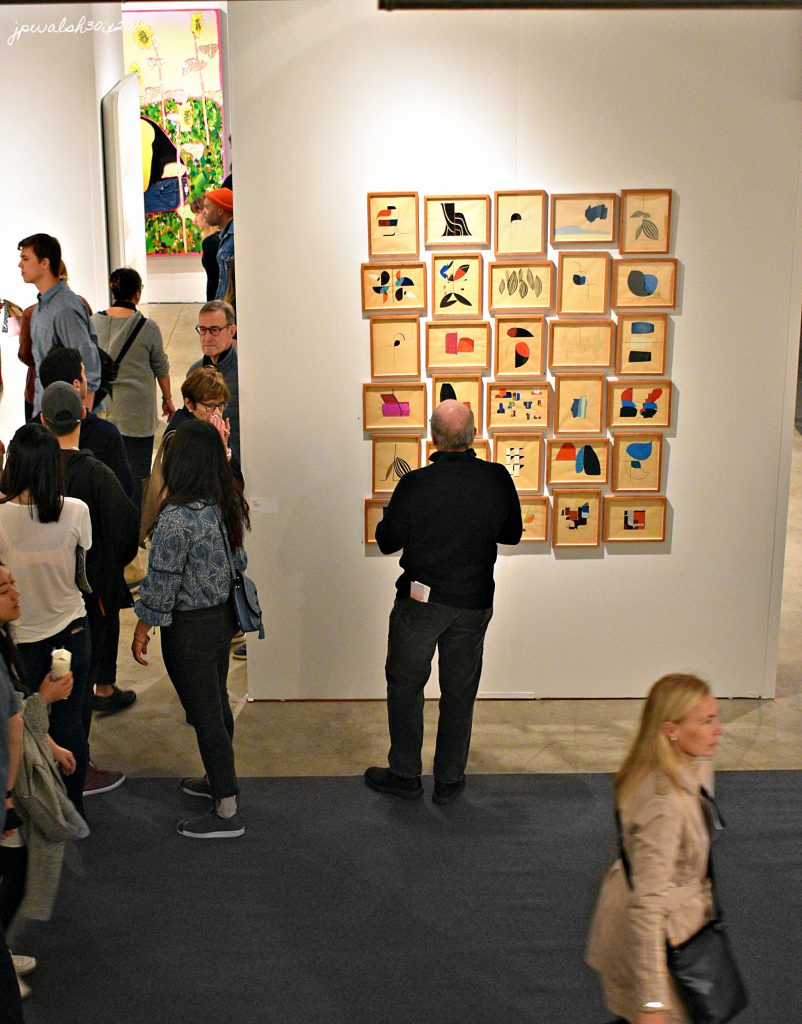
EXPO CHICAGO 2018 is the 7th annual exhibition of international contemporary and modern art held in Chicago at Navy Pier’s Festival Hall. It took place September 27-30, 2018. Expo Chicago/2018 presented 135 galleries and exhibitors representing 27 countries and 63 cities from around the world.
EXPO CHICAGO 2018 includes exhibitors four sections categorized to a specific aim: Exposure are galleries founded since 2010 featuring one or two artists; Profile are international galleries featuring solo or collective artists with focused installations, exhibitions and projects; Editions + Books highlight artist books, editions, prints, collectibles, photography, collage, drawing, etc.; Special Exhibitions” feature site specific work.
More EXPO CHICAGO 2018 sections include: IN/SITU highlighting curated large-scale installations (a second, outside version features large-scale sculptures in various Chicago locations); EXPO VIDEO highlighting curated film, video and new media work; EXPO SOUND highlighting curated sound installations and projects.
All photographs & texts by John P. Walsh
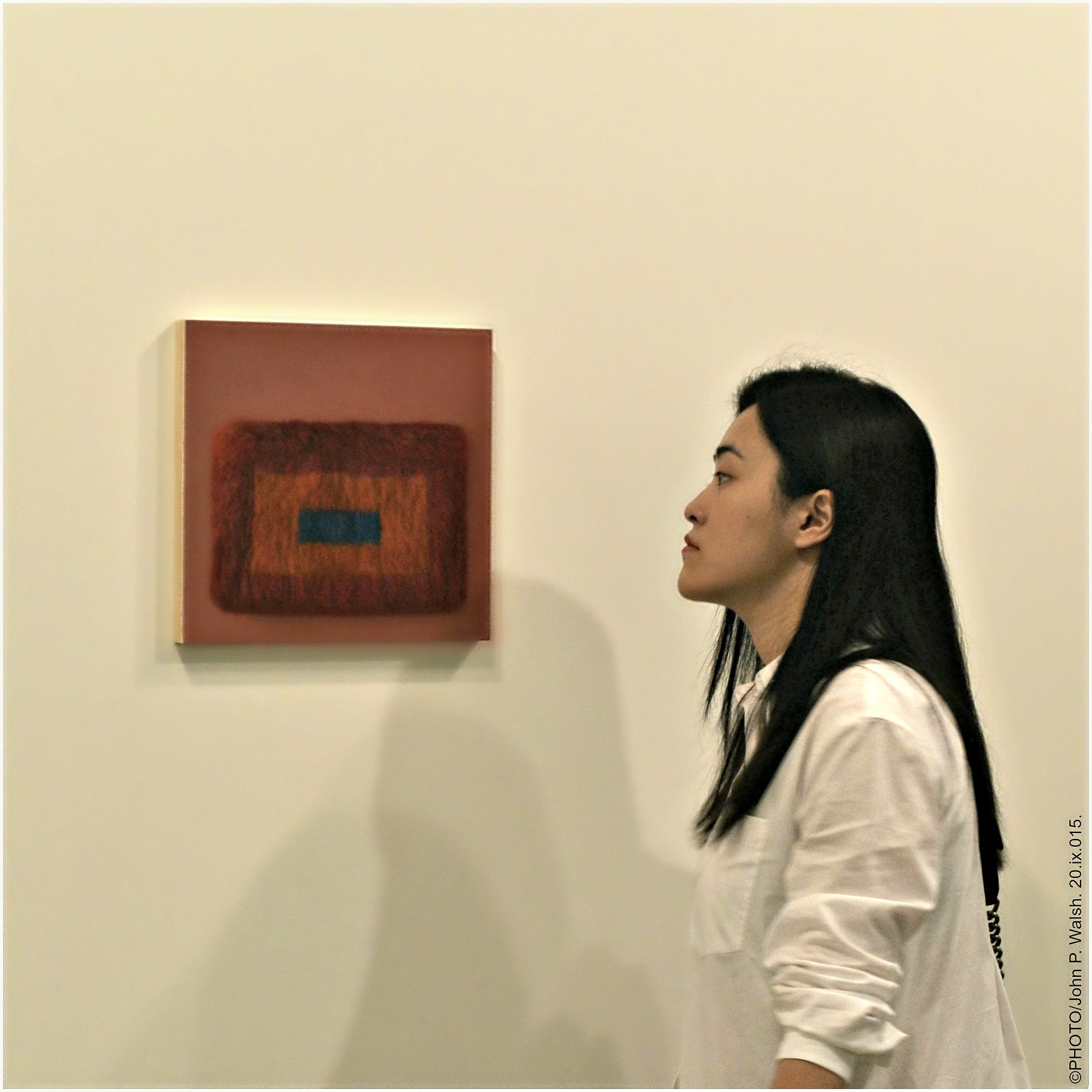
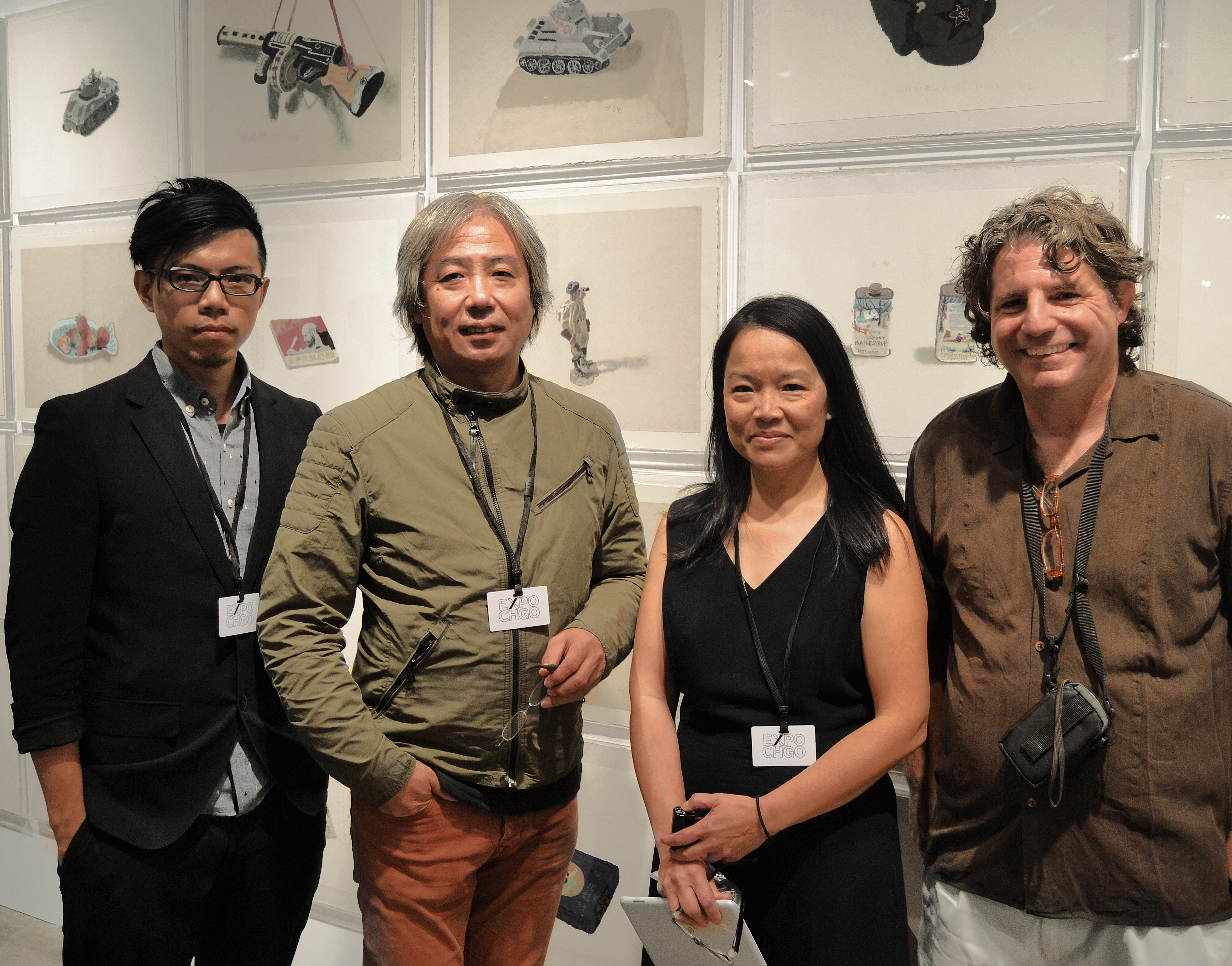
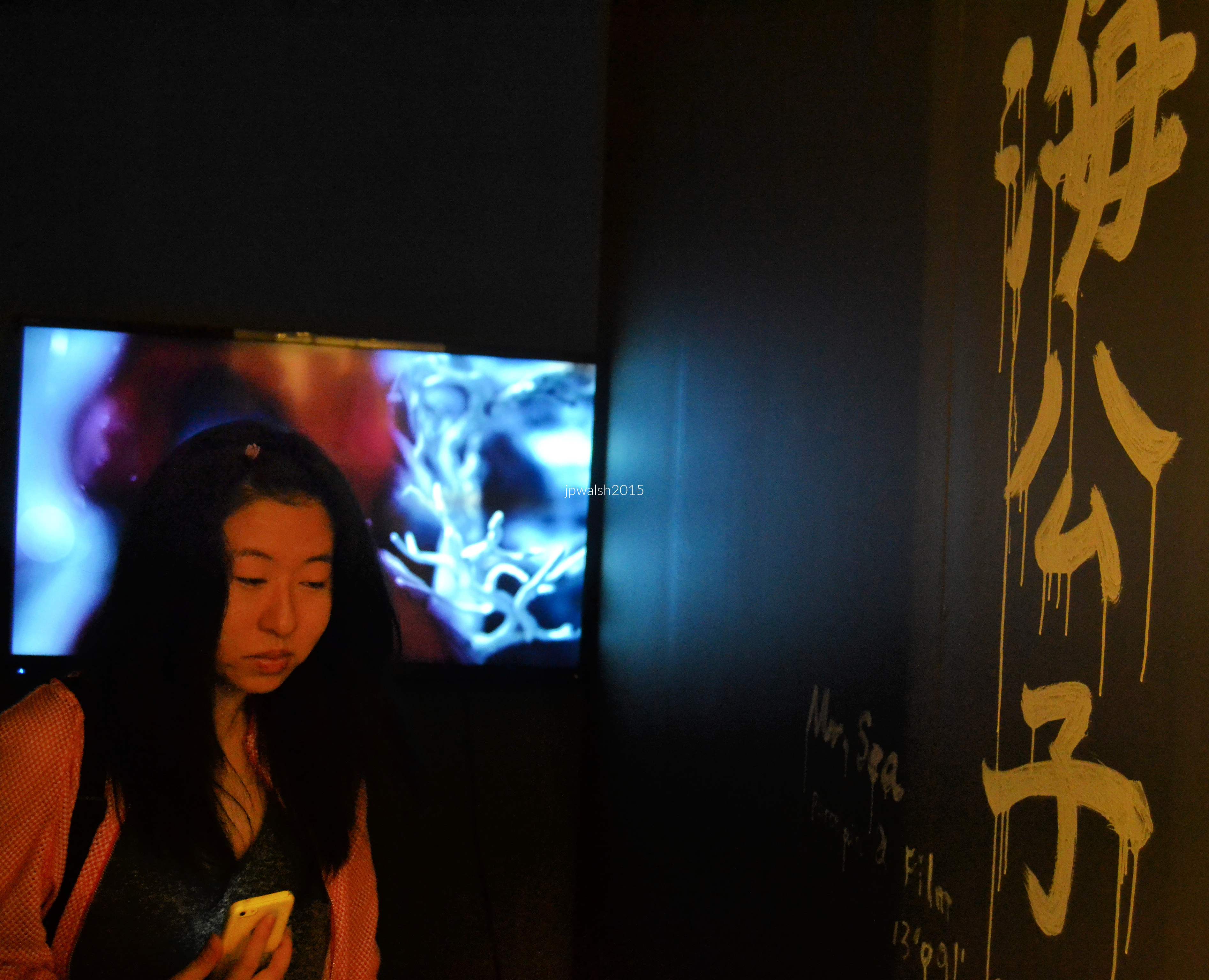
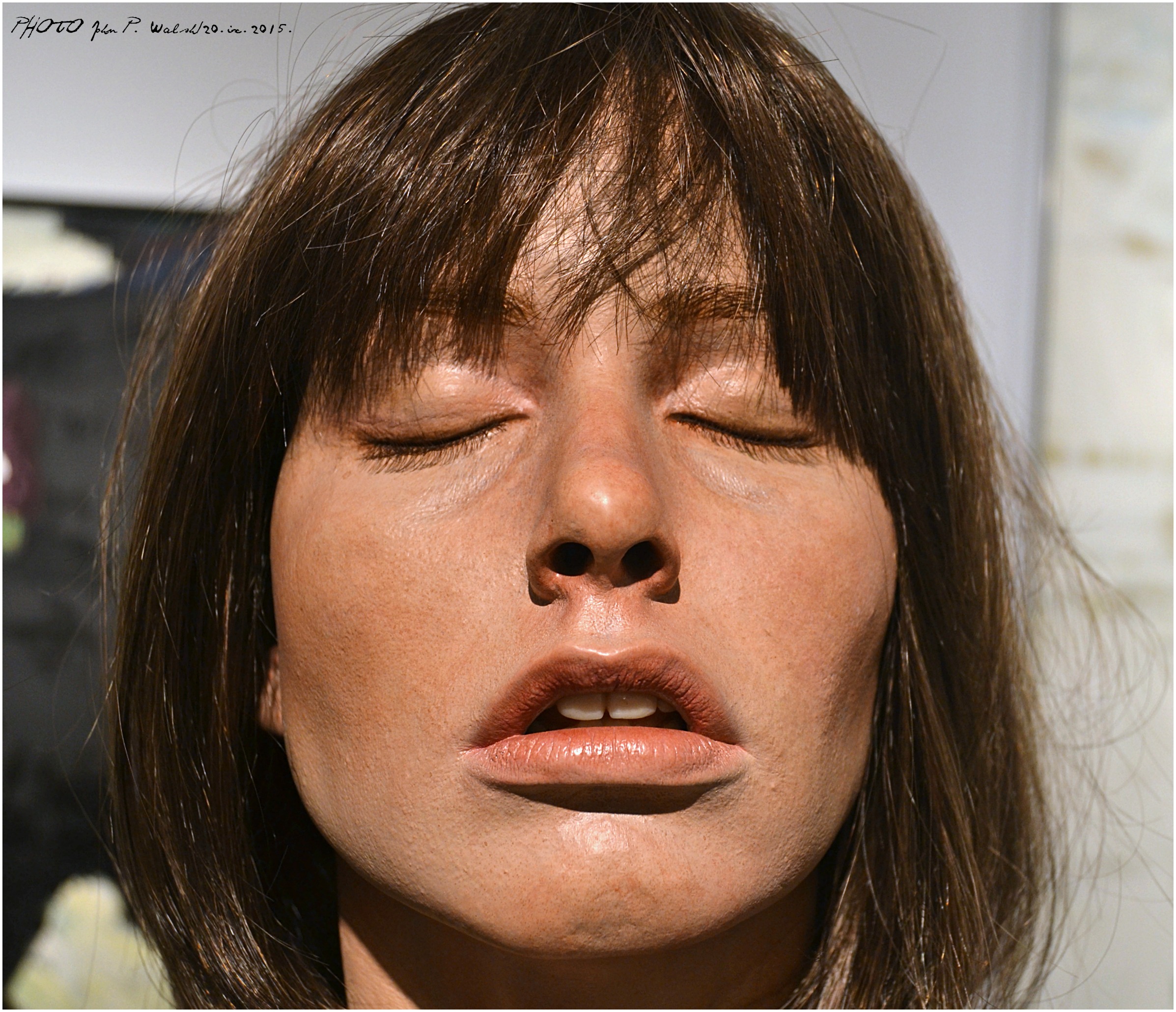
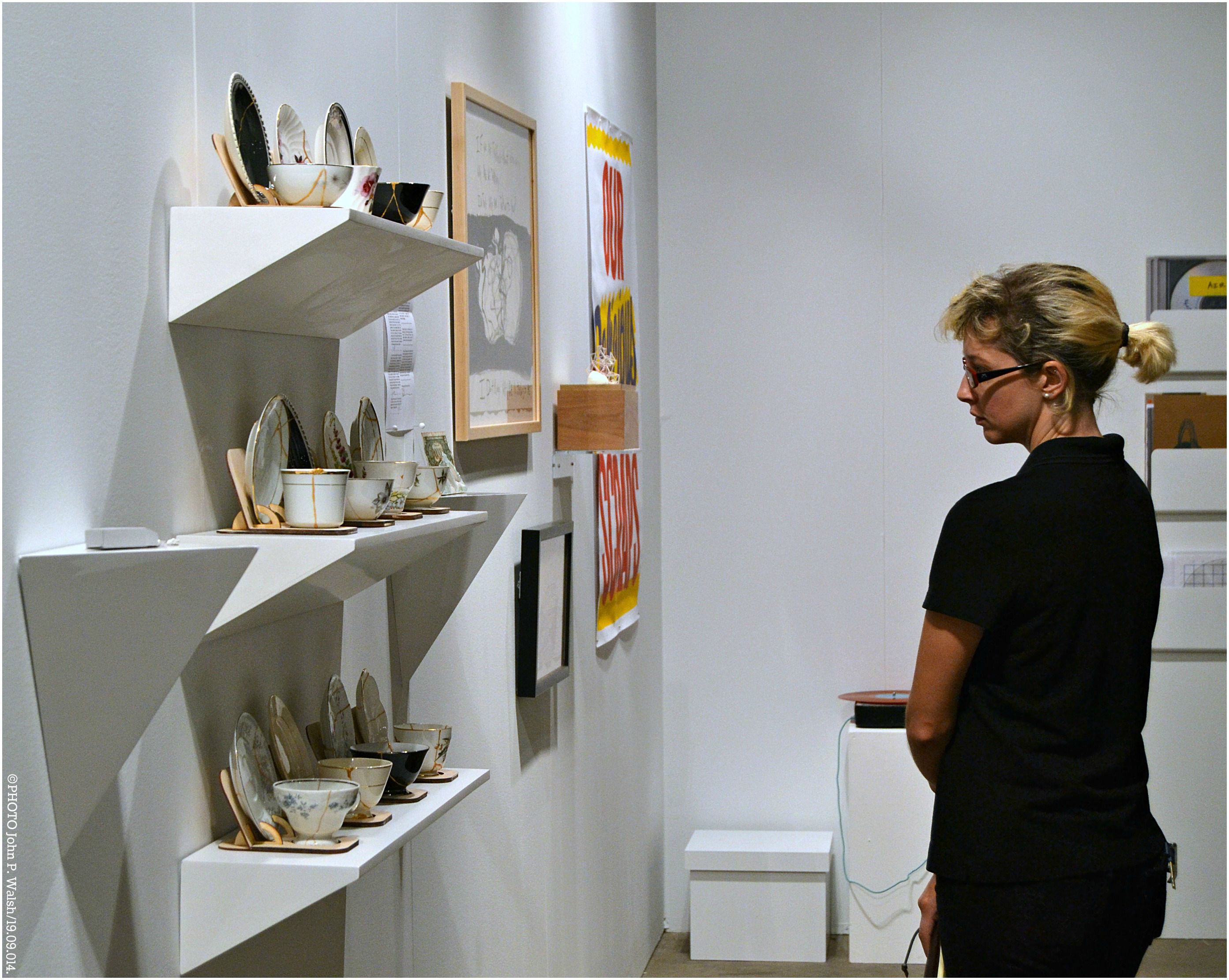
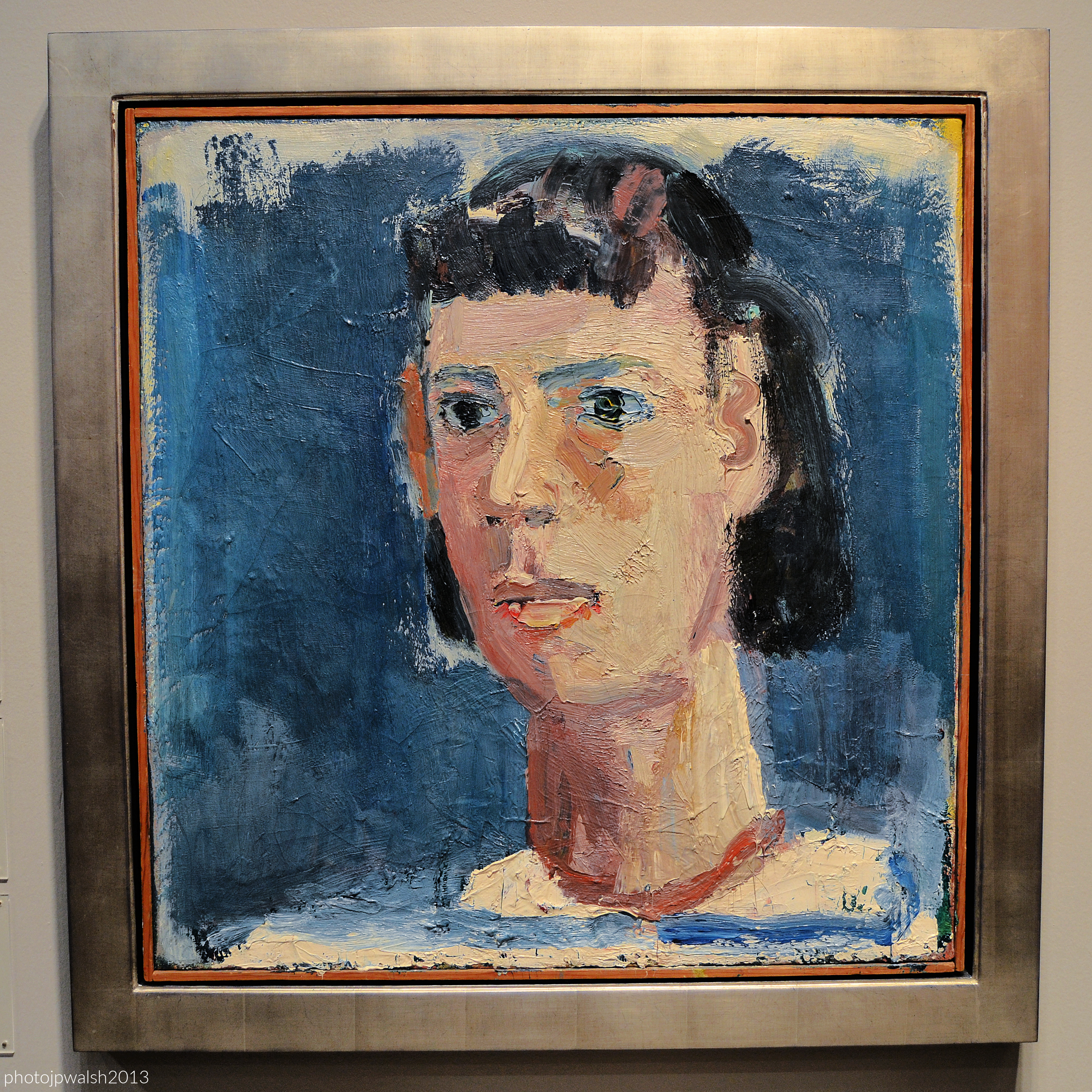
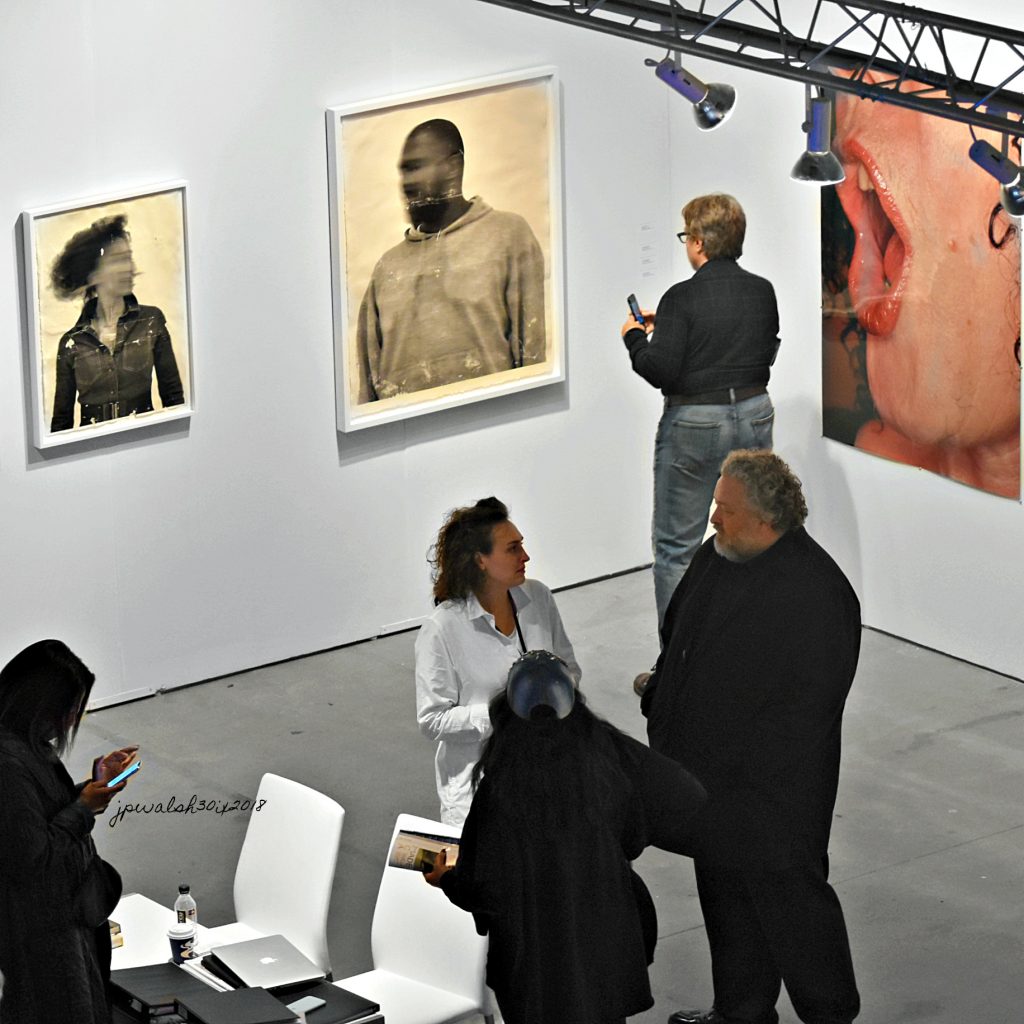
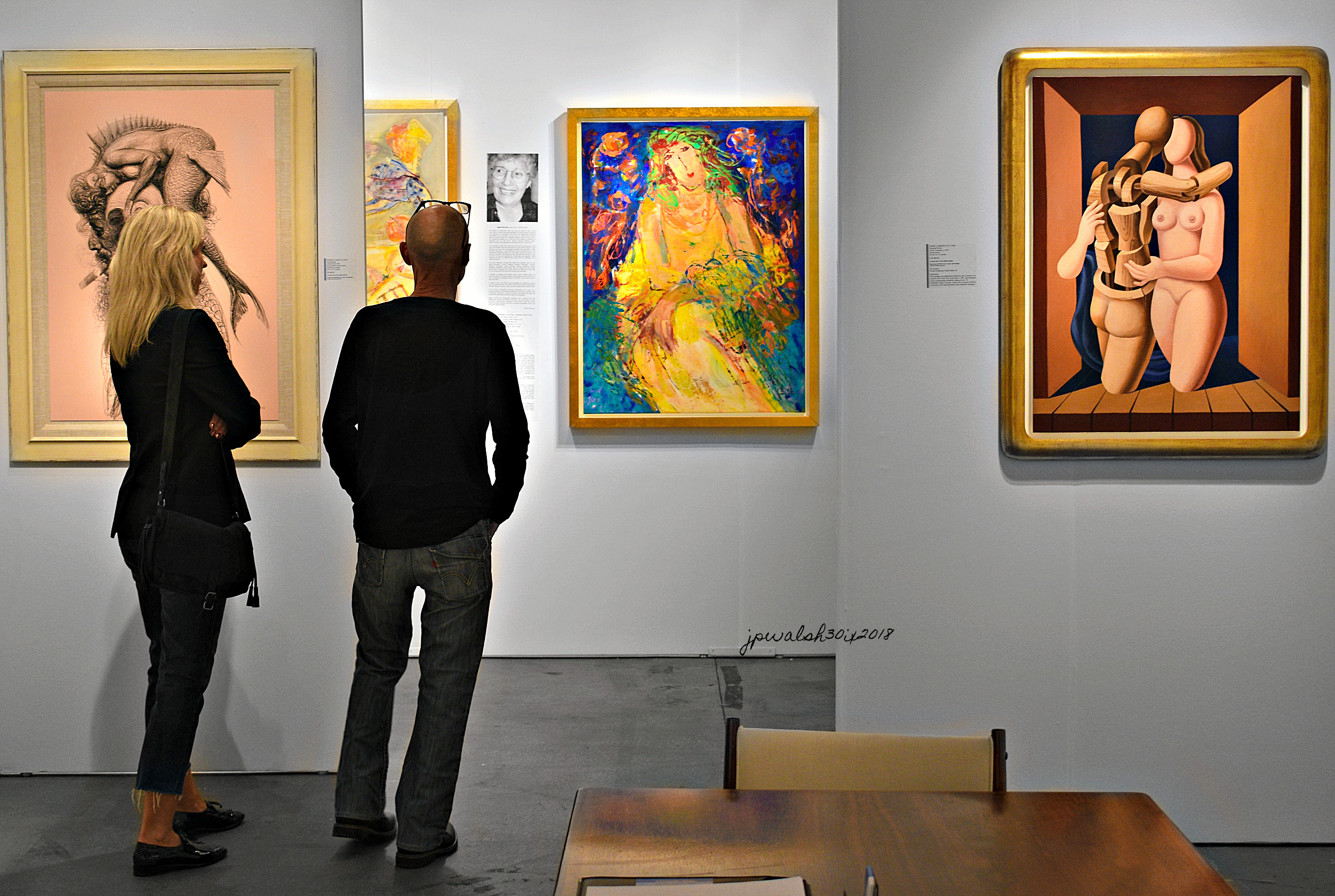
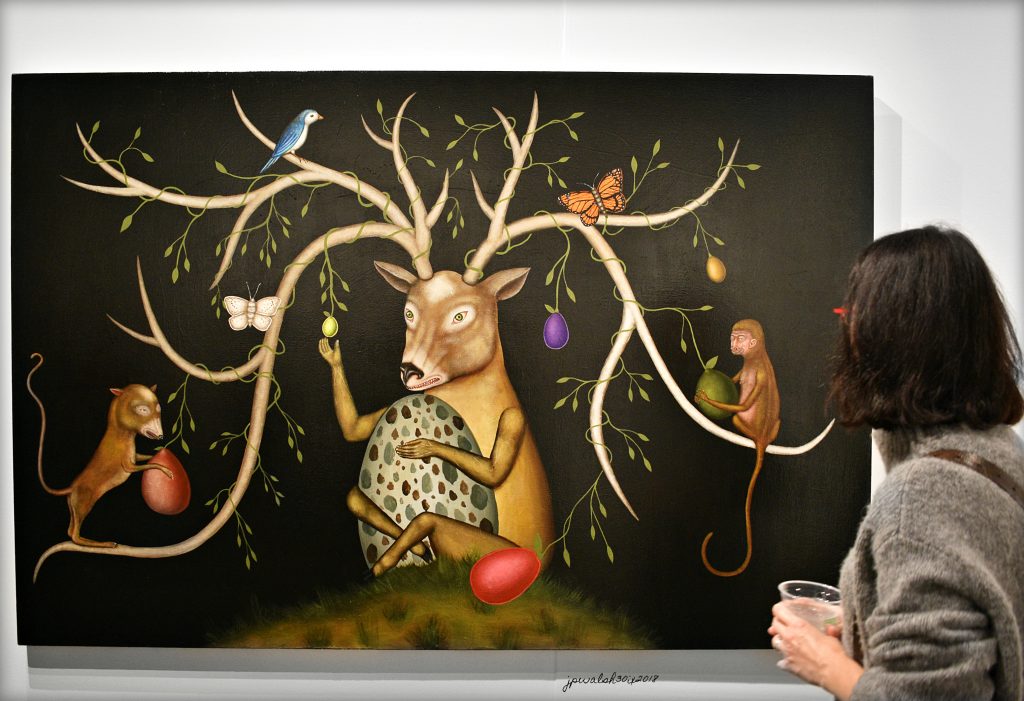
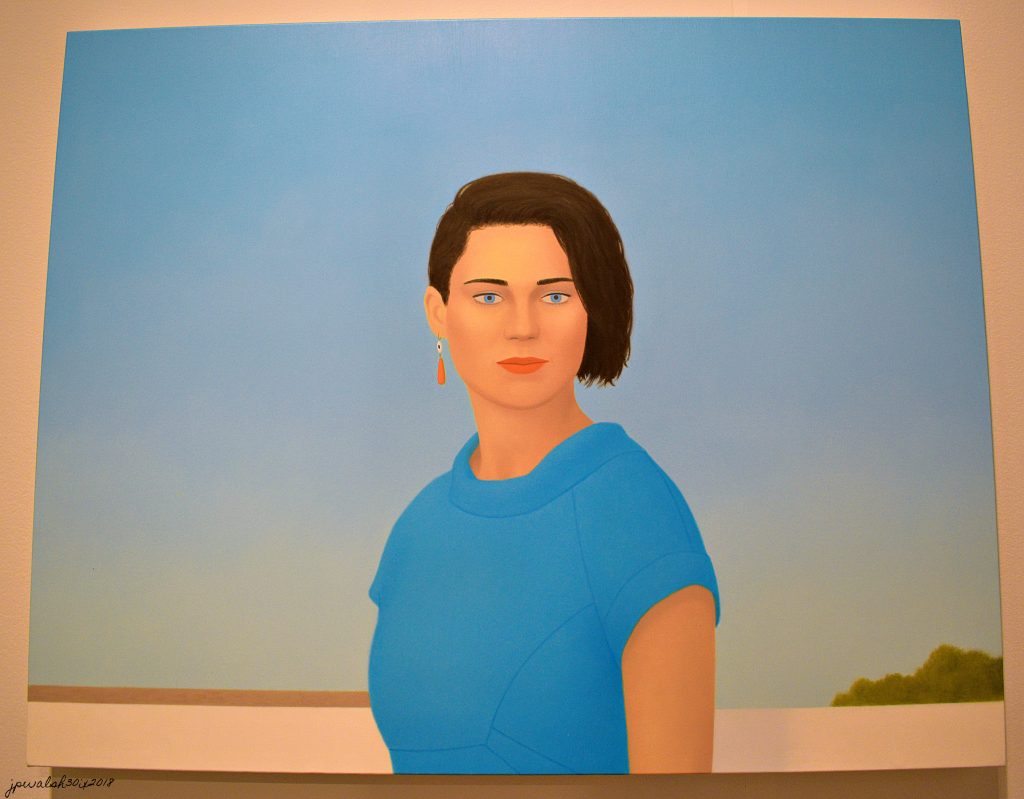
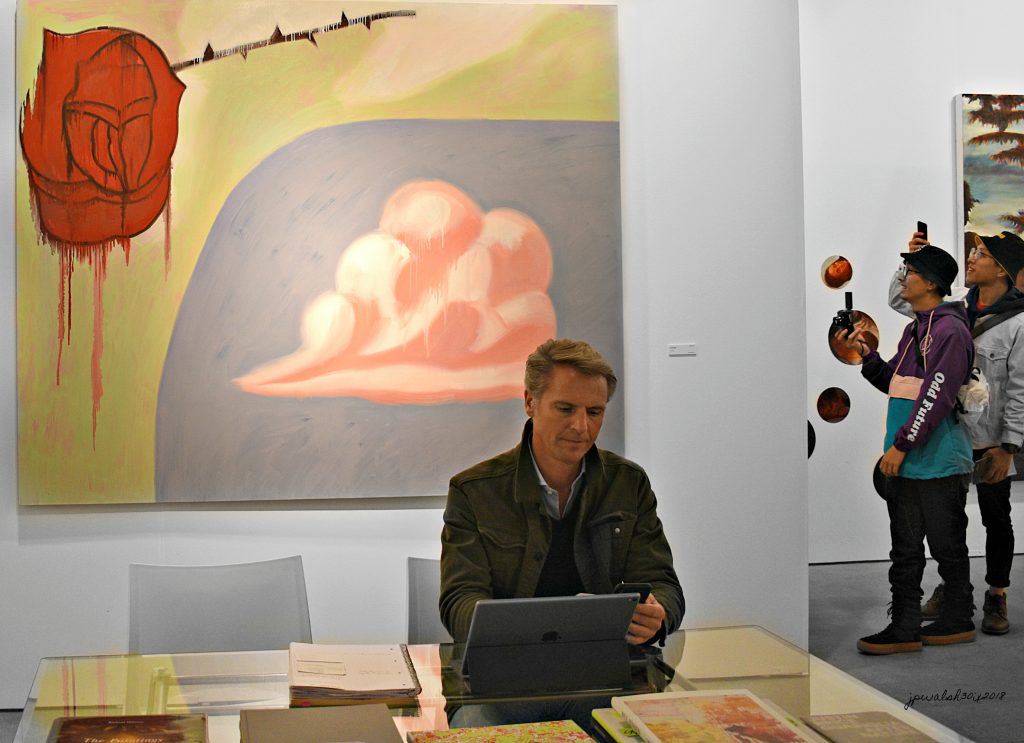
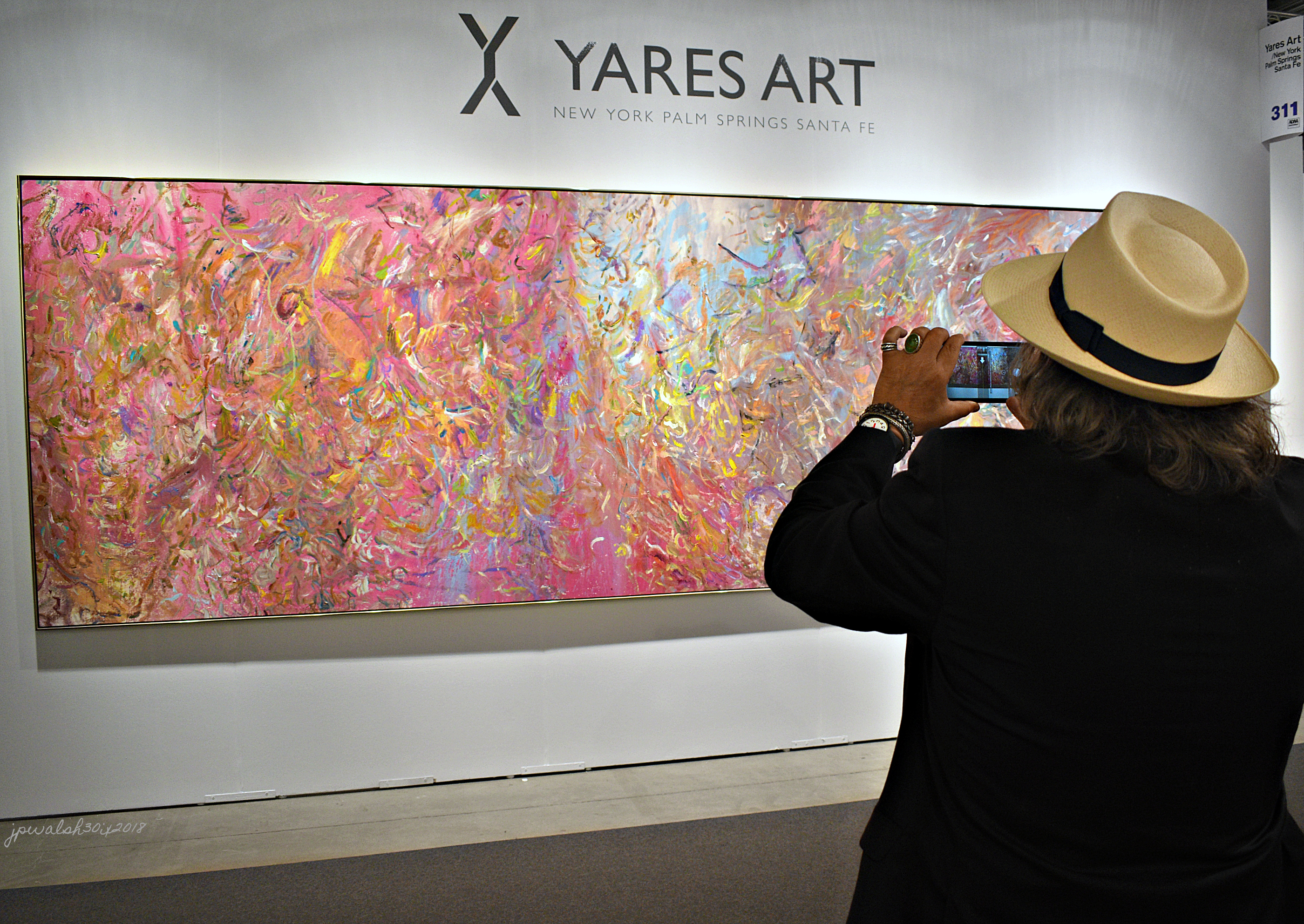
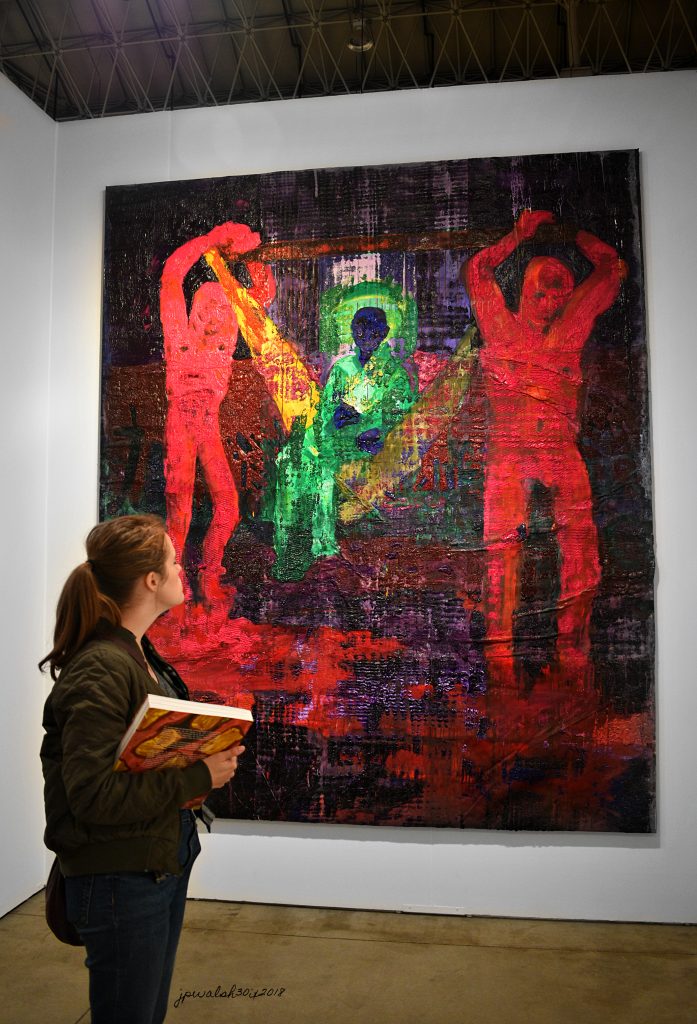
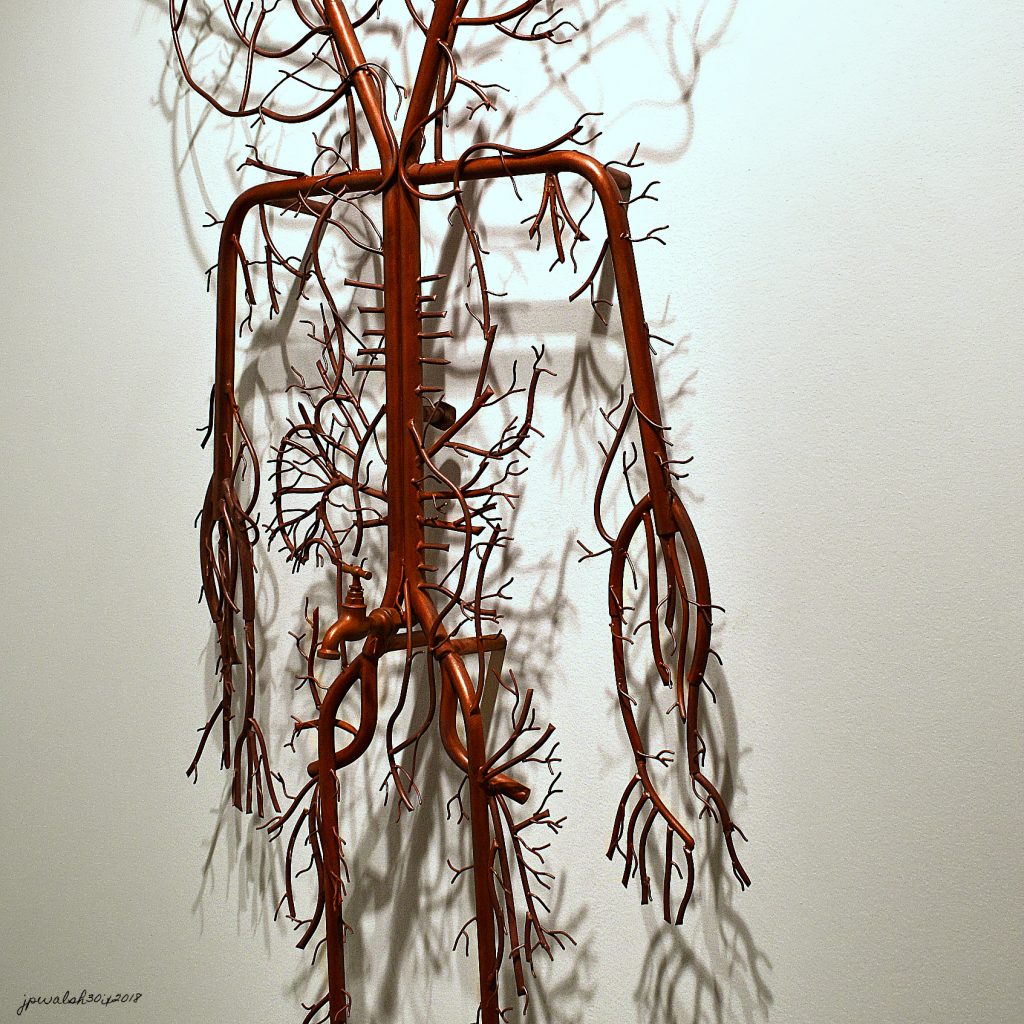
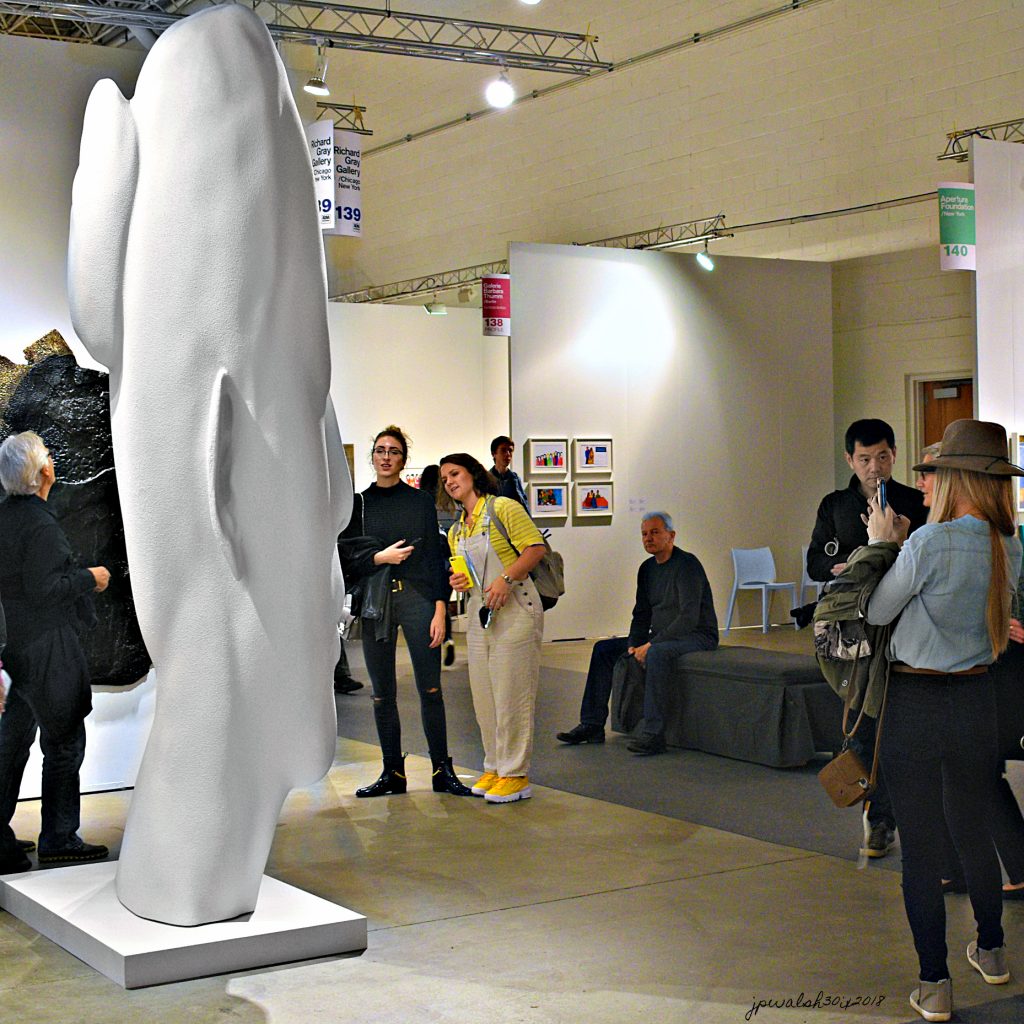
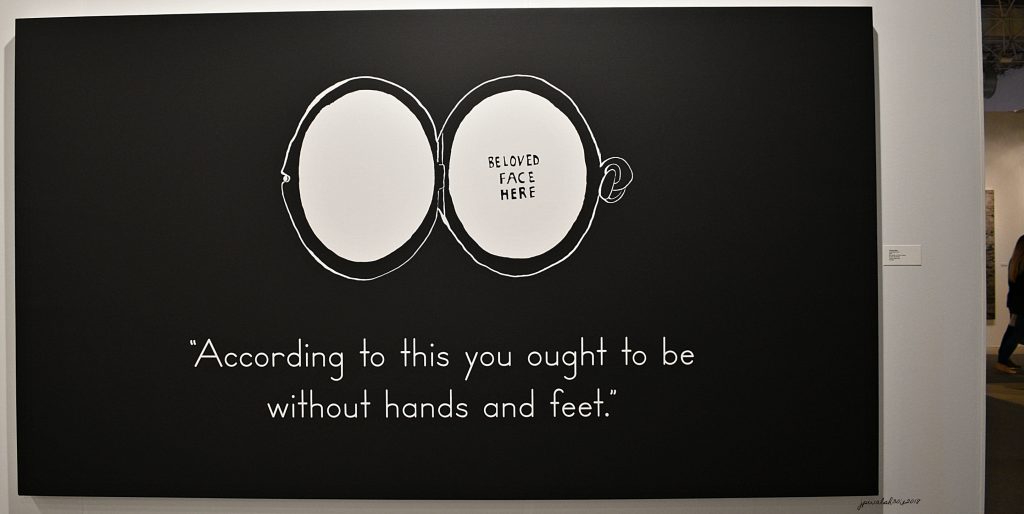
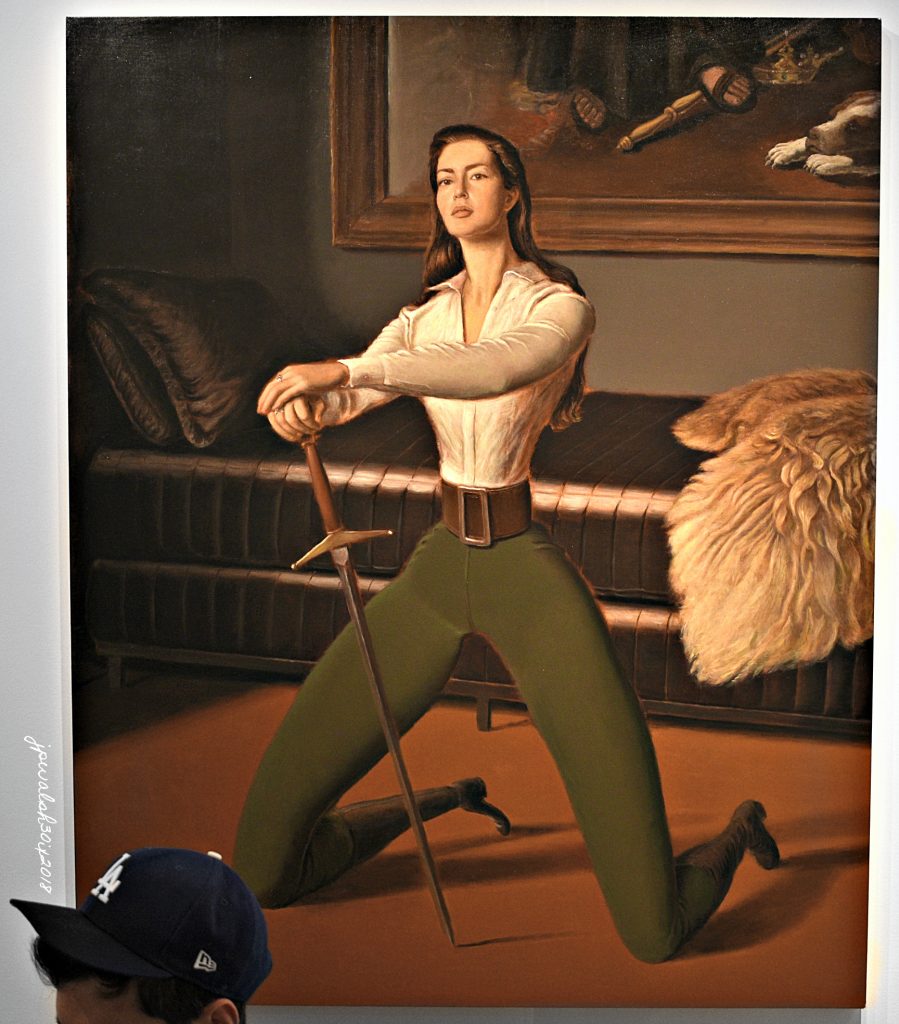
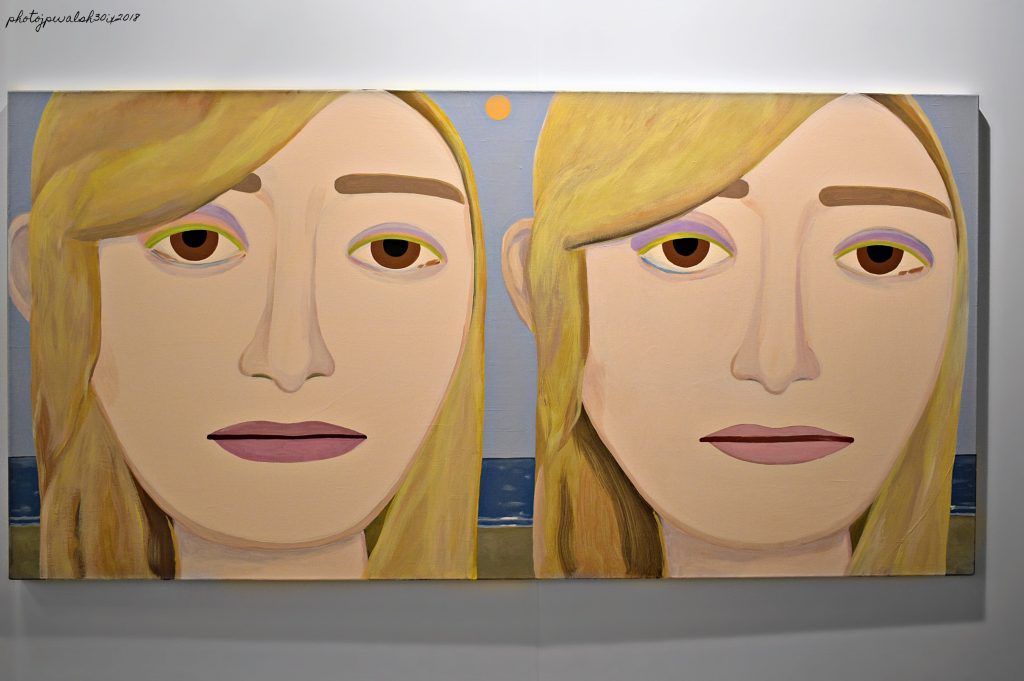
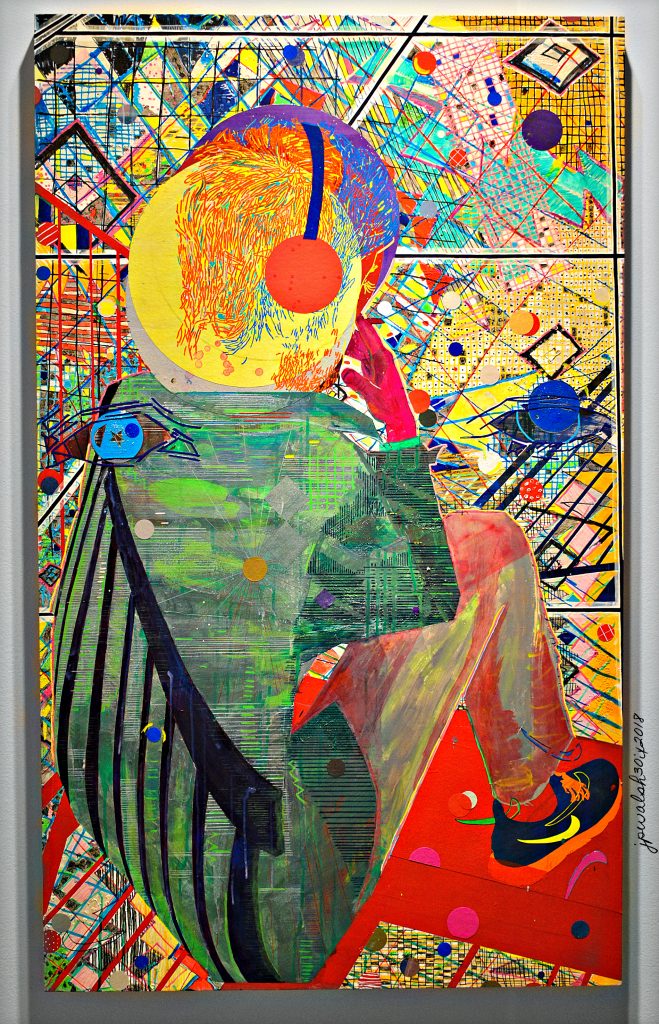
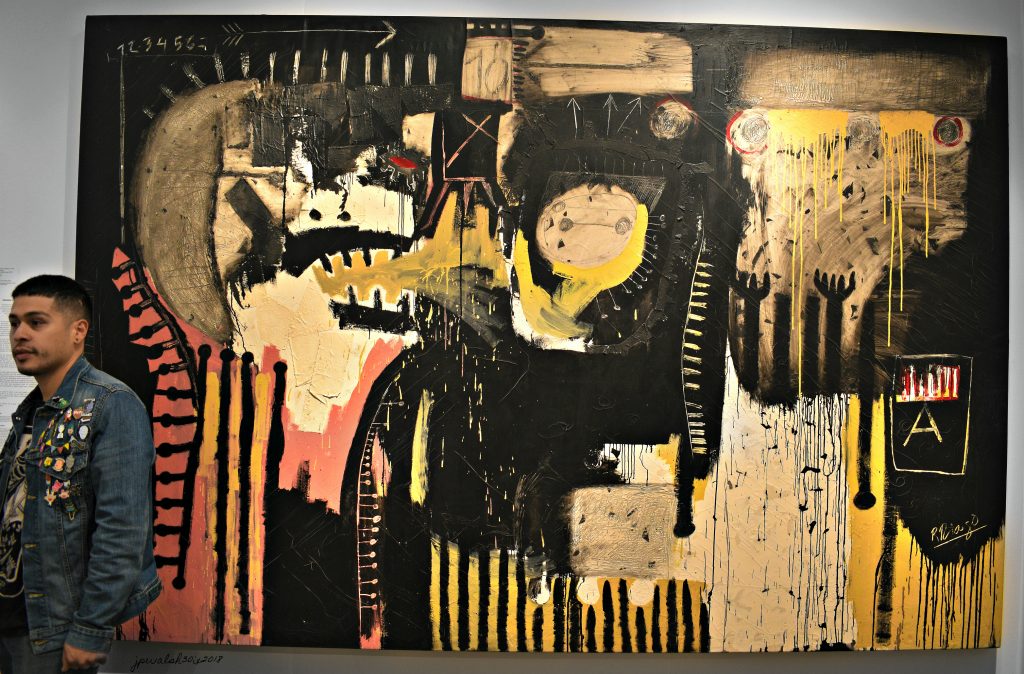
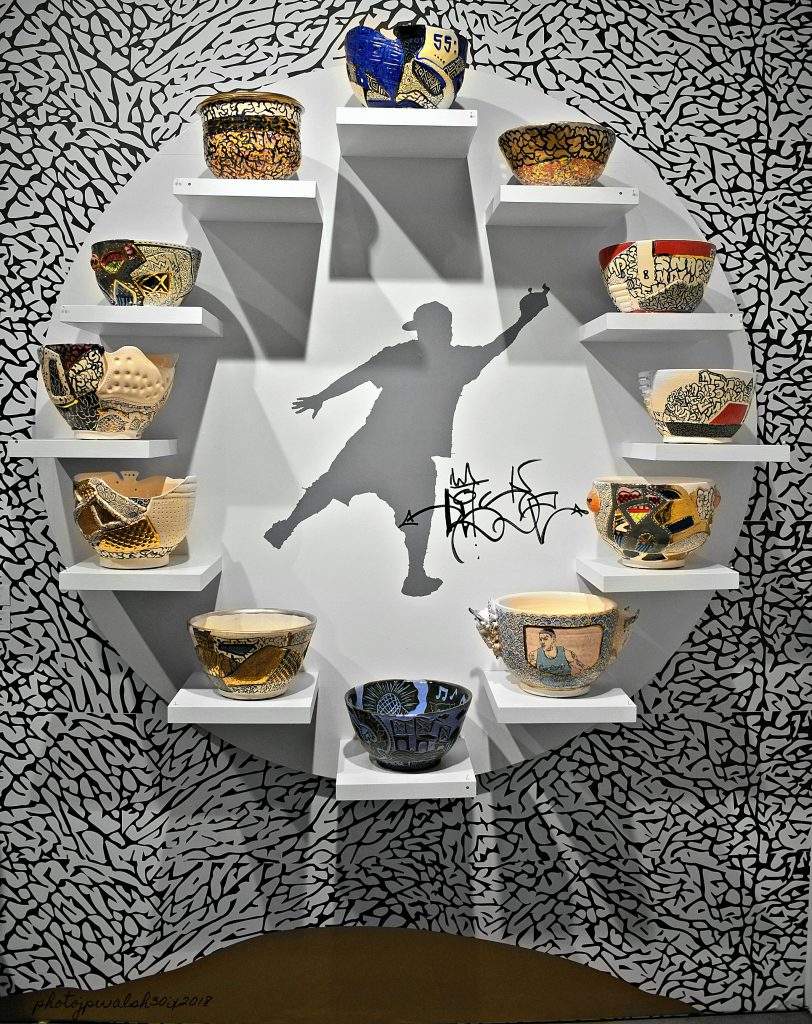
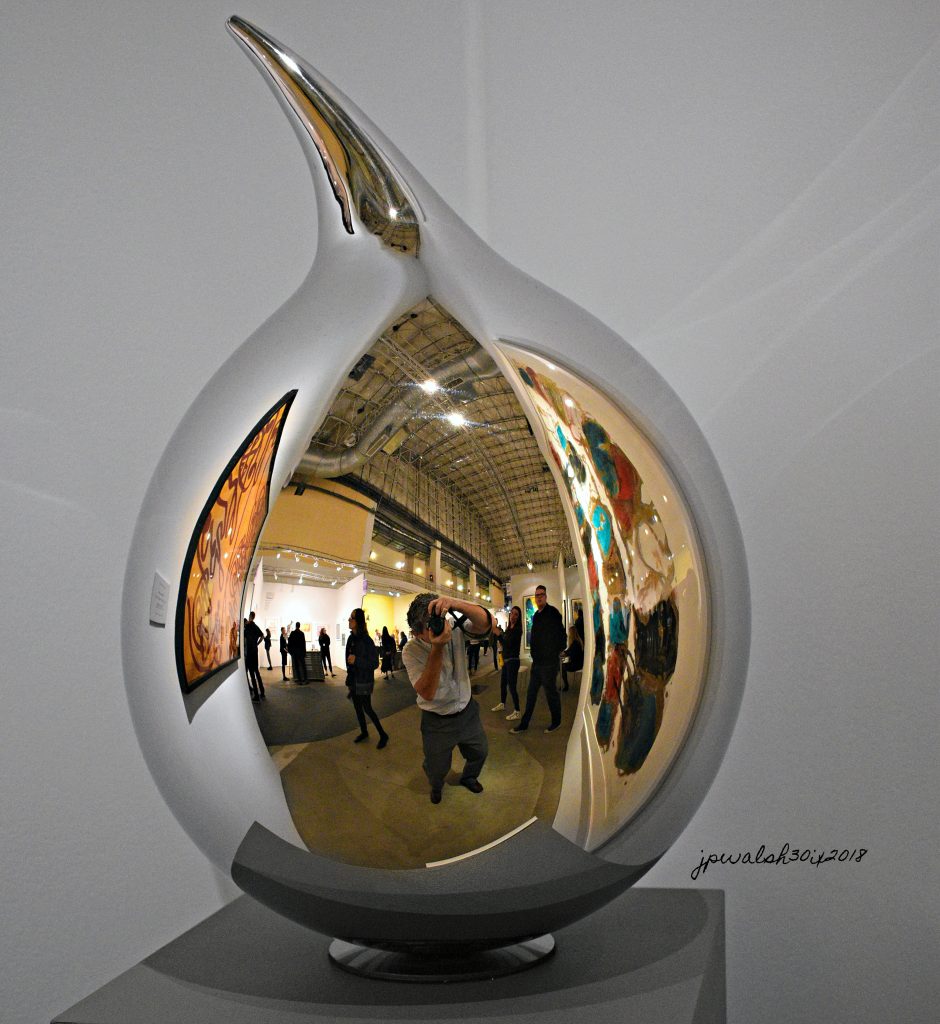
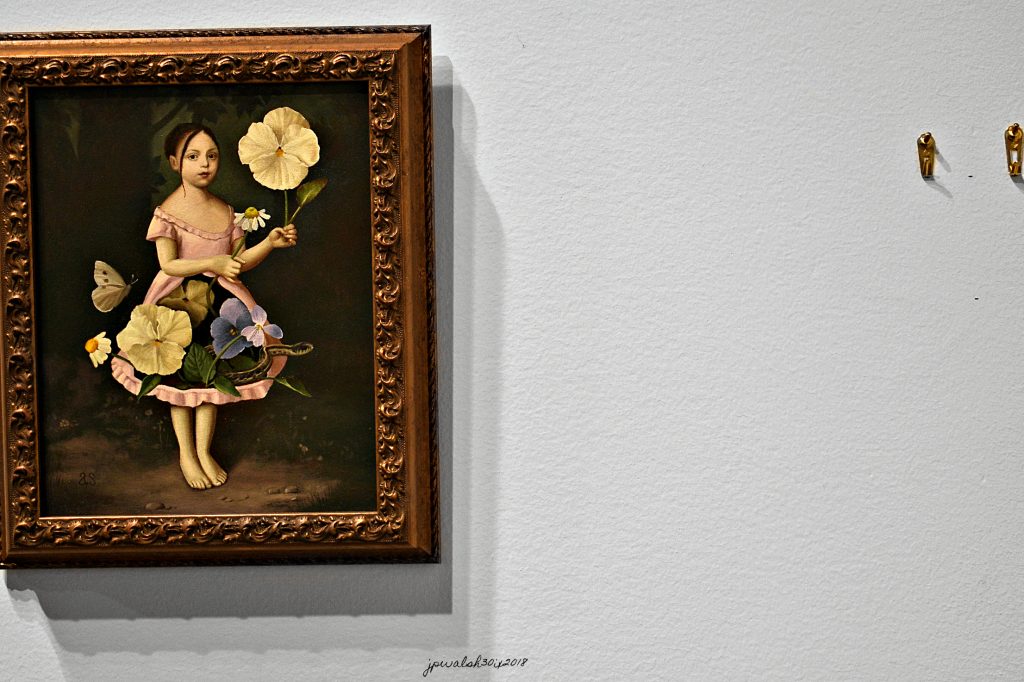
EXPO CHICAGO 2018 was held in Festival Hall on Navy Pier in Chicago. The annual event, held since 2012, is in its seventh year.EXPO CHICAGO 2018 attracts thousands of attendees to visit with hundreds of gallery owners and artists from all over the world.Expo Chicago is a major modern and contemporary art event held each year to open the Fall art season. It is held nearby to downtown Chicago and the Magnificent Mile on historic Navy Pier which is one of Chicago’s most popular tourist magnets.One of the information desks at EXPO CHICAGO 2018. EXPO CHICAGO 2018 welcomed 135 international art galleries from 27 countries and 63 cities.Georgia Scherman Projects, Toronto. Within the framework of the show’s sections, each booth showcases the artwork of their choosing .Artwork of Marcus Jansen was featured at Casterline/ Goodman Gallery, Aspen, CO, Chicago, and Nantucket, MA.Artist Gina Pellón (center) at Cerunda Arte, Coral Gables, FL.Surrealist painter Fred Stonehouse, Night King, 2018, acrylic on canvas, Tory Folliard Gallery, Milwaukee, WI.Richard Hughes, Hot Step, 2017, cast polyester resin and enamel paint, Anton Kern Gallery, New York.Ridley Howard, Blue Dress, Blue Sky, 2016, acrylic on linen, Frederic Snitzer Gallery, Miami, FL.admissions. Library Street Collective, Detroit, MI. Artist Francesco Clemente, 2018, oil on canvas at Maruani Mercier Gallery, Brussels, Belgium.Artwork of Larry Poons, Yares Art, New York, Palm Springs, Santa Fe.Artwork of Austin White, 2018, Jenkins Johnson Gallery, San Francisco and New York.In/Situ: Postcommodity, Repellent Fence, 2015, Bockley Gallery, Minneapolis, Minnesota.Peter Blake Gallery, Laguna Beach, CA.Artwork by Asmund Havsteen Mikkelsen at the booth shared by Fold Gallery, London, and Galleri Kant, Copenhagen.Prune Nourry, River Man (detail), 2018, patinated copper tubes, Galerie Templon, Paris.Gérard Garouste, The Eagle Owl and the One-Eared Woman, 2016, Galerie Templon, Paris.Jaume Plensa’s Laura Asia in White, 2017, polyester resin and marble dust, at Richard Gray Gallery, Chicago.Jaume Plensa’s Laura Asia in White, 2017, polyester resin and marble dust, at Richard Gray Gallery, Chicago.William Kentridge, Blue Rubrics, 2018, lapis lazuli pigment on thesaurus pages, NFP Field Tate Editions, Royal Academy of Arts, London.Frances Stark, According to This…, 2018, Silk screen on linen on panel, Gavin Brown’s Enterprise, New York and Rome.David Driskell (b. 1931), Jazz Singer (Lady of Leisure, Fox), 1974, oil and collage on canvas, 52 x 44 in., DC MooreGallery, New York City.Jansson Stegner, Swordswoman, 2018, oil on linen, Nino Mier Gallery, Los Angeles.Brian Calvin, Eternal Return, 2009, acrylic on canvas, Anton Kern Gallery, New York.Margot Bergman, Gloria, 2014, acrylic on linen, Corbett vs. Dempsey, Chicago.Ceysson & Bénétière, New York Luxembourg Paris Saint-Étienne.Julie Heffernan, Self-Portrait with Nuala, 2018, oil on canvas, Zolla/Lieberman Chicago.Chloe Wise, You would have been a castle for a moment, 2016, Galerie Division, Montreal and Toronto.EXPO CHICAGO 2018. EXPO CHICAGO 2018. Artwork of Devan Shimoyama, De Buck Gallery New York City.EXPO CHICAGO 2018. Chie Fueki, Kyle, 2017, DC Moore Gallery, New York City.Naudline Pierre, Deal Kindly and Truly With Me, 2018, oil on canvas, 56 x 52 inches, Shulamit Nazarian, Los Angeles.Clare Sherman, Sea Cave, 2017, oil on canvas, 84 x 66 in., DC Moore Gallery, New York City.Roberto Fabelo, Gothic Habanero, n.d., oil on canvas, Cerunda Arte, Coral Gables, FL.EXPO CHICAGO 2018 brings the world of modern and contemporary art to Chicago for the collector.EXPO CHICAGO 2018 offers the art lover opportunities to encounter the latest in modern and contemporary art from around the world.EXPO CHICAGO 2018 covers tens of thousands of square feet with modern and contemporary art of many kinds from 27 countries and 63 global cities.EXPO CHICAGO 2018Sculpture, painting, and other visual art forms were in evidence at Expo Chicago/2018. There is a popular on-site cafe that serves snacks and beverages.EXPO CHICAGO 2018EXPO CHICAGO 2018EXPO CHICAGO 2018Juan Roberto Diago, Grito, 1997. The artist talks about his artistic debt to Jean-Michel Basquiat.Fort Gansevoort, New York City.Artwork of Nick Dawes, 2018, Galerie Kornfeld, Berlin.Tsailing Tseng, Black Moor, Spring/ Sun/ Winter/ Dread/ Everything Everything, 2018, oil on linen, SAIC Booth (Tuttle Fellowship).Roberto Lugo, porcelain china, paint, luster, 2018, Wexler Gallery, Philadelphia. PA.Lavar Munroe, Spy Boy, 2018, acrylic and earring stud on canvas, Jenkins Johnson Gallery San Francisco New York.In/Situ: Ivan Argote, Among Us — Across History…, 2017.Richard Hudson, Tear, 2016, polished mirrored steel, Michael Goedhuis London Beijing New York. Aniela Sobieksi, Girl with a Garden, 2018, oil on panel, Tory Folliard Gallery, Milwaukee. The painting next to it sold just before I took this photograph.The Hole NYC.Barnaby Barford (b. 1977), Celebrity, 2018, Giclée Print, David Gill Gallery, London.
EXPO CHICAGO 2017 demonstrates how Chicago functions as a global crossroads for contemporary and modern art, bringing together international galleries, artists, and audiences while transforming Navy Pier’s Festival Hall into a temporary museum of worldwide creative exchange and experimentation.
EXPO CHICAGO 2017 is the 6th annual exhibition of international contemporary and modern art held in Chicago at Navy Pier’s Festival Hall. It took place September 13-17, 2017. Expo Chicago/2017 presented 135 galleries and exhibitors representing 25 countries and 58 cities from around the world.
All photographs and text by John P. Walsh.
FEATURE image: EXPO CHICAGO 2017, Festival Hall, Navy Pier.
EXPO CHICAGO 2017 is the 6th annual exhibition of international contemporary and modern art held in Chicago at Navy Pier’s Festival Hall. It took place September 13-17, 2017. Expo Chicago/2017 presented 135 galleries representing 25 countries and 58 cities from around the world.
Brian Calvin, Momentary Monument, 2017, acrylic on canvas, Anton Kern Gallery, New York. Expo Chicago 2017.
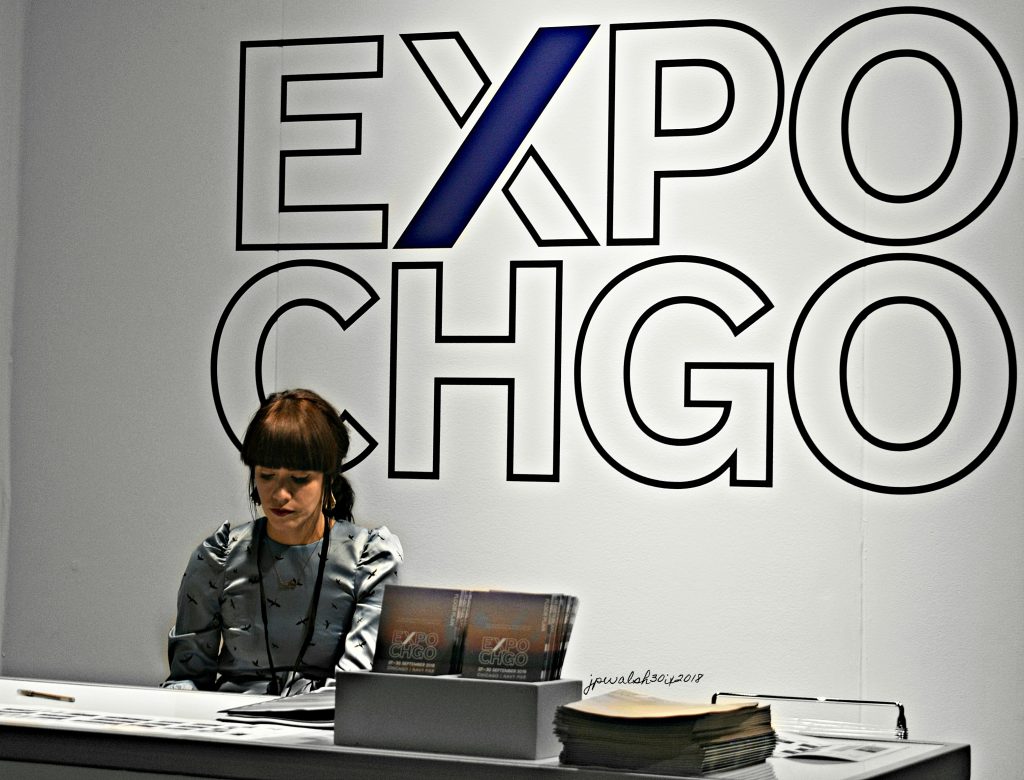
Admissions, Expo Chicago 2017.
Information desk, Expo Chicago 2017.
Lara Schnitger, Suffragette City, 2015-2017, Cotton, and linen, quilted and bleached, Anton Kern Gallery, New York. Expo Chicago 2017.
The War We Won, Roger Brown, oil on canvas, 80 x 120 in., Kavi Gupta Gallery, Chicago. Expo Chicago 2017.
Doug Argue, Dream Song 12, 2017, oil on paper, 40,x,60 in., Marc Straus, New York. Expo Chicago 2017.
CarrerasMugica Contemporary Art Gallery, Bilbao. Expo Chicago 2017.
Galerie Gmurzynska, Zurich, Switzerland, with booth design by Antonio Manfreda. Expo Chicago 2017. Germano Celant, theorist of the Arte Povera movement. From 2015 he was the artistic director of the Prada Foundation in Milan.
Matthew Monahan, Hurricane Nickel, 2016, and Aquarius Gemini, 2016, Anton Kern Gallery, New York. Expo Chicago 2017.
Anton Kern Gallery, New York. Expo Chicago 2017.
Rita McBride, Halicarnassus, 2010, bronze and grey limestone, and Pantheon 2, bronze and markina marble, CarrerasMugica Contemporary Art Gallery, Bilbao. Expo Chicago 2017.
Wardell Milan, The New Sun Will Warm our Proud and Naked Bodies, 2016, charcoal, oil, oil pastel, pastel, gesso, acrylic, color pencil, cut paper on paper, David Nolan Gallery, New York. Expo Chicago 2017.
Meleko Mokgosi, Honor Fraser Gallery, Los Angeles. Expo Chicago 2017.
John A. Seal, König Galerie, Berlin. Expo Chicago 2017.
Alfred Leslie, Oval Collage, 1959, Diana Moore, White Head, 1988 and Willem de Kooning, 1965, charcoal on paper, Alan Stone Projects, New York. Expo Chicago 2017.
Thinks I, To Myself. Expo Chicago 2017.
Expo Chicago 2017.
Expo Chicago 2017.
Jackie Saccoccio, Portrait (Bomba), 2017, and Faheem Majeed, Hopscotch I, 2011, and Pause, 2010, Rhona Hoffman Gallery Chicago. Expo Chicago 2017.
Expo Chicago 2017.
Garth Greenan Gallery, New York. Expo Chicago 2017.
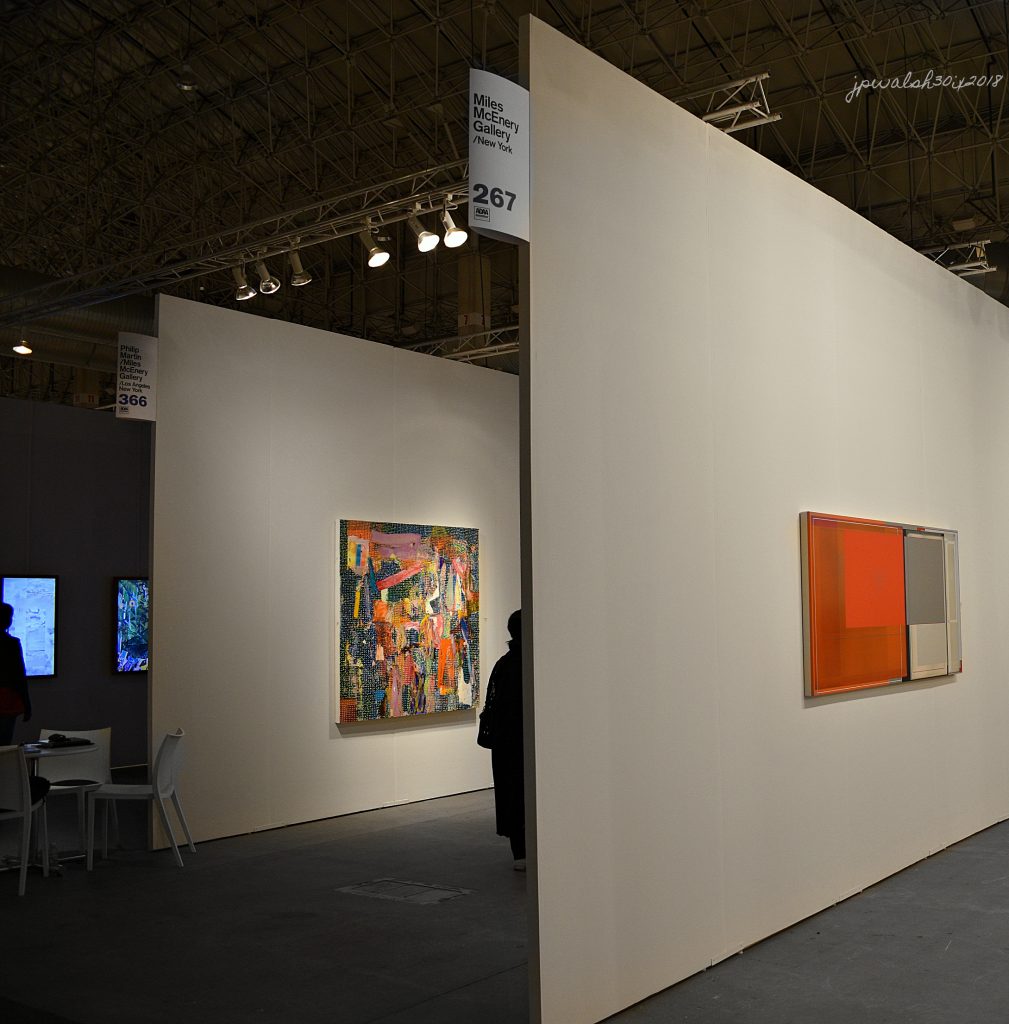
Iva Gueorguieva, Listen, 2017, acrylic oil collage on canvas, Miles McEnery Gallery, New York. Expo Chicago 2017.
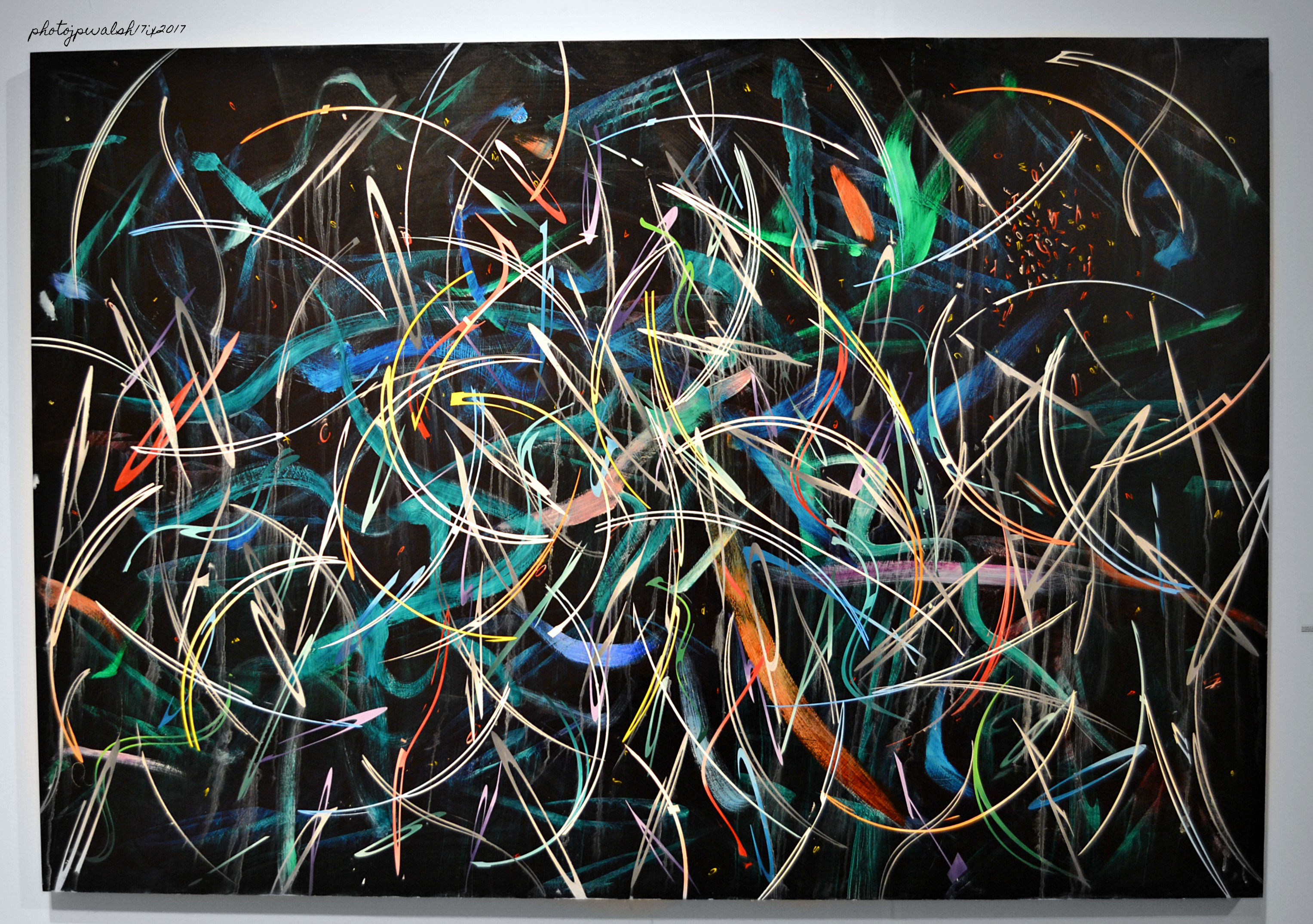
Hayal Pozanti, 70 (million m.p.h that the earth orbit around the sun), 2017, acrylic on canvas, 60 x 132 in., Jessica Silverman Gallery, San Francisco, California. Expo Chicago 2017.
Lavar Munroe, Instinctual, 2017, acrylic on canvas, 48 x 42 in., Jenkins Johnson Gallery, San Francisco. Expo Chicago 2017.
Expo Chicago 2017.
Peres Projects Berlin. Expo Chicago 2017.
Ransome Stanley, Untitled, 2017, oil on canvas, 59 x 78 in., Gallery MOMO, South Africa. Expo Chicago 2017.
Booth 839, Expo Chicago 2017.
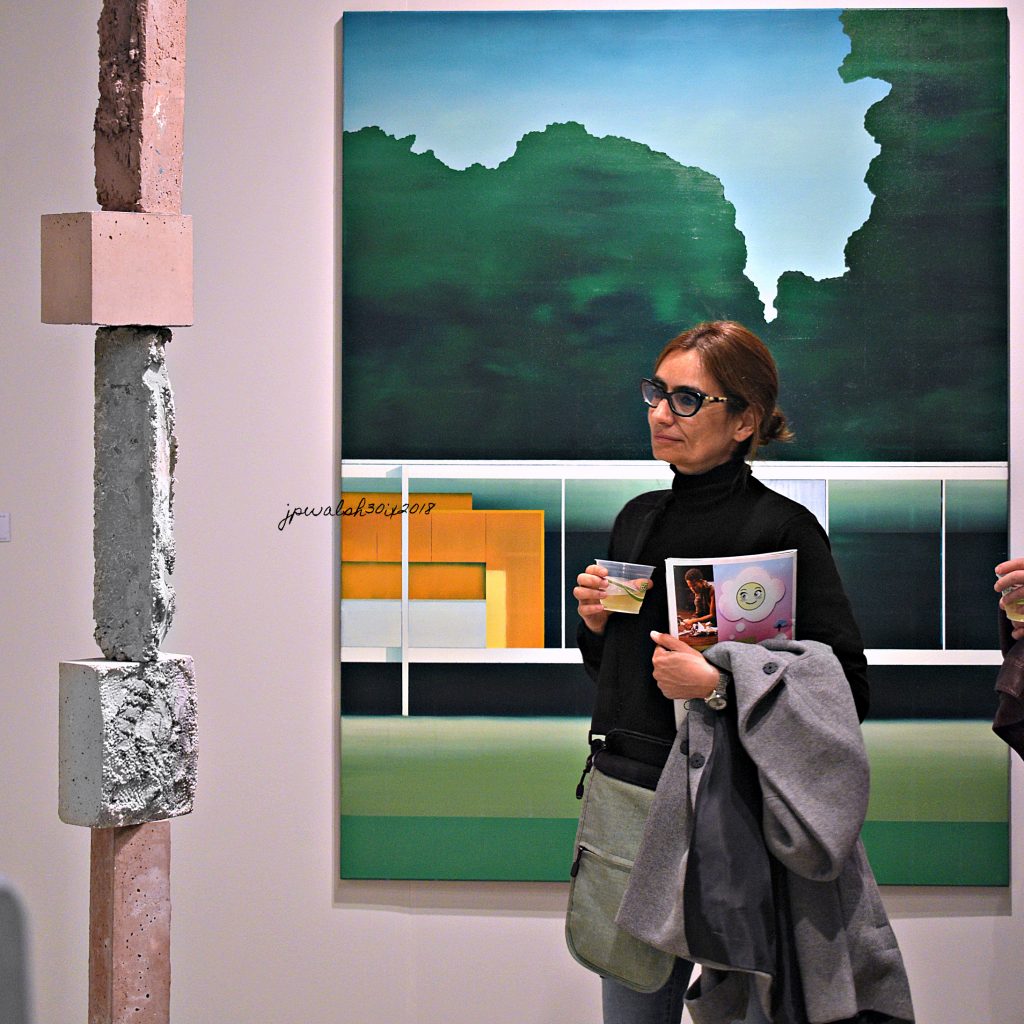
Caroline Walker, Grimm Gallery Amsterdam New York. Expo Chicago 2017.
Expo Chicago 2017.
Nicolas Africano, Untitled, 2017, cast glass, Weinstein Gallery Minneapolis. Expo Chicago 2017.
FEATURE IMAGE: Manuel Mendive, Este Lugar Sagrado/This Sacred Place, 2009, acrylic on canvas, Cernuda Arte Coral Gables, FL. Expo Chicago/2016.
EXPO CHICAGO 2016 demonstrates how Chicago functions as a global crossroads for contemporary and modern art, bringing together international galleries, artists, and audiences while transforming Navy Pier’s Festival Hall into a temporary museum of worldwide creative exchange and experimentation.
EXPO CHICAGO 2016 is the 5th annual exhibition of international contemporary and modern art held in Chicago at Navy Pier’s Festival Hall. It took place September 22-25, 2016. Expo Chicago/2016 presented 145 galleries and exhibitors representing 22 countries and 53 cities from around the world.
All photographs and text by John P. Walsh.
Jeff Koons, BMW M3 GT2, Expo Chicago/2016.
Alfredo Jaar, Be Afraid of the Enormity of the Possible, 2015, neon, edition 3/3 + 3AP, Galerie Thomas Schulte, Berlin, Germany. Expo Chicago/2016.
At Dittrich & Schlechtriem, Berlin, Germany includes artwork by Klaus Jörres and Julian Charrière. Expo Chicago/2016.
At Cernuda Arte Coral Gables, FL. Manuel Mendive (foreground) Este Lugar Sagrado/This Sacred Place, 2009, acrylic on canvas. Expo Chicago/2016.
Paintings I, Art+Language, Made in Zurich 1965-1972, London. Expo Chicago/2016.
The Art + Language group’s Michael Baldwin and Mel Ramsden in Chicago. Founded in the mid1960s in the United Kingdom by Terry Atkinson (b. 1939), David Bainbridge (b. 1941), Michael Baldwin (b. 1945) and Harold Hurrell (b. 1940), artist Mel Ramsden joined in 1970.
Throughout the 1970s, Art + Language dealt with questions about art production and attempted a shift from conventional forms of art, such as painting and sculpture, to theoretically linguistic (text)-based artwork. Art + Language remains active today in several collaborative projects.
September 2016. 99% 7.21 mb DSC_0630
Jonathan Lasker, The Handicapper’s Faith, 2011, Galerie Thomas Schulte, Berlin, Germany. Expo Chicago/2016.
At Gallery MOMO Cape Town/Johannesburg, South Africa. Artwork by Mary Sibande. Expo Chicago/2016.
Expo Chicago/2016.
Andrew Moore, Mirador, Gibara, Cuba, 2008, 46 x 58 inch archival pigment print, Yancey Richardson Gallery, New York.
Margot Bergman, Agnes, acrylic on canvas, 2016, Corbett vs. Dempsey, Chicago. Expo Chicago/2016.
Shannon Finley, Googol, 2015, acrylic on linen, 4 panels 95 x 189 in.,Carrie Secrist Gallery, Chicago. Expo Chicago/2016.
Euan Uglow, Sue Wearing a Blue Swimming Cap, 1978/80, oil on canvas 19.5 x 27.5 in., Browse & Darby London. Expo Chicago/2016.
Juan Garaizabal, Álvaro Alcázar Gallery, Madrid. Expo Chicago/2016.
April Martin, The Sun had not yet Risen, 2016, copper, thread, glass, vinegar, The School of the Art Institute of Chicago. Expo Chicago/2016.
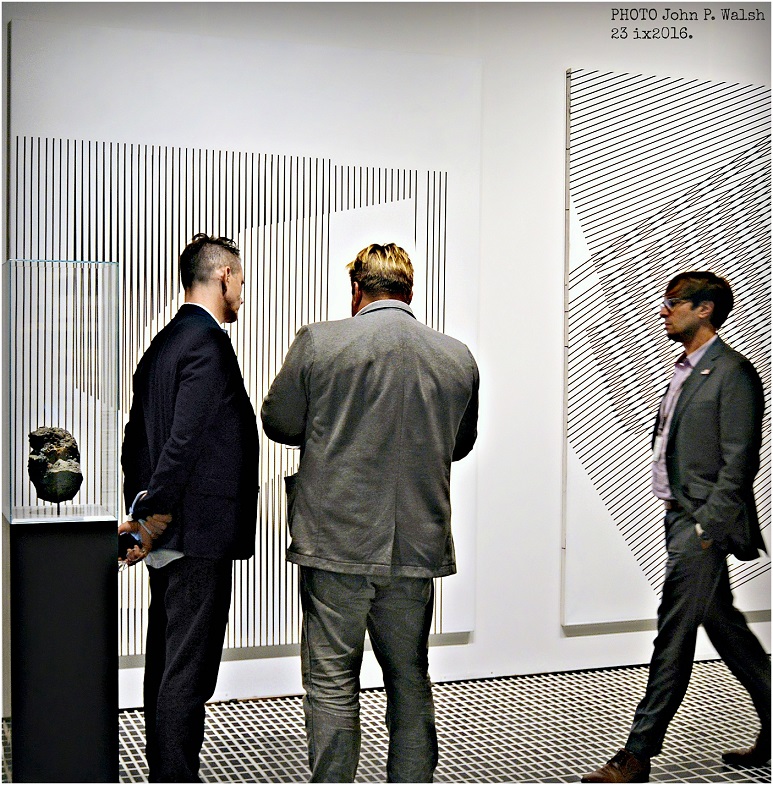
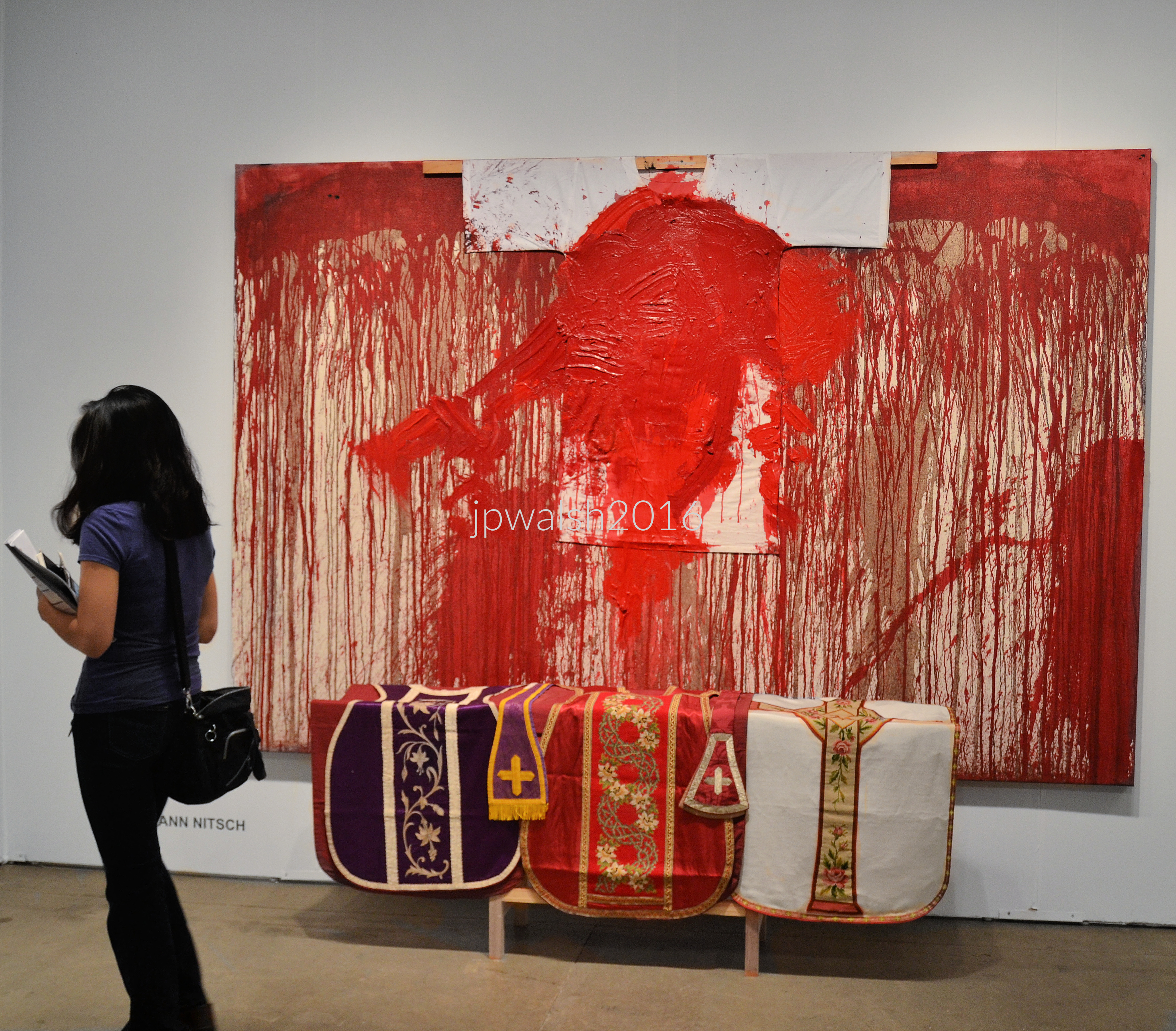
September 2016. Hermann Nitsch, Schüttbild (Shaped Image), 2013, Acrylic on Canvas, Marc Straus Gallery, New York City. 4.29mb DSC_0876 (1)
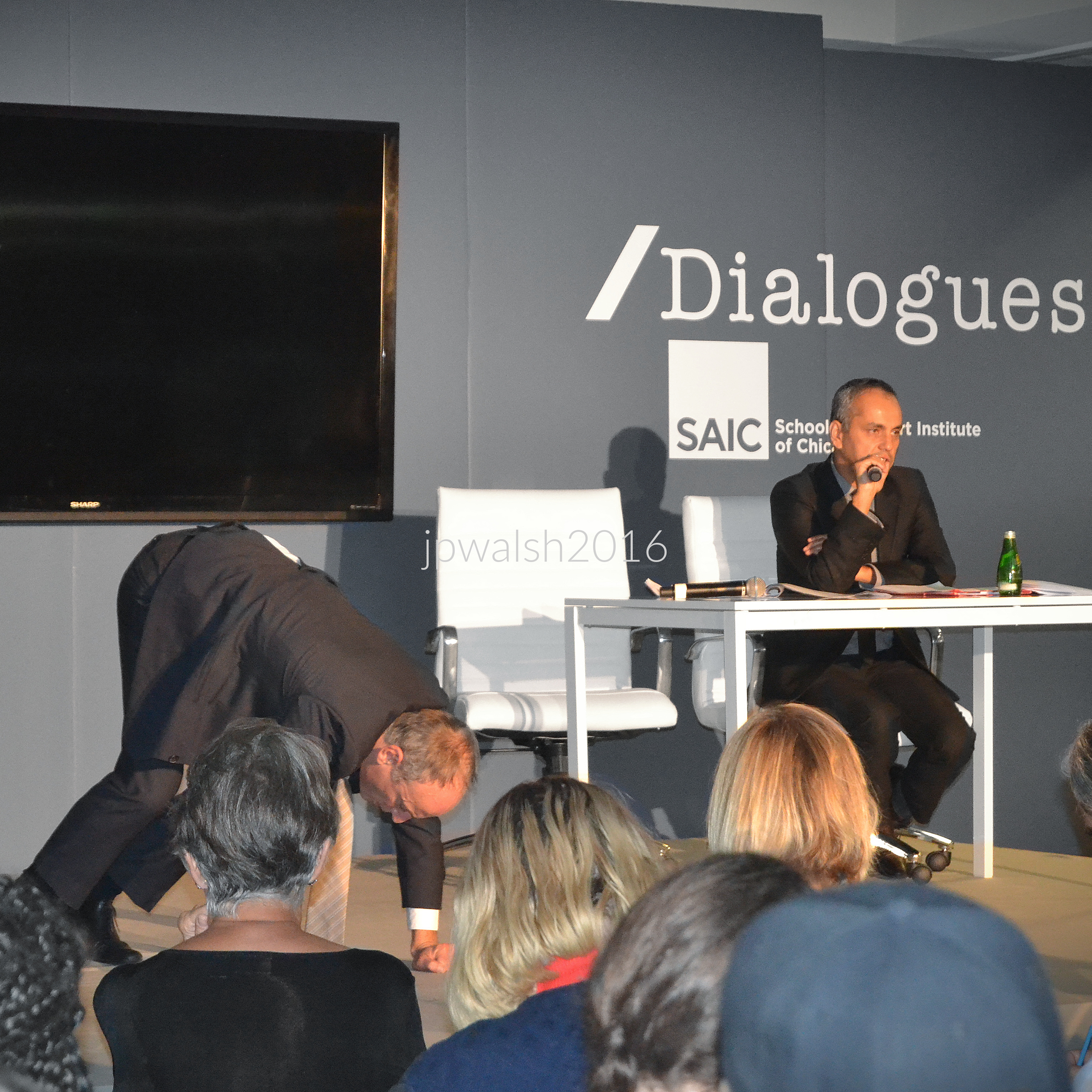
Dialogue with Miguel Aguilar and Chris Silva, Conversation Pieces. Expo Chicago/2016.
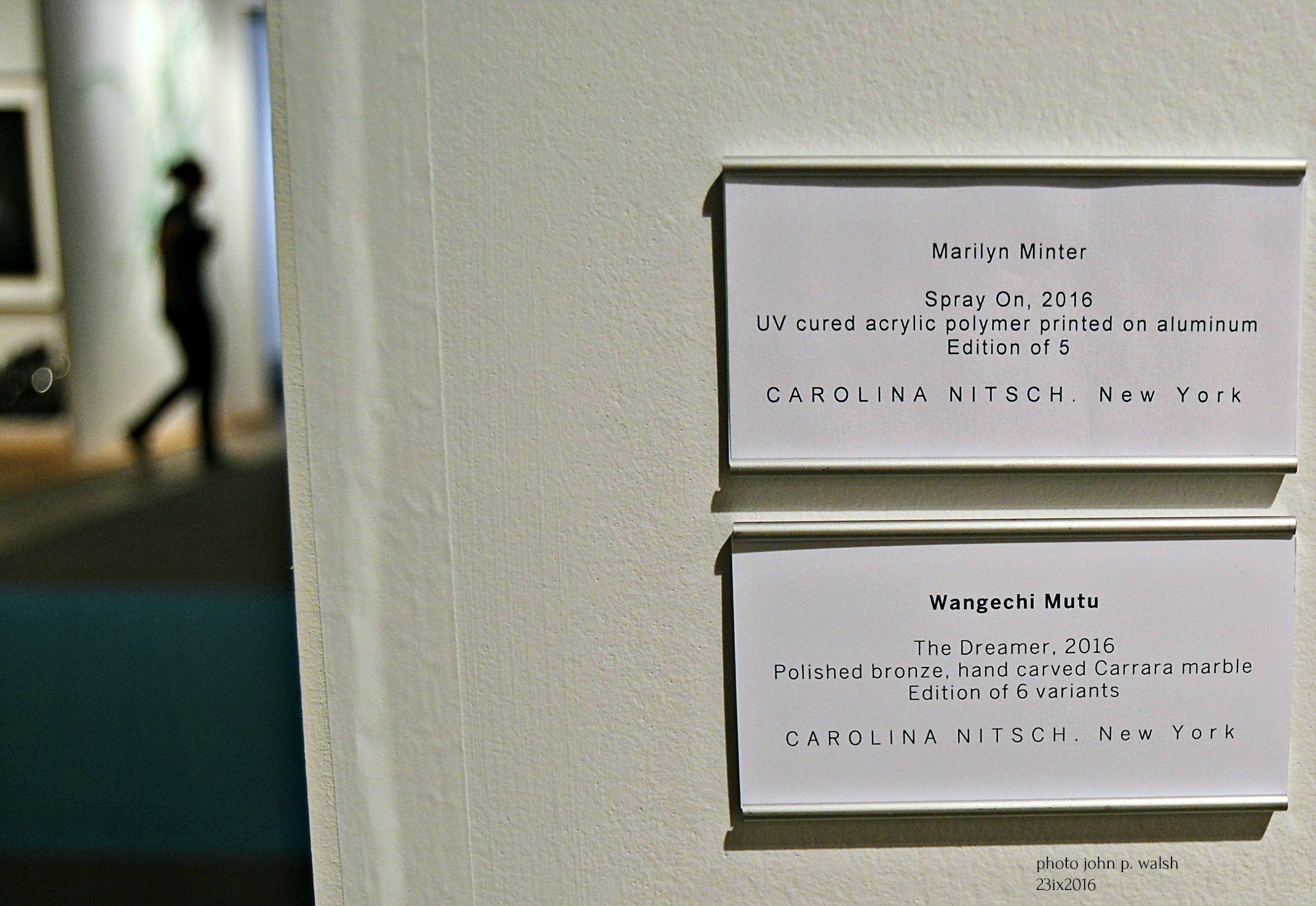
Louise Bourgeois, Girl with hair, 2007, archival dye on silk, edition of 12, Carolina Nitsch, New York City. Expo Chicago/2016.
Pace Gallery, New York City. Expo Chicago/2016.
Expo Chicago 2016.
Genieve Figgis, Half Gallery, New York City. Genieve Figgis is an artist from Ireland who began her artistic career on social media. Expo Chicago/2016.
Buddha’s tight ringlet curls by Qi Yu. Ceramic cinnabar mineral mounted on canvas. Expo Chicago/2016.
Artist Qi Yu of Redbrick Art Museum, Beijing, China.
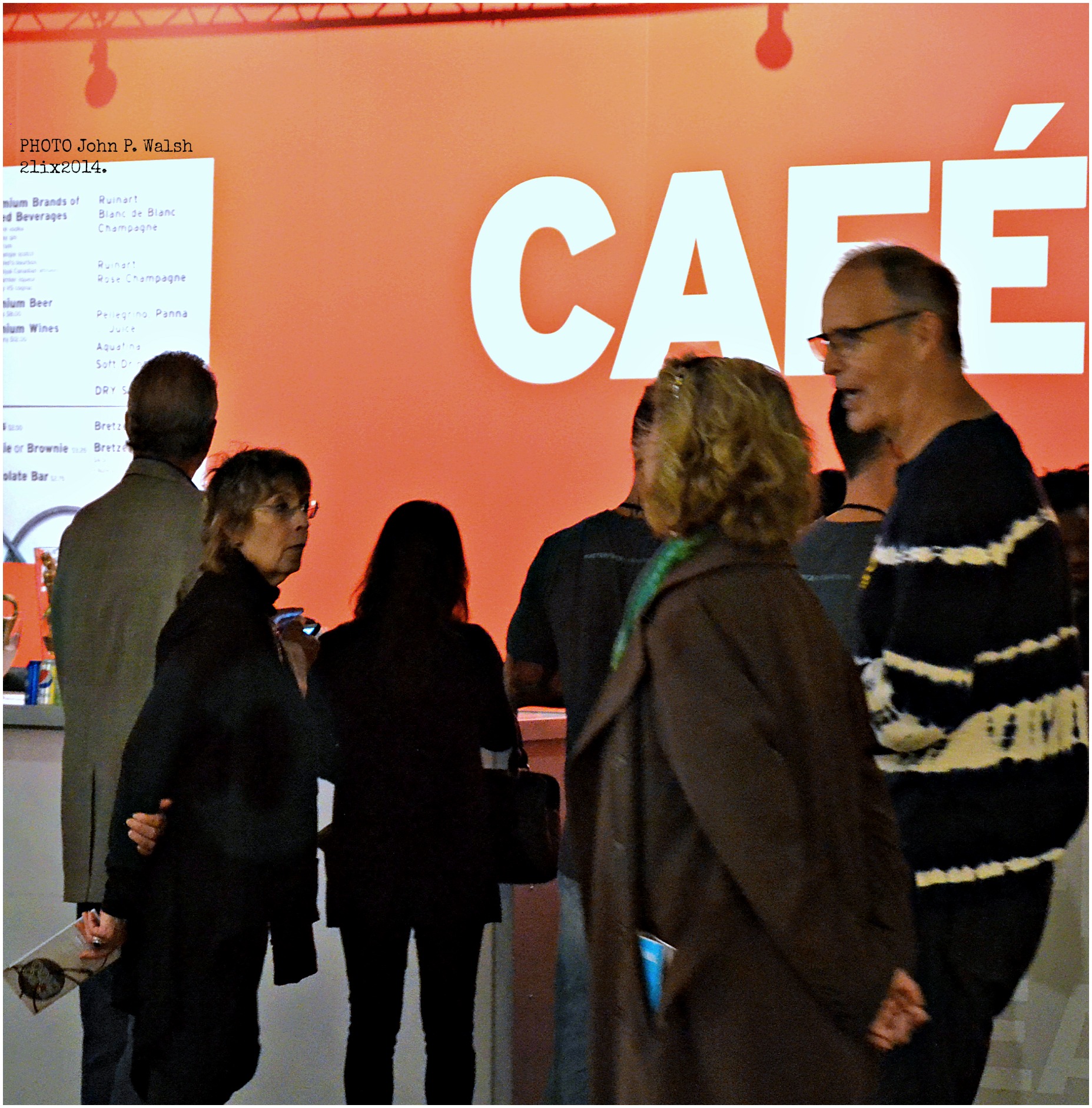
North Cafe. Expo Chicago/2016.
Expo Chicago/2016.
Listen, you a wonder. you a city of a woman. you got a geography of your own., Amy Sherald, 2016, 54 x 43 in., oil on canvas, Monique Meloche Gallery, Chicago.
The artist’s title quotes American poet Lucille Clifton (1936-2010): “listen, you a wonder. you a city of a woman. you got a geography of your own. listen, somebody need a map to understand you. somebody need directions to move around you. listen, woman, you not a noplace anonymous girl; mister with his hands on you he got his hands on some damn body!”
Raffi Kalenderian, Sekula Benner Street, 2016, oil on canvas, Buchmann Galerie Berlin/Lugano. Expo Chicago/2016.
Ernesto Burgos, Kate Werble Gallery, New York City. Expo Chicago/2016.
Sims Reed Gallery London. Expo Chicago/2016.
Ann Agee, Negishi Heights 1957, 2015, acrylic on Thai Mulberry paper, P.P.O.W. Gallery, New York City. Expo Chicago/2016.
Expo Chicago/2016.
Performance outside Zwirner Gallery, New York City. Background: Raymond Pettibon, No Title (Manhattan rising, advancing—), 2010, ink and acrylic on paper, 59 x 118 inches. Expo Chicago/2016.
Mel Bochner, Blah Blah Blah, 2016 and Aloyson Shotz, Flow Fold #3, 2015, Carolina Nitsch Gallery, New York City. Expo Chicago/2016.
Bernar Venet, Indeterminate Line, 2013, rolled steel, 75 1/2 × 80 × 62 in. Paul Kasmin Gallery, New York City. Expo Chicago/2016.
Richard Norton Gallery. Expos Chicago/2016.
Jannis Varelas, New Flags for a New Country, The Breeder, Athens, Greece. Expo Chicago/2016.
Expo Chicago/2016.
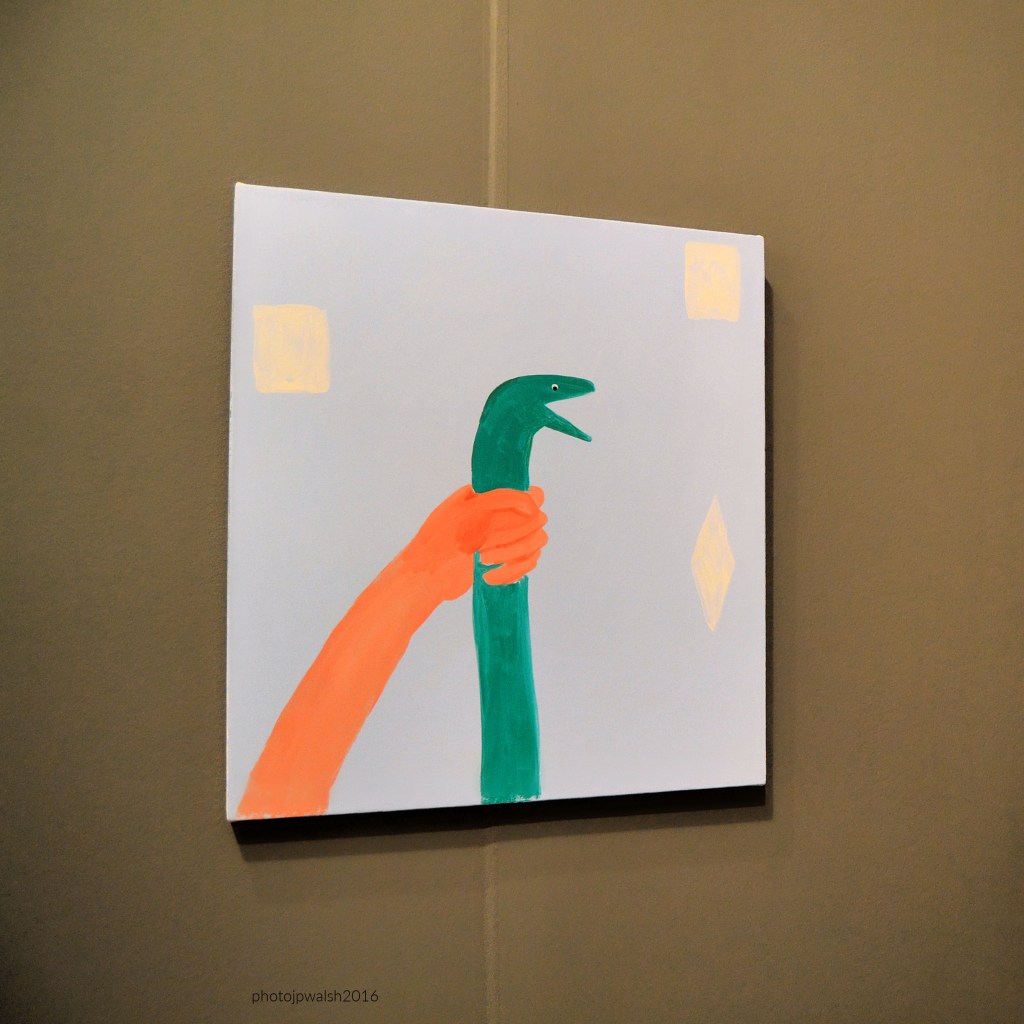
Jenn Smith, Untitled (Snake), oil and acrylic on canvas, 2016, The School of the Art Institute of Chicago. Expo Chicago/2016.
Atelier Van Lieshout, The Beginning of Everything, foam, paint, wood, paverpoll, 2016. Expo Chicago/2016.The molecule represents Glucose (C6H12O6), the primary source of energy for human life. Without glucose, nothing would function: neither the brain, intelligence, thought, muscles, movement or sports. Without energy, our lives would come to a standstill.
FEATURE image:Ewerdt Hilgemann, Habakuk (Homage to Max Ernst), 2014, stainless steel, Borzo Gallery and The Mayor Gallery. In/Situ Outside 2015.
EXPO CHICAGO 2015 demonstrates how Chicago functions as a global crossroads for contemporary and modern art, bringing together international galleries, artists, and audiences while transforming Navy Pier’s Festival Hall into a temporary museum of worldwide creative exchange and experimentation.
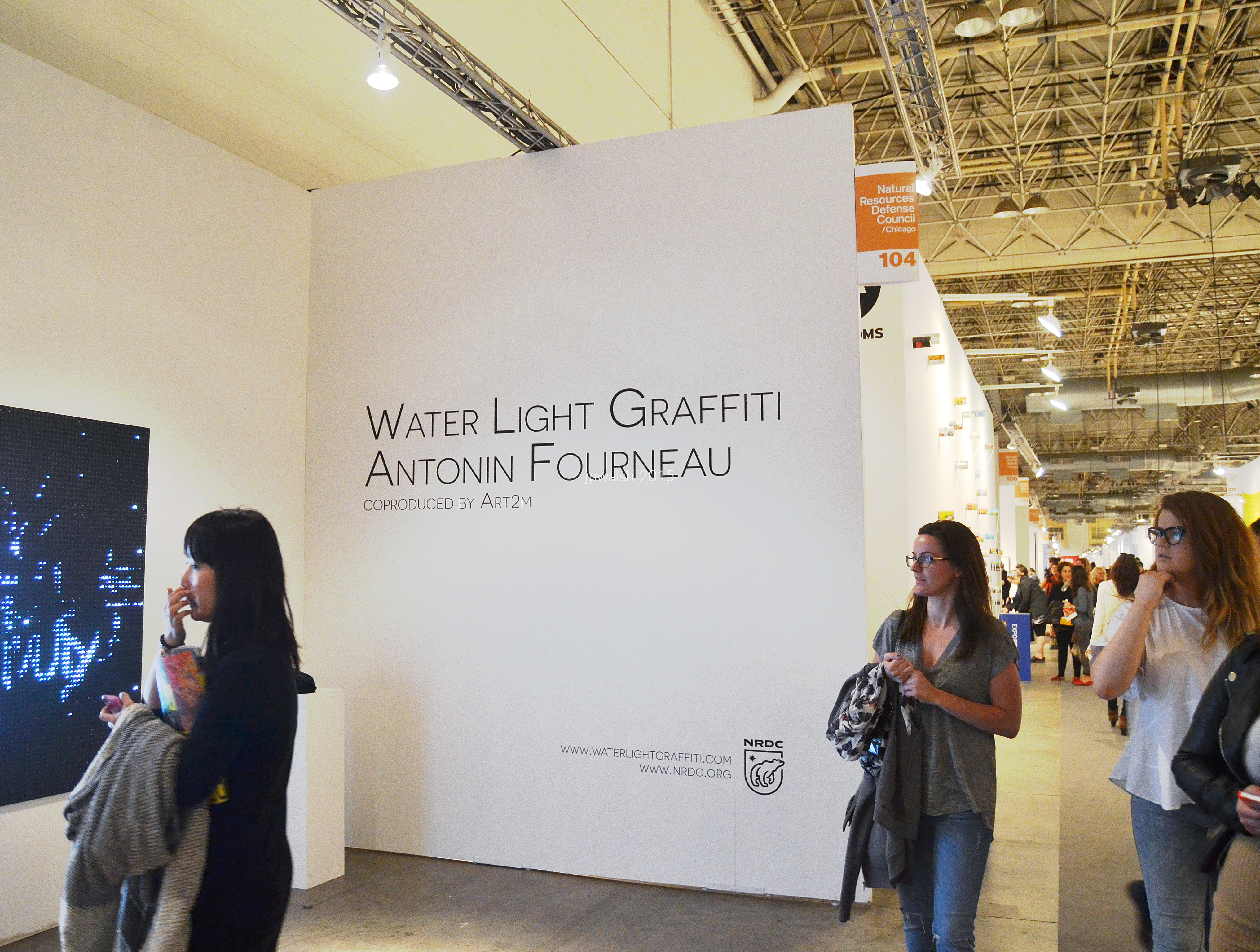
EXPO CHICAGO 2015 is the 4th annual exhibition of international contemporary and modern art held in Chicago at Navy Pier’s Festival Hall. It took place September 17 – 20, 2015. Expo Chicago/2015 presented 140 galleries and exhibitors representing 16 countries and nearly 50 cities from around the world.
All photographs and text by John P. Walsh.
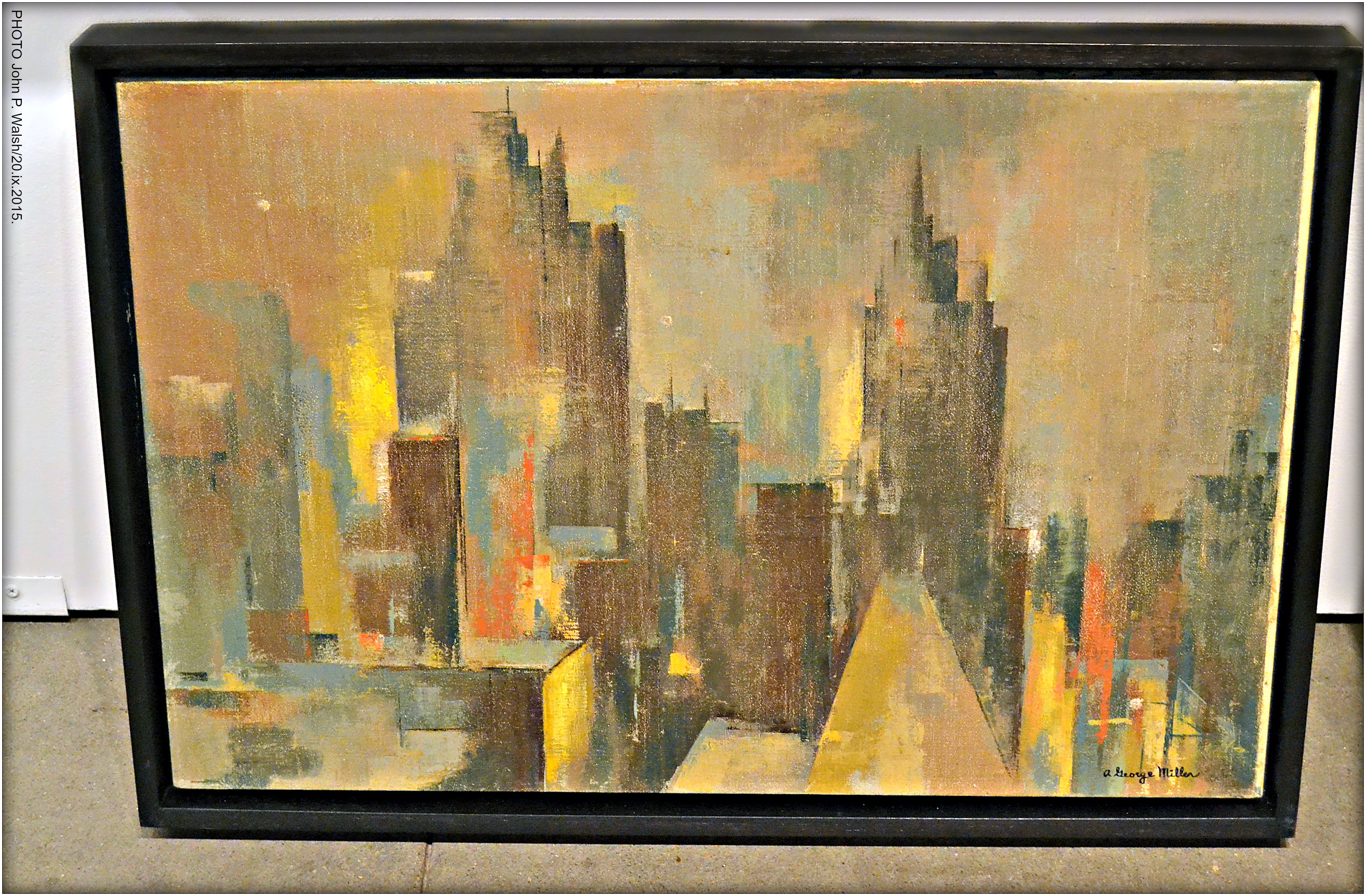
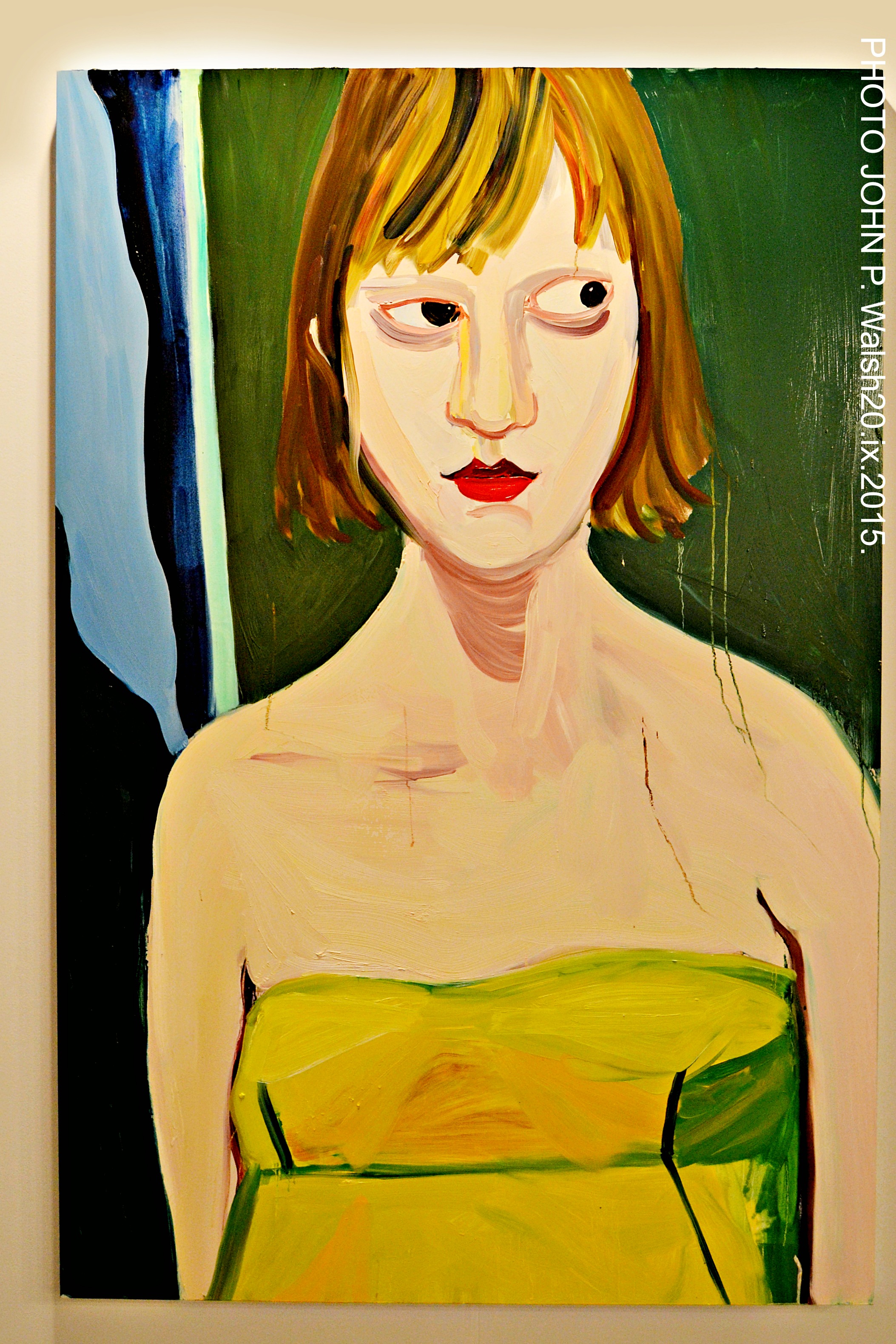
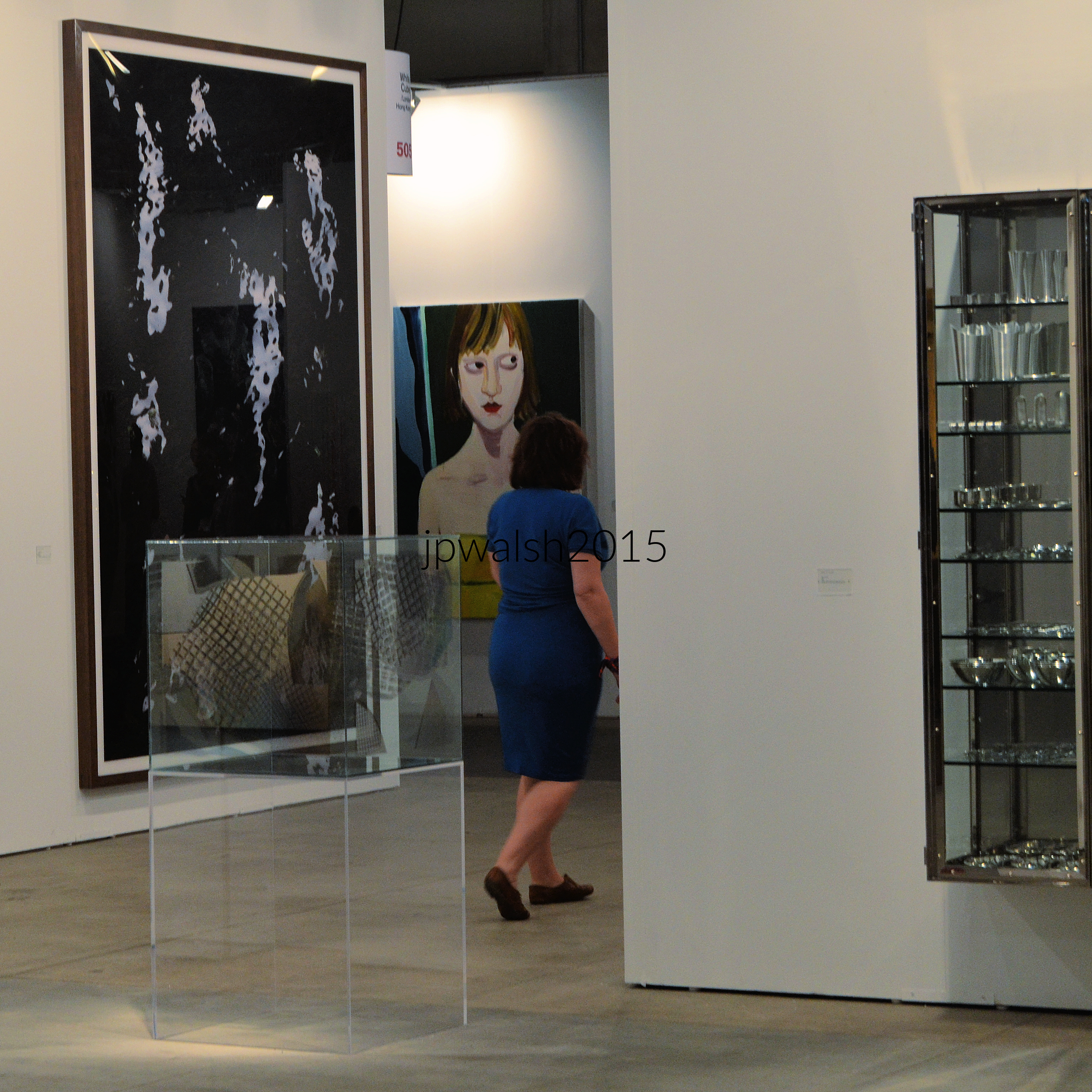
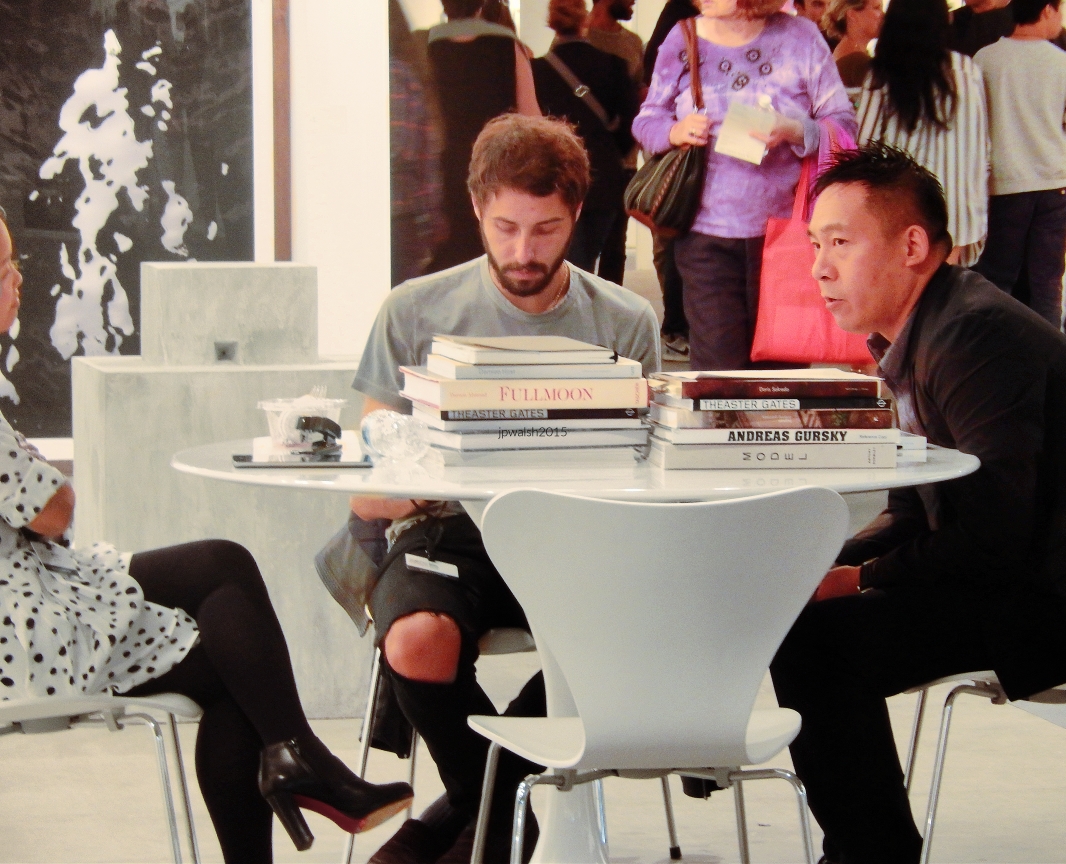
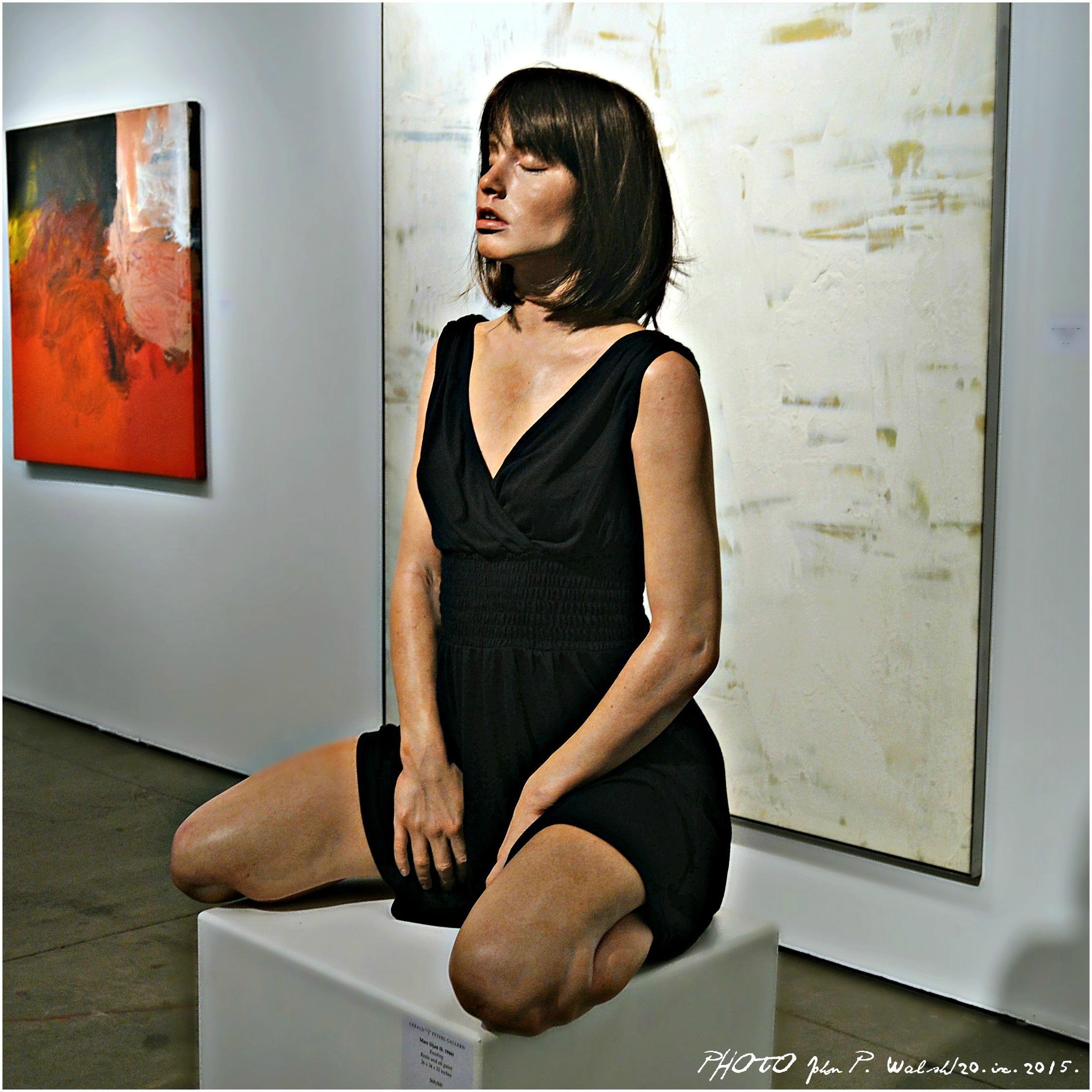
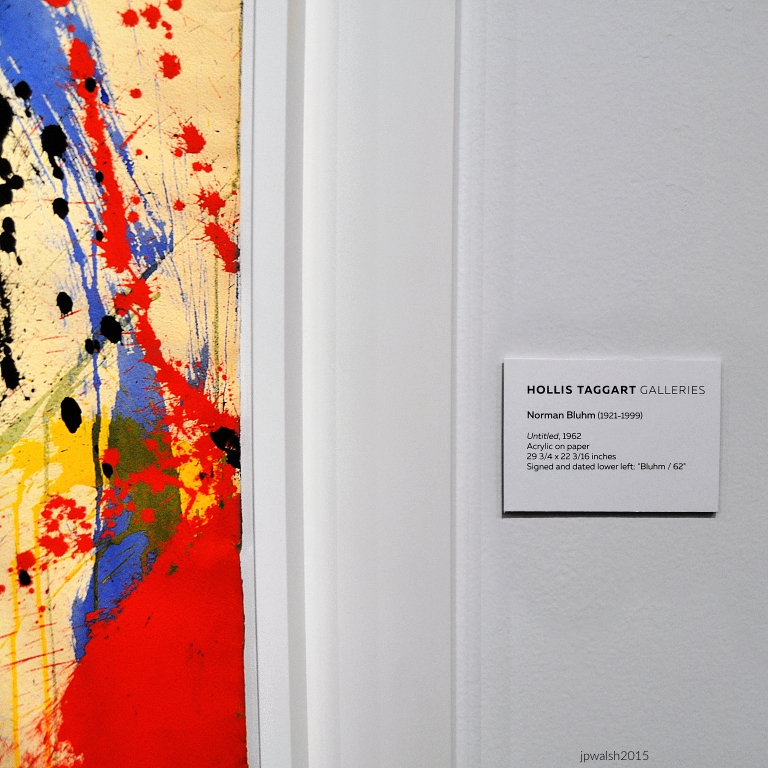
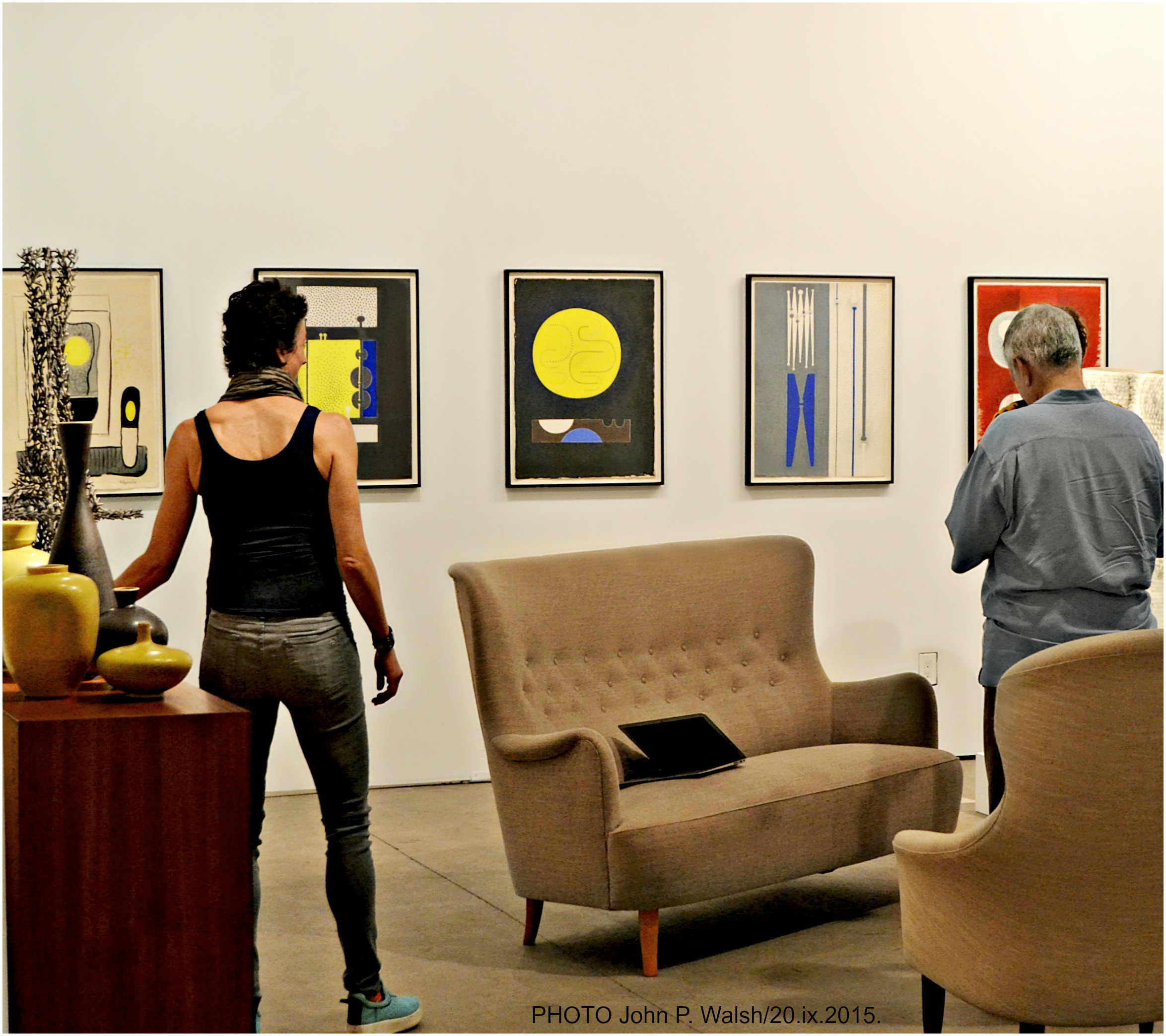
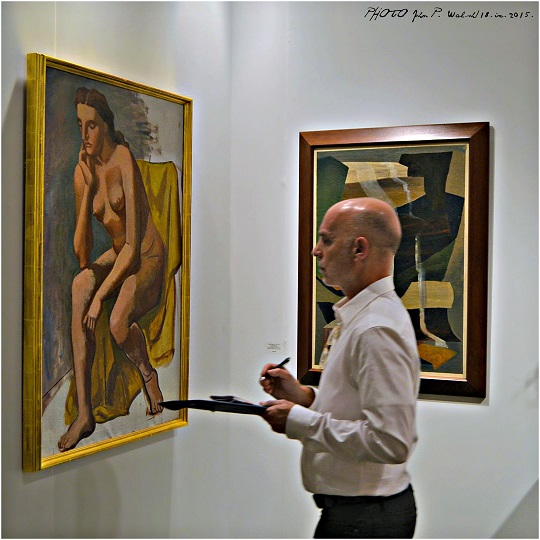
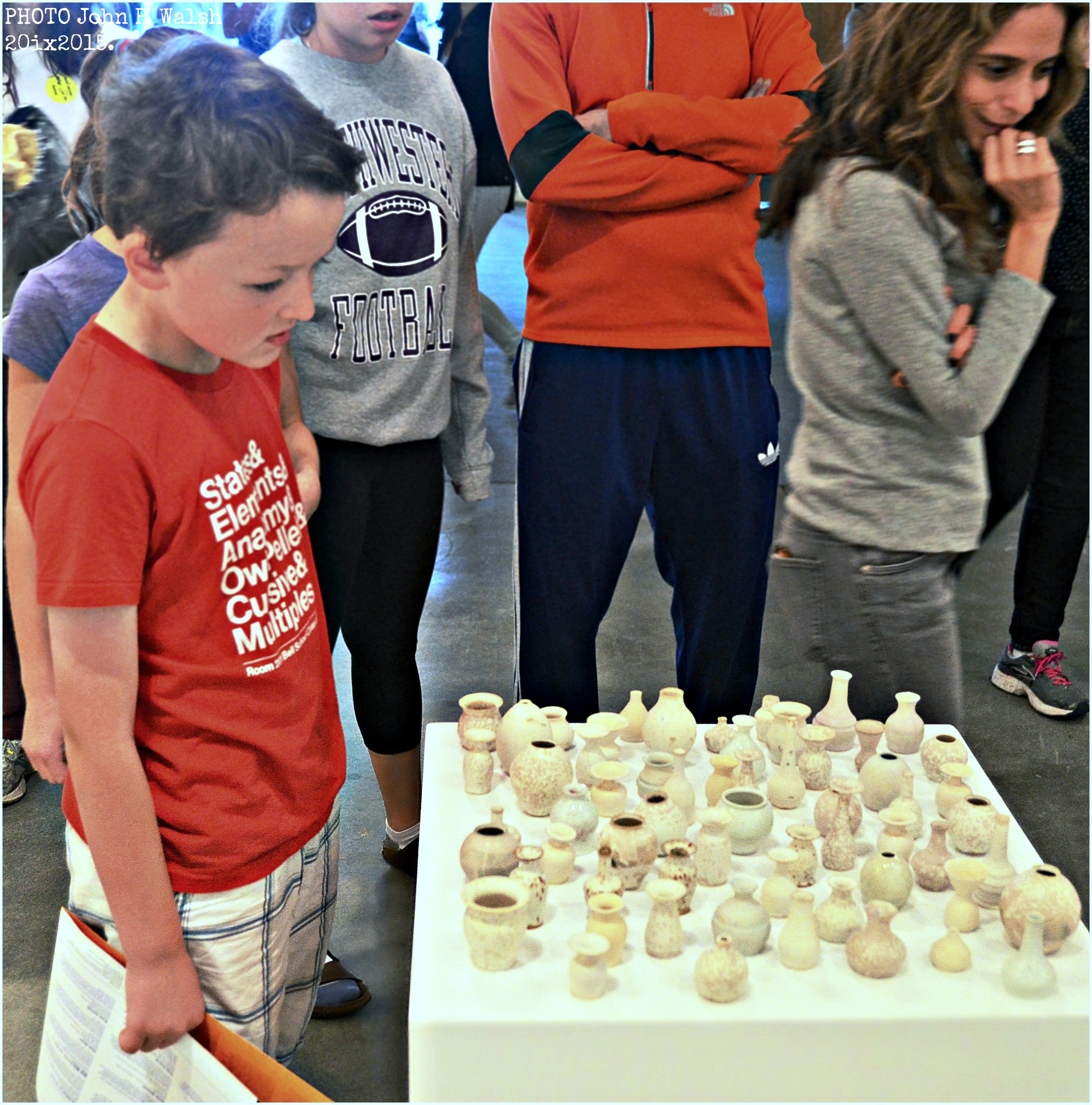
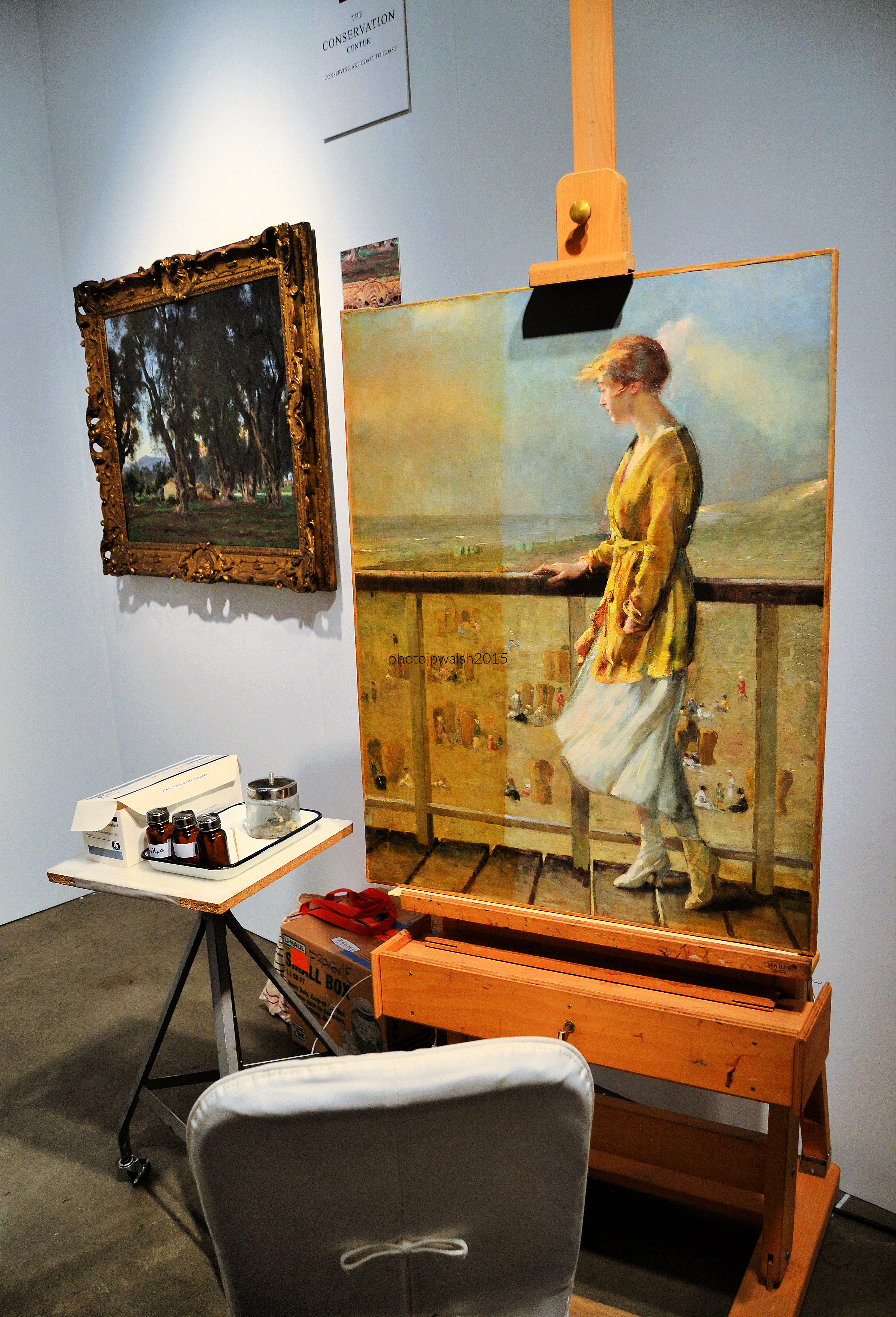
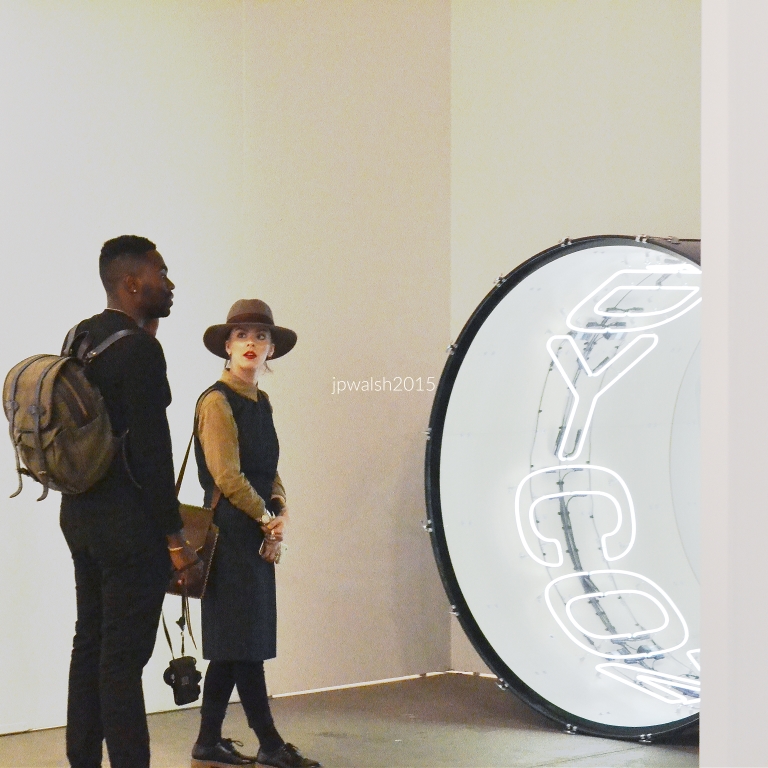
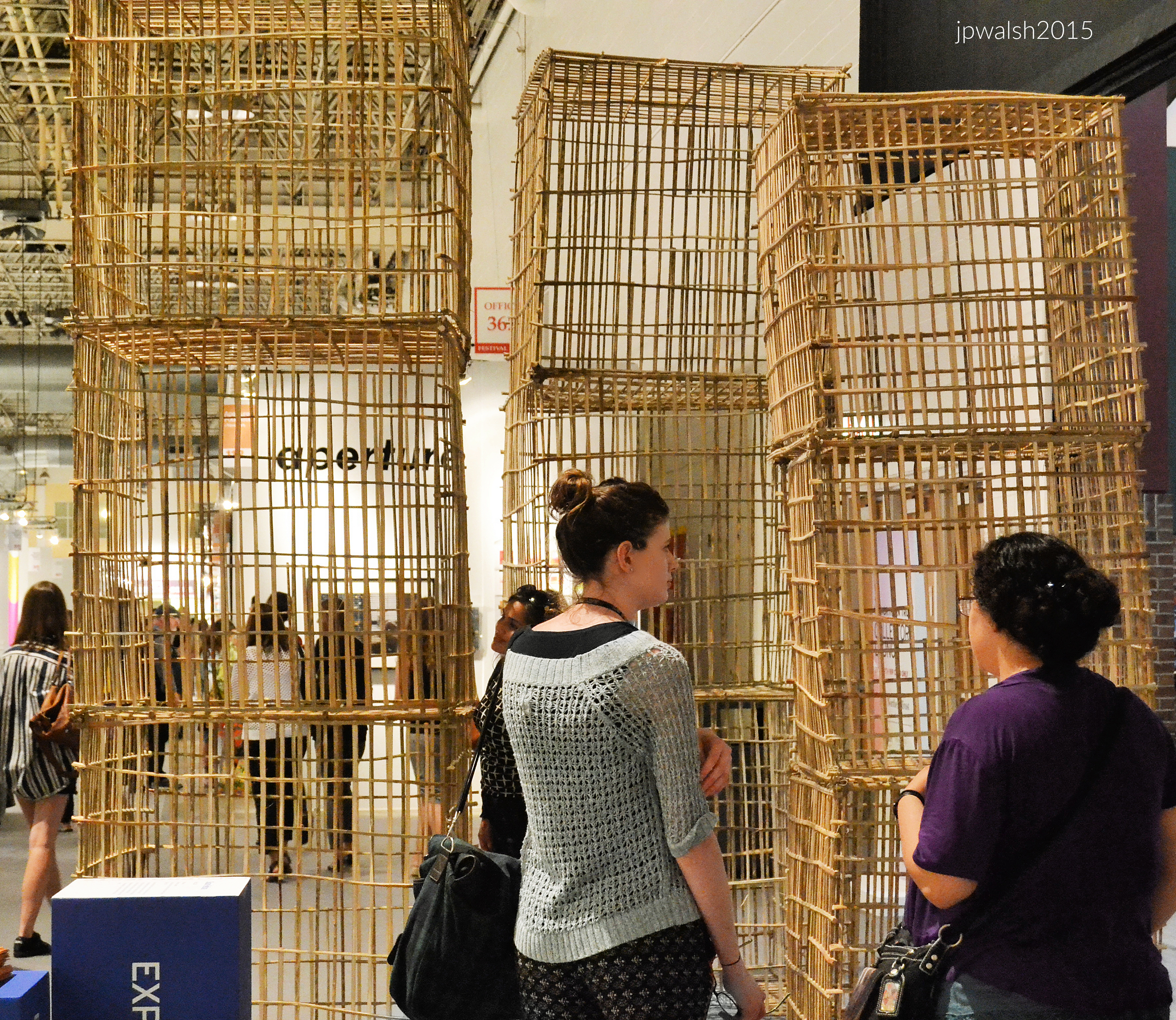
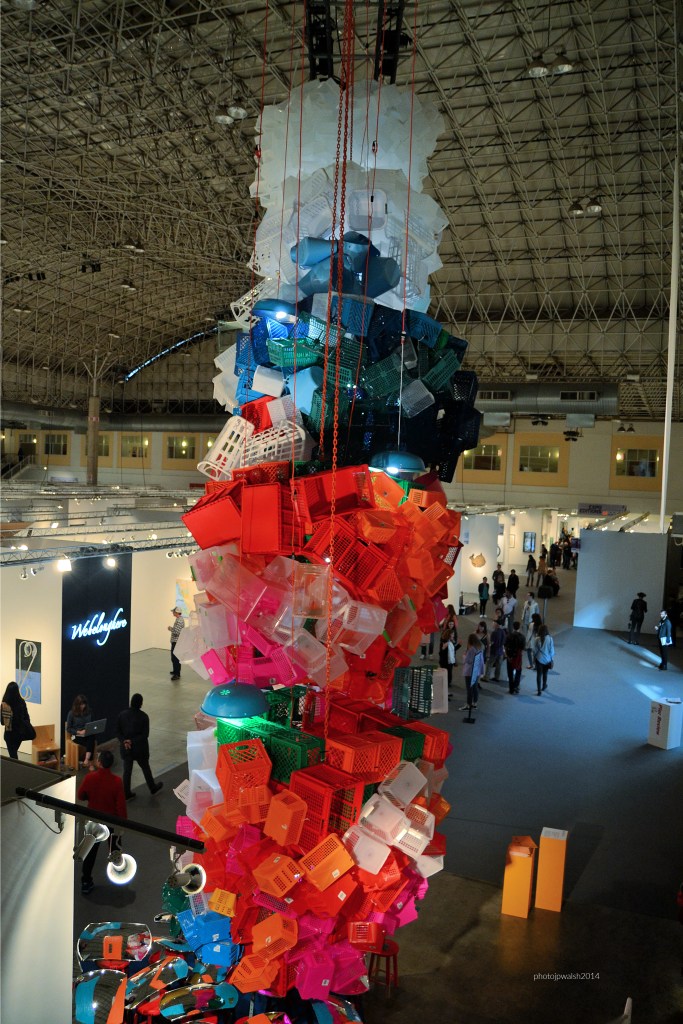
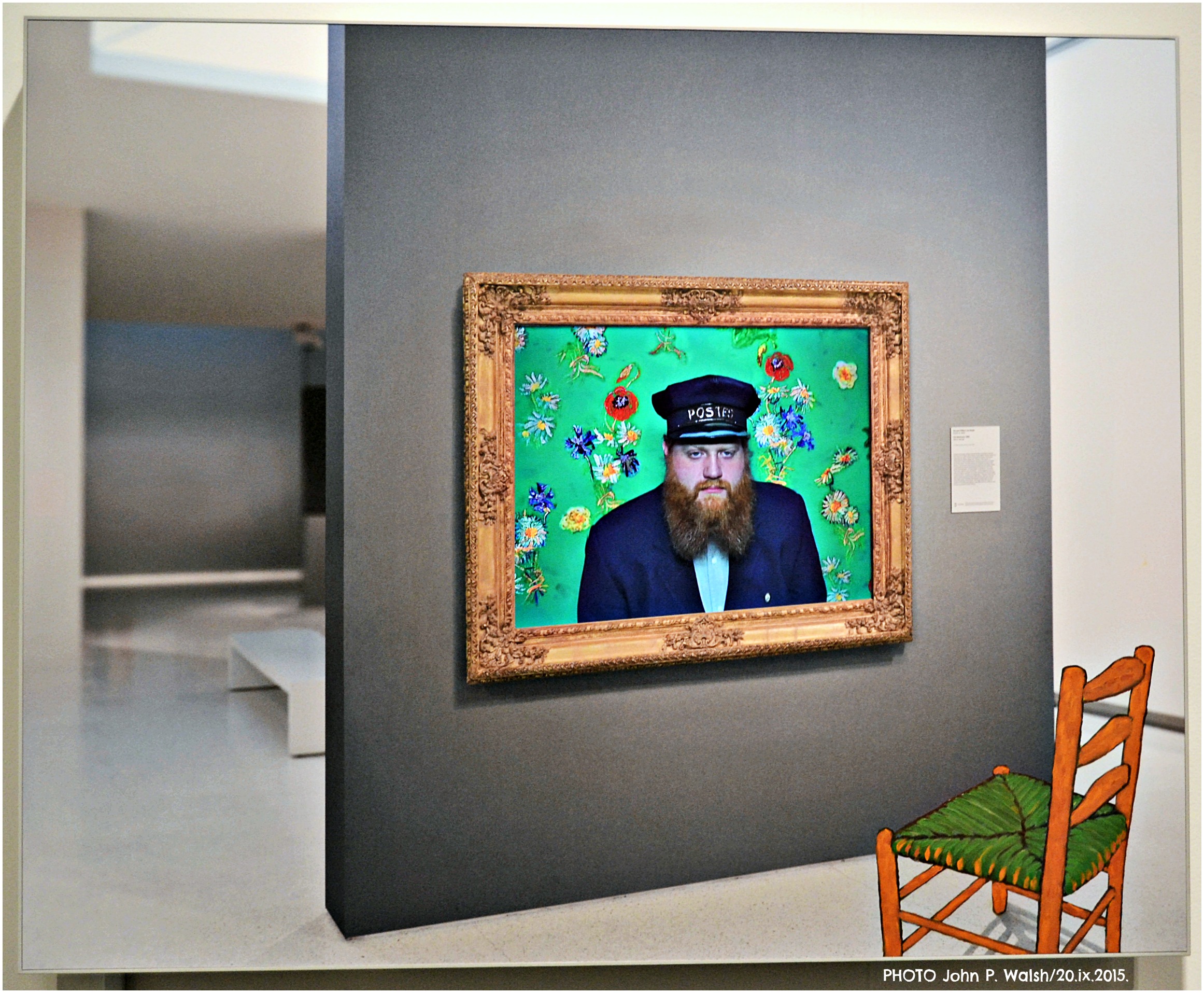
In/Situ, Sung Jang, Mobi, 2015, injection molded plastic, Volume Gallery, Chicago.In/Situ, Daniel Buren, From three windows, 5 colours for 252 places, 2006. Lisson Gallery, London. The artist creates a template for a sequence of 18 rectangular panels with each one suspemded from the ceiling. Each panel is subdivided into 12 transparent Perspex squares, both clear and in color. Carlos Rolón/Dzine. MCA Chicago. Hung Liu (Chinese-born American, b. 1948), Untitled (Dandelion), 2015, mixed media, 60 x 60 in., Nancy Hoffman Gallery, New York. Hung Liu’s paintings are steeped in Chinese culture.Expo Chicago 2015. A. George Miller (American, 1905-1984), Untitled (City Nocturne), ca. 1950s, 16 x 24 in. Richard Norton Gallery, Chicago. A. George Miller attended The School of the Art Institute of Chicago starting in 1923. and was one of three official photographers for the 1933-34 Century of Progress Exhibition in Chicago.Sergio Carmargo (Brazil, 1930-1990), Untitled #504, 1970 and Anish Kapoor (India, b. 1954), Untitled, 2014, Fiberglass and paint (“Yellow Void”), 160 x 160 x 56 cm. Lisson Gallery London Milan New York.Hunter Reynolds, Survival AIDS-ACT UP Chicago – A Revolution, 2015. Photo weaving, 8′ x 30′ Courtesy of artist & P.P.O.W. NY and Iceberg Projects Chicago.Hunter Reynolds in collaboration with Elijah Burgher and Steve Reinke in Survival AIDS Mummification Performance presented in partnership with PPOW and ICEBERG Projects for Survival AIDS Chicago Act Up a Revolution.Expo Chicago/2015.Gregor Hildebrandt.Kate Werble Gallery, NY.Chantal Joffe (UK, b. 1969), Green Strapless Dress, 2013, oil on board, 72.5 x 48.5 in., Galerie Forsblom, Finland. In a 2009 interview, Joffe said, “I really love painting women. Their bodies, their clothes – it all interests me.”Expo Chicago 2015. Expo Chicago 2015. Vik Muniz (Brazil, b. 1961), Album: Over There, 2014. digital c-print, edition of 6, 71 x 105 in., Rena Bransten Projects, San Francisco.David Allan Peters, Untitled #24, 2015, acrylic on wood panel, Ameringer McEnery Yohe, New York.Roberto Fabelo, Sueño de navegante, bronze, 2015. Cernuda Arte, Coral Gables, Florida.Suzanne Martyl (American, 1917-2013), Asclepias, oil on masonite, 14 x 11 in., Richard Norton Gallery, Chicago. Suzanne Martyl or Martyl Langsdorf – or Martyl. The artist said that she “always found it fascinating to look and look and look, and spend all kinds of time until something would just ring a bell, and I would know how to rearrange nature to make a good composition.”Books include British photographer Darren Almond; Chicago Social Practice installation artist Theaster Gates; English artist Damien Hirst; and German photographer Andreas Gursky.VMU Gallery 101 / Art Fund curated by Rimas Čiurlionis, and coordinated by photographer Alex Zakletsky, presents a video installation of artists from the conflict zone in Ukraine including the work of Bella Logachova, Andriy Yermolenko and Ivan Semesyuk.Rimas Čiurlionis, special exhibitions.Victoria Gitman (b. 1972, Buenos Aires; lives in Hallandale, FL), Untitled, 2015. Garth Greenan Gallery, New York. Sensuous and conceptually sophisticated oil paintings that are look natural.Paul Wackers, Look At What I Did Now, 2015, acrylic and spray paint on canvas, 48 x 40 in., Morgan Lehman Gallery, New York. Expo Chicago 2015.Andy Warhol, Love in the Spring, c.1955, watercolor and pencil on paper, 18×23 inches, McCormick Gallery, Chicago and Vincent Vallarino Fine Art, New York.Central Academy of Fine Arts School of Design, Beijing, China. Author at right. CENTRAL ACADEMY OF FINE ARTS SCHOOL OF DESIGN BEIJINGMarc Sijan ( American, b. 1946), Kneeling, resin and oil paint, Gerald Peters Gallery, Santa Fe, New Mexico (detail).Marc Sijan ( American, b. 1946), Kneeling, resin and oil paint, Gerald Peters Gallery, Santa Fe, New Mexico. Sijan’s super-realistic sculptures are, by the artist’s own words, “homages to humanity’s fascination with its own forms — a fascination which has compelled artists throughout the millennia to mirror life in virtually every medium.”Elizabeth Catlett (American, 1915-2012), Reclining Woman, bronze, 37 x 19 x 9inches, 1959. Behind, left to right: Charles Howard (American, 1899–1978), Friedel Dzubas (German-born American, 1915-1944) and Michael Goldberg (American, 1907-2007). McCormick Gallery, Chicago & Vincent Vallarino Fine Art, New York City. Black and white ensemble of abstract and figurative Modernist painting and sculpture.Chilean artist Carlos Costa with one of his “Wind Studies,” 2015, a conceptual project based on structuring basic natural elements. Local Arte Contempoeáneo, Santiago.FORUM GALLERY ADAA Gaston Lachaise Woman walkAt Forum Gallery New York: Gaston Lachaise, Woman Walking, 1919, cast in 1968, polished bronze, 19 1/2 x 10 x 7 1/2 inches, Edition 6/6.ing 1919 (cast 1968) polished bronze 19 x 107.5 in.Teresita Fernandez, Ghost Vines (Yellow Gold), 2015, brass. Anthony Meier Fine Arts, San Francisco, (above and below) Josh Garber, Ourselves, 2015, welded bronze, 30 x 15 x 14 in., Zolla/Lieberman Gallery, Chicago.Josh Garber, Ourselves, 2015, welded bronze, detail, complete artwork: 30 x 15 x 14 in., Zolla/Lieberman Gallery, Chicago.Luis de Jesus, Los Angeles, California. Expo Chicago 2015.Dealers, Expo Chicago/2015.Galerie Ernst Hilger, Vienna. Pace Prints, New York City. Cernuda Arte, Coral Gables, Florida. Hollis Taggart Galleries, New York.Expo Chicago 2015. (Above and below) In/Situ Antony Gormley, Freefall, 2007, 2mm square section stainless steel bar, 290 x 185 x 180 cm. White Cube, London. Freefall reveals the space where the body was rather than represent the body itself. They are intended to be “drawings in space.”Marc Chagall (1887-1985), Self Portrait, 1947, oil on canvas, 35 3/4 x 28 1/2 in.. Richard Gray Gallery, Chicago. Gregory Scott, Van Gogh’s Bedroom, 2015, pigment print, oil on panel, pigment print, oil on panel, HD video, ed. of 8. Catherine Edelman Gallery, Chicago.Augustus John, Portrait of a Young Woman, 1923, charcoal on paper, 14×10 inches, Browse & Darby, London.Browse & Darby London.Lucian Freud (German-born British painter, 1922-2011), Head & Shoulders of a Girl, 1990 etching, edition of 50, Browse & Darby, London.Berthe Morisot (detail), Femme et enfant au bois, pencil on paper laid on card stamped ‘B.M’ and numbered, 21 x 15 15/16 inches. Browse & Darby London.In/Situ. jessica Stockholder, Celestial Season, 2015. Plastic baskets, wire tires, chain, lights, driveway mirrors and paint. 96x70x70 inches. Kavi Gupta, Chicago. a luminous “cloud,” the piece floats just above the boundaries, bouyant and playful at once warm and cool akin to a breeze on a summer’s day. Michiko Itatani (b. 1948), Untitled, from Virtual Pair #2, 2007, oil on canvas. Camilo Restrepo (1975, Medellín, Colombia). Bowling for Medillin I, 2014, ink water soluble wax pastel, tape, newspaper clippings, glue, stickers, saliva on paper, 72×240 inches. Morgan Lehman Gallery, New York. Since 1999 the artist lives and works in Paris, France.Fiona Rae, The Very Once-In-A-Lifetime Moment, 2010, oil and acrylic on canvas, Buchmann Galerie, Berlin and Lugano. Jan Matulka (American, 1890-1972), Seated Nude with Eyes Closed, oil on canvas, c. 1922, 48 x 34 1/2 in., Richard Norton Gallery, Chicago.Dayron Gonzalez, Momento de Gloria (Moment of Glory), 2015, oil on canvas, 80×60 inches, Cernuda Arte, Coral Gables, Florida.Susanne Vielmetter Los Angeles Projects, a contemporary art gallery in Culver City, California.Forum Gallery, New York City. Isaac Lazarus Israëls (1865-1934), Young Woman on per at Scheveningen Holland c. 1920. The Conservation Center, Chicago. Human Rights Watch. Iván Navarro (b. 1972), Come to Daddy (Black and White), 2015, neon, drum, one-way mirror, mirror and el-energy, Galerie Daniel Templon, Paris and Brussels. Eight feet high, Dan Flavin’s Untitled (Fondly, to “Phip”), 1976, is red, green, and pink fluoresent light. David Zwirner, New York. Foreground: Matthias Bitzer, Revolving Future, 2014, Metal. Background: Pier Paolo Catzolari, Untitles (Elevation Myself), 1982. Marianne Boesky Gallery, New York.Expo Chicago 2015.Expo Chicago 2015. Susan Hefuna, Afaz, 2014, palm wood, Rhona Hoffman Gallery, Chicago. With a sense of monumentality of a fragile object, the crates are based on those made by craftspeople near Cairo in Egypt. Hollis Taggart Galleries, New York.Chicago skyline from Navy Pier after attending Expo Chicago 2015. (25% of original image).
In/Situ Outside 2015.
Part of the Expo Chicago/2015 experience is temporary public art installations on the Chicago lakefront and throughout the city. Starting with Expo Chicago/2014, “In/Situ” works showcase large-scale installation art and site-specific works. Giuseppe Penone’s Idee di Pietra-Olmo (“Idea of Stone-Elm), 2008, Marian Goodman Gallery is a 30-foot tall bronze tree incorporating a boulder conveying the effects of human interaction in the natural world.In/Situ Outside. Ewerdt Hilgemann’s “Habakuk (Homage to Max Ernst), 2014, stainless steel, Borzo Gallery and The Mayor Gallery.
FEATURE image: EXPO CHICAGO 2014, Festival Hall, Navy Pier.
EXPO CHICAGO 2014 demonstrates how Chicago functions as a global crossroads for contemporary and modern art, bringing together international galleries, artists, and audiences while transforming Navy Pier’s Festival Hall into a temporary museum of worldwide creative exchange and experimentation.
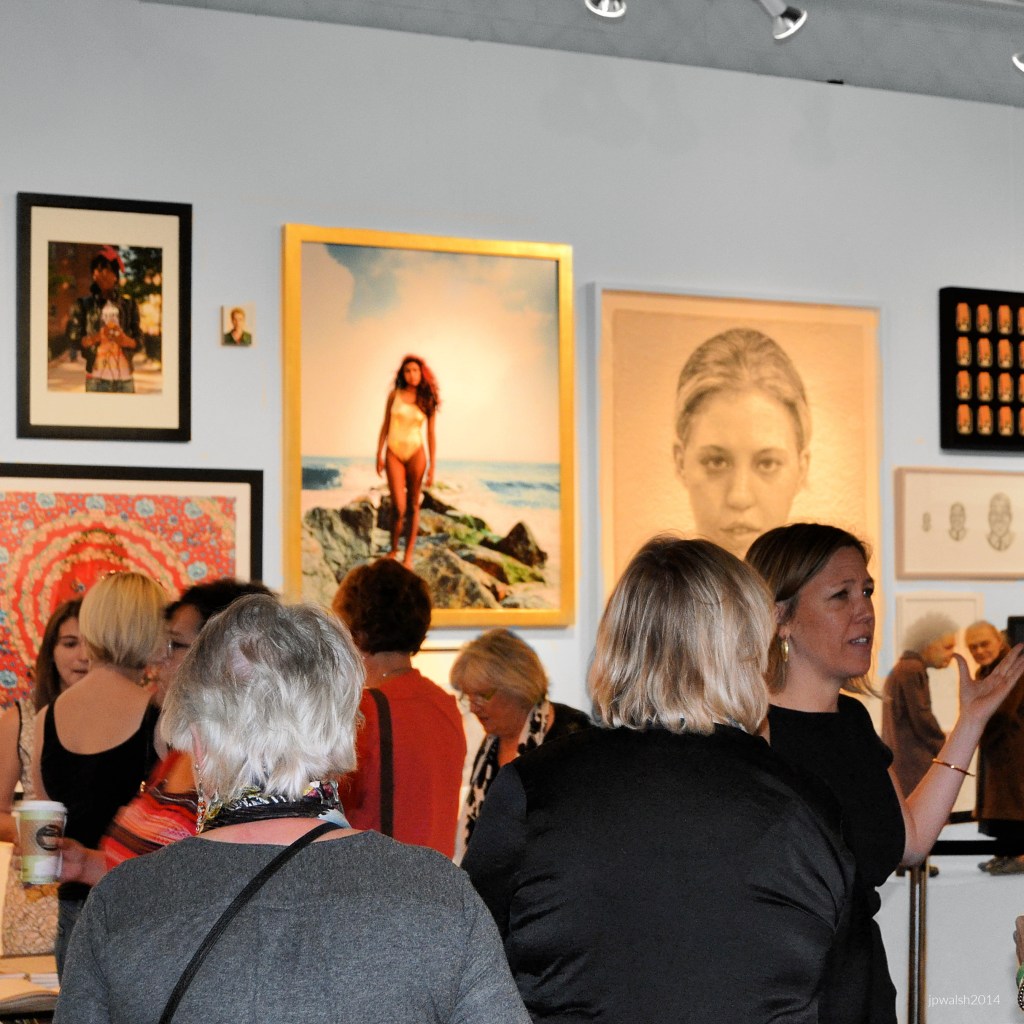
EXPO CHICAGO 2014 is the 3rd annual exhibition of international contemporary and modern art held in Chicago at Navy Pier’s Festival Hall. It took place September 18 – 21, 2014.
All photographs and text by John P. Walsh.
Mylar Cone designed by Studio Gang.
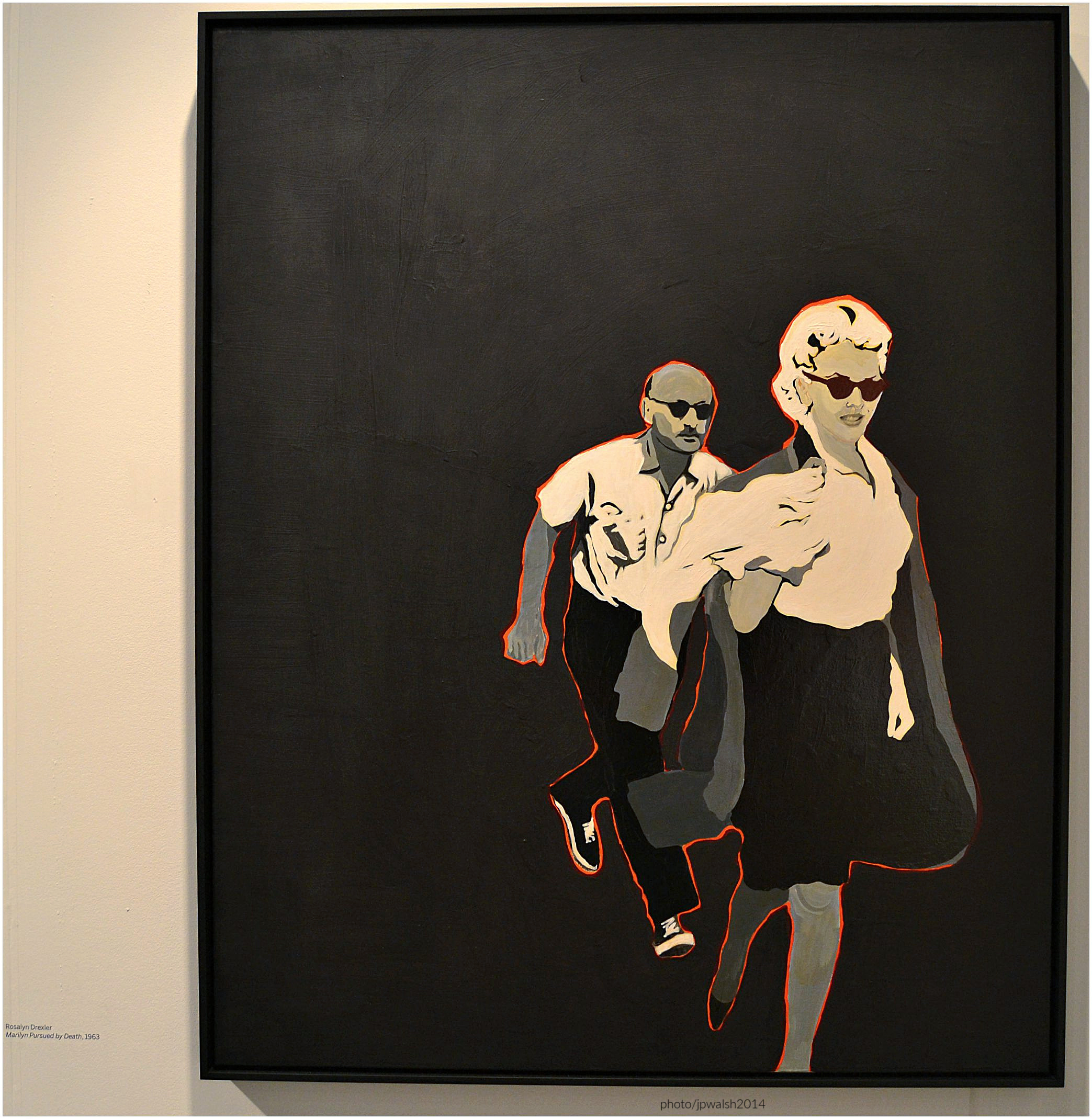
Rosalyn Drexler, Marilyn Pursued By Death, 1963, Fredericks & Freiser and Garth Greenan Gallery, New York City. This is based on a historical photograph of Marilyn as she was escaping the press.
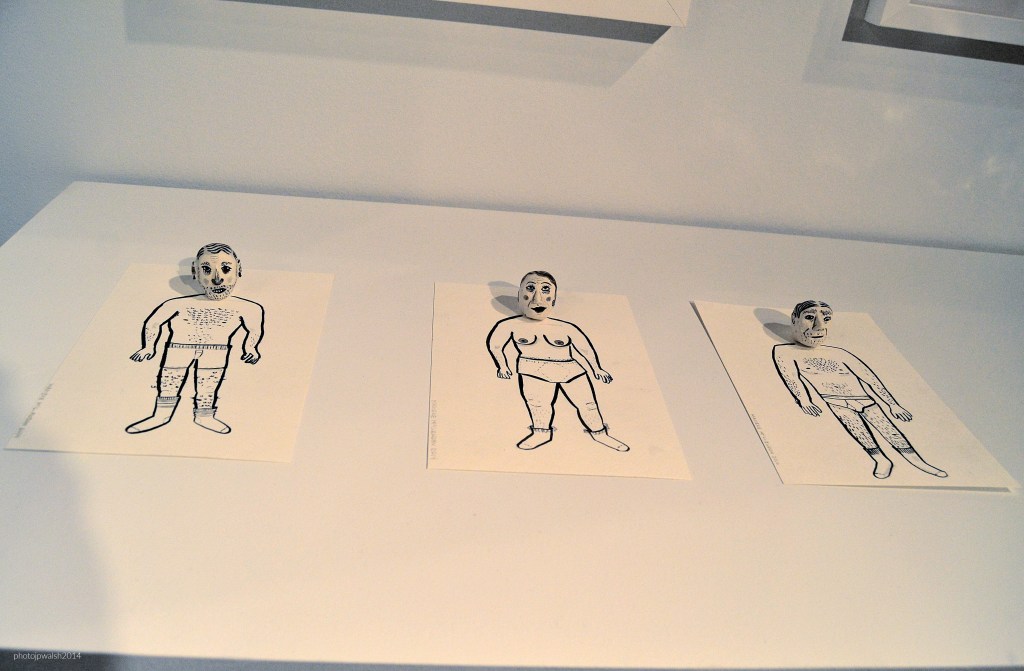
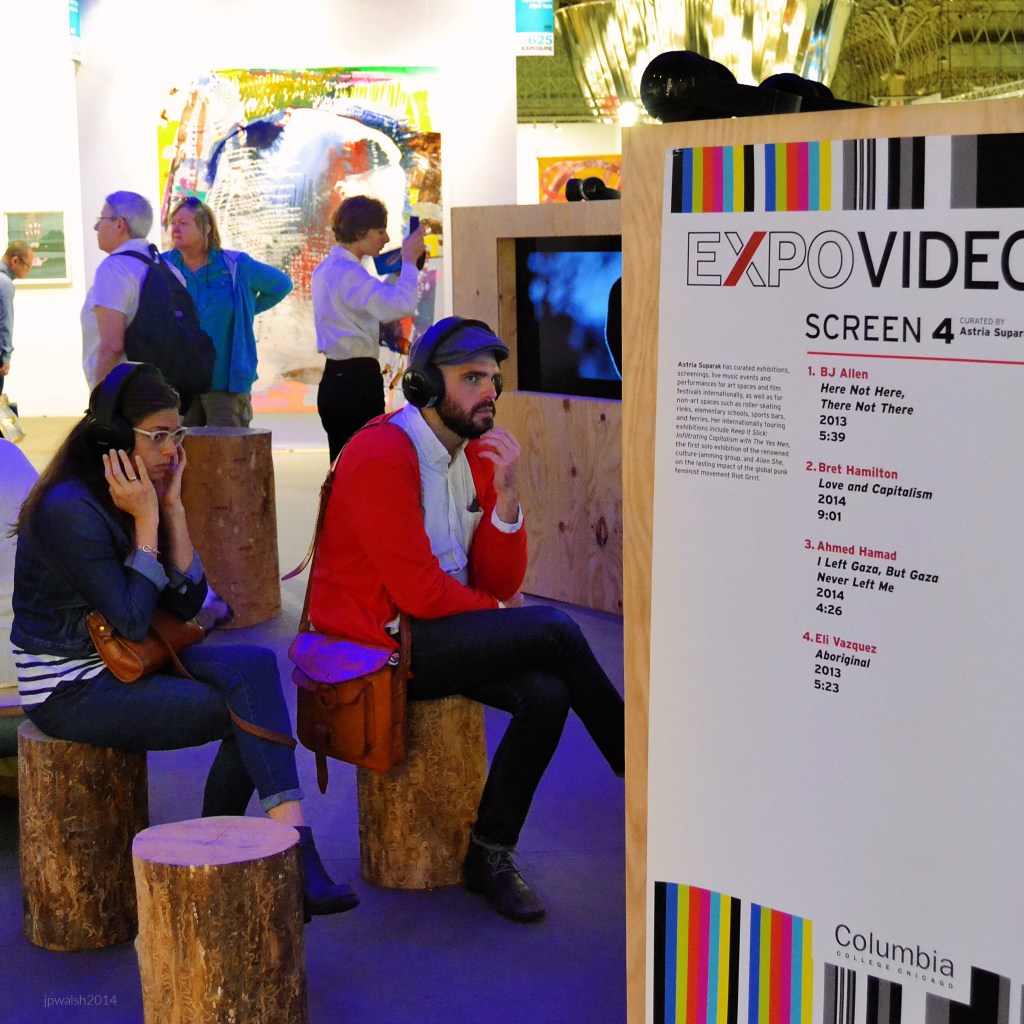
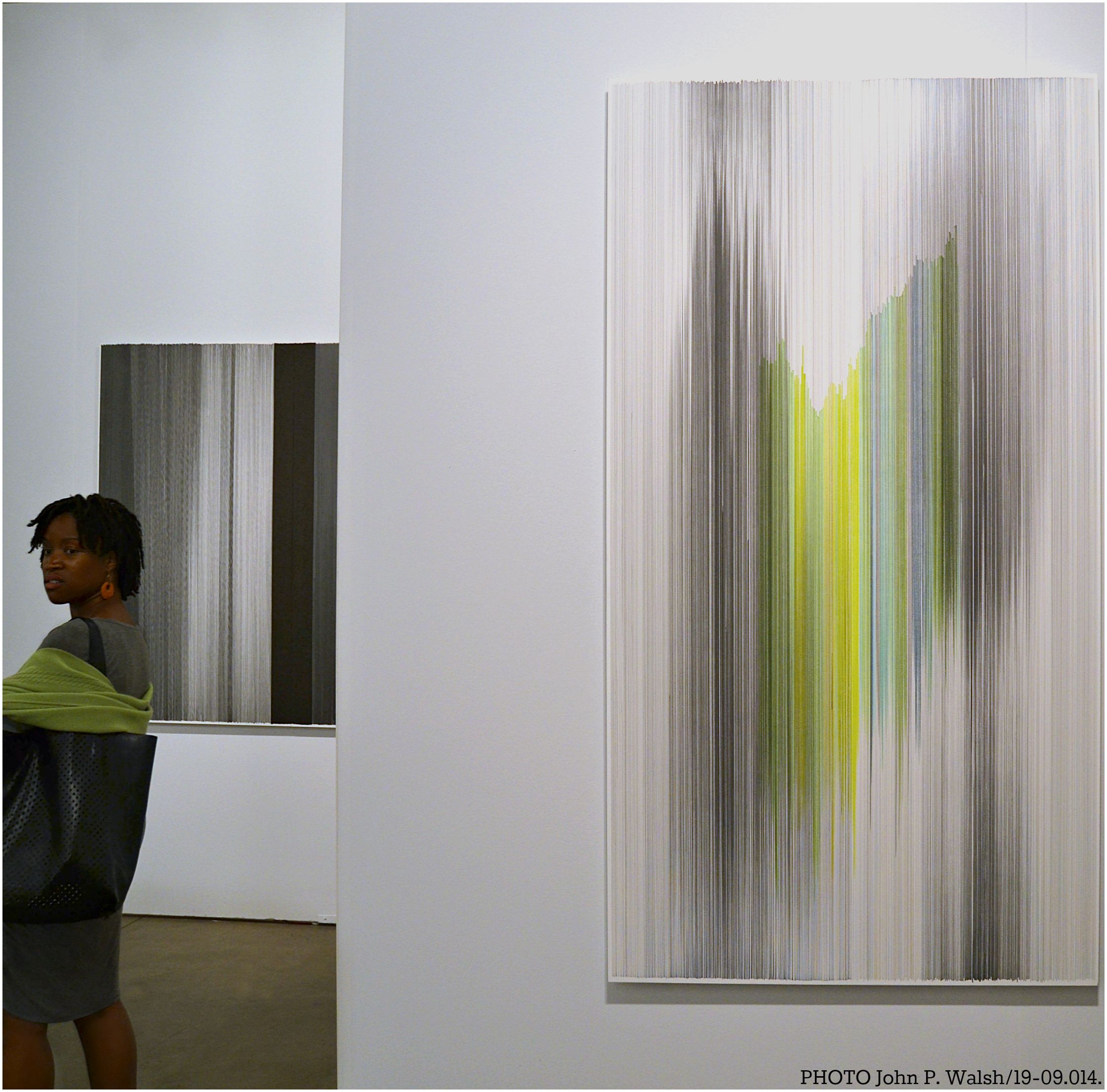
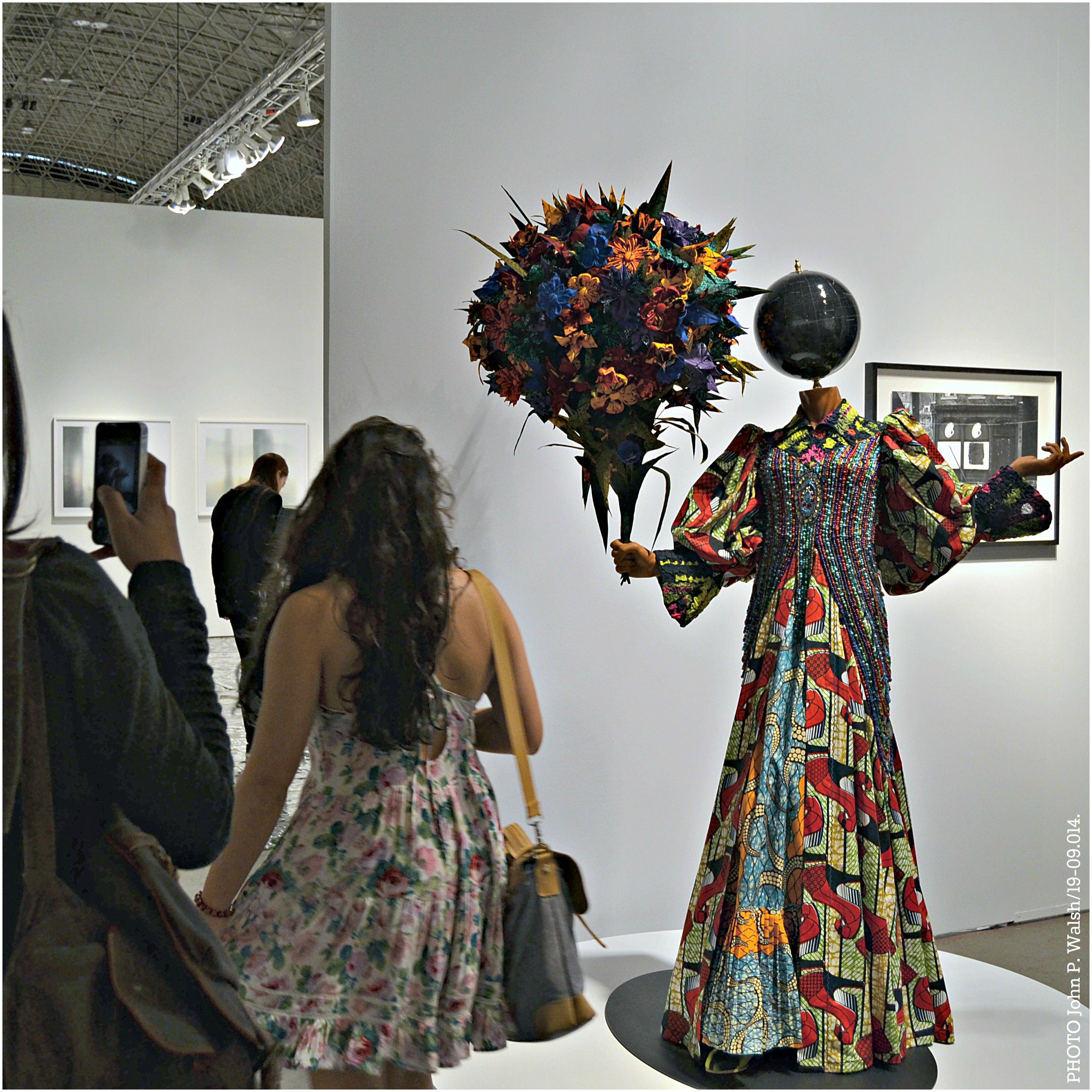
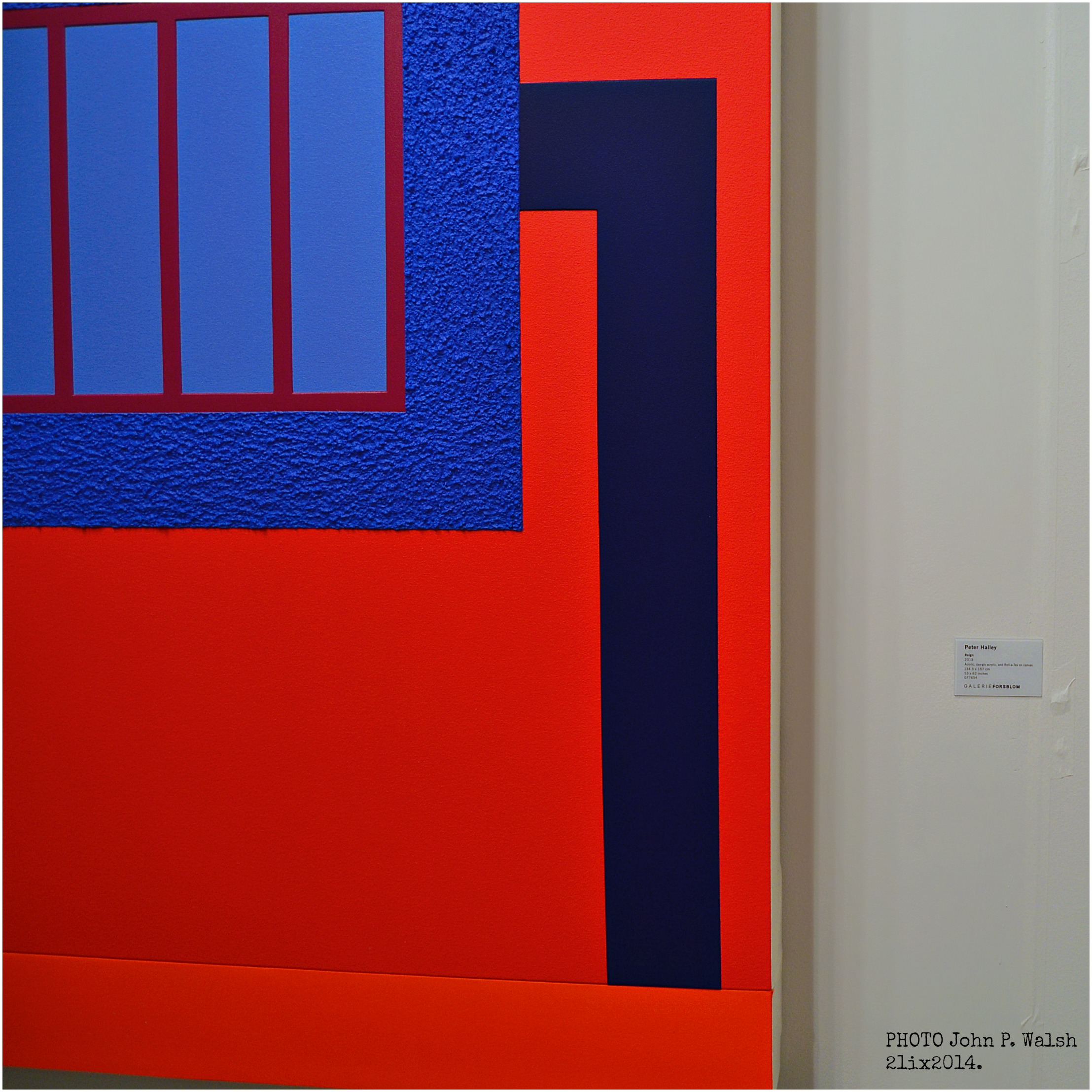
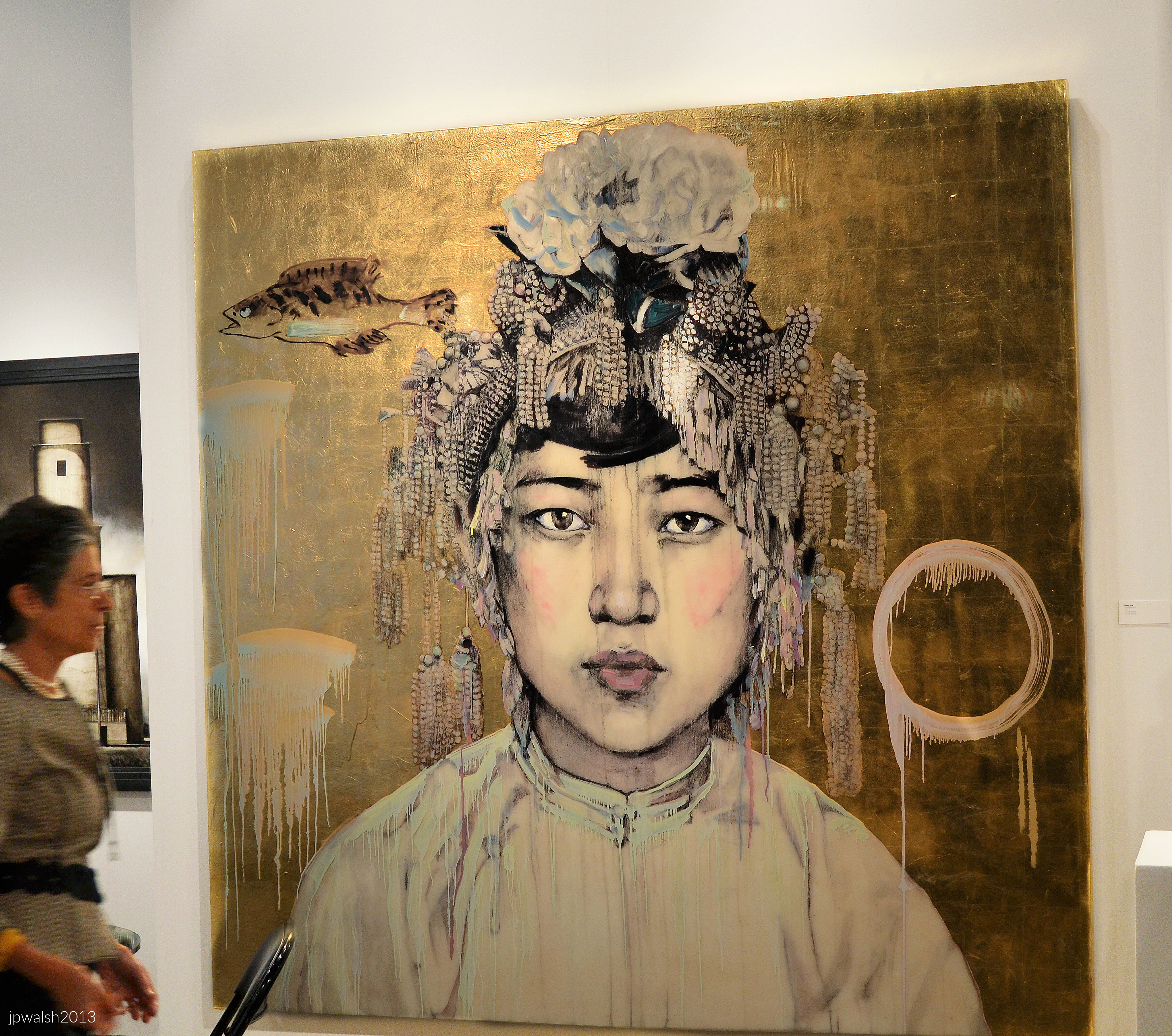
Christopher Le Brun (British, b. 1951), Friedman Benda, New York.Cernude Arte, Coral Gables, Florida. Michiko Itatani, Cosmic Kaleidoscope From the Pattern-Recognition 12 D 9, 2013, oil on canvas, 42 x 34 inches. Linda Warren Projects Chicago.Matthew Woodward, Polk Street, 2014, mixed media on paper, 101 x 96 in., Linda Warren Projects Chicago.Ramiro Gomez (American, b. 1986), American Gardeners, 2014, acrylic on canvas, 84 x 120 in., Charlie James Gallery, Los Angeles.Jessica Stockholder (American, b. 1959), Once Upon A Time, 2014, plastic, paint, mirrors, stools, carpet, chain, cables, staircase, resin, cords, light, bowls, lamp shade. Kavi Gupta Gallery Chicago/Berlin.Marieke McClendon, Clay Heads, ink on bristol board, ceramic, ShopColumbia Chicago.Works by Gideon Rubin (b. Israel,1973, works in London). Oil on canvas/linen/wood, 2009-14, and gouache on cardboard, 2012-14, Galerie Karsten Greve AG St Moritz.Nicholas Krushenick (1929-1999), Grill, 1977, Garth Greenan Gallery New York and Fredericks & Freiser New York.Expo video/2014.Gregory Scott, Van Gogh’s Bedroom, 2015, pigment print, oil on panel, HD video, Catherine Edelman Gallery, Chicago.Antonio Murado, Gardens, 2014, oil on canvas. Galeria Àlvaro Alcázar, Madrid.Three Walls Chicago.Elijah Burgher, Untitled, 2012-2014, paintings on unstretched canvas, Western Exhibitions, Chicago and Zieher Smith & Horton, New York. Anne Lindberg, Parallel 42, 2014, Graphite and colored pencil on mat board, 59 x 34 in., Carrie Secrist Gallery Chicago.Rene Portocarrero (1912-1985), Ornamental Figure in Brown Background, 1968, mixed media on paper laid down on board, 28 3/8 x 20 in., Cernuda Arte, Coral Gables, Florida.Alan Reid (American, b. 1976), Lisa Cooley Gallery New York.Henri Matisse, Marlborough Gallery New York Madrid Monaco Barcelona.Yinka Shonibare (British-Nigerian, b. 1962), Ms. Utopia, 2013, mannequin, dutch wax cotton textile, fiberglass, wire, globe, and steel baseplate. BlainSouthern, London, Berlin.. Lynn Chadwick (1914-2003), Rad Lad IV, 1962, ed. 2 of 8; Beast XX, 1956, ed. 6 of 9; Boy and Girl III, 1959, ed. 2 of 9. Bronze. BlainSouthern.John Wesley (American, b. 1928), Untitled, 2012 and Nicholas Krushenick (American,1929-1999), Wire Mill Road, 1972. Garth Greenan Gallery New York and Fredericks & Freiser New York.Alex Katz, Ena and Roberto, 1988, oil on linen, 41 x 62 in., Richard Gray Gallery, Chicago.Philip Pearlstein, Two Models with Four Geese Decoys, 1993, Watercolor on paper, Hill Gallery, Birmingham, Michigan.Tony Oursler (American, b. 1957), Galerie Forsblom, Helsinki.Aimé Mpane (b Kinshasa, 1968), Nude, wood and glue, 2008, Haines Gallery, San Francisco.Peter Halley, Reign, 2013, acrylic, day-glo acrylic, roll-a-tex on canvas, 53 x 62 in., Galerie Forsblom, Helsinki.Sandro Miller (b. 1958), Andy Warhol/Green Marilyn (1962), 2014, 29 x 29 in., Edelman Gallery, Chicago.Leonardo Drew (American, b. 1961), Number 34S, 2014, 31 x 41 x 11 inches, wood, Anthony Meier Fine Arts, San Francisco.Dayron González, Cernuda Arte, Coral Gables, Florida.Michelangelo Pistoletto (b. 1933), Golden Buddha and Mirror, 2008, Hollis Taggart Galleries, New York.Fernand Léger, Paysage Animé, 1937, oil on canvas, 35 7/8 x 23 1/4 in., Marlborough New York.Jina Park, A Genius, 2000, acrylic on linen, One And J. Gallery, Seoul.Tristian Koenig, Installation, Melbourne.
Minako Abe, Scene 29, 2011, oil on canvas, 35.8 x 92 in., Base Gallery, Tokyo.
David Hockney, Montcalm Pool, LA, 1980, oil on canvas, 12 x 16 in., Richard Gray Gallery Chicago.The Flag Art Foundation, New York, curated by Shaquille O’Neal.Mel Bochner, Money/Nothing, 2006, McCormick Gallery Chicago/Vallarino Fine Art New York.Sanford Biggers, David Castillo Gallery, Miami, Florida.Simon Edmondson, The Reader, oil on paper, 48 x 59.9 inches.
Manolo Valdés (Spanish, b. 1942, works New York City), Hojas II, 2014, Marlborough.
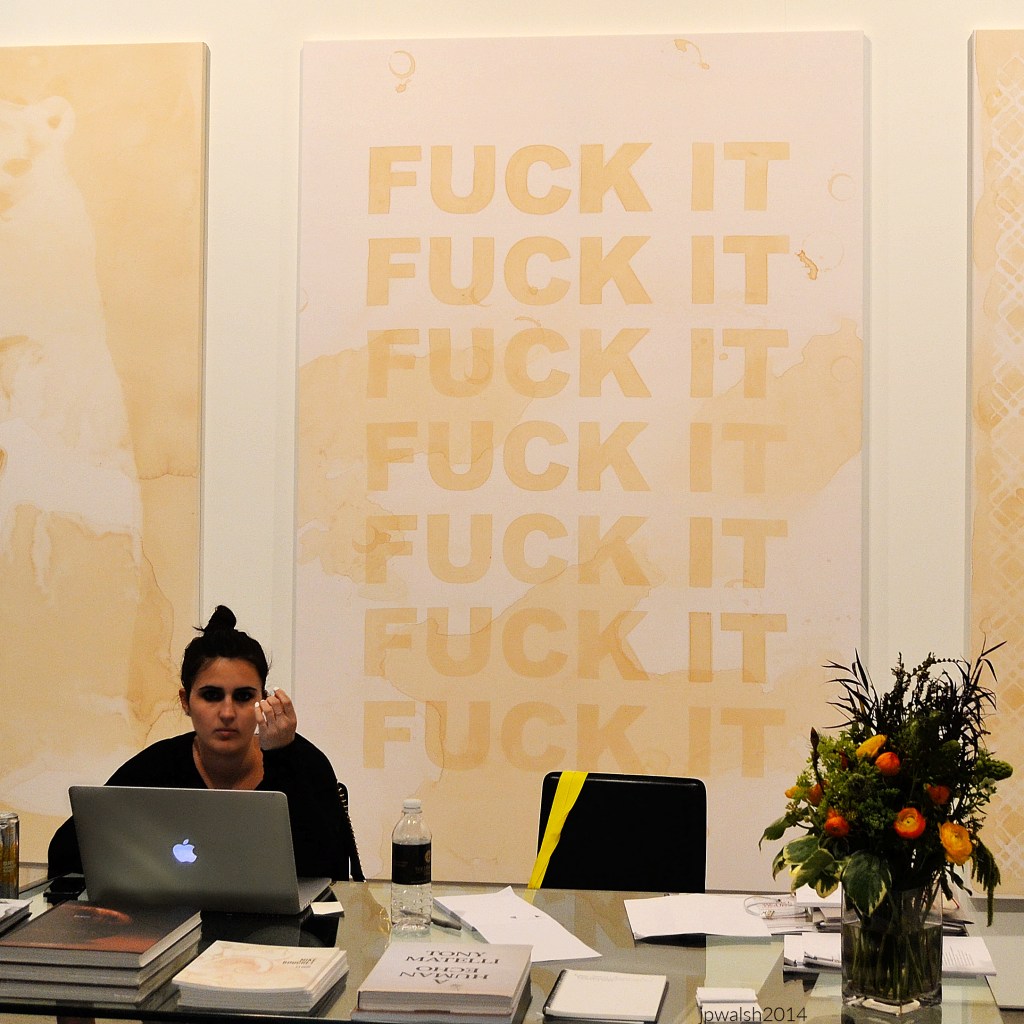
Manolo Valdés, Yvette, 2014, oil on burlap, Marlborough.Mike Bouchet, Fuck It, 2013, Marlborough Chelsea, New York.
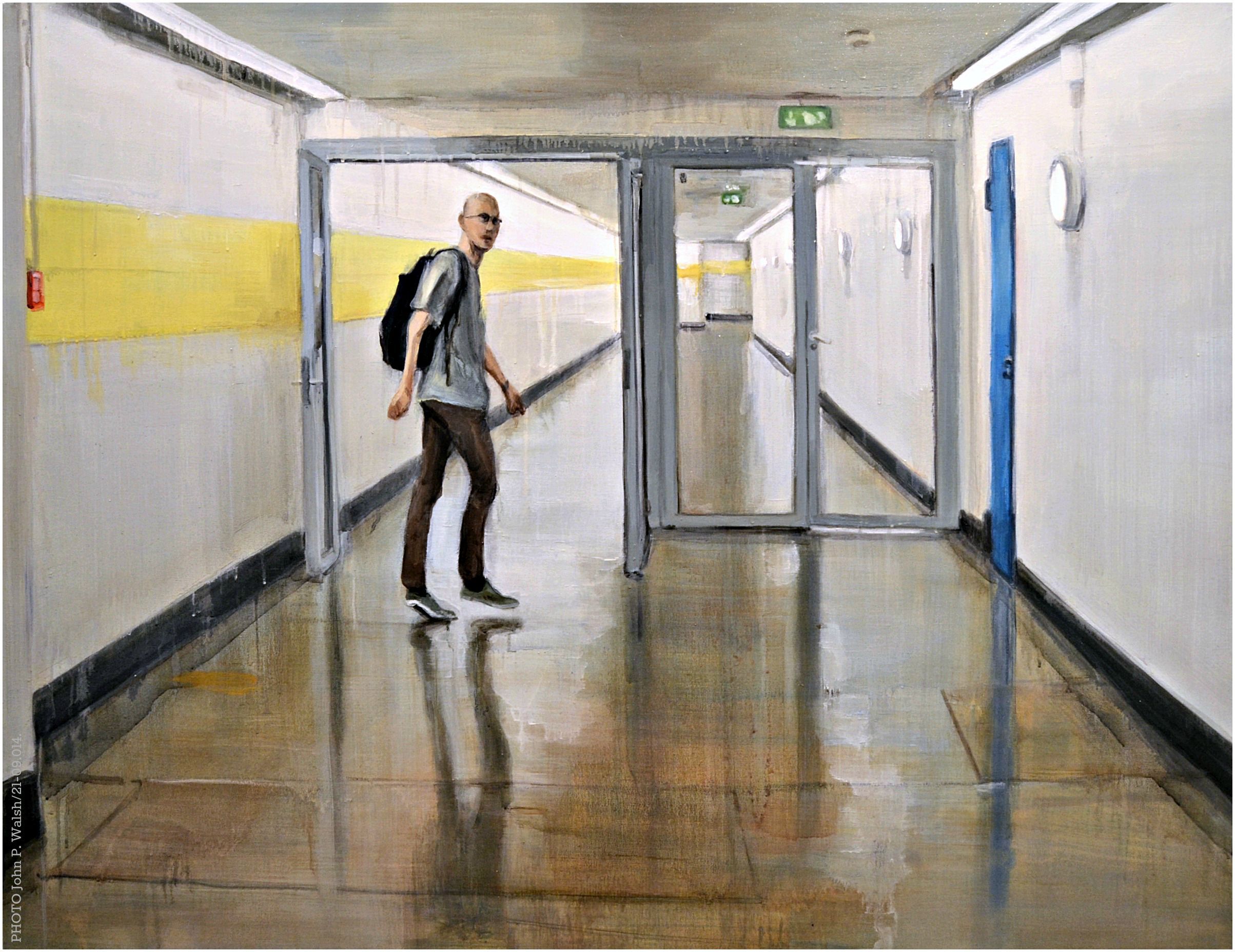
Jina Park, Automatic Door Follow Me, 2014, oil on canvas, 100 x 130 cm, One and J. Gallery, Seoul.
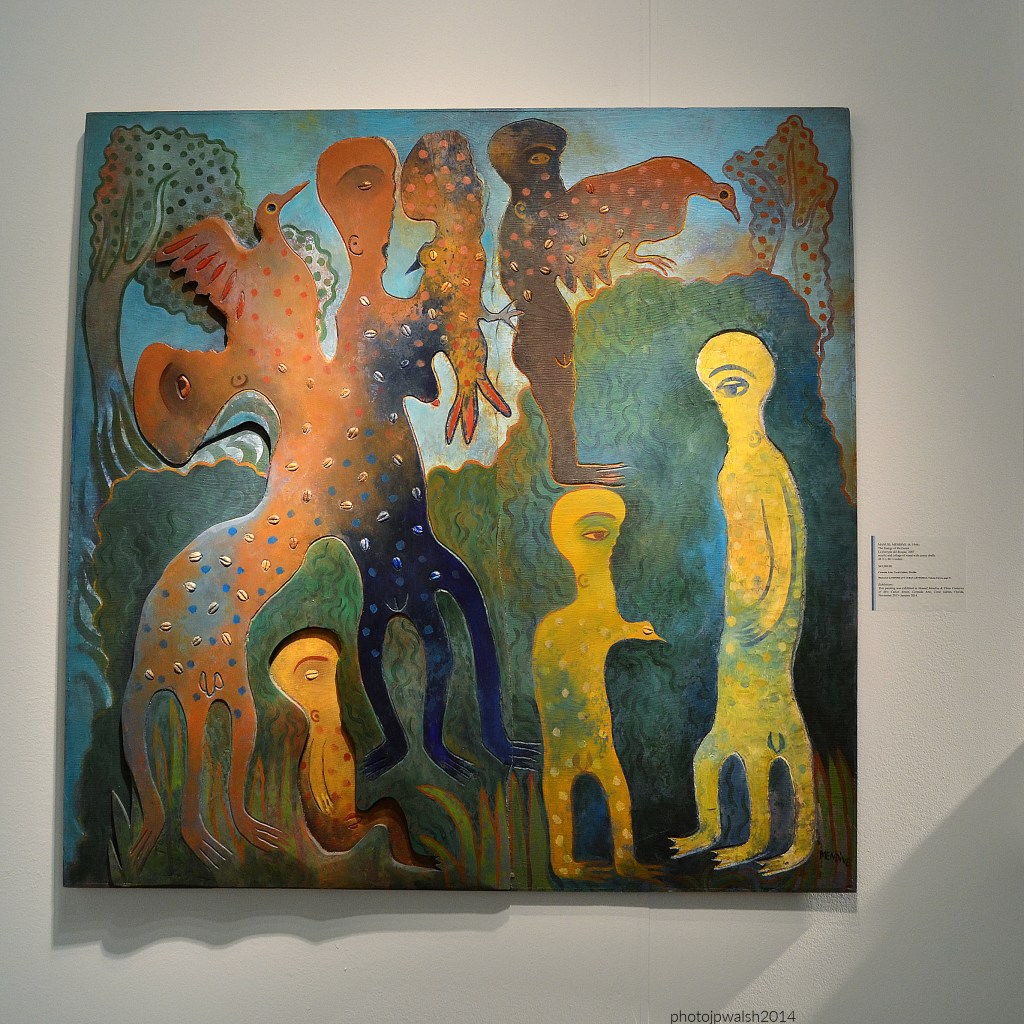
Manuel Mendive, La Energia del Bosque (The Energy of the Forest), acrylic and collage of wood with cowry shells, 2007. Cernuda Arte, Coral Gables, Florida.Alfred Leslie, Afternoon Soaps, 1983, oil on canvas. Hill Gallery, Birmingham, MI.
FEATURE Image: Glenn Kaino, Bridge, 2013. A section of a 100-foot-long construction that features 200 gold casts of Tommie Smith’s arm in a raised fist salute that occurred in the 1968 Summer Olympics on the medal podium during the national anthem after Smith broke a sprinting record to take gold.
EXPO CHICAGO 2013 demonstrates how Chicago functions as a global crossroads for contemporary and modern art, bringing together international galleries, artists, and audiences while transforming Navy Pier’s Festival Hall into a temporary museum of worldwide creative exchange and experimentation.
EXPO CHICAGO 2013 is the 2nd annual exhibition of international contemporary and modern art held in Chicago at Navy Pier’s Festival Hall. It took place September 19-22, 2013.
All photographs & texts by John P. Walsh.
Tommie Smith at Expo Chicago 2013.
Tommie Smith is an American former track and field athlete and American Football League wide receiver. On October 16, 1968, the 24-year-old Smith won the 200-meter sprint finals and gold medal in 19.83 seconds at the 1968 Summer Olympics in Mexico City.
It was the first time the 20-second barrier was officially broken in competitive sports history. Atop the medal podium and with heads bowed, Smith’s Black Power salute with silver-medal-winner John Carlos protested racism and injustice against African-Americans in the United States.
Smith’s raised fist as the national anthem played is seen as one of the most overtly political statements in the history of the modern Olympics and caused memorable admiration and criticism.
In Silent Gesture: The Autobiography of Tommie Smith (Temple University Press, 2008), Smith maintained that the gesture was not solely a “Black Power” salute but a “Human Rights” salute.
In any event, Smith’s raised fist salute in 1968 became one of the most iconic moments in the Olympic games and the history of the Black Power movement.
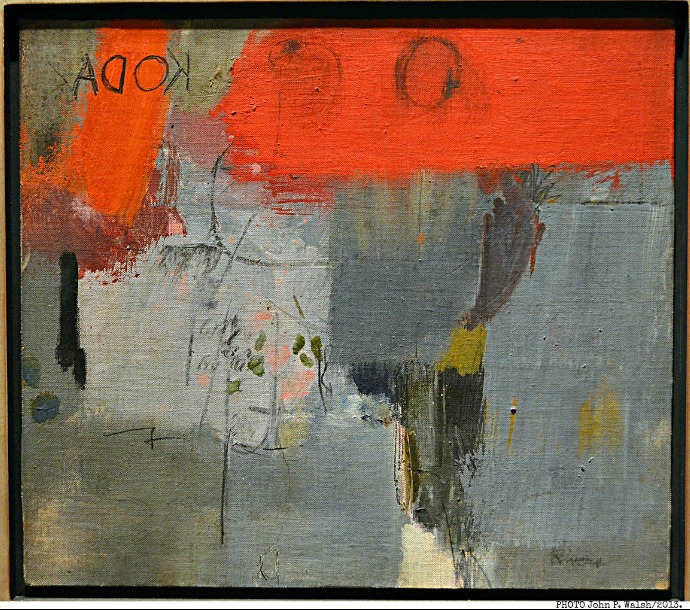
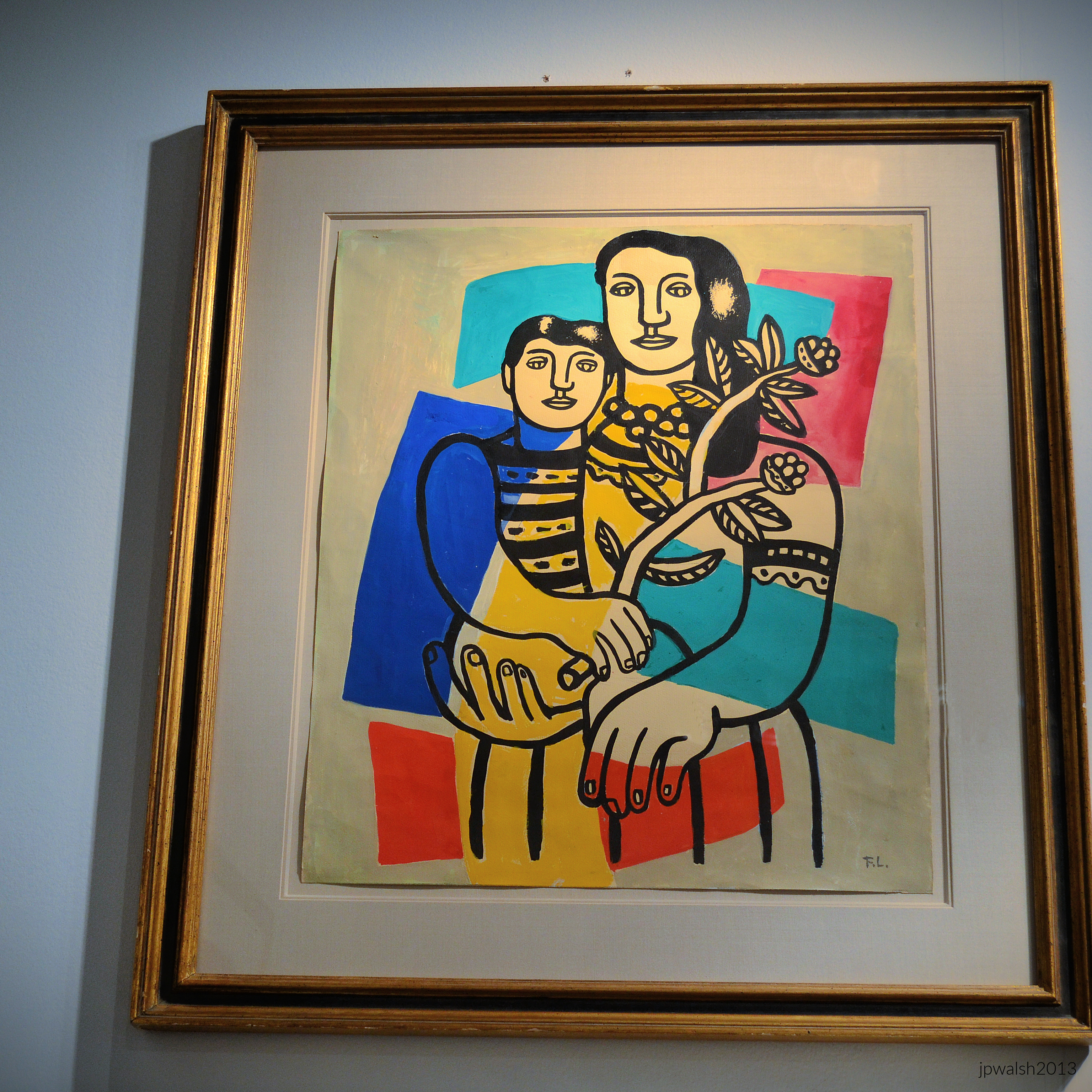
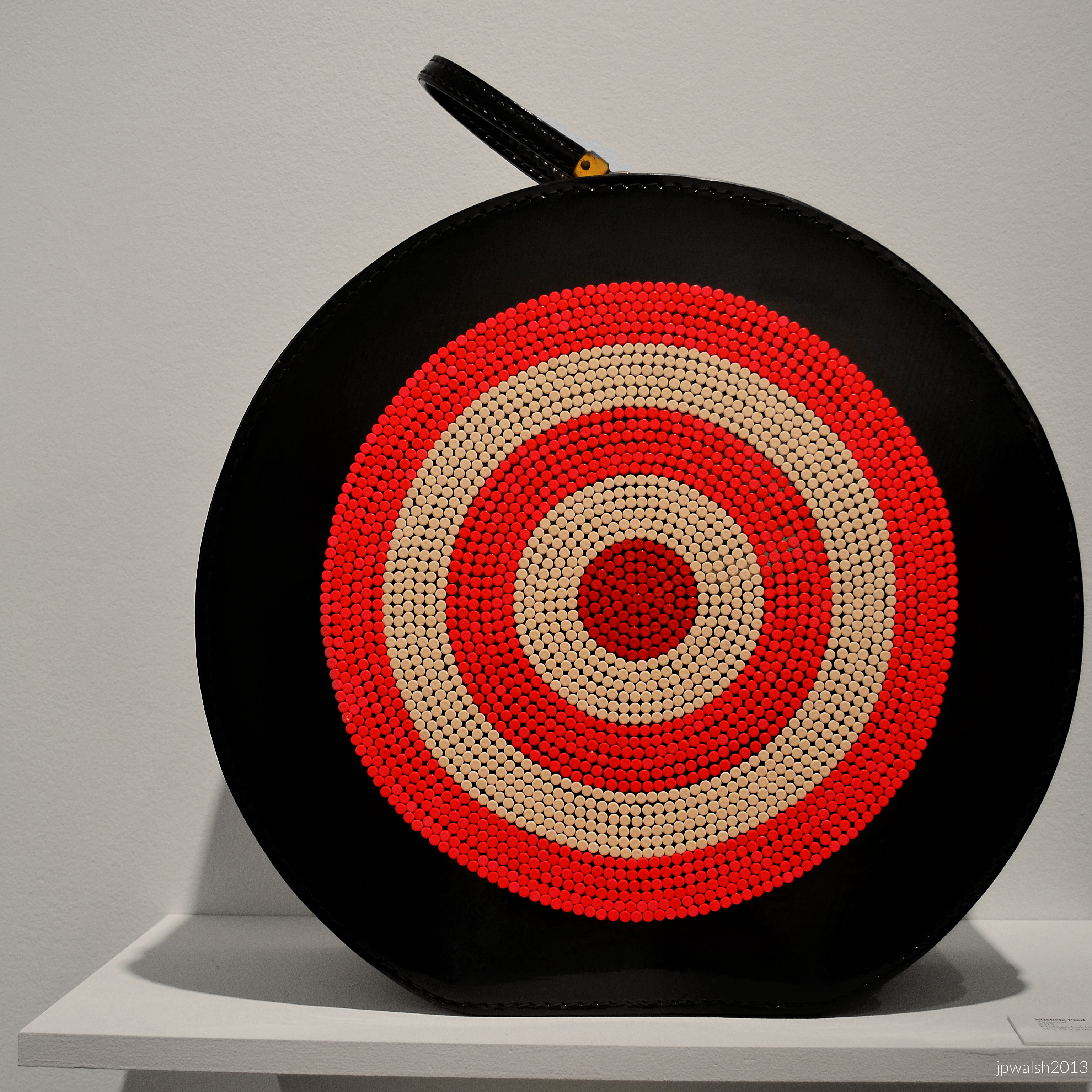
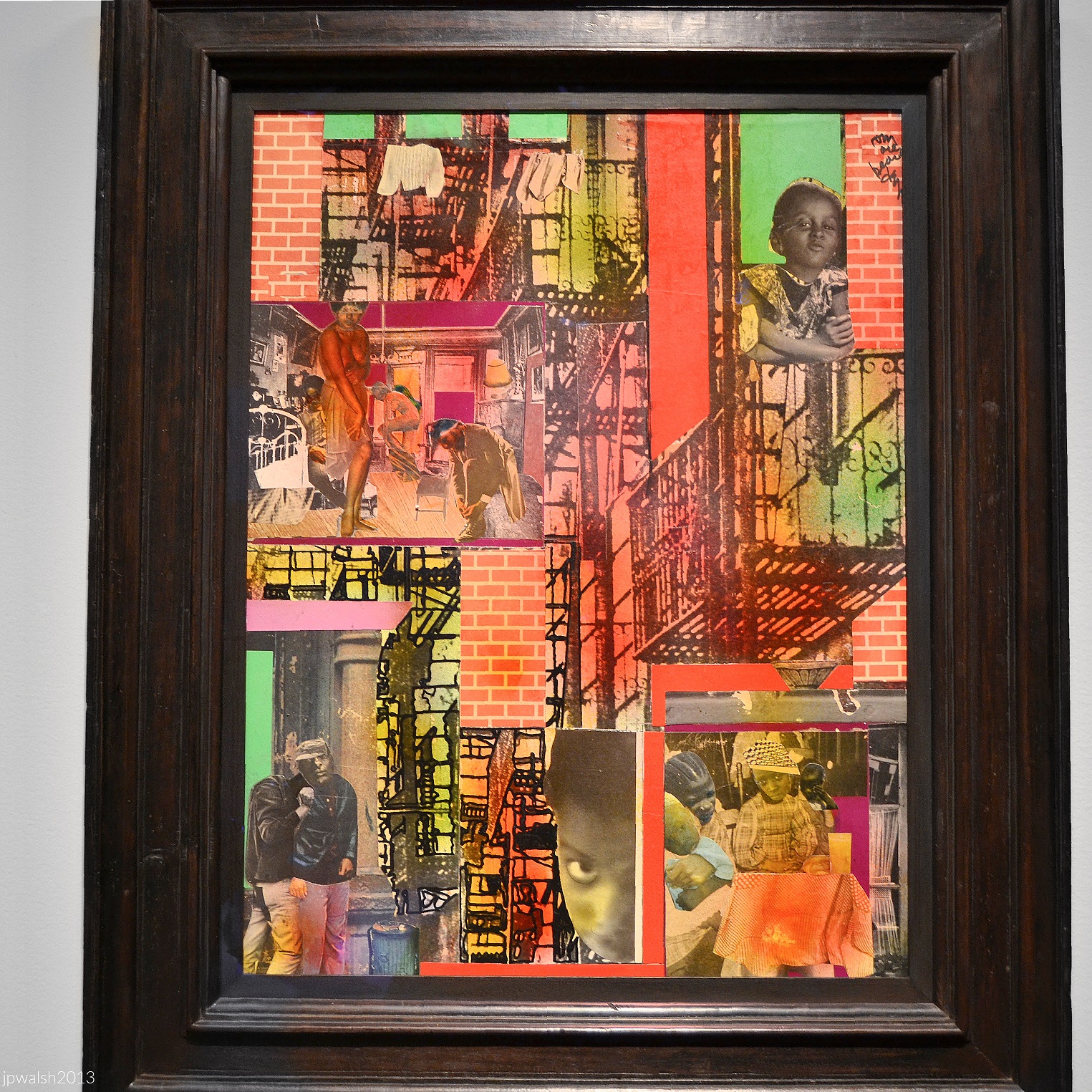
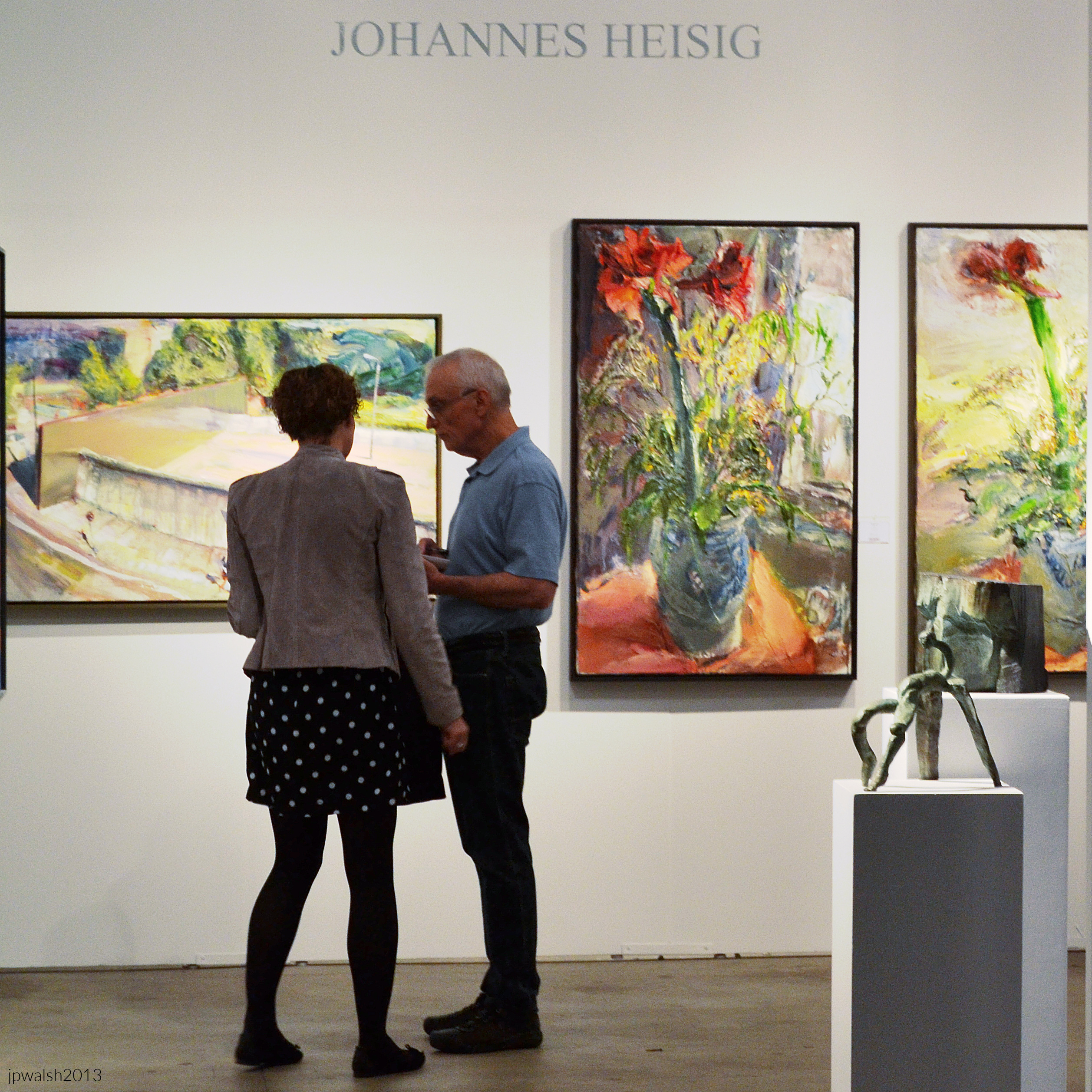
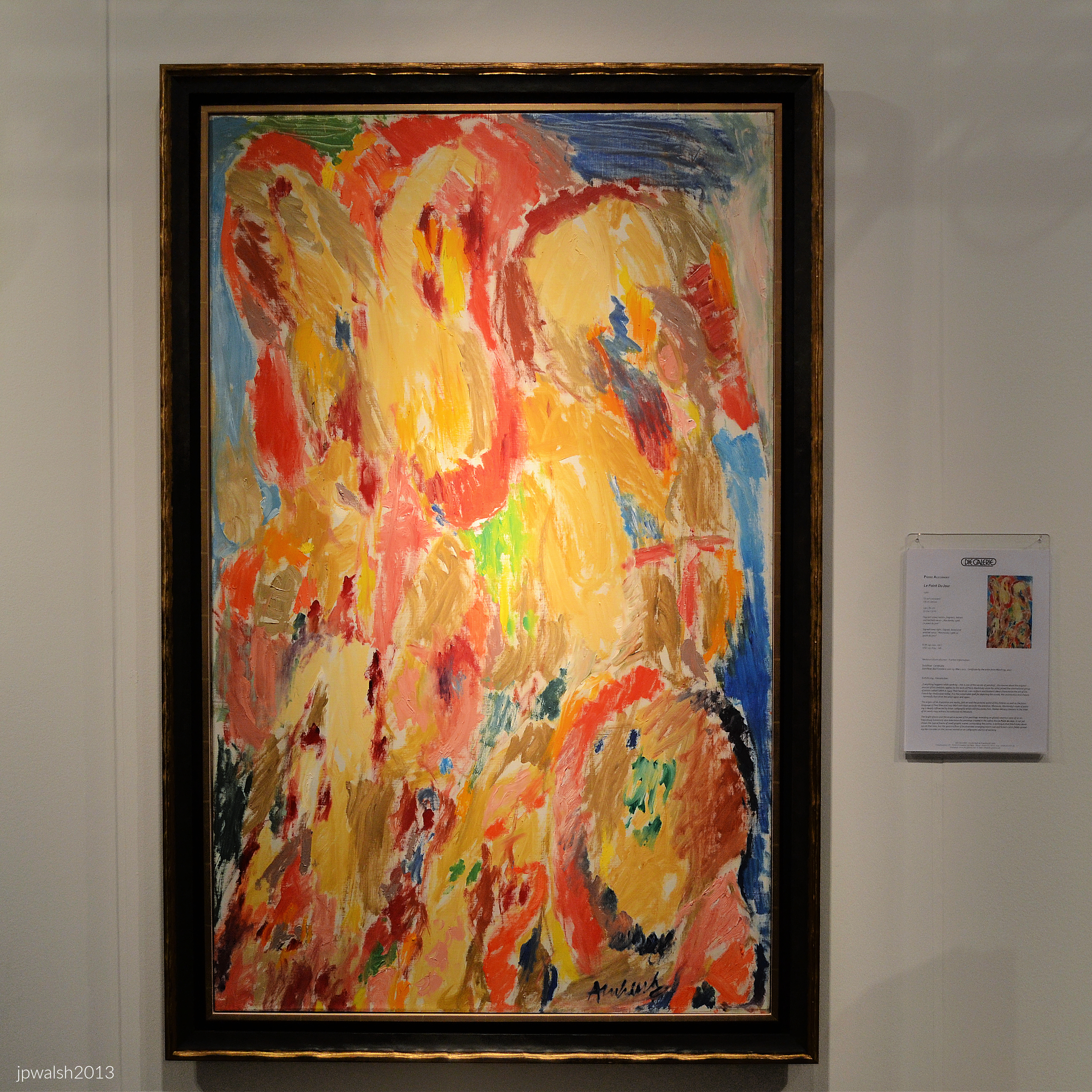
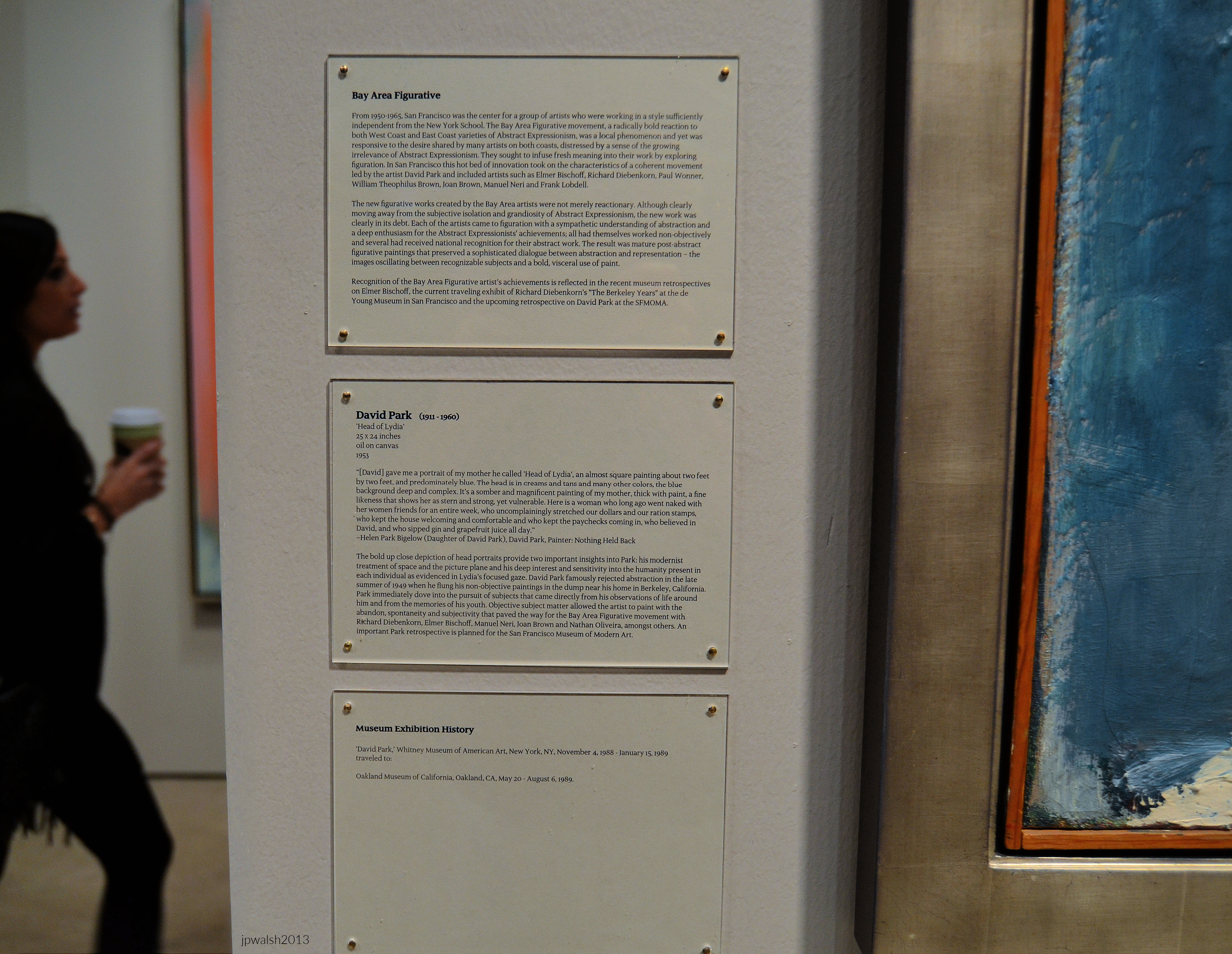
“1968 Black Power Salute” by urcameras is marked with Public Domain Mark 1.0.Robert Natkin (American, 1930-2010), Untitled, 1957, McCormick Gallery Chicago & Vallarino Fine Art New York.Hung Liu (American, Chinese, 1948-2021), Da Fa Che II, 2013, mixed media, 82 x 82 in., Nancy Hoffman Gallery, NY.Jack Roth (1927-2004), Metafour II, acrylic on canvas, 57 x 54 inches, 1980, McCormick Gallery, Chicago and Vallarino Fine Art, New York.Bruce Dorow (b. 1959), Black Shape Space, oil on canvas, 38 x 65 inches, 2012-2013. R.S. Johnson Fine Art, Chicago.Patrick Strzelec, American sculptor. Garth Greenan Gallery, Chicago.William T. Kennedy, Warhol Holding Marilyn Acetate 1, executed 1964, 2010. The photograph was made when Warhol wasn’t yet famous but at the center in a shift in the culture of the art world.Aimé Mpane (Congo, born 1968), IC Cont Series, 2011-2013, acrylic and mixed media on wood panel, 12.5 x 12 x 2 in., Haines Gallery, San Francisco.Larry Rivers (American, 1923-2002), Small Drugstore, 13.5.x.15.25 inches, oil on canvas mounted on board, 1959. Techniques of color-field painting, gestural abstraction, and calligraphy come together in a picture that is objective and abstract.Jonathan Boos, LLC, New York.Fernand Léger (1881-1955) – Mother and Child, c. 1949, gouache, signed with initials. R.S. Johnson Fine Art Chicago R.S. Johnson Fine Art, Chicago. Top left: Fernand Léger (1881-1955), Mère et Enfant, 1949, gouache; right: André Lhote (1885-1962), Les Acacias, 1959, oil on canvas. Michele Pred, Targeted, 2012, Vintage hat bag, birth control pills, 24x1x6 inches. Nancy Hoffman Gallery, New York. Michele Pred incorporates aspects of contemporary culture and politics in her art. The Berkeley, California, artist uses unconventional materials that serve as cultural artifacts for her conceptual approach.Romare Bearden (American, 1911-1988), Manhattan Suite, 1975, collage and mixed media on board, 24 x 18 inches, Jonathan Boos, LLC.50%. Elizabeth Catlett (American, 1915-2012), Star Gazer, 1997, black marble, 14.5 x 32 x 11 in., signed. Jonathan Boos LLC. Catlett is known for depictions of African-American and Latin American working-class women using simple, solid shapes in wood, stone, bronze or clay.Haines Gallery, San Francisco.Siebren Versteeg (American, b. 1971), Good Times_1081_2003_05_09, 2012, Algorithmically generated archive inkjet output to paper, tape. 92 x 56 inches, Rhona Hoffman Gallery, Chicago. The New York-based artist was educated at the SAIC and UIC. Mined digital content is presented as painterly abstractions or monitor displays.Die Galerie, Frankfurt am Main.Long–Bin Chen (Taiwan, born 1964), Edvard Grieg, 28x29x15 inches. New York-based Long-Bin Chen transforms paper products into sculpture. Books are constructed so that relevant subject parts and often titles fit together seamlessly.Mary Ellen Mark, John Belushi “Blues Brothers” Chicago IL, 1979 Gelatin silver print, 16 x 20 in. each, signed dated numbered (verso).Pierre Alechinsky, Le Point du Jour, 1966, oil on canvas, 130×81 cm, signed lower right and signed dated entitled (verso). David Park (1911-1960), Head of Lydia, 25×24 in., oil on canvas. 1953. In the late summer of 1949 David Park rejected abstraction and started the pusruit of objective subjet matter, including the mother of Helen Park Bigelow.
FEATURE image: Pierre-Auguste Renoir, The Swing, 1876, oil on canvas, 36 1/2 x 28 1/2 inches. Musée d’Orsay, Paris.
CAILLEBOTTE BEQUEST: L’Estaque, c. 1878/9, oil on canvas, 23 1/4 x 28 3/4 inches, Paul Cézanne. Musée d’Orsay, Paris.
Gustave Caillebotte’s final legacy was his determination to preserve Impressionism through a landmark bequest that forced the French State to confront, accept, and ultimately legitimize a movement it had long resisted.
By John P. Walsh
Friends, Executors, and a Promise to Keep
Gustave Caillebotte (1848-1894) and Pierre-Auguste Renoir (1841-1919) exhibited together in the Second Impressionist Exhibition in 1876 and became lifelong friends. Just two years later, in 1878, Caillebotte appointed Renoir to be executor of his will. Now in the wake of Caillebotte’s death in 1894, Renoir and Martial Caillebotte (1853-1910), the artist’s younger brother, were resolved to carry out Caillebotte’s final wishes to the letter. The most important charge given to Caillebotte’s advocates was to persuade the French State to accept their late friend’s collection of Impressionist art that came to be known as the “Caillebotte Bequest.” These 68 paintings were the wealthy artist’s assemblage of prime Impressionist art which today provides a glittering foundation for museum collections around the world, especially the Musée d’Orsay in Paris. An exact count of the bequest varies whether based on the inventories by the estate in 1894, by art writer Gustave Geffroy (1855-1926) also in 1894 or by Renoir, Martial Caillebotte and Léonce Bénédite (1859-1925) in 1896.
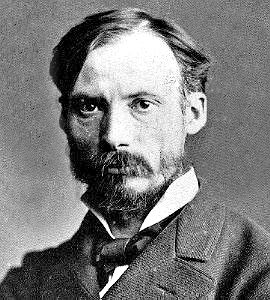
Pierre-Auguste Renoir (French, 1841-1919) at Montmartre in a photograph by Martial Caillebotte around 1885.
Martial Caillebotte (1853–1910), photographer and composer, with brother Gustave Caillebotte (1848-1894), artist, collector and arts organizer.
The struggle over the Caillebotte Bequest reveals how controversial Impressionism remained in the 1890s and how Renoir and Martial Caillebotte fought for decades to secure its place in France’s national museums.
Gustave Geffroy (1855-1926) in a portrait photograph by Nadar.
Léonce Bénédite (1856 – 1925), at left, curator for the Caillebotte Bequest.
CAILLEBOTTE BEQUEST: Edouard Manet, The Balcony, 1868-69, oil on canvas, 67 3/4 x 40 1/4 inches, Musée d’Orsay, Paris.
The Collection That Challenged the Establishment
In 1894 Caillebotte’s bequest included paintings by living artists such as Camille Pissarro, Edgar Degas, Paul Cézanne, Alfred Sisley, Claude Monet, and Pierre-Auguste Renoir. Two artists in the collection were already dead – and both Jean Millet (1814-1875) and Édouard Manet (1832-1883) were more highly prized than the others at the time. A vast majority of Caillebotte’s more than five dozen paintings were painted and purchased before 1880.
The French government was accustomed to selecting and purchasing works for the national collection on their own initiative and looked on Caillebotte’s donation as a “tricky business” as expressed by Republican Henry Roujon, Fine Arts administrator who had only recently worked for Jules Ferry. From a wanting-to-oblige Establishment viewpoint the bequest was complicated because Caillebotte boldly stipulated that all 68 works be accepted together and earmarked as a group for entrance into the Louvre. Up to now the French State only had experience in purchasing Sisley and Renoir (“Young Girls at the Piano,” acquired in 1892) for the national collection. Moreover the acceptance of Caillebotte’s collection would change State policy to exhibit no more than three works by any artist for Caillebotte’s bequest included more paintings than that number for each artist. Although twenty years had passed since the first Impressionist exhibition in Paris in 1874, the French State had never taken much of a public interest in this diverse group of nonacademic artists. On the other side of the table as Renoir and Martial Caillebotte were primarily concerned with the State’s acceptance of the entire body of work, those living artists in the bequested collection had their concerns if they succeeded.
Henry Roujon (French, 1853-1914) in 1912.
Negotiating the Caillebotte Bequest
One antidote to this attitude of entrenchment was that the Republican French state in 1894 was halfway into its second decade of shepherding progressive policies onto France and its cultural leaders realized this must extend to a determined national support for this windfall of abstruse avant-garde artists. Following a year of negotiation with executors Renoir and the younger Caillebotte the State cut its deal. They might have refused the whole lot of them, but accepted a majority of the bequest and more than one painting of each artist. Further they formally agreed to exhibit all 40 works and they were duly hung in the Musée du Luxembourg in February 1897. In addition to two by Millet, these 38 Impressionist masterworks are today in the Musée D’Orsay. None of Caillebotte’s own paintings were included in the legacy. Protests by traditional art voices were now useless: the Impressionists, accused of “ruining young artists,” were now on national museum walls. Cézanne’s response to the inclusion of two of his paintings is forthright: “Now (William-Adolphe) Bouguereau can go to hell!” During this hard-edged contest to determine which artists and art works were included or excluded, it was not the museums that picked up the pieces but the mainly French and American collectors as well as the gallery dealers who mounted historic one-man shows for Caillebotte (at Durand-Ruel in June 1894), for Cézanne (at Ambroise Vollard in 1895) and for Monet (Durand-Ruel in May 1895).
CAILLEBOTTE BEQUEST: Claude Monet, Luncheon in the Garden, 1873-74, oil on canvas, 63 x 79 1/8 inches, Musée d’Orsay, Paris.
CAILLEBOTTE BEQUEST: Pierre-Auguste Renoir, Girl Reading, c. 1874, oil on canvas, 18 1/8 x 15 inches, Musée d’Orsay, Paris.
CAILLEBOTTE BEQUEST: Pierre-Auguste Renoir, Railroad Bridge at Chatou, 1881, oil on canvas, 21 1/4 x 25 1/2 inches. Musée d’Orsay, Paris.
CAILLEBOTTE BEQUEST: Pierre-Auguste Renoir, Study (Nude in the sunlight), 1875, oil on canvas, 31 7/8 x 25 1/2 inches. Musée d’Orsay, Paris.
CAILLEBOTTE BEQUEST: Pierre-Auguste Renoir, The Swing, 1876, oil on canvas, 36 1/2 x 28 1/2 inches. Musée d’Orsay, Paris.
CAILLEBOTTE BEQUEST: Edgar Degas, Women on the Terrace of a cafe in the Evening, 1877, pastel over monotype, 16 1/2 x 23 5/8 inches, Musée d’Orsay, Paris.
CAILLEBOTTE BEQUEST: Edgar Degas, The Chorus,1876/77, pastel over monotype, 10 5/8 x12 1/4 inches, Musée d’Orsay, Paris. In a suggested auditorium stage setting Degas depicts a group of costumed singers who perform with vivid gestures and expressions capturing the intensity of the moment and with a sense of energy and movement. Colors are warm and there is an emphasis on the effects of dramatic light as the artist uses loose brushstrokes that captures the excitementof a theatrical production. Degas’s perspective is up close and truncated which keeps the focus on the performers. https://www.artchive.com/artwork/the-chorus-edgar-degas-c-1877/ – retrieved June 14, 2025
CAILLEBOTTE BEQUEST: Edgar Degas, L’Etoile (the Star), 1876/77, pastel over monotype, 22 7/8 x 16 1/2 inches, Musée d’Orsay, Paris.
CAILLEBOTTE BEQUEST: Edgar Degas, Femme sortant du bain, vers 1876, pastel sur monotype, H. 0.16 ; L. 0.215, musée d’Orsay, Paris, France.
CAILLEBOTTE BEQUEST: Camille Pissarro, Red Roofs, Village scene, Winter Effect, 1877, oil on canvas, 21 1/2 x 15 1/4 inches, Musée d’Orsay, Paris.
CAILLEBOTTE BEQUEST: Camille Pissarro, Harvest at Montfoucault, 1876, oil on canvas, 25 1/2 x 36 1/4 inches, Musée d’Orsay, Paris.
CAILLEBOTTE BEQUEST: Camille Pissarro, The Vegetable Garden with Trees in Blossom, Spring, Pontoise, 1877, Oil on canvas, 25 1/2 x 31 7/8 inches, Musée d’Orsay, Paris.
CAILLEBOTTE BEQUEST: Claude Monet, Regattas at Argenteuil, c. 1872, oil on canvas, 17 3/4 x 29 1/2 inches, Musée d’Orsay, Paris.
CAILLEBOTTE BEQUEST: Alfred Sisley, Boat Races at Molesey, 1874, oil on canvas, 26 x 35 3/4 inches, Musée d’Orsay, Paris.
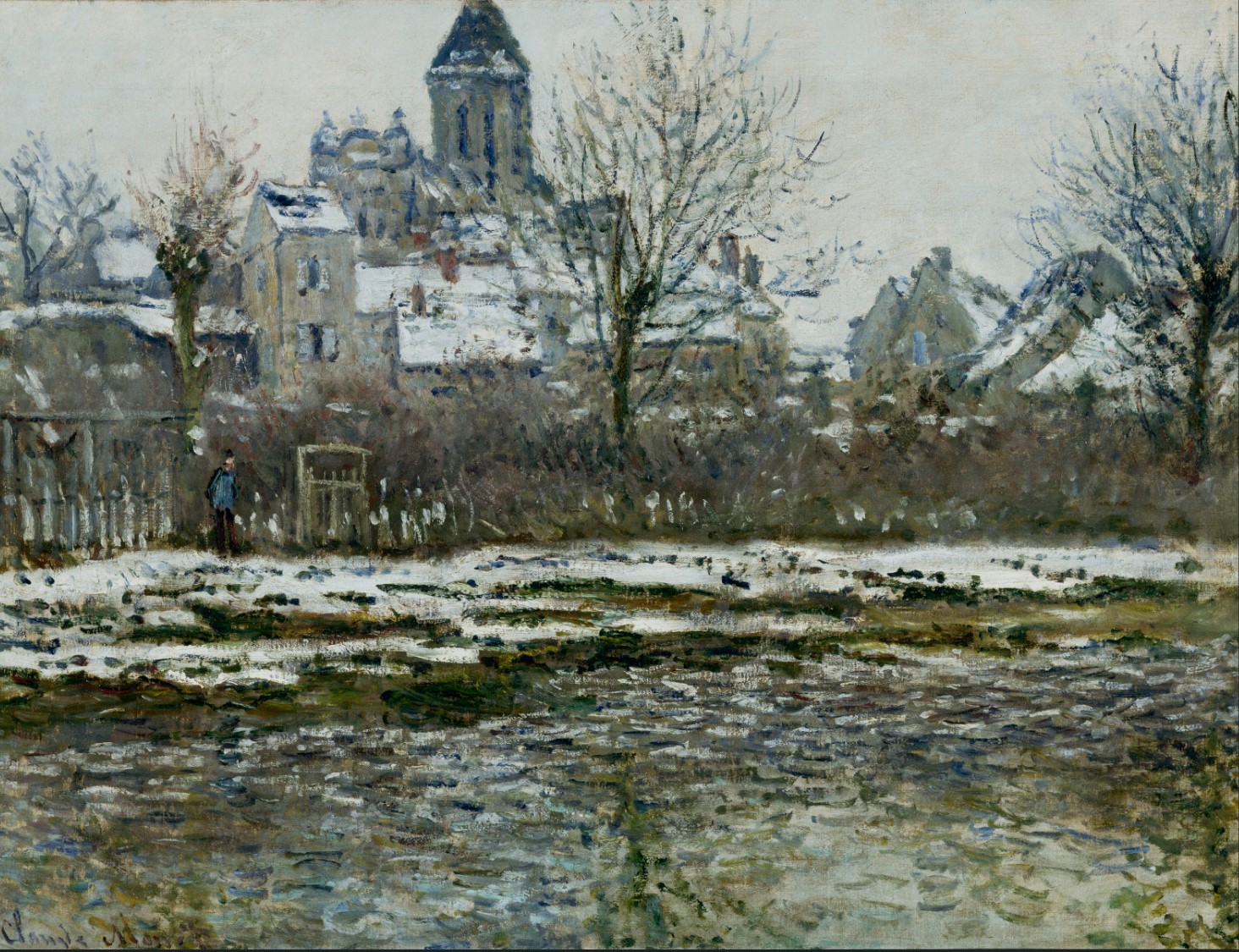
CAILLEBOTTE BEQUEST: Claude Monet, The Church at Vétheuil, Snow, 1878-79, oil on canvas, 20 1/2 x 28 in., Musée d’Orsay, Paris.
The settlement accepted in January 1895 and promulgated a year later was not the last word for Renoir who continued to try to fully achieve his friend’s terms. On at least two occasions – in 1904 and 1908 – the works refused by the State in 1894 were proffered to them. Both times these 28 remaining works were refused and as far as the French State was concerned the case of the Caillebotte Bequest was closed. Only by his death in 1919 were Renoir’s efforts to honor Caillebotte’s bequest to France halted (Martial had died in 1910).
The Rejected Masterpieces
In 1928, over thirty years after Caillebotte’s death and bequest, the French State dared to make a legal claim to those remaining 28 works they had rejected three times previously. Inexorably cloaked in superiority, this latest endeavor of the official art establishment revealed its opportunism as the changing winds of taste now clearly favored Impressionism. Both original executors of Caillbotte’s bequest now dead, it was left to Martial Caillebotte’s son’s widow to respond to these highly-placed administrative scratchings.
From Rejection to Worldwide Fame
Her decision: she refused to hand over these works and placed them on the open market. The “rejected” and overlooked works of the “Caillebotte Bequest” were sold to private collectors all over the world, including to Americans Albert C. Barnes (1872-1951), and H.O. Havemeyer (1847-1907) and Louisine Havemeyer (1855-1929). Many of these remainder works’ locations are unknown.
CAILLEBOTTE BEQUEST: Bathers at rest, (Baigneurs au repos), 1876/77, oil on canvas, 32 5/16 x 39 7/8 inches, Paul Cézanne. The Barnes Foundation.CAILLEBOTTE BEQUEST: Edgar Degas, The Dance Lesson, c. 1879, pastel and black chalk on three pieces of wove paper, 25 3/8 x 22 1/8/inches, The Metropolitan Museum of Art, New York, NY.
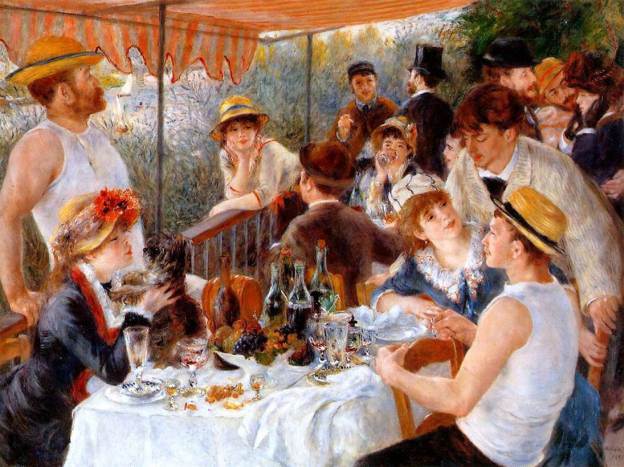
FEATURE image: P.A.-Renoir, A Luncheon at Bougival, 1881, The Phillips Collection, Washington, D.C. The Seventh Impressionist Exhibition – 1882.
The story of Gustave Caillebotte’s The Bezique Game is really the story of the Impressionist movement’s internal struggle for survival between 1877 and 1882. After the triumphant Third Impressionist Exhibition of 1877, factional disputes, especially Edgar Degas’s campaign against the “broken brush” Impressionists, fractured the group. Caillebotte ultimately engineered the Seventh Impressionist Exhibition of 1882 to reunite many of the excluded artists and restore the original vision of the movement.
Gustave Caillebotte, The Bezique Game (Partie de bésigue), 1880, private collection. The Seventh Impressionist Exhibition-1882.
By John P. Walsh
The Impressionists After 1877: A Movement Begins to Fracture
In the five years between the “balanced and coherent” Third Impressionist Art Exhibition in April 1877 and the penultimate Seventh Impressionist Art Exhibition in March 1882 which included Gustave Caillebotte’s The Bezique Game, significant changes had occurred in the art world.
One major development that was especially impactful for the band of independent and ever-varying avant-garde artists known as the “impressionists” was that, after 1877, the group had fallen apart.
Caillebotte’s Triumph and the Failure of a Fourth Exhibition
The Third Impressionist Exhibition in 1877 organized by Caillebotte and Camille Pissarro (1830-1903) demonstrated the benefit of a detailed marketing plan within a professional arts organization. Caillebotte’s attempted follow-up to host an impressionist exhibition in 1878, however, failed to get off the ground.
It wasn’t for any lack of his trying. In 1877, Caillebotte could measure success in the Third show by 18-count modern artists under a new brand name, along with 230 works. Show attendance numbers were up from the first and second exhibitions almost four fold. Picture sales were up.
In less than one year, the enterprise devolved to nothing tangible. This was because of a lack of collective coherence among the artists in terms of artistic and business outlook. Seeds of destruction among this klatch of mostly young, avant-garde artists became increasingly evident during the “glorious” 1877 show.
Degas Versus the “Broken Brush” Impressionists
Caillebotte’s genius in the Third Exhibition was to know strengths to promote and problem to ignore. He avoided the veritable train wreck coming from associated artists who were antagonistic creatively by keeping them mostly literally physically apart.
The Impressionists had two major factions. One was led by classically-trained Edgar Degas (1834-1917) with his realist urban figure drawing. The other was the nonacademic, “broken-brush” innovators or strict impressionists such as Claude Monet (1840-1926) and Pierre-Auguste Renoir (1841-1919) who explored the effects of light.
For the duration of the Third Impressionist exhibition, all of Degas’s 25 beach and ballet works hung in a room of their own.
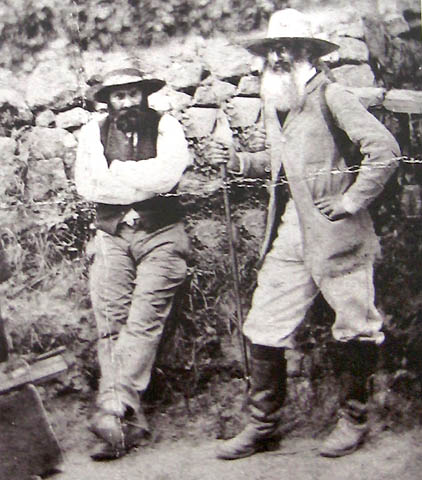
EDGAR DEGAS (1834 – 1917).CLAUDE MONET (1840-1926).GUSTAVE CAILLEBOTTE (1848-1894).
As a business seeks popular and financial success, a caveat towards that objective for the third and upcoming 4th, 5th, 6th and 7th impressionist art shows was “the terrible Monsieur Degas.”
Although Degas had an argumentative personality, major reasons for Degas’s dispute with Caillebotte’s impresionist show were not Degas’ making. After 1877, the battle line which ensued between Degas and his group of trained artists and Monet and his nonacademic group affected every next impressionist show up to the 8th and last one in 1886.
The Salon Opens and Changes the Rules
The catalyst for the Impressionists’ artistic divisions was their different understandings of what became another major development to affect the art world and all contemporary artists.
Throughout the 1860s, the Salon continued to be anti-democratic. By the late 1870s, there was a clear trend towards a more liberalized Salon. In 1881, the French government took itself out of the Salon. Even before that, in 1878, the year of the scrapped 4th Impressionist show, the government allowed strict or “broken brush” Impressionists like Monet and Renoir to participate in their “Exhibition of Living Artists.”
Édouard Dantan, Un Coin du Salon en 1880 (A Corner of the Salon in 1880), 1880, oil on canvas, 97.2 x 130.2 cm (38.2 x 51.2 in.). Private collection.
Biggest art show in Paris
Whatever its drawbacks, the Salon remained the biggest art show in Paris.
While Caillebotte’s Third Impressionist Exhibition in 1877 attracted 15,000 visitors in its one month run—a remarkable statistic—the Salon attracted 23,000 visitors per day.
The Salon displayed around 23x more art than the Impressionist show and attracted 50x more visitors. Opportunities for sales and new clients at one of these nineteenth-century warehouse events was immense.
In 1878, after years of fighting for greater participation in the Salon— the Salon des Refusés took place in 1863—innovative Impressionists were finally allowed to freely hang their artwork in an annual show that for hundreds of years had been the institurional enclave of the Paris art world’s elite.
Degas’s Ultimatum
Yet, In terms of the 4th impressionist art show, the bourgeois Degas devised an ingeniously small-minded idea that he presented ennobled by some principle.
Despite this historic opening of the Salon to young avant-garde artists—Monet and Renoir were in their late 30’s, Degas in his mid 40’s—the older and financially secure artist insisted that all impressionists must make a choice.
Either exhibit in the Salon or with the Impressionists.
Degas’s ultimatum was crafted to pressure the “broken brush” impressionists such as Renoir, Monet, Sisley and Cézanne to break ranks to the Salon—and likely improve their sales and reputations in a rapidly changing art market—and leave the impressionist art organization to Degas and his followers.
Degas’s wedge actually worked. By 1880, the “broken brush” impressionists were purged from the Impressionist exhibitions by their own choice to exhibit in the Salon. Though they saw no conflict with the Impressionist art organization per se that broken brush artists helped found, Degas’s ultimatum had been permitted to stand for the 4th, 5th, and 6th impressionist art shows and helped secure these Impressionist shows of 1879, 1880, and 1881 under the leadership of Degas.
Pierre-Auguste Renoir (French, 1841-1919).Paul Cézanne (French 1839-1906) and Camille Pissarro (French, 1830-1903).Alfred Sisley (British, born France, 1839-1899).
The Degas Years and Caillebotte’s Break
The 4th, 5th, and 6th exhibitions featured Degas and his favorite artists. It was in these Degas-led shows that the public had their first in-depth look at Mary Cassatt (1844-1926) and Paul Gauguin (1848-1903), among others.
Not all of the Impressionists’ original members and strict impressionists decided to exhibit in the Salon. Camille Pissarro and Berthe Morisot (1841-1895) chose to stay in the independent art group and continued doing so for the eight shows. (Morisot had a baby during the 4th and didn’t participate).
Gustave Caillebotte had invested his talent, reputation and resources into the independents since 1876 and continued to organize and exhibit with them in 1879 and 1880. Before the 6th show in 1881, Caillebotte himself finally broke with the Degas regime in a dispute nominally over a advertising issue.
Mary Cassatt (American, 1844 –1926) in later years.Édouard Manet (French, 1832-1883).Berthe Morisot (French, 1841-1895) in 1875.
The Bezique Game and the Politics of Card Playing
As the calendar proclaimed a new decade, new opportunities for Impressionist exhibitions began percolating in Caillebotte’s head as he painted The Bezique Game (1880) within the shifting artistic environment.
The game of Bezique is a 64-card game for two players and curiously French. In the game two singles players sit across the net to compete to 1000 points. The rest are score keepers or observers. As the game carries on, card “tricks” pile up on the table.
Some art critics viewing Caillebotte’s contemporary subject of a popular game identified the painting as a “legible and tightly ordered” image out of the long-held pictorial tradition of card playing. Yet idiomatic clichés related to card playing such as “playing one’s cards right” or “holding one’s cards close to the chest” may be read into the painting. It is one of the canvasses painted by impressionist artists during this time that relate to the Impressionist group’s recent and ongoing exhibition experiences.
Nineteenth-century art critics usually grouped together the artwork of Caillebotte and Degas, Neither artist was among the “strict” impressionists such as of Monet and Renoir. Several critics wondered aloud in the newspaper why Caillebotte would even have dealings with those “broken-brush” daubers now at the Salon with Édouard Manet.
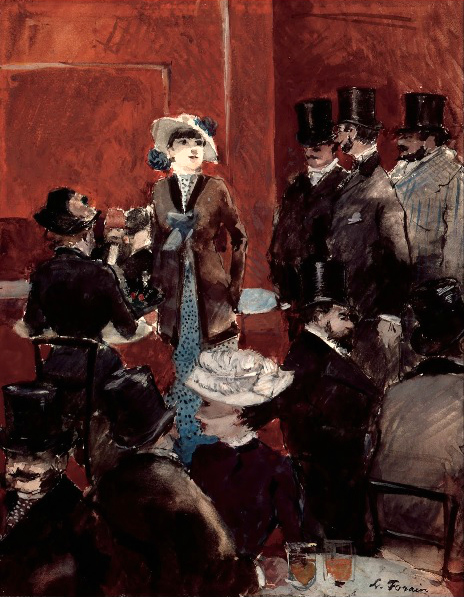
4th (1879):Competition between Degas’s partisans and the mostly younger strict impressionists such as Claude Monet, Renoir, and others, resulted in a schism in 1879. In addition to himself, Degas recruited talented newcomers such as Mary Cassatt (1844-1926), Jean-Louis Forain (1852-1931), and Federico Zandomeneghi (1841-1917) for the 4th.
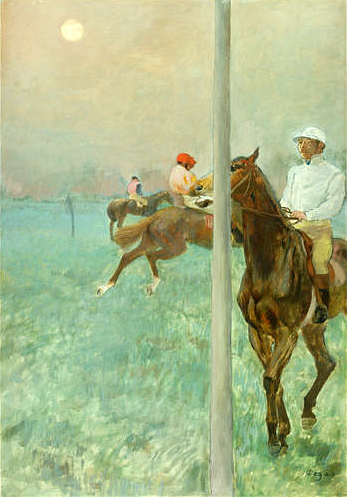
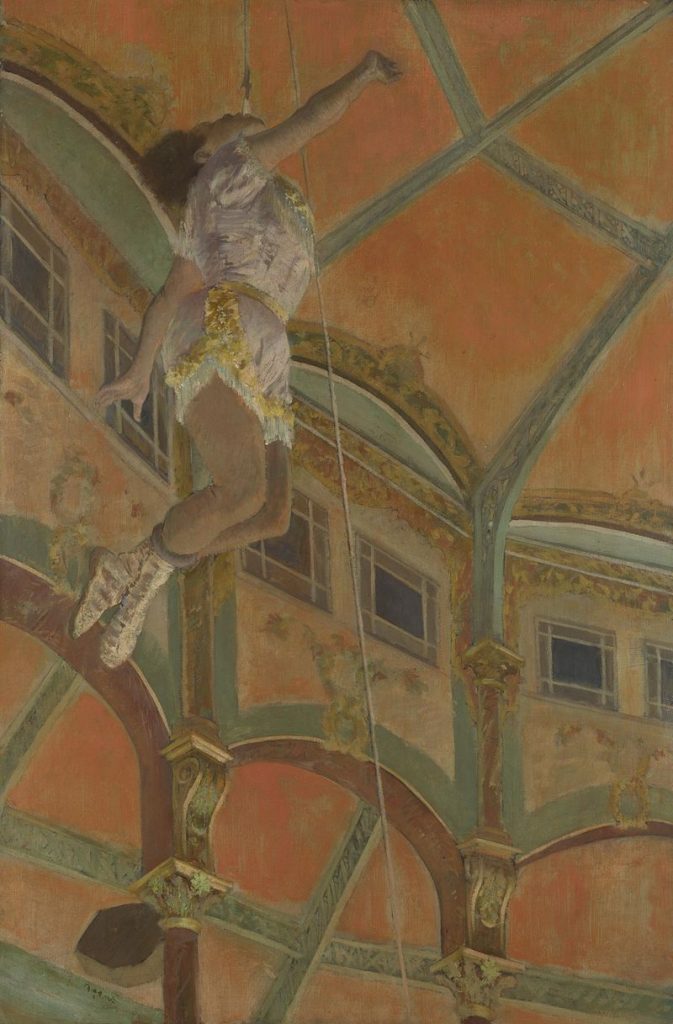
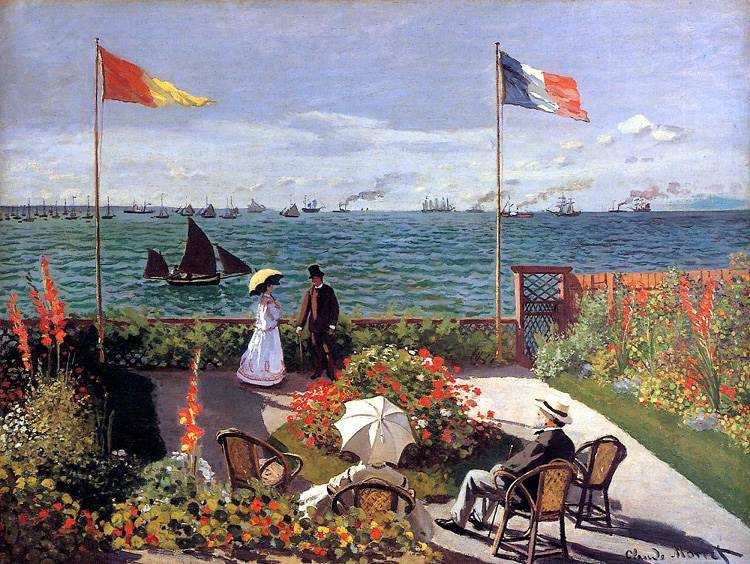
Edgar Degas, Chevaux de course (Jockeys before the Race), 1869-1872, oil, essence, pastel on paper, 107 x 73 cm, 42 1/8 x 28 3/4 in., The Barber Institute of Fine Arts, University of Birmingham. The Fourth Impressionist Exhibition-1879.Gustave Caillebotte, The Skiffs, 1877, oil on canvas, 88.9 x 116.2 cm (35 x 45 3/4 in.), National Gallery of Art, Washington, D.C. The Fourth Impressionist Exhibition-1879.Mary Cassatt, Femme dans une loge (Woman in a Loge), 1879, oil on canvas, 80.3 x 58.4 cm (31 5/8 x 23 in.), Philadelphia Museum of Art. The Fourth Impressionist Exhibition-1879.Edgar Degas, Miss Lola, au Cirque Fernando, 1879, oil on canvas, 117 x 77.5 cm ( 46 x 30 1/2 in.), National Gallery, London. The Fourth Impressionist Exhibition-1879.Claude Monet, Jardin à Sainte-Adresse (Garden at Sainte-Adresse), 1867, oil on canvas, 38 5/8 x 51 1/8 in. (98.1 X 129.9 cm), The Metropolitan Museum of Art, New York. The Fourth Impressionist Exhibition-1879.Jean-Louis Forain, Café Interior, c.1879, gouache on paper, 12 7/8 x 10 in. (32.8 x 25.5 cm). The Fourth Impressionist Exhibition-1879.Federico Zandomeneghi, Portrait of M. Diego Martelli, 1879, oil of canvas, 28 3/8 x 36 1/4 in. (72 x 92 cm), Galleria D’Arte Moderna, Florence. The Fourth Impressionist Exhibition-1879.
From the Glory of 1877 to Internal Collapse
The Third Impressionist Art Exhibition held in April 1877 is known as “Caillebotte’s Exhibition.” It is the highlight of the eight Impressionist exhibitions held between 1874 and 1886. While scholars agree that the Third Impressionist Exhibition was in every sense “glorious,” the show’s euphoria was short lived. Two weeks after the show closed, as hope for picture sales grew high, there was a Constitutional crisis in the French government. The political turmoil resulted in a consolidation of Republican power defeating Royalists which led to a national economic recession. The Impressionist group, conceived and carefully built to unity by Gustave Caillebotte, resorted to squabbling as the artists jostled to survive in receding good times.
Gustave Caillebotte’s efforts for a fourth impressionist exhibition in 1878 were stymied and the next 3 exhibitions would be under Degas’s rule. In 1879 Degas exclude the “broken brish” artists Pierre-Auguste Renoir, Paul Cézanne and Alfred Sisley. In 1880, Degas cast out Claude Monet. The destructive outcome of these intramural politics was not lost on Caillebotte.
Caillebotte built the group’s brand in the Third Impressionist Art Exhibition in 1877 largely on “broken brush” impressionists nwho were excluded from Degas’s shows. Caillebotte, however, worked with Edgar Degas and his artistic coterie in 1879, 1880 and 1881. Oy was before the opening of the Sixth Impressionist Exhibition in 1881 that Caillebotte finally departed the Degas-led organization. Caillebotte cited differences on an advertising issue.
Yet Caillebotte’s nonparticipation with the Impressionists was short lived.
5th (1880):The Fifth exhibition lost Monet to the Salon which per Degas’s ultimatum excluded the figurehead through which the term “impressionism” received its label in 1874 from exhibiting with the group of independents in 1880. Other broken or free brush painters such as Camille Pissarro and Berthe Morisot did continue to exhibit in the 5th show. Ironically, critics responded to the truncated, Degas-led show, by wondering out loud what made this Impressionist show any different than a recently liberated Salon. While Morisot and American Mary Cassatt’s artwork received especial attention and praise in the 5th show, the month-long April 1880 show also introduced important newcomers to its Paris audience such as Paul Gauguin (1848-1903) and Jean-François Raffaëlli (1850-1924).
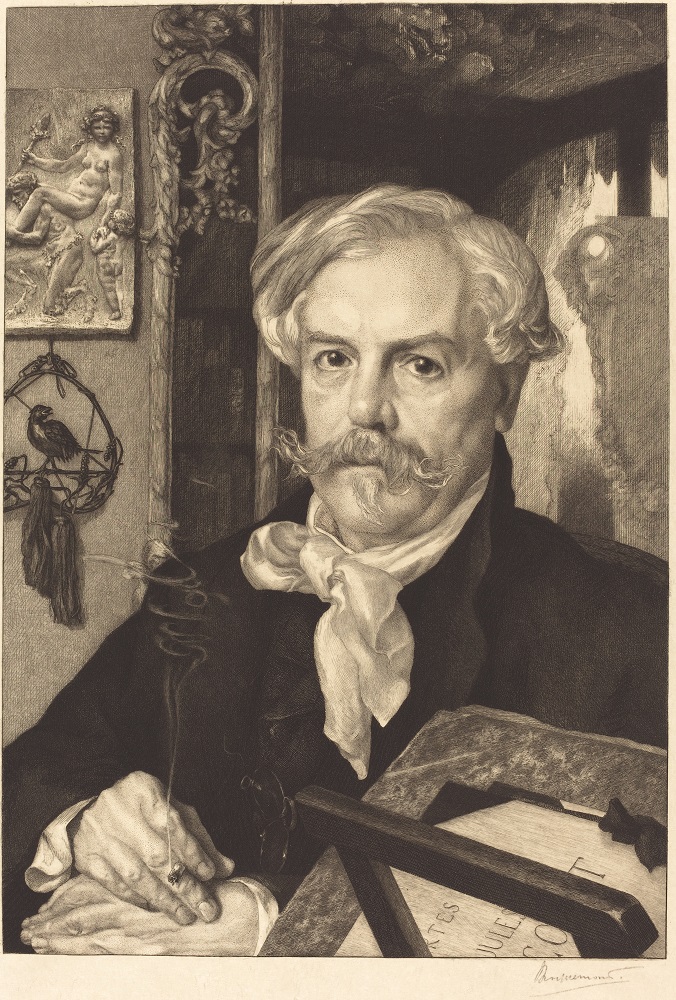
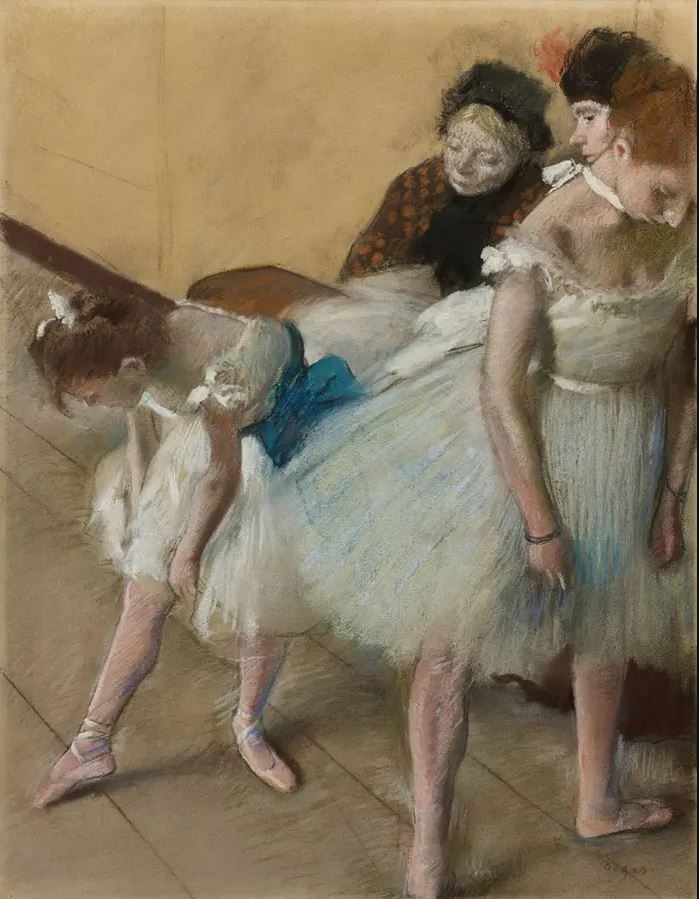
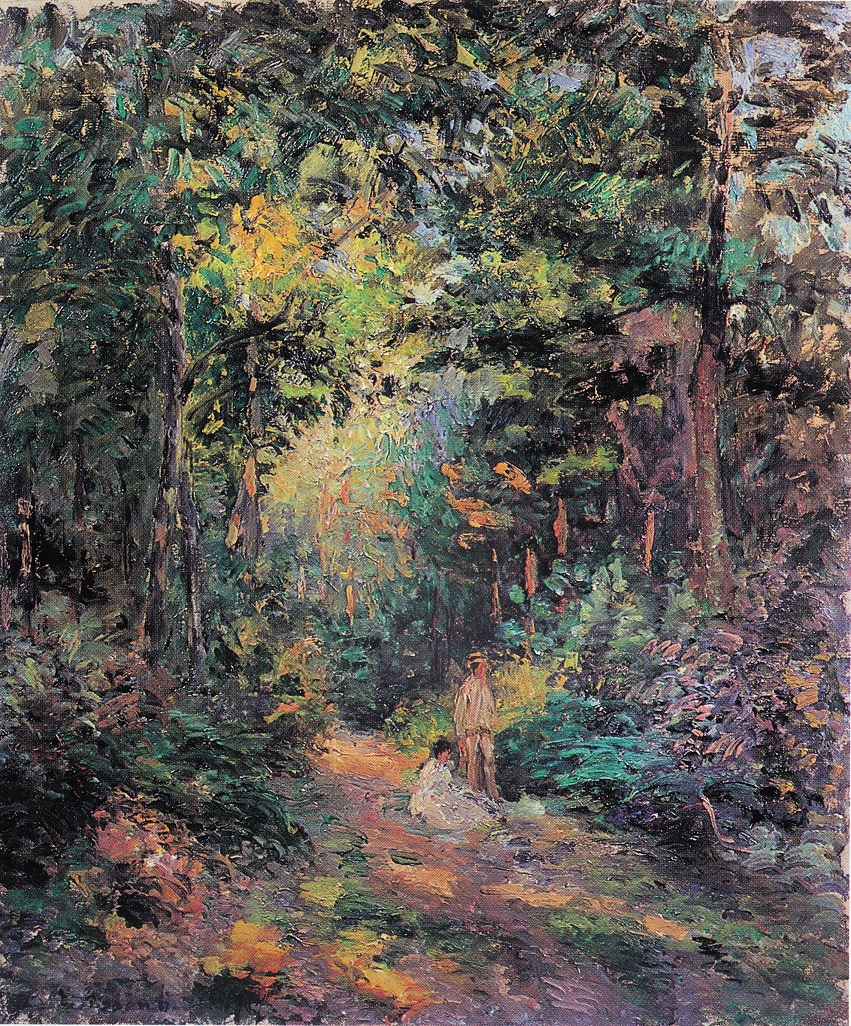
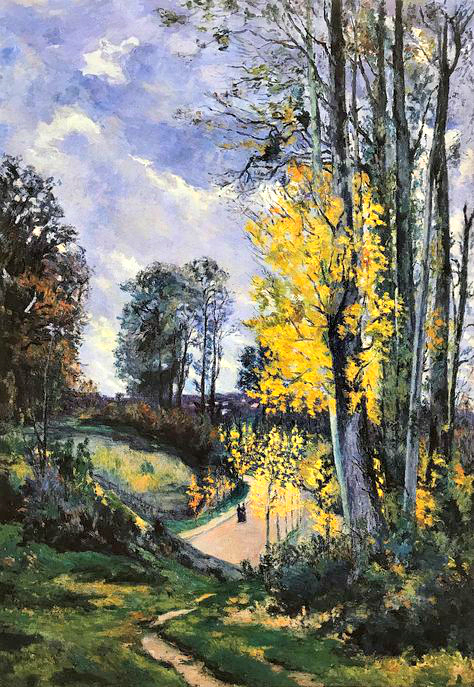
Marie Bracquemond (1840-1916), La dame en blanc Ithe woman in white), oil on canvas, 180×100 cm. Musée de Cambrai. Marie Bracquemond (1840-1916), Sur la terrasse à Sèvres, 1880, oil on canvas, 88 x 155 cm, Petit Palais, Geneva. Félix Henri Bracquemond (1833-1914), Edmond de Goncourt, charcoal on canvas (original), 1880. Louvre. (This is a slightly later 1882 engraving.)Gustave Caillebotte (1848-1894), Interior (Woman at the Window), 1880, 116×89 cm, private. Gustave Caillebotte (1848-1894), Still Life, 1879, oil on canvas, 50×60 cm, private. Mary Cassatt (1844-1926), Portrait of Madame J. , c. 1880, oil on canvas, 80.6×64.6 cm, The Peabody Institute, Baltimore MD. Edgar Degas (1834-1917), Toilette, c. 1879, 21×15.9 cm. Private New York. Edgar Degas (1834-1917), The Dance Examination, pastel and charcoal on paper, 63.4×48.2 cm, Denver Art MuseumEdgar Degas (1834-1917), The Dance Lesson, oil on canvas, 38×86.3 cm, Private Virginia. Paul Gauguin (1848-1903), The Market Gardens of Vaugirard, c. 1879, oil on canvas, 65×100 cm, Smith College Museum of Art, Northampton MA. Berthe Morisot (1841-1895), Summer (Young Woman By the Window), oil on canvas, 76×61 cm, Musée Fabre, Montpellier.Berthe Morisot (1841-1895), Woman at Her Toilette, c. 1875, 60.3×80.4 cm, The Art Institute of Chicago. Berthe Morisot (1841-1895), portrait (Young Woman Dressed for the Ball), oil on canvas, 71×54 cm, Musée d’Orsay. Camille Pissarro (1830-1903), The Woodcutter, 1879, oil on canvas, 89×116.2 cm, Holmes à Court Gallery Australia. Camille Pissarro (1830-1903), Autumn Path through the Woods, oil on canvas, 81×65 cm, Private Paris. Jean-François Raffaëlli (1850-1924), Mayor and Town Counselor, oil on canvas, 53.5×73 cm, Private New York. Henri Rouart (1833-1912), Melun (Terrace on the Banks of the Seine), oil on canvas, 46.5×65.5 cm, Musée d’Orsay. Federico Zandomeneghi (1841-1917), Mother and Daughter, 1879, oil on canvas, 62×52 cm, Private Italy.
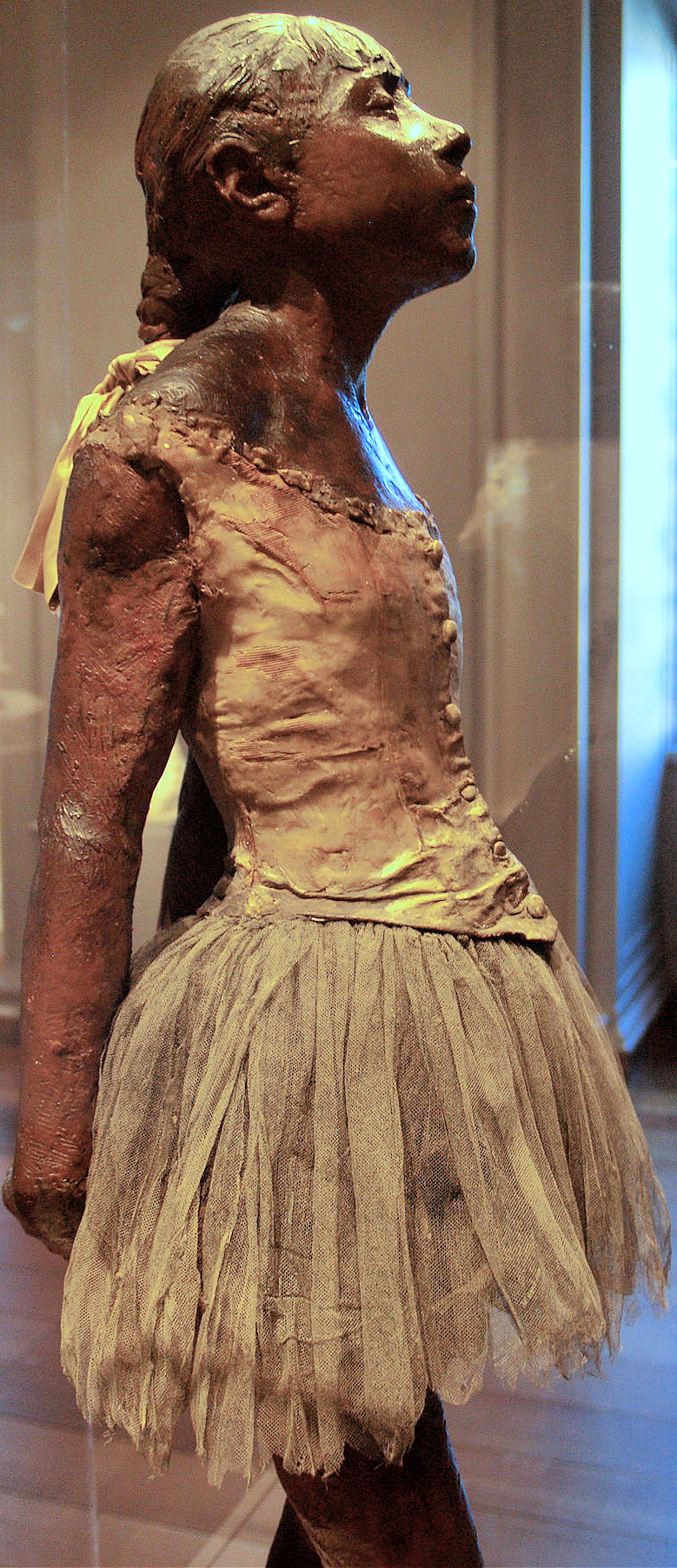
6th (1881): Mary Cassatt and Berthe Morisot continued their impact as the most progressive impressionists according to critics during the 6th Impressionist show in 1881. Morisot’s Nurse and Baby was startlingly abstract to viewers of the 1881 show. Zandomeneghi’s Place d’Anvers quietly inspired artists to explore anew early Renaissance Italian mural painting. Raffaëlli, displaying over 30 works in the 6th show, made a huge impact for his realist, socially aware artwork. The 6th show’s centerpiece was Degas’ statuette of the ballet student in a fabric tutu that put impressionism in 3D and affected modern sculpture going forward. Gustave Caillebotte who had participated in the 2nd, 3rd, 4th and 5th impressionist exhibitions (and would the 7th) as well as organized the 3rd, 4th, and 5th (and would the 7th), bowed out of participating at all in the 6th show.
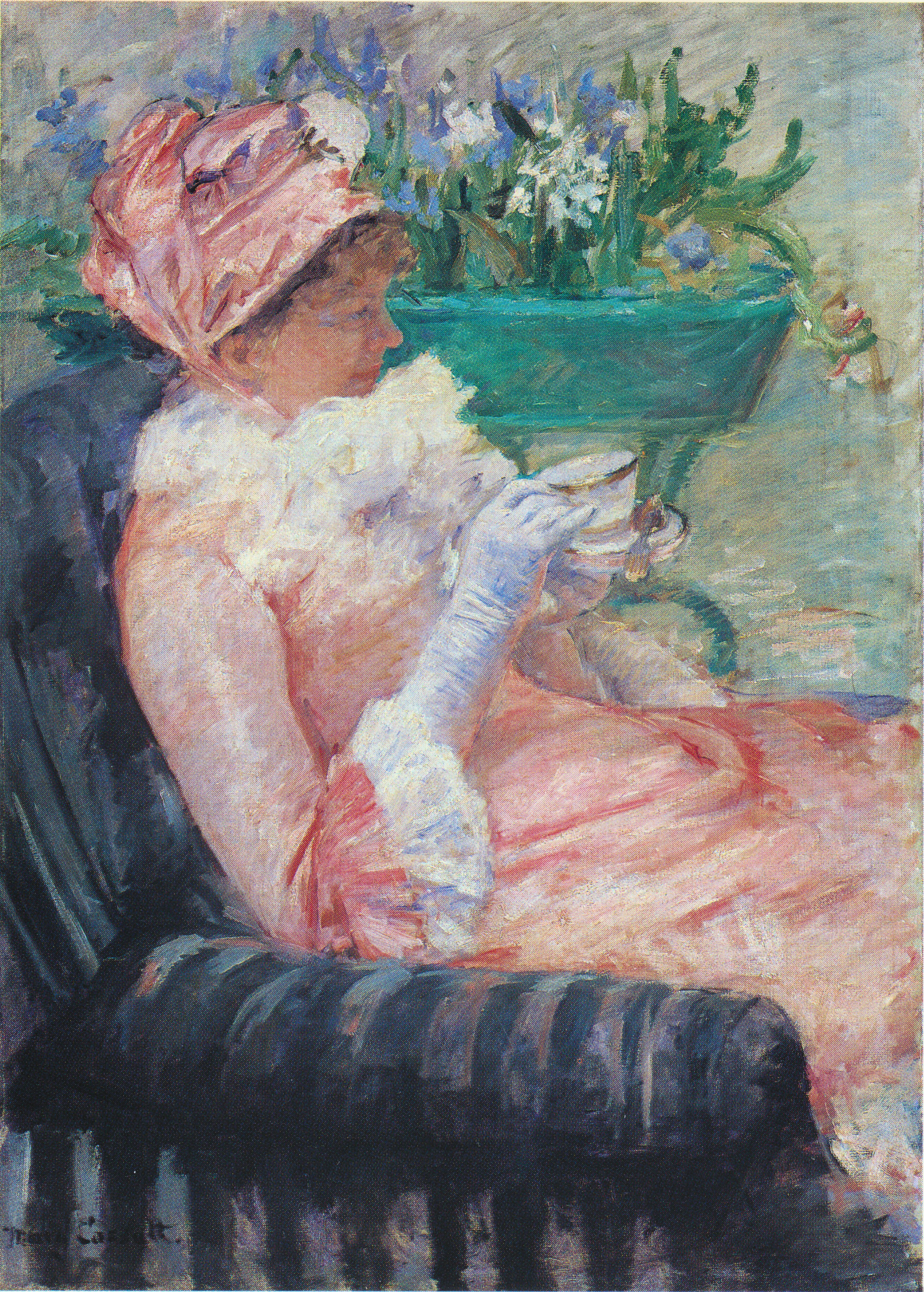
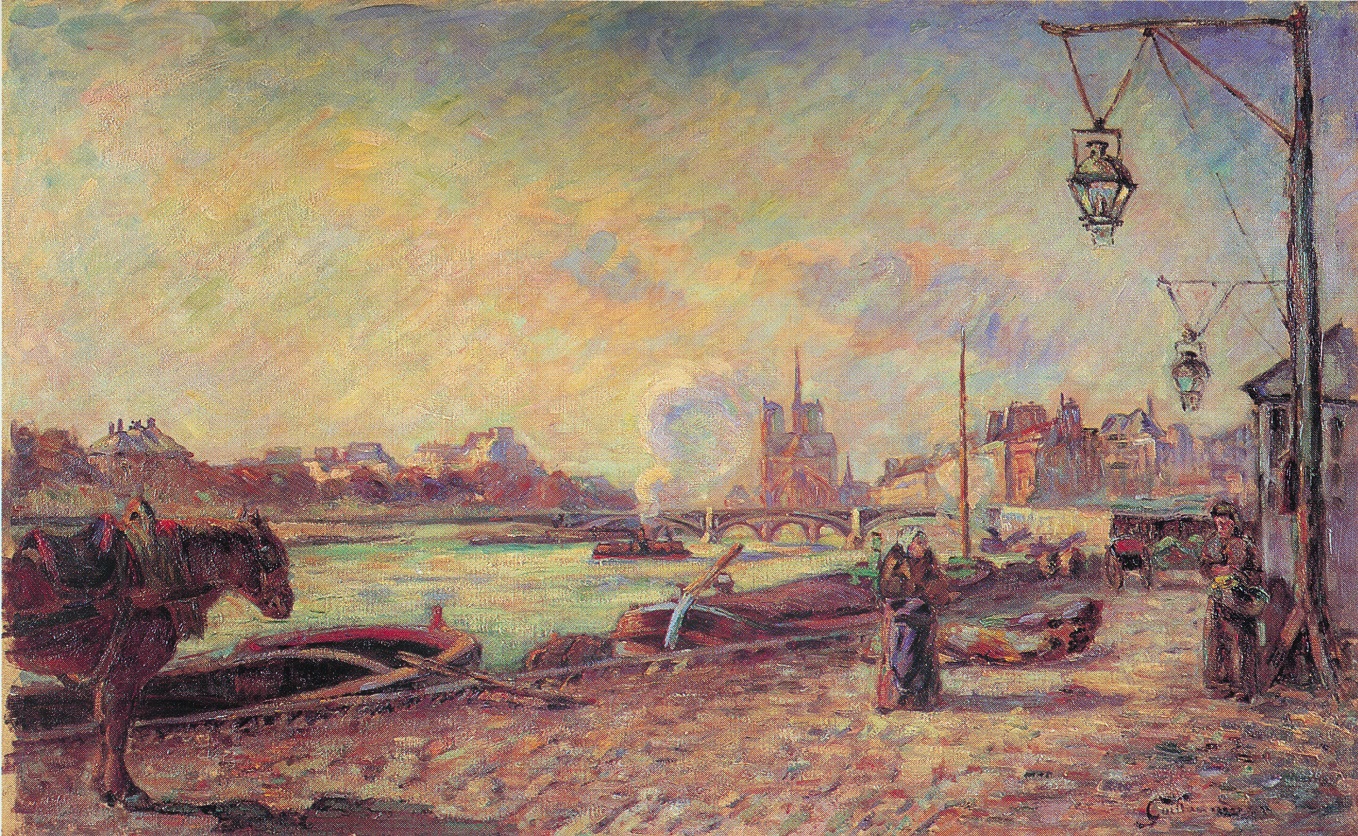
Mary Cassatt (1844-1926), The Garden (Lydia Crocheting in the Garden at Marly), oil on canvas, 66×94 cm, The Metropolitan Museum of Art. Mary Cassatt (1844-1926), The Cup of Tea, 1879, oil on canvas, 92.4×65.4 cm, The Metropolitan Museum of Art. Edgar Degas (1834-1917), Cabaret, c. 1877, The National Gallery of Art, Washington, D.C., (Formerly, Corcoran Gallery of Art). Edgar Degas (1834-1917), The Little 14-Year-Old Dancer, wax statuette, c.1881, The National Gallery of Art, Washington, D.C. Author’s photograph, 2010. Edgar Degas (1834-1917), Room in a Brothel, monotype in black ink on laid paper, 21×15.9cm, The Iris & B. Gerald Cantor Center for Visual Arts at Stanford University, formerly the Stanford University Museum of ArtJean-Louis Forain (1852-1931), Loge d’actrice, 1880, watercolor with gouache, 28×23 cm, private Paris. J.-B. Armand Guillaumin (1841-1927), Quai de la Rapée, oil on canvas,50×79 cm, Private Paris.Berthe Morisot (1841-1895), Nurse and Baby, 1880, oil on canvas, 50.2 x 61 cm, Private New York.Camille Pissarro (1830-1903), Thatched Cottages at Val Hermé, 54×64.7 cm, private. Jean-François Raffaëlli (1850-1924), Les déclassés (Les buveurs d’abstinthe), oil on canvas, 110.2×110.2 cm, Private. Federico Zandomeneghi (1841-1917), La place d’anvers, 1880, oil on canvas, 100×135 cm, Galleria d’arte moderna Ricci Oddi Piacenza.
Reviving the Seventh Impressionist Exhibition: Caillebotte and Paul Durand-Ruel
The 32-year-old Caillebotte looked to a retro-style vision for an Impressionist Art Exhibition in 1882. His emerging partner was 51-year-old Impressionist art dealer Paul Durand-Ruel (1831-1922).
The changing art market in the 1870s had taken a financial toll on the art dealer’s modern art business. Durand-Ruel re-tooled his dealership to focus not on large-scale group shows but small shows of individual artists. Overall the French economy had sunk into hard times and big shows cost more money. Following the disastrous Hôtel Drouot auction in 1875—which Durand-Ruel believed was an attempt by his critics to discredit him as an art dealer—the well-stocked Impressionist art dealer reluctantly agreed to go forward with Caillebotte’s exhibition plan for 1882. Caillebotte convinced the dealer that the Seventh show would earn a small profit.
The struggle between Degas’s faction and Caillebotte’s vision for the Impressionist movement played out through the Fourth, Fifth, Sixth, and Seventh Impressionist Exhibitions, culminating in the partial reunification of the movement in 1882.
P.A.-Renoir, A Luncheon at Bougival, 1881, The Phillips Collection, Washington, D.C. The Seventh Impressionist Exhibition – 1882.
Reuniting the “Broken Brush” Impressionists
Caillebotte’s main hook was to re-integrate the excluded “broken brush” or “strict” impressionists including Renoir and Claude Monet. Degas and his faction of artists including Mary Cassatt stayed away from the Seventh Impressionist exhibition though Paul Gauguin was represented. Also missing was the artist of Aix, Paul Cézanne, who was experimenting with volumes in the south of France. Cézanne would not be seen in a Paris art show until 1895 when a huge body of his work was featured in a landmark retrospective exhibition at Ambroise Vollard’s gallery.
Caillebotte’s first move was to secure the popular Renoir for the upcoming March 1882 show. Renoir sent 24 new works, including his iconic large-format A Luncheon at Bougival (Un déjeuner à Bougival). Durand-Ruel insisted on a standardized presentation, including simple white frames for every work. In addition to Monet and Renoir, the seventh show hailed a triumphant return for Alfred Sisley. Camille Pissarro displayed several paintings of peasant girls. His tiny pseudo-pointillist brushstrokes overlaid with occasional dabs of thicker paint, built up an uneven surface that integrated the figure and background which worked to visually mimic the textures of the sitter’s wool clothing.
Caillebotte, “Rising Road (Chemin Montant).” 1881. The Seventh Impressionist Art Exhibition-1882.
Caillebotte’s Contribution to the Seventh Exhibition
Caillebotte sent 17 works to the show. The Bezique Game (Partie de bésigue) painted in 1880, was joined by Rising Road (Chemin Montant) painted in 1881. This latter work’s path hardly rises—a feature that contributed to the canvas’s mystery. The question was asked whether it was a reprise of the “enhanced perspective” that aggravated critics in 1876 when they saw it in The Floor Scrapers.
Rising Road is painted with a free handling of colors in the loose brushwork style of Monet and Renoir whose closer re-acquaintance Caillebotte made. One critic poked fun at the painting’s mysterious pair as viewers wondered with him who is “the conjugal couple…seen from the back” ? Their identities and location are uncertain although speculation has put Caillebotte in the painting with his lifelong companion Charlotte Berthier.
Rising Road (Chemin Montant) has had only two owners since 1881. It sold in 2003 for nearly $7 million ($6,727,500) at Christie’s in New York City,
7th (1882):Gustave Caillebotte and Impressionist art dealer Paul Durand-Ruel organized the exhibition which marked the triumphant return of the broken-brush or strict Impressionists, such as Claude Monet, Alfred Sisley, and Pierre-Auguste Renoir. In many ways it was Renoir’s wide-ranging artwork that was the star of the seventh show.
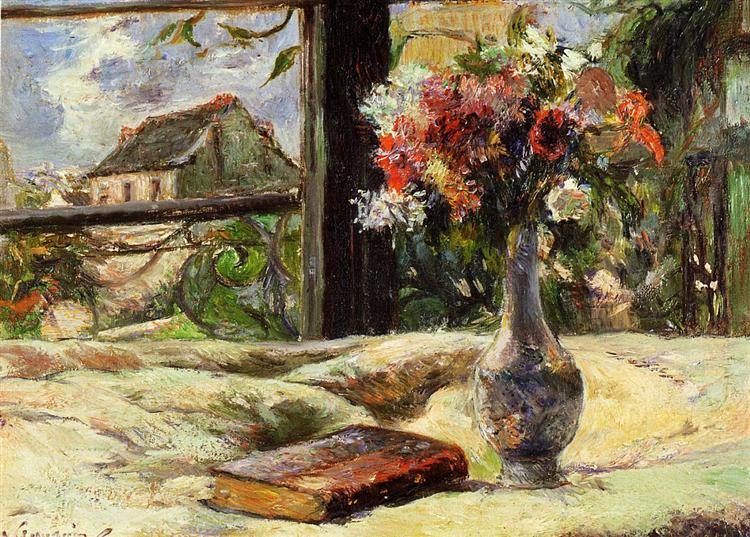
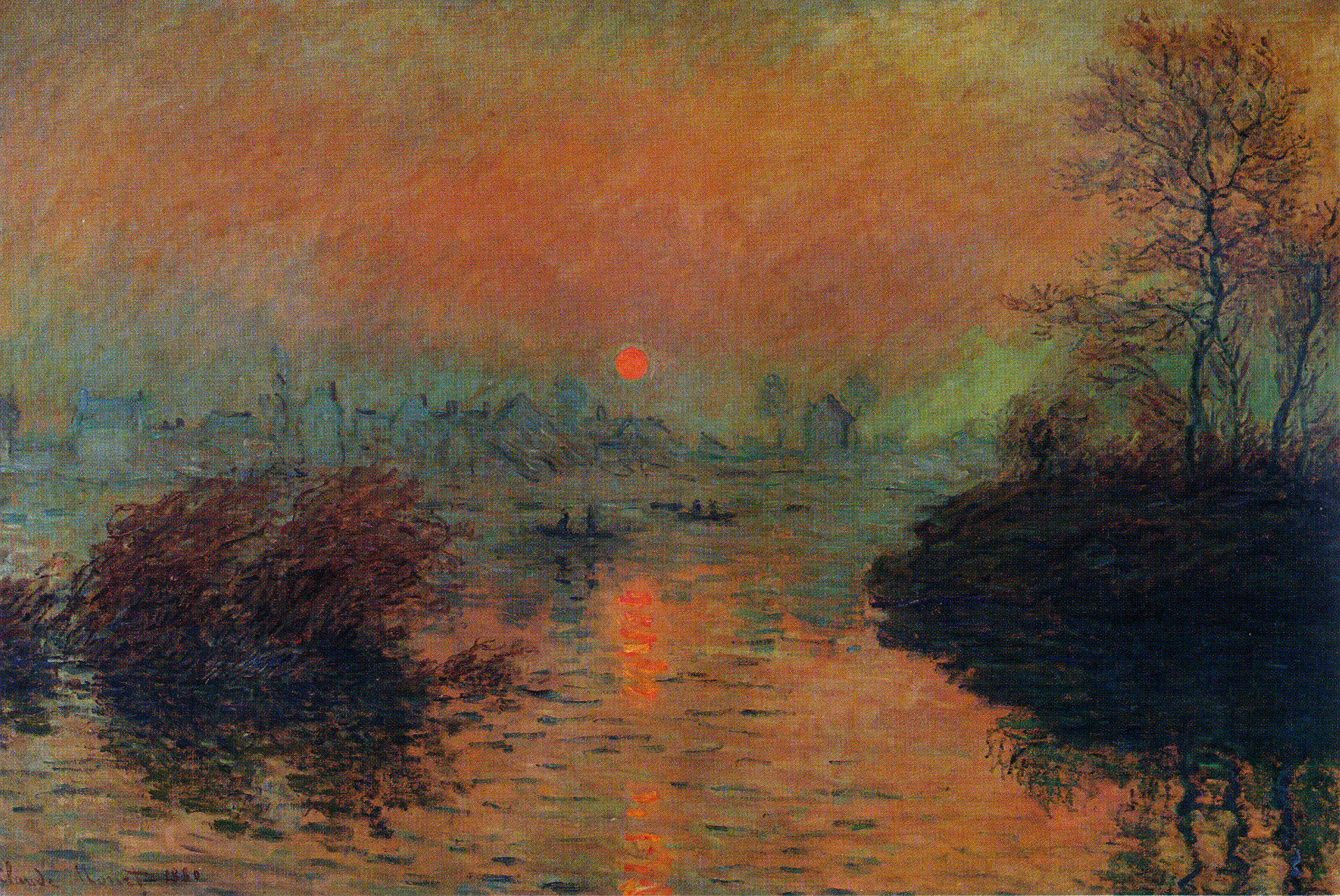
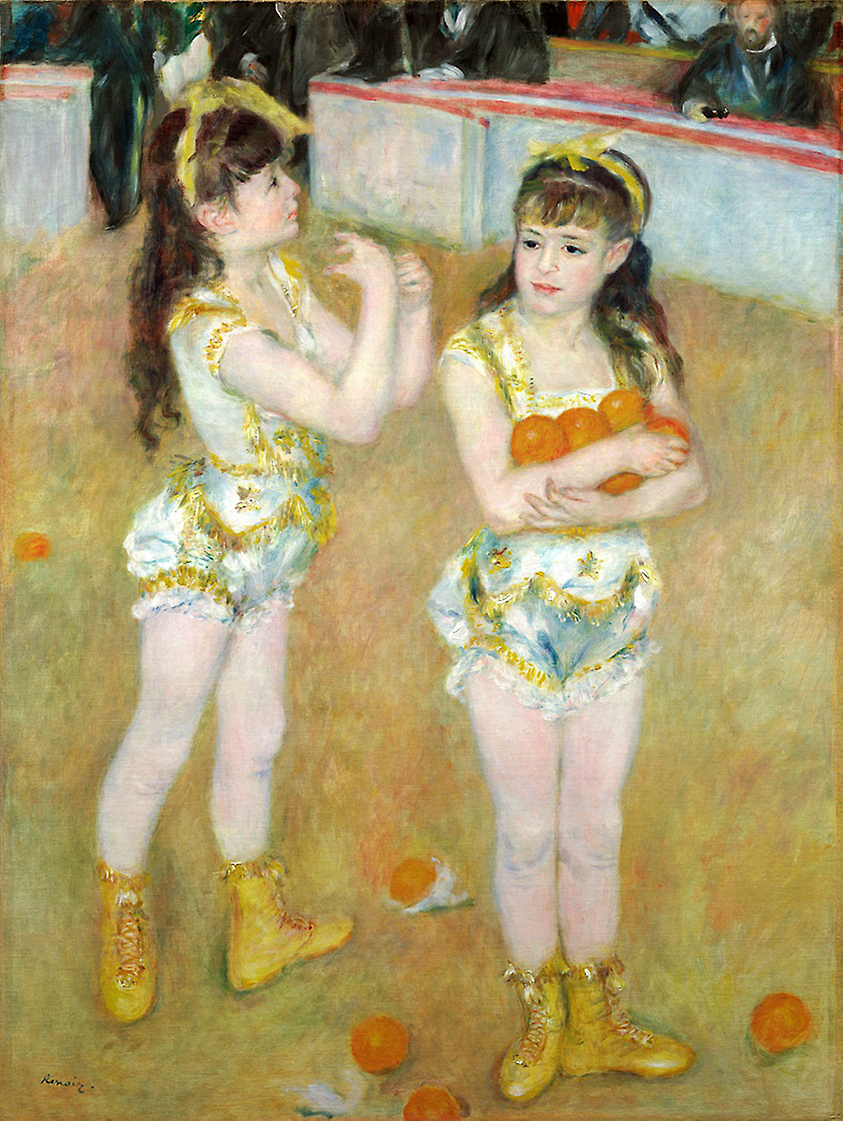
Gustave Caillebotte, Balcon (Balcony), 1880, oil on canvas, 26 1/4 x 24 in. (68 x 61 cm). Private Collection, Paris. The Seventh Impressionist Exhibition-1882.Paul Gauguin, A la Fenêtre, nature morte (At the Window, Still Life),1881, oil on canvas, 7.5 x 10.625 in (19 x 27 cm), Musée des Beaux-Arts de Rennes. The Seventh Impressionist Exhibition-1882.Jean-Baptiste-Armand Guillaumin (1841-1927), Paysage (fin octobre) (Landscape, End of October), c, 1876, oil on canvas, 17 7/8 x 48 1/8 in. (180 x 123 cm), Nasjonalgallereit, Oslo. The Seventh Impressionist Exhibition-1882.Claude Monet (1840-1926), Soleil couchant, sur la Seine, effet d’hiver (Sunset on the Seine, Winter Effect), 1880, oil on canvas, 39 3/8 x 59 7/8 (100 x 152 cm), Musée du Petit Palais, Paris. The Seventh Impressionist Exhibition-1882.Camille Pissarro, Jeune paysanne prenant son café, (Young Peasant Woman Drinking Her Coffee), 1881, oil on canvas, 65.3 × 54.8 cm (25 11/16 × 21 9/16 in.), The Art Institute of Chicago. The Seventh Impressionist Exhibition-1882.Pierre-Auguste Renoir, Jongleuses au Cirque Fernando, (Jugglers/acrobats at the Cirque Fernando), 1879, oil on canvas, 131.2 × 99.2 cm (51 ½ × 39 1/16 in.), The Art Institute of Chicago. The Seventh Impressionist Exhibition-1882.Alfred Sisley, Saint-Mammès, temps gris (Saint-Mammès, Cloudy Weather), c. 1880, oil on canvas, 21 5/8 x 29 1/8 in. (54.8 x 74 cm), Museum of Fine Arts, Boston. The Seventh Impressionist Exhibition-1882.Claude Monet, Bouquet de soliels (Bouquet of Sunflowers), c. 1880, oil on canvas, 39 3/4 x 32 in. (101 x 81.3 cm), Metropolitan Museum of Art, New York. The Seventh Impressionist Exhibition-1882.
In 1882, Caillebotte partnered with dealer Paul Durand-Ruel to revive the Impressionist organization. The Seventh Impressionist Exhibition reunited Monet, Renoir, Sisley, and other excluded artists. The exhibition represented Caillebotte’s attempt to restore the broader coalition that had made the Impressionists successful in 1877.
Sources: Charles Moffett, The New Painting, 1986. Anne Distel, Urban Impressionist, 1995. Ross King, The Judgment of Paris: The Decade that Gave Us Impressionism, 2006. John Milner, The Studios of Paris, 1990. Alfred Werner, Degas Pastels, 1998. http://www.christies.com/LotFinder/lot_details.aspx?intObjectID=4181485





























 Admissions, Expo Chicago 2017.

 Lara Schnitger, Suffragette City, 2015-2017, Cotton, and linen, quilted and bleached, Anton Kern Gallery, New York. Expo Chicago 2017.

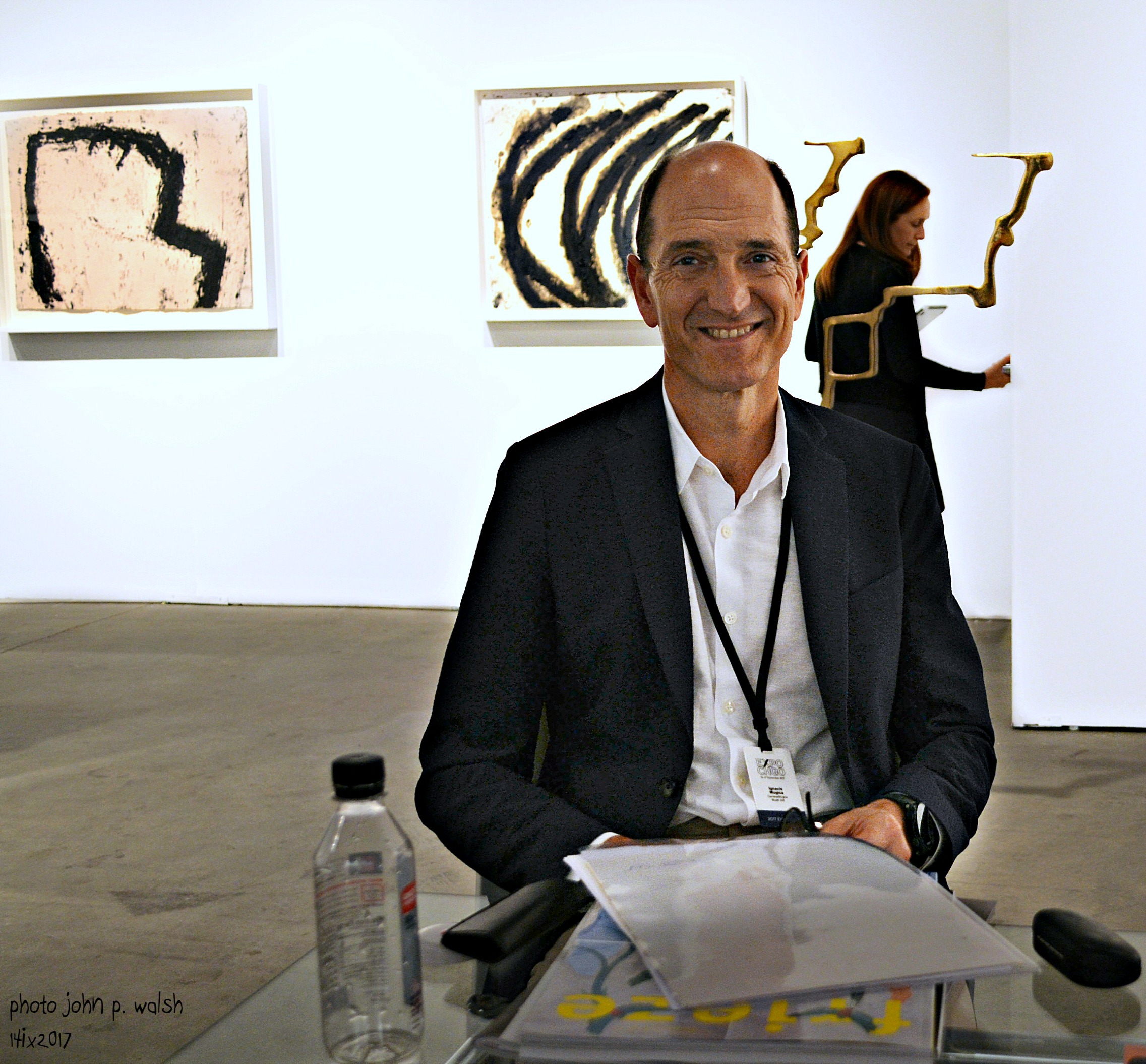
 Galerie Gmurzynska, Zurich, Switzerland, with booth design by Antonio Manfreda. Expo Chicago 2017. Germano Celant, theorist of the Arte Povera movement. From 2015 he was the artistic director of the Prada Foundation in Milan.

 Anton Kern Gallery, New York. Expo Chicago 2017.


 John A. Seal, König Galerie, Berlin. Expo Chicago 2017.
 Alfred Leslie, Oval Collage, 1959, Diana Moore, White Head, 1988 and Willem de Kooning, 1965, charcoal on paper, Alan Stone Projects, New York. Expo Chicago 2017.
 Thinks I, To Myself. Expo Chicago 2017.


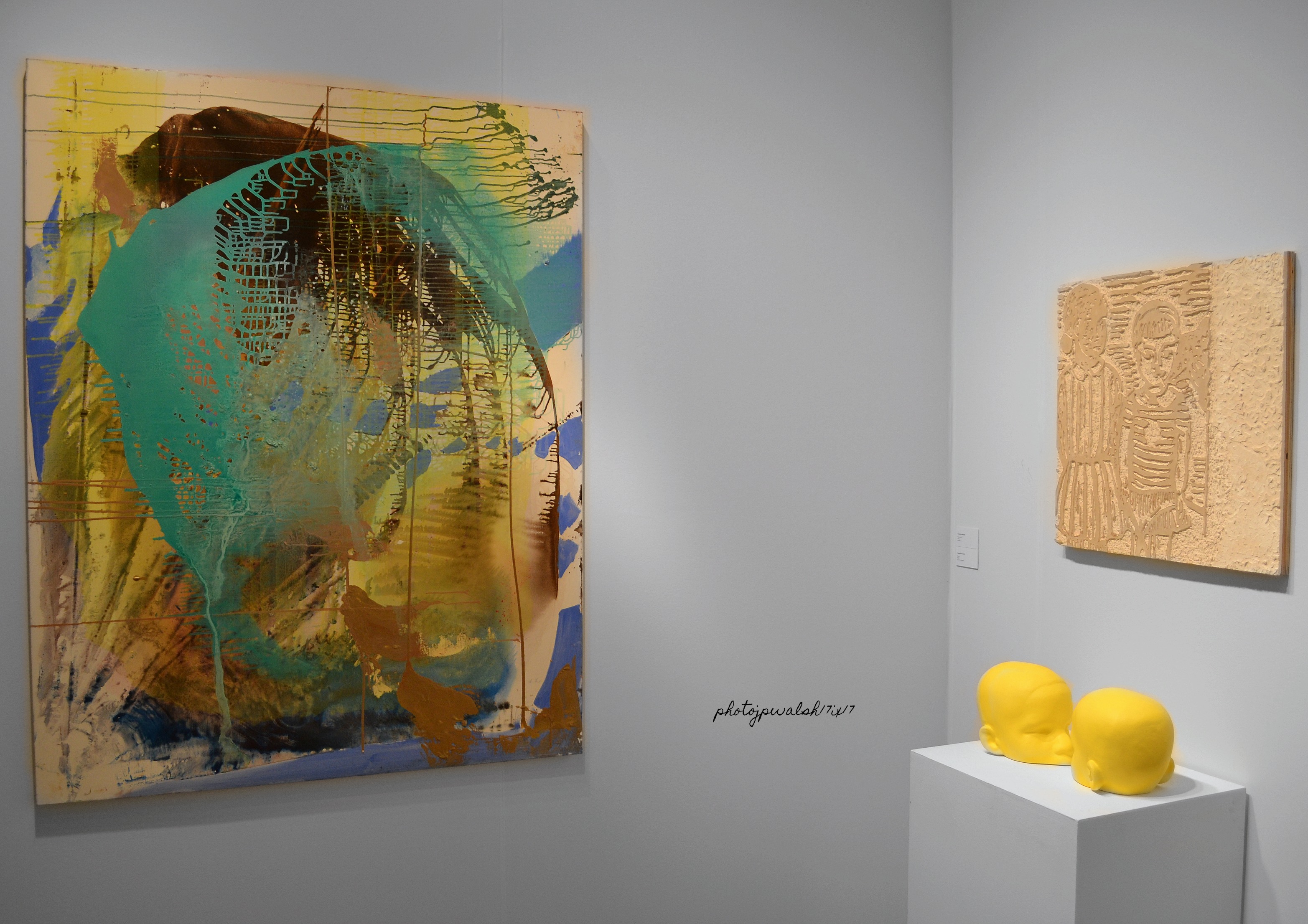 Jackie Saccoccio, Portrait (Bomba), 2017, and Faheem Majeed, Hopscotch I, 2011, and Pause, 2010, Rhona Hoffman Gallery Chicago. Expo Chicago 2017.


 Caroline Walker, Grimm Gallery Amsterdam New York. Expo Chicago 2017.
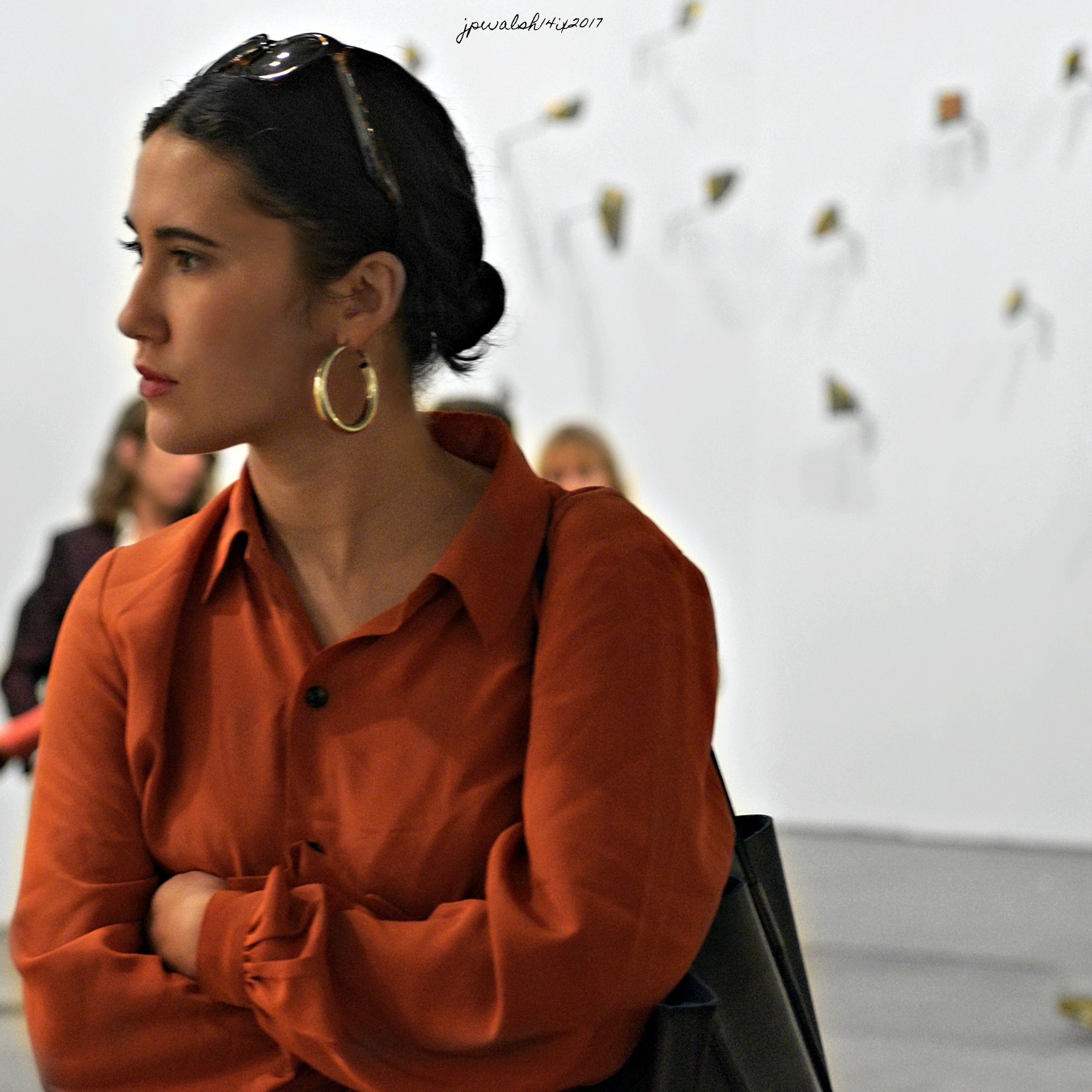

 Paul Kasmin Gallery New York. Expo Chicago 2017.
 Artist’s Signature (Miró). Expo Chicago 2017.