


FEATURE image: Marvin Gaye in 1970. Public Domain.*

Inner City Blues (Make Me Wanna Holler)—often abbreviated to Inner City Blues—is a song by Marvin Gaye (1939-1984) who released it as the third and final single from his 1971 album, What’s Going On. PHOTO: MARVIN GAYE WHAT’S GOING ON – FR by richbedforduk is marked with a CC BY-NC-ND 2.0 license.
Marvin Gaye’s 1971 landmark release, What’s Going On, shattered the traditional, apolitical Motown hit-making formula by leveraging its three chart-topping singles—’What’s Going On,’ ‘Mercy Mercy Me (The Ecology),’ and ‘Inner City Blues (Make Me Wanna Holler)’—to introduce the concept album as an authoritative vehicle for raw sociopolitical commentary, economic grievance, and environmental urgency.
A Landmark Album That Changed Motown
What’s Going On is one of rhythm and blues and soul music’s first true concept albums. Many critics and music historians consider it not only one of the greatest albums ever recorded, but perhaps the greatest album of all time.
The album produced three Top Ten hit singles, each addressing major social issues of a turbulent era: the Vietnam War (What’s Going On, #2, 1971), the global environmental crisis (Mercy Mercy Me (The Ecology), #4, 1971), and civil rights and social justice (Inner City Blues (Makes Me Want to Holler), #9, 1971).
While Motown eventually embraced the record after it became a massive commercial success, the label’s initial reaction demonstrated just how dramatically Marvin Gaye was breaking from the label’s longtime carefully calculated corporate formula.
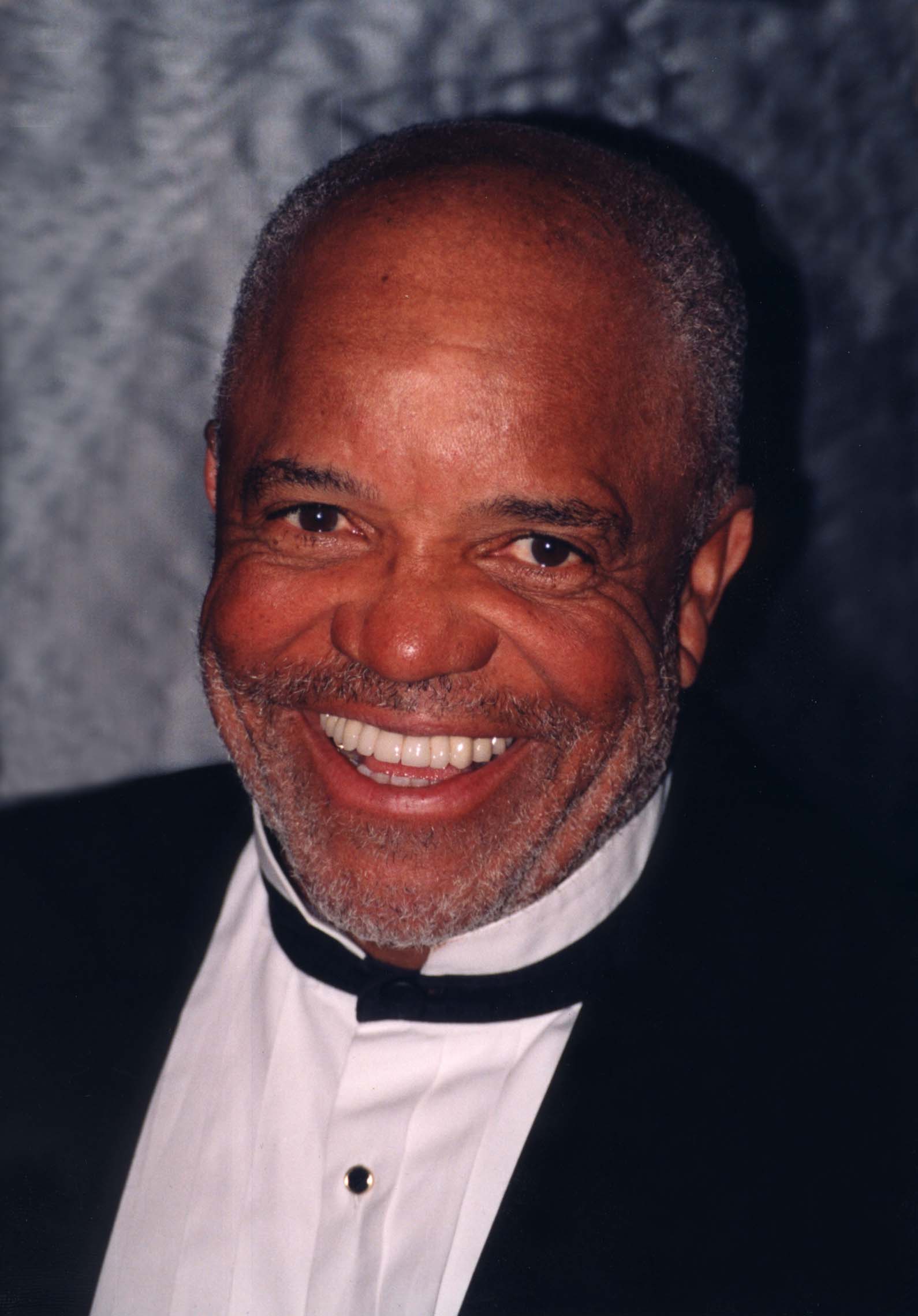
American record executive, songwriter, and producer Berry Gordy Jr., the founder of Motown Records. Gordy built Motown into a global musical and cultural empire famously responsible for launching and shaping the careers of Black performers like Marvin Gaye, Diana Ross & The Supremes, Stevie Wonder, The Temptations, and Michael Jackson. The face of the powerhouse corporate polished, crossover “Motown Sound,” he initially pushed back against Marvin Gaye’s protest masterpiece, What’s Going On, before ultimately yielding to its creative brilliance and commercial success. PHOTO: “Berry Gordy” by Kingkongphoto & www.celebrity-photos.com from Laurel Maryland, USA is licensed under CC BY-SA 2.0.
Berry Gordy and Motown’s Resistance
The historical consensus surrounding Motown’s resistance underscores how radical Gaye’s artistic and political shift truly was. Motown founder Berry Gordy built his empire on a strict “no politics” philosophy, focusing on polished, radio-friendly pop-soul designed to appeal across racial lines without provoking controversy.
When Gaye first presented the title track in late 1970, Gordy reportedly hated it. He called it “the worst record I ever heard in my life” and asked Gaye, “Marvin, why do you want to ruin your career?” Gordy feared that songs addressing police brutality and the Vietnam War would alienate mainstream audiences and undermine the commercial appeal of the “Motown Sound.”
Because the label refused to release the single, Gaye effectively went on strike. In an extraordinarily risky move, he refused to record any new material for Motown until the company agreed to release “What’s Going On.”
The Single That Forced Motown to Change Course
The impasse was broken when Motown creative executive Harry Balk secretly pressed 100,000 copies of the single and shipped them to radio stations without Gordy’s approval. The record reportedly sold out within a day, forcing Gordy to acknowledge the demand and instruct Gaye to complete a full concept album.
What followed would become one of the defining artistic statements in popular music history.
Marvin Gaye’s “What’s Going On” spent three consecutive weeks frozen at the No. 2 spot on the Billboard Hot 100 chart, beginning on April 10, 1971. In a fascinating twist of corporate fate, it was Berry Gordy’s own Motown machine that helped block Marvin Gaye from reaching the top pop spot. While Gordy initially tried to suppress the song, the label’s promotional muscle pushed The Temptations’ classic ballad “Just My Imagination (Running Away with Me)” to No. 1 for two weeks just as “What’s Going On” reached its peak. While “What’s Going On” peaked at No. 2 on the mainstream pop chart, it was an absolute powerhouse elsewhere: it spent five weeks at No. 1 on the Billboard Hot Soul/R&B Singles chart and hit No. 1 on the competing Cash Box Top 100 pop chart.
“Inner City Blues” and America’s Urban Crisis
“Inner City Blues (Makes Me Want to Holler)” exposed the realities of America’s Black urban neighborhoods and society’s failure to adequately respond to their challenges. Gaye’s message is captured in the song’s unforgettable refrain: “Make me wanna holler.”
Addressing those who held power in American society, Gaye unflinchingly portrayed the conditions of the inner city and the frustrations, fears, and aspirations of the men, women, and children who lived there.
He painted a grim picture of urban life:
“Crime is increasing, trigger happy policing, panic is spreading, God knows where we’re heading.”
In a nation experiencing overall prosperity, Gaye contrasted these realities with the costs of war, rising inflation, and an economy that seemed increasingly structured to widen the gap between the “haves” and the “have-nots.”
LYRICS Rockets, moon shots
Spend it on the have-not’s
Money, we make it
Before we see it, you take it
Oh, make you want to holler
The way they do my life, yeah
Make me want to holler
The way they do my life
This ain’t living, this ain’t living
No, no baby, this ain’t living
No, no, no
Inflation, no chance
To increase finance
Bills pile up sky-high
Send that boy off to die
Make me want to holler
The way they do my life, yeah
Make me want to holler
The way they do my life, oh, yeah
Hang-ups, let-downs
Bad breaks, setbacks
Natural fact is
I can’t pay my taxes
Oh, make me want to holler
And throw up both my hands
Yeah, it makes me want to holler
And throw up both my hands (ooh)
Crime is increasing
Trigger-happy policing
Panic is spreading
God knows where we’re heading, oh
Mother, mother
Everybody thinks we’re wrong (mother)
Who are they to judge us (mother, mother)
Simply because we wear our hair long (mother, mother, ooh)
Marvin Gaye’s Powerful Performance
With his mellifluous tenor voice, spanning an impressive three-octave range, Gaye delivered the song with remarkable emotional depth. He also sang the layered multi-track background vocals that became one of the recording’s signature features.
His response to “the way they do my life” is both personal and universal, making him “wanna holler and throw up my hands.” The song’s broader conclusion about life in America’s inner cities is especially striking given the nation’s willingness to spend vast sums on “rockets, moon shots” while neglecting conditions at home.
For those trapped in such circumstances, the song delivers a stark verdict:
“This ain’t livin’, this ain’t livin’, no, no baby, this ain’t livin’.”
The Sound Behind the Message
Despite its difficult subject matter, “Inner City Blues” delivers its social criticism through an exceptionally sophisticated and relaxed funk groove.
Detroit session musicians, especially Eddie “Bongo” Brown and bassist Bob Babbitt, helped shape the recording’s distinctive sound. Both were members of The Funk Brothers, the legendary group of musicians who performed on most Motown recordings of the era.
Their contributions provided the musical foundation for one of the most compelling statements in soul music history.

An Environmental Anthem and R&B Chart-Topper: Standing Beside Mitchell, Prine, Young, and The Beach Boys
“Mercy Mercy Me (The Ecology)” is the second single from American singer-songwriter Marvin Gaye’s landmark 1971 album, What’s Going On. Following the breakthrough success of the title track, this poignant environmental anthem—written solely by Gaye—became a massive crossover hit, peaking at No. 4 on the Billboard Hot 100 pop chart and hitting No. 1 on the Billboard Hot Soul Singles chart.
With Joni Mitchell’s “Big Yellow Taxi” (1970), John Prine’s “Paradise” (1971), the Beach Boys’ “Don’t Go Near the Water” (1971), and Neil Young’s “After the Gold Rush” (1970), artists, as Young’s lyric alludes, saw “Mother Nature on the run in the 1970s.” And Marvin Gaye’s “Mercy Mercy Me” may be the most pointed of all.
Gaye opens the track by asking, “Where did all the blue skies go?”, mourning the rapid destruction of the natural world caused by industrial air pollution and smog, while symbolically representing a loss of innocence and a healthier past. He follows this with the warning that “poison is the wind that blows,” referencing the heavy industrial smog, chemical emissions, and exhaust blanketing urban centers.
Gaye turns his attention to the water with the line “oil wasted on the ocean and upon our seas,” directly invoking commercial offshore oil well blowouts and maritime oil spills. Right before he began writing the album, the devastating January 28, 1969 Santa Barbara Oil Spill occurred, spewing an estimated 3 to 4 million gallons of crude oil into the Pacific Ocean.
He transitions to the chilling line, “Fish full of mercury, oh, oh, mercy, mercy me.” Living and recording in Detroit, Gaye was at the geographic epicenter of the North American Mercury Crisis of 1970. Just a year before the album’s release, scientific testing revealed that industrial chemical plants—most notably the Dow Chemical plant in Sarnia, Ontario—had dumped tons of toxic mercury wastewater straight into the St. Clair River, Lake St. Clair, and Lake Erie. In March and April 1970, the governments of Ontario, Michigan, and Ohio officially banned all commercial and sport fishing across massive zones of the Great Lakes. The disaster devastated the local economy, dominated Detroit headlines for months, and forced a stark realization on the public that their native waters were poisoned.
Lamenting that “things ain’t what they used to be, oh no,” Gaye highlights “radiation underground and in the sky,” a reflection of the massive nuclear testing that was still actively occurring globally and domestically while he wrote and recorded the track in late 1970 and early 1971. He builds the track to its emotional climax with a cascading warning of ecological collapse: “Animals and birds who live nearby are dying / What about this overcrowded land? / How much more abuse from man can she stand?”
LYRICS Whoa, oh mercy, mercy me
Oh, things ain’t what they used to be, no, no
Where did all the blue skies go?
Poison is the wind that blows
From the north, and south, and east
Whoa mercy, mercy me (mercy)
Oh, things ain’t what they used to be
Oil wasted on the ocean and upon our seas
Fish full of mercury, oh, oh, mercy, mercy me
Oh, things ain’t what they used to be, oh no
Radiation underground and in the sky
Animals and birds who live nearby are dying
Oh mercy, mercy me
Ah things ain’t what they used to be
What about this overcrowded land?
How much more abuse from man can she stand?
Oh, na-na-na-na-na
Na-na-na-na-na-na-na-na, ooh
Creative Freedom and a New Phase of Gaye’s Career
When What’s Going On was released in May 1971, it quickly became Motown’s fastest-selling album of the period. Faced with overwhelming critical acclaim and commercial success, the company had little choice but to reconsider its position.
At age 32, Gaye had entered a new phase of his career. Having scored his first hit in 1962, he was no longer simply one of Motown’s leading performers. Like Stevie Wonder, he became one of the first Motown artists to gain substantial control over his own recordings.
The success of What’s Going On ultimately led Motown to grant Gaye full creative control and a groundbreaking $1 million contract.
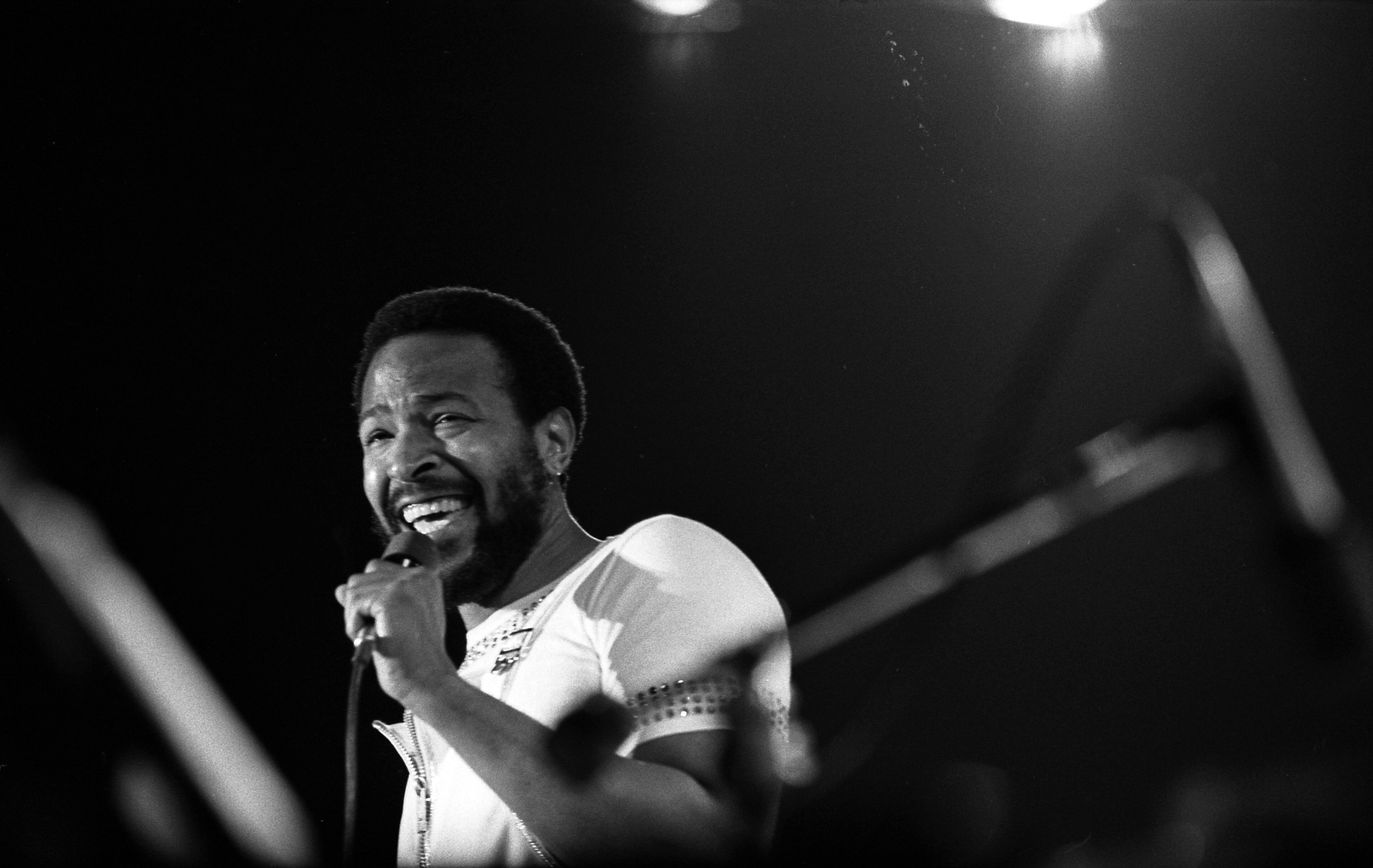
Marvin Gaye during a live concert performance at The Forum in Inglewood, California, in 1974. Gaye returned to touring nationwide following the massive success of his Let’s Get It On album. PHOTO: “Marvin Gaye in concert at the Forum, 1974” by Los Angeles Times Photographic Collection / UCLA Library, licensed under CC BY 4.0.
Opening the Door for Other Artists
Gaye shattered Motown’s factory-style production model so decisively that he helped create new opportunities for other artists, most notably Stevie Wonder, to seek greater creative independence and produce their own socially conscious work.
His victory demonstrated that commercially successful music could also confront the most pressing issues of the day.
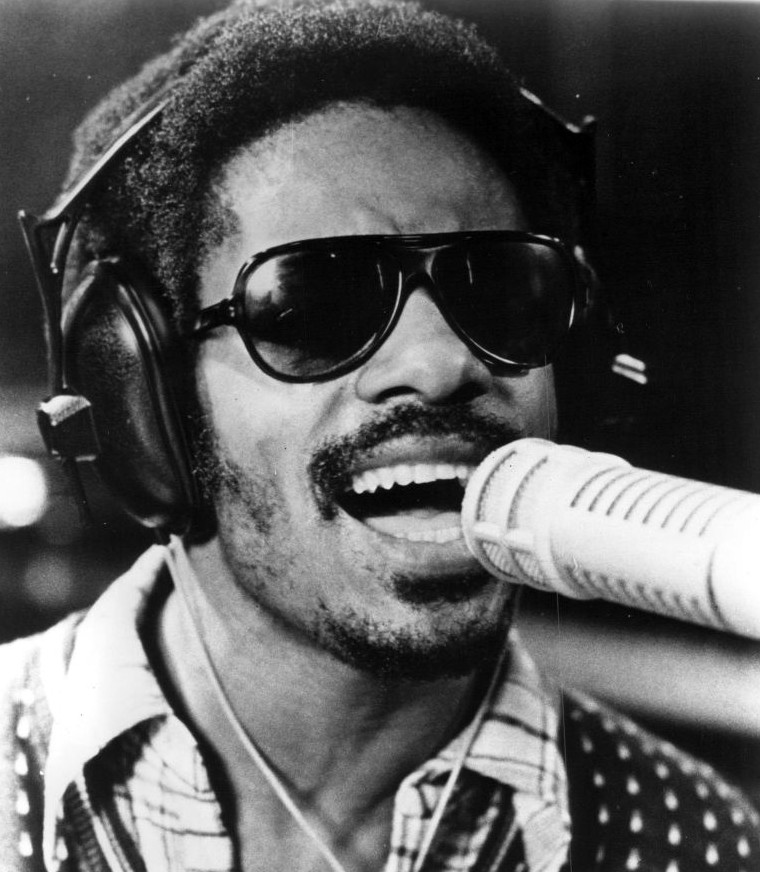
A 1973 promotional photograph of Stevie Wonder in the studio recording his landmark album Innervisions. Marvin Gaye’s 1971 concept masterpiece, What’s Going On, shattered the corporate Motown mold, providing the blueprint of total creative control that empowered Stevie Wonder to record his own historic run of socially conscious concept albums—culminating in 1976’s legendary Songs in the Key of Life. While What’s Going On was the first cohesive, full-length concept album at Motown, Wonder had been embedding conceptual themes of civil rights, war, and political dissent into his music throughout the late 1960s – including a cover of Bob Dylan’s “Blowin’ in the Wind” (1966), “I Don’t Know Why” (1968), and “Heaven Help Us All” (1970). Released a year before What’s Going On, this 1970 gospel-soul track serves as a direct conceptual predecessor to Marvin Gaye’s work, where Wonder openly sings about systemic poverty, street violence, and the victims of war. Public Domain.*
Marvin Gaye’s Legacy
Marvin Gaye had his first hit at age 23 and died tragically in 1984, one day before his 45th birthday, after being shot by his father following a violent verbal confrontation.
Over a career that mirrored the evolution of Black popular music across the 1960s, 1970s, and 1980s, Gaye transformed romantic soul into a sophisticated artistic form capable of addressing contemporary social issues, politics, and human relationships with unprecedented honesty and depth.
While Berry Gordy later softened his account of the controversy in his memoirs, claiming his initial hesitation was primarily about protecting Gaye’s public image, many music historians remain skeptical of that interpretation. The historical record suggests that Motown resisted the project because it fundamentally challenged the non-confrontational formula that had defined the label’s success for more than a decade.
What’s Going On – Lyrics
Hey, hey-hey
Hey, what’s happenin’?
Hey, brother, what’s happenin’?
Boy, this is a groovy party (Hey, how you doin’?)
Man, I can dig it
Yeah, brother, solid, right on
What’s happenin’?
Hey, man, what’s happening?
Woo
Everything is everything
We’re gonna do a get down today, boy, I’ll tell ya
Mother, mother
There’s too many of you crying
Brother, brother, brother
There’s far too many of you dying
You know we’ve got to find a way
To bring some loving here today, yeah
Father, father
We don’t need to escalate
You see, war is not the answer
For only love can conquer hate
You know we’ve got to find a way
To bring some loving here today, oh (Oh)
Picket lines (Sister) and picket signs (Sister)
Don’t punish me (Sister) with brutality (Sister)
Talk to me (Sister), so you can see (Sister)
Oh, what’s going on (What’s going on)
What’s going on (What’s going on)
Yeah, what’s going on (What’s going on)
Oh, what’s going on
Ah-ah-ah-ah (In the meantime, right on, baby)
Woo (Right on, baby), woo
Ah-ya-ya-ya-ya-ya-ya, ya-ya-ya-ya-ya
Woo (Right on, baby, right on), woo
Ah-ya-ya-ya-ya-ya-ya-ya-ya-ya-ya-ya
Ba-da-boo-doo, boo-boo-boo-doo, boo-boo-boo
Ba-da-boo-boo-boo-doo, boo-boo-boo-ba-ba-do
Mother, mother
Everybody thinks we’re wrong
Oh, but who are they to judge us
Simply ’cause our hair is long?
Oh, you know we’ve got to find a way
To bring some understanding here today, oh-oh
Picket lines (Brother) and picket signs (Brother)
Don’t punish me (Brother) with brutality (Brother)
Come on, talk to me (Brother), so you can see (Brother)
Oh, what’s going on (What’s going on)
Yeah, what’s going on (What’s going on)
Tell me what’s going on (What’s going on)
I’ll tell you what’s going on (What’s going on)
Woo-ooh-ooh-ooh (Right on, baby, right on)
Ah-ya-ya-ya-ya-ya-ya, ya-ya-ya-ya-ya-ya-ya
Woo, woo (Right on)
Ah-ya-ya-ya-ya-ya-ya-ya-ya-ya-ya-ya
Ba-da-boo-doo, boo-boo-boo-doo
Ba-da-boo-boo-boo-doo, ba-da-da-da-da-da-da
Woo (Right on, baby, come on, right on)
Ah-ya-ya-ya-ya-ya-ya-ya-ya-ya-ya
Woo (Right on)
Listen, ah-ya-ya-ya-ya-ya-ya-ya
Da-boo-doo, boo-boo-boo-doo
Da-boo-boo-doo, boo-boo-boo

Gaye in the 1970’s and 1980’s. PHOTO: “Marvin Gaye – Symphony (70´s / 1985)” by Soul Portrait is licensed under CC BY-NC-SA 2.0
*This work is in the public domain in the United States because it was published in the U.S. between 1927 and 1977, inclusive, without a copyright notice.


