
Tag Archives: #StageAndScreen

Orchestra Wives (1942): Where Glenn Miller Swing-Era Glamour Meets the Reality of Big-Band Life.

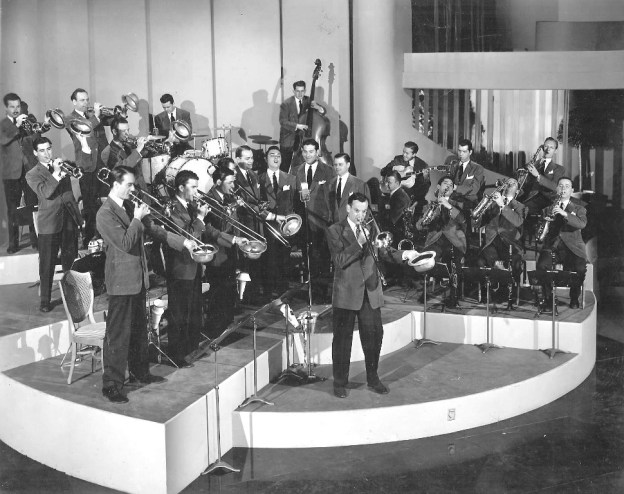
FEATURE image: Glenn Miller Orchestra, 1940-41. Public Domain.

Orchestra Wives (1942) endures not simply as a Glenn Miller swing showcase but as one of Hollywood’s most realistic portrayals of life on the road for big-band musicians and their spouses, blending first-rate wartime-era music with surprisingly mature drama about marriage, jealousy, gossip, and the pressures of touring.

The 1942 music film, Orchestra Wives, from 20th-Century-Fox is one of the best dance band movies ever made. Between 1934 and 1945 Fox studios made 57 musicals and music films (see – https://www.imdb.com/list/ls565533414/.) While M-G-M is known for its musicals where characters sing and dance in place of spoken dialogue, the music film is one that usually features a bandleader – which in Orchestra Wives is Glenn Miller – and musical performers within a band orchestra – Marion Hutton with The Modernaires – as well as music-related acts such as the Nicholas Brothers. In a music film, including Orchestra Wives, characters don’t break out into song but speak in regular speech. In the music film singing and dancing are normally set pieces in a nightclub or on a stage and the music itself is presented in a realistic setting all of which perfectly describes 20th Century-Fox’s Orchestra Wives. Musical direction of Orchestra Wives was by Alfred Newman.

ANN RUTHERFORD.

When even Mickey Rooney was being underpaid during his glory years at M-G-M, Ann Rutherford was not. When she asked L.B. Mayer for a raise, she took out her checkbook, showed him the balance, and told him she had promised her mother a new house. Ann got her raise. In 1942 at the age of 23, Ann appeared in her last Andy Hardy film, Andy Hardy’s Double Life (1942). She left M-G-M and freelanced her talent. See- https://www.imdb.com/name/nm0751946/bio/ – retrieved October 16, 2023. PHOTO: “Ann Rutherford.” by carbonated is licensed under CC BY-NC-SA 2.0.
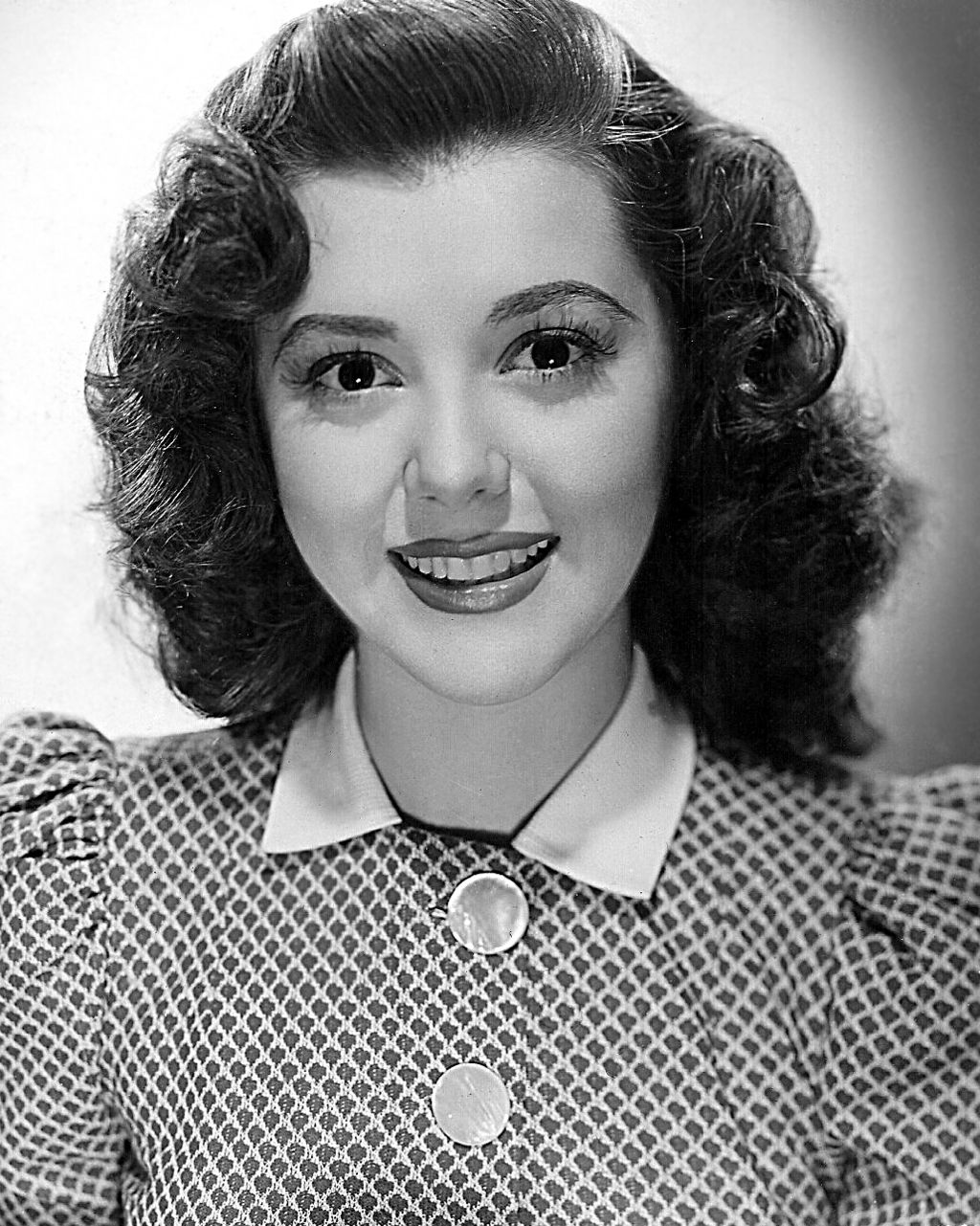
Ann Rutherford was known as “America’s Sweetheart” and a big star in 1942.
PHOTO: Original studio publicity photo of Ann Rutherford Permission details
This work is in the public domain in the United States because it was published in the United States between 1928 and 1977, inclusive, without a copyright notice. For further explanation, see Commons:Hirtle chart as well as a detailed definition of “publication” for public art. Note that it may still be copyrighted in jurisdictions that do not apply the rule of the shorter term for US works (depending on the date of the author’s death), such as Canada (50 p.m.a.), Mainland China (50 p.m.a., not Hong Kong or Macao), Germany (70 p.m.a.), Mexico (100 p.m.a.), Switzerland (70 p.m.a.), and other countries with individual treaties.

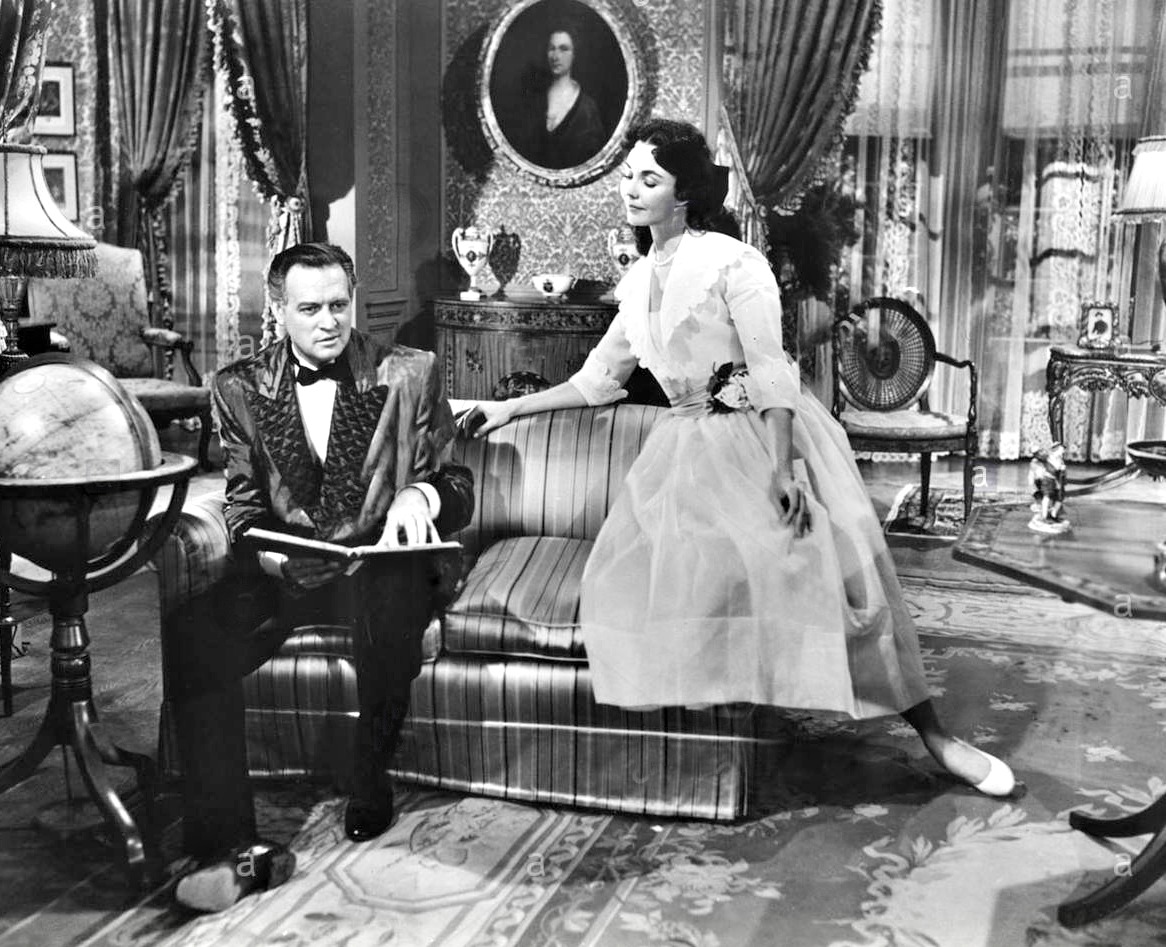
Connie Ward (played by “America’s Sweetheart” Ann Rutherford) goes on a date with soda-jerk Cully Anderson (Harry Morgan) to hear and dance to Gene Morrison’s (Glenn Miller’s) Band in Dixon, Illinois. At Last is a song that takes place on stage in the music film Orchestra Wives. Used as a musical motif throughout the film in dramatic and romantic scenes, the Harry Warren/Mack Gordon love ballad is sung in a duet featuring headliner Lynn Bari (her voice dubbed by Pat Friday, 1921-2016, and not credited). In 1942 Ann Rutherford had been in the picture business almost a decade. She starred as Polly Benedict in the Andy Hardy series in the 1930’s and 1940’s and was one of Scarlett O’Hara’s sisters in Gone With The Wind (1939). Rutherford was a big star compared to a slightly older Harry Morgan who was making his film debut. Co-star George Montgomery appeared in a string of Western films starting in 1935. He signed with 20th Century-Fox in 1939 and soon was playing leading man roles such as Bill Abbott in Orchestra Wives and several other hit films at Fox. World War II interrupted that career trajectory. In 1943, Montgomery joined the U.S. Army Air Forces First Motion Picture Unit where he made training films. When he returned to Fox in 1946, he resumed playing lead roles and left the studio in 1947.

GEORGE MONTGOMERY.

Actor George Montgomery started as a stuntman in Western films in the mid1930s. He appeared in around 87 films and later in several television series in a six-decade career. Best known for his roles in Westerns, he appeared as the leading man for a number of 20th Century-Fox rom-coms, music films and musicals. Orchestra Wives in 1942 was one of the first for the handsome and rugged star. Montgomery played trumpet player Bill Abbott in Gene Morrison’s Band. The part was played on the soundtrack by Glenn Miller’s lead trumpet player, Johnny Best (1913-2003). See – https://www.britannica.com/biography/George-Montgomery – retrieved October 16, 2023. PHOTO: “George Montgomery – in ”Roxy Hart” 1942” by Movie-Fan is licensed under CC BY-NC-SA 2.0.

ARCHIE MAYO.

The film was directed by Archie Mayo (1881-1968). Mayo was a longtime Hollywood director, having moved from New York City to the West Coast in the mid1910s where he started directing a short time later. Over a 30-year career Mayo directed scores of films and worked with James Cagney, Bette Davis, and the Marx Brothers. PHOTO: Permission details
The item has no copyright marks as can be seen in the links. At bottom right is a logo indicating the card was produced by a union print shop and Country of origin USA.
·         United States Copyright Office page 2 “Visually Perceptible Copies The notice for visually perceptible copies should contain all three elements described below. They should appear together or in close proximity on the copies.
1 The symbol © (letter C in a circle); the word “Copyright”; or the abbreviation “Copr.”
2 The year of first publication. If the work is a derivative work or a compilation incorporating previously published material, the year date of first publication of the derivative work or compilation is sufficient. Examples of derivative works are translations or dramatizations; an example of a compilation is an anthology. The year may be omitted when a pictorial, graphic, or sculptural work, with accompanying textual matter, if any, is reproduced in or on greeting cards, postcards, stationery, jewelry, dolls, toys, or useful articles.
3 The name of the copyright owner, an abbreviation by which the name can be recognized, or a generally known alternative designation of owner.1 Example © 2007 Jane Doe.”

Fox musicals and music films from the mid1930’s to mid1940’s were extremely popular. Orchestra Wives features high production set pieces of original swing music envisioned by its music director Alfred Newman (1900-1970). The film itself was directed by Archie Mayo (1881-1968) whose decades-long career was coming to a close (Mayo retired in 1946, shortly after completing A Night in Casablanca with the Marx Brothers). Orchestra Wives features 38-year-old Glenn Miller (1904-1944) and his 22-piece Band, then at the height of popularity. It was the second of two films Miller made for Fox (the first was Sun Valley Serenade in 1941). The Miller band returned to Hollywood to film 1942’s Orchestra Wives and though contracted to do a third movie for Fox called Blind Date, Miller disbanded the band and entered the US Army. Called the Gene Morrison Band in Orchestra Wives, music includes vocal performances by Marion Hutton (1919-1987) with The Modernaires, tenor sax player Tex Beneke (1914–2000) and Lynn Bari (1919-1989). The film concludes with choreographed athletic tap dancing of the Nicholas Brothers. The film is filled with pop-song classics by the successful writing team of composer Harry Warren (1893-1981) and lyricist Mack Gordon (1904-1959). In Orchestra Wives Warren/Gordon songs included in whole or in part, That’s Sabotage, Chattanooga Choo Choo (a main set piece in Sun Valley Serenade indicating Orchestra Wives picked up right where the previous successful film left off), People Like You and Me, the love ballad At Last, the torch song Serenade in Blue (performed by sultry Lynn Bari) and Orchestra Wives’ main production number (I’ve Got a Gal in) Kalamazoo which was nominated for an Academy Award for Best Original Song (the Oscar went to White Christmas by Irving Berlin). Warren melodies are instantly recognized as simple and fresh and Gordon’s lyrics are free of cliché. The music that opens Orchestra Wives presents the film’s first set piece which is a Warren/ Gordon song, People Like You and Me. It is performed by Glenn Miller and his Orchestra with Marion Hutton and The Modernaires. All of the Warren/Gordon songs for Orchestra Wives were recorded by Glenn Miller – as well as many other musical artists in those years.

The film is one of the finest Hollywood music films of the swing era, distinguished by authentic performances from Glenn Miller and His Orchestra rather than conventional musical-comedy fantasy.

GLENN MILLER.

Glenn Miller in 1940. This specific portrait was captured during his “Chesterfield Moonlight Serenade” radio show era. In late December 1939, Glenn Miller and His Orchestra took over a premier, three-nights-a-week CBS radio program sponsored by Chesterfield cigarettes. PHOTO: Unknown author – Ad on page 65 of the Billboard 1943 Music Yearbook. Public Domain.

Glenn Miller was born in Clarinda, Iowa, near the Missouri-Nebraska state lines. Miller started playing professional dance music in Chicago in 1926 and quickly started freelancing as a top arranger for Ray Noble (1903-1978), Tommy Dorsey (1905 -1956), Jimmy Dorsey (1904-1957), and more. Miller formed his own band in 1936. In its first year Miller’s band was one of many swing dance bands and it soon disbanded. In 1938, when Miller reformed the band, he had developed his definitive big-band sound and his records started selling like hot cakes to his mostly younger fans. In art imitating life, Miller portrays bandleader Gene Morrison in Orchestra Wives who disbands his 22-piece band because some band members resign because of their orchestra wives. Having to cancel the rest of the tour, Miller/Morrison looks to re-assemble the band. In the film, Connie Ward Abbott, a new orchestra wife, conspires with Morrison band pianist Sinjin (Romero) to reunite the original band. This will produce, with the help of Dr. Ward (Grant Mitchell), Connie’s father, a reconciliation between Connie and Bill who had separated but remained deeply in love.

(5.51 minutes). Orchestra Wives’ opening scene is set in Melody-Tone Record Corp. featuring the Glenn Miller Band (called the Gene Morrison Band in the film). It starts with Glenn Miller’s 22-piece band recording a lively, perfectly arranged rendition of “People Like You and Me,” one of Harry Warren and Mack Gordon’s pop classics written for the film. The Glenn Miller Band, then at the height of their popularity, are presented with a touch of Hollywood: Jackie Gleason (1916-1987) appears as the Band’s bassist and César Romero (1907-1994) plays its pianist. Gleason and several other featured performers (such as Marion Hutton) went uncredited in the film. Miller had joined the armed forces where he led the Glenn Miller Army Air Forces Orchestra until his disappearance over the English Channel in December 1944 at 40 years old. The energy of the swing era is evident which includes trumpeter Bill Abbott (played by Western cowboy George Montgomery), one of the film’s romantic leads with Ann Rutherford, and singer “Tex” Beneke who played saxophone with bandleader Glenn Miller. One-minute-long opening credits showcase Glenn Miller’s theme from 1939, “Moonlight Serenade,” as its background music. This is a colorized version of the black and white film.

CÉSAR ROMERO.
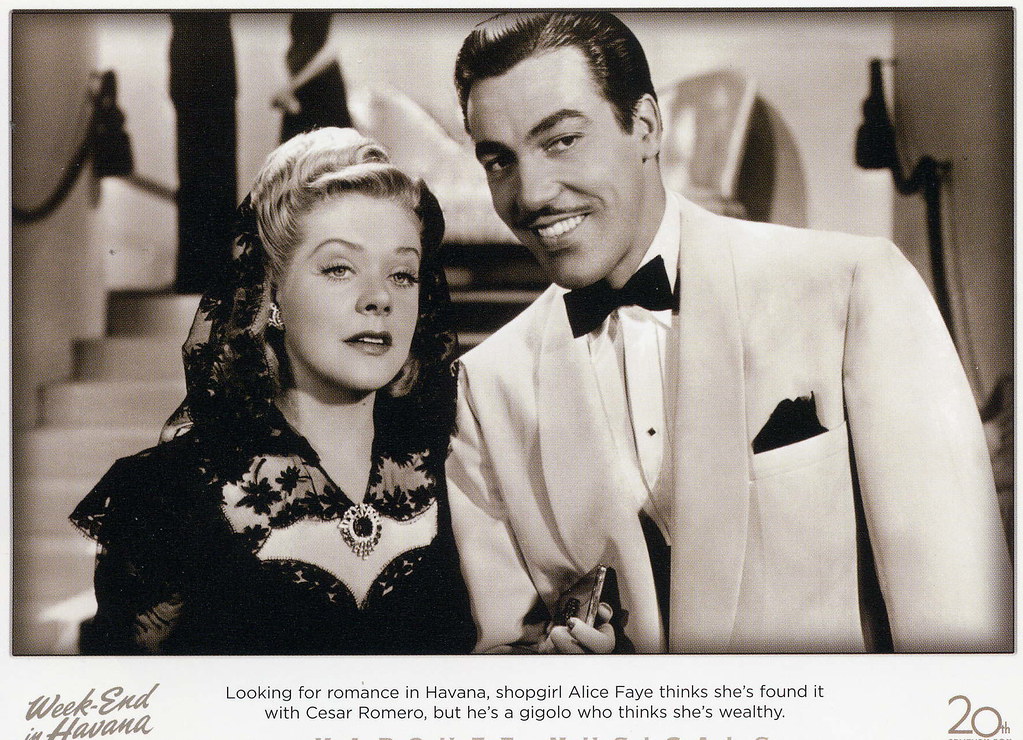
Tall, suave and sophisticated César Romero was born in New York City to Cuban parents. Romero danced and performed comedy in the 20th Century Fox films he starred in opposite Carmen Miranda and Betty Grable, such as Week-End in Havana (1941) and Springtime in the Rockies (1942). In Orchestra Wives Sinjin’s role, though minor, is pivotal to the resolution of the plot. PHOTO: “Alice faye & Cesar Romero in ”Weekend in Havanna” 1941” by Movie-Fan is licensed under CC BY-NC-SA 2.0.

The movie offers a rare and realistic look at the lives of touring band members, singers, and especially their wives, showing the boredom, gossip, and personal tensions generated by constant travel.

Poster for Orchestra Wives (1942) called in Spanish, “Las viudas del jazz.”
PHOTO: “Viudas del jazz” by Kirby York is marked with Public Domain Mark 1.0.

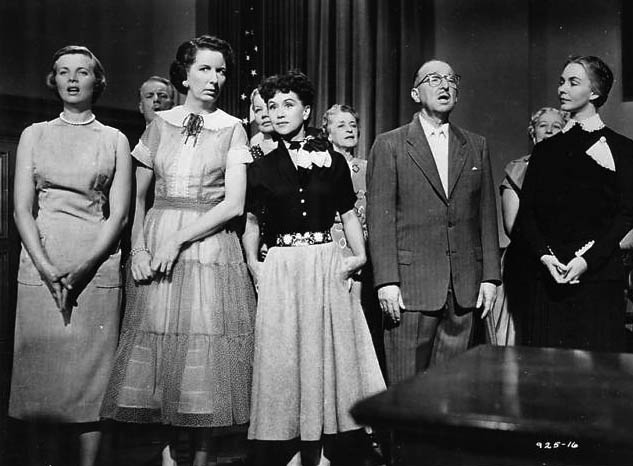
Orchestra Wives is one of the very few films to give insight into the lives of dance band musicians and their singers and spouses on tour. These singers and wives are portrayed in the Hollywood film by glamorous Ann Rutherford (1917-2012), Lynn Bari (1919-1989), Carole Landis (1919-1948), Mary Beth Hughes (1919-1995) and Virginia Gilmore (1916-1986). Each of their glamour and acting ability make dramatic scenes highly entertaining even as they advance the plot by way of bored and distasteful gossiping and rumor mongering.

Three spouses in Orchestra Wives.

CAROLE LANDIS.
Carole Landis. PHOTO: “Carole Landis” by thefoxling is licensed under CC BY-NC-SA 2.0.

This original 1942 Twentieth Century-Fox studio glamour portrait features American actress-singer Carole Landis at the height of her wartime popularity. Photographed in a tight, short-sleeved knit top adorned with a decorative rhinestone brooch, the image highlights the iconic “Sweater Girl” aesthetic popularized by Hollywood during the late 1930s and early 1940s. Landis’s striking figure and glamorous pompadour hairstyle made her one of the most celebrated pin-up icons of World War II, earning her the famous studio nickname “The Chest” from Hollywood press agents. In Orchestra Wives, she plays Natalie, one of a group of beautiful, deeply jaded, and gossipy women navigating life on the road with the touring Glenn Miller/Gene Morrison band. Stealing nearly every scene she is in with her sharp, catty attitude, Landis delivers what film fans widely consider the absolute best line of the movie when describing a fragile new bride: “She’s a weeper! If there’s anything I hate it’s a leaky dame!”

VIRGINIA GILMORE.

Ronald Colman, Hedy Lamarr, Greer Garson and Virginia Gilmore. PHOTO: “Ronald Colman, Hedy Lamarr, Greer Garson and Virginia Gilmore” by classic film scans is licensed under CC BY 2.0.

This candid 1942 photograph captures American actress Virginia Gilmore on the far right, standing alongside Hollywood icons Ronald Colman, Hedy Lamarr, and Greer Garson. Taken during the multi-city “Stars Over America” war bond blitz in August 1942, the image shows Gilmore dressed in a crisp, multi-toned tailored suit and a small tilted tilt-hat, actively participating in a national drive that raised millions of dollars for the World War II effort. Known for her sophisticated, sharp-featured beauty and vibrant stage presence, Gilmore was a highly promising 20th Century-Fox contract player during this wartime era. In the film, she plays Elsie, one of the more grounded yet fiercely protective women navigating the complex social hierarchy and petty backbiting of the traveling band’s inner circle. While Landis brought the overt, catty glamour, Gilmore provided a sharper, more dramatic anchor to the group dynamics, helping solidify the movie as one of the most culturally enduring documents of the Big Band era.

MARY BETH HUGHES.
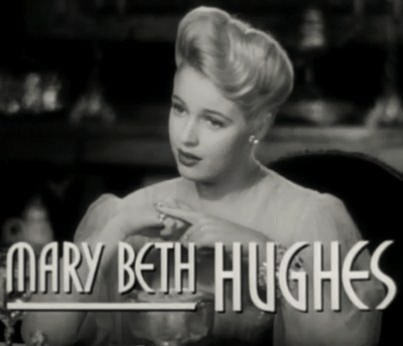
PHOTO: Mary Beth Hughes in Design for Scandal – trailer (cropped screenshot)
PD-US (licensing information : [1]). Public Domain.

This original black-and-white film still is a title card screenshot from the official theatrical trailer for the romantic comedy Design for Scandal (1941). It features American actress Mary Beth Hughes during her tenure as a prominent 20th Century-Fox contract starlet. Together with Landis and Gilmore, Hughes forms the core trio of jaded, hardened touring wives who spend their lives traveling across wartime America on trains and buses in Orchestra Wives. Hughes plays Caroline Steele, the cynical, gossip-loving wife of the band’s drummer (played in real life by Glenn Miller’s actual drummer, Moe Purtill). Bored by the constant travel, the orchestra wives pass the time by rumor-mongering, gatekeeping their social circle, and making life generally miserable for the naive new bride, Connie (Ann Rutherford).

The central story follows Connie Ward (Ann Rutherford) and trumpeter Bill Abbott (George Montgomery), whose whirlwind marriage is tested by misunderstandings, rumors, and the demands of road life. Beneath its music and comedy, the film explores serious themes including trust, infidelity, jealousy, work-life conflict, and marital strain.

Orchestra Wives is a music film with excellent swing music as a highlight and featured in regular intervals  that are set on stages such as a record studio, local dance and concert halls, and in nightclubs. The film’s central drama, however, lies in the love relationships of the professional bandmembers and their wives who travel with them. It seems everyone is stressed or bored or both by the intensity of the extra work involved in cross country touring as a musician in a popular swing band. These orchestra wives – namely, Natalie (Carole Landis), Elsie (Virginia Gilmore), and Caroline (Mary Beth Hughes) – are beautiful and jaded about living conditions and unique complications as orchestra wives. When Bill Abbott, the band’s superlative trumpeter, meets Connie Ward (Ann Rutherford), it is on the road at a local dance in Dixon, Illinois. The small-town young woman –  daughter of a town doctor (Grant Mitchell) – goes on a date with the local soda jerk just to see and hear Gene Morrison’s swing band. Up close to the stage, it is love at first sight for Connie when handsome trumpet player Bill Abbott (George Montgomery) steps up to perform. The next night, on the spur of the moment, Bill and Connie get married after Connie traveled by bus alone to Elgin, Illinois, for the band’s next gig.

HARRY MORGAN.

Harry Morgan in 1975. In the mid 1930s Harry Morgan was a star debater in high school in Michigan. and began acting at the University of Chicago in 1935. Orchestra Wives was one of two films Morgan made in 1942 that marked the actor’s film debut. PHOTO: Permission details
Pre-1978, no mark. Public Domain.

Connie spontaneously joins the life of traveling orchestra wives and is at first innocent of its darker side. Connie learns a lot as she takes the long rides on train tours as a musician’s wife to the band’s engagements around the country and back. Those film scenes reflect accurately the lives of dance musicians of the era who had to take these long tours to far-flung places. Connie is soon at odds with the other wives who come in shapely forms of Natalie, Elsie and Caroline who are bored by the monotony of the road so that their lives get filled with backbiting gossip and being jealous of one another.

The film bridges carefree swing-era entertainment and the darker emotional territory that would characterize postwar Hollywood dramas and film noir.

Among the many swing era musicals in this period, Orchestra Wives, while a comedy with the usual lighter fare typical for the genre, is notable for its realistic and serious plot. Though called a “musical comedy with the occasional touch of drama” (https://www.quotes.net/movies/orchestra_wives_8473) it is really more of a drama with musical comedy. The naïveté and lack of trust between lovers, namely small-town Illinois girl Connie Ward (played by “America’s sweetheart” Ann Rutherford) and Bill Abbott (played by Western cowboy George Montgomery) — whose fictional bandleader Gene Morrison (played by Glenn Miller) calls him “the best trumpet man in the business” — is raw, serious and real. Sparked by in-house rumor-mongering of band-members’ infidelities as well as other cascading gossip of bored wives on a cross- country band tour, the newlyweds Connie and Bill face their first big crisis as a couple very shortly after they are married. Upon suspecting her husband is having an affair with sultry Jaynie, the band’s lead singer, there is this confrontation between newlyweds whose misunderstanding gets mixed up in embarrassment and resentment:

CONNIE: I know there was nothing wrong between you and Jaynie (played by statuesque Lynn Bari)

BILL: That’s what I told you last night.

CONNIE: But it really wasn’t my fault. It was Natalie (Carole Landis) and Elsie (Virginia Gilmore) and Carole (Mary Beth Hughes)  and their gossip started it.

BILL: From what I heard just now, you’ve been spreading a little gossip yourself.

Its musical highlights include”(I’ve Got a Gal in) Kalamazoo,” “At Last,” and “Serenade in Blue,” songs by Harry Warren and Mack Gordon that became enduring popular standards.

LYNN BARI.

Lynn Bari was born in Virginia. A statuesque, dark-haired WWII pin-up beauty, Bari paid her acting dues for years by way of bit-parts as secretary, party girl and glorified extra. At the same time, she was being groomed as a starlet under contract to MGM and Fox. Fox Studios started giving her leads and top supporting roles in second-tier films such as The Return of the Cisco Kid (1939), Pack Up Your Troubles (1939), Hotel for Women (1939), and Hollywood Cavalcade (1939). Bari had gained fame by her good looks though her better roles tended toward unsympathetic parts such as in Orchestra Wives where she played a femme fatale. See – https://www.imdb.com/name/nm0054609/bio/?ref_=nm_ov_bio_sm – retrieved October 16, 2023. PHOTO: “Lynn Bari (colorized) by manito” is licensed under CC By 2.0.

In a nightclub, Morrison band lead singer Jaynie (Lynn Bari), performs another Warren/Gordon pop classic, “Serenade in Blue.” The composers believed this song, which became a pop standard, was a superior piece of music and that Glenn Miller was able to arrange its harmonies and perform the song at its best potential in the 1942 Orchestra Wives.

Jaynie, the band’s singer, held a torch for Bill though their affair was over shortly before Bill met Connie and married her. Because Gene Morrison didn’t want to pay for the wives to accompany the band on an overnight gig to Iowa City, the newlyweds were apart for the first time. Natalie gossiped to Connie about other band members’ extra-marital affairs and Carole told Connie about Bill and Jaynie. Connie, apparently unafraid to take the bus alone between towns, travels that way late at night to meet Bill. In the meantime, the gossiping wives call Jaynie (with a reproduction of Whistler’s Mother on the wall behind them) to tell her that Connie is coming to town. After Jaynie and Bill shared an after-show chop suey dinner together, Jaynie propositioned Bill in her hotel room which he declined. Afterwards learning that Connie was coming to the hotel she telephoned Bill’s room and on the pretext of needing cash, Bill comes into Jaynie’s room. Connie discovered the pair together in Jaynie’s room in their pajamas and, as Jaynie planned, is scandalized. Though Bill tells Connie that nothing was going on, Connie storms out, hurt and angry, and gets on the next bus back to Des Moines. The next day, when the band returns, Connie learns that what she was told is gossip. In revenge, Connies spills the beans about spousal infidelities of the gossiping wives that Natalie told her before. Connie’s words result in three band members leaving the tour and to the cancellation of the rest of the tour by bandleader Gene Morrison.

It also leads to a serious dramatic scene between Connie and Bill that honestly explores a situation of any new spouse – not just an “orchestra wife” – who is in love with someone with a stressful job who has to travel and be on the road all the time. The work/home tension is a modern theme and universal to more than a swing band musician’s family. Released in September 1942, Orchestra Wives, was popular cinematic fare in a country that neared its first full year of being “all-in” fighting in World War II. The film has one foot in a carefree pre-war swing era and another in wartime America that brought one of its longest lists of casualties in its history and, soon, the Atomic Age. Orchestra Wives is a music film and ostensible comedy that provides serious treatment to scenes that point, if briefly and thus superficially to the post-war era’s film noir and its themes of jealousy, infidelity, innuendo, mystery, and the femme fatale. To combine music, comedy and serious drama is a highlight of the original screenplay by Karl Tunberg (1907-1992) and Darrel Ware (1906-1944) – a writing team nominated the year before for an Academy Award for screenwriting for Tall, Dark and Handsome also from 20th Century-Fox.

BILL: I married you because you were a happy kid. Gay, cute, cheerful. But you’ve gone neurotic on me. You trail me around like a house detective. And then with one flick of your tongue you bust up our band. Last night you said you weren’t an orchestra wife and you hit the nail right on the head. You aren’t and you never will be.

CONNIE: Maybe you’re right Bill but I’ve tried. I don’t know the two things just don’t seem to go together. Look, how can you be a real wife when you are trailing from one hotel to another like a lot of gypsies? When you have breakfast at lunchtime and lunch at dinnertime and dinner at midnight? Why this isn’t living. Why this isn’t even being married.

BILL: What did you expect – a banker? You married a trumpet player. You weren’t getting a suburban home with flowerpots and kiddies. At the time you seemed to think the idea was pretty glamorous.

CONNIE: Well at the time I was crazy. This life is about as glamorous as a gymnasium.

BILL: Well,  I’ll give you a chance for something better. You know that marriage certificate? That little piece of paper with rosebuds on it? Well you can pack it with your things. I’m through with it.

CONNIE: So am I. And I’ll leave you half the pieces.

The climax of the film occurs when Connie walks out on Bill—and vice versa—and leaves their marriage and love hanging in the air. With band members’ tensions among their wives exploding into the open, Gene Morrison (Glenn Miller) has to break up the band. Though these breakups’ flashpoint is Connie and Bill’s open rift, can and will she now help to get the band back together and reconcile with Bill? And who will help her?

MARION HUTTON.

Singer Marion Hutton was discovered by Glenn Miller when she was 17 years old. Marion was the older sister of film actress Betty Hutton (1921-2007). Since the Huttons’ father had died, Glenn Miller and his wife Helen became Marion’s legal guardians which allowed her to accompany them as they worked. Marion Hutton stayed with the Glenn Miller Band until it disbanded in 1942. PHOTO: Unknown author – Ad on page 80 of Billboard 1944 Music Yearbook
·         Public Domain Created: 1 January 1944

TEX BENEKE.
Tex Beneke was a saxophone player who played with the Glenn Miller Band, among others. Tex Beneke is featured in major production swing music numbers by Harry Warren and Mack Gordon in Orchestra Wives. PHOTO: “Tex Beneke” by Cushing Memorial Library and Archives, Texas A&M is licensed under CC BY-NC-ND 2.0.

THE NICOLAS BROTHERS.

The #1 popular song in 1942 was (I’ve Got a Gal) in Kalamazoo by Harry Warren and Mack Gordon and featured in the music film, Orchestra Wives. Featuring Tex Beneke and Marion Hutton with The Modernaires it was recorded by Glenn Miller and His Orchestra and was on the 78 r.p.m.’s A side with At Last on B side. The Glenn Miller record was 1942’s best-selling recording and spent 8 weeks in the no.1 spot. It was also nominated  for the Academy Award for Best Original Song. The main production number in Orchestra Wives also featured The Nicholas Brothers composed of brothers, Fayard (1914–2006) and Harold (1921–2000). The act from the 1930s to 1950s excelled in a variety of dance techniques, especially its high acrobatics, and they were considered the greatest tap dancers of their time. See – “The Year’s Top Recordings”. The Billboard. 55 (1): 27. January 2, 1943. – retrieved October 16, 2023.

About composer Harry Warren and lyricist Mack Gordon.

Orchestra Wives provides a lot of first-class music and a dramatic film record of the dance hall scene in the swing era. (I’ve Got a Gal) in Kalamazoo was nominated for an Academy for Best Original Song. Harry Warren wrote some of the great popular songs of the 1930s and 1940s. Many of them were used in Fox musical films in their heyday. Warren had been writing music in Hollywood since 1932. When he moved from Warner Bros. to Twentieth-Century Fox he was assigned to write for Fox’s well-produced and highly popular musicals.

Harry Warren believed he saw the quality of motion pictures in Hollywood actually improve during World War II, the mid20th century’s major global crisis. Through all of it, Americans, Warren observed, expressed a general feeling of confidence that the war would ultimately be won. This excitement translated to the movies at the time.

In addition to working with lyricist Mack Gordon (1904-1959), Warren worked with Fox’s arranger-orchestrator Herbert Spencer (1905-1992). In a long career, Spencer worked with many successful composers and helped orchestrate scores in Holiday Inn (1942), Gentleman Prefer Blondes (1953), Call Me Madam (1953), Carousel (1956), Funny Girl (1968), Hello, Dolly (1969), and more, but he expressed especial enjoyment working with Warren.

Warren’s many inspired melodies, Spencer thought, were simple but logical, seemingly inevitable, and Warren’s song drafts arrived to Spencer filled with detail that helped make the orchestrator’s role more interactive. Spencer also enjoyed working personally with Warren whom the Chilean-born arranger described as “simpatico.” Warren, unlike other busy composers, was accessible to discuss and develop a musical score. With beguiling modulation, the songs rise and fall in intervals, and its notes and meter, as Herbert Spencer might have had it, follow their logical and effortless path.

Head of production at 20th Century-Fox and producer of Orchestra Wives, William LeBaron was brought to Hollywood by Joseph P. Kennedy.

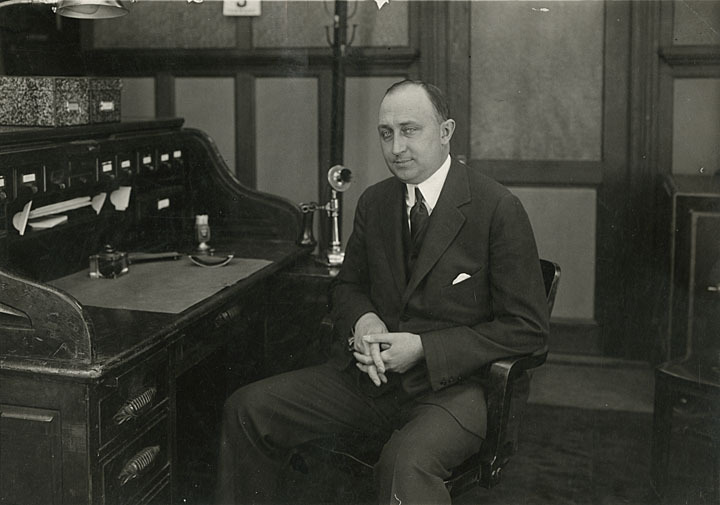
William LeBaron (1883 1958) in 1919. LeBaron became the production chief at several studios, including RKO Studios (1929-1931), Paramount Studios (1936-1941) and 20th Century Fox (1941-1947). He started out working as a playwright in New York City and was brought to Hollywood in 1924 by one of his theatrical investors, Joseph P. Kennedy (1888-1969). LeBaron was born in Elgin, Illinois, an Illinois town that had a pivotal role in Orchestra Wives as the script’s setting where Connie Ward and Bill Abbott get married. Public Domain.

While not in the top ten films of 1942 that earned between $2.885 (M-G-M’s Somewhere I’ll Find You starring Clark Gable and Lana Turner) and $5.358 million (M-G-M’s Mrs. Miniver starring Greer Garson and Walter Pidgeon), 20th Century-Fox’s Orchestra Wives produced a solid and popular music film that took in a very respectable $1.3 million at the box office.

Colorized version of Orchestra Wives from 20th Century-Fox. The lively and original musical is filled with top-notch music in a story of a smalltown girl who marries a popular swing band’s star trumpeter. She joins other orchestra wives on the endless road show caravan whose cooped-up monotony leads to backstage backbiting.

SOURCES:
The Films of 20th Century-Fox A Pictorial History, Tony Thomas and Aubrey Solomon, Secaucus NJ: Citadel Press, 1985, pp. 129-130.
The Dance Bands, Brian Rust, New Rochelle, NY: Arlington House Publishers, 1974, pp. 140-142.
Harry Warren and the Hollywood Musical, Tony Thomas, Foreward by Bing Crosby, Secaucus NJ: Citadel Press, 1975, pp. 184-189.

This is a 1942 promotional studio portrait of American big band leader, composer, and arranger Glenn Miller posing with his signature trombone. Taken at the height of the swing era’s popularity, this image captures Miller in his trademark wire-rimmed glasses and a light herringbone tweed suit jacket. It was widely distributed by his record label, RCA Victor/Bluebird, and the 20th Century-Fox studio to promote his appearances in major musical films of the era, including Sun Valley Serenade (1941) and Orchestra Wives (1942). PHOTO: Unknown author – Ad on page 27 of May 16, 1942 Billboard magazine. Public Domain.

From Broadway to Hollywood: How Douglas Fairbanks (1883-1939) Created the Modern Movie Star.

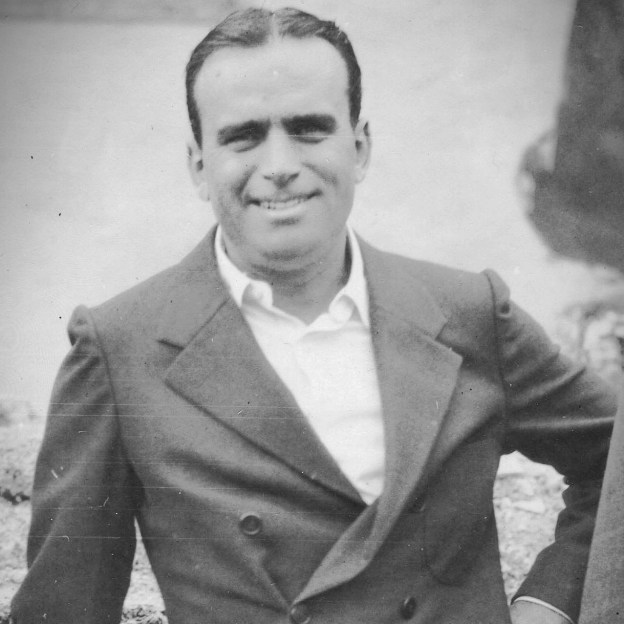
FEATURE image: Silent film superstar and icon Douglas Fairbanks Sr., c. 1917, flashing his trademark toothy smile in a cropped photograph taken in or around 1917. The photograph was taken on location on the massive backlots of Universal Studios at Universal City, California. That year Fairbanks was highly active making dynamic comedies and open-air adventures in Southern California (such as A Modern Musketeer). The original negative is preserved today as part of the official United States Marine Corps History Division Archives.

Douglas Fairbanks, Sr. helped create the modern movie star by transforming himself from a successful Broadway actor into Hollywood’s first great athletic screen hero, using charisma, physicality, and entrepreneurial ambition to become one of silent cinema’s most influential figures and a co-founder of United Artists.

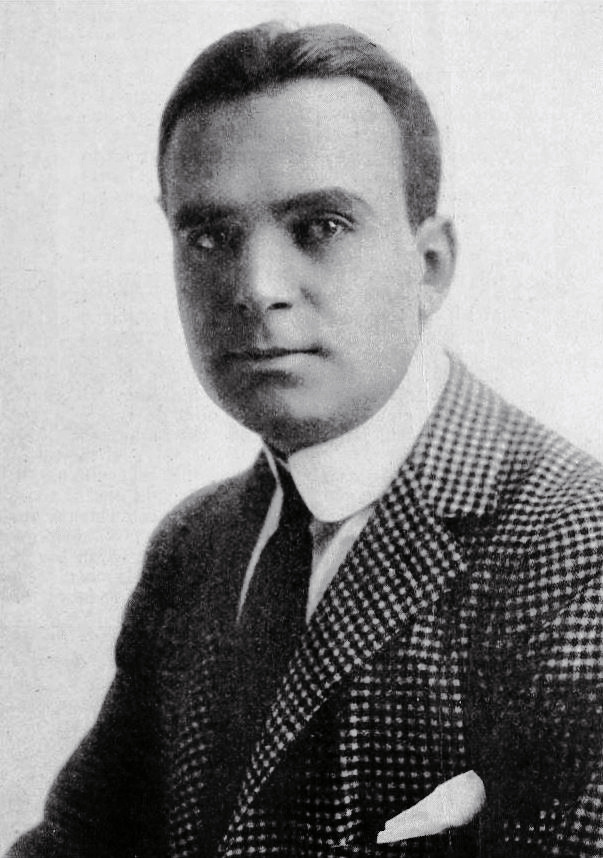
Studio portrait of silent film megastar Douglas Fairbanks Sr., taken at the height of his rise as “The King of Hollywood.” The uncropped image preserves the raw edges of the original 8×10 glass plate negative, revealing the studio backdrop and the photographer’s reference numbers etched along the bottom edge. Photographed in Washington, D.C., in April 1918 by Harris & Ewing, one of the nation’s premier photographic firms, the image comes from a studio renowned for documenting U.S. presidents, visiting dignitaries, and leading cultural figures of the early twentieth century.

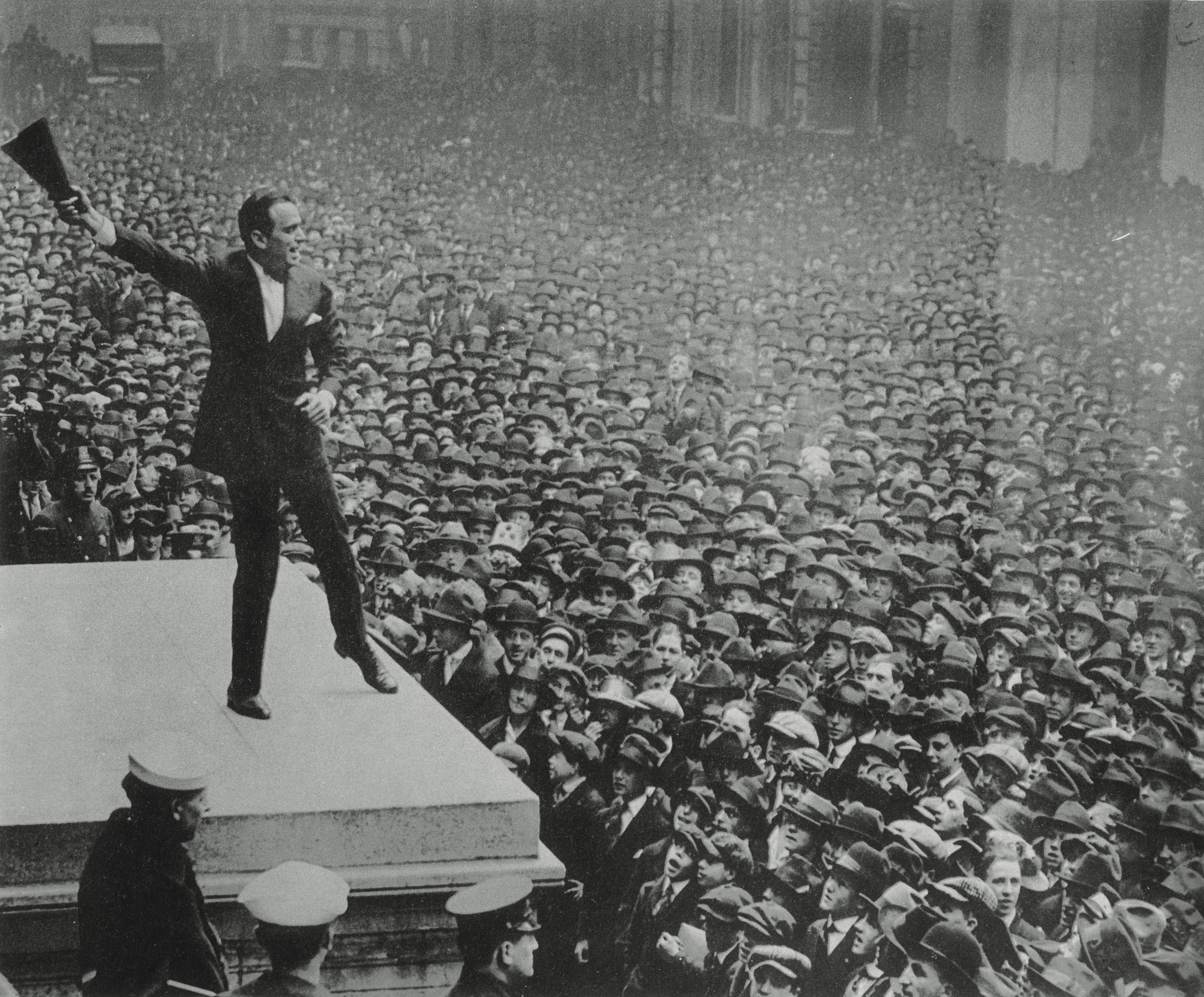
The sitting was part of a major publicity campaign connected to the World War I home-front effort. That spring, Fairbanks joined his close friends and future United Artists partners Charlie Chaplin and Mary Pickford on a widely publicized cross-country tour promoting Liberty Bonds and boosting public support for the war. Along the way, he became a headline attraction at patriotic rallies, including the famous Wall Street event where he hoisted Chaplin onto his shoulders before thousands of spectators.

The Washington studio session provided newspapers, magazines, and patriotic publications with fresh promotional photographs showcasing Fairbanks’s trademark energy and infectious smile, helping carry the Liberty Bond campaign to audiences across the country. Because the images were created as part of a government-associated wartime publicity effort, the original glass negative was ultimately preserved and is now held in the collections of the Library of Congress. No known restrictions on publication. Public Domain.

By John P. Walsh.

Early Life and Family Background

Born in Denver in 1883, Douglas Fairbanks’ mother had been married three times before she had him, the younger of two brothers with his father, an East Coast publisher and lawyer, who had relocated his family to the West. Douglas’s father abandoned the family when he was 5 years old, and the brothers were raised by their mother in Denver. Douglas also had two older half brothers by way of his mother’s previous marriages. With Douglas’s father’s departure, his mother gave her youngest sons her first husband’s surname—Fairbanks.

Stage Beginnings in Denver and New York

Douglas Fairbanks started acting as a youth in summer stock at the historic Elitch Theatre in Denver so that by 1899 Fairbanks was touring with the acting troupe of English Shakespearean actor Frederick Warde (1851-1935). For two seasons Fairbanks was an actor and assistant stage manager with the group.1 Fairbanks moved to New York where he debuted on Broadway in Her Lord and Master in February 1902. The year before, from February 1901 to July 1901, Ethel Barrymore (1879-1959) of the legendary Barrymore acting family became a Broadway star in a new romantic comedy play, Captain Jinks of the Horse Marines, at the Garrick Theatre in New York City. Barrymore’s production ran on Broadway for 168 performances in 1901 and made the 22-year-old actress a star. The turn of 20th century was a time when the theatre was king of the arts – and where, in the new century’s first decade, the nation’s celebrities were born to be made. Her Lord and Master by Martha Morton was first produced in New York, during the spring of 1902. The play, in which Douglas Fairbanks had his first role, met with success, and ran for 69 performances at the Manhattan Theatre (demolished) at 102 W. 33rd Street in New York City.2 The opening night cast for A Case of Frenzied Finance in April 1905 included Douglas Fairbanks playing Bennie Tucker at third-billing. The play, set in the Vanbillon Hotel, ran for less than a month at the Savoy Theatre at 112 W. 34th Street. That theatre opened in 1900 and closed in 1933 and was demolished in 1952.3

A dapper and svelte 22-year-old Douglas Fairbanks played third-bill Bennie Tucker in A Case of Frenzied Finance at the Savoy Theatre in April 1905. It closed after 8 performances. Public Domain.

Broadway Success and Marriage

Fairbanks appeared in A Gentleman from Mississippi from September 1908 to September 1909. On September 22, 1908 (datelined September 21, 1908) The New York Times wrote a blurb regarding a preview that stated: “A Gentleman from Mississippi received its initial performance to-night at the New national Theatre. The play deals with Congressional riots and social life in the National capital. Thomas A. Wise, Douglas Fairbanks, Sue Van Duser, Harriet Worthington and Lola May were in the cast. Mr Wise [1865-1928] and Harrison Rhodes [1871-1929] are the authors of the play.”

A Gentleman from Mississippi ran for 407 performances moving to the Bijou Theatre in NYC.4 In July 1907, 24-year-old Douglas Fairbanks married wealthy Anna Beth Sully (1886-1967) of Rhode Island. The couple had one son who followed his father into the acting business—Douglas Fairbanks, Jr. (1909-2000).

Douglas Fairbanks, c. 1910. Before 1915 Fairbanks established his character type on Broadway of the athletic all-American hero which followed him into films. By 1920 it was this full-blooded romanticism of Douglas Fairbanks that drew the biggest movie-going audiences in the country 5 https://www.loc.gov/resource/hec.16616/ Harris & Ewing, photographer. Public Domain.

Creating the All-American Hero

It was in November 1912, on opening night of Hawthorne of the USA, a play by J.B. Fagan, that Fairbanks established his character type for stage and screen: the athletic all-American hero.6 With Fairbanks in the starring role as Anthony Hamilton Hawthorne, the play set in Oberon, the small capital of Borrovina, a small independent state somewhere in the mess of Southeastern Europe, ran for 72 performances at the Astor Theatre at 1537 Broadway (45th St.) in New York.7 It was made into a silent film in 1919 starring Wallace Reid (1891-1923) as the American hero.

Athleticism and acrobatic stunts characterized Douglas Fairbanks’ roles on stage since 1912 were translated to his films. They are on full display in A Modern Musketeer, a 1917 silent adventure comedy film produced by and starring Douglas Fairbanks.

Fairbanks family, c. 1916. Public Domain. https://www.wikitree.com/photo/jpg/Sully-110-1

Hollywood Beckons: The Move to Los Angeles

In 1915 the Fairbanks moved to Los Angeles – Douglas Fairbanks Sr. had received a lucrative offer from the nascent film industry. It was a three-year contract for $104,000 per year (over $3 million in today’s dollars) to join Triangle films. Exorbitant sums were dangled, often over-ambitiously by producers, to coax legitimate theatre actors to work on the West Coast in film – and under sometimes multi-year contracts. The strategy usually worked but came at a high cost later to a company’s survival and the star’s future. Again, Ethel Barrymore who became a Broadway star in 1901 and national celebrity at 22 years old began to appear in major silent films starting in 1914. Her brothers John and Lionel were already making films and though absolutely devoted to the stage from her youth, Ethel made at least 14 films before returning to the stage full time in 1920. The trend to capitalize on the talents of the stage in film was already underway when Triangle company was formed in 1915 to do just that on a spectacular scale.

Harry Aitken, c. 1910. Public Domain.

Harry Aitken, Triangle Film Corporation, and the Broadway-to-Hollywood Strategy

Harry Aitken (1877-1956) and his brother Roy Aitken (1882-1978) co-founded a film distribution business in Milwaukee in 1906. There had also been a relationship with a Chicago film distributor who established American Film Manufacturing Company production company in 1910. The Aitken brothers relocated to California in 1908 and in 1912, with others, formed the Mutual Film Corporation. One of Mutual’s many subsidiary production and auxiliary units was Keystone Studios, where 24-year-old Charlie Chaplin got his start in films in 1913 at $150 per week (Chaplin was making more than $20,000 a week 5 years later). In 1914 Harry Aitken went into partnership with D.W. Griffith (1875-1948) and, in 1914, founded Reliance-Majestic Studios at 4516 Sunset Boulevard which is today a strip mall.

Following the tremendous success of The Birth of Nation in 1915 with which Harry Aitken was involved so to reap some of its incredible profits, the Aitken brothers and various other companies, such as Reliance-Majestic Studio, departed from Mutual to form a conglomerate of Triangle Film Corporation. The company served as a distributor to other studios in California and Aitken’s plans included sweeping into the fold the best and the brightest of Broadway theatre –  which included 32-year-old Douglas Fairbanks. A leading artistic objective for these Hollywood producers was to bring these stage actors’ greatest plays to the screen. Believed to be a worthwhile goal in 1915, before the end of the 1920’s such published plays and other literature while fine for the boudoir reader were problematic to simply translate to the silver screen. The movement towards self-censorship had developed in reaction to the fear the industry would be regulated or outright banned by states. In 1915 there were fewer worries about this as such theatrical artistic fare was expected to attract a better educated movie-goer as well as the Wall Street big-money-type investors who invested in Broadway plays. In one fell swoop Aitken contracted over 60 actors and actresses including Billy Burke (1884-1970), recently married to Florenz Ziegfeld; soon-to-be Western star Dustin Farnum (1874-1929); Shakespearean actor Sir Herbert Beerbohm Tree (1852-1917) who played Macbeth in D.W. Griffith’s lost 1916 film of the same name; and, “Casey At the Bat” DeWolf Hopper (1858-1935).

Douglas Fairbanks, 1916. Public Domain.

The Lamb and the Birth of a Screen Idol

The debut feature from Triangle starred Douglas Fairbanks in The Lamb, a film based on a 1913 stage play that was expanded to have Western cinematic elements. It premiered with two more features on September 23, 1915 at The Knickerbocker Hotel in Fairbanks’ old stomping ground of New York City. Triangle had in-house three master directors – D.W. Griffith, Mack Sennett, and Thomas Ince. D.W. Griffith had a hand in The Lamb, though its directing and screenplay credits went to 27-year-old W. Christy Cabanne (1888-1950). The Lamb was a hit with audiences, and critics praised Fairbanks’ performance marked by his celebrated physicality.8 The film had a nationwide release that November 1915. Although not yet a movie star, Fairbanks saw his weekly salary doubled. By His Picture in the Papers, a 1916 silent comedy film for Triangle that provided stunts for Fairbanks to wrap his athleticism around, Fairbanks became a popular screen idol. Fairbanks made 13 films for Triangle and when his contract expired, Harry Aitken was paying him $10,000 per week.9 Yet, excepting Douglas Fairbanks, Aitken had over bought his stable of stage stars in relation to their poor return so that in 1916 Triangle was known in the industry to be on the verge of collapse.

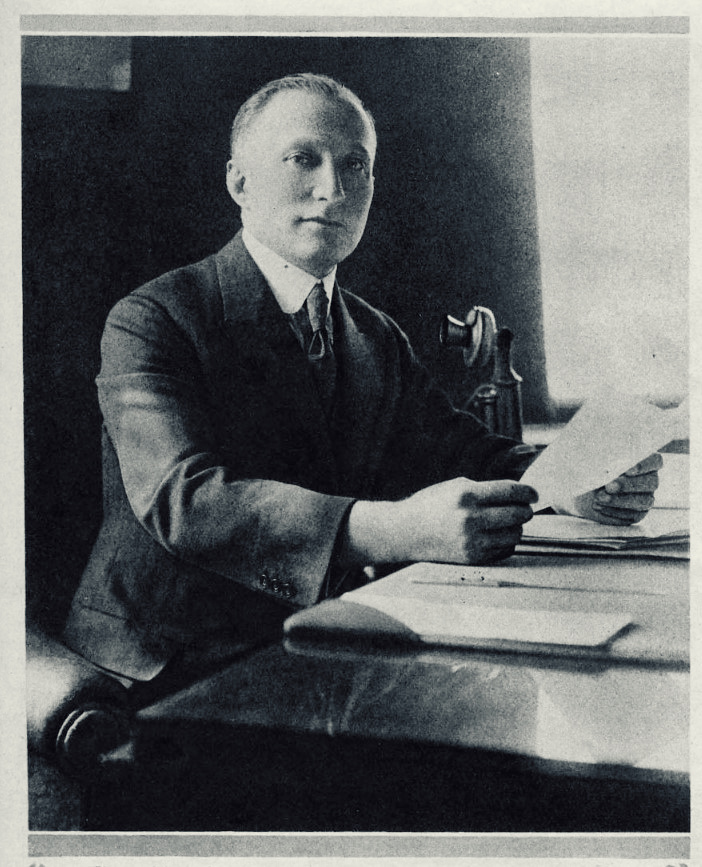
Paramount Pictures’ co-founder Adolph Zukor (1873-1976) was one of the innovators of the motion picture business. In 1916 Zukor convinced Douglas Fairbanks to become the independent producer of his own films. From the May 1922 issue of Motion Picture Classic. Public Domain. https://archive.org/details/MotionPictureClassicMay1922/mode/1up?view=theater

Independent Producer and the Douglas Fairbanks Picture Corporation

Douglas Fairbanks, Triangle’s star, was convinced by Paramount Pictures’ co-founder Adolph Zukor (1873-1976), believed to be “the business brains of the motion picture industry,”10 to become the independent producer of his own films. This became reality at the end of 1916 with the creation of the Douglas Fairbanks Picture Corporation. Zukor had already worked to do something similar for Mary Pickford’s films.

Douglas Fairbanks and Mary Pickford around 1919. Both movie stars already had established independent productions companies for their own films which still required their distribution – a key aspect of making money in movies – by others. These stars along with comedy star Charlie Chaplin and master director D.W. Griffith founded United Artists in 1919 largely to establish control of the distribution arm of the movie making business for their independently produced films. In 1919, Douglas Fairbanks divorced his wife, Anita. The following year, Mary Pickford, “America’s Sweetheart,” divorced her husband, Owen Moore, and married Douglas Fairbanks, her paramour since 1916. The American public, which took tremendous interest in these personal affairs, were shocked but hardly surprised by the country’s changing values. Even Douglas Fairbanks’ films between 1915 and 1919 had demonstrated those changing values by way of his athletic, likeable characters drawn to display a comical, good-natured, brash overambitious hero with a popular philosophy of avoiding both boring convention and conventional boredom. While Fairbanks’ dramatis personae would change dramatically in the 1920s from comedies to swashbucklers his already fantastic, attractive and likeable character type was being merely reinforced.11 Glass negative, Harris & Ewing photographer. https://www.loc.gov/resource/hec.30098/ Public Domain.

Fairbanks Productions and the Road to United Artists

As Fairbanks had been lured away by a better offer, so the actor hired his team at Triangle for his own company. Director John Emerson (1874-1956) and screenwriter Anita Loos (1888-1981) – to be husband and wife in 1919 – had successfully collaborated on Fairbanks’ movie hits at Triangle and even D.W. Griffith valued the pair as among the best film editors in the business after working on Intolerance in 1916. Emerson had directed important films at Triangle in 1916 featuring Douglas Fairbanks including His Picture in the Papers, The Americano, and The Mystery of the Leaping Fish. These Emerson-directed films were followed in 1917 by In Again, Out Again, Wild and Woolly, Down to Earth, and Reaching for the Moon, all for Douglas Fairbanks Productions. In 1918 Fairbanks made 5 more romantic comedies and one melodrama called Arizona, a film now lost. Despite a film receiving perhaps a mixed review from critics or being subject to local censorship, Douglas Fairbanks’ films proved box office gold due to his star power. In 1918 and moving into 1919 Fairbanks had become a millionaire, screen idol and soon to be co-founder of his own movie studio, United Artists.

John Emerson and Anita Loos in 1918. These two creative individuals who married in 1919 worked closely as director, screenwriter, and film editor with Douglas Fairbanks as well as D.W. Griffith at Triangle films and later at Douglas Fairbanks Picture Corporation. They helped make some of the most popular and critically-acclaimed films in the industry at that time. Public Domain.

Down to Earth is a 1917 American comedy romance film produced by and starring Douglas Fairbanks with Irish-born actress Elaine Percy. Directed by John Emerson with a screenplay co-written by Anita Loos, the film features Fairbanks as Bill Gaynor who sets out to prove the outdoors and self-reliant manual labor are better for health than any modern medical treatment. He does this by kidnapping a group of hypochondriacs from a clinic that includes a girl, Ethel Forsythe (Percy). Bill is interested in her, but she refuses his proposals. Finally, after proving his point on a “deserted island” that is next to a California freeway, Bill bids farewell to the revived group of patients and escapes with his awaiting love interest, Ethel, into the sunset by rowboat. The film is in the Public Domain.

The most popular silent film stars on the road selling Liberty bonds in 1918 were Charlie Chaplin, Mary Pickford, and before a massive crowd on Wall Street in New York City, Douglas Fairbanks. In 1918 Fairbanks and Chaplin decided to hire private detectives to spy on their respective studios, Paramount Pictures and First National. They were told that the studios were going to put a stop to their exorbitant salaries and not renew their contracts.12 The positive audience response from the Liberty drives and a fear of a corporate merger that would end star leveraging power, led directly to Fairbanks, Chaplin, Pickford, and master director D.W. Griffith, to found United Artists in January 1919. Public Domain.

Conclusion

As the curtain fell on the theater-dominated nineteenth century and rose on the age of motion pictures, Douglas Fairbanks emerged as a defining titan of the new medium. At a pivotal moment when the art and business of film were still being invented from scratch, Fairbanks helped construct the very blueprint of modern movie stardom. He achieved this through a potent combination of infectious optimism, explosive athletic vigor, and an instinctive, unparalleled screen charisma.

More than just a box-office darling, Fairbanks became the ultimate symbol of silent-era ambition and untamed possibility. He radically disrupted the industry by challenging rigid studio monopolies, pioneering artist-led production as a co-founder of United Artists. In doing so, Fairbanks established a revolutionary model of creative freedom, global celebrity, and entrepreneurial control that reshaped the landscape of Hollywood and the business of filmmaking for generations. Ultimately, his career mirrored Hollywood’s own meteoric rise, ensuring his towering influence would endure long after the silent era that made him famous had passed into history.

NOTES:

1. Goessel, Tracey. The First King of Hollywood; The Life of Douglas Fairbanks. Chicago Review Press, 2016.

2. https://playbill.com/production/her-lord-and-masterbroadway-manhattan-theatre-1902 – retrieved August 28, 2023.

3.https://www.ibdb.com/theatre/savoy-theatre-1494; https://www.ibdb.com/broadway-production/a-case-of-frenzied-finance-6075#OpeningNightCast).

4. The Oxford Companion to American Theatre (3 ed.), Gerald Bordman  and Thomas S. Hischak, 2004 and https://www.oxfordreference.com/display/10.1093/oi/authority.20110803095848181).

5. The United Artists Story, Ronald Bergan, Crown Publishers, Inc., New York, 1986, p.9.

6. Ibid., p. 8.

7. https://www.playbill.com/production/hawthorne-of-the-usa-astor-theatre-vault-0000001318 – retrieved August 30, 2023; https://www.ibdb.com/broadway-production/hawthorne-of-the-usa-4786 – retrieved August 30, 2023.

8. Lombardi, Frederic (2013). Allan Dwan and the Rise and Decline of the Hollywood Studios. McFarland. pp. 53–54.

9. United Artists, Volume 1, 1919–1950: The Company Built by the Stars, Tino Balio,  University of Wisconsin Press, 2009. p. 143.

10. Quoted in the May 1922 issue of Movie Picture Classic, p. 26.

11. A Short History of the Movies, Gerald Mast, Indianapolis: Bobbs-Merrill Company, Inc., 1976, pp. 124; 127 and The Liveliest Art: A Panoramic History of The Movies, Arthur Knight, New York: MacMillan Publishing, 1978, p 107.

12. Chaplin: His Life and Art, David Robinson, New York: McGraw-Hill Book Company, 1985, p. 267.

BIBLIOGRAPHY:

A Short History of The Movies, Gerald Mast, The Bobbs-Merrill Company, Inc. Indianapolis, 1977.

David Robinson, Chaplin: His Life and Art. New York: McGraw-Hill Book Company, 1985.

Hollywood: The Pioneers. Kevin Brownlow and John Kobal, New York: Alfred A. Knopf Inc. A Borzoi Book,1979.

History of the American Cinema, Volume 5, 1930-1939, Charles Harpole, General Editor, New York: Charles Scribner’s Sons, 1993.

The American Film Industry, ed. Tino Balio, University of Wisconsin Press, 1976.

The Hollywood Story, Joel W. Finler, New York: Crown Publishers, Inc., 1988.

The Liveliest Art: A Panoramic History of The Movies, Arthur Knight, New York: MacMillan Publishing, 1978

The United Artists Story, Ronald Bergan, Crown Publishers, Inc., New York, 1986.

United Artists, Volume 1, 1919–1950: The Company Built by the Stars, Tino Balio,  University of Wisconsin Press, 2009

An iconic production still showing Douglas Fairbanks Sr. flashing his famous smile as his character, Ahmed, in the 1924 landmark silent film fantasy epic, The Thief of Bagdad. In the promotional shot distributed by United Artists in 1924 he famously paired a patterned, wrapped head scarf with prominent matching hoop earrings as the movie star starred in what is universally classified as an epic swashbuckler. Public Domain.

Alice Terry and Melbourne Spurr, 1922: Silent Hollywood in a Single Portrait.

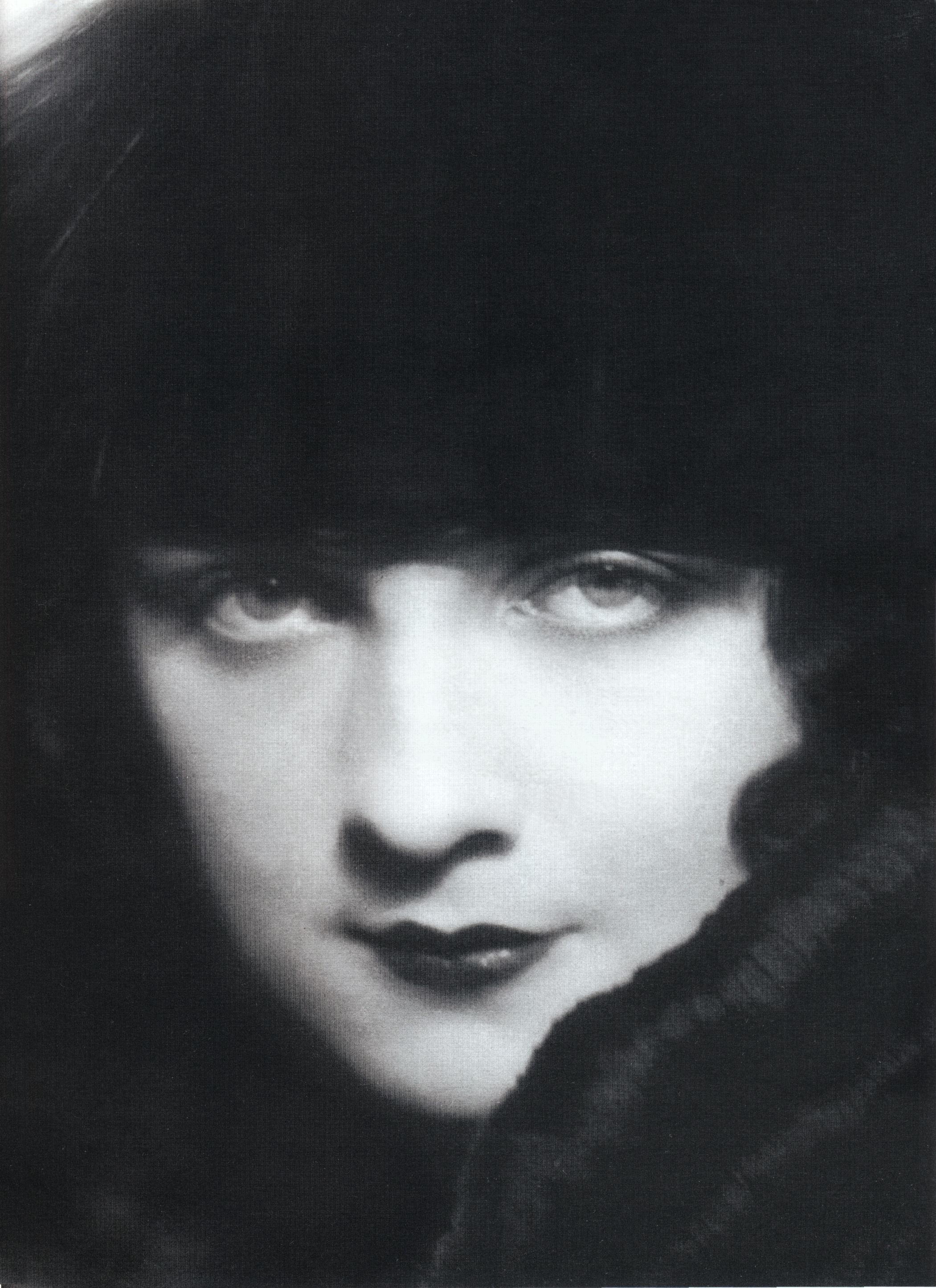
FEATURE image: Alice Terry by Melbourne Spurr, 1922. The sharp, dark, perfectly symmetrical lipstick styling seen here was the definitive high-fashion look of 1922, contrasting beautifully with the hazy diffusion applied to her eyes and hair. Spurr pioneered the aggressive close-up style that removed all extraneous background clutter. By using a specialized soft-focus diffusion lens, he softened the lines of Alice Terry’s skin, giving her face an ivory-smooth, almost airbrushed appearance that became the gold standard of 1920s celebrity photography. Public Domain.
The 1922 Alice Terry photograph by Melbourne Spurr captures the artistry, celebrity culture, and changing fortunes of early Hollywood, highlighting how both actress and photographer flourished during the silent era before the studio system transformed the industry.

GLAMOUR PHOTOGRAPHER MELBOURNE SPURR’S CAREER LAUNCHED BY SILENT SCREEN STAR MARY PICKFORD

Melbourne Spurr (1888-1964) arrived in Hollywood around 1917 at 28 years old. Spurr first worked at the studio of photographer Fred Hartsook (1876-1930) where he shot portraits of silent film stars.

Portrait of Melbourne Spurr (1888-1964) taken around 1917 when he arrived in Los Angeles to become an actor. The portrait offers a fascinating glimpse of the man before he became one of the definitive master portraitists of early Hollywood. In the promotional headshot, Spurr posed with his arms crossed with an intense, direct gaze aimed at the camera which was common formatting for a young actor’s talent portfolio during the late 1910s. Finding his acting career thwarted, Spurr shifted his creative energies to behind the camera, working at at Fred Hartsook’s portrait studio. It was there that his portraiture caught the eye of Mary Pickford, who would ultimately finance his career and help launch his legendary independent studio. Public Domain.
After Spurr photographed Mary Pickford at the Hartsook studio, Pickford personally helped Spurr launch his career as a Hollywood portrait photographer. Regarding Mary Pickford, Spurr once said “[she] always comes back to me, so I guess she thinks I’m not a bad photographer.” 

By 1916 Mary Pickford (1892-1979) was a big star and had full authority over the films in which she appeared. She was earning a record-breaking $10,000 a week which was a staggering amount of money in the midteens (about $240,000 a week today).

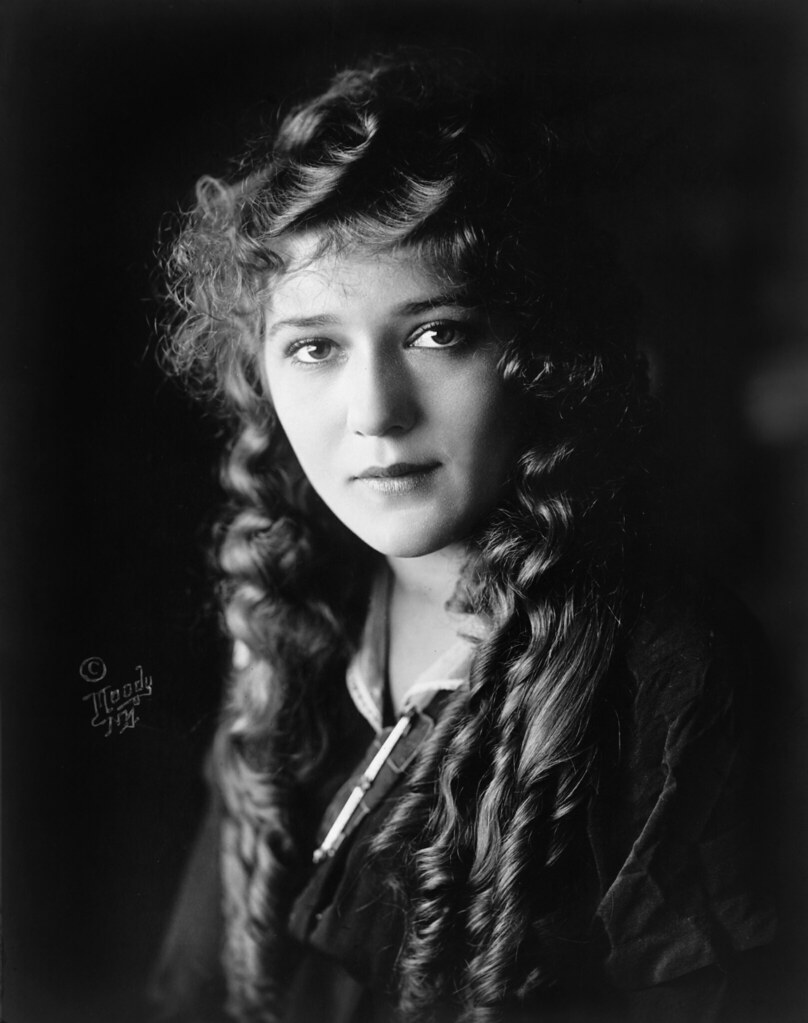
Rufus Porter Moody operated out of a high-end theatrical studio on West 42nd Street in New York City and captured Pickford during her 1914-1915 East Coast filming era. Melbourne Spurr did not arrive in Hollywood until around 1916–1917 when he was “discovered” by Pickford.

Mary Pickford (1892-1979) in a photograph taken in September 1914 was a big star in Hollywood. Taken by Rufus Porter Moody at a monumental turning point of her career, this deep-chiaroscuro portrait reveals 22-year-old Mary Pickford as she solidified her status as the cornerstone of independent cinema. The image serves as a powerful piece of corporate branding for Adolph Zukor’s Famous Players Film Company. PHOTO: “Mary Pickford by Moody, ca. 1914” by trialsanderrors is marked with CC BY 2.0.


MELBOURNE SPURR BECAME ONE OF THE MOST POPULAR CELEBRITY PHOTOGRAPHERS IN THE WORLD

Pickford’s special personal interest in Spurr’s career was matched or exceeded by the popularity of his photographs he distributed to the public. The film industry and public’s insatiable interest in Spurr’s portraits following his published Mary Pickford shots overnight made Spurr one of the most popular celebrity portrait photographers in Hollywood. By the mid1920’s Melbourne Spurr was one of the most popular celebrity photographers anywhere in the world.

Spurr’s many sitters through the roaring 20’s included Mary Astor, Marion Davies, Pola Negri, Theda Bara, Norma and Constance Talmadge, Harold Lloyd, Buster Keaton, Fatty Arbuckle, John Barrymore, Lucille Ricksen—and Alice Terry.

PORTRAIT PHOTOGRAPH OF ALICE TERRY, FILM ACTRESS AND DIRECTOR

Between 1916 and 1933 Terry appeared in 39 films. She started in Not My Sister in 1916. That same year, Terry made the anti-war film, Civilization. In 1921 she starred as Marguerite Laurier, her most acclaimed role, in prominent Irish director Rex Ingram’s film, The Four Horsemen of the Apocalypse. Alice Terry and Rex Ingram married that same year.

Alice Terry (began her career as a film actress and later director in the silent film era. Spurr’s portrait photograph of Alice Terry in 1922 presents a very close-cropped close-up with piercing, radiant eyes, perfect lips, and rich toning.

It was shot at Spurr’s studio in Hollywood and was one of his earliest solo commercial masterpieces after branching out from Fred Hartsook’s studio. In 1922 Alice Terry was at the height of her cinematic stardom having just completed filming The Prisoner of Zenda (1922), directed by her brilliant husband, Rex Ingram and this studio session was specifically engineered as a publicity drive to generate high-end, artistic portraits for top-tier film magazines and theater lobby card displays.

Alice Terry by Melbourne Spurr, 1922. The photograph deliberately reinvents her on-screen persona, isolating her face to capture the smoldering, mysterious depth that made her a box-office magnet. Cloaked in an oversized, dark winter hat and wrapped tightly in a thick, textured fur collar, the styling frames her as an enigmatic, modern woman of high style—perfectly expressing her elite rank alongside contemporary screen icons of the early twenties.

In 1925, Rex Ingram (1892-1952), was a director on Ben-Hur, an extravaganza production that started in 1923 and became one of the biggest box-office hits of the decade. Working on this film in Italy gave Alice Terry and Rex Ingram the idea to relocate to Nice on the French Riviera and set up their own film studio. In the next years the expatriate actress-director and director made several films for M-G-M on location in southern Europe and North Africa. Alice Terry made her final film in 1933 in an appearance in Baroud, a film she and Rex Ingram co-directed.

SPURR’S POPULARITY DECLINES AS STUDIO SYSTEM MANDATES IN-HOUSE PHOTOGRAPHERS

With studio consolidation and competition becoming more intense, major movie studios mandated that their stars be photographed only by studio photographers. So was inaugurated the age of motion picture inhouse operators heralding the legendary careers of glamour portrait photographers George Hurrell, Clarence Sinclair Bull, Eugene Robert Richee and others. Since Spurr chose to keep his own studio and not work for a major studio, he began to lose business. It had been for one glorious decade—the 1920’s— that Melbourne Spurr shined in Hollywood.

SOURCE:

https://www.portrait.gov.au/people/melbourne-spurr-1917

http://library.rit.edu/findingaids/html/RITDSA.0011.html

Captain Jinks of the Horse Marines at the Garrick Theatre: The 1901 Broadway Breakthrough That Made Ethel Barrymore a Star.

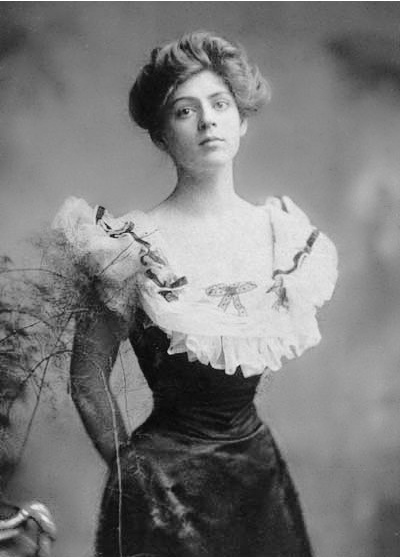
FEATURE image: Ethel Barrymore on the cover of The Theatre in August 1901 following the close of the successful Captain Jinks of the Horse Marines which ran on Broadway for 168 performances from February to July 1901 and made 22-year-old Ethel Barrymore a star. Public Domain.

Ethel Barrymore’s breakout performance as Madame Trentoni in the 1901 Broadway romantic comedy Captain Jinks of the Horse Marines at the Garrick Theatre transformed her into a major theatrical celebrity, launching a legendary 60-year career across the American stage and cinema.


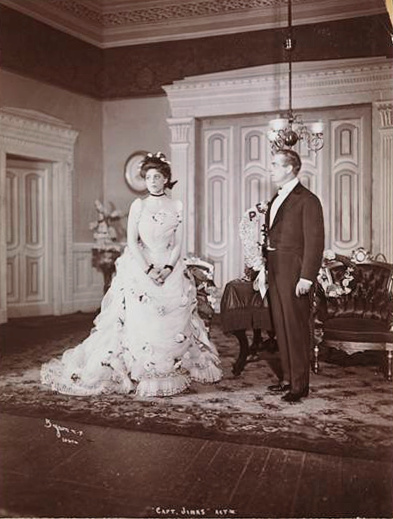
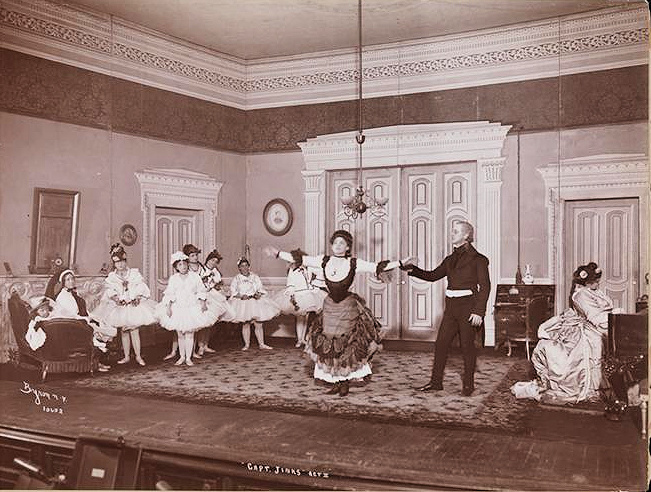
22-year-old Ethel Barrymore on stage at the Garrick Theatre on West 35th Street in New York City in Clyde Fitch’s Captain Jinks of the Horse Marines in 1901. Dramatist Clyde Fitch (1865-1909) wrote over 60 plays in his career that ranged from comedies and farces to melodramas. Fitch was the most popular writer for the Broadway stage in his time and specialized in writing important dramatic parts for women. Fitch’s new play was a romantic comedy set in the States years after the Civil War. Ethel Barrymore played Madame Trentoni, the female lead and the play’s love interest. The 1901 Broadway production made Barrymore a star. The public domain photograph is in the archive of the Museum of the City of New York.

By John P. Walsh

Stage and screen actress Ethel Barrymore (1879-1959) was the sister to older brother Lionel (1878-1954) and younger brother John (1882-1942) Barrymore. Though Ethel Barrymore was absolutely devoted to the stage from her youth, she began to appear in major silent films starting in 1914. Much later, in the 1940’s, the veteran stage actress was nominated twice for an Academy Award for Best Supporting Actress. She won the golden statuette in 1944 for her role as Ma Mott in the film None but the Lonely Heart starring Cary Grant who used a Cockney accent for his part.

By the time Barrymore appeared in her first feature motion picture, The Nightingale, in 1914, she was a celebrated stage actress on both sides of the Atlantic. Coming from the famous American acting family of Drews and Barrymores, the just 16-year-old Ethel Barrymore made her Broadway stage debut in 1895 alongside her uncle, John Drew, Jr. (1853-1927).

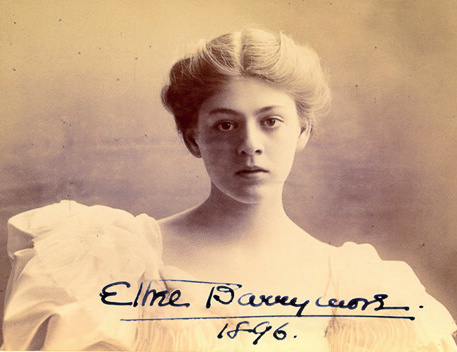
Ethel Barrymore at 17 years old in 1896. In 1895, a 16-year-old Barrymore made her Broadway stage debut alongside her uncle, Jack Drew, Jr., a famous and well-liked actor.

John Drew, Jr. in 1896. A versatile actor, Drew was so highly esteemed by his fellow actors that they elected him the lifetime president of New York City’s Players’ Club. The private social club for actors founded in the 1840’s at 16 Gramercy Park remains active today.

Before she was 20 years old, Ethel appeared several times on the London stage. Her first role was that of Miss Kittridge in William Gillette’s new play, Secret Service (1895). After that show closed, she was offered and played other roles on the London circuit. By the turn of the 20th century, a vibrant and talented Ethel Barrymore gained the especial attentions of several male admirers that included dukes, actors, writers and politicians.

As a young, vibrant actress touring the London circuit, she caught the attention of many high-society suitors, famously refusing a marriage proposal from a young Winston Churchill, who became a lifelong friend.

Winston Churchill in 1900. A public domain photograph in the Imperial War Museum.

One such admirer of Ethel Barrymore was eligible bachelor, enthusiastic theater hound, and nascent politician Winston Churchill (1874-1965). Though Ethel had many propositions and proposals in this period—she was even briefly engaged to a man until Ethel broke it off—any marriage proposal made to her by Churchill was refused. Churchill and Barrymore, however, became lifelong friends.

Poster for William Hooker Gillette’s 1895 play, Secret Service, on the London stage which featured young American actress Ethel Barrymore in its cast. The poster promotion depicts the play as a royal entertainment which attracts princes and princesses, dukes and duchesses. William Gillette (1853-1937) wrote melodramas and spy plays that were very popular with audiences. In 1899, Gillette first created the role of Sherlock Holmes for the stage, a role which he himself played for over 30 years.

Ethel Barrymore at 19 years old in 1898.

Young Ethel Barrymore. From a famous American acting family, she was was devoted to the stage at an early age.

At 20 years old Ethel Barrymore gained the attention of many male admirers, including dukes, actors, writers and politicians. Though briefly engaged around the turn of the century, Ethel broke it off. Ethel finally married in 1909. She met her husband, Russell Griswold Colt (1882–1960), at Sherry’s restaurant at 44th Street and Fifth Avenue in New York City while having lunch with her uncle, John Drew, Jr. The marriage produced three children, though it ended in divorce in 1923.

When Ethel returned to the United States, she began to appear in various stage productions. It was in 1901 when the 22-year-old actress was cast in the role of Mrs. Trentoni in Clyde Fitch’s Captain Jinks of the Horse Marines on Broadway that Ethel Barrymore became a star.

Ethel Barrymore dressed in one of the Edwardian costumes as Madame Trentoni in the 1901 Broadway play, Captain Jinks of the Horse Marines.

The plot of Clyde Fitch’s Captain Jinks of the Horse Marines—in which her character Madame Trentoni falls in love with a man who initially bets he can win her affection—ran for 168 performances from February to July 1901 and cemented Ethel Barrymore’s celebrity status.

Act 1.

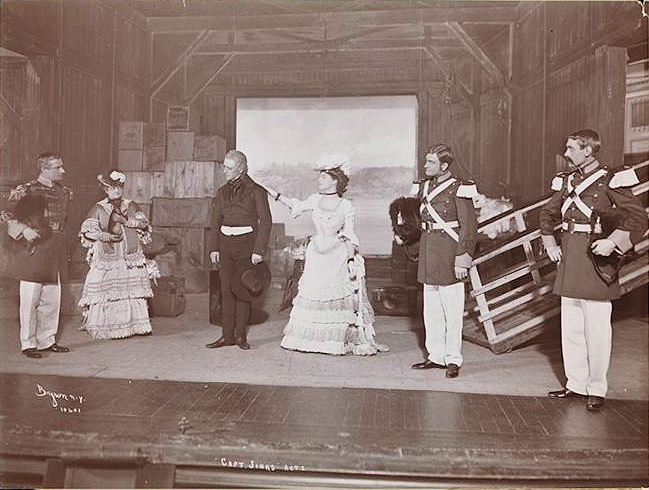
Clyde Fitch’s Captain Jinks of the Horse Marines introduces Robert Carrolton Jinks and his friends who form a club to boost the presidential campaign for General U.S. Grant in 1868. Calling themselves “Captain Jinks of the Horse Marines,” they think to try out their marching abilities by greeting the arrival of a steamer carrying Madame Trentoni, a famous opera singer. Though sight unseen, Jinks bets money that he can make Madame Trentoni fall in love with him. The boat is late and everyone leaves the dock except for a gaggle of reporters who wait to greet the opera singer. When Jinks returns, after he lays eyes on Madame Trentoni (played by Ethel Barrymore) he falls in love with her. After Captain Jinks sees she is having trouble at customs, he pulls out money which the customs official mistakes for a bribe and Jinks is promptly arrested.

When Jinks is released on bail he calls on Madame Trentoni who has stopped to visit her foster father. She is as much in love with him as he is with her and their courtship progresses rapidly. When Jinks tries to call off the bet he made with his friends, they refuse until he finally agrees to pay off the bet with an I.O.U.

Jinks’ friends are also smitten with Madame Trentoni but she is totally uninterested in them. This gets them angry and they decide to ruin it for Jinks. They tell Madame Trentoni’s foster father that jinks intends to marry Madame Trentoni solely for her money — and as proof pull out the signed I.O.U. that says “I.O.U. $1,000 for the bet regarding Madame Trentoni.” The foster father flies into a rage, tells Madame Trentoni about the I.O.U, and she decides to never see Jinks again.

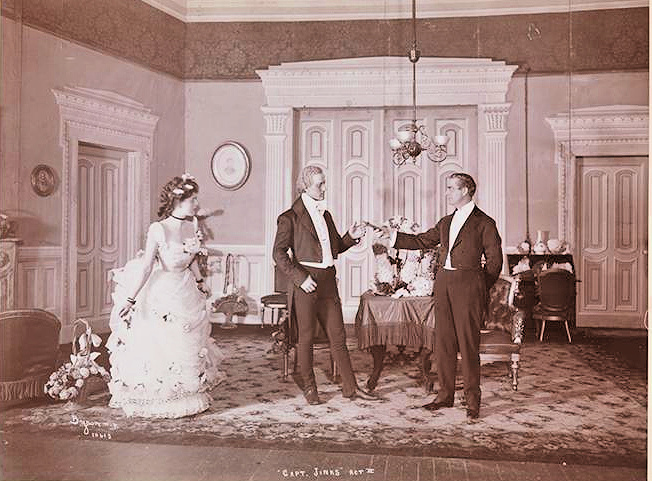
ACT 2.

Jinks has no idea why Madame Trentoni is so angry at him. When he finally discovers what his friends have falsely told her, he tries to gain admittance to her apartment to tell her the truth. When she learns the real facts of the matter, Madame Trentoni throws her arms around her Captain Jinks.

In that intimate position, a detective suddenly bursts into the room to arrest Jinks. In all the tumult surrounding the loss of his love interest, Jinks forgot to appear in court for his bribery case. It appeared Jinks had skipped bail. Madame Trentoni tells the detective that she and her sweetheart have had a misunderstanding and only now are having the chance to make up. Her plea and the promise that Captain Jinks will appear in court tomorrow for his case is approved by the detective, who departs. Captain Jinks and Madame Trentoni embrace, and the curtain goes down on the couple living happily ever after.

Act 3.

The public domain photographs above are in the archive of the Museum of the City of New York.

Cultural Phenomenon: The play soon triggered an insatiable public demand for Ethel Barrymore’s style, photos, and postcards.

Color promotional poster for Captain Jinks and the Horse Marines starring Elizabeth Kennedy. After the Broadway show starring Ethel Barrymore closed in July 1901, a new production and cast appeared in 1902. The theatrical poster highlights New York’s Garrick Theatre run. (Library of Congress collection)

Ethel Barrymore as Madame Trentoni in 1901.

Ethel Barrymore on the cover of The Theatre in August 1901 following the close of her successful Captain Jinks of the Horse Marines run which made 22-year-old Ethel Barrymore a star.

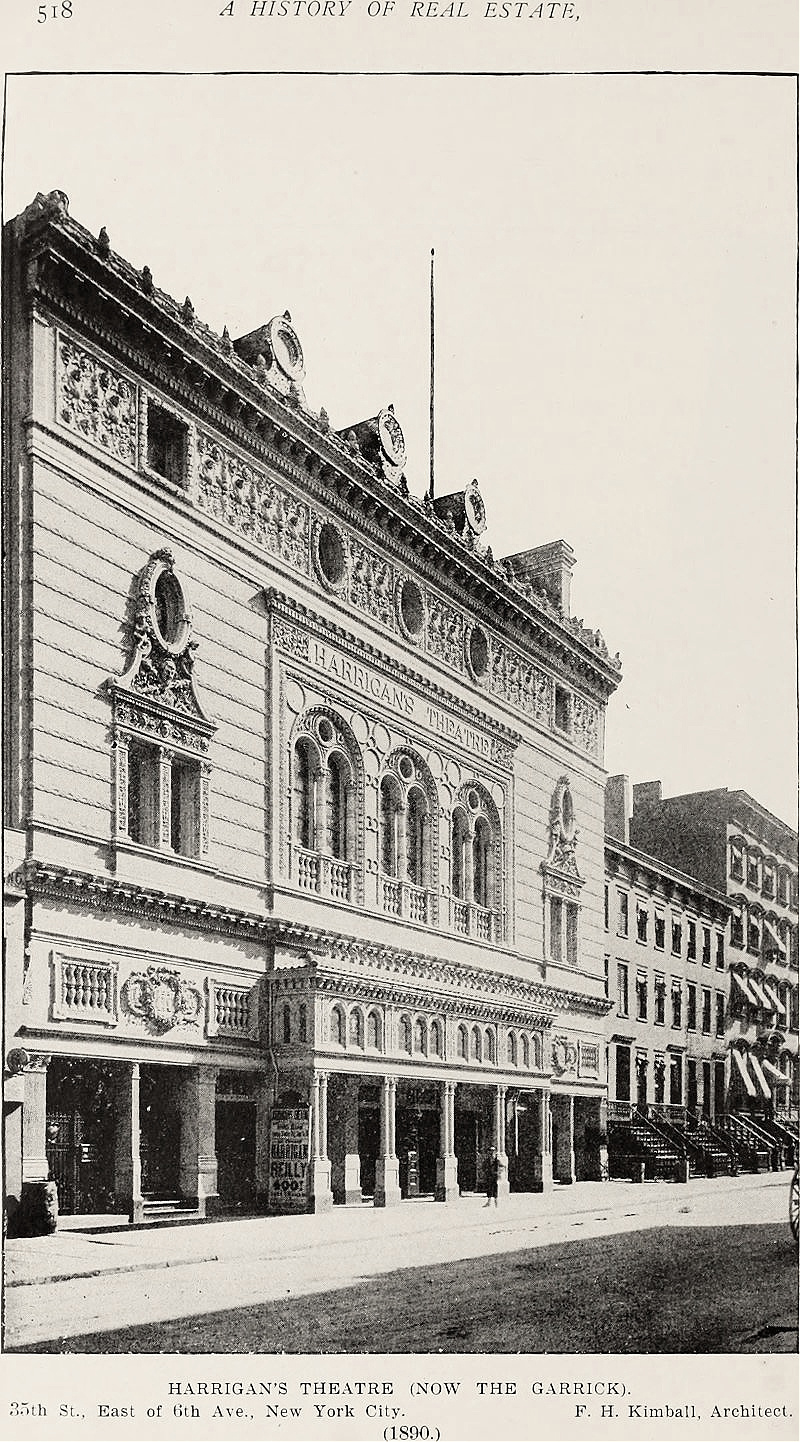
Captain Jinks of the Horse Marines was produced in 1901 at the Garrick Theatre. The 910-seat theatre was built in 1890 by Francis Hatch Kimball (1845-1919) and located at 67 W. 35th Street in New York City.

The Garrick opened as Harrigan’s Theatre and became the Garrick in 1895. It was sold to the Schubert brothers in 1916 and leased to Otto Kahn who renamed it the Théâtre du Vieux-Colombier in 1917.

Management reverted to the Schuberts in 1925 when the theatre featured popular burlesque until the onset of the Great Depression. The building was demolished in 1932.

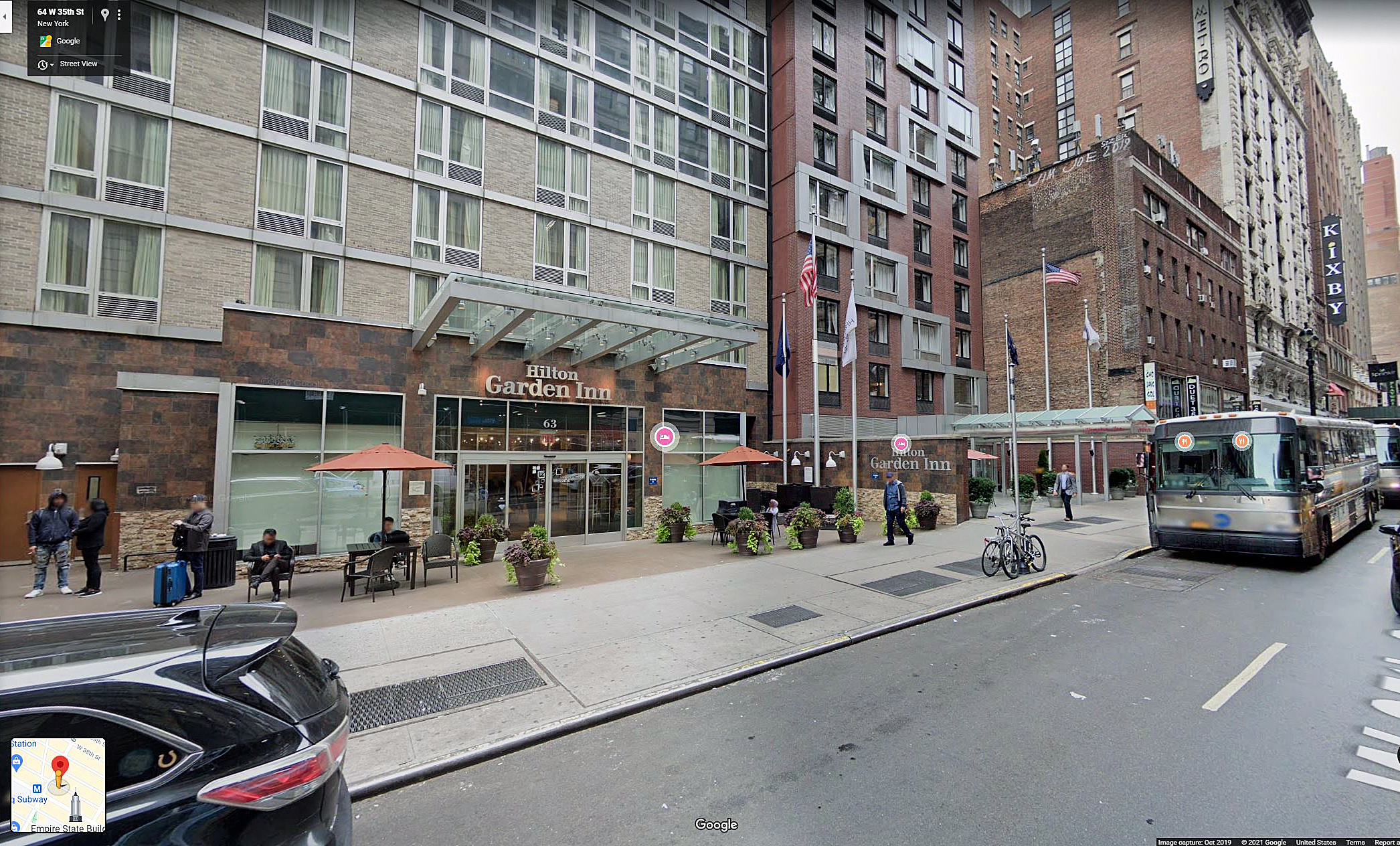
Screenshot, October 2019, site of GARRICK THEATRE (1890-1932), 67 W. 35th Street, New York City. The Garrick Theatre was where Ethel Barrymore starred as Madame Trentoni in Clyde Fitch’s Captain Jinks of the Horse Marines. A smash hit, the Broadway production made Ethel Barrymore one of the 20th century’s major theatrical and film stars. In 2006 the site had a multi-level parking garage which was later replaced by a hotel devlopment. The brownstone building in the middle distance appears to have survived from the late 19th-century period.

Following her 1901 success, Ethel Barrymore became a cultural style icon. She went on to headline numerous top-rated Broadway plays throughout the early 1900s.

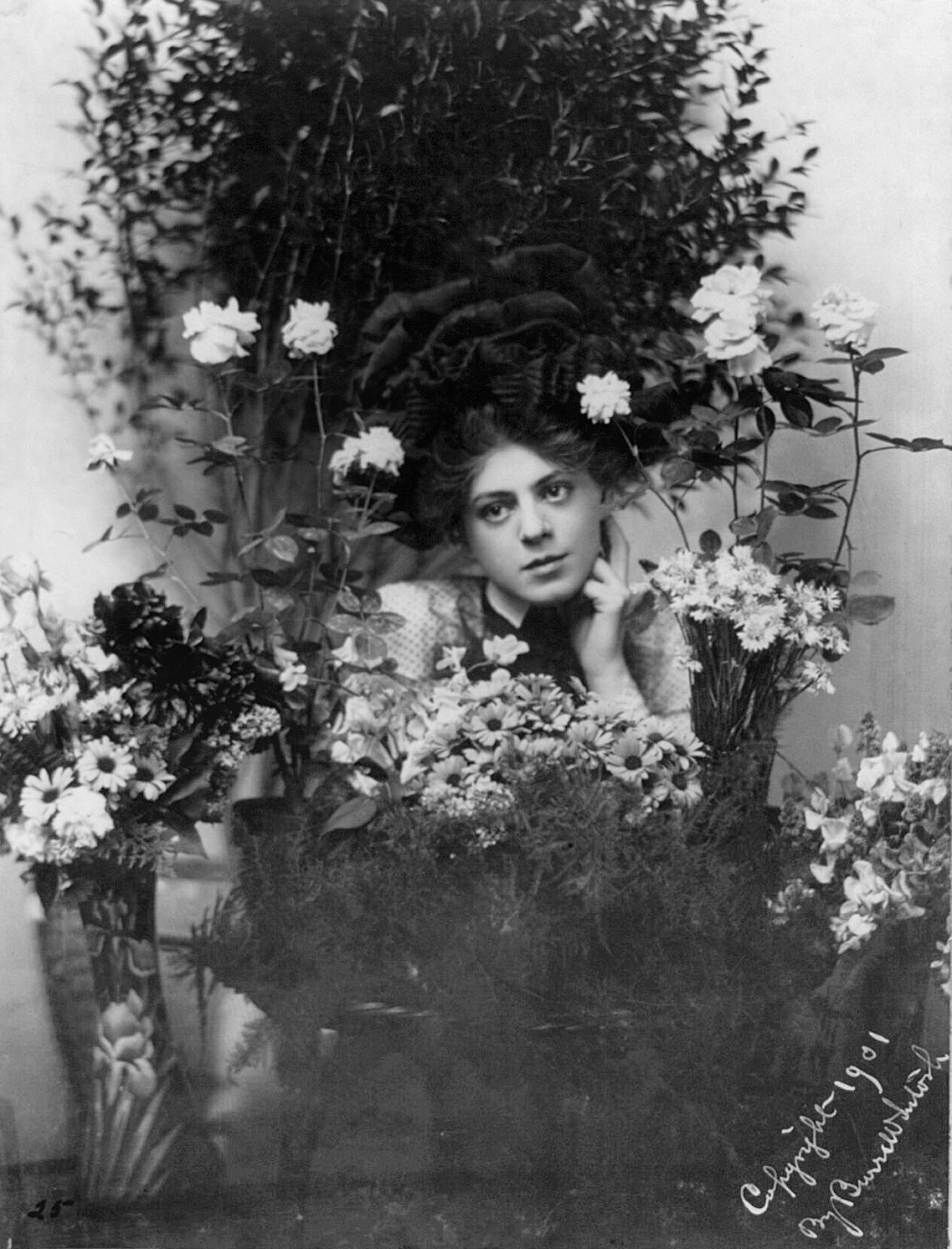
Both photographs above, Ethel Barrymore in 1901. As a new theatrical celebrity Barrymore’s image, style, and fashion were in demand by the public.

Ethel Barrymore in 1901.

Barrymore with a fur muf and feather hat in a hairstyle à la mode. The demand by the public for images of theatrical celebrities was insatiable.

In the 20th century’s first decade, Ethel Barrymore became a theatrical celebrity. Her image was in demand in photographs and picture post cards of the time. Throughout the first third of the twentieth century, Barrymore continually appeared in popular stage productions. Following the success of Captain Jinks of the Horse Marines, Barrymore appeared in the next years in many top-rated popular Broadway productions.

A few highlights included in 1903 Barrymore appearing for 60 performances in the title role in Cousin Kate at the brand-new Hudson Theatre at 139–141 West 44th Street. In 1905 Barrymore played Norma Helmer in Henrik Ibsen’s A Doll House for 23 performances at The Lyceum Theatre at 149 West 45th Street. Also in 1905 Barrymore appeared in Alice Sit-by-the-Fire at the Empire Theatre. In 1908 Barrymore played the title role in Lady Frederick for 96 performances, again at the Hudson Theatre. There were a dozen more productions Barrymore was involved in before 1910.

Another side of Ethel Barrymore, at the piano in 1903. Before she took to a career on the stage, Ethel Barrymore aspired to be a concert pianist as a youth.

Ethel Barrymore, 1904, by photographer Arnold Genthe. The actress was starring in several plays that year including in the title role of Kate Curtis in My Cousin Kate at the Empire Theatre. Barrymore would reprise the role briefly in 1907.

Ethel Barrymore in a photograph by William Morrison of Chicago in 1907. In the 1900’s Ethel Barrymore was a theatrical celebrity whose image displayed the latest fashion, make-up, and hairstyles that helped express the style of the times.

Ethel Barrymore in 1908. She was starring in the title role of Lady Frederick at the Hudson Theatre that year. The Broadway play ran for 96 performances.

Ethel Barrymore made her silent film debut in 1914 with The Nightingale and balanced stage work with cinema, later winning an Oscar in 1944.

With her film debut in 1914 in The Nightingale, a film written especially for her by playwright Augustus Thomas (1857-1934), Ethel Barrymore began in the new silent flickering medium of cinema in the footsteps of her brothers Lionel and John, who made their film debuts a couple of years earlier.

While Ethel made at least 14 films between 1914 and 1919 (some films are lost) she continued with her stage work and appeared in a dozen more Broadway productions throughout the 1910’s. When she decided to interrupt her film work in 1920 –and did not return to the movies until 1932 in the M-G-M film Rasputin and the Empress starring with her brothers (Ethel played Czarina Alexandra) – she appeared in a dozen more plays in the 1920’s, all in prominent Broadway theatres.

In 1922 she starred as Juliet in Shakespeare’s Romeo and Juliet for 23 performances at the Longacre Theatre at 220 West 48th Street as well as her celebrated role as Constance Middleton in Somerset Maugham’s new comedy play, The Constant Wife, in 1927. It ran for 296 performances at Maxime Elliot’s Theatre at 109 West 39th Street (it was demolished in 1960). The play had previewed in Cleveland, Ohio, at the Ohio Theatre in early November 1926 with Ethel Barrymore in the title role. It opened on Broadway at the end of November 1926 and ran until August 1927. After the Broadway show closed, Ethel Barrymore toured the production. Maugham dedicated his play to Ethel Barrymore and later said her performance was by far the best of any he had seen given for any of his plays.

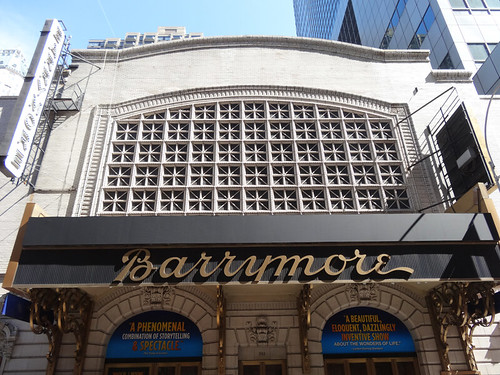
Barrymore’s extensive stage work in this period also included, in 1928, appearing in the role of Sister Gracia in The Kingdom of God. The play was selected by Ethel Barrymore herself as the premier production in the Schubert Theatre chain’s newly-built 1,058-seat venue at 243 W. 47th Street in New York City. The new Broadway venue was named the Ethel Barrymore Theatre. Since its opening on December 20, 1928, the Ethel Barrymore Theatre has, without exception, presented legitimate Broadway productions continuously from that time to the present day.

Ethel Barrymore died on June 18, 1959, two months shy of her 80th birthday, at her home in Hollywood. She is buried in the Main Mausoleum in Calvary Cemetery in East Los Angeles, California. (see – https://www.findagrave.com/memorial/59/Ethel-Barrymore – retrieved June 18, 2024). The middle sister of Lionel and John Barrymore, Ethel is great aunt of Drew Barrymore. A screen legend and New York and London stage celebrity for more than 60 years Ethel Barrymore is a First Lady of the American Theatre.

Ultimate Honor: Ethel Barrymore had a permanent 1,058-seat Broadway theatre named after her in 1928.

The Ethel Barrymore Theatre on West 47th street in New York City opened on December 20, 1928. It has been in continuous operation as a legitimate theatre since its first production, The Kingdom of God, a play Barrymore selected and starred in. Photo Credit: “Barrymore Theatre” by ensign_beedrill is licensed under CC BY-NC-ND 2.0.

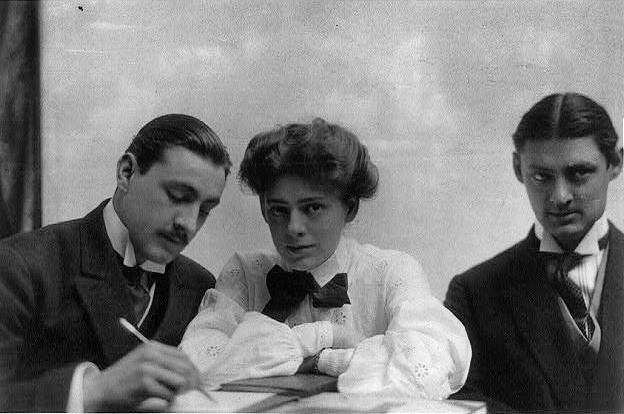
Three famous actors, Philadelphia-born, in 1904. They were the third generation of the Royal Family of the American stage. From left: John (1882–1942), Ethel (1879–1959), and Lionel (1878–1954) BARRYMORE, performed on stage, screen, and radio. Their grandparents, the Drews, managed the Arch St. Theatre in Philadelphia.

The Face of Angélique: Michèle Mercier’s Enduring Cinematic Legacy, 1964 to 1968.

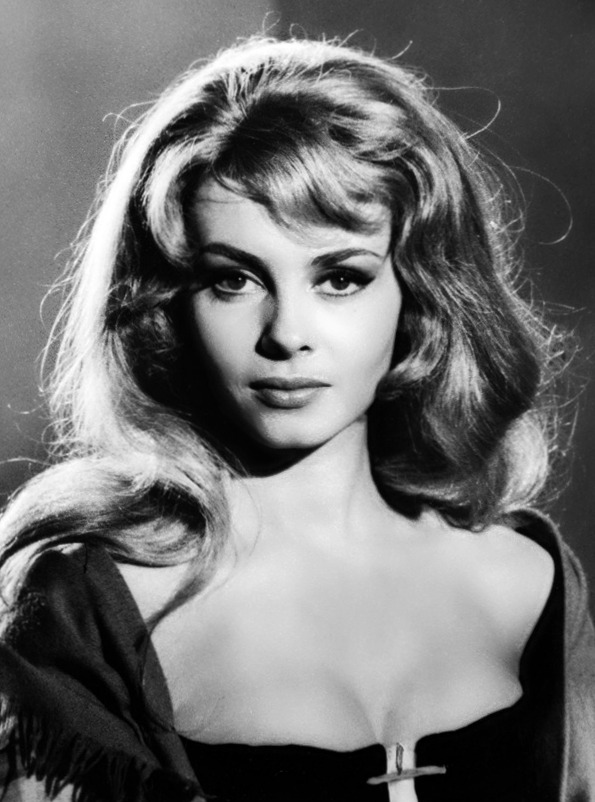
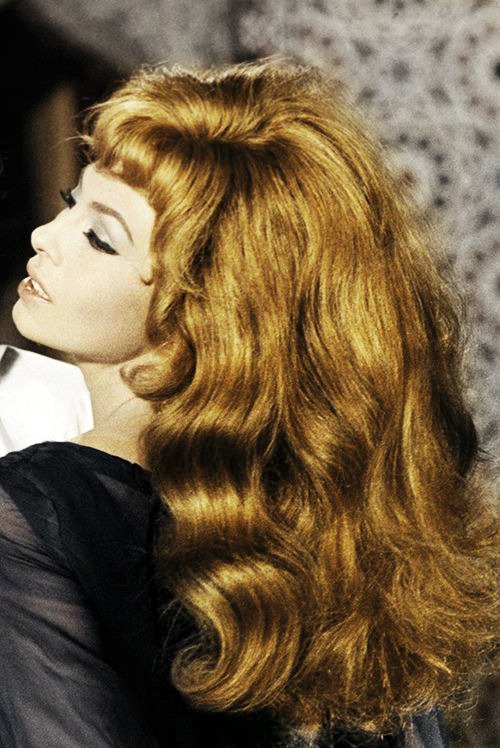
FEATURE image: Michèle Mercier c. 1965, showcasing her classic 1960s high-volume bouffant hairstyle, winged eyeliner, and mod fashion sense. This color portrait session was captured by famed French photographer Jean-Marie Mazeau. Mercier did not achieve massive international stardom until late 1964 with the release of the first Angélique film. This sudden rise to fame triggered a surge of high-end, color studio publicity shoots in 1965 to promote her as Europe’s next major screen icon. PHOTO: “Kippa – overige foto’s Reeks 1 – Michèle Mercier” is licensed under CC BY-NC-ND 4.0.
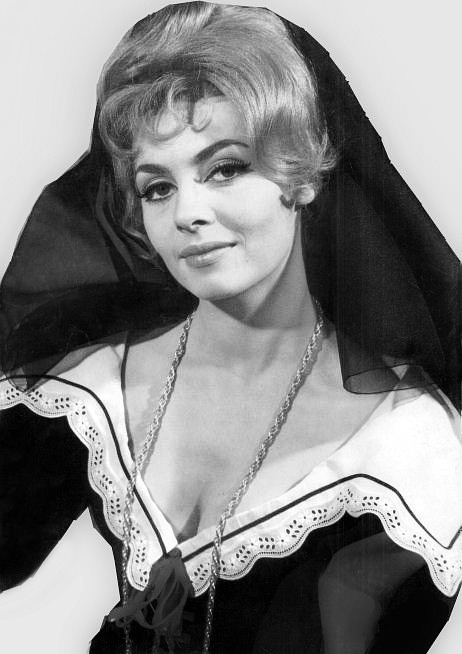
Michèle Mercier’s enduring place in film history rests overwhelmingly on her portrayal of Angélique, a role that transformed her into an international screen goddess while simultaneously defining and limiting her career. The five-film Angélique series (1964-1968) secured her cinematic immortality even as it typecast her beyond escape.

Michèle Mercier4

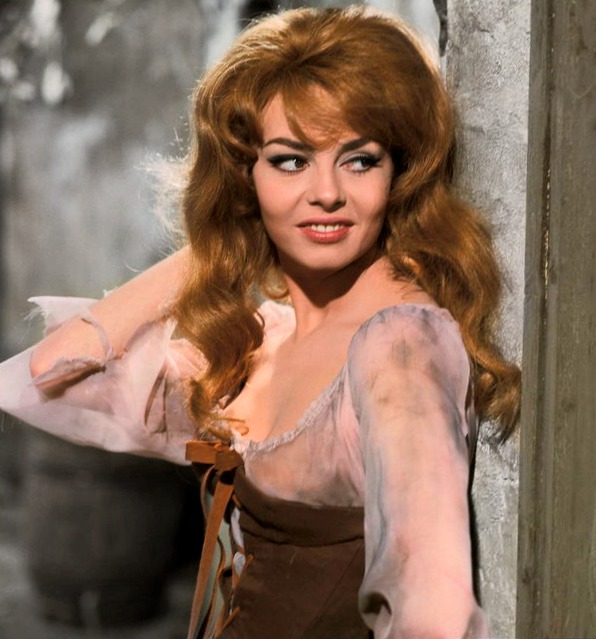
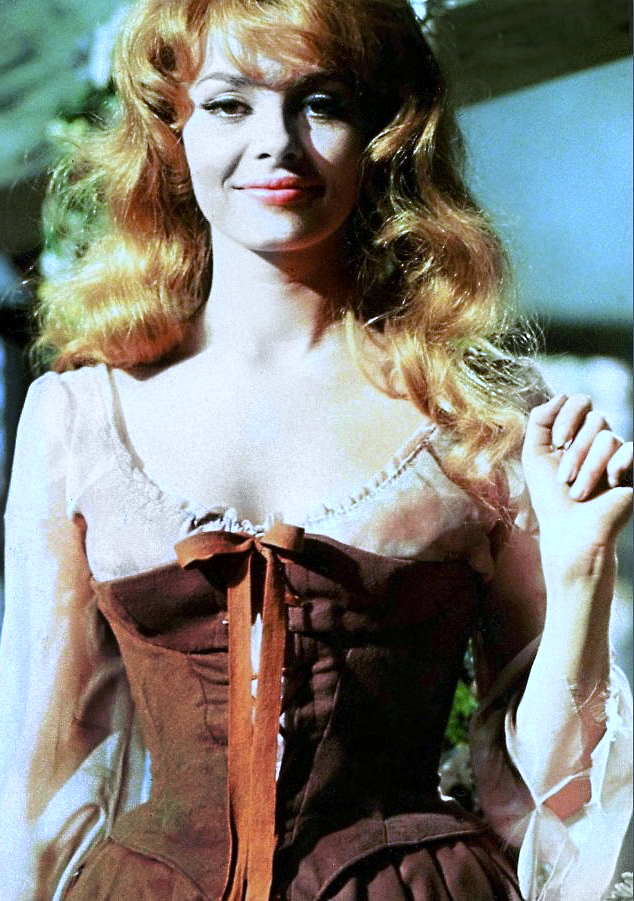
Promotional movie still and character portrait features French cinema icon Michèle Mercier, for her most famous role as Angélique. It was shot during the production on a film studio soundstage or a production set in France for the very first film in her breakthrough series, Angélique, Marquise des Anges (Angélique, Marquise of the Angels), which premiered in December 1964.

Michèle Mercier as Angélique is a French Italian beauty who has entered the pantheon of screen goddesses based largely on the legendary five-film role that stretched from 1964 to 1968.

From Novel Heroine to Screen Legend

Michèle Mercier, born New Year’s Day in 1939, is a French actress best known for playing the lead role of Angélique in the mid1960s film series of the same name based on the 1956 sensational novel Angélique, the Marquise of the Angels by husband and wife writing team of Anne and Serge Golon. Their mid-17th century character was based on a real-life Suzanne du Plessis-Bellière who was one of France’s most famous women from the time of Louis XIV, the Sun King. The historical Suzanne first appeared in a mid-nineteenth-century French novel by Alexandre Dumas, père, titled Le Vicomte de Bragelonne, ou Dix ans plus tard. Like the Angélique cycle, which had grown to six novels by 1961 and ultimately expanded to thirteen following the success of the 1964 film adaptation, Dumas’s novel was part of a larger series. The third installment in his d’Artagnan trilogy, Le Vicomte de Bragelonne was originally published in serialized form between 1847 and 1850.

The Search for the Perfect Angélique

For the part of Angélique, many other beautiful and more famous actresses were approached before Michèle Mercier who was little known in the French cinema at the time. Seasoned French film producer Francis Cosne (1916-1984) wanted sex symbol Brigitte Bardot to play the part, but she rejected the offer. Young Catherine Deneuve was considered perhaps too naive for the lusty role. American Jane Fonda spoke French but could an American play fully a quintessentially French role? Italian beauty Virna Lisi was too busy doing Hollywood films. Not being already famous eliminated statuesque Danish actress Annette Stroyberg from the running until ultimately Michèle Mercier was decided upon after almost losing the part to French actress Marina Vlady who at the last minute didn’t sign the contract.

Angélique

Michèle Mercier as Angélique. The photo was taken in 1964 during the production and filming of the first movie in the saga, Angélique, Marquise des Anges. Mercier is leaning against a stone wall in an outdoor or village set and wearing a peasant-style costume. While Angélique begins her journey as an elegant, wealthy noblewoman, the plot strips her of her status when her husband is falsely accused of sorcery. The tattered, dirt-streaked fabric of her sleeves directly mirrors her forced survival among Paris’s underbelly, the Cour des Miracles (Court of Miracles). The film adaptation heavily shifted away from the spiritual tone of the original novels to lean into the era’s emerging demand for a bold, free-spirited, and highly eroticized screen siren. Her low-cut corset, exposed shoulders, and undone hair visually represent her transformation into a fierce, independent femme fatale who leverages her beauty to navigate danger and protect herself.

Even when Angélique is running a local tavern in the story, she doesn’t look like a standard, gritty medieval merchant. The production team leaned heavily into a romanticized “starlet” aesthetic rather than strict historical realism.

This picture was taken in 1964 or early 1965 during the production and filming of the second installment in the franchise, titled Merveilleuse Angélique (Marvelous Angélique), which was released theatrically in 1965. The photo depicts Angélique during her transition phase from the underbelly of Paris back toward respectability. In this portion of the story, Angélique manages to escape the squalor of the Cour des Miracles (Court of Miracles) and partners with her childhood friend Claude le Petit. She uses her wits to invest in a popular inn and tavern called The Red Mask (Le Masque Rouge) and becomes a respectable independent businesswoman.

Michèle Mercier4

This photograph was taken in 1965 for the second film in the franchise, Merveilleuse Angélique (Marvelous Angélique). Within the plot of the film, this outfit represents her mourning the tragic death of her true love and first husband, Joffrey de Peyrac, who was executed at the stake in the climax of the first movie.

Not the Unknown Many Assumed

When the opportunity of Angélique presented itself to Michèle Mercier, she was a relative newcomer to the French cinema. But this anonymity was not the case for her either in French theatre arts or Italian films where before 1964 she had acted in over 20 of them.

Before Angélique: From Ballet Student to French New Wave Actress

With a father who was French and mother who was Italian,  Michèle Mercier from her early teens growing up in Nice, France, was determined to be a professional ballet dancer.

In 1957, at 17 years old, she moved to Paris which was a decision that changed her life. By 1960, when she was just 20 years old, she was acting in French New Wave film director François Truffaut’s second film, Shoot The Piano Player. 

The photo was taken in 1965 during the filming and production of the third installment in the movie franchise, titled Angélique et le Roy (Angélique and the King). The image depicts Angélique during her introduction and peak integration into the high-society royal court of King Louis XIV at the Palace of Versailles. The intricate lace gown, wide-swept neckline, and high updo heavily adorned with fresh white roses reflect a deliberate blend of historical 17th-century court style with mid-1960s beauty standards. By this point in the saga, Angélique has overcome poverty, successfully managed her own business ventures, and successfully married her cousin, Philippe de Plessis-Bellière. This marriage restores her full aristocratic status, giving her the power and position to navigate the court politics of Versailles, capture the romantic attention of the King himself, and continue fighting to clear her first husband’s name.

A Blessing and a Curse

After Angélique, the Marquise of the Angels was released —an unlikely heroine’s role where Angélique’s singular flaming red-haired beauty is acknowledged throughout—the role became a blessing and a curse for the budding actress Michèle Mercier. It catapulted her to instant stardom so that her fame rivaled sex symbol Brigitte Bardot in celebrity and popularity, but the role in five popular films typecast her and effectively ended her film career almost as soon as it started.

Five Films, One Immortal Character

Following the first Angélique film in 1964 Michèle Mercier starred in four sequels that includes Merveilleuse Angélique in 1965, Angélique et le Roy in 1966, Indomptable Angélique in 1967 and Angélique et le Sultan in 1968. All these films in the series were directed by French film director Bernard Borderie (1924-1978) and starred Michèle Mercier which bestowed upon the stories a consistent filmic world but also encased the beautiful star in a popular role that was virtually impossible to escape from.

Behind-the-scenes photograph was taken on August 12, 1965, during the filming of the series’ third installment, Angélique et le Roy (Angélique and the King) captured outdoors on the grounds of the Château de Versailles (the Palace of Versailles). Director Bernard Borderie secured permission to shoot directly on location at the famous palace and its sweeping gardens to give the movie authentic 17th-century French historical scope rather than relying strictly on indoor studio stages. This follows her survival in the slums of Paris (Angélique, Marquise des Anges) and her stint running a local tavern (Merveilleuse Angélique). In Angélique et le Roy, she has successfully married her aristocratic cousin, Philippe de Plessis-Bellière, fully restoring her status as a high-society noblewoman. This marks the exact moment she transitions from an outcast survivor into one of the most powerful, courted, and visually radiant figures in the Sun King’s inner circle.

Legendary French actor Jean Rochefort appears alongside Michèle Mercier in the first three films (1964-1966) of the five-part Angélique franchise. He plays the prominent role of François Desgrez, a sharp and clever lawyer who later becomes a powerful police chief. Rochefort does not return for the final two globe-trotting installments (Indomptable Angélique and Angélique et le Sultan), as the storyline permanently moves away from Paris and Versailles into the Mediterranean.

Directed by Bernard Borderie, the five films created a consistent cinematic world centered on Mercier’s charismatic performance.

Mercier1

Michèle Mercier was featured on the magazine covers because she was riding the absolute peak of her global fame from the massive, multi-film Angélique cinematic franchise. The multi-national movie series was coming to its grand finale, making her one of the most talked-about and highly demanded actresses in Europe. Her legacy today remains inseparable from the fictional seventeenth-century heroine she played.

This cover features Michèle Mercier alongside French dancer and choreographer Jacques Chazot on the French television and entertainment weekly magazine, Télé 7 Jours, published for April 20 to April 26, 1968. The cover coincided with the major theatrical push for the final chapters of the Angélique saga including Indomptable Angélique (Untamed Angélique) released just a few months prior in late 1967 and that had become an enormous box-office smash hit across Europe and the fifth and final movie installment, Angélique et le Sultan (Angélique and the Sultan) which had just premiered in theaters in March 1968. Because the series was actively concluding in theaters during these exact weeks, French entertainment media heavily focused on Mercier to celebrate her definitive transition from a rising star into an enduring screen goddess of 1960s cinema.

At the Height of Angélique Mania

When Michèle Mercier was featured on the cover of the April 20-26, 1968, French weekly magazine, Télé 7 Jours with Jacques Chazot, she was riding high in the latest installment in the Angélique film series, Indomptable Angélique which had been released in October 1967 and was a world-wide smash hit. In the film, Angélique discovers that her first husband is alive and travels to the South of France not realizing he is now an infamous pirate. Angélique is captured by slave traders and taken far away to Crete where they intend to sell her. In March 1968, Angélique et le Sultan was released which was the fifth and unintended final entry in the Angélique series based on the novels of Anne and Serge Golon.

The Unmade Sixth Adventure

A planned sixth film called Angelique the Rebel was announced but never made.

Forever Angélique

Following the fifth and final film of the Angélique series in 1968 the French Italian beauty went on to make six more films before her career ended in 1972. Although Michèle Mercier had always appeared in a variety of film genres—the actress played dozens of other women besides Angélique— it was for this 17th century fictional character in five memorable films in 1960s France that has affixed her into the pantheon of screen goddesses for which she receives enduring adoration today.

The role of Angélique elevated Mercier to star status comparable to Bardot in popularity during the mid-1960s. The success of the series became a double-edged sword, as typecasting restricted opportunities beyond it.

The year 1970 marked a pivotal transition for Michèle Mercier. Seeking to escape the role that had made her an international star, she embraced modern, experimental, and contemporary European films. Dressed here in the era’s trendy mod safari style, with a belted cream tunic shirt, matching short-shorts, and knee-high leather boots, Mercier looked every inch the woman of a new decade. Yet severe typecasting followed her career. Attempts to establish herself in the United States brought only limited success, and despite playing many other roles, she would remain forever Angélique, the character who made her a star and secured her place among cinema’s enduring screen goddesses. PHOTO: “hotpants-1970-michele-mercier” by Gerard Van der Leun is marked with CC BY-NC-ND 2.0.

MICHÈLE MERCIER “ANGÉLIQUE” SERIES FILMOGRAPHY

1964:
Angélique, Marquise des Anges 
Michèle Mercier as Angélique
Directed by Bernard Borderie
Released December 8, 1964
Distributed by S.N. Prodi; Gloria Film; Butcher’s Film Distributors

1965:
Marvelous Angelique  (Merveilleuse Angélique)
Michèle Mercier as Angélique
Directed by Bernard Borderie
Released July 7, 1965
Distributed by S.N. Prodi; Gloria Film

1966:
Angelique and the King (Angélique et le Roy)
Michèle Mercier as Angélique
Directed by Bernard Borderie
Released February 4, 1966
Distributed by Gloria Film

1967:
Untamable Angelique (Indomptable Angélique)
Michèle Mercier as Angélique
Directed by Bernard Borderie
Released October 27, 1967
Distributed by S.N. Prodi; Gloria Film

1968:
Angelique and the Sultan (Angélique et le Sultan)
Michèle Mercier as Angélique
Directed by Bernard Borderie
Released March 13, 1968
Distributed by S.N. Prodi; Gloria Film

Michèle Mercier in Cabourg, France, June 1988. PHOTO: “File:Michelemercier02b.jpg” by Roland Godefroy is licensed under CC BY-SA 3.0.

The Teacher Who Shaped a Town: Jennifer Jones and the Enduring Power of Good Morning, Miss Dove! (1955) from 20th Century-Fox.

FEATURE image: Jennifer Jones in Good Morning, Miss Dove! (1955). The 36-year-old actress plays an elderly teacher taken ill at school who, in flashbacks reviewing her life, as a young woman had been about to marry the man she loved when her father died unexpectedly and was secretly heavily in debt. Miss Dove decides not to marry but to repay the debt by becoming the town’s spinster teacher.

Good Morning, Miss Dove endures because it presents the teacher as a moral center of community life, portraying personal sacrifice, discipline, and lifelong influence as virtues worth celebrating, while simultaneously reflecting mid-century America’s nostalgia for stable educational values during a period of social change.

movie poster

This is the original American theatrical poster for the 1955 release of Good Morning, Miss Dove! While the British campaign poster (below) relied on abstract whimsy, the domestic poster takes a more emotionally driven marketing approach to convey romanticized nostalgia, community gratitude and pride, and the title character’s deeply felt generational legacy. The film stars Jennifer Jones, Robert Stack, Kipp Hamilton, Robert Douglas, Peggy Knudsen, Marshall Thompson, Chuck Connors, and Mary Wickes. The movie was released by 20th Century-Fox the day before Thanksgiving in 1955.

The film opened to good reviews and was popular at the box office. A New York Times review observed: “Since it is unashamedly sentimental without being excessively maudlin about its heroine, ‘Good Morning, Miss Dove’ deserves credit for being honest and entertaining.”

Jennifer Jones

This gorgeous portrait captures Jennifer Jones during a pivotal creative shift in her career, specifically serving as a promotional costume test or publicity still for the 20th Century Fox drama Good Morning, Miss Dove (1955). The wardrobe seen here was orchestrated by Academy Award-nominated costume designer Mary Wills whose look relies on distinct mid-century cinematic signals to convey morality and time period. The dark navy or black dress accented by a sharp, oversized white collar is a deliberate visual nod to a schoolteacher’s uniform—signaling propriety, rectitude, and strict boundaries. The double-strand pearl necklace, white gloves, and classic straw hat firmly ground her in a bygone era of immaculate gentility. Styled with a traditional 1950s bright red lip and perfectly pinned dark curls, the look emphasizes her youth. This directly contrasts with the aging makeup and prosthetics used later in the film to transform her into the elderly version of the character.

The film balances sentimentality with thoughtful observations about duty, character, service, and education.

By John P. Walsh

Good Morning, Miss Dove! is Frances Gray Patton’s contemporary tale of a middle-aged spinster elementary school geography teacher in Liberty Hill who, when suddenly taken ill, sees the entire small town rally to her side.

It is a mythical period piece from the mid-1950’s. It depicts an unchanging town whose students obey their beloved teacher. Though directed by Henry Koster in a stagey way, the film boasts progressive casting. One year after the milestone 1954 Supreme Court decision in Brown v. Topeka Board of Education establishing racial segregation in public schools as unconstitutional, Good Morning, Miss Dove! presents a newly-integrated public school classroom in Cinemascope and De Luxe color.

Film-going audiences in 1955 loved the film.

good-morning-miss-dove-movie-poster-1955-1020210172

Original British theatrical poster for the 1955 20th Century Fox cinematic drama Good Morning, Miss Dove! starring Jennifer Jones and Robert Stack. Its core tagline: “A picture of Everybody for Everybody!” conveys universal appeal and wholesome, cross-generational family entertainment. The giant, warm illustration of Jennifer Jones looking upward with a glowing smile capitalizes on her existing star power as a traditional Hollywood romantic leading lady framing the movie as an uplifting, heartwarming emotional journey rather than grim drama. The prominent placement of the CinemaScope logo and the note “in Eastman Colour” were meant to convey the film’s modern technical prestige and cinematic scale.

Awaiting a risky operation, Miss Dove (Jennifer Jones) thinks back on her life and those of her prized grown-up former students. They included Robert Stack (a surgeon), Chuck Connors (a policeman), and Jerry Paris (a playwright). All of these students overcame difficult childhoods and found worldly achievement with the help of Miss Dove.

Based on popular Book of the Month Club novel.

Patton’s novel had enjoyed success in 1954 as a Book of the Month Club and Reader’s Digest selection. Its release as a major motion picture by 20th Century-Fox continued the novel heroine’s popularity.

Release of the film during the Thanksgiving weekend 1955 was in the same year that Jennifer Jones starred in another Deluxe color film, the American drama-romance Love is a Many-Splendored Thing.

For the Academy-Award winning actress to play an elderly spinster (many early scenes feature the naturally dark-haired Miss Jones without her older character’s make-up), she moves beyond type. In the mid-1950’s as America settled into the Eisenhower years, Good Morning, Miss Dove! showed a lead film character -– the “terrible” Miss Dove played by Jennifer Jones — as an unflinching and beloved disciplinarian. Yet in the 1950’s the American public education system was undergoing copious and difficult change. In that way, the character of Miss Dove is further complicated by becoming a popular icon in the American culture by being mostly a nostalgic figure.

Released in the exact same year as her massive romantic hit Love Is a Many-Splendored Thing, Good Morning, Miss Dove was a unique departure for Jones. Known primarily for playing passionate, emotionally turbulent leading ladies, this film marked her only true character-actor role.

Jennifer Jones in make up for Good Morning Miss Dove

In 1955 Jennifer Jones was a 36-year-old beauty. Through the magic of Hollywood make-up (Ben Nye) and hair styling (Helen Turpin), she was transformed into the elderly Miss Dove for Good Morning, Miss Dove! In 1954 after Grace Kelly wore make-up for The Country Girl that hid her good looks and went against her youthful image (Kelly was 24 years old), she won the Academy Award for Best Actress for that year.

While the film itself leans into nostalgic melodrama, Jones’ performance was highly praised for balancing a severe, uncompromising facade with deep, underlying warmth. That balance was evident in the strict, modest dress she wore of a smalltown schoolteacher juxtaposed to a genuine, radiating smile.

Good Morning Miss Dove

Jennifer Jones as the elderly teacher in Good Morning, Miss Dove! set in the fictional Midwest town of Liberty Hill. Before filming began in July 1955, director Henry Koster wanted Olivia deHavilland for the role and have it set in England. Though set in contemporary America, critics saw Miss Dove as a character out of Charles Dickens.

The audience meets the elder Miss Dove at the movie’s start—make-up and hair-styling artists Ben Nye and Helen Turpin transformed the 35-year-old Jennifer Jones into the 55-year-old Miss Dove—and by flashbacks.

The film dramatizes her youth as she is about to marry. But she receives the unexpected news that her father has died suddenly and that he has debts. To pay them back, she steels herself to remain single and take a teaching post. Her chilly veneer is part of her honor to do the proper thing along with the sober accommodation to life’s necessary sacrifices.

dove1

Miss Dove (Jennifer Jones) in a costume by Mary Wills. In the 1950’s Mary Wills was nominated for an Academy Award four times.

Good Morning Miss Dove

Young Miss Dove played by Jennifer Jones gives up marriage to the man she loves for a future as a spinster teacher so to pay back her late father’s debts. The story is based on a book by Frances Gray Patton that was itself based on her short stories. When 20th-Century Fox bought the rights for $52,000, it was the equivalent of about half a million dollars today.

Good Morning Miss Dove!

A flashback scene from Good Morning, Miss Dove! Jennifer Jones as young Miss Dove with her father, Alonso Dove (Leslie Bradley). When he dies unexpectedly and in debt, Miss Dove resolves to pay it back and upends her own life’s plans to do so. Costumes by Mary Wills.

While those who did not know Miss Dove behind her back mock her and say she couldn’t have had much of a life—never married, no family, no kids, never traveled anywhere—her army of students think about her and judge her radically differently.

Good Morning Miss Dove

In Good Morning, Miss Dove! Jennifer Jones is a beautiful young woman who rejects a marriage proposal to become the town’s grade school teacher to repay her late father’s debts. Costumes by Academy Award nominated costume designer Mary Wills.

Beyond any possibly wider cultural meaning, the film presents a unique person who by the logic of her experience and the experience of her logic enters into a series of social interactions that are amusing and honest. These include the film’s penultimate scene. Miss Dove is on her sick bed when she tells her pastor, Reverend Burnham (Biff Elliot): “Life, whatever others may think, has been for me…I have been happy. I have made many mistakes. Perhaps even sinned. I admit my human limitations, but I do not in all honesty find the burden of my sins intolerable. Nor have I strayed like a sheep. I have never been AWOL. I have never spoken hypocrisy to my Maker and now is scarcely a propitious moment to begin.”

Good Morning Miss Dove

On the day of Miss Dove’s surgery, classes are dismissed and the townspeople of Liberty Hill wait outside the hospital for news of the operation’s success. The film provides a sentimental picture of mid-20th century America of Norman Rockwell proportions. Yet the film’s crisp dialogue and sharp character development engages the moviegoer. By the end of the film the outcome of Miss Dove’s surgery is as important to the audience as it is the denizens of the fictional town of Liberty Hill.

While these thoughts may be judged from different perspectives, they are expressive of a woman’s life completely dedicated to her profession and students at Cedar Grove Elementary School. The film’s denouement is powerful. Accompanied by Leigh Harline’s memorable soundtrack, it is a sentimental tribute to Miss Dove’s life which benefited many different people because of nothing other than her good character.

Good morning Miss Dove

Jincey Baker (Kipp Hamilton), Miss Dove (Jennifer Jones), and Dr. Tom Baker (Robert Stack). Promotion for the film included advertising that encouraged moviegoers to see it for its portrayal of the state of education in the country. Costumes by Mary Wills.

Good Morning Miss Dove.

A 1955 drama that is both contemporary and nostalgic. Mary Wickes plays Miss Ellwood (second from left). Costumes by Mary Wills.

Good Morning Miss Dove!

Jennifer Jones as a small-town spinster teacher who falls ill in the film Good Morning, Miss Dove! Her stern and upright demeanor masks her personal sacrifices and devotion to her students. That world is thrown into chaos when Miss Dove experiences an acute pain and grows numb in her leg. While she is in her hospital bed awaiting risky surgery, she relates her life in flashbacks.

Later, in the 1970’s, when actress Peggy Knudsen was suffering from a debilitating illness (she died in 1980 at 57 years old), in real life she wa cared for by her close friend, Jennifer Jones.

Peggy Knudsen and Jennifer Jones

In the hospital Miss Dove is cared for by Nurse Billie Jean Green (Peggy Knudsen). Billie Jean is one of Miss Dove’s former student who left Liberty Hill and had a child out of wedlock. Back in Liberty Hill, Billie Jean is infatuated with the local policeman, Bill Holloway (Chuck Connors). Bill is another of Miss Dove’s former students and was one of her best pupils.

FIXED Untitled1

Miss Dove with former student and Liberty Hill policeman Bill Holloway (Chuck Connors). Miss Dove tells nurse Billie Jean Green how Bill first arrived to her classroom: a poor, unkempt boy being raised by an alcoholic grandmother. Miss Dove gave Bill odd jobs and bought him a suit for his grammar school graduation. After Bill entered the Marines, he wrote to Miss Dove often, and when he returned to Liberty Hill, she was the first person he came over to see for career advice.

Miss Dove emerges as a cultural symbol whose influence extends far beyond the classroom through the lives of her former students.

THE MOVIE:

In the film, Jennifer Jones portrays the titular character, Miss Dove, an intensely disciplined, upright geography teacher navigating life in a small Midwestern town. The narrative details how she began life as a vibrant, promising young woman with a loving fiancé. However, when her father unexpectedly passed away leaving behind massive bank debts, she made the agonizing decision to reject her marriage proposal. She chose a life of strict spinsterhood to systematically pay back every dime, transforming herself into the town’s famously stoic and beloved educator.

Mary Wills: Oscar-winning costume designer

The costume designer for Good Morning, Miss Dove! (1955) is Mary Wills (1914-1997). She worked mainly for Samuel Goldwyn productions and Twentieth Century-Fox, breaking into the movie business as a sketch artist for Gone With The Wind (1939). In her nearly 40-year career Mary Wills was nominated for an Oscar seven times and won the Academy Award in 1962 for her colorful designs for The Wonderful World of the Brothers Grimm. 

First woman admitted to Yale Art and Drama program. “The Fabulous Miss Wills.”

Born in Prescott, Arizona, Wills moved to Los Angeles after receiving her Master’s degree from the Yale Art and Drama School. She was the first woman admitted into that program.

Wills started designing costumes in 1944 at RKO with Belle of the Yukon and soon after designed costumes for Disney’s Song of the South (1946). She started working for Samuel Goldwyn in 1948 where she designed costumes for Enchantment. For the next six years at Goldwyn Studio the costume designer was referred to as “The Fabulous Miss Wills.”

She was regularly nominated for her costume design in the 1950’s when she designed the costumes for Good Morning, Miss Dove! including Hans Christian Anderson (1952), The Virgin Queen (1954), Teenage Rebel (1956), A Certain Smile (1958), The Diary of Anne Frank (1959), The Passover Plot (1976) and the film for which she won the Academy Award in 1962. Mary Wills also designed the Rogers and Hammerstein musical film Carousel in 1956.

Mary Wills at Samuel Goldwyn Studio

Academy-Award winning costume designer Mary Wills at the Samuel Goldwyn Studio (c. 1948). The Oscar-winning costume designer worked mainly for Samuel Goldwyn Productions and Twentieth Century-Fox.

Ice Follies. Camelot and Funny Girl.

Mary Wills demonstrated a special talent for designing historical costumes, especially after she moved to 20th-Century Fox in 1954 to make The Virgin Queen starring Bette Davis. Later she showed great aptitude for designing dance and folk costumes. A collection of her original sketches are online at the Los Angeles County Museum for live productions including the Shipstad & Johnson Ice Follies, now known as the Ice Follies. Mary Wills worked on two major films that she did not get film credit for — namely, Camelot (1967) and Funny Girl (1968). For Funny Girl, she designed the Ziegfeld show-girl brides costumes as well as the costumes for Omar Sharif.

The artistry and craftmanship of costume designer Mary Wills and makeup artist Ben Nye contributed behind the scenes to Jennifer Jones’s transformation as Miss Dove.

SOURCES:

Barrett, Michael. “The Sentimental Pedagogy of Good Morning, Miss Dove.” PopMatters, June 5, 2014. http://www.popmatters.com/review/182178-good-morning-miss-dove/.

Green, Paul. The Life and Films of Jennifer Jones. Jefferson, NC: McFarland & Co., 2011.

“Good Morning, Miss Dove.” The Makeup Gallery. Accessed September 26, 2015. http://www.themakeupgallery.info/age/1950s/dove.htm.

“Good Morning, Miss Dove Overview.” The New York Times. Accessed September 26, 2015. http://www.nytimes.com/movies/movie/93588/Good-Morning-Miss-Dove/overview.

Leach, William. “John Dewey vs. The Terrible Miss Dove: Frances Gray Patton’s Postwar Schoolmarm and the Cultural Work of Nostalgia.” Academia.edu. Accessed September 26, 2015. https://www.academia.edu/1848534/_John_Dewey_vs._The_Terrible_Miss_Dove_Frances_Gray_Pattons_Postwar_Schoolmarm_and_the_Cultural_Work_of_Nostalgia.


*The photograph copyright may be believed to belong to the distributor of the film, 20th Century Fox, the publisher of the film or the graphic artist. The copy is of sufficient resolution for commentary and identification but lower resolution than the original photograph. Copies made from it will be of inferior quality, unsuitable as counterfeit artwork, pirate versions or for uses that would compete with the commercial purpose of the original artwork. The image is used for identification in the context of critical commentary of the work, product or service for which it serves as poster art. It makes a significant contribution to the user’s understanding of the article, which could not practically be conveyed by words alone. As this is a publicity photo (star headshot) taken to promote an actress, these have traditionally not been copyrighted. Since they are disseminated to the public, they are generally considered public domain, and therefore clearance by the studio that produced them is not necessary. (See- Eve Light Honthaner, film production expert, in The Complete Film Production Handbook, Focal Press, 2001 p. 211.) Gerald Mast, further, film industry author, in Film Study and the Copyright Law (1989) p. 87, writes: “According to the old copyright act, such production stills were not automatically copyrighted as part of the film and required separate copyrights as photographic stills. The new copyright act similarly excludes the production still from automatic copyright but gives the film’s copyright owner a five-year period in which to copyright the stills. Most studios have never bothered to copyright these stills because they were happy to see them pass into the public domain, to be used by as many people in as many publications as possible.” Kristin Thompson, committee chairperson of the Society for Cinema and Media Studies writes in the conclusion of a 1993 conference with cinema scholars and editors, that they “expressed the opinion that it is not necessary for authors to request permission to reproduce frame enlargements … [and] some trade presses that publish educational and scholarly film books also take the position that permission is not necessary for reproducing frame enlargements and publicity photographs.”(“Fair Usage Publication of Film Stills,” Kristin Thompson, Society for Cinema and Media Studies.)