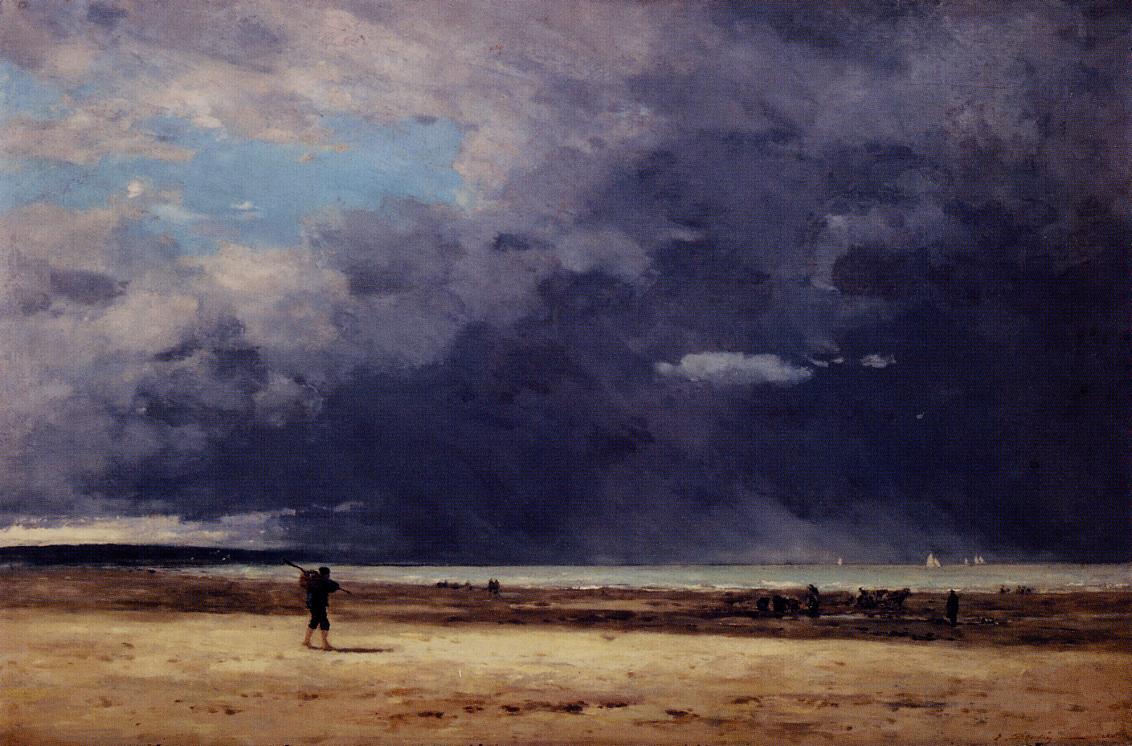
FEATURE image: Eugène Boudin, The Beach at Villerville, 1864, Oil on canvas, 18 × 30 1/16 in. (45.7 × 76.4 cm), National Gallery of Art, Washington, D.C.
Eugène Boudin was far more than a painter of Normandy beaches. He was a pioneering observer of light, atmosphere, sky, and modern life whose artistic innovations helped lay the groundwork for Impressionism, even though he remained independent of the movement and received full recognition only late in life.
Return to Normandy: Boudin’s Final Coastal Masterpieces
In 1893, in the last years of his long and successful art career, 69-year-old Eugène Boudin returned to the Normandy coast for which this French painter of skies and beaches is rightly associated. It was at this time that he painted Sunset on the Beach (below) in a private collection. After Boudin began to be widely collected in the 1870’s and 1880’s he traveled and lived and worked far away from the region where he was born and grew up and had embarked on a career as an artist. Yet, as soon as the mid-to-late 1850’s, important artists and writers were already appreciating the sensitivity to which Boudin painted artwork in nature. Charles Baudelaire (1821-1867) believed he could identify with precision the season and hour of Boudin’s subject matter. Realist painter Gustave Courbet (1819-1877) who once said “show me an angel and I will paint him” called Boudin a “seraph.” Remarkably, Barbizon painter Camille Corot (1796-1875) exclaimed: “Boudin, you are king of the skies!”

Painter of Sky, Sea, and Modern Life
Throughout the mid-to-late nineteenth century, Boudin’s subject matter was timeless land, sea and skyscapes which he sometimes populated with contemporary human figures in modern bourgeois costume and dress. Often, the landscapes are devoid of human presence excepting the artist’s gaze.



Boudin and the Impressionists
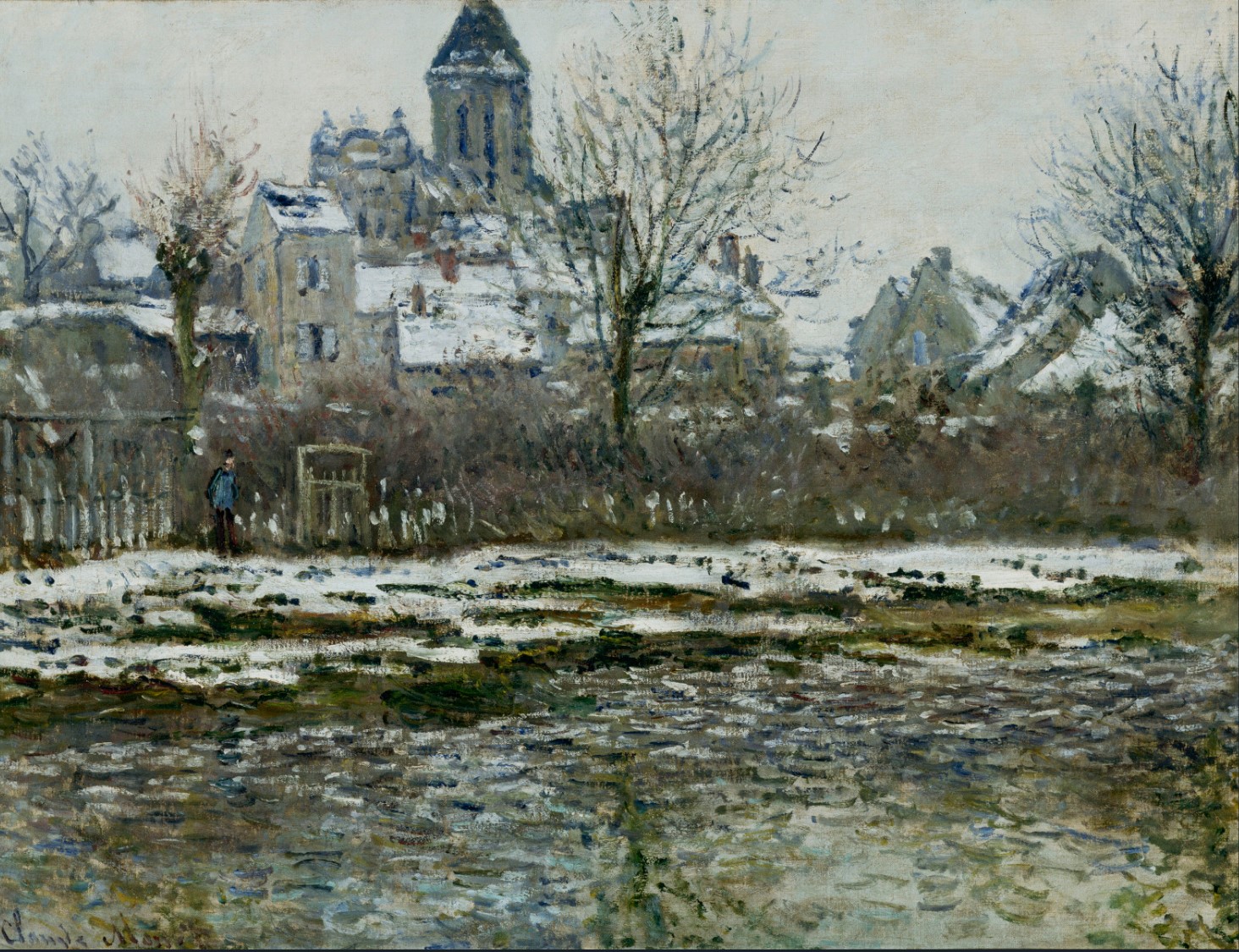
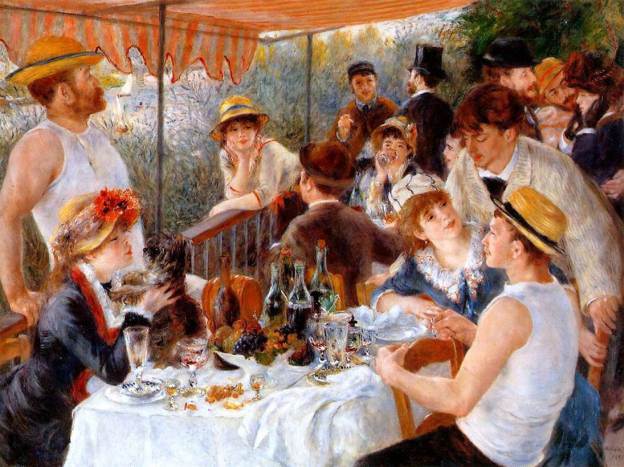
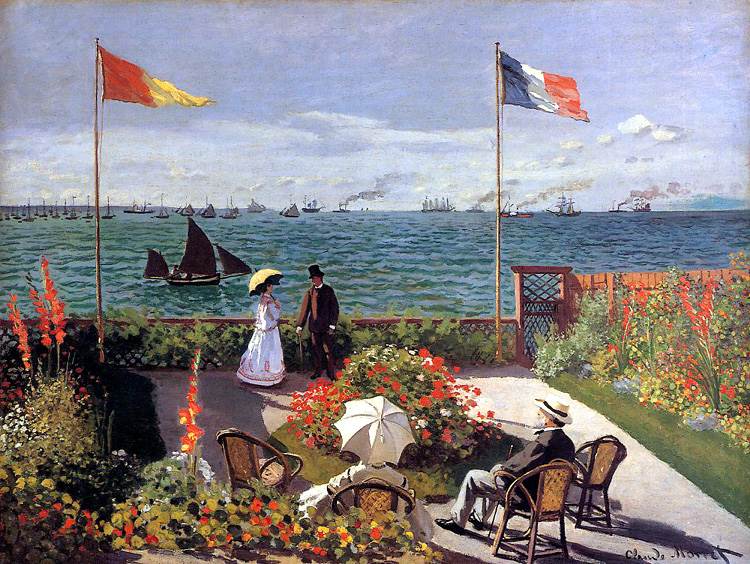
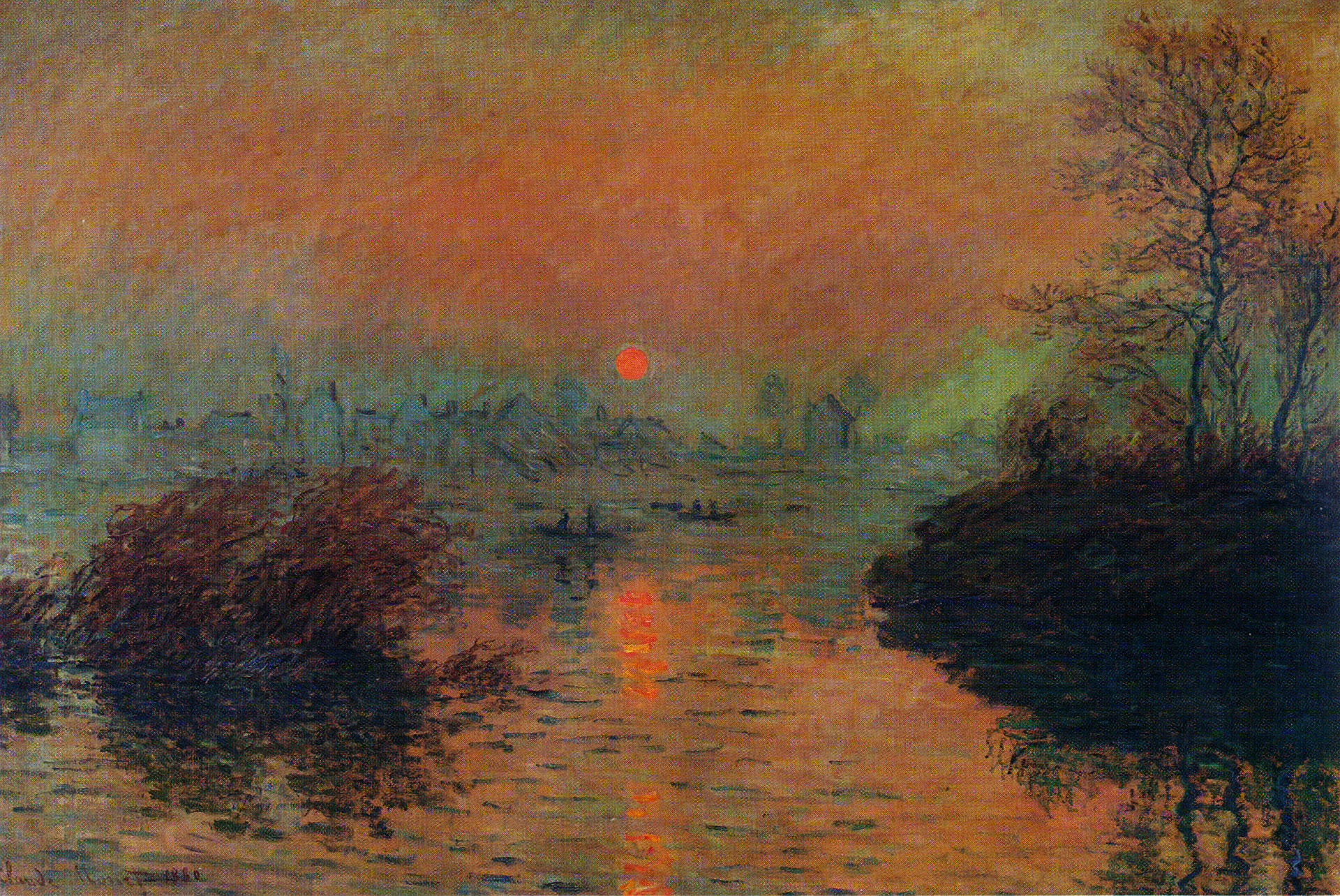
Boudin was a friend of the Impressionists and exhibited in their first exhibition in Paris in 1874. Claude Monet (1840-1926), born in Paris, also grew up in Normandy. Boudin and Monet painted together en plein aire as each sought, discovered, and honed their artistic styles.
Boudin did not think of himself primarily as an avant-garde artist and did not exhibit in the Impressionist exhibitions after 1874. Yet, with these Impressionists, Boudin’s artwork depicted light and its reflections, especially its darker filaments, in preference to volumes and forms.

Expanding Subjects and Artistic Development
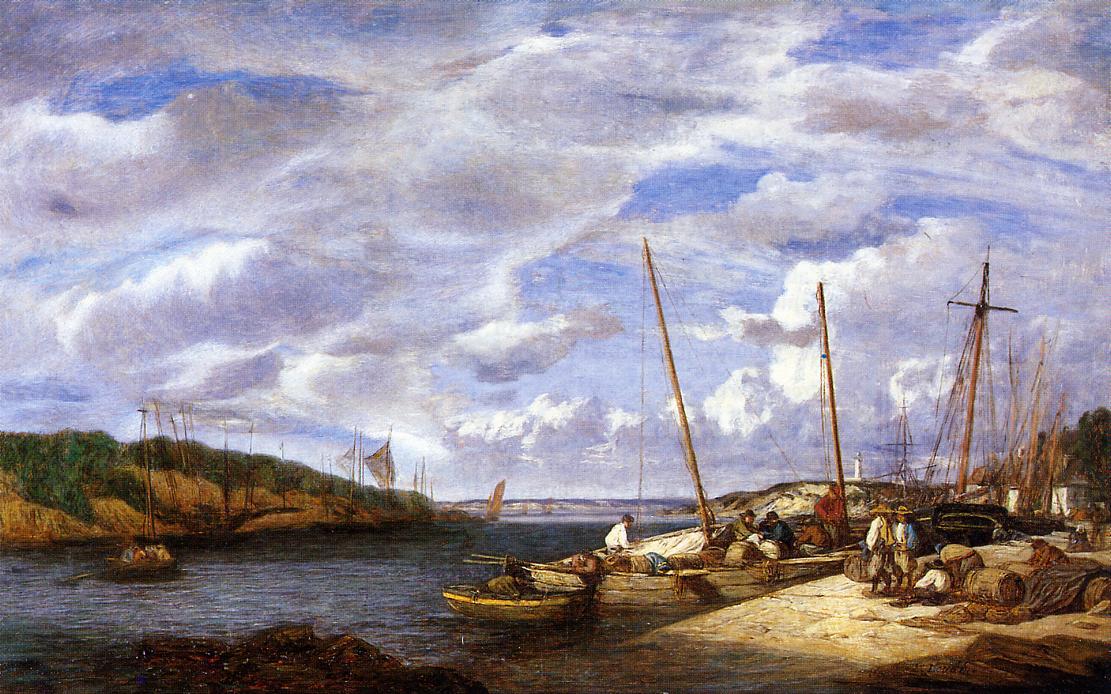
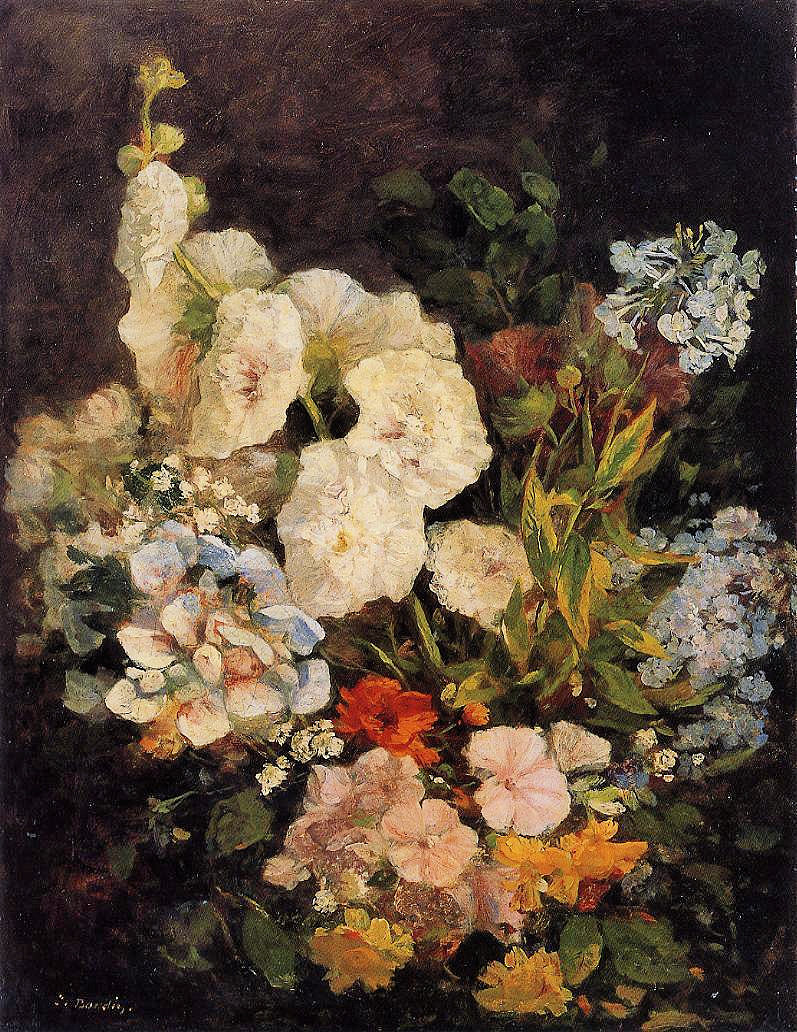
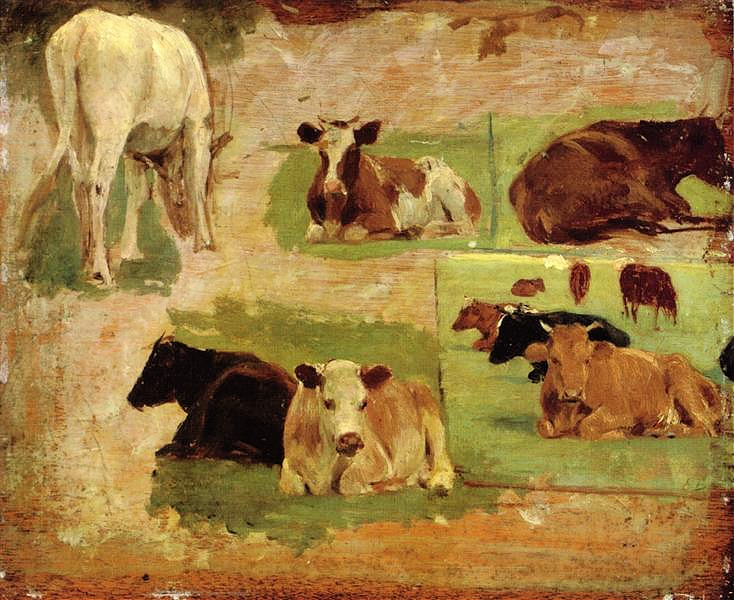
In addition to beach scenes, skies, sea, and countryside, Boudin painted still life, animals, and a few portraits. In the 1870s Boudin painted harbors and ships. In his subject matter his pictures presented a complete and even-handed depiction, evocative of eighteenth-century genre paintings.
Slightly older Dutch painter Johan Jongkind (1819-1891) had encouraged Boudin to paint outdoors. Boudin, now surrounded by nature, became increasingly spontaneous in his artwork and used brighter colors.1


Debut at the Paris Salon
In 1859, 35-year-old Eugène Boudin, the painter of seascapes and beaches, made his debut at the Salon. The annual Salon began in the late 17th century (1667). It was sponsored by the monarchy and highlighted artwork of members of the Academie royale de peinture et de sculpture. The all-important Salon operated in this basic form for almost 200 years. It was held irregularly at first (frequently there would be no exhibition held for years) though between 1774 to 1792 the Salon was held biennially.
The Salon’s Importance in the Art World
This elite Salon was a competitive platform for artists to display their work where the goal was to gain public and private commissions. The Salon was the sole venue in France for contemporary fine art and was popular to visit by a cross-section of society where many purchased the livret, the Salon’s official catalogue. In 1795 during the French Revolution the historically royal venue was opened to all artists. This more inclusive Salon experience led to the extension of official French art’s influence throughout Europe. In the Salon of 1800, American artists exhibited for the first time.2
Recognition Comes Slowly
Between 1864 and 1879 Boudin exhibited in the Salon every year.3 However, important critics, such as the influential Albert Wolff (1835-1891), ignored Boudin for much of this time. It was in 1881, 22 years after Boudin’s Salon debut, that M. Wolff published an article in Le Figaro that led to Boudin’s greater official recognition.4
In the last decades of the 19th century, Boudin exhibited yearly from 1880 to 1889 at the Salon des Société des Artistes Français5 and, with a single exception, from 1890 to 1897 at the Société National des Beaux-Arts.6 Some of Boudin’s works were bought by the State in the late 1880’s and early 1890’s.7 Ernest Chesneau (1833-1890) had written on Boudin in Paris-Journal that while the painter was ignored by official art world critics he was a “real talent” among the Salon’s “latest banalities.”
The Rise of Independent Exhibitions
In 1881 control of the Salon was ceded to the Société des Artistes Français. In the 1880’s and 1890’s there were several groups outside the Salon who mounted exhibitions. These included the one-time Salon des Refusés in 1863, the Société des Artistes Indépendants or Salon des Indépendants, beginning in summer 1884, and the salons of the Société nationale des beaux-arts, from 1890. These types of independent, unofficial exhibitions, continued into the 20th century with the Salon d’automne in 1903.8

Praise from Courbet, Corot, and Baudelaire
In 1859 Boudin met Gustave Courbet who introduced Boudin to the poet and art critic Charles Baudelaire. Courbet, painting at Boudin’s side, exclaimed: “Mon Dieu, you are a seraph, Boudin! You are the only one of us who really knows the sky!” In 1861 Boudin met Camille Corot who called Boudin the “king of the skies.”
Charles Baudelaire noted in 1859 that he had seen in Boudin’s studio “hundreds of pastel studies improvised before the sea and the sky.” Baudelaire described these artworks as “the prodigious magic of air and water.”9 The economy of Boudin’s artwork with its summary figures of modern life attracted Baudelaire’s praise during the 1859 Salon. Baudelaire became convinced, when looking at a Boudin painting, that he could identify the season, hour and wind direction of the subject matter depicted in pastel or paint.10

Growing Reputation and Market Success
At the Impressionist Exhibition of 1874, the critic Castagnary (1830-1888), author of “The Triumph of Naturalism” in 1868, wrote on Boudin in Le Siècle. He cited “the very high prices” that Boudin was experiencing as collectors “fought over” his beach scenes and seascapes. Castagnary concluded in 1874 that the 50-year-old Boudin had “commanded respect for years.”11 In 1868 Boudin’s auction of 40 paintings and 100 watercolors and pastels at the Hôtel Drouot had been quite successful. That same year Boudin won a silver medal at the Exposition maritime international exhibiting with Courbet, Charles-François Daubigny (1817-1878), Monet and Édouard Manet (1832-1883).
In 1874, Marc de Montifaud (Marie Amélie Chartroule, 1850-c.1912), art critic for L’Artiste and soon to found L’Art modern magazine in 1875 (and which merged with Les Beaux-Arts in 1877) cited the titles of a few paintings by Boudin out of the 13 works he exhibited which included watercolors and pastels. Yet De Montifaud’s placement of Boudin’s work under the category of “marine paintings,” did little to elucidate exact canvasses when the time came later to identify such.12
Travel, Patronage, and Durand-Ruel
In the 1860’s Paris dealers such as Martin, Hagerman and Gauchez were regularly buying his work. Boudin’s growing reputation and financial security enabled him to travel extensively in the 1870s and 1880s. Boudin, who married Marie-Ane Guédès in 1863, painted in Belgium, the Netherlands and southern France in that period. From 1892 to 1895 he regularly visited Italy, traveling to Venice. In addition to being awarded medals at the Salon, the Exposition Universelle in 1889, and other exhibitions, Boudin, in 1881, became represented by Paul Durand-Ruel (1831-1922).

Solo Exhibitions and International Success
In the late 1870s Boudin, then without dealer representation, held several auctions of his artwork which produced varying sales results. In 1881, Durand-Ruel bought all of Boudin’s studio inventory. In 1883 Boudin had a solo exhibition at Durand-Ruel’s that featured 150 paintings, and pastels and watercolors and in 1886 an exhibition of 23 works at Durand-Ruel’s in New York City. From July 8 to August 14, 1889 – the year Boudin’s wife died – the artist staged a one-man exhibition in Paris at Durand-Ruel’s featuring 98 pictures.13 In 1890 Boudin held an exhibition at Durand Ruel’s in Boston featuring 13 paintings and a solo exhibition in Paris at Durand-Ruel’s with 34 paintings, and as many pastels and several drawings in 1891.

Boudin’s reputation grew steadily from overlooked Salon painter to respected master, championed by figures such as Baudelaire, Courbet, Corot, Monet, Durand-Ruel, and later generations of critics.
Final Years and Return to Normandy
As a refuge for his ill-health, Boudin lived in the south of France for many years but finally returned to Deauville. In 1898 Boudin died at 74 years old under the skies of La Manche which he had been inspired to paint often.
Honors and Legacy
In 1892 Eugène Boudin was made a knight of the Légion d’honneur which recognized the artist’s talent and influence on the art of his contemporaries. Today, the Société Nationale des Beaux-Arts gives the Eugène Boudin Prize.
After Boudin’s death, his artistic reputation continued to grow. In 1899, The École des Beaux Arts held a major retrospective with 457 works (including 364 paintings, 73 pastels, and 20 watercolors). Boudin was praised by art critics Roger Marx (1859-1913), Arsène Alexandre (1859-1937), and Guillaume Apollinaire (1880-1918), among others,

An Overlooked Pioneer of Modern Art
Despite the artist’s modest consideration for his art, Boudin was viewed in retrospect by 20th century’s critics as an initiator of the avant-garde, though he did not quite ascend to the turbulent aesthetic heights of Manet and Monet.14.
In 1872, art critic Louis Duranty (1833 -1880) published a short story that included fictional and historical characters including artists such as Boudin, Manet, Corot, Jean-François Millet (1814-1875), Edgar Degas (1834-1917), and Courbet. Of Boudin, Duranty wrote: “Here is a simple, sagacious, conscientious mind who puts forward (the artwork’s) feeling in gray, fine, fair notes.”

NOTES:
- Footnote 1: Jean Selz, Eugène Boudin (Paris: Crown Publishers, 1986), 25.
- Footnote 2: “Paris Salons (1673–present),” Art Institute of Chicago, accessed December 18, 2021, https://www.artic.edu/library/discover-our-collections/research-guides/paris-salons-1673present; “Catalogs of the Paris Salons: Introduction,” Northwestern University Libraries, last modified August 12, 2024, accessed December 18, 2021, https://libguides.northwestern.edu/Paris_Salons; “The Display of Art: Exhibitions, Biennials, Salons: Paris Salons,” University of Kansas Libraries, last modified August 6, 2026, accessed December 18, 2021, ku.edu.
- Footnote 3: “The Display of Art: Exhibitions, Biennials, Salons: Paris Salons,” University of Kansas Libraries, last modified August 6, 2026, accessed December 18, 2021, ku.edu.
- Footnote 4: “Critiques d’art,” MuMa Le Havre: site officiel du musée d’art moderne André Malraux, accessed December 18, 2021, http://www.muma-lehavre.fr/en/node/1004.
- Footnote 5: Ryerson and Burnham Libraries, Finding Aid for Paris Salon Catalogs, Art Institute of Chicago, accessed December 18, 2021, https://aic-web-cms-uploads.s3.us-east-2.amazonaws.com/a5e4dc98-98fb-4a3a-a905-bc210551e9b6/ParisSalonGuide.pdf.
- Footnote 6: Selz, Eugène Boudin, 25; “The Display of Art: Paris Salons,” University of Kansas Libraries, ku.edu.
- Footnote 7: Selz, Eugène Boudin, 25.
- Footnote 8: “Catalogs of the Paris Salons: Introduction,” Northwestern University Libraries, last modified August 12, 2024, accessed December 18, 2021, https://libguides.northwestern.edu/Paris_Salons.
- Footnote 9: John Rewald, The History of Impressionism, 4th ed., vol. 1 (New York: Museum of Modern Art, 1973), 61; “Boudin, Study of the Sky,” MuMa Le Havre: site officiel du musée d’art moderne André Malraux, accessed December 18, 2021, http://www.muma-lehavre.fr/en/collections/artworks-in-context/eugene-boudin/boudin-study-sky.
- Footnote 10: Hans Weevers, “Boudin, Eugène,” Impressionism, last modified July 11, 2025, accessed December 18, 2021, https://www.impressionism.nl/boudin-eugene/.
- Footnote 11: Charles S. Moffett, The New Painting: Impressionism 1874–1886 (San Francisco: Fine Arts Museums of San Francisco, 1986), 125.
- Footnote 12: “Eugène Boudin (Biographical Details),” British Museum, accessed September 29, 2026, https://www.britishmuseum.org/collection/term/BIOG203075.
- Footnote 13: Galeries Durand-Ruel, Exposition des oeuvres d’Eugène Boudin (Paris: Durand-Ruel, 1889), digital image, Gallica, Bibliothèque nationale de France, https://gallica.bnf.fr/ark:/12148/bpt6k3260963/f21.item.
- Footnote 14: “Critiques d’art,” MuMa Le Havre, http://www.muma-lehavre.fr/en/node/1004.