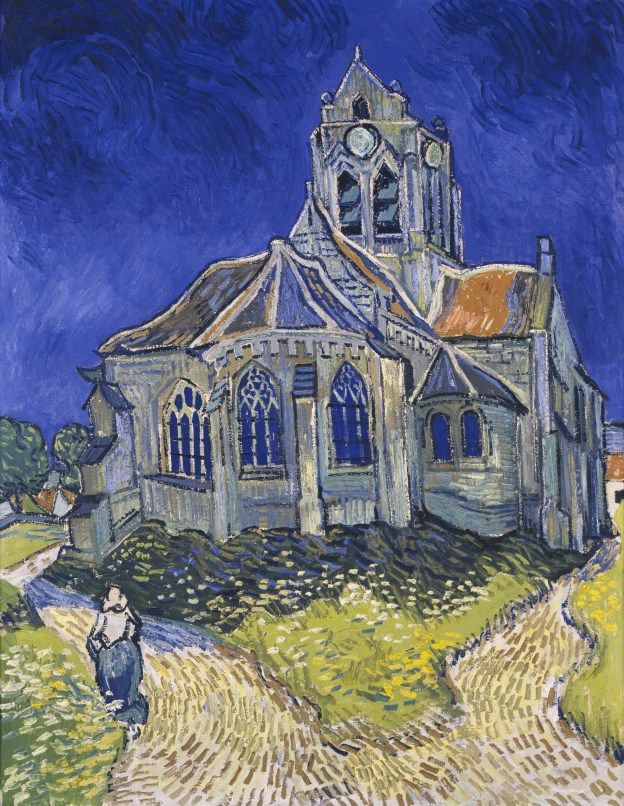
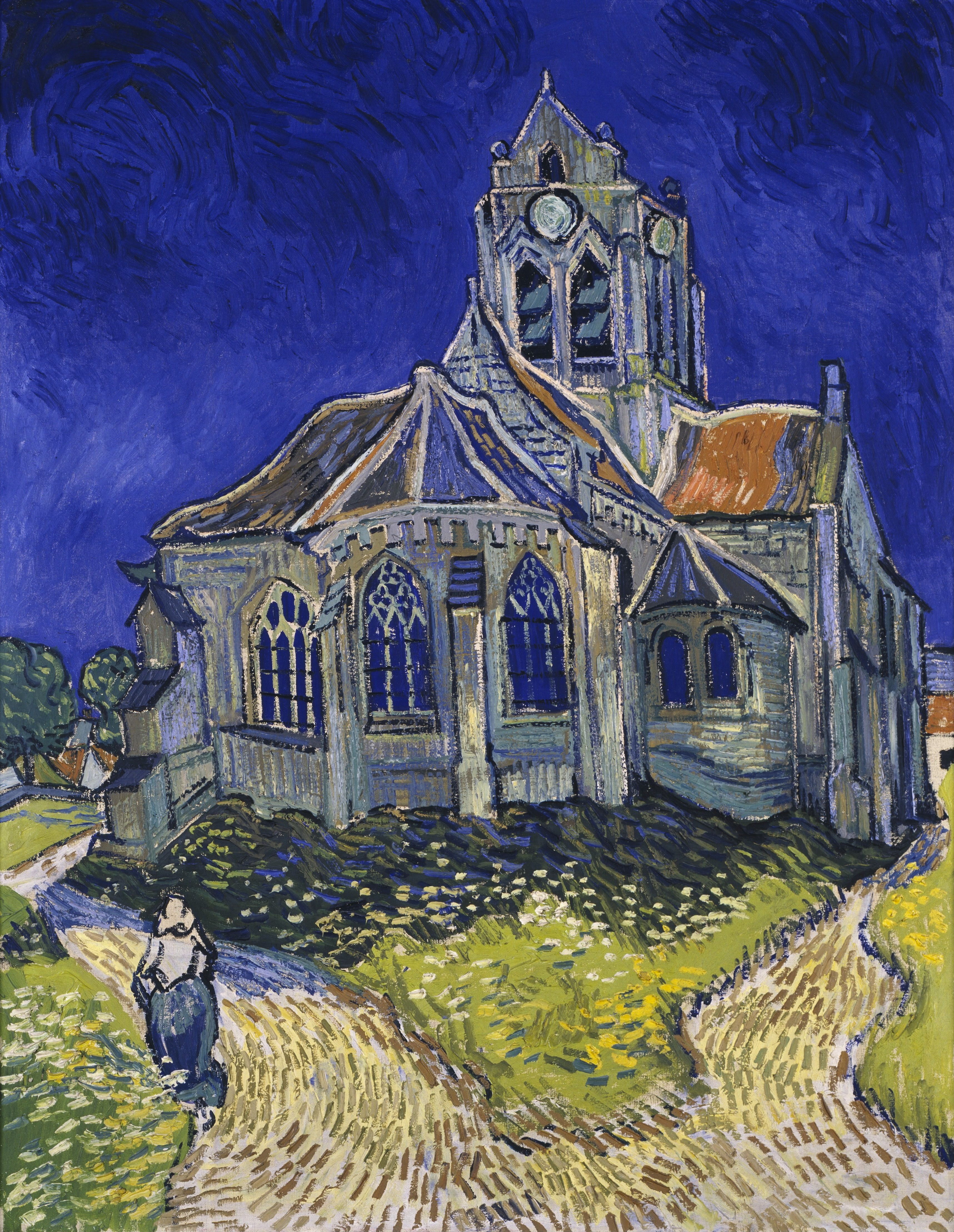
FEATURE Image: Vincent Van Gogh (1853-1890), L’église d’Auvers-sur-Oise, vue du chevet (“The Church at Auvers”), June 1890, oil on canvas, 94 cm x 74 cm (37 in x 29.1 in), Musée d’Orsay, Paris. Vincent Van Gogh (1853-1890), staying in Auvers starting on May 20, 1890, liked the small farm town about 20 miles west of Paris with its artistic pedigree (Corot, Daubigny, Cézanne) and spoke of settling into permanent quarters in the village after renting an attic room in a local café. About his experience at Auvers Van Gogh wrote: “[C]es toiles vous diront ce que je ne sais dire en paroles, ce que je vois de sain et de fortifiant dans la campagne” (“[T]hese canvases will tell you what I can’t say in words, what I consider healthy and fortifying about the countryside.”) During his more than two months stay in Auvers, the artist made more than 100 drawings and paintings of local landscapes, gardens, and village scenes such as its Catholic church. On the evening of July 27, 1890, Van Gogh had acquired a pistol and shot himself in the chest near the Auvers chateau. After languishing in pain for two days, he died on the morning of July 29, 1890. Vincent Van Gogh was 37 years old. Public Domain.
Auvers-sur-Oise was the decisive final chapter of Vincent van Gogh’s life and career, where in just over two months he created an extraordinary body of work that secured his enduring place in artistic modernism, even as his life moved toward its tragic conclusion. In May 2005 I made a pilgrimage to the town where I visited the places associated with the artist’s final days, including Ravoux Inn, Dr. Gachet’s house, the church at Auvers, the wheat fields, and his grave.
Vincent van Gogh, Garden in Auvers, July 1890, oil on canvas, 64×80 cm, private collection. Though Van Gogh died in July 1890 his modernist artistic influence forged deep ties with the European avant-garde art movement throughout the 1890’s and beyond. Public Domain.
By John P. Walsh
Auvers-sur-Oise: Van Gogh’s Final Home
In a peripatetic life, the last place where Vincent Van Gogh (1853-1890) lived was Auvers-sur-Oise, a small commune, a short distance northwest of Paris. Since Auvers was on a rail line in the orbit of Paris, Van Gogh moved to the small town with its farming community so he could live independently yet remain close to his art dealer younger brother Theo Van Gogh (1857-1891) who lived with his wife and family in the hustle and bustle of Paris. After leaving Saint-Paul Asylum, Saint-Rémy, where Van Gogh had admitted himself as a patient since May 1889, he traveled to the French capital in May 1890 where he visited Theo and Jo. He was then onwards to Auvers where, by arrangement of Theo, the artist was under the supervision of Dr. Paul Gachet (1828-1909), a mental health physician who was also an avid modern art collector and had his house, family and practice in the town.
After leaving the asylum at Saint-Rémy in May 1890, Van Gogh settled in Auvers-sur-Oise under the supervision of Dr. Paul Gachet while remaining close to his brother Theo in Paris.
Author at the graves of Vincent Van Gogh (1853-1890) and his brother, Paris art dealer Theo Van Gogh (1857-1891). They have been side by side in the Auvers cemetery in France since 1914. Photo: Author’s collection. May 2005.
During his stay from May to July 1890, Van Gogh produced more than 100 drawings and paintings, making it one of the most prolific periods of his career.
Life at the Ravoux Inn
Vincent arrived to Auvers on May 20, 1890 and stayed in the Saint-Aubin hotel until he moved into a rented attic room in a café of Arthur Gustave Ravoux and his wife, Adeline Louise Touillet, who charged him three and a half francs per night for room and board. Located in Place de la Mairie, a 5-minute walk from the train station, the artist’s daily schedule involved rising at dawn and going outside to draw and paint.
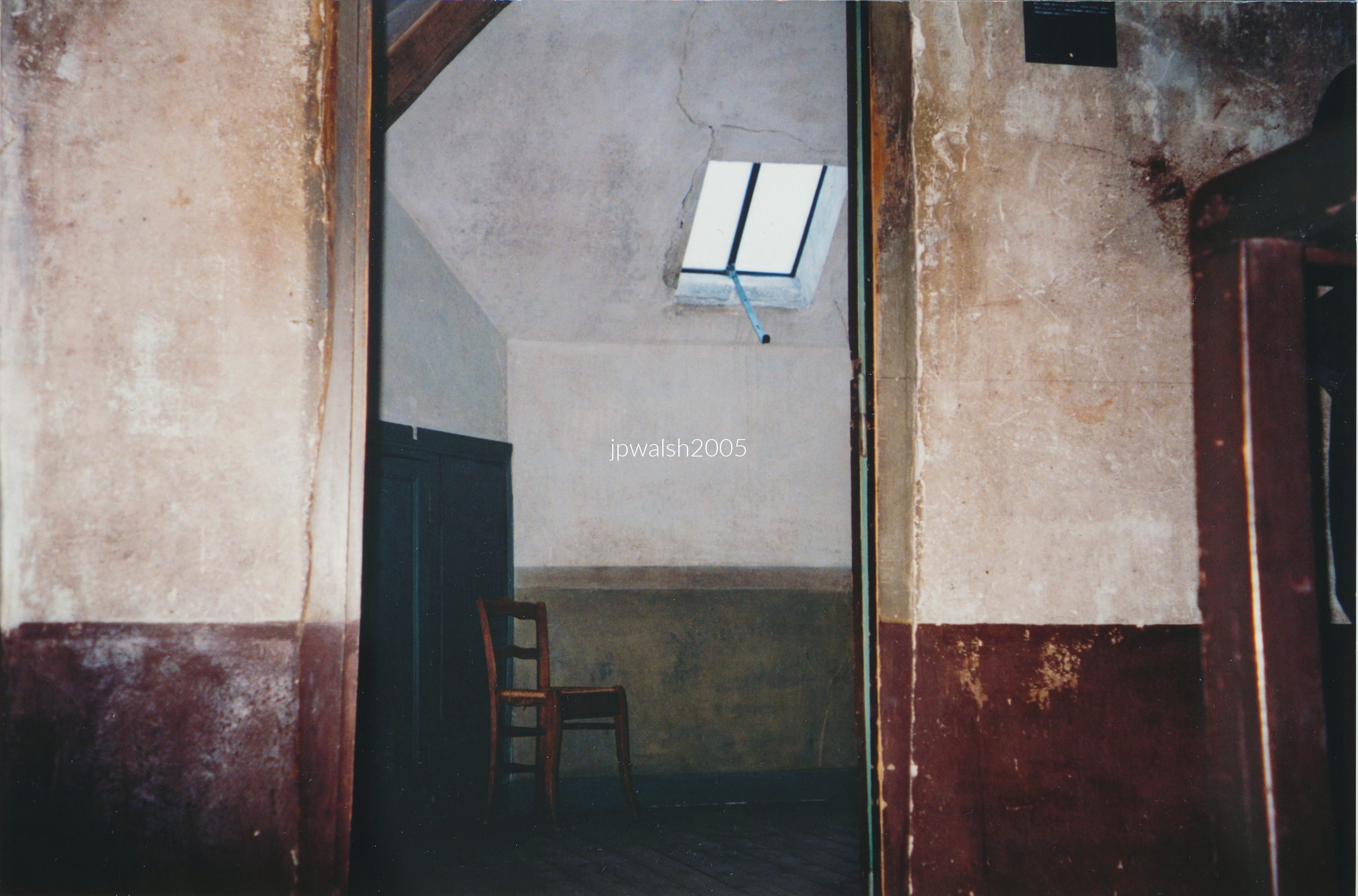
Entrance to Vincent Van Gogh’s rented room in Ravoux’s inn in Auvers. It was here that the artist lived for two months in the town. This is the same room is where Van Gogh returned after he shot himself on July 27, 1890, and died two days later here surrounded by family and friends. Author’s photograph, May 2005.
After roaming the town where he made friends of villagers, visited Dr. Gachet’s, and journeyed into nearby farm fields, Van Gogh returned to Ravoux’s café for lunch that was served at noon. In the afternoon he might sometimes work in the “painters’ room” at the inn or visit with other painters staying at the inn, such as compatriot Anton Matthias Hirschig (1867-1939) and Spanish painter Martinez de Valdivielse. These acquaintances proved more significant for history insofar as they provided eyewitness testimony of Van Gogh’s death and funeral. Following dinner at Ravoux’s, Van Gogh climbed the inn’s simple staircase to his single room in the center of the attic landing and retired at about nine in the evening.
Vincent Van Gogh, View of Vessenots near Auvers, May 1890, oil on canvas, 55×65 cm, Thyssen-Bornemisza, Madrid, Spain. Public Domain.
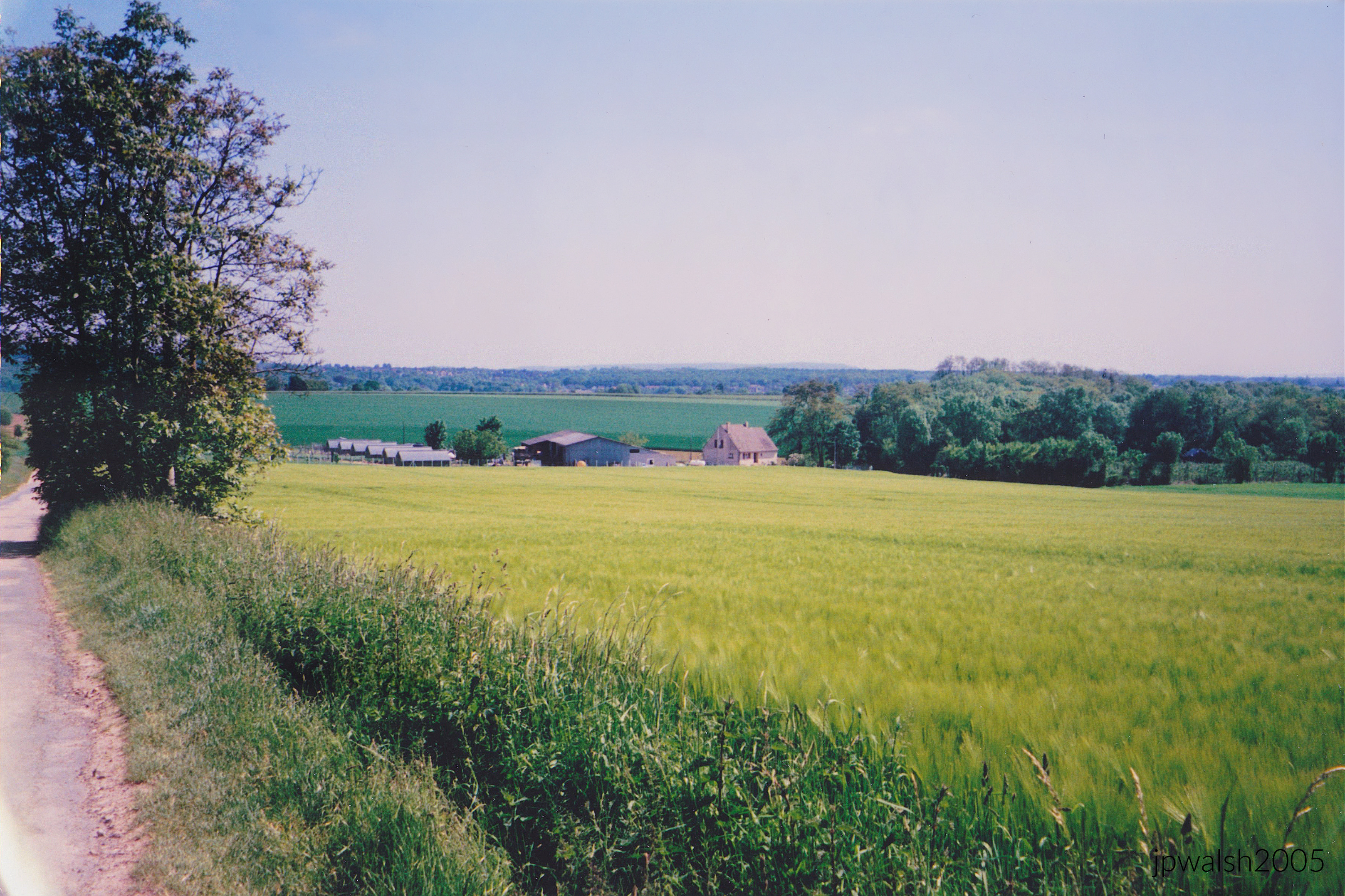
Fields of Auvers. Author’s photograph, May 2005.
Vincent Van Gogh, Daubigny’s Garden, midJune 1890, oil on canvas, 51 cm x 51.2 cm, Van Gogh Museum, Amsterdam. Other versions of Daubigny’s Garden are in the Hiroshima Museum of Art in Japan. see – https://www.hiroshima-museum.jp/en/collection/eu/vangogh.html – retrieved March 11, 2024) and the Van Gogh Museum in Amsterdam (see – https://www.vangoghmuseum.nl/en/collection/s0104V1962 – retrieved March 11, 2024. The square-format flat decorative painting, painted on a simple tea towel that was mounted to canvas, became Van Gogh’s first painted attempt of the garden. It acts as a modernist talisman reminiscent of Paul Sérusier’s 1888 cigar box painting and looks ahead to the decorative landscapes of the Nabis in the 1890’s and of Gustave Klimt (1862-1918) 15 years later. Public Domain.
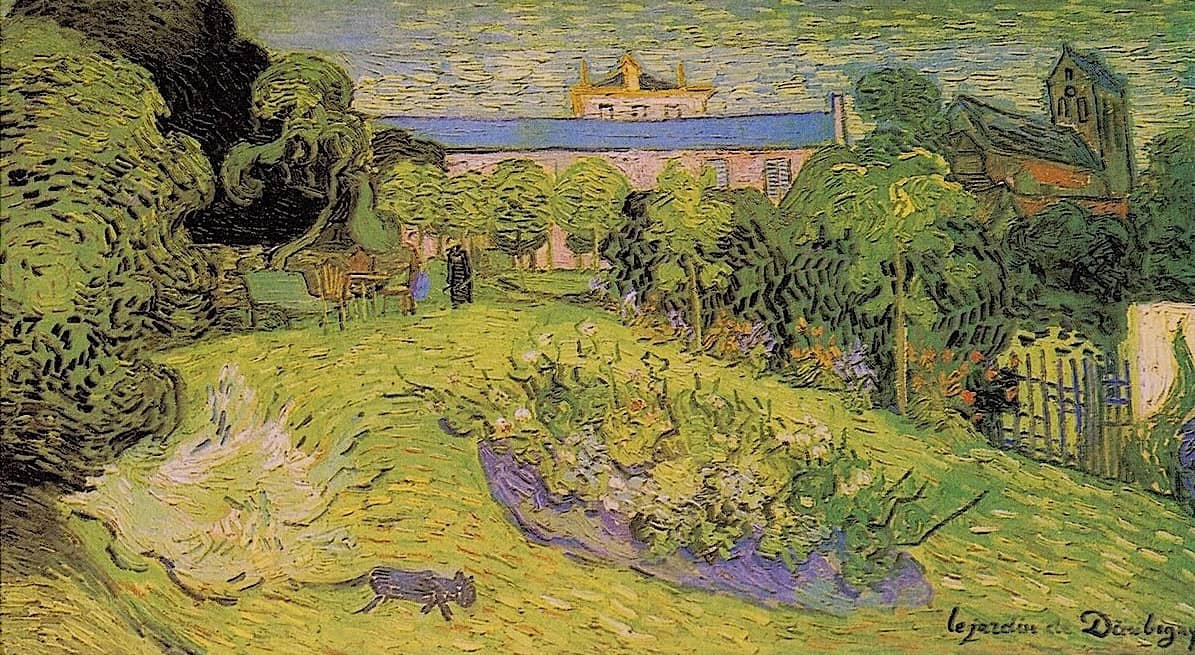
Vincent Van Gogh, Daubigny’s Garden, 1890, oil on canvas, 56 cm × 101 cm (22 in × 39.8 in), Kunstmuseum Basel, Basel, Switzerland. Van Gogh made three versions of the Auvers garden of Barbizon artist Charles-François Daubigny (1817-1878) between May and July 1890. Daubigny, who moved to Auvers in 1860. was a landscape artist who painted en plein aire. A short walk from the Ravoux inn, Daugigny’s widow still lived in the house in Auvers in 1890. For this painting Van Gogh stepped outdoors into Daubigny’s garden to look back towards the house (the Church of Auvers is distinctly drawn in the painting’s upper right corner). Van Gogh admired Daubigny since the 1870’s as he other Barbizon painters such as Jean-François Millet (1814-1875) and Camille Corot (1796-1875). see – https://www.vincentvangogh.org/garden-of-daubigny.jsp – retrieved March 11, 2024. Public Domain.
Van Gogh’s Auvers paintings reveal artistic innovations that anticipated later modernist movements and influenced future generations of artists.
Little has changed in appearance in Auvers from the time of Van Gogh’s stay in May-July 1890. Author’s photograph, May 2005.
Irises bloom along the side of a road in Auvers that leads to Dr. Gachet’s house. Author’s photograph, May 2005.
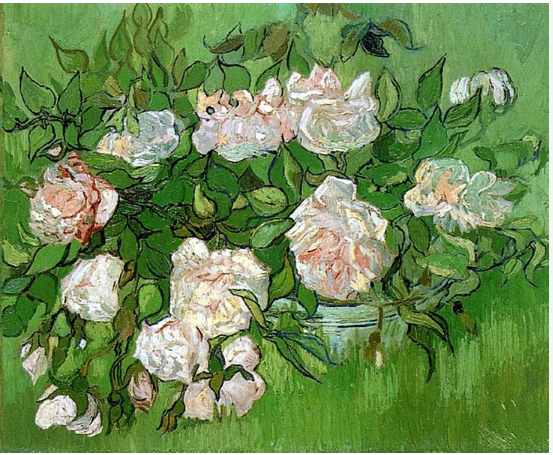
Vincent Van Gogh, Still Life Pink Roses, June 1890, oil on canvas, 32 x 40.5 cm, Ny Carlsberg Glyptotek, Copenhagen, Denmark. Public Domain.
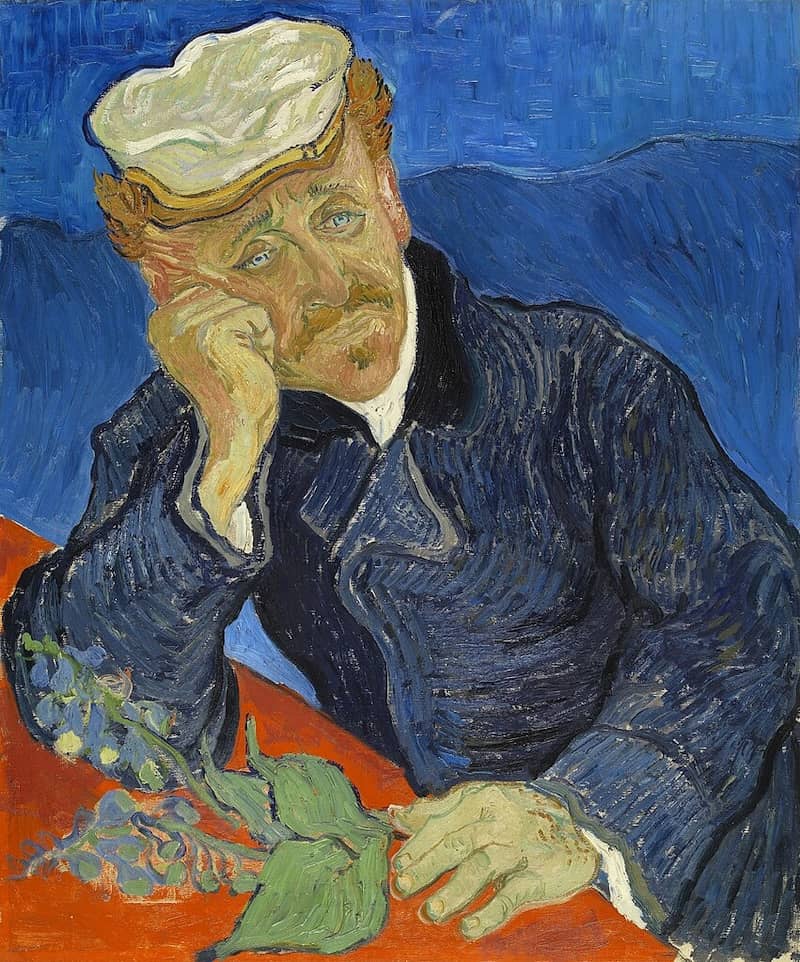
Van Gogh, Dr. Gachet (second version), June 1890, Musée d’Orsay, Paris. As a token of friendship, Van Gogh painted two authenticated versions of Dr. Gachet’s portrait in June 1890 at Auvers. Van Gogh came to Auvers because of the role Dr. Gachet played as the artist’s therapist. The well-regarded physician was an avid modern art collector and painter who hadparticipated in art circles since the 1850’s with Gustave Courbet (1819-1877). Dr. Gachet was instrumental in having Paul Cézanne come to Auvers to paint in 1873. In anticipation of Vincent’s arrival from Saint-Rémy, it was Camille Pissarro (1830-1903) living in Pontoise who recommended Dr. Gachet to Theo Van Gogh. Vincent Van Gogh thought fondly of Dr. Gachet as a brother. When Dr. Gachet visited Theo in Paris in early July 1890, he told him he believed that Vincent was “completely recovered” and “that there need be no fears of a further attack” (quoted in Complete Paintings, p. 718). Van Gogh saw Dr. Gachet as another brand of eccentric and painted him in these portraits as a deep thinker who reflected a sensitive nature tending to melancholy. Public Domain.
Van Gogh, Portrait of Adeline Ravoux, June 1890, oil on canvas, 52x 52 cm, Cleveland Museum of Art. In their therapeutic conversations, Dr. Gachet in June 1890 encouraged Van Gogh to make portraits of local sitters in Auvers. Van Gogh had done portraits of Arlesiens in the “Studio of the South” in 1888 and many self-portraits. Adeline Ravoux was the 15-year-old daughter of Van Gogh’s Auvers innkeepers. About one month after this portrait was made, the girl with her parents witnessed Vincent’s return to the café after he shot himself. Later, in a memoir she wrote: “Vincent walked bent, holding his stomach, again exaggerating his habit of holding one shoulder higher than the other. Mother asked him: “M. Vincent, we were anxious, we are happy to see you to return; have you had a problem?” He replied in a suffering voice: “No, but I have…” He did not finish, crossed the hall, took the staircase and climbed to his bedroom.” see – http://www.vggallery.com/misc/archives/a_ravoux.htm – retrieved March 11, 2024. Public Domain.
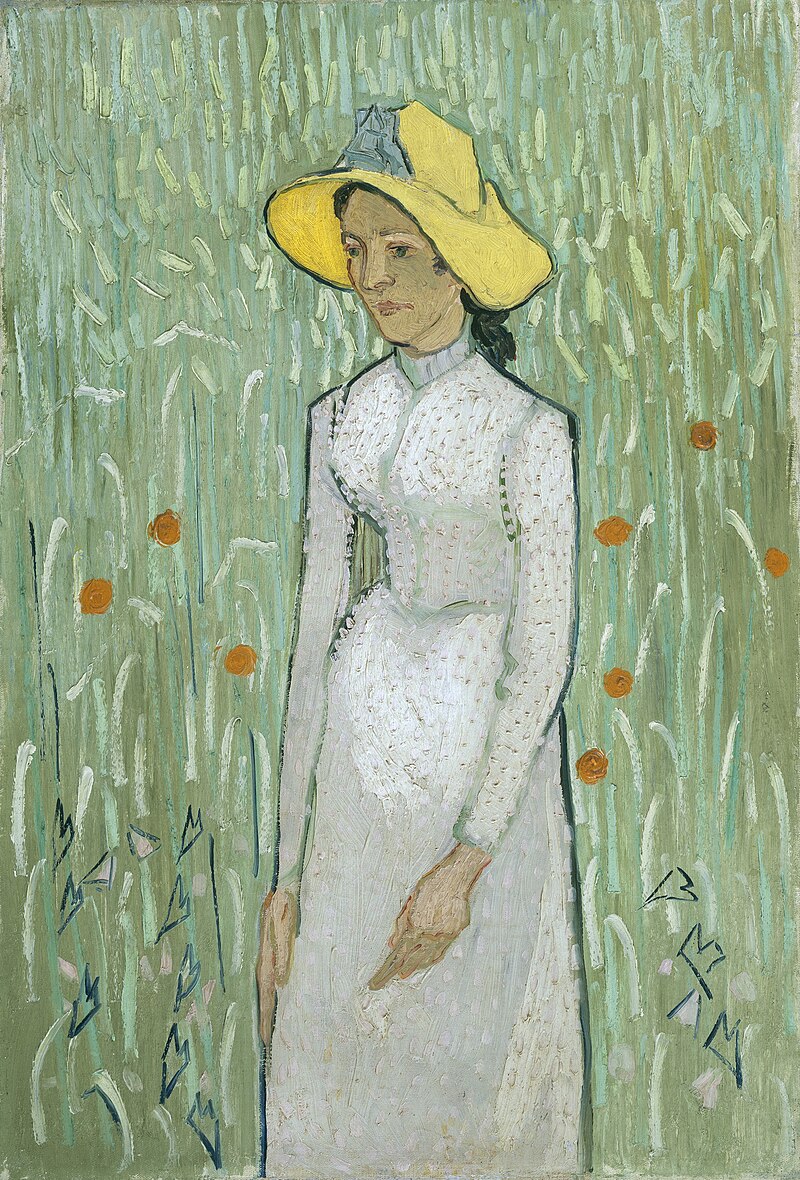
Van Gogh, Young Girl Standing Against Wheat, late June 1890, 66.7 x 45.8 cm (26 1/4 x 18 1/16 in.), National Gallery of Art, Washington, D.C. The painting’s lack of horizon creates a flat wall behind the sitter who appears in close proximity to the picture plane as she fills the pictorial space. Van Gogh shadowed her face under her hat and gave her a “distant, unfocused” gaze. All of these elements contribute to the portrait’s emotional distance. see – Painting the Difference: Sex and Spectator in Modern Art by Charles Harrison, University of Chicago Press, 2006. Public Domain.
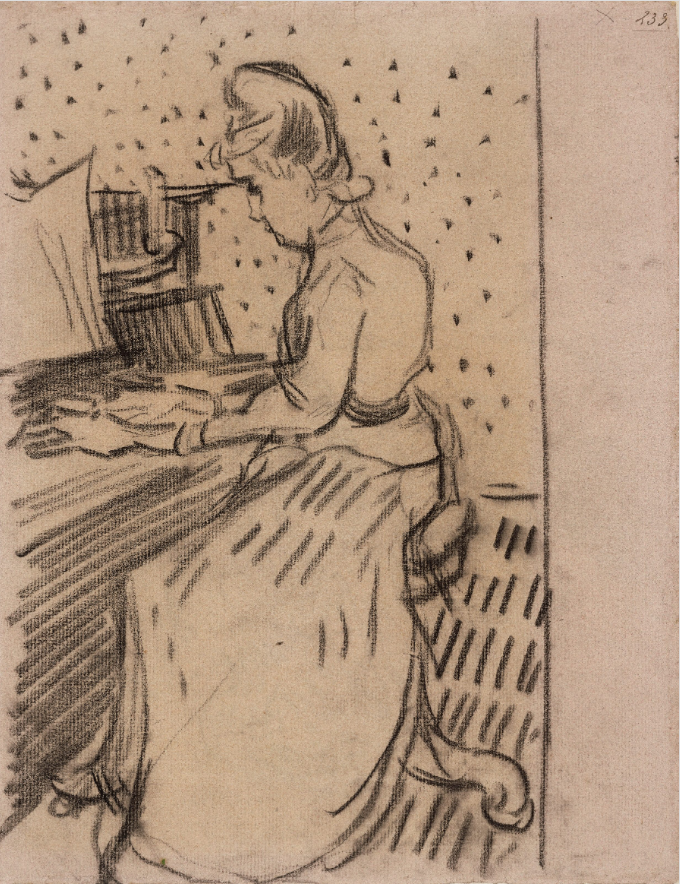
Van Gogh, Marguerite Gachet at the Piano, June 1890, chalk on paper, 30.5 cm x 23.8 cm, Van Gogh Museum, Amsterdam. Marguerite Gachet was the daughter of Dr. Gachet. In this sketch which resulted in a similarly composed painting, the sitter had recently turned 21 years old. For the painting that is today in the Kunstmuseum Basel, Van Gogh made two sketches in late June 1890. https://www.vangoghmuseum.nl/en/collection/d0427V1962r – retrieved March 11, 2024. Public Domain.
Van Gogh, L’église d’Auvers-sur-Oise, vue du chevet (“The Church at Auvers”), June 1890, oil on canvas, 94 cm x 74 cm (37 in x 29.1 in), Musée d’Orsay. Public Domain.
As in Van Gogh’s 1890 painting above, the church at Auvers (“Notre-Dame-de-l’Assomption”), situated in a bright midday sun, sits in deep shadow. Author’s photograph, May 2005.
An Extraordinary Final Burst of Creativity
Van Gogh proved quite productive in Auvers, painting several notable canvasses in and around the town and countryside, particularly landscapes and other outdoor subjects en plein aire. In these two months, the painter produced 74 paintings and 33 drawings, including the portraits of Dr. Gachet and Adeline Ravoux, The Church of Auvers, and Field of Wheat with Crows. In a letter of around July 10, 1890, Van Gogh wrote to Theo and Jo that he painted three large canvases at Auvers since visiting them in Paris on July 6, 1890. During that visit the artist also met with Henri Toulouse-Lautrec (1864-1901) and art critic Gabriel-Albert Aurier (1865-1892). In addition to Daubigny’s Garden, these large canvasses likely included Wheatfield with Crows and Wheatfields Thunderclouds (both Van Gogh Museum Amsterdam). Van Gogh described them as “immense stretches of wheatfields under turbulent skies…searching to express sadness [and] extreme loneliness” (“immenses étendues de blés sous des ciels troublés… chercher à exprimer de la tristesse, de la solitude extreme”). See – https://vangoghletters.org/vg/letters/let898/print.html – retrieved March 11, 2024.
Vincent Van Gogh, Sorrowing Old Man (“At Eternity’s Gate”), 1890, 80 cm × 64 cm (31.5 in × 21.2 in), oil on canvas, Kröller-Müller Museum, Otterlo, The Netherlands. The painting was completed at St. Rémy shortly before Van Gogh moved to Auvers-sur-Oise.
Van Gogh, Wheatfield with Crows. July 1890, oil on canvas, 50.2 cm × 103 cm (19.8 in × 41 in), Van Gogh Museum, Amsterdam. Many have claimed this to be Van Gogh’s last painting.
At the wheatfield in Auvers where Van Gogh painted “Wheatfield with Crows,” one of his last paintings, in July 1890. Author’s photograph, May 2005.
Van Gogh, Wheatfield Thunderclouds, July 1890, oil on canvas, 50.4 cm × 101.3 cm (19.8 in × 39.9 in), Vincent Van Gogh Museum, Amsterdam.
Auvers fields. Author’s photograph, May 2005.
The Tragic Events of July 1890
On July 27, 1890, Vincent, as he did each day, went into the fields to paint. Though the artist appeared to be in good spirits, the artist shot himself later that day near the chateau after going for a walk towards evening. Though able to walk the 10 minutes back mortally wounded to Ravoux’s inn, he told them nothing upon entering the café. The Ravoux’s, sensing something was wrong, called for Mazery, the village doctor and Dr. Gachet. Though these doctors bandage the wound, Van Gogh’s condition is inoperable. In the hot attic room, Van Gogh suffered into the next day, when Theo was sent for. He arrived immediately on July 28 from Paris to be by his brother’s side. Van Gogh died the next morning of July 29, 1890.
Funeral in the Wheat Fields
This suicide sent ripples of shock through the village, as some townspeople had witnessed these events. During my visit to Auvers in May 2005, after exiting Van Gogh’s room where he died, I told the innkeeper that the story was sad (“c’est triste”). She countered, “C’est emouvante” (“It’s moving”). Vincent was buried the next day, July 30, 1890, in Auvers’ new graveyard. His funeral was attended by Theo, Dr. Gachet, the Ravoux’s, assorted villagers, and friends from Paris. These last included artists Emile Bernard (1868-1941), Charles Laval (1862-1894), and Lucien Pissarro (1863- 1944), Camille Pissarro’s son. Petit boulevard art dealer and art materials supplier Julien (Père) Tanguy (1825-1894) was also in attendance. Van Gogh’s casket was strewn with yellow dahlias and sunflowers and Dr. Gachet gave remarks as did Theo Van Gogh. Later, in a letter to his wife, Theo wrote about the proceedings: “[Vincent] was buried in a sunny spot among the cornfields, and the cemetery does not have that unpleasant character of Parisian cemeteries.” (see- Kort geluk, 1999, p. 281). The mortal remains of Van Gogh were transported to the cemetery by a rented hearse from the next town because Auvers’ Catholic priest would not allow the community’s hearse to be used. A proposed church service was also cancelled. The homiletics were left to Dr. Gachet who said: “Vincent was an honest man and a great artist, and there were only two things for him – humanity and art. Art mattered to Vincent Van Gogh more than anything else and he will live on through it” (quoted in Complete Paintings, p. 719).
Graves of Vincent and Theo Van Gogh, Auvers-sur-Oise, France. Author’s photograph, May 2005.
Eyewitness Accounts of Van Gogh’s Last Days
Three days after the funeral, Emile Bernard wrote to Aurier about “our dear friend Vincent.” Aurier had written in January 1890 about the intense fixity of Van Gogh’s art. The art critic conjectured that it may be the catalyst for change in French art. In his essay entitled Les Isolés: Vincent van Gogh published in Mercure de France, Aurier prophesied for an artist-savior figure: “A man must come, a Messiah, a sower of Truth, to rejuvenate our geriatric art, indeed perhaps the whole of our geriatric, feeble minded, industrial society” (quoted in Complete Paintings, p. 698). Van Gogh, aware of these statements, did not think he was Aurier’s man. On August 2, 1890 Emile Bernard wrote to Aurier: “On Sunday evening [Vincent] went out into the countryside near Auvers, placed his easel against a haystack and went behind the chateau and fired a revolver shot at himself. Under the violence of the impact (the bullet entered his body below the heart) he fell, but he got up again, and fell three times more, before he got back to the inn where he was staying (Ravoux, place de la Mairie) without telling anyone about his injury. He finally died on Monday evening, still smoking his pipe which he refused to let go of, explaining that his suicide had been absolutely deliberate and that he had done it in complete lucidity…. On the walls of the room where his body was laid out all his last canvases were hung making a sort of halo for him and the brilliance of the genius that radiated from them made this death even more painful for us artists who were there. The coffin was covered with a simple white cloth and surrounded with masses of flowers, the sunflowers that he loved so much, yellow dahlias, yellow flowers everywhere. It was, you will remember, his favorite color, the symbol of the light that he dreamed of as being in people’s hearts as well as in works of art….The sun was terribly hot outside. We climbed the hill outside Auvers talking about him, about the daring impulse he had given to art, of the great projects he was always thinking about, and of the good he had done to all of us. We reached the cemetery, a small new cemetery strewn with new tombstones. It is on the little hill above the fields that were ripe for harvest under the wide blue sky that he would still have loved…perhaps.Then he was lowered into the grave…Then we returned. Theodore Van Ghog [sic] was broken with grief; everyone who attended was very moved, some going off into the open country while others went back to the station…” see – https://www.webexhibits.org/vangogh/letter/21/etc-Bernard-Aurier.htm – retrieved March 11, 2024.
Van Gogh, Two Women Crossing the Fields, July 1890, oil on paper on canvas, Marion Koogler McNay Art Museum, San Antonio, Texas.
By contrast, Anton Hirschig, the Dutch artist who roomed next door to Van Gogh at Ravoux’s, wrote a letter much later, in 1911, to Albert Plasschaert (1874-1941) in which he recounted a more terrible scene following Van Gogh’s shooting himself. Hirschig wrote: “He lay in his attic room under a tin roof. It was terribly hot. It was August. He stayed there alone for some days. Perhaps only a few. Perhaps many. It seemed to me like a lot. At night he cried out, cried out loud. His bed stood just beside the partition of the other attic room where I slept: Isn’t there anyone willing to open me up! I don’t think there was anyone with him in the middle of the night and it was so hot. I don’t think I ever saw any other doctor like his friend the retired army doctor: It’s your own fault, what did you have to go kill yourself for? He didn’t have any instruments this doctor. He lay there until he died.”
The Beginning of a Legacy
Theo Van Gogh died in Holland on January 25, 1891, nearly 6 months to the day after Vincent’s death. Theo was buried in Holland but exhumed and reinterred next to his older brother Vincent’s grave in Auvers cemetery in 1914. While Vincent Van Gogh, the man, was never larger than life, as an artist he produced an explosion of life on paper and canvas. Van Gogh came to art late (30 years old in 1883) and produced incessantly for the next 7 years. His oeuvre was beautifully powerful, and none of it more remarkably for the future of modernism than that done in Auvers-sur-Oise in May to July 1890.
SOURCES –
Harrison, Charles. Painting the Difference: Sex and Spectator in Modern Art. Chicago: University of Chicago Press, 2006.
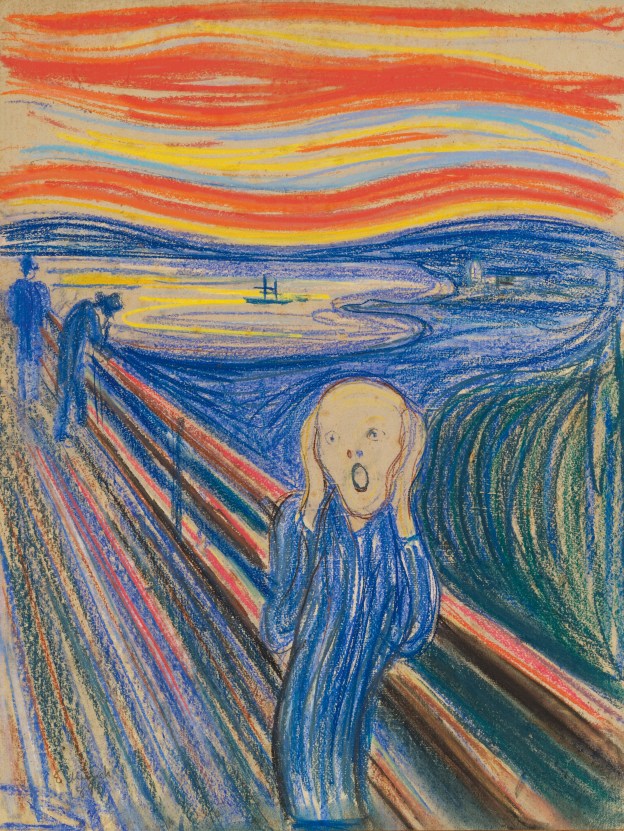
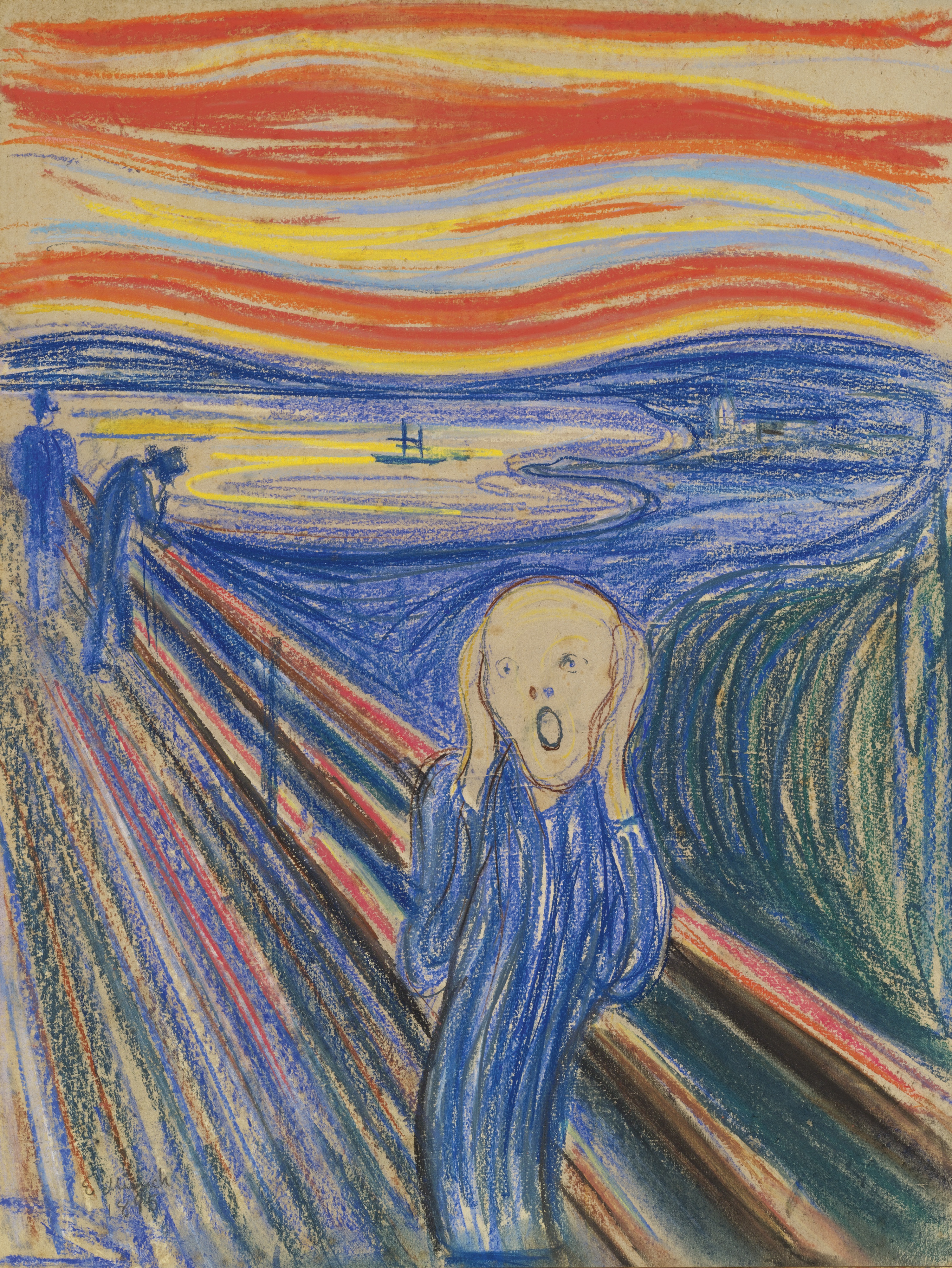
FEATURE image: Edvard Munch, The Scream, 1895, pastel on cardboard, private collection.
Edvard Munch transformed modern art by moving beyond naturalism and Impressionism to create a deeply personal Symbolist and Expressionist visual language that explored anxiety, love, death, loneliness, desire, and the psychological realities of human existence.
By John P. Walsh
Edvard Munch, Self-portrait, oil on canvas, 1886.
Edvard Munch: Symbolism, Expressionism, and Artistic Vision
Edvard Munch (1863-1944) was a Symbolist and Expressionist artist from Norway.
In the 1890s, anti-naturalism mainly took the form of Symbolism – that is, the fascination with many types of literature and the inclination to draw upon these sources for inspiration in dreams and visions. This movement informed the art of Edvard Munch throughout that decade and into the twentieth century. Inspiration from literature, however, was not illustration. By the 1890s the younger generation of modern artists saw that by giving the artist an example of constructing an irrational logic, the artist’s dream, or more specific to Munch, psychology, had been freed not only from the restrictions of nature in terms of form, line, color and subject but also its potentially literary or ideological sources. It manifests as a style of drawing that the imagination has liberated from the concern of natural details in order that it might freely serve only as the representation of conceived things.
For Edvard Munch, this resulted in the creation of several fantastic scenarios which are designed and constructed as the artist deems them necessary to be. The distinction between Impressionism and Symbolism is the difference emanating from the tradition of naturalism and the expression of ideas by means of its symbol that is searching beyond naturalism.
The Scream became the defining image of modern psychological anxiety and one of the most recognizable paintings in Western art.
Edvard Munch, The Scream, crayon, 1893.
Edvard Munch is a precursor and practitioner of Expressionism. Although the major portion of Munch’s artwork lies outside this classification, his expressionist paintings are some of his best-known works.
The Scream and Modern Anxiety
The Scream is Munch’s most famous work, and is widely interpreted as representing the universal anxiety of modern man. It is one of modern art’s most iconic paintings along with Whistler’s mother (Arrangement in Grey and Black, Number One, D’Orsay), Da Vinci’s Mona Lisa (Louvre), and Grant Wood’s American Gothic (Chicago).
Expressionism was a movement that was a combination of Symbolism, ideals of the human spirit, often confined in solitude, and poetical lyricism laced with emotion.1
Early Life and Artistic Training and “the Seeds of Madness”
In an artistic career that spanned from the early 1880s until his death in 1944 at 80 years old, Edvard Munch experimented within painting, graphic art, drawing, sculpture, photography and film.
Growing up in Kristiania (today’s Oslo) Munch decided at 17 years old that he was going to be a painter. Munch’s family encouraged his artistic pursuits so that in 1880 Munch enrolled at the Royal School of Art and Design in Kristiania where he expanded his drawing repertoire to include live models and en pleine aire (out of doors).
Often ill as a child, Munch believed that in his experiences growing up, “…I inherited the seeds of madness. The angels of fear, sorrow, and death stood by my side since the day I was born.”
In his career, Munch painted mania in several pictures, including Melancholy (1901). It depicted his younger sister Laura who suffered from schizophrenia, and was hospitalized regularly for what was diagnosed as “hysteria” and “melancholia.”2
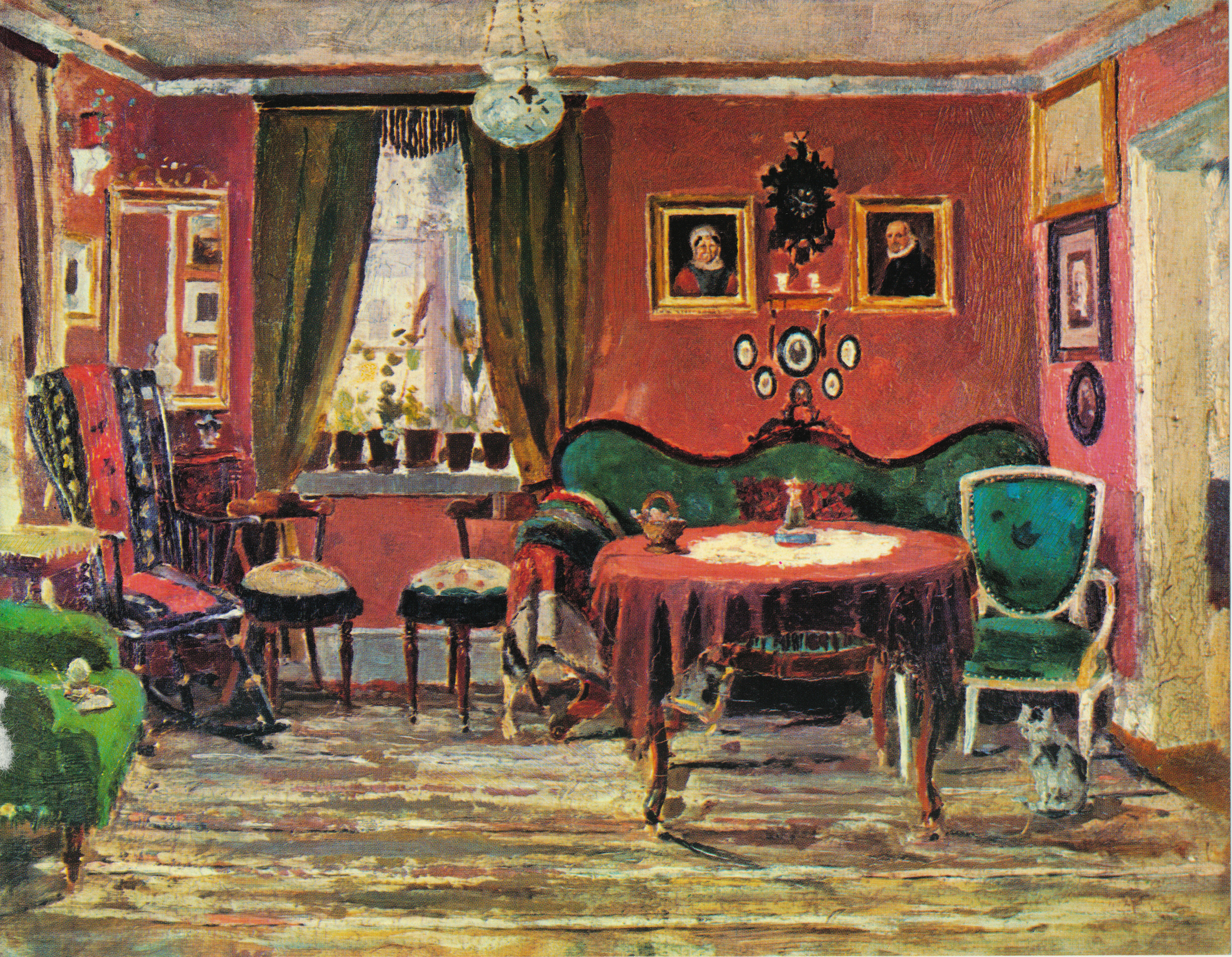
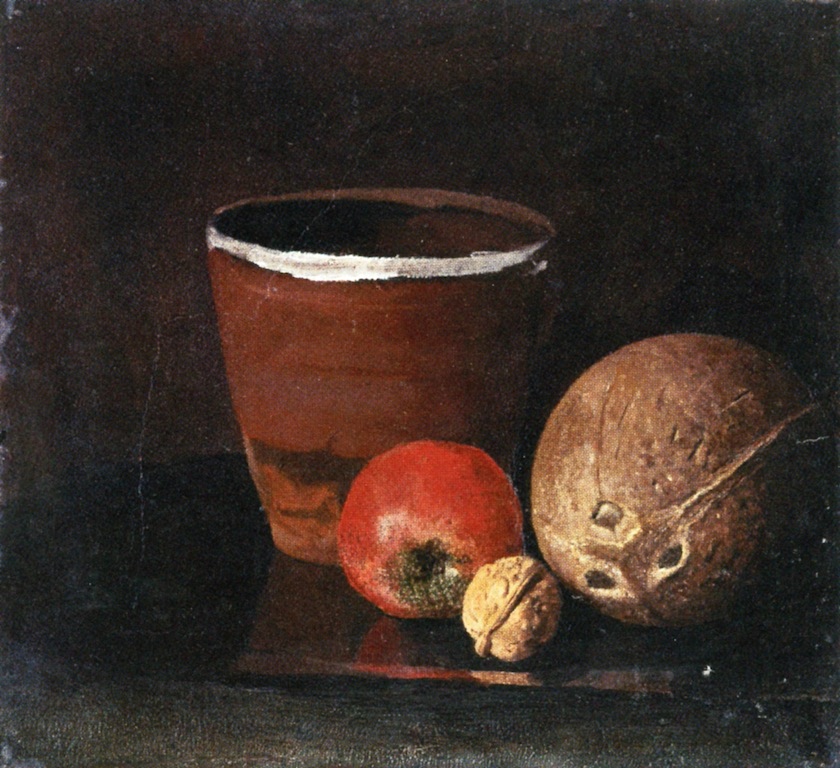
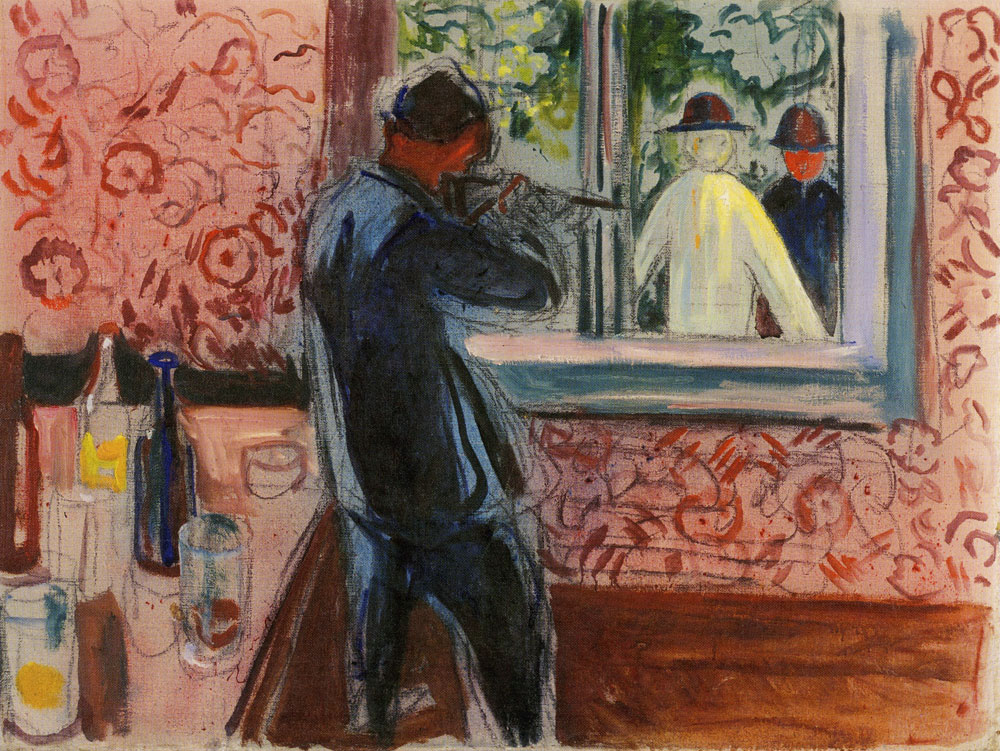
Edvard Munch, Melancholy, Laura, 1901. Edvard Munch, Self-portrait, 1882, Munch Museum, Oslo. Edvard Munch, Interior Pilestredet, oil on canvas, 1881, Munch Museum, Oslo. Edvard Munch, Still Life with Jar, Apple, Walnut and Coconut, 1881, Munch Museum, Oslo. Edvard Munch, From Saxegårdsgate, c. 1882, oil on canvas, Lillehammer Art Museum. Edvard Munch, Laura, both 1882, oil on paper (top) and oil on cardboard (below), Munch Museum, Oslo. Edvard Munch, Andreas Studying Anatomy, 1883, Oil on Cardboard, Munch Museum, Oslo.
Early Subjects and Bohemian Influences
Between 1884 and 1889 young Munch made a range of drawing and paintings that was extensive and meaningful. His portfolio included landscapes, domestic environments, portraits, self-portrait, still life, and fictional motifs. Munch’s drawings included industrial sites along the Akerselva River, and promenading denizens and local farmers at work.
In Munch’s early work there is a hint of his wrestling with eros and the nature of woman that became a lifelong obsession.
In Kristiania Munch began to live a bohemian life under the influence of anti-establishment writer Hans Jaeger (1854-1910). Jaeger urged Munch to paint his own emotional and psychological state called “soul painting.”
The Sick Child (1886) and the Birth of “Soul Painting”
Munch’s first “soul painting” was The Sick Child (1886). The artist produced five versions over decades. Munch’s freedom of treatment and color – also found in the painting Tête-à-Tête in 1885 – is largely owed to Impressionism. In 1886, Munch participated in the Artists’ Autumn Exhibition in Kristiania and exhibited The Sick Child. It met with very negative reaction. The motif of the sick was popular but Munch’s hasty Impressionistic treatment was seen as insensitive. It was the first breakthrough for Munch’s art.
Childhood illness, family tragedy, mental illness within his family, and personal loss profoundly shaped his artistic vision. Influenced by writers, philosophers, and Symbolist artists, Munch developed what he called “soul painting.”
Edvard Munch, Tête-à-tête, oil on canvas, 1885, Munch Museum, Oslo.
Early works such as The Sick Child marked a decisive break from conventional academic painting.
Edvard Munch, The Sick Child (original version), 1885-86, National Gallery, Oslo. Other versions are in the Konstmuseet Gothenberg (1896), Tate London (1907), Thiel Gallery (1907) and Munch Museum (1925).
Munch later painted Hans Jaeger’s portrait in Oslo in 1889 after Jaeger lost his job and had to flee Norway one step ahead of the law. This was after Jaeger published a novel about local Bohemian life that the authorities considered inflammatory. Young Munch began to explore in his art personal situations, emotions, and states of mind. He wrote in his “soul” diary: ” I attempt In my art to explain life and its meaning to myself.”3
Edvard Munch, Hans Jæger, 1889, National Gallery, Oslo. Edvard Munch, Night on the Beach, 1889, Bergen Art Museum. Known also as Inger on the Beach, it was painted in the summer of 1889 at Åsgårdstrand. The sitter is Munch’s youngest sister Inger. The artwork created a storm of confusion and controversy. Its simplified forms, thick outlines, contrasting colors and shades, and subtle emotional content signaled the direction of Munch’s developing style. Edvard Munch, Self Portrait, c. 1888, Munch Museum, Oslo.
Paris (1885), French Modernism, and First Love
With friends, Munch rented a studio in Kristiania. His mentor, established artist Christian Krohg (1852-1925), encouraged Munch to conform to his own artistic vision.
In 1885, 22-year-old Munch traveled to Paris for the first time to explore the world’s art capital. During his three-week stay in Paris Munch visited the Louvre and the Salon and was particularly impressed by French Modernist painter, Édouard Manet (1832-1883). Munch began to incorporate those ideas and techniques of French Modernism into his artistic vision. In the same year Munch produced his full-length Portrait of the Painter Jensen -Hjell to the derision of critics in Kristiania. The penchant for Manet’s artwork continued for Munch into the new century with a full-length portrait called The Frenchman (Monsieur Archimard) in 1901.
In summer of 1885 Munch had his first love affair which affected him deeply. It occurred in the coastal resort town of Åsgårdstrand when Munch met Milly Thaulow (1860-1937), a fashion model and singer.
Milly had been married since 1881 when she met Munch and they had a passionate affair. The short, secret relationship filled Munch with mixed feelings of love and shame. Its inevitable ending produced melancholy that affected Munch’s artmaking.
Milly Thaulow remained active in the arts, translating Maurice Maeterlinck’s French play, Pelléas et Mélisande, into Norwegian in 1906. She went on to divorce her husband in 1891 and remarry that same year. Her second marriage ended in divorce. In the end, Munch justified his experience with Milly as part of radical bohemian artist culture which Hans Jaeger preached where love is free and self-expression is paramount.
Edvard Munch, Portrait of the Painter Jensen -Hjell, 1885, National Gallery, Oslo.
Paris (1889-91), Loss, and the Origins of The Frieze of Life
In 1889 Munch rented exhibition space in Kristiania to display 110 of his artworks. His entrepreneurship resulted in receiving state grant funds that led to a second, yet back and forth, stay to Paris whose time amounted overall to about two years.
In Paris, Munch took drawing lessons, explored art galleries, and networked with expatriate artists, especially at the venerable 17th-century Café de la Régence near the Palais-Royal.
In his study, Munch became inspired by the rhythmical and decorative art of Paul Gauguin (1847-1903), several of the Nabis, Japonisme, and the Symbolist drawing of Odilon Redon (1840-1916).
Though Munch rejected Realism in art, he embraced Impressionism, particularly the technique of Claude Monet (1840-1926) and Camille Pissarro (1830-1903) and Thomas Couture (1815-1879). Munch was particularly impressed by Vincent Van Gogh (1853-1890) and Henri de Toulouse-Lautrec (1864-1901) and their unnatural use of color to express sensory perception and emotion. In this milieu Munch painted Rue Lafayette (1891).
The 26-year-old Munch had just arrived into Paris when his father died, an event which devastated the artist. Running low on money, Munch left the city and, with Danish poet Goldstein, rented a small apartment in the suburb of St. Cloud.
Munch’s experiences of relative poverty and the death of a loved one offered new insights and impetus for his art in terms of seeking to understand and express the memory of his human existence.
He painted Night In St. Cloud (1890) and Evening on the Karl Johan (1889) in this time period. Munch also conceived the idea of The Frieze of Life, a series of paintings exploring human existence from a range of pathos, terror, desire, dread, nightmare, and anxiety, to other fascinations, so to include The Dance of Life, The Scream, The Vampire, Madonna, and Death and the Maiden.
In 1891 Munch had exhibitions in Kristiania, Berlin, and Munich. He returned to Paris several times in the next decade for short term visits as in 1899 which included a trip to Italy.4
His experiences in Paris exposed Munch to Impressionism, Post-Impressionism, Gauguin, Van Gogh, Redon, and modern artistic experimentation. Munch pioneered a highly personal form of art that sought to express inner states rather than external appearances.
Edvard Munch, Night In St. Cloud, 1890, oil on canvas, National Gallery, Oslo. Edvard Munch, Evening on the Karl Johan, 1889, oil, Bergen Art Museum.
Munch emerged from the Symbolist movement of the 1890s, which rejected strict naturalism in favor of dreams, psychology, emotion, and imagination.
Edvard Munch, Kiss by the Window, 1891, Munch Museum, Oslo. Edvard Munch, Evening Melancholy, 1891, oil, crayon, pencil on canvas, Munch Museum, Oslo. Edvard Munch, Rue Lafayette, 1891, oil on canvas, National Museum, Oslo. Edvard Munch, Rue de Rivoli, 1891, oil on canvas, Fogg Art Museum, Harvard University, Cambridge, Massachusetts. Edvard Munch, Inger in a White Blouse, 1891, Munch Museum, Oslo. Edvard Munch, Pleine-aire, 1891, oil on canvas, 60 x 120 cm, Munch Museum, Oslo.
Berlin Breakthrough (1892-1895) and Symbolist Fame
In 1892, Munch’s pictures were again exhibited at the Autumn Exhibition in Oslo (it was his final time)–and led to the 29-year-old artist being invited to exhibit at the Verein der Berliner Künstler (Association of Berlin Artists) in Germany in November 1892 for a one-man exhibition.
Munch’s exhibition of Melancholy (1891) in Oslo was called Norway’s “first Symbolist painting.” His exhibition of 55 pictures in Berlin proved another breakthrough for Munch’s reputation in Europe: it made him infamous. The critical reaction to his artwork was divided. Critics described Munch’s art as “repugnant, ugly and mean.” As it shocked the Berlin public, German artists Max Liebermann (1847-1935) and Ludwig von Hofmann (1861-1945) setting up a dissident “Group of XI” that led to the establishment of the Berlin Secession later on May 2, 1898.
The government of Kaiser Wilhelm II (1859-1941) set the mood for the public reaction in that art which “presumes to overstep the limits and rules” which Wilhelm had set, “is no longer art.” In the eyes of German society, Munch’s artwork “misused the word ‘freedom’ and (with) a total loss of restraint and excess of self-esteem.”
Later, by around 1910, that same Emperor in his constant pursuit of cultural influence, mostly supported the Berlin Secession. Yet the Secession’s public and financial success which Wilhelm II eventually helped to build, came at the price of a benevolent autocrat’s constant interference, particularly in the modern art group’s jury process.
The Frieze of Life and the Berlin Circle
Munch stayed in Berlin until 1895. In the Berlin exhibitions of 1893 and 1895 Munch presented a sequence of pictures he called Man’s Life, From the Modern Life of the Soul and, simply, Love. These all contained artwork that contributed to The Frieze which Munch intended to be a symbolic expression of reality and not a mere symbol of or for reality.
Munch’s bohemian circle in Berlin included editors of the magazine Pan, the German arts publication analogous to France’s La Revue Blanche. It also included Swedish avant-garde writer, August Strindberg (1849-1912) who would soon provide Munch with influential introductions to the Berlin and Paris art worlds. In 1890 Strindberg broke with naturalism and was in his own artistic and personal crisis as he sought new art forms within an emerging Symbolism. Munch met German art critic Julius Meier-Graefe (1867-1935) and socialized with Polish decadent naturalist and Symbolist novelist, dramatist, and poet Stanisław Przybyszewski (1868-1927) along with Przybyszewski’s paramour and later short-term wife, Dagny Juel (1867-1901). Munch painted both of these friends’ portraits.
Munch’s Berlin friends understood what Munch was doing with symbolism though the German critics did not. Przybyszewski wrote: “The old kind of art and psychology was an art and psychology of the conscious personality, whereas the new art is the art of the individual. Men dream and their dreams open up vistas of a new world to them.”
In addition to exhibiting in Berlin in both 1893 and 1894, Munch exhibited in Copenhagen, Dresden and Munich in 1893 and in Stockholm in 1894.
Symbolist Masterpieces of the 1890s
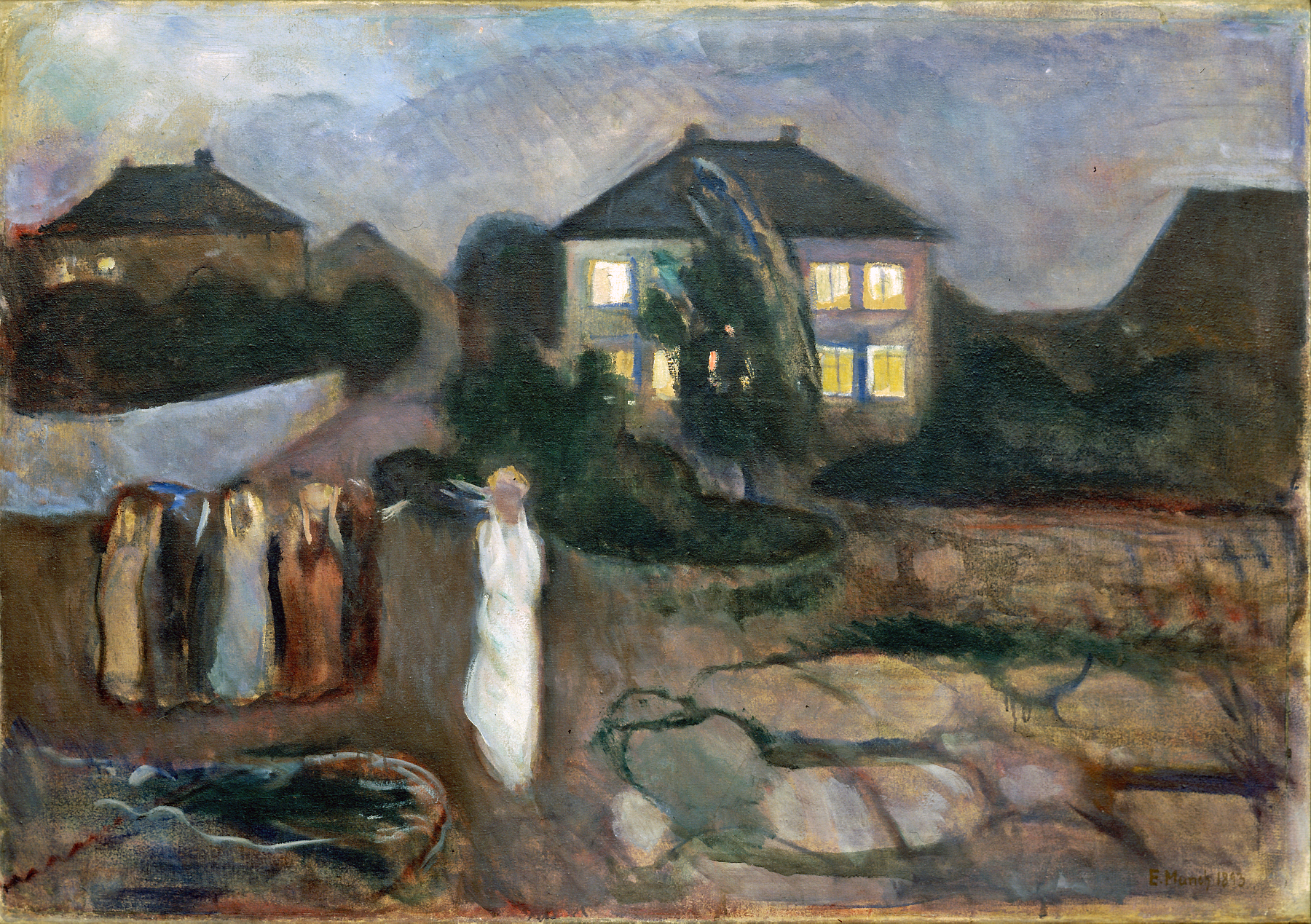
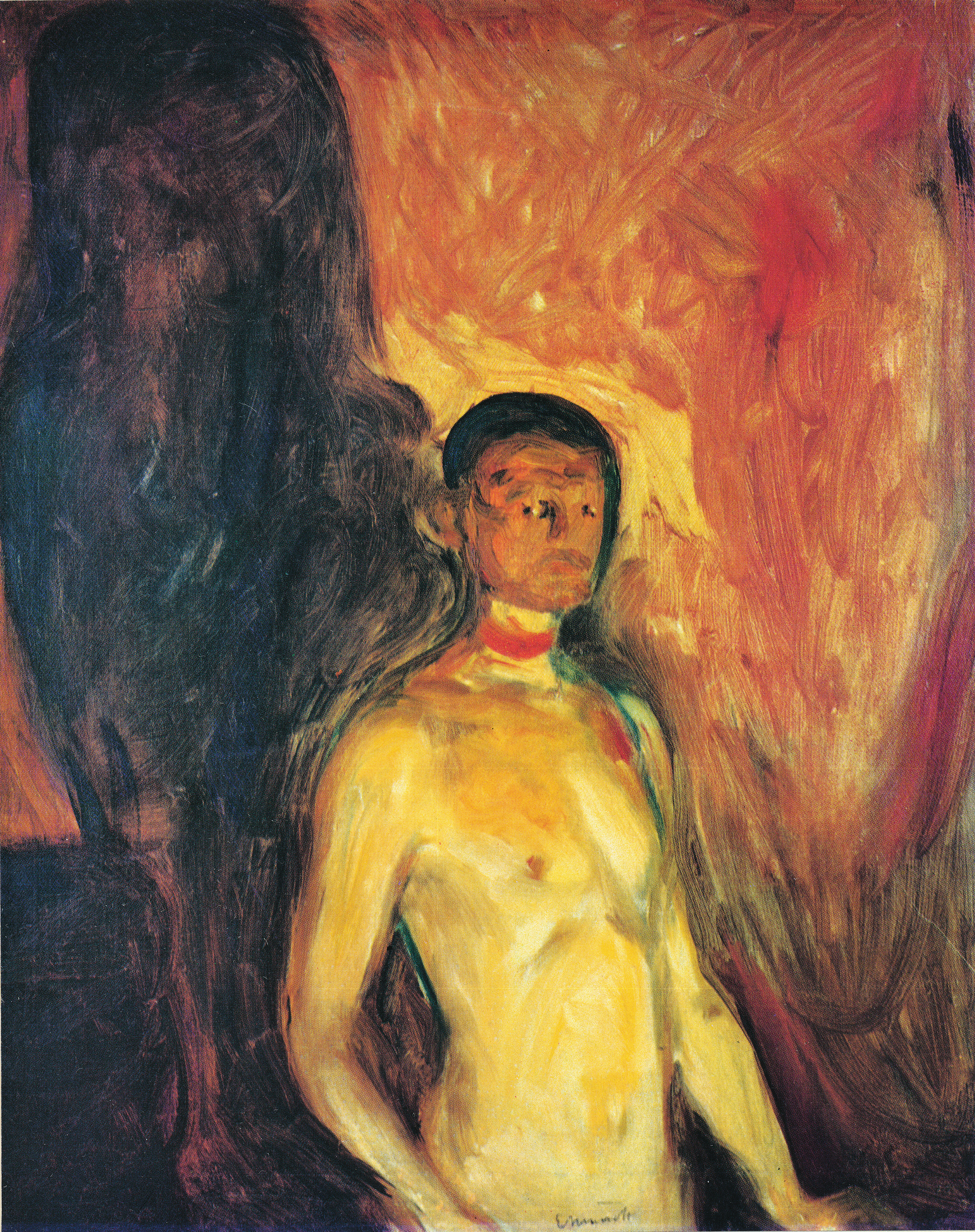
Working on the Frieze of Life, Munch created painting with turbulent, ambiguous and morose themes with titles such as Despair (1892), The Girl and Death (1893), Stormy Night (1893), The Voice (1893), Anxiety (1894), The Three Stages of Woman (1894), Ashes (1894), Death Struggle (1895), and Jealousy (1895). Aspects of Symbolism extended to romantic aspects of nature in paintings such as Coastal Mysticism (1892), Evening (Melancholy) (1893), Moonlight (1893), Starlit Night (1893), Sunrise at Åsgårdstrand (1893) and The Evening Star (1894). He painted many portraits in this period, in addition to those in his Berlin Bohemian circle, including Sister Inger (1892). Other iconic, overtly anecdotal Munch paintings were created such as Self Portrait in Hell (1895), Self Portrait under a female mask (1892), and Self portrait with Burning Cigarette (1895).
Other paintings, including casino scenes, showed Munch’s simplification of form and detail. The artist favored shallow pictorial space and a minimal backdrop for his foreground figures. Poses, forms, colors, lines and subjects were carefully constructed images that expressed psychological and emotional states, and often appear monumental as if they were playing a role on the stage of life.5
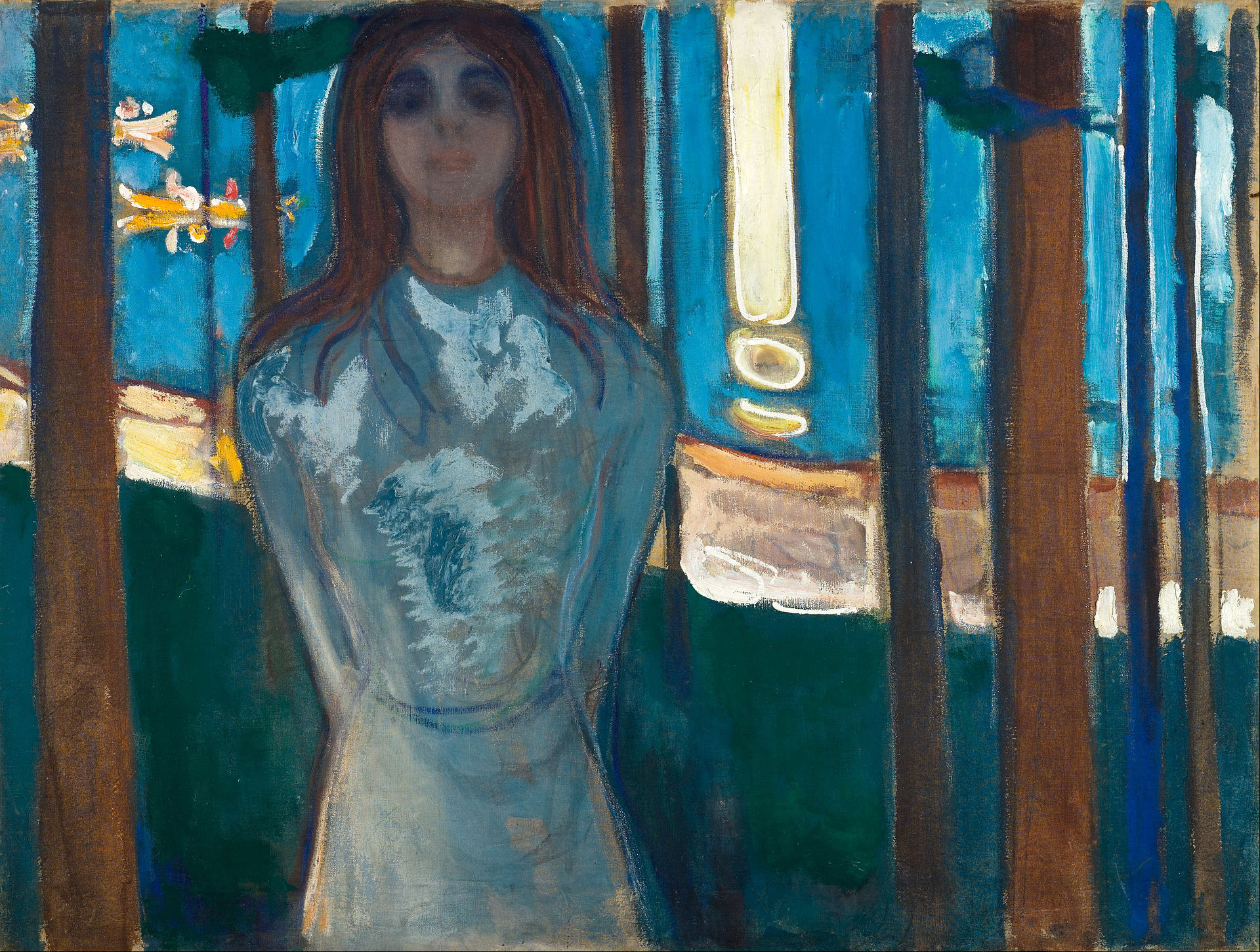
Edvard Munch, Melancholy, 1893, oil, Munch Museum. Edvard Munch, Melancholy (The Yellow Boat), 1891, oil, National Gallery, Oslo. Edvard Munch, Kiss by the window, 1892, oil, National Gallery, Oslo. Edvard Munch, The Kiss, 1892, oil, Private Collection. Edvard Munch, The Girl by the Window, 1893, oil, Art Institute of Chicago. Edvard Munch, Separation, 1893-94, Gouache, watercolor and crayon on paper, Munch Museum. Edvard Munch, Parting, 1894, oil on canvas, 67 x 128 cm, Munch Museum. Edvard Munch, Three Stages of Women (Sphinx), c. 1894, Bergan. Munch painted woman as dreaming, hungry for life, and as a nun. Edvard Munch, Puberty, 1894–1895, oil on canvas, 151.5 x 110 cm, National Gallery, Oslo. Edvard Munch, Anxiety, 1894, Munch Museum. Art critics see the painting as closely related to The Scream (1893). The faces show despair and the colors impress a depressed state showing emotions of heartbreak and sorrow. Edvard Munch, Despair, 1893, oil on canvas, Munch Museum.Edvard Munch, Inger in Black and Violet, 1892, oil on canvas, National Museum, Oslo. Edvard Munch, The Storm, oil on canvas, 1893, Museum of Modern Art, New York. Edvard Munch, Summer Night’s Dream The Voice, 1893, Museum of Fine Arts, Boston, Massachusetts. Edvard Munch, Coastal Mysticism, 1892.Edvard Munch, Sketch of the Model Posing, 1893, pastel on cardboard, The Solomon R. Guggenheim Museum, New York. Edvard Munch, The Hands, 1893, oil on canvas, 91 x 77 cm, Munch Museum, Oslo. Edvard Munch, At the Roulette Table in Monte Carlo, 1892, oil, Munch Museum. Edvard Munch, Self-Portrait Under the Mask of the Woman, 1893, oil, Munch Museum, Oslo. Edvard Munch, Self Portrait with Burning Cigarette, 1895, oil, Munch Museum, Oslo. Edvard Munch, Self-portrait in Hell, c. 1895, oil on canvas, 82 x 60 cm, Munch Museum, Oslo. Edvard Munch, Stanislaw Przybyszewski,1895, pastel, 62x55cm, Munch Museum.Edvard Munch, The Scream, 1893, oil, tempera, pastel on cardboard, National Museum, Oslo.
Paris (1895-1897). Munch Adopts “Idea” Painting: The Scream, Printmaking, and International Recognition
Until 1870, young artists from Norway went to Dűsseldorf to study and pursue an art career though sometimes to Berlin, Paris, Munich and Karlesruhe. By 1880, Paris was the center of the art world and Munch returned to Paris in 1895, 1896, and 1897 for extended visits (he also visited Nice in 1897).
Thadée Nathanson’s La Revue Blanche published Munch’s lithograph The Scream in December 1895. The Scream exists in four versions: two pastels (1893 and 1895) and two paintings (1893 and 1910). There are several lithographs of The Scream from 1895 and later.
With The Scream, Munch met his stated goal in his diary of his art expressing “the study of the soul, that is to say the study of my own self.” Philippe Jullian argues that it had been the combination of influences of Strindberg, Redon, and Gauguin that explained Munch’s conversion from Naturalism and Impressionism to “Idea” painting expressed in Symbolism. Munch was the first to express the individual’s anguish in modern society and facing death. He was an inventor of the ectoplasm line (“ectoplasm” is a spiritualism term first used in 1894). Munch’s figures, including The Scream, emerges from pastel, oil, or ink like an apparition, yet to be identified with the “souls” of ordinary persons.
Anxiety, jealousy, loneliness; Munch illustrates people who pictorially express Symbolism’s darkest visions and themes.
Edvard Munch, The Scream, 1895. Ink.
In Paris Munch exhibitions were organized at the Salon des Indépendents and Siegfried Bing’s Salon de L‘Art Nouveau. Young avant-garde art dealer Ambroise Vollard (1866-1939) included Munch in his first Album des Peintres Graveurs. Munch was commissioned by the Cent Bibliophiles to illustrate Baudelaire’s Flowers of Evil. Like young Nabis Édouard Vuillard (1868-1940) and Pierre Bonnard (1867-1947), Munch designed programs for Symbolist theatre (Ibsen’s Peer Gynt at the Théâtre de l’Oeuvre). He did portraits of Symbolist poet Stéphane Mallarmé (1842-1898) and August Strindberg. Munch created some of his most iconic motifs, including The Scream (pastel version), Vampire (a woman seductive and destructive), Puberty (an anxious girl seated naked on a bed), and Madonna (a synthesis of the mystical and erotic).
MUNCH MASTERS MODERN EXPERIMENTAL PRINTMAKING
In Berlin in 1894 Munch had produced his first dry point etchings. In Paris in 1896, following the explosion of color printing in the 1890’s, Munch produced his first color lithographs and woodcuts (Vampire was his first woodcut). Influenced by Gauguin and Max Klinger (1857-1920), printmaking allowed Munch to be highly experimental in the creation of an image. Particular to Munch as an artist, the subject of the artwork determined which of the various styles to be deployed. At his death Munch retained over 15,000 prints in his Oslo studios. During his lifetime, inspired importantly by his work in mid-1890’s Paris, Munch became a master of all graphic techniques, such as color, volume, and line. Munch’s production of an immense portfolio of graphic art sought to create images which are subordinated to the experiences of the self’s impulses and drives.
Munch’s attempts to market his new artwork in Paris as he did in Berlin to acceptance and fame resulted in relative failure in the world’s art capital. His parting milestone in Paris in this period was in the 1897 Salon des Artistes Indépendants where Munch displayed in the main hall his ever-augmenting Frieze of Life. The cycle was characterized by continuous reworkings as new paintings; versions that replaced paintings which had sold; and, new compositions added to the series.
In terms of public acclaim, the effort appeared for naught. French resistance to Munch’s “repugnant, ugly and mean” art endured. French critics decried Munch’s art as “violent and brutal” and, when they weren’t chastising him, they ignored him—and this attitude lasted deep into the 20th century. However, another exhibition in Munch’s native Oslo of 85 paintings was well received.6
Edvard Munch, The Scream, 1895, pastel on cardboard, private collection. Edvard Munch, The Kiss, 1895, Dry-point and aquatint, 34.8 x 28 cm, Munch Museum, Oslo. Edvard Munch, The Kiss, woodcut, n.d., 44.7 x 44.7. cm, Munch Museum, Oslo.
His turbulent relationships, especially with women, heavily informed recurring themes of love, desire, attraction, fear, and loss.
Edvard Munch, Jealousy, 1896, Lithograph, 46.5 x 56.5 cm, Munch Museum, Oslo.
Edvard Munch, Death and the Maiden, 1894, Dry-point, 30.2 x 22 cm, Munch Museum, Oslo.
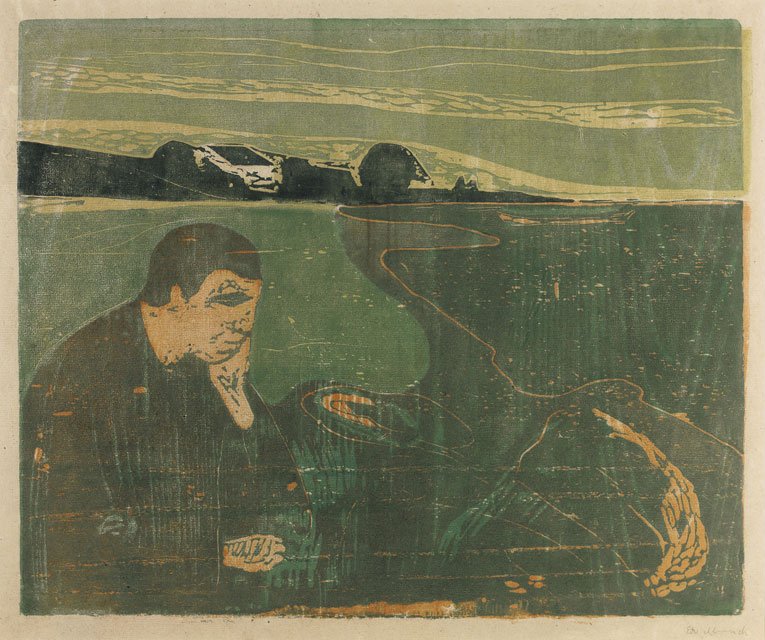
Edvard Munch, Melancholy (Evening),1896, woodcut, 37.6 x 45.5. cm, Munch Museum, Oslo. Edvard Munch, Attraction, 1896, Lithograph, 47.2 x 35.5 cm, Munch Museum, Oslo.
Edvard Munch, The Sick Child, 1896, Lithograph, 42.1 x 56.5 cm, The Munch Museum, Oslo.
Edvard Munch, Evening, Melancholy I, woodcut, 1896.
Edvard Munch, Stéphane Mallarmé, 1896, lithograph.
Edvard Munch, August Strindberg, 1896, lithograph.
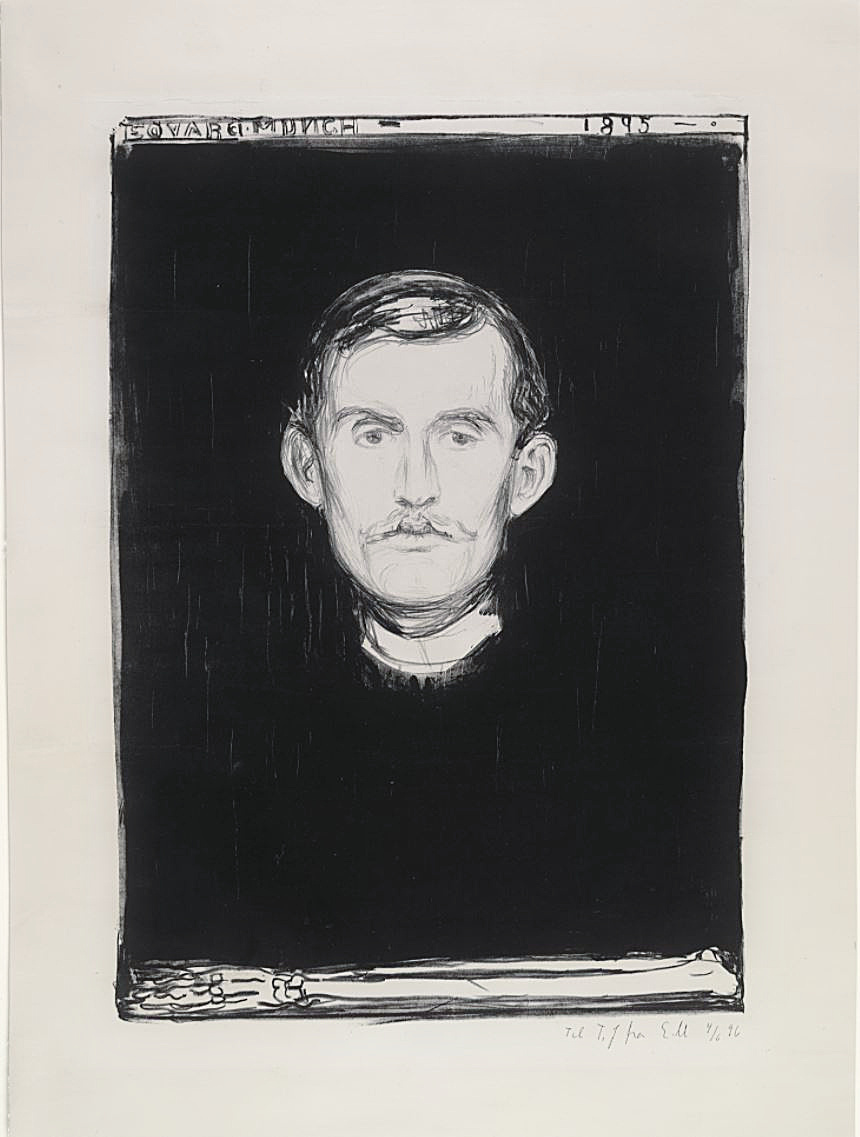
Edvard Munch, Self-portrait, 1895, Lithograph, 45.5×31.7 cm, Museum of Modern Art, New York. Munch was 31 years when he produced this self-portrait. It is a memento mori – a reminder of death. The bones at the bottom of the image are paired with the artist’s name and the date of the lithograph’s creation at the top. The floating head in a sea of darkness was a familiar motif in art in the 1890’s expressing in part the cosmic and ontological realities of humanity. Edvard Munch, Lady From the Sea (detail), 1896, oil on canvas. 100 cm × 320 cm, The Munch Museum, Oslo. Edvard Munch, The Voice Summer Night, 1896, 90 cm × 119 cm, Munch Museum, Oslo Edvard Munch, Paris Boulevard, 1896, oil on canvas, 96.5 x 130 cm, Munch Museum, Oslo.
Love, Women, and the Femme Fatale
In 1898 Munch met Tulla (Mathilde Larsen) and they became lovers. Munch continued a productive period of art-making as he continually refused to marry Tulla. Munch portrayed many artworks displaying his view of life and death and the destructive force of love where both man and woman suffer– Madonna (1893), Salome, The Maiden and the Heart (1896), Under the Yoke (1896), Cruelty, The Woman and the Urn (1896), and, later, his Alpha and Omega lithograph series (1909). Munch remained fascinated by women as expressed in The Kiss (1892), The Three Stages of Women (1894), and The Dance of Life (1900).
One explanation of the ambivalent relationship of Munch the artist and Woman as artistic subject may be understood through the Symbolist art aesthetic. Symbolism connoted the idea of a desirable union of the human being with a philosophic ideal. In its view, Woman, though called real is a false appearance, and thereby not ideal. Further, Woman acts mainly as a temptress, the then-popular notion of a femme fatale, as she reveals man’s animal nature which obscures and prevents the desirable union to the ideal. Woman must be avoided and, if engaged by man, done so with peril.
Munch was an idealist before he became a Symbolist, and, as Christian Krohg ominously wrote about him in 1892: “dares to subordinate Nature, his model, to the mood.“
Edvard Munch, Lonely People, 1899.
Expressionism and Personal Crisis
In 1899 Munch exhibited at the Venice Biennale and in Dresden. The Berlin Secession held its first exhibition in 1899 on its own premises but did not invite Edvard Munch. Though the Berlin group invited no foreigners that year, Munch’s art continued to be viewed by status quo cognoscenti as “undesirable.” Yet, at the same time, Munch’s art was beginning to influence young Expressionist artists in Germany. In artworks such as The Voice and Summer’s Night, Munch appealed to these younger avant-garde artists for his illustrating the upsurge and resonance of raw emotion.
Edvard Munch, The Inheritance, 1897-99, oil on canvas, 141 x 121 cm, The Munch Museum, Oslo. Edvard Munch, Two people, 1899, oil on canvas, 175 x 143 cm, Munch Museum, Oslo
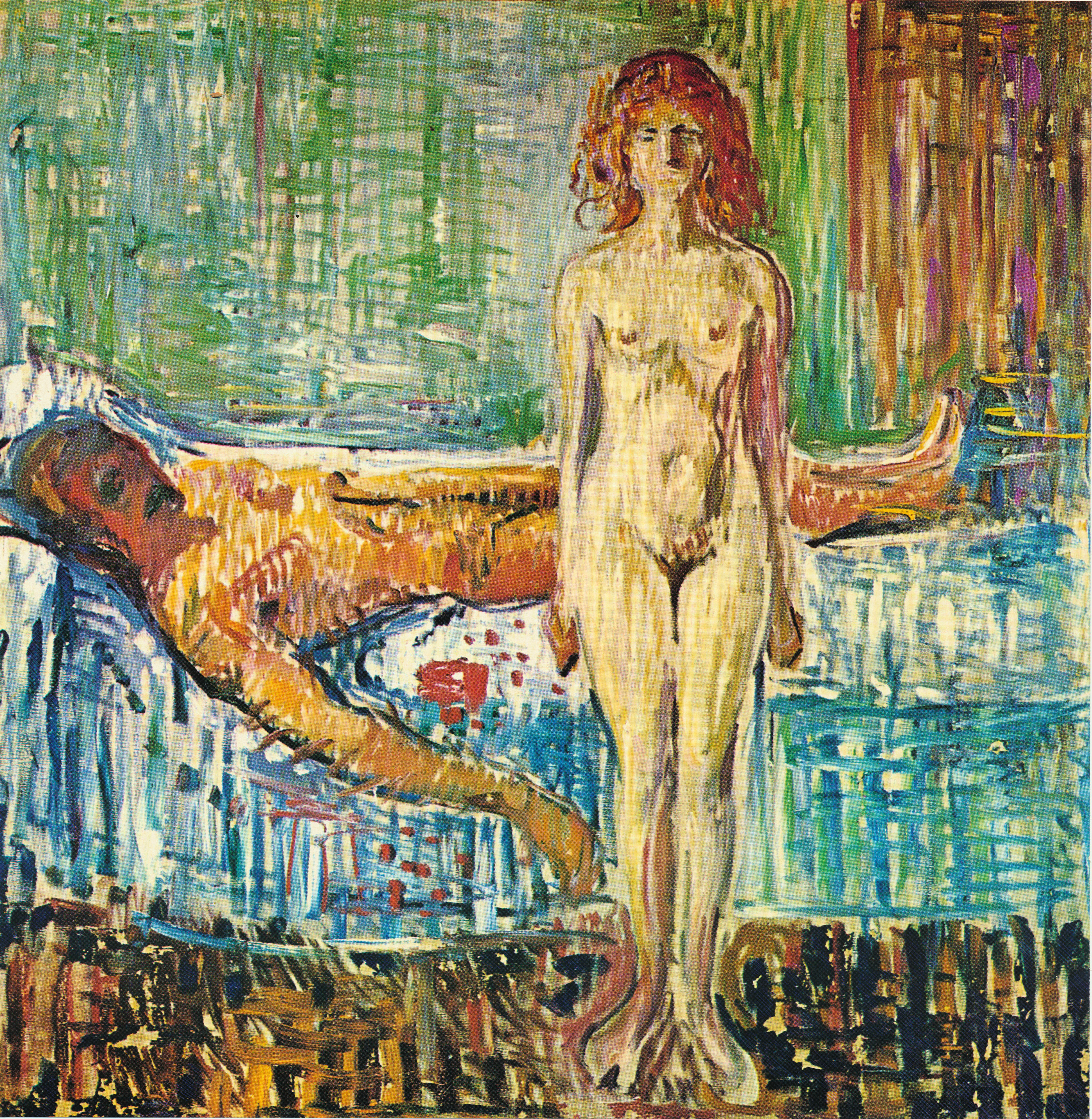
Edvard Munch, Amor and Psyche, 1907, oil on canvas, 118 x 99 cm, Munch Museum, Oslo. Edvard Munch, Marat’s death, 1907, oil on canvas, 151 x148 cm, Munch Museum. Edvard Munch, The Murderess, 1906, Munch museum.
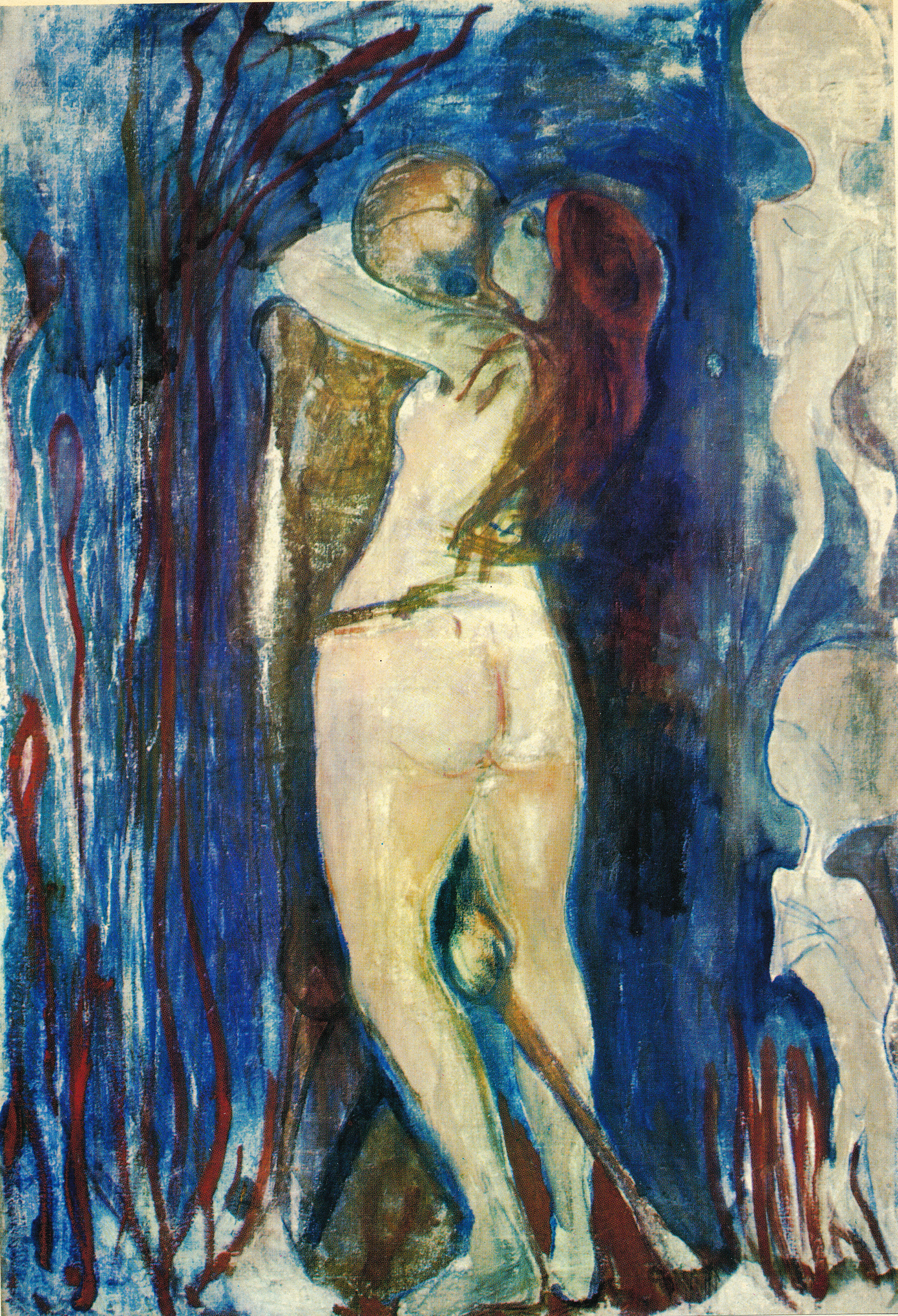
Edvard Munch, Death of Marat I, 1907, 150 x 199 cm, Munch Museum, Oslo. Edvard Munch, Kiss by the Window, 1897, oil on canvas, 99 x 80.5 cm, The Munch Museum, Oslo. Edvard Munch, Death and the Maiden, 1893, oil on canvas, 128 x 86 cm, The Munch Museum, Oslo.Edvard Munch, Man and Woman, 1898, oil on canvas, Bergen. Edvard Munch, Stanislaw Przybyszewski (The Vampire), Oil and/or tempera on unprimed cardboard, 1893.Edvard Munch, Weeping Nude, 1913–1914, 110 cm × 135 cm, Munch Museum, Oslo.
Love, Tulla Larsen, and Personal Turmoil
Little is known about Munch’s personal relationships with individual women that would greatly enlighten the artist’s overall character and how these relationships’ impacted his artwork in his adult years. Fantastic stories are told. How, in his room at Åsgårdstrand with an unknown woman (likely Tulla), did a gunshot go off in Fall 1902 from a revolver that injured Munch’s hand? Munch successfully chased Tulla out of his life, though after she married another man, the artist felt betrayed by Love and brooded over it. Even as Munch had numerous short-lived affairs with beautiful women who wanted to marry him, he fled them all and verbally expressed no known regrets. Throughout his life, Edvard Munch never married.
The Frieze of Life and Growing Recognition
Munch started the year 1900 in Gudbrandsdalen and moved on to Berlin. In 1901 he painted in Nordstrand and in 1902 returned to Berlin. Along with artwork of Édouard Manet, Wassily Kandinsky (1866-1944), and Claude Monet, Munch exhibited at the Berlin Secession in 1902. He had continually worked at the Frieze of Life, the group of images representing human existence, a subject that fascinated the artist. He exhibited 22 paintings from the completed Frieze at that year’s Berlin Secession. Though the Berlin critics began to appreciate Munch’s art, the public continued to view him as warped and weird. In 1902 he met ophthalmologist Dr. Max Linde (1862-1940), an art collector and author of a Munch study while Hamburg judge and art collector Gustav Schiefler (1857-1935) started a catalogue of Munch’s voluminous graphic art that year.
Edvard Munch, Self Portrait Against a Green Background and Caricature Portrait of Tulla Larsen, 1905. Edvard Munch, Ashes, 1893, Edvard Munch, The Dance of Life, 1899-1900.
The concept of The Frieze of Life became his lifelong artistic project examining love, desire, anxiety, jealousy, suffering, and death.
Edvard Munch, Madonna, 1894, Munch Museum, Oslo.Edvard Munch, Gustav Schiefler, 1906/06, Ketterer Kunst, Munich. A judge and avid print collector, Gustav Schiefler compiled a catalog on the prints of Edvard Munch as well as Emile Nolde (18967-1956), Max Liebermann, and Ernst Ludwig Kirchner (1880-1938).
Eva Mudocci and Artistic Inspiration
In 1903 Munch visited Dr. Max Linde in Lübeck and painted a frieze for his house though Dr. Linde ended up rejecting Munch’s work. Munch exhibited in Berlin at Paul Cassirer modern art gallery.
That same year, Munch met British violinist Eva Mudocci (1872-1953) in Paris where Munch had an exhibition. Fully aware of his commitment only to art, Eva Mudocci reportedly became Munch’s mistress, and Munch soon immortalized her in The Woman with the Brooch.
Edvard Munch, The Brooch, 1903, lithograph, 60×46 cm.
International Success and New Commissions
In this period, Munch received several commissions for portraits and prints. In 1904 the German rights to his graphic art and paintings was sold to two prominent galleries. Munch exhibited in Vienna and Paris and became a member of the Berlin Secession. In 1905 Munch exhibited 75 paintings in Prague at the Manés Gallery and in 1906 was invited to exhibit with the Fauves in Paris. In Berlin, Munch painted stage sets for Henrik Ibsen plays (Ghosts and Hedda Gabler) at the Max Reinhardt Theatre. A frieze that was commissioned for the Reinhardt Theatre was sold by its director before the frieze was unveiled to the public.
Warnemünde (1907), Eva Mudocci, and Unanswered Questions
In 1907 Munch summered in Warnemünde as he turned his attention to human figures and situations. He exhibited with Henri Matisse and Paul Cézanne at Cassirer Gallery, the purchaser of the German rights to Munch’s graphic art. In November 1907 Eva Mudocci went on a concert tour in Norway for three weeks where She and Munch spent time together in Åsgårdstrand and Oslo. In early 1908 Eva Mudocci was pregnant and gave birth to twins in Denmark at the end of the year. Friends insisted that Munch must have been the father but Mudocci never said who the father was.
Edvard Munch, Salome, 1903, lithograph.
Nervous Breakdown and Treatment
Almost simultaneous with Mudocci’s pregnancy, 45-year-old Edvard Munch had a nervous breakdown. In December 1908 he checked himself into a clinic in Copenhagen for several month’s treatment for alcoholism and exhaustion. Munch later wrote: “My condition was verging on madness—it was touch and go.”
Recovery and a Turning Point in Art
In 1909, Mudocci and Munch parted ways though they stayed in touch for the next 18 years, until 1927. At the clinic, Munch painted portraits of his doctor (Dr. Daniel Jacobsen, 1909) and a nurse as well as close friends and a self-portrait using short, thick, and forceful brushstrokes—it was a watershed moment in Munch’s life and art.7
Edvard Munch, Fertility, 1898, woodcut, 42 x 51.7 cm, The Munch Museum, Oslo. Edvard Munch, Women on the Beach, 1898, woodcut, 45.5 x 50.8 cm, The Munch Museum, Oslo. Edvard Munch, Red and White, 1899–1900, 93 cm × 129 cm, Munch Museum, Oslo.
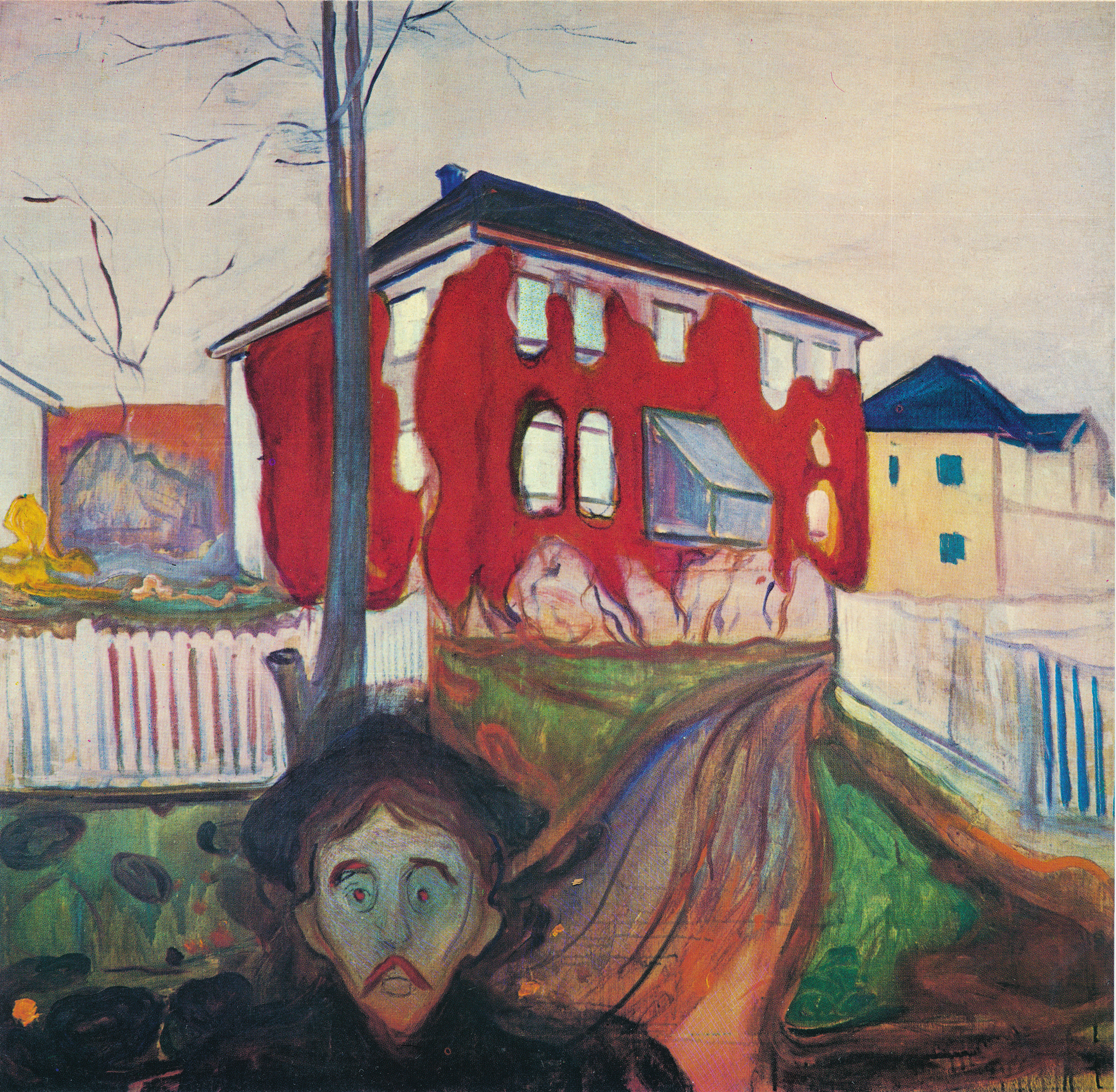
Edvard Munch, Portrait of Friedrich Nietzsche, 1906, Thiel Gallery, Stockholm. Edvard Munch, Red Virginia Creeper, 1900, oil on canvas, 120 x 120 cm. Edvard Munch, Young People on the Beach, 1902, oil on canvas, 90 x 174 cm. Edvard Munch, On the beach, 1905, oil on canvas, 81x 121 cm. Edvard Munch, Bathing Boys, c. 1904, oil on canvas, 194 x 294 cm.
Edvard Munch, Shore with Red House, 1904, oil on canvas, 69 × 109 cm, Munch Museum. Edvard Munch, Train Smoke,1900, 84 cm × 109 cm, Munch Museum, Oslo.
Munch’s emotional intensity and expressive use of color and form helped lay the foundations for German Expressionism.
Edvard Munch, At The Sign of the Sweet Girl, 1907, oil on canvas, 85 x 130 cm. Edvard Munch, Nude by the bed, c. 1907, oil on canvas, 120×121 cm
Edvard Munch, Nude by the bed, c.1907, oil on canvas 120×121 cm Edvard Munch, Four Girls Åsgårdstrand, 1905, oil on canvas, 87x111cm
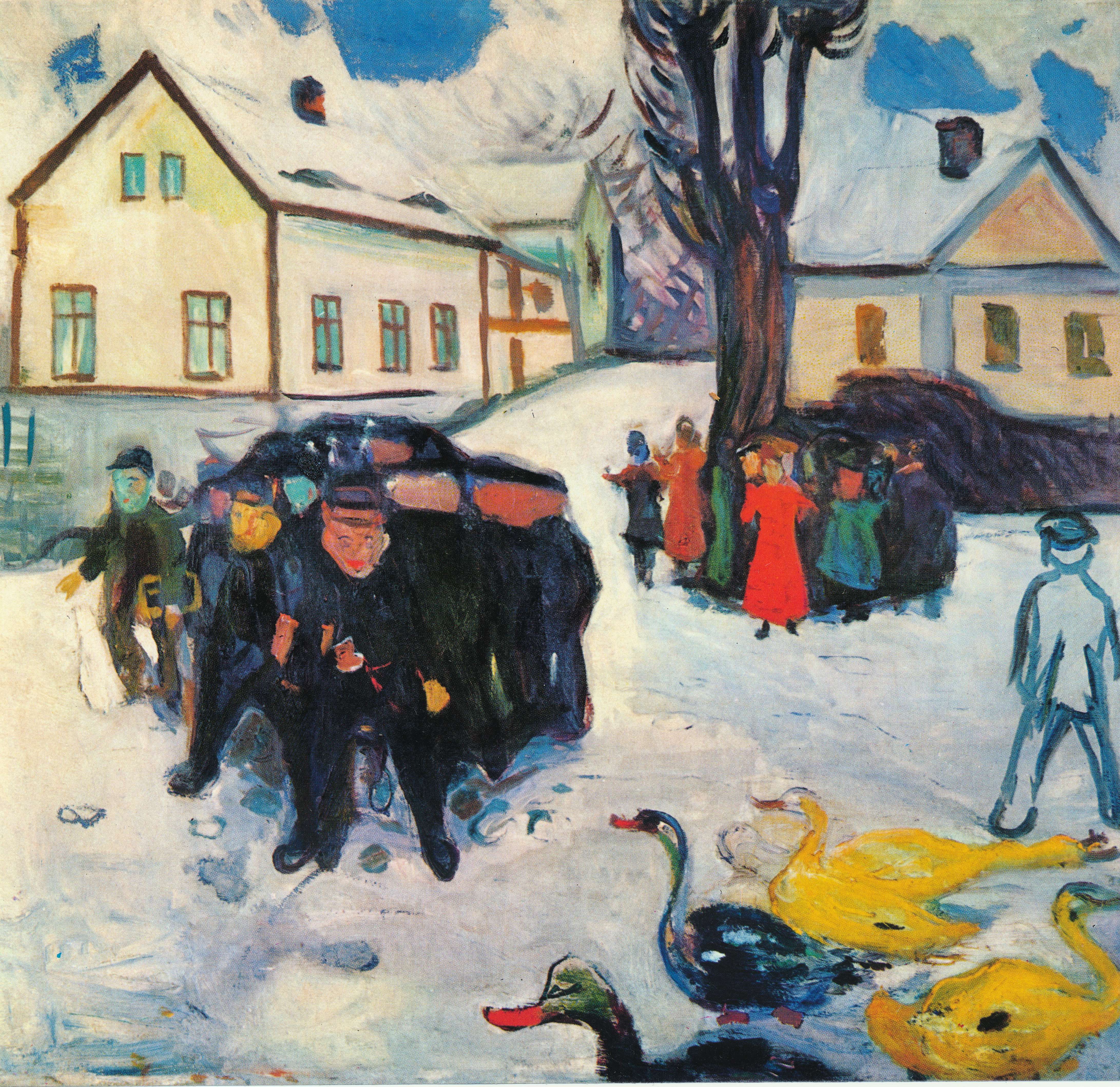
Edvard Munch, Avenue in the snow, 1906, oil on canvas, 80 x100 cm, Edvard Munch, Self-Portrait with Brushes, 1904, 197×91 cm, Munch Museum, Oslo. Edvard Munch, Self-Portrait with a Bottle of Wine, 1906, 110 cm × 120, The Munch Museum, Oslo. Edvard Munch, Jealousy, 1907, oil on canvas, 75 x 98 cm, The Munch Museum, Oslo. Edvard Munch, Deathbed, 1900, oil on canvas, 100 x 110 cm. Edvard Munch, Village Street, 1905, oil on canvas, 100×100 cm. Edvard Munch, Prayer, 1902, woodcut, 45.8 x32.5 cm. Edvard Munch, Dr. Daniel Jacobson, 1909, oil on canvas, 204 x 112 cm. Edvard Munch, Nurse, 1909, dry point, 20.5×15.2 cm.Edvard Munch, Reclining woman, pencil and watercolor, 17.3 x 25 cm. (6.8 x 9.8 in.).see – https://www.artnet.com/artists/edvard-munch/reclining-woman-fTQcrFe4Y0qTp8QEmczZyQ2
Return to Norway (1909) and Public Recognition
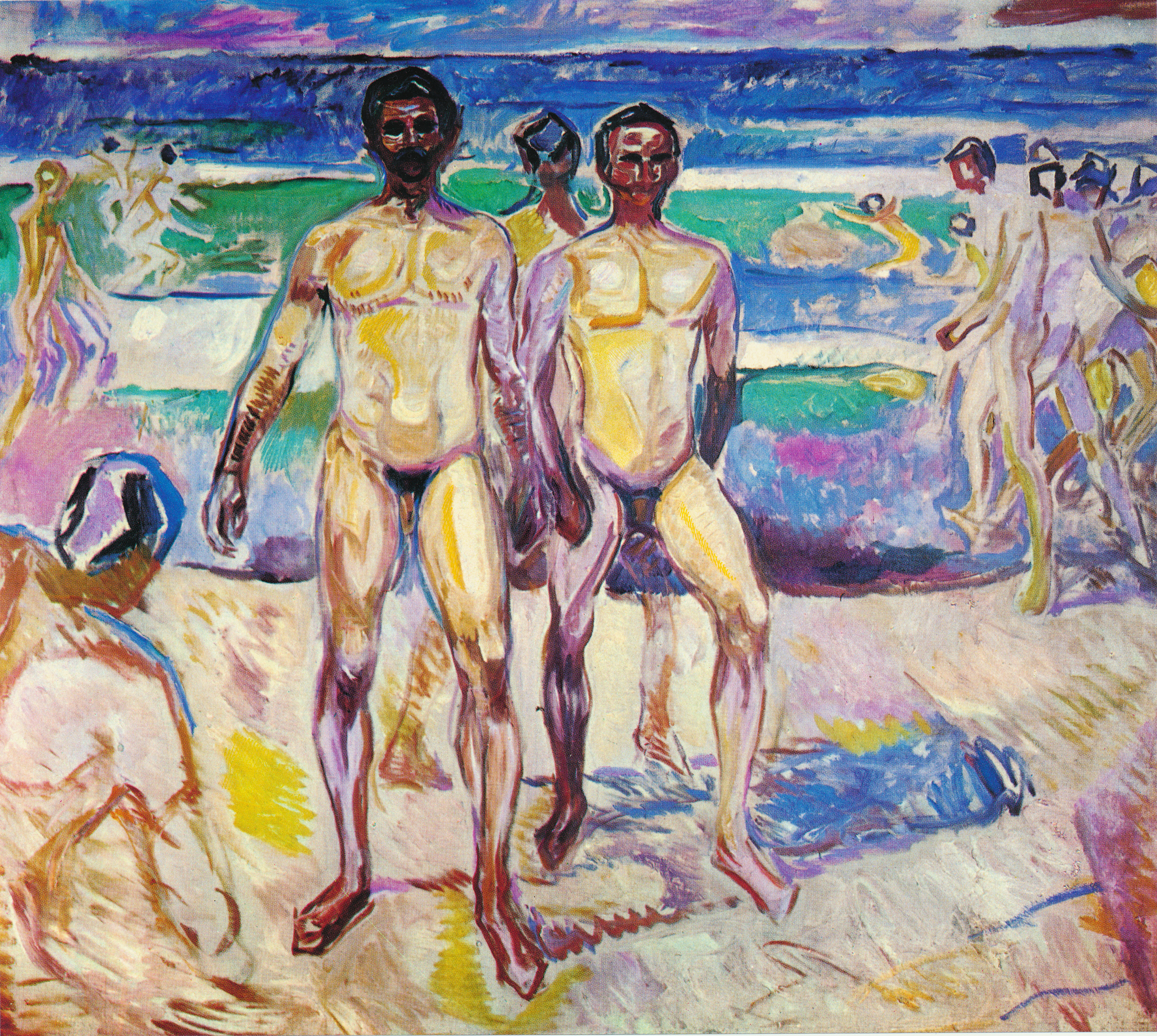
Following his recuperation at the clinic, Munch was sober for the first time in years. In 1907 and 1908 he created Bathing Men, a scene of cleansing by immersion reminiscent of Paul Cézanne (1839-1906). Suddenly the totality of Munch’s art of the 1890’s and early 1900’s, where he explored his dark and tormented feelings, thoughts, and experiences, became passé for the artist. With the same vigorous brushwork and unnatural, expressionistic colors, Munch turned to painting everyday subjects.
Renting a house in Kragerø, a fishing village in Norway, Munch permanently settled in his homeland. In 1912 he exhibited in Cologne at the Sonderbund exhibition where he was ranked with Van Gogh, Gauguin and Cézanne. That year Munch had his first American exhibition In New York City. In 1913, the 50-year-old artist traveled extensively, had tributes paid to him, and rented larger quarters at Jeløya.
Murals, Museums, and National Honors
Munch turned to landscapes and large-scale art projects as he continued the murals for Oslo University which were, after lengthy controversy, finally accepted in 1914. Already a Knight of the Royal Order of St. Olaf since 1909, the Oslo National Gallery began buying some of Munch’s most important works – The Day After, Ashes, Puberty, Two Girls at the Verandah, and The Frenchman. The State museum received gifts from collectors as well. Olaf Schou (1861-1925) gave them Madonna, The Sick Child, Mother and Daughter, Girls on the Bridge and, later, The Scream, Death in the Sick Chamber, The Dance of Life, Girl at her Toilet, Betsy, Moonlight in Nice, and others.
Meanwhile, Munch decided to turn for inspiration to some of the outward obsessions of a new 20th century: its advancing technologies, mass media, high-speed transportation and urban life. 8
Edvard Munch, The Scream, 1910, oil, Munch Museum, Oslo. Edvard Munch, Self Portrait Bergen, 1916, oil on canvas, 90 x 60 cm. Edvard Munch, Bathing Men, 1907–1908, oil on canvas, 206 x 227.5 cm, Atheneum, Helsinki.Edvard Munch, The Seducer, 1913 Munch Museum, Oslo, Norway. Edvard Munch, The Day After, 1894/5, oil on canvas, National Gallery, Oslo. Edvard Munch, Moonlight in Nice, 1895, oil, National Gallery, Oslo. Edvard Munch, Death in the Sickroom, 1893, pastel on canvas, Munch Museum. Edvard Munch, Girls on the Bridge,1899-1901, National Gallery, Oslo. Edvard Munch, Mother and Daughter, 1897, Thyssen-Bornemisza National Museum, Madrid. Edvard Munch, Crouching Nude, 1919, oil on canvas, Munch Museum.Edvard Munch, Artist and his Model, 1919-1921, Thyssen-Bornemisza National Museum, Madrid.
Ekely, Isolation, and the Munch Museum Legacy
From 1914 until his death in January 1944, Munch sold nearly nothing but pictures bought by museums and new, commissioned work. Until then Munch had to sell pictures to live though he was reluctant and made replicas for himself. He did not sell works closely aligned to his emotional life. In 1916, Munch, now a famous artist, had finished the murals in the assembly Hall of Oslo University and purchased Ekely at Skøyen just outside the city. The artist constructed fences, let hedges and weeds grow tall, and closed off his residence to onlookers. Not strictly a misanthrope, Munch chose to live in glorious isolation. He hardly stayed in contact with family or relatives and permitted few friends to visit.
At Ekely Munch constructed interior and exterior studio spaces where, situated among works, Munch stored The Frieze of Life. At his death in January 1944 at Ekely, Munch bestowed all works in his possession to the city of Oslo– more than 1000 paintings, 15,000 prints, and about 500 watercolors and drawings. There was also some sculpture. These artworks comprise most of today’s Munch Museum – see https://www.munchmuseet.no/
Late Work and Final Years
In 1922 Munch painted 12 murals for a chocolate factory in Oslo. In the 1920’s and 1930’s he exhibited his art frequently— in Zurich, Basel, Berne, Berlin, Mannheim, Dresden. In 1936 and 1937, he exhibited in London, Amsterdam and Stockholm. There were major shows and retrospectives.
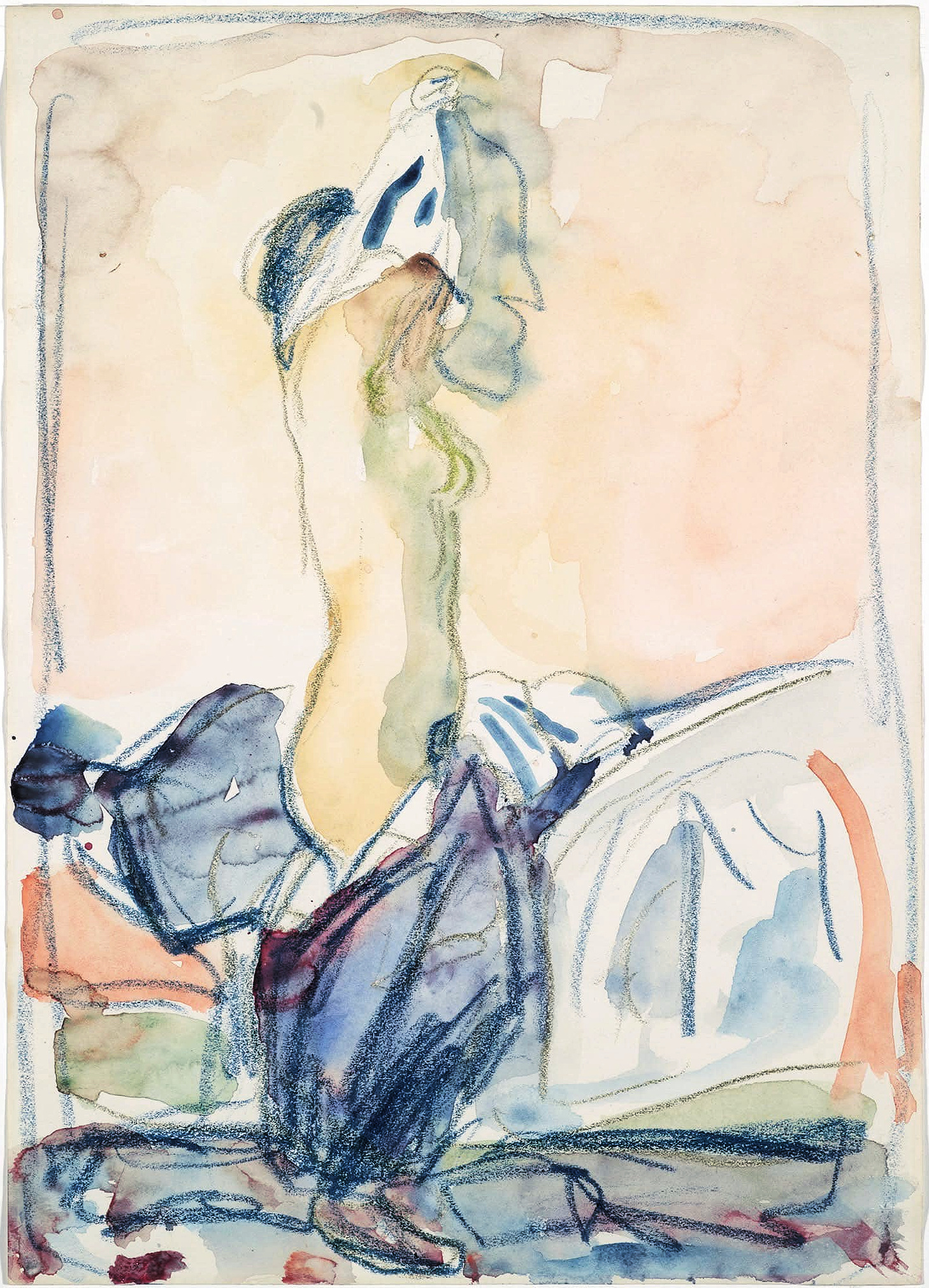
Edvard Munch, Modellen kler av seg (Model undressing), 1919-1924. Akvarell, fargestift (Watercolor, crayon). Munchmusee, Oslo.
LAST PAINTINGS RETURN TO EARLIER DARKER SUBJECTS AND THEMES
Besides monumental work for public projects, Munch late paintings included almost genre-type scenes such as horses and workers in the field, fishermen, an elm forest, fruit trees and a garden. While the main mural for Festival Hall at Oslo University is mostly decorative, The Sun (1909-11) recalls aspects of Symbolism that Munch depicted in his darker pictures of the 1890s. Some late pictures stirred with the memory of past, darker experiences such as The Death of the Bohemian (1926) and The Bohemian’s Wedding (1926). In 1915 he painted a new version of the Death Struggle from 1895.
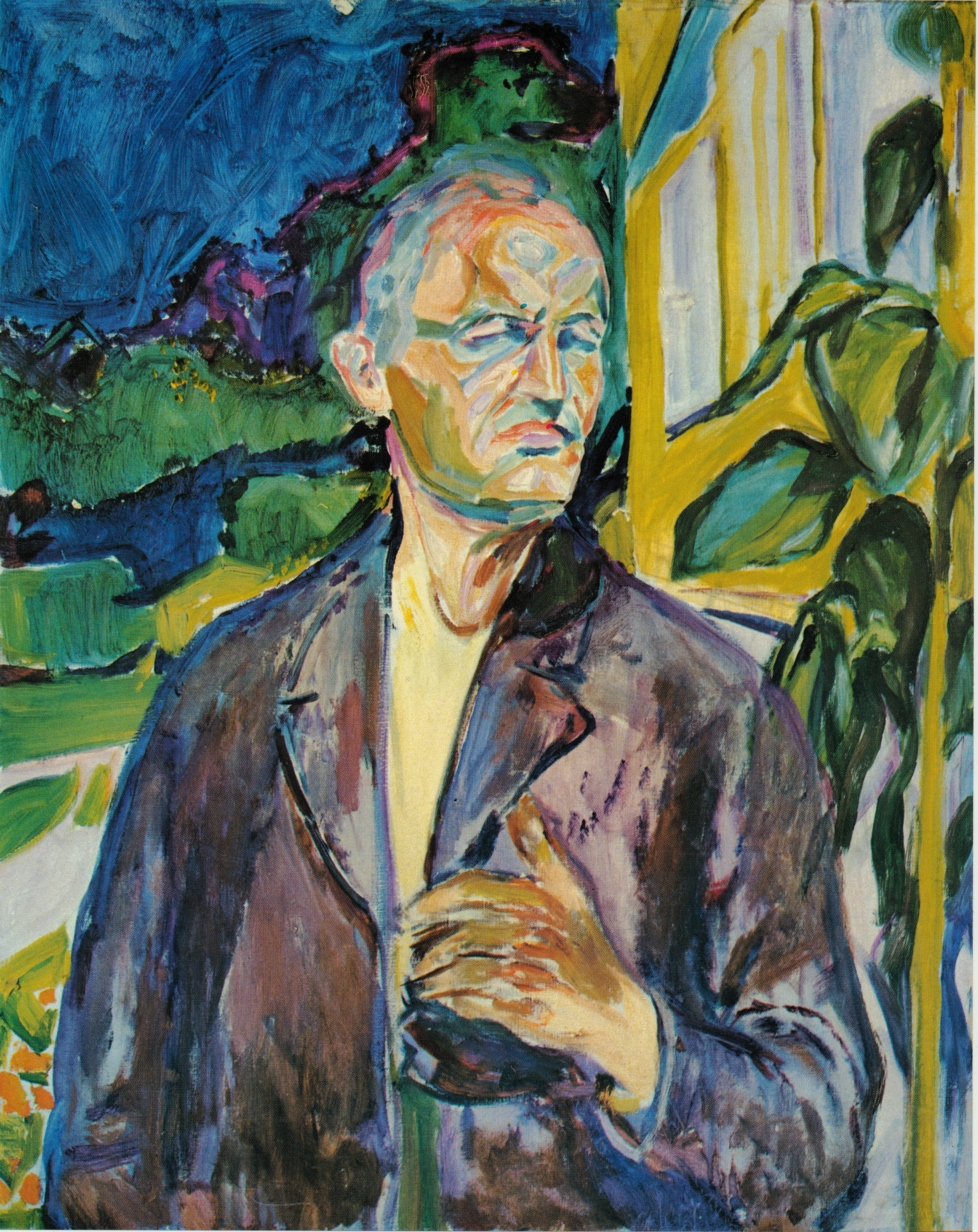
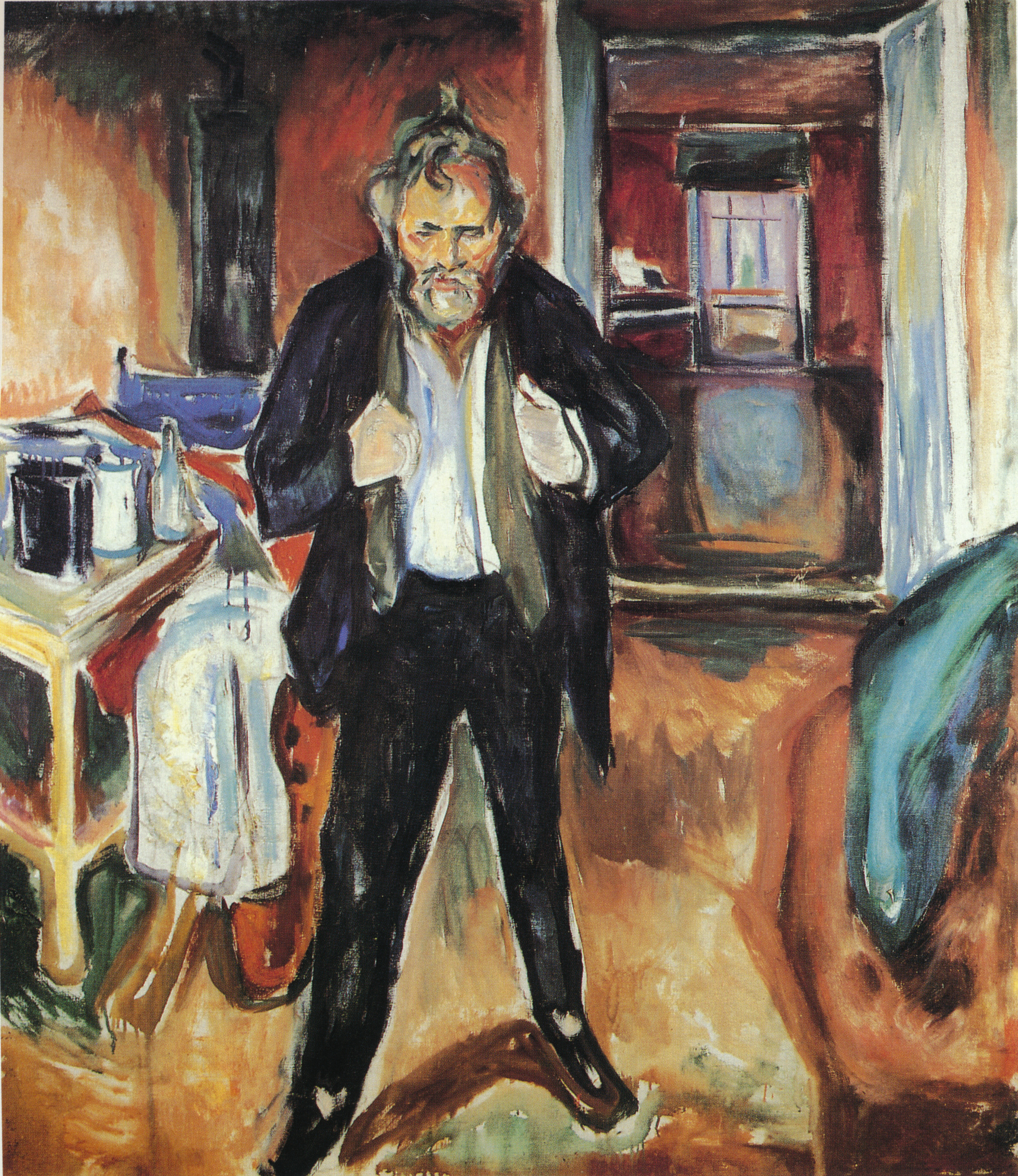
After contracting Spanish Flu in 1919, Munch painted his self-portrait as a convalescent from sickness and death. Twenty years later the artist painted a self portrait as an insomniac in The Night Wanderer (1939). Munch produced paintings and graphic work in great number. There are self-portraits; portraits; beach motifs; motifs from life of workers, fishermen, and farmers; garden scenes; nudes; landscapes; the theme of Faust, etc.
When Norway was invaded by Nazi Germany in April 1940 during World War II, Munch’s exhibitions outside Norway ceased by 1942. In 1937 the Nazis had labeled 37 of Munch’s paintings as “degenerate art” and they were removed and sold. After the invasion of Norway, Munch refused to have anything to do with the German occupiers. Munch stayed in Norway where he died at Ekely on January 23. 1944, at 80 years old.9
Edvard Munch, Uninvited Guests, 1932-1935, oil on canvas, 75 x 101 cm, Munch Museum, Oslo.
Following a nervous breakdown in 1908-09, his art evolved toward brighter subjects, landscapes, workers, nature, and monumental mural projects.
The Sun, 1909-11.
FOOTNOTES
1. Odilon Redon, To Myself, translated by Mira Jacob and Jeanne L. Wasserman, New York: George Braziller, Inc., 1986, p. 23.
Quoted in Martha Kapos, The Post-Impressionists: A Retrospective, London: Beaux Arts Editions, 1993, pp. 175-180.
Jean Selz, Edvard Munch, New York: Crown Publishers, Inc., 1974, p. 6 and 24
2. Sue Prideaux, Edvard Munch: Behind the Scream, New Haven, CT: Yale University Press, 2005, p. 2.
Arne Eggum, Edvard Munch: Paintings, Sketches, and Studies, , New York: C.N. Potter, 1984, pp. 196, 203, 228, 236.
Edward Lucie-Smith, Symbolist Art, Thames & Hudson, 1972, p. 189.
8. J.P. Hodin, Edvard Munch, Thames & Hudson, 1972, pp. 127-128.
Sue Prideaux, Edvard Munch: Behind the Scream, New Haven, CT: Yale University Press, 2005, p. 373. 9. J.P. Hodin, Edvard Munch, Thames & Hudson, 1972, p. 167.
Michael Gibson, Symbolism, Cologne: Taschen, 1999, p.149.
Munch, Langarred, Johan H., Revold, Residar, New York: Universe Books, 1964, p. i-ii; 1.
BIBLIOGRAPHY
Bischoff, Ulrich, Edvard Munch 1863-1944, Cologne: Taschen, 2000. Delevoy, Robert L., Symbolists and Symbolism, New York: Rizzoli, 1982. Dube, Wolf-Dieter, Expressionism, New York: Oxford University Press, 1972. Eggum, Arne, Edvard Munch: Paintings, Sketches, and Studies, New York: C.N. Potter, 1984. Gibson, Michael, Symbolism, Cologne: Taschen, 1999. Goldwater, Robert, Symbolism, New York: Westview Press, 1998. Hodin, J.P., Edvard Munch, Thames & Hudson, 1972. Jullian, Philippe, Dreams of Decadence: Symbolist Painters of the 1890s, New York: Praeger Publishers, 1971. Kapos, Martha, The Post-Impressionists: A Retrospective, London: Beaux Arts Editions, 1993. Langarred, Johan H., Revold, Residar, Munch, New York: Universe Books, 1964. Lucie-Smith, Edward, Symbolist Art, Thames & Hudson, 1972. Mathews, Nancy Mowll, Paul Gauguin: An Erotic Life, Yale University Press, New Haven, 2001, p. 207. Paret, Peter, The Berlin Secession, Cambridge, MA: Harvard University Press, 1980. Prideaux, Sue, Edvard Munch: Behind the Scream, New Haven, CT: Yale University Press, 2005. Rapetti, Rodolphe, Symbolism, Paris: Flammarion, 2005. Redon, Odilon, To Myself, translated by Mira Jacob and Jeanne L. Wasserman, New York: George Braziller, Inc., 1986. Selz, Jean, Edvard Munch, New York: Crown Publishers, Inc., 1974.
LIST OF WORKS BY EDVARD MUNCH
Edvard Munch, Self-portrait, oil on canvas, 1886.
Edvard Munch, The Scream, crayon, 1893.
Edvard Munch, Melancholy, Laura.
Edvard Munch, Self-portrait, 1882, Munch Museum, Oslo.
Edvard Munch, Interior Pilestredet, oil on canvas, 1881, Munch Museum, Oslo.
Edvard Munch, Still Life with Jar, Apple, Walnut and Coconut, 1881, Munch Museum, Oslo.
Edvard Munch, From Saxegårdsgate, c. 1882, oil on canvas, Lillehammer Art Museum.
Edvard Munch, Laura, 1882, oil on paper (top) and oil on cardboard, Munch Museum, Oslo.
Edvard Munch, Andreas Studying Anatomy, 1883, Oil on Cardboard, Munch Museum, Oslo.
Edvard Munch, Tête-à-tête, oil on canvas, 1885, Munch Museum, Oslo.
Edvard Munch, The Sick Child (original version), 1885-86, National Gallery, Oslo.
Edvard Munch, Hans Jæger, 1889, National Gallery, Oslo.
Edvard Munch, Night on the Beach, 1889, Bergen Art Museum.
Edvard Munch, Self Portrait, c. 1888, Munch Museum, Oslo.
Edvard Munch, Portrait of the Painter Jensen -Hjell, 1885, National Gallery, Oslo.
Edvard Munch, Night In St. Cloud, 1890, oil on canvas, National Gallery, Oslo.
Edvard Munch, Evening on the Karl Johan, 1889, oil, Bergen Art Museum.
Edvard Munch, Kiss by the Window, 1891, Munch Museum, Oslo.
Edvard Munch, Evening Melancholy, 1891, oil, crayon, pencil on canvas, Munch Museum, Oslo.
Edvard Munch, Rue Lafayette, 1891, oil on canvas, National Museum, Oslo.
Edvard Munch, Rue de Rivoli, 1891, oil on canvas, Fogg Art Museum, Harvard University, Cambridge, Massachusetts.
Edvard Munch, Melancholy, 1893, oil, Munch Museum.
Edvard Munch, Melancholy (The Yellow Boat), 1891, oil, National Gallery, Oslo.
Edvard Munch, Kiss by the window, 1892, oil, National Gallery, Oslo.
Edvard Munch, The Kiss, 1892, oil, Private Collection.
Edvard Munch, The Girl by the Window, 1893, oil, Art Institute of Chicago.
Edvard Munch, Separation, 1893-94, Gouache, watercolor and crayon on paper, Munch Museum, Oslo.
Edvard Munch, Parting, 1894, oil on canvas, 67 x 128 cm, Munch Museum, Oslo.
Edvard Munch, Three Stages of Women (Sphinx), c. 1894, Bergan.
Edvard Munch, Puberty, 1894–1895, oil on canvas, 151.5 x 110 cm, National Gallery, Oslo.
Edvard Munch, Anxiety, 1894, Munch Museum, Oslo.
Edvard Munch, Despair, 1893, oil on canvas, Munch Museum, Oslo.
Edvard Munch, Inger in Black and Violet, 1892, oil on canvas, National Museum, Oslo.
Edvard Munch, The storm, oil on canvas, 1893, Museum of Modern Art, New York.
Edvard Munch, Summer Night’s Dream The Voice, 1893, Museum of Fine Arts, Boston, Massachusetts.
Edvard Munch, Coastal Mysticism, 1892.
Edvard Munch, Sketch of the Model Posing, 1893, pastel on cardboard, The Solomon R. Guggenheim Museum, New York.
Edvard Munch, The Hands, 1893, oil on canvas, 91 x 77 cm, Munch Museum, Oslo.
Edvard Munch, At the Roulette Table in Monte Carlo, 1892, oil, Munch Museum, Oslo.
Edvard Munch, Self-Portrait Under the Mask of the Woman, 1893, oil, Munch Museum, Oslo.
Edvard Munch, Self Portrait with Burning Cigarette, 1895, oil, Munch Museum, Oslo.
Edvard Munch, Self-portrait in Hell, c. 1895, oil on canvas, 82 x 60 cm, Munch Museum, Oslo.
Edvard Munch, Stanislaw Przybyszewski,1895, pastel, 62x55cm, Munch Museum, Oslo.
Edvard Munch, The Scream, 1893, oil, tempera, pastel on cardboard, National Museum, Oslo.
Edvard Munch, The Scream, 1895. Ink.
Edvard Munch, The Kiss, 1895, Dry-point and aquatint, 34.8 x 28 cm, Munch Museum, Oslo.
Edvard Munch, The Kiss, woodcut, n.d., 44.7 x 44.7. cm, Munch Museum, Oslo.
Edvard Munch, Jealousy, 1896, Lithograph, 46.5 x 56.5 cm, Munch Museum, Oslo.
Edvard Munch, Death and the Maiden, 1894, Dry-point, 30.2 x 22 cm, Munch Museum, Oslo.
Edvard Munch, Melancholy (Evening),1896, woodcut, 37.6 x 45.5. cm, Munch Museum, Oslo.
Edvard Munch, Attraction, 1896, Lithograph, 47.2 x 35.5 cm, Munch Museum, Oslo.
Edvard Munch, The Sick Child, 1896, Lithograph, 42.1 x 56.5 cm, The Munch Museum, Oslo.
Edvard Munch, Evening, Melancholy I, woodcut, 1896.
Edvard Munch, Stéphane Mallarmé, 1896, lithograph.
Edvard Munch, Auguste Strindberg, 1896, lithograph.
Edvard Munch, Self-portrait, 1895, Lithograph, 45.5×31.7 cm, Museum of Modern Art, New York.
Edvard Munch, Lady From the Sea (detail), 1896, oil on canvas. 100 cm × 320 cm, The Munch Museum, Oslo.
Edvard Munch, The Voice Summer Night, 1896, 90 cm × 119 cm, Munch Museum, Oslo
Edvard Munch, Paris Boulevard, 1896, oil on canvas, 96.5 x 130 cm, Munch Museum, Oslo.
Edvard Munch, The Inheritance, 1897-99, oil on canvas, 141 x 121 cm, The Munch Museum, Oslo.
Edvard Munch, Two people, 1899, oil on canvas, 175 x 143 cm, Munch Museum, Oslo.
Edvard Munch, Amor and Psyche, 1907, oil on canvas, 118 x 99 cm
Edvard Munch, Marat’s death, 1907, oil on canvas, 151 x148 cm, Munch Museum.
Edvard Munch, The Murderess, 1906, Munch museum.
Edvard Munch, Death of Marat I, 1907, 150 x 199 cm, Munch Museum, Oslo.
Edvard Munch, Kiss by the Window, 1897, oil on canvas, 99 x 80.5 cm, The Munch Museum, Oslo.
Edvard Munch, Death and the Maiden, 1893, oil on canvas, 128 x 86 cm, The Munch Museum, Oslo.
Edvard Munch, Man and Woman, 1898, oil on canvas, Bergen.
Edvard Munch, Stanislaw Przybyszewski (The Vampire), Oil and/or tempera on unprimed cardboard, 1893.
Edvard Munch, Weeping Nude, 1913–1914, 110 cm × 135 cm, Munch Museum, Oslo.
Edvard Munch, Self Portrait Against a Green Background and Caricature Portrait of Tulla Larsen, 1905.
Edvard Munch, Ashes, 1893,
Edvard Munch, The Dance of Life, 1899-1900.
Edvard Munch, Madonna, 1894, Munch Museum, Oslo.
Edvard Munch, The Brooch, 1903, lithograph, 60×46 cm.
Edvard Munch, Salome, 1903, lithograph.
Edvard Munch, Fertility, 1898, woodcut, 42 x 51.7 cm, The Munch Museum, Oslo.
Edvard Munch, Women on the Beach, 1898, woodcut, 45.5 x 50.8 cm, The Munch Museum, Oslo.
Edvard Munch, Red and White, 1899–1900, 93 cm × 129 cm, Munch Museum, Oslo.
Edvard Munch, Portrait of Friedrich Nietzsche, 1906, Thiel Gallery, Stockholm.
Edvard Munch, Red Virginia Creeper, 1900, oil on canvas, 120 x 120 cm.
Edvard Munch, Young People on the Beach, 1902, oil on canvas, 90 x 174 cm.
Edvard Munch, On the beach, 1905, oil on canvas, 81x 121 cm.
Edvard Munch, Bathing Boys, c. 1904, oil on canvas, 194 x 294 cm.
Edvard Munch, Shore with Red House, 1904, oil on canvas, 69 × 109 cm, Munch Museum. Edvard Munch, Train Smoke,1900, 84 cm × 109 cm, Munch Museum, Oslo.
Edvard Munch, At The Sign of the Sweet Girl, 1907, oil on canvas, 85 x 130 cm.
Edvard Munch, Nude by the bed, c. 1907, oil on canvas, 120×121 cm.
Edvard Munch, Nude by the bed, c. 1907, oil on canvas, 120×121 cm.
Edvard Munch, Four Girls Åsgårdstrand, 1905, oil on canvas, 87x111cm.
Edvard Munch, Avenue in the snow, 1906, oil on canvas, 80 x100 cm.
Edvard Munch, Self-Portrait with Brushes, 1904, 197×91 cm, Munch Museum, Oslo.
Edvard Munch, Self-Portrait with a Bottle of Wine, 1906, 110 cm × 120, The Munch Museum, Oslo.
Edvard Munch, Deathbed, 1900, oil on canvas, 100 x 110 cm.
Edvard Munch, Village Street, 1905, oil on canvas, 100×100 cm.
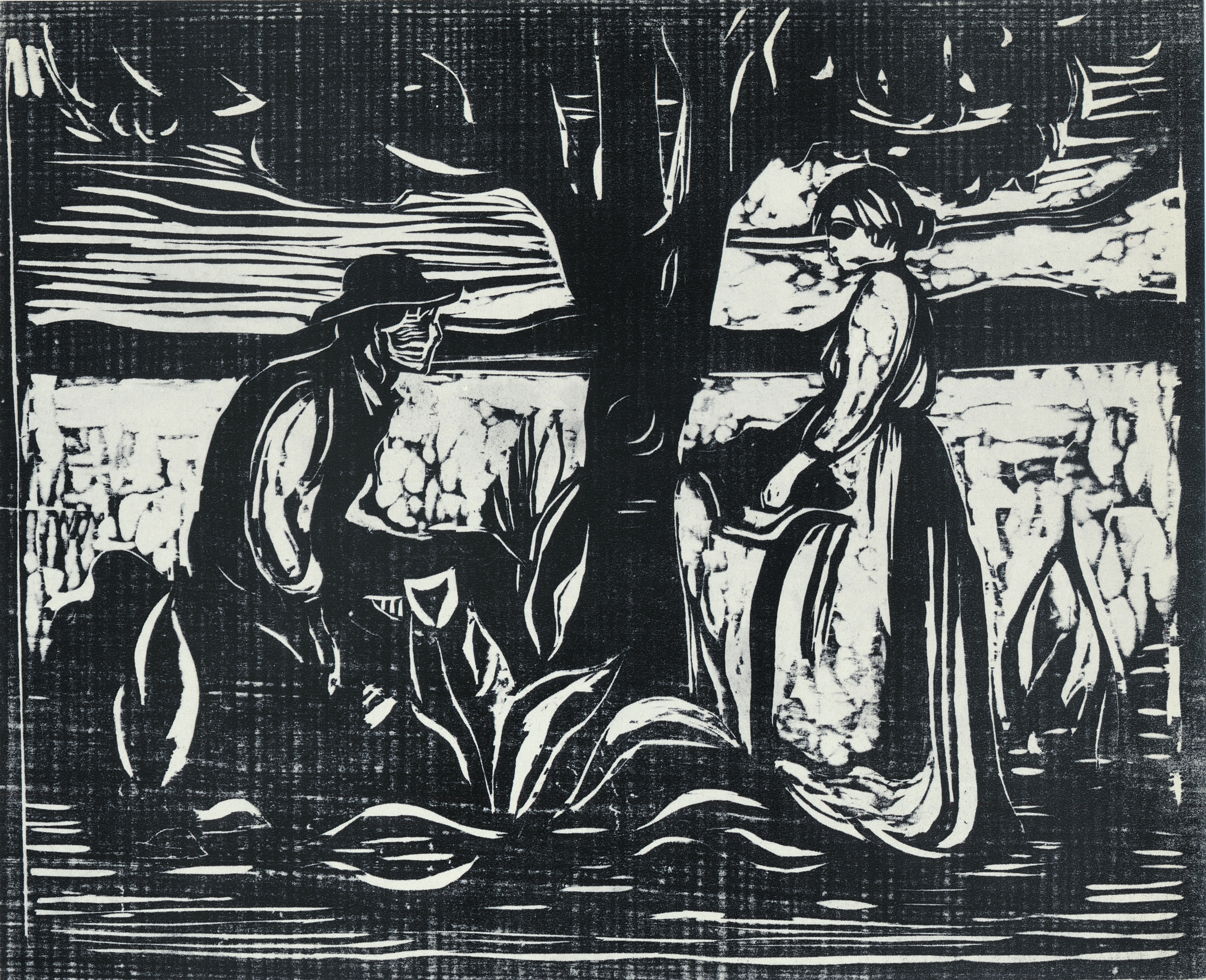
Edvard Munch, Prayer, 1902, woodcut, 45.8 x32.5 cm.
Edvard Munch, Dr. Daniel Jacobson, 1909, oil on canvas, 204 x 112 cm.
Edvard Munch, Nurse, 1909, dry point, 20.5×15.2 cm.
Edvard Munch, The Scream, 1910, oil, Munch Museum, Oslo.
Edvard Munch, Self Portrait Bergen, 1916, oil on canvas, 90 x 60 cm.
Edvard Munch, Bathing Men, 1907–1908, oil on canvas, 206 x 227.5 cm, Atheneum, Helsinki.
Edvard Munch, The Day After, 1894/5, oil on canvas, National Gallery, Oslo.
Edvard Munch, Moonlight in Nice, 1895, oil, National Gallery, Oslo.
Edvard Munch, Death in the Sickroom, 1893, pastel on canvas, Munch Museum, Oslo.
Edvard Munch, Girls on the Bridge,1899-1901, National Gallery, Oslo.
Edvard Munch, Mother and Daughter, 1897, Thyssen-Bornemisza National Museum, Madrid.
Edvard Munch, Crouching Nude, 1919, oil on canvas, Munch Museum.
Edvard Munch, Artist and his Model, 1919-1921, Thyssen-Bornemisza National Museum, Madrid.
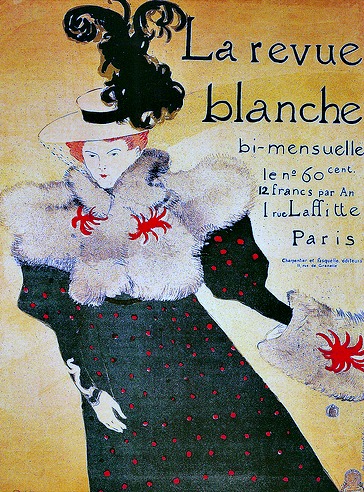
FEATURE image: Henri de Toulouse-Lautrec (1864-1901), La Revue Blanche, 1895, Paris. Lithograph in four colors.
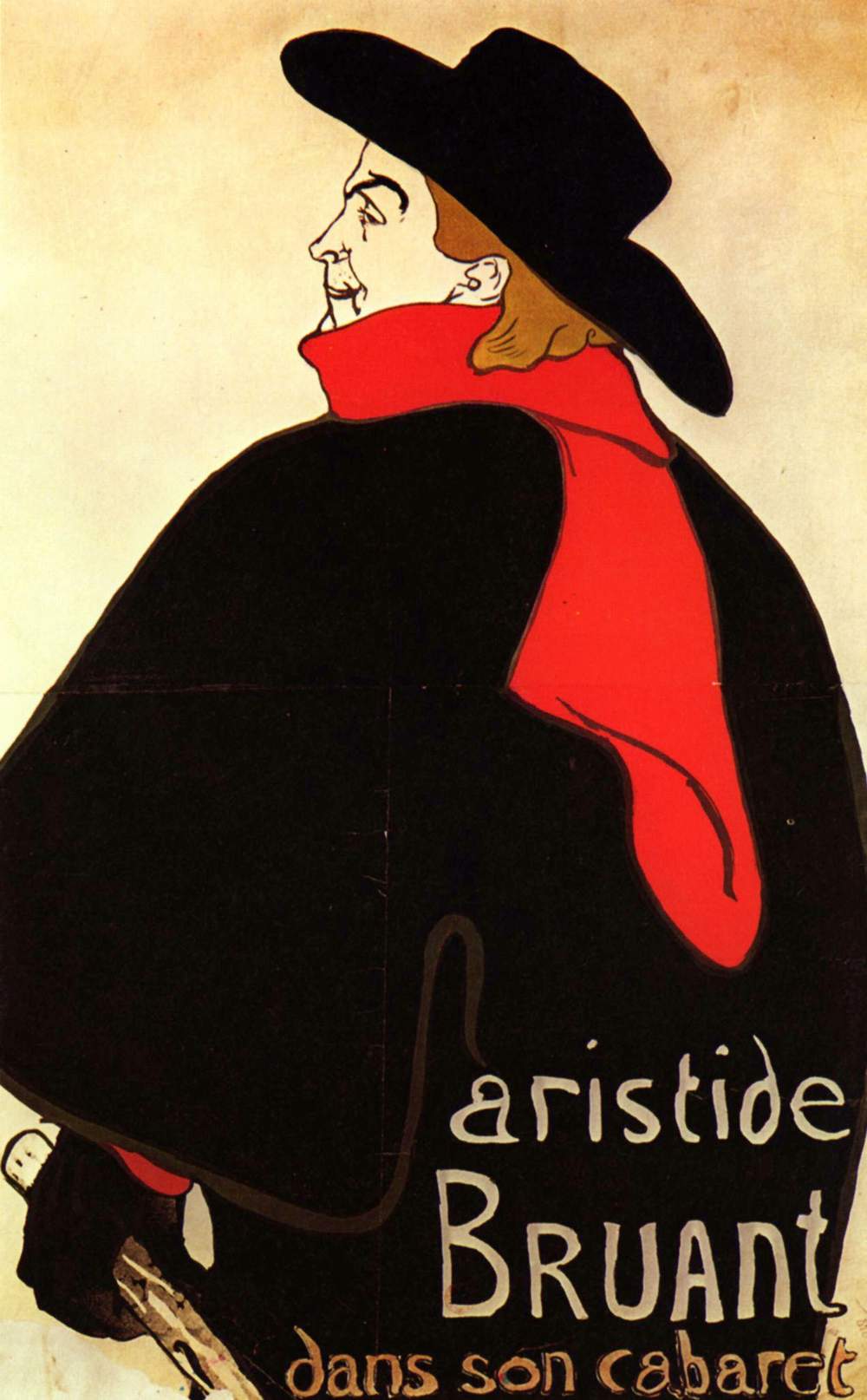
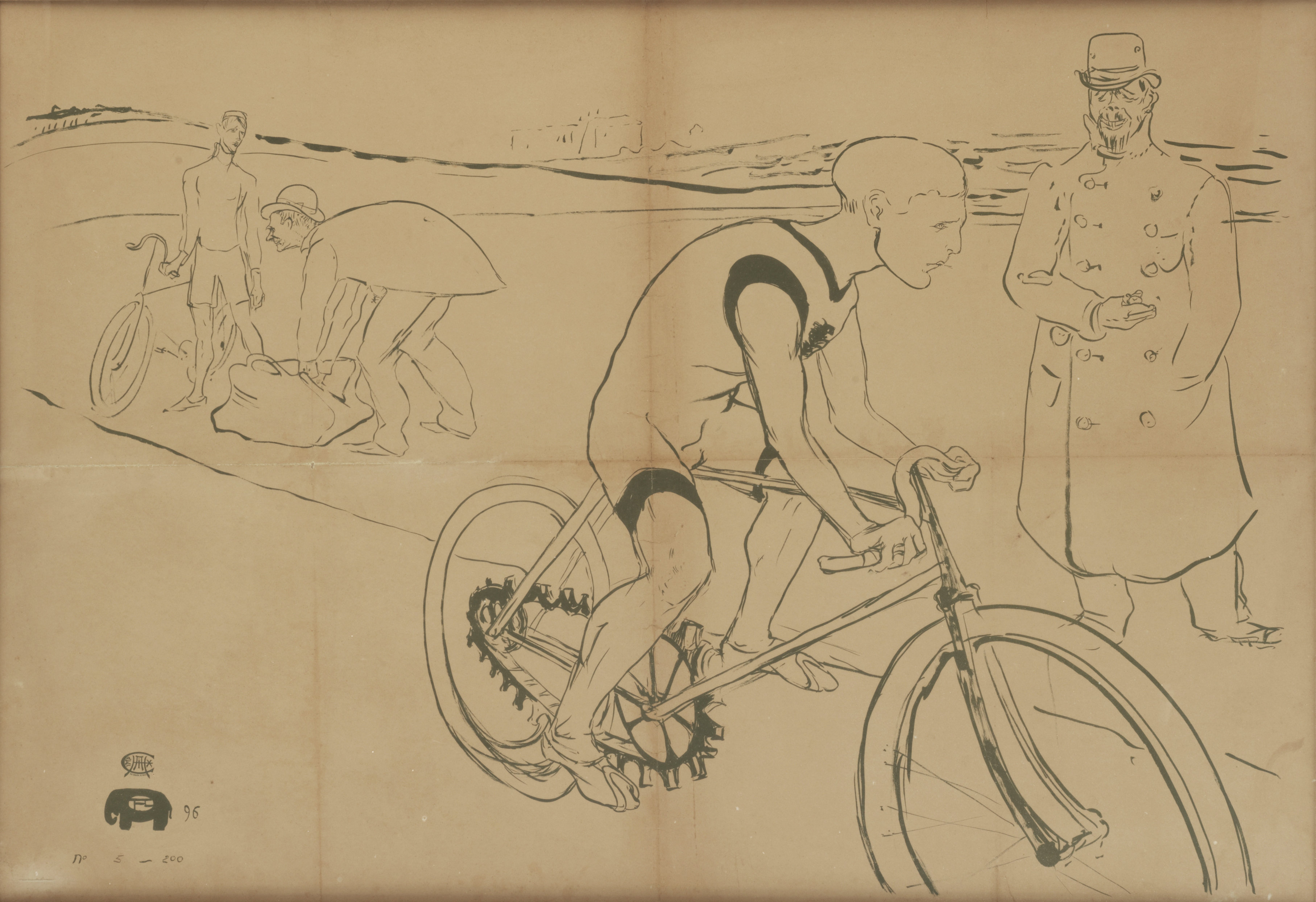
From Montmartre to Mass Culture: Henri Toulouse-Lautrec’s 31 color posters transformed commercial advertising into modern art, using innovative color lithography, bold design, and iconic images of Parisian nightlife to democratize art and shape the visual language of the twentieth century.
By John P. Walsh
The Artist in an Age of Mass Production
The nineteenth century in France brought about a radical transformation of the role of the artist. In place of artwork for aristocratic patrons, artists in all media were increasingly left to their own devices and began creating works of art in their studios and looking to sell them in the open marketplace. Innovative forms, new subjects, and new styles emerged from these changing economic structures brought about by the dawning of the industrial and technological age as well as the growing importance of cities.
In Paris and elsewhere, enterprising artists sought to attract new clients increasingly composed of the urban bourgeoisie. By the mid-to-late nineteenth century the involvement of the public in artistic matters became an irrevocable fact which had been secured by the improved means of mass production. New processes in lithographic and photographic printmaking, for example, made art widely available to a popular audience. The entry of this sort of democracy into artistic production coincided with current aesthetic influences such as a Japonisme movement prevalent in France in the years before 1890. In addition, there was a new understanding of modern beauty that began around 1830 that rejected traditional forms of beauty manifested in classical and later art forms.
Henri Toulouse-Lautrec and the Emergence of Modern Poster Art
By the early 1890’s when Henri Toulouse Lautrec (French, 1864-1901) created his mass-produced posters in Paris a new artistic practice had appeared whose idea of beauty was contemporary, sophisticated and subtly realistic. By 1890, Lautrec’s art could react in several ways to the modern art tradition. Toulouse-Lautrec repudiated the bourgeois modernity of the Impressionists from the 1870’s and 1880’s displayed in the drawing-room paintings of Claude Monet (French, 1840-1926) and Pierre-Auguste Renoir (French, 1841-1919) and, owing to cultural spaces that had shifted by the 1880’s to artistic cabarets and literary cafés, Lautrec could also claim to be a direct heir to an earlier 1830’s romantic bohemian and 1840’s flâneur.
Montmartre, Bohemia, and the Public Sphere
There are several interpretations for this cultural shift and its effects on artists and artistic practice in the 1890’s including Toulouse-Lautrec’s mass-produced commercial posters. Building on a rejection of bourgeois art forms, Mary Gluck at Brown University argues that artists such as Toulouse-Lautrec—who with others was a creature of the cabarets and cafés—desired commercial mass media to be the means by which the public sphere would eclipse individual lives which modern society had fragmented. At the center of their art production, Gluck believes, is a distinct vision of modernity identified with a city’s public space as opposed to the private anonymity of bourgeois culture (see Popular Bohemia: Modernism and Urban Culture in Nineteenth-Century Paris, 2005).
To strive to transform the public sphere by way of the legacy of the café-concert about and for which Toulouse-Lautrec created a significant amount of his mass-produced commercial art could only be an ambitious cultural task. These cabarets and café-concerts, mostly centered on and around Montmartre in Paris, were crowded, loud and often rowdy. Its performances and clientele were often unpolished and popular. Small but well-known art movements such as Les Arts incohérents and their Montmartre cabaret Les Hydropathes begin to describe the level of social parody and frivolity to be expected within these establishments.
While Lionel Richard at the University of Picardy attributes these activities to social rebels (see Cabaret, Cabarets: Origines et décadence, 1991), Jerrold Seigel at New York University views it as a calculated new relationship between the popular classes and the bourgeoisie where the aspiring artist, such as Toulouse-Lautrec, could create art for potential customers (see Bohemian Paris: Culture, Politics, and the Boundaries of Bourgeois Life, 1830-1930, 1986). For T. J. Clark, the cabaret’s diverse audience as a venue for some form of cultural democracy by way of a mixing of classes is illusory (see “The Bar at the Folies-Bergères,” The Wolf and the Lamb: Popular Culture in France, From the Old Régime to the Twentieth Century, 1977).
Charles Rearick of the University of Massachusetts, Amherst, casts an eye on those frivolous aspects of the Montmartre cabarets, dance halls, and literary cafés. His conclusion is that these activities allowed a Parisian to escape modern society’s social constraints of respectability typically found everywhere else (see Pleasures of the Belle Epoque: Entertainment & Festivity in Turn-Of-The-Century France, 1985). Phillip Dennis Cate at The Jane Voorhees Zimmerli Art Museum at Rutgers University viewed the role of cabarets in the artistic context of these bohemian antics being the genesis of what became twentieth-century avant-garde aesthetics (see The Spirit of Montmartre: Cabarets, Humor, and the Avant-Garde, 1875-1905, 1996). It is the affirmation of the values of spontaneous experience and direct communication as an integral aspect of the modern experience and, for the fin-de-siècle bohemian, parodic performances which helped criticize the official art establishment that carried forward into artistic attitudes in the new century.
The Legacy of Toulouse-Lautrec’s Posters
The fruit of reflection for this late-nineteenth-century artistic period in Paris is numerous and diverse. It leads to the observation—whether of Henri de Toulouse-Lautrec or the variety of subjects in his mass-produced commercial art—that the stereotype of the artist, poet, or performer as bohemian, owing to their psychological nuance and stylistic antisepsis as aesthetic modernity—and possibly its inverse—becomes a source for their estrangement and alienation from modernity—that is, to emerge as an alienated human figure detached from their society and time. With Toulouse-Lautrec’s sixth poster (Divan Japonais, 1893) it is clear that his mass-produced commercial poster art in Paris was making an important impact on modern art in the 1890’s. It was a new art form for its deploying the rapidly developing technique of color printing. It utilized new approaches to composition and subject matter which were created for a mixture of new and popular commercial establishments. Finally, and perhaps most significantly, they became the first regularly displayed art commodity for public mass consumption. Each of these art principles and practices found in Toulouse-Lautrec’s posters of the 1890’s continue to impact contemporary art-making today.
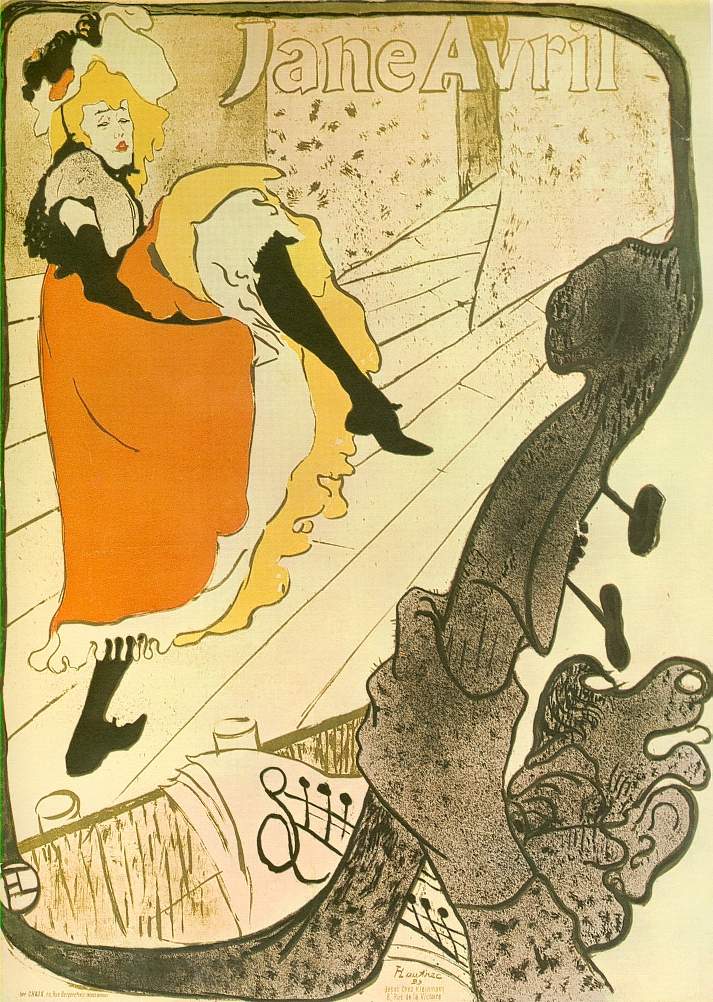
Toulouse-Lautrec’s 31 posters (1891-1900) represent one of the earliest successful unions of fine art and mass-produced advertising.
1. Henri de Toulouse-Lautrec – Moulin Rouge-La Goulue, 1891.
1. Moulin Rouge-La Goulue is a lithograph done in 4 colors: yellow, blue, red, and black. The Moulin Rouge opened in 1889 and, in summer 1891, the poster was commissioned by its owners. It depicts La Goulue (“The Glutton”) who is 21-year-old Louis Weber (1870-1929) and Valentin-le-Désossé (“the Boneless”) (1843-1907). This is Toulouse-Lautrec’s first, largest, and many estimate, most complex and artistically important poster. Printed by Charles Levy, it is made up of two sheets although Toulouse-Lautrec thought the printer had made mistakes and didn’t use him again. When this poster was plastered around Paris, the artist knew that his own silhouetted profile could be found in the background of silhouetted figures. The art of the streets pioneered by Jules Chéret (1836-1932) and immediately recognized for its implications by writers such as the Goncourt brothers and J.K. Huysmans (1848-1907) Lautrec exploited in the 1890’s aided by technological advances in color printing that continued to improve throughout the decade.
2. Henri de Toulouse-Lautrec – Le Pendu, 1892
2. The poster Le Pendu is a lithograph done in 2 colors: black and dark green. It was commissioned by a magazine editor to publicize a new theater play. Based on a true story of a wrongful capital death, the poster depicts the son’s suicide. Created in charcoal in late 1891, it was printed in 1895 in a limited edition for collectors only.
3. Henri de Toulouse-Lautrec – Ambassadeurs Aristide Bruant, 1892.
3. The poster Ambassadeurs Aristide Bruant is a lithograph in 5 colors yellow, blue, red, black, and olive green. Aristide Bruant (1851-1923) was a singer and this was a promotional poster for a café concert that opened in June 1892. The poster appeared all over Paris and on stage during the performance. The café owner thought the poster was a “disgusting mess” and refused to hang it until Bruant threatened to cancel his show. The subject wears a heavy dark velvet jacket, red shirt scarf, and wide brimmed hat with a riding crop. His head rises out of a dark mass which is lifted wholesale from a Japanese print by Katsukawa Shunshō (1726-1792).
Lautrec’s posters chronicled the vibrant world of Montmartre’s cabarets, cafés-concerts, dance halls, entertainers, and literary culture.
4. Henri de Toulouse-Lautrec – Eldorado Aristide Bruant. 1892.
4. The poster Eldorado Aristide Bruant is a lithograph in 5 colors (olive green, yellow, red, blue, and black). It includes the letters “TL” and signed monogram which will appear on other posters. The poster was created for the singer’s event on Boulevard de Strasbourg (north of Boulevard Montmartre at Sebastopol). With the same but reversed design, the customer and artist cut poster costs while increasing brand identity. In modern art the figure of the imposing heroic individual performer was new and Bruant became an overnight celebrity that year in Paris. Toulouse-Lautrec made no money on this project because the café owners were shocked by its content and refused to pay him.
Lautrec helped create a new form of visual culture where art left the museum and entered everyday life through posters pasted on city streets. These works became among the first art objects produced for broad public consumption and were tied directly to the cafés, cabarets, and entertainment venues of Montmartre.
5. Henri de Toulouse-Lautrec – Reine de Joie, 1892
5. The poster Reine de Joie is a lithograph in 4 colors (olive green, yellow, red, and black). It includes the emblematic letters “TL” and is signed. The poster was an advertisement for a suggestive new serialized novel by Victor Joze (1861-1933) and depicted the moment in the novel when the heroine kisses a fat banker, the latter being modeled by Georges Lasserre, a Lautrec friend. The poster, also used as the novel’s cover, caused a scandal across Paris and prompted a poster tear-down campaign. Speculation ran rampant as to who might be the real-life personalities on which characters in the novel were based.
The posters are documents of mass entertainment, celebrity culture, advertising, consumer culture, and urban nightlife in Belle Époque Paris.
6. Henri de Toulouse-Lautrec – Divan Japonais, 1892-93.
6. The poster Divan Japonais (1892-93) is a lithograph in 4 colors (olive green, yellow, red, and black). The cabaret on rue des Martyrs came under new ownership in 1892 and was totally refurbished in a trendy Japanese style. The poster depicts 24-year-old Jane Avril (1868-1943) with critic Edouard Dujarden (1861-1949) in the cabaret. On stage are shown the long black gloves of new singer Yvette Guilbert (1865-1944). In a stylistic move, the artist cuts off Guilbert’s head and shoulders in the poster much to the consternation of the young singer just getting started in her career. (She later commissioned a poster by another artist to depict her complete figure). When this poster went up all over Paris it created a sensation and was another triumph for Lautrec. In 1894 the Divan Japonais closed to be replaced by another establishment. As with his other posters, there were several preliminary sketches the artist made for Divan Japonais. The posters used the new and improving popular mechanical technique of color printing and applied it to commercial establishments and popular entertainers, subject matter usually reserved for cruder forms of advertisement.
Divan Japonais is one of Toulouse-Lautrec’s early posters. In his poster career the artist usually used anywhere from 2 to 5 colors. It is signed by Toulouse Lautrec. This Montmartre cabaret was taken over in 1892 by a new owner and totally refurbished in the avant-garde Japanese style which was the inspiration for the cabaret’s name. By February 1893 when this sixth poster was made by Lautrec and put up all around Paris, his 5 previous posters had already made him famous.
7. Henri de Toulouse-Lautrec – Jane Avril, 1893.
7. The poster Jane Avril is a lithograph in 5 colors (olive green, yellow, orange, red, and black). The same subject who appeared in Divan Japonais, Jane Avril commissioned this poster for her performance at the Jardin de Paris, a new café-concert. The letters for the name of the establishment were added later by someone other than Lautrec. The artist first produced 20 collector prints and after, with its newly-added letters, the poster went into mass production. Known as La Mélinite—a type of explosive—Jane Avril looked to this poster to reinvigorate her career as a performer in Paris. The poster helped her to take Paris by storm as she went on to perform at the Casino de Paris, the Moulin Rouge and the Folies-Bergères. In terms of composition, the poster is noteworthy for its strong diagonals inspired by Japanese prints and the detail of a large musical instrument—including the meticulously drawn hairs of a musician’s fingers—which rounds out the design and is seen as homage to Degas who used a similar motif in his artwork.
Iconic figures such as Jane Avril, Aristide Bruant, Yvette Guilbert, and La Goulue became cultural celebrities through his poster designs.
8. Henri de Toulouse-Lautrec – Aristide Bruant Dans Son Cabaret, 1893.
8. The poster Aristide Bruant Dans Son Cabaret is a lithograph in 4 colors (olive green, brown, red, and black). Lautrec’s third image of the singer became a Parisian icon. From the poster’s inception the singer used this image to promote his appearances—and for the next twenty years until 1912.
9. Henri de Toulouse-Lautrec – Au Pied De L’Echafaud, 1893.
9. The poster Au Pied De L’Echafaud is a lithograph in 4 colors (grey, red-brown, red, and black). The poster was an advertisement for the memoirs of a prison chaplain published in 1893.
10. Henri de Toulouse-Lautrec – Caudieux, 1893.
10. The poster Caudieux is a lithograph in 4 colors (olive green, yellow, red and black). Lautrec depicts Caudieux, who was a popular cabaret comedian, to be striding across the stage. Lautrec used the partial figure in the prompt box in other artwork.
11. Henri de Toulouse-Lautrec – Bruant Au Miriton, 1893.Bruant Au Miriton, 1893.
11. The poster Bruant Au Miriton is a lithograph in 2 colors (olive green or black and red). Represented with his back to the viewer, the popular performer is identified simply by his costume and the way he stands. This artistic device had already been used by Degas based on a theory by an art critic that a person’s economic and social class could be revealed simply by the way he or she comports themselves. The poster was recycled by Bruant as a songbook cover.
12. Henri de Toulouse-Lautrec – Babylone D’Allemagne, 1894
12. The poster Babylone D’Allemagne is a lithograph in 5 colors (olive green, yellow, red, dark blue and black). This was Lautrec’s second poster for another Victor Joze novel following his Reine de Joie. Lautrec wrote to his mother at this time to relate how busy he was with his art projects. Because of Joze’s anti-German message in the book, the author wanted the poster suppressed but it went up all over Paris nonetheless.
13. Henri de Toulouse-Lautrec – L’Artisan Moderne, 1894.
13. The poster L’Artisan Moderne is a lithograph in 4 colors (dark blue, yellow, green, and brown). The lettering is not done by Lautrec. Because of the impact of the cabaret and book posters, Lautrec began to be commissioned to make posters for the trades. This poster was provided to an interior design firm.
14. Henri de Toulouse-Lautrec – P. Sescau, Photographe, 1894
14. The poster P. Sescau, Photographe is a lithograph in 4 colors (dark red, yellow, green, and dark blue). The lettering is not done by Lautrec. This poster was provided to Paul Sescau, a professional photographer and personal friend of the artist.
15. Henri de Toulouse-Lautrec – Confetti, 1894.
15. The poster Confetti is a lithograph in 3 colors (dark olive green, red and yellow). This is Lautrec’s poster for the English paper manufacturer Bella & de Malherbe. The model is Jeanne Granier (1852-1939). These paper manufacturers hosted poster exhibitions in 1894 and 1896 to which Lautrec was invited.
16. Henri de Toulouse-Lautrec – May Belfort, 1895.
16. The poster May Belfort is a lithograph in 4 colors (olive black, red and yellow). Following his trades posters Lautrec returned to the subject of the single musical performer. May Egan (whose stage name was May Belfort) was an Irish singer who appeared at the Cabaret des Décadents where Jane Avril performed.
Advances in color lithography allowed his work to reach a broad urban audience, bringing art directly into the streets of Paris.
17. Henri de Toulouse-Lautrec – La Revue Blanche, 1895.
17. The poster La Revue Blanche is a lithograph in 4 colors (blue, red, black, and green). The subject is Misia Natanson (1872-1950) who was married to Thadée Natanson whose brother was editor of La Revue Blanche from 1891 to 1903. Misia was muse to a generation of avant-garde artists, composers, and writers as the publication itself was the remarkable meeting point for the Paris literary and artistic worlds in the 1890’s. Lautrec shows Misia wearing an ostrich feather hat, spotted dress, fur jacket and muff and ice skating which was a popular activity in Paris. Two preparatory drawings for this poster are known.
18. Henri de Toulouse-Lautrec – May Milton, 1895.
18. The poster May Milton is a lithograph in 5 colors (blue, red, black, yellow and olive green). This poster was never posted in Paris but produced as an advertisement in a magazine to promote the U.S. tour of May Milton, an English dancer at the Moulin Rouge in Paris. Picasso owned a copy of this poster and used some of its compositional elements in his own artwork. Art dealers would commission limited editions of black-and-white lithographs of performers such as May Milton because they sold quickly.
19. Henri de Toulouse-Lautrec – Napoleon, 1895.
19. The poster Napoleon is a lithograph in 5 colors (blue, reddish brown, black, yellow and olive green). Toulouse-Lautrec produced this poster for a book cover competition that he lost. Failing to sell this artwork, the artist produced a limited edition of 100 copies at the artist’s expense. The artist’s fee for his poster artwork varied a good deal, although during his career Lautrec clearly made more money from the output of his graphic work than his paintings.
Influenced by Japanese prints (Japonisme), Lautrec employed flattened forms, strong diagonals, silhouettes, and unconventional cropping.
20. Henri de Toulouse-Lautrec – Salon Des Cents, 1895.
20. The poster Salon Des Cents is a lithograph in 6 colors (blue, dark blue, black, yellow, ochre, and red). This poster is Lautrec’s homage to a married woman he met and became infatuated with during a summer cruise in 1895. The young woman sits in a deck chair under an awning facing out to sea. He produced the poster at his rentrée to Paris that fall and used it for international poster exhibitions sponsored by the journal La Plume at the Salon des Cent during winter 1895-96 and later in 1896 at the Libre Esthétique exhibition in Brussels.
21. Henri de Toulouse-Lautrec – The Chap Book, 1895.
21. The poster The Chap Book is a lithograph in 5 colors (olive green, blue, yellow, pink and red). The lettering is not done by Lautrec. The artist used the setting of an Irish-American bar near Place Madeleine in Paris to promote The Chap Book, an American magazine. Along with its identifiable characters, Lautrec includes the image of a bartender preparing a cocktail which was a libation newly introduced to Paris.
22. Henri de Toulouse-Lautrec – La Chatelaine, Ou ‘Le Tocsin’, 1895
22. The poster La Chatelaine, Ou ‘Le Tocsin’ is a lithograph in 2 colors (blue and blue-green). This poster was commissioned by former Republican politician and Editor-in-chief Arthur Huc (1854-1932) to advertise a novel by Jules de Gastyne (1847-1920) which appeared in his newspaper in popular serial form in 1895. Letters were added by others after copies of the poster were printed for collectors of Lautrec’s increasingly popular artwork.
His work captured the spirit of Belle Époque Paris, documenting its entertainment culture while influencing generations of graphic artists.
23. Henri de Toulouse-Lautrec – Troupe De Mlle Églantine, 1896.
23. The poster Troupe De Mlle Églantine is a lithograph in 4 colors (green-blue, red, yellow and dark brown). The lettering is not designed by Lautrec. This was commissioned by Jane Avril for her work in London at the Palace Theatre and elsewhere. The formation dance was comprised of four identified dancers including Mlle Églantine and Jane Avril and derived from the famous French can-can.
24. Henri de Toulouse-Lautrec – La Vache Enragee, 1896.
24. The poster La Vache Enragée is a lithograph in 5 colors (dark blue, green-blue, red, yellow and black). The lettering is not designed by Lautrec. This was an advertisement for a new monthly magazine founded by Adolphe Willette (1857-1926). Its editor, Adolphe Roedel, organized an annual parade through Montmartre called the Vachalcade to lampoon the artist’s state of life in a major urban center.
25. Henri de Toulouse-Lautrec – Elles, 1896.
25. The poster Elles is a lithograph in 4 colors (yellow, dark green, orange and blue). Later lettering is not designed by Lautrec. Degas would visit a Paris brothel to sketch its denizens, but Lautrec moved in for weeks at a time to do his artwork. Elles is a series of lithographs of the lives of prostitutes. Although considered some of the finest of lithographs of the nineteenth century, its portfolio of prints could not find collectors and they had to be sold singly. An exhibition of the complete lithographic series was held at La Plume starting in April 1896 where Lautrec adapted Elles’ title-page lithograph as the poster to advertise the show.
26. Henri de Toulouse-Lautrec – L’Aube, 1896.
26. The poster L’Aube is a lithograph in 2 colors (dark blue and blue-green). The lettering is not designed by Lautrec. This was another advertisement for a new journal, the leftist L’Aube, first published in 1896. After its printing, the printer and artist had a rafter of remainders of this poster which they tried to sell for next to nothing.
27. Henri de Toulouse-Lautrec – Cycle Michael, 1896.
27. The poster Cycle Michael is a lithograph in 1 color (olive green). Bicycling had developed into a cult sport in France by the 1890’s. Lautrec’s interest in the new sport led to this poster commission of British cyclist Jimmy Michael with his trainer (left background) and a sports writer with a hand in his coat pocket. The bicycle company rejected Lautrec’s design in part because the depiction of its mechanics was inaccurate which left the artist to print a limited edition for collectors at his own expense.
28. Henri de Toulouse-Lautrec – La Chaine Simpson, 1896
28. The poster La Chaîne Simpson is a lithograph in 3 colors (red, yellow and blue). The lettering is not designed by Lautrec. This is Lautrec’s second poster for the new sport of bicycling which had become immensely popular in France in the 1890’s. It depicts popular rider Constant Huret (left) and, in the background wearing hats, two British and French bicycle and chain manufacturers. Lautrec was fascinated with the cycling sport and its imagery appears in other of his artwork.
29. Henri de Toulouse-Lautrec – The Ault & Wiborg Co, 1896.
29. The poster The Ault & Wiborg Co is a zincograph in 4 colors (brown, red, yellow and black). The lettering is not designed by Lautrec. The smallest of Lautrec’s posters, it was commissioned by an American ink manufacturer whose sitters are not precisely identified. Before it became a poster advertisement, Lautrec had an edition of it printed which he titled Au Concert.
Posters such as Moulin Rouge: La Goulue, Divan Japonais, and Jane Avril helped establish the visual foundations of Art Nouveau graphic design.
30. Henri de Toulouse-Lautrec – Henri de Toulouse-Lautrec – Jane Avril, 1899.
30. The poster Jane Avril is a zincograph in 4 colors (black, red, yellow and blue). After six years of intense poster production, Lautrec temporarily left its practice in 1897 and 1898. When he returned to it in 1899 he found that technology had advanced to make the printing technique for his artwork more efficient. This poster was commissioned by Jane Avril but never publicly displayed. Lautrec looked to capture her dancing style and graceful and wistful figure which the artist admired. The serpentine-themed dress Jane Avril wears was a popular motif in the Art Nouveau.
31. Henri de Toulouse-Lautrec – La Gitane, 1899-1900.
31. The poster La Gitane is a lithograph in 5 colors (black, grey, red, brown and blue). The lettering is designed by Lautrec. Lautrec’s last poster was produced for a Carmen-like play that opened in January 1900 at the Théâtre Antoine in the tenth arrondissment. The play was unpopular, the poster never published, and Lautrec’s modern art poster career had come to an end.
Lautrec elevated commercial poster art from simple advertising into a respected artistic medium.
Select Bibliography: Ash, Russell, Toulouse-Lautrec:The Complete Posters, Pavilion Books Limited, London, 1991. Beauroy, Jacques, Bertrand, Marc, Gargan, Edward T., editors, The Wolf and the Lamb: Popular Culture in France, From the Old Régime to the Twentieth Century, Anma Libri, Saratoga, CA, 1977. Cate, Phillip Dennis, The Color Revolution: Color Lithography in France, 1890-1900, Peregrine Smith, Inc., Santa Barbara and Salt Lake City, 1978. Cate, Phillip Dennis and Shaw, Mary, editors, The Spirit of Montmartre: Cabarets, Humor, and the Avant-Garde, 1875-1905, Jane Voorhees Zimmerli Art Museum, Rutgers, New Brunswick, New Jersey, 1996. Denvir, Bernard, Toulouse-Lautrec, Thames and Hudson, London, 1991. Gluck, Mary, Popular Bohemia: Modernism and Urban Culture in Nineteenth-Century Paris, Harvard University Press, Cambridge, MA, 2005. Foxwell, Chelsea, Leonard, Anne, et.al. Awash in Color: French and Japanese Prints, Smart Museum of Art, University of Chicago, 2012. Oberthur, Mariel, Cafés and Cabarets of Montmartre, Peregrine Smith Books, Salt Lake City, 1984. Rearick, Charles, Pleasures of the Belle Époque: Entertainment & Festivity in Turn-Of-The-Century France, Yale University Press, New Haven and London, 1985. Seigel, Jerrold, Bohemian Paris: Culture, Politics, and the Boundaries of Bourgeois Life, 1830-1930, Penguin Books, New York, 1986. Thory-Frèches, Claire, Roquebert, Anne, Thomson, Richard, Toulouse-Lautrec, South Bank Center, 1991. Weisberg, Gabriel P., Montmartre and the Making of Mass Culture, Rutgers University Press, News Brunswick, New Jersey and London. 2001.
During its historic run from February 14 to May 10, 2016, the Art Institute of Chicago hosted a monumental blockbuster exhibition that brought together all three versions of Vincent van Gogh’s “The Bedroom” in North America for the first time in art history. Captured here in the author’s photograph, the exhibition’s penultimate gallery offered a rare side-by-side view of these masterworks, spanning from the 1888 original from the Van Gogh Museum in Amsterdam to the two subsequent 1889 versions from Chicago’s own collection and the Musée d’Orsay in Paris. This review explores the profound impact of this unprecedented artistic reunion, examining how seeing these three distinct iterations in one room shifts our understanding of Van Gogh’s psychological obsession with home and sanctuary.
By John P. Walsh. May 6, 2016.
A Blockbuster Exhibition and Its Crowds
I saw the Van Gogh’s Bedrooms exhibition at The Art Institute of Chicago (February 14-May 10, 2016) on the last Friday afternoon before the show closed. The museum that day was drawing a large crowd and it was challenging to navigate through the multi-room art show in a mass of frequently immobile art lovers. Exactly for what cause some stationary patrons might be transfixed could only be speculated upon but often no art was present. No one I think comes to art shows to be caught in a logjam of people yet that recurrent phenomenon in Van Gogh’s Bedrooms soon became one of its unpleasant features. The expansive exhibition space—striking for its illogical reasoning to display three relatively small masterpieces—proved impractical, or at least a two-edged sword, in terms of containing its throngs.
Those three featured paintings are this show’s raison d’être and prove a marvelous highlight after reaching them by way of a dozen or so high-ceiling galleries. Once arrived to the show’s penultimate room, my eyes settled on the Van Gogh Museum, Amsterdam’s version as the most intriguing of the three superficially identical works. The other two versions are from the collections of The Art Institute of Chicago and the Musée d’Orsay in Paris.
Van Gogh in Arles and the Origins of The Bedroom
When 35-year-old Van Gogh painted his The Bedroom series starting in October 1888, the Dutchman had been an artist only a short while: about 7 years. This had followed a variety of other occupations, although Van Gogh began his professional life as an art dealer. By late 1888—less than two years before his death by self-inflicted gunshot in Auvers-sur-Oise in July 1890—Van Gogh had traveled long and far from his beginnings in North Brabant. He arrived into Paris in 1885 to paint and join his brother Theo who was an avant-garde art dealer in the Rue Montmartre. Looking to sell more of his artwork, he began painting in the bright Impressionist style for which Van Gogh is probably most famous today. By February 1888 Van Gogh relocated to Arles in the South of France on account of his health and to possibly start an art colony. Still quite poor and alone, this roughly 15-month period in Arles proved to be prolific for the artist’s production when Van Gogh completed 200 paintings, and over 100 drawings and watercolors. Many of Van Gogh’s most famous works were created in this fecund period—for example, his portraits of Eugène Boch (Musée d’Orsay), Postman Joseph Roulin and Augustine Roulin (both Museum of Fine Arts, Boston) and Madame Ginoux (Metropolitan Museum of Art, New York) among several others; sunflowers and irises such as Still Life: Vase with Fourteen Sunflowers (National Gallery, London), Still Life: Vase with Fourteen Sunflowers (Neue Pinakothek, Munich) and Irises (Getty Museum, Los Angeles); 15 canvases of cypresses; and his iconic Self-Portrait Dedicated to Paul Gauguin in the Harvard Art Museums.
Context, Interpretation, and Curatorial Excess
None of these contextual artworks were in the Chicago show but demonstrate the range and depth of Van Gogh’s artistic vision in the same time period that The Bedrooms—which shared his body of work’s intoxication with color and decorative strategies—were painted.Despite its title—Van Gogh’s Bedrooms—this show is not content to let their presence in Chicago suffice. Instead, much of the other parts of this massive show were from the Art Institute’s permanent collection of mostly Barbizon and Impressionist artwork. Perhaps if they had been left on whatever museum walls from which they had come, these fine artworks might have maintained an even greater impact for themselves and this show’s ultimate purpose than crowding them onto walls into this special exhibition space. That said, the condensed interpretive curatorial exercise of parts of the permanent collection in this show could prove interesting for visitors who are not willing or able to visit other parts of the museum. In a show that took on the formula of a typical Regenstein Hall blockbuster, its propensity for Impressionist rehash (“delve” was the museum’s word) had a boring art textbook’s sensibility. That the show dipped into the museum storehouse to retrieve the life-size maquette of the Yellow House from AIC’s vastly superior exhibition Van Gogh and Gauguin: The Studio of the South in 2001, produced a dispiriting effect on at least one viewer who recognized it.But so far I am quibbling: this AIC exhibition brings together the powerful canon of all three versions of Van Gogh’s The Bedroom for the first time in North America which is very special and undoubtedly sufficient to any museum goer’s time and interest. I don’t believe, however, that their full artistic power was best served by being able to see these objects intensely advertised in the media markets and then only hung at the show’s virtual end following a cacophony of mostly extraneous art historical resources however severely earnestly presented. Instead, a surfeit of front-loaded artistic riches labors to obscure these significant Van Goghs that finally appear in the second to last gallery, all of which are jam-packed with art, people, various filmic explorations, somewhat bloviating wall texts, whole house reconstructions, etc.
By reuniting all three versions of The Bedroom for the first time in North America, the Art Institute of Chicago revealed how Van Gogh transformed an ordinary room into a powerful meditation on home, identity, and emotional refuge, even as the exhibition’s blockbuster presentation sometimes competed with the intimate force of the paintings themselves.
Van Gogh Museum Amsterdam, October 1888. 72.4 x 91.3 cm.
Chicago, 1889. 72.4 x 91.3 cm. Version Van Gogh painted in the asylum at St. Rémy.
Paris, 1889. 57.5 x 74 cm. Destitute bachelor artist Van Gogh gave this version to his mother and sister to assure them that he was working.
Letting the Paintings Speak for Themselves
It is certainly obvious that Van Gogh’s Bedrooms possibly could have benefited by not pulling out all the stops (AIC: “in-depth study”) but to focus on the three colorful masterpieces uniquely gathered in their essential power. If one wants to read blow by blow explanations of virtually every curatorial application in the show, one might turn to other reviews cited in “Further Reading” below. The equitably in-depth appreciation of this trio of Van Gogh works—and minus the Disney World trappings—might be advanced using timed tickets (as done for Van Gogh and Gauguin: The Studio of the South) and within a pared down and simpler exhibition scope. The way things are constructed by the show’s curator Gloria Groom, Chair of European Painting and Sculpture at The Art Institute of Chicago, the exhibition transmits encyclopedic knowledge while largely missing a tangible evocation of bachelor Van Gogh’s humble petit boulevard persona who produced in Arles in 1888 and in Saint-Rémy in 1889 these bold canvases of his simple bedroom and even gifting one of the versions (the one now in Paris) to his aged mother and sister to reassure them in his destitution. For Van Gogh the motif of his private and hard-featured bedroom in Arles continued his bold self-expression in a tightly woven and complex painting composed in broad outlines using a many-hued post-impressionistic palette in thick impasto. Despite Van Gogh’s reputation as mad—he mutilated his ear in this bedroom in December 1888—he soon carried on painting two more versions of The Bedroom (the last one slightly reduced) with the apparent added intention to express to his family and friends that the artist was as stable and restful as his artistic subject.
The Challenge of Presentation
What should an exhibition advertised as Van Gogh’s Three Bedrooms wish to have its spectators looking for and come away with? By the time a visitor reaches Van Gogh’s three paintings after plowing through the aforesaid gauntlet of people and well-known Chicago art resources, the exhibition almost runs the danger of displaying these highly-prized artworks not as denouement but incidental. These Van Gogh paintings are hardly allowed to speak freely for themselves. Of course they have a fascinating history but to what degree should these particular artworks’ written history be simultaneous to their exhibition? Thinking of the viewer, does the display of three paintings of an artist’s bedroom (albeit Vincent Van Gogh’s) that when placed side by side measures the whole of about ten feet across merit thousands of cubic feet of mostly academic groundwork before a viewer can even see them? To what degree are artistic exhibition and their intellectual exposition necessarily complementary since many museum art shows follow this tactic?
Final Reflections
The final gallery after the display of the three bedrooms continued Van Gogh’s Bedrooms’ devotion to comprehensive information and theatricality—although a side-by-side blow-up of the bedrooms’ diverging painterly details was perhaps the most useful techie display so to appreciate the artist’s handling of the individual paintings. Yet it begged a question: could this orientation to detail, to seeing the painting, somehow serve as the exhibition’s primary or sole introduction, such as in a film theater? This last gallery then led directly to the ubiquitous and depressing gift shop hosting the galleries’ multitude disporting themselves basically as they did in and among the art. Hearing its timbre I wondered if a unique opportunity to view together these three Van Gogh bedroom paintings—“the first time in North America”—had under- or overplayed its hand? As its elemental objective, had the exhibition Van Gogh’s Bedrooms rightly oriented and imparted to its viewers an intimate and perhaps personally revealing look into these three sensitive treasures of Van Gogh’s oeuvre? Or had the artist Van Gogh merely omitted to paint into his own scene the proverbial kitchen sink?