The first national observance of Memorial Day occurred on May 30, 1868, following the U.S. Civil War. Commander in Chief John A. Logan of the Grand Army of the Republic issued General Order Number 11 designating May 30 as a day of memorial “for the purpose of strewing with flowers or otherwise decorating the graves of comrades who died in defense of their country during the late rebellion, and whose bodies now lie in almost every city, village, and hamlet churchyard in the land.” (Source: Library of Congress). It is a day for visiting cemeteries and memorials to mourn the military personnel who died in the line of duty.
Films, music, and literature about the people, places, and events in history where military personnel as individuals and as a unit are asked to pay the ultimate price and make the greatest sacrifice for freedom are among some of the greatest stories ever told.
THE CROSSING (2000). American Revolutionary War (1775-1783).
Bringing Washington’s Gamble to the Screen
Directed by Robert Harmon and adapted by Howard Fast from his novel of the same name, The Crossing stars Jeff Daniels as George Washington.
A Revolution Hanging by a Thread
In December 1776 — barely six months after the Declaration of Independence — Washington’s Continental Army was collapsing. Starved of men, artillery, and supplies, the revolution hung by a thread. So Washington made the most dangerous decision of the war: he would gamble everything on a surprise strike at Trenton, where more than a thousand feared Hessian mercenaries held the town.
Forcing the Ice-Choked Delaware
To reach them, his exhausted army would have to force a night crossing of the ice‑choked Delaware River and march toward what looked like a hopeless fight. Instead, the attack became the stunning, against‑all‑odds victory Washington had scarcely dared imagine.
A Stunning and One-Sided American Victory
Washington’s surprise attack on the Hessian garrison at Trenton on December 26, 1776, produced a stunningly one‑sided American victory. The Continental Army suffered almost no combat losses — none killed in action, two men who froze to death during the night march, and only five wounded, including a young James Monroe, later of Monroe Doctrine fame, who took a musket ball in the shoulder.
The Destruction of the Hessian Force
The Hessians, by contrast, were effectively destroyed as a fighting force: 22 killed (among them their commander, Colonel Johann Rall), 92 wounded, and about 920 captured.
GETTYSBURG (1993). The U.S. Civil War (1861-1865).
Directed by Ronald F. Maxwell whose screenplay is based on The Killer Angels, a novel by Michael Shaara, Gettysburg starred an ensemble cast including Martin Sheen, Tom Berenger, Jeff Daniels, Stephen Lang and Sam Elliott.
The Convergence of Command at Gettysburg
One of the Union army’s most respected senior commanders during the American Civil War was 42-year-old General John F. Reynolds (John Rothman) who was killed on the first day of the Battle of Gettysburg at the very start of it. Reynolds was in command of the “left wing” of the Army of the Potomac commanded by Gen. George C. Meade and which included the cavalry division of 37-year-old Brig. Gen. John Buford (Sam Elliott).
Buford’s Defensive Stand
Buford had occupied the town of Gettysburg, Pennsylvania, with his “headquarters” atop the cupola of the Lutheran seminary. With light defensive lines he resisted superior numbers of Confederate infantry brigades along the Chambersburg Pike who were blind to the Union Army’s smaller numbers because Major General J. E. B. Stuart had gone missing
The Opening Clash and a Fatal Command
When Reynolds’ I Infantry Corps arrived, he rode out ahead, met with Buford, and then accompanied some of his soldiers into the fighting. As Reynolds was supervising the placement of the 2nd Wisconsin, he shouted: “Forward men! Forward for God’s sake! and drive those fellows out of those woods.” At that moment Reynolds was shot by a sniper and fell off his horse to the ground with a mortal wound to the back of the head.
The Impact of a Leader’s Loss
The death of Reynolds impacted his troops and fellow commanders deeply. At that particular moment, they realized that any one leader (and the Union army had been through several at the top), even if he had the necessary zeal, vision, and sense of purpose, would not be enough to win the fight to save the Union. It must be a coordinated effort. Reynolds, by supporting Buford’s decision to set up defensive resistance as well as engaging his infantry, even in death effectively chose Gettysburg as that hallowed battleground for the next three days.
The Retreat to High Ground
Since Confederate numbers were superior on that first day, Union troops eventually retreated through town and rallied on Cemetery Ridge where General Meade and Maj. Gen. Winfield S. Hancock, with many others, entrenched on the high ground. They faced Confederate Gen. Robert E. Lee (Martin Sheen), and Lieutenant Generals Longstreet, Ewell, and A.P. Hill, among others. In the 1993 film, Confederate Major General Henry Heth is played by Warren Burton who was born and grew up in Chicago and attended The School of the Art Institute of Chicago. Heth was from a coal mining area near Richmond, Virginia.
The Staggering Cost of Hallowed Ground
At the Battle of Gettysburg the two armies suffered between 46,000 and 51,000 casualties. Union casualties amounted to 3,155 killed, 14,531 wounded, and 5,369 captured or missing. Reynolds’ body was immediately transported to his home-town of Lancaster, PA, where he was buried on July 4, 1863. Buford died 5 months later possibly of typhus in Washington, D.C. and was buried at West Point Cemetery in New York. Like Lincoln, Buford was born in Kentucky and grew up in Illinois (Rock Island). His father was a leading politician, but as a Democrat supported Stephen A. Douglas and opposed Abraham Lincoln.
THE FIGHTING SULLIVANS (1944). World War II (1941-1945).
Hollywood’s Tribute to a Tragic Brotherhood
Directed by Lloyd Bacon based on a story by Edward Doherty, Mary C. McCall Jr., and Jules Schermer, The (Fighting) Sullivans starred Anne Baxter, Thomas Mitchell, Selena Royle, Edward Ryan, John Campbell, James Cardwell, John Alvin, George Offerman, Ward Bond and Trudy Marshall.
The True Story of the Juneau Disaster
Released as The Sullivans in 1944, this 20th-Century-Fox drama film tells the true story of five brothers – George, Frank, Matt, Joe and Al Sullivan – who grew up in Waterloo, Iowa, and who were all killed in World War II when their ship, Juneau, was sunk in combat at Guadalcanal in November 1942.
The Honest Price of a World War
The film is a tearjerker not so much because it is sentimental but that it is honest. The final scene where the naval officer who recruited the five brothers (Ward Bond) comes to the boys’ house to tell the tragic news to their parents (Thomas Mitchell and Selena Royle) and the youngest brother’s widow (Anne Baxter) and mother of his child is one of cinema’s best conveyances of the price paid in a world war that claimed 420,000 American lives.
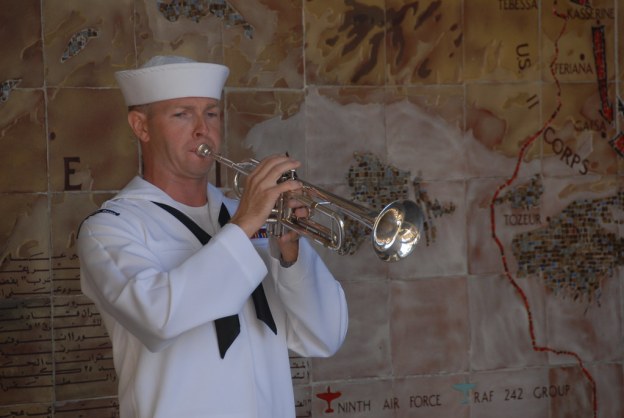
Through the power of cinema and visual art, these Celluloid Chronicles serve as living monuments that permanently capture the profound weight of military sacrifice. From the frozen banks of the Delaware to the bloodied ridges of Gettysburg and the tragic depths of Guadalcanal, artistic expression bridges the gap between historical duty and modern remembrance. This creative preservation ensures that the ultimate price paid by service members in every conflict—from the nation’s founding revolutionary struggles to the modern battlefields of Iraq, Afghanistan, and Iran today—is never forgotten, keeping the sacred meaning of Memorial Day alive across generations.
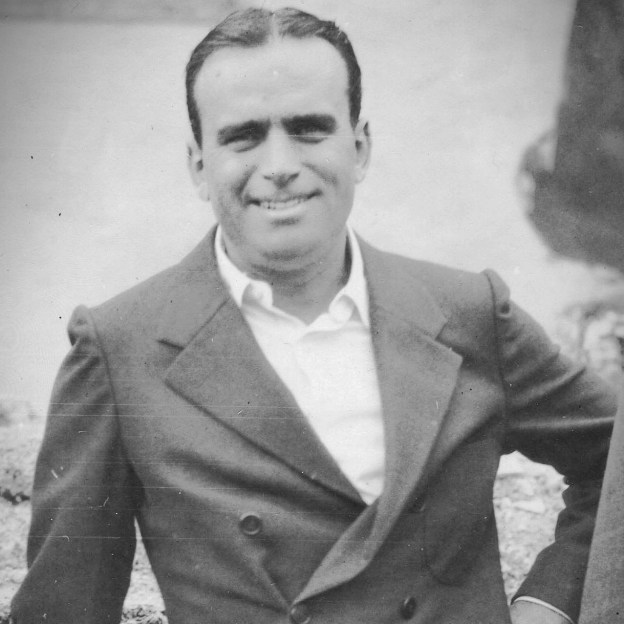
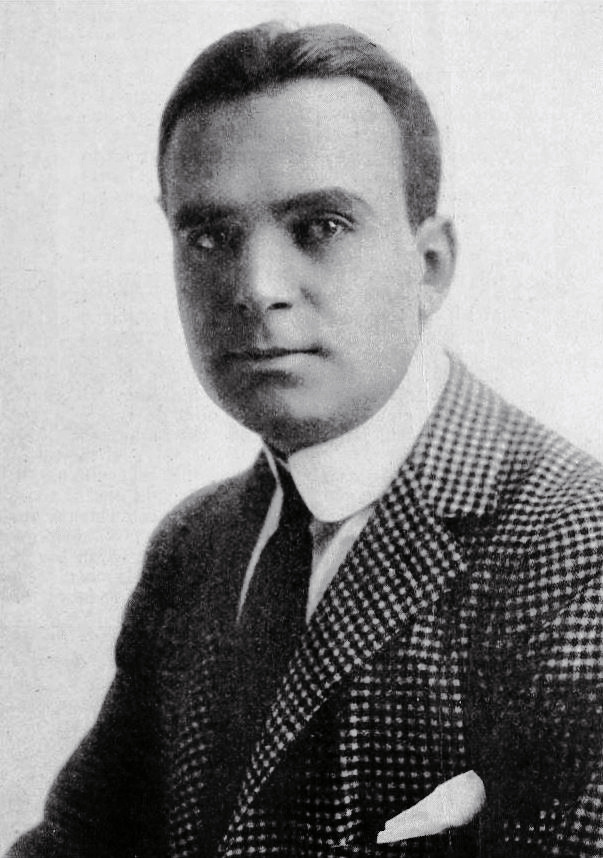
FEATURE image: Silent film superstar and icon Douglas Fairbanks Sr., c. 1917, flashing his trademark toothy smile in a cropped photograph taken in or around 1917. The photograph was taken on location on the massive backlots of Universal Studios at Universal City, California. That year Fairbanks was highly active making dynamic comedies and open-air adventures in Southern California (such as A Modern Musketeer). The original negative is preserved today as part of the official United States Marine Corps History Division Archives.
Douglas Fairbanks, Sr. helped create the modern movie star by transforming himself from a successful Broadway actor into Hollywood’s first great athletic screen hero, using charisma, physicality, and entrepreneurial ambition to become one of silent cinema’s most influential figures and a co-founder of United Artists.
Studio portrait of silent film megastar Douglas Fairbanks Sr., taken at the height of his rise as “The King of Hollywood.” The uncropped image preserves the raw edges of the original 8×10 glass plate negative, revealing the studio backdrop and the photographer’s reference numbers etched along the bottom edge. Photographed in Washington, D.C., in April 1918 by Harris & Ewing, one of the nation’s premier photographic firms, the image comes from a studio renowned for documenting U.S. presidents, visiting dignitaries, and leading cultural figures of the early twentieth century.
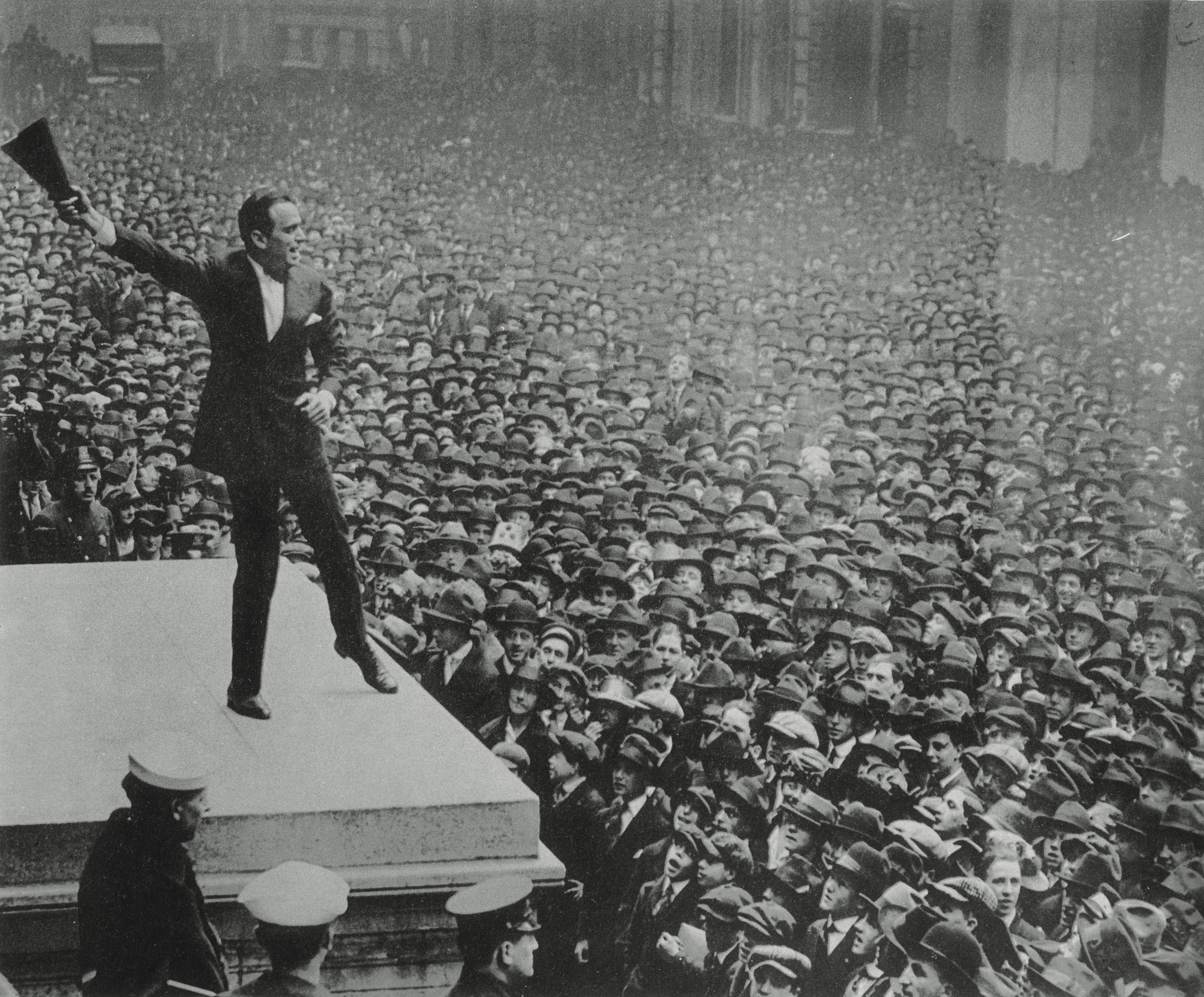
The sitting was part of a major publicity campaign connected to the World War I home-front effort. That spring, Fairbanks joined his close friends and future United Artists partners Charlie Chaplin and Mary Pickford on a widely publicized cross-country tour promoting Liberty Bonds and boosting public support for the war. Along the way, he became a headline attraction at patriotic rallies, including the famous Wall Street event where he hoisted Chaplin onto his shoulders before thousands of spectators.
The Washington studio session provided newspapers, magazines, and patriotic publications with fresh promotional photographs showcasing Fairbanks’s trademark energy and infectious smile, helping carry the Liberty Bond campaign to audiences across the country. Because the images were created as part of a government-associated wartime publicity effort, the original glass negative was ultimately preserved and is now held in the collections of the Library of Congress.No known restrictions on publication. Public Domain.
By John P. Walsh.
Early Life and Family Background
Born in Denver in 1883, Douglas Fairbanks’ mother had been married three times before she had him, the younger of two brothers with his father, an East Coast publisher and lawyer, who had relocated his family to the West. Douglas’s father abandoned the family when he was 5 years old, and the brothers were raised by their mother in Denver. Douglas also had two older half brothers by way of his mother’s previous marriages. With Douglas’s father’s departure, his mother gave her youngest sons her first husband’s surname—Fairbanks.
Stage Beginnings in Denver and New York
Douglas Fairbanks started acting as a youth in summer stock at the historic Elitch Theatre in Denver so that by 1899 Fairbanks was touring with the acting troupe of English Shakespearean actor Frederick Warde (1851-1935). For two seasons Fairbanks was an actor and assistant stage manager with the group.1 Fairbanks moved to New York where he debuted on Broadway in Her Lord and Master in February 1902. The year before, from February 1901 to July 1901, Ethel Barrymore (1879-1959) of the legendary Barrymore acting family became a Broadway star in a new romantic comedy play, Captain Jinks of the Horse Marines, at the Garrick Theatre in New York City. Barrymore’s production ran on Broadway for 168 performances in 1901 and made the 22-year-old actress a star. The turn of 20th century was a time when the theatre was king of the arts – and where, in the new century’s first decade, the nation’s celebrities were born to be made. Her Lord and Master by Martha Morton was first produced in New York, during the spring of 1902. The play, in which Douglas Fairbanks had his first role, met with success, and ran for 69 performances at the Manhattan Theatre (demolished) at 102 W. 33rd Street in New York City.2 The opening night cast for A Case of Frenzied Finance in April 1905 included Douglas Fairbanks playing Bennie Tucker at third-billing. The play, set in the Vanbillon Hotel, ran for less than a month at the Savoy Theatre at 112 W. 34th Street. That theatre opened in 1900 and closed in 1933 and was demolished in 1952.3
A dapper and svelte 22-year-old Douglas Fairbanks played third-bill Bennie Tucker in A Case of Frenzied Finance at the Savoy Theatre in April 1905. It closed after 8 performances. Public Domain.
Broadway Success and Marriage
Fairbanks appeared in A Gentleman from Mississippi from September 1908 to September 1909. On September 22, 1908 (datelined September 21, 1908) The New York Times wrote a blurb regarding a preview that stated: “A Gentleman from Mississippi received its initial performance to-night at the New national Theatre. The play deals with Congressional riots and social life in the National capital. Thomas A. Wise, Douglas Fairbanks, Sue Van Duser, Harriet Worthington and Lola May were in the cast. Mr Wise [1865-1928] and Harrison Rhodes [1871-1929] are the authors of the play.”
A Gentleman from Mississippi ran for 407 performances moving to the Bijou Theatre in NYC.4 In July 1907, 24-year-old Douglas Fairbanks married wealthy Anna Beth Sully (1886-1967) of Rhode Island. The couple had one son who followed his father into the acting business—Douglas Fairbanks, Jr. (1909-2000).
Douglas Fairbanks, c. 1910. Before 1915 Fairbanks established his character type on Broadway of the athletic all-American hero which followed him into films. By 1920 it was this full-blooded romanticism of Douglas Fairbanks that drew the biggest movie-going audiences in the country5https://www.loc.gov/resource/hec.16616/ Harris & Ewing, photographer. Public Domain.
Creating the All-American Hero
It was in November 1912, on opening night of Hawthorne of the USA, a play by J.B. Fagan, that Fairbanks established his character type for stage and screen: the athletic all-American hero.6 With Fairbanks in the starring role as Anthony Hamilton Hawthorne, the play set in Oberon, the small capital of Borrovina, a small independent state somewhere in the mess of Southeastern Europe, ran for 72 performances at the Astor Theatre at 1537 Broadway (45th St.) in New York.7 It was made into a silent film in 1919 starring Wallace Reid (1891-1923) as the American hero.
Athleticism and acrobatic stunts characterized Douglas Fairbanks’ roles on stage since 1912 were translated to his films. They are on full display in A Modern Musketeer, a 1917 silent adventure comedy film produced by and starring Douglas Fairbanks.
In 1915 the Fairbanks moved to Los Angeles – Douglas Fairbanks Sr. had received a lucrative offer from the nascent film industry. It was a three-year contract for $104,000 per year (over $3 million in today’s dollars) to join Triangle films. Exorbitant sums were dangled, often over-ambitiously by producers, to coax legitimate theatre actors to work on the West Coast in film – and under sometimes multi-year contracts. The strategy usually worked but came at a high cost later to a company’s survival and the star’s future. Again, Ethel Barrymore who became a Broadway star in 1901 and national celebrity at 22 years old began to appear in major silent films starting in 1914. Her brothers John and Lionel were already making films and though absolutely devoted to the stage from her youth, Ethel made at least 14 films before returning to the stage full time in 1920. The trend to capitalize on the talents of the stage in film was already underway when Triangle company was formed in 1915 to do just that on a spectacular scale.
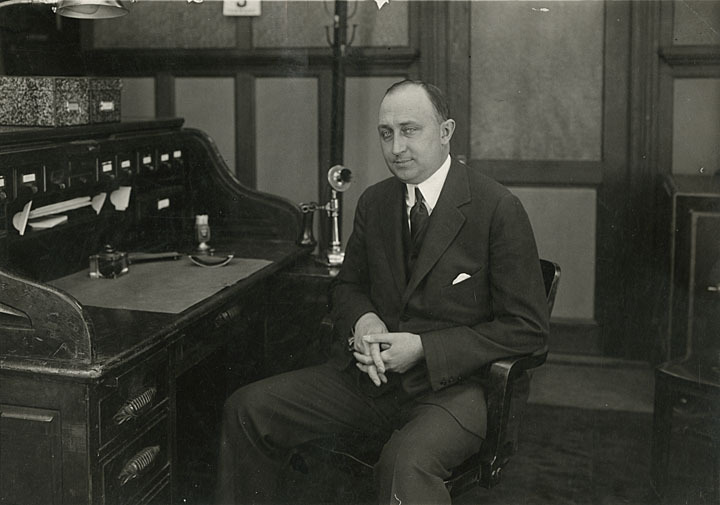
Harry Aitken, c. 1910. Public Domain.
Harry Aitken, Triangle Film Corporation, and the Broadway-to-Hollywood Strategy
Harry Aitken (1877-1956) and his brother Roy Aitken (1882-1978) co-founded a film distribution business in Milwaukee in 1906. There had also been a relationship with a Chicago film distributor who established American Film Manufacturing Company production company in 1910. The Aitken brothers relocated to California in 1908 and in 1912, with others, formed the Mutual Film Corporation. One of Mutual’s many subsidiary production and auxiliary units was Keystone Studios, where 24-year-old Charlie Chaplin got his start in films in 1913 at $150 per week (Chaplin was making more than $20,000 a week 5 years later). In 1914 Harry Aitken went into partnership with D.W. Griffith (1875-1948) and, in 1914, founded Reliance-Majestic Studios at 4516 Sunset Boulevard which is today a strip mall.
Following the tremendous success of The Birth of Nation in 1915 with which Harry Aitken was involved so to reap some of its incredible profits, the Aitken brothers and various other companies, such as Reliance-Majestic Studio, departed from Mutual to form a conglomerate of Triangle Film Corporation. The company served as a distributor to other studios in California and Aitken’s plans included sweeping into the fold the best and the brightest of Broadway theatre – which included 32-year-old Douglas Fairbanks. A leading artistic objective for these Hollywood producers was to bring these stage actors’ greatest plays to the screen. Believed to be a worthwhile goal in 1915, before the end of the 1920’s such published plays and other literature while fine for the boudoir reader were problematic to simply translate to the silver screen. The movement towards self-censorship had developed in reaction to the fear the industry would be regulated or outright banned by states. In 1915 there were fewer worries about this as such theatrical artistic fare was expected to attract a better educated movie-goer as well as the Wall Street big-money-type investors who invested in Broadway plays. In one fell swoop Aitken contracted over 60 actors and actresses including Billy Burke (1884-1970), recently married to Florenz Ziegfeld; soon-to-be Western star Dustin Farnum (1874-1929); Shakespearean actor Sir Herbert Beerbohm Tree (1852-1917) who played Macbeth in D.W. Griffith’s lost 1916 film of the same name; and, “Casey At the Bat” DeWolf Hopper (1858-1935).
Douglas Fairbanks, 1916. Public Domain.
The Lamb and the Birth of a Screen Idol
The debut feature from Triangle starred Douglas Fairbanks in The Lamb, a film based on a 1913 stage play that was expanded to have Western cinematic elements. It premiered with two more features on September 23, 1915 at The Knickerbocker Hotel in Fairbanks’ old stomping ground of New York City. Triangle had in-house three master directors – D.W. Griffith, Mack Sennett, and Thomas Ince. D.W. Griffith had a hand in The Lamb, though its directing and screenplay credits went to 27-year-old W. Christy Cabanne (1888-1950). The Lamb was a hit with audiences, and critics praised Fairbanks’ performance marked by his celebrated physicality.8 The film had a nationwide release that November 1915. Although not yet a movie star, Fairbanks saw his weekly salary doubled. By His Picture in the Papers, a 1916 silent comedy film for Triangle that provided stunts for Fairbanks to wrap his athleticism around, Fairbanks became a popular screen idol. Fairbanks made 13 films for Triangle and when his contract expired, Harry Aitken was paying him $10,000 per week.9 Yet, excepting Douglas Fairbanks, Aitken had over bought his stable of stage stars in relation to their poor return so that in 1916 Triangle was known in the industry to be on the verge of collapse.
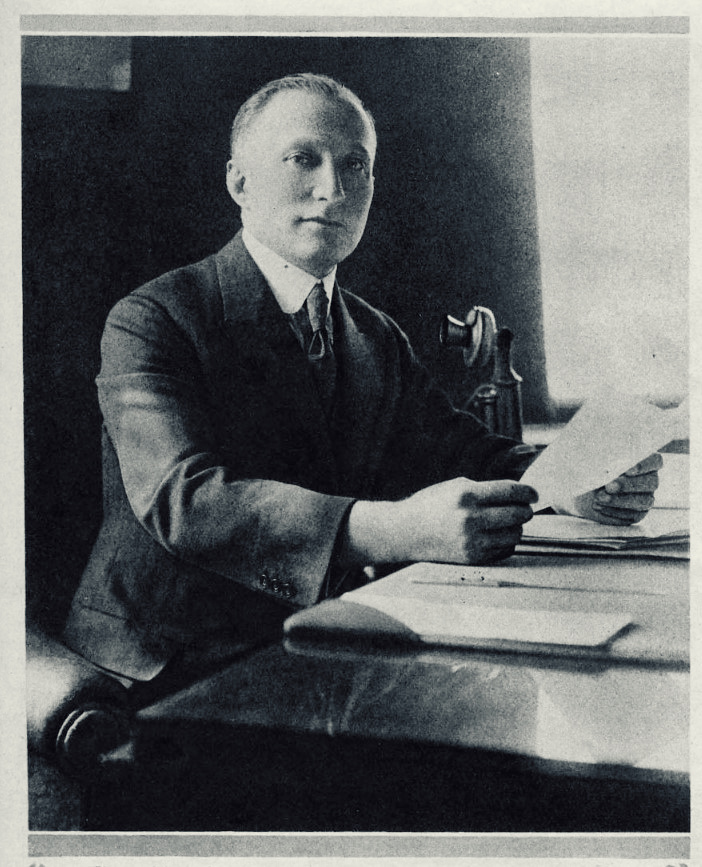
Paramount Pictures’ co-founder Adolph Zukor (1873-1976) was one of the innovators of the motion picture business. In 1916 Zukor convinced Douglas Fairbanks to become the independent producer of his own films. From the May 1922 issue of Motion Picture Classic. Public Domain.https://archive.org/details/MotionPictureClassicMay1922/mode/1up?view=theater
Independent Producer and the Douglas Fairbanks Picture Corporation
Douglas Fairbanks, Triangle’s star, was convinced by Paramount Pictures’ co-founder Adolph Zukor (1873-1976), believed to be “the business brains of the motion picture industry,”10 to become the independent producer of his own films. This became reality at the end of 1916 with the creation of the Douglas Fairbanks Picture Corporation. Zukor had already worked to do something similar for Mary Pickford’s films.
Douglas Fairbanks and Mary Pickford around 1919. Both movie stars already had established independent productions companies for their own films which still required their distribution – a key aspect of making money in movies – by others. These stars along with comedy star Charlie Chaplin and master director D.W. Griffith founded United Artists in 1919 largelyto establish control of the distribution arm of the movie making business for their independently produced films. In 1919, Douglas Fairbanks divorced his wife, Anita. The following year, Mary Pickford, “America’s Sweetheart,” divorced her husband, Owen Moore, and married Douglas Fairbanks, her paramour since 1916. The American public, which took tremendous interest in these personal affairs, were shocked but hardly surprised by the country’s changing values. Even Douglas Fairbanks’ films between 1915 and 1919 had demonstrated those changing values by way of his athletic, likeable characters drawn to display a comical, good-natured, brash overambitious hero with a popular philosophy of avoiding both boring convention and conventional boredom. While Fairbanks’ dramatis personae would change dramatically in the 1920s from comedies to swashbucklers his already fantastic, attractive and likeable character type was being merely reinforced.11 Glass negative, Harris & Ewing photographer.https://www.loc.gov/resource/hec.30098/ Public Domain.
Fairbanks Productions and the Road to United Artists
As Fairbanks had been lured away by a better offer, so the actor hired his team at Triangle for his own company. Director John Emerson (1874-1956) and screenwriter Anita Loos (1888-1981) – to be husband and wife in 1919 – had successfully collaborated on Fairbanks’ movie hits at Triangle and even D.W. Griffith valued the pair as among the best film editors in the business after working on Intolerance in 1916. Emerson had directed important films at Triangle in 1916 featuring Douglas Fairbanks including His Picture in the Papers, The Americano, and The Mystery of the Leaping Fish. These Emerson-directed films were followed in 1917 by In Again, Out Again, Wild and Woolly, Down to Earth, and Reaching for the Moon, all for Douglas Fairbanks Productions. In 1918 Fairbanks made 5 more romantic comedies and one melodrama called Arizona, a film now lost. Despite a film receiving perhaps a mixed review from critics or being subject to local censorship, Douglas Fairbanks’ films proved box office gold due to his star power. In 1918 and moving into 1919 Fairbanks had become a millionaire, screen idol and soon to be co-founder of his own movie studio, United Artists.
John Emerson and Anita Loos in 1918. These two creative individuals who married in 1919 worked closely as director, screenwriter, and film editorwith Douglas Fairbanks as well as D.W. Griffith at Triangle films and later at Douglas Fairbanks Picture Corporation. They helpedmake some of the most popular and critically-acclaimed films in the industry at that time. Public Domain.
Down to Earth is a 1917 American comedy romance film produced by and starring Douglas Fairbanks with Irish-born actress Elaine Percy. Directed by John Emerson with a screenplay co-written by Anita Loos, the film features Fairbanks as Bill Gaynor who sets out to prove the outdoors and self-reliant manual labor are better for health than any modern medical treatment. He does this by kidnapping a group of hypochondriacs from a clinic that includes a girl, Ethel Forsythe (Percy). Bill is interested in her, but she refuses his proposals. Finally, after proving his point on a “deserted island” that is next to a California freeway, Bill bids farewell to the revived group of patients and escapes with his awaiting love interest, Ethel, into the sunset by rowboat. The film is in the Public Domain.
The most popular silent film stars on the road selling Liberty bonds in 1918 were Charlie Chaplin, Mary Pickford, and before a massive crowd on Wall Street in New York City, Douglas Fairbanks. In 1918 Fairbanks and Chaplin decided to hire private detectives to spy on their respective studios, Paramount Pictures and First National. They were told that the studios were going to put a stop to their exorbitant salaries and not renew their contracts.12 The positive audience response from the Liberty drives and a fear of a corporate merger that would end star leveraging power, led directly to Fairbanks, Chaplin, Pickford, and master director D.W. Griffith, to found United Artists in January 1919. Public Domain.
Conclusion
As the curtain fell on the theater-dominated nineteenth century and rose on the age of motion pictures, Douglas Fairbanks emerged as a defining titan of the new medium. At a pivotal moment when the art and business of film were still being invented from scratch, Fairbanks helped construct the very blueprint of modern movie stardom. He achieved this through a potent combination of infectious optimism, explosive athletic vigor, and an instinctive, unparalleled screen charisma.
More than just a box-office darling, Fairbanks became the ultimate symbol of silent-era ambition and untamed possibility. He radically disrupted the industry by challenging rigid studio monopolies, pioneering artist-led production as a co-founder of United Artists. In doing so, Fairbanks established a revolutionary model of creative freedom, global celebrity, and entrepreneurial control that reshaped the landscape of Hollywood and the business of filmmaking for generations. Ultimately, his career mirrored Hollywood’s own meteoric rise, ensuring his towering influence would endure long after the silent era that made him famous had passed into history.
NOTES:
1. Goessel, Tracey. The First King of Hollywood; The Life of Douglas Fairbanks. Chicago Review Press, 2016.
8. Lombardi, Frederic (2013). Allan Dwan and the Rise and Decline of the Hollywood Studios. McFarland. pp. 53–54.
9. United Artists, Volume 1, 1919–1950: The Company Built by the Stars, Tino Balio, University of Wisconsin Press, 2009. p. 143.
10. Quoted in the May 1922 issue of Movie Picture Classic, p. 26.
11. A Short History of the Movies, Gerald Mast, Indianapolis: Bobbs-Merrill Company, Inc., 1976, pp. 124; 127 and The Liveliest Art: A Panoramic History of The Movies, Arthur Knight, New York: MacMillan Publishing, 1978, p 107.
12. Chaplin: His Life and Art, David Robinson, New York: McGraw-Hill Book Company, 1985, p. 267.
BIBLIOGRAPHY:
A Short History of The Movies, Gerald Mast, The Bobbs-Merrill Company, Inc. Indianapolis, 1977.
David Robinson, Chaplin: His Life and Art. New York: McGraw-Hill Book Company, 1985.
Hollywood: The Pioneers. Kevin Brownlow and John Kobal, New York: Alfred A. Knopf Inc. A Borzoi Book,1979.
History of the American Cinema, Volume 5, 1930-1939, Charles Harpole, General Editor, New York: Charles Scribner’s Sons, 1993.
The American Film Industry, ed. Tino Balio, University of Wisconsin Press, 1976.
The Hollywood Story, Joel W. Finler, New York: Crown Publishers, Inc., 1988.
The Liveliest Art: A Panoramic History of The Movies, Arthur Knight, New York: MacMillan Publishing, 1978
The United Artists Story, Ronald Bergan, Crown Publishers, Inc., New York, 1986.
United Artists, Volume 1, 1919–1950: The Company Built by the Stars, Tino Balio, University of Wisconsin Press, 2009
An iconic production still showing Douglas Fairbanks Sr. flashing his famous smile as his character, Ahmed, in the 1924 landmark silent film fantasy epic, The Thief of Bagdad. In the promotional shot distributed by United Artists in 1924 he famously paired a patterned, wrapped head scarf with prominent matching hoop earrings as the movie star starred in what is universally classified as an epic swashbuckler. Public Domain.
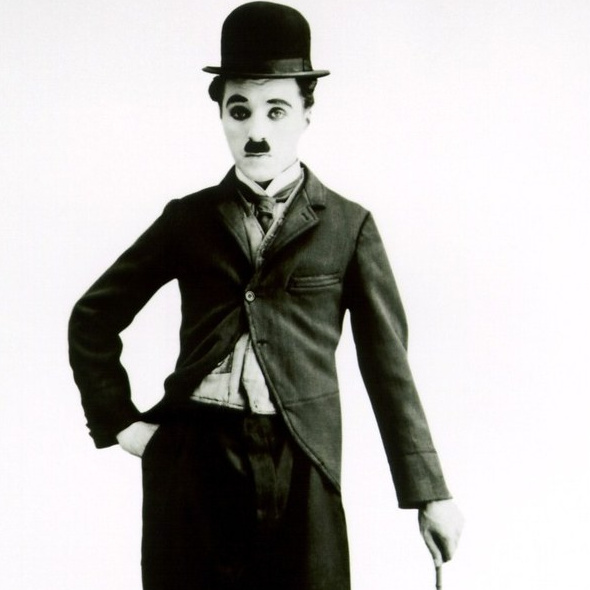
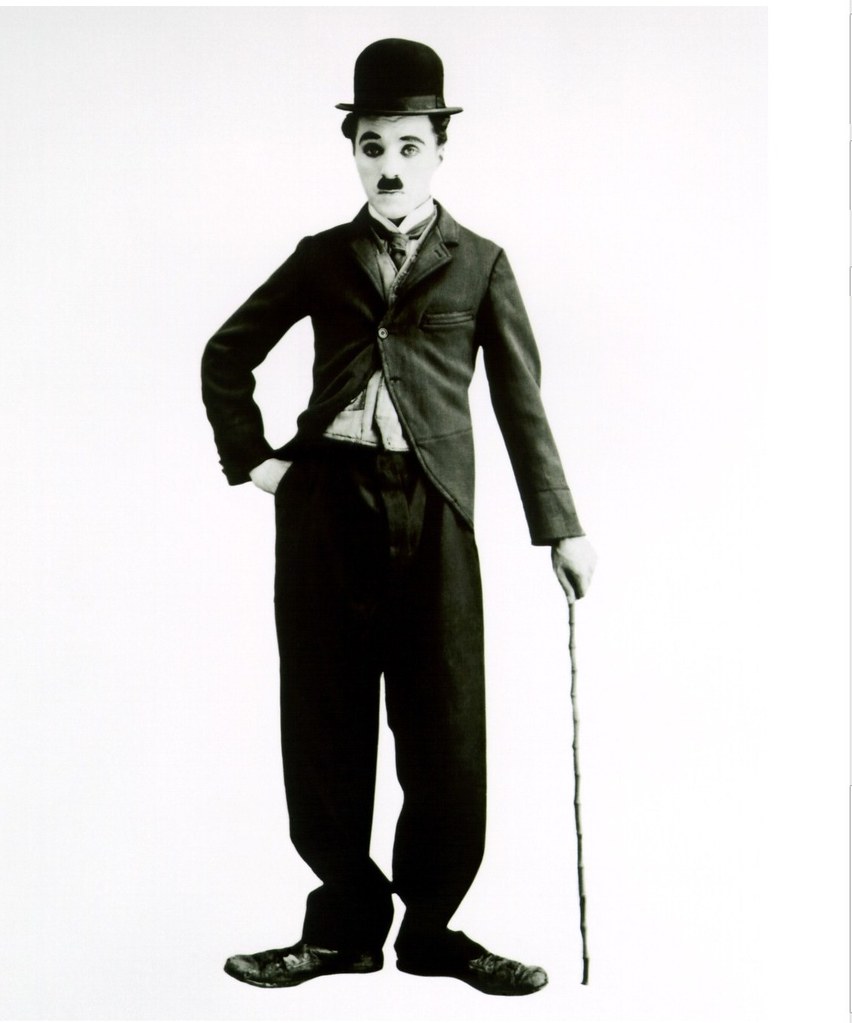
FEATURE image: Full-length, black-and-white portrait of the English comic actor and filmmaker Charlie Chaplin in his famous “The Tramp” character, 1915. See details below. Public Domain.
Charlie Chaplin’s rise between 1913 and 1918 illustrates how exceptional talent, business acumen, and a determination to gain creative control transformed him from a touring stage performer into the world’s most famous film comedian and one of the first independent movie auteurs.
Charlie Chaplin (1889–1977) taken circa 1915 to 1916 during Chaplin’s massive surge in popularity while he was under contract with the Essanay Film Manufacturing Company (1915) or right as he transitioned to the Mutual Film Corporation. This is a famous publicity headshot meant to show the public the “real” man behind the slapstick makeup. At the time, audiences worldwide only knew him as the scruffy Little Tramp.
Studio portraits like this shocked fans by revealing that Chaplin was a remarkably handsome, sharp-dressing young man in his mid-20s without his fake mustache, baggy clothes, and heavy eyeliner instead dressed in a formal, well-tailored dark three-piece suit, a high stiff-collared white shirt, and a distinct polka-dot bowtie. Chaplin didn’t sign his historic million-dollar deal with First National Pictures until late 1917, building his own Hollywood studio to produce films for them in 1918. Public Domain.
From Keystone to First National: Charlie Chaplin’s Rise to Global Stardom, 1913-1918.
Discovered in America
Twenty-four-year-old Charlie Chaplin arrived in the United States in 1913 as a member of Fred Karno’s famous English music hall and pantomime troupe. During the tour, his remarkable comic talents attracted the attention of film producer Mack Sennett, founder of Keystone Studios.
Chaplin was discovered in the United States in 1913 while touring with an English vaudeville and pantomime troupe and was hired by Mack Sennett’s Keystone Studios.
Chaplin signed a contract with Keystone Comedies for $150 a week, roughly three times what he had earned in vaudeville and music halls. More importantly, the position introduced him to the rapidly expanding motion picture industry and its enormous commercial potential.
In his first year at Keystone, Chaplin appeared in an astonishing 35 films. The short one- and two-reel format proved ideal for developing his most famous screen creation, “the Tramp,” a lovable, resilient underdog recognizable by his bowler hat, cane, oversized shoes, and distinctive walk. Audiences embraced the character immediately, and Chaplin became one of the first true movie stars of the silent era.
At Keystone, he created and refined the “Tramp” character and became an overnight film sensation through a remarkable output of short comedies.
Full-length, black-and-white portrait of the English comic actor and filmmaker Charlie Chaplin in his famous “The Tramp” character costume of tight-fitting jacket, oversized baggy trousers, a collared shirt with vest, large worn-out shoes, and signature bowler hat. One hand is on his hip while the other holds his thin cane, which rests on the floor. The Tramp stands with his feet turned outward and has his trademark small toothbrush mustache and heavily lined eyes, looking directly forward with a slightly melancholy expression.
The portrait was taken in 1915 by American photographer JuliusStrauss-AlbertPeyton Studio. The promotional photograph was made during Charlie Chaplin’s meteoric rise to global fame, specifically around the time he signed with the Essanay Film Manufacturing Company. Chaplin had spontaneously created “The Tramp” (or “Little Tramp”) costume just a year prior in early 1914 while working at Keystone Studios. This exact image became one of the definitive, universally recognized marketing portraits of the era. It was reproduced globally on movie posters, sheet music, and merchandise to promote his foundational silent films, cementing the Tramp as a permanent fixture of film history. PHOTO: “Charlie Chaplin” by tonynetone is licensed under CC BY 2.0.
Edna Purviance: Chaplin’s Leading Lady. Charlie Chaplin and Edna Purviance (1895-1958) share the screen in this classic clip from A Dog’s Life (1918), featuring Granville Redmond (1871-1935) as the dance hall proprietor. Beginning in 1915, Purviance became a key figure in early cinema as Chaplin’s principal leading lady. She brought charm and depth to many of his greatest silent films, appearing in more than 30 films with him through 1923.
Purviance’s natural screen presence and understated acting style complemented Chaplin’s comic genius. Among their collaborations was A Dog’s Life (1918), in which she played the female lead opposite the Tramp. The film also featured landscape painter Granville Redmond (1871-1935), a close friend of Chaplin, in the role of a dance hall proprietor.
The Essanay Years: Creative Freedom and Financial Success
Although Mack Sennett wanted to retain his breakout star, the Chicago-based Essanay Film Manufacturing Company successfully lured Chaplin away in late 1914. The new contract paid him $1,250 a week and, just as importantly, gave him the opportunity to exercise greater creative control over his films.
Chaplin made 14 films for Essanay between 1915 and early 1916. During this period, he refined the Tramp character, blending comedy with sentiment and human emotion in ways that distinguished his work from the rough-and-tumble slapstick then common in silent film comedy.
His move to Chicago’s Essanay Film Manufacturing Company brought a dramatic salary increase and greater artistic control over his films.
The financial rewards were substantial for both artist and studio. While Chaplin earned unprecedented sums, Essanay profited even more from the immense popularity of his films, helping transform both Chaplin and the company into major forces within the motion picture industry.
Mutual Film Corporation and Comic Mastery
In early 1916, Chaplin signed a groundbreaking contract with Mutual Film Corporation that elevated him into the highest ranks of entertainment. The agreement paid him approximately $670,000 annually, or $10,000 a week, an extraordinary amount at the time and the equivalent of hundreds of thousands of dollars per week today.
By this point Chaplin was not merely a popular comedian. He had become an international cultural phenomenon whose fame extended across Europe and North America.
The Mutual period is often regarded as one of the most artistically successful phases of Chaplin’s career. During 1916 alone he produced twelve films, including:
At Mutual Film Corporation, Chaplin became the highest-paid entertainer in the film industry and produced a series of silent comedy classics that established his international reputation.
The Floorwalker
The Fireman
The Vagabond
One A.M.
The Count
The Pawnshop
Behind the Screen
The Rink
Chaplin followed these with four additional films in 1917. Collectively, the Mutual comedies demonstrated a remarkable combination of physical comedy, character development, storytelling, and technical craftsmanship that raised screen comedy to a new artistic level.
By the beginning of 1918, the still youthful Chaplin had become one of the world’s most celebrated filmmakers. His fame opened doors to prominent artists, writers, performers, and cultural figures across the globe.
Becoming an Independent Producer
Recognizing Chaplin’s unmatched drawing power, Mutual offered him a lucrative renewal contract worth $20,000 per week, with the studio covering production costs. Yet Chaplin wanted more than a salary. He wanted artistic independence and a direct share of the profits generated by his films.
Instead, he signed with First National Exhibitors’ Circuit. The new agreement matched Mutual’s financial terms, included a signing bonus of $15,000, and granted Chaplin substantial control over his productions.
Rather than remain a highly paid employee, Chaplin pursued profit-sharing and creative independence, signing with First National. By 1918, with A Dog’s Life, Chaplin was producer, writer, director, and star of his films, demonstrating full artistic authority over his work.
Although Chaplin assumed responsibility for production expenses, he benefited from profit-sharing arrangements – 50% share in its box office – and retained unprecedented authority over every aspect of filmmaking. As producer, writer, director, editor, and star, he was increasingly shaping his career on his own terms.
The arrangement effectively made Chaplin an independent producer, controlling both the artistic direction and financial destiny for his next 8 films. It was a major step toward the complete creative autonomy he would later achieve as a co-founder of United Artists in 1919.
A Dog’s Life and a New Phase of Chaplin’s Career
Chaplin’s first release for First National was A Dog’s Life, which premiered in April 1918.
Running approximately 33 minutes, the three-reel film featured the Tramp and demonstrated Chaplin’s growing sophistication as a filmmaker. Combining humor, pathos, social observation, and romance, the picture is often viewed as a bridge between his shorter comedies and the feature-length masterpieces that would follow.
Chaplin served as producer, writer, director, and star, reflecting the extraordinary level of creative control he had achieved by the age of twenty-eight.
Chaplin on Film: The 1992 Biography Chaplin’s life later inspired the 1992 biographical film Chaplin, directed by Richard Attenborough and starring Robert Downey Jr. in the title role. The comedy-drama film from TriStar Pictures (US). also featured Dan Aykroyd as Mack Sennett, Marisa Tomei as Mabel Normand, Penelope Ann Miller as Edna Purviance, Kevin Kline as Douglas Fairbanks, and Maria Pitillo as Mary Pickford.
One of the film’s most notable aspects was the casting of Geraldine Chaplin, Charlie Chaplin’s daughter, as her grandmother Hannah Chaplin. Although Chaplin received mixed reviews, it earned three Academy Award nominations, including one for John Barry’s acclaimed original score. Barry’s haunting main theme captures both the triumph and melancholy of one of cinema’s most influential pioneers.
Conclusion
Between 1913 and 1918, Charlie Chaplin rose from a touring English music hall performer to the most famous comedian in the world. Through Keystone, Essanay, Mutual, and First National, he steadily gained higher salaries, greater artistic freedom, and increasing control over his work. By the release of A Dog’s Life in 1918, Chaplin had become far more than a movie star. He was a filmmaker, entrepreneur, and creative visionary whose influence would shape the history of cinema for generations.
The time period highlights not only Chaplin’s comic genius but also his evolution into a pioneering filmmaker-businessman whose career pointed toward the creation of artist-controlled enterprises such as United Artists with Mary Pickford, Douglas Fairbanks, and D.W. Griffith in 1919.
Bibliography:
Balio, Tino. “Stars in Business: The Founding of United Artists.” In The American Film Industry, edited by Tino Balio, 135–152. Madison: University of Wisconsin Press, 1976.
Robinson, David. Chaplin: His Life and Art. New York: McGraw-Hill Book Company, 1985.
FEATURE image: Jennifer Jones in Good Morning, Miss Dove! (1955).The 36-year-old actress plays an elderly teacher taken ill at school who, in flashbacks reviewing her life, as a young woman had been about to marry the man she loved when her father died unexpectedly and was secretly heavily in debt. Miss Dove decides not to marry but to repay the debt by becoming the town’s spinster teacher.
Good Morning, Miss Dove endures because it presents the teacher as a moral center of community life, portraying personal sacrifice, discipline, and lifelong influence as virtues worth celebrating, while simultaneously reflecting mid-century America’s nostalgia for stable educational values during a period of social change.
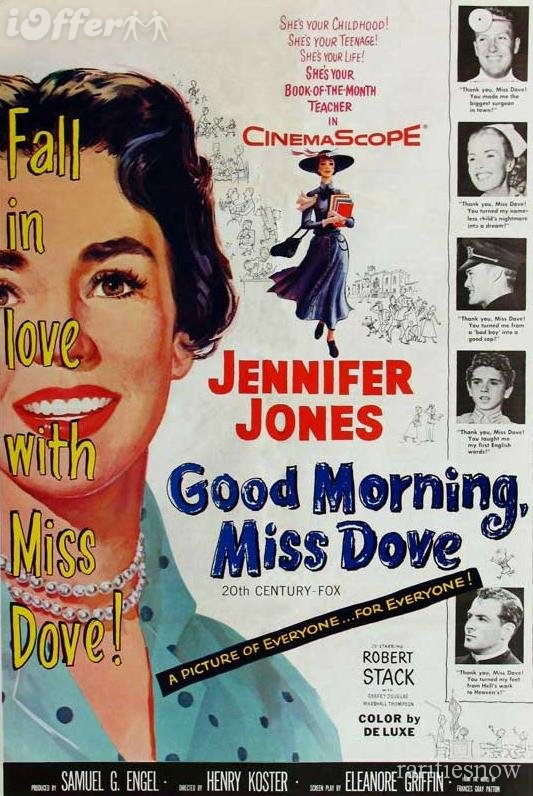
This is the original American theatrical poster for the 1955 release of Good Morning, Miss Dove! While the British campaign poster (below) relied on abstract whimsy, the domestic poster takes a more emotionally driven marketing approach to convey romanticized nostalgia, community gratitude and pride, and the title character’s deeply felt generational legacy. The film stars Jennifer Jones, Robert Stack, Kipp Hamilton, Robert Douglas, Peggy Knudsen, Marshall Thompson, Chuck Connors, and Mary Wickes. The movie was released by 20th Century-Fox the day before Thanksgiving in 1955.
The film opened to good reviews and was popular at the box office. A New York Times review observed: “Since it is unashamedly sentimental without being excessively maudlin about its heroine, ‘Good Morning, Miss Dove’ deserves credit for being honest and entertaining.”
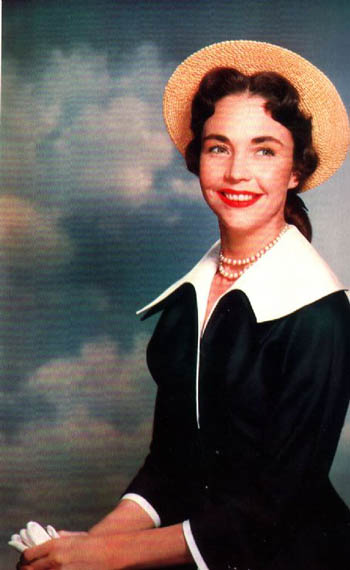
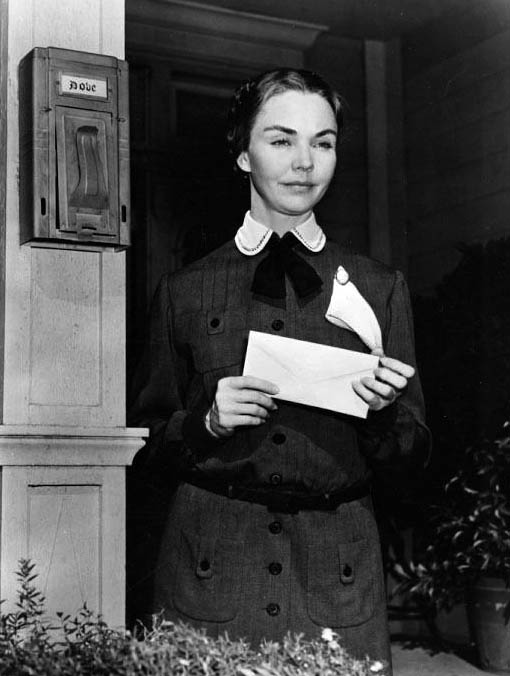
This gorgeous portrait captures Jennifer Jones during a pivotal creative shift in her career, specifically serving as a promotional costume test or publicity still for the 20th Century Fox drama Good Morning, Miss Dove (1955). The wardrobe seen here was orchestrated by Academy Award-nominated costume designer Mary Wills whose look relies on distinct mid-century cinematic signals to convey morality and time period. The dark navy or black dress accented by a sharp, oversized white collar is a deliberate visual nod to a schoolteacher’s uniform—signaling propriety, rectitude, and strict boundaries. The double-strand pearl necklace, white gloves, and classic straw hat firmly ground her in a bygone era of immaculate gentility. Styled with a traditional 1950s bright red lip and perfectly pinned dark curls, the look emphasizes her youth. This directly contrasts with the aging makeup and prosthetics used later in the film to transform her into the elderly version of the character.
The film balances sentimentality with thoughtful observations about duty, character, service, and education.
By John P. Walsh
Good Morning, Miss Dove! is Frances Gray Patton’s contemporary tale of a middle-aged spinster elementary school geography teacher in Liberty Hill who, when suddenly taken ill, sees the entire small town rally to her side.
It is a mythical period piece from the mid-1950’s. It depicts an unchanging town whose students obey their beloved teacher. Though directed by Henry Koster in a stagey way, the film boasts progressive casting. One year after the milestone 1954 Supreme Court decision in Brown v. Topeka Board of Education establishing racial segregation in public schools as unconstitutional, Good Morning, Miss Dove! presents a newly-integrated public school classroom in Cinemascope and De Luxe color.
Film-going audiences in 1955 loved the film.
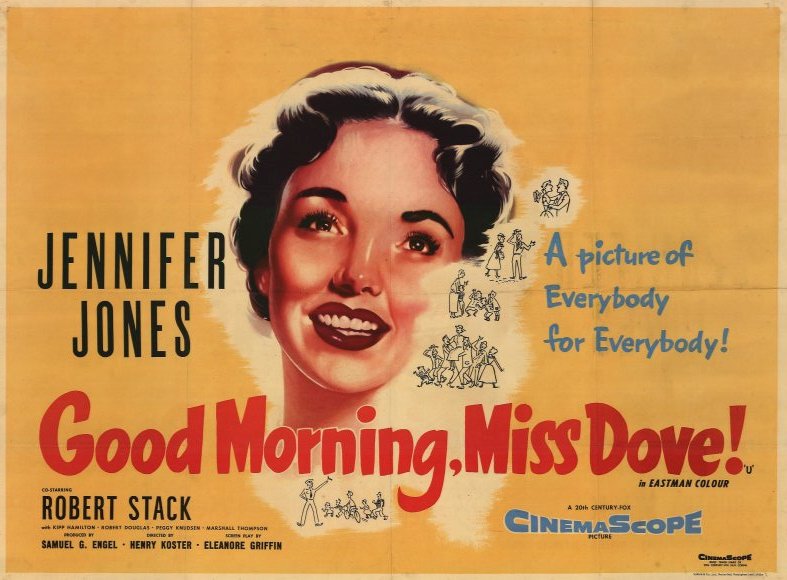
Original British theatrical poster for the 1955 20th Century Fox cinematic drama Good Morning, Miss Dove! starring Jennifer Jones and Robert Stack. Its core tagline: “A picture of Everybody for Everybody!” conveys universal appeal and wholesome, cross-generational family entertainment. The giant, warm illustration of Jennifer Jones looking upward with a glowing smile capitalizes on her existing star power as a traditional Hollywood romantic leading lady framing the movie as an uplifting, heartwarming emotional journey rather than grim drama. The prominent placement of the CinemaScope logo and the note“in Eastman Colour” were meant to convey the film’s modern technical prestige and cinematic scale.
Awaiting a risky operation, Miss Dove (Jennifer Jones) thinks back on her life and those of her prized grown-up former students. They included Robert Stack (a surgeon), Chuck Connors (a policeman), and Jerry Paris (a playwright). All of these students overcame difficult childhoods and found worldly achievement with the help of Miss Dove.
Based on popular Book of the Month Club novel.
Patton’s novel had enjoyed success in 1954 as a Book of the Month Club and Reader’s Digest selection. Its release as a major motion picture by 20th Century-Fox continued the novel heroine’s popularity.
Release of the film during the Thanksgiving weekend 1955 was in the same year that Jennifer Jones starred in another Deluxe color film, the American drama-romance Love is a Many-Splendored Thing.
For the Academy-Award winning actress to play an elderly spinster (many early scenes feature the naturally dark-haired Miss Jones without her older character’s make-up), she moves beyond type. In the mid-1950’s as America settled into the Eisenhower years, Good Morning, Miss Dove! showed a lead film character -– the “terrible” Miss Dove played by Jennifer Jones — as an unflinching and beloved disciplinarian. Yet in the 1950’s the American public education system was undergoing copious and difficult change. In that way, the character of Miss Dove is further complicated by becoming a popular icon in the American culture by being mostly a nostalgic figure.
Released in the exact same year as her massive romantic hit Love Is a Many-Splendored Thing, Good Morning, Miss Dove was a unique departure for Jones. Known primarily for playing passionate, emotionally turbulent leading ladies, this film marked her only true character-actor role.
In 1955 Jennifer Jones was a 36-year-old beauty. Through the magic of Hollywood make-up (Ben Nye) and hair styling (Helen Turpin), she was transformed into the elderly Miss Dove for Good Morning, Miss Dove! In 1954 after Grace Kelly wore make-up for The Country Girl that hid her good looks and went against her youthful image (Kelly was 24 years old), she won the Academy Award for Best Actress for that year.
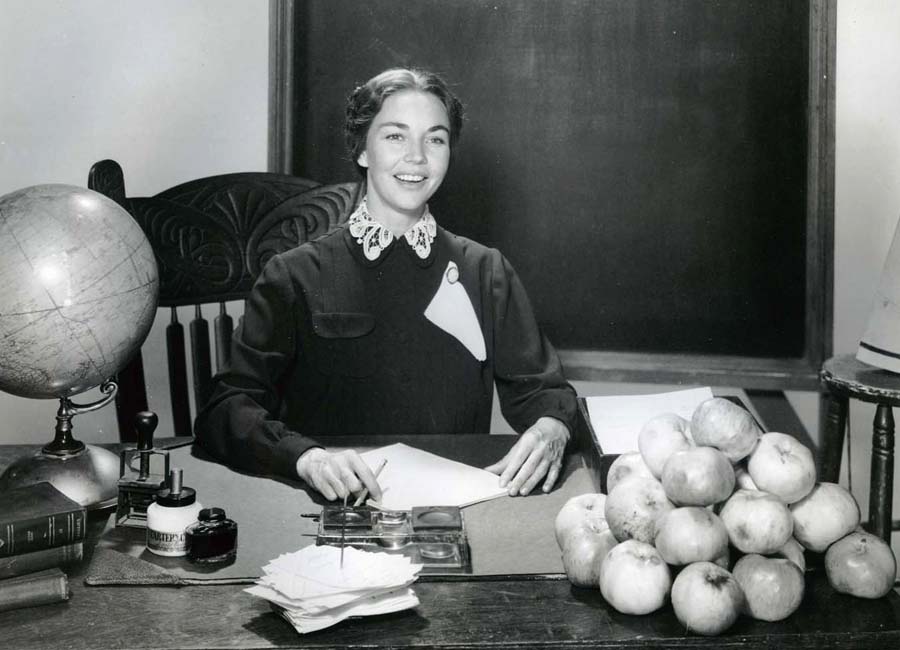
While the film itself leans into nostalgic melodrama, Jones’ performance was highly praised for balancing a severe, uncompromising facade with deep, underlying warmth. That balance was evident in the strict, modest dress she wore of a smalltown schoolteacher juxtaposed to a genuine, radiating smile.
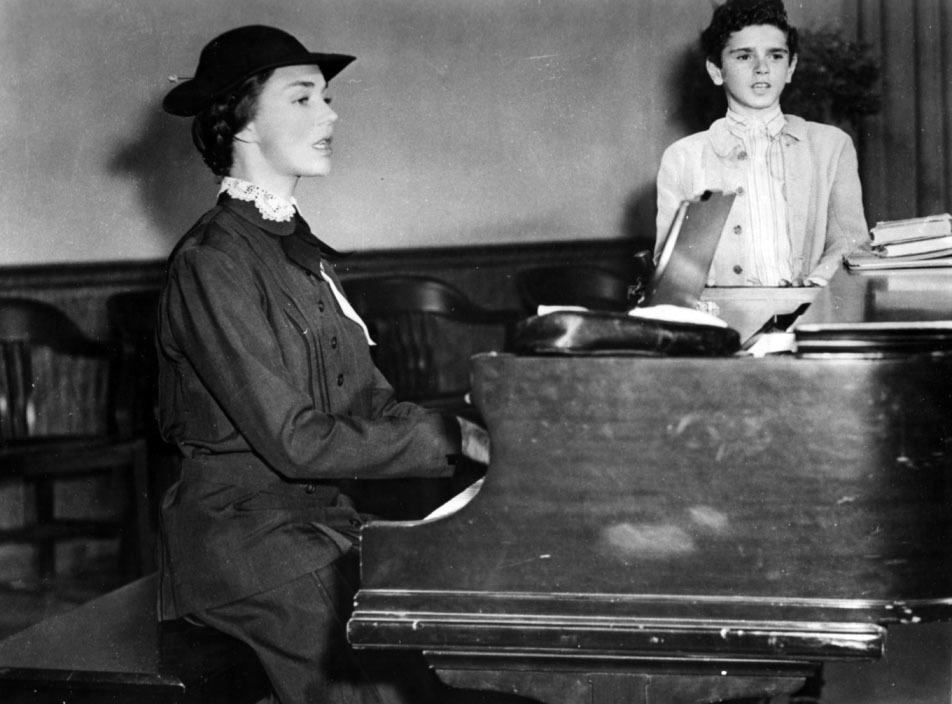
Jennifer Jones as the elderly teacher in Good Morning, Miss Dove! set in the fictional Midwest town of Liberty Hill. Before filming began in July 1955, director Henry Koster wanted Olivia deHavillandfor the role and have it set in England. Though set in contemporary America, critics saw Miss Dove as a character out of Charles Dickens.
The audience meets the elder Miss Dove at the movie’s start—make-up and hair-styling artists Ben Nye and Helen Turpin transformed the 35-year-old Jennifer Jones into the 55-year-old Miss Dove—and by flashbacks.
The film dramatizes her youth as she is about to marry. But she receives the unexpected news that her father has died suddenly and that he has debts. To pay them back, she steels herself to remain single and take a teaching post. Her chilly veneer is part of her honor to do the proper thing along with the sober accommodation to life’s necessary sacrifices.
Miss Dove (Jennifer Jones) in a costume by Mary Wills. In the 1950’s Mary Wills was nominated for an Academy Award four times.
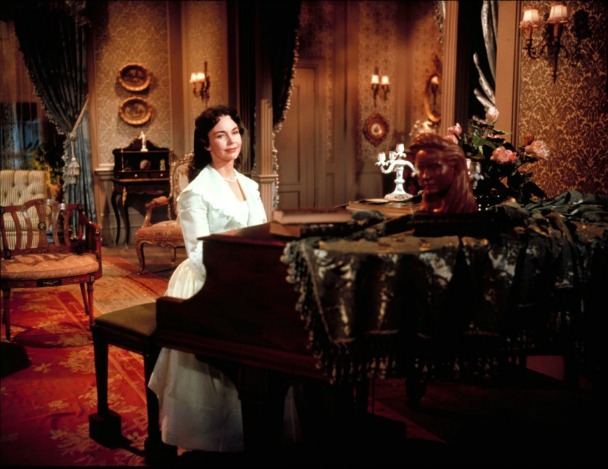
Young Miss Dove played by Jennifer Jones gives up marriage to the man she loves for a future as a spinster teacher so to pay back her late father’s debts. The story is based on a book by Frances Gray Patton that was itself based on her short stories. When 20th-Century Fox bought the rights for $52,000, it was the equivalent of about half a million dollars today.
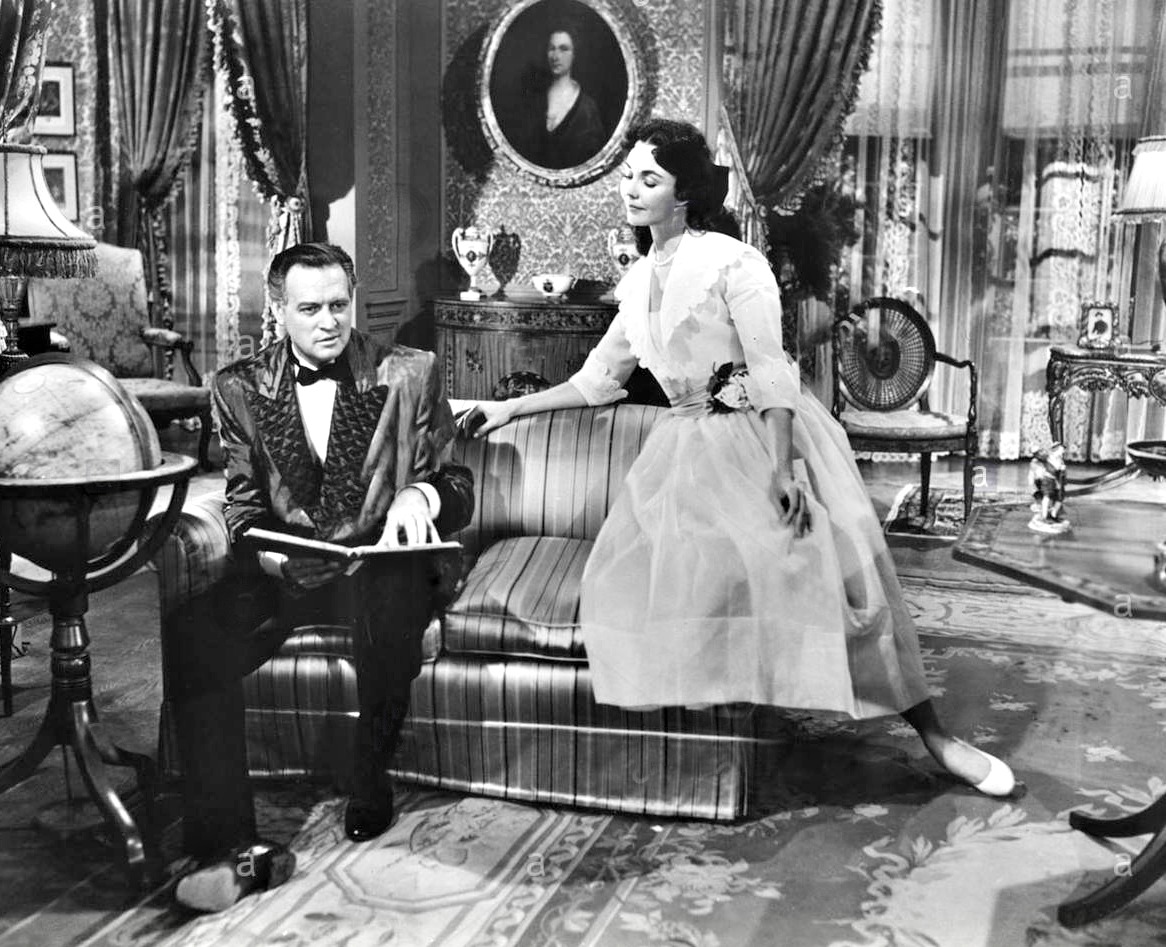
A flashback scene from Good Morning, Miss Dove! Jennifer Jones as young Miss Dove with her father, Alonso Dove (Leslie Bradley). When he dies unexpectedly and in debt, Miss Dove resolves to pay it back and upends her own life’s plans to do so. Costumes by Mary Wills.
While those who did not know Miss Dove behind her back mock her and say she couldn’t have had much of a life—never married, no family, no kids, never traveled anywhere—her army of students think about her and judge her radically differently.
In Good Morning, Miss Dove! Jennifer Jones is a beautiful young woman who rejects a marriage proposal to become the town’s grade school teacher to repay her late father’s debts. Costumes by Academy Award nominated costume designer Mary Wills.
Beyond any possibly wider cultural meaning, the film presents a unique person who by the logic of her experience and the experience of her logic enters into a series of social interactions that are amusing and honest. These include the film’s penultimate scene. Miss Dove is on her sick bed when she tells her pastor, Reverend Burnham (Biff Elliot): “Life, whatever others may think, has been for me…I have been happy. I have made many mistakes. Perhaps even sinned. I admit my human limitations, but I do not in all honesty find the burden of my sins intolerable. Nor have I strayed like a sheep. I have never been AWOL. I have never spoken hypocrisy to my Maker and now is scarcely a propitious moment to begin.”
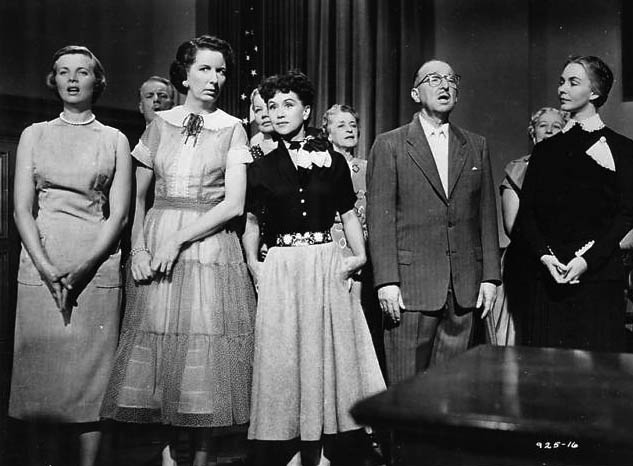
On the day of Miss Dove’s surgery, classes are dismissed and the townspeople of Liberty Hill wait outside the hospital for news of the operation’s success. The film provides a sentimental picture of mid-20th century America of Norman Rockwell proportions. Yet the film’s crisp dialogue and sharp character development engages the moviegoer. By the end of the film the outcome of Miss Dove’s surgery is as important to the audience as it is the denizens of the fictional town of Liberty Hill.
While these thoughts may be judged from different perspectives, they are expressive of a woman’s life completely dedicated to her profession and students at Cedar Grove Elementary School. The film’s denouement is powerful. Accompanied by Leigh Harline’s memorable soundtrack, it is a sentimental tribute to Miss Dove’s life which benefited many different people because of nothing other than her good character.
Jincey Baker (Kipp Hamilton), Miss Dove (Jennifer Jones), and Dr. Tom Baker (Robert Stack). Promotion for the film included advertising that encouraged moviegoers to see it for its portrayal of the state of education in the country. Costumes by Mary Wills.
A 1955 drama that is both contemporary and nostalgic. Mary Wickes plays Miss Ellwood (second from left). Costumes by Mary Wills.
Jennifer Jones as a small-town spinster teacher who falls ill in the film Good Morning, Miss Dove! Her stern and upright demeanor masks her personal sacrifices and devotion to her students. That world is thrown into chaos when Miss Dove experiences an acute pain and grows numb in her leg. While she is in her hospital bed awaiting risky surgery, she relates her life in flashbacks.
Later, in the 1970’s, when actress Peggy Knudsen was suffering from a debilitating illness (she died in 1980 at 57 years old), in real life she wa cared for by her close friend, Jennifer Jones.
In the hospital Miss Dove is cared for by Nurse Billie Jean Green (Peggy Knudsen). Billie Jean is one of Miss Dove’s former student who left Liberty Hill and had a child out of wedlock. Back in Liberty Hill, Billie Jean is infatuated with the local policeman, Bill Holloway (Chuck Connors). Bill is another of Miss Dove’s former students and was one of her best pupils.
Miss Dove with former student and Liberty Hill policeman Bill Holloway (Chuck Connors). Miss Dove tells nurse Billie Jean Green how Bill first arrived to her classroom: a poor, unkempt boy being raised by an alcoholic grandmother. Miss Dove gave Bill odd jobs and bought him a suit for his grammar school graduation. After Bill entered the Marines, he wrote to Miss Dove often, and when he returned to Liberty Hill, she was the first person he came over to see for career advice.
Miss Dove emerges as a cultural symbol whose influence extends far beyond the classroom through the lives of her former students.
THE MOVIE:
In the film, Jennifer Jones portrays the titular character, Miss Dove, an intensely disciplined, upright geography teacher navigating life in a small Midwestern town. The narrative details how she began life as a vibrant, promising young woman with a loving fiancé. However, when her father unexpectedly passed away leaving behind massive bank debts, she made the agonizing decision to reject her marriage proposal. She chose a life of strict spinsterhood to systematically pay back every dime, transforming herself into the town’s famously stoic and beloved educator.
Mary Wills: Oscar-winning costume designer
The costume designer for Good Morning, Miss Dove! (1955) is Mary Wills (1914-1997). She worked mainly for Samuel Goldwyn productions and Twentieth Century-Fox, breaking into the movie business as a sketch artist for Gone With The Wind (1939). In her nearly 40-year career Mary Wills was nominated for an Oscar seven times and won the Academy Award in 1962 for her colorful designs for The Wonderful World of the Brothers Grimm.
First woman admitted to Yale Art and Drama program.“The Fabulous Miss Wills.”
Born in Prescott, Arizona, Wills moved to Los Angeles after receiving her Master’s degree from the Yale Art and Drama School. She was the first woman admitted into that program.
Wills started designing costumes in 1944 at RKO withBelle of the Yukon and soon after designed costumes for Disney’s Song of the South (1946). She started working for Samuel Goldwyn in 1948 where she designed costumes for Enchantment. For the next six years at Goldwyn Studio the costume designer was referred to as “The Fabulous Miss Wills.”
She was regularly nominated for her costume design in the 1950’s when she designed the costumes for Good Morning, Miss Dove! including Hans Christian Anderson (1952), The Virgin Queen (1954), Teenage Rebel (1956), A Certain Smile (1958), The Diary of Anne Frank (1959), The Passover Plot (1976) and the film for which she won the Academy Award in 1962. Mary Wills also designed the Rogers and Hammerstein musical film Carouselin 1956.
Academy-Award winning costume designer Mary Wills at the Samuel Goldwyn Studio (c. 1948). The Oscar-winning costume designer worked mainly for Samuel Goldwyn Productions and Twentieth Century-Fox.
Ice Follies. Camelot and Funny Girl.
Mary Wills demonstrated a special talent for designing historical costumes, especially after she moved to 20th-Century Fox in 1954 to make The Virgin Queen starring Bette Davis. Later she showed great aptitude for designing dance and folk costumes. A collection of her original sketches are online at the Los Angeles County Museum for live productions including theShipstad & JohnsonIce Follies, now known as the Ice Follies. Mary Wills worked on two major films that she did not get film credit for — namely, Camelot (1967) and Funny Girl (1968). ForFunny Girl,she designed the Ziegfeld show-girl brides costumes as well as the costumes for Omar Sharif.
The artistry and craftmanship of costume designer Mary Wills and makeup artist Ben Nye contributed behind the scenes to Jennifer Jones’s transformation as Miss Dove.
*The photograph copyright may be believed to belong to the distributor of the film, 20th Century Fox, the publisher of the film or the graphic artist. The copy is of sufficient resolution for commentary and identification but lower resolution than the original photograph. Copies made from it will be of inferior quality, unsuitable as counterfeit artwork, pirate versions or for uses that would compete with the commercial purpose of the original artwork. The image is used for identification in the context of critical commentary of the work, product or service for which it serves as poster art. It makes a significant contribution to the user’s understanding of the article, which could not practically be conveyed by words alone. As this is a publicity photo (star headshot) taken to promote an actress, these have traditionally not been copyrighted. Since they are disseminated to the public, they are generally considered public domain, and therefore clearance by the studio that produced them is not necessary. (See- Eve Light Honthaner, film production expert, in The Complete Film Production Handbook, Focal Press, 2001 p. 211.) Gerald Mast, further, film industry author, in Film Study and the Copyright Law (1989) p. 87, writes: “According to the old copyright act, such production stills were not automatically copyrighted as part of the film and required separate copyrights as photographic stills. The new copyright act similarly excludes the production still from automatic copyright but gives the film’s copyright owner a five-year period in which to copyright the stills. Most studios have never bothered to copyright these stills because they were happy to see them pass into the public domain, to be used by as many people in as many publications as possible.” Kristin Thompson, committee chairperson of the Society for Cinema and Media Studies writes in the conclusion of a 1993 conference with cinema scholars and editors, that they “expressed the opinion that it is not necessary for authors to request permission to reproduce frame enlargements … [and] some trade presses that publish educational and scholarly film books also take the position that permission is not necessary for reproducing frame enlargements and publicity photographs.”(“Fair Usage Publication of Film Stills,” Kristin Thompson, Society for Cinema and Media Studies.)