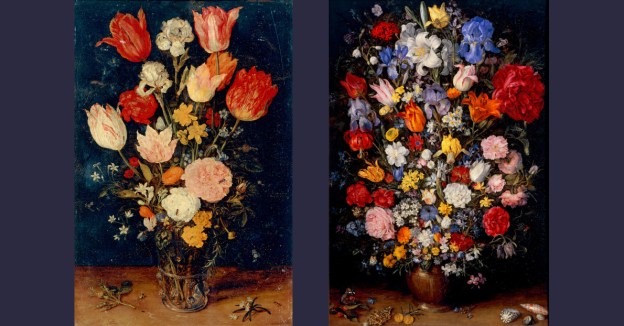
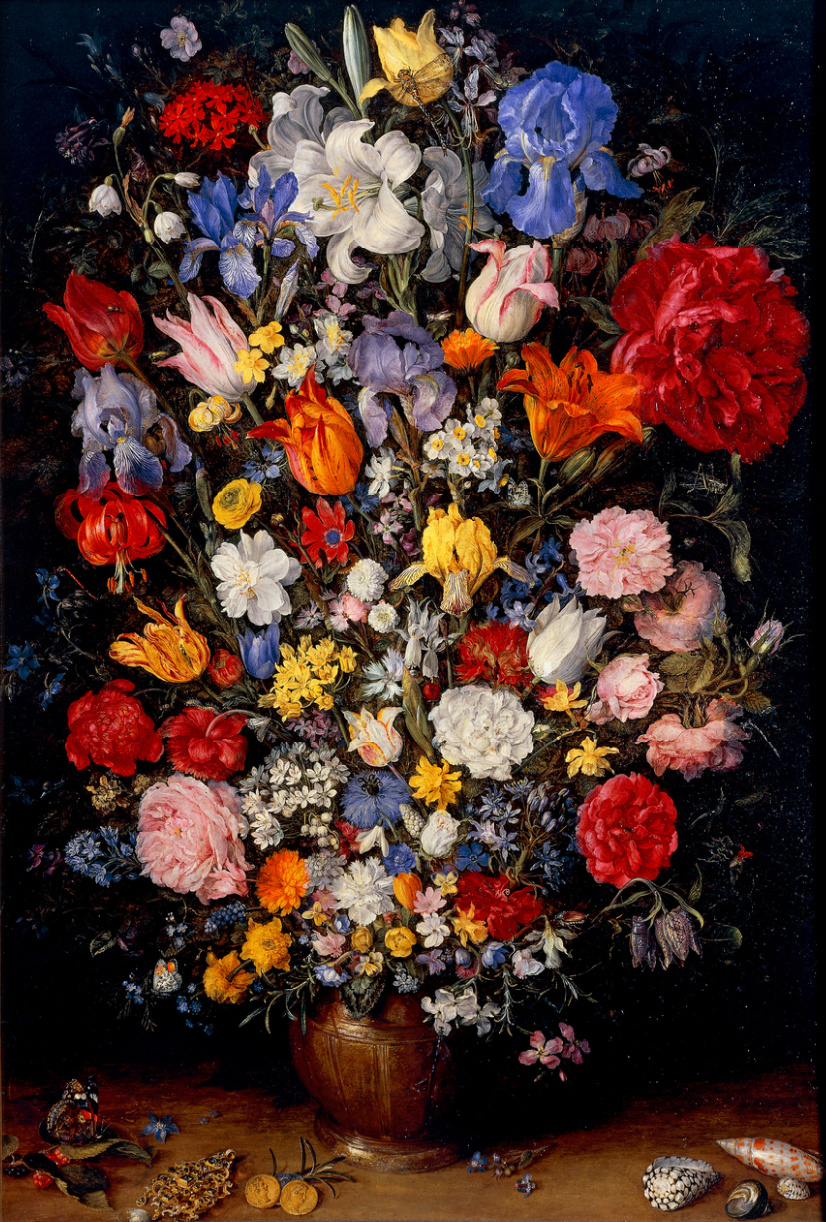
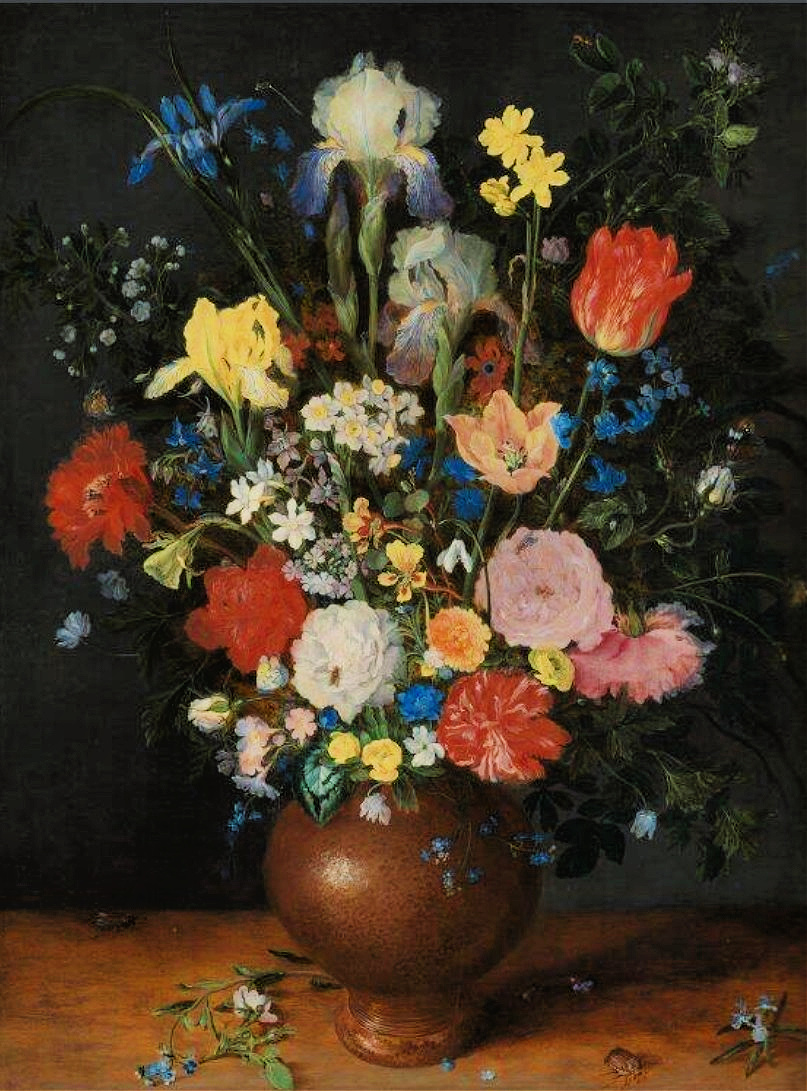
Feature Image: Flowers in a Vase and Flower Vase with Jewel, Coins, and Shells, both 1608, oil on copper, by Jan Brueghel the Elder and in the Pinacoteca Ambrosiana, Milan, Italy.
In these remarkable 1608 flower paintings, Jan Brueghel the Elder transformed floral still life from decorative accompaniment into an independent artistic subject, combining scientific observation, extraordinary technical precision, and spiritual reflection. The works reveal how early seventeenth-century Flemish art celebrated the beauty, diversity, and transience of nature while elevating close observation into an act of wonder and devotion.
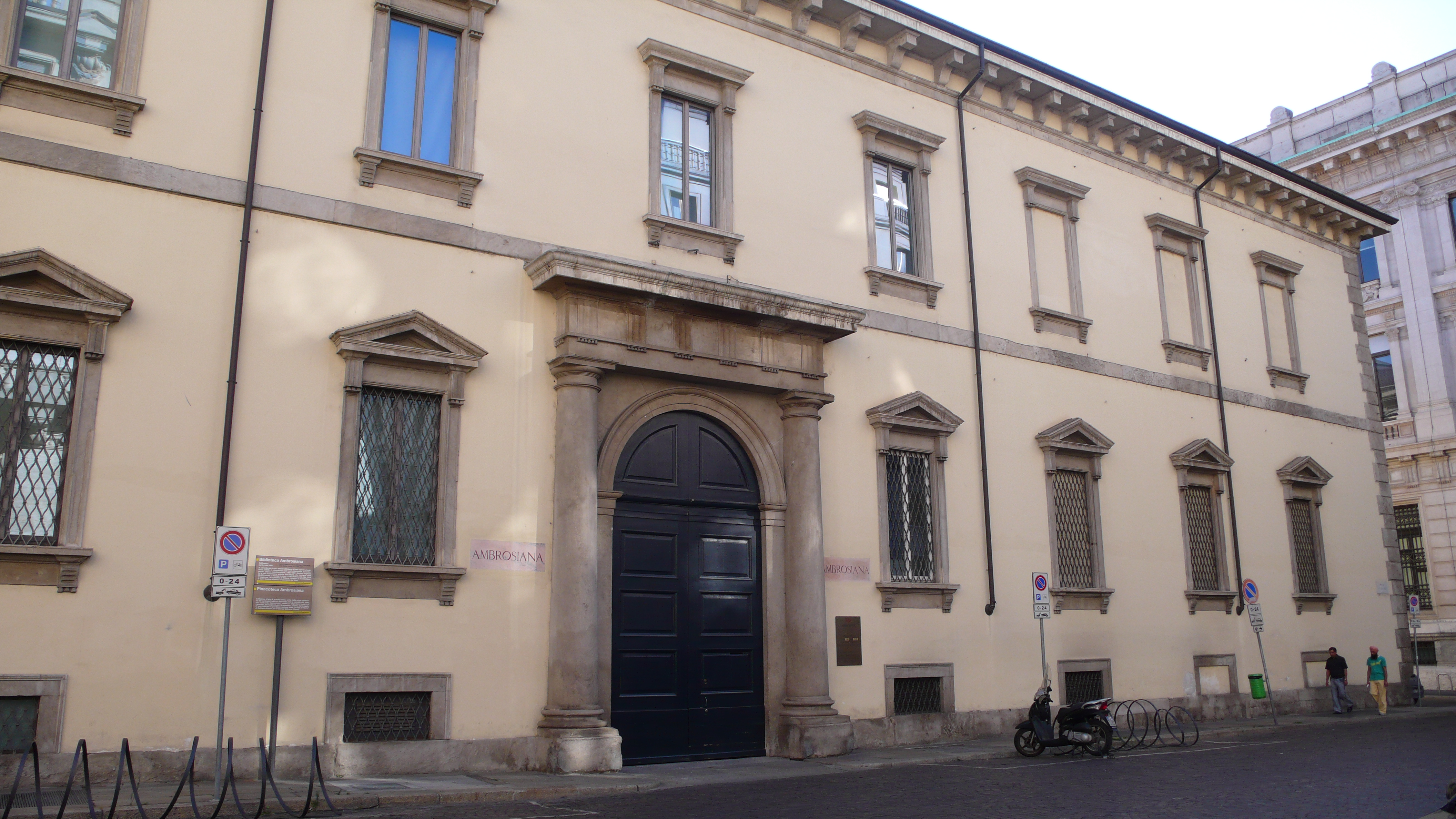
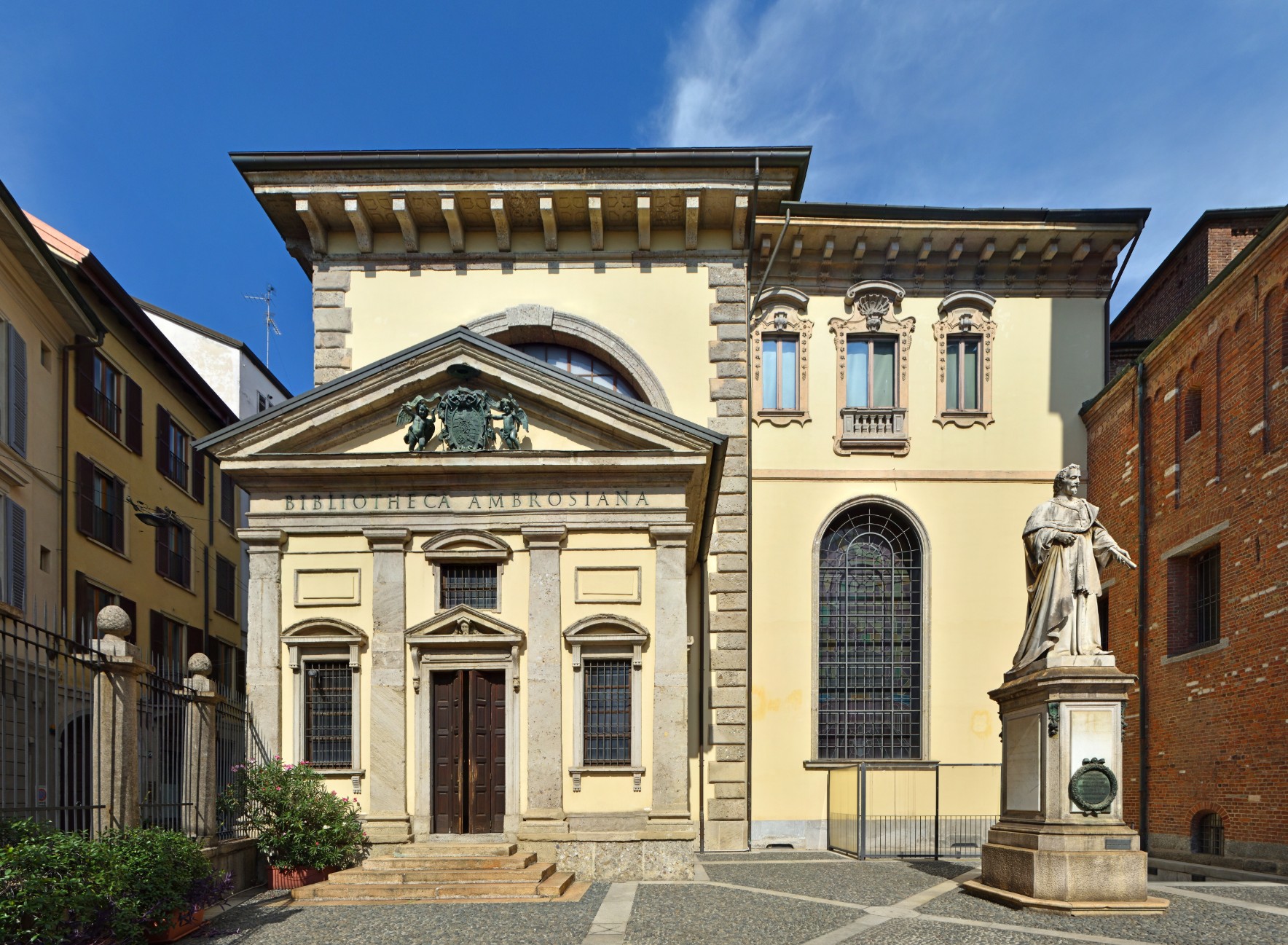
Late Renaissance (Mannerist) style façade of the Palazzo dell’Ambrosiana in Milan, Italy, which houses both the Pinacoteca Ambrosiana and the Biblioteca Ambrosiana. The palace was designed by the prominent Italian architect Fabio Mangone. Cardinal Federico Borromeo commissioned Mangone to expand the initial complex—previously handled by Lelio Buzzi and Francesco Maria Richini—specifically to house the art collection and academy. At its center the main entrance features a prominent, classic arched stone portal flanked by two doric columns supporting a structured architrave and pediment. The lower-level features windows protected by prominent metal grilles topped with decorative triangular pediments, while the upper-level windows exhibit simpler rectangular lintels. The cream-colored plaster walls are cleanly partitioned by stringcourses and vertical downspouts, culminating in a decorative bracketed roof cornice. The expansion designed by Mangone began construction around 1611 and was fully operational by 1618, the year the Pinacoteca Ambrosiana was officially founded. PHOTOS: “Milano Ambrosiana” by Welleschik is licensed under CC BY-SA 3.0.
Jan Brueghel the Elder (Flemish, 1568-1625) produced hundreds of paintings by his own hand and in collaboration with other master painters. His painterly skill ranged over an immense variety of subject matter including these innovative still life floral artworks of which the artist is seen as the founder of the genre. These flowers are not allegorical or imaginative accessories nor merely decorative but a stand-alone subject whose sole focus is the opportunity for a close observation of nature through the artistic lens. Brueghel’s pioneering still lifes show a bouquet bursting with a wide variety of colorful flowers seen from an elevated viewpoint that have been carefully delineated and are clearly visible. Born in Brussels in 1568, Jan Brueghel was the son of Pieter Brueghel the Elder (c. 1525–1530-1569) and younger brother of Pieter Brueghel the Younger (1564-1638). Brothers Jan and Pieter were both sent to Antwerp to study oil painting. In 1568, at 20 years old, Jan Brueghel left Antwerp for Italy where he settled and worked in Naples and, by 1592, in Rome. In Rome Jan Brueghel worked for Cardinals Ascanio Colonna (1560-1608), Benedetto Giustiniani (1554-1621), Francesco Maria del Monte (1549-1627) and Federico Borromeo (1564-1631) who patronized Caravaggio and was the official “Cardinal Protector” of the Roman Accademia di San Luca, an artists’ association founded in 1593 by Federico Zuccari (1539-1609).
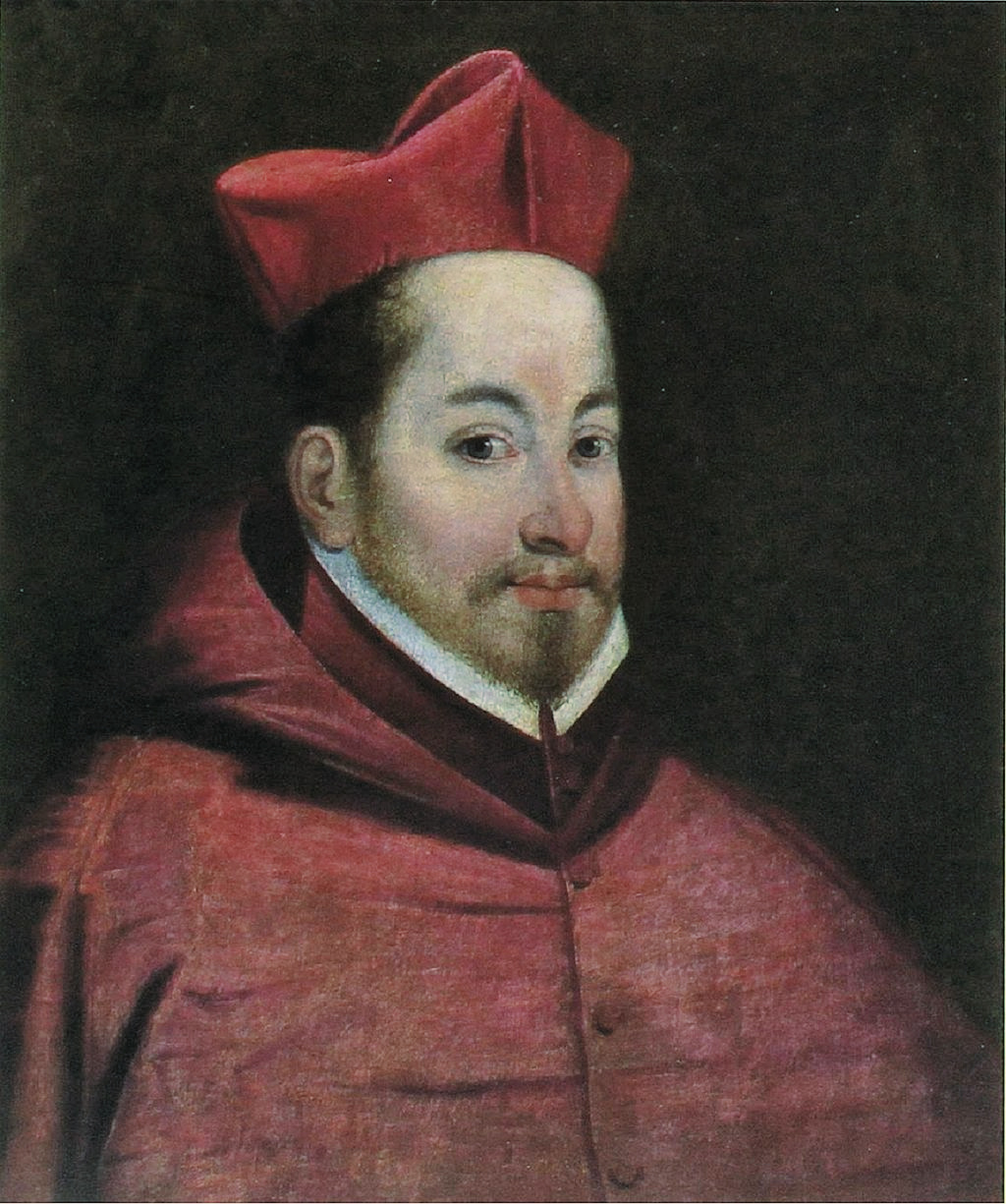
16th-century portrait of Cardinal Ascanio Colonna (1560–1608), painted by an anonymous Roman master around 1586, the exact year he was elevated to the cardinalate by Pope Sixtus V. The young cardinal enjoyed a profound reputation for eloquence and learning. Dressed in his formal scarlet cardinal biretta and mozzetta, Colonna was celebrated not only for his scholarly mind and diplomatic skill, but also as an immense patron of letters, amassing an extraordinary personal library that would later become a vital asset to the scholarly world.
Portrait of Benedetto Giustiniani (1554–1621) an exceptionally influential Italian nobleman and papal treasurer, who was elevated to the cardinalate by Pope Sixtus V in 1586. Attributed to the Genoese painter Bernardo Castello, the portrait captures the cardinal looking out with a discerning, scholarly gaze, wearing the dark winter mozzetta and academic cap befitting an elite clerical connoisseur. Born into an immensely wealthy Genoese aristocratic family that had previously ruled the Aegean island of Chios, Cardinal Giustiniani went on to become one of the most intellectually distinguished figures of late 16th and early 17th-century Rome. While he was deeply involved in high-stakes papal diplomacy, serving as papal legate to Bologna and participating in multiple papal conclaves, his lasting legacy sits firmly in the history of art. Alongside his younger brother, the prominent banker and aristocratic patron Vincenzo Giustiniani, Benedetto built what became known as the Giustiniani Collection, a cornerstone of the Roman Baroque era. At the time of his death in 1621, his personal post-mortem inventory recorded 280 paintings, demonstrating an immense, voracious appetite for contemporary art including as the absolute earliest and most enthusiastic protector of Caravaggio. Because Benedetto passed away first, his massive share of 280 paintings merged seamlessly into his brother’s holdings, helping form an aggregated collection of over 300 supreme masterpieces and ancient marbles housed inside the family’s Roman palazzo.
The direct-from-life study executed by the master portraitist Ottavio Leoni depicts Cardinal Francesco Maria del Monte (1549–1627). Rendered in black chalk with white heightening on paper 1616 drawing captures him at age 67, radiating the seasoned authority of a high-ranking Vatican diplomat while clad in his formal clerical cap and buttoned cassock. Born in Venice into a noble Tuscan aristocratic family, del Monte rose to become a powerful diplomat, the unofficial cultural ambassador for the Medici family in Rome, and a supreme connoisseur of late-Renaissance and early-Baroque arts. Four centuries later his fame rests on his early patronage of Caravaggio and his vast and meticulously art collection which provides detailed provenance for many important works of the period.
This 17th-century portrait engraving, published by Giovanni Giacomo de Rossi, celebrates the legacy of the Borromeo family in Milan. While the inscription notes that this print specifically commemorates the elevation of his nephew and namesake, diplomat and Cardinal Federico Borromeo the Younger (1617–1673), on December 22, 1670 (MDCLXX), it mirrors the deep-seated connoisseurship pioneered by his elder namesake Federico Borromeo (1564–1631) who was art patron, collector, and founder of the Ambrosiana.
The bouquets combine numerous flower species that would not naturally bloom simultaneously, creating an idealized vision of nature. Every blossom, insect, leaf, and stem is rendered with near-miniaturist precision, reflecting both artistic mastery and a growing scientific interest in the natural world.
FLOWERS IN A VASE, 1608, oil on copper, 43 × 30 cm by Jan Brueghel the Elder. Pinacoteca Ambrosiana, Milan, Italy.
In a Römer glass vase, typical of Rhenish manufactures and often depicted in Northern European painting of this period, there are colorful blooms with tulips used to anchor his bouquet. The painting was likely the one mentioned by Brueghel in a letter dated June 13, 1608. The letter is evidence for the origin of the painting as well as that these Flemish artists, in dialogue with the Italian renaissance, practiced copying nature from life, frequently with a scientific precision. Brueghel, the younger son of Flemish Renaissance painter Pieter Bruegel the Elder (c. 1525-1569), was a close friend and frequent collaborator with Peter Paul Rubens (1577-1640). Both Jan Brueghel and Rubens were the leading Flemish painters in Flemish Baroque painting of the first three decades of the 17th century.
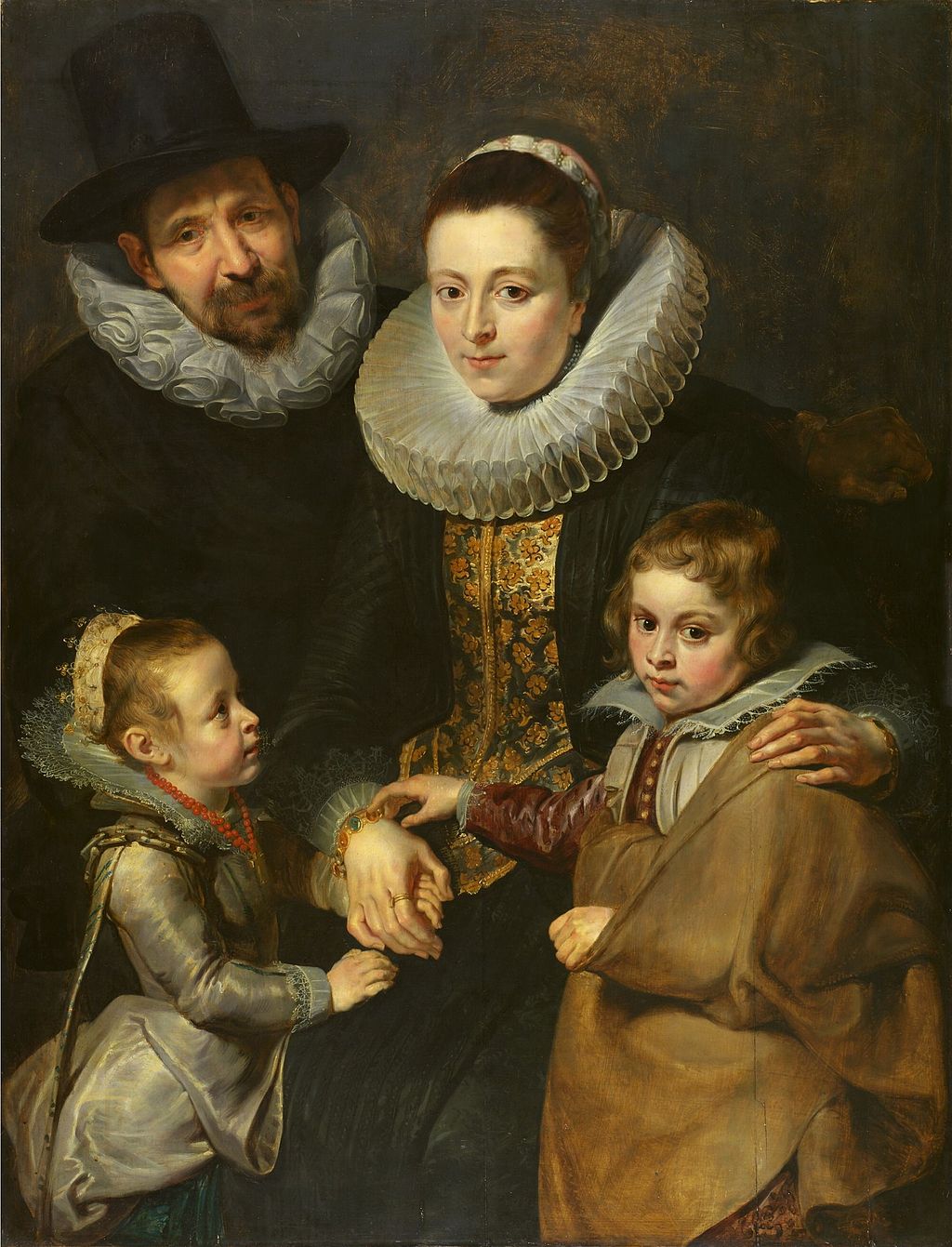
Family of Jan Brueghel the Elder by Peter Paul Rubens. 1613-15. oil on panel, 125.1x 95,2 cm,The Courtauld Gallery, London. Jan Brueghel, painter and friend of Rubens, poses with his second wife, Catherina, and their two children, Peter and Elisabeth. Both children, along with their father, died during the cholera epidemic of 1625. see – https://gallerycollections.courtauld.ac.uk/object-p-1978-pg-362 – retrieved June 24, 2025.
Jan Brueghel the Elder was a pioneer of the floral still life, helping establish flowers as a stand-alone subject worthy of serious artistic treatment. The paintings demonstrate Brueghel’s astonishing attention to detail, earning him the nicknames “Flower Brueghel” and “Velvet Brueghel.”
The painting Flowers in a Vase is in the collection of the Ambrosian Art Gallery (Pinacoteca Ambrosiana) of the Biblioteca Ambrosiana in Milan, Italy. It was in the possession of Cardinal Federico Borromeo, cousin to Saint Charles Borromeo (1538-1584), both cardinal archbishops of Milan.
Saint Charles Borromeo (1538-1584) was a cousin of Federico Borromeo. Both were cardinal archbishops of Milan, Italy. Proclaimed a saint in Rome in 1610, Charles was much loved in his diocese for his numerous good works and for his personal humility as well as a spirit of self-sacrifice that he showed during the plague of 1576 and 1577, Cardinal Borromeo was a great reformer and played an important role in the Council of Trent. There is a colossal statue of him outside Arona on Lake Maggiore. The so-called Sancarlone, it was based on a design by Giovanni Battista Crespi, known as “ il Cerano.” Its sculptors Siro Zanella and Bernardo Falconi made the copper parts to be assembled for a work that was completed in 1698. see – https://terreborromeo.it/en/about-us/history and https://www.statuasancarlo.it/la-statua/– retrieved June 24, 2025.
The colossus of St. Charles Borromeo (1698).
In May 1585 Federico earned a doctorate in theology at the University of Pavia and was sent to Rome where he was made a cardinal at 23 years old by Pope Sixtus V. Federico voted in the papal conclaves of 1590 (Urban VII, Gregory XIV), 1591 (Innocent IX), 1592 (Clement VIII), 1605 (Leo XI, Paul V) and 1623 (Urban VIII). He missed the 1621 conclave (Gregory XV). At the August 1623 papal conclave Cardinal Borromeo received 18 votes out of 54 votes but was opposed by the Spanish party, one of the church’s major factions. The church had to compromise with Urban VIII, a neutral candidate known as the first pope to actively campaign for votes.
The Biblioteca Ambrosiana and a Lasting Legacy In April 1618 Archbishop Federico Borromeo bequeathed Flowers in a Vase with his collection of paintings, drawing, and statues in his will to the Biblioteca Ambrosiana, which he founded on September 7, 1607 and opened on December 8, 1609. Conceived by the cardinal as a center for study and culture it was open to the public from the beginning. The library collections include over one million printed volumes (including thousands of incunabula and books dating from the 16th century), 40,000 manuscripts (including the celebrated Codex Atlanticus) in many languages, 12,000 drawings (including works by Raphael, Pisanello, and Leonardo), 22,000 engravings, and miscellanea including old maps and musical manuscripts. Along with the cardinal’s achievement, other institutions flourished beside it such as the Board of Fellows (Collegio dei Dottori, 1607), the Art Gallery (Pinacoteca Ambrosiana, 1618) and the Academy of Drawing for teaching painting, sculpture and architecture (Accademia del Disegno, 1620).
The Treasures of the Pinacoteca Ambrosiana The Pinacoteca Ambrosiana consists of some of the Italian Renaissance’s great masterpieces such as the Portrait of a Musician by Leonardo da Vinci, The Basket of Fruit by Caravaggio, the cartoon for the School of Athens by Raphael, the Adoration of the Magi by Titian, the Madonna of the Pavilion by Sandro Botticelli and the magnificent Flowers in a Vase by Jan Brueghel. The museum’s collection today includes paintings by 17th-century Lombard artists such as il Morazzone (1573–1626), Giulio Cesare Procaccini (1574–1625), Daniele Crespi (1598 – 1630) and Carlo Francesco Nuvolone (1608-1669) and 18th-century artists such as Giovanni Domenico Tiepolo (1727-1804), Fra’ Galgario (1655-1743), and Francesco Londonio (1723-1783).
Cardinal Federico Borromeo: Scholar, Collector, and Patron Cardinal Federico Borromeo, who lived in Rome from 1586 to 1601, was not particularly interested in politics, but focused on classical and oriental scholarship and prayer. In the Counter-Reformation, the cardinal was a great propagator of the faith using religious art, but also was an avid collector of still life.
Jan Brueghel and the Cardinal’s Cultivated Eye Jan Brueghel the Elder, nicknamed “Velvet,” was a contemporary artist who was erudite and innovative – he invented new types of paintings such as flower garland paintings and paradise landscapes – and his art did not escape the cardinal’s cultivated eye. The Cardinal and young artist met in Rome where the Cardinal became his patron so that the artist took up residence in Cardinal Borromeo’s palazzo.
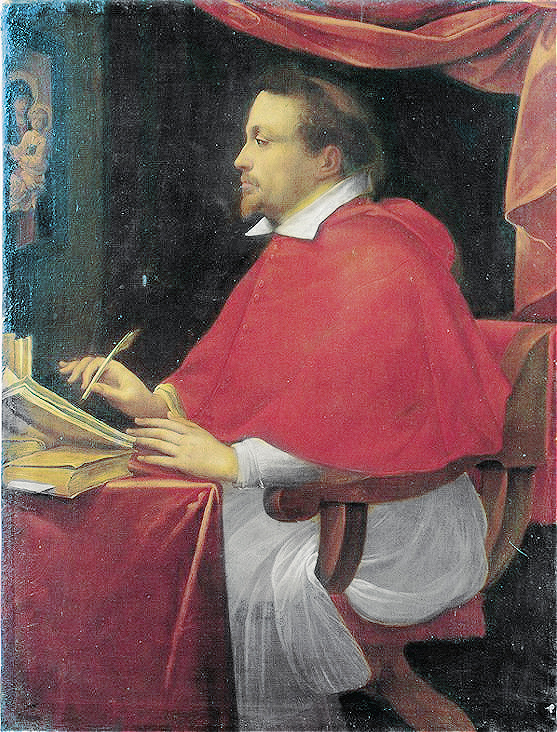
Cardinal Federico Borromeo by Giulio Cesare Procaccini (1574-1625), Museo diocesano di Milano. The Borromeos, a prominent Italian noble family, started as merchants around 1300 in San Miniato in the province of Pisa in Tuscany and became bankers in Milan after 1370. The elder Cardinal Federico Borromeo was a monumental figure in European art history who transformed Milan into a premier cultural hub by founding the Biblioteca and Pinacoteca Ambrosiana. He held a profound, visionary appreciation for the intrinsic value of art, famously championing the work of northern masters like Jan Brueghel the Elder.
When Borromeo became archbishop of Milan in June 1595, Brueghel followed him and became part of the Cardinal’s household. Cardinal Borromeo was a reformer in the sense of promoting discipline among the clergy, founding new parishes and schools, as the faith flourished in the 50 years since the Council of Trent completed in 1564. The archbishop was accessible to the flock. Under his leadership, Milan underwent both prosperity and significant cultural flourishing and renewed spiritual energy for a generation. Brueghel stayed with the Cardinal for a year where he painted landscapes and flower paintings and then returned to Antwerp where he lived and worked for the rest of his life. Also nicknamed “Flower” Brueghel, the artist’s flower pieces such as Flowers in a Vase, are dominated by floral arrangements placed against a neutral dark background. Brueghel repeated these motifs in his flower pieces and yet each work was imbued with its own singular freshness and vitality.
FLOWER VASE WITH JEWEL, COINS, AND SHELLS. 1608, oil on copper, 65 × 45 cm by Jan Brueghel the Elder. Pinacoteca Ambrosiana, Milan, Italy.
A lush bouquet of flowers, executed by the artist for Cardinal Federico Borromeo (1564-1631), was innovative as a stand-alone bouquet painting of its kind. The subject is composed of around one hundred different species of flowers, some of which are very rare and of great value. In addition to its execution of profuse natural beauty, the picture expressed the nature of the early 17th century culture’s encyclopedic curiosity which extended, among leading collectors, into the natural sciences. It is known by way of a letter that Brueghel was working on the picture in 1606 after he had seen many of these flower varieties in the garden in Brussels of Albert VII, Archduke of Austria (1559-1621) and Isabella Clara Eugenia (1566-1633), who jointly ruled the Spanish Netherlands (1556-1714). The artist’s picture of these flowers was, in a scientific approach, intended to “portray them from nature.” Virtually nothing today remains of the Archdukes Albert and Isabella’s Palace of Codenberg in Brussels nor of their summer retreat at the Château of Mariemont (today’s Morlanwelz in Belgium) south of Brussels which was painted frequently by Jan Brueghel the Elder nor anything of their hunting lodge in nearby Tervuren east of Brussels. In 1633, at the death of Isabella, Albert (who died in 1621) and Isabella’s magnificent collections of art works, scientific instruments, naturalia and artificialia were scattered and much of it lost.
Brueghel’s flowers function as both botanical studies and meditations on beauty, abundance, and the fleeting nature of life. The works embody the Baroque fascination with observation, variety, and visual richness while retaining a spiritual dimension rooted in the wonder of creation.
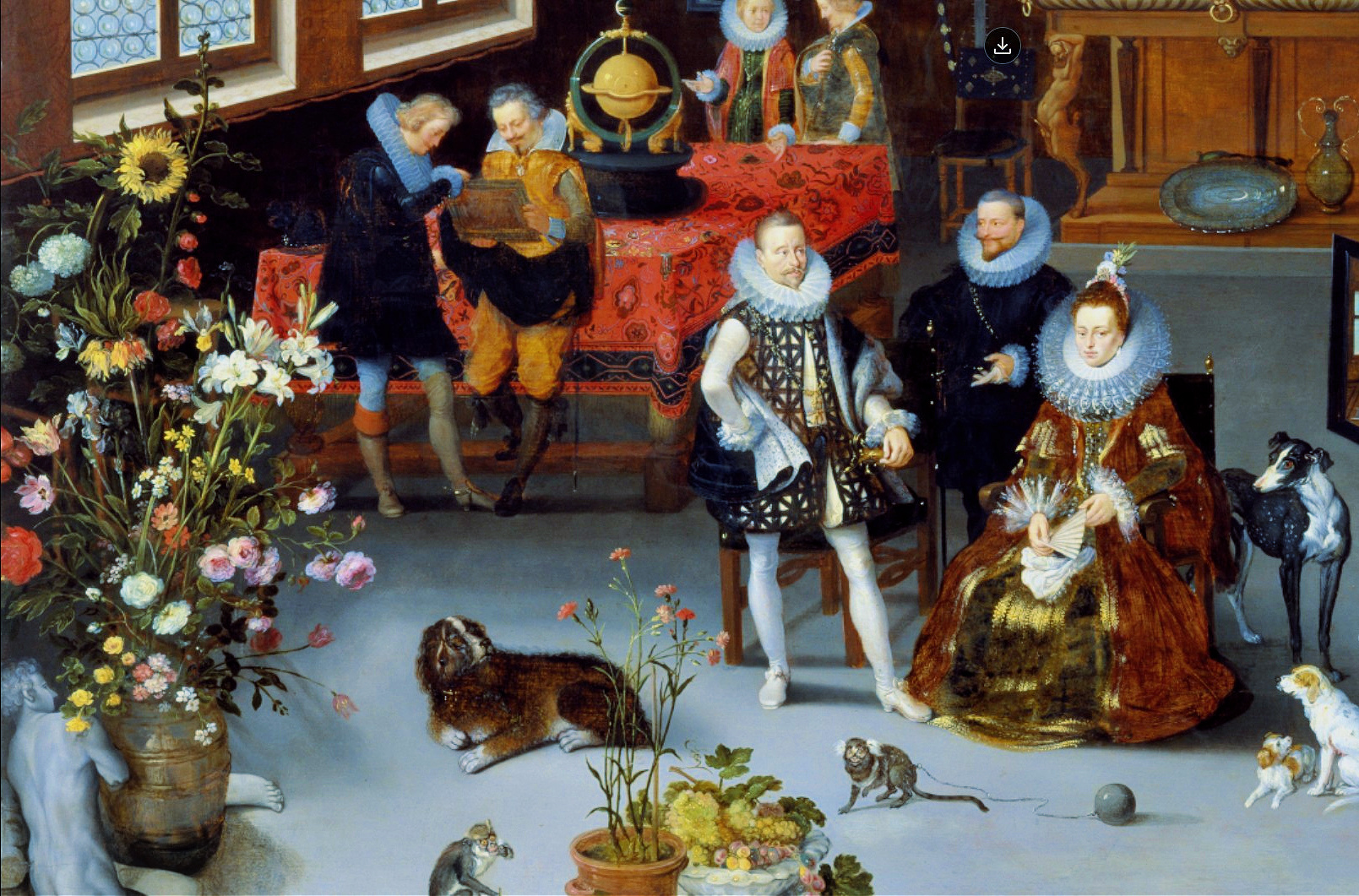
The Archdukes Albert and Isabella Visiting the Collection of Pierre Roose, c. 1621-1623, Jan Brueghel the Elder and Hieronymus Francken II, oil on panel, 37 × 48 ½ in. (94 × 123.19 cm). see – https://art.thewalters.org/object/37.2010/ – retrieved June 21, 2025.
Some of that magnificence was evoked in a picture from 1621-23 by Jan Brueghel the Elder with Hieronymus Francken II (1578-1623) called Albert and Isabella visiting an art gallery. The large format painting (around 3 feet by 4 feet) in the Walters Art Museum depicts a private gallery (or cabinet) of Pierre Roose in Brussels being visited by the Archdukes Albert and Isabella. It includes in a foreground corner an immense vase of flowers by Jan Brueghel and depicts how these collectors are as interested in natural botany and scientific instruments as they are of paintings and sculpture.
DETAIL of above: Isabella is seated, while her husband standing to her right and their host, Pierre Roose, behind.DETAIL of above:These collectors are as interested in natural botany and scientific instruments as they are of paintings and sculpture.
Isabella’s Rule and the Catholic Restoration of the Southern Netherlands Following Albert’s death, Isabella continued to rule on behalf of her nephew Philip IV of Spain (1605-1665) though it was Albert and Isabella’s reign which marked the consolidation of Catholic rule in the Southern Netherlands following severe persecutions of Protestants that ended only in 1597. Though most Protestants had left the region, in 1609 an act of toleration was granted to the Protestants that remained though they could not publicly practice their religion.
Religious Orders and the Patronage of Power Conversely, Catholic religious orders like the Jesuits, Capuchins, and Discalced Carmelites received large cash grants and endowments by the wealthy governing elite which helped fund many of these religious groups’ ambitious building and artistic programs in Brussels and Antwerp. As a widow Isabella joined the Third Order of Franciscans until her death.
Patrons of the Arts in an Age of Faith Though despotic and kingly, these rulers have earned a well merited reputation in art history as patrons of the arts. A most notable example is that, in 1609, one year after the Pinacoteca Ambrosiana’s flower picture was created, the Archdukes, whose gardens inspired the work in Italy, appointed Peter Paul Rubens (1577-1640) as their court painter.
Borromeo on the Value of Brueghel’s Masterpiece About Brueghel’s masterpiece Flower Vase with Jewel, Coins, and Shells—which Borromeo purchased specifically for his Milano Ambrosiana—the Cardinal wrote a striking passage in his catalog, the Musaeum:
“Brueghel painted a diamond on the lower part of the vase…: the author wanted to indicate that the value of his work was equal to that of the gems and this is the price we paid to the artist.”
This observation perfectly captures the elder Borromeo’s philosophy: that supreme artistic genius was not merely a decorative luxury, but a precious entity whose cultural and intellectual worth directly rivaled the world’s most costly physical gems.
Bouquet in a Clay Vase, 1609, Jan Brueghel the Elder,oil on wood, 56 x 42 cm. The National Gallery, London. see – https://www.nationalgallery.org.uk/paintings/jan-brueghel-the-elder-bouquet-in-a-clay-vase – retrieved June 24, 2025. Jan Brueghel the Elder is considered the 17th century northern painter, active in the Low countries as well as Italy, who invented and mastered the genre of flower still life. While used at times as a decorative or allegorical element within a painting, there are major examples where the artist aesthetically assembled and presented an impressive bouquet from a high viewpoint based on scientific observation of rare garden species as the sole focus of the painting. Bouquet in a Clay Vase in The National Gallery in London is one such artwork.
Jan Brueghel the Elder’s flower paintings of 1608 demonstrate how the Flemish master elevated botanical observation into a new art form, creating images that are at once scientific records, celebrations of beauty, and spiritual reflections on the richness of creation.
SOURCES:
Brueghel, Jan. n.d. “About Jan Brueghel.” Jan Brueghel the Elder: A Virtual Catalogue. Accessed October 25, 2026. janbrueghel.net.
Veneranda Biblioteca Ambrosiana. n.d. “Biblioteca.” Accessed October 25, 2026. ambrosiana.it.
Veneranda Biblioteca Ambrosiana. n.d. “Fiori in un vaso.” Accessed October 25, 2026. ambrosiana.it.
Veneranda Biblioteca Ambrosiana. n.d. “Flowers in a Vase.” Accessed October 25, 2026. ambrosiana.it.
Veneranda Biblioteca Ambrosiana. n.d. “Vase of Flowers with Jewel, Coins, and Shells.” Accessed October 25, 2026. ambrosiana.it.
Veneranda Biblioteca Ambrosiana. n.d. “Vaso di fiori con gioiello, monete e conchiglie.” Accessed October 25, 2026. ambrosiana.it.
Walters Art Museum. n.d. “The Archdukes Albert and Isabella Visiting a Collector’s Cabinet.” Online Collection. Accessed October 25, 2026. thewalters.org.
Wikipedia, s.v. “Albert VII, Archduke of Austria.” Last modified August 29, 2026, 06:39. wikipedia.org.
Wikipedia, s.v. “Isabella Clara Eugenia.” Last modified October 15, 2026, 18:53. wikipedia.org.
Wikipedia, s.v. “The Archdukes Albert and Isabella Visiting a Collector’s Cabinet.” Last modified October 23, 2026, 06:18. wikipedia.org.
This explanatory article may be periodically updated.
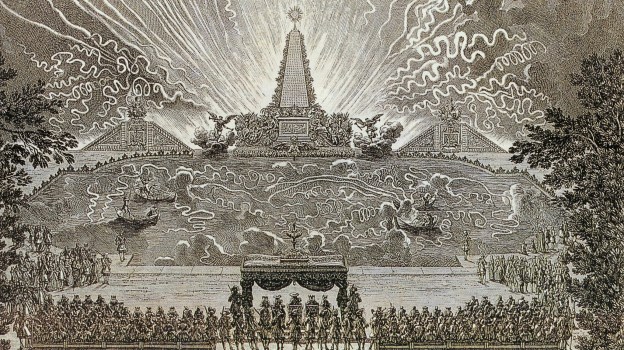
Feature image: 18 août 1674: feu d’artifice sur le Canal, 1676, by French Academy designer and engraver Jean Le Pautre (1618-1682). Flamboyant ephemeral architectures were erected at Versailles for a 17th century summer evening on the Canal that forms the base of elaborate pyrotechnics. Public Domain.
When the French Sun King, Louis XIV (reign, 1638-1715) made his decision to build a palace complex at Versailles, surrounded by the greatest gardens and waterworks the world had ever seen, fireworks (feux d’artifices), were an essential part of the grand entertainments which the king put on for the French court and the thousands of visitors who assembled to celebrate for various special occasions.
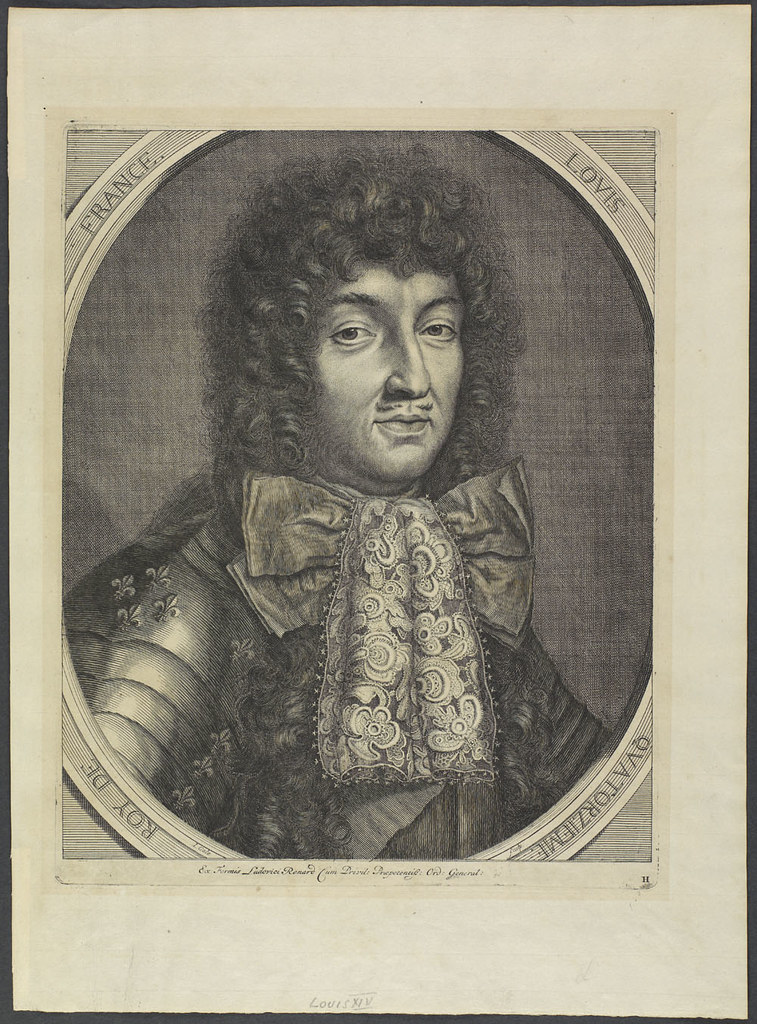
Louis XIV’s reign fused monarchy with light, a 17th‑century symbol of order, power, and divine radiance. The young king chose Versailles not because the marshy valley naturally suited his vision of a court devoted to spectacle, but because it carried the intimate imprint of his father, Louis XIII — the hunting lodge, the modest garden, the remembered landscape of childhood. What followed was not a palace adapted to its terrain, but a terrain forced to yield to an unprecedented royal design. The site’s limitations were absorbed, reshaped, and ultimately overwhelmed by the scale of the Sun King’s project, turning an unremarkable valley into the stage for absolute monarchy. PHOTO credit: “King Louis XIV, 1638-1715 / Roi Louis XIV, 1638-1715” by BiblioArchives / LibraryArchives is marked with CC BY 2.0.
For the next century, Versailles became the premier stage for royal light shows — vast productions of fireworks, illuminations, and night‑time spectacle. Though fireworks were first invented in China, it was Rome that embraced them in the 14th century and launched Europe’s courtly tradition of celebratory rockets. France quickly followed, importing Italian artists, architects, and pyrotechnic masters whose displays soon surpassed anything on the continent.
A key reason Louis XIV moved his court out of cramped Paris and the Louvre was to gain the space required for these grand outdoor entertainments. At Versailles, the king could stage the full range of divertissements du Roi — not only fireworks and illuminations, but elaborate festivals of music, dance, and theater that turned the gardens into a glowing extension of royal power.
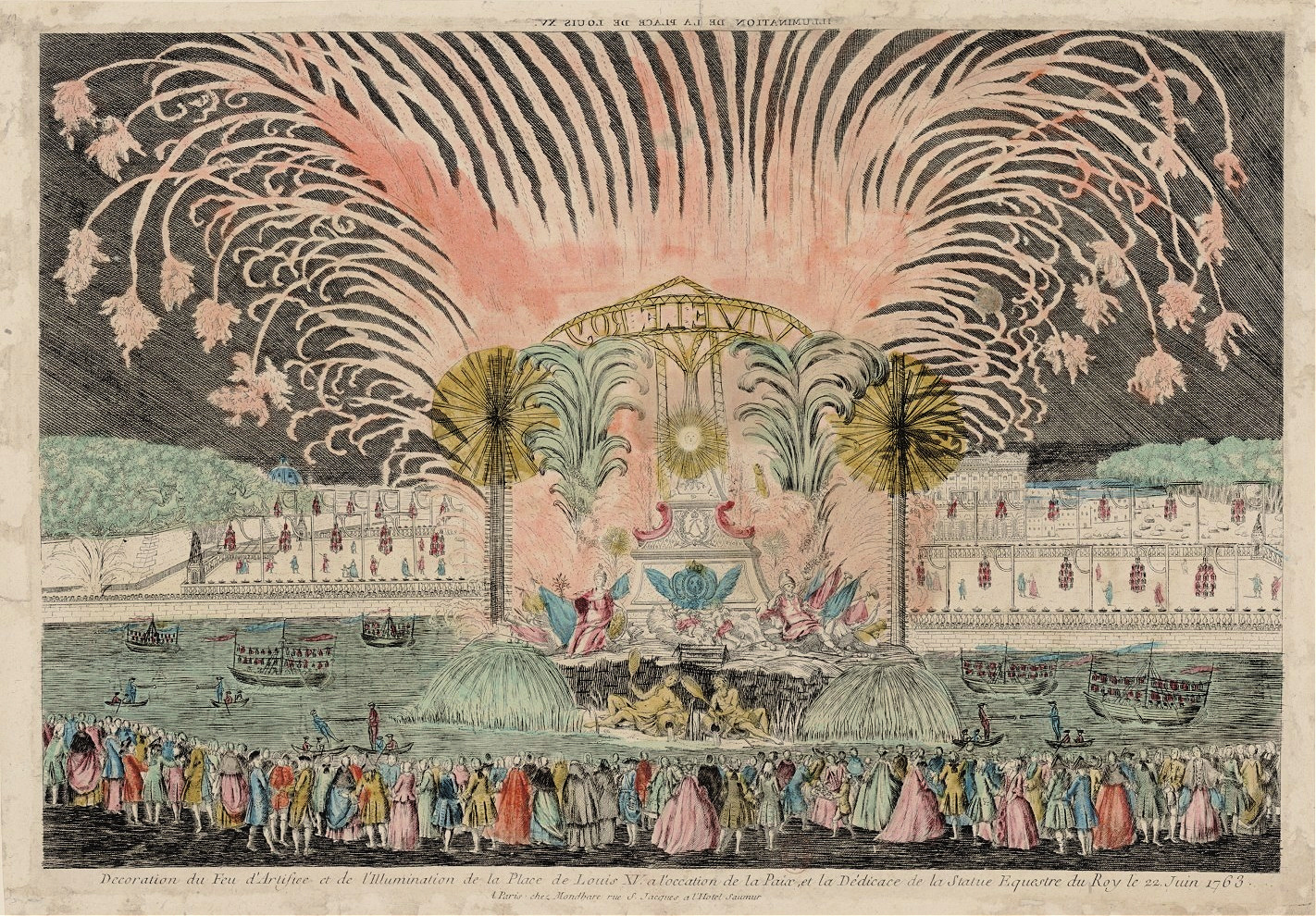
Décoration du feu d’artifice et de l’illumination de la place de Louis XV, à l’occasion de la paix, et la dédicace de la statue équestre du Roi, le 22 juin 1763. Chez Louis-Joseph Mondhare (1734-1799), rue S. Jacques à l’hotel Saumur. Bibliothèque nationale de France, département Estampes et photographie. Public Domain.See – https://www.europeana.eu/en/item/9200518/ark__12148_btv1b8409645h?q=paix%20paris%201763 – retrieved July 14, 2024.
One of Versailles’ most spectacular celebrations came in 1770, when fourteen‑year‑old Marie Antoinette arrived from Austria to marry the heir to the French throne. Louis XV marked the occasion with days of festivities and a guest list numbering in the thousands. The scale was unprecedented: the French Academy of Sciences collaborated with the king’s bureau de Menus‑plaisirs to engineer a display capable of launching 20,000 rockets at once, followed by the coordinated illumination of 15,000 lanterns across the gardens. It was court spectacle elevated to scientific precision — a fusion of dynastic celebration, technological ambition, and the theatrical grandeur that defined Versailles.
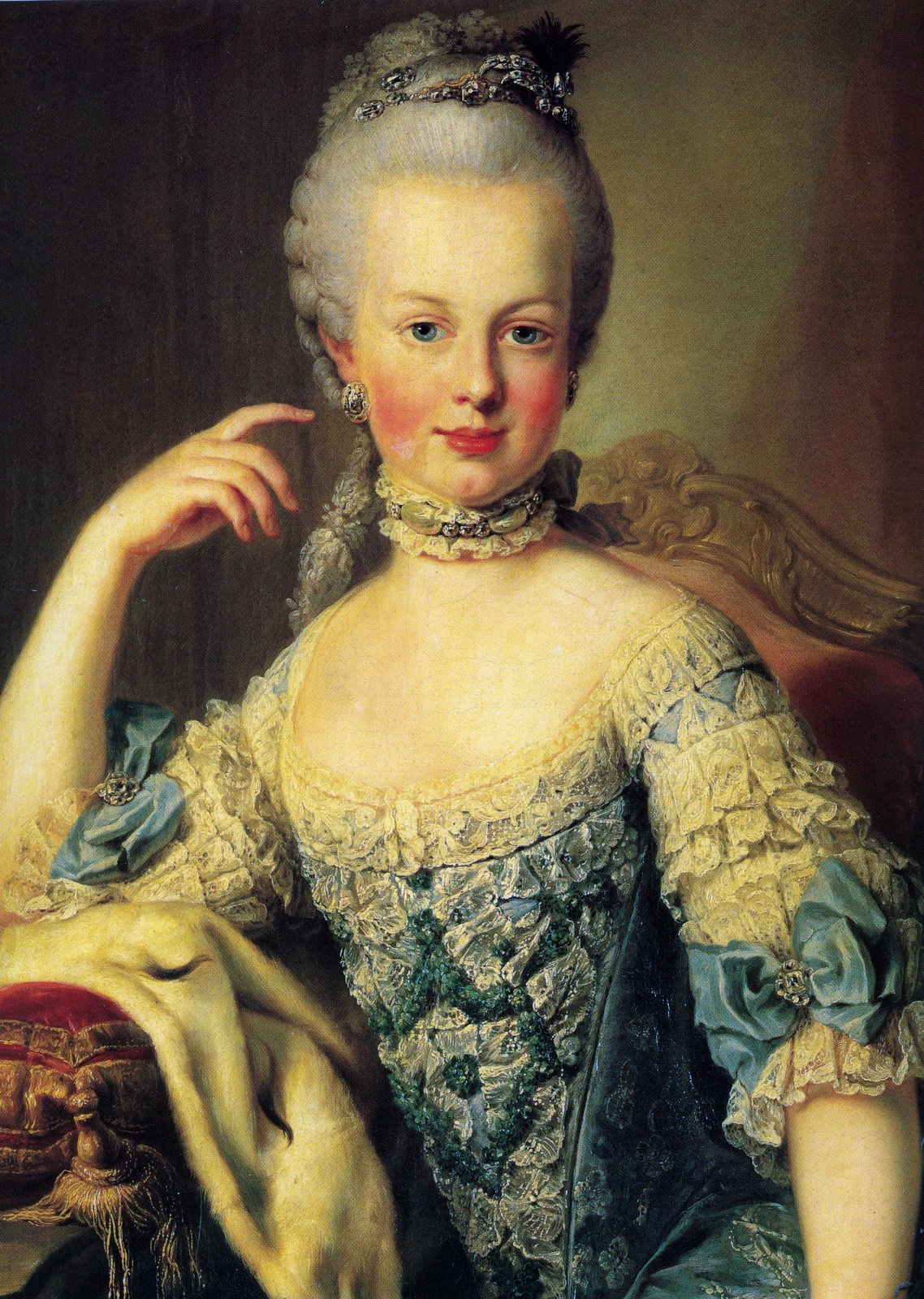
Portrait of Archduchess Marie Antoinette, by Swedish-Austrian Martin van Meylens the Younger (1698-1770), c. 1768, Schönbrunn Palace, Vienna. Public Domain.
Les Grandes Eaux Nocturnes de Feu — Versailles’ midsummer night spectacular — turn the gardens into a blazing stage of water, light, music, and fire. A 2½‑hour promenade of illuminated fountains and baroque soundscapes builds toward the “de Feu” climax: monumental flame effects and a full pyrotechnic performance by Groupe F, France’s world‑renowned masters of fireworks.
Even today, crowds stream to Versailles just west of Paris, gathering to watch cutting‑edge pyrotechnics ignite the night above the palace. The modern displays play off the same elements that once dazzled the Sun King: the vast pools, canals, and fountains that mirror every burst of color and amplify the spectacle across the gardens’ sweeping geometry. In these moments, the waterworks and the fireworks merge into a single theatrical composition — a living continuation of the courtly entertainments that defined Versailles at its height.
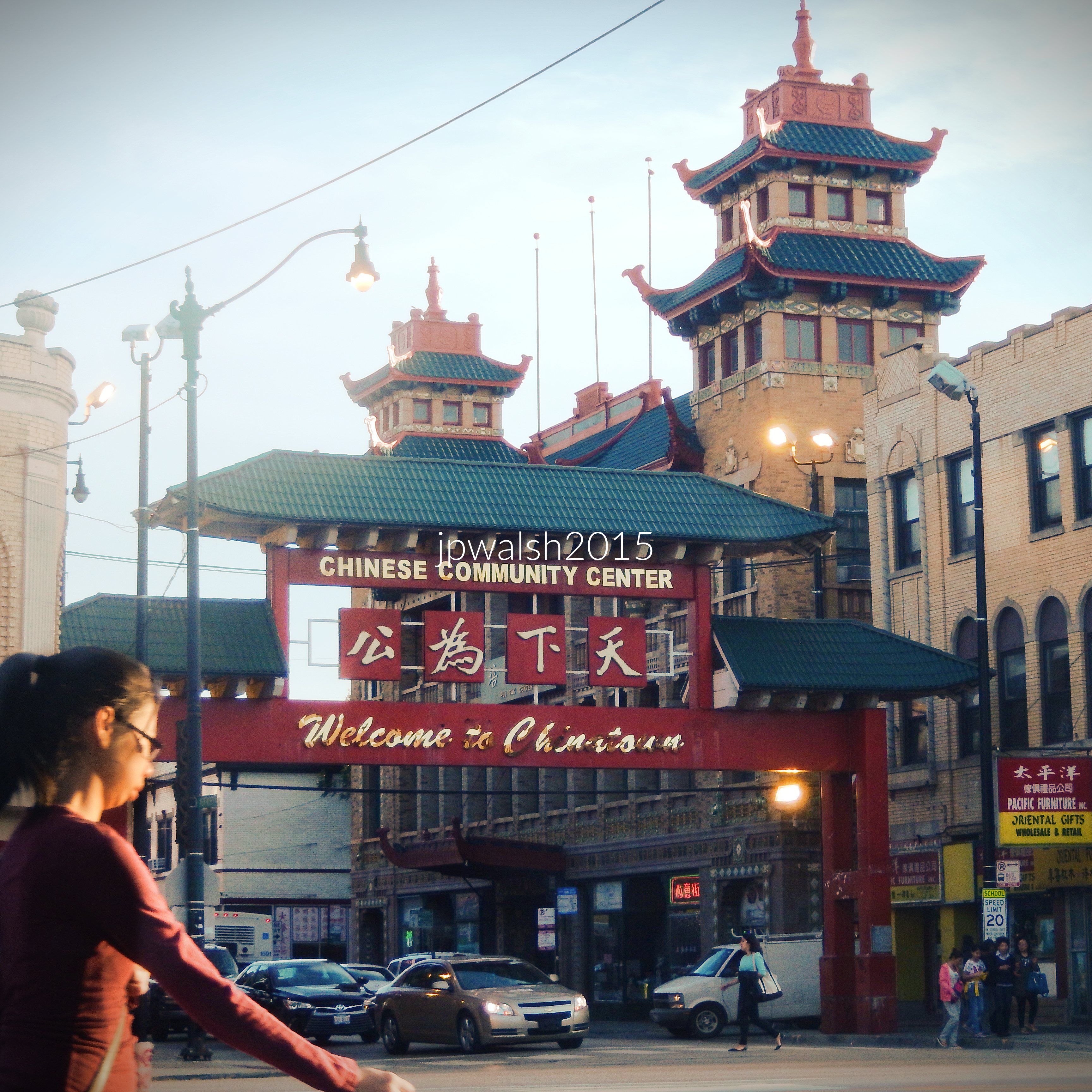
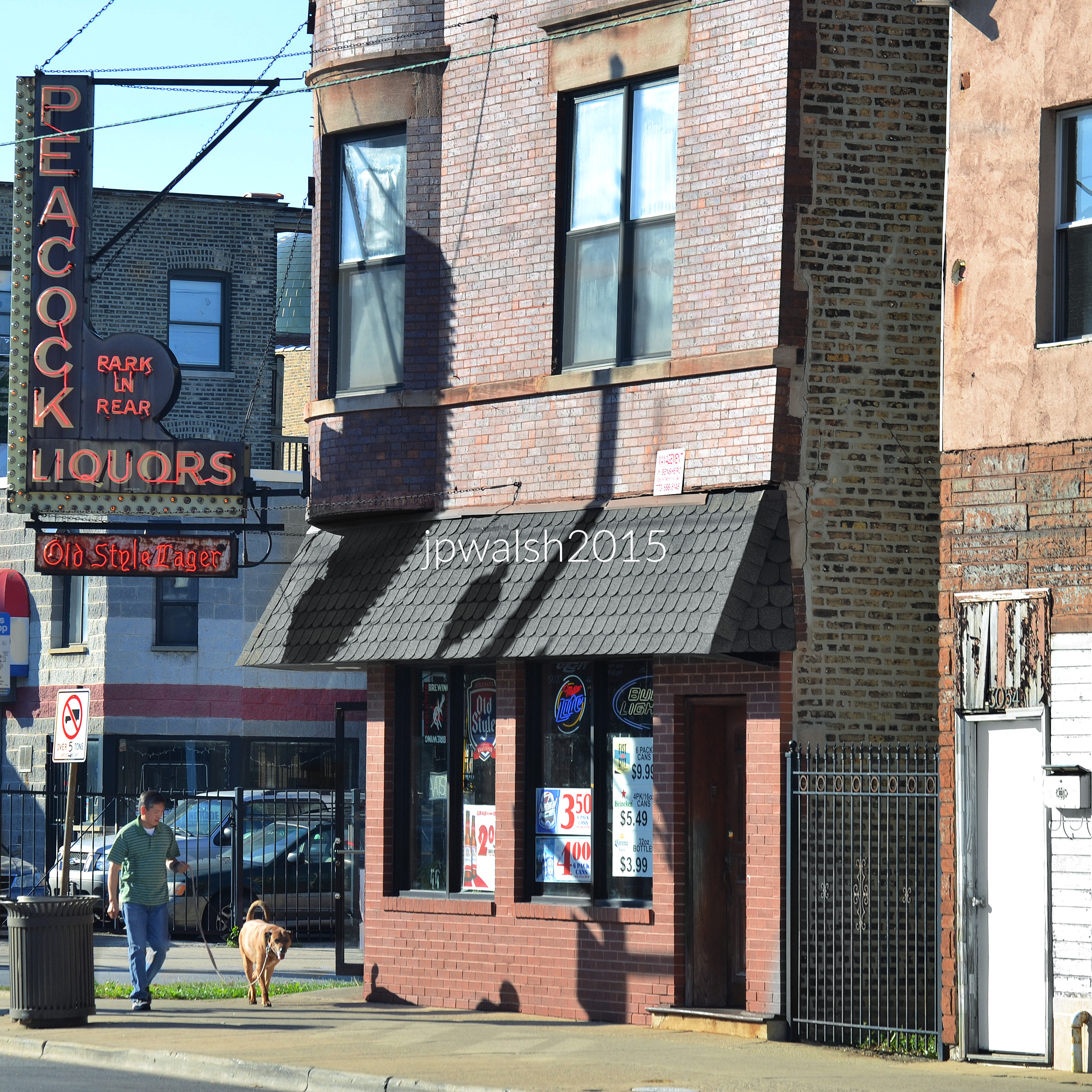
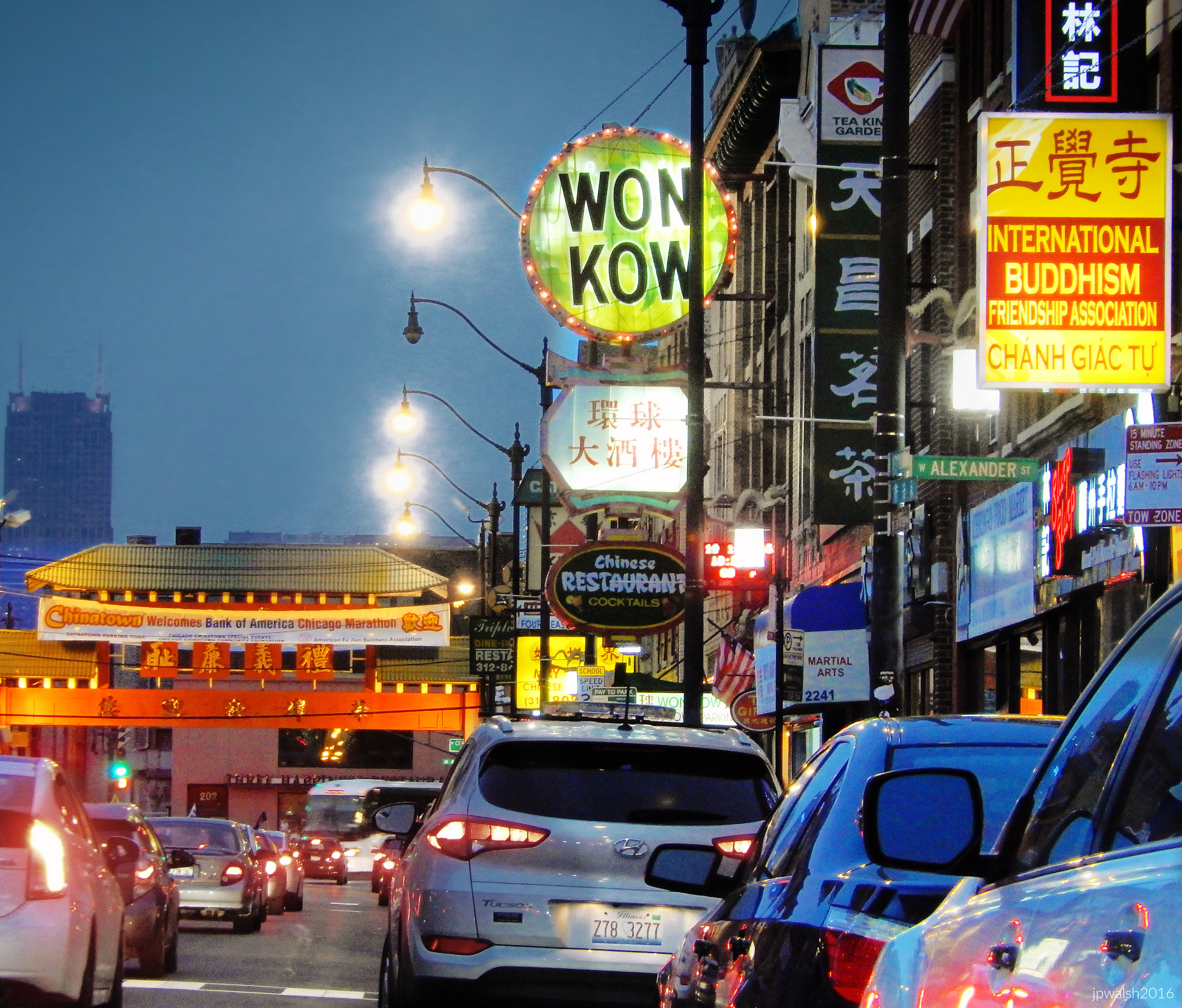
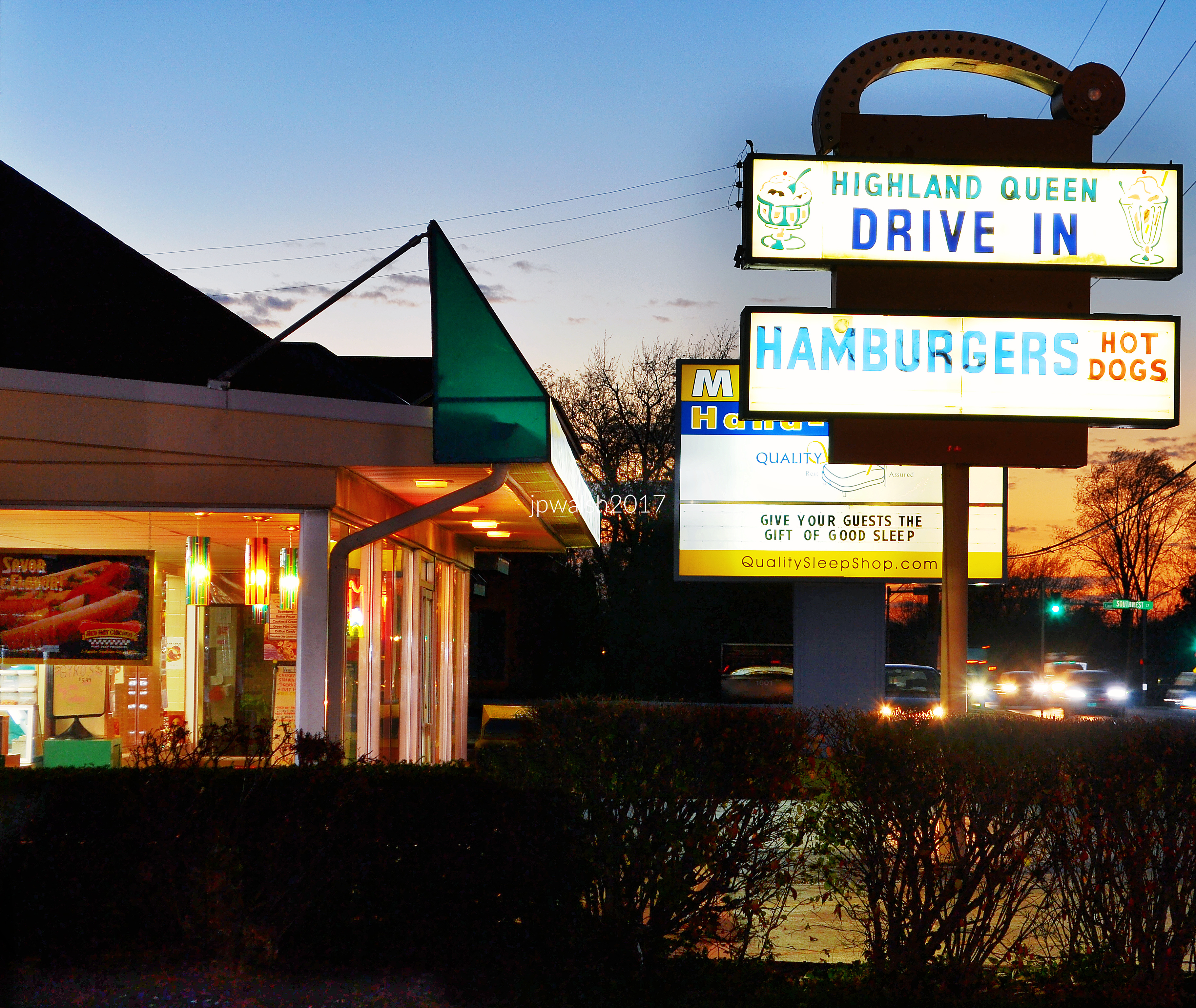
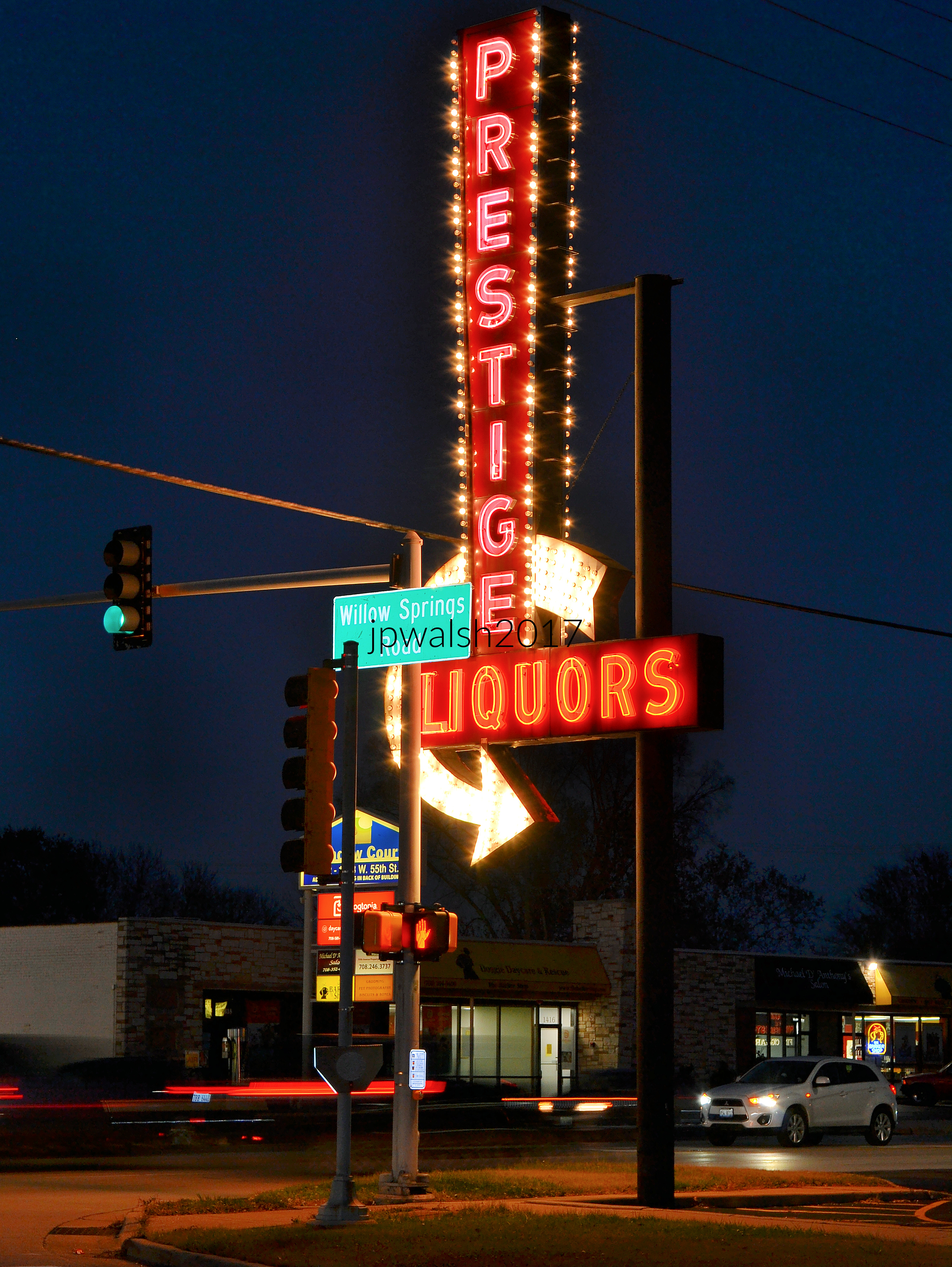
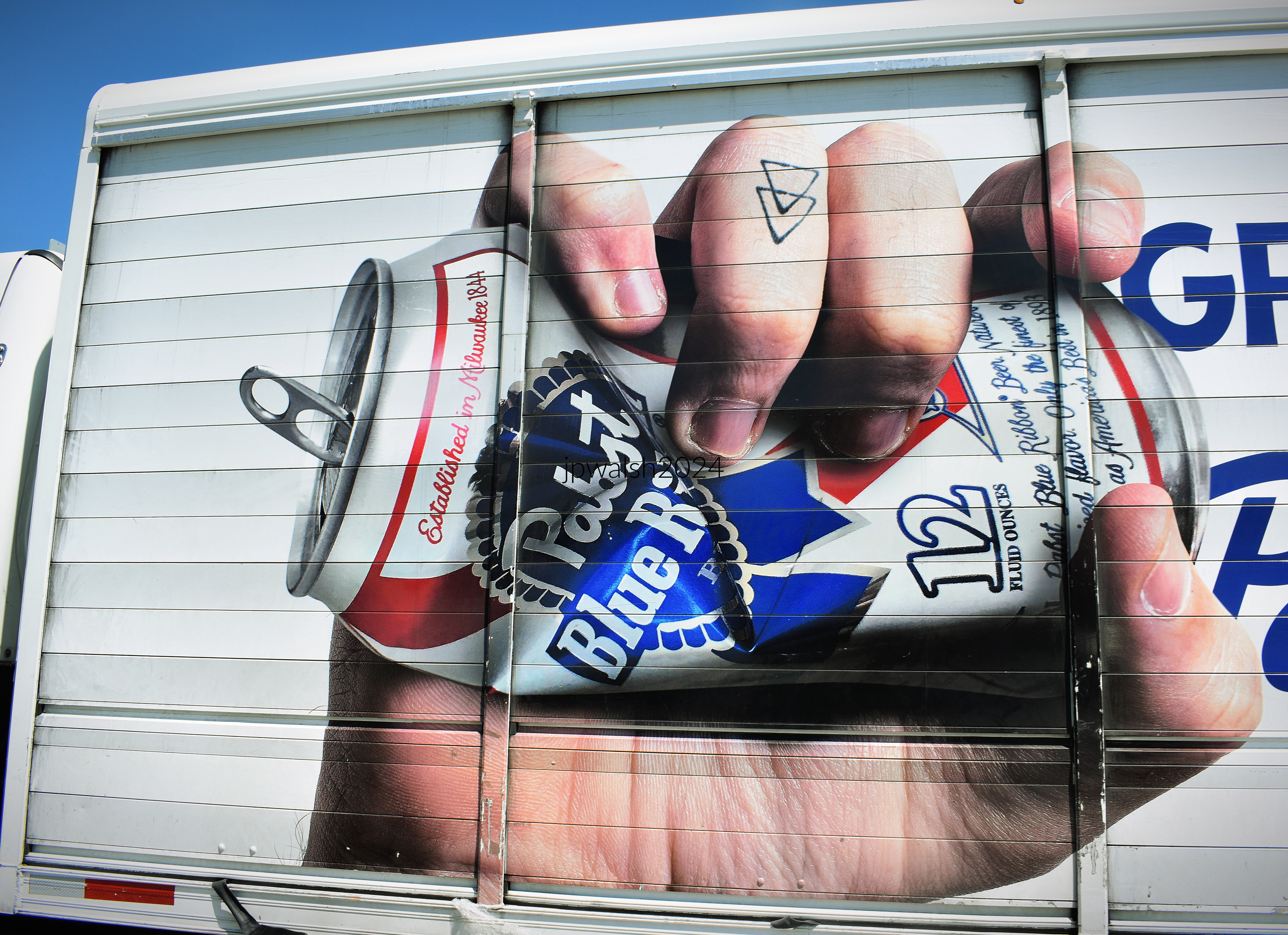
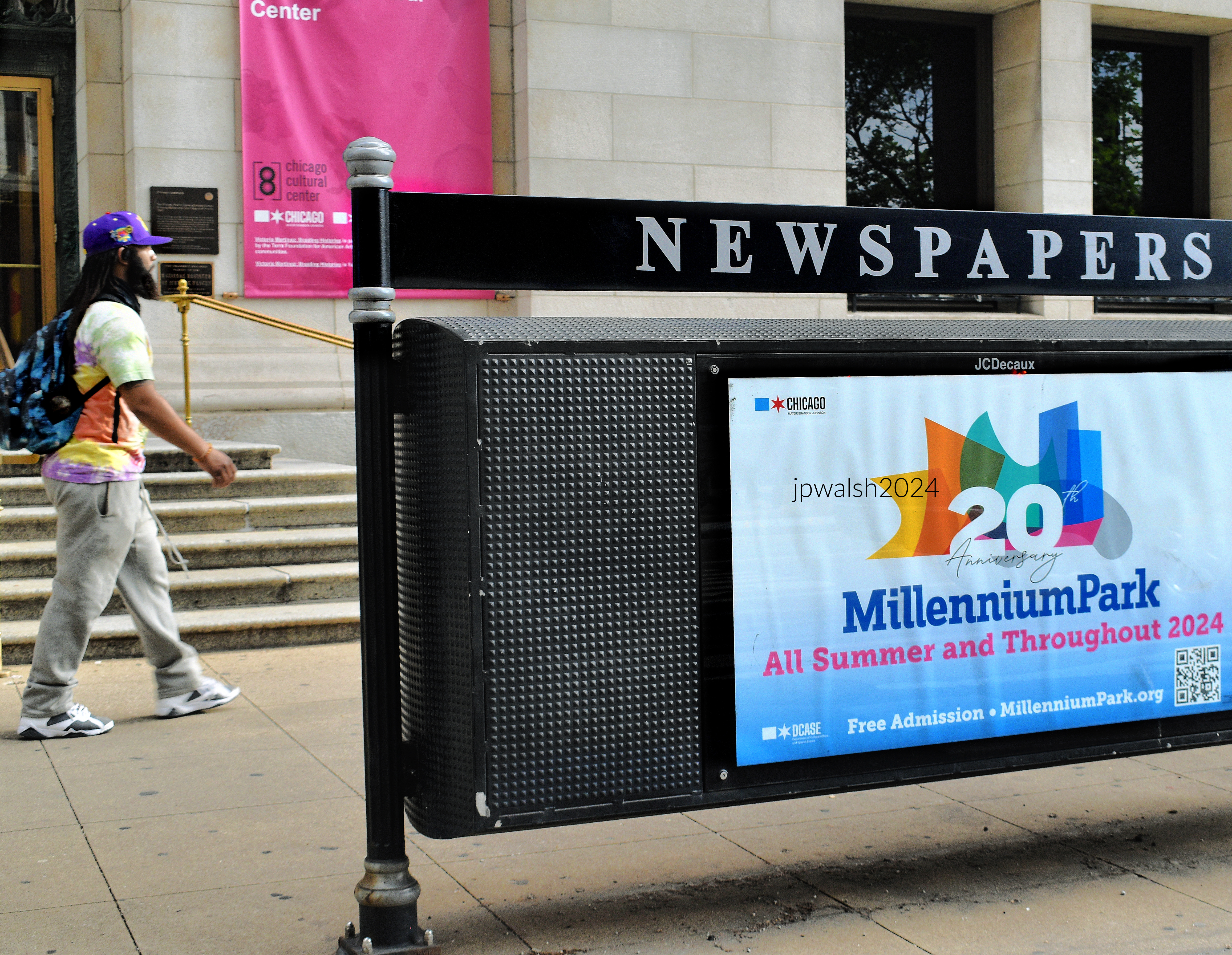
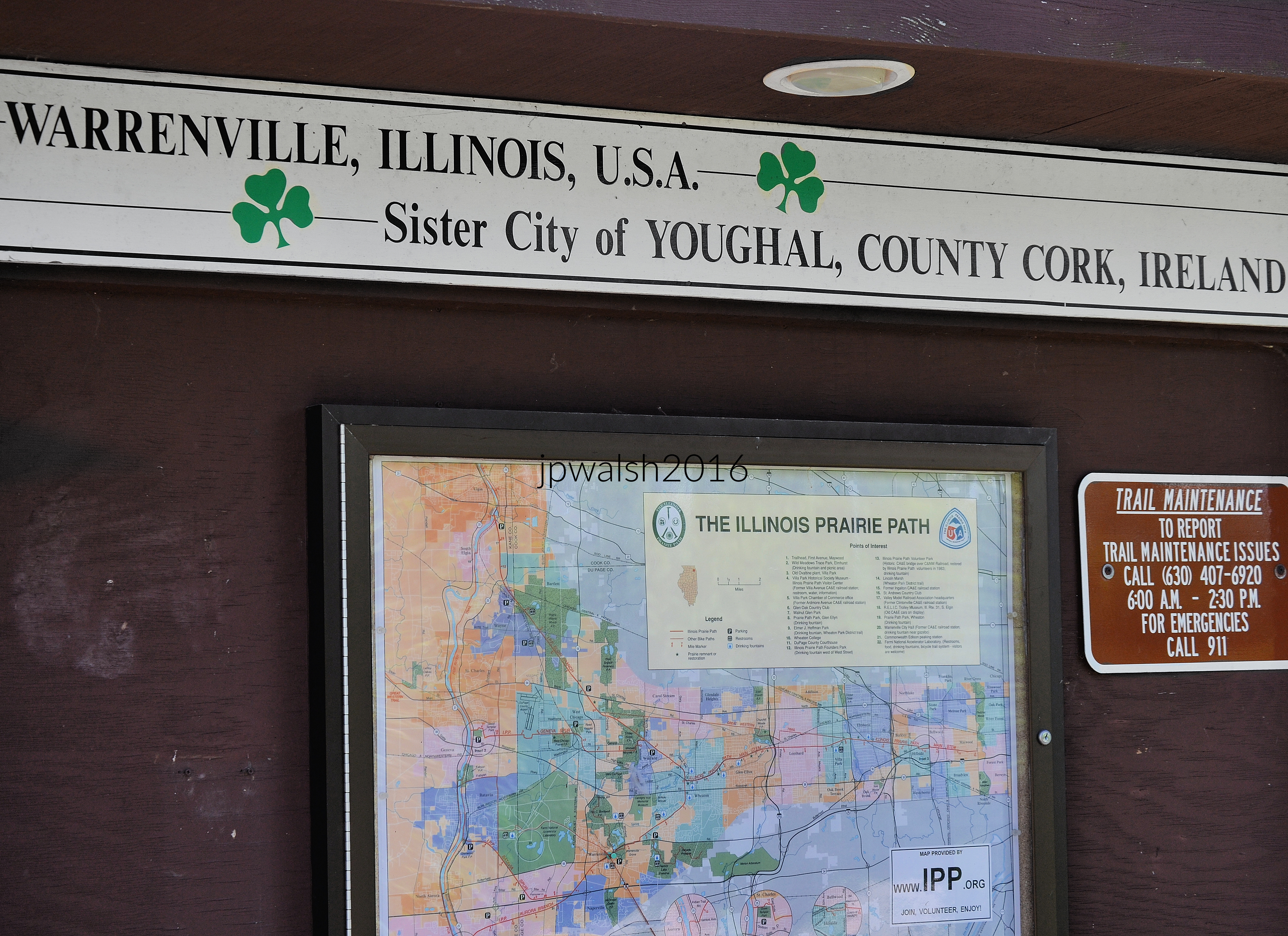
Signs serve as visual blueprints of community identity, tracking economic activity, institutional history, and the constant evolution of a place. As everyday markers of culture, commerce, religion, and memory, they collectively provide a living record of the eras they inhabit.
All photographs and text by John P. Walsh.
August 2024 Chicago 90% 7.91 mb1459 (1)September 2024 99% 7.23 mb_2004 (1)August 2015. Chicago. 3.53mb DSC_0697 (1)August 2024 74% 7.84 mb 0880 (1) (90)September 2024 8.96mb_2038 (1)September 2024 97% 7.92mb _2052 (1)July 2016. In business 1962 to 2022. 4.80mb DSC_0916 (1)Elk Grove Bowl: Bowling alley closing after nearly 60 years in Elk Grove Village – ABC7 Chicago – retrieved March 19, 2026. August 2016. In business from 1961 to 2015. 80 W Higgins Rd, Hoffman Estates, IL 60169 3.69mb DSC_0076 (1). REMEMBERING HOFFMAN LANES – History of Schaumburg Township – retrieved March 19, 2026. October 2022. 99% 7.05 mb 9395 (1)October 2024. 92% 7.82mb _2841 (1)October 2024. 6.75mb_2803 (1) to o&e11 – October 2024 80% 7.85mb_3929October 2024. 78% 7.92mb _4000November 2024. 91% 7.95mb 4514November 2024. 88%7.86mb _4986 0&eDecember 2024. 81% 7.87mb _5986May 2024. Fox River Valley. 99% 6.42mb _6451August 2015. 4.34 mb _0344 (1)January 2016. 3314 W. 63rd St., Chicago. Marquette Photo Supply opened in November 1944. Owner Joe Herbert sold and repaired photo equipment and processed film. His father and brother operated the barbershop next door. The family lived in an apartment behind the store. For decades, Mr. Herbert supplied equipment to photography students at many high schools, including nearby all-girls Mother McAuley. A beloved presence in the neighborhood, the shop closed in 2017 when Mr. Herbert passed away. 96% 7.91mb see – https://chicago.suntimes.com/2017/9/14/18318528/joseph-joe-herbert-dies-ran-marquette-photo-supply-for-73-years – retrieved January 30, 2025. May 2016. State & Chicago. 5.32mb DSCN2408 (1)November 2017. Below the fold. 4.85mb DSC_3148 July 2016. Established in 1928. 3259 E. 95th Street, Chicago. DSC_0793 (1)August 2017. Chicago. 7.57mb DSC_1554March 2025. 95% 7.91 mb DSC_7840October 2017. 5.38 mb DSC_2973November 2017. 89% 7.80mb DSC_3398April 2025. 99% 7.23mb DSC_8741May 2018. 90% 7.75mb DSC_7149January 2018. Chicago. Downtown. 3.71 mbMay 2025. 99% 6.99mb DSC_0078 (1)October 2024 3.87mb DSC_3187 (1)October 2015. October 2015. St Cornelius Church, 5430 W. Foster Ave, in Chicago when it was still an active parish church. Built in 1964, it closed in 2020 for lack of mass attendance and was desacralized in 2021. In 2024 the church building was sold to be redeveloped as a funky 1960’s style club and pickleball court. The site redevelopment will include parking and an event space with stage for pinball games, beverage lounge, and record spinning area. St. Cornelius for whom the church was named was a 3rd century pope who was banished from Rome by the Roman emperor Trebonianus Gallus and who died in exile. 5.91mb DSC_0311 (1) see – https://www.chicagobusiness.com/commercial-real-estate/former-st-cornelius-church-be-pickleball-court-and-club – retrieved June 23, 2025. June 2025. Downers Grove, Illinois. 97% 7.88mb DSC_1850July 2025. 99% 7.33mb DSC_3614June 2018. Chicago. 6.42mb DSC_9166 June 2018. Chicago. 6.25mb DSC_0827June 2025. 90% 7.90 mb DSC_2406 (1) January 2016. 3.70 mb DSCN1968 (1) July 2015. Chicago. 3.23 mb DSC_0387 (1)July 2015. Chicago. 3.19mb DSC_0592 (1)December 2017. Chicago. 89% 7.94mb DSC_3767 (1)November 2025. 99% 7.35mb DSC_8897December 2025. 6.27mb DSC_9476 (1)December 2025. Chicago 78% 7.83mb DSC_0012December 2025. Chicago. 81% 7.83mb DSC_0041February 2013. 1.64mb 2101_6381 (1)
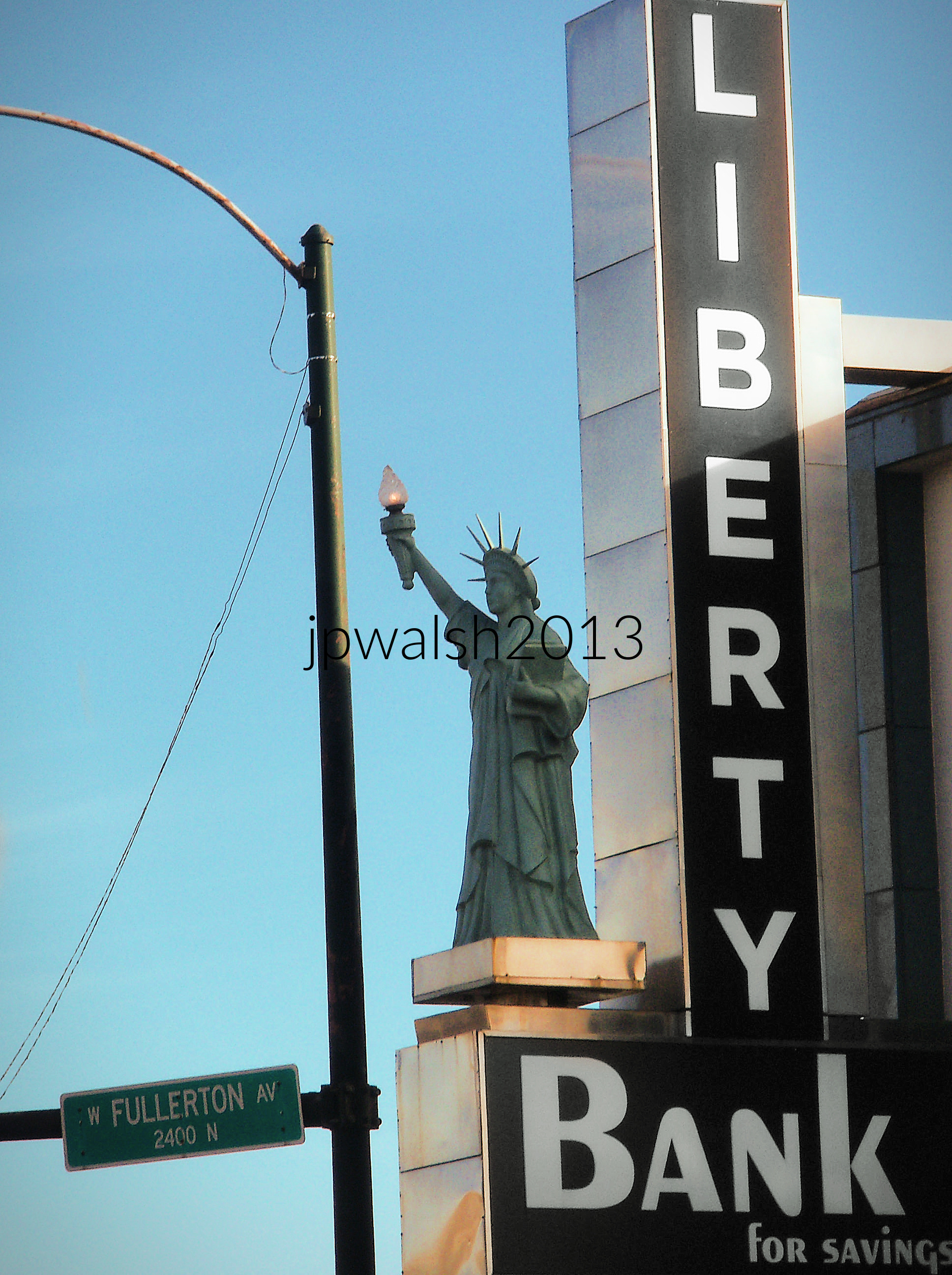
Liberty Bank’s origin dates back to 1898 when parishioners of All Saints Polish National Catholic Church on Chicago’s North Side (2392 N. Milwaukee Avenue)came together to form a mutual savings institution committed to “neighbors helping neighbors.”
French art in the 15th century stood at the crossroads of the medieval and early Renaissance worlds, blending Gothic spirituality, courtly elegance, and devotional symbolism with growing influences from Italian and Flemish artistic innovations. Through illuminated manuscripts, altarpieces, stained glass, and panel paintings, French artists created some of Europe’s most expressive and sophisticated religious imagery while forging a distinct national artistic identity.
Anonymous master. Portrait of John le Bon (1319-1364) c. 1360. Musée de Louvre, Paris (“Louvre”).
French artistic production in the 15th century remained deeply rooted in Christian devotion, mysticism, and royal patronage.
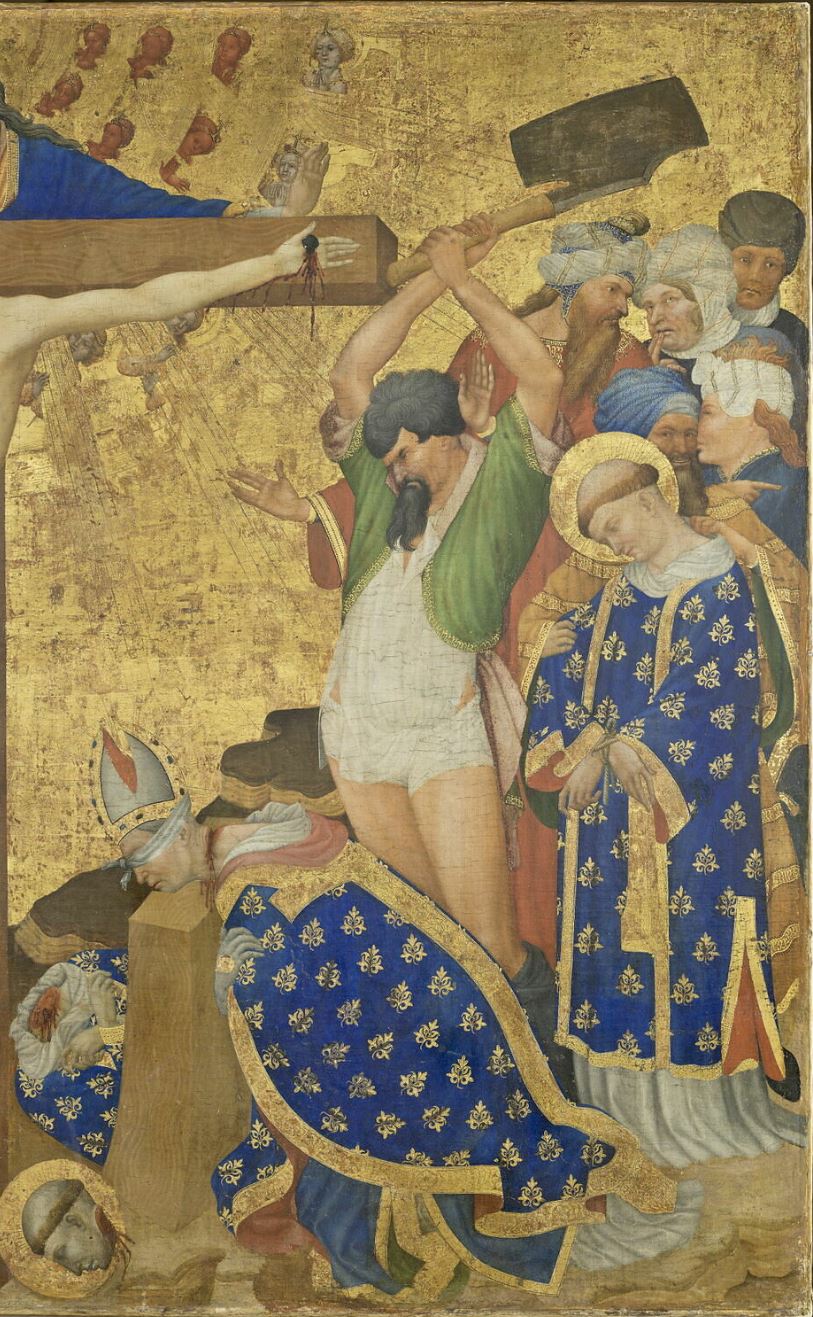
Retable de Saint Denis, (above), was completed in 1416 for the church of the Charterhouse of Champmol that is adjacent to Dijon. The artwork’s attribution has long been debated between Bellechose and Jean Malouel (1370-1415). Written evidence points to Bellechose possibly only completing the painting started by Malouel who was Bellechose’s predecessor at the head of the ducal workshop. However, recent connoisseurship does not see two different styles that would indicate two painters and the artwork in the Louvre is not the same size as the artwork mentioned in the early 15th century document that supports the dual attribution.
St. Denis is the most famous cephalophore (beheaded saint holding his head) in Christian history. Denis and two companions were martyred on Montmartre in what became a future Paris in the mid-3rd century. Much later, in the ninth century, an anonymous chronicler told the tale of the martyr Denis and mentioned his carrying his head from his execution spot on Montmartre to Saint-Denis. There the abbey of St-Denis rose to become the burial place of French kings. Soon after, this preposterous but delicious tale of Denis’ post-mortem pilgrimage received further embellishment by an abbot chronicler so that the legend took hold in St. Denis’ hagiography and iconography. St. Denis is the patron of Paris in France and against headaches and any strife or frenzy.
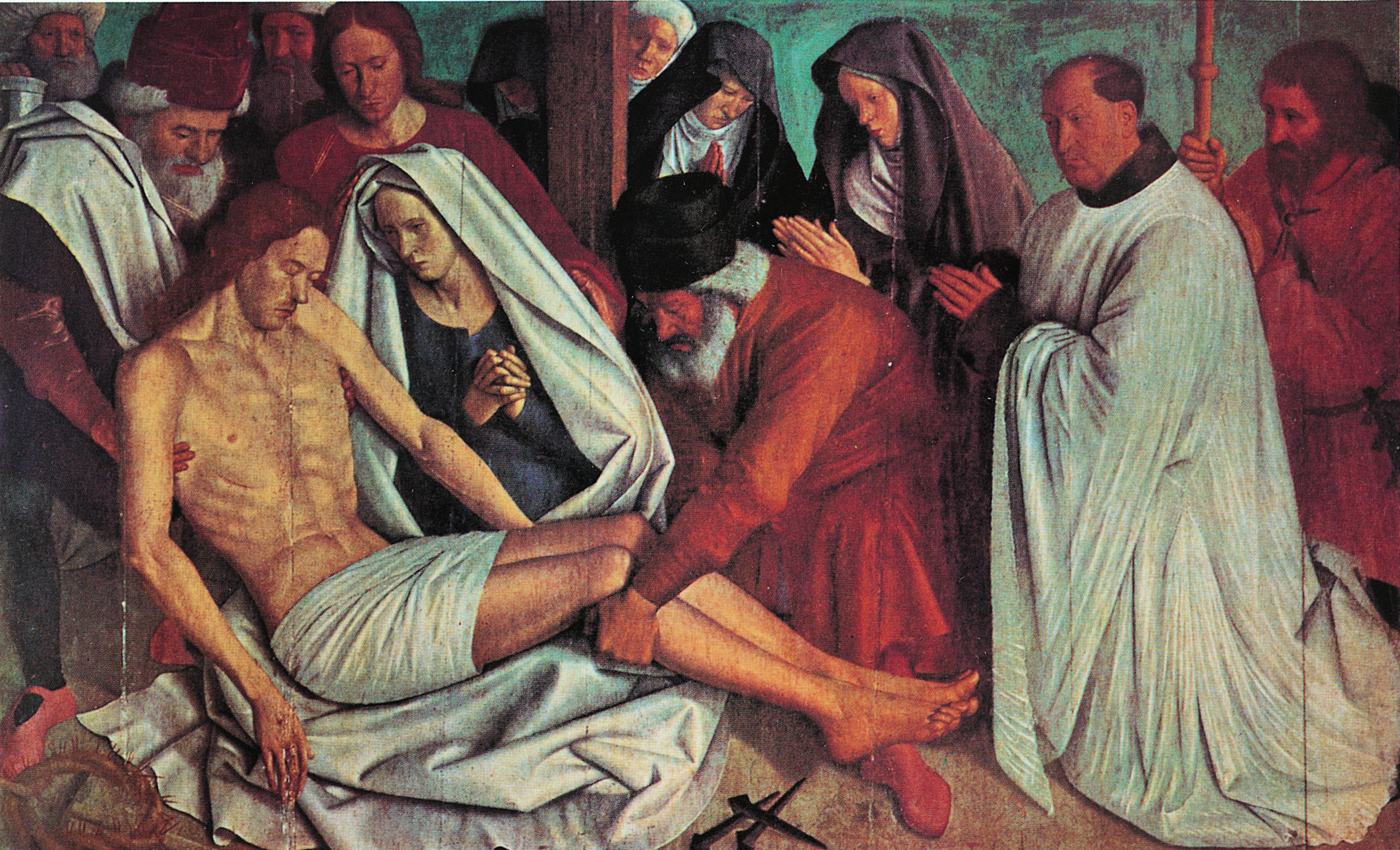
Anonymous, École de Île-de-France? Bourgogne? Studio Henri Bellechose? Dead Christ Placed in the Tomb, 1400-1425. Louvre. https://collections.louvre.fr/ark:/53355/cl010065413Anonymous master, The Annunciation, France, possibly Netherlands, late 14th century (1380s), tempera and oil with gold on wood, 15 7/8 x 12 3/8 x 1 7/8 in. Cleveland Museum of Art.
The angel Gabriel’s wings resemble peacock feathers. The panel painting was once joined to another panel to form a diptych. Its opulent ornate style and small size allowing for easy mobility points to its use as a devotional artwork for an aristocratic patron around 1400.
Anonymous, The Crowning of the Virgin, c. 1400-1410, Paris, oak on wood. 20.5 cm. Staatliche Museum, Berlin.
In Christian Biblical tradition, the Virgin Mary was the only human person to be received into heaven after her death as a physical body prior to the Last Judgment. By the Middle Ages, the event’s narrative was elaborated so that the Virgin in Heaven came to be understood as a royal court where angels acted as court pages. In Heaven’s throne room, Mary is crowned as Queen by her son, Jesus Christ.
In the French tondo, Christ wears a red cloak symbolizing his Resurrection and a violet robe symbolizing his Passion. He sits on a stone throne and sets the crown on his mother Mary’s head as she kneels on a splendid cushion.
Strewn on the green-tiled floor of the celestial throne room are a variety of cut flowers which point to Mary’s purity and love for humanity. One angel carries her dress’s train and is himself dressed in a liturgical-type costume.
The tiny panel is remarkable for its delicate execution, lovely colors, and precise articulation of details such as the angels’ multi-colored wings. Its overall imagery was 14th century Italian in origin and arrived into Paris in the 15th century. Like the Annunciation panel in the Cleveland Museum of Art (above), this panel was likely produced as a private devotional image for a patron of high rank who dwelt among the milieu of the Parisian court.
Les Frères de Limbourg, Meeting of the Three Wise Men c. 1416 from Les Très riches heures du duc de Berry folio 51 verso. Chantilly, Musée Condé.Entourage des Frères de Limbourg. Adoration de L’Enfant, c. 1415, Glasgow Art Gallery and Museum.Maître des heures de Rohan (active 1410-1435), The Last Judgment c. 1420, Paris, Bibliothèque nationale.Maître des heures de Rohan, Annunciation Angel and donor, c. 1420/30, Musée de Laon.
The courts of Burgundy, Anjou, and the French monarchy served as major centers of artistic innovation and patronage.
Maître des heures de Rohan, Portrait de Louis II d’Anjou, c 1420. Paris, Bibliothèque nationale.
Not much more is known of the Maître des heures de Rohan than if he were anonymous. The artist had ties to Troyes, a Burgundian market town, and settled in Paris between 1415 and 1420. He was a commercial illuminator and is found in the service of the Dukes of Anjou around 1420. In addition to the Grandes Heures de Rohan, c.1430-1435, he produced other exceptional books, including the Hours of René d’Anjou (Bibliothèque nationale de France), the Hours of Isabelle Stuart (Fitzwilliam Museum, Cambridge, UK) and the Hours for the Use of Angers (former Martin Le Roy collection).
Artwork by Maître des heures de Rohan reflects a highly personal vision. The artist was completely unconcerned with his contemporaries’ preoccupation to introduce Renaissance realism into painting. The artist ignored perspective and chiaroscuro through concrete depictions and continued to develop his artistic meditations on faith and death using highly original invention of forms. In this way, the Maître des heures de Rohan is an enduring artist from early 15th century France as some of his more fashionably progressive contemporaries are not as he stayed true to his vision to create some of the most expressive pages of medieval Christian mysticism.
French art absorbed influences from both Italian Renaissance painting and Flemish realism while preserving distinctive Gothic traditions.
Maître of the Aix Annunciation, Annunciation, before 1445, Église de la Madeleine d’Aix-en-Provence.
The precise identification of the artist called the Maître of the Aix Annunciation is unknown. The artist is believed to be male and French, and could be Jean Chapus who lived in Aix and was working for King Réne of Anjou in the 1430s and 1440s. The Annunciation which was placed in the church in 1445 and has been there since, was part of a triptych. The other wings have been split off and are in Brussels, Amsterdam, and a private Dutch collection (one wing was also split). The style shows influence from Italy (Naples) and Flemish art.
DETAIL. Maître of the Aix Annunciation, before 1445, Église de la Madeleine d’Aix-en-Provence.
Illuminated manuscripts remained a major art form, exemplified by the work of the Master of Rohan and the Limbourg Brothers.
Maître du Coeur l’amour épris, Rencontre de Coeur et d’Humble requête, c. 1479, Vienna, National Library.Anonymous. Annunciation, c. 1447-1450, Stained glass, Bourges cathedral, Chapel of Jacques Coeur.
The period’s art is notable for its rich symbolism, luminous color, meticulous detail, and emotional spirituality.
Jean Fouquet (1420-1480), Diptych de Melun, c. 1450, right panel: The Virgin and Child Jesus. Antwerp, Museum of Fine Arts.Jean Fouquet (1420-1480), Diptych de Melun, c. 1450, left panel: Chevalier Stephan presented by Saint Stephan. Staatliche Museum Berlin.
Jean Fouquet was a major French painter of the 15th century. He was in Rome in the mid-1440s and is presumed to have painted portraits. Under what circumstances the twenty-something Fouquet traveled to Rome is unknown. In any event Fouquet returned to Tours in 1448 and was working in the court of Charles VII. Louis XI appointed him official painter to the king in 1475. A handful of miniatures are documented artworks by Fouquet though other pictures, such as the Melun diptych and others, are attributed to him.
Jean Fouquet (1420-1480), Medallion, self-portrait, 1452/1455. Louvre.Jean Fouquet (1420-1480), Charles VII, 1440/1460. Louvre.Jean Fouquet (1420-1480), The Visitation, c. 1450. The Musée Condé, Chantilly.Jean Fouquet (1420-1480), Announcement of the Death of Saul to David, c. 1470. Les Antiquités Judaïques, Ms. fr. 247, folio 135 verso. Paris Bibliothèque Nationale.Jean Fouquet (1420-1480), Pietà, c. 1470-1480. Parish church, Nouans (Indre-et-Loire).Jean Fouquet (1420-1480), Pietà (detail), c. 1470-1480. Parish church, Nouans (Indre-et-Loire).Retable du Parlement de Paris, c.1455. Louvre. see – https://collections.louvre.fr/en/ark:/53355/cl010061369 – retrieved September 15, 2025.
It depicts the scene on Calvary on Good Friday with Jesus Christ crucified in the center with saints at its base including, left to right, Saint Louis, John the Baptist, the Virgin Mary, Saint John, a beheaded Saint Denis, and Charlemagne. In the background is the tour de Nesle (c. 1200-1665), Seine, the Louvre, Hôtel du Petit-Bourbon, and Palais de la Cité. Formerly identified as an artwork by Philippe de Mazerolles, it is currently identified by the Louvre as “anonymous“ in the School of France influenced by the Master of Dreux Budé who is likely André d’Ypres, active between 1425-1450. Philippe de Mazerolles was also a French painter and illuminator who was active in Paris and in Bruges. Trained in Paris, Philippe de Mazerolles’ style was directly inspired by the Maître de Bedford, an anonymous illuminator active in Paris slightly earlier between 1415 and 1435. The Master of Dreux Budé was a Parisian illuminator whose works show his knowledge of the repertoire of models of the Master of Flémalle (1375-1444). see – https://initiale.irht.cnrs.fr/en/intervenant/3443 – retrieved September 15, 2025.
DETAILS retable du Parlement de Paris (above), c.1455. Louvre:
Also known as Charonton, the French painter worked in Avignon in southern France. His large Coronation of the Virgin is a documented artwork that was completed in 1454. It is one of the most important surviving 15th century French paintings.
Enguerrand Quarton (1410-1466), The Coronation of the Virgin (detail), 1452-53, Altar of the Charterhouse (hospice) of Villeneuve-lès-Avignon.DETAIL. Enguerrand Quarton (1410-1466), The Coronation of the Virgin, 1452-53, Altar of the Charterhouse (hospice) of Villeneuve-lès-Avignon.Enguerrand Quarton (1410-1466), attributed, Pietà de Villeneuve-lès-Avignon. École de Provence, c. 1455. Louvre. https://collections.louvre.fr/ark:/53355/cl010063345
DETAILS Pietà de Villeneuve-lès-Avignon (above), c.1455. Louvre:
Nicolas Froment (1461-1483), Triptych (center panel): Mary in the Burning Bush, 1476. Cathedral St. Sauveur, Aix-en-Provence.
DETAIL Triptych (center panel): Mary in the Burning Bush (above), 1476. Cathedral St. Sauveur, Aix-en-Provence:
Nicolas Froment (1461-1483), Mary in the Burning Bush (detail), 1476. Aix-en-Provence, Cathedral St. Sauveur.Triptych (center panel).Nicolas Froment (1461-1483) The Burning Bush, 1476. Aix-en-Provence, Cathedral St. Sauveur.Triptych (right and left panels).
Nicolas Froment worked in the south of France and was painter to Réne d’Anjou. The triptych is a documented artwork by the artist.
Josse Lieferinxe, called Maître de Saint-Sébastien, Part of an altarpiece shutter. The marriage of the Virgin. Musées royaux des Beaux-Arts de Belgique.Maître de Moulins, active 1475 to 1505, Triptych de Moulins, center panel: The Virgin and the Child in Glory, c. 1498. Cathedral de Moulins.
DETAILS Triptych de Moulins, center panel: The Virgin and the Child in Glory (above), c. 1498, Cathedral de Moulins:
The Master of Moulins is one of the great French painters of the 15th century. He was influenced by Hugo van der Goes (died 1482) and takes his name from the triptych painting of the Madonna and Child with angels and Donors (above) in Moulins Cathedral dated from 1498/99. Other works attributed to the Master of Moulins are in Autun, Paris, Chicago, Brussels, London, Munich, and Glasgow.
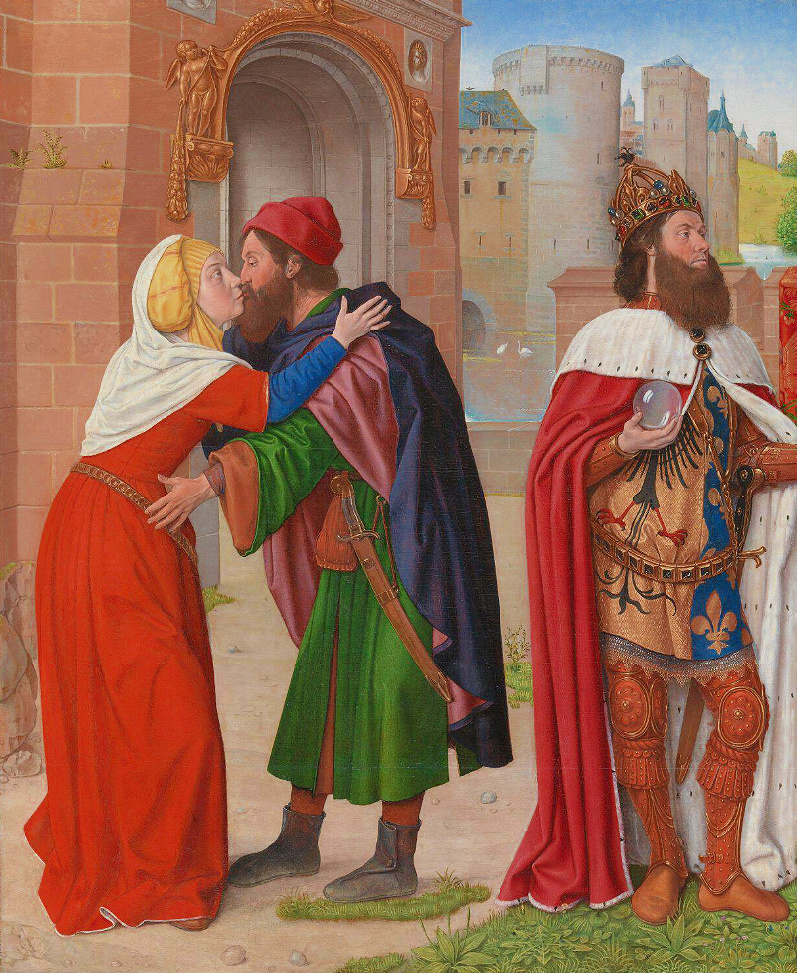
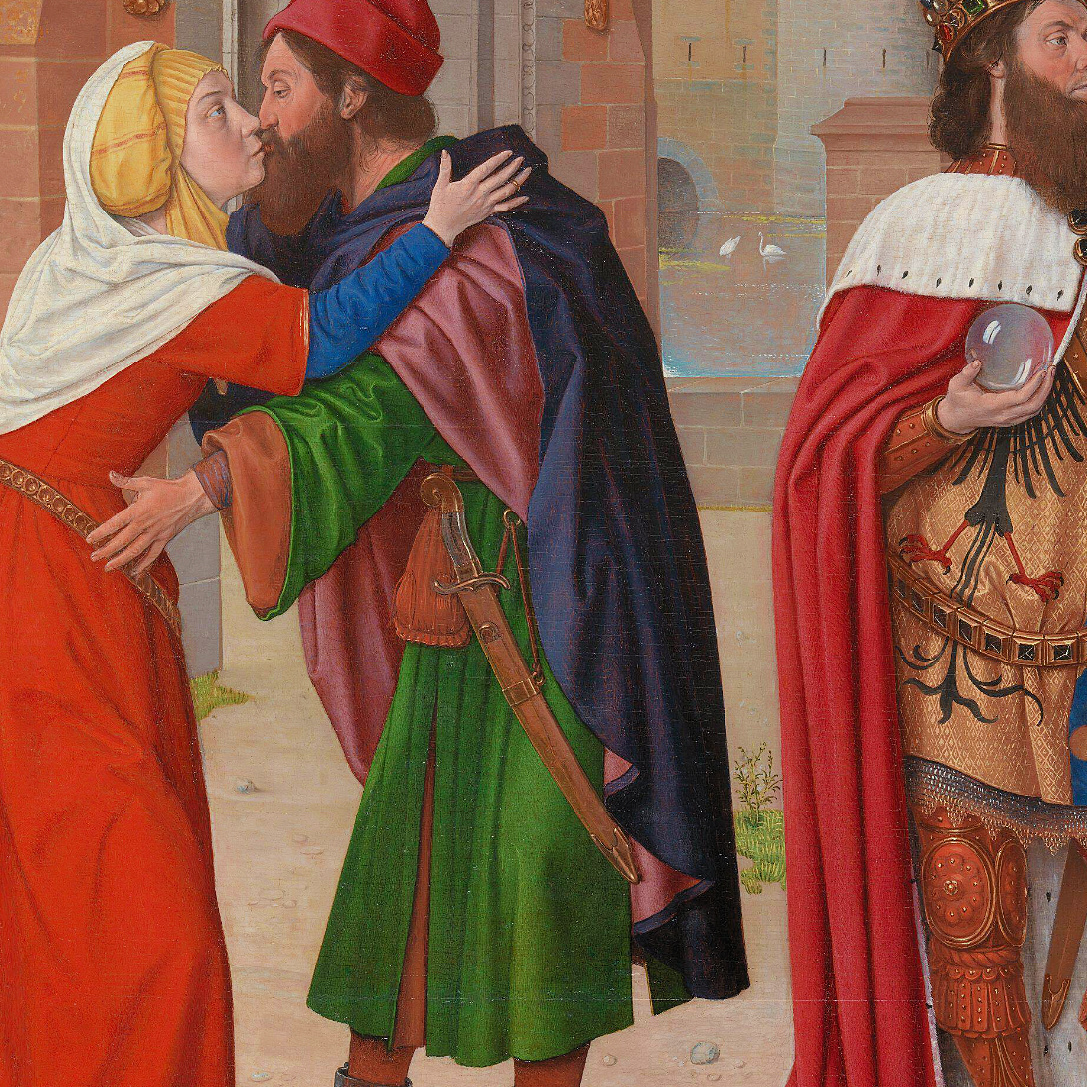
Maître de Moulins, active 1475 to 1505, Meeting of Saints Joachim and Anne at the Golden Gate with Charlemagne, oil on oak, about 1491-1494. 72.6 x 60.2 cm, National Gallery, London.
By century’s end, French artists had begun moving toward Renaissance naturalism while maintaining a uniquely French visual language.
Maître de Moulins, active 1475 to 1505, The Virgin with Child surrounded by angels, c. 1490, Musées royaux des Beaux-Arts de Belgique.Maître de Moulins, active 1475 to 1505, François de Chateaubriand presented by St. Maurice or St. Victor with Donor, c. 1485, Kelvingrove Art Gallery and Museum Glasgow.Jean Bourdichon (1457-1521), King David and Bathsheba, Leaf from the Hours of Louis XII, 1498–1499, Tempera and gold, Leaf: 24.3 × 17 cm (9 9/16 × 6 11/16 in.), The J. Paul Getty Museum, Los Angeles, Ms. 79, 2003.105.
Jean Bourdichon served as official court painter to four successive French kings: Louis XI, Charles VIII, Louis XII, and François I. Bourdichon was almost certainly a pupil of Jean Fouquet, the previous court painter.
Simon Marmion (active 1449-1489), The miracle of the True Cross in Jerusalem in the presence of Saint Helena Empress, 2nd half of 15th century (1450/1500). Louvre. https://collections.louvre.fr/ark:/53355/cl010061655
Simon Marmion (died 1489) who worked in Amiens and Valenciennes and temporarily in Tournai was a painter and illuminator where his miniatures were admired for their rich decoration and landscape details. In the mid1440s the artist moved from Amiens to Valenciennes where he became a leading painter. His most important painting is the Saint Bertin Altarpiece in Berlin and London.
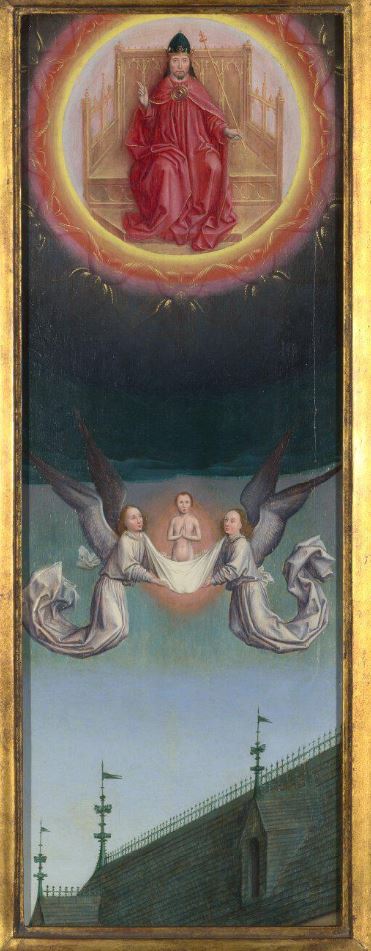
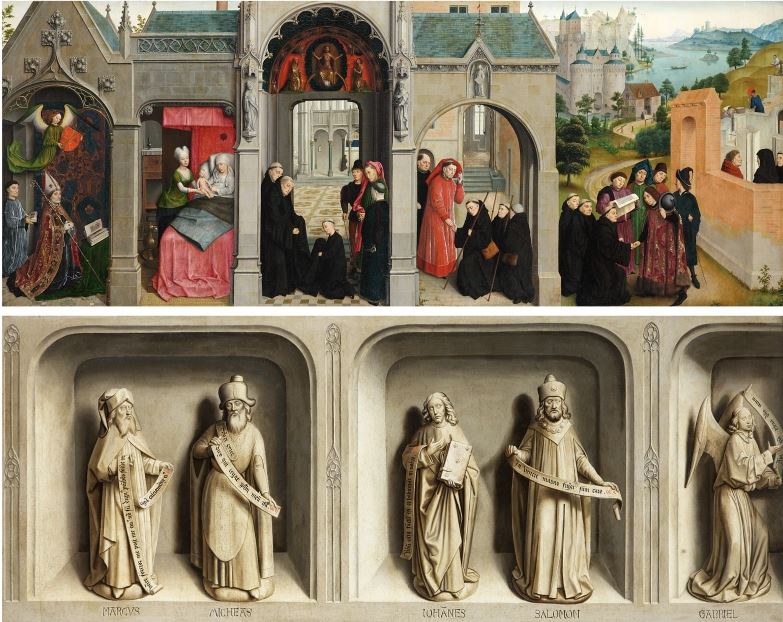
St. Bertin Altarpiece, 1459:
Simon Marmion, The Soul of Saint Bertin carried up to God. Fragment of Shutters from the St. Bertin Altarpiece, 1459. National Gallery London.
The Soul of Saint Bertin carried up to God was the upper section of a wing for an altarpiece for the high altar of the abbey church of St Bertin at Saint-Omer in northern France. It was commissioned by the influential Guillaume Fillastre, Abbot of St Bertin (1450-73), Bishop of Verdun (1437-49), Bishop of Toul (1449-60), Bishop of Tournai (1460–73), Chancellor of the Order of the Golden Fleece and a close confidant of the powerful Duke of Burgundy, Philip the Good. The artwork, whose main parts are in the Gemäldegalerie, Berlin, was consecrated in 1459. The altarpiece was intact in the abbey until 1791 when, as with many church goods, it fell victim to the French Revolution. https://www.nationalgallery.org.uk/paintings/simon-marmion-the-soul-of-saint-bertin-carried-up-to-god
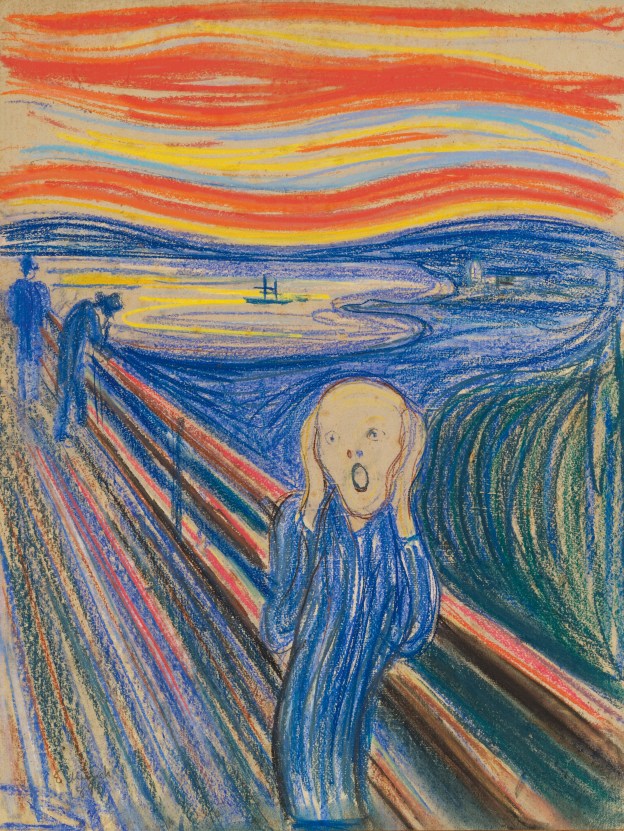
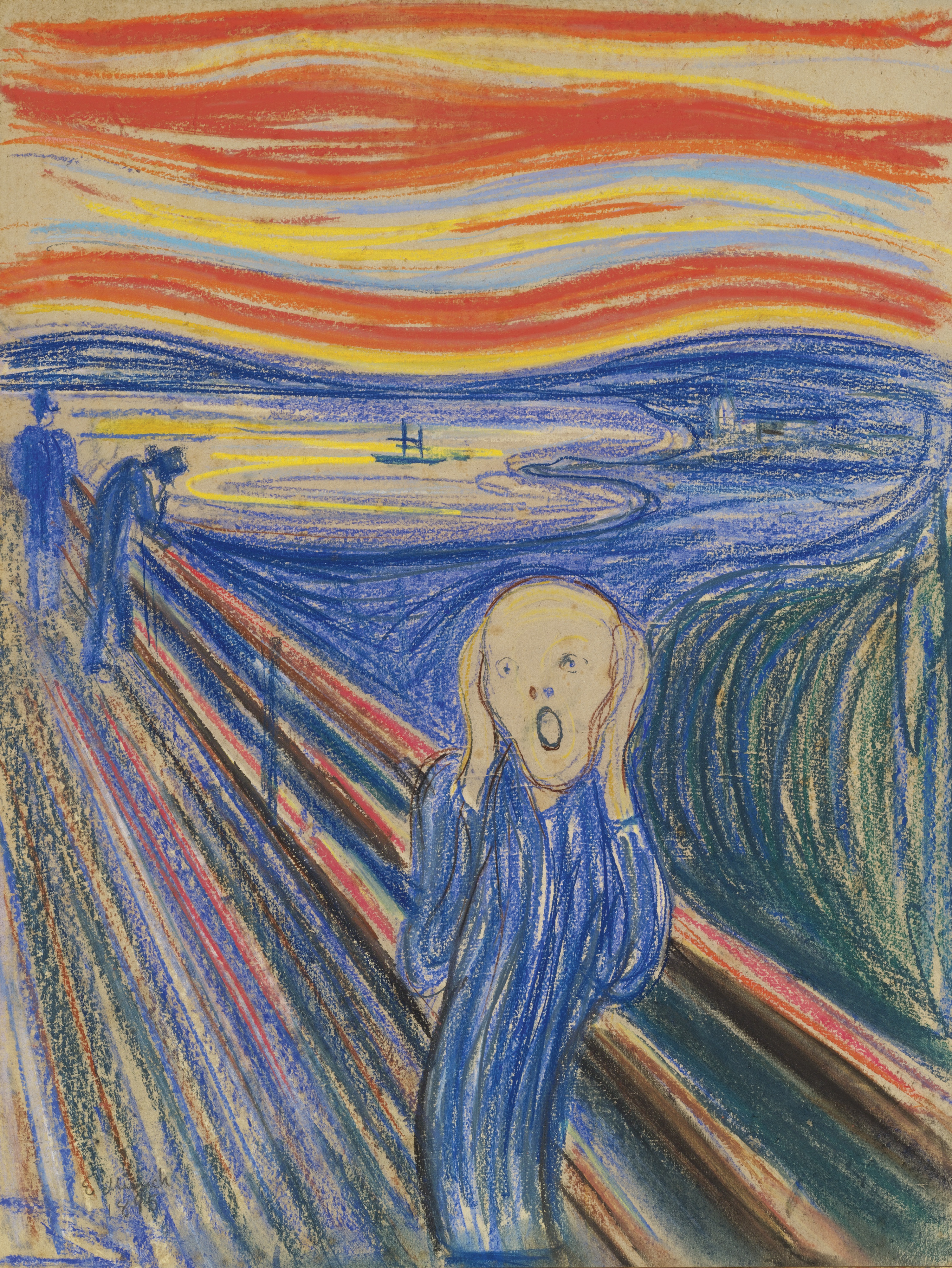
FEATURE image: Edvard Munch, The Scream, 1895, pastel on cardboard, private collection.
Edvard Munch transformed modern art by moving beyond naturalism and Impressionism to create a deeply personal Symbolist and Expressionist visual language that explored anxiety, love, death, loneliness, desire, and the psychological realities of human existence.
By John P. Walsh
Edvard Munch, Self-portrait, oil on canvas, 1886.
Edvard Munch: Symbolism, Expressionism, and Artistic Vision
Edvard Munch (1863-1944) was a Symbolist and Expressionist artist from Norway.
In the 1890s, anti-naturalism mainly took the form of Symbolism – that is, the fascination with many types of literature and the inclination to draw upon these sources for inspiration in dreams and visions. This movement informed the art of Edvard Munch throughout that decade and into the twentieth century. Inspiration from literature, however, was not illustration. By the 1890s the younger generation of modern artists saw that by giving the artist an example of constructing an irrational logic, the artist’s dream, or more specific to Munch, psychology, had been freed not only from the restrictions of nature in terms of form, line, color and subject but also its potentially literary or ideological sources. It manifests as a style of drawing that the imagination has liberated from the concern of natural details in order that it might freely serve only as the representation of conceived things.
For Edvard Munch, this resulted in the creation of several fantastic scenarios which are designed and constructed as the artist deems them necessary to be. The distinction between Impressionism and Symbolism is the difference emanating from the tradition of naturalism and the expression of ideas by means of its symbol that is searching beyond naturalism.
The Scream became the defining image of modern psychological anxiety and one of the most recognizable paintings in Western art.
Edvard Munch, The Scream, crayon, 1893.
Edvard Munch is a precursor and practitioner of Expressionism. Although the major portion of Munch’s artwork lies outside this classification, his expressionist paintings are some of his best-known works.
The Scream and Modern Anxiety
The Scream is Munch’s most famous work, and is widely interpreted as representing the universal anxiety of modern man. It is one of modern art’s most iconic paintings along with Whistler’s mother (Arrangement in Grey and Black, Number One, D’Orsay), Da Vinci’s Mona Lisa (Louvre), and Grant Wood’s American Gothic (Chicago).
Expressionism was a movement that was a combination of Symbolism, ideals of the human spirit, often confined in solitude, and poetical lyricism laced with emotion.1
Early Life and Artistic Training and “the Seeds of Madness”
In an artistic career that spanned from the early 1880s until his death in 1944 at 80 years old, Edvard Munch experimented within painting, graphic art, drawing, sculpture, photography and film.
Growing up in Kristiania (today’s Oslo) Munch decided at 17 years old that he was going to be a painter. Munch’s family encouraged his artistic pursuits so that in 1880 Munch enrolled at the Royal School of Art and Design in Kristiania where he expanded his drawing repertoire to include live models and en pleine aire (out of doors).
Often ill as a child, Munch believed that in his experiences growing up, “…I inherited the seeds of madness. The angels of fear, sorrow, and death stood by my side since the day I was born.”
In his career, Munch painted mania in several pictures, including Melancholy (1901). It depicted his younger sister Laura who suffered from schizophrenia, and was hospitalized regularly for what was diagnosed as “hysteria” and “melancholia.”2
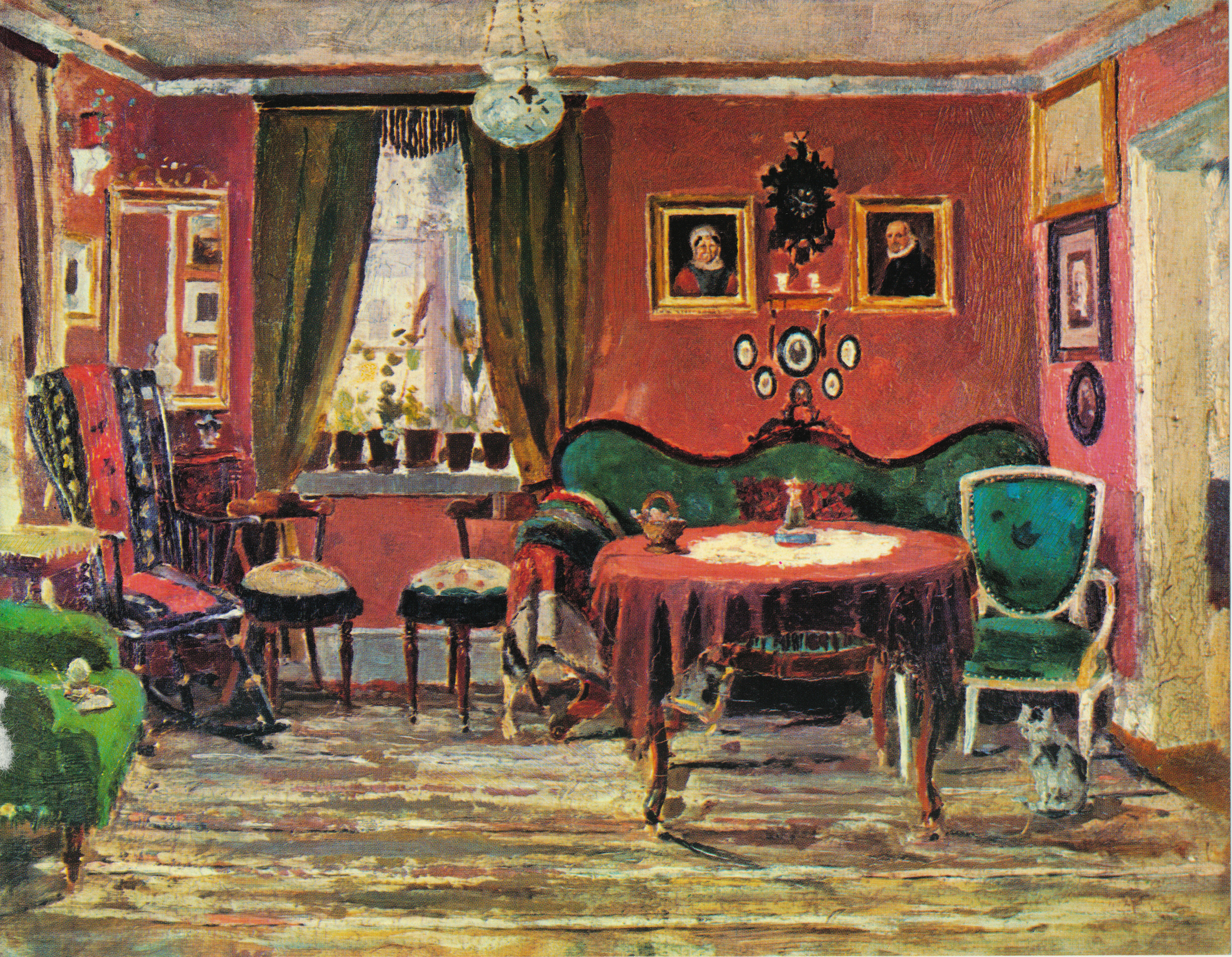
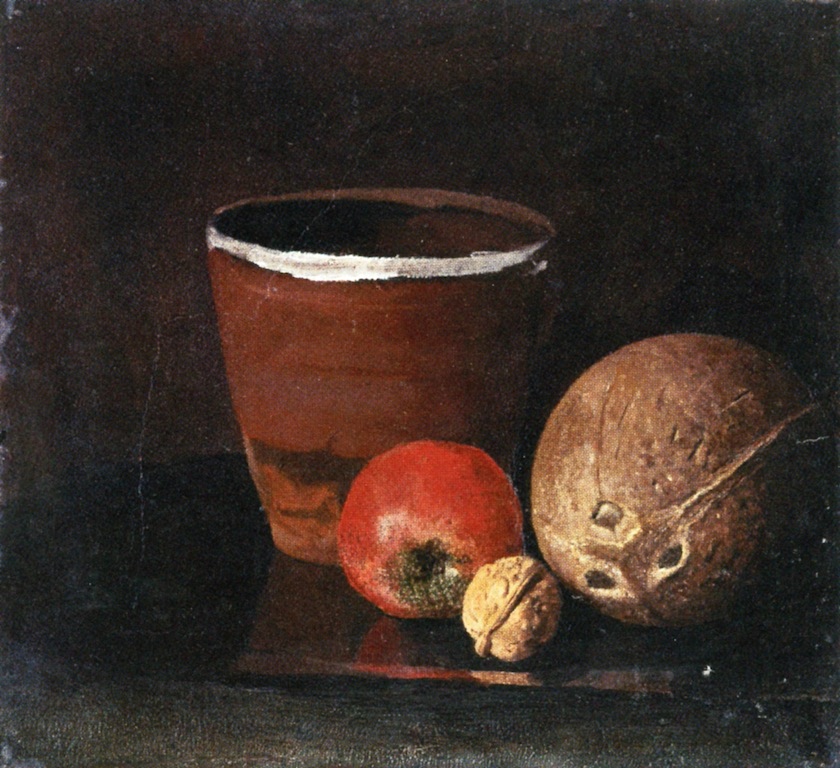
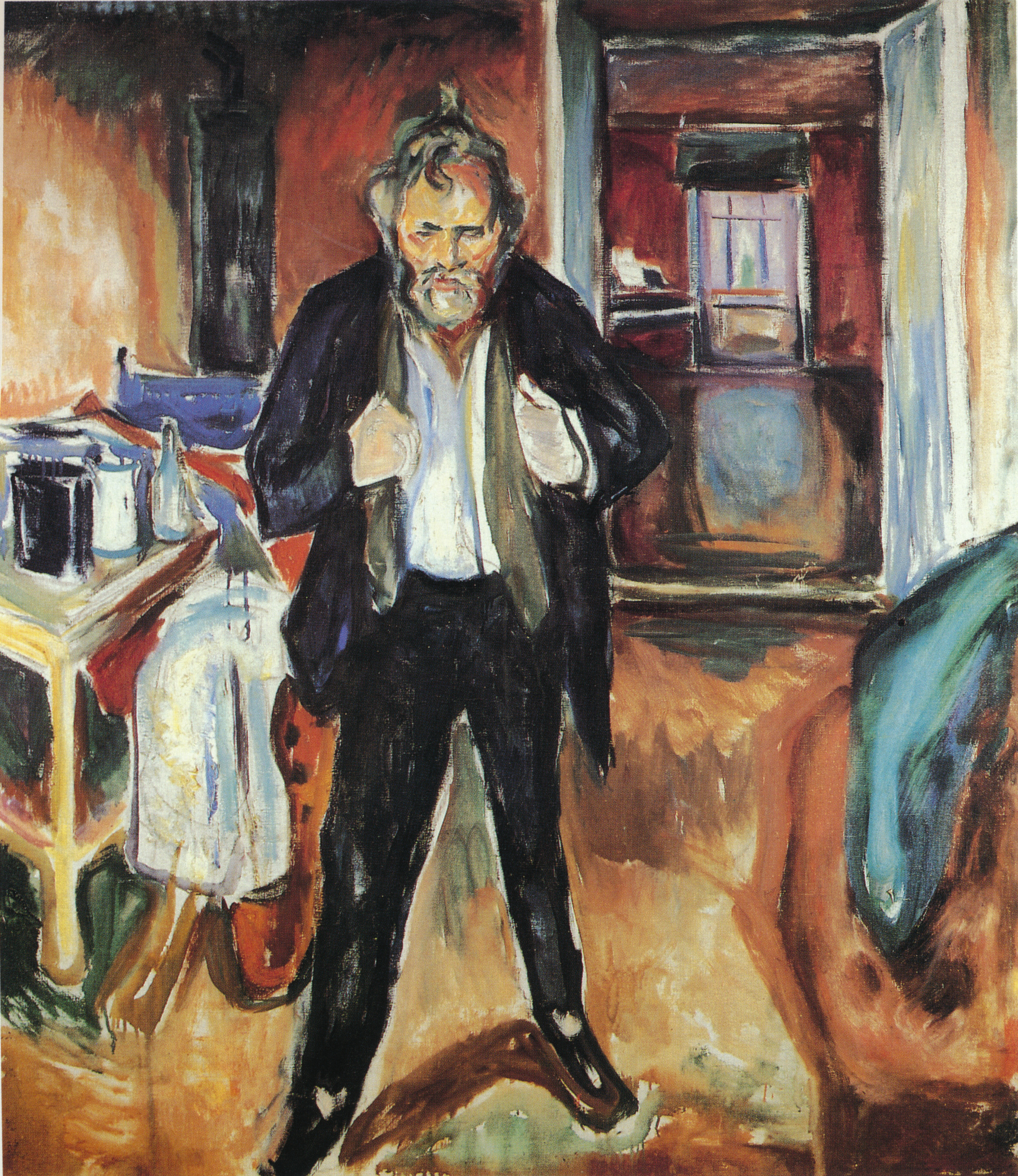
Edvard Munch, Melancholy, Laura, 1901. Edvard Munch, Self-portrait, 1882, Munch Museum, Oslo. Edvard Munch, Interior Pilestredet, oil on canvas, 1881, Munch Museum, Oslo. Edvard Munch, Still Life with Jar, Apple, Walnut and Coconut, 1881, Munch Museum, Oslo. Edvard Munch, From Saxegårdsgate, c. 1882, oil on canvas, Lillehammer Art Museum. Edvard Munch, Laura, both 1882, oil on paper (top) and oil on cardboard (below), Munch Museum, Oslo. Edvard Munch, Andreas Studying Anatomy, 1883, Oil on Cardboard, Munch Museum, Oslo.
Early Subjects and Bohemian Influences
Between 1884 and 1889 young Munch made a range of drawing and paintings that was extensive and meaningful. His portfolio included landscapes, domestic environments, portraits, self-portrait, still life, and fictional motifs. Munch’s drawings included industrial sites along the Akerselva River, and promenading denizens and local farmers at work.
In Munch’s early work there is a hint of his wrestling with eros and the nature of woman that became a lifelong obsession.
In Kristiania Munch began to live a bohemian life under the influence of anti-establishment writer Hans Jaeger (1854-1910). Jaeger urged Munch to paint his own emotional and psychological state called “soul painting.”
The Sick Child (1886) and the Birth of “Soul Painting”
Munch’s first “soul painting” was The Sick Child (1886). The artist produced five versions over decades. Munch’s freedom of treatment and color – also found in the painting Tête-à-Tête in 1885 – is largely owed to Impressionism. In 1886, Munch participated in the Artists’ Autumn Exhibition in Kristiania and exhibited The Sick Child. It met with very negative reaction. The motif of the sick was popular but Munch’s hasty Impressionistic treatment was seen as insensitive. It was the first breakthrough for Munch’s art.
Childhood illness, family tragedy, mental illness within his family, and personal loss profoundly shaped his artistic vision. Influenced by writers, philosophers, and Symbolist artists, Munch developed what he called “soul painting.”
Edvard Munch, Tête-à-tête, oil on canvas, 1885, Munch Museum, Oslo.
Early works such as The Sick Child marked a decisive break from conventional academic painting.
Edvard Munch, The Sick Child (original version), 1885-86, National Gallery, Oslo. Other versions are in the Konstmuseet Gothenberg (1896), Tate London (1907), Thiel Gallery (1907) and Munch Museum (1925).
Munch later painted Hans Jaeger’s portrait in Oslo in 1889 after Jaeger lost his job and had to flee Norway one step ahead of the law. This was after Jaeger published a novel about local Bohemian life that the authorities considered inflammatory. Young Munch began to explore in his art personal situations, emotions, and states of mind. He wrote in his “soul” diary: ” I attempt In my art to explain life and its meaning to myself.”3
Edvard Munch, Hans Jæger, 1889, National Gallery, Oslo. Edvard Munch, Night on the Beach, 1889, Bergen Art Museum. Known also as Inger on the Beach, it was painted in the summer of 1889 at Åsgårdstrand. The sitter is Munch’s youngest sister Inger. The artwork created a storm of confusion and controversy. Its simplified forms, thick outlines, contrasting colors and shades, and subtle emotional content signaled the direction of Munch’s developing style. Edvard Munch, Self Portrait, c. 1888, Munch Museum, Oslo.
Paris (1885), French Modernism, and First Love
With friends, Munch rented a studio in Kristiania. His mentor, established artist Christian Krohg (1852-1925), encouraged Munch to conform to his own artistic vision.
In 1885, 22-year-old Munch traveled to Paris for the first time to explore the world’s art capital. During his three-week stay in Paris Munch visited the Louvre and the Salon and was particularly impressed by French Modernist painter, Édouard Manet (1832-1883). Munch began to incorporate those ideas and techniques of French Modernism into his artistic vision. In the same year Munch produced his full-length Portrait of the Painter Jensen -Hjell to the derision of critics in Kristiania. The penchant for Manet’s artwork continued for Munch into the new century with a full-length portrait called The Frenchman (Monsieur Archimard) in 1901.
In summer of 1885 Munch had his first love affair which affected him deeply. It occurred in the coastal resort town of Åsgårdstrand when Munch met Milly Thaulow (1860-1937), a fashion model and singer.
Milly had been married since 1881 when she met Munch and they had a passionate affair. The short, secret relationship filled Munch with mixed feelings of love and shame. Its inevitable ending produced melancholy that affected Munch’s artmaking.
Milly Thaulow remained active in the arts, translating Maurice Maeterlinck’s French play, Pelléas et Mélisande, into Norwegian in 1906. She went on to divorce her husband in 1891 and remarry that same year. Her second marriage ended in divorce. In the end, Munch justified his experience with Milly as part of radical bohemian artist culture which Hans Jaeger preached where love is free and self-expression is paramount.
Edvard Munch, Portrait of the Painter Jensen -Hjell, 1885, National Gallery, Oslo.
Paris (1889-91), Loss, and the Origins of The Frieze of Life
In 1889 Munch rented exhibition space in Kristiania to display 110 of his artworks. His entrepreneurship resulted in receiving state grant funds that led to a second, yet back and forth, stay to Paris whose time amounted overall to about two years.
In Paris, Munch took drawing lessons, explored art galleries, and networked with expatriate artists, especially at the venerable 17th-century Café de la Régence near the Palais-Royal.
In his study, Munch became inspired by the rhythmical and decorative art of Paul Gauguin (1847-1903), several of the Nabis, Japonisme, and the Symbolist drawing of Odilon Redon (1840-1916).
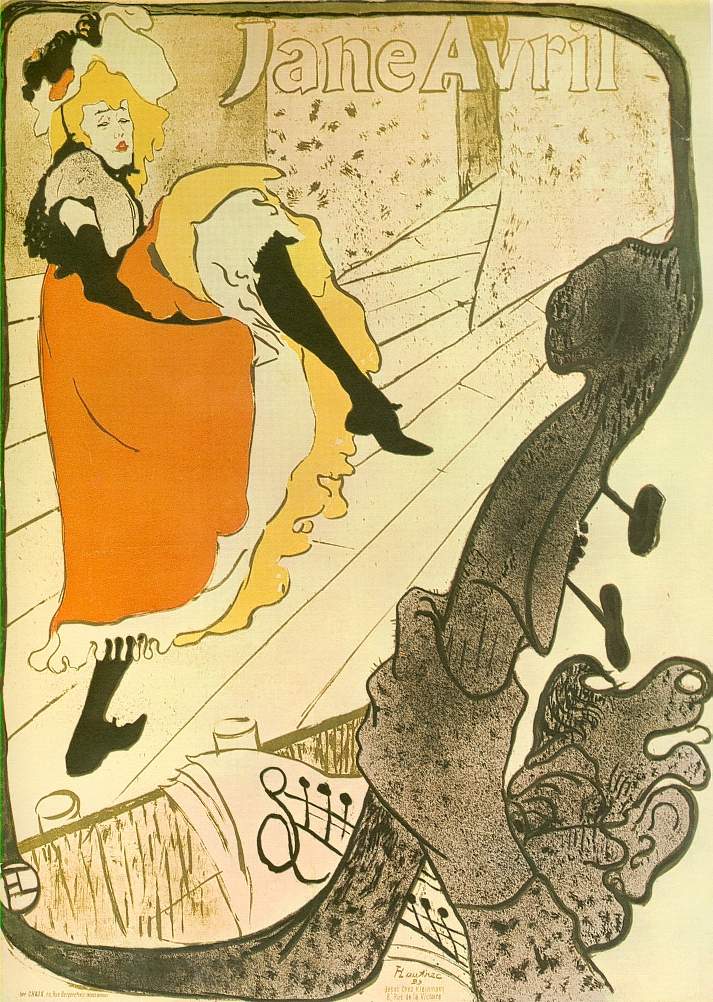
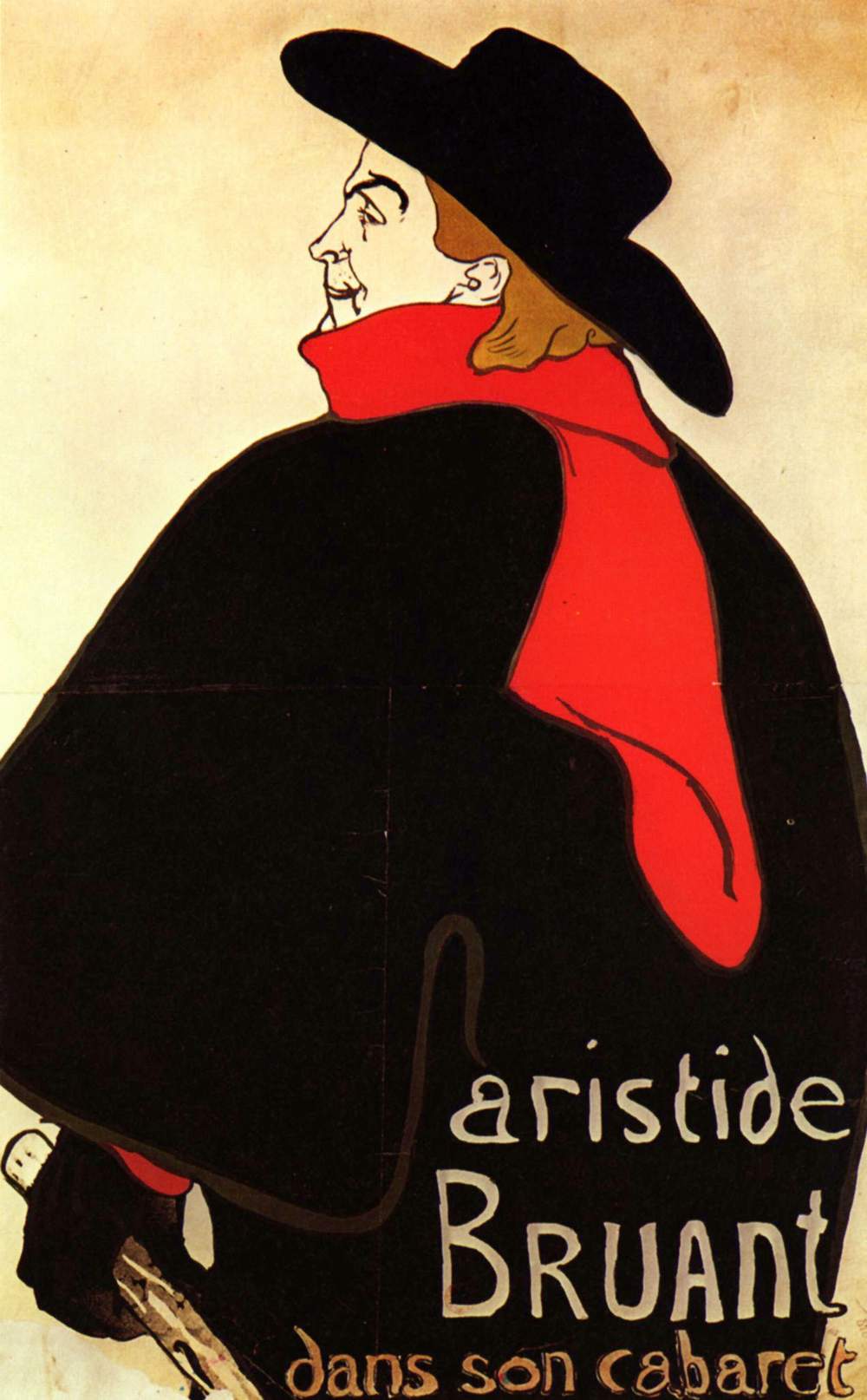
Though Munch rejected Realism in art, he embraced Impressionism, particularly the technique of Claude Monet (1840-1926) and Camille Pissarro (1830-1903) and Thomas Couture (1815-1879). Munch was particularly impressed by Vincent Van Gogh (1853-1890) and Henri de Toulouse-Lautrec (1864-1901) and their unnatural use of color to express sensory perception and emotion. In this milieu Munch painted Rue Lafayette (1891).
The 26-year-old Munch had just arrived into Paris when his father died, an event which devastated the artist. Running low on money, Munch left the city and, with Danish poet Goldstein, rented a small apartment in the suburb of St. Cloud.
Munch’s experiences of relative poverty and the death of a loved one offered new insights and impetus for his art in terms of seeking to understand and express the memory of his human existence.
He painted Night In St. Cloud (1890) and Evening on the Karl Johan (1889) in this time period. Munch also conceived the idea of The Frieze of Life, a series of paintings exploring human existence from a range of pathos, terror, desire, dread, nightmare, and anxiety, to other fascinations, so to include The Dance of Life, The Scream, The Vampire, Madonna, and Death and the Maiden.
In 1891 Munch had exhibitions in Kristiania, Berlin, and Munich. He returned to Paris several times in the next decade for short term visits as in 1899 which included a trip to Italy.4
His experiences in Paris exposed Munch to Impressionism, Post-Impressionism, Gauguin, Van Gogh, Redon, and modern artistic experimentation. Munch pioneered a highly personal form of art that sought to express inner states rather than external appearances.
Edvard Munch, Night In St. Cloud, 1890, oil on canvas, National Gallery, Oslo. Edvard Munch, Evening on the Karl Johan, 1889, oil, Bergen Art Museum.
Munch emerged from the Symbolist movement of the 1890s, which rejected strict naturalism in favor of dreams, psychology, emotion, and imagination.
Edvard Munch, Kiss by the Window, 1891, Munch Museum, Oslo. Edvard Munch, Evening Melancholy, 1891, oil, crayon, pencil on canvas, Munch Museum, Oslo. Edvard Munch, Rue Lafayette, 1891, oil on canvas, National Museum, Oslo. Edvard Munch, Rue de Rivoli, 1891, oil on canvas, Fogg Art Museum, Harvard University, Cambridge, Massachusetts. Edvard Munch, Inger in a White Blouse, 1891, Munch Museum, Oslo. Edvard Munch, Pleine-aire, 1891, oil on canvas, 60 x 120 cm, Munch Museum, Oslo.
Berlin Breakthrough (1892-1895) and Symbolist Fame
In 1892, Munch’s pictures were again exhibited at the Autumn Exhibition in Oslo (it was his final time)–and led to the 29-year-old artist being invited to exhibit at the Verein der Berliner Künstler (Association of Berlin Artists) in Germany in November 1892 for a one-man exhibition.
Munch’s exhibition of Melancholy (1891) in Oslo was called Norway’s “first Symbolist painting.” His exhibition of 55 pictures in Berlin proved another breakthrough for Munch’s reputation in Europe: it made him infamous. The critical reaction to his artwork was divided. Critics described Munch’s art as “repugnant, ugly and mean.” As it shocked the Berlin public, German artists Max Liebermann (1847-1935) and Ludwig von Hofmann (1861-1945) setting up a dissident “Group of XI” that led to the establishment of the Berlin Secession later on May 2, 1898.
The government of Kaiser Wilhelm II (1859-1941) set the mood for the public reaction in that art which “presumes to overstep the limits and rules” which Wilhelm had set, “is no longer art.” In the eyes of German society, Munch’s artwork “misused the word ‘freedom’ and (with) a total loss of restraint and excess of self-esteem.”
Later, by around 1910, that same Emperor in his constant pursuit of cultural influence, mostly supported the Berlin Secession. Yet the Secession’s public and financial success which Wilhelm II eventually helped to build, came at the price of a benevolent autocrat’s constant interference, particularly in the modern art group’s jury process.
The Frieze of Life and the Berlin Circle
Munch stayed in Berlin until 1895. In the Berlin exhibitions of 1893 and 1895 Munch presented a sequence of pictures he called Man’s Life, From the Modern Life of the Soul and, simply, Love. These all contained artwork that contributed to The Frieze which Munch intended to be a symbolic expression of reality and not a mere symbol of or for reality.
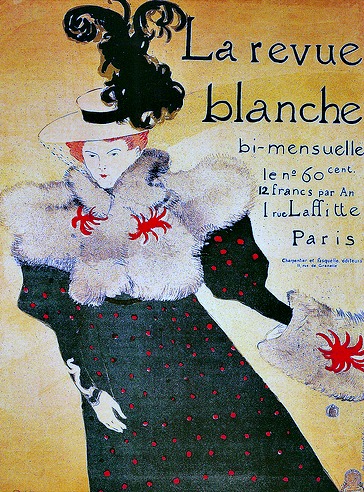
Munch’s bohemian circle in Berlin included editors of the magazine Pan, the German arts publication analogous to France’s La Revue Blanche. It also included Swedish avant-garde writer, August Strindberg (1849-1912) who would soon provide Munch with influential introductions to the Berlin and Paris art worlds. In 1890 Strindberg broke with naturalism and was in his own artistic and personal crisis as he sought new art forms within an emerging Symbolism. Munch met German art critic Julius Meier-Graefe (1867-1935) and socialized with Polish decadent naturalist and Symbolist novelist, dramatist, and poet Stanisław Przybyszewski (1868-1927) along with Przybyszewski’s paramour and later short-term wife, Dagny Juel (1867-1901). Munch painted both of these friends’ portraits.
Munch’s Berlin friends understood what Munch was doing with symbolism though the German critics did not. Przybyszewski wrote: “The old kind of art and psychology was an art and psychology of the conscious personality, whereas the new art is the art of the individual. Men dream and their dreams open up vistas of a new world to them.”
In addition to exhibiting in Berlin in both 1893 and 1894, Munch exhibited in Copenhagen, Dresden and Munich in 1893 and in Stockholm in 1894.
Symbolist Masterpieces of the 1890s
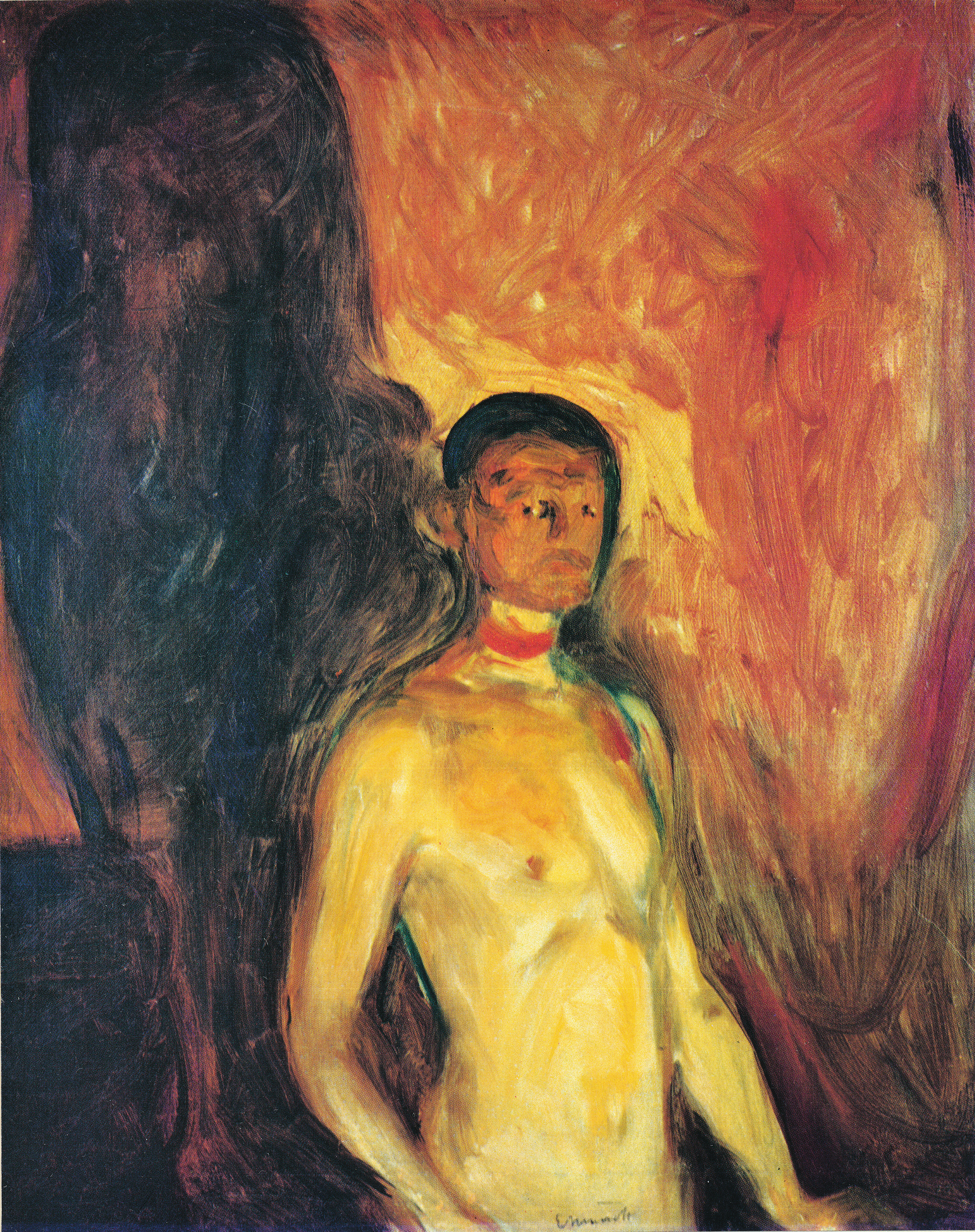
Working on the Frieze of Life, Munch created painting with turbulent, ambiguous and morose themes with titles such as Despair (1892), The Girl and Death (1893), Stormy Night (1893), The Voice (1893), Anxiety (1894), The Three Stages of Woman (1894), Ashes (1894), Death Struggle (1895), and Jealousy (1895). Aspects of Symbolism extended to romantic aspects of nature in paintings such as Coastal Mysticism (1892), Evening (Melancholy) (1893), Moonlight (1893), Starlit Night (1893), Sunrise at Åsgårdstrand (1893) and The Evening Star (1894). He painted many portraits in this period, in addition to those in his Berlin Bohemian circle, including Sister Inger (1892). Other iconic, overtly anecdotal Munch paintings were created such as Self Portrait in Hell (1895), Self Portrait under a female mask (1892), and Self portrait with Burning Cigarette (1895).
Other paintings, including casino scenes, showed Munch’s simplification of form and detail. The artist favored shallow pictorial space and a minimal backdrop for his foreground figures. Poses, forms, colors, lines and subjects were carefully constructed images that expressed psychological and emotional states, and often appear monumental as if they were playing a role on the stage of life.5
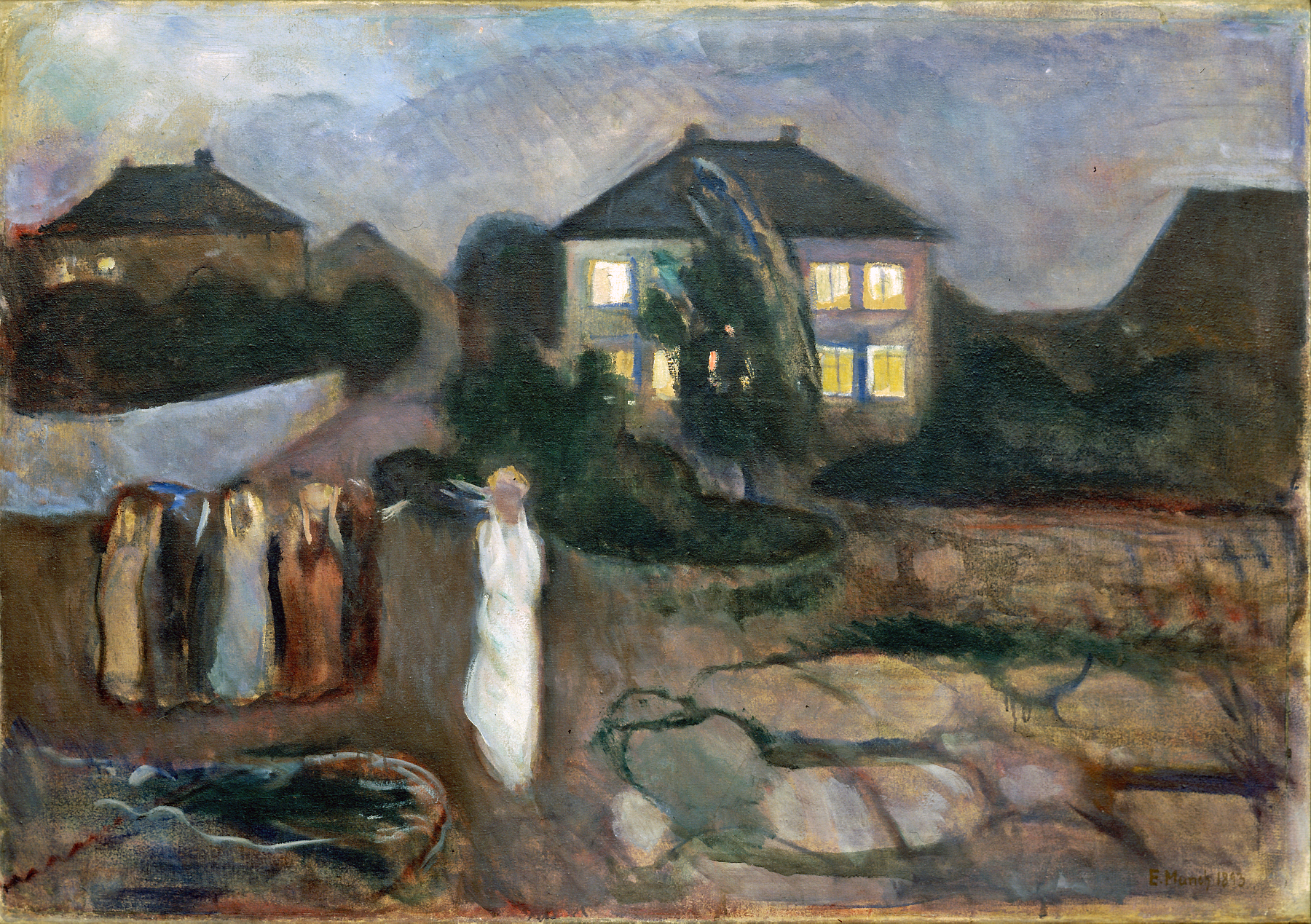
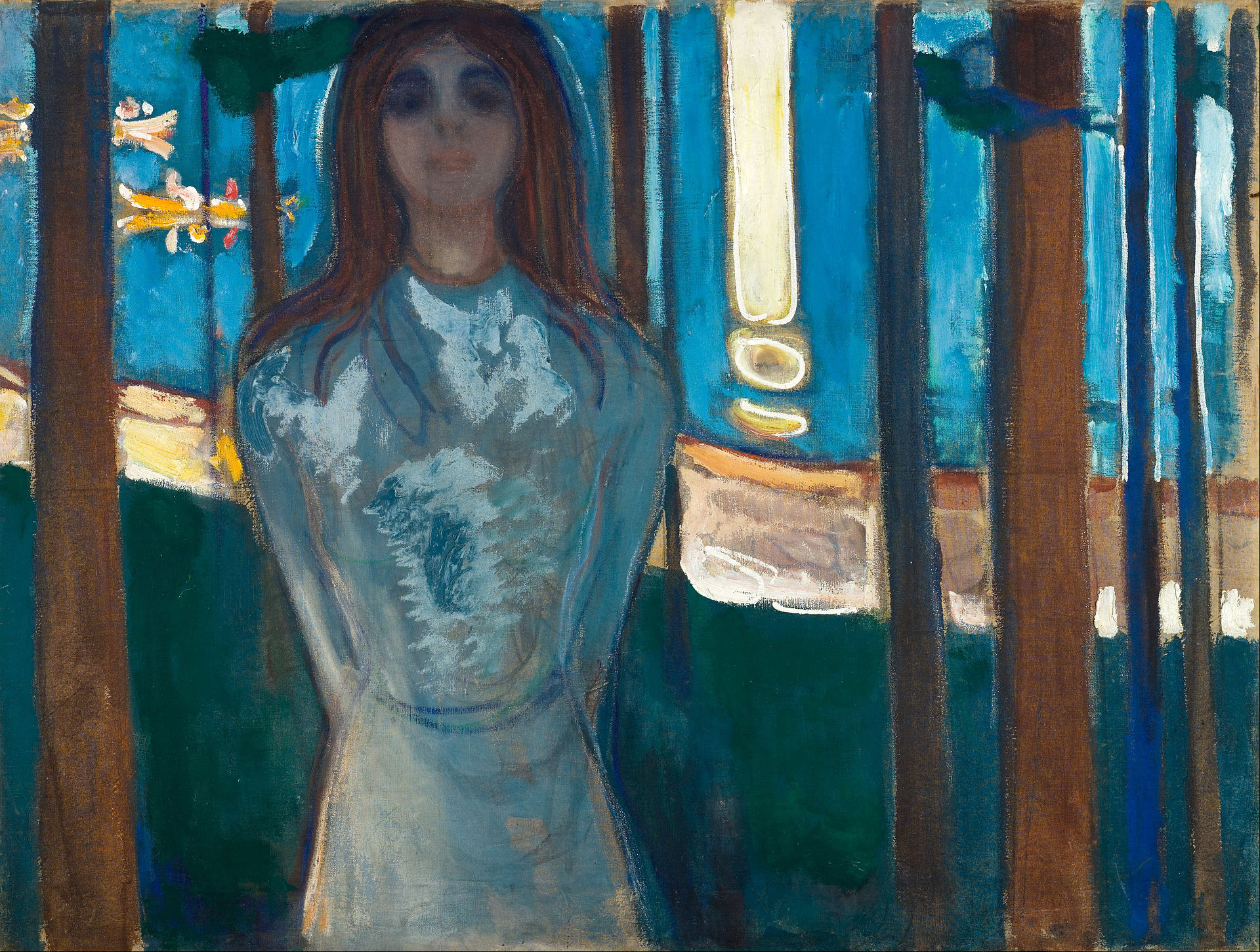
Edvard Munch, Melancholy, 1893, oil, Munch Museum. Edvard Munch, Melancholy (The Yellow Boat), 1891, oil, National Gallery, Oslo. Edvard Munch, Kiss by the window, 1892, oil, National Gallery, Oslo. Edvard Munch, The Kiss, 1892, oil, Private Collection. Edvard Munch, The Girl by the Window, 1893, oil, Art Institute of Chicago. Edvard Munch, Separation, 1893-94, Gouache, watercolor and crayon on paper, Munch Museum. Edvard Munch, Parting, 1894, oil on canvas, 67 x 128 cm, Munch Museum. Edvard Munch, Three Stages of Women (Sphinx), c. 1894, Bergan. Munch painted woman as dreaming, hungry for life, and as a nun. Edvard Munch, Puberty, 1894–1895, oil on canvas, 151.5 x 110 cm, National Gallery, Oslo. Edvard Munch, Anxiety, 1894, Munch Museum. Art critics see the painting as closely related to The Scream (1893). The faces show despair and the colors impress a depressed state showing emotions of heartbreak and sorrow. Edvard Munch, Despair, 1893, oil on canvas, Munch Museum.Edvard Munch, Inger in Black and Violet, 1892, oil on canvas, National Museum, Oslo. Edvard Munch, The Storm, oil on canvas, 1893, Museum of Modern Art, New York. Edvard Munch, Summer Night’s Dream The Voice, 1893, Museum of Fine Arts, Boston, Massachusetts. Edvard Munch, Coastal Mysticism, 1892.Edvard Munch, Sketch of the Model Posing, 1893, pastel on cardboard, The Solomon R. Guggenheim Museum, New York. Edvard Munch, The Hands, 1893, oil on canvas, 91 x 77 cm, Munch Museum, Oslo. Edvard Munch, At the Roulette Table in Monte Carlo, 1892, oil, Munch Museum. Edvard Munch, Self-Portrait Under the Mask of the Woman, 1893, oil, Munch Museum, Oslo. Edvard Munch, Self Portrait with Burning Cigarette, 1895, oil, Munch Museum, Oslo. Edvard Munch, Self-portrait in Hell, c. 1895, oil on canvas, 82 x 60 cm, Munch Museum, Oslo. Edvard Munch, Stanislaw Przybyszewski,1895, pastel, 62x55cm, Munch Museum.Edvard Munch, The Scream, 1893, oil, tempera, pastel on cardboard, National Museum, Oslo.
Paris (1895-1897). Munch Adopts “Idea” Painting: The Scream, Printmaking, and International Recognition
Until 1870, young artists from Norway went to Dűsseldorf to study and pursue an art career though sometimes to Berlin, Paris, Munich and Karlesruhe. By 1880, Paris was the center of the art world and Munch returned to Paris in 1895, 1896, and 1897 for extended visits (he also visited Nice in 1897).
Thadée Nathanson’s La Revue Blanche published Munch’s lithograph The Scream in December 1895. The Scream exists in four versions: two pastels (1893 and 1895) and two paintings (1893 and 1910). There are several lithographs of The Scream from 1895 and later.
With The Scream, Munch met his stated goal in his diary of his art expressing “the study of the soul, that is to say the study of my own self.” Philippe Jullian argues that it had been the combination of influences of Strindberg, Redon, and Gauguin that explained Munch’s conversion from Naturalism and Impressionism to “Idea” painting expressed in Symbolism. Munch was the first to express the individual’s anguish in modern society and facing death. He was an inventor of the ectoplasm line (“ectoplasm” is a spiritualism term first used in 1894). Munch’s figures, including The Scream, emerges from pastel, oil, or ink like an apparition, yet to be identified with the “souls” of ordinary persons.
Anxiety, jealousy, loneliness; Munch illustrates people who pictorially express Symbolism’s darkest visions and themes.
Edvard Munch, The Scream, 1895. Ink.
In Paris Munch exhibitions were organized at the Salon des Indépendents and Siegfried Bing’s Salon de L‘Art Nouveau. Young avant-garde art dealer Ambroise Vollard (1866-1939) included Munch in his first Album des Peintres Graveurs. Munch was commissioned by the Cent Bibliophiles to illustrate Baudelaire’s Flowers of Evil. Like young Nabis Édouard Vuillard (1868-1940) and Pierre Bonnard (1867-1947), Munch designed programs for Symbolist theatre (Ibsen’s Peer Gynt at the Théâtre de l’Oeuvre). He did portraits of Symbolist poet Stéphane Mallarmé (1842-1898) and August Strindberg. Munch created some of his most iconic motifs, including The Scream (pastel version), Vampire (a woman seductive and destructive), Puberty (an anxious girl seated naked on a bed), and Madonna (a synthesis of the mystical and erotic).
MUNCH MASTERS MODERN EXPERIMENTAL PRINTMAKING
In Berlin in 1894 Munch had produced his first dry point etchings. In Paris in 1896, following the explosion of color printing in the 1890’s, Munch produced his first color lithographs and woodcuts (Vampire was his first woodcut). Influenced by Gauguin and Max Klinger (1857-1920), printmaking allowed Munch to be highly experimental in the creation of an image. Particular to Munch as an artist, the subject of the artwork determined which of the various styles to be deployed. At his death Munch retained over 15,000 prints in his Oslo studios. During his lifetime, inspired importantly by his work in mid-1890’s Paris, Munch became a master of all graphic techniques, such as color, volume, and line. Munch’s production of an immense portfolio of graphic art sought to create images which are subordinated to the experiences of the self’s impulses and drives.
Munch’s attempts to market his new artwork in Paris as he did in Berlin to acceptance and fame resulted in relative failure in the world’s art capital. His parting milestone in Paris in this period was in the 1897 Salon des Artistes Indépendants where Munch displayed in the main hall his ever-augmenting Frieze of Life. The cycle was characterized by continuous reworkings as new paintings; versions that replaced paintings which had sold; and, new compositions added to the series.
In terms of public acclaim, the effort appeared for naught. French resistance to Munch’s “repugnant, ugly and mean” art endured. French critics decried Munch’s art as “violent and brutal” and, when they weren’t chastising him, they ignored him—and this attitude lasted deep into the 20th century. However, another exhibition in Munch’s native Oslo of 85 paintings was well received.6
Edvard Munch, The Scream, 1895, pastel on cardboard, private collection. Edvard Munch, The Kiss, 1895, Dry-point and aquatint, 34.8 x 28 cm, Munch Museum, Oslo. Edvard Munch, The Kiss, woodcut, n.d., 44.7 x 44.7. cm, Munch Museum, Oslo.
His turbulent relationships, especially with women, heavily informed recurring themes of love, desire, attraction, fear, and loss.
Edvard Munch, Jealousy, 1896, Lithograph, 46.5 x 56.5 cm, Munch Museum, Oslo.
Edvard Munch, Death and the Maiden, 1894, Dry-point, 30.2 x 22 cm, Munch Museum, Oslo.
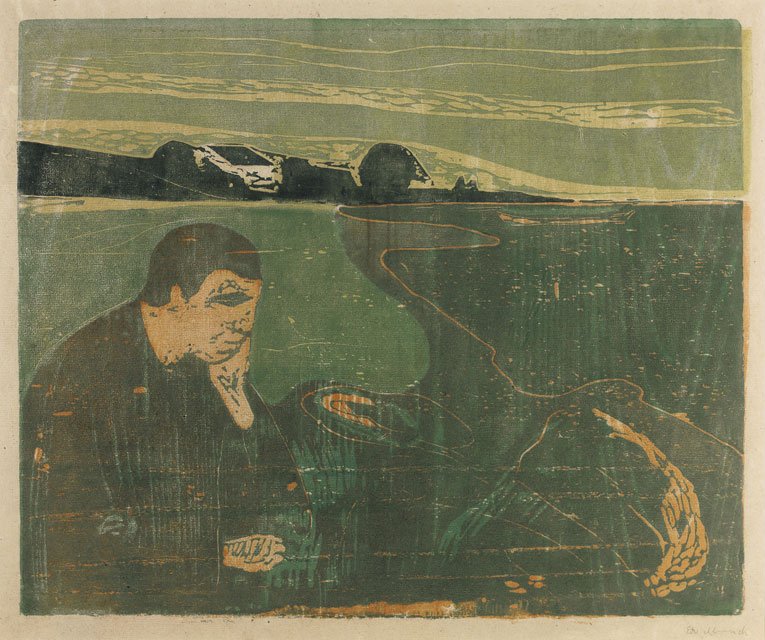
Edvard Munch, Melancholy (Evening),1896, woodcut, 37.6 x 45.5. cm, Munch Museum, Oslo. Edvard Munch, Attraction, 1896, Lithograph, 47.2 x 35.5 cm, Munch Museum, Oslo.
Edvard Munch, The Sick Child, 1896, Lithograph, 42.1 x 56.5 cm, The Munch Museum, Oslo.
Edvard Munch, Evening, Melancholy I, woodcut, 1896.
Edvard Munch, Stéphane Mallarmé, 1896, lithograph.
Edvard Munch, August Strindberg, 1896, lithograph.
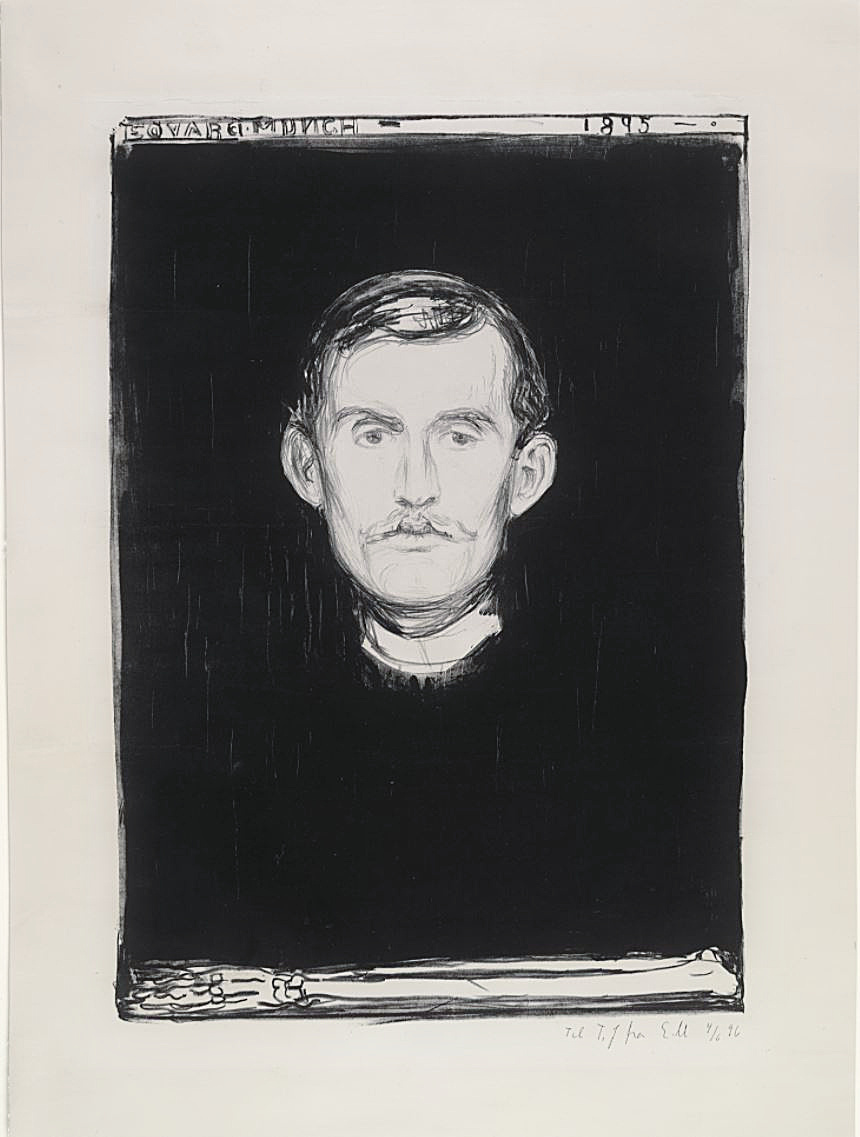
Edvard Munch, Self-portrait, 1895, Lithograph, 45.5×31.7 cm, Museum of Modern Art, New York. Munch was 31 years when he produced this self-portrait. It is a memento mori – a reminder of death. The bones at the bottom of the image are paired with the artist’s name and the date of the lithograph’s creation at the top. The floating head in a sea of darkness was a familiar motif in art in the 1890’s expressing in part the cosmic and ontological realities of humanity. Edvard Munch, Lady From the Sea (detail), 1896, oil on canvas. 100 cm × 320 cm, The Munch Museum, Oslo. Edvard Munch, The Voice Summer Night, 1896, 90 cm × 119 cm, Munch Museum, Oslo Edvard Munch, Paris Boulevard, 1896, oil on canvas, 96.5 x 130 cm, Munch Museum, Oslo.
Love, Women, and the Femme Fatale
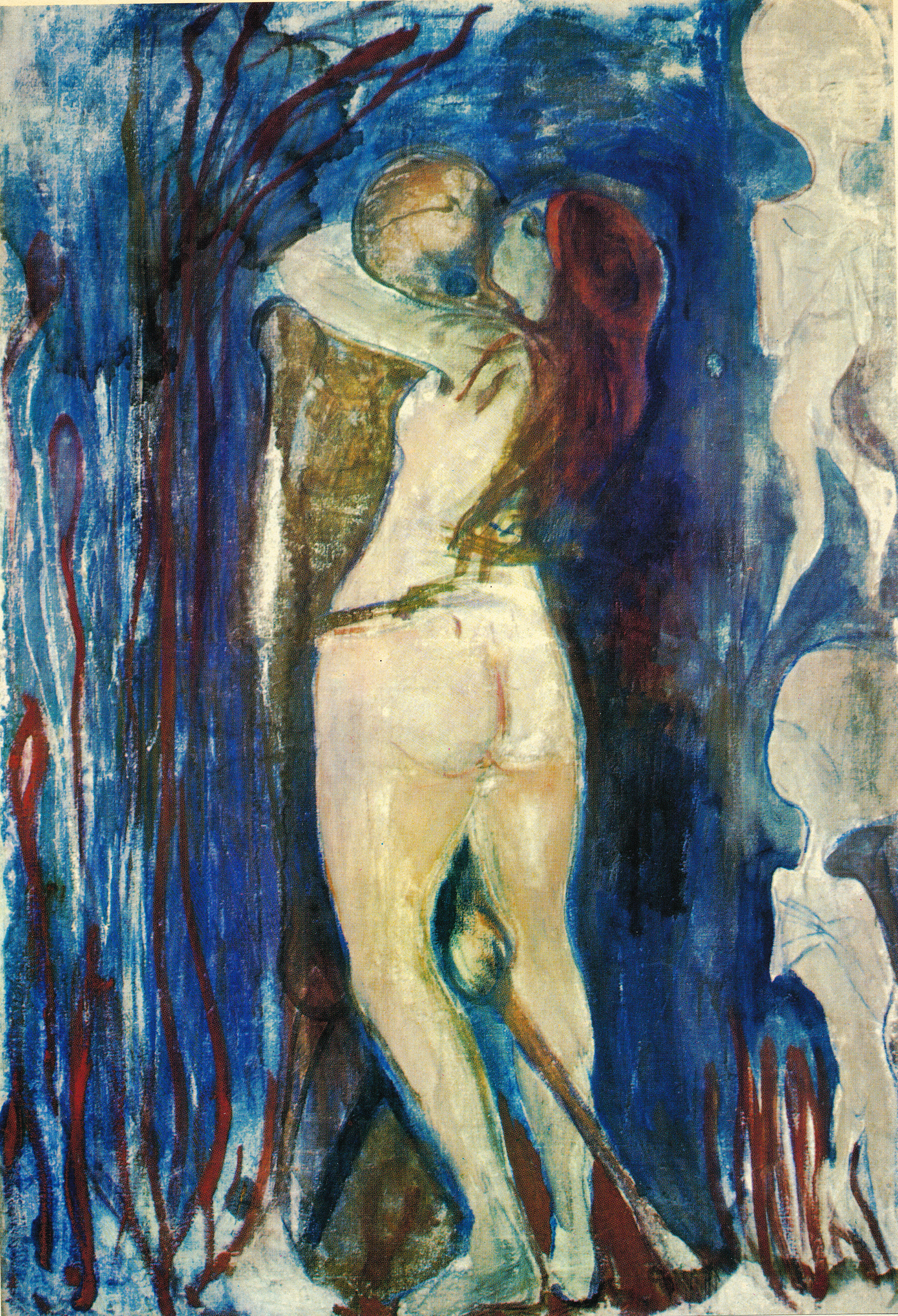
In 1898 Munch met Tulla (Mathilde Larsen) and they became lovers. Munch continued a productive period of art-making as he continually refused to marry Tulla. Munch portrayed many artworks displaying his view of life and death and the destructive force of love where both man and woman suffer– Madonna (1893), Salome, The Maiden and the Heart (1896), Under the Yoke (1896), Cruelty, The Woman and the Urn (1896), and, later, his Alpha and Omega lithograph series (1909). Munch remained fascinated by women as expressed in The Kiss (1892), The Three Stages of Women (1894), and The Dance of Life (1900).
One explanation of the ambivalent relationship of Munch the artist and Woman as artistic subject may be understood through the Symbolist art aesthetic. Symbolism connoted the idea of a desirable union of the human being with a philosophic ideal. In its view, Woman, though called real is a false appearance, and thereby not ideal. Further, Woman acts mainly as a temptress, the then-popular notion of a femme fatale, as she reveals man’s animal nature which obscures and prevents the desirable union to the ideal. Woman must be avoided and, if engaged by man, done so with peril.
Munch was an idealist before he became a Symbolist, and, as Christian Krohg ominously wrote about him in 1892: “dares to subordinate Nature, his model, to the mood.“
Edvard Munch, Lonely People, 1899.
Expressionism and Personal Crisis
In 1899 Munch exhibited at the Venice Biennale and in Dresden. The Berlin Secession held its first exhibition in 1899 on its own premises but did not invite Edvard Munch. Though the Berlin group invited no foreigners that year, Munch’s art continued to be viewed by status quo cognoscenti as “undesirable.” Yet, at the same time, Munch’s art was beginning to influence young Expressionist artists in Germany. In artworks such as The Voice and Summer’s Night, Munch appealed to these younger avant-garde artists for his illustrating the upsurge and resonance of raw emotion.
Edvard Munch, The Inheritance, 1897-99, oil on canvas, 141 x 121 cm, The Munch Museum, Oslo. Edvard Munch, Two people, 1899, oil on canvas, 175 x 143 cm, Munch Museum, Oslo
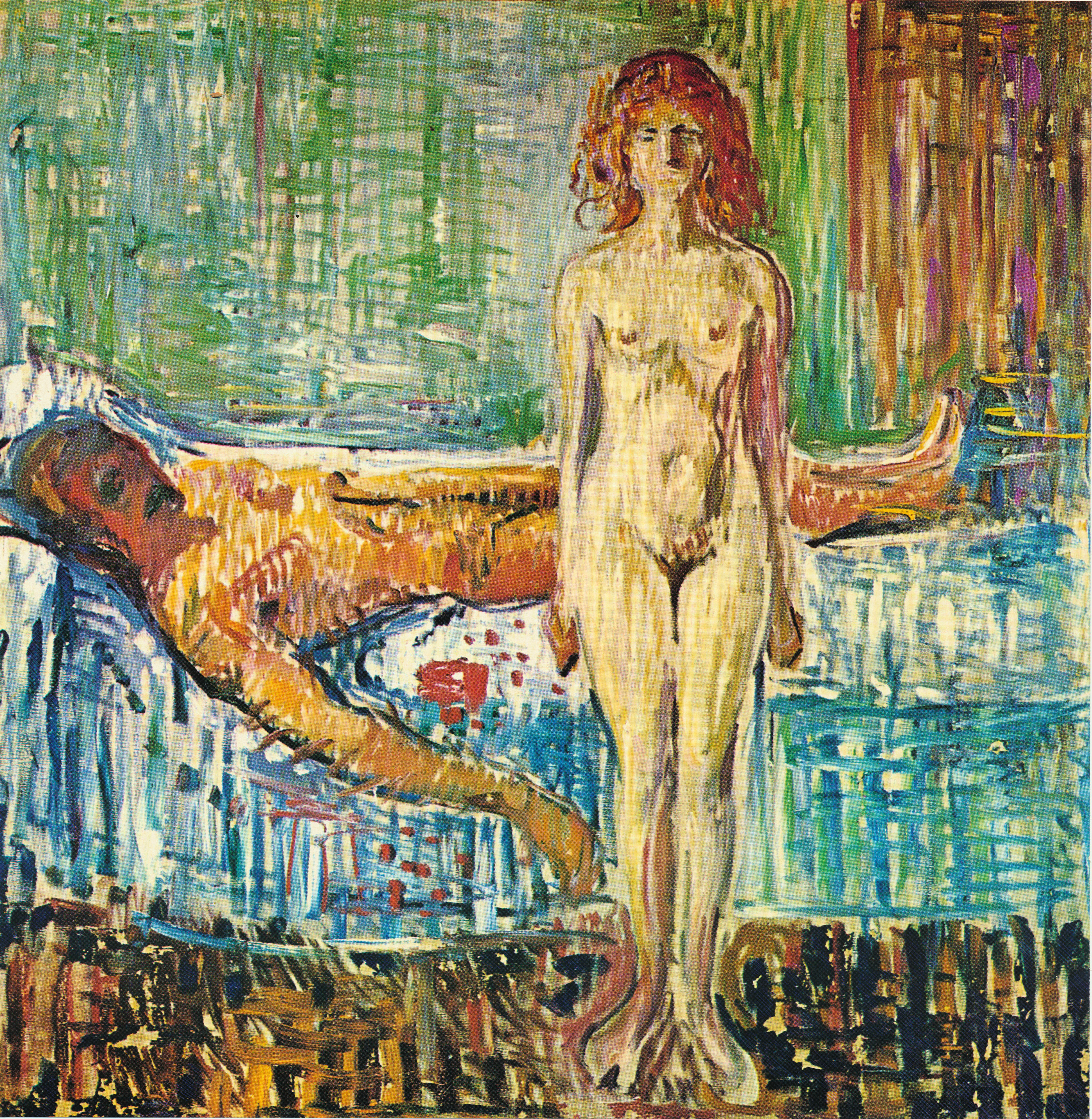
Edvard Munch, Amor and Psyche, 1907, oil on canvas, 118 x 99 cm, Munch Museum, Oslo. Edvard Munch, Marat’s death, 1907, oil on canvas, 151 x148 cm, Munch Museum. Edvard Munch, The Murderess, 1906, Munch museum.
Edvard Munch, Death of Marat I, 1907, 150 x 199 cm, Munch Museum, Oslo. Edvard Munch, Kiss by the Window, 1897, oil on canvas, 99 x 80.5 cm, The Munch Museum, Oslo. Edvard Munch, Death and the Maiden, 1893, oil on canvas, 128 x 86 cm, The Munch Museum, Oslo.Edvard Munch, Man and Woman, 1898, oil on canvas, Bergen. Edvard Munch, Stanislaw Przybyszewski (The Vampire), Oil and/or tempera on unprimed cardboard, 1893.Edvard Munch, Weeping Nude, 1913–1914, 110 cm × 135 cm, Munch Museum, Oslo.
Love, Tulla Larsen, and Personal Turmoil
Little is known about Munch’s personal relationships with individual women that would greatly enlighten the artist’s overall character and how these relationships’ impacted his artwork in his adult years. Fantastic stories are told. How, in his room at Åsgårdstrand with an unknown woman (likely Tulla), did a gunshot go off in Fall 1902 from a revolver that injured Munch’s hand? Munch successfully chased Tulla out of his life, though after she married another man, the artist felt betrayed by Love and brooded over it. Even as Munch had numerous short-lived affairs with beautiful women who wanted to marry him, he fled them all and verbally expressed no known regrets. Throughout his life, Edvard Munch never married.
The Frieze of Life and Growing Recognition
Munch started the year 1900 in Gudbrandsdalen and moved on to Berlin. In 1901 he painted in Nordstrand and in 1902 returned to Berlin. Along with artwork of Édouard Manet, Wassily Kandinsky (1866-1944), and Claude Monet, Munch exhibited at the Berlin Secession in 1902. He had continually worked at the Frieze of Life, the group of images representing human existence, a subject that fascinated the artist. He exhibited 22 paintings from the completed Frieze at that year’s Berlin Secession. Though the Berlin critics began to appreciate Munch’s art, the public continued to view him as warped and weird. In 1902 he met ophthalmologist Dr. Max Linde (1862-1940), an art collector and author of a Munch study while Hamburg judge and art collector Gustav Schiefler (1857-1935) started a catalogue of Munch’s voluminous graphic art that year.
Edvard Munch, Self Portrait Against a Green Background and Caricature Portrait of Tulla Larsen, 1905. Edvard Munch, Ashes, 1893, Edvard Munch, The Dance of Life, 1899-1900.
The concept of The Frieze of Life became his lifelong artistic project examining love, desire, anxiety, jealousy, suffering, and death.
Edvard Munch, Madonna, 1894, Munch Museum, Oslo.Edvard Munch, Gustav Schiefler, 1906/06, Ketterer Kunst, Munich. A judge and avid print collector, Gustav Schiefler compiled a catalog on the prints of Edvard Munch as well as Emile Nolde (18967-1956), Max Liebermann, and Ernst Ludwig Kirchner (1880-1938).
Eva Mudocci and Artistic Inspiration
In 1903 Munch visited Dr. Max Linde in Lübeck and painted a frieze for his house though Dr. Linde ended up rejecting Munch’s work. Munch exhibited in Berlin at Paul Cassirer modern art gallery.
That same year, Munch met British violinist Eva Mudocci (1872-1953) in Paris where Munch had an exhibition. Fully aware of his commitment only to art, Eva Mudocci reportedly became Munch’s mistress, and Munch soon immortalized her in The Woman with the Brooch.
Edvard Munch, The Brooch, 1903, lithograph, 60×46 cm.
International Success and New Commissions
In this period, Munch received several commissions for portraits and prints. In 1904 the German rights to his graphic art and paintings was sold to two prominent galleries. Munch exhibited in Vienna and Paris and became a member of the Berlin Secession. In 1905 Munch exhibited 75 paintings in Prague at the Manés Gallery and in 1906 was invited to exhibit with the Fauves in Paris. In Berlin, Munch painted stage sets for Henrik Ibsen plays (Ghosts and Hedda Gabler) at the Max Reinhardt Theatre. A frieze that was commissioned for the Reinhardt Theatre was sold by its director before the frieze was unveiled to the public.
Warnemünde (1907), Eva Mudocci, and Unanswered Questions
In 1907 Munch summered in Warnemünde as he turned his attention to human figures and situations. He exhibited with Henri Matisse and Paul Cézanne at Cassirer Gallery, the purchaser of the German rights to Munch’s graphic art. In November 1907 Eva Mudocci went on a concert tour in Norway for three weeks where She and Munch spent time together in Åsgårdstrand and Oslo. In early 1908 Eva Mudocci was pregnant and gave birth to twins in Denmark at the end of the year. Friends insisted that Munch must have been the father but Mudocci never said who the father was.
Edvard Munch, Salome, 1903, lithograph.
Nervous Breakdown and Treatment
Almost simultaneous with Mudocci’s pregnancy, 45-year-old Edvard Munch had a nervous breakdown. In December 1908 he checked himself into a clinic in Copenhagen for several month’s treatment for alcoholism and exhaustion. Munch later wrote: “My condition was verging on madness—it was touch and go.”
Recovery and a Turning Point in Art
In 1909, Mudocci and Munch parted ways though they stayed in touch for the next 18 years, until 1927. At the clinic, Munch painted portraits of his doctor (Dr. Daniel Jacobsen, 1909) and a nurse as well as close friends and a self-portrait using short, thick, and forceful brushstrokes—it was a watershed moment in Munch’s life and art.7
Edvard Munch, Fertility, 1898, woodcut, 42 x 51.7 cm, The Munch Museum, Oslo. Edvard Munch, Women on the Beach, 1898, woodcut, 45.5 x 50.8 cm, The Munch Museum, Oslo. Edvard Munch, Red and White, 1899–1900, 93 cm × 129 cm, Munch Museum, Oslo.
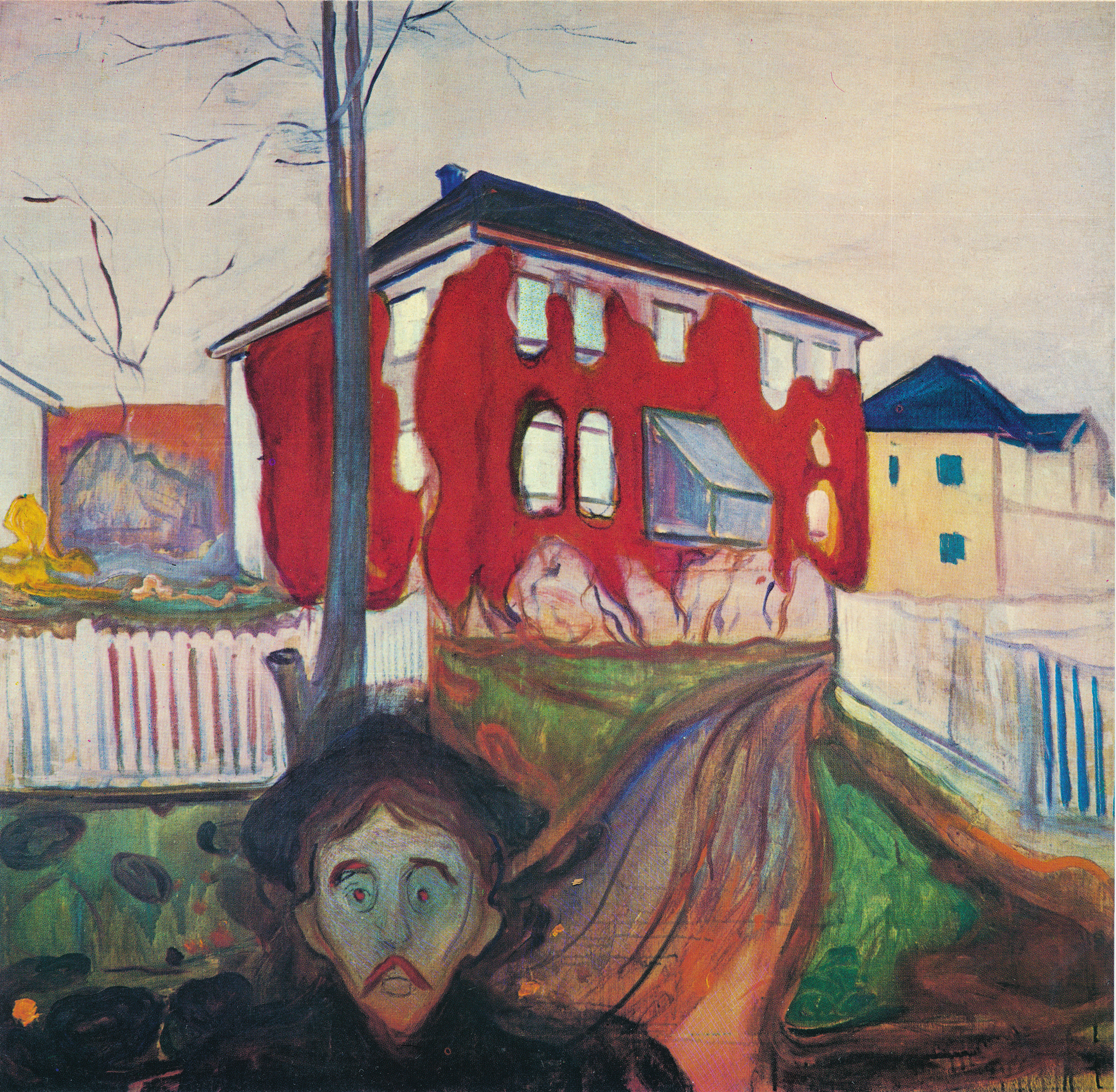
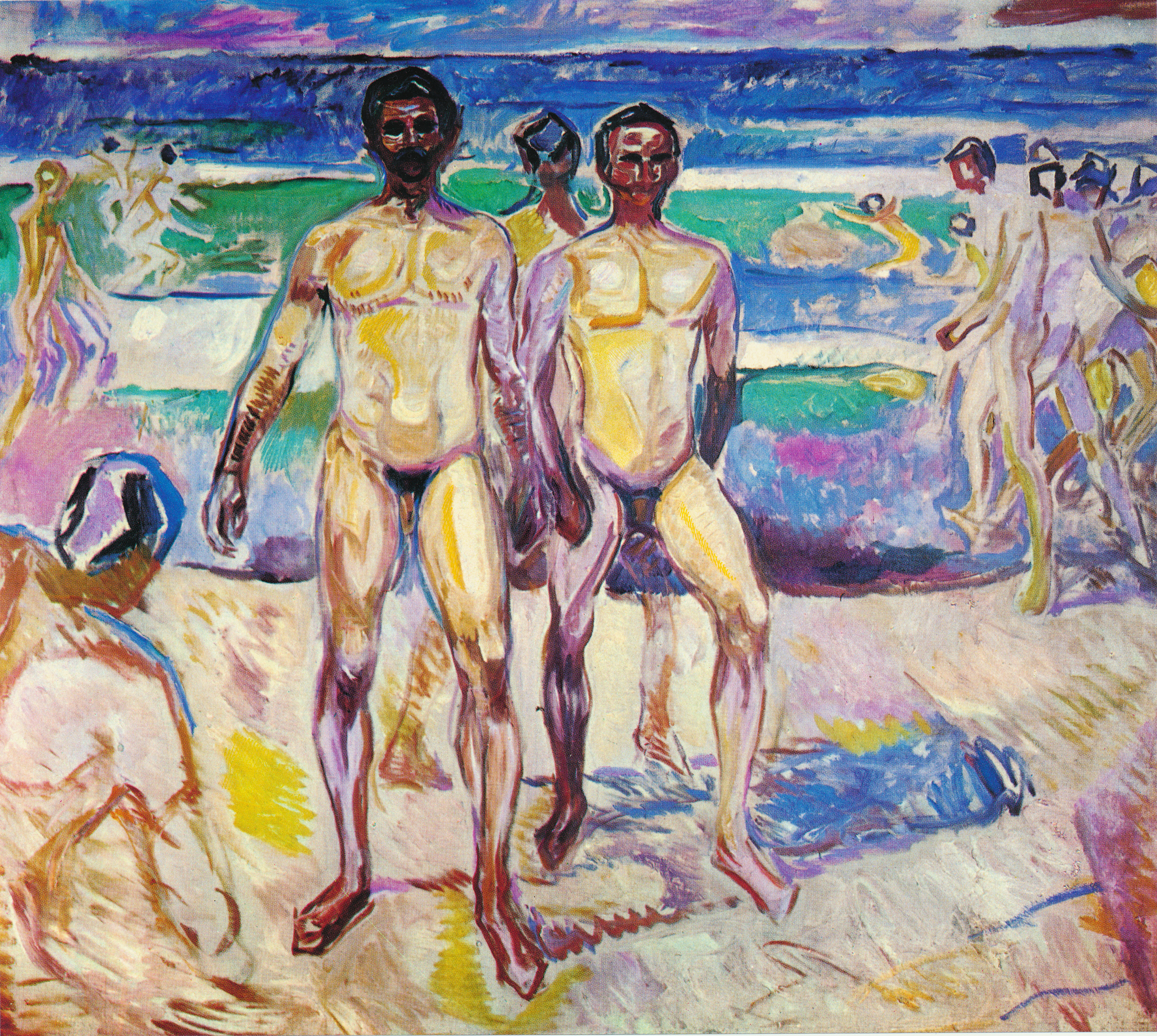
Edvard Munch, Portrait of Friedrich Nietzsche, 1906, Thiel Gallery, Stockholm. Edvard Munch, Red Virginia Creeper, 1900, oil on canvas, 120 x 120 cm. Edvard Munch, Young People on the Beach, 1902, oil on canvas, 90 x 174 cm. Edvard Munch, On the beach, 1905, oil on canvas, 81x 121 cm. Edvard Munch, Bathing Boys, c. 1904, oil on canvas, 194 x 294 cm.
Edvard Munch, Shore with Red House, 1904, oil on canvas, 69 × 109 cm, Munch Museum. Edvard Munch, Train Smoke,1900, 84 cm × 109 cm, Munch Museum, Oslo.
Munch’s emotional intensity and expressive use of color and form helped lay the foundations for German Expressionism.
Edvard Munch, At The Sign of the Sweet Girl, 1907, oil on canvas, 85 x 130 cm. Edvard Munch, Nude by the bed, c. 1907, oil on canvas, 120×121 cm
Edvard Munch, Nude by the bed, c.1907, oil on canvas 120×121 cm Edvard Munch, Four Girls Åsgårdstrand, 1905, oil on canvas, 87x111cm
Edvard Munch, Avenue in the snow, 1906, oil on canvas, 80 x100 cm, Edvard Munch, Self-Portrait with Brushes, 1904, 197×91 cm, Munch Museum, Oslo. Edvard Munch, Self-Portrait with a Bottle of Wine, 1906, 110 cm × 120, The Munch Museum, Oslo. Edvard Munch, Jealousy, 1907, oil on canvas, 75 x 98 cm, The Munch Museum, Oslo. Edvard Munch, Deathbed, 1900, oil on canvas, 100 x 110 cm. Edvard Munch, Village Street, 1905, oil on canvas, 100×100 cm. Edvard Munch, Prayer, 1902, woodcut, 45.8 x32.5 cm. Edvard Munch, Dr. Daniel Jacobson, 1909, oil on canvas, 204 x 112 cm. Edvard Munch, Nurse, 1909, dry point, 20.5×15.2 cm.Edvard Munch, Reclining woman, pencil and watercolor, 17.3 x 25 cm. (6.8 x 9.8 in.).see – https://www.artnet.com/artists/edvard-munch/reclining-woman-fTQcrFe4Y0qTp8QEmczZyQ2
Return to Norway (1909) and Public Recognition
Following his recuperation at the clinic, Munch was sober for the first time in years. In 1907 and 1908 he created Bathing Men, a scene of cleansing by immersion reminiscent of Paul Cézanne (1839-1906). Suddenly the totality of Munch’s art of the 1890’s and early 1900’s, where he explored his dark and tormented feelings, thoughts, and experiences, became passé for the artist. With the same vigorous brushwork and unnatural, expressionistic colors, Munch turned to painting everyday subjects.
Renting a house in Kragerø, a fishing village in Norway, Munch permanently settled in his homeland. In 1912 he exhibited in Cologne at the Sonderbund exhibition where he was ranked with Van Gogh, Gauguin and Cézanne. That year Munch had his first American exhibition In New York City. In 1913, the 50-year-old artist traveled extensively, had tributes paid to him, and rented larger quarters at Jeløya.
Murals, Museums, and National Honors
Munch turned to landscapes and large-scale art projects as he continued the murals for Oslo University which were, after lengthy controversy, finally accepted in 1914. Already a Knight of the Royal Order of St. Olaf since 1909, the Oslo National Gallery began buying some of Munch’s most important works – The Day After, Ashes, Puberty, Two Girls at the Verandah, and The Frenchman. The State museum received gifts from collectors as well. Olaf Schou (1861-1925) gave them Madonna, The Sick Child, Mother and Daughter, Girls on the Bridge and, later, The Scream, Death in the Sick Chamber, The Dance of Life, Girl at her Toilet, Betsy, Moonlight in Nice, and others.
Meanwhile, Munch decided to turn for inspiration to some of the outward obsessions of a new 20th century: its advancing technologies, mass media, high-speed transportation and urban life. 8
Edvard Munch, The Scream, 1910, oil, Munch Museum, Oslo. Edvard Munch, Self Portrait Bergen, 1916, oil on canvas, 90 x 60 cm. Edvard Munch, Bathing Men, 1907–1908, oil on canvas, 206 x 227.5 cm, Atheneum, Helsinki.Edvard Munch, The Seducer, 1913 Munch Museum, Oslo, Norway. Edvard Munch, The Day After, 1894/5, oil on canvas, National Gallery, Oslo. Edvard Munch, Moonlight in Nice, 1895, oil, National Gallery, Oslo. Edvard Munch, Death in the Sickroom, 1893, pastel on canvas, Munch Museum. Edvard Munch, Girls on the Bridge,1899-1901, National Gallery, Oslo. Edvard Munch, Mother and Daughter, 1897, Thyssen-Bornemisza National Museum, Madrid. Edvard Munch, Crouching Nude, 1919, oil on canvas, Munch Museum.Edvard Munch, Artist and his Model, 1919-1921, Thyssen-Bornemisza National Museum, Madrid.
Ekely, Isolation, and the Munch Museum Legacy
From 1914 until his death in January 1944, Munch sold nearly nothing but pictures bought by museums and new, commissioned work. Until then Munch had to sell pictures to live though he was reluctant and made replicas for himself. He did not sell works closely aligned to his emotional life. In 1916, Munch, now a famous artist, had finished the murals in the assembly Hall of Oslo University and purchased Ekely at Skøyen just outside the city. The artist constructed fences, let hedges and weeds grow tall, and closed off his residence to onlookers. Not strictly a misanthrope, Munch chose to live in glorious isolation. He hardly stayed in contact with family or relatives and permitted few friends to visit.
At Ekely Munch constructed interior and exterior studio spaces where, situated among works, Munch stored The Frieze of Life. At his death in January 1944 at Ekely, Munch bestowed all works in his possession to the city of Oslo– more than 1000 paintings, 15,000 prints, and about 500 watercolors and drawings. There was also some sculpture. These artworks comprise most of today’s Munch Museum – see https://www.munchmuseet.no/
Late Work and Final Years
In 1922 Munch painted 12 murals for a chocolate factory in Oslo. In the 1920’s and 1930’s he exhibited his art frequently— in Zurich, Basel, Berne, Berlin, Mannheim, Dresden. In 1936 and 1937, he exhibited in London, Amsterdam and Stockholm. There were major shows and retrospectives.
Edvard Munch, Modellen kler av seg (Model undressing), 1919-1924. Akvarell, fargestift (Watercolor, crayon). Munchmusee, Oslo.
LAST PAINTINGS RETURN TO EARLIER DARKER SUBJECTS AND THEMES
Besides monumental work for public projects, Munch late paintings included almost genre-type scenes such as horses and workers in the field, fishermen, an elm forest, fruit trees and a garden. While the main mural for Festival Hall at Oslo University is mostly decorative, The Sun (1909-11) recalls aspects of Symbolism that Munch depicted in his darker pictures of the 1890s. Some late pictures stirred with the memory of past, darker experiences such as The Death of the Bohemian (1926) and The Bohemian’s Wedding (1926). In 1915 he painted a new version of the Death Struggle from 1895.
After contracting Spanish Flu in 1919, Munch painted his self-portrait as a convalescent from sickness and death. Twenty years later the artist painted a self portrait as an insomniac in The Night Wanderer (1939). Munch produced paintings and graphic work in great number. There are self-portraits; portraits; beach motifs; motifs from life of workers, fishermen, and farmers; garden scenes; nudes; landscapes; the theme of Faust, etc.
When Norway was invaded by Nazi Germany in April 1940 during World War II, Munch’s exhibitions outside Norway ceased by 1942. In 1937 the Nazis had labeled 37 of Munch’s paintings as “degenerate art” and they were removed and sold. After the invasion of Norway, Munch refused to have anything to do with the German occupiers. Munch stayed in Norway where he died at Ekely on January 23. 1944, at 80 years old.9
Edvard Munch, Uninvited Guests, 1932-1935, oil on canvas, 75 x 101 cm, Munch Museum, Oslo.
Following a nervous breakdown in 1908-09, his art evolved toward brighter subjects, landscapes, workers, nature, and monumental mural projects.
The Sun, 1909-11.
FOOTNOTES
1. Odilon Redon, To Myself, translated by Mira Jacob and Jeanne L. Wasserman, New York: George Braziller, Inc., 1986, p. 23.
Quoted in Martha Kapos, The Post-Impressionists: A Retrospective, London: Beaux Arts Editions, 1993, pp. 175-180.
Jean Selz, Edvard Munch, New York: Crown Publishers, Inc., 1974, p. 6 and 24
2. Sue Prideaux, Edvard Munch: Behind the Scream, New Haven, CT: Yale University Press, 2005, p. 2.
Arne Eggum, Edvard Munch: Paintings, Sketches, and Studies, , New York: C.N. Potter, 1984, pp. 196, 203, 228, 236.
Edward Lucie-Smith, Symbolist Art, Thames & Hudson, 1972, p. 189.
8. J.P. Hodin, Edvard Munch, Thames & Hudson, 1972, pp. 127-128.
Sue Prideaux, Edvard Munch: Behind the Scream, New Haven, CT: Yale University Press, 2005, p. 373. 9. J.P. Hodin, Edvard Munch, Thames & Hudson, 1972, p. 167.
Michael Gibson, Symbolism, Cologne: Taschen, 1999, p.149.
Munch, Langarred, Johan H., Revold, Residar, New York: Universe Books, 1964, p. i-ii; 1.
BIBLIOGRAPHY
Bischoff, Ulrich, Edvard Munch 1863-1944, Cologne: Taschen, 2000. Delevoy, Robert L., Symbolists and Symbolism, New York: Rizzoli, 1982. Dube, Wolf-Dieter, Expressionism, New York: Oxford University Press, 1972. Eggum, Arne, Edvard Munch: Paintings, Sketches, and Studies, New York: C.N. Potter, 1984. Gibson, Michael, Symbolism, Cologne: Taschen, 1999. Goldwater, Robert, Symbolism, New York: Westview Press, 1998. Hodin, J.P., Edvard Munch, Thames & Hudson, 1972. Jullian, Philippe, Dreams of Decadence: Symbolist Painters of the 1890s, New York: Praeger Publishers, 1971. Kapos, Martha, The Post-Impressionists: A Retrospective, London: Beaux Arts Editions, 1993. Langarred, Johan H., Revold, Residar, Munch, New York: Universe Books, 1964. Lucie-Smith, Edward, Symbolist Art, Thames & Hudson, 1972. Mathews, Nancy Mowll, Paul Gauguin: An Erotic Life, Yale University Press, New Haven, 2001, p. 207. Paret, Peter, The Berlin Secession, Cambridge, MA: Harvard University Press, 1980. Prideaux, Sue, Edvard Munch: Behind the Scream, New Haven, CT: Yale University Press, 2005. Rapetti, Rodolphe, Symbolism, Paris: Flammarion, 2005. Redon, Odilon, To Myself, translated by Mira Jacob and Jeanne L. Wasserman, New York: George Braziller, Inc., 1986. Selz, Jean, Edvard Munch, New York: Crown Publishers, Inc., 1974.
LIST OF WORKS BY EDVARD MUNCH
Edvard Munch, Self-portrait, oil on canvas, 1886.
Edvard Munch, The Scream, crayon, 1893.
Edvard Munch, Melancholy, Laura.
Edvard Munch, Self-portrait, 1882, Munch Museum, Oslo.
Edvard Munch, Interior Pilestredet, oil on canvas, 1881, Munch Museum, Oslo.
Edvard Munch, Still Life with Jar, Apple, Walnut and Coconut, 1881, Munch Museum, Oslo.
Edvard Munch, From Saxegårdsgate, c. 1882, oil on canvas, Lillehammer Art Museum.
Edvard Munch, Laura, 1882, oil on paper (top) and oil on cardboard, Munch Museum, Oslo.
Edvard Munch, Andreas Studying Anatomy, 1883, Oil on Cardboard, Munch Museum, Oslo.
Edvard Munch, Tête-à-tête, oil on canvas, 1885, Munch Museum, Oslo.
Edvard Munch, The Sick Child (original version), 1885-86, National Gallery, Oslo.
Edvard Munch, Hans Jæger, 1889, National Gallery, Oslo.
Edvard Munch, Night on the Beach, 1889, Bergen Art Museum.
Edvard Munch, Self Portrait, c. 1888, Munch Museum, Oslo.
Edvard Munch, Portrait of the Painter Jensen -Hjell, 1885, National Gallery, Oslo.
Edvard Munch, Night In St. Cloud, 1890, oil on canvas, National Gallery, Oslo.
Edvard Munch, Evening on the Karl Johan, 1889, oil, Bergen Art Museum.
Edvard Munch, Kiss by the Window, 1891, Munch Museum, Oslo.
Edvard Munch, Evening Melancholy, 1891, oil, crayon, pencil on canvas, Munch Museum, Oslo.
Edvard Munch, Rue Lafayette, 1891, oil on canvas, National Museum, Oslo.
Edvard Munch, Rue de Rivoli, 1891, oil on canvas, Fogg Art Museum, Harvard University, Cambridge, Massachusetts.
Edvard Munch, Melancholy, 1893, oil, Munch Museum.
Edvard Munch, Melancholy (The Yellow Boat), 1891, oil, National Gallery, Oslo.
Edvard Munch, Kiss by the window, 1892, oil, National Gallery, Oslo.
Edvard Munch, The Kiss, 1892, oil, Private Collection.
Edvard Munch, The Girl by the Window, 1893, oil, Art Institute of Chicago.
Edvard Munch, Separation, 1893-94, Gouache, watercolor and crayon on paper, Munch Museum, Oslo.
Edvard Munch, Parting, 1894, oil on canvas, 67 x 128 cm, Munch Museum, Oslo.
Edvard Munch, Three Stages of Women (Sphinx), c. 1894, Bergan.
Edvard Munch, Puberty, 1894–1895, oil on canvas, 151.5 x 110 cm, National Gallery, Oslo.
Edvard Munch, Anxiety, 1894, Munch Museum, Oslo.
Edvard Munch, Despair, 1893, oil on canvas, Munch Museum, Oslo.
Edvard Munch, Inger in Black and Violet, 1892, oil on canvas, National Museum, Oslo.
Edvard Munch, The storm, oil on canvas, 1893, Museum of Modern Art, New York.
Edvard Munch, Summer Night’s Dream The Voice, 1893, Museum of Fine Arts, Boston, Massachusetts.
Edvard Munch, Coastal Mysticism, 1892.
Edvard Munch, Sketch of the Model Posing, 1893, pastel on cardboard, The Solomon R. Guggenheim Museum, New York.
Edvard Munch, The Hands, 1893, oil on canvas, 91 x 77 cm, Munch Museum, Oslo.
Edvard Munch, At the Roulette Table in Monte Carlo, 1892, oil, Munch Museum, Oslo.
Edvard Munch, Self-Portrait Under the Mask of the Woman, 1893, oil, Munch Museum, Oslo.
Edvard Munch, Self Portrait with Burning Cigarette, 1895, oil, Munch Museum, Oslo.
Edvard Munch, Self-portrait in Hell, c. 1895, oil on canvas, 82 x 60 cm, Munch Museum, Oslo.
Edvard Munch, Stanislaw Przybyszewski,1895, pastel, 62x55cm, Munch Museum, Oslo.
Edvard Munch, The Scream, 1893, oil, tempera, pastel on cardboard, National Museum, Oslo.
Edvard Munch, The Scream, 1895. Ink.
Edvard Munch, The Kiss, 1895, Dry-point and aquatint, 34.8 x 28 cm, Munch Museum, Oslo.
Edvard Munch, The Kiss, woodcut, n.d., 44.7 x 44.7. cm, Munch Museum, Oslo.
Edvard Munch, Jealousy, 1896, Lithograph, 46.5 x 56.5 cm, Munch Museum, Oslo.
Edvard Munch, Death and the Maiden, 1894, Dry-point, 30.2 x 22 cm, Munch Museum, Oslo.
Edvard Munch, Melancholy (Evening),1896, woodcut, 37.6 x 45.5. cm, Munch Museum, Oslo.
Edvard Munch, Attraction, 1896, Lithograph, 47.2 x 35.5 cm, Munch Museum, Oslo.
Edvard Munch, The Sick Child, 1896, Lithograph, 42.1 x 56.5 cm, The Munch Museum, Oslo.
Edvard Munch, Evening, Melancholy I, woodcut, 1896.
Edvard Munch, Stéphane Mallarmé, 1896, lithograph.
Edvard Munch, Auguste Strindberg, 1896, lithograph.
Edvard Munch, Self-portrait, 1895, Lithograph, 45.5×31.7 cm, Museum of Modern Art, New York.
Edvard Munch, Lady From the Sea (detail), 1896, oil on canvas. 100 cm × 320 cm, The Munch Museum, Oslo.
Edvard Munch, The Voice Summer Night, 1896, 90 cm × 119 cm, Munch Museum, Oslo
Edvard Munch, Paris Boulevard, 1896, oil on canvas, 96.5 x 130 cm, Munch Museum, Oslo.
Edvard Munch, The Inheritance, 1897-99, oil on canvas, 141 x 121 cm, The Munch Museum, Oslo.
Edvard Munch, Two people, 1899, oil on canvas, 175 x 143 cm, Munch Museum, Oslo.
Edvard Munch, Amor and Psyche, 1907, oil on canvas, 118 x 99 cm
Edvard Munch, Marat’s death, 1907, oil on canvas, 151 x148 cm, Munch Museum.
Edvard Munch, The Murderess, 1906, Munch museum.
Edvard Munch, Death of Marat I, 1907, 150 x 199 cm, Munch Museum, Oslo.
Edvard Munch, Kiss by the Window, 1897, oil on canvas, 99 x 80.5 cm, The Munch Museum, Oslo.
Edvard Munch, Death and the Maiden, 1893, oil on canvas, 128 x 86 cm, The Munch Museum, Oslo.
Edvard Munch, Man and Woman, 1898, oil on canvas, Bergen.
Edvard Munch, Stanislaw Przybyszewski (The Vampire), Oil and/or tempera on unprimed cardboard, 1893.
Edvard Munch, Weeping Nude, 1913–1914, 110 cm × 135 cm, Munch Museum, Oslo.
Edvard Munch, Self Portrait Against a Green Background and Caricature Portrait of Tulla Larsen, 1905.
Edvard Munch, Ashes, 1893,
Edvard Munch, The Dance of Life, 1899-1900.
Edvard Munch, Madonna, 1894, Munch Museum, Oslo.
Edvard Munch, The Brooch, 1903, lithograph, 60×46 cm.
Edvard Munch, Salome, 1903, lithograph.
Edvard Munch, Fertility, 1898, woodcut, 42 x 51.7 cm, The Munch Museum, Oslo.
Edvard Munch, Women on the Beach, 1898, woodcut, 45.5 x 50.8 cm, The Munch Museum, Oslo.
Edvard Munch, Red and White, 1899–1900, 93 cm × 129 cm, Munch Museum, Oslo.
Edvard Munch, Portrait of Friedrich Nietzsche, 1906, Thiel Gallery, Stockholm.
Edvard Munch, Red Virginia Creeper, 1900, oil on canvas, 120 x 120 cm.
Edvard Munch, Young People on the Beach, 1902, oil on canvas, 90 x 174 cm.
Edvard Munch, On the beach, 1905, oil on canvas, 81x 121 cm.
Edvard Munch, Bathing Boys, c. 1904, oil on canvas, 194 x 294 cm.
Edvard Munch, Shore with Red House, 1904, oil on canvas, 69 × 109 cm, Munch Museum. Edvard Munch, Train Smoke,1900, 84 cm × 109 cm, Munch Museum, Oslo.
Edvard Munch, At The Sign of the Sweet Girl, 1907, oil on canvas, 85 x 130 cm.
Edvard Munch, Nude by the bed, c. 1907, oil on canvas, 120×121 cm.
Edvard Munch, Nude by the bed, c. 1907, oil on canvas, 120×121 cm.
Edvard Munch, Four Girls Åsgårdstrand, 1905, oil on canvas, 87x111cm.
Edvard Munch, Avenue in the snow, 1906, oil on canvas, 80 x100 cm.
Edvard Munch, Self-Portrait with Brushes, 1904, 197×91 cm, Munch Museum, Oslo.
Edvard Munch, Self-Portrait with a Bottle of Wine, 1906, 110 cm × 120, The Munch Museum, Oslo.
Edvard Munch, Deathbed, 1900, oil on canvas, 100 x 110 cm.
Edvard Munch, Village Street, 1905, oil on canvas, 100×100 cm.
Edvard Munch, Prayer, 1902, woodcut, 45.8 x32.5 cm.
Edvard Munch, Dr. Daniel Jacobson, 1909, oil on canvas, 204 x 112 cm.
Edvard Munch, Nurse, 1909, dry point, 20.5×15.2 cm.
Edvard Munch, The Scream, 1910, oil, Munch Museum, Oslo.
Edvard Munch, Self Portrait Bergen, 1916, oil on canvas, 90 x 60 cm.
Edvard Munch, Bathing Men, 1907–1908, oil on canvas, 206 x 227.5 cm, Atheneum, Helsinki.
Edvard Munch, The Day After, 1894/5, oil on canvas, National Gallery, Oslo.
Edvard Munch, Moonlight in Nice, 1895, oil, National Gallery, Oslo.
Edvard Munch, Death in the Sickroom, 1893, pastel on canvas, Munch Museum, Oslo.
Edvard Munch, Girls on the Bridge,1899-1901, National Gallery, Oslo.
Edvard Munch, Mother and Daughter, 1897, Thyssen-Bornemisza National Museum, Madrid.
Edvard Munch, Crouching Nude, 1919, oil on canvas, Munch Museum.
Edvard Munch, Artist and his Model, 1919-1921, Thyssen-Bornemisza National Museum, Madrid.
Art outdoors transforms streets, parks, plazas, and building walls into public galleries where history, memory, community identity, and creative expression become part of everyday life, demonstrating how art can engage audiences beyond the traditional museum setting.
All photographs & text by John P. Walsh.
September 2001. Philadelphia, Pennsylvania 70% Progress of Women was completed by artists Larissa Preston Danowitz and Cesar Viveros and collaborators in 2001. At 1307 Locust Street the mural shows work of the New Century Guild to promote women in the workforce. At the top of the mural is the visage of Eliza Turner (1826-1903) who founded the New Century Guild in 1882 and lived in Philadelphia.
October 2003. Corcoran Gallery of Art, Washington, D.C. The Renoir-inspired outdoor sculpture (“Dance at Bougival,” 1883, The Boston Museum of Fine Arts) was in conjunction with that year’s exhibition called “The Impressionist Tradition in America.” Closed in 2014, the former museum is today the Corcoran School of the Arts and Design, a part of the George Washington University.
November 2017. Crown Fountain, Jaume Plensa [Krueck + Sexton Architects], Millennium Park, Chicago. 368kb 35%
October 2015. Chicago. 4.48 mb
June 2018 Chicago. 4.65 mb
July 2015. Chicago. 4.32 mb
May 2014. Chicago. 4.72 mb
June 2022. Chicago. 7.89 mb 86%
December 2013. Chicago. 6.79 mb
June 2022. Chicago (Rogers Park). 4.20 mb
June 2022. Chicago. 7.66 mb 84%
June 2022. Chicago 11.71 mb
June 2022. Chicago 2.38 mb 50%
August 2015. Chicago. 7.92 mb 96%
August 2018. Chicago. 7.29 mb
August 2015. Chicago. 5.26 mb
October 2016. Chicago. Daniel Buren (b. 1938), Attrape-soleil, 2013. 4.49 mb.
Featured on the exterior wall of a building in the Englewood/Morgan Park area located on the South Side of Chicago, three prominent civil rights figures and community leaders are memorialized in this mural created in 2020. Emmett Till (1941–1955) is A 14-year-old Chicago youth whose brutal lynching in Mississippi became a primary catalyst for the American Civil Rights Movement; Breonna Taylor (1993–2020) is a 26-year-old emergency room technician who was fatally shot by police officers in her Louisville, Kentucky home. And Dr. Phoebe Elaine Slaughter-Lenear (1965–2020) is a respected local Chicago educator, humanitarian, and community leader. Created in the midst of the nationwide civil rights protests that summer, the mural was painted as a collaboration by Chicago-based visual artists GNEE ART (@gneeink45) and Calin Bruett, professionally known as JEFF K%NZ (pronounced “Jeff Koonz”).
November 2017. Chicago. Opened in July 2004, Crown Fountain in Millennium Park was designed by Spanish artist Jaume Plensa (b. 1955) and executed by Krueck and Sexton Architects. 66% 7.91 mb DSC_3423
April 2013. Chicago Pilsen. 4.89mb102_0165 (1)
July 2015. Chicago 5.66mb DSC_0083 (1)
December 2015. Chicago (State Street). 5.13mb DSCN1936 (1)
FEATURE image: July 2015. Chicago. 134 S Wabash Ave, Chicago 60603. According to their website, Miller’s Pub was established as a bar in 1935 which was bought in 1950 by Pete, Nick and Jimmy Gallios, three brothers of Greek descent. A fourth brother, Vannie, worked his way into a stake in the business in 1953. Miller’s Pub thrived in the same location until 1989 when they moved around the corner into another of their restaurants they owned located at 134 S. Wabash. Over the years entertainers, politicians and sports figures have patronized Miller’s Pub in Chicago’s Loop including Chicago mayors, Jimmy Durante, Marilyn Monroe, Bill Veeck, Harry Caray, Tony Bennett and Bob Fosse’s dancers who came for an after-show nightcap. 3.68 mb
Signs are visual artifacts of community identity, capturing cultural and economic shifts, institutional history, and the continual transformation of a landscape. By anchoring everyday culture, commerce, religion, and memory, they provide a powerful record of the times in which they exist.
All photographs and text by John P. Walsh.
January 2024. 7.89 mb 80%October 2023. 6.86mb 99%August 2021. Chicago 7.43 mb 70%August 2015. Chicago. Michigan Avenue.Chicago. 6.30 mb 95%July 2015. Chicago. 40%October 2014. Chicago. Symphony Center. 1.99 mbOctober 2014. Chicago. Symphony Center. 2.51 mbDecember 2016. Chicago. Auditorium Theatre. January 2018. Chicago. Macy’s State Street. 872kb (10)September 2016. Forest Park, Iilinois. 5.11 mbSeptember 2015. Chicago. 3.82 mbJanuary 2018. Oak Park, Iilinois. 2.40 mbSeptember 2015. Chicago (Streeterville). 2.75 mbOctober 2016. Chicago (Chinatown). 4.78mb DSCN4244 (1)August 2015. Chicago (Chinatown). 3.44 mbJuly 2016. Chicago (Chinatown). 5.01 mb February 2018. Chicago. 4.74 mbDecember 2017. Westmont IL. 7.83 mb 98%September 2017. Chicago. 2.80 mbJune 2022. Chicago. 7.79mb 77%October 2017. Margie’s Candies at 1960 N. Western Avenue in the Bucktown neighborhood in Chicago was founded in 1921. It was renamed Margie’s Candies in 1933. In August 1965 Margie’s Margie’s hosted the Beatles who came in after they played a concert at Comiskey Park in Bridgeport. The Fab 4 ordered “Fudge Atomic Sundaes” that are still on the menu today which can complement to Margie’s since much of its décor is original from its first day of business. 3.03 mb May 2018. Villa Park, Illinois. 4.06 mbOctober 2022 5.80 mb 99%February 2019. Evanston, Illinois. 4.94 mbJune 2022. Evanston, Illinois. 7.70 mbApril 2020. Downers Grove, Illinois. 7.39mbMarch 2018. Lisle, Illinois. 3.38 mb (30)July 2015. Chicago. 3300 W. 111th St, 60655. 4.16 mbJuly 2023. 7.65 mb 74%August 2015. 4900 N. Broadway Chicago. 3.54 mbApril 2020. Cancelled & re-scheduled. 4.15 mb. see – Frida Kahlo: Timeless — CCMA – retrieved Dec. 26, 2025. June 2020. Downers Grove, Illinois. 4.59 mbSeptember 2015. Chicago (South Loop). 3.82 mbAugust 2017. Watseka, Illinois. 6.24mb August 2017, Kentland, Indiana. 3.16mbJune 2018. Chicago. 558 E 79th St, 60619 3.64mbJune 2021 95%June 2018. Cedarburg, Wisconsin. 6.23 mb 95% February 2018. Chicago (Kennedy Expressway). 6.58 mb (40)June 2018. 80% 7.82 mb DSC_0641. In 1966 when Dr. Martin Luther King, Jr. and Coretta Scott King lived in Chicago on the West Side at 1550 S. Hamlin Avenue Dr. King preached at Stone Temple Baptist Church at 3622 W. Douglas Boulevard, a ten-minute walk away. Built in 1926 as a synagogue in the North Lawndale neighborhood the building became a Baptist church in 1954. Already in the 1950’s and early 1960’s Dr. King had delivered several speeches at Stone Temple MB Church in his civil rights efforts and used the church during his 1966 Chicago residency as a base for his civil rights and fair housing advocacy. His efforts led to the signing of the 1968 Fair Housing Act on April 11, 1968, a week after his assassination. Today, Stone Temple is led by Bishop Derrick M. Fitzpatrick, the grandson of Rev. James Marcellus, the church’s founder.February 2018. Chicago (Loop). 3.63 mbDecember 2015. Chicago (Michigan Avenue). 4.30 mbNovember 2017. Chicago (South Loop). 3.50 mbFebruary 2018. Chicago. 6.18 mbSeptember 2015. Chicago. 6.33 mbJune 2022. Chicago. 5.86 mb December 2012. Chicago. 6.67 mb 99%May 2022. 7.33mb 98% (50)October 2023 7.78 mb 68%June 2022 7.02mbMarch 2017. Post Office. 4.11 mbSeptember 2022. Lisle Illinois. 6.57 mbAugust 2016. Kendall Co., IL. 3.48mbAugust 2022. 7.57 mb 99%August 2021. Chicago. 6.25 mb 99%August 2015. Chicago, 8611 S Pulaski Rd 60652. 7.71 mb 87%May 2022. Wheaton, Illinois. 917 E Roosevelt Rd, 7.76 mb 99%July 2017. Alsip, IL (demolished). 4.56 mb (60)August 2015. Chicago. 2116 W. 95th Street, 60643. 7.13 mbJune 2014. Waukegan, Illinois. 7.10mbMay 2023. Downers Grove, Illinois. 7.09 mb 99% August 2023. Wheaton, Illinois. 7.75 mb 61%August 2023. Tivoli. 7.17mb 99%September 2023. Downers Grove, illinois. 7.84mb 91%June 2023. Downers Grove, Illinois. 7.95mbSeptember 2023. 7.60 mb 80%July 2023. Darien, IL. 7.94mb 85%January 2019. 4.04mb (70)June 2022. Chicago. 7.41mb 99%December 2017. Chicago. 141 kb 25%March 2013.Chicago. 65%November 2023. 7.84mb 96%– *December 2023. 7.92 mb 94%April 2024. Downers Grove, Illinois. 99% 7.06mbApril 2024. 99% 6.65 mbApril 2024. 90% 7.79mb (2.15 minutes). Based on a 1934 French stage play, The Crime Is Mine (“Mon Crime’) is 2023 French film about a young actress (Nadia Tereszkiewicz) who becomes celebrated overnight after being acquitted of murdering a French movie producer in self-defense. But is she really innocent – or has she just gotten away with murder? The crime-comedy film was directed François Ozon who conceived it as a tale “ultimately about the triumph of sorority” and influenced by French directors Jean Renoir and Francois Truffaut and Americans Ernst Lubitsch, Frank Capra and Blake Edwards. Ozon based Isabelle Huppert’s character on French stage actress Sarah Bernhardt. The plot and characters of the original stage play by Georges Berr and Louis Verneuil became the basis for two Paramount Pictures’ films in the 1930s and 1940s – “True Confessions” starring Carole Lombard in 1937 and “Cross My Heart” starring Betty Hutton in 1946. Reviews for The Crime is Mine have been generally favorable citing particularly its star power.November 2017. Countryside, Illinois. 5.44 mb November 2017. Countryside, Illinois. 5.35 mb (80)2015. Chicago.7.69 mbMay 2024. 7.17mbMay 2024. 99% 7.35 mbMay 2024. Burger King was founded in Miami, Florida in 1954. Downers Grove, Illinois. 6.61mbChicago. May 2024 7.71 mbbuild to suit (dream home). May 2024 75% 7.68 mb – *June 2024. 99% 7.71 mb 8077May 2017. Marengo, Illinois. 1.29 mb 0247July 2024. 4.31mb 7746 (1)August 2024. Naperville, Illinois. 99% 7.60 mb 1161 (1)May 2024. Downers Grove, Illinois. II 81% 7.71 mbChicago. May 2024 3.24 mbChicago (Chinatown). 4/2013 2.86 mbChicago. 6/2022 7.72mb 85% July 2024. Woodridge, Illinois. 85% 7.81mb 0646November 2012. Wheaton, Illinois. 2.59mb 101_0382February 2013. Chicago. 1.85mb101_6384 (1)February 2013. Chicago. 3.67mb 101_6792 (1)March 2013. Chicago. 2.38mb 101_7015 (1)March 2013. 4.68mb 101_7023 (1)February 2013. 2.04mb 101_6508 (1)February 2013. 1.95mb 101_6610 (1)March 2013. Chicago 3.58mb 101_8578 (1)
The owner came to the US from Italy through Ellis Island in 1938. The family business, Domino’s Pastries, was founded in this location in Chicago in 1952. Their loyal customer base is witnessed when the same couples who ordered their wedding cakes at Domino’s ordered many years later their anniversary cakes.
March 2013. Chicago. 4.58mb 101B8629 (1)April 2013. 4.28mb 101_9593 (1)April 2013. Chicago. 3.89mb 102_0152 (1)May 2013. Chicago. 3.84mb 102_1487 (1)August 2013. Aurora, Illinois. 3.48mb DSC_0848 (1)February 2016. 7.47mbDSCN2087 (1)April 2016. Joliet, Illinois. 6.12mb DSCN2341 (1)May 2016. Wheaton. 5.16 mb DSC_0597 (1) Last Slice Served At Jack Straw’s Pizza In Wheaton | Wheaton, IL Patch – retrieved March 9, 2026.June 2016. 6.30mb DSC_0803 (1)June 2016. 5.65mb DSC_0913 (1)
FEATURE image: The Millers in 1920. Lee, Erik, Theodore, Florence and John. Public Domain.
Lee Miller’s extraordinary artistic career did not emerge suddenly in Paris or the Surrealist movement, but was rooted in the unique environment of her Poughkeepsie upbringing, where family affluence, her father’s intense photographic interests, early exposure to cameras, artistic encouragement, and her rebellious independent personality shaped the creative force she would become.
The Millers, Theodore, Elizabeth Lee, Erik, John and Florence, in 1923. Public Domain.
By John P. Walsh
In the first decades of the twentieth century it became increasingly common practice for established American families to reflect and display their personal lives as well as social status in the timely gathering of photographic portraits. Progressively, the American family unit grew more compact in tandem with its greater personal affluence in an economy increasingly dominated by mechanization and the manufacture of consumer goods, all of which worked relentlessly to replace farming as the engine of American enterprise.
The Millers of Poughkeepsie, New York – a seventeenth century town eighty miles north of New York City which in the eighteenth century had progressed to an early state capital and, by 1910, a significant stop on the railroad line1 – shared that prototypical family form as they gathered for their family portraits between 1914 and 1932.
After 1900, camera availability and quality had markedly improved. Moving into the popular culture, photography allowed the display of a family image that is relaxed and natural as well as a time capsule of its members. In the instance of the Millers their formal and informal photographic portraits capture what appears to be a cohesive family unit expressive of their times. They are within a thoughtfully creative pose and posture likely managed by the head of the household, Theodore Miller (1872-1971), an energetic lifelong amateur photographer.
These portraits are ambitious for an aesthetic which manifests as a controlled vibrancy in the sitters as well as overall composition. The outcome for these portraits which all include Lee Miller as a child and teenager are photographs that combine the qualities of the fine arts with the more delicate workings of a machine.
The extensive photographs taken by her father, Theodore Miller, unintentionally document the formation of a future artist, providing rare visual evidence of the circumstances that nurtured one of the twentieth century’s most remarkable photographers.
Lee Miller at about eight months old, c. December 1907. Taken by her father Theodore Miller, the amateur photographer would photograph his daughter near incessantly from her childhood into adulthood. Part chronicle, part creative project, their photographer-model relationship could be unusual as he photographed his daughter nude at times over the same time period. Public Domain.
Lee Miller at 8 years in a photograph by her father, Theodore Miller, in 1915. Public Domain.
The Millers, headed by highly credentialed mechanical engineer and amateur photographer Theodore Miller and his wife Florence (1881-1954), saw the couple produce a handsome family: brothers John MacDonald (December 15, 1905-2008) and Erik Theodore (born May 22, 1910-?) and middle daughter, Elizabeth Lee, later Lee Miller, Lady Penrose (April 23, 1907-1977).
In childhood, Lee was curious, had her special interests and likes, especially the newly invented movies, and was encouraged by her parents to be free and active. Rambunctious in youth, Li-Li (Elizabeth Lee’s nickname) expressed herself as a sort of tomboy and later a definite teenage rebel. In school she was often undisciplined and, as the ringleader, provocative.2
When she was ten years old in 1917, her father gave Li-Li an inexpensive and popular Kodak Brownie to take photographs. Kodak used the box camera to sell more products and popularize photography. Almost more like a toy, the Brownie series was first introduced in 1900 and extensively marketed to children,3 although they were taken by soldiers into World War I.
Theodore Miller’s experimentation with photographic technologies exposed Lee to creative and technical aspects of image-making from an early age. She received a Kodak Brownie camera at age ten, introducing her directly to photography.
In the age of American invention, teenage Li-Li Miller, intelligent and creative, was fascinated by her father’s enduring experimentation with new camera gadgets including stereoscopy. That photographic application produced two-dimensional images which, when combined in the brain, gave the perception of three-dimensional depth.4
The family’s photographs serve as both personal records and carefully composed artistic images.
The Millers in 1914. Florence, Erik, Lee, John, Theodore. Public Domain.
Lee Miller and her mother in 1914. Public Domain.
In an almost desperate search for an academic program to constructively engage their daughter’s interest, the Millers placed Li-Li in and out of several schools around Poughkeepsie. Lee traipsed through Governor Clinton school to Oakwood Quaker to St. Mary’s Catholic to Eastman Business College to Putnam Hall known as the prep school for local Vassar College.
Even with extra-curricular dance and theater activities as well as sojourns into creative writing – along with extended trips to New York City and, accompanying her father on business trips, such as to Puerto Rico on a cruise – by 1920 Li-Li seemed only most uniquely prepared to embrace the intrepid nonchalance of the flapper whose age had arrived thanks to the appearance of This Side of Paradise by F. Scott Fitzgerald.
“The Flapper” as conceived by American illustrator Frank Xavier Leyendecker (1876-1924) for Life magazine in 1922. It seemed by the start of the 1920’s, the teenage rebel and provacateur Lee Miller was ready to embrace the Flapper’s nonchalant image. PHOTO: “‘The Flapper’ (1922)” by Swallowtail Garden Seeds is marked with CC PDM 1.0. This work is in the public domain.
Lee was intelligent, strong-willed, unconventional, and often rebellious in school and social settings. Her interests in movies, dance, theater, travel, and creative expression reflected a broader artistic temperament.
The Millers in 1920. Lee, Erik, Theodore, Florence and John. The teenager bobbed and later permed her golden hair to match a new decade’s fashionable style as she looked for the next exit out of Poughkeepsie. Public Domain.
At the end of a record-cold spring of 1925, Li-Li, called spoiled and well-to-do by many of her neighborhood classmates, took a ship for Paris, France, on May 29 of that year. The Millers’ intention was not to internationalize the shortcomings of their daughter’s educational career, but to assist in the rebellious 18-year-old’s discovery and development of a talent and skill to match her artistic temperament.5
No one could predict in 1925 that after spending this short period of time in Europe as a teenager, Li-Li Miller of Poughkeepsie, New York, will, as Lee Miller, finally return to Europe to spend most of the rest of her life, over 50 years. In those adult years, Miller became a celebrated artist’s and cinema’s muse as well as an important World War II photographer.
By the 1920s, Lee embraced the spirit of the modern flapper, seeking independence beyond her hometown. Her 1925 departure for Paris marked the transition from gifted, restless teenager to the future photographer, model, muse, Surrealist, and war correspondent she would become.
In the cold spring of 1925, Lee Miller is joined by her father as the 18-year-old Lee boards the ship that will take her to Paris to study. The family’s hopes include that in Paris Lee will find and develop some talented skill to express her artistic temperament. Public Domain.
FOOTNOTES:
1. Burke, Carolyn, Lee Miller: A Life, Alfred A. Knopf, New York, 2006, p.6. 2. Haworth-Booth, Mark, The Art of Lee Miller, Yale University Press, 2007, p. 14; provocative-Burke, p. 24. 3. Roberts, Hilary, Lee Miller: A Woman’s War, Thames & Hudson, 2015, p. 190. 4. see Lincoln, Tom, Exercises in Three Dimensions, 2011. http://www.lincolntom.com/pages/Exercises%20in%203D.html- retrieved April 17, 2019 5. Roberts, p.194; https://thestarryeye.typepad.com/weather/april/page/2/
FEATURE image: This striking color portrait of Hedy Lamarr was photographed by the German-born émigré glamour specialist László Willinger (1909-1989), one of the Hollywood photographers who helped define the look of major stars during the late 1930s and 1940s. Commissioned by Metro-Goldwyn-Mayer as a premium publicity image for its lavish all-star production Boom Town (1940), the portrait was designed to reinforce Lamarr’s growing reputation as one of the studio’s most glamorous and sophisticated leading ladies.
The photograph is especially significant because it survives as an authentic color studio portrait from an era when most Hollywood publicity photography was still produced in black and white. At a time when color photographic processes remained expensive, technically demanding, and relatively uncommon in studio portraiture, Willinger achieved a remarkably rich and luminous result through the labor-intensive three-color Carbro printing process. The image captures the brilliance of MGM’s carefully crafted star-making machinery while preserving an unusually vivid record of how audiences were meant to see Lamarr at the height of her early fame.
In Boom Town, Lamarr portrayed Karen Vanmeer, a poised and sophisticated woman whose beauty and elegance play a central role in the film’s drama. Her wardrobe in the portrait, including the luxurious white fur wrap, dramatic pearl earrings, and oversized double-pearl ring, was carefully chosen to project privilege, refinement, and irresistible glamour. Created as a prestige publicity asset, the image was intended for distribution to leading fashion magazines, Sunday newspaper pictorial sections, and upscale theater displays, where its dazzling color and cinematic elegance could help attract audiences long before they reached the box office. Today, it remains one of the finest surviving examples of MGM’s Golden Age publicity art and of Willinger’s mastery of the Hollywood glamour portrait. Public Domain.***
László Willinger’s 1940 glamour portrait of Hedy Lamarr for Boom Town transcends routine film marketing, serving as a masterclass in mid-century studio escapism that weaponized arresting European beauty to anchor MGM’s highest-grossing, star-studded box office juggernaut.
Hedy Lamarr (1914-2000) posed for the glamour portrait in the Feature Image in 1940. The legendary Austrian beauty in Hollywood was 27 years old. Since her first American film in 1938, Algiers from United Artists, Lamarr was believed to be the most beautiful women in the world. Her beauty was so great that when she entered a room all activity in it stopped so to admire her.
The publicity photograph of Lamaar was for the 1940 American adventure film Boom Town from Metro-Godwyn-Mayer. The fast-paced American drama film set against the backdrop of the oil-well drilling industry co-starred Clark Gable, Spencer Tracy and Claudette Colbert. Boom Town was the highest grossing film of 1940.
One of the defining headshots that secured Hedy Lamarr’s legacy as an enduring icon of Golden Age glamour was this late-1939 publicity portrait by the legendary Hungarian-born photographer László Willinger, created during her early reign at Metro-Goldwyn-Mayer. Having recently arrived in Hollywood, Willinger quickly became one of MGM’s most valuable image-makers, renowned for combining sharp technical precision with the sophisticated European sensibility he brought to American studio photography. The portrait was commissioned as a major promotional vehicle as Lamarr’s star continued its rapid ascent and MGM prepared audiences for high-profile productions such as Boom Town (1940). Reproduced by the thousands and distributed worldwide to newspapers, fan magazines, exhibitors, and theater displays, the image kept Lamarr continually before the public even between film releases.
The photograph also showcases Willinger’s mastery of lighting. A glowing rim of backlight outlines Lamarr’s dark hair, separating it from the softly textured gray background and creating the subtle halo effect that became one of his signature techniques. A carefully controlled key light illuminates the left side of her face, directing the viewer’s attention toward the remarkable symmetry of her features, her luminous complexion, and her expressive eyes. Stripped of unnecessary distractions, the portrait achieves an almost sculptural purity, transforming a studio publicity photograph into one of the most memorable and enduring images of Hollywood’s Golden Age. Public Domain.***
How Does the Three-Color Carbro Process Work?
First, the photographer, in this example László Willinger, used a specialized, heavy “one-shot” color camera. Inside the camera, a system of internal prisms split the light entering the lens to expose three separate black-and-white glass plate negatives simultaneously—one through a red filter, one through a green filter, and one through a blue filter.
Next, in the darkroom, these three separation negatives were used to create three separate silver bromide prints. Those prints were then pressed against specialized carbon tissues containing cyan, magenta, and yellow pigmented gelatin. The silver in the prints chemically hardened the gelatin layer by layer.
For the final image these three delicate, colored gelatin layers were physically stripped from their backings, precisely aligned (squeegeed) on top of each other over a single paper support medium, and fixed into place.
Because Carbro prints use permanent color pigments instead of unstable chemical dyes, they retain an extraordinary, paint-like richness and remain completely immune to fading over time.
Classic 1938 studio publicity still promoting United Artists’ landmark romantic drama, Algiers, featuring its stars: Sigrid Gurie, Charles Boyer, and Hedy Lamarr. Because it was published without a copyright notice during the studio system era, the photograph, like the film itself, resides fully in the public domain. The photo perfectly distills the high-stakes, sultry romantic triangle that drives the entire plot of the movie. This film changed cinema history by introducing Hedy Lamarr to American audiences. Studio mogul Louis B. Mayer had brought her over from Europe, changed her name from Hedwig Kiesler, and lent her to United Artists for this film. The moment audiences saw her face in Algiers, she became an overnight sensation, widely dubbed “The World’s Most Beautiful Woman.” Public Domain.
In Boom Town, Austrian-born Lamarr plays Karen VanMeer, a sophisticated and elegant corporate spy. She is recruited by Clark Gable who plays “Big John” McMasters, an oil speculator.
M-G-M splurged on its star power to turn a routine oil-well story into a four-time Academy Award-nominated money gusher called Boom Town. The field was crowded with new films in 1940 just from M-G-M studio, including 18 pictures in Technicolor. Escapism was still the most rewarding M-G-M product.
Producer Sam Zimbalist brought big names to the screen in Clark Gable, Spencer Tracy, Claudette Colbert, and Hedy Lamarr backed up by an “A” list screenplay and Jack Conway’s forceful direction. The movie was the first Gable made under a new seven-year contract with MGM.
Hedy Lamarr, 1938. Photograph by Clarence Sinclair Bull (1896-1979). Captured by photographer Clarence Sinclair Bull in late 1938 or early 1939, this portrait of Hedy Lamarr stands as one of the great masterpieces of Hollywood studio photography. Following the success of her first American film, Algiers (1938), Metro-Goldwyn-Mayer moved quickly to transform its newest star into the screen’s ultimate exotic beauty. Audiences were captivated by Lamarr’s dark elegance, and Bull was assigned to create a series of portraits for MGM’s publicity files as the studio prepared to launch her upcoming films, including Lady of the Tropics (1939) and I Take This Woman (1940).
The photograph proved so successful that MGM repeatedly reissued it for later promotions, including Boom Town (1940) and Ziegfeld Girl (1941). In an era when Lamarr was usually presented beneath elaborate gowns, jewels, and headwraps, Bull and the studio made a calculated departure from the formula. Their goal was to reveal the woman behind the myth and emphasize her natural, almost sculptural beauty.
Instead of exotic glamour, Lamarr appears in a sharply tailored silk blouse marked by bold vertical stripes and oversized white buttons. The relaxed sportswear styling was unusually modern for an MGM leading lady. Her pose, with one hand resting against her head and fingers slipping through her dark curls, suggests a private moment of reflection rather than a carefully staged publicity portrait. The result is an image that balances sophistication with intimacy, transforming Lamarr from an untouchable screen goddess into a living, approachable presence while losing none of the mystery that made her a star.
More than a publicity still, the portrait demonstrates Bull’s genius for simplifying a composition until every line, shadow, and expression serves the subject. By stripping away the studio’s usual ornaments, he revealed the extraordinary face that made Hedy Lamarr one of the most unforgettable icons of Hollywood’s Golden Age. PHOTO: “Hedy Lamarr” by floorvan is marked with CC BY-SA 2.0.
This iconic “totem pole” photograph is a legendary 1941 MGM studio publicity still promoting the hit musical drama Ziegfeld Girl, featuring MGM’s powerhouse trio of female leads for the film: Lana Turner, the blonde, quintessential American girl-next-door; Hedy Lamarr, the sophisticated European exotic beauty; and Judy Garland, the immensely talented and vibrant performer. The vertical alignment was a brilliant marketing gimmick that reminded audiences that they were getting three stars when they bought one movie ticket. Prior to 1941, MGM primarily cast Lamarr as a mysterious, sometimes dangerous femme fatale or an unattainable “goddess” (such as in Algiers or Lady of the Tropics). In Ziegfeld Girl, her character is a more relatable, sweet, and sympathetic European immigrant. The publicity shot captures her with a soft, warm, and highly approachable smile, successfully humanizing her and showing audiences she could play warm, grounded dramatic roles.MGM made three high-profile movies celebrating Florenz Ziegfeld. The first (The Great Ziegfeld, 1936) and the second (Ziegfeld Girl, 1941) were both black-and-white. Its third installment, Ziegfeld Follies (1946) (which also featured Judy Garland), was filmed in Technicolor. Public Domain**
As a standalone film, Ziegfeld Girl (1941) serves as the middle chapter of Metro-Goldwyn-Mayer’s unofficial “Ziegfeld Trilogy.” Together with The Great Ziegfeld (1936) and Ziegfeld Follies (1945-46), it was one of MGM’s lavish prestige productions designed to celebrate the enduring legend of master showman Florenz Ziegfeld. Originally conceived in 1938 as a vehicle for established stars such as Joan Crawford and Eleanor Powell, the project ultimately became a showcase for MGM’s rising generation of leading ladies: Judy Garland, Hedy Lamarr, and Lana Turner.
At the time production began, Garland and Lamarr were the studio’s safer box office investments. MGM, however, was still searching for a glamorous blonde star capable of filling the void left by Jean Harlow’s death in 1937. Executive producer Mervyn LeRoy believed Turner possessed the screen magnetism to become that successor and famously ordered her hair dyed platinum blonde for the role that would transform her career. The contrast among the three stars was so striking that Garland later joked: “When Lana Turner arrived on the set, the crew would whistle. When Hedy Lamarr passed by, the technicians would sigh and fall in love. When I showed up, I was greeted with a simple, ‘Hello.'”
The film’s all-star machinery, which also included Jimmy Stewart, Jackie Coogan, Tony Martin, and Philip Dorn, culminated in a glossy backstage melodrama built around the new torch song “You Stepped Out of a Dream,” written by Nacio Herb Brown and Gus Kahn. Introduced in a dazzling Busby Berkeley production number featuring Turner and Lamarr, the song becomes the emotional thread binding the destinies of the three Ziegfeld girls. That thread ultimately leads to the film’s devastating climax: Sheila Regan, played by Turner, descending the theater staircase for the last time as a fallen Ziegfeld star. It is one of MGM’s great heartbreaking moments, bringing the film’s dreams of fame, beauty, and success crashing down in tragedy while simultaneously launching Lana Turner herself into the highest ranks of Hollywood stardom.
This portrait is another masterwork from the MGM portrait galleries, captured to promote the screwball romantic comedy The Heavenly Body (1944). This is a modern colorization version of the original black-and-white studio asset. The glamour photograph was taken by M-G-M’s László Willinger and showcases Willinger’s signature methodology for sculpting film icons. The image was commissioned as a principal publicity headshot to market The Heavenly Body. It was widely distributed to newspapers, fan magazines, and promotional theater lobbies prior to the movie’s early 1944 release.
In The Heavenly Body, Lamarr plays Vicky Whitley, the astrology-obsessed wife of a serious astronomer (played by William Powell). After years of MGM casting her as a dangerous, sultry foreign temptress (like in White Cargo), the studio used this shoot to soften her look. Willinger captured her looking upward with wide, luminous eyes—portraying an innocent, whimsical, and dreamy expression that matched her comedic character’s preoccupation with the stars and cosmos. Willinger was a master of the rim-light, backlighting technique. He placed intense lights directly behind Lamarr’s head to catch the outer edges of her hair. This created a glowing “halo” or celestial effect that intentionally played on the film’s title (The Heavenly Body).
The wardrobe choice—a simple, high-collared black dress accented by a striking, intricate silver foliate brooch—was curated by the studio to emphasize elegance. This refined presentation appealed directly to wartime fashion magazines, keeping Lamarr positioned as an elite style trendsetter. PHOTO: “Hedy Lamarr 1914 – 2000” by oneredsf1 is marked with CC BY-NC-SA 2.0. Public Domain**
Conclusion
Ultimately, László Willinger’s saturated color portraits and Clarence Sinclair Bull’s dramatic shadows cemented Hedy Lamarr’s legacy as Hollywood’s definitive “dark, exotic” beauty. In the late 1930s and early 1940s, MGM’s marketing machine leveraged this hyper-stylized gallery imagery to transform the Austrian émigré into an international icon, using her striking brunette features to redefine an industry previously dominated by traditional fair-haired blondes. While Lamarr’s breathtaking glamour frequently overshadowed her brilliant, analytical mind, it established an enduring cinematic mythology for the screen siren that permanently altered Hollywood’s aesthetic standards.
This explanatory article may be periodically updated.
*The photograph copyright may be believed to belong to the distributor of the film, Metro-Goldwyn-Mayer, the publisher of the film or the graphic artist. The copy is of sufficient resolution for commentary and identification but lower resolution than the original photograph. Copies made from it will be of inferior quality, unsuitable as counterfeit artwork, pirate versions or for uses that would compete with the commercial purpose of the original artwork. The image is used for identification in the context of critical commentary of the work, product or service for which it serves as poster art. It makes a significant contribution to the user’s understanding of the article, which could not practically be conveyed by words alone. As this is a publicity photo (star headshot) taken to promote an actress, these have traditionally not been copyrighted. Since they are disseminated to the public, they are generally considered public domain, and therefore clearance by the studio that produced them is not necessary. (See- Eve Light Honthaner, film production expert, in The Complete Film Production Handbook, Focal Press, 2001 p. 211.) Gerald Mast, further, film industry author, in Film Study and the Copyright Law (1989) p. 87, writes: “According to the old copyright act, such production stills were not automatically copyrighted as part of the film and required separate copyrights as photographic stills. The new copyright act similarly excludes the production still from automatic copyright but gives the film’s copyright owner a five-year period in which to copyright the stills. Most studios have never bothered to copyright these stills because they were happy to see them pass into the public domain, to be used by as many people in as many publications as possible.” Kristin Thompson, committee chairperson of the Society for Cinema and Media Studies writes in the conclusion of a 1993 conference with cinema scholars and editors, that they “expressed the opinion that it is not necessary for authors to request permission to reproduce frame enlargements … [and] some trade presses that publish educational and scholarly film books also take the position that permission is not necessary for reproducing frame enlargements and publicity photographs.”(“Fair Usage Publication of Film Stills,” Kristin Thompson, Society for Cinema and Media Studies.)
FEATURE image: Henri de Toulouse-Lautrec (1864-1901), La Revue Blanche, 1895, Paris. Lithograph in four colors.
From Montmartre to Mass Culture: Henri Toulouse-Lautrec’s 31 color posters transformed commercial advertising into modern art, using innovative color lithography, bold design, and iconic images of Parisian nightlife to democratize art and shape the visual language of the twentieth century.
By John P. Walsh
The Artist in an Age of Mass Production
The nineteenth century in France brought about a radical transformation of the role of the artist. In place of artwork for aristocratic patrons, artists in all media were increasingly left to their own devices and began creating works of art in their studios and looking to sell them in the open marketplace. Innovative forms, new subjects, and new styles emerged from these changing economic structures brought about by the dawning of the industrial and technological age as well as the growing importance of cities.
In Paris and elsewhere, enterprising artists sought to attract new clients increasingly composed of the urban bourgeoisie. By the mid-to-late nineteenth century the involvement of the public in artistic matters became an irrevocable fact which had been secured by the improved means of mass production. New processes in lithographic and photographic printmaking, for example, made art widely available to a popular audience. The entry of this sort of democracy into artistic production coincided with current aesthetic influences such as a Japonisme movement prevalent in France in the years before 1890. In addition, there was a new understanding of modern beauty that began around 1830 that rejected traditional forms of beauty manifested in classical and later art forms.
Henri Toulouse-Lautrec and the Emergence of Modern Poster Art
By the early 1890’s when Henri Toulouse Lautrec (French, 1864-1901) created his mass-produced posters in Paris a new artistic practice had appeared whose idea of beauty was contemporary, sophisticated and subtly realistic. By 1890, Lautrec’s art could react in several ways to the modern art tradition. Toulouse-Lautrec repudiated the bourgeois modernity of the Impressionists from the 1870’s and 1880’s displayed in the drawing-room paintings of Claude Monet (French, 1840-1926) and Pierre-Auguste Renoir (French, 1841-1919) and, owing to cultural spaces that had shifted by the 1880’s to artistic cabarets and literary cafés, Lautrec could also claim to be a direct heir to an earlier 1830’s romantic bohemian and 1840’s flâneur.
Montmartre, Bohemia, and the Public Sphere
There are several interpretations for this cultural shift and its effects on artists and artistic practice in the 1890’s including Toulouse-Lautrec’s mass-produced commercial posters. Building on a rejection of bourgeois art forms, Mary Gluck at Brown University argues that artists such as Toulouse-Lautrec—who with others was a creature of the cabarets and cafés—desired commercial mass media to be the means by which the public sphere would eclipse individual lives which modern society had fragmented. At the center of their art production, Gluck believes, is a distinct vision of modernity identified with a city’s public space as opposed to the private anonymity of bourgeois culture (see Popular Bohemia: Modernism and Urban Culture in Nineteenth-Century Paris, 2005).
To strive to transform the public sphere by way of the legacy of the café-concert about and for which Toulouse-Lautrec created a significant amount of his mass-produced commercial art could only be an ambitious cultural task. These cabarets and café-concerts, mostly centered on and around Montmartre in Paris, were crowded, loud and often rowdy. Its performances and clientele were often unpolished and popular. Small but well-known art movements such as Les Arts incohérents and their Montmartre cabaret Les Hydropathes begin to describe the level of social parody and frivolity to be expected within these establishments.
While Lionel Richard at the University of Picardy attributes these activities to social rebels (see Cabaret, Cabarets: Origines et décadence, 1991), Jerrold Seigel at New York University views it as a calculated new relationship between the popular classes and the bourgeoisie where the aspiring artist, such as Toulouse-Lautrec, could create art for potential customers (see Bohemian Paris: Culture, Politics, and the Boundaries of Bourgeois Life, 1830-1930, 1986). For T. J. Clark, the cabaret’s diverse audience as a venue for some form of cultural democracy by way of a mixing of classes is illusory (see “The Bar at the Folies-Bergères,” The Wolf and the Lamb: Popular Culture in France, From the Old Régime to the Twentieth Century, 1977).
Charles Rearick of the University of Massachusetts, Amherst, casts an eye on those frivolous aspects of the Montmartre cabarets, dance halls, and literary cafés. His conclusion is that these activities allowed a Parisian to escape modern society’s social constraints of respectability typically found everywhere else (see Pleasures of the Belle Epoque: Entertainment & Festivity in Turn-Of-The-Century France, 1985). Phillip Dennis Cate at The Jane Voorhees Zimmerli Art Museum at Rutgers University viewed the role of cabarets in the artistic context of these bohemian antics being the genesis of what became twentieth-century avant-garde aesthetics (see The Spirit of Montmartre: Cabarets, Humor, and the Avant-Garde, 1875-1905, 1996). It is the affirmation of the values of spontaneous experience and direct communication as an integral aspect of the modern experience and, for the fin-de-siècle bohemian, parodic performances which helped criticize the official art establishment that carried forward into artistic attitudes in the new century.
The Legacy of Toulouse-Lautrec’s Posters
The fruit of reflection for this late-nineteenth-century artistic period in Paris is numerous and diverse. It leads to the observation—whether of Henri de Toulouse-Lautrec or the variety of subjects in his mass-produced commercial art—that the stereotype of the artist, poet, or performer as bohemian, owing to their psychological nuance and stylistic antisepsis as aesthetic modernity—and possibly its inverse—becomes a source for their estrangement and alienation from modernity—that is, to emerge as an alienated human figure detached from their society and time. With Toulouse-Lautrec’s sixth poster (Divan Japonais, 1893) it is clear that his mass-produced commercial poster art in Paris was making an important impact on modern art in the 1890’s. It was a new art form for its deploying the rapidly developing technique of color printing. It utilized new approaches to composition and subject matter which were created for a mixture of new and popular commercial establishments. Finally, and perhaps most significantly, they became the first regularly displayed art commodity for public mass consumption. Each of these art principles and practices found in Toulouse-Lautrec’s posters of the 1890’s continue to impact contemporary art-making today.
Toulouse-Lautrec’s 31 posters (1891-1900) represent one of the earliest successful unions of fine art and mass-produced advertising.
1. Henri de Toulouse-Lautrec – Moulin Rouge-La Goulue, 1891.
1. Moulin Rouge-La Goulue is a lithograph done in 4 colors: yellow, blue, red, and black. The Moulin Rouge opened in 1889 and, in summer 1891, the poster was commissioned by its owners. It depicts La Goulue (“The Glutton”) who is 21-year-old Louis Weber (1870-1929) and Valentin-le-Désossé (“the Boneless”) (1843-1907). This is Toulouse-Lautrec’s first, largest, and many estimate, most complex and artistically important poster. Printed by Charles Levy, it is made up of two sheets although Toulouse-Lautrec thought the printer had made mistakes and didn’t use him again. When this poster was plastered around Paris, the artist knew that his own silhouetted profile could be found in the background of silhouetted figures. The art of the streets pioneered by Jules Chéret (1836-1932) and immediately recognized for its implications by writers such as the Goncourt brothers and J.K. Huysmans (1848-1907) Lautrec exploited in the 1890’s aided by technological advances in color printing that continued to improve throughout the decade.
2. Henri de Toulouse-Lautrec – Le Pendu, 1892
2. The poster Le Pendu is a lithograph done in 2 colors: black and dark green. It was commissioned by a magazine editor to publicize a new theater play. Based on a true story of a wrongful capital death, the poster depicts the son’s suicide. Created in charcoal in late 1891, it was printed in 1895 in a limited edition for collectors only.
3. Henri de Toulouse-Lautrec – Ambassadeurs Aristide Bruant, 1892.
3. The poster Ambassadeurs Aristide Bruant is a lithograph in 5 colors yellow, blue, red, black, and olive green. Aristide Bruant (1851-1923) was a singer and this was a promotional poster for a café concert that opened in June 1892. The poster appeared all over Paris and on stage during the performance. The café owner thought the poster was a “disgusting mess” and refused to hang it until Bruant threatened to cancel his show. The subject wears a heavy dark velvet jacket, red shirt scarf, and wide brimmed hat with a riding crop. His head rises out of a dark mass which is lifted wholesale from a Japanese print by Katsukawa Shunshō (1726-1792).
Lautrec’s posters chronicled the vibrant world of Montmartre’s cabarets, cafés-concerts, dance halls, entertainers, and literary culture.
4. Henri de Toulouse-Lautrec – Eldorado Aristide Bruant. 1892.
4. The poster Eldorado Aristide Bruant is a lithograph in 5 colors (olive green, yellow, red, blue, and black). It includes the letters “TL” and signed monogram which will appear on other posters. The poster was created for the singer’s event on Boulevard de Strasbourg (north of Boulevard Montmartre at Sebastopol). With the same but reversed design, the customer and artist cut poster costs while increasing brand identity. In modern art the figure of the imposing heroic individual performer was new and Bruant became an overnight celebrity that year in Paris. Toulouse-Lautrec made no money on this project because the café owners were shocked by its content and refused to pay him.
Lautrec helped create a new form of visual culture where art left the museum and entered everyday life through posters pasted on city streets. These works became among the first art objects produced for broad public consumption and were tied directly to the cafés, cabarets, and entertainment venues of Montmartre.
5. Henri de Toulouse-Lautrec – Reine de Joie, 1892
5. The poster Reine de Joie is a lithograph in 4 colors (olive green, yellow, red, and black). It includes the emblematic letters “TL” and is signed. The poster was an advertisement for a suggestive new serialized novel by Victor Joze (1861-1933) and depicted the moment in the novel when the heroine kisses a fat banker, the latter being modeled by Georges Lasserre, a Lautrec friend. The poster, also used as the novel’s cover, caused a scandal across Paris and prompted a poster tear-down campaign. Speculation ran rampant as to who might be the real-life personalities on which characters in the novel were based.
The posters are documents of mass entertainment, celebrity culture, advertising, consumer culture, and urban nightlife in Belle Époque Paris.
6. Henri de Toulouse-Lautrec – Divan Japonais, 1892-93.
6. The poster Divan Japonais (1892-93) is a lithograph in 4 colors (olive green, yellow, red, and black). The cabaret on rue des Martyrs came under new ownership in 1892 and was totally refurbished in a trendy Japanese style. The poster depicts 24-year-old Jane Avril (1868-1943) with critic Edouard Dujarden (1861-1949) in the cabaret. On stage are shown the long black gloves of new singer Yvette Guilbert (1865-1944). In a stylistic move, the artist cuts off Guilbert’s head and shoulders in the poster much to the consternation of the young singer just getting started in her career. (She later commissioned a poster by another artist to depict her complete figure). When this poster went up all over Paris it created a sensation and was another triumph for Lautrec. In 1894 the Divan Japonais closed to be replaced by another establishment. As with his other posters, there were several preliminary sketches the artist made for Divan Japonais. The posters used the new and improving popular mechanical technique of color printing and applied it to commercial establishments and popular entertainers, subject matter usually reserved for cruder forms of advertisement.
Divan Japonais is one of Toulouse-Lautrec’s early posters. In his poster career the artist usually used anywhere from 2 to 5 colors. It is signed by Toulouse Lautrec. This Montmartre cabaret was taken over in 1892 by a new owner and totally refurbished in the avant-garde Japanese style which was the inspiration for the cabaret’s name. By February 1893 when this sixth poster was made by Lautrec and put up all around Paris, his 5 previous posters had already made him famous.
7. Henri de Toulouse-Lautrec – Jane Avril, 1893.
7. The poster Jane Avril is a lithograph in 5 colors (olive green, yellow, orange, red, and black). The same subject who appeared in Divan Japonais, Jane Avril commissioned this poster for her performance at the Jardin de Paris, a new café-concert. The letters for the name of the establishment were added later by someone other than Lautrec. The artist first produced 20 collector prints and after, with its newly-added letters, the poster went into mass production. Known as La Mélinite—a type of explosive—Jane Avril looked to this poster to reinvigorate her career as a performer in Paris. The poster helped her to take Paris by storm as she went on to perform at the Casino de Paris, the Moulin Rouge and the Folies-Bergères. In terms of composition, the poster is noteworthy for its strong diagonals inspired by Japanese prints and the detail of a large musical instrument—including the meticulously drawn hairs of a musician’s fingers—which rounds out the design and is seen as homage to Degas who used a similar motif in his artwork.
Iconic figures such as Jane Avril, Aristide Bruant, Yvette Guilbert, and La Goulue became cultural celebrities through his poster designs.
8. Henri de Toulouse-Lautrec – Aristide Bruant Dans Son Cabaret, 1893.
8. The poster Aristide Bruant Dans Son Cabaret is a lithograph in 4 colors (olive green, brown, red, and black). Lautrec’s third image of the singer became a Parisian icon. From the poster’s inception the singer used this image to promote his appearances—and for the next twenty years until 1912.
9. Henri de Toulouse-Lautrec – Au Pied De L’Echafaud, 1893.
9. The poster Au Pied De L’Echafaud is a lithograph in 4 colors (grey, red-brown, red, and black). The poster was an advertisement for the memoirs of a prison chaplain published in 1893.
10. Henri de Toulouse-Lautrec – Caudieux, 1893.
10. The poster Caudieux is a lithograph in 4 colors (olive green, yellow, red and black). Lautrec depicts Caudieux, who was a popular cabaret comedian, to be striding across the stage. Lautrec used the partial figure in the prompt box in other artwork.
11. Henri de Toulouse-Lautrec – Bruant Au Miriton, 1893.Bruant Au Miriton, 1893.
11. The poster Bruant Au Miriton is a lithograph in 2 colors (olive green or black and red). Represented with his back to the viewer, the popular performer is identified simply by his costume and the way he stands. This artistic device had already been used by Degas based on a theory by an art critic that a person’s economic and social class could be revealed simply by the way he or she comports themselves. The poster was recycled by Bruant as a songbook cover.
12. Henri de Toulouse-Lautrec – Babylone D’Allemagne, 1894
12. The poster Babylone D’Allemagne is a lithograph in 5 colors (olive green, yellow, red, dark blue and black). This was Lautrec’s second poster for another Victor Joze novel following his Reine de Joie. Lautrec wrote to his mother at this time to relate how busy he was with his art projects. Because of Joze’s anti-German message in the book, the author wanted the poster suppressed but it went up all over Paris nonetheless.
13. Henri de Toulouse-Lautrec – L’Artisan Moderne, 1894.
13. The poster L’Artisan Moderne is a lithograph in 4 colors (dark blue, yellow, green, and brown). The lettering is not done by Lautrec. Because of the impact of the cabaret and book posters, Lautrec began to be commissioned to make posters for the trades. This poster was provided to an interior design firm.
14. Henri de Toulouse-Lautrec – P. Sescau, Photographe, 1894
14. The poster P. Sescau, Photographe is a lithograph in 4 colors (dark red, yellow, green, and dark blue). The lettering is not done by Lautrec. This poster was provided to Paul Sescau, a professional photographer and personal friend of the artist.
15. Henri de Toulouse-Lautrec – Confetti, 1894.
15. The poster Confetti is a lithograph in 3 colors (dark olive green, red and yellow). This is Lautrec’s poster for the English paper manufacturer Bella & de Malherbe. The model is Jeanne Granier (1852-1939). These paper manufacturers hosted poster exhibitions in 1894 and 1896 to which Lautrec was invited.
16. Henri de Toulouse-Lautrec – May Belfort, 1895.
16. The poster May Belfort is a lithograph in 4 colors (olive black, red and yellow). Following his trades posters Lautrec returned to the subject of the single musical performer. May Egan (whose stage name was May Belfort) was an Irish singer who appeared at the Cabaret des Décadents where Jane Avril performed.
Advances in color lithography allowed his work to reach a broad urban audience, bringing art directly into the streets of Paris.
17. Henri de Toulouse-Lautrec – La Revue Blanche, 1895.
17. The poster La Revue Blanche is a lithograph in 4 colors (blue, red, black, and green). The subject is Misia Natanson (1872-1950) who was married to Thadée Natanson whose brother was editor of La Revue Blanche from 1891 to 1903. Misia was muse to a generation of avant-garde artists, composers, and writers as the publication itself was the remarkable meeting point for the Paris literary and artistic worlds in the 1890’s. Lautrec shows Misia wearing an ostrich feather hat, spotted dress, fur jacket and muff and ice skating which was a popular activity in Paris. Two preparatory drawings for this poster are known.
18. Henri de Toulouse-Lautrec – May Milton, 1895.
18. The poster May Milton is a lithograph in 5 colors (blue, red, black, yellow and olive green). This poster was never posted in Paris but produced as an advertisement in a magazine to promote the U.S. tour of May Milton, an English dancer at the Moulin Rouge in Paris. Picasso owned a copy of this poster and used some of its compositional elements in his own artwork. Art dealers would commission limited editions of black-and-white lithographs of performers such as May Milton because they sold quickly.
19. Henri de Toulouse-Lautrec – Napoleon, 1895.
19. The poster Napoleon is a lithograph in 5 colors (blue, reddish brown, black, yellow and olive green). Toulouse-Lautrec produced this poster for a book cover competition that he lost. Failing to sell this artwork, the artist produced a limited edition of 100 copies at the artist’s expense. The artist’s fee for his poster artwork varied a good deal, although during his career Lautrec clearly made more money from the output of his graphic work than his paintings.
Influenced by Japanese prints (Japonisme), Lautrec employed flattened forms, strong diagonals, silhouettes, and unconventional cropping.
20. Henri de Toulouse-Lautrec – Salon Des Cents, 1895.
20. The poster Salon Des Cents is a lithograph in 6 colors (blue, dark blue, black, yellow, ochre, and red). This poster is Lautrec’s homage to a married woman he met and became infatuated with during a summer cruise in 1895. The young woman sits in a deck chair under an awning facing out to sea. He produced the poster at his rentrée to Paris that fall and used it for international poster exhibitions sponsored by the journal La Plume at the Salon des Cent during winter 1895-96 and later in 1896 at the Libre Esthétique exhibition in Brussels.
21. Henri de Toulouse-Lautrec – The Chap Book, 1895.
21. The poster The Chap Book is a lithograph in 5 colors (olive green, blue, yellow, pink and red). The lettering is not done by Lautrec. The artist used the setting of an Irish-American bar near Place Madeleine in Paris to promote The Chap Book, an American magazine. Along with its identifiable characters, Lautrec includes the image of a bartender preparing a cocktail which was a libation newly introduced to Paris.
22. Henri de Toulouse-Lautrec – La Chatelaine, Ou ‘Le Tocsin’, 1895
22. The poster La Chatelaine, Ou ‘Le Tocsin’ is a lithograph in 2 colors (blue and blue-green). This poster was commissioned by former Republican politician and Editor-in-chief Arthur Huc (1854-1932) to advertise a novel by Jules de Gastyne (1847-1920) which appeared in his newspaper in popular serial form in 1895. Letters were added by others after copies of the poster were printed for collectors of Lautrec’s increasingly popular artwork.
His work captured the spirit of Belle Époque Paris, documenting its entertainment culture while influencing generations of graphic artists.
23. Henri de Toulouse-Lautrec – Troupe De Mlle Églantine, 1896.
23. The poster Troupe De Mlle Églantine is a lithograph in 4 colors (green-blue, red, yellow and dark brown). The lettering is not designed by Lautrec. This was commissioned by Jane Avril for her work in London at the Palace Theatre and elsewhere. The formation dance was comprised of four identified dancers including Mlle Églantine and Jane Avril and derived from the famous French can-can.
24. Henri de Toulouse-Lautrec – La Vache Enragee, 1896.
24. The poster La Vache Enragée is a lithograph in 5 colors (dark blue, green-blue, red, yellow and black). The lettering is not designed by Lautrec. This was an advertisement for a new monthly magazine founded by Adolphe Willette (1857-1926). Its editor, Adolphe Roedel, organized an annual parade through Montmartre called the Vachalcade to lampoon the artist’s state of life in a major urban center.
25. Henri de Toulouse-Lautrec – Elles, 1896.
25. The poster Elles is a lithograph in 4 colors (yellow, dark green, orange and blue). Later lettering is not designed by Lautrec. Degas would visit a Paris brothel to sketch its denizens, but Lautrec moved in for weeks at a time to do his artwork. Elles is a series of lithographs of the lives of prostitutes. Although considered some of the finest of lithographs of the nineteenth century, its portfolio of prints could not find collectors and they had to be sold singly. An exhibition of the complete lithographic series was held at La Plume starting in April 1896 where Lautrec adapted Elles’ title-page lithograph as the poster to advertise the show.
26. Henri de Toulouse-Lautrec – L’Aube, 1896.
26. The poster L’Aube is a lithograph in 2 colors (dark blue and blue-green). The lettering is not designed by Lautrec. This was another advertisement for a new journal, the leftist L’Aube, first published in 1896. After its printing, the printer and artist had a rafter of remainders of this poster which they tried to sell for next to nothing.
27. Henri de Toulouse-Lautrec – Cycle Michael, 1896.
27. The poster Cycle Michael is a lithograph in 1 color (olive green). Bicycling had developed into a cult sport in France by the 1890’s. Lautrec’s interest in the new sport led to this poster commission of British cyclist Jimmy Michael with his trainer (left background) and a sports writer with a hand in his coat pocket. The bicycle company rejected Lautrec’s design in part because the depiction of its mechanics was inaccurate which left the artist to print a limited edition for collectors at his own expense.
28. Henri de Toulouse-Lautrec – La Chaine Simpson, 1896
28. The poster La Chaîne Simpson is a lithograph in 3 colors (red, yellow and blue). The lettering is not designed by Lautrec. This is Lautrec’s second poster for the new sport of bicycling which had become immensely popular in France in the 1890’s. It depicts popular rider Constant Huret (left) and, in the background wearing hats, two British and French bicycle and chain manufacturers. Lautrec was fascinated with the cycling sport and its imagery appears in other of his artwork.
29. Henri de Toulouse-Lautrec – The Ault & Wiborg Co, 1896.
29. The poster The Ault & Wiborg Co is a zincograph in 4 colors (brown, red, yellow and black). The lettering is not designed by Lautrec. The smallest of Lautrec’s posters, it was commissioned by an American ink manufacturer whose sitters are not precisely identified. Before it became a poster advertisement, Lautrec had an edition of it printed which he titled Au Concert.
Posters such as Moulin Rouge: La Goulue, Divan Japonais, and Jane Avril helped establish the visual foundations of Art Nouveau graphic design.
30. Henri de Toulouse-Lautrec – Henri de Toulouse-Lautrec – Jane Avril, 1899.
30. The poster Jane Avril is a zincograph in 4 colors (black, red, yellow and blue). After six years of intense poster production, Lautrec temporarily left its practice in 1897 and 1898. When he returned to it in 1899 he found that technology had advanced to make the printing technique for his artwork more efficient. This poster was commissioned by Jane Avril but never publicly displayed. Lautrec looked to capture her dancing style and graceful and wistful figure which the artist admired. The serpentine-themed dress Jane Avril wears was a popular motif in the Art Nouveau.
31. Henri de Toulouse-Lautrec – La Gitane, 1899-1900.
31. The poster La Gitane is a lithograph in 5 colors (black, grey, red, brown and blue). The lettering is designed by Lautrec. Lautrec’s last poster was produced for a Carmen-like play that opened in January 1900 at the Théâtre Antoine in the tenth arrondissment. The play was unpopular, the poster never published, and Lautrec’s modern art poster career had come to an end.
Lautrec elevated commercial poster art from simple advertising into a respected artistic medium.
Select Bibliography: Ash, Russell, Toulouse-Lautrec:The Complete Posters, Pavilion Books Limited, London, 1991. Beauroy, Jacques, Bertrand, Marc, Gargan, Edward T., editors, The Wolf and the Lamb: Popular Culture in France, From the Old Régime to the Twentieth Century, Anma Libri, Saratoga, CA, 1977. Cate, Phillip Dennis, The Color Revolution: Color Lithography in France, 1890-1900, Peregrine Smith, Inc., Santa Barbara and Salt Lake City, 1978. Cate, Phillip Dennis and Shaw, Mary, editors, The Spirit of Montmartre: Cabarets, Humor, and the Avant-Garde, 1875-1905, Jane Voorhees Zimmerli Art Museum, Rutgers, New Brunswick, New Jersey, 1996. Denvir, Bernard, Toulouse-Lautrec, Thames and Hudson, London, 1991. Gluck, Mary, Popular Bohemia: Modernism and Urban Culture in Nineteenth-Century Paris, Harvard University Press, Cambridge, MA, 2005. Foxwell, Chelsea, Leonard, Anne, et.al. Awash in Color: French and Japanese Prints, Smart Museum of Art, University of Chicago, 2012. Oberthur, Mariel, Cafés and Cabarets of Montmartre, Peregrine Smith Books, Salt Lake City, 1984. Rearick, Charles, Pleasures of the Belle Époque: Entertainment & Festivity in Turn-Of-The-Century France, Yale University Press, New Haven and London, 1985. Seigel, Jerrold, Bohemian Paris: Culture, Politics, and the Boundaries of Bourgeois Life, 1830-1930, Penguin Books, New York, 1986. Thory-Frèches, Claire, Roquebert, Anne, Thomson, Richard, Toulouse-Lautrec, South Bank Center, 1991. Weisberg, Gabriel P., Montmartre and the Making of Mass Culture, Rutgers University Press, News Brunswick, New Jersey and London. 2001.