FEATURE IMAGE: Mary Pickford in 1927 in a publicity photograph for My Best Girl. K.O. Rahmn’s 1927 publicity photograph of Mary Pickford for My Best Girl beautifully highlights her warmth and intelligence while capturing the historical onset of her 52-year romance and marriage in real life with co-star Buddy Rogers. Public Domain.

This publicity photograph of Mary Pickford in 1927 is by K.O. Rahmn. Knute Olaf Rahmn was Mary Pickford’s personal photographer who photographed her private and professional life throughout most of her career. Rahmn was the still photographer for a pair of her films, both in 1929, Coquette and The Taming of the Shrew. The 1927 photograph captures Pickford’s warmth, intelligence and beauty.
The long screen kiss in My Best Girl between Buddy Rogers (1904-1999) and Mary Pickford may be because they were already falling in love. The pair would marry in 1937 and remained in wedded bliss for the next 42 years until Pickford’s death in 1979. In My Best Girl Pickford plays a sweet 18-year-old store clerk who falls in love with the new clerk (Rogers) who turns out to be the boss’s son. The Hollywood silent rom-com has all the surprises and happy results that might be predicted for the enjoyment of movie-going audiences in 1927. The film was directed by Sam Taylor (1895-1958).
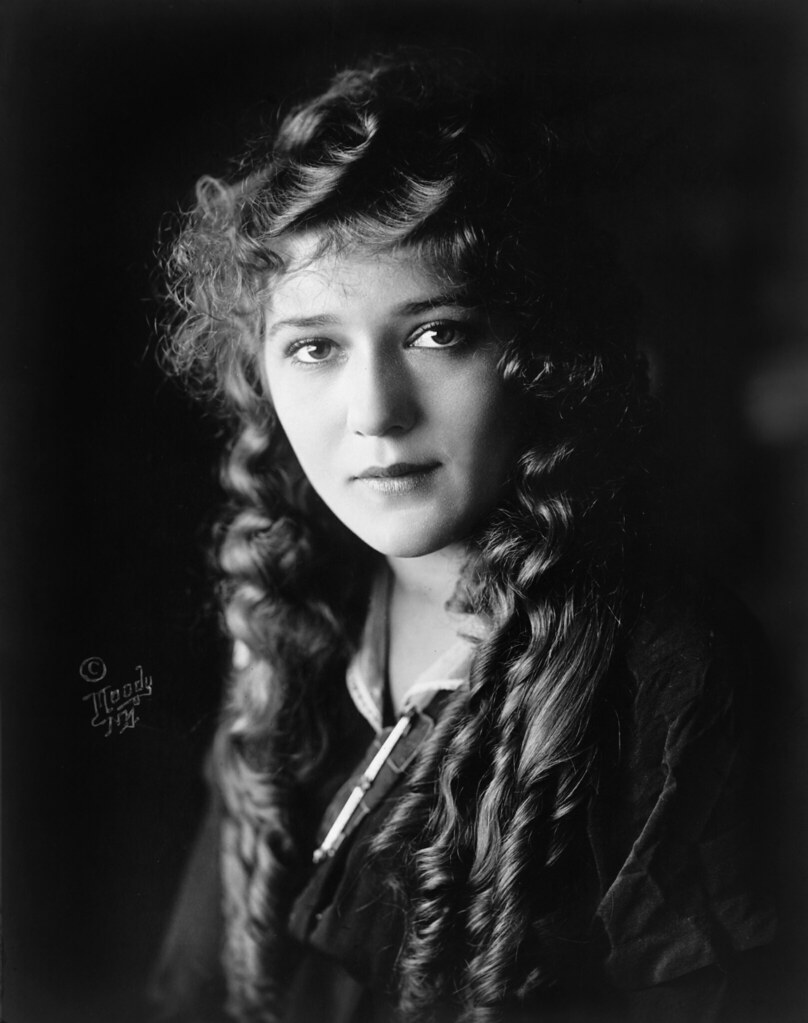
Mary Pickford (1892-1979) in a photograph taken in September 1914 was a big star in Hollywood. Taken by Rufus Porter Moody at a monumental turning point of her career, this deep-chiaroscuro portrait reveals 22-year-old Mary Pickford as she solidified her status as the cornerstone of independent cinema. The image serves as a powerful piece of corporate branding for Adolph Zukor’s Famous Players Film Company. PHOTO: “Mary Pickford by Moody, ca. 1914” by trialsanderrors is marked with CC BY 2.0.
Photographer Rufus Porter Moody utilized a single, dramatic light source to lift Pickford’s features out of a velvet-black background—evoking the timeless texture of a classical Renaissance painting. The styling maintains a careful, deliberate duality: her meticulously lit, signature cascade of long ringlets protects the innocent “ingénue” archetype that audiences adored, while her direct, somber, and deeply mature gaze reflects a powerhouse actress who had just leveraged her box-office dominance to command an unprecedented $1,000 per week salary. Distributed across fan magazines and lobby posters, this historic portrait marks the exact era when the “anonymous” screen player was permanently replaced by the modern, globally recognized megastar.
This explanatory article may be periodically updated.