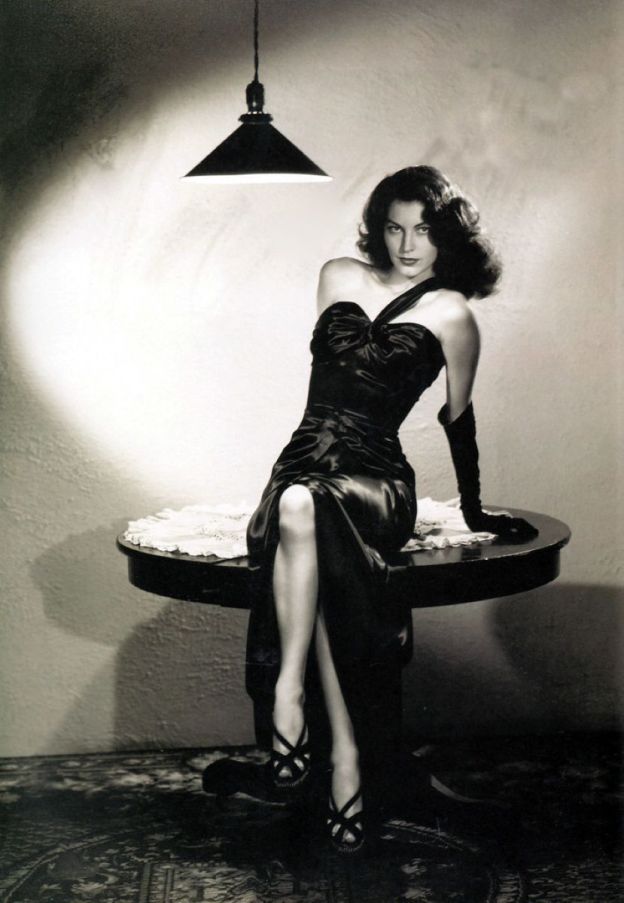
FEATURE: Twenty-three-year-oldAva Gardner was a noir icon in the making when, in 1946, she sat beneath a hard cone of light, her satin gown, long gloves, and crisp shadows distilled into pure mid-century glamour. Distributed globally across newspapers, movie magazines, lobby cards, and posters, cross‑legged on the polished table, she projects cool, controlled noir magnetism—elegance with an undercurrent of danger. Captured by veteran Universal studio portrait photographer Ed Esterbrook, this iconic image served as the primary promotional portrait for Robert Siodmak’s 1946 masterpiece, The Killers. On the Universal film sets, cinematographer Elwood Bredell shaped the movie’s high-contrast lighting, carving sharp, expressionistic shadows while giving Gardner’s skin a luminous, dangerous sheen. Bringing this lethal on-screen look to life was Gardner in a famous, custom-made asymmetrical black satin gown crafted by Vera West, Universal’s legendary chief costume designer. Altogether, these elements froze a moment in time that remains one of the most recognizable and enduring symbols of cinematic post-war noir glamour. PHOTO: “Ava Gardner in The Killers, 1946” by thefoxling is licensed under CC BY-NC-SA 2.0.
Robert Siodmak’s 1946 film The Killers stands as a pivotal milestone in cinema history, serving as the catalyst for Universal Pictures’ postwar commercial stabilization while simultaneously redefining film noir by launching Burt Lancaster into stardom and establishing Ava Gardner as the definitive archetype of the Hollywood femme fatale.
A Film Noir Breakthrough
Eighty years ago today—August 28, 1946—Robert Siodmak’s The Killers exploded onto American movie screens, instantly becoming a film noir sensation. It launched Burt Lancaster into overnight stardom after producer Mark Hellinger couldn’t land his first choice, Wayne Morris, and it introduced Ava Gardner as Hollywood’s definitive femme fatale. Adapted from Ernest Hemingway’s 1927 existential and grim short story, the film follows a washed-up ex-boxer who waits calmly in a dark room for hitmen to kill him, utterly undone by Gardner’s double-crossing allure. Though Anthony Veiller received official screen credit, the script carried major, uncredited writing contributions from future directing icons Richard Brooks and John Huston, while Miklós Rózsa’s tense, four-note brass score sharpened its fatalistic mood.
From the complete, dramatic original motion picture score for the 1946 film noir classic The Killers, composed by the legendary Miklós Rózsa. The soundtrack includes the famous, tense instrumental tracks that heightened the movie’s fatalistic mood, alongside the nightclub torch song performed with vocals by Ava Gardner herself.
Hollywood at Peak Attendance
Moviegoing in 1946 was at its absolute historic height, drawing a staggering 90 million weekly admissions. However, ticket prices had nearly doubled since before the war. This spike made post-war audiences far more selective, pushing major studios away from cheap “B-movies” and toward full-length, high-production features—frequently shot in vibrant Technicolor and paired as double features to ensure patrons got their money’s worth.
Universal Pictures tried to reinvent itself by merging with independents, including Hellinger’s banner, which produced The Killers for under $1 million and earned more than $3 million. Emboldened to meet the new demand, the studio chased prestige cinema, dropped its old B‑pictures and many longtime stars, and merged with International Pictures to form Universal‑International—but audiences mostly shrugged, and by decade’s end the company was losing money.
The Return to What Audiences Wanted
Veteran executive Edward Muhl, who had been with Universal since 1927, stepped up as general manager to steady the studio before officially becoming Head of Production in 1953. He steered the company back toward what mainstream American audiences reliably embraced: lucrative, low-budget comedy franchises like Ma and Pa Kettle (10 films, 1947–1957) and Francis the Talking Mule (7 films, 1950–1956), alongside a steady, highly profitable output of escapist Technicolor action-adventure films.
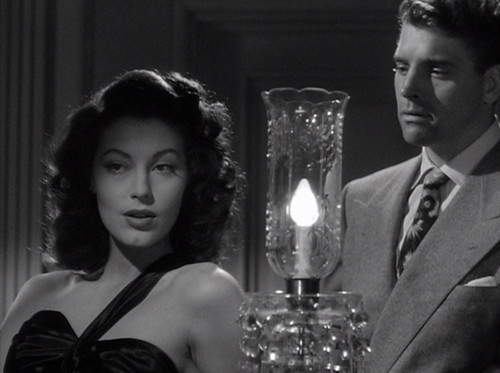
Film still from the production of The Killers (1946) captures the charged chemistry between Ava Gardner as Kitty Collins and Burt Lancaster, making his debut as Ole “The Swede” Andreson. Their first meeting is a textbook noir seduction: the doomed protagonist instantly, helplessly drawn into the orbit of the femme fatale who will seal his fate. At the center of the frame, cinematographer Elwood Bredell turns a crystal oil lamp into a diegetic light source—a glowing boundary between the two characters that casts soft illumination across Gardner’s face while dropping the rest of the room into deep, moody shadow. She’s wearing Vera West’s asymmetrical black satin gown—the same one from the famous publicity portrait—and on screen the heavy satin drinks the light, turning her into the ultimate femme fatale. PHOTO: “Ava Gardner y Burt Lancaster” by afevrier is licensed under CC BY-NC-SA 2.0.
This video short captures the electric first meeting between Ava Gardner and Burt Lancaster in the 1946 film noir classic The Killers, highlighting her sultry debut scene as Kitty Collins. The clip showcases Ava Gardner’s mesmerizing screen presence that audiences will remember as she delivers her smooth, fatalistic dialogue directly to the spellbound Swede. KITTY COLLINS: “How wonderful of you, I could never bear to see a man I really cared for being hurt.”
“She can’t sing, she can’t act, she can’t talk. She’s terrific!”– Louis B. Mayer on Ava Gardner.
Before The Killers, Ava Gardner was hopelessly stuck in Hollywood limbo. MGM head Louis B. Mayer had signed the 19-year-old North Carolina newcomer in 1941 purely based on her breathtaking physical photos. For five long years, she drifted through more than twenty films as an uncredited extra, barely noticed by the industry.
The Killers changed everything. Producer Mark Hellinger fought to cast the 23-year-old as Kitty Collins, freeing her from MGM’s rigid, squeaky-clean star-making machinery and handing her a role with genuine dramatic weight. Dressed in Vera West’s iconic, asymmetrical black satin gown, Gardner used her natural magnetism, smoldering gaze, and quiet confidence to completely command the visual frame. On the silver screen, she crafted a cold, calculating siren who seamlessly weaponized vulnerability to orchestrate a massive double-cross.
When the film became a box-office triumph in August 1946, audiences and critics were instantly transfixed. Gardner and Lancaster became overnight A-list sensations. Suddenly, she wasn’t just a glamorous face in the gossip columns—she was a legitimate actress widely praised for her dramatic depth and dangerous screen presence.
MGM moved fast to exploit her newly minted star power. Gone were the uncredited bit parts; instead, Gardner was vaulted into high-profile late-1940s productions like The Hucksters (1947) opposite Clark Gable, One Touch of Venus (1948), and The Bribe (1949). By the turn of the decade, MGM’s publicity office was completely overwhelmed, processing more than 3,000 fan photo requests per week for Hollywood’s ultimate new siren.
The original theatrical movie poster for The Killers (1946) pulses with classic film noir energy, dominated by bold red typography and the striking tagline: “TENSE! TAUT! TERRIFIC!” Public Domain. The poster had a valid copyright notice, as seen on the bottom left corner. However, the copyright for the artwork was not renewed, as was required by American copyright law to extend/maintain protection for works published 1963 or earlier. In order to maintain copyright protection, the poster would have had to be renewed 28 years after publication, in either 1973 or 1974. Because it was not renewed, copyright lapsed at that time. Note that the poster art is a distinct work from the film it represents and had to be renewed separately.
SOURCE: The Universal Story, Clive Hirschhorn, Crown Publishers, Inc. New York, 1983, pp. 156-64.
This explanatory article may be periodically updated.
ROSA LEE: I LOVE YOU, YOU KNOW? EVERY NIGHT WHEN I SAY MY PRAYERS AND I THANK THE LORD FOR HIS BLESSINGS AND HIS TENDER MERCIES TO ME, YOU AND SONNY HEAD THE LIST. Tender Mercies – 11. “Blessings and Tender Mercies” – retrieved February 16, 2026.
The Passing of a Film Legend
Robert Duvall died February 15, 2026, at his home in Middleburg, Virginia, at 95 it was announced February 16.
An Oscar-Winning Turn in Tender Mercies
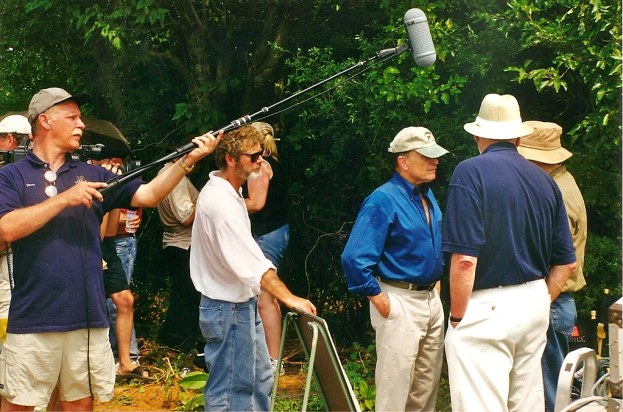
In Tender Mercies, a 1983 American drama film set in Texas, Robert Duvall played washed-up country singer Mac Sledge in a performance that won that year’s Academy Award for Best Actor. In this scene, Duvall’s friend, Wilford Brimley, played Harry, Mac’s former manager, and Tess Harper played a widow named Rosa Lee who develops feelings for Mac. Coming off a bitter break up with his wife Dixie Lee, a superstar country singer, who won’t let her ex-alcoholic husband near herself or their grown daughter, Mac, a once legendary country music star in his own right, lives and works quietly at a gas station operated by Rosa Lee who lives with her young son. As Mac tries to rebuild both his career and life on the Texas badlands, he finds he has keener, if less flashy, success with the latter. Nominated for 5 Academy Awards, Tender Mercies also won Oscar for Best Screenplay – Written Directly for the Screen (Horton Foote).
A Six-Decade Legacy of Iconic Cinema
In his 60-year film career, Duvall made scores of films, receiving seven Academy Award nominations in the process. Duvall also received four Golden Globe Awards. From his film debut in 1962 as Boo Radley in To Kill A Mockingbird, Duvall appeared in some of the most iconic feature films of his era and in iconic roles both on screen and behind the camera as producer, writer and director.
Robert Duvall played Lieutenant Colonel William “Bill” Kilgore in Apocalypse Now, a 1979 war film directed by Francis (Ford) Coppola. Commanding the 1st Battalion, 9th Air Cavalry Regiment during the Vietnam War, Kilgore is depicted as an adrenaline-fueled “gung-ho” officer who embodies the insanity of the war. (6) Apocalypse Now UHD (1979) – Lieutenant Colonel Bill Kilgore (1/11) | 4K Clips – YouTube – retrieved February 16, 2026.
Notable Filmography and Final Work
Notable film titles include: True Grit (1969), M*A*S*H (1970), The Godfather (1972), The Godfather Part II (1974), The Conversation (1974), Apocalypse Now (1979), The Great Santini (1979), Tender Mercies (1983), The Natural (1984), The Apostle (1997), Open Range (2003), and Wild Horses (2015). At 91 years old, Duvall’s final film, The Pale Blue Eye, was released 60 years after his first, in 2022.
Based on the 1969 novel by Mario Puzo, Francis Ford Coppola’s The Godfather (1972) is one of the greatest films of all time. Robert Duvall plays cool-headed Tom Hagen, the Irish-German consigliere and lawyer for the Corleone crime family. Since youth Hagen was unofficially adopted into the New York-based Italian American family by the Godfather, Vito Corleone. Hagen is dispatched to Hollywood by the Godfather to secure a film role for Johnny Fontaine, a singer and Vito’s godson, and produced by Jack Woltz (John Marley). When Woltz refuses Tom Hagen’s first offer for Johnny to star in his picture, and Tom Hagen returns to New York, the Godfather makes the reluctant film producer a second offer he can’t refuse.
Robert Duvall’s extraordinary six-decade career cemented his status as a titan of American cinema. From his hauntingly quiet film debut in To Kill a Mockingbird to his commanding, adrenaline-fueled performance in Apocalypse Now, Duvall possessed a rare, transformative range. His Oscar-winning turn in Tender Mercies showcased his unique ability to find profound truth in personal, everyday humanity. Whether portraying fierce officers, cool-headed family consiglieres, or broken men seeking redemption, Duvall consistently elevated every frame he occupied. His immense body of work leaves behind an indelible blueprint for character acting and an enduring legacy in film history.
This explanatory article may be periodically updated.
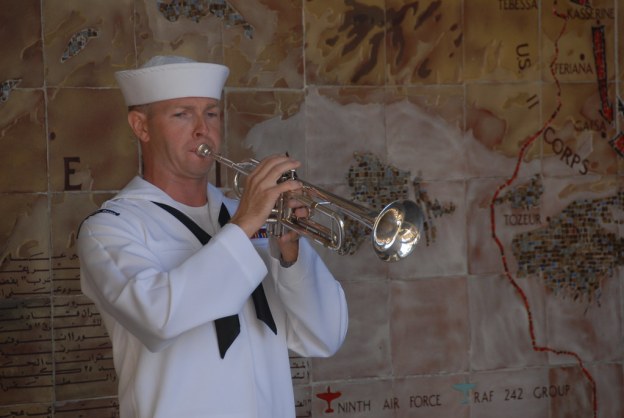
The first national observance of Memorial Day occurred on May 30, 1868, following the U.S. Civil War. Commander in Chief John A. Logan of the Grand Army of the Republic issued General Order Number 11 designating May 30 as a day of memorial “for the purpose of strewing with flowers or otherwise decorating the graves of comrades who died in defense of their country during the late rebellion, and whose bodies now lie in almost every city, village, and hamlet churchyard in the land.” (Source: Library of Congress). It is a day for visiting cemeteries and memorials to mourn the military personnel who died in the line of duty.
Films, music, and literature about the people, places, and events in history where military personnel as individuals and as a unit are asked to pay the ultimate price and make the greatest sacrifice for freedom are among some of the greatest stories ever told.
THE CROSSING (2000). American Revolutionary War (1775-1783).
Bringing Washington’s Gamble to the Screen
Directed by Robert Harmon and adapted by Howard Fast from his novel of the same name, The Crossing stars Jeff Daniels as George Washington.
A Revolution Hanging by a Thread
In December 1776 — barely six months after the Declaration of Independence — Washington’s Continental Army was collapsing. Starved of men, artillery, and supplies, the revolution hung by a thread. So Washington made the most dangerous decision of the war: he would gamble everything on a surprise strike at Trenton, where more than a thousand feared Hessian mercenaries held the town.
Forcing the Ice-Choked Delaware
To reach them, his exhausted army would have to force a night crossing of the ice‑choked Delaware River and march toward what looked like a hopeless fight. Instead, the attack became the stunning, against‑all‑odds victory Washington had scarcely dared imagine.
A Stunning and One-Sided American Victory
Washington’s surprise attack on the Hessian garrison at Trenton on December 26, 1776, produced a stunningly one‑sided American victory. The Continental Army suffered almost no combat losses — none killed in action, two men who froze to death during the night march, and only five wounded, including a young James Monroe, later of Monroe Doctrine fame, who took a musket ball in the shoulder.
The Destruction of the Hessian Force
The Hessians, by contrast, were effectively destroyed as a fighting force: 22 killed (among them their commander, Colonel Johann Rall), 92 wounded, and about 920 captured.
GETTYSBURG (1993). The U.S. Civil War (1861-1865).
Directed by Ronald F. Maxwell whose screenplay is based on The Killer Angels, a novel by Michael Shaara, Gettysburg starred an ensemble cast including Martin Sheen, Tom Berenger, Jeff Daniels, Stephen Lang and Sam Elliott.
The Convergence of Command at Gettysburg
One of the Union army’s most respected senior commanders during the American Civil War was 42-year-old General John F. Reynolds (John Rothman) who was killed on the first day of the Battle of Gettysburg at the very start of it. Reynolds was in command of the “left wing” of the Army of the Potomac commanded by Gen. George C. Meade and which included the cavalry division of 37-year-old Brig. Gen. John Buford (Sam Elliott).
Buford’s Defensive Stand
Buford had occupied the town of Gettysburg, Pennsylvania, with his “headquarters” atop the cupola of the Lutheran seminary. With light defensive lines he resisted superior numbers of Confederate infantry brigades along the Chambersburg Pike who were blind to the Union Army’s smaller numbers because Major General J. E. B. Stuart had gone missing
The Opening Clash and a Fatal Command
When Reynolds’ I Infantry Corps arrived, he rode out ahead, met with Buford, and then accompanied some of his soldiers into the fighting. As Reynolds was supervising the placement of the 2nd Wisconsin, he shouted: “Forward men! Forward for God’s sake! and drive those fellows out of those woods.” At that moment Reynolds was shot by a sniper and fell off his horse to the ground with a mortal wound to the back of the head.
The Impact of a Leader’s Loss
The death of Reynolds impacted his troops and fellow commanders deeply. At that particular moment, they realized that any one leader (and the Union army had been through several at the top), even if he had the necessary zeal, vision, and sense of purpose, would not be enough to win the fight to save the Union. It must be a coordinated effort. Reynolds, by supporting Buford’s decision to set up defensive resistance as well as engaging his infantry, even in death effectively chose Gettysburg as that hallowed battleground for the next three days.
The Retreat to High Ground
Since Confederate numbers were superior on that first day, Union troops eventually retreated through town and rallied on Cemetery Ridge where General Meade and Maj. Gen. Winfield S. Hancock, with many others, entrenched on the high ground. They faced Confederate Gen. Robert E. Lee (Martin Sheen), and Lieutenant Generals Longstreet, Ewell, and A.P. Hill, among others. In the 1993 film, Confederate Major General Henry Heth is played by Warren Burton who was born and grew up in Chicago and attended The School of the Art Institute of Chicago. Heth was from a coal mining area near Richmond, Virginia.
The Staggering Cost of Hallowed Ground
At the Battle of Gettysburg the two armies suffered between 46,000 and 51,000 casualties. Union casualties amounted to 3,155 killed, 14,531 wounded, and 5,369 captured or missing. Reynolds’ body was immediately transported to his home-town of Lancaster, PA, where he was buried on July 4, 1863. Buford died 5 months later possibly of typhus in Washington, D.C. and was buried at West Point Cemetery in New York. Like Lincoln, Buford was born in Kentucky and grew up in Illinois (Rock Island). His father was a leading politician, but as a Democrat supported Stephen A. Douglas and opposed Abraham Lincoln.
THE FIGHTING SULLIVANS (1944). World War II (1941-1945).
Hollywood’s Tribute to a Tragic Brotherhood
Directed by Lloyd Bacon based on a story by Edward Doherty, Mary C. McCall Jr., and Jules Schermer, The (Fighting) Sullivans starred Anne Baxter, Thomas Mitchell, Selena Royle, Edward Ryan, John Campbell, James Cardwell, John Alvin, George Offerman, Ward Bond and Trudy Marshall.
The True Story of the Juneau Disaster
Released as The Sullivans in 1944, this 20th-Century-Fox drama film tells the true story of five brothers – George, Frank, Matt, Joe and Al Sullivan – who grew up in Waterloo, Iowa, and who were all killed in World War II when their ship, Juneau, was sunk in combat at Guadalcanal in November 1942.
The Honest Price of a World War
The film is a tearjerker not so much because it is sentimental but that it is honest. The final scene where the naval officer who recruited the five brothers (Ward Bond) comes to the boys’ house to tell the tragic news to their parents (Thomas Mitchell and Selena Royle) and the youngest brother’s widow (Anne Baxter) and mother of his child is one of cinema’s best conveyances of the price paid in a world war that claimed 420,000 American lives.
Through the power of cinema and visual art, these Celluloid Chronicles serve as living monuments that permanently capture the profound weight of military sacrifice. From the frozen banks of the Delaware to the bloodied ridges of Gettysburg and the tragic depths of Guadalcanal, artistic expression bridges the gap between historical duty and modern remembrance. This creative preservation ensures that the ultimate price paid by service members in every conflict—from the nation’s founding revolutionary struggles to the modern battlefields of Iraq, Afghanistan, and Iran today—is never forgotten, keeping the sacred meaning of Memorial Day alive across generations.
FEATURE image: Jules Verne’s Journey to the Center of the Earth follows Professor Lidenbrock, Axel, and Hans on a descent into a mysterious underground world filled with prehistoric landscapes and creatures. Image design by John P. Walsh, utilizing generative AI elements.
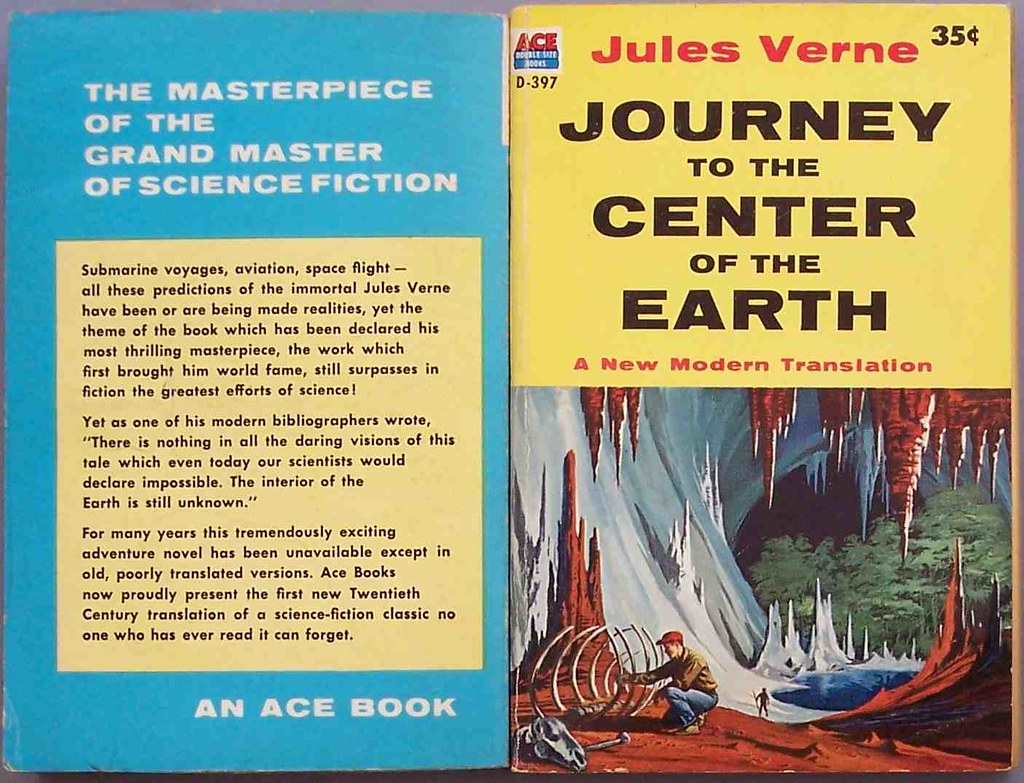
The novel’s first English edition was published in London in 1871. Journey to the Center of the Earth has appeared in various other English translations and has never gone out of print. PHOTO: “journey to the center of the earth” by cdrummbks is licensed under CC BY 2.0.
Jules Verne’s Journey to the Center of the Earth endures because its blend of scientific curiosity, adventure, wonder, and spectacle has proven endlessly adaptable, allowing a 19th-century science-fiction novel to captivate audiences across generations and media, from books and films to television, theme parks, and immersive attractions.
Published in 1864, Journey to the Center of the Earth was one of the works that helped lay the foundations of modern science fiction. In it, French novelist Jules Verne (1828-1905) sent the fiery German geologist Professor Otto Lidenbrock, his anxious nephew Axel, and their steadfast Icelandic guide Hans Bjelke into the unexplored depths of the Earth. Their descent leads through vast caverns, prehistoric landscapes, and encounters with creatures long believed extinct.
The combination of scientific curiosity, exploration, danger, and imagination proved irresistible. More than 160 years later, the novel has never gone out of print in English and remains one of the most widely adapted works in science-fiction history.
Published in 1864, Journey to the Center of the Earth helped establish the foundations of modern science fiction.
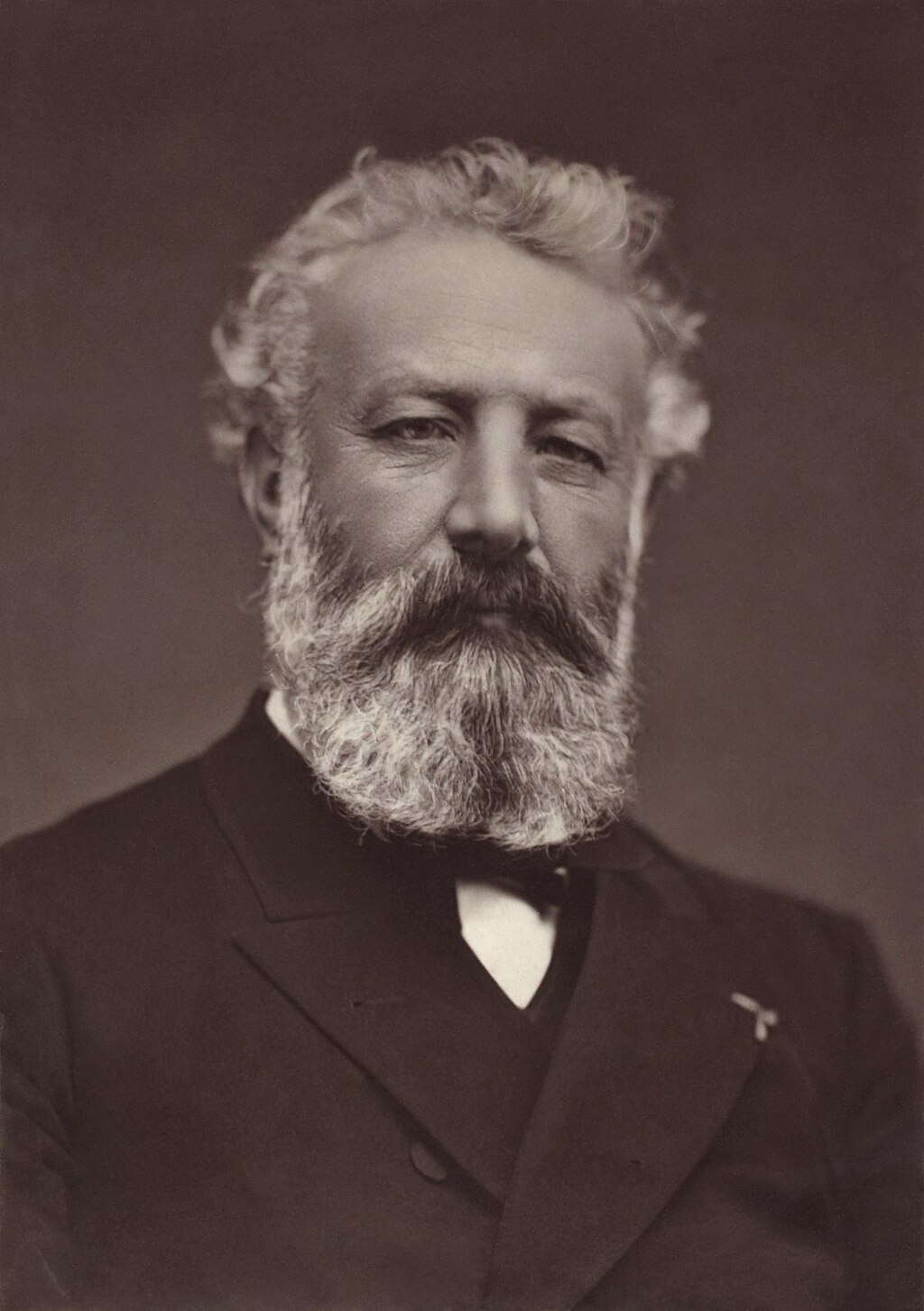
Photograph of Jules Verne in Nantes by Étienne Carjat (1828-1906). In Société de Géographie. Public Domain.
From Novel to Screen
Verne’s subterranean adventure quickly escaped the pages of the book and entered popular culture. The story has inspired films, radio dramas, television programs, cartoons, and theme-park attractions, each generation reshaping the tale for its own audience while preserving its central appeal: the thrill of venturing into the unknown.
The most celebrated adaptation arrived in 1959, when 20th Century-Fox released its lavish Cinemascope production starring James Mason. The film became a classic in its own right and introduced countless viewers to Verne’s underground world.
The novel follows Professor Lidenbrock, Axel, and Hans on a descent into a mysterious underground world filled with prehistoric landscapes and creatures. Verne’s combination of science, exploration, danger, and imagination has given the story lasting appeal.
Bernard Herrmann’s Sound of Terror
A major reason for the 1959 film’s enduring reputation is its extraordinary score by Bernard Herrmann, already famous for his collaborations with Alfred Hitchcock on Vertigo and Psycho. Herrmann envisioned the subterranean world as a place devoid of human warmth, seeking what he called an atmosphere of “no emotion, only terror.”
To achieve this effect, he eliminated strings from many underground sequences and constructed an immense, echoing soundscape using five organs. He even revived the serpent, a rarely used sixteenth-century bass wind instrument whose guttural voice lent a primal menace to scenes involving giant reptiles and prehistoric creatures. The result remains one of the most inventive fantasy film scores of Hollywood’s Golden Age.
The 1959 film starring James Mason became a classic in its own right, aided by Bernard Herrmann’s innovative score.
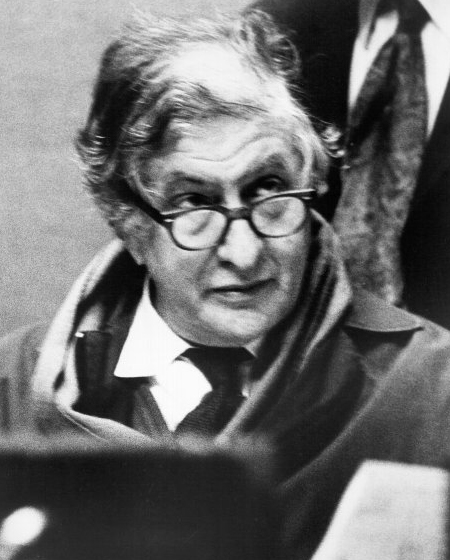
From the late 1950s to the mid-1960s, Bernard Herrmann scored a series of mythically-themed fantasy films, including 20th Century-Fox’s Journey to the Center of the Earth in 1959. Photo credit: Unknown photographer, via the Arlington Heights Herald (c. 1970). Public Domain.
Saturday-Morning Adventure
The story returned for a younger audience in 1967 as an animated television series produced by Filmation Associates and 20th Century Fox Television. Rather than adapting Verne’s novel directly, the cartoon borrowed heavily from the successful 1959 film and transformed it into a colorful, episodic adventure series.
Its twenty-minute episodes emphasized fantasy, monsters, and cliffhanger action. In one representative installment, “Creatures of the Swamp,” Professor Lindenbrook and his companions battle hostile moss creatures and rescue captured allies in a hidden underground marsh. Though the series moved far from Verne’s harder science-fiction roots, it demonstrated the remarkable flexibility of the original concept.
The 1967 animated series introduced Verne’s subterranean adventure to younger audiences, demonstrating the story’s flexibility across formats.
“Creatures of the Swamp,” the fourth episode of the 1967 animated Journey to the Center of the Earth series, aired on ABC on September 30, 1967. In this fast-paced 20-minute adventure, Professor Lindenbrook designs a custom swamp buggy to help Lars cross a vast underground marsh, but the expedition quickly goes awry when hostile moss creatures ambush and capture him. When the scheming Count Saknussemm’s interference results in Alec’s capture as well, Lindenbrook and Cindy join forces with the friendly subterranean “swamp people” to stage a rescue. Like much of the Filmation series, the episode favored colorful fantasy and monster-driven action over Jules Verne’s original science-fiction approach. Veteran voice actor Ted Knight performed the dual roles of heroic Professor Lindenbrook and the villainous Count Saknussemm.
The 3D and 4D Age
Verne’s adventure found yet another life in 2008. That year, three separate film versions of Journey to the Center of the Earth appeared, a testament to the story’s ongoing commercial appeal. The most successful was director Eric Brevig’s effects-driven 3D adventure starring Brendan Fraser, Josh Hutcherson, and Anita Briem.
Rather than directly retelling the novel, the film presented Verne’s book as a roadmap to a hidden world beneath the Earth’s surface. Audiences followed volcanologist Trevor Anderson, his nephew Sean, and guide Hannah into a spectacular subterranean realm populated by dinosaurs, volcanic hazards, and breathtaking landscapes. Enhanced by early 4DX technology that added motion, water sprays, wind, and other sensory effects, the film became a worldwide hit, earning more than $244 million against a $60 million budget and introducing Verne’s classic to a new generation of moviegoers.
A Journey Without End
Most journeys remain private experiences, recorded in diaries and forgotten with time. Others transcend their origins and become part of our shared cultural imagination. Journey to the Center of the Earth belongs to that rare second category. From Verne’s 1864 novel to the 1959 film, the 1967 animated series, and the immersive 3D and 4D adventures of the twenty-first century, each adaptation has reaffirmed the same enduring truth: humanity is endlessly fascinated by mysteries that lie beyond the horizon or beneath our feet. More than a century and a half after its publication, Verne’s remarkable descent into the unknown continues to inspire wonder, proving that some adventures never reach their destination because each generation eagerly begins the journey anew.
Neon lights, a warm marquee glow, and a line out the door: opening night at the Roxy as moviegoers queue for the 4D adventure Journey to the Center of the Earth. Directed by Eric Brevig, the film reimagines Jules Verne’s classic novel as a springboard for family-friendly spectacle, immersive 3D visuals, and sensory theater effects. Released in 2008, it grossed $244.2 million worldwide on a $60 million budget. While critics found the plot familiar and some of Brendan Fraser’s humor overly broad, they praised the film’s visual inventiveness and energetic use of 3D. Audiences embraced it, making the movie a family favorite and paving the way for the sequel Journey 2: The Mysterious Island (2012). PHOTO: “Warner Bros. Movie World – Journey to the Center of the Earth 4-D Adventure” by Mohd Fazlin Mohd Effendy Ooi is licensed under CC BY 2.0.
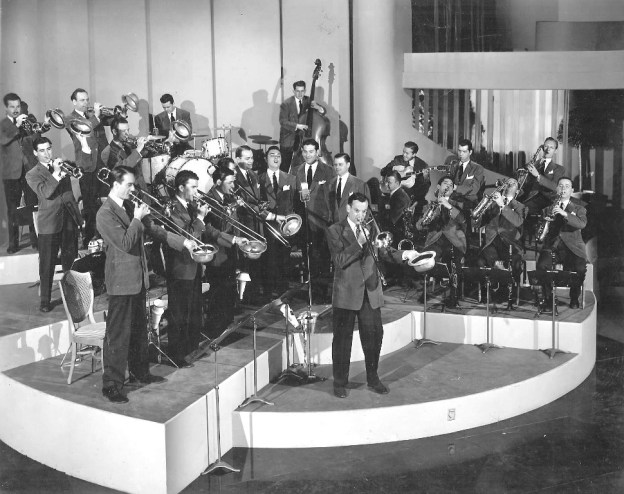
FEATURE image: Glenn Miller Orchestra, 1940-41. Public Domain.
Orchestra Wives (1942) endures not simply as a Glenn Miller swing showcase but as one of Hollywood’s most realistic portrayals of life on the road for big-band musicians and their spouses, blending first-rate wartime-era music with surprisingly mature drama about marriage, jealousy, gossip, and the pressures of touring.
The 1942 music film, Orchestra Wives, from 20th-Century-Fox is one of the best dance band movies ever made. Between 1934 and 1945 Fox studios made 57 musicals and music films (see – https://www.imdb.com/list/ls565533414/.) While M-G-M is known for its musicals where characters sing and dance in place of spoken dialogue, the music film is one that usually features a bandleader – which in Orchestra Wives is Glenn Miller – and musical performers within a band orchestra – Marion Hutton with The Modernaires – as well as music-related acts such as the Nicholas Brothers. In a music film, including Orchestra Wives, characters don’t break out into song but speak in regular speech. In the music film singing and dancing are normally set pieces in a nightclub or on a stage and the music itself is presented in a realistic setting all of which perfectly describes 20th Century-Fox’s Orchestra Wives. Musical direction of Orchestra Wives was by Alfred Newman.
ANN RUTHERFORD.
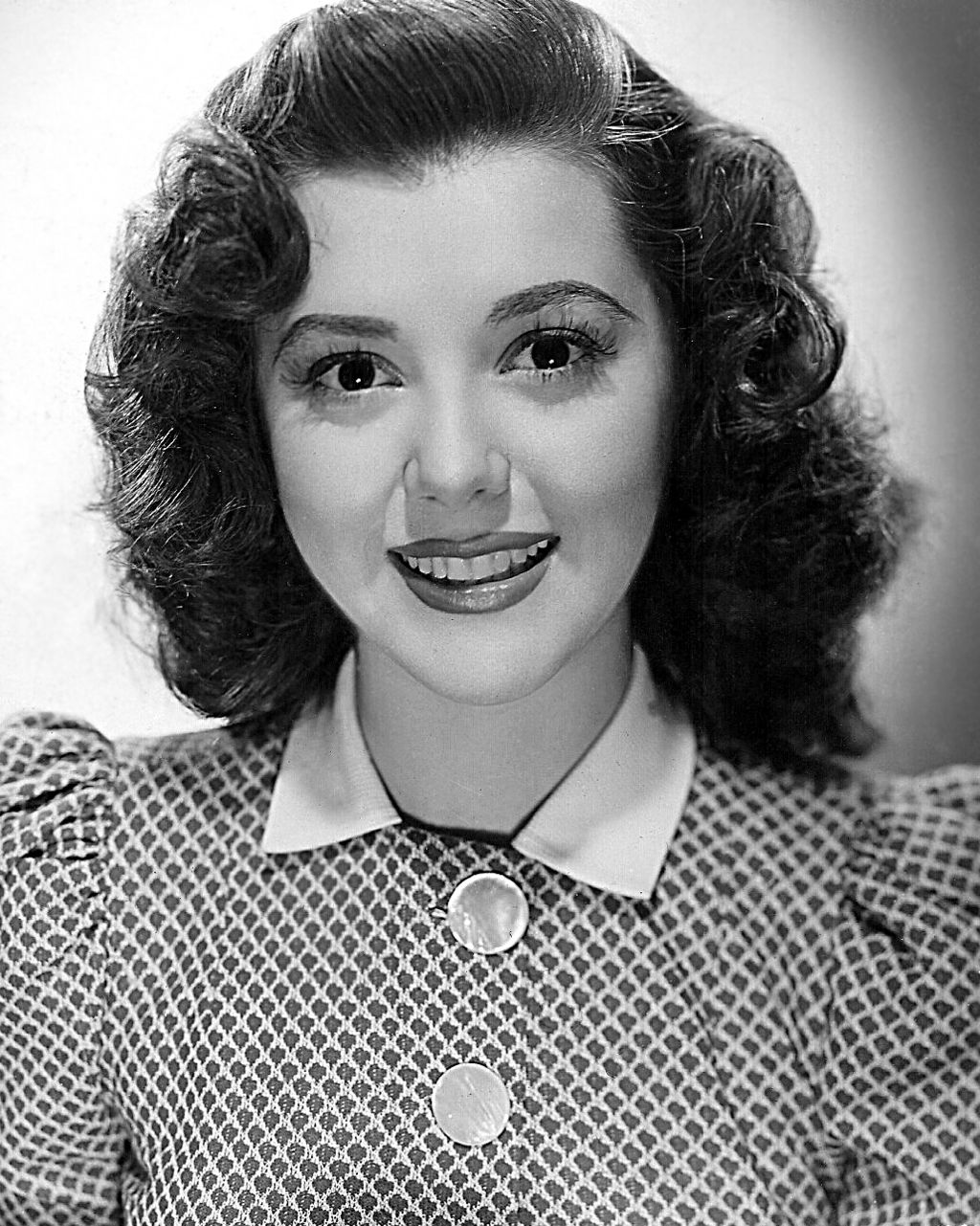
When even Mickey Rooney was being underpaid during his glory years at M-G-M, Ann Rutherford was not. When she asked L.B. Mayerfor a raise, she took out her checkbook,showed him the balance, and told him she had promised her mother a new house. Ann got her raise. In 1942 at the age of 23, Ann appeared in her last Andy Hardy film, Andy Hardy’s Double Life (1942). She left M-G-M and freelanced her talent. See- https://www.imdb.com/name/nm0751946/bio/ – retrieved October 16, 2023. PHOTO: “Ann Rutherford.” by carbonated is licensed under CC BY-NC-SA 2.0.
Ann Rutherford was known as “America’s Sweetheart” and a big star in 1942. PHOTO: Original studio publicity photo of Ann Rutherford Permission details This work is in the public domain in the United States because it was published in the United States between 1928 and 1977, inclusive, without a copyright notice. For further explanation, see Commons:Hirtle chart as well as a detailed definition of “publication” for public art. Note that it may still be copyrighted in jurisdictions that do not apply the rule of the shorter term for US works (depending on the date of the author’s death), such as Canada (50 p.m.a.), Mainland China (50 p.m.a., not Hong Kong or Macao), Germany (70 p.m.a.), Mexico (100 p.m.a.), Switzerland (70 p.m.a.), and other countries with individual treaties.
Connie Ward (played by “America’s Sweetheart” Ann Rutherford) goes on a date with soda-jerk Cully Anderson (Harry Morgan) to hear and dance to Gene Morrison’s (Glenn Miller’s) Band in Dixon, Illinois. At Last is a song that takes place on stage in the music film Orchestra Wives. Used as a musical motif throughout the film in dramatic and romantic scenes, the Harry Warren/Mack Gordon love ballad is sung in a duet featuring headliner Lynn Bari (her voice dubbed by Pat Friday, 1921-2016, and not credited). In 1942 Ann Rutherford had been in the picture business almost a decade. She starred as Polly Benedict in the Andy Hardy series in the 1930’s and 1940’s and was one of Scarlett O’Hara’s sisters in Gone With The Wind (1939). Rutherford was a big star compared to a slightly older Harry Morgan who was making his film debut. Co-star George Montgomery appeared in a string of Western films starting in 1935. He signed with 20th Century-Fox in 1939 and soon was playing leading man roles such as Bill Abbott in Orchestra Wives and several other hit films at Fox. World War II interrupted that career trajectory. In 1943, Montgomery joined the U.S. Army Air Forces First Motion Picture Unit where he made training films. When he returned to Fox in 1946, he resumed playing lead roles and left the studio in 1947.
GEORGE MONTGOMERY.
Actor George Montgomery started as a stuntman in Western films in the mid1930s. He appeared in around 87 films and later in several television series in a six-decade career. Best known for his roles in Westerns, he appeared as the leading man for a number of 20th Century-Fox rom-coms, music films and musicals. Orchestra Wives in 1942 was one of the first for the handsome and rugged star. Montgomery played trumpet player Bill Abbott in Gene Morrison’s Band. The part was played on the soundtrack by Glenn Miller’s lead trumpet player, Johnny Best (1913-2003). See – https://www.britannica.com/biography/George-Montgomery – retrieved October 16, 2023. PHOTO: “George Montgomery – in ”Roxy Hart” 1942” by Movie-Fan is licensed under CC BY-NC-SA 2.0.
Fox musicals and music films from the mid1930’s to mid1940’s were extremely popular. Orchestra Wives features high production set pieces of original swing music envisioned by its music director Alfred Newman (1900-1970). The film itself was directed by Archie Mayo (1881-1968) whose decades-long career was coming to a close (Mayo retired in 1946, shortly after completing A Night in Casablanca with the Marx Brothers). Orchestra Wives features 38-year-old Glenn Miller (1904-1944) and his 22-piece Band, then at the height of popularity. It was the second of two films Miller made for Fox (the first was Sun Valley Serenade in 1941). The Miller band returned to Hollywood to film 1942’s Orchestra Wives and though contracted to do a third movie for Fox called Blind Date, Miller disbanded the band and entered the US Army. Called the Gene Morrison Band in Orchestra Wives, music includes vocal performances by Marion Hutton (1919-1987) with The Modernaires, tenor sax player Tex Beneke (1914–2000) and Lynn Bari (1919-1989). The film concludes with choreographed athletic tap dancing of the Nicholas Brothers. The film is filled with pop-song classics by the successful writing team of composer Harry Warren (1893-1981) and lyricist Mack Gordon (1904-1959). In Orchestra Wives Warren/Gordon songs included in whole or in part, That’s Sabotage, Chattanooga Choo Choo (a main set piece in Sun Valley Serenade indicating Orchestra Wives picked up right where the previous successful film left off), People Like You and Me, the love ballad At Last, the torch song Serenade in Blue (performed by sultry Lynn Bari) and Orchestra Wives’ main production number (I’ve Got a Gal in) Kalamazoo which was nominated for an Academy Award for Best Original Song (the Oscar went to White Christmas by Irving Berlin). Warren melodies are instantly recognized as simple and fresh and Gordon’s lyrics are free of cliché. The music that opens Orchestra Wives presents the film’s first set piece which is a Warren/ Gordon song, People Like You and Me. It is performed by Glenn Miller and his Orchestra with Marion Hutton and The Modernaires. All of the Warren/Gordon songs for Orchestra Wives were recorded by Glenn Miller – as well as many other musical artists in those years.
The film is one of the finest Hollywood music films of the swing era, distinguished by authentic performances from Glenn Miller and His Orchestra rather than conventional musical-comedy fantasy.
GLENN MILLER.
Glenn Miller in 1940. This specific portrait was captured during his “Chesterfield Moonlight Serenade” radio show era. In late December 1939, Glenn Miller and His Orchestra took over a premier, three-nights-a-week CBS radio program sponsored by Chesterfield cigarettes. PHOTO: Unknown author – Ad on page 65 of the Billboard 1943 Music Yearbook. Public Domain.
Glenn Miller was born in Clarinda, Iowa, near the Missouri-Nebraska state lines. Miller started playing professional dance music in Chicago in 1926 and quickly started freelancing as a top arranger for Ray Noble (1903-1978), Tommy Dorsey (1905 -1956), Jimmy Dorsey (1904-1957), and more. Miller formed his own band in 1936. In its first year Miller’s band was one of many swing dance bands and it soon disbanded. In 1938, when Miller reformed the band, he had developed his definitive big-band sound and his records started selling like hot cakes to his mostly younger fans. In art imitating life, Miller portrays bandleader Gene Morrison in Orchestra Wives who disbands his 22-piece band because some band members resign because of their orchestra wives. Having to cancel the rest of the tour, Miller/Morrison looks to re-assemble the band. In the film, Connie Ward Abbott, a new orchestra wife, conspires with Morrison band pianist Sinjin (Romero) to reunite the original band. This will produce, with the help of Dr. Ward (Grant Mitchell), Connie’s father, a reconciliation between Connie and Bill who had separated but remained deeply in love.
(5.51 minutes). Orchestra Wives’ opening scene is set in Melody-Tone Record Corp. featuring the Glenn Miller Band (called the Gene Morrison Band in the film). It starts with Glenn Miller’s 22-piece band recording a lively, perfectly arranged rendition of “People Like You and Me,” one of Harry Warren and Mack Gordon’s pop classics written for the film. The Glenn Miller Band, then at the height of their popularity, are presented with a touch of Hollywood: Jackie Gleason (1916-1987) appears as the Band’s bassist and César Romero (1907-1994) plays its pianist. Gleason and several other featured performers (such as Marion Hutton) went uncredited in the film. Miller had joined the armed forces where he led the Glenn Miller Army Air Forces Orchestra until his disappearance over the English Channel in December 1944 at 40 years old. The energy of the swing era is evident which includes trumpeter Bill Abbott (played by Western cowboy George Montgomery), one of the film’s romantic leads with Ann Rutherford, and singer “Tex” Beneke who played saxophone with bandleader Glenn Miller. One-minute-long opening credits showcase Glenn Miller’s theme from 1939, “Moonlight Serenade,” as its background music. This is a colorized version of the black and white film.
CÉSAR ROMERO.
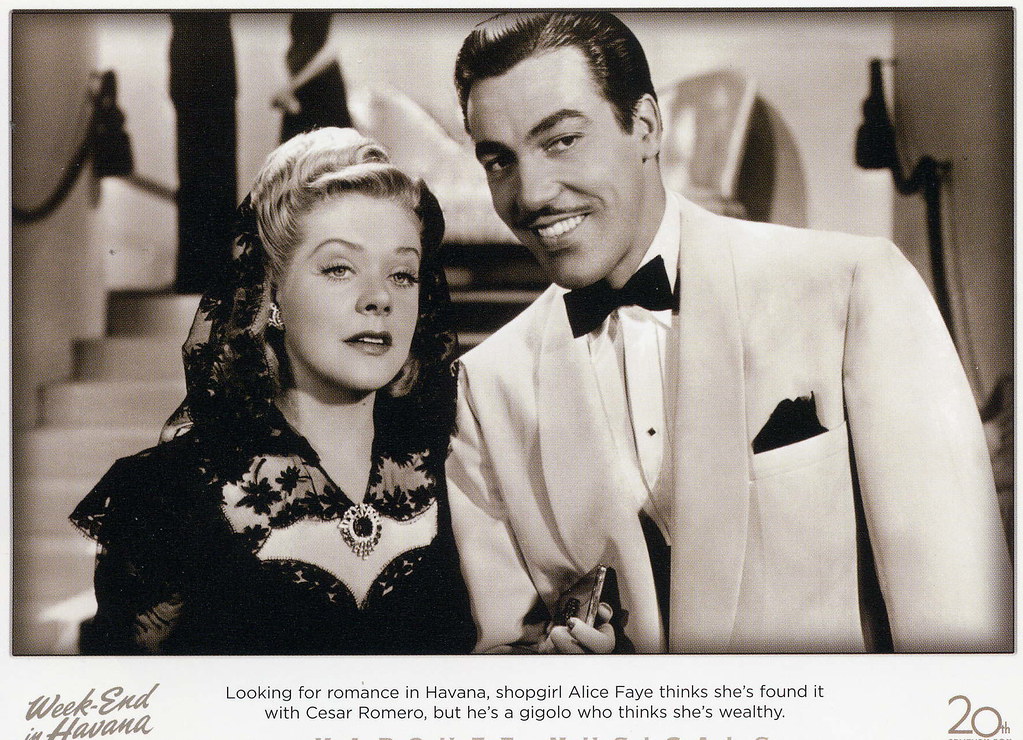
Tall, suave and sophisticated César Romero was born in New York City to Cuban parents. Romero danced and performed comedy in the 20th Century Fox films he starred in opposite Carmen Miranda and Betty Grable, such as Week-End in Havana (1941) and Springtime in the Rockies (1942). In Orchestra Wives Sinjin’s role, though minor, is pivotal to the resolution of the plot. PHOTO: “Alice faye & Cesar Romero in ”Weekend in Havanna” 1941” by Movie-Fan is licensed under CC BY-NC-SA 2.0.
The movie offers a rare and realistic look at the lives of touring band members, singers, and especially their wives, showing the boredom, gossip, and personal tensions generated by constant travel.
Orchestra Wives is one of the very few films to give insight into the lives of dance band musicians and their singers and spouses on tour. These singers and wives are portrayed in the Hollywood film by glamorous Ann Rutherford (1917-2012), Lynn Bari (1919-1989), Carole Landis (1919-1948), Mary Beth Hughes (1919-1995) and Virginia Gilmore (1916-1986). Each of their glamour and acting ability make dramatic scenes highly entertaining even as they advance the plot by way of bored and distasteful gossiping and rumor mongering.
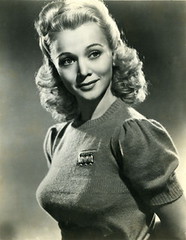
This original 1942 Twentieth Century-Fox studio glamour portrait features American actress-singer Carole Landis at the height of her wartime popularity. Photographed in a tight, short-sleeved knit top adorned with a decorative rhinestone brooch, the image highlights the iconic “Sweater Girl” aesthetic popularized by Hollywood during the late 1930s and early 1940s. Landis’s striking figure and glamorous pompadour hairstyle made her one of the most celebrated pin-up icons of World War II, earning her the famous studio nickname “The Chest” from Hollywood press agents. In Orchestra Wives, she plays Natalie, one of a group of beautiful, deeply jaded, and gossipy women navigating life on the road with the touring Glenn Miller/Gene Morrison band. Stealing nearly every scene she is in with her sharp, catty attitude, Landis delivers what film fans widely consider the absolute best line of the movie when describing a fragile new bride: “She’s a weeper! If there’s anything I hate it’s a leaky dame!”
This candid 1942 photograph captures American actress Virginia Gilmore on the far right, standing alongside Hollywood icons Ronald Colman, Hedy Lamarr, and Greer Garson. Taken during the multi-city “Stars Over America” war bond blitz in August 1942, the image shows Gilmore dressed in a crisp, multi-toned tailored suit and a small tilted tilt-hat, actively participating in a national drive that raised millions of dollars for the World War II effort. Known for her sophisticated, sharp-featured beauty and vibrant stage presence, Gilmore was a highly promising 20th Century-Fox contract player during this wartime era. In the film, she plays Elsie, one of the more grounded yet fiercely protective women navigating the complex social hierarchy and petty backbiting of the traveling band’s inner circle. While Landis brought the overt, catty glamour, Gilmore provided a sharper, more dramatic anchor to the group dynamics, helping solidify the movie as one of the most culturally enduring documents of the Big Band era.
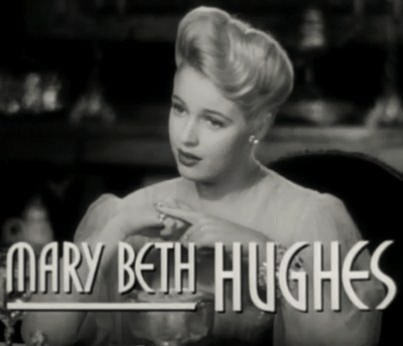
MARY BETH HUGHES.
PHOTO: Mary Beth Hughes in Design for Scandal – trailer (cropped screenshot) PD-US (licensing information : [1]). Public Domain.
This original black-and-white film still is a title card screenshot from the official theatrical trailer for the romantic comedy Design for Scandal (1941). It features American actress Mary Beth Hughes during her tenure as a prominent 20th Century-Fox contract starlet. Together with Landis and Gilmore, Hughes forms the core trio of jaded, hardened touring wives who spend their lives traveling across wartime America on trains and buses in Orchestra Wives. Hughes plays Caroline Steele, the cynical, gossip-loving wife of the band’s drummer (played in real life by Glenn Miller’s actual drummer, Moe Purtill). Bored by the constant travel, the orchestra wives pass the time by rumor-mongering, gatekeeping their social circle, and making life generally miserable for the naive new bride, Connie (Ann Rutherford).
The central story follows Connie Ward (Ann Rutherford) and trumpeter Bill Abbott (George Montgomery), whose whirlwind marriage is tested by misunderstandings, rumors, and the demands of road life. Beneath its music and comedy, the film explores serious themes including trust, infidelity, jealousy, work-life conflict, and marital strain.
Orchestra Wives is a music film with excellent swing music as a highlight and featured in regular intervals that are set on stages such as a record studio, local dance and concert halls, and in nightclubs. The film’s central drama, however, lies in the love relationships of the professional bandmembers and their wives who travel with them. It seems everyone is stressed or bored or both by the intensity of the extra work involved in cross country touring as a musician in a popular swing band. These orchestra wives – namely, Natalie (Carole Landis), Elsie (Virginia Gilmore), and Caroline (Mary Beth Hughes) – are beautiful and jaded about living conditions and unique complications as orchestra wives. When Bill Abbott, the band’s superlative trumpeter, meets Connie Ward (Ann Rutherford), it is on the road at a local dance in Dixon, Illinois. The small-town young woman – daughter of a town doctor (Grant Mitchell) – goes on a date with the local soda jerk just to see and hear Gene Morrison’s swing band. Up close to the stage, it is love at first sight for Connie when handsome trumpet player Bill Abbott (George Montgomery) steps up to perform. The next night, on the spur of the moment, Bill and Connie get married after Connie traveled by bus alone to Elgin, Illinois, for the band’s next gig.
HARRY MORGAN.
Harry Morgan in 1975. In the mid 1930s Harry Morgan was a star debater in high school in Michigan. and began acting at the University of Chicago in 1935. Orchestra Wives was one of two films Morgan made in 1942 that marked the actor’s film debut. PHOTO: Permission details Pre-1978, no mark. Public Domain.
Connie spontaneously joins the life of traveling orchestra wives and is at first innocent of its darker side. Connie learns a lot as she takes the long rides on train tours as a musician’s wife to the band’s engagements around the country and back. Those film scenes reflect accurately the lives of dance musicians of the era who had to take these long tours to far-flung places. Connie is soon at odds with the other wives who come in shapely forms of Natalie, Elsie and Caroline who are bored by the monotony of the road so that their lives get filled with backbiting gossip and being jealous of one another.
The film bridges carefree swing-era entertainment and the darker emotional territory that would characterize postwar Hollywood dramas and film noir.
Among the many swing era musicals in this period, Orchestra Wives, while a comedy with the usual lighter fare typical for the genre, is notable for its realistic and serious plot. Though called a “musical comedy with the occasional touch of drama” (https://www.quotes.net/movies/orchestra_wives_8473) it is really more of a drama with musical comedy. The naïveté and lack of trust between lovers, namely small-town Illinois girl Connie Ward (played by “America’s sweetheart” Ann Rutherford) and Bill Abbott (played by Western cowboy George Montgomery) — whose fictional bandleader Gene Morrison (played by Glenn Miller) calls him “the best trumpet man in the business” — is raw, serious and real. Sparked by in-house rumor-mongering of band-members’ infidelities as well as other cascading gossip of bored wives on a cross- country band tour, the newlyweds Connie and Bill face their first big crisis as a couple very shortly after they are married. Upon suspecting her husband is having an affair with sultry Jaynie, the band’s lead singer, there is this confrontation between newlyweds whose misunderstanding gets mixed up in embarrassment and resentment:
CONNIE: I know there was nothing wrong between you and Jaynie (played by statuesque Lynn Bari)
BILL: That’s what I told you last night.
CONNIE: But it really wasn’t my fault. It was Natalie (Carole Landis) and Elsie (Virginia Gilmore) and Carole (Mary Beth Hughes) and their gossip started it.
BILL: From what I heard just now, you’ve been spreading a little gossip yourself.
Its musical highlights include”(I’ve Got a Gal in) Kalamazoo,” “At Last,” and “Serenade in Blue,” songs by Harry Warren and Mack Gordon that became enduring popular standards.
LYNN BARI.
Lynn Bari was born in Virginia. A statuesque, dark-haired WWII pin-up beauty, Bari paid her acting dues for years by way of bit-parts as secretary, party girl and glorified extra. At the same time, she was being groomed as a starlet under contract to MGM and Fox. Fox Studios started giving her leads and top supporting roles in second-tier films such as The Return of the Cisco Kid (1939), Pack Up Your Troubles (1939), Hotel for Women (1939), and Hollywood Cavalcade (1939). Bari had gained fame by her good looks though her better roles tended toward unsympathetic parts such as in Orchestra Wives where she played a femme fatale. See – https://www.imdb.com/name/nm0054609/bio/?ref_=nm_ov_bio_sm – retrieved October 16, 2023. PHOTO: “Lynn Bari (colorized) by manito” is licensed under CC By 2.0.
In a nightclub, Morrison band lead singer Jaynie (Lynn Bari), performs another Warren/Gordon pop classic, “Serenade in Blue.” The composers believed this song, which became a pop standard, was a superior piece of music and that Glenn Miller was able to arrange its harmonies and perform the song at its best potential in the 1942 Orchestra Wives.
Jaynie, the band’s singer, held a torch for Bill though their affair was over shortly before Bill met Connie and married her. Because Gene Morrison didn’t want to pay for the wives to accompany the band on an overnight gig to Iowa City, the newlyweds were apart for the first time. Natalie gossiped to Connie about other band members’ extra-marital affairs and Carole told Connie about Bill and Jaynie. Connie, apparently unafraid to take the bus alone between towns, travels that way late at night to meet Bill. In the meantime, the gossiping wives call Jaynie (with a reproduction of Whistler’s Mother on the wall behind them) to tell her that Connie is coming to town. After Jaynie and Bill shared an after-show chop suey dinner together, Jaynie propositioned Bill in her hotel room which he declined. Afterwards learning that Connie was coming to the hotel she telephoned Bill’s room and on the pretext of needing cash, Bill comes into Jaynie’s room. Connie discovered the pair together in Jaynie’s room in their pajamas and, as Jaynie planned, is scandalized. Though Bill tells Connie that nothing was going on, Connie storms out, hurt and angry, and gets on the next bus back to Des Moines. The next day, when the band returns, Connie learns that what she was told is gossip. In revenge, Connies spills the beans about spousal infidelities of the gossiping wives that Natalie told her before. Connie’s words result in three band members leaving the tour and to the cancellation of the rest of the tour by bandleader Gene Morrison.
It also leads to a serious dramatic scene between Connie and Bill that honestly explores a situation of any new spouse – not just an “orchestra wife” – who is in love with someone with a stressful job who has to travel and be on the road all the time. The work/home tension is a modern theme and universal to more than a swing band musician’s family. Released in September 1942, Orchestra Wives, was popular cinematic fare in a country that neared its first full year of being “all-in” fighting in World War II. The film has one foot in a carefree pre-war swing era and another in wartime America that brought one of its longest lists of casualties in its history and, soon, the Atomic Age. Orchestra Wives is a music film and ostensible comedy that provides serious treatment to scenes that point, if briefly and thus superficially to the post-war era’s film noir and its themes of jealousy, infidelity, innuendo, mystery, and the femme fatale. To combine music, comedy and serious drama is a highlight of the original screenplay by Karl Tunberg (1907-1992) and Darrel Ware (1906-1944) – a writing team nominated the year before for an Academy Award for screenwriting for Tall, Dark and Handsome also from 20th Century-Fox.
BILL: I married you because you were a happy kid. Gay, cute, cheerful. But you’ve gone neurotic on me. You trail me around like a house detective. And then with one flick of your tongue you bust up our band. Last night you said you weren’t an orchestra wife and you hit the nail right on the head. You aren’t and you never will be.
CONNIE: Maybe you’re right Bill but I’ve tried. I don’t know the two things just don’t seem to go together. Look, how can you be a real wife when you are trailing from one hotel to another like a lot of gypsies? When you have breakfast at lunchtime and lunch at dinnertime and dinner at midnight? Why this isn’t living. Why this isn’t even being married.
BILL: What did you expect – a banker? You married a trumpet player. You weren’t getting a suburban home with flowerpots and kiddies. At the time you seemed to think the idea was pretty glamorous.
CONNIE: Well at the time I was crazy. This life is about as glamorous as a gymnasium.
BILL: Well, I’ll give you a chance for something better. You know that marriage certificate? That little piece of paper with rosebuds on it? Well you can pack it with your things. I’m through with it.
CONNIE: So am I. And I’ll leave you half the pieces.
The climax of the film occurs when Connie walks out on Bill—and vice versa—and leaves their marriage and love hanging in the air. With band members’ tensions among their wives exploding into the open, Gene Morrison (Glenn Miller) has to break up the band. Though these breakups’ flashpoint is Connie and Bill’s open rift, can and will she now help to get the band back together and reconcile with Bill? And who will help her?
MARION HUTTON.
Singer Marion Hutton was discovered by Glenn Miller when she was 17 years old. Marion was the older sister of film actress Betty Hutton (1921-2007). Since the Huttons’ father had died, Glenn Miller and his wife Helen became Marion’s legal guardians which allowed her to accompany them as they worked. Marion Hutton stayed with the Glenn Miller Band until it disbanded in 1942. PHOTO: Unknown author – Ad on page 80 of Billboard 1944 Music Yearbook · Public Domain Created: 1 January 1944
TEX BENEKE.
Tex Beneke was a saxophone player who played with the Glenn Miller Band, among others. Tex Beneke is featured in major production swing music numbers by Harry Warren and Mack Gordon in Orchestra Wives. PHOTO: “Tex Beneke” by Cushing Memorial Library and Archives, Texas A&M is licensed under CC BY-NC-ND 2.0.
THE NICOLAS BROTHERS.
The #1 popular song in 1942 was (I’ve Got a Gal) in Kalamazoo by Harry Warren and Mack Gordon and featured in the music film, Orchestra Wives. Featuring Tex Beneke and Marion Hutton with The Modernaires it was recorded by Glenn Miller and His Orchestra and was on the 78 r.p.m.’s A side with At Last on B side. The Glenn Miller record was 1942’s best-selling recording and spent 8 weeks in the no.1 spot. It was also nominated for the Academy Award for Best Original Song. The main production number in Orchestra Wives also featured The Nicholas Brothers composed of brothers, Fayard (1914–2006) and Harold (1921–2000). The act from the 1930s to 1950s excelled in a variety of dance techniques, especially its high acrobatics, and they were considered the greatest tap dancers of their time. See – “The Year’s Top Recordings”. The Billboard. 55 (1): 27. January 2, 1943. – retrieved October 16, 2023.
About composer Harry Warren and lyricist Mack Gordon.
Orchestra Wives provides a lot of first-class music and a dramatic film record of the dance hall scene in the swing era. (I’ve Got a Gal) in Kalamazoo was nominated for an Academy for Best Original Song. Harry Warren wrote some of the great popular songs of the 1930s and 1940s. Many of them were used in Fox musical films in their heyday. Warren had been writing music in Hollywood since 1932. When he moved from Warner Bros. to Twentieth-Century Fox he was assigned to write for Fox’s well-produced and highly popular musicals.
Harry Warren believed he saw the quality of motion pictures in Hollywood actually improve during World War II, the mid20th century’s major global crisis. Through all of it, Americans, Warren observed, expressed a general feeling of confidence that the war would ultimately be won. This excitement translated to the movies at the time.
In addition to working with lyricist Mack Gordon (1904-1959), Warren worked with Fox’s arranger-orchestrator Herbert Spencer (1905-1992). In a long career, Spencer worked with many successful composers and helped orchestrate scores in Holiday Inn (1942), Gentleman Prefer Blondes (1953), Call Me Madam (1953), Carousel (1956), Funny Girl (1968), Hello, Dolly (1969), and more, but he expressed especial enjoyment working with Warren.
Warren’s many inspired melodies, Spencer thought, were simple but logical, seemingly inevitable, and Warren’s song drafts arrived to Spencer filled with detail that helped make the orchestrator’s role more interactive. Spencer also enjoyed working personally with Warren whom the Chilean-born arranger described as “simpatico.” Warren, unlike other busy composers, was accessible to discuss and develop a musical score. With beguiling modulation, the songs rise and fall in intervals, and its notes and meter, as Herbert Spencer might have had it, follow their logical and effortless path.
Head of production at 20th Century-Fox and producer of Orchestra Wives, William LeBaronwas brought to Hollywood by Joseph P. Kennedy.
William LeBaron (1883 1958) in 1919. LeBaron became the production chief at several studios, including RKO Studios (1929-1931), Paramount Studios (1936-1941) and 20th Century Fox (1941-1947). He started out working as a playwright in New York City and was brought to Hollywood in 1924 by one of his theatrical investors, Joseph P. Kennedy (1888-1969). LeBaron was born in Elgin, Illinois, an Illinois town that had a pivotal role in Orchestra Wives as the script’s setting where Connie Ward and Bill Abbott get married. Public Domain.
While not in the top ten films of 1942 that earned between $2.885 (M-G-M’s Somewhere I’ll Find You starring Clark Gable and Lana Turner) and $5.358 million (M-G-M’s Mrs. Miniver starring Greer Garson and Walter Pidgeon), 20th Century-Fox’s Orchestra Wives produced a solid and popular music film that took in a very respectable $1.3 million at the box office.
Colorized version of Orchestra Wives from 20th Century-Fox. The lively and original musical is filled with top-notch music in a story of a smalltown girl who marries a popular swing band’s star trumpeter. She joins other orchestra wives on the endless road show caravan whose cooped-up monotony leads to backstage backbiting.
SOURCES: The Films of 20th Century-Fox A Pictorial History, Tony Thomas and Aubrey Solomon, Secaucus NJ: Citadel Press, 1985, pp. 129-130. The Dance Bands, Brian Rust, New Rochelle, NY: Arlington House Publishers, 1974, pp. 140-142. Harry Warren and the Hollywood Musical, Tony Thomas, Foreward by Bing Crosby, Secaucus NJ: Citadel Press, 1975, pp. 184-189.
This is a 1942 promotional studio portrait of American big band leader, composer, and arranger Glenn Miller posing with his signature trombone. Taken at the height of the swing era’s popularity, this image captures Miller in his trademark wire-rimmed glasses and a light herringbone tweed suit jacket. It was widely distributed by his record label, RCA Victor/Bluebird, and the 20th Century-Fox studio to promote his appearances in major musical films of the era, including Sun Valley Serenade (1941) and Orchestra Wives (1942). PHOTO: Unknown author – Ad on page 27 of May 16, 1942 Billboard magazine. Public Domain.
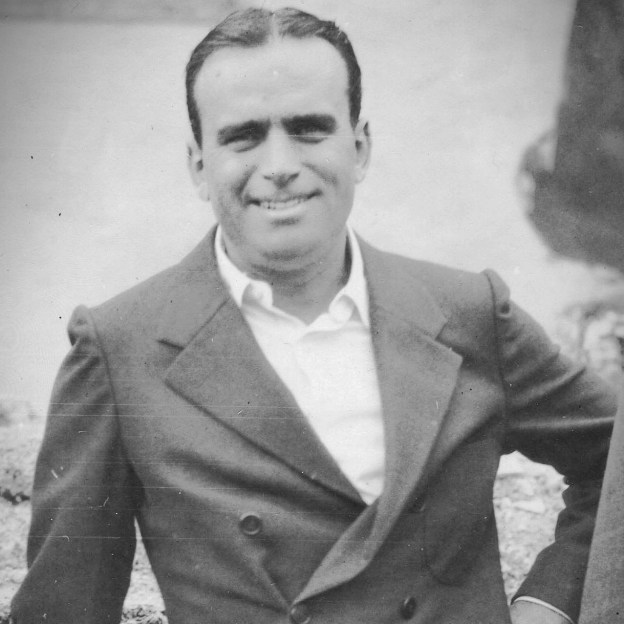
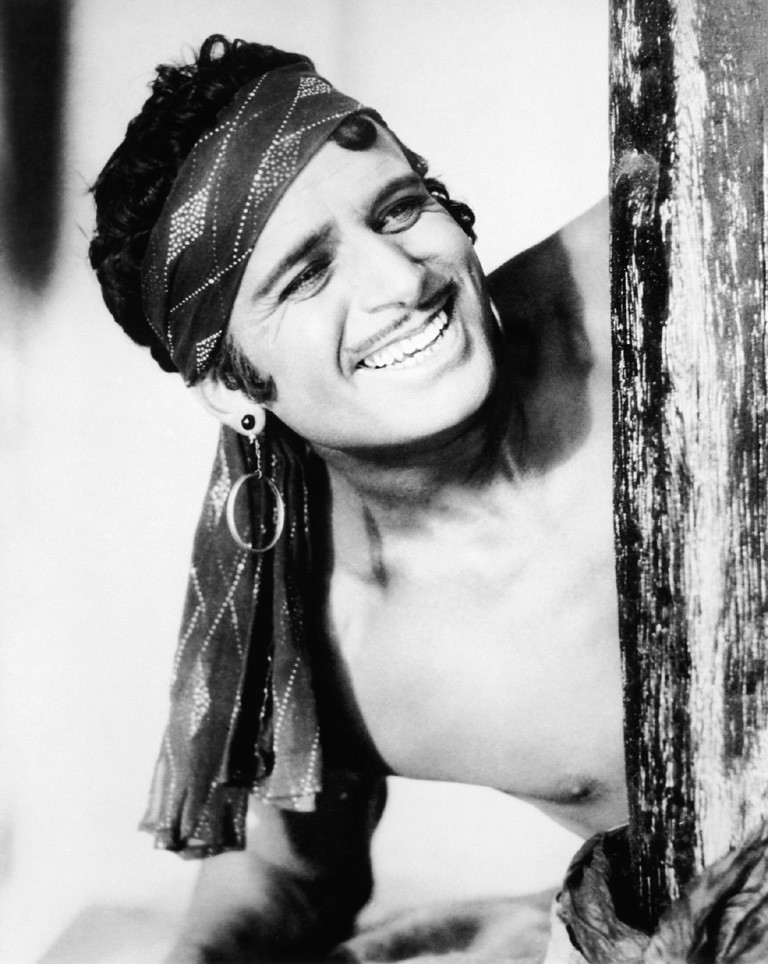
FEATURE image: Silent film superstar and icon Douglas Fairbanks Sr., c. 1917, flashing his trademark toothy smile in a cropped photograph taken in or around 1917. The photograph was taken on location on the massive backlots of Universal Studios at Universal City, California. That year Fairbanks was highly active making dynamic comedies and open-air adventures in Southern California (such as A Modern Musketeer). The original negative is preserved today as part of the official United States Marine Corps History Division Archives.
Douglas Fairbanks, Sr. helped create the modern movie star by transforming himself from a successful Broadway actor into Hollywood’s first great athletic screen hero, using charisma, physicality, and entrepreneurial ambition to become one of silent cinema’s most influential figures and a co-founder of United Artists.
Studio portrait of silent film megastar Douglas Fairbanks Sr., taken at the height of his rise as “The King of Hollywood.” The uncropped image preserves the raw edges of the original 8×10 glass plate negative, revealing the studio backdrop and the photographer’s reference numbers etched along the bottom edge. Photographed in Washington, D.C., in April 1918 by Harris & Ewing, one of the nation’s premier photographic firms, the image comes from a studio renowned for documenting U.S. presidents, visiting dignitaries, and leading cultural figures of the early twentieth century.
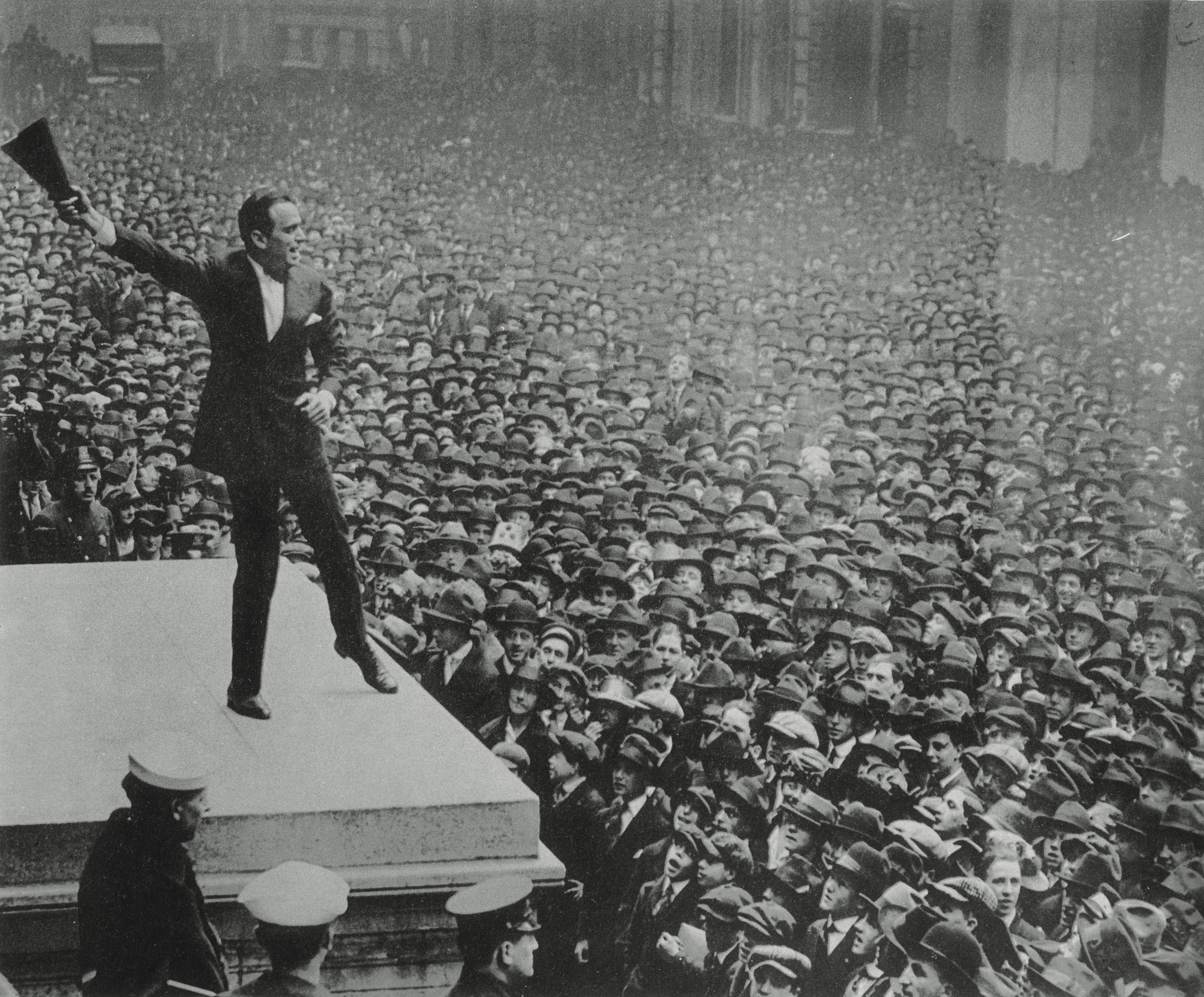
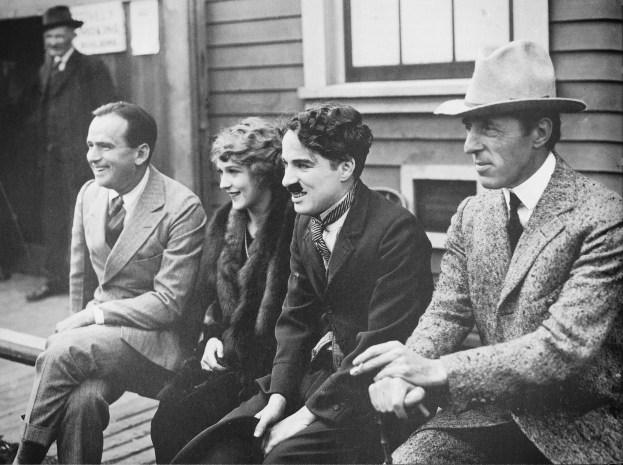
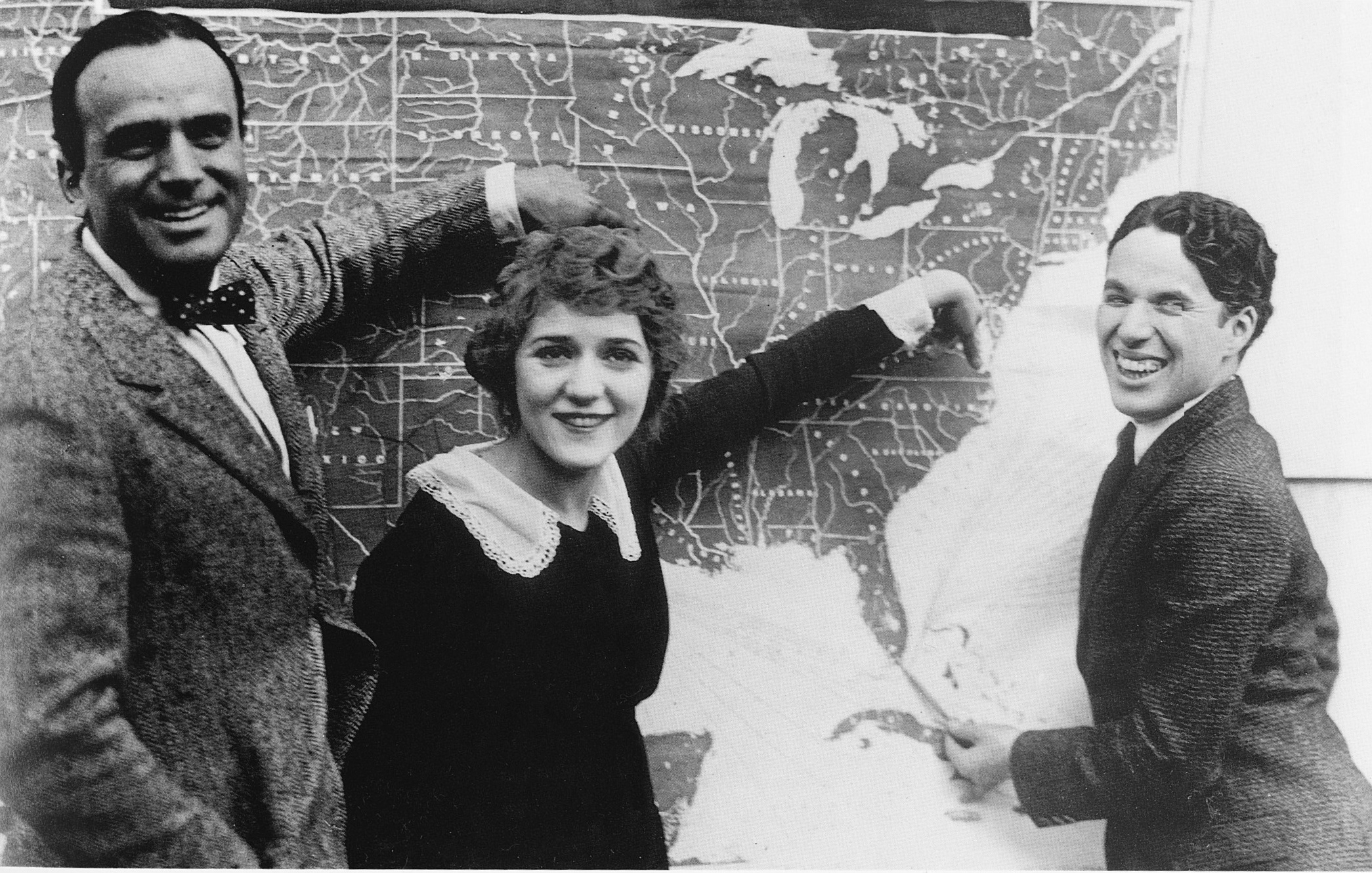
The sitting was part of a major publicity campaign connected to the World War I home-front effort. That spring, Fairbanks joined his close friends and future United Artists partners Charlie Chaplin and Mary Pickford on a widely publicized cross-country tour promoting Liberty Bonds and boosting public support for the war. Along the way, he became a headline attraction at patriotic rallies, including the famous Wall Street event where he hoisted Chaplin onto his shoulders before thousands of spectators.
The Washington studio session provided newspapers, magazines, and patriotic publications with fresh promotional photographs showcasing Fairbanks’s trademark energy and infectious smile, helping carry the Liberty Bond campaign to audiences across the country. Because the images were created as part of a government-associated wartime publicity effort, the original glass negative was ultimately preserved and is now held in the collections of the Library of Congress.No known restrictions on publication. Public Domain.
By John P. Walsh.
Early Life and Family Background
Born in Denver in 1883, Douglas Fairbanks’ mother had been married three times before she had him, the younger of two brothers with his father, an East Coast publisher and lawyer, who had relocated his family to the West. Douglas’s father abandoned the family when he was 5 years old, and the brothers were raised by their mother in Denver. Douglas also had two older half brothers by way of his mother’s previous marriages. With Douglas’s father’s departure, his mother gave her youngest sons her first husband’s surname—Fairbanks.
Stage Beginnings in Denver and New York
Douglas Fairbanks started acting as a youth in summer stock at the historic Elitch Theatre in Denver so that by 1899 Fairbanks was touring with the acting troupe of English Shakespearean actor Frederick Warde (1851-1935). For two seasons Fairbanks was an actor and assistant stage manager with the group.1 Fairbanks moved to New York where he debuted on Broadway in Her Lord and Master in February 1902. The year before, from February 1901 to July 1901, Ethel Barrymore (1879-1959) of the legendary Barrymore acting family became a Broadway star in a new romantic comedy play, Captain Jinks of the Horse Marines, at the Garrick Theatre in New York City. Barrymore’s production ran on Broadway for 168 performances in 1901 and made the 22-year-old actress a star. The turn of 20th century was a time when the theatre was king of the arts – and where, in the new century’s first decade, the nation’s celebrities were born to be made. Her Lord and Master by Martha Morton was first produced in New York, during the spring of 1902. The play, in which Douglas Fairbanks had his first role, met with success, and ran for 69 performances at the Manhattan Theatre (demolished) at 102 W. 33rd Street in New York City.2 The opening night cast for A Case of Frenzied Finance in April 1905 included Douglas Fairbanks playing Bennie Tucker at third-billing. The play, set in the Vanbillon Hotel, ran for less than a month at the Savoy Theatre at 112 W. 34th Street. That theatre opened in 1900 and closed in 1933 and was demolished in 1952.3
A dapper and svelte 22-year-old Douglas Fairbanks played third-bill Bennie Tucker in A Case of Frenzied Finance at the Savoy Theatre in April 1905. It closed after 8 performances. Public Domain.
Broadway Success and Marriage
Fairbanks appeared in A Gentleman from Mississippi from September 1908 to September 1909. On September 22, 1908 (datelined September 21, 1908) The New York Times wrote a blurb regarding a preview that stated: “A Gentleman from Mississippi received its initial performance to-night at the New national Theatre. The play deals with Congressional riots and social life in the National capital. Thomas A. Wise, Douglas Fairbanks, Sue Van Duser, Harriet Worthington and Lola May were in the cast. Mr Wise [1865-1928] and Harrison Rhodes [1871-1929] are the authors of the play.”
A Gentleman from Mississippi ran for 407 performances moving to the Bijou Theatre in NYC.4 In July 1907, 24-year-old Douglas Fairbanks married wealthy Anna Beth Sully (1886-1967) of Rhode Island. The couple had one son who followed his father into the acting business—Douglas Fairbanks, Jr. (1909-2000).
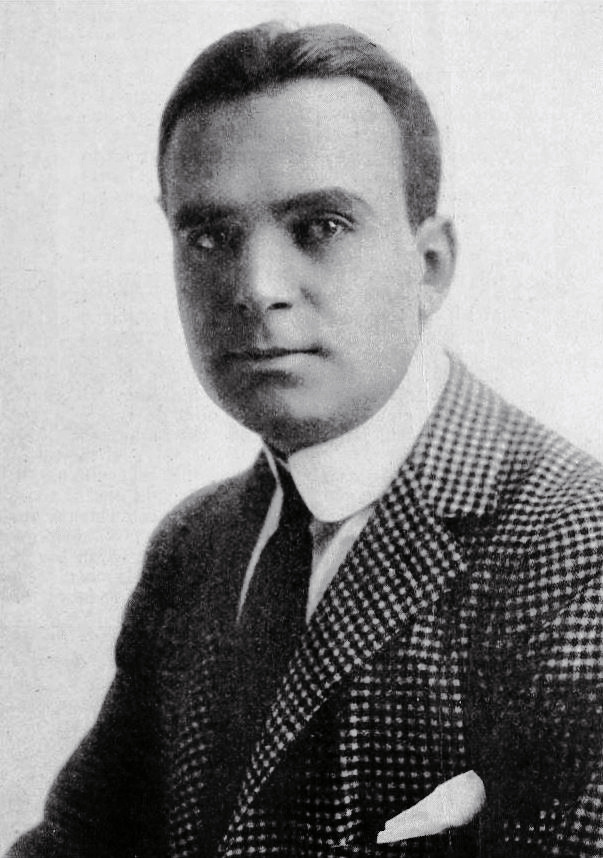
Douglas Fairbanks, c. 1910. Before 1915 Fairbanks established his character type on Broadway of the athletic all-American hero which followed him into films. By 1920 it was this full-blooded romanticism of Douglas Fairbanks that drew the biggest movie-going audiences in the country5https://www.loc.gov/resource/hec.16616/ Harris & Ewing, photographer. Public Domain.
Creating the All-American Hero
It was in November 1912, on opening night of Hawthorne of the USA, a play by J.B. Fagan, that Fairbanks established his character type for stage and screen: the athletic all-American hero.6 With Fairbanks in the starring role as Anthony Hamilton Hawthorne, the play set in Oberon, the small capital of Borrovina, a small independent state somewhere in the mess of Southeastern Europe, ran for 72 performances at the Astor Theatre at 1537 Broadway (45th St.) in New York.7 It was made into a silent film in 1919 starring Wallace Reid (1891-1923) as the American hero.
Athleticism and acrobatic stunts characterized Douglas Fairbanks’ roles on stage since 1912 were translated to his films. They are on full display in A Modern Musketeer, a 1917 silent adventure comedy film produced by and starring Douglas Fairbanks.
In 1915 the Fairbanks moved to Los Angeles – Douglas Fairbanks Sr. had received a lucrative offer from the nascent film industry. It was a three-year contract for $104,000 per year (over $3 million in today’s dollars) to join Triangle films. Exorbitant sums were dangled, often over-ambitiously by producers, to coax legitimate theatre actors to work on the West Coast in film – and under sometimes multi-year contracts. The strategy usually worked but came at a high cost later to a company’s survival and the star’s future. Again, Ethel Barrymore who became a Broadway star in 1901 and national celebrity at 22 years old began to appear in major silent films starting in 1914. Her brothers John and Lionel were already making films and though absolutely devoted to the stage from her youth, Ethel made at least 14 films before returning to the stage full time in 1920. The trend to capitalize on the talents of the stage in film was already underway when Triangle company was formed in 1915 to do just that on a spectacular scale.
Harry Aitken, c. 1910. Public Domain.
Harry Aitken, Triangle Film Corporation, and the Broadway-to-Hollywood Strategy
Harry Aitken (1877-1956) and his brother Roy Aitken (1882-1978) co-founded a film distribution business in Milwaukee in 1906. There had also been a relationship with a Chicago film distributor who established American Film Manufacturing Company production company in 1910. The Aitken brothers relocated to California in 1908 and in 1912, with others, formed the Mutual Film Corporation. One of Mutual’s many subsidiary production and auxiliary units was Keystone Studios, where 24-year-old Charlie Chaplin got his start in films in 1913 at $150 per week (Chaplin was making more than $20,000 a week 5 years later). In 1914 Harry Aitken went into partnership with D.W. Griffith (1875-1948) and, in 1914, founded Reliance-Majestic Studios at 4516 Sunset Boulevard which is today a strip mall.
Following the tremendous success of The Birth of Nation in 1915 with which Harry Aitken was involved so to reap some of its incredible profits, the Aitken brothers and various other companies, such as Reliance-Majestic Studio, departed from Mutual to form a conglomerate of Triangle Film Corporation. The company served as a distributor to other studios in California and Aitken’s plans included sweeping into the fold the best and the brightest of Broadway theatre – which included 32-year-old Douglas Fairbanks. A leading artistic objective for these Hollywood producers was to bring these stage actors’ greatest plays to the screen. Believed to be a worthwhile goal in 1915, before the end of the 1920’s such published plays and other literature while fine for the boudoir reader were problematic to simply translate to the silver screen. The movement towards self-censorship had developed in reaction to the fear the industry would be regulated or outright banned by states. In 1915 there were fewer worries about this as such theatrical artistic fare was expected to attract a better educated movie-goer as well as the Wall Street big-money-type investors who invested in Broadway plays. In one fell swoop Aitken contracted over 60 actors and actresses including Billy Burke (1884-1970), recently married to Florenz Ziegfeld; soon-to-be Western star Dustin Farnum (1874-1929); Shakespearean actor Sir Herbert Beerbohm Tree (1852-1917) who played Macbeth in D.W. Griffith’s lost 1916 film of the same name; and, “Casey At the Bat” DeWolf Hopper (1858-1935).
Douglas Fairbanks, 1916. Public Domain.
The Lamb and the Birth of a Screen Idol
The debut feature from Triangle starred Douglas Fairbanks in The Lamb, a film based on a 1913 stage play that was expanded to have Western cinematic elements. It premiered with two more features on September 23, 1915 at The Knickerbocker Hotel in Fairbanks’ old stomping ground of New York City. Triangle had in-house three master directors – D.W. Griffith, Mack Sennett, and Thomas Ince. D.W. Griffith had a hand in The Lamb, though its directing and screenplay credits went to 27-year-old W. Christy Cabanne (1888-1950). The Lamb was a hit with audiences, and critics praised Fairbanks’ performance marked by his celebrated physicality.8 The film had a nationwide release that November 1915. Although not yet a movie star, Fairbanks saw his weekly salary doubled. By His Picture in the Papers, a 1916 silent comedy film for Triangle that provided stunts for Fairbanks to wrap his athleticism around, Fairbanks became a popular screen idol. Fairbanks made 13 films for Triangle and when his contract expired, Harry Aitken was paying him $10,000 per week.9 Yet, excepting Douglas Fairbanks, Aitken had over bought his stable of stage stars in relation to their poor return so that in 1916 Triangle was known in the industry to be on the verge of collapse.
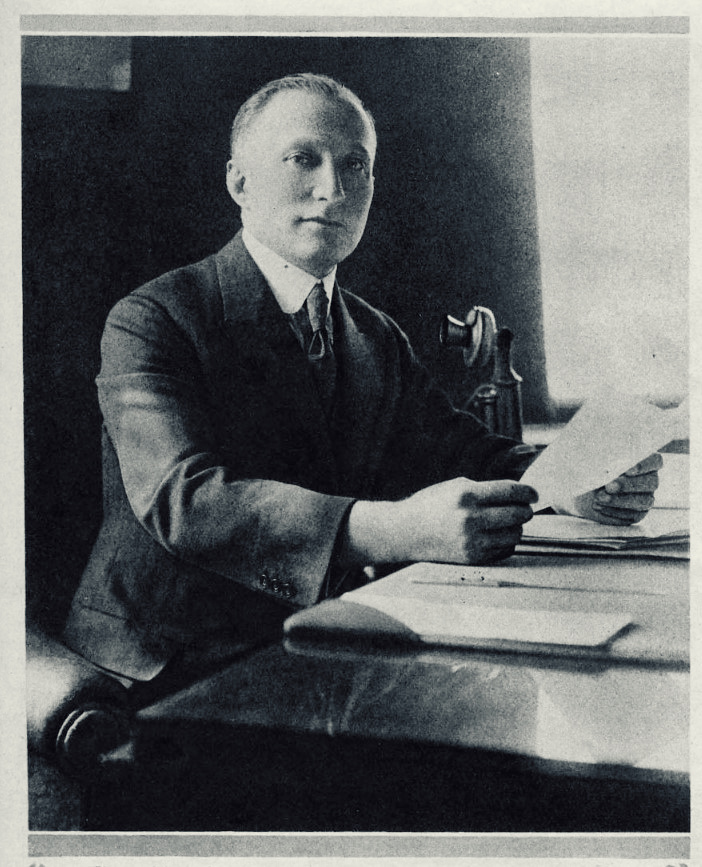
Paramount Pictures’ co-founder Adolph Zukor (1873-1976) was one of the innovators of the motion picture business. In 1916 Zukor convinced Douglas Fairbanks to become the independent producer of his own films. From the May 1922 issue of Motion Picture Classic. Public Domain.https://archive.org/details/MotionPictureClassicMay1922/mode/1up?view=theater
Independent Producer and the Douglas Fairbanks Picture Corporation
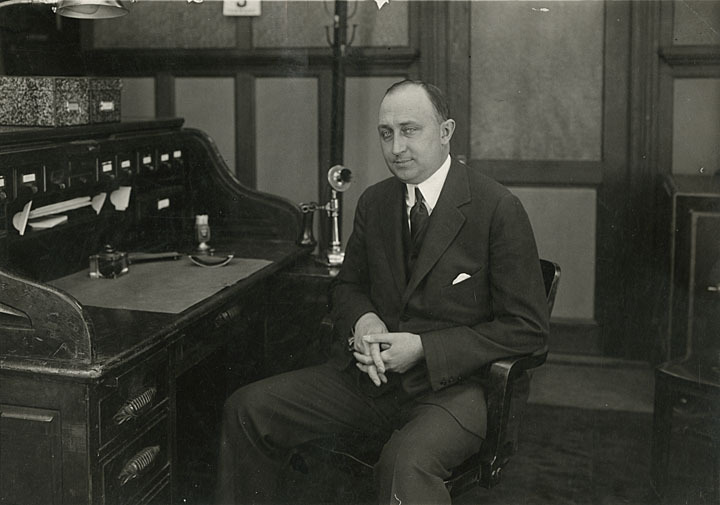
Douglas Fairbanks, Triangle’s star, was convinced by Paramount Pictures’ co-founder Adolph Zukor (1873-1976), believed to be “the business brains of the motion picture industry,”10 to become the independent producer of his own films. This became reality at the end of 1916 with the creation of the Douglas Fairbanks Picture Corporation. Zukor had already worked to do something similar for Mary Pickford’s films.
Douglas Fairbanks and Mary Pickford around 1919. Both movie stars already had established independent productions companies for their own films which still required their distribution – a key aspect of making money in movies – by others. These stars along with comedy star Charlie Chaplin and master director D.W. Griffith founded United Artists in 1919 largelyto establish control of the distribution arm of the movie making business for their independently produced films. In 1919, Douglas Fairbanks divorced his wife, Anita. The following year, Mary Pickford, “America’s Sweetheart,” divorced her husband, Owen Moore, and married Douglas Fairbanks, her paramour since 1916. The American public, which took tremendous interest in these personal affairs, were shocked but hardly surprised by the country’s changing values. Even Douglas Fairbanks’ films between 1915 and 1919 had demonstrated those changing values by way of his athletic, likeable characters drawn to display a comical, good-natured, brash overambitious hero with a popular philosophy of avoiding both boring convention and conventional boredom. While Fairbanks’ dramatis personae would change dramatically in the 1920s from comedies to swashbucklers his already fantastic, attractive and likeable character type was being merely reinforced.11 Glass negative, Harris & Ewing photographer.https://www.loc.gov/resource/hec.30098/ Public Domain.
Fairbanks Productions and the Road to United Artists
As Fairbanks had been lured away by a better offer, so the actor hired his team at Triangle for his own company. Director John Emerson (1874-1956) and screenwriter Anita Loos (1888-1981) – to be husband and wife in 1919 – had successfully collaborated on Fairbanks’ movie hits at Triangle and even D.W. Griffith valued the pair as among the best film editors in the business after working on Intolerance in 1916. Emerson had directed important films at Triangle in 1916 featuring Douglas Fairbanks including His Picture in the Papers, The Americano, and The Mystery of the Leaping Fish. These Emerson-directed films were followed in 1917 by In Again, Out Again, Wild and Woolly, Down to Earth, and Reaching for the Moon, all for Douglas Fairbanks Productions. In 1918 Fairbanks made 5 more romantic comedies and one melodrama called Arizona, a film now lost. Despite a film receiving perhaps a mixed review from critics or being subject to local censorship, Douglas Fairbanks’ films proved box office gold due to his star power. In 1918 and moving into 1919 Fairbanks had become a millionaire, screen idol and soon to be co-founder of his own movie studio, United Artists.
John Emerson and Anita Loos in 1918. These two creative individuals who married in 1919 worked closely as director, screenwriter, and film editorwith Douglas Fairbanks as well as D.W. Griffith at Triangle films and later at Douglas Fairbanks Picture Corporation. They helpedmake some of the most popular and critically-acclaimed films in the industry at that time. Public Domain.
Down to Earth is a 1917 American comedy romance film produced by and starring Douglas Fairbanks with Irish-born actress Elaine Percy. Directed by John Emerson with a screenplay co-written by Anita Loos, the film features Fairbanks as Bill Gaynor who sets out to prove the outdoors and self-reliant manual labor are better for health than any modern medical treatment. He does this by kidnapping a group of hypochondriacs from a clinic that includes a girl, Ethel Forsythe (Percy). Bill is interested in her, but she refuses his proposals. Finally, after proving his point on a “deserted island” that is next to a California freeway, Bill bids farewell to the revived group of patients and escapes with his awaiting love interest, Ethel, into the sunset by rowboat. The film is in the Public Domain.
The most popular silent film stars on the road selling Liberty bonds in 1918 were Charlie Chaplin, Mary Pickford, and before a massive crowd on Wall Street in New York City, Douglas Fairbanks. In 1918 Fairbanks and Chaplin decided to hire private detectives to spy on their respective studios, Paramount Pictures and First National. They were told that the studios were going to put a stop to their exorbitant salaries and not renew their contracts.12 The positive audience response from the Liberty drives and a fear of a corporate merger that would end star leveraging power, led directly to Fairbanks, Chaplin, Pickford, and master director D.W. Griffith, to found United Artists in January 1919. Public Domain.
Conclusion
As the curtain fell on the theater-dominated nineteenth century and rose on the age of motion pictures, Douglas Fairbanks emerged as a defining titan of the new medium. At a pivotal moment when the art and business of film were still being invented from scratch, Fairbanks helped construct the very blueprint of modern movie stardom. He achieved this through a potent combination of infectious optimism, explosive athletic vigor, and an instinctive, unparalleled screen charisma.
More than just a box-office darling, Fairbanks became the ultimate symbol of silent-era ambition and untamed possibility. He radically disrupted the industry by challenging rigid studio monopolies, pioneering artist-led production as a co-founder of United Artists. In doing so, Fairbanks established a revolutionary model of creative freedom, global celebrity, and entrepreneurial control that reshaped the landscape of Hollywood and the business of filmmaking for generations. Ultimately, his career mirrored Hollywood’s own meteoric rise, ensuring his towering influence would endure long after the silent era that made him famous had passed into history.
NOTES:
1. Goessel, Tracey. The First King of Hollywood; The Life of Douglas Fairbanks. Chicago Review Press, 2016.
8. Lombardi, Frederic (2013). Allan Dwan and the Rise and Decline of the Hollywood Studios. McFarland. pp. 53–54.
9. United Artists, Volume 1, 1919–1950: The Company Built by the Stars, Tino Balio, University of Wisconsin Press, 2009. p. 143.
10. Quoted in the May 1922 issue of Movie Picture Classic, p. 26.
11. A Short History of the Movies, Gerald Mast, Indianapolis: Bobbs-Merrill Company, Inc., 1976, pp. 124; 127 and The Liveliest Art: A Panoramic History of The Movies, Arthur Knight, New York: MacMillan Publishing, 1978, p 107.
12. Chaplin: His Life and Art, David Robinson, New York: McGraw-Hill Book Company, 1985, p. 267.
BIBLIOGRAPHY:
A Short History of The Movies, Gerald Mast, The Bobbs-Merrill Company, Inc. Indianapolis, 1977.
David Robinson, Chaplin: His Life and Art. New York: McGraw-Hill Book Company, 1985.
Hollywood: The Pioneers. Kevin Brownlow and John Kobal, New York: Alfred A. Knopf Inc. A Borzoi Book,1979.
History of the American Cinema, Volume 5, 1930-1939, Charles Harpole, General Editor, New York: Charles Scribner’s Sons, 1993.
The American Film Industry, ed. Tino Balio, University of Wisconsin Press, 1976.
The Hollywood Story, Joel W. Finler, New York: Crown Publishers, Inc., 1988.
The Liveliest Art: A Panoramic History of The Movies, Arthur Knight, New York: MacMillan Publishing, 1978
The United Artists Story, Ronald Bergan, Crown Publishers, Inc., New York, 1986.
United Artists, Volume 1, 1919–1950: The Company Built by the Stars, Tino Balio, University of Wisconsin Press, 2009
An iconic production still showing Douglas Fairbanks Sr. flashing his famous smile as his character, Ahmed, in the 1924 landmark silent film fantasy epic, The Thief of Bagdad. In the promotional shot distributed by United Artists in 1924 he famously paired a patterned, wrapped head scarf with prominent matching hoop earrings as the movie star starred in what is universally classified as an epic swashbuckler. Public Domain.
FEATURE image: Full-length, black-and-white portrait of the English comic actor and filmmaker Charlie Chaplin in his famous “The Tramp” character, 1915. See details below. Public Domain.
Charlie Chaplin’s rise between 1913 and 1918 illustrates how exceptional talent, business acumen, and a determination to gain creative control transformed him from a touring stage performer into the world’s most famous film comedian and one of the first independent movie auteurs.
Charlie Chaplin (1889–1977) taken circa 1915 to 1916 during Chaplin’s massive surge in popularity while he was under contract with the Essanay Film Manufacturing Company (1915) or right as he transitioned to the Mutual Film Corporation. This is a famous publicity headshot meant to show the public the “real” man behind the slapstick makeup. At the time, audiences worldwide only knew him as the scruffy Little Tramp.
Studio portraits like this shocked fans by revealing that Chaplin was a remarkably handsome, sharp-dressing young man in his mid-20s without his fake mustache, baggy clothes, and heavy eyeliner instead dressed in a formal, well-tailored dark three-piece suit, a high stiff-collared white shirt, and a distinct polka-dot bowtie. Chaplin didn’t sign his historic million-dollar deal with First National Pictures until late 1917, building his own Hollywood studio to produce films for them in 1918. Public Domain.
From Keystone to First National: Charlie Chaplin’s Rise to Global Stardom, 1913-1918.
Discovered in America
Twenty-four-year-old Charlie Chaplin arrived in the United States in 1913 as a member of Fred Karno’s famous English music hall and pantomime troupe. During the tour, his remarkable comic talents attracted the attention of film producer Mack Sennett, founder of Keystone Studios.
Chaplin was discovered in the United States in 1913 while touring with an English vaudeville and pantomime troupe and was hired by Mack Sennett’s Keystone Studios.
Chaplin signed a contract with Keystone Comedies for $150 a week, roughly three times what he had earned in vaudeville and music halls. More importantly, the position introduced him to the rapidly expanding motion picture industry and its enormous commercial potential.
In his first year at Keystone, Chaplin appeared in an astonishing 35 films. The short one- and two-reel format proved ideal for developing his most famous screen creation, “the Tramp,” a lovable, resilient underdog recognizable by his bowler hat, cane, oversized shoes, and distinctive walk. Audiences embraced the character immediately, and Chaplin became one of the first true movie stars of the silent era.
At Keystone, he created and refined the “Tramp” character and became an overnight film sensation through a remarkable output of short comedies.
Full-length, black-and-white portrait of the English comic actor and filmmaker Charlie Chaplin in his famous “The Tramp” character costume of tight-fitting jacket, oversized baggy trousers, a collared shirt with vest, large worn-out shoes, and signature bowler hat. One hand is on his hip while the other holds his thin cane, which rests on the floor. The Tramp stands with his feet turned outward and has his trademark small toothbrush mustache and heavily lined eyes, looking directly forward with a slightly melancholy expression.
The portrait was taken in 1915 by American photographer JuliusStrauss-AlbertPeyton Studio. The promotional photograph was made during Charlie Chaplin’s meteoric rise to global fame, specifically around the time he signed with the Essanay Film Manufacturing Company. Chaplin had spontaneously created “The Tramp” (or “Little Tramp”) costume just a year prior in early 1914 while working at Keystone Studios. This exact image became one of the definitive, universally recognized marketing portraits of the era. It was reproduced globally on movie posters, sheet music, and merchandise to promote his foundational silent films, cementing the Tramp as a permanent fixture of film history. PHOTO: “Charlie Chaplin” by tonynetone is licensed under CC BY 2.0.
Edna Purviance: Chaplin’s Leading Lady. Charlie Chaplin and Edna Purviance (1895-1958) share the screen in this classic clip from A Dog’s Life (1918), featuring Granville Redmond (1871-1935) as the dance hall proprietor. Beginning in 1915, Purviance became a key figure in early cinema as Chaplin’s principal leading lady. She brought charm and depth to many of his greatest silent films, appearing in more than 30 films with him through 1923.
Purviance’s natural screen presence and understated acting style complemented Chaplin’s comic genius. Among their collaborations was A Dog’s Life (1918), in which she played the female lead opposite the Tramp. The film also featured landscape painter Granville Redmond (1871-1935), a close friend of Chaplin, in the role of a dance hall proprietor.
The Essanay Years: Creative Freedom and Financial Success
Although Mack Sennett wanted to retain his breakout star, the Chicago-based Essanay Film Manufacturing Company successfully lured Chaplin away in late 1914. The new contract paid him $1,250 a week and, just as importantly, gave him the opportunity to exercise greater creative control over his films.
Chaplin made 14 films for Essanay between 1915 and early 1916. During this period, he refined the Tramp character, blending comedy with sentiment and human emotion in ways that distinguished his work from the rough-and-tumble slapstick then common in silent film comedy.
His move to Chicago’s Essanay Film Manufacturing Company brought a dramatic salary increase and greater artistic control over his films.
The financial rewards were substantial for both artist and studio. While Chaplin earned unprecedented sums, Essanay profited even more from the immense popularity of his films, helping transform both Chaplin and the company into major forces within the motion picture industry.
Mutual Film Corporation and Comic Mastery
In early 1916, Chaplin signed a groundbreaking contract with Mutual Film Corporation that elevated him into the highest ranks of entertainment. The agreement paid him approximately $670,000 annually, or $10,000 a week, an extraordinary amount at the time and the equivalent of hundreds of thousands of dollars per week today.
By this point Chaplin was not merely a popular comedian. He had become an international cultural phenomenon whose fame extended across Europe and North America.
The Mutual period is often regarded as one of the most artistically successful phases of Chaplin’s career. During 1916 alone he produced twelve films, including:
At Mutual Film Corporation, Chaplin became the highest-paid entertainer in the film industry and produced a series of silent comedy classics that established his international reputation.
The Floorwalker
The Fireman
The Vagabond
One A.M.
The Count
The Pawnshop
Behind the Screen
The Rink
Chaplin followed these with four additional films in 1917. Collectively, the Mutual comedies demonstrated a remarkable combination of physical comedy, character development, storytelling, and technical craftsmanship that raised screen comedy to a new artistic level.
By the beginning of 1918, the still youthful Chaplin had become one of the world’s most celebrated filmmakers. His fame opened doors to prominent artists, writers, performers, and cultural figures across the globe.
Becoming an Independent Producer
Recognizing Chaplin’s unmatched drawing power, Mutual offered him a lucrative renewal contract worth $20,000 per week, with the studio covering production costs. Yet Chaplin wanted more than a salary. He wanted artistic independence and a direct share of the profits generated by his films.
Instead, he signed with First National Exhibitors’ Circuit. The new agreement matched Mutual’s financial terms, included a signing bonus of $15,000, and granted Chaplin substantial control over his productions.
Rather than remain a highly paid employee, Chaplin pursued profit-sharing and creative independence, signing with First National. By 1918, with A Dog’s Life, Chaplin was producer, writer, director, and star of his films, demonstrating full artistic authority over his work.
Although Chaplin assumed responsibility for production expenses, he benefited from profit-sharing arrangements – 50% share in its box office – and retained unprecedented authority over every aspect of filmmaking. As producer, writer, director, editor, and star, he was increasingly shaping his career on his own terms.
The arrangement effectively made Chaplin an independent producer, controlling both the artistic direction and financial destiny for his next 8 films. It was a major step toward the complete creative autonomy he would later achieve as a co-founder of United Artists in 1919.
A Dog’s Life and a New Phase of Chaplin’s Career
Chaplin’s first release for First National was A Dog’s Life, which premiered in April 1918.
Running approximately 33 minutes, the three-reel film featured the Tramp and demonstrated Chaplin’s growing sophistication as a filmmaker. Combining humor, pathos, social observation, and romance, the picture is often viewed as a bridge between his shorter comedies and the feature-length masterpieces that would follow.
Chaplin served as producer, writer, director, and star, reflecting the extraordinary level of creative control he had achieved by the age of twenty-eight.
Chaplin on Film: The 1992 Biography Chaplin’s life later inspired the 1992 biographical film Chaplin, directed by Richard Attenborough and starring Robert Downey Jr. in the title role. The comedy-drama film from TriStar Pictures (US). also featured Dan Aykroyd as Mack Sennett, Marisa Tomei as Mabel Normand, Penelope Ann Miller as Edna Purviance, Kevin Kline as Douglas Fairbanks, and Maria Pitillo as Mary Pickford.
One of the film’s most notable aspects was the casting of Geraldine Chaplin, Charlie Chaplin’s daughter, as her grandmother Hannah Chaplin. Although Chaplin received mixed reviews, it earned three Academy Award nominations, including one for John Barry’s acclaimed original score. Barry’s haunting main theme captures both the triumph and melancholy of one of cinema’s most influential pioneers.
Conclusion
Between 1913 and 1918, Charlie Chaplin rose from a touring English music hall performer to the most famous comedian in the world. Through Keystone, Essanay, Mutual, and First National, he steadily gained higher salaries, greater artistic freedom, and increasing control over his work. By the release of A Dog’s Life in 1918, Chaplin had become far more than a movie star. He was a filmmaker, entrepreneur, and creative visionary whose influence would shape the history of cinema for generations.
The time period highlights not only Chaplin’s comic genius but also his evolution into a pioneering filmmaker-businessman whose career pointed toward the creation of artist-controlled enterprises such as United Artists with Mary Pickford, Douglas Fairbanks, and D.W. Griffith in 1919.
Bibliography:
Balio, Tino. “Stars in Business: The Founding of United Artists.” In The American Film Industry, edited by Tino Balio, 135–152. Madison: University of Wisconsin Press, 1976.
Robinson, David. Chaplin: His Life and Art. New York: McGraw-Hill Book Company, 1985.
FEATURE image: United Artists founders in 1919, (Left to right) Douglas Fairbanks (1883-1939), Mary Pickford (1892-1979). Charlie Chaplin (1889-1977) and D.W. Griffith (1875-1948).
United Artists was a revolutionary artist-controlled film company founded in 1919 by Hollywood’s biggest stars that challenged the power of the traditional studio system and pioneered the independent producer-driven business model that eventually became standard throughout the film industry.
By John P. Walsh
It is debated whose brainchild the United Artists Corporation (UA), founded in 1919, ultimately was. Was it Mary Pickford’s and Douglas Fairbanks’ theatrical lawyer and a later UA executive who advised them to found an artist-controlled movie company or UA’s first president, a former U.S Treasury Department official, who suggested Douglas Fairbanks start a distribution company for his films or was it a publicity man for one of the majors who suggested to UA’s first general manager to create a movie studio run by artists for artists – or, finally, was it, as Charlie Chaplin claimed, by way of his elder half-brother Sydney who had hired a pretty girl to spy on another studio’s imminent potential merger and whose culled information led directly to founding their own?1 Whatever or whoever was the conduit or original source, in 1919, four of Hollywood’s legendary film artists — actors Douglas Fairbanks (1883-1939), Fairbanks’ future wife, Mary Pickford (1892-1979), Charlie Chaplin (1889-1977), and “the Father of Film Technique” director D.W. Griffith (1887-1948)- formed United Artists, one of Hollywood’s name-brand film studios.
Charlie Chaplin, Mary Pickford, Douglas Fairbanks, and D.W. Griffith founded United Artists in 1919 to gain control over the production, distribution, and profits of their films rather than remain dependent on major studios.
In April 1918 Douglas Fairbanks, Mary Pickford, and Charlie Chaplin, traveled the country selling Liberty Loans (war bonds). The adulation these stars received everywhere during the tour worked to convince them and others that it was time for them to establish an artist-controlled movie studio which occurred months later in February 1919. Public Domain.
Distinct from other movie studios, UA was especially founded by artists for artists. From His Majesty, The American in 1919 starring Douglas Fairbanks that premiered in New York City at the newly-built Capitol through to The Underdoggs scheduled for 2024, a comedy starring Snoop Dog – and many hundreds of major motion pictures in between – United Artists’ impact on the entertainment industry and culture has been highly significant in that its range of film product envisioned and presaged the artist/ producer-driven film industry that is normal today. Yet United Artists was also more as it allowed independents to make their films free of heavy-handed interference from the higher ups which was often the case at the majors. Such freedom in the marketplace could be risky and United Artists’ survival through the decades is nothing other than extraordinary.
United Artists was created by artists for artists, with the goal of protecting creative freedom and resisting the growing concentration of power among Hollywood studios and distributors.
Alexandria Hotel in downtown Los Angeles where Pickford, Chaplin, Fairbanks and Griffith met in the dining room in January 1919 to finalize plans for the founding of their artist-controlled movie studio called United Artists. Built in 1906, the Alexandria Hotel was a relatively new hotel in 1919 sitting on the southwest corner at 501 South Spring Street. “Alexandria Hotel (Los Angeles)” by Los Angeles is licensed under CC BY-SA 3.0.
The following artist corporate manifesto was released to the press on February 5, 1919. Over 100 years later it remains prescient for many reasons including a warning about the use of technology in filmmaking (“machine-made entertainment”) and freedom of choice for the consumer in terms of viewership (“not force[ing] upon him program films he does not desire”) – A new combination of motion picture stars and producers was formed yesterday, and we, the undersigned, in furtherance of the artistic welfare of the moving picture industry, believing we can better serve the great and growing industry of picture productions, have decided to unite our work into one association, and at the finish of existing contracts, which are now rapidly drawing to a close, to release our combined productions through our own organization. This new organization, to embrace the very best actors and producers in the motion picture business, is headed by the following well-known stars: Mary Pickford, Douglas Fairbanks, William S. Hart, Charlie Chaplin and D.W. Griffith productions, all of whom have proved their ability to make productions of value both artistically and financially. We believe this is necessary to protect the exhibitor and the industry itself, thus enabling the exhibitor to book only pictures that he wishes to play and not force upon him (when he is booking films to please his audience) other program films which he does not desire, believing that as servants of the people we can thus serve the people. We also think that this step is positively and absolutely necessary to protect the great motion picture public fromthreatening combinations and trusts that would force upon them mediocreproductions and machine-made entertainment.2
A Vision Ahead of Its Time
In a short 30 years, by the early 1950’s, with the demise of the studio system and the rise of broadcast television, UA would bring this visionary independent investor and producer driven film product to the world as the business template for how all films in and outside of Hollywood would be made.
From Prestige Studio to Industry Model
In 1919, United Artists was originally conceived as a prestige studio that distributed some of the industry’s best larger budget pictures. By the 1940’s it had evolved to add less expensive film products that met audience demands and kept the studio’s distribution networks humming. As capital and power tends towards concentration in a capitalist economy, the notion for a nimble, relatively low overhead movie-making patron facilitating production planning and distribution of films by independent producers proved a vital idea whose relevancy renewed itself through the years.3
A Different Kind of Studio
In contrast to the major studios, such as MGM, Paramount, Fox, RKO, and Warner Bros., which had production, distribution and exhibition arms, United Artists focused solely on distribution. Unlike the majors, United Artists had no star stable, no studio facilities to speak of, no directors, no technicians, no chain of theaters, no house style, but, functioned as a distribution outlet for independently-made productions.
The Business of Distribution
In that way, UA was responsible for all phases of an independent production company’s film releases. This included the layers of market testing desired, the planning (including some financing) and booking of production releases, sundry marketing, and settlement matters following release. Distribution duties ranged from pre-production to marketing assistance as well as a bird’s-eye evaluation during production.
Getting Films to the Screen
Post-production distribution of motion pictures to the country 23,000 theatres in the 1930’s was an umbrella term for what was really a chain of complex business actions starting at the beginning of a film project to its being shown flickering on a local screen.
Unlike MGM, Paramount, Fox, Warner Bros., and other major studios, United Artists operated primarily as a distribution company for independent producers rather than maintaining its own large production infrastructure.
In the beginning: the 1920’s.
Throughout the silent era’s heyday and ultimate demise—the 1920’s—UA was clearly distributing films of its four founders which was a large reason for the company’s genesis. This soon included bankable silent film stars, such as Gloria Swanson (1889-1983). Lillian Gish (1893-1993), Buster Keaton (1895-1966) and Norma Talmadge (1894-1957). UA had no shortage of money-making hits in the roaring ‘20’s. There were melodramas such as Griffith’s Broken Blossoms (1919) to his Way Down East (1921) and comedies starring Mary Pickford, including Pollyanna (1920) and Little Annie Rooney (1925). Douglas Fairbanks starred in UA crowd-pleasers in roles that in the 1930’s sound era was played by Errol Flynn, such as The Mark of Zorro (1920), The Three Musketeers (1921), Robin Hood (1923) and The Thief of Bagdad (1924).
Douglas Fairbanks, Sr. was a swashbuckling film hero of the 1920’s. Made for $2 million, The Thief of Bagdad in 1924 was the most expensive movie ever made up to that time. Douglas Fairbanks Pictures had simply outdone itself since his 1922 silent film, Robin Hood, made for $1.5 million had been the most expensive motion picture ever made (see – Tino Balio, Grand Design: Hollywood As A Modern Business Enterprise, 1930-1939, New York: Scribner’s Sons, 1993, p. 205). For The Thief of Bagdad, based on the Arabian Nights stories, there were monumental sets constructed – and a fantastic magic carpet ride- which set a new standard for Hollywood production values. In a United Artists’ picture directed by Raoul Walsh (1887-1980), Fairbanks played the lead role of Ahmed the Thief, an exotic athletic romantic role. In this leading man type, Fairbanks was joined by Rudolph Valentino (1895-1926), Ramon Novarro (1899-1968), John Barrymore (1882-1942), John Gilbert (1897-1936), Ronald Colman (1891-1951) and Gilbert Roland (1905-1994). Usually playing opposite sexy, mysterious heroines such as Greta Garbo (1905-1990) and Vilma Banky (1901-1991), Douglas Fairbanks played opposite Julanne Johnston (1900-1988) in this silent action film. Douglas Fairbanks Sr.” by twm1340 is licensed under CC BY-SA 2.0.
United Artists’ 1924 silent classic, The Thief of Bagdad, was written, produced and starring Douglas Fairbanks.
Mary Pickford in 1920 in Los Angeles. Pickford was “America’s Sweetheart” and one of the highest paid film stars of the silent era. Pickford made about 50 feature films over which she exercised complete control. As a cofounder of United Artists Pickford exercised direct influence over scores of Hollywood releases for more than 30 years. Portrait by Nelson Evans. Public Domain.
Master of film technique, D.W. Griffith, with Dorothy and Lillian Gish. In 1908 Griffith was paid $5 a day as a scene writer and actor. Seven year later, in 1915, with Griffith’s Birth of a Nation the film director was a millionaire. Made for $100,000, that film generated $18 million at the box office (see – Tino Balio, “Stars in Business: The Founding of United Artists” in The American Film Industry, ed. Tino Balio, University of Wisconsin Press, 1976, p.144). “D.W.Griffith, Dorothy & Lilian Gish” by oneredsf1 is licensed under CC BY-NC-SA 2.0.
Lillian Gish in 1922 by an unknown photographer. In D.W. Griffith’s Broken Blossoms released by United Artists in 1919, Gish plays young girl, Lucy Burrows, who is abused by her alcoholic prizefighting father, and who meets Cheng Huan, a kind-hearted Chinese man who falls in love with her. In a film career that spanned from 1912 to 1987 – including a directorial debut in 1920 – Gish was called the “First Lady of American Cinema.” “Lillian Gish by unknown photographer, ca. 1922” by trialsanderrors is licensed under CC BY 2.0. Public Domain.
Screenshot ofBuster Keaton in The General, released by United Artists in 1927. The film was an example of a speculative bare bones film studio gone awry. UA president Joseph Schenck had lent Buster Keaton productions (his brother-in law) $750,000 for the silent action film that essentially broke even and prompting UA’s facilitating Buster Keaton’s move to a more watchful MGM for future projects. Public Domain.
The studio became a home for some of the biggest filmmakers and stars of the twentieth century, including Gloria Swanson, Buster Keaton, Samuel Goldwyn, Walt Disney, David O. Selznick, and many others.
Gloria Swanson, born in Chicago, was, at 26 years old, considered the most bankable silent film star of the time. In a successful career in film since 1918, she signed with United Artists in 1925 with UA chairman of the board Joseph Schenck who was brought in the year before. It was a six-picture distribution deal, and her production company was advanced financial loans through United Artists’ own Art Cinema Corporation subsidiary. Swanson also agreed to invest in UA by buying $100,000 of preferred stock. These financial terms proved difficult for Swanson to repay later and required the services of financier Joseph P. Kennedy (1888-1969) who reconfigured her business portfolio to meet her obligations and produced one of her films.4 Meanwhile, her UA debut, The Love of Sunya, basically broke even. Swanson made two other UA films that were critical and financial successes –Sadie Thompson in 1927 with director Raoul Walsh (1887-1980) and The Trespasser, one of Swanson’s few sound films. The latter was directed by Edmund Goulding (1891-1959) and produced by Kennedy in 1929. For both of these films, Gloria Swanson received Academy Award nominations for Best Actress.
Gloria Swanson, c. 1923. Swanson signed with UA for a six-picture deal. Though the actress adapted well to talkies, Swanson remained the consummate silent screen film star. “smokin turban gloria swanson, c.1923” by carbonated is licensed under CC BY-NC-SA 2.0. Public Domain.
Kennedy family, c. 1923. Joseph P. Kennedy, an imaginative and successful businessman, was the financial advisor to Gloria Swanson in 1927 and film producer for Queen Kelly, a United Artists release, in 1928. The future president of the United States, John F. Kennedy, is seated to the left. Public Domain.
English film director Edmund Goulding (1891-1959) helping William Twiddy and “Bill” Easton kiss while making a film in 1927. Public Domain.
As its founders first looked to protect their public image and screen product, United Artists opened its doors to an array of outside suppliers expanding their business operations. In 1929 UA produced 18 pictures – a company record – and, in the next few years, was expanding to distribute films of Samuel Goldwyn, Howard Hughes, Joseph Schenck, Walt Disney, Alexander Korda, David O. Selznick, and Walter Wanger, among others. With the onset of talkies in 1927 and the Great Depression in 1929 the new pressures on the movie studios were enormous.
Best of Times,Worst of Times: The 1930’s.
While having built their reputation on silent film stars and watching their film output dwindle 25% in the early 1930’s, UA benefited from the management of Joseph Schenck (1876-1961) who facilitated the release of several popular money-making features by Samuel Goldwyn (Palmy Days), Howard Hughes (The Front Page – nominated for an Academy Award for Best Picture), Charlie Chaplin (City Lights) and Alexander Korda (The Private Life of Henry VIII).5
Actor Toby Wing (1915-2001) was an actress and showgirl, once called “the most beautiful chorus girl in Hollwood.” In 1931 she became one of the first Goldwyn Girls and started her film career in Palmy Days (1931), a United Artists release starring Eddie Cantor. In 1933, she was the blonde in 42nd Street in the ‘Young and Healthy’ number with Dick Powell – a film that singlehandedly saved Warner Bros. in the throes of the Great Depression. Sam Goldwyn, imitating the Ziegfeld Follies, looked to create a chorus line for his films where the producer insisted each actress in the Goldwyn line-up “must look as though she had just stepped out of a bathtub. There must be a kind of a radiant scrubbed cleanliness about them which rules out all artificiality.” In a memorable if short film career – Toby Wing retired at 23 years old – her roles were small, often uncredited, and, before the introduction of the Production Code in 1934, frequently risqué. In 1934 she played Consuelo of Claghorne to Cary Grant’s Dr. Maurice Lamar in Paramount Pictures’ rom-com, Kiss and Make-Up and, in 1937, in True Confession, starring Carole Lombard. When, in 1938, at 22 years old, she married “Dick” Merrill, a dashing airmail pilot 20 years her senior, observers didn’t expect the union to last. Wing promptly retired from show business and the newlyweds moved to Florida where Merrill had a reliable Florida-to-New York City route. Wing had two children with Merrill, became a successful real estate agent and the couple stayed together for 44 years until Merrill’s death in 1982. While Toby Wing may have been one more zany platinum blonde that Hollywood and its audiences adored, she possessed an on-screen radiance that found her honored in 1960 with a star on the Hollywood Walk of Fame. Toby Wing died in 2001 at 85 years old. “Toby Wing; (1915 – 2001)” by Movie-Fan is licensed under CC BY-NC-SA 2.0.
Adolphe Menjou (1890-1963) starred as newspaper editor Walter Burns in The Front Page produced by Howard Hughes and distributed by United Artists in 1931. When the remake of the film by Howard Hawkes was released in 1940 by Columbia Pictures, it was renamed “His Girl Friday” with Cary Grant in the Walter Burns role. For his performance in 1931, Adolphe Menjou as Walter Burns received an Academy Award nomination as Best Actor. “Adolphe Menjou” by twm1340 is licensed under CC BY-SA 2.0.
Charlie Chaplin’s City Lights (1931) released by his United Artists –here with Virginia Cherrill (1908-1996) as the visioned-impaired flower girl – was a silent film though made in an era when talkies were most wildly popular. While a tender relationship blossomed between Chaplin’s tramp and the flower girl in the film, on the set, in real life, Chaplin almost fired Cherrill for not meeting his threshold for professionalism. Ultimately, Chaplin didn’t follow through on his threat because it would be prohibitively expensive to find and film a replacement. Independent film production companies, even when it is a famous star and movie studio owner, often had to follow a tighter budget than the majors. “City Lights,” one of Chaplin’s classic films, became one of that year’s blockbusters and helped UA make money during the Great Depression. “City Lights” by Mgmax is licensed under CC BY-NC 2.0.
United Artists released many landmark films across the silent era, Golden Age Hollywood, and modern cinema, helping shape American film culture for decades.
Building a Smarter Business Model
In 1926, Joseph Schenck made a visionary move when he established the United Artists Theatre Circuit, selectively acquiring first-run theaters in major markets to exhibit UA films. The strategy strengthened United Artists’ position in the industry and encouraged the major studios to work more cooperatively with a formidable competitor while also showing UA productions in their own theaters.
A Lean Studio in Hard Times
Unlike MGM, Paramount, Warner Bros., Fox, and RKO, United Artists did not own a vast theater chain. Collectively, those major studios controlled approximately 15 percent of the nation’s theaters. Yet UA’s lack of extensive theater holdings proved advantageous during difficult economic times. When the Great Depression caused declines in movie attendance and real estate values, United Artists was less exposed to the financial losses suffered by the vertically integrated majors.
The company’s lean organizational structure also resulted in lower operating costs. With a smaller staff and fewer fixed expenses, United Artists was better positioned to weather economic downturns and avoid the large-scale layoffs that affected many competitors.
New Approaches to Film Financing
Under Schenck’s leadership, United Artists expanded beyond traditional lending arrangements and began investing directly in future productions through profit-sharing agreements. This approach supplemented the company’s existing practice of advancing funds to producers who repaid loans with interest after a film’s release (Gloria Swanson’s deal). Such financing arrangements helped attract independent filmmakers while allowing UA to share in the success of profitable productions.
The Twentieth Century Partnership
In 1933, Schenck joined forces with Darryl F. Zanuck (1902-1979), formerly of Warner Bros., to create Twentieth Century Pictures. The partnership quickly became one of United Artists’ principal production sources, and Twentieth Century Pictures supplied most of UA’s films in 1933 and 1934.
However, after Schenck was denied a partnership position at United Artists in 1935, he departed the company.6 He then merged Twentieth Century Pictures with Fox Films to form Twentieth Century-Fox, becoming chairman of the new studio.
Leadership Vacuum and Talent Drain
Schenck’s departure created a major challenge for United Artists. The loss of its leading producer left the company without strong executive leadership, a situation that arguably was not fully resolved until the arrival of Arthur Krim and Robert Benjamin in the 1950s.
Following Schenck’s exit, several prominent filmmakers and producers gradually left the company. Although such movement was common in the motion picture industry, particularly among independent-minded figures seeking new opportunities, the departures weakened United Artists’ creative base. Walt Disney moved to RKO in 1936, Samuel Goldwyn followed in 1940, and William Wanger departed for Universal Pictures in 1941.
Searching for a New Future
Only after World War II did United Artists’ surviving founders, Mary Pickford and Charlie Chaplin, seek dynamic new leadership for the company. Their search came at a critical moment, as the traditional Hollywood studio system was beginning to decline and television was emerging as a powerful new competitor. Ironically, the effort to reinvent United Artists would ultimately lead to the departures of Pickford and Chaplin themselves, marking the end of the studio’s founding era.
Joseph Schenck. Joseph M. Schenck Productions became Art Cinema Corporation in 1926. In addition to Buster Keaton, Norma Talmadge (Schenck’s wife) and Gloria Swanson, Schenck through United Artists Studio (Art Cinema using Pickford and Fairbanks’ studio) produced scores of pictures in the 1920’s by Rudolph Valentino (The Son of the Sheik in 1926), John Barrymore (The Beloved Rogue in 1927) and Dolores Del Rio (Evangeline in 1929). In 1927 Schenck had brought in Samuel Goldwyn to United Artists. In 1933 Schenck and Darryl F. Zanuck (1902-1979), formerly of Warner Bros., formed Twentieth Century Pictures. In 1935 Schenck and Zanuck left United Artists to form Twentieth Century-Fox studio. It had been mainly Charlie Chaplin who resisted Schenck’s vision for a more comprehensive movie studio like the majors that hastened Schenck’s ultimate departure. Chaplin looked to continue the vision of United Artists for pictures that reflected the specialized talents of its independent creators (see – Tino Balio, “Stars in Business: The Founding of United Artists.” in The American Film Industry, ed. Tino Balio, University of Wisconsin Press, 1976, p.151).Public Domain.
In 1933, Alfred Newman, then under contract to United Artists, wrote the now‑iconic 20th Century‑Fox fanfare as a commission from Darryl F. Zanuck for his new Twentieth Century Pictures. That same year, Joseph M. Schenck and Zanuck—recently departed from Warner Bros.—formally launched Twentieth Century Pictures under the United Artists banner. In 1935, Schenck and Zanuck left United Artists and merged Twentieth Century Pictures with the Fox Film Corporation, creating 20th Century‑Fox. The fanfare was retained and became permanently tied to the studio’s identity. In 1953, Newman expanded the fanfare with a soaring, widescreen arrangement written specifically for the debut of the studio’s new CinemaScope format.
Selznick, United Artists, The Film That Got Away
Meantime, in 1935 David O. Selznick (1902-1965) joined UA and released his pictures – in 1936, Little Lord Fauntleroy and The Garden of Allah; in 1937, A Star is Born, The Prisoner of Zenda, and Nothing Sacred; in 1938, The Adventures of Tom Sawyer and Young at Heart; and, in 1939, Made For Each Other and Intermezzo, starring Ingrid Bergman who Selznick introduced to American film audiences. These films were jewels for UA and made a fortune for the studio. Selznick International Pictures’ Gone With The Wind should have been released through UA but part of the condition of MGM lending Clark Gable to the project was that the film would be distributed by Gable’s home movie studio.
Ingrid Bergman (1915 – 1982) was a 23-year-old Swedish actress when she was introduced to U.S. film audiences after she appeared in David O. Selznick’s 1939 film production, Intermezzo. co-starring Leslie Howard and released by United Artists. “Ingrid Bergman 1915 – 1982” by oneredsf1 is licensed under CC BY-NC-SA 2.0
Other Major UA Releases of the Late 1930s and Samuel Goldwyn Departs
Other notable films from the 1930s released by UA included Walter Wanger’s Trade Winds (1938), John Ford’s Stagecoach (1939), and Samuel Goldwyn’s Wuthering Heights (1939). Before Goldwyn’s departure in 1940 under circumstances not unlike Joseph Schneck in 1935 – a star producer wanting to buy in or buy out UA- he left to form his own movie enterprise after 50 critically acclaimed and money-making films in 14 years for United Artists.
Carole Lombard (1908-1942), well known screen actress shown on the courthouse steps in Carson City, Nevada, on August 18,1933 following her divorce from her husband, William Powell. A rising comedian originally from Indiana, Lombard appeared in the 1937 Technicolor screwball comedy feature film, Nothing Sacred. From Selznick International Pictures, the film was released by United Artists as part of an agreement Selznick made with the movie studio to release a dozen films in a 10-year period. “Carole Lombard 1908 – 1942” by oneredsf1 is licensed under CC BY-NC-SA 2.0.
The War Years.
Selznick’s Successes in the 1940s
In the 1940’s Selznick released Rebecca (1940), Since You Went Away (1944), I’ll Be Seeing You (1945) and Spellbound (1945) through UA.
The Wartime Movie Boom
Seeking diversion, news information, and community camaraderie, America continued to go to the movies in record numbers before and during World War II (1939-1945). In 1938 there were 80 million tickets sold every week.7 The U.S. population in 1940 was about 130 million people and in pre-Pearl Harbor 1941 about 55 million of them (about 40% ) attended the movies each week. 8 In three years, by 1944, weekly attendance numbers nearly doubled to 100 million people – or about 75% of the U.S. population.9 By comparison, starting in the early 1970’s and through to today, the trend is very different. About 10% of the population may attend the movies each week at movie theatres.
Hollywood During World War II
The early 1940’s was booming times for the movie industry whose contemporaneous films often extolled democracy’s virtues as well as a sentimental Homefront along with providing the outright escapist fare such as Westerns, comedies and musicals.
United Artists Falls Behind and the Post-War Decline
Despite this prosperity UA’s film product was mostly undistinguished in this period and their income fell slightly from the end of the pre-war period.10 After the war, movie attendance levels dropped as people returned to start families and go back to school and work. In response, the movie industry released less product – and the decline spiraled so that by the end of the decade of the 1940’s UA was in debt and ripe for a takeover
In 1949 Orson Welles starred in Black Magic, an 18th century costume drama, released by United Artists. Welles played Count Cagliostro, a legendary hypnotist, conjurer, showman and charlatan. The film co-starred Nancy Guild (1925-1999) as Marie Antoinette and her supposed double, Lorenza, whom the Count plots to replace at the Dauphin’s side and control France. The film received mixed reviews. The photograph of Welles in 1949 is from The Third Man. “The Third Man (1949)” by twm1340 is licensed under CC BY-SA 2.0.
Lucille Ball (1911-1989) in the mid 1940’s. Lucy appeared in the stylish atmospheric “Lured,” a United Artists release, in 1947. Directed by Douglas Sirk and co-starring George Sanders, the film noir is a murder mystery set in Victorian England where 8 young women have mysteriously disappeared after answering an advertisement. Lucy is recruited by Scotland Yard to act as bait for the killer who could be one of several suspects. In the 1940’s United Artists included many lower budget and B pictures to meet demand and keep its distribution business humming. “Lucille Ball” by manito℡ is licensed under CC BY 2.0.
Jane Russell (1921-2011) appeared in Howard Hughes’ The Outlaw, released by UA in 1946. From the start, the Western, with its sexual overtones, was mired in controversy so that it only gained a wide showing in 1950. Russell, playing Rio and wearing a Howard Hughes’ specially designed bra using his aeronautical engineering skill – all of which became part of the film’s controversy – ended up as an iconic Hollywood sex symbol in the process. “Jane Russell (1)” by oneredsf1 is licensed under CC BY-NC-SA 2.0.
Notably, at the end of the decade, beyond film noir with, as Michael F. Keaney points out, “its thematic criminal content” and “Emphasis on obsession, desperation, alienation, and paranoia” that is noted for its “dark visual style,“11 United Artists’ releases contributed to the new willingness after the war and ushering in of the Atomic Age to present serious social issues in films such as Home of The Brave (1949) exploring issues of race bigotry. Produced by Stanley Kramer, directed by Mark Robson, and written by Carl Foreman Kramer and others would continue to explore these social issues in the future.
Lloyd Bridges (1913-1998) played the buddy who was killed in Home of The Brave, a 1949 UA release, that results in a Black GI (James Edwards) returning in a state of shock from their mission in the South Pacific during World War II. Using psychoanalysis conducted by a sympathetic doctor (James Corey), the Black soldier’s reaction is revealed to be the result of racial abuse by one of the platoon leaders. This serious social issue of racial bigotry in American institutions and controversial subjects was part of a Hollywood’s new willingness to confront them in popular film in the late 1940’s. “Lloyd Bridges” by YorkieBoy is licensed under CC BY-NC 2.0.
The Post-War Era: 1950’s-1970’s.
Krim and Benjamin: A New Leadership Team
In 1951, Arthur B. Krim (1910-1994) and Robert Benjamin (1909-1979), lawyers and producers, were given leadership at UA and, based on their immediate success, soon acquired the movie studio.
A New Business Model for Hollywood
The duo unabashedly practiced the capital-producer-driven model for making movies which has since defined the film industry business model. United Artists’ visionary low overhead approach from its inception proved prescient for film production outside the once all-encompassing major studio system. Continuance of a skeletal staff which caused independent producers, notably Samuel Goldwyn, to flee from its sometime sloppy operations and no studio space – such could be leased from Pickford and Chaplin – became the de facto method to critical and box office success. 12
Turning Profit in Six Months
When Krim and Benjamin took over United Artists, stockholders gave them three years to make a profit. They did it in six months.13 United Artists devised a strategy based on financing and distribution of independent production that quickly and sustainably transformed the company into an industry leader.
Early Successes and A Home for Independent Filmmakers
The revamped 1950’s United Artists worked with producer Sam Spiegel (1901-1985) and director John Huston (1906-1987) to have two upfront hits – The African Queen in 1951 and Moulin Rouge in 1952. This was followed up by High Noon in 1952 which was nominated for 7 Academy Awards and won four. United Artists was soon working closely with Stanley Kramer, Otto Preminger, Hecht-Hill-Lancaster Productions (actor Burt Lancaster’s production company) and other free-agent actors and others wanting to produce and direct.
The Industry Takes Notice
UA’s innovative and successful business model made the movie studio run by artists for artists the envy of the film industry so that, by the 1960’s, the majors were imitating them.
Humphrey Bogart won his only Oscar for the role of the scruffy captain who falls in love with a spinster missionary (Katharine Hepburn) as they take an old steamer down the Congo River during World War I in The African Queen (1951) released by United Artists under the new management of Krim and Benjamin. John Huston’s script wisely focused on the character development and performances of the two talented leads. “The African Queen (1951)” by Wasfi Akab is licensed under CC BY-NC-ND 2.0.
Under Arthur Krim and Robert Benjamin in the 1950s, the company perfected a highly successful model of financing and distributing independently produced films, influencing the future structure of Hollywood.
Surviving Founders Mary Pickford and Charlie Chaplin Sell
By 1956 both Chaplin and Pickford had divested their shares to Krim and Benjamin who came from Eagle-Lion Films. United Artists then made a motion picture, Marty in 1955, that won four Oscars, including Best Picture. In 1957, a social drama, 12 Angry Men, was Oscar-nominated multiple times. There was also The Bachelor Party, an Oscar-nominated follow-up to Marty, in 1957 and Stanley Kramer’s The Defiant Ones in 1958. UA also released some of the era’s great comedies, including Billy Wilder’s Some Like It Hot in 1959 and The Apartment in 1960 which won the Best Picture Oscar. In the 1960’s Wilder did some of his best work with United Artists including, all of them box office hits, One, Two, Three in 1961, Irma La Douce in 1963, Kiss Me, Stupid in 1964 and The Fortune Cookie in 1966.
Jack Lemmon (right) as Jerry/”Daphne” with admirer Osgood Fielding III (Joe E. Brown) in Billy Wilder’s Some Like It Hot, released in 1959 by United Artists. Lemmon and Tony Curtis as Joe/”Josephine” gave the two best drag performances of their generation as Some Like It Hot marked the best in post-war comedy. “Some Like it Hot, 1959” by thefoxling is licensed under CC BY-NC-SA 2.0.
Marilyn Monroe as Sugar Kowalczyk, a ukulele player and singer, talks to film director Billy Wilder during the filming of a scene in Some Like It Hot. There is no funnier and sexier performance by Monroe in her filmography. “Marilyn Monroe Talking with Billy Wilder” by Movie-Fan is licensed under CC BY-NC-SA 2.0.
Arthur Krim with his wife Mathilde Krim and President John F. Kennedy at the White House in 1962. Public Domain.
Taking UA Public
In 1957 Krim and Benjamin did something the founding owners didn’t do and if they had the studio’s history, likely starting in the mid-1930’s, would be very different: they took UA public. Before the 1950’s was finished, United Artists was the envy of the Hollywood motion picture industry, very profitably producing films, television shows, and records.14 Arthur Krim and Robert Banjamin remained with UA until 1978 when, with others, they created Orion Pictures. From 1978 to 1992, Krim attempted to mirror UA’s success with a company that, since 1997, is a subsidiary of MGM.
In 1961, United Artists released West Side Story which won a record 10 Academy Awards including Best Picture. Producer-Director Stanley Kramer with whom United Artists first started working in 1958, released Judgement At Nuremburg in 1961 and It’s a Mad, Mad, Mad, Mad World which, in its homage to slapstick, featured a Who’s Who ensemble cast of stage and screen comedians and became a box office smash.
One of the best animated opening credits in film history is Saul Bass’s effort for It’s a Mad, Mad, Mad World in 1963 from United Artists.
Director John Sturges’ The Magnificent Seven released by United Artists in 1960 – it was an adaptation of the 1954 Japanese film classic, The Seven Samurai – and a major blockbuster. It featured (pictured above) Yul Brynner and Steve McQueen. “The Magnificent Seven” by MacQ is licensed under CC BY-NC-ND 2.0.
In 1962 United Artists released The Miracle Worker, starring Anne Bancroft as Annie Sullivan, the partially blind teacher of deaf, mute and blind Helen Keller played by Patty Duke, both in Oscar-winning performances. William Gibson’s inspiring theatrical play was altered slightly by the author for the screen that was directed by Arthur Penn. “Miracle Worker” by Mike Monteiro is licensed under CC BY-NC-SA 2.0.
Sidney Poitier (1927-2022) in 1963. Two years later, in 1965, Sidney Poitier became the first Black performer since Hattie McDaniel in Gone With The Wind (MGM. 1939) to win an Oscar for his role as Schmidt, a workman who helps a small group of German nuns build a chapel in Arizona in the United Artists release of Lilies of The Field. “1-a-patch-of-blue-sidney-poitier-1965-everett” by jamesjoel is licensed under CC BY-ND 2.0.
The studio backed major cultural phenomena including James Bond, The Pink Panther, the Beatles’ films, West Side Story, Midnight Cowboy, Rocky, and One Flew Over the Cuckoo’s Nest
It was also in 1963 that United Artists backed the first film in the James Bond 007 franchise – Dr. No. Starting in 1964, they also backed The Pink Panther films directed by Blake Edwards and Bud Yorkin. Starting in 1964, Clint Eastwood was well on his way to becoming a star by way of his UA-backed spaghetti westerns. These and other films looked to satisfy the younger movie-going demographic that increasingly desired depictions of sex and violence at the cinema.
The first James Bond ride was this 1961 Sunbeam Alpine Mk1 in Dr. No. In 1961, producers Albert R. Broccoli and Harry Saltzman purchased the filming rights to Ian Fleming’s spy novels. The pair founded Eon Productions and, with financial backing by United Artists, produced Dr. No that was directed by Terence Young and featured Sean Connery as 007. “The First James Bond Ride: 1961 Sunbeam Alpine Mk1” by Automotive Rhythms is licensed under CC BY-NC-ND 2.0.
UA-backed spaghetti westerns in the mid-1960’s made Clint Eastwood a star. They included A Fistful of Dollars (1964), For a Few Dollars More (1965), and The Good, The Bad and The Ugly (1966). “Clint Eastwood” by yagisu is marked with Public Domain Mark 1.0.
In 1964 and 1965 United Artists got on board to introduce the Beatles to U.S. film audiences with A Hard Day’s Night and Help. Both films were phenomenal money makers. In 1965 UA had the means to finance, at $20 million, the most expensive film ever made up to that time: George Stevens’ production of The Greatest Story Ever Told. Starring Max von Sydow as Jesus Christ with an ensemble cast of actor favorites, the film was critically acclaimed and received five Academy Award nominations in 1965. However, the film recouped most though not all of its historic initial investment.
The Beatles with Richard Lester, film director of A Hard Day’s Night (1964). The film was released by United Artists in the U.S. on August 11, 1964. It accompanied the Beatles’ hit song of the same name and became a phenomenal hit with U.S film audiences, particularly teenagers around the country who lined up to see it with their friends, often multiple times. The film starred the Fab Four – John, Paul, George, and Ringo – in a rather mundane story whose better purpose was to feature the band mates and about a dozen of their most popular songs. “Sept hard-days-night-a-1964-011-beatles-richard-lester-clapperboard-00o-cjr” by bridgevillepennsylvania is licensed under CC BY-NC-ND 2.0.
Later Developments and the End of an Era
A Decade of Academy Award Dominance
United Artists was ascendant in the 1960’s. It won 5 best Picture Oscars in the decade – more than any other single movie studio, a remarkable accomplishment. In addition to The Apartment in 1960 and West Side Story in 1961, there was Tom Jones directed by Tony Richardson in 1963, In the Heat of the Night in 1967, and Midnight Cowboy in 1969.
Collaborative Success and Independent Growth
United Artists was working with an array of directors such as Norman Jewison (In The Heat of the Night in 1967 and The Thomas Crown Affair in 1968), John Sturges (The Magnificent Seven in 1960), Robert Wise and Blake Edwards.15 In the 1960’s this diverse array of directors and actors and their films from United Artists found their audience although, as production exploded with independent projects, not every movie made its mark.16
Corporate Acquisition and Continuing Hits
Purchased in 1967 by Transamerica Corp. based on its film and television success, Krim and Benjamin were pushed aside for new management as UA continued to manufacture film hits such as The Graduate (Best Picture nominee) and In The Heat of the Night (Best Actor and Best Picture winner).
Financial Turmoil and Leadership Restoration
In 1968 UA’s income reached $250 million with a $20 million in profit. Yet, in 1970, the studio lost $35 million. Krim and Benjamin were restored while staff and overhead expenses drastically cut.17
Directed by Britisher John Schlesinger, and starring Jon Voight as small-town stud Joe Buck and Dustin Hoffman as down-and-out local hustler Ratso Rizzo, Midnight Cowboy, follows the pair’s unlikely relationship through the seedy, sordid streets of New York City and beyond. Midnight Cowboy won that year’s Best Picture, Best Director and Best Screenplay at the Academy Awards and both Voight’s and Hoffman’s performances were Oscar-nominated for Best Actor, though it was John Wayne who took home Oscar for his role in True Grit that year.
Midnight Cowboy was made on a shoestring budget of $3 million and though criticized for being luminous but not accurately observed, with a haunting theme by John Barry and hit rock songs on the soundtrack (“Everybody’s Talkin’” by Nilsson), the film scored over $44 million at the box office. Still, the movie studio’s new owner, insurance giant Transamerica, was not particularly pleased with this UA release and, later, its Last Tango In Paris, because of the X-rated content. It led to the insurance corporation taking action to distance itself from certain of its own films. This fissure ultimately led to an irreparable fracture with the movie studio’s longtime successful management team who were also its former owners and who left United Artists in 1978 to form a competing movie studio. Transamerica put United Artists up for sale two years later.18On the set of Midnight Cowboy, a United Artists production, in 1969. “On the set – Midnight Cowboy – United Artists production, 1969” by dou_ble_you is licensed under CC BY-NC-SA 2.0.
The decade of the 1960’s saw a precipitous decline in movie attendance. What began in 1960 with 44 million Americans, or 25% of the population, going to cinema each week was 15 million in 1970 – or less than 10%. Most of these numbers were concentrated in a few films while the rest languished. The movie studios’ search for the surefire blockbuster intensified. One or two misses could – and did – sink a studio’s fortunes. Though UA was no longer the Oscar leader, the 1970’s was a mostly remarkable decade for United Artists. It made hits such as Fiddler on the Roof (1971) and the James Bond series with Roger Moore and had three Best Picture films in a row – One Flew Over the Cuckoo’s Nest (1975), Rocky (1976) and Annie Hall (1977).19 Significantly, in 1977 and 1979, respectively, Charlie Chaplin and Mary Pickford both passed away – and, with them, some of the last vestiges of old Hollywood.
In 1978, following Chaplin’s death, Krim and Benjamin left UA to form Orion Pictures, looking to make it a worthy heir to what United Artists had been. Their exit evolved with clashes with Transamerica since the insurance giant took over the movie studio in 1967. In 1973, as United Artists took over U.S. sales and distribution of MGM films and its music publishing business, in 1981 Transamerica sold United Artists and its film library to Tracinda Corp. Since Tracinda Corp. owned MGM, these two iconic film studio brands merged to become MGM/UA Entertainment Company with a host of subsidiaries.20
Mid-1970’s – Three Best Picture Oscars in a Row.
Jack Nicholson in 1976. Nicholson won the Oscar for Best Actor for his portrayal of grinning anti-hero McMurphy fighting the system personified by Nurse Ratched played by Louis Fletcher in the United Artists’ 1975 release, One Flew Over the Cuckoo’s Nest. Based on a 1960’s novel and stage play, the film swept the Oscars winning Best Picture, Best Director (Miloš Forman), Best Actor (Nicholson), and Best Actress (Fletcher). “File:Jack Nicholson in 1976 crop retouch.jpg” by AP Wire press photo – from eBay auction ebay (auction archive) is marked with CC0 1.0.
Sylvester Stallone in Rocky (1976). Stallone was offered $300,000 for his original script but declined and counter-offered for $75,000, a percentage of the box office and the lead role. It was a shrewd move. The film made $54 million at release and won Best Picture, Best Director (John G. Avildsen) and Best Film Editing Oscars. Stallone was nominated for Best Actor. Made for $1 million, “Rocky” has grossed nearly $1 billion worldwide and spawned 8 sequels so far. “Rocky (1976)” by 7th Street Theatre is licensed under CC BY 2.0.
Diane Keaton in Annie Hall, 1977. “A Nervous Romance” co-written and directed by Woody Allen won 4 Oscars including Best Picture, Best Director (Allen), Best Actress (Keaton) and Best Original Screenplay. It was the first comedy film in Oscar history to win for Best Picture. Diane Keaton’s quality costumes of baggy pants, knotted black tie, felt hat, stylish eyewear and liberated hairstyles set a fashion going forward into the 1980’s. “Diane Keaton in Annie Hall, 1977” by Beauties in Glasses (Movies) is marked with Public Domain Mark 1.0.
A Profitable Era and Leadership Transition
The end of the 1970s was profitable for UA. Though Krim and Benjamin were gone, UA was headed by Andy Albeck, Krim’s longtime assistant and the studio’s investments were reaping themselves handsomely at the box office – Francis Ford Coppola’s Apocalypse Now (1979), Woody Allen’s Manhattan (1979), Bond installment Moonraker (1979) and Rocky II were all hits,
Shifting Demographics and a Risky Gamble
Although Westerns had fallen out of favor, in 1978 UA fronted almost $8 million for Heaven’s Gate. Starting in the 1960’s the film market was gearing to younger audiences. This trend intensified so that in the late 1970s and early 1980s most films were targeted to teenagers.21
Heaven’s Gate bombs, the Fallout, and the MGM Acquisition
Heaven’s Gate became way over budget and then opened to devastatingly reviews. Albeck saw the train wreck that was coming. The film was released then pulled and re-released after severe editing but was a box office bomb. Albeck resigned and UA, despite its money-making releases, including For Your Eyes Only (1981), Rocky III (1982) and Yentl (1983) was sold to MGM and became MGM/UA Entertainment Corp.
Roger Moore in Moonraker. The film was made precisely to cash in on audience demand for space adventure films that 20th Century-Fox’s Star Wars started in 1977. The most expensive Bond film ever made and its biggest money maker, the film nonetheless received mixed to negative reviews. The era of the adolescent, formulaic blockbuster had clearly taken hold at the movies. “moonraker” by cdrummbks is licensed under CC BY 2.0.
Consolidation and Corporate Restructuring: 1980’s.
By 1983, MGM started selling UA assets such as its New York City headquarters as part of the consolidation process while in terms of film and television production the two jointly-owned studios under Kirk Kerlorian’s Tracinda Corp. were put in direct competition with one another. In March 1985 both studios went under one studio head, Alan Ladd, Jr.22
Ted Turner and the End of the Original United Artists
In March 1986,Ted Turner bought MGM/UA and renamed it MGM Entertainment Co. selling back the United Artists’ assets (about one third of the deal) to Tracinda Corp. Though it shared the same or similar assets, it was, from a transactional viewpoint, the end of the original United Artists and start of a new company.23
MGM/UA Communications Company
Later in 1986 Turner sold back MGM’s production and distribution assets to United Artists, retaining ownership of film libraries. United Artists was renamed MGM/UA Communications Company.24
Ownership Changes in the 1990s and 2000s
In the 1990s United Artists (MGM/UA) traded hands from and back to Tracinda Corp and in the 2000s MGM folded UA into Metro-Goldwyn-Mayer Pictures though certain distributorship, branding, and copyrights could bear the United Artists name. In 2005, Comcast, Sony and partner banks bought United Artists and, its parent, MGM, and folded those operations into Sony. The era of mega-consolidation was well underway.25
A Return to the Artist-Driven Model
In 2006, in a return to its roots as an artists’ film studio, actor Tom Cruise, producer Paula Wagner and MGM Studios created United Artists Entertainment LLC. In 2011 it was revealed that MGM bought United Artists whose brand name remains though the last films made under the United Artists banner was in 2009. 26
Changing Audiences and The Rise of the Youth Market
Since the 1980’s until today, certain UA films have been geared to mature audiences -such as, François Truffaut’s The Last Metro (1981), Karel Reisz’s The French Lieutenant’s Woman (1981), Walter Hill’s Wild Bill (1995) and other less successful ventures. But, starting with War Games (1983), the majority of feature films released in the last 40 years are geared to the youth market demographic.
War Games started as a film for mature audiences on the risks of nuclear war. Market research, however, revealed that such a serious-minded film would not be a blockbuster in the box office sense. Director John Badham (“Saturday Night Fever,” Paramount Pictures, 1977) was brought in and working with newcomer Matthew Broderick and witty script by Lawrence Lasker and Walter F. Parkes appealed to a youth market with a film about games. A teenage computer wiz uses his home computer to connect to the Pentagon and with teenage girlfriend Ally Sheedy go about saving the world from the next Armageddon. Made for $12 million, WarGames earned $124 million at the box office and, like United Artists itself, provided a formula for successful movie making that has endured through the decades. “WarGames (1983)” by Wasfi Akab is licensed under CC BY-NC-ND 2.0
United Artists’ greatest legacy was not any single film but its enduring vision of creative independence and artist-driven filmmaking.
Notes:
1. Bergan, Ronald, The United Artists Story, Crown, 1986, p. 8.
4. see- Balio, Tino, United Artists, Volume 1, 1919–1950: The Company Built by the Stars, 2009 and Welsch, Tricia, Gloria Swanson: Ready for Her Close-Up, University Press of Mississippi, 2013.
14. Mayer, Arthur L., “UA at 40,” Variety, June 24, 1959, p. 42; Balio, Tino (March 2, 2009). United Artists: The Company that Changed the Film Industry (1st ed.). Madison, Wisconsin: University of Wisconsin Press. pp. 226–227.
23. Balio, Tino (March 2, 2009). United Artists, Volume 2, 1951–1978: The Company That Changed the Film Industry. Madison, Wisconsin: University of Wisconsin Press. p. 343.
24. Gendel, Morgan (June 7, 1986). “Turner Sells The Studio, Holds on to the Dream”. Los Angeles Times – retrieved August 8, 2023; “Turner, United Artists Close Deal”. Orlando Sentinel. United Press International. August 27, 1986 – retrieved August 8, 2023.
25. Leming, Mike Jr; Busch, Anita (September 22, 2014). “MGM Buys 55% Of Roma Downey And Mark Burnett’s Empire; Relaunches United Artists”. Deadline Hollywood; “United Artists restructuring by MGM”. CNNMoney. June 7, 1999.
26. Fritz, Ben, “MGM regains full control of United Artists”. Los Angeles Times, March 23, 2012.
BIBLIOGRAPHY
A Short History of The Movies, Gerald Mast, The Bobbs-Merrill Company, Inc. Indianapolis, 1977.
Film Noir Guide, Michael F. Keaney, McFarland & Co., Inc. Jefferson North Carolina, 2003.
History of the American Cinema, Volume 5, 1930-1939, Charles Harpole, General Editor, New York: Charles Scribner’s Sons, 1993.
Hollywood The Glamour Years (1919-1941), Robin Langley Sommer, Gallery Books: New York, 1987.
License To Thrill: A Cultural History of the James Bond Films, James Chapman, 2009.
My Autobiography, Charlie Chaplin, Melville House Publishing, Brooklyn and London, 2012 (originally published in 1964).
The American Film Industry, ed. Tino Balio, University of Wisconsin Press, 1976.
The United Artists Story, Ronald Bergan, Crown Publishers, Inc., New York, 1986.
United Artists, Volume 1, 1919–1950: The Company Built by the Stars, Tino Balio, University of Wisconsin Press, 2009
United Artists, Volume 2, 1951–1978: The Company That Changed the Film Industry, Tino Balio, University of Wisconsin Press, 2009.
You’re Only as Good as Your Next One: 100 Great Films, 100 Good Films, and 100 for Which I Should Be Shot, Mike Medavoy and Josh Young, New York: Pocket Books, 2002.
FEATURE IMAGE: Mary Pickford in 1927 in a publicity photograph for My Best Girl. K.O. Rahmn’s 1927 publicity photograph of Mary Pickford for My Best Girl beautifully highlights her warmth and intelligence while capturing the historical onset of her 52-year romance and marriage in real life with co-star Buddy Rogers. Public Domain.
This publicity photograph of Mary Pickford in 1927 is by K.O. Rahmn. Knute Olaf Rahmn was Mary Pickford’s personal photographer who photographed her private and professional life throughout most of her career. Rahmn was the still photographer for a pair of her films, both in 1929, Coquette and The Taming of the Shrew. The 1927 photograph captures Pickford’s warmth, intelligence and beauty.
The long screen kiss in My Best Girl between Buddy Rogers (1904-1999) and Mary Pickford may be because they were already falling in love. The pair would marry in 1937 and remained in wedded bliss for the next 42 years until Pickford’s death in 1979. In My Best Girl Pickford plays a sweet 18-year-old store clerk who falls in love with the new clerk (Rogers) who turns out to be the boss’s son. The Hollywood silent rom-com has all the surprises and happy results that might be predicted for the enjoyment of movie-going audiences in 1927. The film was directed by Sam Taylor (1895-1958).
Mary Pickford (1892-1979) in a photograph taken in September 1914 was a big star in Hollywood. Taken by Rufus Porter Moody at a monumental turning point of her career, this deep-chiaroscuro portrait reveals 22-year-old Mary Pickford as she solidified her status as the cornerstone of independent cinema. The image serves as a powerful piece of corporate branding for Adolph Zukor’s Famous Players Film Company. PHOTO: “Mary Pickford by Moody, ca. 1914” by trialsanderrors is marked with CC BY 2.0.
Photographer Rufus Porter Moody utilized a single, dramatic light source to lift Pickford’s features out of a velvet-black background—evoking the timeless texture of a classical Renaissance painting. The styling maintains a careful, deliberate duality: her meticulously lit, signature cascade of long ringlets protects the innocent “ingénue” archetype that audiences adored, while her direct, somber, and deeply mature gaze reflects a powerhouse actress who had just leveraged her box-office dominance to command an unprecedented $1,000 per week salary. Distributed across fan magazines and lobby posters, this historic portrait marks the exact era when the “anonymous” screen player was permanently replaced by the modern, globally recognized megastar.
FEATURE image: Profile portrait of director Alfred Hitchcock taken in 1962 by American celebrity photographer Albert Watson. PHOTO: “Alfred Hitchcock Presents” by twm1340 is licensed under CC BY-SA 2.0.
Alfred Hitchcock’s I Confess (1953) transforms the conventions of film noir and psychological suspense into a profound moral drama about conscience, faith, and justice. Through Father Michael Logan’s refusal to violate the seal of confession, Hitchcock examines the conflict between religious duty and the demands of the law, revealing how silence can become an act of sacrifice while guilt, deception, and public prejudice threaten an innocent person.
Montgomery Clift plays a Catholic priest, Father Michael Logan, who becomes a murder suspect because he cannot reveal what he learned about the real murderer in sacramental confession. Hitchcock’s film explores guilt, self-sacrifice, public prejudice, and moral responsibility in a gripping black-and-white noir. PHOTO: Image courtesy of Wikimedia Commons (Public Domain).
In I Confess, a 1953 film noir by Alfred Hitchcock (1899-1980) from Warner Bros., a Catholic priest, Fr. Logan (played by Montgomery Clift) hears the confession of a man who works in the rectory and just killed another man.
For the police Inspector (Karl Malden) and prosecutor (Brian Aherne), that the killer had been dressed as a priest and other circumstantial evidence, points to Fr. Logan as the primary suspect for the murder of Villette, a prominent lawyer.
Because of the seal of confession— that is, when a person confesses his sins to a priest in Confession, the priest must maintain absolute secrecy about anything that the person confesses—Fr. Logan cannot and does not under any circumstances divulge the identity of the confessed killer though he (and the audience) knows it.
Even after Fr. Logan is arrested for the crime and put on trial for the murder, the priest does not reveal the identity of the killer but only protests for his own innocence.
Father Michael Logan hears Otto Keller’s confession to murder. Bound by the seal of confession, Logan cannot disclose the killer’s identity, even when he becomes the principal suspect.
Hitchcock’s black-and-white film was shot by cinematographer Robert Burks (1909-1968) who would later shoot Hitchcock’s The Birds in 1964. It is edited by German-born Rudi Fehr (1911-1999) who would go on to edit Hitchcock’s triumphant color feature, Dial M For Murder, in 1954.
The story in I Confess was based on a 1902 play by Paul Anthelme Bourde (1851-1914), a French journalist and colonialist who coined the term “decadent” for the indecipherable Symbolist poets in his native France in the late 19th century.
The film follows the play which is about a killer who confesses to a priest knowing his crime cannot be betrayed. To complicate matters further, the killer blackmails the priest for a long-ago love affair he had with Ruth Grandfort (Anne Baxter), the wife of a leading citizen, and who still loves him. For the priest, the love affair is in the past though for Mrs. Grandfort it is not.
Father Logan’s former relationship with Ruth Grandfort, played by Anne Baxter, gives Keller an additional means of exploiting the priest’s vulnerability.
A primary conflict between the actress and director was that Hitchcock, who was notoriously fastidious about his leading ladies’ appearances, demanded that Baxter dye her hair. This work is in the public domain in the U.S. because it was published in the U.S. between 1927 and 1977, inclusive, without a copyright notice.
When Alfred Hitchcock’s film noir I Confess was filmed on location in Quebec City in 1952 and released in early 1953, Montgomery Clift and Anne Baxter were among Hollywood’s most prestigious and sought-after young actors. Both had achieved major career-defining successes, yet their approaches to acting—and their relationships with Hitchcock—could hardly have been more different.
By 1952, Montgomery Clift was widely regarded as a revolutionary force in American cinema. He had recently received an Academy Award nomination for A Place in the Sun (1951) and was preparing to film From Here to Eternity (1953), which would earn him another Best Actor nomination. Clift’s deeply introspective, psychologically nuanced approach to performance, however, sometimes clashed with Hitchcock’s preference for technical precision, carefully choreographed blocking, and exact camera placement. Hitchcock reportedly grew impatient with the Method actor’s persistent questions about a character’s motivation. The tension was further complicated by Clift’s heavy drinking, which occasionally left him appearing glazed during filming. Supporting actor Karl Malden sometimes served as an intermediary between Clift and Hitchcock, whose was famously non-confrontational.
Anne Baxter, by contrast, approached I Confess from a different professional perspective. Already an Academy Award-winning actress, she was known for her discipline and versatility, moving with apparent ease between contrasting roles. In 1953, Baxter parted ways with 20th Century Fox to establish herself as a cutting-edge freelance actress. She subsequently signed a lucrative two-picture deal with Warner Bros., with I Confess serving as a high-profile vehicle for this new phase of her career.
For Clift, I Confess remains an important testament to his extraordinary talent. Despite the reported behind-the-scenes tensions, his restrained, inward-looking portrayal of Father Michael Logan has been praised for its unusual intensity and concentration. His performance gives the film much of its emotional and moral force, demonstrating how a deeply internalized portrayal could become one of the most compelling elements of Hitchcock’s filmography.
Clearly, for Hitchcock in I Confess, the priest in this situation is a highly curious figure. By the end of the film, it becomes clear that the seal of confession is a cross for the priest because of his priesthood – and though sins do not always deal with high crime – demonstrates the personified sacramental nature of self-sacrifice that is involved for the priest with each confession he hears. Throughout the film, Fr. Logan is a tragi-comic figure as he simply does not state the obvious of who the murderer is on behalf of social justice and his own innocence, but equally personifying the religious nature of living with and taking on another’s sin particularly when a person refuses their own responsibility and makes amends for it. In I Confess, the murderer has no intention of turning himself in and is content to let the priest under seal of confession take the rap in the courtroom of the law and public opinion.
Clift portrays Logan as restrained, vulnerable, and morally resolute, making the priest’s silence central to the film’s emotional tension. PHOTO: Image courtesy of Wikimedia Commons (Public Domain)
Fr. Logan never impedes law enforcement’s investigation. He continually states his own innocence for which a jury of his peers is brought in to decide what to believe.
The sin of commission/omission – and in I Confess it is for and surrounds the gravity of murder – remains with the impenitent Otto Keller (O.E. Hasse) although his loving wife, Alma (Dolly Hass), to whom Keller confessed the crime outside confession’s seal, cannot abide by his secret.
Keller attempts to escape the consequences of his crime by allowing an innocent man to suffer in his place. The contrast between the two men is central to the film’s moral argument. PHOTO: “I, Confess animation” by doc_tor_matt is licensed under CC BY 2.0.
If, despite the seal of confession, crimes can be revealed to government investigators then the sanctuary of the law of the cross is extricated to get at evil – which is not contradiction nor improvement to the confessional box (the priest may ask the penitent for a release from the sacramental seal to discuss the confession) but its obligatory public replacement. As there is often no transparency and plenty of state secrets in and around various government agencies, this becomes no less problematical than breaking down a Catholic (and Lutheran) church’s confessional door as well as, in the United States, violating the free exercise of religion (the First Amendment).
Even after Logan is acquitted, public hostility demonstrates how suspicion and appearances can overpower reasoned judgment.
Though the jury finds Father Logan not guilty due to a lack of definitive physical evidence, the angry mob outside the courthouse is unconvinced by the verdict. They jeer and assault Logan as he tries to leave, believing a guilty murderer has escaped justice on a technicality. PHOTO: “I, Confess animation” by doc_tor_matt is licensed under CC BY 2.0.
The investigation and trial raise questions about whether legal institutions can adequately recognize innocence when crucial evidence cannot be disclosed.
Unable to bear the sight of the innocent priest being attacked, and consumed by escalating panic, the killer’s wife, Alma Keller, snaps. She steps forward to publicly denounce her husband and scream the truth to the crowd. In a frantic attempt to escape, Otto Keller pulls a gun, shoots and kills his wife, and flees into the grand Château Frontenac hotel. PHOTO: “I, Confess animation” by doc_tor_matt is licensed under CC BY 2.0.
Although found “not guilty” for lack of evidence to convict, the presiding judge expresses his disbelief in Fr. Logan’s innocence. When Fr. Logan exits the court building, he is followed and faced by a hostile crowd – “Preach us a sermon, Logan!” The prosecutor, as he watches the ugly scene from his office above, is forced to lament his actions: ”Do you think I enjoyed it?” he says, washing his hands. After Fr. Logan is crashed into a car window in the crowd, Alma, Keller’s wife, (her name means “soul”) rushes in towards the priest to tell what she knows—and which an accompanying police guard relates to the Inspector—“She said he was innocent.”
Trapped by the police, a desperate Keller tries to shoot Father Logan, completely exposing his own guilt. The police return fire, fatally wounding Keller. In his final dying moments, Keller begs for forgiveness, and Father Logan steps forward to administer the last rites and grant absolution to his own framing torturer—fully resolving his priestly duty, clearing his name in the eyes of the public, and permanently closing the door on his past life with Ruth.
Considered Hitchcock’s once most Catholic of films, I Confess is a tight drama with a truly despicable villain, whose murderous rampages do not stop. The film is ahead of its time in terms of direction – presaging camera angles, editing, pacing and themes of later international crime and psychological dramas that came to fruition in the decades ahead.
Black-and-white cinematography, visual tension, dramatic pacing, and psychological suspense reinforce the film’s themes of entrapment and moral isolation.
Original 1953 theatrical poster for Alfred Hitchcock’s I Confess functions as a misleading piece of marketing, deliberately disguising a religious, somber, psychological drama to become a volatile, sensationalized Hollywood romance. “A shame confessed – a sin concealed! This is love with the brand of Hitchcock burned in!” leans into pure melodrama with an implied promise of a romance overflowing with passion, betrayal, and scandalous secrets. The smaller tagline asks the audience a direct moral riddle: “If you knew what he knew, what would you do?” which establishes the film’s high-stakes moral dilemma, keeping the focus on a personal crisis of conscience. In reality, the movie is a dark, slow-burn, atmospheric film noir rooted in guilt and legal bureaucracy. Notably, the poster completely hides Montgomery Clift’s priestly collar in which he spends nearly the film’s entire runtime. Warner Bros. concealed the movie’s religious core, fearing from a marketing perspective that a story about a devout, celibate Catholic priest might alienate mainstream moviegoers looking for a Hollywood romance. As a standard one-sheet theatrical poster, this was displayed in theater lobbies, outside cinemas, and on street billboards in early 1953 to drive ticket sales. Warner Bros. leaned heavily on the bankable star power of Clift and Baxter, placing their names in giant red font across the bottom to draw crowds. Ultimately, while the poster succeeded in getting audiences into theaters, its heavy emphasis on sensationalized romance contributed to mixed reactions at the time, as viewers expecting a passionate thriller instead received a brooding meditation on faith, duty, and the silence of the confessional. PHOTO: Image courtesy of Wikimedia Commons (Public Domain). An online search by title at the US copyright office yielded no copyright renewal. In the absence of renewal of the US copyright, this poster art entered the public domain 28 years after its US publication date.
CONCLUSION
Upon its theatrical release in early 1953, I Confess underperformed at the box office and met with a mixed, largely lukewarm critical reception. While it did not reach the commercial heights or unanimous acclaim of Alfred Hitchcock’s top-tier thrillers, its reputation has evolved significantly over time. Today, the movie has transitioned out of obscurity and holds a solid 84% fresh rating on Rotten Tomatoes, widely re-evaluated by modern film historians as beautifully shot and intellectually challenging and a worthy entry in Hitchcock’s golden era.
In 1953, U.S. critics found the movie heavy-handed and slow, calling the screenplay dull and noting that the killer’s identity being known from the very beginning robbed the narrative of excitement. Most American reviewers felt the central romance flashback was unsuccessful and lacked genuine on-screen chemistry. However, Robert Burks’ moody, German Expressionist shadow cinematography was universally praised. The Catholic Church responded positively to I Confess as it treated Catholic beliefs with dignity and portrayed Father Logan as a devout priest. Yet, in 1950’s Catholic Ireland, the film apparently was not Catholic enough: and it was banned there for what censors considered its unacceptable innuendos. The film’s biggest champions at the time, however, were the young French critics of Cahiers du Cinéma who hailed I Confess as an absolute auteur masterpiece. They argued that the film’s brilliant “transference of guilt” motif and Montgomery Clift’s internalized acting perfectly captured the integrity of the spiritual isolation of the human condition.