
Tag Archives: #FineArt

The Melody of Color and Symphony of Form: Albert Joseph Moore’s Art of Pure Beauty.

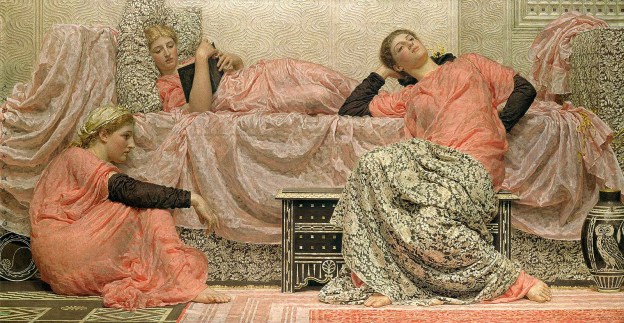
FEATURE image: Albert Joseph Moore (1841-1893), READING ALOUD, 1884, oil on canvas, 42.24 x 81 in., Glasgow Art Gallery & Museum.

The artist: Albert Joseph Moore (1841-1893).

Albert Joseph Moore was one of the leading figures of the British Aesthetic Movement, creating meticulously crafted paintings that placed beauty, harmony, color, form, and decoration above narrative or moral instruction. His idealized female figures inhabit timeless settings that blend classical inspiration with Victorian artistic experimentation, making him a unique voice in nineteenth-century British art.

Albert Moore: Life and Artistic Legacy

Albert Joseph Moore was born in 1841 into a family of artists in North Yorkshire in England. Moore through his own advanced aesthetic experiments in the milieu of theoretical and practical advancements of mid-to-late 19th century modern art in England and France – such as a systematic analysis of nature, mathematical plotting, and principles for quintessential combinations of color, line and form – created art that was, in formal terms, in its conception and execution, on the cutting edge of abstraction that would continue to develop and blossom into early 20th century Cubism. Moore’s art gained the respect of other progressive artists (Moore was called “a painter’s painter”), patrons and collectors, if not always the critics and contemporaries who viewed Moore’s work as merely decorative. Moore was actively collected in his lifetime and exhibited regularly in major venues such as the Royal Academy. Unmarried and of a lifelong independent disposition, Moore died in 1893 at 52 years old, having just completed his last monumentally ambitious artwork (“The Loves of the Winds and the Seasons,” Blackburn Museum and Art Gallery, posted below) a handful of days before. Several of Moore’s pictures are now in public collection throughout the UK, including the Tate and the British Museum in London. 

Moore became a major representative of the Aesthetic Movement, often summarized by the ideal of “art for art’s sake.”

Azaleas (1867-1868)
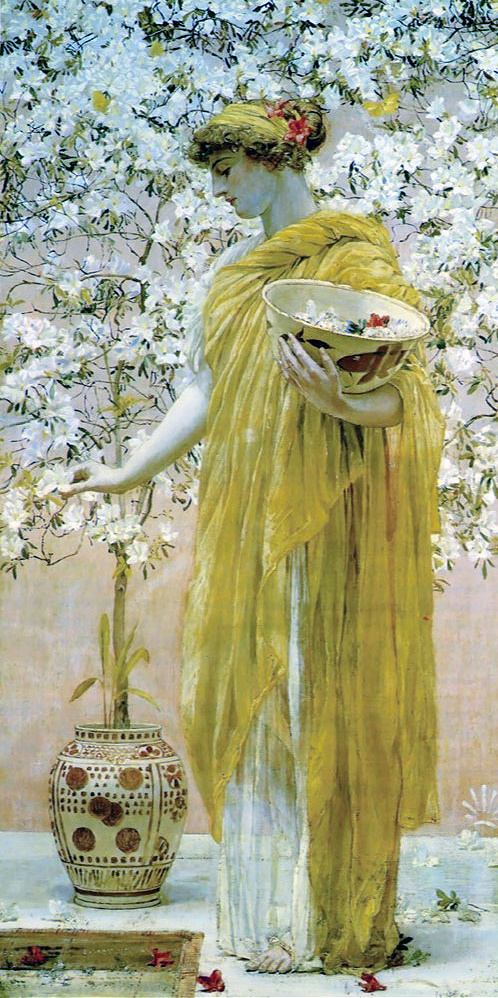
Albert Joseph Moore (1841-1893), AZALEAS, 1867, Hugh Lane Municipal Gallery of Modern Art, Dublin, Ireland.

Azaleas was a popular artwork by Albert Moore for its harmonies of color and the “Greek refinement” that the artist infused into his work. This bigger-than-life-size canvas called Azaleas was painted in 1867, exhibited in 1868 and demonstrates the artist’s ability to represent the human figure on a grand scale.

The featured works depict idealized women in dreamlike environments that feel both classical and modern. His paintings emphasize decorative harmony, color relationships, pattern, and graceful composition rather than storytelling.

Geometry and Preparation

The 26-year-old artist had some architectural design experience in theory and practice and used this in his preparatory process. This artwork incorporated ideal geometry along with typical academic methods.

Moore’s process followed, first, making studies of the nude figure and draped figure. Moore next made a larger-than-life-sized full-scale nude figure cartoon which, at this stage, was informed by geometric abstraction of the figure in a setting guided by, or through, the milieu of the object in the artist’s hands.

The geometric quality guided the composition rather than was externally imposed by the artist. Moore’s “system of line arrangement” sought the directions of the prominent lines of the composition so to plot parallels of them throughout the drawing resulting in a statuesque yet corporeally vivacious figure.

Nature, specifically the landscape, ultimately served as the inspiration for the manifestation of line parallels and optical balance rather than the mathematically ideal. Moore’s geometric construct and its interplay determined every element of the composition – from the position and placement of the figure to the location of accessories, such as wall hangings, distribution of drapery folds, and architectural elements. The canvas’s shape and size also were ultimately determined by this idiosyncratic geometric arrangement.

Traces of Moore’s preparatory practice are in evidence in Azaleas’ full size nude cartoon with its vestiges of diagonal and horizontal lines through the midsection of the figure and near to her feet. Using these lines in the nude drawing it is apparent that Moore experimented with the placement of the figure’s head, the extended hand, and a raised heel which was ultimately hidden under opaque drapery. Moore used a live model for his figure.

Technique and Execution

The final nude cartoon was transferred to the canvas and this outline was built up with oil colors. A drapery cartoon was then transferred on top of the transferred, built-up nude figure cartoon. Using this method Moore rendered greater transparency of the fabric since the underlying nude cartoon showed through faintly. This painstaking preparation was masked by Moore’s fresh and free style of painting. For instance, the drape folds of the left shoulder are painted in long, fluent, and elegant strokes while the azaleas are rendered in energetic strokes. Moore’s objective was for the final painting to look like an impromptu and expressive sketch when, in fact, it was carefully planned and executed.

About painting Moore taught his students to think long about it but execute with quickness and determination. This technique aided in transforming oil painting into the manner of Graeco-Roman fresco in that Moore’s working method allowed for painting only what could be finished in a day.

Japonisme and Color Harmony

Moore’s careful planning, rapid execution, and brush technique also suggested the influence of Japonisme. Asian influences in Azaleas included the carp bowl held in the women’s arm (an actual studio prop) and the geometric pattern in the azalea pot whose symmetry Moore saw as part of both Greek and Japanese art. To integrate and transition the predominantly yellow figure in the predominantly white background Moore used a device taken from Japanese art of painting flitting butterflies around the azalea bush. Moore also painted russet blossoms in the woman’s hair and bowl and on the floor that further unites the monumental composition.

Moore’s observation of Japanese prints also likely influenced the English artist’s color scheme in Azaleas. This is identifiable in its limited schematic of hues. The color placement, however, was also subject to the geometric practices in the whole composition.

Critical Reception

When Azaleas was exhibited at the Royal Academy in 1868 it was consigned to an out of the way place on the wall of its North Room. It was observed that Moore’s canvas looked more like a tapestry than an oil painting. In this way, Moore anticipated James McNeill Whistler’s comment about color in that it should appear “embroidered” on the canvas, in the same way a thread is embroidered on fabric. Whistler attributed this color quality to Japanese art in that those artists looked for repetition in color application and not contrast.

Architecture critics in 1868 noticed and especially admired Moore’s Azaleas. Its systematic repetitions and geometric construction were labeled the only “decorative” painting in the 1868 English exhibition. Art critics were less generous. Straining with opera glasses just to see the work they recognized its beauty and Moore’s talent but called its design and execution eccentric. Others turned up their critical nose to the new decorative work as “curious” and little more than a luxurious indulgence of art for art’s sake. Art critics were unhappy with the paintings’ colors as they found they lacked the requisite black that marked contemporary French art and, instead, opted for a quiet and delicate dreamscape.

English writer William Michael Rossetti (1829-1919) declared Azaleas one of the most important English pictures of 1868 and decried those looking to judge it by way of actual historical pictures from Greek antiquity. With Algernon Swinburne (1837-1909), Rossetti compared Moore’s artwork to another painting in the 1868 exhibition: “The Wife of Pygmalion, A Translation from the Greek” by the older George Frederic Watts (1817-1904). In that work Watts sought to create a painterly equivalent of classical sculpture. William Gladstone (1809-1898) wanted to purchase Watts’ picture after seeing it at the Academy in 1868. In a letter to Gladstone in May 1868 Watts informed Gladstone that it had been “claimed” but invited Gladstone to visit him in his studio to see the cast of the fragmentary Greek original from which the painting was derived.

Swinburne saw the poetry and musicality of Moore’s artwork .While most art critics snubbed the painting (and by extension the painter) for its art for art’s sake qualities, Swinburne praised them. Of Azaleas, Swinburne wrote: “The melody of color, the symphony of form is complete: one more beautiful thing is achieved, one more delight is born into the world; and its meaning is beauty; and its reason for being is to be.”

Sea-gulls (1871)

Albert Joseph Moore (1841-1893), SEA-GULLS, 1870/71, oil on canvas, 27 x 61 inches (68.5 x 154.8 cm), Williamson Art Gallery & Museum, Birkenhead, UK.

The Whistler Controversy

Sea-gulls was accepted for the 1871 Royal Academy exhibition. It was the third painting for Albert Moore to exhibit at the Royal Academy. Moore was absorbed in painting Sea-gulls, a major work, for British shipping magnate Frederic Leyland (1831-1892) and this work occupied him up to the Royal Academy Exhibition that spring.

Its creation by the 36-year-old Moore was not without headaches owing to controversy. Moore’s friend and admirer, American ex-patriate artist, James Abbott McNeill Whistler (1834-1903), had learned of Moore’s preliminary work on the painting through Leyland, a major art collector and the artists’ mutual friend.

Whistler expressed concern that Moore’s work perhaps overlapped adversely with some of Whistler’s own preliminary sketches for a painting. Whistler saw a pair of sketches Moore had sent to Leyland as potential commissions. Whistler felt that Moore’s sketch may have been influenced by seeing one of Whistler’s sketches. Whistler feared that if Moore’s painting was exhibited first, it would reflect badly on Whistler as an imitator when in fact the artwork Whistler was working on ante-dated Moore’s conceptions. This was a mortifying prospect for Whistler who prided himself on originality.

Whistler’s anxiety may have also stemmed from the fact that with Sea-gulls, Moore would fulfill his second commission for Leyland, while Whistler who introduced them had yet to complete a picture for Leyland that had been commissioned in 1867.

To ease Whistler’s fears, the American artist proposed that Moore accompany another mutual friend, architect William Nesfield (1835-1888), to Whistler’s studio in Chelsea to inspect his older original sketch that Moore had seen.

Nesfield, acting as mediator, concluded in September 1870 that the recent work of the two artists shared themes, but each maintained their own artistic originality. The crisis was averted and led to Moore exhibiting Sea-gulls.

Completion and Artistic Development

During this crisis and shortly thereafter, Moore did not finish to his satisfaction his painting when it was time for its exhibition in April 1871. A major effort required to complete Sea-gulls had deeply undermined Moore’s health. After the exhibition the painting was returned to the artist, but he could not yet immediately set to work on it to completion. Months later it was finished and sold to Leyland.

Nature, Movement, and Surface Effects

In Sea-gulls Moore introduced obvious analogies between the liquid patterns of the sea and the rippling and splashing motion of the figure’s hair and drapery. Moore’s intention was to discern patterns inherent in nature. The drawings also suggest that he exaggerated the effect of air currents by employing the revolving fans that were simultaneously in use for Sea-gulls and another painting titled Shells.

Much of Moore’s work to complete the painting after the exhibition revolved around redressing the picture surface. Moore had been experimenting for some time with the surface quality of his paintings. In the early 1870s, Moore’s technique had developed to combine transparent and opaque fabrics that created unusual layering effects. Following the 1871 exhibition, Moore seemed to apply this technique in Sea-gulls that involved unusually thick paint layers.

Grosvenor Gallery and Lasting Friendship with Whistler

Much later, during the winter of 1880, Sir Coutts Lindsay (1824-1913) – the British artist and watercolorist founded Grosvenor Gallery on Bond Street as an alternative exhibition space to the Royal Academy which became a venue for avant-garde artists, particularly those associated with art for art’s sake – mounted a show on the subject of artists’ working sketches. Moore contributed the preparatory studies for Sea-gulls to the show that included his sketches of hands, heads, drapery, plants and flowers, as well as the painting’s cartoon.

Although biographers of Whistler and Moore have attached no importance to their friendship, particularly after the September 1870 controversy over Sea-gulls which they claim ended it, the artists in fact remained on intimate terms unbroken until Moore’s death in 1893. In the later 1870s they again were thrust together in a contentious situation but this time on the same side of sorts. When Whistler became involved in libel proceedings against Ruskin in later 1878 Albert Moore was the only artist who the American ex-patriate artist could rely on to both publicly attend the proceedings and actually give evidence on Whistler’s behalf. 

Albert Joseph Moore was highly admired by James McNeill Whistler, who regarded him as his favorite contemporary British artist.

Reading Aloud (1884)

Albert Joseph Moore (1841-1893), READING ALOUD, 1884, oil on canvas, 42.24 x 81 in., Glasgow Art Gallery & Museum.

Conception and Working Method

Reading Aloud was one of three large-format paintings Albert Moore completed in the 1880s. Completed in 1884, Moore had been working on Reading Aloud for years – at least since 1881. Moore had drawn a chalk sketch of the geometrically designed composition over which the artist would lay a piece of translucent glass. By painting directly on the glass, he could experiment with colors without redrawing the picture. He then could transfer the trial color experiment on glass (as well as a final drawing) onto tracing paper by which the final artwork was then made by pinning the tracing paper to the canvas. The artist then painted the composition directly to the canvas, section by section, working as he painted to unify color scheme and, as figural poses and other details are different in the final artwork than surviving preparatory materials, drawing. It was meticulous organizing and harmonizing creative work that helps to explain why Moore labored for years on the almost 7×4 foot oil on canvas.

Works such as Reading Aloud demonstrate his pursuit of beauty through carefully controlled arrangements of figures, fabrics, colors, and space.

Composition and Symbolism

While these three reclining figures are static their contrasting drapery folds whether they are swirls, zigzags or sweeping diagonals – with the sofa’s swags to unite them – enliven the picture. As classicism revivalists are noted for their mere realism and moralistic anecdote, Moore’s evocation of classicism, though containing allegorical qualities, belies a modernity by way of its abstract combination of line and form in the depiction of languid female figures in a neutral setting. The black-and-white owl vase that Moore included in the lower right corner of the painting had been absent from previous studies (originally it was a seated cat) and provides a narrative sign. It connotes the quality of wisdom as well as perhaps the goddess Athena with which the owl is associated so to apply it to the various states of the readers though the overall picture with its fascination with repose is more subtly mysterious than anecdotal. Yet the classicism/modernity enigma continues as the honey bee which Moore paints on the face of the owl vase was the symbol used by the picture’s purchaser, pig iron industrialist William Connal (1819-1898), for himself.

Moore, Albert Joseph; William Connal; York Museums Trust; http://www.artuk.org/artworks/william-connal-8009

William Connal and the Painting’s Patronage

After his wife of 25 years Emelia Jessie (Campbell) Connal died in 1877, 56-year-old industrialist William Connal faced life alone at Solsgirth, his Scottish country manor. Connal turned his attention to the arts and, in addition to Moore, became an avid collector of contemporary art by such painters as Edward Burne Jones (1833-1898), Edward Poynter (1836-1919), Frederick Sandys (1829-1904), Roddam Spencer Stanhope (1829-1908), Fernand Knopff (1858-1921) and Adolphe Monticelli (1824-1886) along with the Old Masters. Connal owned Symphony in Silver and Grey by American artist James McNeill Whistler (1834-1903) who greatly admired Moore. In 1883, Connal invited Moore to stay at Solsgirth House in Perthshire for a month allowing the artist to recuperate after a serious illness. It was during this stay that Connal commissioned Moore to paint his portrait that shows him wearing a honeybee brooch, the emblem that Connal used on his personal items (Connal’s portrait today is in York Art Gallery).

Geometry, Abstraction, and Critical Response

Moore’s pictorial methodology which he continued to develop over his artistic career is in evidence in Reading Aloud. Moore works out and unifies various and moving parts depicting a scene’s animating personality based in psychology with its physical forms that are mathematically contrived by way of lines and curves and, ultimately, color and texture, and whose impact on the viewer of the completed artwork is allowed to be emotional rather than cerebral. In Reading Aloud Moore constructed the image based on two pairs of diagonals that intersect into a pattern. Though the geometric system is visually subdued, it is evident in the figure on the right whose arms coincide with a set of diagonals. It is obvious also in the picture’s overall use of contrasting bold colors – the fabrics’ pinks and creams are integrated to, though angularly distinct from, the charcoal greys of the covered limbs and book cover. The edges of the book cover also coincide with some of the complex design of diagonal lines whose subliminal quality is an intrinsic expression of the psychic nature of the artwork. This angularity based on diagonals was a deliberate strategy for Moore when he painted the final artwork. There is also the horizontal lines component in the painting manifested in the outstretched arms of the crouching figure at left and the table and vase. Moore’s design strategies were innovative in 1884 startling contemporary viewers approaching to what Cubism would accomplish 25 years later. Critics when viewing Reading Aloud, being neither particularly understanding nor sympathetic to Moore’s methods or intentions, praised the picture’s overall gracefulness but impugned his drawing skills and identified the painting as mostly static decoration. Yet the static figures form part of a complex array of abstract and naturalistic patterns that fill every inch of canvas. Reading Aloud is a testament to the artist’s ability to translate such natural phenomena into a stylized form. Most prominent among them is a fabric effect found in other of Moore’s paintings of the period, in which white lace is layered over cloth of a darker color. Reading aloud was exhibited at the Royal Academy where, starting in 1883, Moore chose to exhibit annually.

The Loves of the Winds and the Summer (1893)
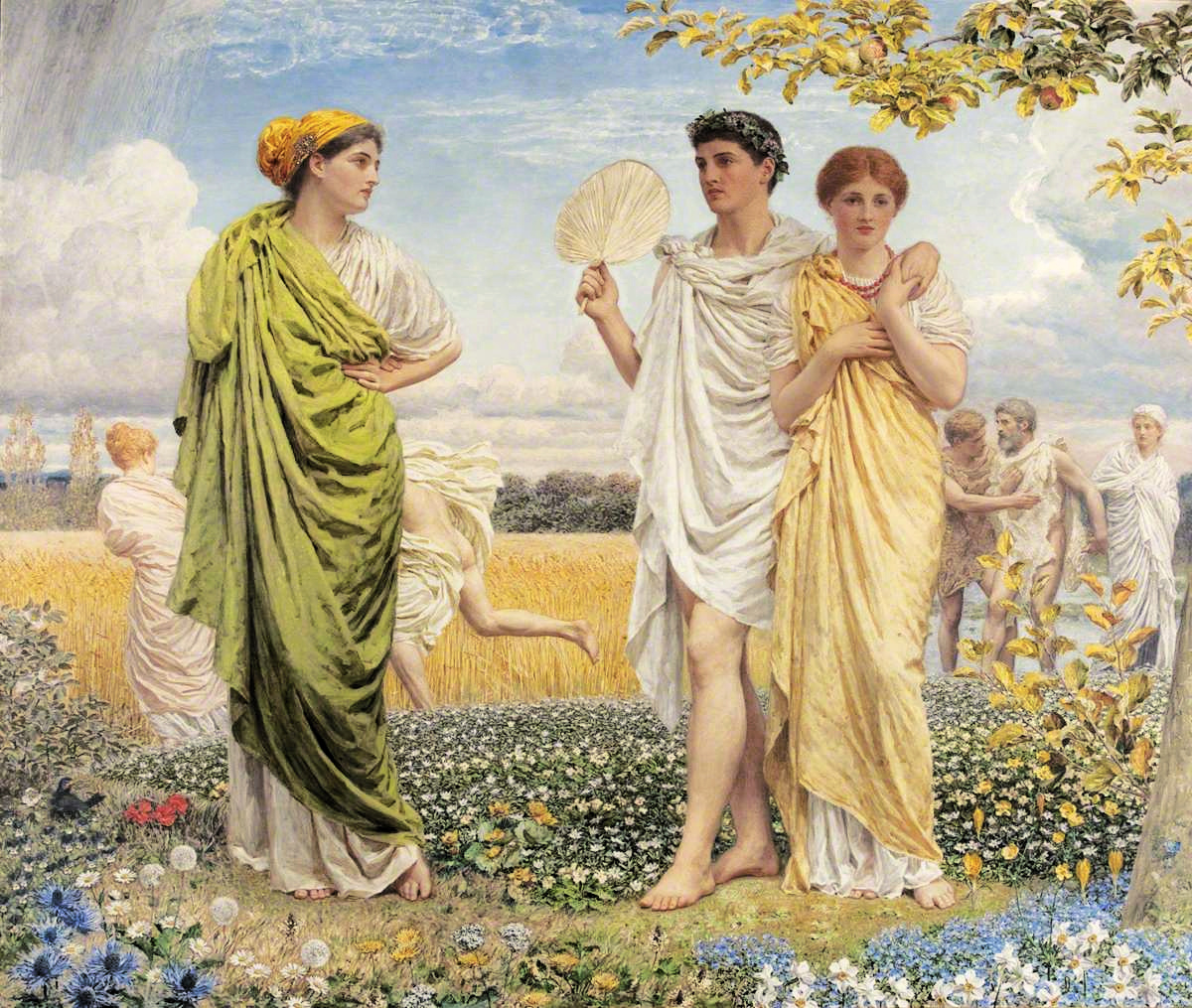
Albert Joseph Moore (1841-1893), The Loves of the Winds and the Seasons, 1893, oil on canvas, Blackburn Museum and Art Gallery, Blackburn, UK.

Moore’s Final Masterpiece

The Loves of the Winds and the Summer was English artist Albert Moore’s final and largest artwork of his career. It is 6 feet tall and 7 feet wide and is the jewel in the crown of the Blackburn Museum and Art Gallery near Manchester, England. It is the result of Moore’s study of the psychology of his subject matter, that of love. Love begins to manifest formally for Moore by the expression of soft bodily postures, changing and harmonious curves, and piercing gazes expressed in deep coral colors. The male figure of the Wind is flanked by the spurned female figure of Summer to the left and the embraced female figure of Autumn to the right. Moore was so enveloped in his amorous themes that while working on this picture he was writing poetry about what the human face was like when in love – and it is found in his picture. The Love of the Winds and the Seasons is Moore’s fullest expression of animating personality united to depicted physical forms that are first lines, curves and color, with the result being an emotional impact on the viewer who encounters the artwork.

Moore drew inspiration from ancient Greek sculpture and classical forms but was not attempting archaeological reconstruction.

Art in the Face of Terminal Illness

This exquisite artistic sensitivity by Moore is made more remarkable since the artist was dying in 1893. In the company of his young and attractive live models in his new capacious art studio, Moore worked day after day on this work. Moore had cancer (a tumor on his thigh) and had submitted to three operations to keep ahead of it. When his doctors told him they could operate no more, and that the cancer continued to spread throughout his body, Moore was resigned to his situation. He is reported to have said: “Well, there’s an end of it.” In the limited time left to him Moore intended to finish his painting of love, The Loves of the Winds and the Seasons. The artist did not want to lose any time. His legs had swollen to twice their size and had to be drained. In acute pain he worked around the clock for the next six months. His friends thought the intense work as well as the cancer was killing Moore but as the painting progressed to completion, they observed that the artist’s personal tranquility and happiness became apparent.

Geometry, Design, and Creative Process

The project was monumental – numerous preparatory studies, drapery studies, full scale and life-sized cartoons (i.e., 4’ 9” tall by 1’4” wide for Autumn) , nude studies – all technically meticulous and versatile- and that underwent the artist’s elaborate and idiosyncratic geometric platting system that he began in the late 1870s. Moore was the consummate auteur that slightly older American ex-patriate painter James Abbott McNeill Whistler (1834-1904) most admired in England. Moore conceived his paintings from start to finish – and The Loves of the Winds and the Seasons was at once its pinnacle and completion. Moore, as Whistler aspired to be, was sole master of his work. In 1893 Moore now expanded this mathematical process to amalgamate his diagonals with horizontals so that his creative process could not suffer the critique that Ruskin hurled at Whistler of “ask(ing) 200 guineas for flinging a pot of paint in the public’s face.” The painting was a commission for the Australian mine-owner George McCulloch (1848-1907). Moore’s calculations included various adjustments of the models’ natural poses to submit to the mathematical formulas on the canvas. This formal submission of subjects to linear construction extended to each detail in the entire composition, such as the flowers for which also study drawings were made. Within these design rigidities, the preparatory drawings of the live models and subjects were transferred to the artwork with little idealization though slight but important adjustments were made, such as to Summer’s hairstyle. Knowing his own time was short, Moore made his cartoons in color so that his transfer to the canvas was as efficient as possible as he painted the final artwork. Critics have observed that despite the intense planning and preparation, the final artwork is executed unevenly – parts are meticulous and vigorous, mostly in the foreground, while others in the background are loose and crude. To what degree this is the artist’s intention or the result of his declining health, is a matter for speculation. During the artistic process the terminally ill artist isolated himself mostly. His handful of visitors remarked that the artist was cheerful, cracked jokes, told funny stories, and smoked his pipe. These select parties knew, however, that their social calls were in the context of final good-byes. In those last days and months of Moore’s life, the artist’s mind, by evidence of the art from his past that he referenced in 1893, stretched back to an earlier career which shared long-held important aspects with The Loves of the Winds and the Summer.

Poetry and Meaning

For his last artwork. Albert Moore glossed the picture’s narrative in verses he wrote to accompany it:

Lo! fickle Zephyr chaseth wayward Spring,
It is a merry race;
Flowers laugh to birds that sing,
Yet frequent tears shall cloud her comely face.
The South Wind shall with blushing Autumn mate,
Contented with her lot;
Summer sigheth – such her fate
She and her burning kisses are forgot.
Two lovers rough for shudd’ring Winter strive,
Beneath a shroud of snow;
Heaven haply shall contrive
Their violence she may not further know.

Legacy and Death

Through its figural and intellectual prism of ancient classical mythology, Moore worked in his career to update the complex equation of the natural world’s varying and transitory seasons to human life’s copious physical, emotional, and spiritual expressions and contradictions. With their immersion in Moore’s modern art, the painter achieved a graciously-contrived visual dramatic interplay of nature and humanity, ancient and present-day, whose quest is eternal in time and space.

Albert Joseph Moore passed away in the middle of the night on September 25, 1893. He died 9 days after finishing his last painting, The Loves of the Winds and the Summer. Moore was 52 years old.

Albert Joseph Moore’s art transformed Victorian classicism into a sophisticated decorative vision that influenced later developments in modern art and design.

SOURCES: ALBERT MOORE, Robyn Asleson, Phaidon, 2000, pgs. 70, 97-100, 104, 108. 164, 166-168, 177, 179, 185, 199-202; https://houseandheritage.org/2017/05/19/solsgirth-house/ – retrieved September 5, 2023.

The Gilded Brush: John Singer Sargent’s Early Portraits of the 1870s & 1880s.
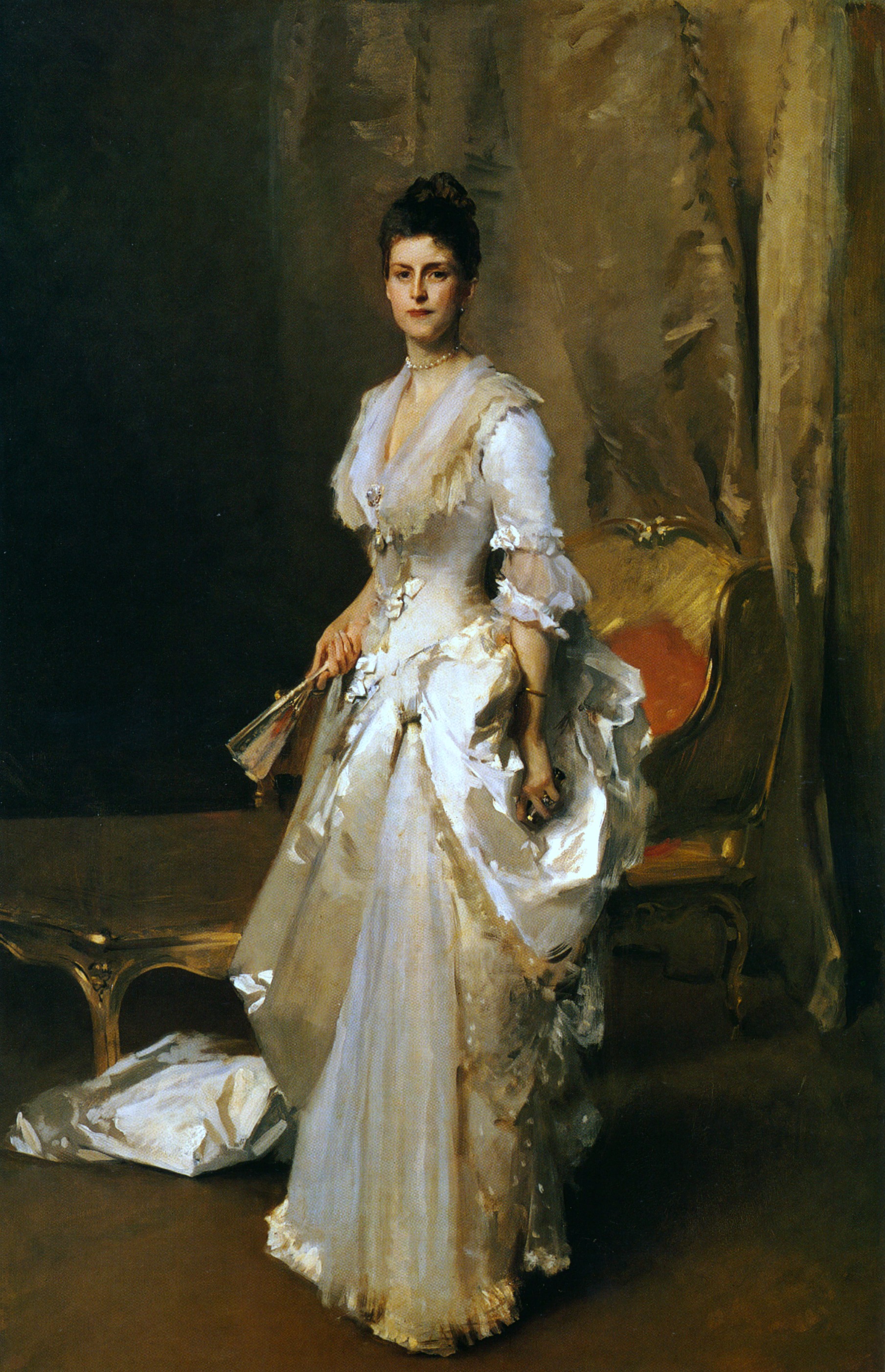
FEATURE image: Margaret Stuyvesant Rutherfurd White (Mrs. Henry White), 1883, oil on canvas, 225.1 × 143.8 cm (88 5/8 × 56 5/8 in.), National Gallery of Art, Washington, D.C. from Corcoran Collection, 2014.

The formative years and professional evolution of American expatriate painter John Singer Sargent during the 1870s and 1880s, tracing how his work progressed from intimate studies of family and friends into high-society commissions that defined Gilded Age portraiture. The post captures the crucial creative window where Sargent’s expanding elite social network catalyzed his rise to prominence, culminating in some of his most legendary and controversial masterpieces.


By John P. Walsh

The art works by John Singer Sargent (1856-1925) in this post are ones in oil, watercolor, and pastel. They begin to present Sargent’s professional output during his formative years in France, England and his trips to the United States.

While Sargent’s early portrait subjects range from famous people such as writer Robert Louis Stevenson (1850-1894) and actress Ellen Terry (1847-1928) in her role as Lady Macbeth, Sargent’s first portraits were mostly of family and friends. These included artists, writers, musicians, and some of the artist’s romantic interests.

Sargent’s artistic practice developed within a swiftly expanding social circle of prominent American expatriates and Europeans which included portrait commissions from business, military, legal and medical practitioners. His portrait work extended to their wives and children. It was during this creative period that Sargent painted his well-known group portrait The Daughters of Edward D. Boit (1882) and the portrait of an exotic and controversial Madame X  (Mme. Virginie Amélie Avegno Gautreau).  

Each of the following art works are identified and described with a brief caption. These include the art work’s title (usually a sitter’s name), date created, and dimensions, markings and location, when known. Further, it often discusses how the sitter knew Sargent and the historical context of the art work including some of its particular provenance and exhibition history.

The survey covers Sargent’s diverse early outputs in oil, watercolor, and pastel during his foundational years traveling between France, England, and the United States.

1fixed

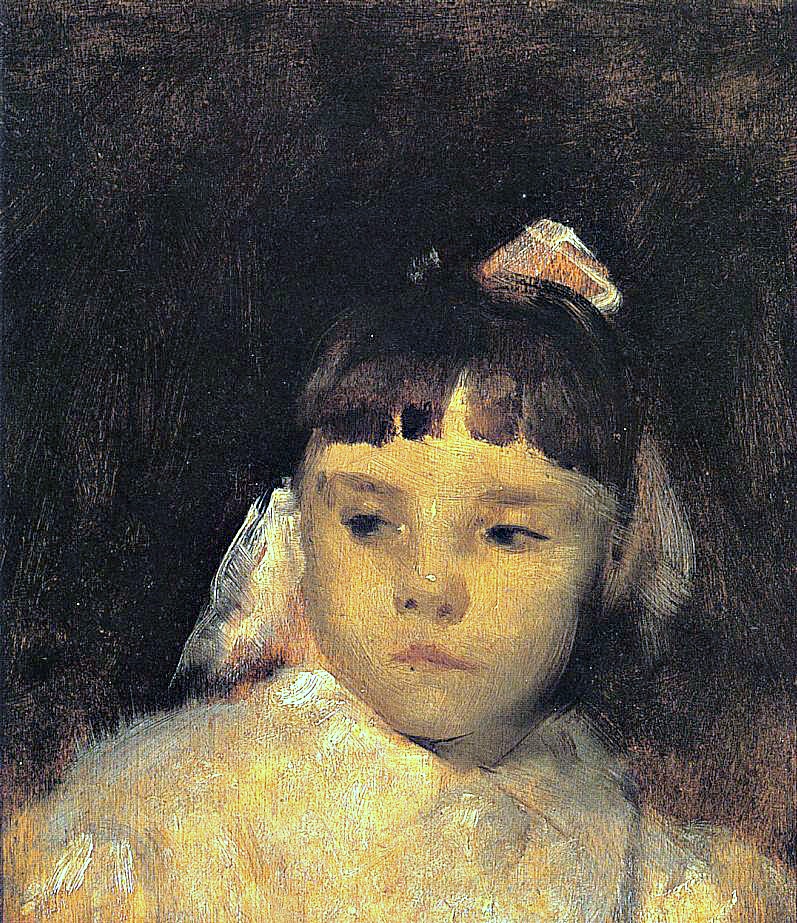
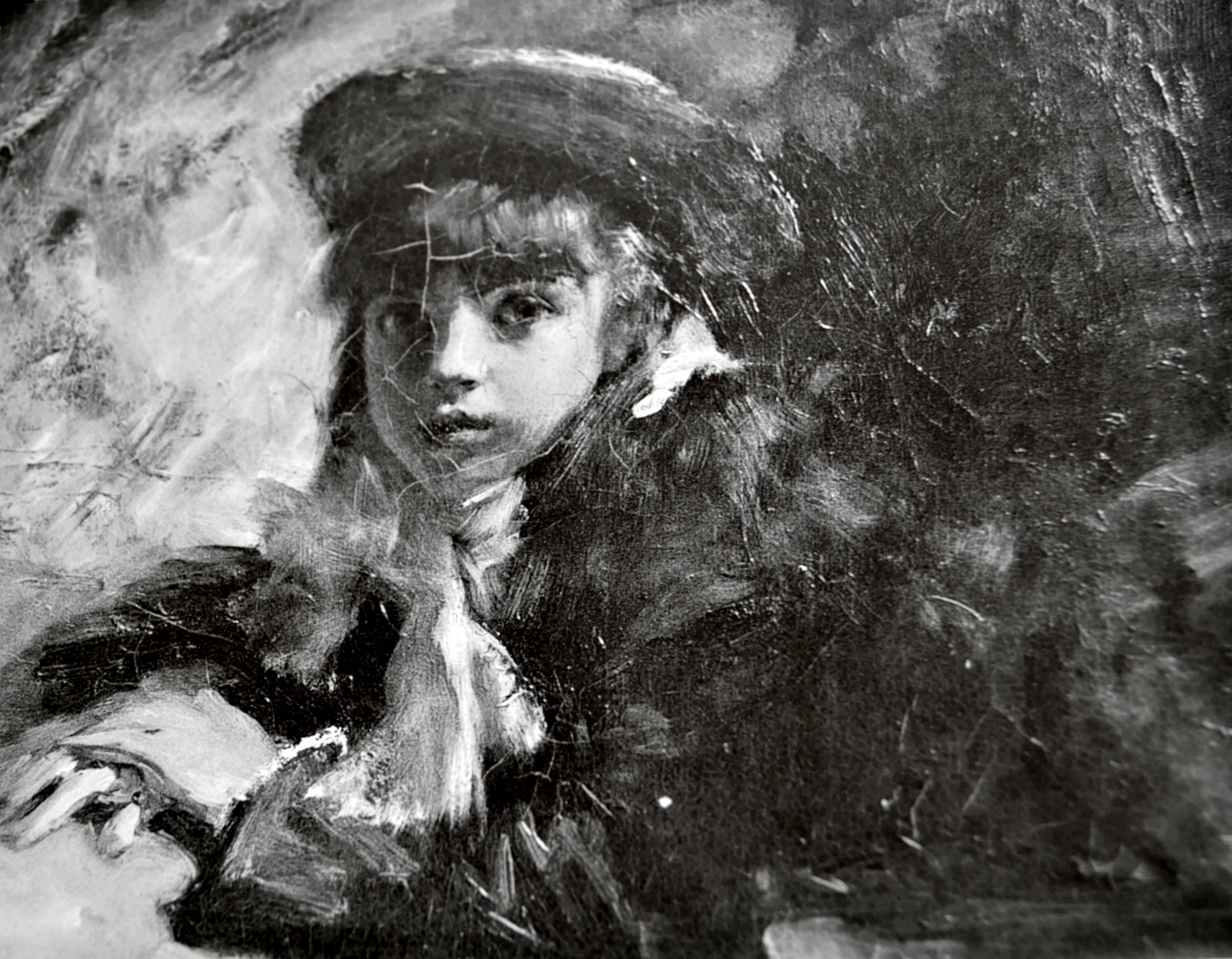
Violet Sargent, c. 1875, oil on panel, 27.7 x 23.5 cm (10 ½ x 9 ¼ in.), private collection. Originally inscribed across the top “Violet” but removed in a later cleaning. The sitter was the artist’s youngest sister (1870-1955).

2fixed

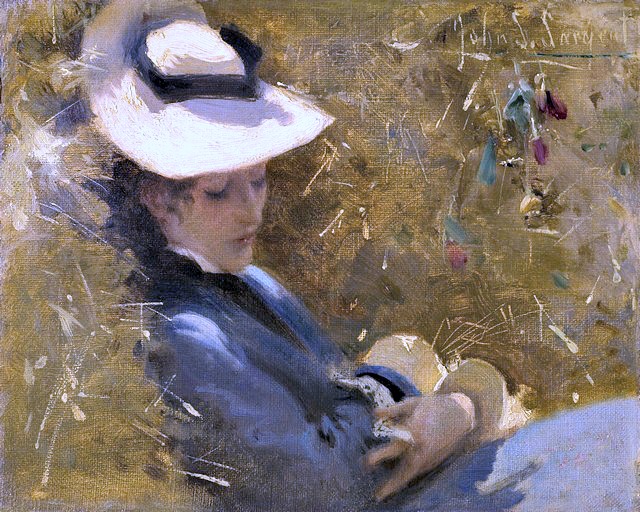
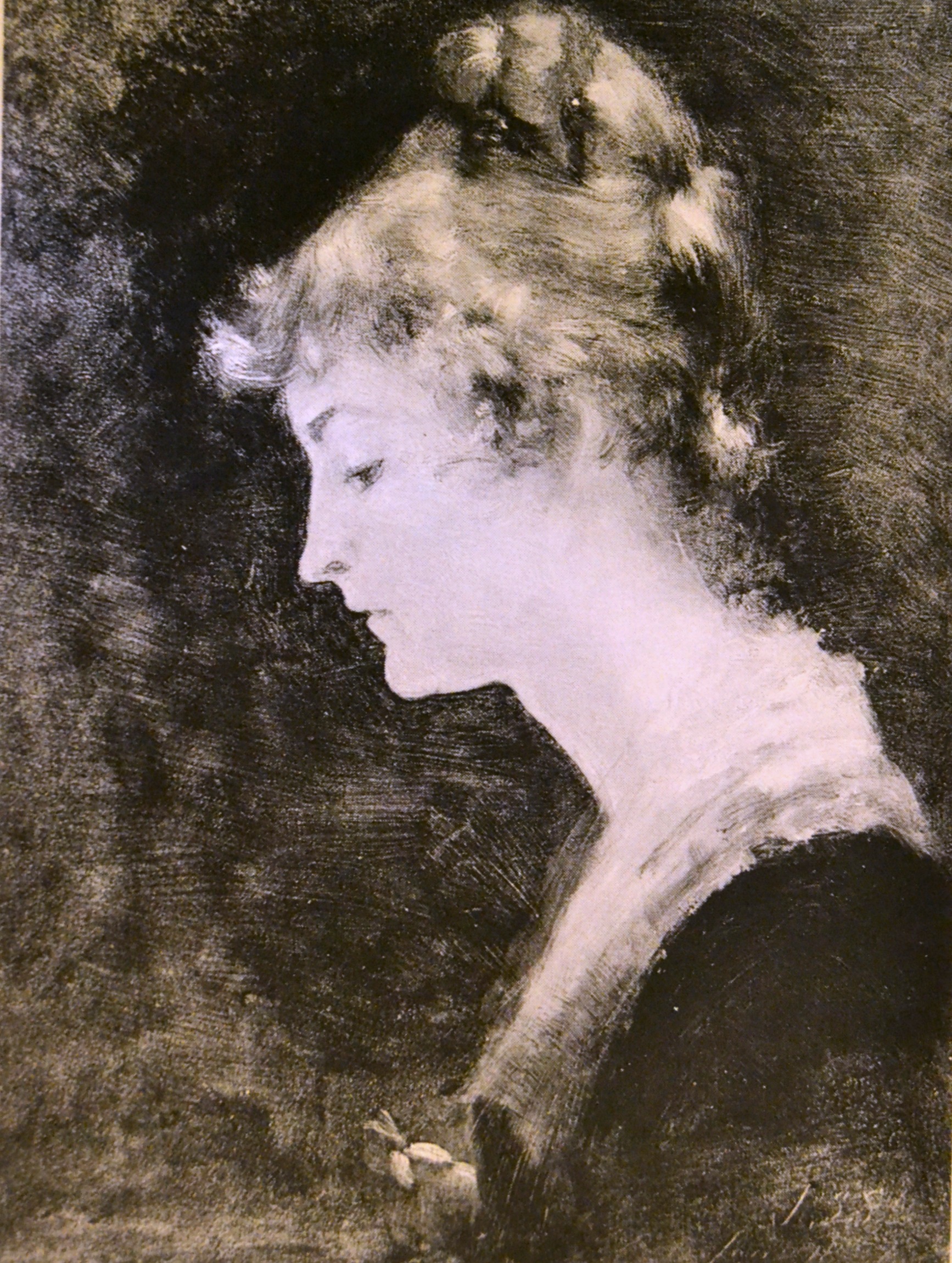
Resting, c. 1875, oil on canvas, 8½ x 10 9/16 in. (21.6 x 26.8 cm), inscribed upper right: John S. Sargent, Sterling and Francine Clark Art Institute, Williamstown, Massachusetts. Informal pose and setting, bold treatment of light, this is one of the artist’s early outdoor works. The identity of the sitter is unknown.

3-john_singer_sargent_emily_sargent_pleasantsfixed

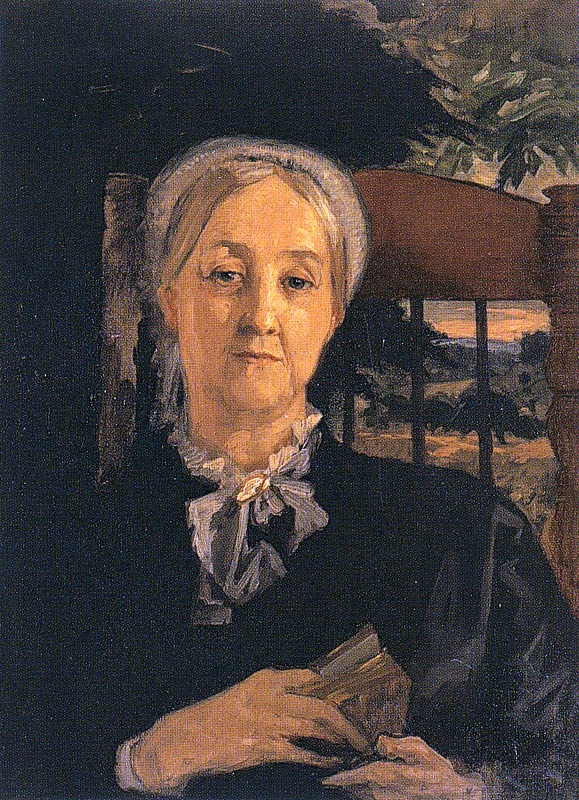
Mrs. Emily Sargent Pleasants, c. 1876, oil on canvas, 55.8 x 40.6 cm (22 x 16 inches), private collection. The artist’s aunt (his father’s sister). Dr. Pleasants (Emily’s husband) visited the artist’s family in France in 1875, but it is not known if she came along. The next year the 20-year-old American artist, born in Florence, Italy,  visited the United States for the first time and went to the Pleasants home in Radnor, Pennsylvania. The high-backed rocking chair in the painting points to this portrait being done there.

The O’Meara Love Triangle: Sargent painted a portrait of his classmate Frank O’Meara specifically so O’Meara could give it to a girl during a summer romance; the girl eventually returned home and married someone else.

5fixed

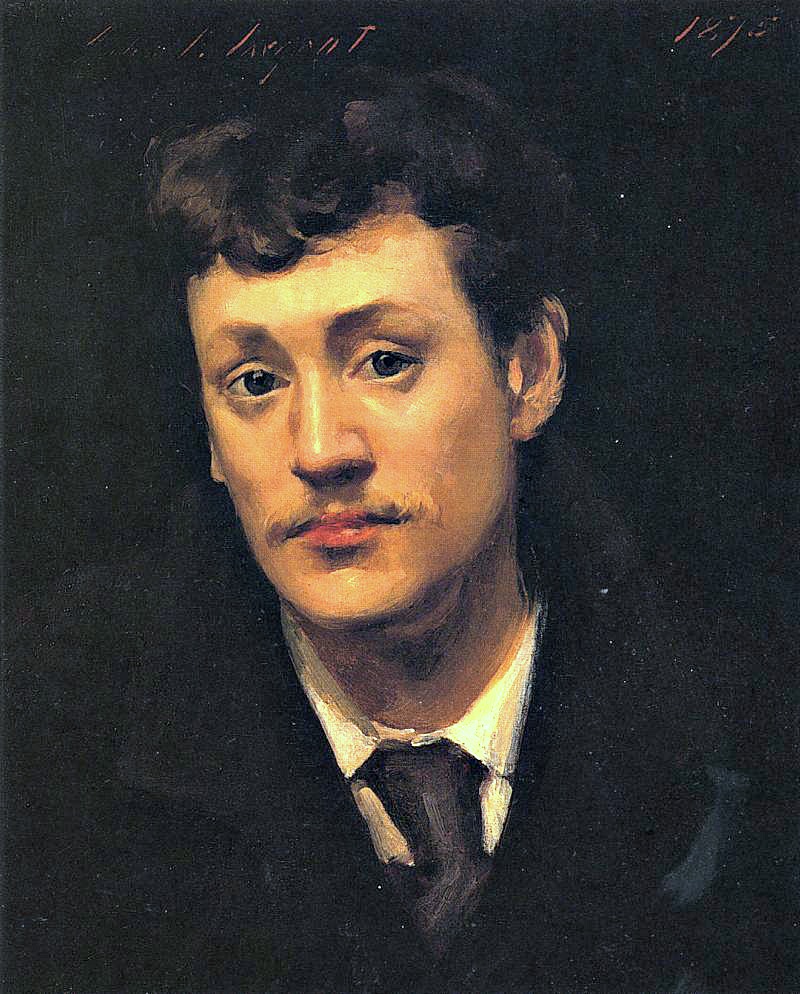
Frank O’Meara, c. 1876, oil on canvas, 44.5 x 39.5 cm (17½ x 15½ inches), inscribed upper left: John S. Sargent. Inscribed upper right:1875. Typewritten label on reverse signed by Austin Strong, 14/5/1931, The Century Association, New York. O’Meara was an “impecunious and dreamy” Irish art student with Sargent in Carolus-Duran’s atelier. Sargent painted it for O’Meara to give to an American girl during a summer romance. Then Isobel Osbourne (1858-1953) returned home and married somebody else.

The Posthumous Commission: For the portrait of Mrs. Charles Deering, Sargent agreed to a tragic request by a grieving widower to paint a posthumous image of his wife after she died in childbirth.

7fixed

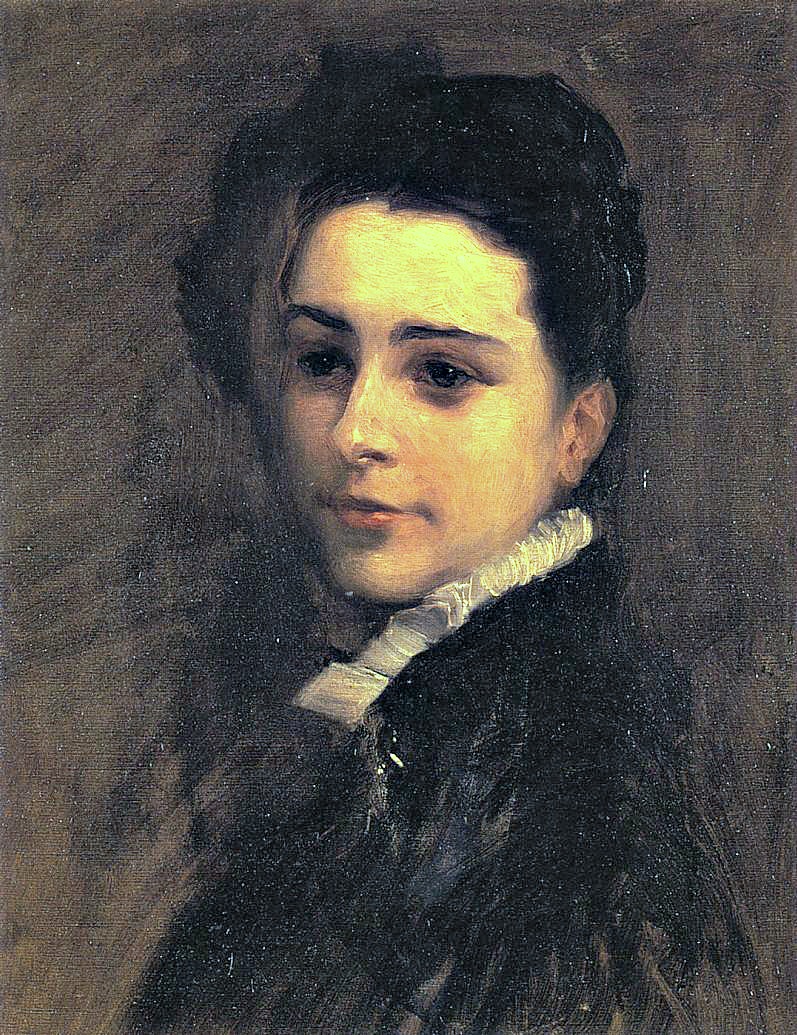
Mrs. Charles Deering, c.1877, oil on canvas, 55.8 x 43.2 cm (22 x 17 in.), Rhode Island School of Design. The family of Annie Rogers Case (1848-1876) met the Sargents in Florence in the 1860s. Her father (“the Admiral”) owned a Sargent Salon picture and dined with them on Christmas Day 1874. In 1876 JSS visited with the Deerings at Newport, Rhode Island,  but did not paint Annie’s portrait. Mrs. Deering died the next year in childbirth. In the Sargent-Deering letters preserved at Chicago the artist agreed to the widower’s request to paint a posthumous work of his wife.

8-fixed-dsc_0533

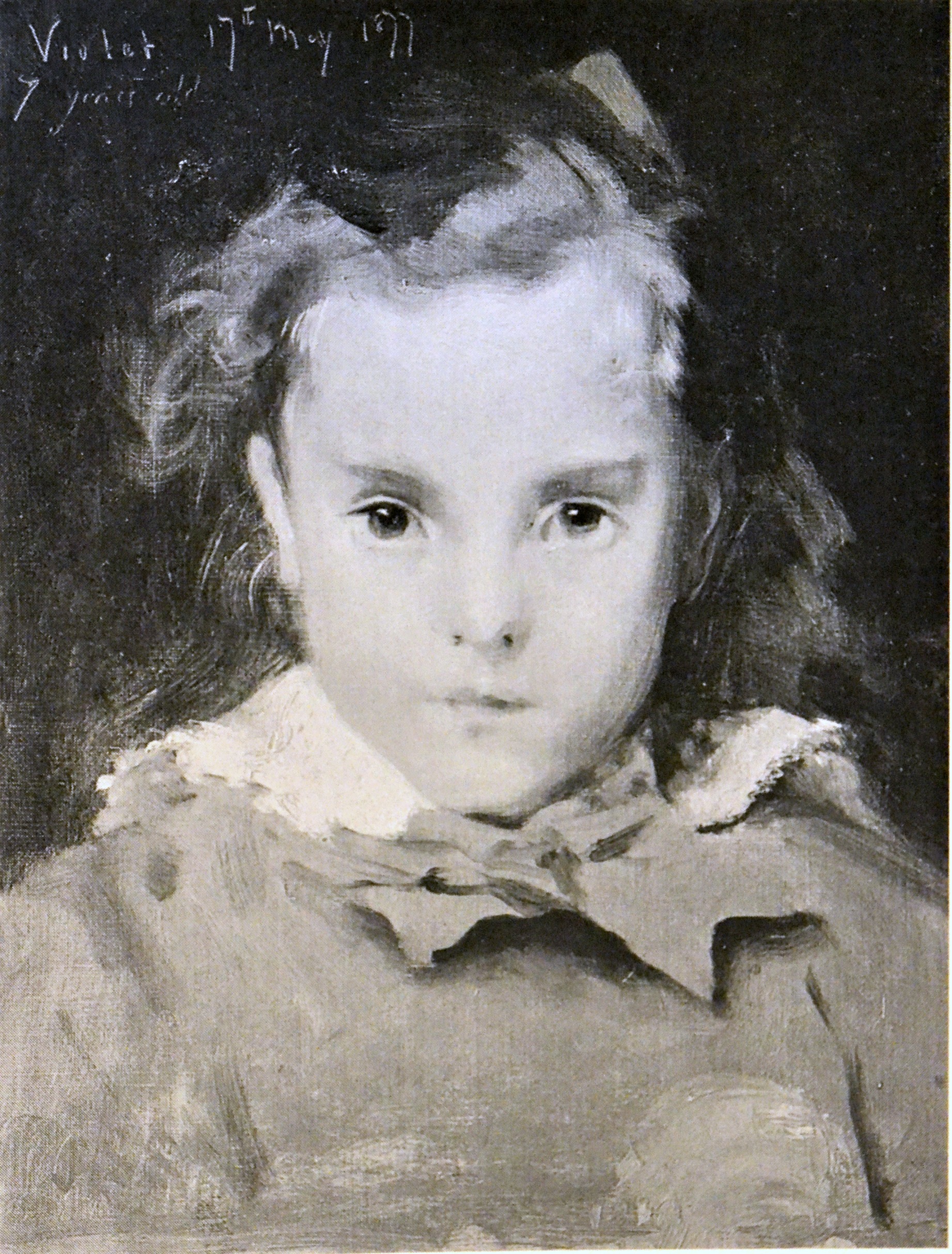
Violet Sargent, 1877, oil on canvas, 34.9 x 25.4 cm (13 3/4 x 10 in), inscribed upper right: Violet 17th May 1877/7 years old. Location unknown. Sargent’s younger sister, the later Mrs. Frances Ormond. It had been owned by French Academic painter Auguste-Alexandre Hirsch (1833 -1911).

9-dsc_0534

Harriet Louise Warren, 1877, oil on panel, 26.7 x 21 cm (10 1/2 x 8 1/4 in), inscribed lower right: JSS/Jan 18 1877. Private collection. Harriet Louise Warren (1854-1919) and Sargent were early friends. Later, in 1890, the artist painted her daughter, Beatrice.

Inseparable Siblings: His sister Emily, a naturally cheerful watercolorist born just a year after him, traveled roamed Europe and America constantly by his side.

11

Emily Sargent, c.1877, oil on canvas, 31.1 x 22.9 cm (12 ¼ x 9 in.), private collection. Six siblings comprised the FitzWilliam and Mary Newbold Singer Sargent family. John was the second oldest and only boy. Of his five sisters only two lived to adulthood. This is JSS’s sister Emily (1857-1936) born one year after him. About 20 years old in this painting, the two were inseparable at home and roamed Europe and America together. Emily was a watercolorist and naturally cheerful.

12-eugene-juillerat

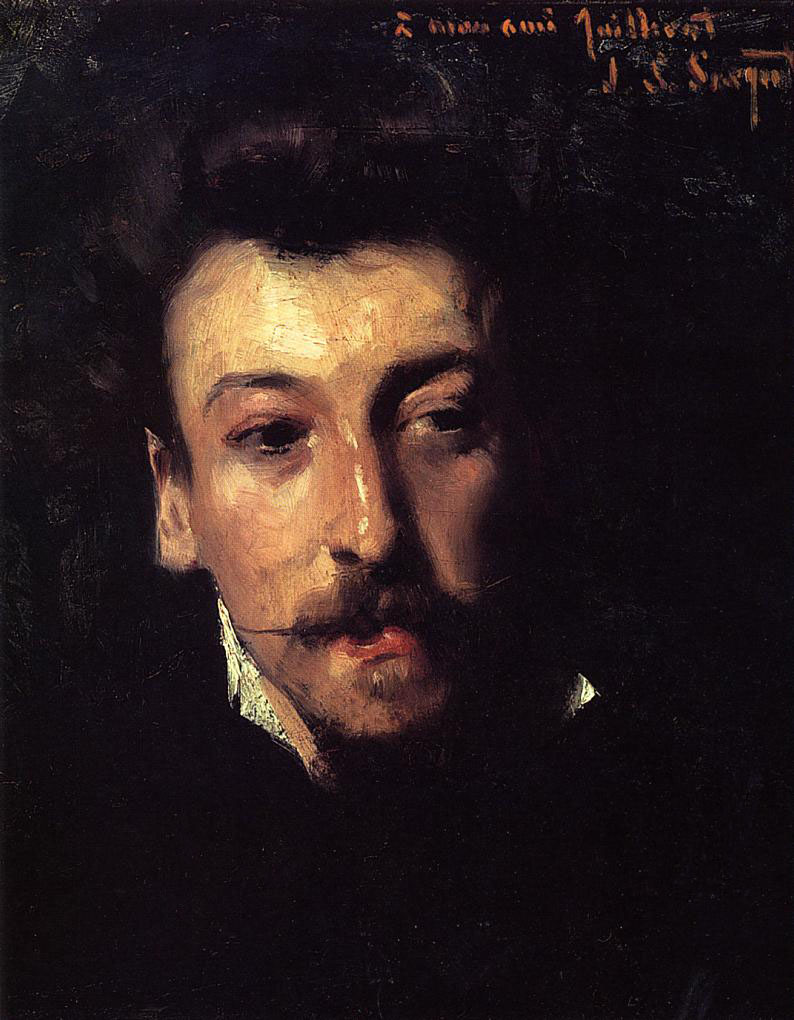
Eugène Juillerat, c. 1877-78, oil on canvas, 40.6 x 31.1 (16 x 12 ¼ in.), inscribed upper right: à mon ami Juillerat/J.S. Sargent. Inscribed on label on back by sitter on April 19, 1927. Private collection. Juillerat and Sargent were the same age and both studied under Carolus-Duran in Paris. Juillerat was an award-winning lithographer and sculptor receiving medals at the Salons of 1895 and 1899 and at the Exposition Universelle in 1900.

13-head-of-an-italian-girl

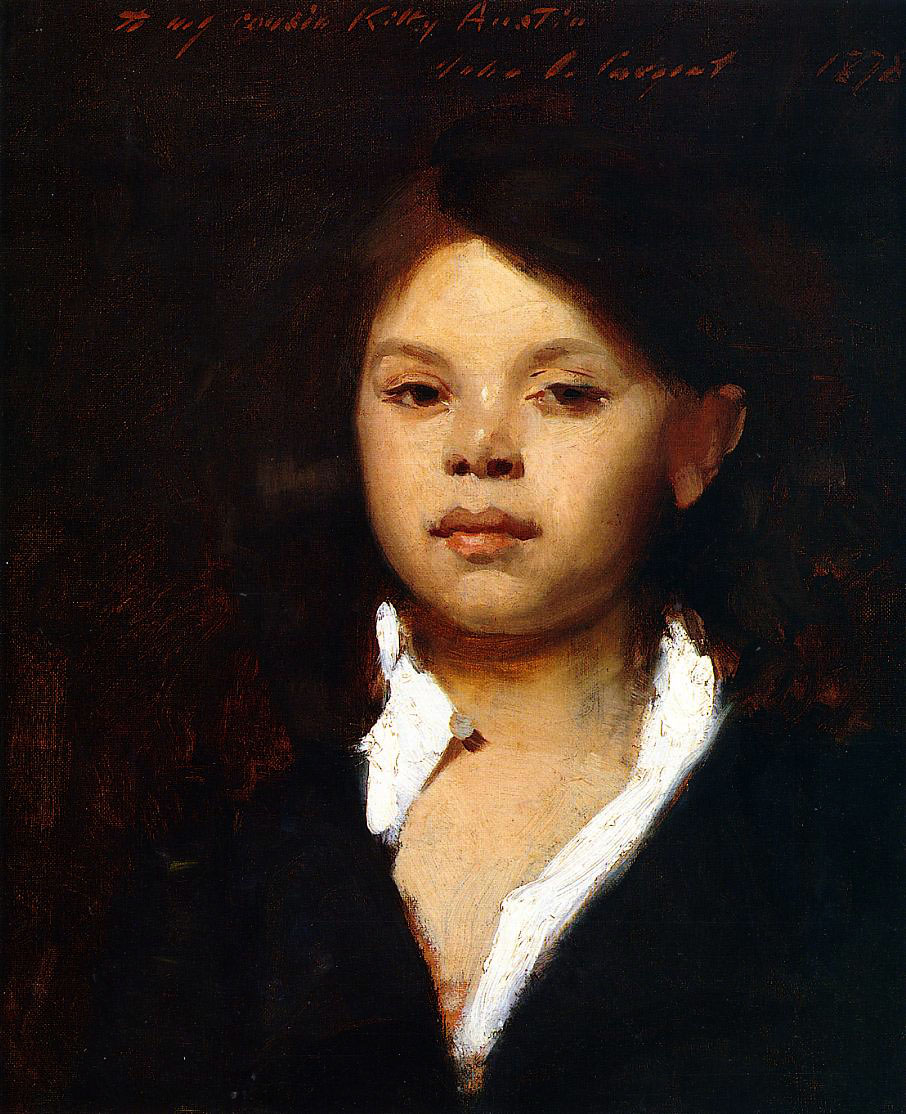
Head of an Italian Girl, 1878, oil on canvas, 45.7 x 38.1 (18 x 15 in.), Inscribed upper center: To my cousin Kitty Austin/ John S. Sargent; upper left: 1878. The Sargents had roots in New England yet resettled in Philadelphia where JSS’s father was a surgeon and married JSS’s mother. With the death of their firstborn, the Sargents left for Europe and stayed. JSS was born in Italy in 1856. He first visited the U.S.A. at 20 years old. This painting’s whereabouts and sitter’s identity are unknown.

14-mary-turner-austin

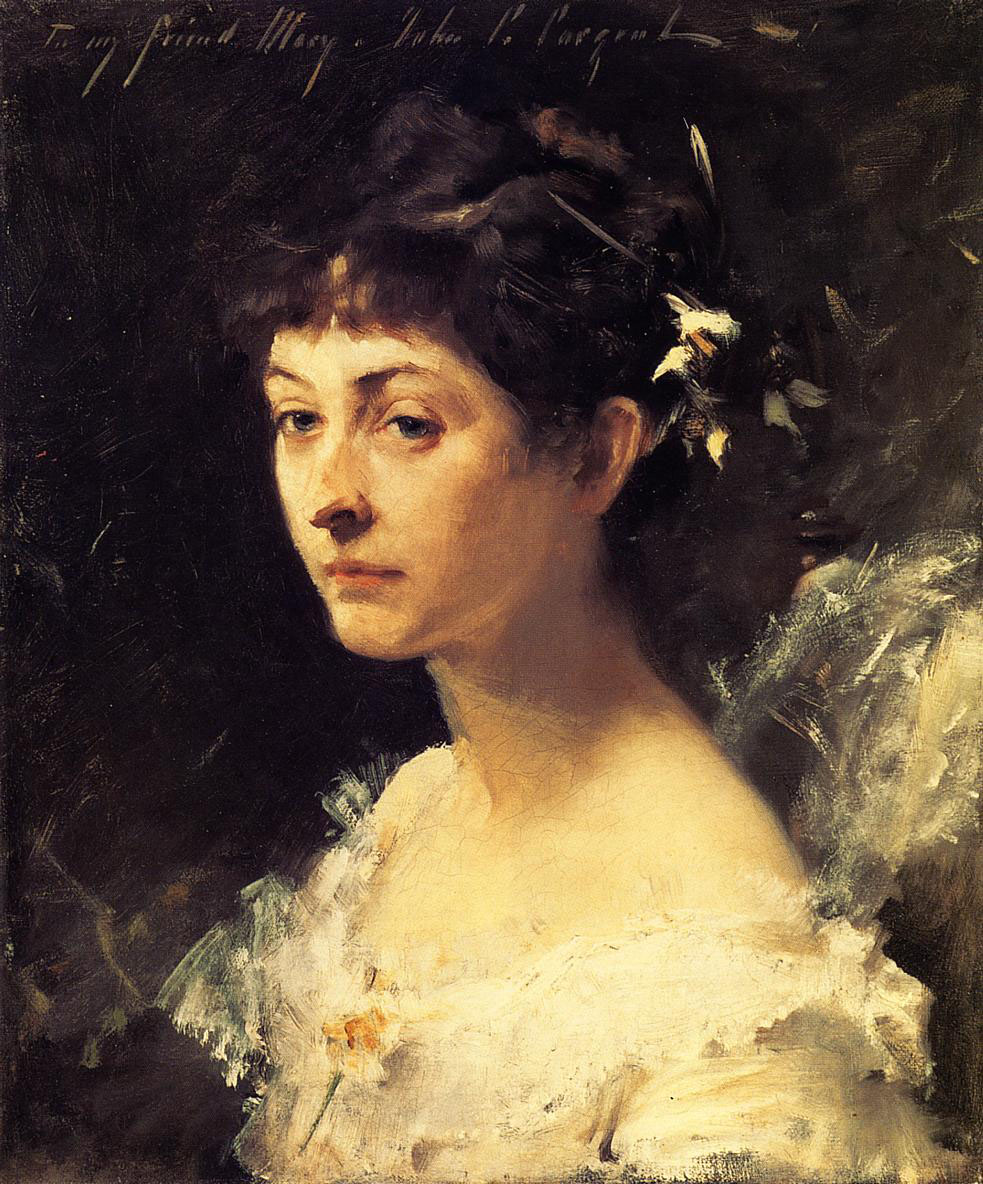
Mary Turner Austin, oil on canvas, 45.7 x 38.1 (18 x 15 in.), Inscribed upper left: to my friend, Mary, John S. Sargent. The Christopher Whittle Collection. The Austins, like the Sargents, were American expats in Europe. Dr. Sargent mentions the Austins in correspondence and writes that the girls are “quite attractive.” Mary was an art student. Chicago artist J.C. Beckwith at dinner with the Sargents hoped to see “the pretty Miss Austin.” French artist Auguste Hirsch owned this portrait.

15-head-of-an-italian-womanfixed

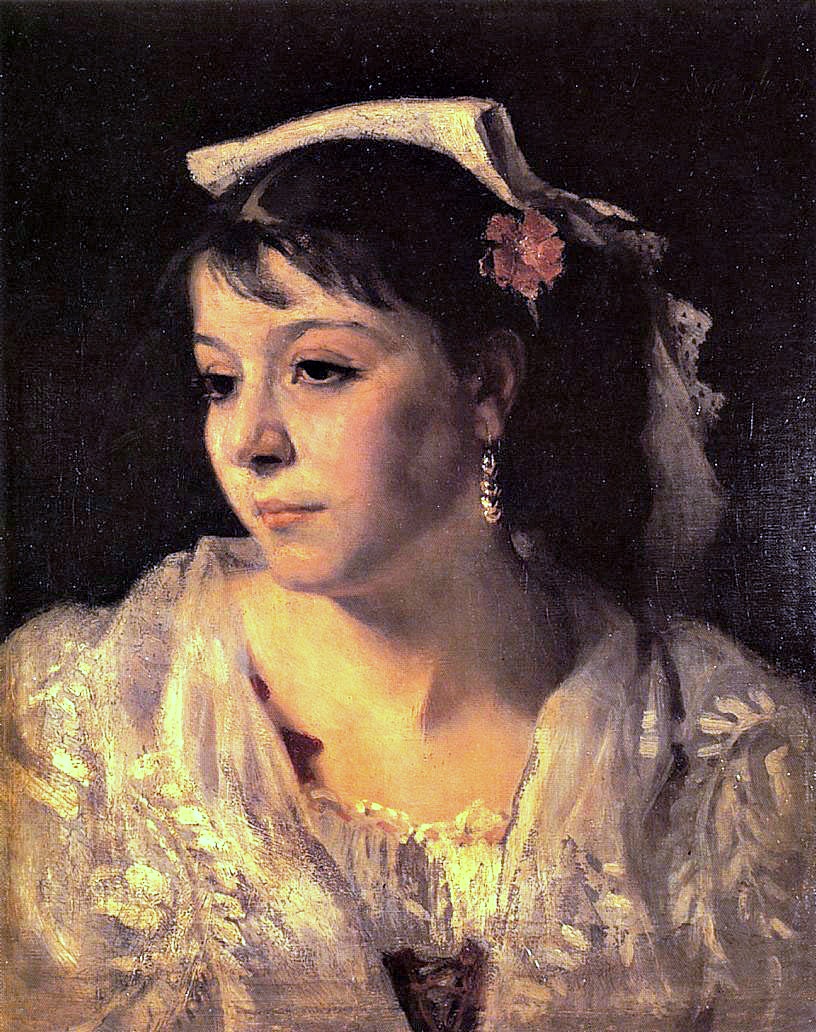
Head of an Italian Woman, c. 1878-1881, oil on canvas, 45.7 x 38.1 (18 x 15 in.), Inscribed upper right: J. S. Sargent. The Arkell Museum, Canajoharie, New York. Gift of Bartlett Arkell. Hair piled at the nape of the neck is a typical mid1870s woman’s hairstyle, though the dress is less fashionable. The model may be a Sargent cousin – a later Mrs. Wurts – who owned this picture in 1926.

15-1958-21-fixed

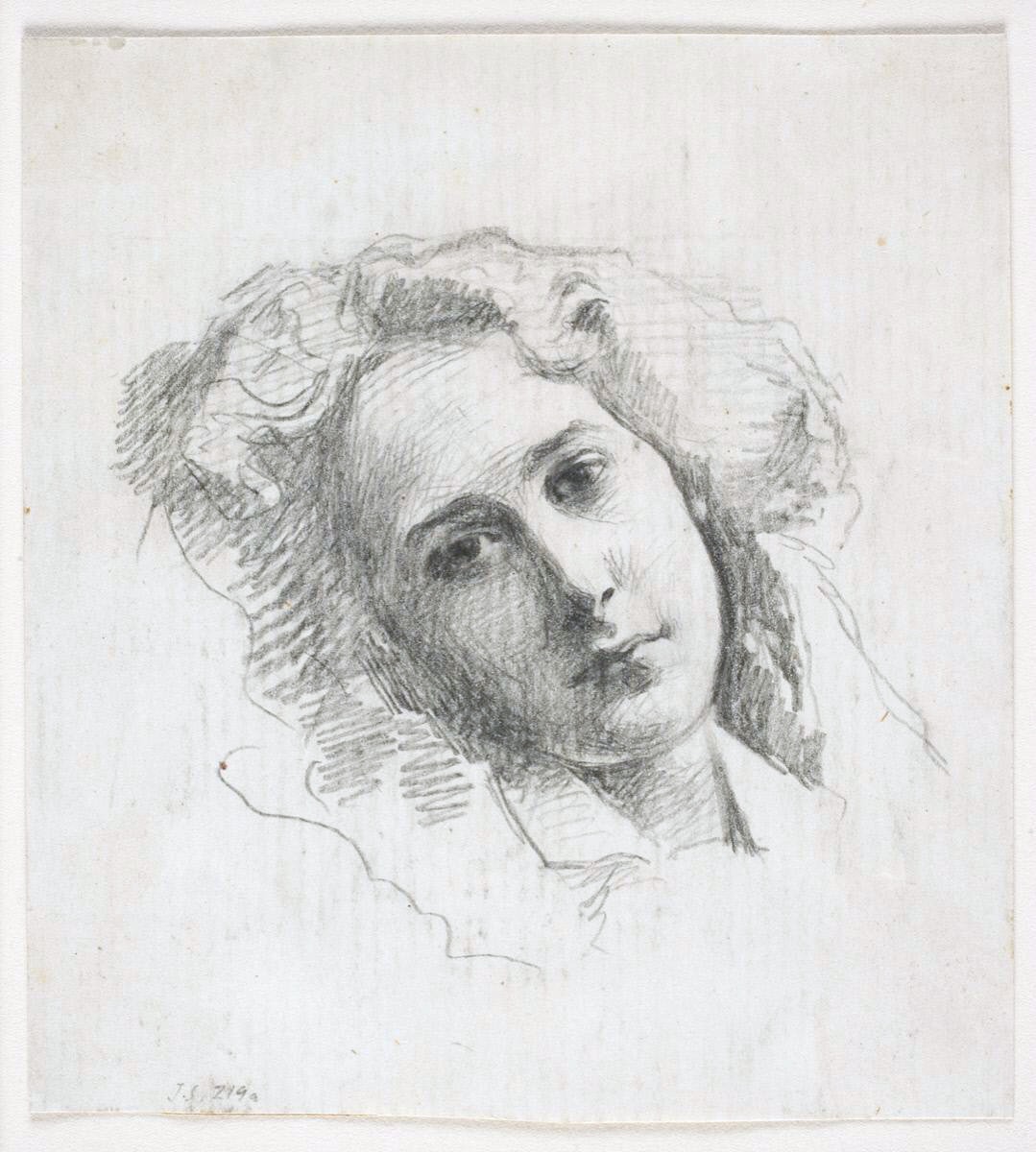
Portrait Sketch c. 1910, graphite on thin, slightly textured off-white laid paper (tissue) 10 x 9.1 cm (3 15/16 x 3 9/16 in.). Gift of Mrs. Francis Henry Taylor, The Worcester Art Museum, Worcester, Massachusetts. Dated c.1910, this drawing had been only recently identified as the same model as “Head of an Italian Woman” painted by Sargent sometime between 1878 and 1881 and today in the Arkell Museum.

16-john_singer_sargent_-_carmela_bertagna_c-_1880

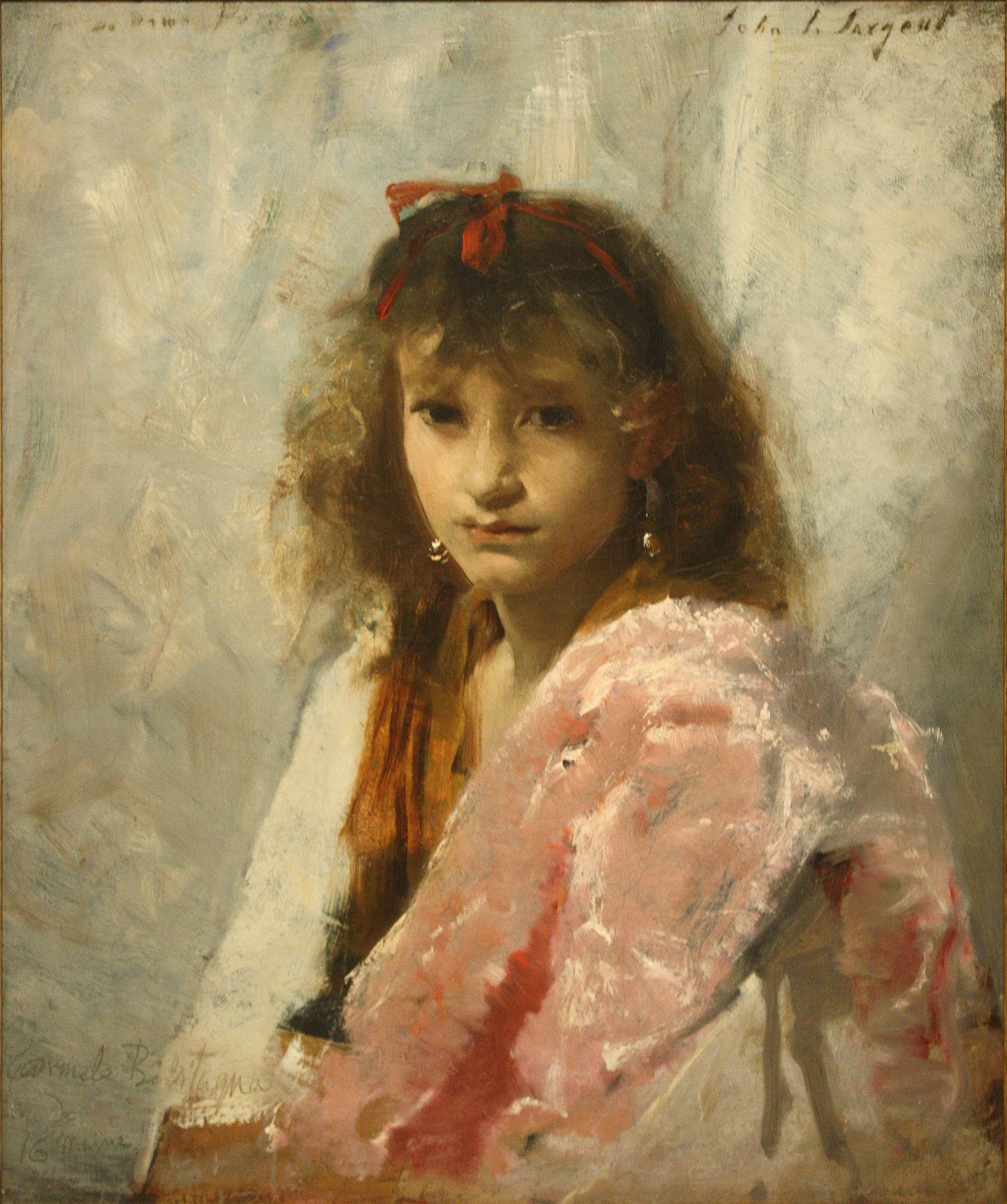
Carmela Bertagna, c.1879, oil on canvas, 59.7 x 49.5 (23.5 x 19.5 in.), inscribed upper L: à mon ami Poirson; upper R: John S. Sargent; lower L: Carmela Bertagna/rue du/16 Maine. Bequest F.W. Schumacher. The picture’s history is muddled by the sitter’s questioned identity (a professional model, possibly Carmela B.), its stylistic clues (no later than 1880), diverse inscriptions (to later friends) and exactly from whom it was acquired before it was given to the Columbus Museum of Fine Arts.

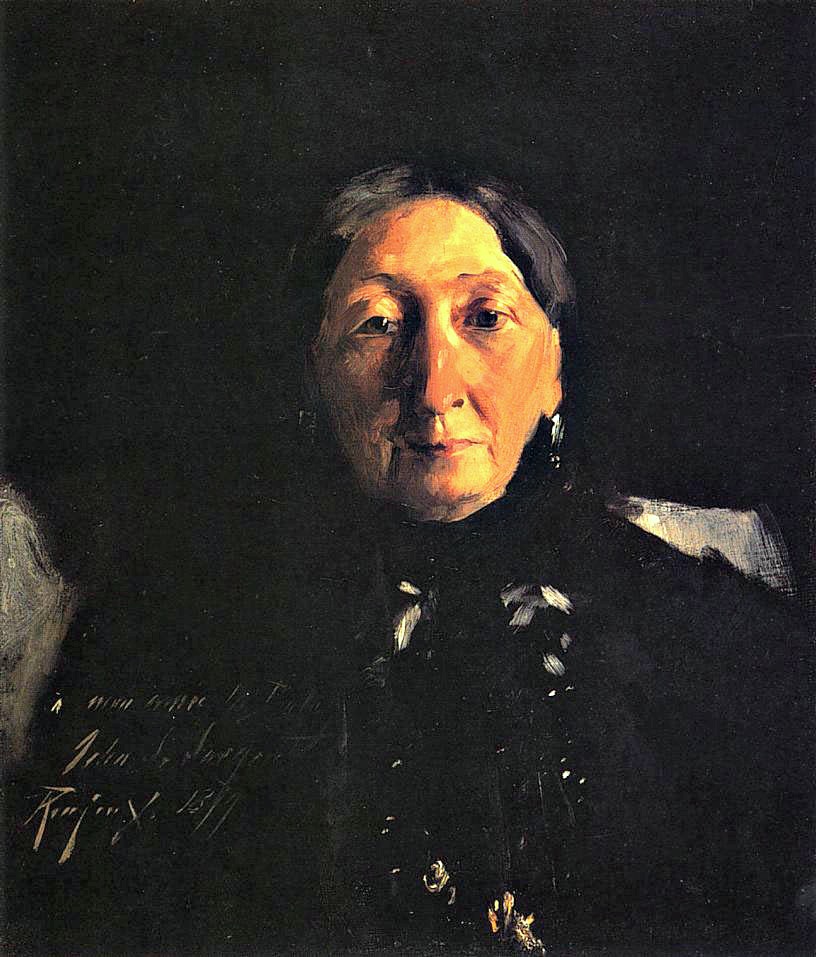
Unhappy Clients: Sargent’s studio and speed sometimes caused friction. Boston lawyer Henry St. John Smith visited the studio and openly disliked it, requiring mutual friends to intervene. Meanwhile, Mme. François Buloz openly complained that her portrait was painted in such a haste that it made her look ten years older than she actually was.

17-madame-francois-buloz-1879fixed

Mme. François Buloz, 1879, oil on canvas, 54 x 46.2 cm (21.25 x 18.25 in.), Inscribed lower L: à mon amie Me Buloz/John S. Sargent/Ronjoux 1879, Los Angeles County Museum of Art. Mme. Buloz was from a family of writers and musicians. In summer 1879, Sargent was in the Savoy to paint her daughter Marie’s full length portrait for her marriage. Madame complained that this portrait, painted in haste, made her look ten years older than she was.

18-fix

Marie-Louise Pailleron, 1879, 38.7 x 45.1 cm (15.25 x 17.75 in.), Inscribed, upper R: à ma petite amie Marie-Louise/John S. Sargent 1880, private collection. Daughter of Marie (Buloz) and Edward Pailleron, Sargent’s first important patrons. Two years after this portrait, Marie-Louise (1870-1950) was the subject of an important double portrait with her brother Edouard.

19-fixed-dsc_0879

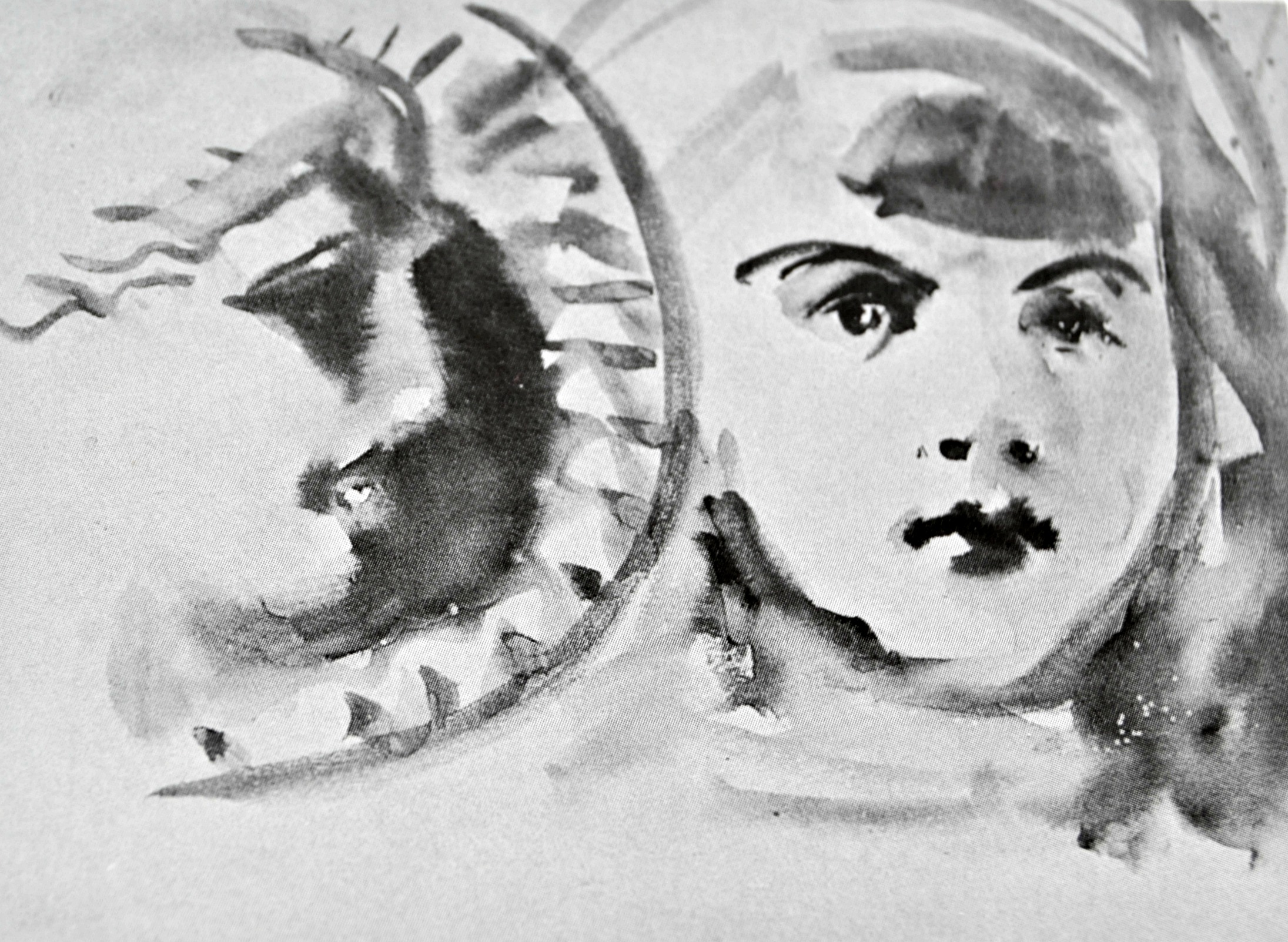
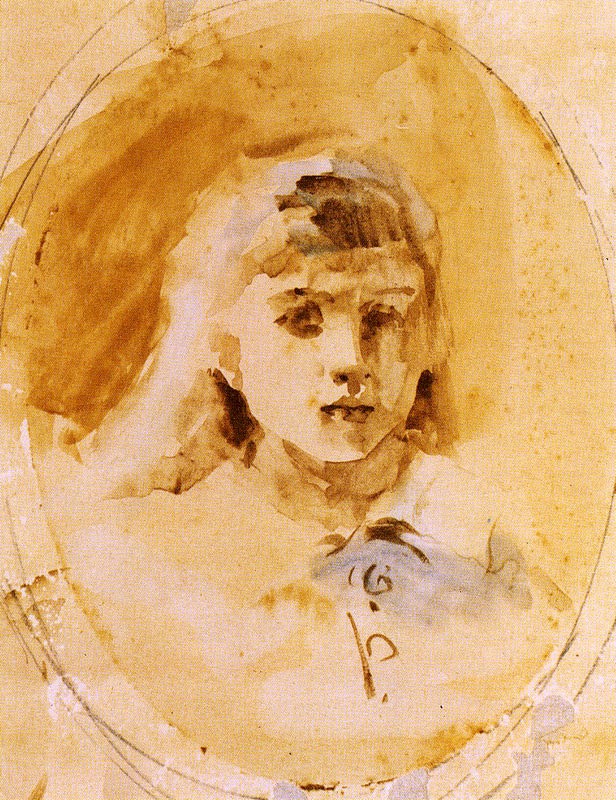
Marie-Louise Pailleron, 1879, watercolor on paper? Dimensions? Untraced. Sargent did other wash drawings of Marie-Louise that are better documented. The head on the left has a halo or other decorative design. This image is taken from a photograph the sitter made available in 1948 when the sketch was in her house at Ronjoux.

The Interrupted Romance of Fanny Watts: Described by his father as his “first serious work,” this Salon painting was an attempt to reminisce about their romance, which had been explicitly “nixed” by Sargent’s mother.

20-frances_sherborne_fanny_ridley_watts-largefixed

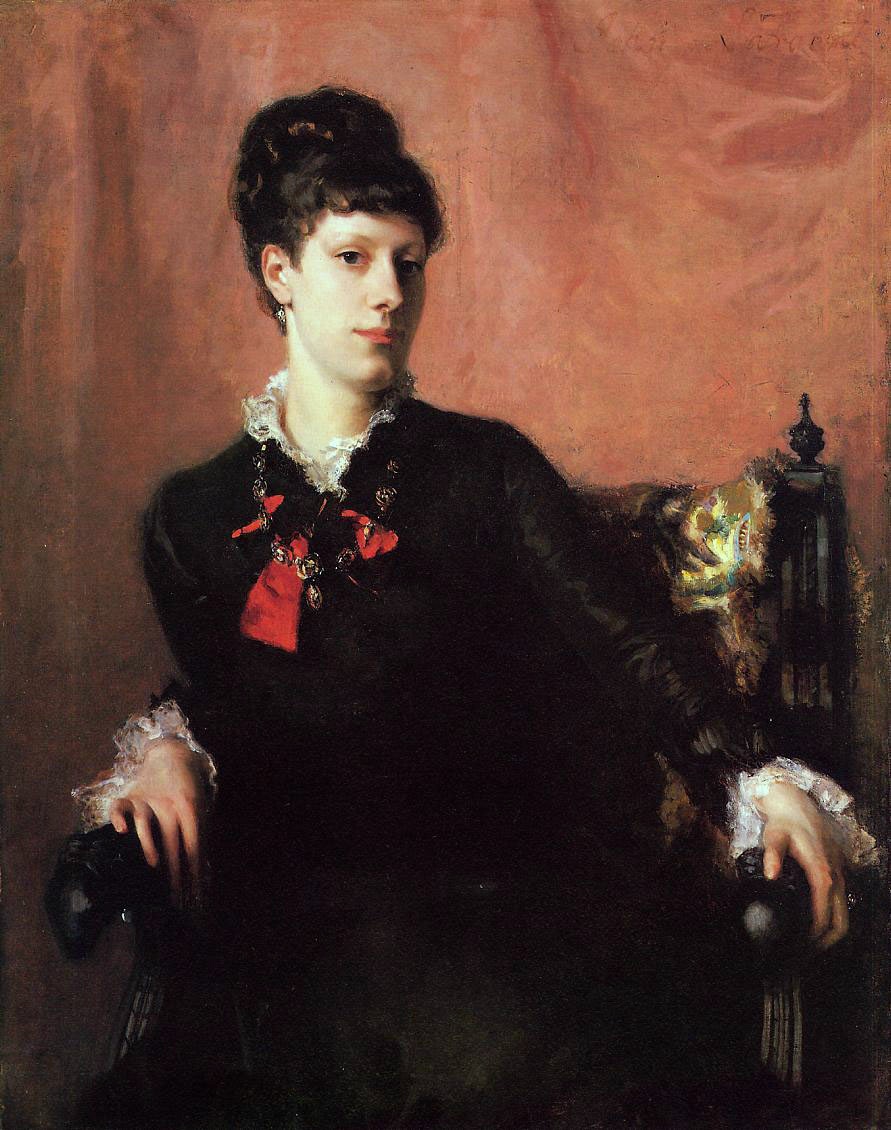
Fanny Watts, 1877, oil on canvas, 105.7 x 83.5 cm (41.5/8 x 32.7/8 in.), inscribed upper R: John S. Sargent. Philadelphia Museum of Art. Following money reverses in the U.S., Fanny’s New York family traveled to Nice and Florence in the 1860s and met the Sargents. The young Sargent and Fanny began a romance in 1876 that was nixed by Mrs. Sargent. The portrait is the artist’s attempt to reminisce about their time together. Dr. Sargent thought this portrait was his son’s “first serious work” and had it shown at the Salon. Fanny and the artist stayed lifelong friends.

21fixed

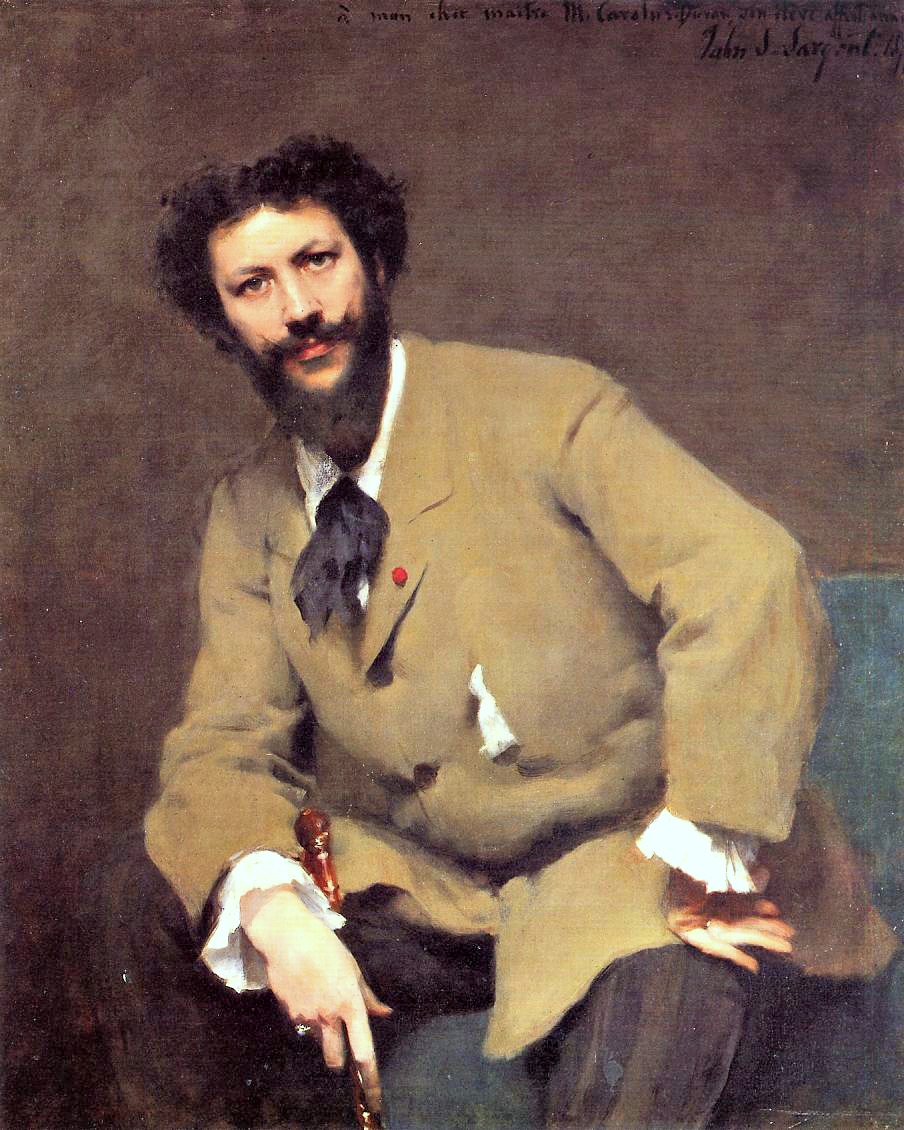
Carolus-Duran, 1879, oil on canvas, 116.8 x 95.9 cm (46 x 37 3/4 in.), inscribed upper R: à mon cher maître M. Carolus Duran, sur élève affectioné/John S. Sargent 1879. Clark Art Institute, Massachusetts. Teacher and portrait painter Carolus-Duran (1838-1917) had a profound influence on JSS’s artistic practice in the mid to late 1870s. The sitter wears a red ribbon of the Légion d’honneur in his buttonhole. It was Sargent’s second portrait exhibited at the Salon and this painting received critical praise in Europe and America.

The First Major Patron: Famed poet and playwright Edouard Pailleron was Sargent’s very first major patron, though how the unknown 23-year-old met him remains a mystery.

24

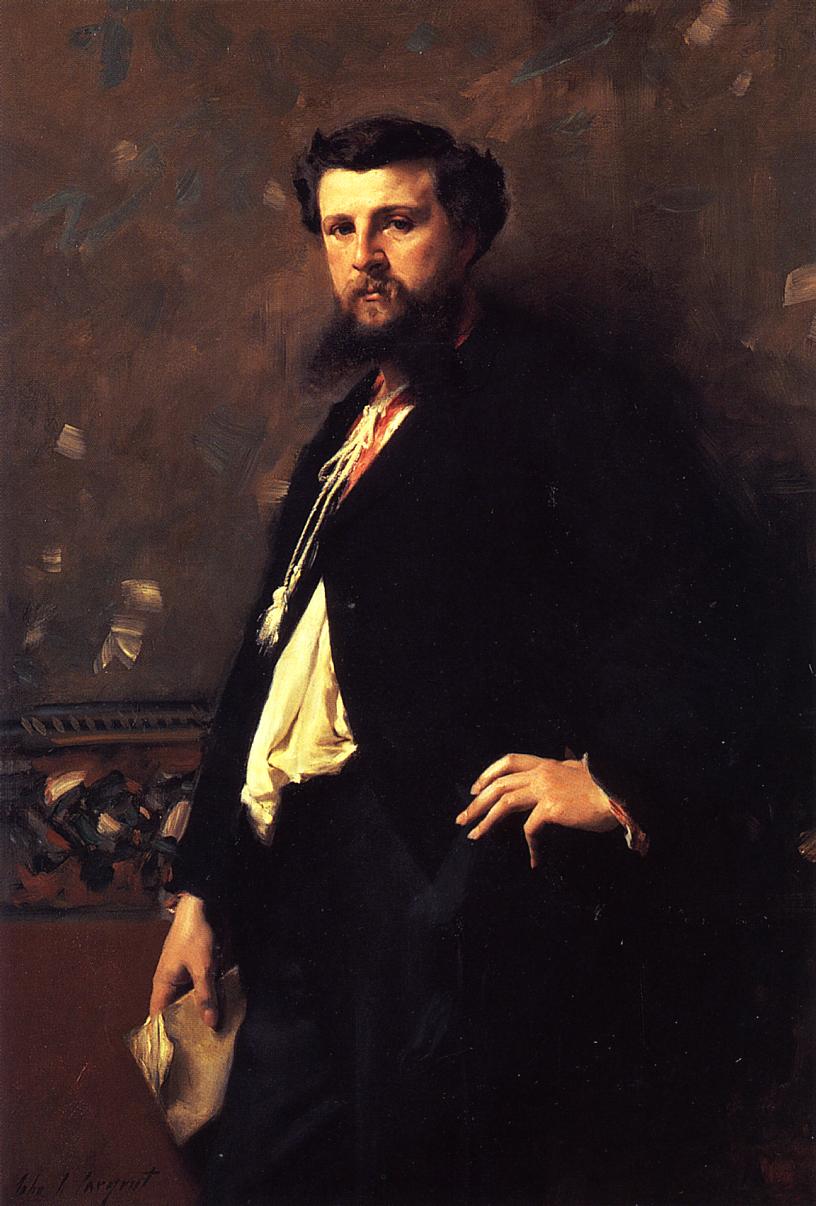
Edouard Pailleron, 1879, oil on canvas, 127 x 94 cm (50 x 37 in.), Inscribed lower L: John S. Sargent. Musée d’Orsay. Edouard Pailleron (1834-99) was JSS’s first major patron. How the 45-year-old famed poet and playwright met the unknown 23-year-old painter is a mystery. One impetus may be the favored portrait of Carolus-Duran at the Salon of 1879. This casually posed portrait of studied bohemianism was painted in Paris in  summer 1879 and soon paired with one of Mme. Pailleron.

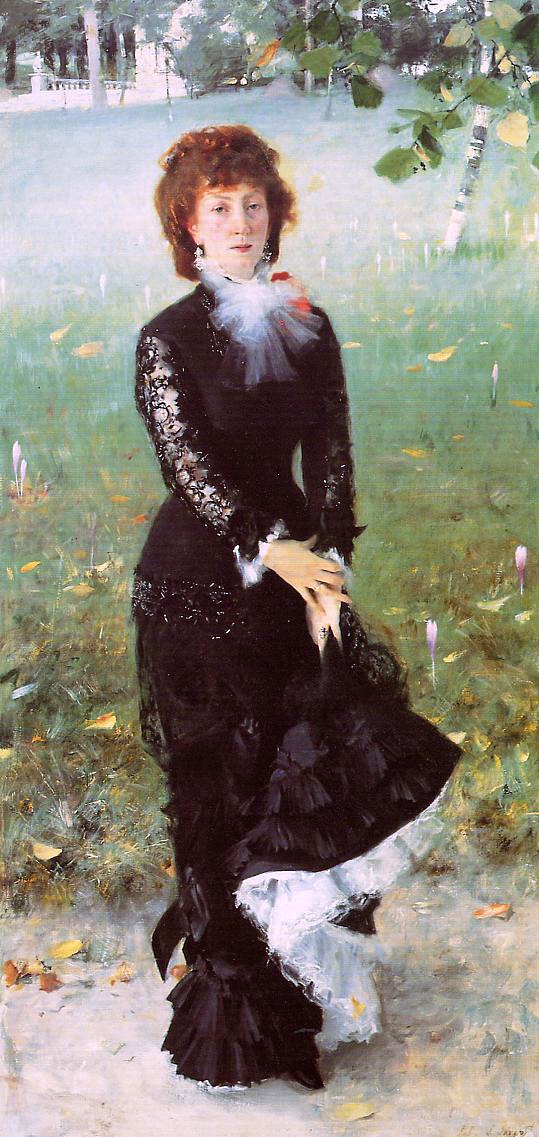
Fashion Controversies: Critics at the 1880 Salon heavily mocked his first full-length portrait (Madame Edouard Pailleron), remarking that her black satin dress looked completely bizarre and out of place in an outdoor garden setting.

25-madame-edouard-pailleron-1879fixed

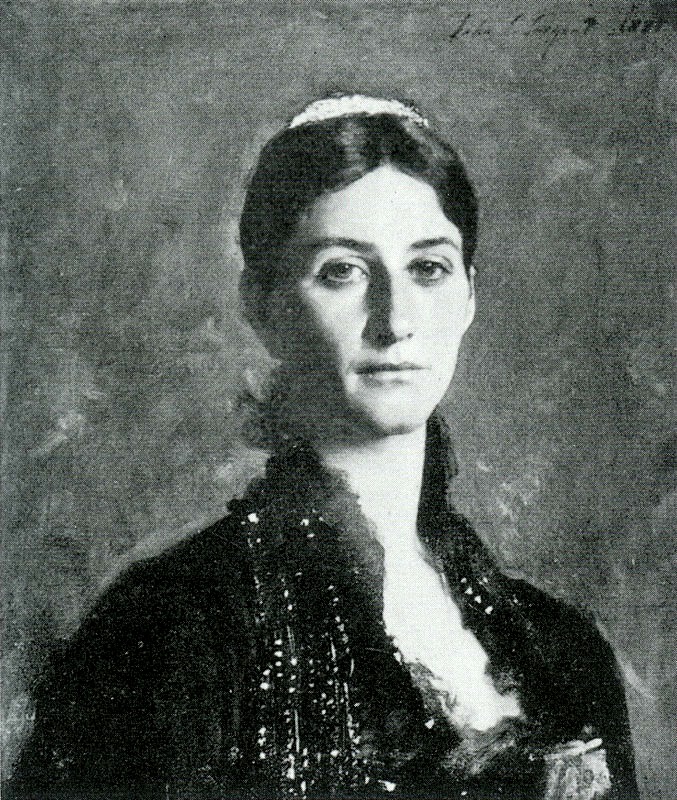
Madame Edouard Pailleron, 1879, oil on canvas, 208.3 x 100.3 cm (82 x 39.5 in.), Inscribed lower R: John S. Sargent/Ronjoux 1879. National Gallery of Art, Washington D.C. Sargent’s first full length portrait depicts Mme. Pailleron (1840-1913). It was painted at her parents’ house at Chambéry in the Savoy. She posed at the entrance to the allée des Tilleuls with house and garden behind. At the Salon of 1880 critics remarked that the black satin dress was out of place in an outdoor setting.

Madame Edouard Pailleron, 1879, study. The painting was Sargent’s first full length portrait.

The Watershed Salon of 1879: This exhibition was the ultimate turning point for Sargent’s career, directly yielding six distinct portrait commissions in Paris right as he was described by some as “practically starving”.

26-john_singer_sargent_-_robert_de_cevrieuxfixed

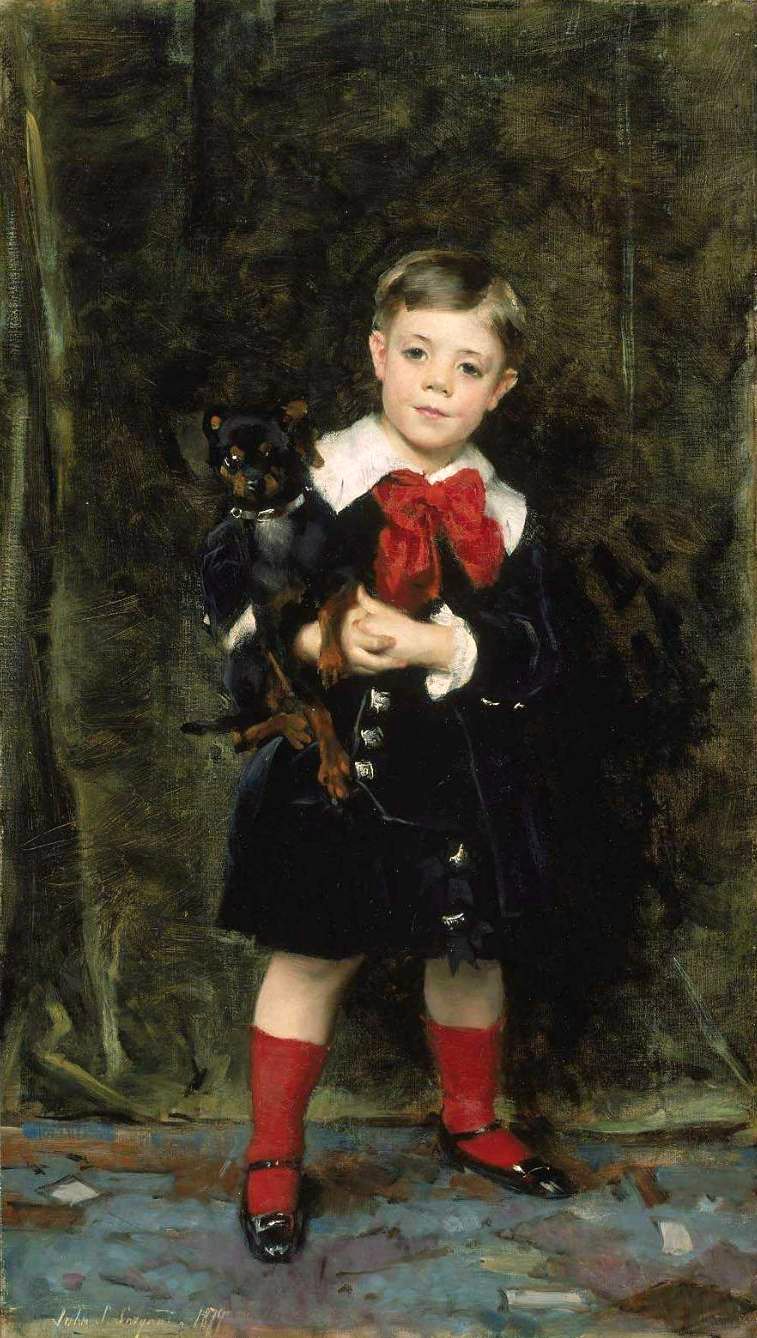
Robert de Cévrieux, 1879, oil on canvas, 84.5 x 48 cm (33.25 x 18.875 in.), inscribed lower L: John S. Sargent, 1879. Museum of Fine Arts, Boston. The Salon of 1879 was a watershed for JSS’s artistic career. Out of it came six portrait commissions in Paris including presumably this 6-year-old and his terrier. Carolus-Duran, by now JSS’s former teacher, painted children holding pets which were exhibited in mid1870s Salons. The child wears a velvet suit with no pant legs and matching jacket.

27-portrait-of-jeanne-kieffer-1879fixed

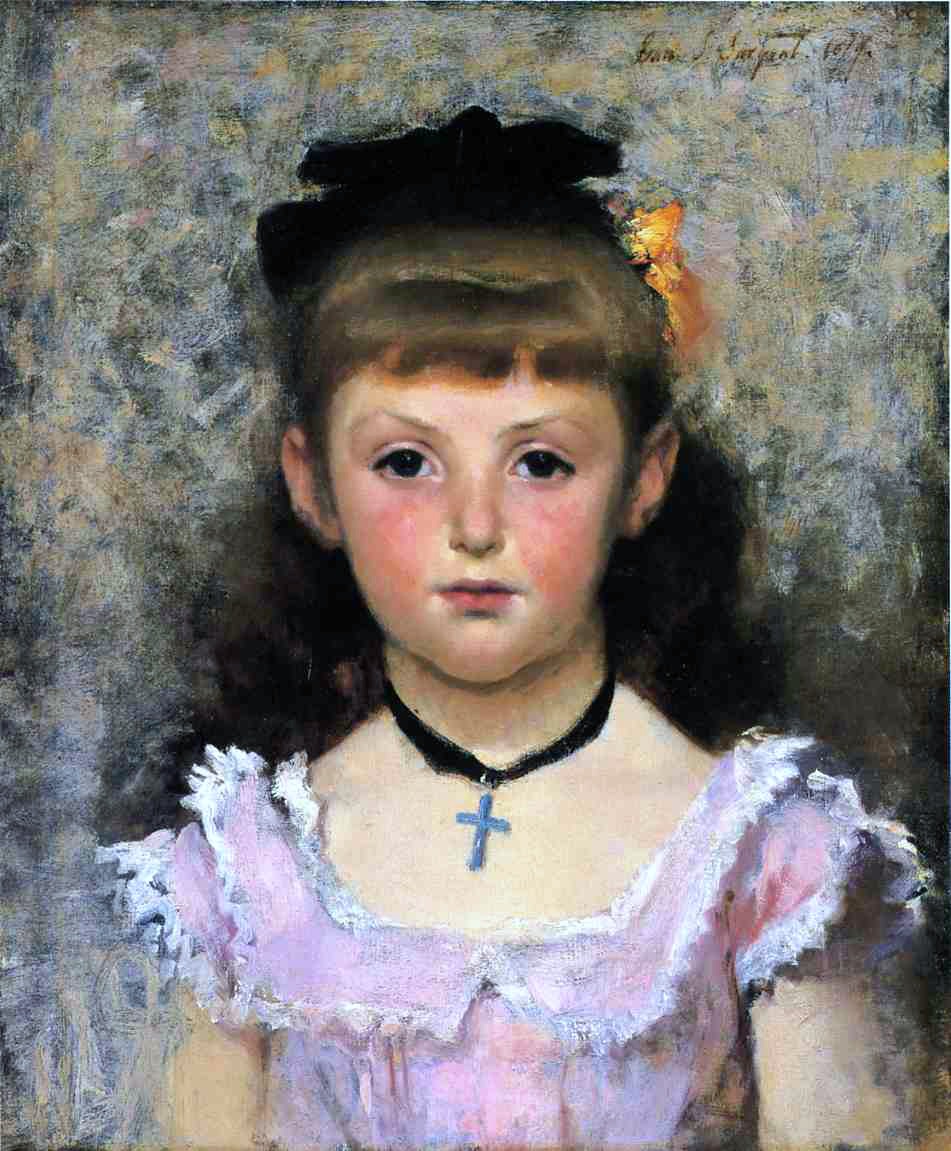
Jeanne Kieffer, 1879, oil on canvas, 43.2 x 35.6 cm (17 x 14 in.), inscribed upper right: John S. Sargent 1879. Private collection. By his early 20s some saw Sargent as an artist of “great talent and a real future.” He was also described as “practically starving.” This portrait of a 7-year-old sitter is quirky for the direct frontal pose and that the pink dress was an afterthought. The artist had originally painted her in a black velvet dress.

The Going Rate: For standard portraits of connected professionals (like well-connected soldier Le Vicomte de Saint-Périer and Boston lawyer Henry St. John Smith), Sargent commanded 1,500 francs, which was equivalent to a typical French worker’s entire annual wage.

29-john_singer_sargent_vicomte_saint_perierfixed

Le Vicomte de Saint-Périer, 1879, oil on canvas, 61 x 50.5 cm (24 x 19.875 in.), inscribed upper L: John S. Sargent. Musée d’Orsay. Sargent was paid 1,500 francs – a typical French worker’s annual wages – for this portrait of a well-connected professional soldier. The expressive realism of the head recalls his recent portraits of Edouard Pailleron and Carolus-Duran.

30-john_singer_sargent_henry_john_smith-2new-clean-fixed

Henry St. John Smith, 1880, oil on canvas, 62.2 x 49.5 cm (24.5 x 19.5 in.), inscribed upper R: John S. Sargent 1880. Portland Museum of Art, Maine. Boston lawyer Henry St. John Smith (1852-1896) graduated from Harvard in 1872 and went to Europe virtually annually. In 1880 he was an eligible bachelor. Smith saw Sargent’s studio in Paris and didn’t like it. Friends Augustus Jay and Boston artist Francis Brooks Chadwick intervened and the result is this head-and-shoulders portrait that earned Sargent a commission of 1,500 francs.

32fixed

Peter Augustus Jay, 1880, oil on canvas, 45.8 x 37.5 cm (18 x 14.75 in.), inscribed upper L: John S. Sargent 1880. Private collection. The future U.S. Ambassador to Argentina is painted when he was a 3-year-old with golden shoulder-length hair and dressed in a bibbed white blouse. It was when Henry St. John Smith was with the boy’s father Augustus “Gussie” Jay at Sargent’s Paris studio when St. John Smith was having his portrait painted that the commission for the child’s portrait probably originated.

33fixed-john_singer_sargent_eleanor_jay_chapmandraft-2clean

Eleanor Jay Chapman, c.1881, oil on canvas, 43.8 x 53.3 cm (17.25 x 21 in.), inscribed upper L: John S. Sargent. Private collection. In 1881, Eleanor Jay Chapman was the 16-year-old daughter of a stockbroker. Through her mother, she was a descendant of John Jay, first Chief Justice of the U.S. Eleanor and her younger sister Beatrix had their portraits painted by Sargent in Paris (Beatrix’s was later destroyed). There is no evidence for how the Chapmans met Sargent, but it happened before her father’s financial collapse in 1882.

34-dsc_0876-3draftcleanfixed

Edward Burckhardt, 1880, oil on canvas, 55.2.x 46.4 cm (21.75 x 18.25 in.), inscribed lower L: To my friend Valerie/John S. Sargent Paris June 1880. Private collection. Sargent was an intimate friend of Swiss businessman Edward Burckhardt (1815-1903) and his American wife and their family. The portrait, painted in Paris in May 1880, has inspired little positive critical commentary.

Destroyed by Fire: Companion portraits of Boston’s James Lawrence and his new wife Caroline Estelle Mudge were completely lost to history when they were destroyed in a house fire in Hingham, Massachusetts, in 1939.

36-john_singer_sargent_mrs_james_lawrence-new-fixed

Mrs. James Lawrence, oil on canvas, 61 x 45.7 cm (24 x 18 in.), inscribed upper R: John S. Sargent 1881. Sargent painted companion portraits of Boston’s James Lawrence (1853-1914) and his new wife Caroline Estelle Mudge (1850-1920). Neither portrait has survived. Both were destroyed by fire in Hingham, Massachusetts, in 1939. In 1888 it was noted that the sitter wore a black dress in front of a red background.

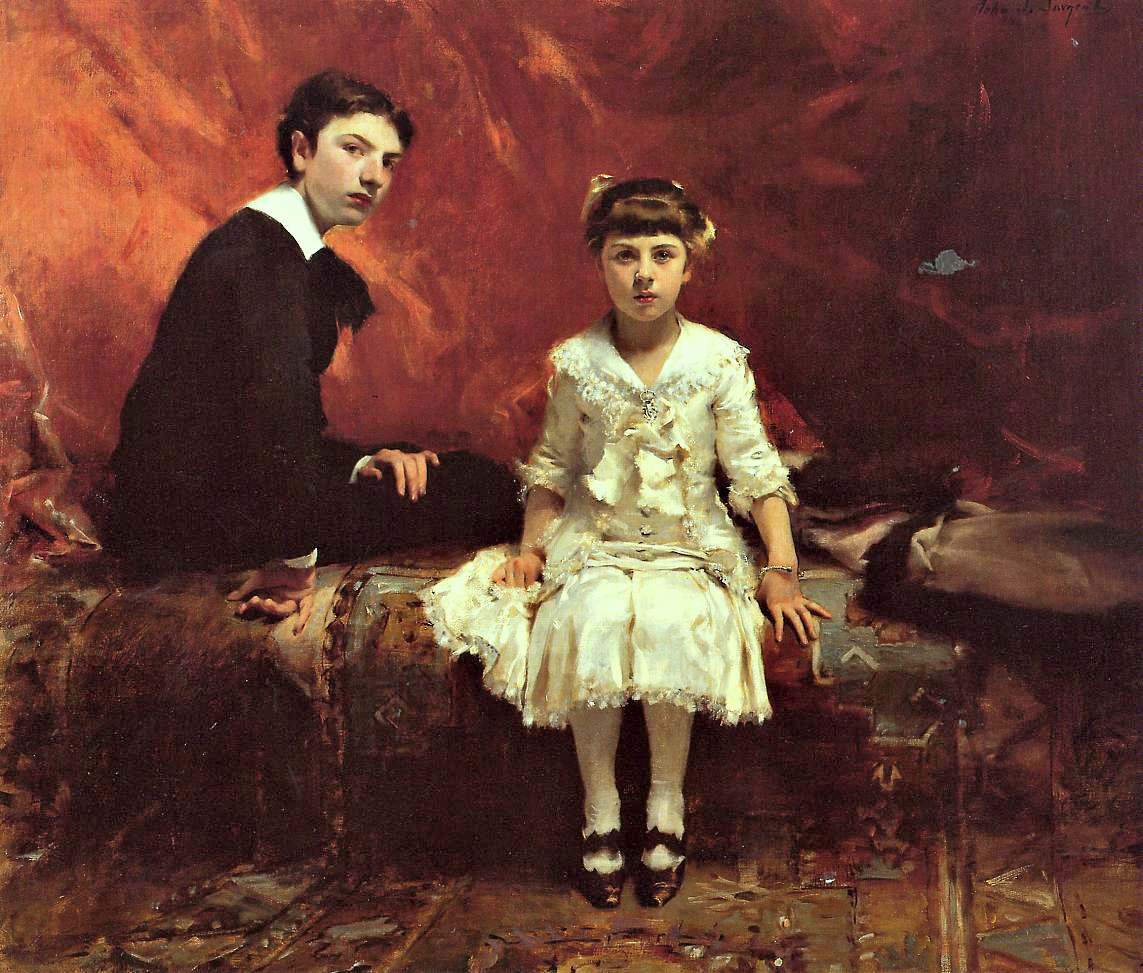
The Torturous 83 Sittings: For The Pailleron Children double portrait, the 10-year-old Marie-Louise was so uncooperative and exasperated by Sargent making her wear her hair “up” that his teacher, Carolus-Duran, had to step in to calm her down across 83 separate sittings.

37-edouard-and-marie-louise-pailleron-1881-fixed

The Pailleron Children, 1881, oil on canvas, 152.4 x 175.3 cm (60 x 69 in.), upper right: John S. Sargent. Des Moines Art Center. Édouard (b.1865) and Marie-Louise (b.1870) are children of Sargent’s first patron. Seated on a bench, the boy is dressed in a suit with an Eton collar and silk bow tie and the girl, hair up, is wearing a satin dress with lace trim. Carolus-Duran had to calm Marie-Louise to cooperate for a double portrait that required 83 sittings done in Sargent’s studio. It was exhibited at the Salon of 1881.

38-fixed-john_singer_sargent_marie_louise_pailleron

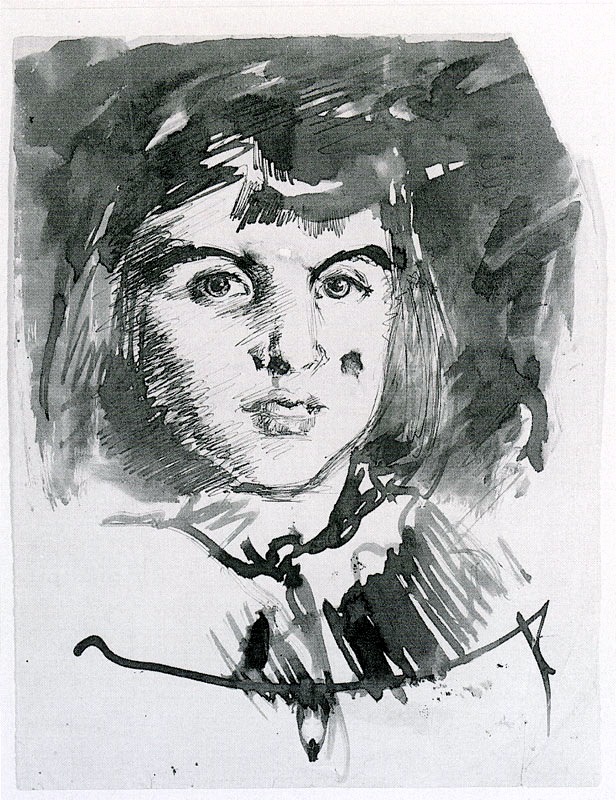
Marie-Louise Pailleron, c.1881, watercolor, 27 x 20 cm (10.625 x 7.875 in.). Private collection. Aside from a couple of dabs of blue, the portrait is executed nearly in one color, that is, en grisaille. Marie-Louise wears her hair “down” unlike in the formal portrait with her older brother done at the same time where the 10-year-old was exasperated by the artist’s insistence that she wear her hair “up.”

39-a-john_singer_sargent_marie_louise_pailleronfixed

Marie-Louise Pailleron, c.1881, pen, ink and wash on paper, 23.2 x 18.1 cm (9.125 x 7.125 in.), Metropolitan Museum of Art, New York. A second monochrome facial study of 10-year-old Marie-Louise by JSS. The work has a playful aspect in that the paper’s back side (or verso) has a child’s drawing of a house.

His portrait practice grew within a expanding network of prominent American expatriates and Europeans. This network brought in commissions from professionals in business, the military, law, and medicine, as well as their wives and children.

40-dr_pozzi_at_homefixed

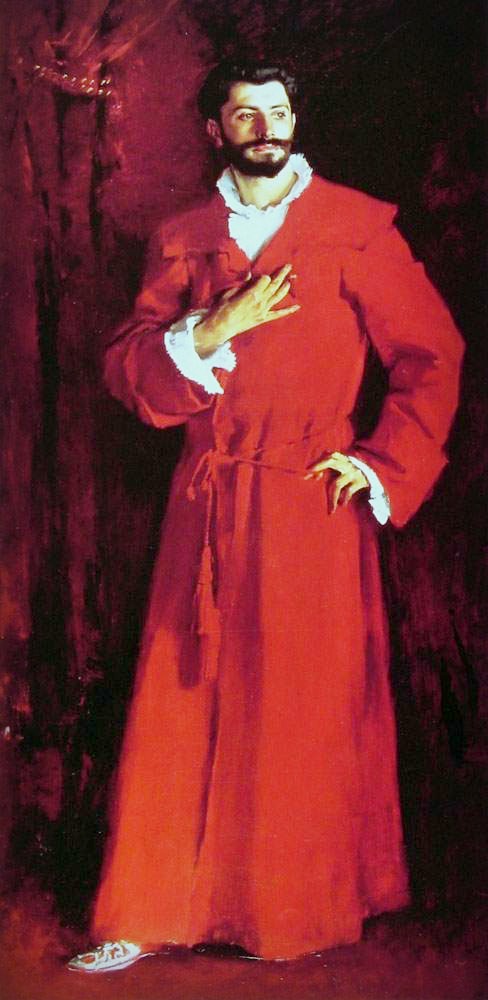
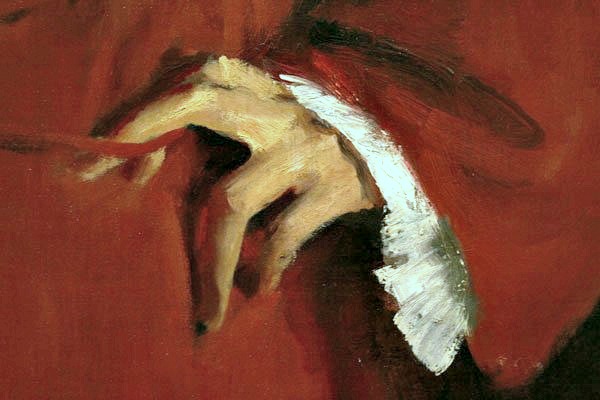
Dr. Pozzi (or Dr. Pozzi at Home), 1881. Oil on canvas, 204.5 x 111.4 cm (80 ½ x 43 7/8 in.). Inscribed upper right: John S. Sargent 1881. UCLA at the Armand Hammer Museum of Art and Cultural Center, Los Angeles.

Below: Detail of left hand, Dr. Pozzi, 1881.

40-bfixed

42-dsc_0533-3

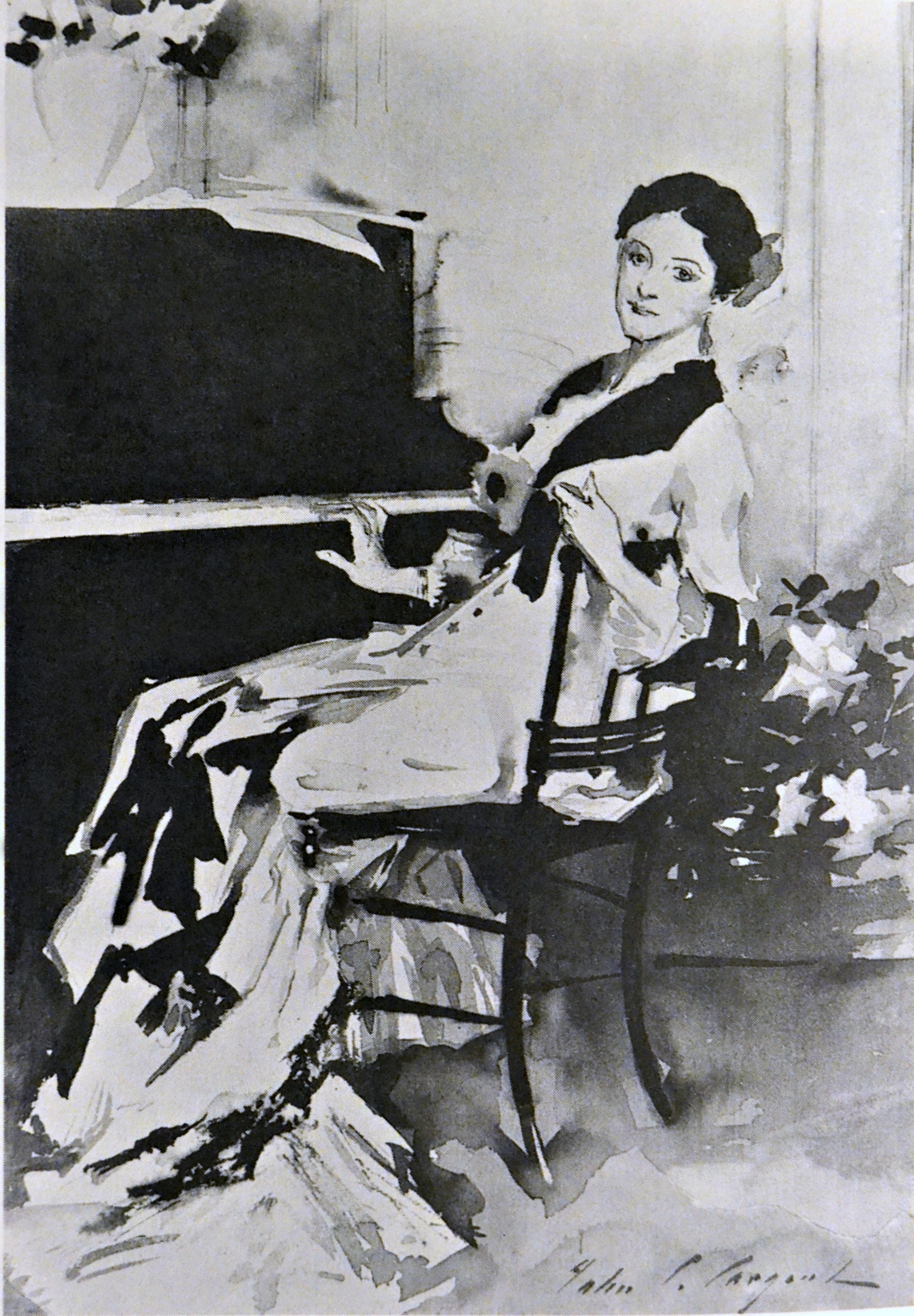
Madame Ramón Subercaseaux, c. 1881, sepia wash, 22.2 x 32.4 cm (12 ¾ x 8 ¾ in.), inscribed, lower right: John S. Sargent. Private collection. This is not a study for the painting below but a derivation from it. The artist made it for the painting’s reproduction in the Salon catalog.

41-madame-ramon-subercaseaux

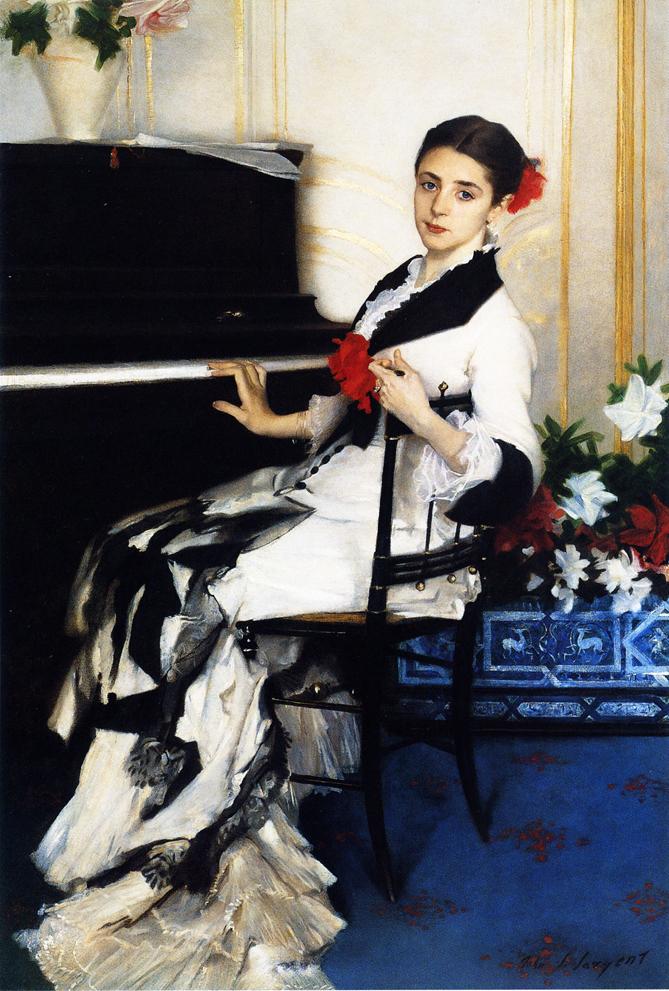
Madame Ramón Subercaseaux, c. 1880-81, oil on canvas, 165.1 x 109.9 cm (65 x 43 ¼ in.). Inscribed, lower right: John S. Sargent. Private collection.

43-portrait-of-mrs-john-joseph-townsend-catherine-rebecca-bronson-1881

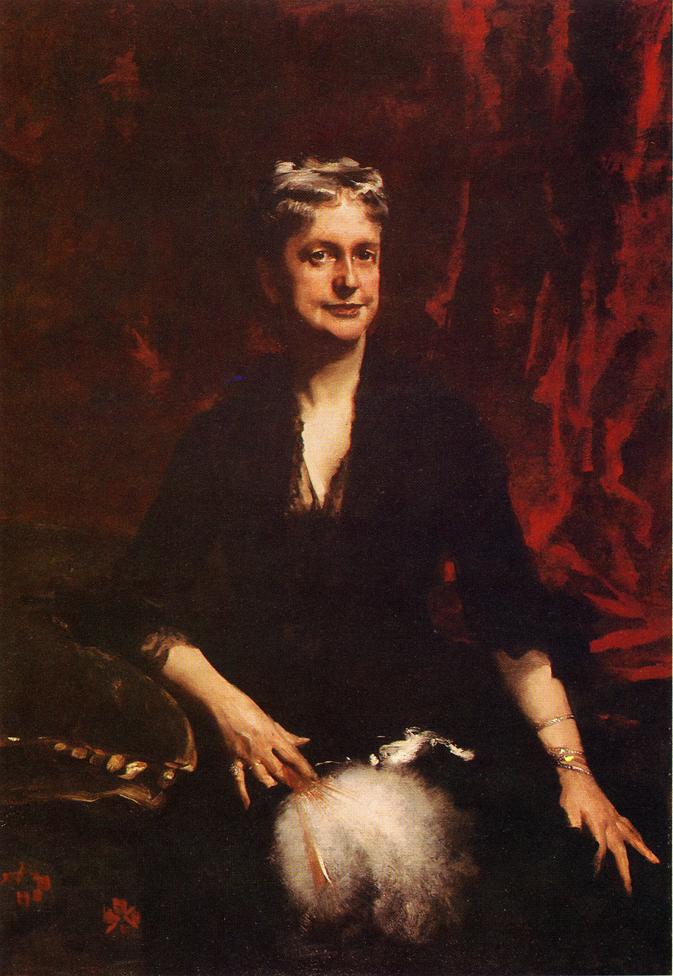
Mrs. John Joseph Townsend, 1881, oil on canvas, 124.5 x 83.8 cm (49 x 33 in.). Inscribed, upper right: John S. Sargent Paris 1881. Location unknown. Catherine Rebecca Bronson (1833-1926) was from a family of U.S. politicians and married a New York businessman. The Bronsons were part of the American expatriate community in Florence and Venice with the Sargents. This is Sargent’s first portrait of the old family friend. She sits on a low couch, right elbow on pillows and holds a swan’s-down fan.

44-dsc_0535fixed

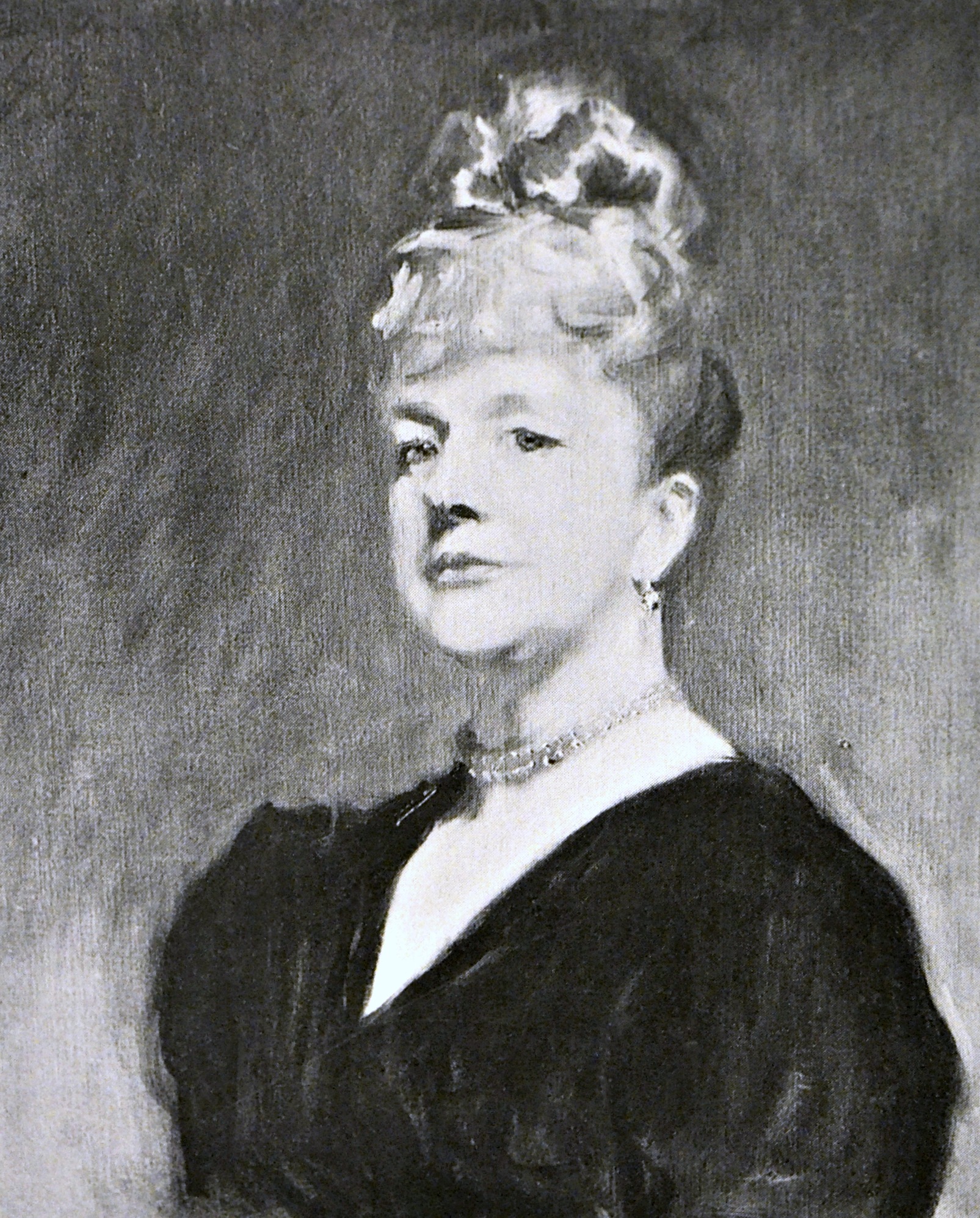
Mrs. John Joseph Townsend, c. 1882, oil on canvas, 69.9 x 56.5 cm (27½ x 22¼ in.). Inscribed, upper left: to my dear friend Mrs Townsend/John S. Sargent. Location unknown.

45-dsc_0536fixed

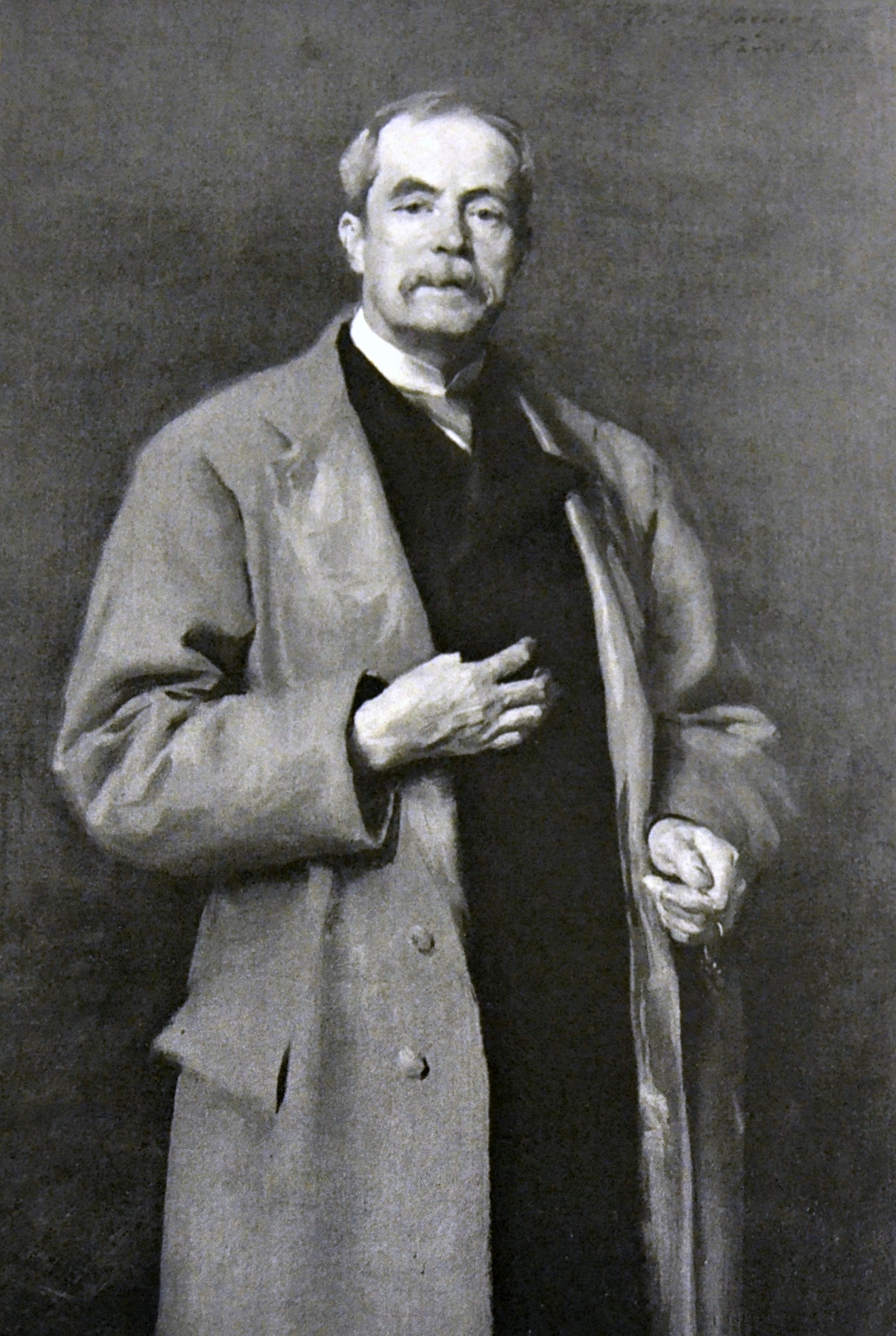
John Joseph Townsend, 1882, oil on canvas, 128.9 x 86.4 cm (50 ¾ x 34 in.). Incribed, upper right: John S. Sargent/Paris 1882. Private collection. Mr. Townsend (1825-1889) was a New York lawyer who served in the State Assembly. A Columbia University trustee and Union Club president, he married Catherine Bronson, a Sargent family friend, in 1854.

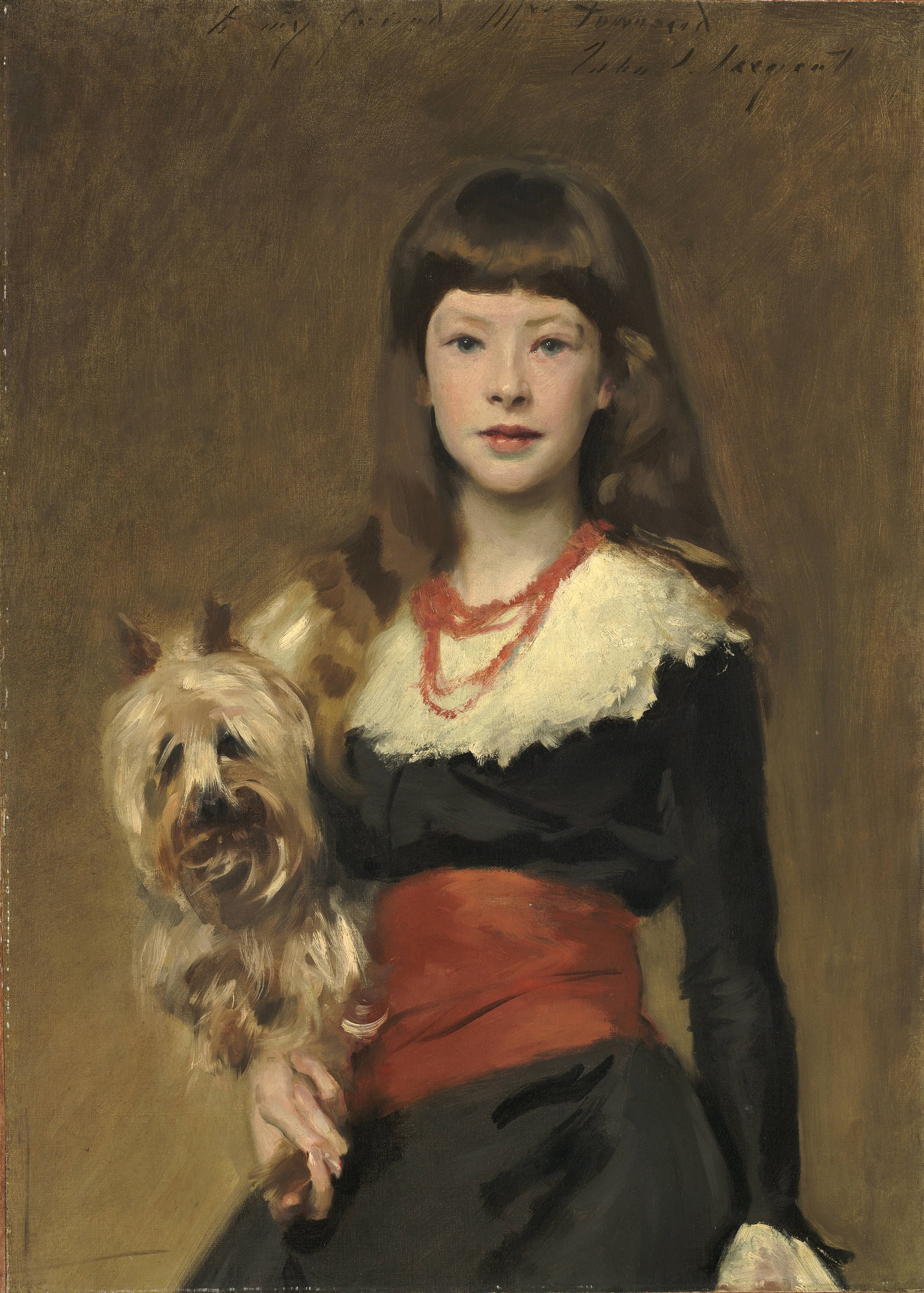
The Tragedy of Beatrice Townsend: Painted as a vibrant teenager holding a dog, Beatrice tragically died just two years later from peritonitis.

46-john_singer_sargent_-_miss_beatrice_townsend

Beatrice Townsend, c. 1882, oil on canvas, 81.9 x 58.4 cm (32 ¼ x 23 in.). Inscribed, upper center: to my friend/Mrs. Townsend/John S. Sargent. National Gallery of Art, Washington, D.C. (Mellon Collection). (Eleanor) Beatrice Townsend (1870-1884), born in New York, was the sixth of seven children of Mr. and Mrs. Townsend. The teenager died tragically of peritonitis, an abdominal disease in 1884.

47-mr-and-mrs-john-w-field-1882

Mr. and Mrs. John Field, 1882, oil on canvas, 111.8 x 82.5 cm (44 x 32½ in.). Inscribed, upper right: John S. Sargent, Paris 1882. Pennsylvania Academy of Fine Arts, Philadelphia. Gilbert Stuart painted the father of Mrs. Field (Eliza Willing Spring Peters, 1820-1897) and she was painted by Thomas Sully in 1841– and now by Sargent. European travel led Mr. Field (1815-1887), a trader, into art collecting. In a June 1882 letter, British writer Vernon Lee noted that it was the Fields (or possibly the Townsends) who were nonstop talkers.

48-isabel-valle-1882

Isabel Vallé, 1882, oil on canvas, 132.1 x 81.3 cm (52 x 32 in.). Inscribed, upper left: John Singer Sargent; upper right: Paris 1882. Private collection. Likely exhibited at the third exhibition of the Cercle des arts libéraux in 1882 on rue Vivienne in Paris, Isabel Vallé (1864-1947) became Mrs. Austin but later divorced. The three-quarter-length portrait of the 18-year-old possesses a “soft, liquid beauty.”

49-dsc_0534-2fixed

Mrs. Jules Félix Vallé, 1882, 50.8 x 40.6 cm (20 x 16 in.), Inscribed, upper right: John S. Sargent/1882. Lost. Mrs. Vallé was Isabel Vallé’s mother.

50c-fixed

Mrs. Daniel Sargent Curtis, 1882, oil on canvas, 71.1 x 53.3 cm (28 x 21 in.). Inscribed, upper left: Venice 1882; upper right: John S. Sargent/to his kind friend Mrs Curtis. Spencer Museum of Art, Lawrence, Kansas. Ariana Randolph Wormeley (1833-1922) came from a family of writers and linguists. At 20 years old she married Dr. Sargent’s cousin and moved from Boston to a palazzo in Venice where she established a fashionable salon. Sargent called her the “Dogaressa” and was a frequent guest in later years.

51-mademoiselle-boussenet-duclos-fixed

Mademoiselle Boussenet-Duclos, 1882, oil on canvas, 55.6 x 46 cm (21 7/8 x 18 7/8 in.). Inscribed, upper left: John S. Sargent; upper right: 1882. Verso: Mr. John Sargent/ 8….. Private collection. The whereabouts of this portrait of a young woman dressed in a black outdoor coat with fur edging was unknown until it reappeared in public in 1988.

52-fixed-john_singer_sargent_madame_allouard_jouanfixed

Madame Allouard-Jouan, c. 1882, oil on canvas, 74.9 x 55.9 cm (29½ x 22 in.). Inscribed, upper left: à Mme Allouard Jouan/témoignage d’amitié; upper right: John S. Sargent. Musée du Petit Palais, Paris. In 1882 the portrait was exhibited at French art dealer Georges Petit’s gallery. The portrait was described as being painted “with verve, by the hand of a master.”

53-fixed-madame-paul-escudier-louise-lefevre-1882

Madame Paul Escudier, 1882, oil on canvas, 128.3 x 90.2 cm (50½ x 35½ in.). Inscribed, lower right: John S. Sargent 1882. Private collection. Louise Lefevre (1861-1950) married Paul Escudier (1858-1931), a sometime French entertainment lawyer. This informal portrait with a beautiful subject and setting in delightful light, the sitter’s identity is not certain. Sometimes compared to Belgian artist Alfred Stevens, the work’s reflection in the mirror seems to evoke Jan Van Eyck.

54-fixed-john_singer_sargent_madame_paul_escudier

Madame Paul Escudier, c. 1882, oil on canvas, 73.2 x 59.5 cm (18 ¾ x 23 ½ in.). Inscribed, upper left: à Madame Escudier/John S. Sargent. Clark Art Institute, Massachusetts. The sitter is dressed in a black coat and diamond pin, ready for a possible soirée. She is wearing a fashionable white-ribboned black hat for a finish.

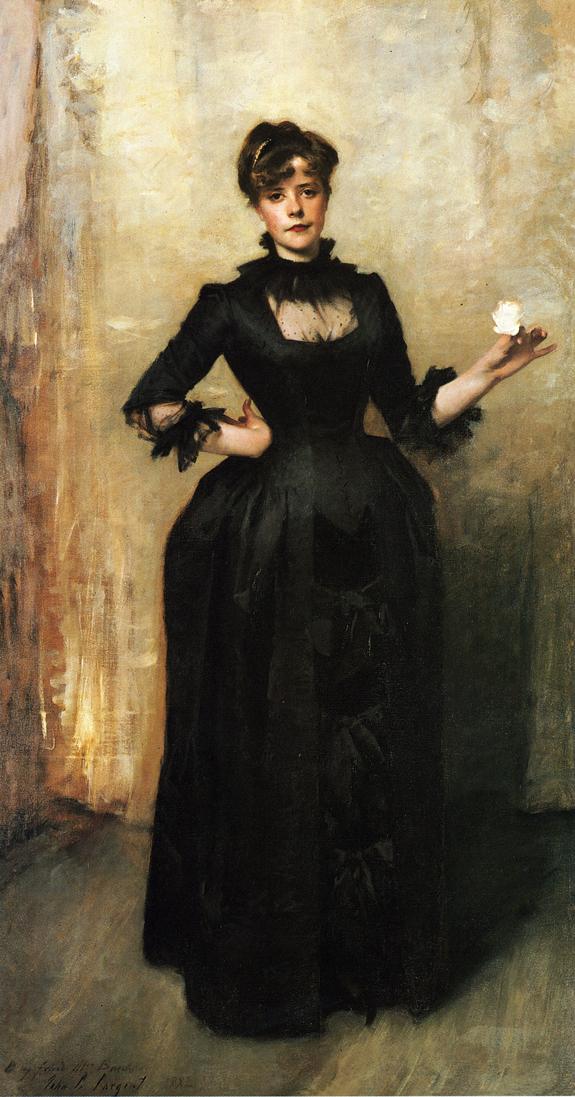
55-louise-burckhardt-also-known-as-lady-with-a-rose-1882

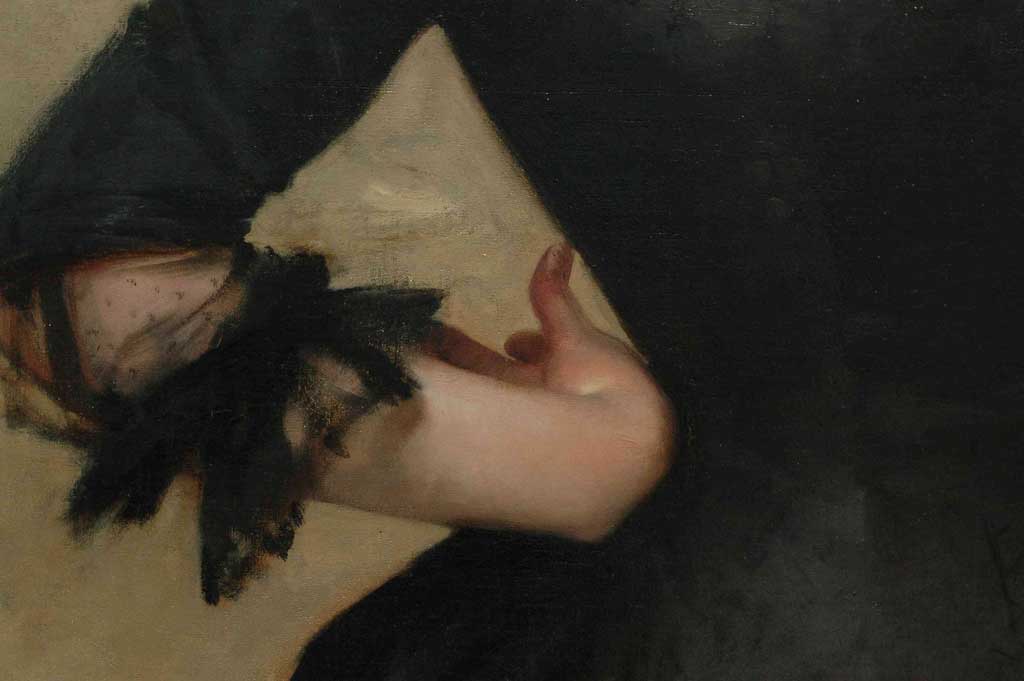
Louise Burckhardt (or, Lady With a Rose), 1882, oil on canvas, 213.4 x 113.7 cm (84 x 44¾ in.). The Metropolitan Museum of Art, New York.

Below: detail, Louise Burckhardt (or, Lady With a Rose), 1882.

55-lady_with_the_rose_d

This specific era of Sargent’s career produced his famous group portrait, The Daughters of Edward D. Boit (1882), and his controversial portrait of Madame X.

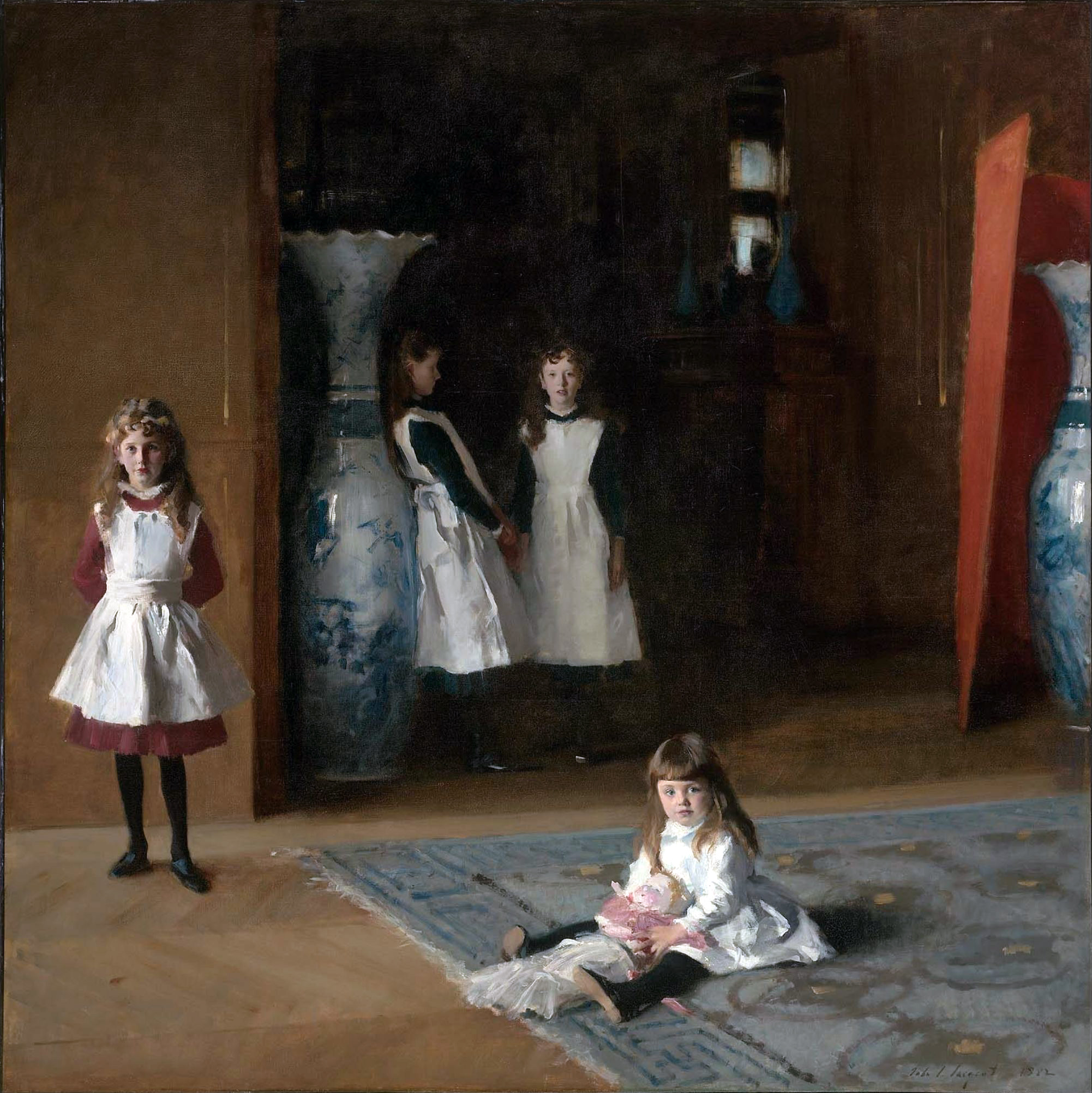
56-the_daughters_of_edward_darley_boit_john_singer_sargent_1882_unfree_frame_crop

Daughters of Edward D. Boit, 1882, oil on canvas, 221.9 x 221.6 cm (87 3/8 x 87 5/8 in.). Museum of Fine Arts, Boston, 1882. The group portrait depicts the four daughters of Sargent’s friend and fellow American painter, Edward Boit and his wife, Mary Louisa. In Europe the Boits lived in Rome and Paris where this painting, directly influenced by Velázquez, was painted in the family flat on Avenue de Friedland. Exhibited at Georges Petit and the Salon. The Japanese vases remain in the family today.

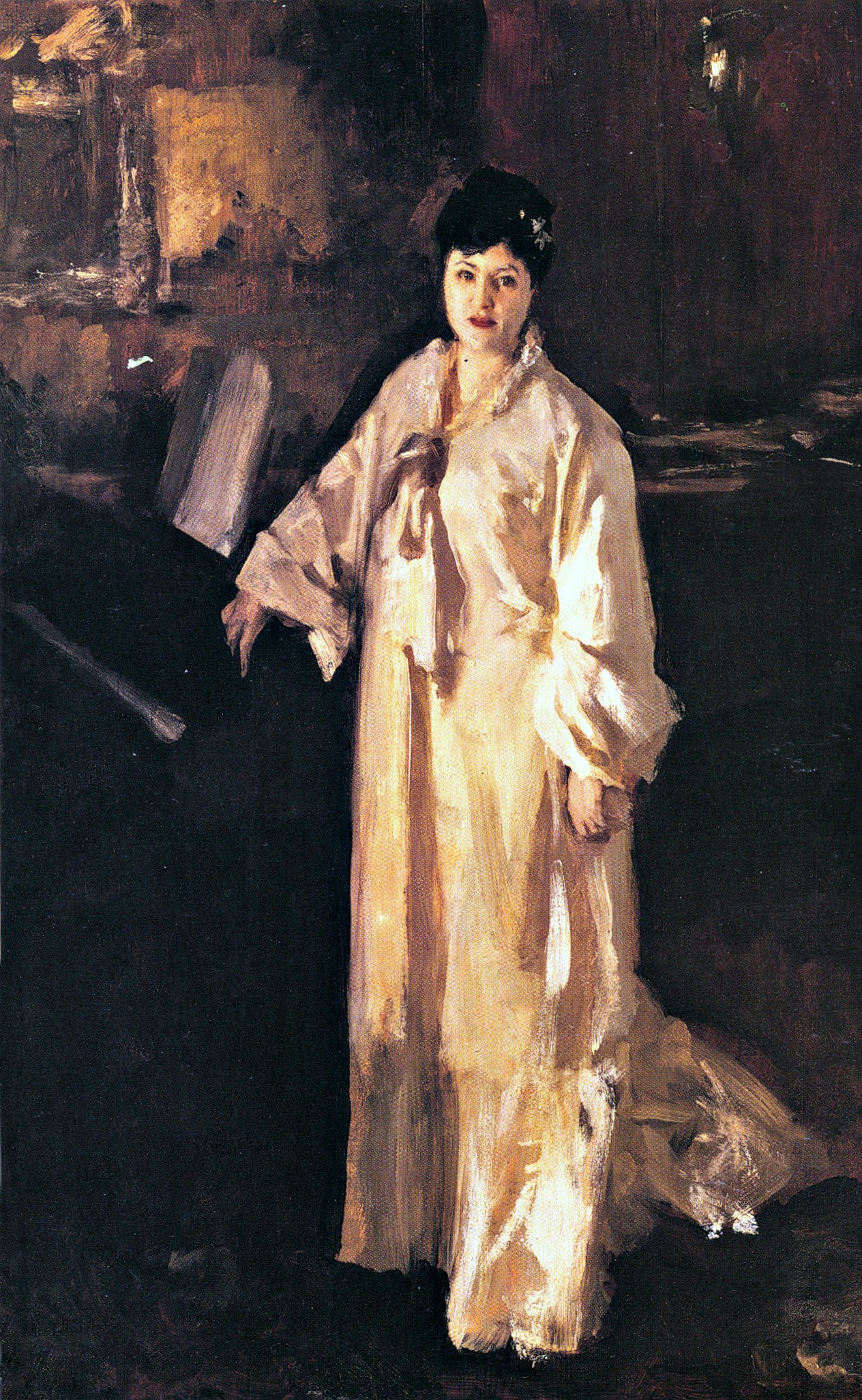
John Singer Sargent, Judith Gautier, 1883-85

Judith Gautier, c. 1883-1885. Detroit Institute of Arts, oil on panel. 39 x 24 1/2 in., (99.1 x 62.2 cm)

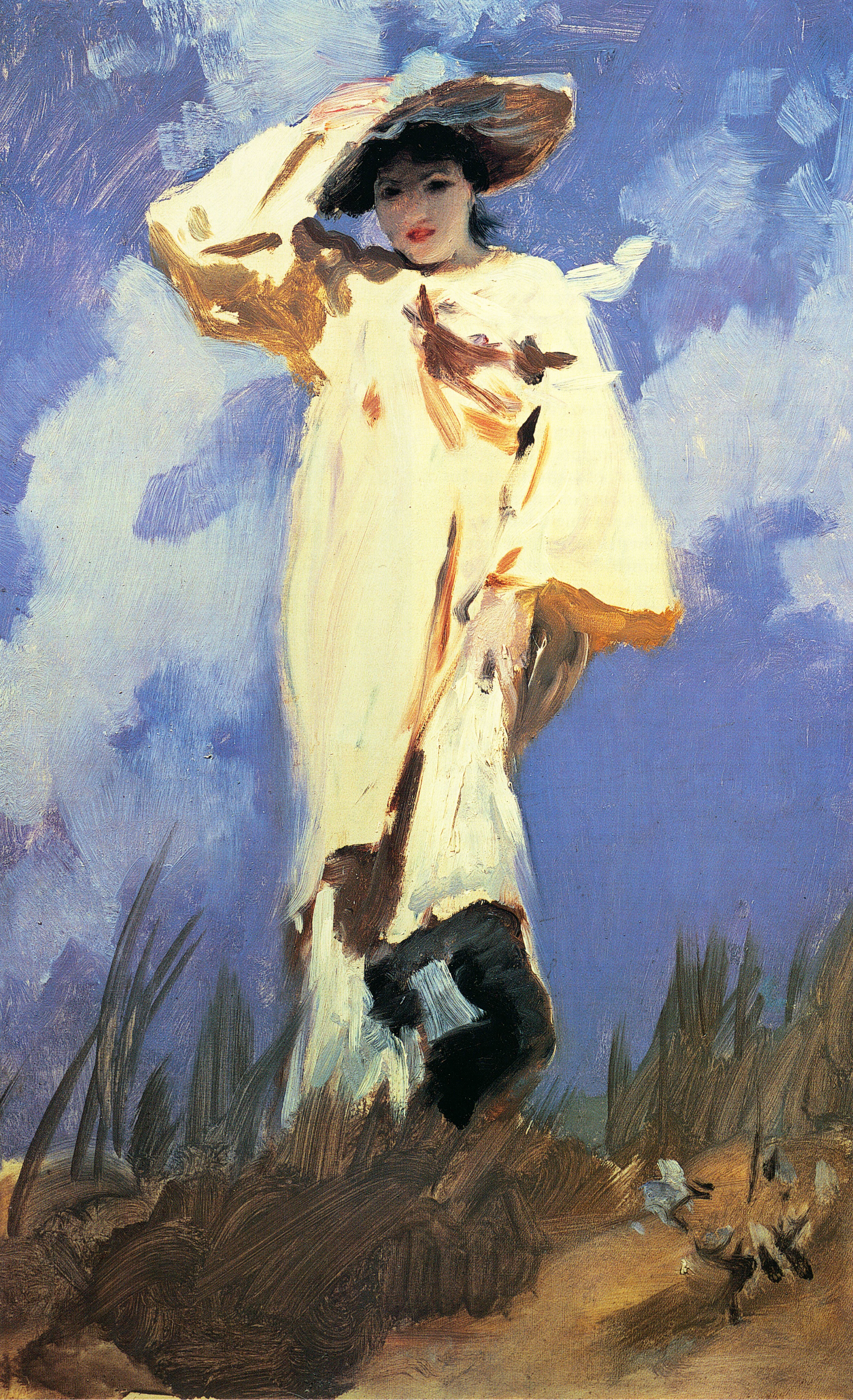
JSS, Judith Gautier or Gust of Wind, c, 1883-1885, private collection, oil on canvas, 24 1/8 x 15 in. (61.3 x 38.1 cm).

Judith Gautier or Gust of Wind, c, 1883-1885, private collection, oil on canvas, 24 1/8 x 15 in. (61.3 x 38.1 cm).

While his earliest portraits focused tightly on his personal inner circle—including family, fellow artists, writers, musicians, and romantic interests—he quickly expanded to paint prominent cultural figures like author Robert Louis Stevenson and actress Ellen Terry.

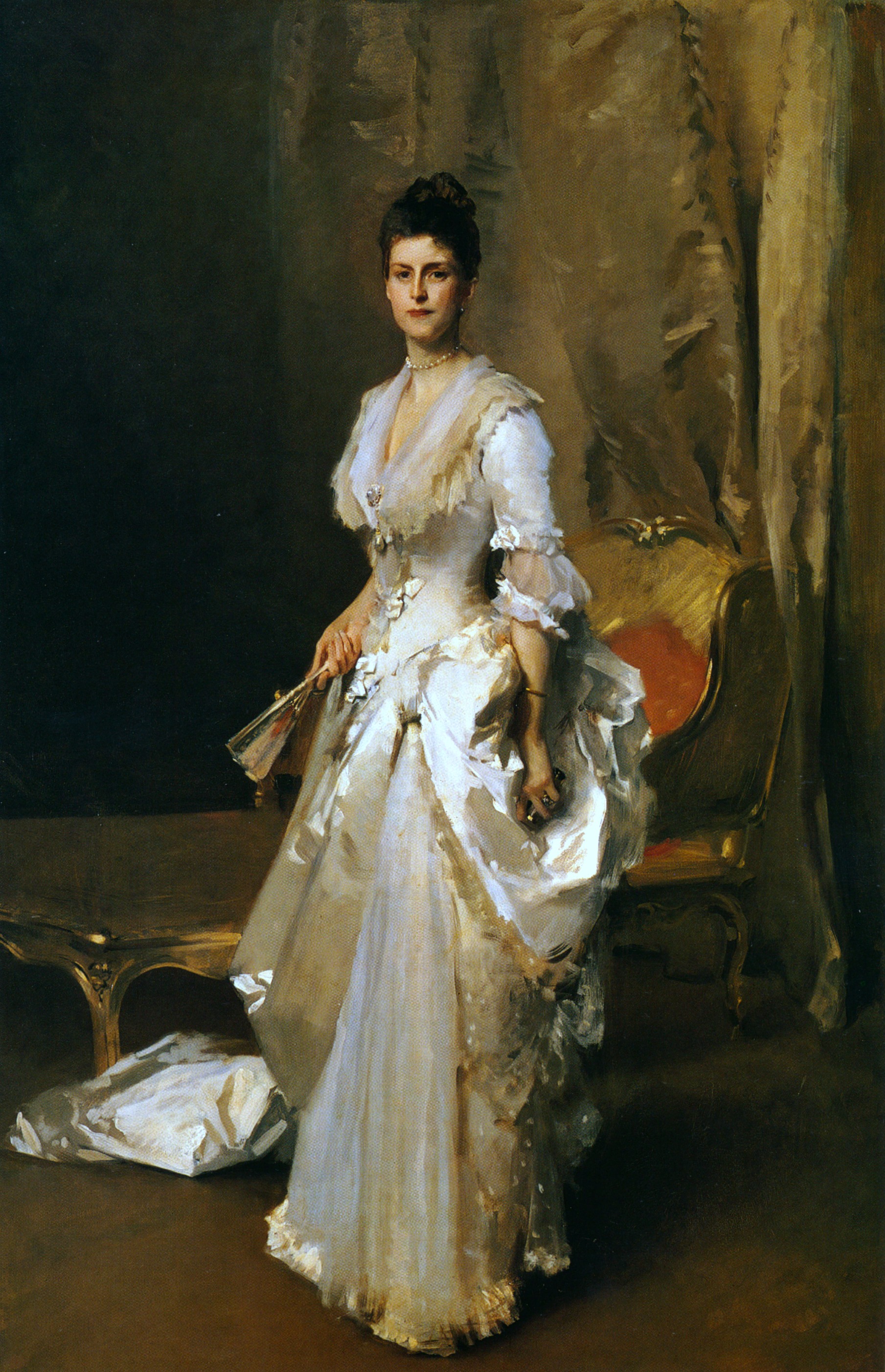
John Singer Sargent, Mrs. Henry White, 1883

Margaret Stuyvesant Rutherfurd White (Mrs. Henry White), 1883, oil on canvas, 225.1 × 143.8 cm (88 5/8 × 56 5/8 in.), National Gallery of Art, Washington, D.C. from Corcoran Collection, 2014.

REFERENCE: John Singer Sargent, Complete Paintings, Volume 1: The Early Portraits by Richard Ormond and Elaine Kilmurray, Yale University Press/Paul Mellon Centre, 1998.

Portraits of the Formative Years: Mapping Joshua Reynold’s Earliest Commissions of the 1730s & 1740s.

FEATURE image: Reginald Pole, 1743-44, 76 x 86.5 cm, Trustees of the Carew Pole Family Trusts, Antony House, Cornwall. See no. 2 below for the painting’s story.

The earliest phase of Sir Joshua Reynolds’s portrait practice, showcasing how his foundational career was built on personal networks, regional connections, and early patrons. By cataloging his earliest documented works, the post highlights how the budding artist transitioned from a precocious child painter into a structurally guided apprentice under local influences and early professional portrait assignments.


Notes by John P. Walsh

Before dominating the London art scene as the first president of the Royal Academy in 1768, Sir Joshua Reynolds laid the groundwork for his legendary career within the tight-knit networks of his native Devon and Cornwall. The 1730s and 1740s represent a vital formative window for the young artist, mapping his transformation from an eleven-year-old prodigy—reputedly painting the local vicar with makeshift materials provided by the Earl of Mount Edgcumbe—into a trained professional artist. His career-launching relationship with Devon attorney Charles Cutcliffe directly secured his pivotal London apprenticeship under master portraitist Thomas Hudson. Through localized family connections like the Kendalls, regional politicians, and naval midshipmen, a young Reynolds sharpened his technical precision and began experimenting with classical postures and profiles. These early regional commissions, authenticated by his father’s intimate 1743 correspondence, capture the raw genesis of a master adapting Old Master compositions, such as those of Anthony van Dyck, to secure his future prominence.

The Alleged First Painting (Reverend Mr. Thomas Smart): Painted in 1735 when Reynolds was only 11 years old, this portrait used art supplies provided by the 1st Earl of Mount Edgcumbe. It was completed the same year the sitter, the Vicar of Maker, died.

#1 NEWEST  The Revd Mr Thomas Smart Engravings from the Works of Sir Joshua Reynolds, 1822
1- REVEREND MR. THOMAS SMART, portrait after Reynolds (1735, private collection), 1822, mezzotint with scratching, 22.6 x 16.3 cm, British Museum, London.

Reverend Mr. Thomas Smart was Vicar of Maker when, in 1735, 11-year-old Joshua Reynolds painted his portrait. It was the same year the sitter died. This print is a much later derivation of the oil on canvas in a private collection. With art materials provided by George, 1st Earl of Mount Edgcumbe (1720-1795), it is traditionally believed to be Reynolds’s first painting.

Network-Driven Sitters (Reginald Pole): Reynolds’s early 1740s commissions relied closely on localized family connections; for instance, the 26-year-old Reginald Pole (depicted in a blue velvet coat) was married to a woman whose brother was also painted by Reynolds.

2 – Reginald Pole, 1743-44, 76 x 86.5 cm, Trustees of the Carew Pole Family Trusts, Antony House, Cornwall.

Reginald Pole (1717-1769), son of a Devon clergyman and his wife, married a woman whose brother was painted by Reynolds. The 26-year-old sitter wears a blue velvet coat.

The Career-Launching Patron (Charles Cutcliffe): Reynolds’s oval portrait of north Devon attorney Charles Cutcliffe captures a vital professional relationship. Cutcliffe actively helped Reynolds secure his pivotal art apprenticeship under the prominent English portrait painter Thomas Hudson.

3 – Charles Cutcliffe, c. 1743, City Art Gallery, Plymouth, 28 x 22 cm (oval).

The sitter was an attorney in north Devon at Bideford who helped Reynolds secure an apprenticeship to English portrait painter Thomas Hudson (1701-1779). This picture is identified as a young Reynolds’s work based on an August 1743 letter from his father to Cutcliffe.

4- Richard Eliot (1733-1746), 1743-44, 48.2 x 43 cm, Private Collection.

The attentive young subject is a midshipman in the British navy.

5 – Richard Edgcumbe, 1st Baron of Mount Edgcumbe (1680-1758), 1740, 127 x 101 cm. Destroyed.

Richard Edgcumbe, son of Sir Richard Edgcumbe, became at 22 years old MP from Plympton where he served for 32 years. He was a reliable ally to long-serving British prime minister Sir Robert Walpole (1676-1745). Edgcumbe married in 1715 but six years later was a widower. Reynolds’ painting was destroyed by bombing in World War II.

Authenticity Grounded in Correspondence: The historical identification of these early works as a young Reynolds’s hand relies directly on historical provenance documentation, such as an August 1743 letter written by Reynolds’s father.

Mrs. Elizabeth Field, 1744, 76 x 63 cm, Private Collection.

Reynolds’ blood uncle’s wife’s sister. Though called “Mrs.,” the sitter never married.

7 – Mrs. Mary Kendall, 1744, 76.3 x 63.5 cm, Private Collection.

An early example of the artist’s use of the profile. Mary Fletcher married Walter Kendall of Cornwall in 1740.

8- known as Miss Mary Kendall, 1744, location unknown.

The identity of the sitter in a blue dress is uncertain. She may be an in-law of Walter Kendall.

9- Master Nicholas Kendall, 1744, 75 x 62.2 cm, Private Collection.

Part of a collection of 6 or 7 Kendall family portraits painted in 1744 when Reynolds was 21 years old.

10 – Walter Kendall (born 1689), 1744, 72.5 x 59.7 cm, Fraunces Tavern Museum, NY.

Walter Kendall was Plymouth Dock’s town clerk.

11-Mrs. Kerley, 1744.

Elizabeth Murray married John Kerley, a town official of Plymouth. Their son became a captain in the Royal Navy.

12-Edward Eliot, 1st Lord (1727-1804), 1744-45, 76 x 63 cm, Trustees of the St Germans Estate, Port Eliot, Cornwall.

Edward Eliot was MP for Cornwall and a life-long friend of Reynolds. Described as lively, very clever and most agreeable, 50 years later he was a pall-bearer at Reynolds’ funeral.

13- Mrs. Foote, 1744-45, 76 x 63.3 cm, private collection.

Wife to Rev. Josiah Foote, Rector of Antony and Kingsteignton in South Devon, the sitter is also the mother of Captain John Foote.

14-Richard Parsons, 2nd Earl of Rosse (c.1718-1764), 1744-46, 127 x 102 cm, private collection.

Rosse was an Irish peer whose portrait was painted in London likely. He married Olivia Edwards in 1754. The composition is derived from a portrait of James Stuart, Duke of Richmond and Lennox, c. 1634–35 by Anthony van Dyck (Flemish, 1599–1641). The van Dyck hangs today in The Metropolitan Museum of Art in New York.

15- Clotworth Skeffington, later 1st Earl of Massereene (1714-1757), 1744-46, 121.3 x 96.5 cm, Private Collection.

Clotworth Skeffington’s portrait was painted in London perhaps. It was Reynolds’ most ambitious painting to date.

16-Sir William Morice, 3rd Bt (c.1707-1750) 1745, 123 x 99 cm, St. Michael’s Mount, Cornwall.

Sir William had his portrait painted other artists. In Italy in 1729 and 1730 he collected Canalettos. In 1731 he married Lady Lucy Wharton. They divorced in 1738.  In 1741 he married Anna Bury. In 1745 Reynolds painted Sir William wearing a brownish silk tunic and grey cloak with a red velvet hat lined in fur.

17 – “Amelia Watts,” 1745, 155 x 102 cm, Private Collection.

Family tradition identifies this as a young girl who married in 1769 and died in childbirth soon after.

Ultimately, these early portrait commissions are far more than regional artworks; they represent the structural progression that formed Sir Joshua Reynolds. By blending local patronage with the classical compositions that would soon define his signature “Grand Style,” these foundational years permanently reshaped the trajectory of 18th-century British art.