Tag Archives: #JenniferJones

The Waltz of Illusion: Desire and Psychological Collapse in Minnelli’s Madame Bovary (1949).

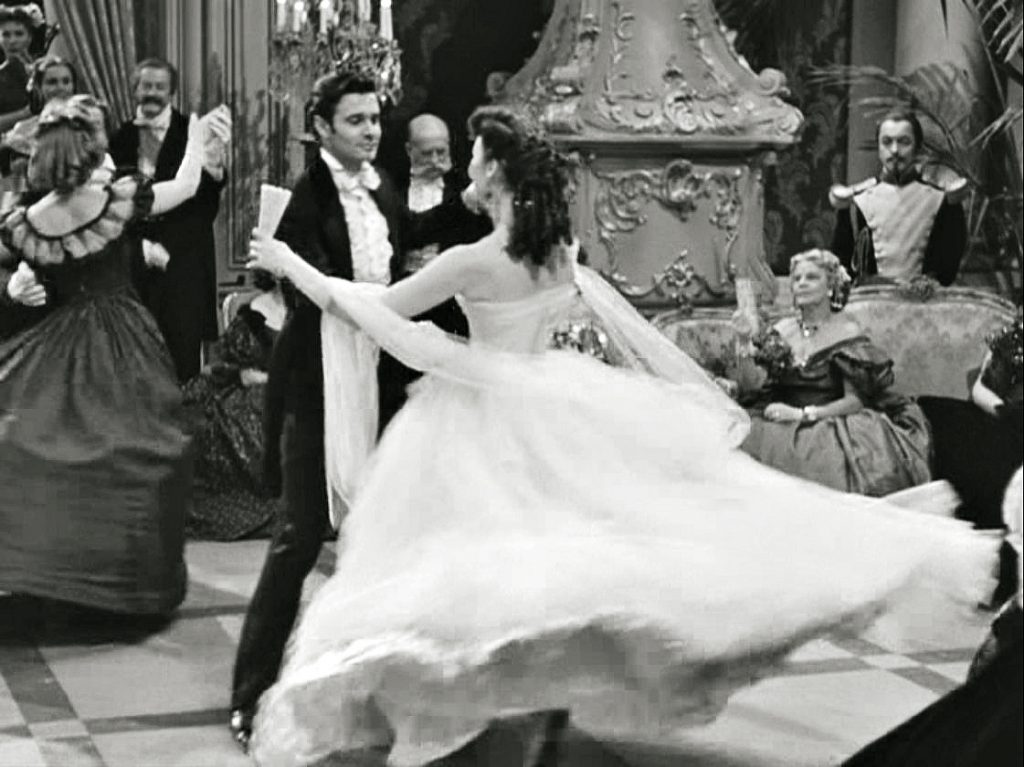
FEATURE image: Madame Bovary (Jennifer Jones) and Rodolphe Boulanger (Louis Jourdan) waltz at the ball in a still from Metro-Goldwyn-Mayer’s 1949 film Madame Bovary directed by Vincente Minnelli. Fair Use.

In Vincente Minnelli’s Madame Bovary (1949), the ballroom waltz transforms Gustave Flaubert’s critique of romantic illusion into a cinematic experience of desire, disorientation, and psychological collapse. Through synchronized choreography, Miklós Rózsa’s expressive score, fluid camera movements, and the extraordinary breaking of the ballroom windows, Minnelli reveals the widening gulf between Emma Bovary’s fantasies of passion and the painful realities of her life. The scene’s visual splendor ultimately becomes an expression of the destructive power of romantic idealism.

In the 1949 film Madame Bovary directed by Vincente Minnelli, a beautiful and charming Madame Bovary (Jennifer Jones) meets wealthy Rodolphe Boulanger (Louis Jourdan) at a ball where he literally sweeps her off her feet. Selfishly aggravated by her husband Charles Bovary (Van Heflin) for not fitting into high society, Madame Bovary begins a love affair with Rodolphe. Though the pair scheme to elope to Italy, Rodolphe does not love Madame Bovary. 

Filming began at M-G-M’s Culver City studios in mid-December 1948. Although producers favored Lana Turner for the role of Emma Bovary, director Vincente Minnelli championed Jennifer Jones instead. Fresh from her Academy Award-winning success in The Song of Bernadette, Jones brought the glamour and emotional intensity needed to portray Flaubert’s restless heroine, a woman whose romantic longings and dissatisfaction propel the story. At the same time, her casting may have helped ease concerns from the Production Code Office, which was already preparing to scrutinize the film’s controversial themes of adultery, desire, and moral transgression.

Minnelli initially presents the waltz as a vision of glamour, sensuality, and romantic fulfillment. Yet the swirling camera, increasingly disoriented movement, and shattered windows gradually undermine that beauty. What appears to be Emma’s moment of romantic triumph becomes a visual premonition of emotional collapse.

The Waltz Scene was Filmed to the Music 

One of the film’s most carefully wrought and delightful scenes is this ballroom sequence. It was one of the last segments to be shot. The film footage was tailored to Miklós Rózsa’s music. Minnelli explained to the composer in advance the camera movements so he could write the music in an arrangement for two pianos. The scene was then filmed to match it. Their artistic collaboration produced one of cinema’s most original scenes uniting robust music with weaving and gliding images on film.

Madame Bovary (Jennifer Jones) and Rodolphe Boulanger (Louis Jourdan) waltz at the ball. It is one of the film’s most delightful scenes and one of the last to be shot. Director Vincente Minnelli made certain its choreography carefully matched the music of Miklós Rózsa. Madame Bovary was nominated for an Oscar for Best Art Direction-Set Decoration, Black-and-White.

Minnelli has the audience experience the seduction of Emma’s fantasy while simultaneously revealing its destructive nature. The waltz is both an expression of her longing for an ideal life and a cinematic enactment of the illusions that will ultimately destroy her.

Beautiful and charming Emma Bovary (Jennifer Jones) is repulsed by her uncouth husband, Charles Bovary (Van Heflin), an undistinguished medical doctor, and begins an affair with Rodolphe Boulanger (Louis Jourdan). Their plans to elope, however, do not materialize as Emma hoped.
“Break the Windows” dramatizes a heroine’s transition into madness

As Rodolphe swirls her, Emma Bovary’s head spins until she becomes dizzy. The viewer sees her disorientation as the camera takes her viewpoint. She keeps dancing but asks for fresh air. Her request leads to an extraordinary and incredible reaction by the stewards. They start to smash the ballroom’s windows with chairs to help her cool down. This fantastically destructive action of broken glass aligns with the destruction of Emma’s romantic illusions throughout the film. 

In reaction to Madame Bovary becoming dizzy while waltzing with a new lover, the stewards smash the ballroom windows to give her air. The extraordinary action ultimately becomes symbolic of the destruction of Madame Bovary’s romantic illusions with handsome, wealthy Rodolphe and her own descent into madness.

Emma imagines that wealth, passion, and an ideal lover will deliver her from the disappointment of her marriage and provincial life.

Night of Repressed Passion

Along with her husband’s boorish behavior at the ball and everywhere else, Madame Bovary’s romantic disappointment leaves her feeling publicly humiliated. Instead of love and excitement, Madame Bovary runs out of the ball in shame. Though she yearns for happiness and excitement, her pursuit of selfish pleasures ends in scandal and ruin.

Jennifer Jones as Madame Bovary offers a performance that is elegant and beautiful. It is equally insightful to the selfish and nervous personality of Flaubert’s fictional character.

A film poster for Vincente Minnelli’s Madame Bovary. Several different versions of the film poster were produced for the marketing of the 1949 film.

This publicity photo for Madame Bovary showed the love triangle of Madame Bovary (Jennifer Jones), her handsome lover Rodolphe Boulanger (Louis Jourdan), and her cuckolded husband Charles Bovary, a medical doctor (Van Heflin).

https://youtu.be/EMo0KZ4q2n4?si=3wKUnhL8anaAWWYI – retrieved January 1, 2019.

Miklós Rózsa’s brilliant score for Vincente Minnelli’s 1949 adaptation of Madame Bovary stands as a landmark in film music history, serving as a deeply psychological portrait of Emma Bovary’s tragic descent.

Beyond this technical triumph of the waltz scene, Rózsa approached the entire soundtrack as a symphonic poem directly tied to the literary essence of Gustave Flaubert’s source material. Instead of relying on passive atmospheric cues, he crafted eight interwoven motifs that map directly onto Emma’s fracturing psyche, tracking her spiral from romantic disillusionment to desperate lust, and finally to her agonizing physical end. Rózsa further deepened this musical architecture by assigning singular melodic themes to the three central men in her life: her husband Charles and her two contrasting lovers, Léon and Rodolphe.

In the role of Madame Bovary Jennifer Jones gives a performance beyond the superficiality of display or machination of melodrama and enters into the inner psychology of the character whose anxious egomania manifesting joy and elation is driven by disillusionment to deterioration and self-destruction. Director Vincente Minnelli worked closely with composer Miklós Rózsa to integrate the image, plot and characters with the musical score which the composer admired for its artistic cinematic outcome.

Thirty-year-old Jennifer Jones plays Gustave Flaubert’s doomed title character, Madame Bovary, from his 1856 serial novel.

Vincente Minnelli’s film of the same name offered two costume and wardrobe managers: Walter Plunkett for women and Valles for men.

Walter Plunkett (1902-1982) was a prolific costume designer who worked on more than 150 projects in his Hollywood career, including Gone With The Wind. In 1951, Plunkett shared an Oscar with Orry-Kelly and Irene Sharaff for An American in Paris.

Valles (1886-1970) specialized in men’s costumes at M-G-M. Valles received two Academy Award nominations, including Spartacus in 1960.

Van Heflin is Charles Bovary, the kind and devoted country physician, whom Emma (Jennifer Jones) marries with hopes he would bring her happiness. But she becomes deeply disillusioned with the ordinariness and lack of ambition he represents.

Production photograph of Louis Jourdan and Jennifer Jones. The scene showcases a unique example of the Valles’ costume design for Louis Jourdan and Walter Plunkett’s costume design for Jennifer Jones for the 1949 film Madame Bovary. The next year, in 1950, both Valles and Walter Plunkett were nominated for the Academy Award for Compton Bennett’s That Forsyte Woman.

Madame Bovary danced wildly with Rodolphe at the ball and loves him. The illicit couple plan to elope to Italy. But Rodolphe leaves for Italy without her and shatters Madame Bovary’s spirit and dreams.

Played by Louis Jourdan, Rodolphe represents the wealthy, sophisticated lover Emma imagines can transform her life, although his desires and intentions do not match her romantic expectations.

Featuring Jennifer Jones as Emma Bovary and Louis Jourdan as her aristocratic lover, Rodolphe Boulanger, this scene captures one of the most revealing moments in Emma’s tragic pursuit of romance and social advancement. Emma wears an extravagant wide-brimmed straw hat draped with delicate lace, paired with a dark, tightly corseted jacket over a voluminous white ruffled gown and a high lace collar tied with a black ribbon. Standing in profile at right, Rodolphe urgently places his hands on her waist while gazing up into her conflicted, downward-cast eyes.

Madame Bovary (Jennifer Jones) is indulged by an unscrupulous shopkeeper as she lives beyond her means in the pursuit of happiness. She takes on a heavy debt that is impossible to pay back. Emma’s costume represents the absolute zenith of her superficial triumph and her complete detachment from financial reality. The massive, structurally complex and heavily layered gown scream aristocratic luxury, yet she has completely abandoned provincial practicality for a wardrobe funded entirely on predatory merchant credit. Her clothing is no longer just an expression of romance; it is a heavy, suffocating visual shroud of debt.

Walter Plunkett’s costume designs are more than period attire; they exemplify how attire functions as a visual chronicle of Emma’s psychological descent and eventual financial ruin. What begins as youthful simplicity evolves into increasing luxury, ornamentation, and display as she falls deeper into a world of desire, status, and debt. Yet the splendor proves fragile and its effects, deadly. After Rodolphe abandons her and creditors close in, the glamour evaporates. The elaborate layers, ruffles, lace, and grand hats disappear, replaced by dark, simplified, and increasingly disheveled garments. Through costume alone, Plunkett traces Emma’s journey from romantic dreamer to a woman stripped of illusion, her vulnerability laid bare as her hopes collapse beneath the weight of betrayal and ruin.

Charles, who never stopped loving his wife, begs her to wait for a doctor to arrive. Madame Bovary sighs, “Oh, Charles, why are you always trying to save me?”

The film plot is told from the point of view of the author, Gustave Flaubert (James Mason). A legal proceedings takes place where Flaubert is accused of corrupting morals by writing Madame Bovary. It is an historical fact that, in 1858, Flaubert and his publisher had faced government charges of immorality for Madame Bovary. But the outcome of the trial was that Flaubert was completely acquitted.

From the waltz scene through to her death scene Jennifer Jones as Madame Bovary offers a performance that is elegant and beautiful. It also provides insight into the contradictions offered by a selfish and nervous personality.

In the end Madame Bovary finds that her own death is more attractive to her than living with her shattered dreams.

The larger tragedy: Emma’s pursuit of idealized love and social prestige leaves her increasingly estranged from reality, contributing to the disillusionment and ruin that define her story.

A 1949 film poster for Madame Bovary that includes a publicity head shot of James Mason as Gustave Flaubert, the novel’s French author.

Minnelli’s film is told in flashback through the character of Flaubert who is on trial for charges of immorality for writing the novel. After Flaubert’s work was serialized in the Revue de Paris in 1856, the government charged and tried the author and his publisher for immorality. Both were acquitted in 1859. After Madame Bovary appeared in book form in France, it became an instant classic.

Vincente Minnelli directs Jennifer Jones and Louis Jourdan in a scene from Madame Bovary. This behind-the-scenes photograph captures a fascinating moment on the set of the 1949 film, showing director Vincente Minnelli (standing) actively coaching his lead actors, Louis Jourdan (Rodolphe) and Jennifer Jones (Emma), right before filming an intimate scene. Minnelli’s presence alongside the script highlights just how meticulously calculated every single “spontaneous” moment of romantic desperation was planned to ensure the film’s psychological themes hit perfectly.

Despite the immense talent involved, Vincente Minnelli’s 1949 adaptation of Madame Bovary failed to connect at the box office, ultimately losing $910,000 for MGM. While it was an artistic triumph in terms of music and costume design, the film’s financial failure and mixed critical legacy remain a fascinating case study in classic Hollywood cinema.

Reviews for Madame Bovary, released in late August 1949, were mixed with the film not recouping its full production costs.

Critical Reception in 1949

When Madame Bovary was released in August 1949, critical reaction was sharply divided. At the heart of the debate was a question that had long shadowed the production: could Gustave Flaubert’s sprawling literary masterpiece successfully be transformed into a glossy Hollywood motion picture? Many reviewers praised the film’s technical accomplishments, including its lush score, lavish costumes, polished performances, and Vincente Minnelli’s assured direction. Others, however, argued that the novel’s biting social satire and moral ambiguity had been softened to satisfy the demands of American censorship.

Critics were also divided over the film’s framing device, which opens with Flaubert, portrayed by James Mason, standing trial and defending his novel against charges of obscenity. For some, the prologue provided valuable historical context; for others, it interrupted the narrative and weakened the emotional impact of Emma’s story.

More fundamentally, the film’s bleak outlook proved challenging for many contemporary viewers. Audiences expecting a conventional Hollywood romance instead encountered a devastating portrait of marital boredom, financial ruin, frustrated desire, and self-destruction. Emma Bovary was not presented as a traditionally sympathetic heroine, nor did her story offer the reassurance of redemption. In an era when postwar cinema often emphasized optimism and emotional uplift, a drama in which virtually no one emerges victorious was a particularly difficult sell.

Modern Reassessment

Today, film historians view Madame Bovary far differently than many critics did in 1949. Rather than judging it primarily as a literary adaptation, modern scholarship tends to regard the film as a significant milestone in Vincente Minnelli’s artistic development and one of Hollywood’s earliest and most visually sophisticated explorations of psychological expressionism.

Minnelli’s use of camera movement, lighting, set design, and costume now receives particular admiration for translating Emma’s inner emotional life into visual form. What some contemporary reviewers dismissed as excessive stylization is today recognized as one of the film’s greatest strengths. Modern critics also continue to praise the production’s technical virtuosity, especially Cedric Gibbons’s art direction, Walter Plunkett’s costumes, and the film’s ambitious visual design, which transformed Flaubert’s nineteenth-century tragedy into one of the most striking prestige productions of the late studio era.

Legacy

While Madame Bovary never achieved the immediate acclaim enjoyed by some of M-G-M’s other prestige productions, its reputation has steadily grown over time. Today it stands as both an ambitious literary adaptation and a fascinating example of how Hollywood filmmakers navigated artistic ambition, censorship, and audience expectations during the classical studio era. What was once criticized as an uneasy compromise between literature and cinema is now better appreciated as a bold and visually compelling interpretation of one of the nineteenth century’s most influential novels.


*The photograph copyright may be believed to belong to the distributor of the film, Metro-Goldwyn-Mayer, the publisher of the film or the graphic artist. The copy is of sufficient resolution for commentary and identification but lower resolution than the original photograph. Copies made from it will be of inferior quality, unsuitable as counterfeit artwork, pirate versions or for uses that would compete with the commercial purpose of the original artwork. The image is used for identification in the context of critical commentary of the work, product or service for which it serves as poster art. It makes a significant contribution to the user’s understanding of the article, which could not practically be conveyed by words alone. As this is a publicity photo (star headshot) taken to promote an actress, these have traditionally not been copyrighted. Since they are disseminated to the public, they are generally considered public domain, and therefore clearance by the studio that produced them is not necessary. (See- Eve Light Honthaner, film production expert, in The Complete Film Production Handbook, Focal Press, 2001 p. 211.) Gerald Mast, further, film industry author, in Film Study and the Copyright Law (1989) p. 87, writes: “According to the old copyright act, such production stills were not automatically copyrighted as part of the film and required separate copyrights as photographic stills. The new copyright act similarly excludes the production still from automatic copyright but gives the film’s copyright owner a five-year period in which to copyright the stills. Most studios have never bothered to copyright these stills because they were happy to see them pass into the public domain, to be used by as many people in as many publications as possible.” Kristin Thompson, committee chairperson of the Society for Cinema and Media Studies writes in the conclusion of a 1993 conference with cinema scholars and editors, that they “expressed the opinion that it is not necessary for authors to request permission to reproduce frame enlargements … [and] some trade presses that publish educational and scholarly film books also take the position that permission is not necessary for reproducing frame enlargements and publicity photographs.”(“Fair Usage Publication of Film Stills,” Kristin Thompson, Society for Cinema and Media Studies.)

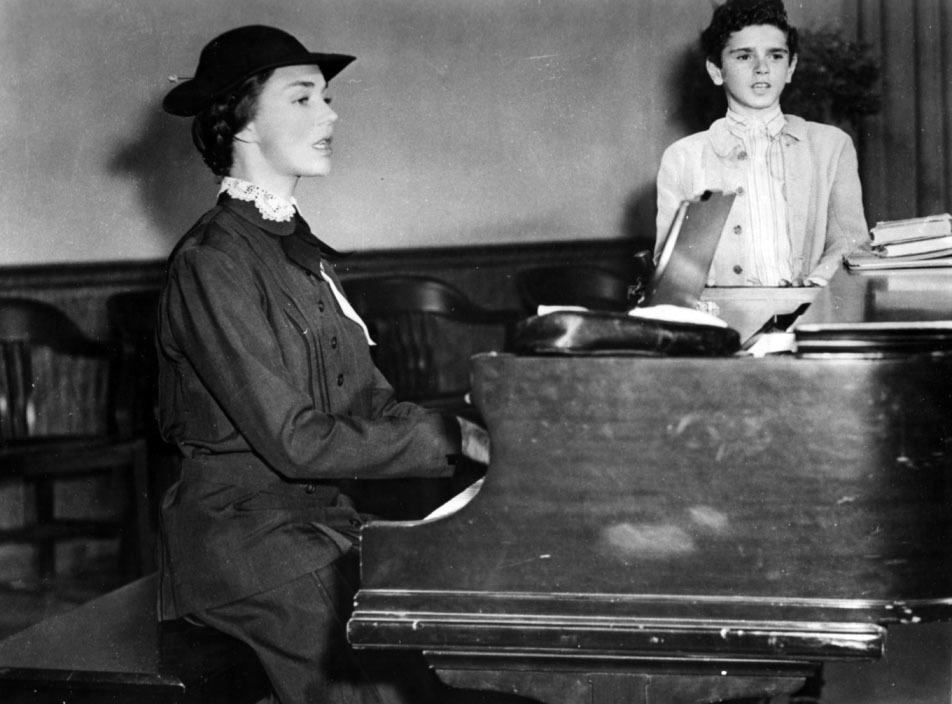
The Teacher Who Shaped a Town: Jennifer Jones and the Enduring Power of Good Morning, Miss Dove! (1955) from 20th Century-Fox.

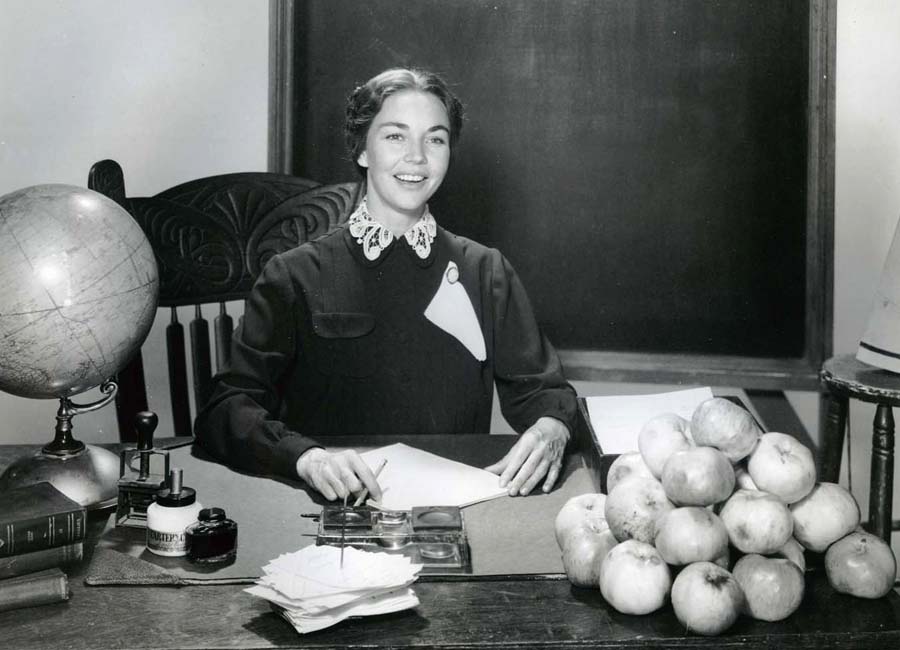
FEATURE image: Jennifer Jones in Good Morning, Miss Dove! (1955). The 36-year-old actress plays an elderly teacher taken ill at school who, in flashbacks reviewing her life, as a young woman had been about to marry the man she loved when her father died unexpectedly and was secretly heavily in debt. Miss Dove decides not to marry but to repay the debt by becoming the town’s spinster teacher.

Good Morning, Miss Dove endures because it presents the teacher as a moral center of community life, portraying personal sacrifice, discipline, and lifelong influence as virtues worth celebrating, while simultaneously reflecting mid-century America’s nostalgia for stable educational values during a period of social change.

movie poster

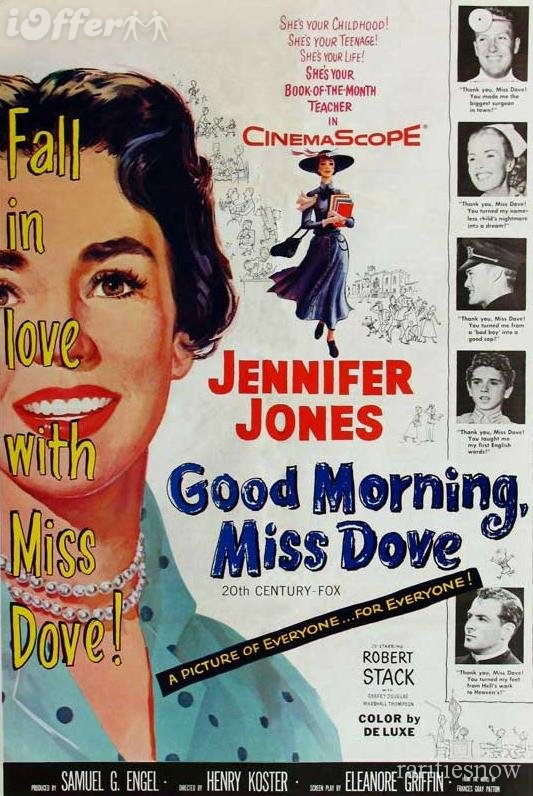
This is the original American theatrical poster for the 1955 release of Good Morning, Miss Dove! While the British campaign poster (below) relied on abstract whimsy, the domestic poster takes a more emotionally driven marketing approach to convey romanticized nostalgia, community gratitude and pride, and the title character’s deeply felt generational legacy. The film stars Jennifer Jones, Robert Stack, Kipp Hamilton, Robert Douglas, Peggy Knudsen, Marshall Thompson, Chuck Connors, and Mary Wickes. The movie was released by 20th Century-Fox the day before Thanksgiving in 1955.

The film opened to good reviews and was popular at the box office. A New York Times review observed: “Since it is unashamedly sentimental without being excessively maudlin about its heroine, ‘Good Morning, Miss Dove’ deserves credit for being honest and entertaining.”

Jennifer Jones

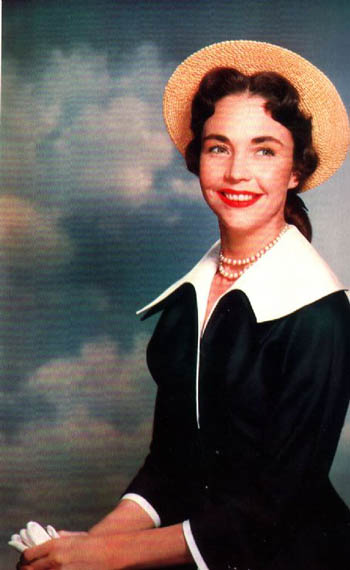
This gorgeous portrait captures Jennifer Jones during a pivotal creative shift in her career, specifically serving as a promotional costume test or publicity still for the 20th Century Fox drama Good Morning, Miss Dove (1955). The wardrobe seen here was orchestrated by Academy Award-nominated costume designer Mary Wills whose look relies on distinct mid-century cinematic signals to convey morality and time period. The dark navy or black dress accented by a sharp, oversized white collar is a deliberate visual nod to a schoolteacher’s uniform—signaling propriety, rectitude, and strict boundaries. The double-strand pearl necklace, white gloves, and classic straw hat firmly ground her in a bygone era of immaculate gentility. Styled with a traditional 1950s bright red lip and perfectly pinned dark curls, the look emphasizes her youth. This directly contrasts with the aging makeup and prosthetics used later in the film to transform her into the elderly version of the character.

The film balances sentimentality with thoughtful observations about duty, character, service, and education.

By John P. Walsh

Good Morning, Miss Dove! is Frances Gray Patton’s contemporary tale of a middle-aged spinster elementary school geography teacher in Liberty Hill who, when suddenly taken ill, sees the entire small town rally to her side.

It is a mythical period piece from the mid-1950’s. It depicts an unchanging town whose students obey their beloved teacher. Though directed by Henry Koster in a stagey way, the film boasts progressive casting. One year after the milestone 1954 Supreme Court decision in Brown v. Topeka Board of Education establishing racial segregation in public schools as unconstitutional, Good Morning, Miss Dove! presents a newly-integrated public school classroom in Cinemascope and De Luxe color.

Film-going audiences in 1955 loved the film.

good-morning-miss-dove-movie-poster-1955-1020210172

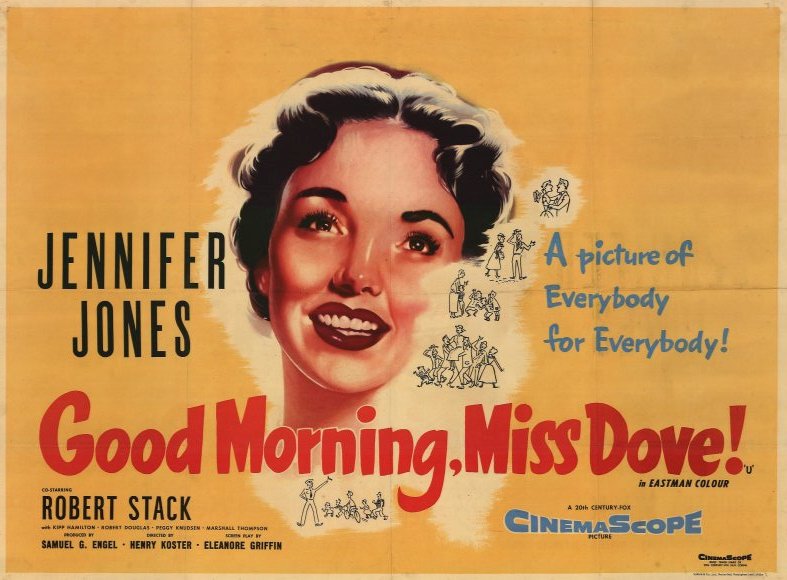
Original British theatrical poster for the 1955 20th Century Fox cinematic drama Good Morning, Miss Dove! starring Jennifer Jones and Robert Stack. Its core tagline: “A picture of Everybody for Everybody!” conveys universal appeal and wholesome, cross-generational family entertainment. The giant, warm illustration of Jennifer Jones looking upward with a glowing smile capitalizes on her existing star power as a traditional Hollywood romantic leading lady framing the movie as an uplifting, heartwarming emotional journey rather than grim drama. The prominent placement of the CinemaScope logo and the note “in Eastman Colour” were meant to convey the film’s modern technical prestige and cinematic scale.

Awaiting a risky operation, Miss Dove (Jennifer Jones) thinks back on her life and those of her prized grown-up former students. They included Robert Stack (a surgeon), Chuck Connors (a policeman), and Jerry Paris (a playwright). All of these students overcame difficult childhoods and found worldly achievement with the help of Miss Dove.

Based on popular Book of the Month Club novel.

Patton’s novel had enjoyed success in 1954 as a Book of the Month Club and Reader’s Digest selection. Its release as a major motion picture by 20th Century-Fox continued the novel heroine’s popularity.

Release of the film during the Thanksgiving weekend 1955 was in the same year that Jennifer Jones starred in another Deluxe color film, the American drama-romance Love is a Many-Splendored Thing.

For the Academy-Award winning actress to play an elderly spinster (many early scenes feature the naturally dark-haired Miss Jones without her older character’s make-up), she moves beyond type. In the mid-1950’s as America settled into the Eisenhower years, Good Morning, Miss Dove! showed a lead film character -– the “terrible” Miss Dove played by Jennifer Jones — as an unflinching and beloved disciplinarian. Yet in the 1950’s the American public education system was undergoing copious and difficult change. In that way, the character of Miss Dove is further complicated by becoming a popular icon in the American culture by being mostly a nostalgic figure.

Released in the exact same year as her massive romantic hit Love Is a Many-Splendored Thing, Good Morning, Miss Dove was a unique departure for Jones. Known primarily for playing passionate, emotionally turbulent leading ladies, this film marked her only true character-actor role.

Jennifer Jones in make up for Good Morning Miss Dove

In 1955 Jennifer Jones was a 36-year-old beauty. Through the magic of Hollywood make-up (Ben Nye) and hair styling (Helen Turpin), she was transformed into the elderly Miss Dove for Good Morning, Miss Dove! In 1954 after Grace Kelly wore make-up for The Country Girl that hid her good looks and went against her youthful image (Kelly was 24 years old), she won the Academy Award for Best Actress for that year.

While the film itself leans into nostalgic melodrama, Jones’ performance was highly praised for balancing a severe, uncompromising facade with deep, underlying warmth. That balance was evident in the strict, modest dress she wore of a smalltown schoolteacher juxtaposed to a genuine, radiating smile.

Good Morning Miss Dove

Jennifer Jones as the elderly teacher in Good Morning, Miss Dove! set in the fictional Midwest town of Liberty Hill. Before filming began in July 1955, director Henry Koster wanted Olivia deHavilland for the role and have it set in England. Though set in contemporary America, critics saw Miss Dove as a character out of Charles Dickens.

The audience meets the elder Miss Dove at the movie’s start—make-up and hair-styling artists Ben Nye and Helen Turpin transformed the 35-year-old Jennifer Jones into the 55-year-old Miss Dove—and by flashbacks.

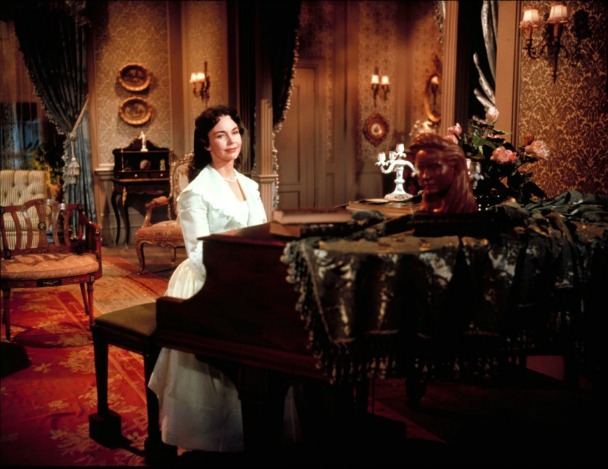
The film dramatizes her youth as she is about to marry. But she receives the unexpected news that her father has died suddenly and that he has debts. To pay them back, she steels herself to remain single and take a teaching post. Her chilly veneer is part of her honor to do the proper thing along with the sober accommodation to life’s necessary sacrifices.

dove1

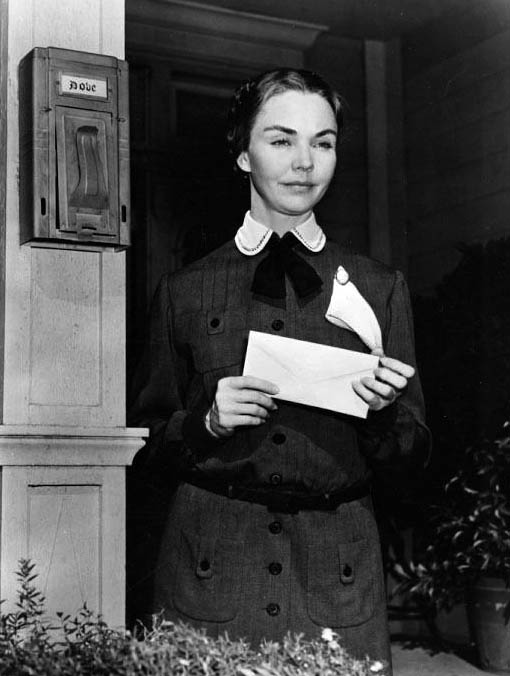
Miss Dove (Jennifer Jones) in a costume by Mary Wills. In the 1950’s Mary Wills was nominated for an Academy Award four times.

Good Morning Miss Dove

Young Miss Dove played by Jennifer Jones gives up marriage to the man she loves for a future as a spinster teacher so to pay back her late father’s debts. The story is based on a book by Frances Gray Patton that was itself based on her short stories. When 20th-Century Fox bought the rights for $52,000, it was the equivalent of about half a million dollars today.

Good Morning Miss Dove!

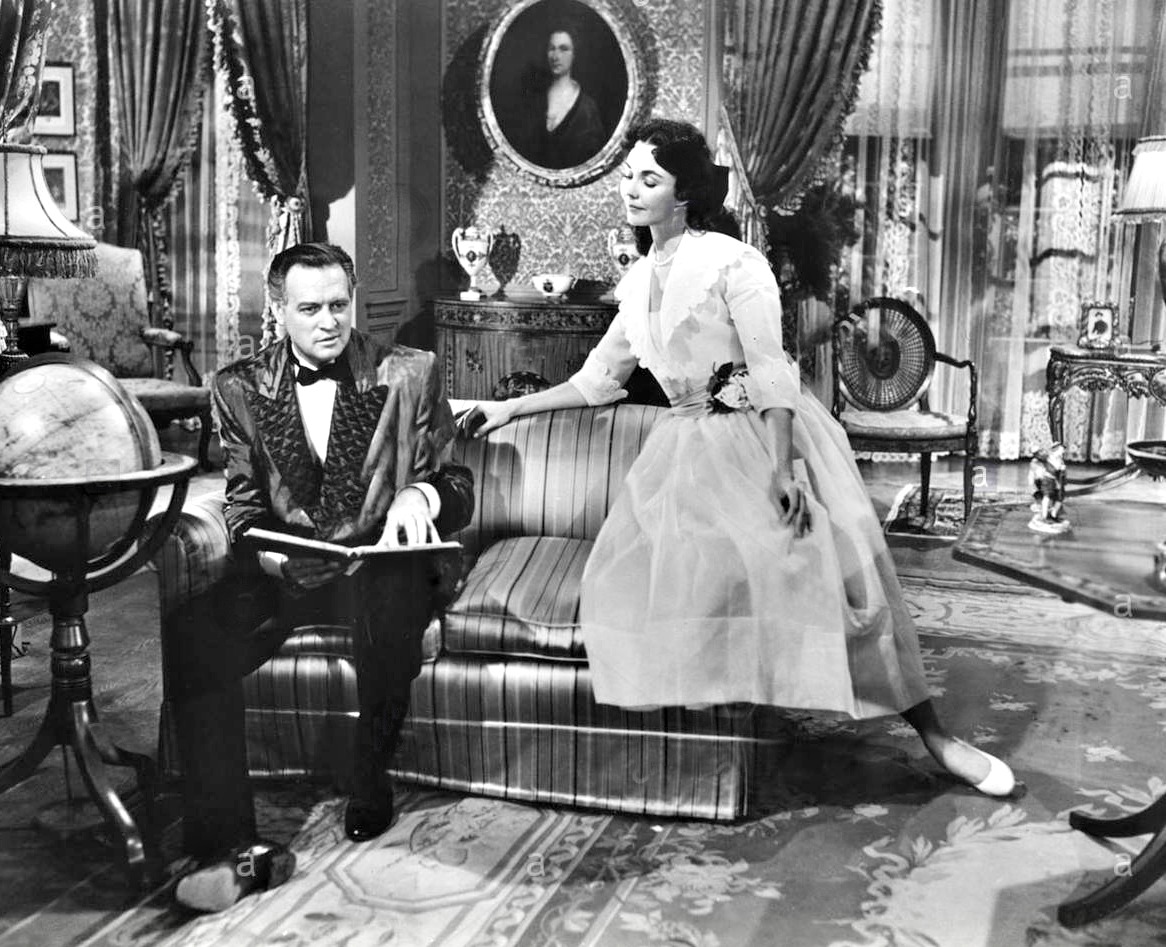
A flashback scene from Good Morning, Miss Dove! Jennifer Jones as young Miss Dove with her father, Alonso Dove (Leslie Bradley). When he dies unexpectedly and in debt, Miss Dove resolves to pay it back and upends her own life’s plans to do so. Costumes by Mary Wills.

While those who did not know Miss Dove behind her back mock her and say she couldn’t have had much of a life—never married, no family, no kids, never traveled anywhere—her army of students think about her and judge her radically differently.

Good Morning Miss Dove

In Good Morning, Miss Dove! Jennifer Jones is a beautiful young woman who rejects a marriage proposal to become the town’s grade school teacher to repay her late father’s debts. Costumes by Academy Award nominated costume designer Mary Wills.

Beyond any possibly wider cultural meaning, the film presents a unique person who by the logic of her experience and the experience of her logic enters into a series of social interactions that are amusing and honest. These include the film’s penultimate scene. Miss Dove is on her sick bed when she tells her pastor, Reverend Burnham (Biff Elliot): “Life, whatever others may think, has been for me…I have been happy. I have made many mistakes. Perhaps even sinned. I admit my human limitations, but I do not in all honesty find the burden of my sins intolerable. Nor have I strayed like a sheep. I have never been AWOL. I have never spoken hypocrisy to my Maker and now is scarcely a propitious moment to begin.”

Good Morning Miss Dove

On the day of Miss Dove’s surgery, classes are dismissed and the townspeople of Liberty Hill wait outside the hospital for news of the operation’s success. The film provides a sentimental picture of mid-20th century America of Norman Rockwell proportions. Yet the film’s crisp dialogue and sharp character development engages the moviegoer. By the end of the film the outcome of Miss Dove’s surgery is as important to the audience as it is the denizens of the fictional town of Liberty Hill.

While these thoughts may be judged from different perspectives, they are expressive of a woman’s life completely dedicated to her profession and students at Cedar Grove Elementary School. The film’s denouement is powerful. Accompanied by Leigh Harline’s memorable soundtrack, it is a sentimental tribute to Miss Dove’s life which benefited many different people because of nothing other than her good character.

Good morning Miss Dove

Jincey Baker (Kipp Hamilton), Miss Dove (Jennifer Jones), and Dr. Tom Baker (Robert Stack). Promotion for the film included advertising that encouraged moviegoers to see it for its portrayal of the state of education in the country. Costumes by Mary Wills.

Good Morning Miss Dove.

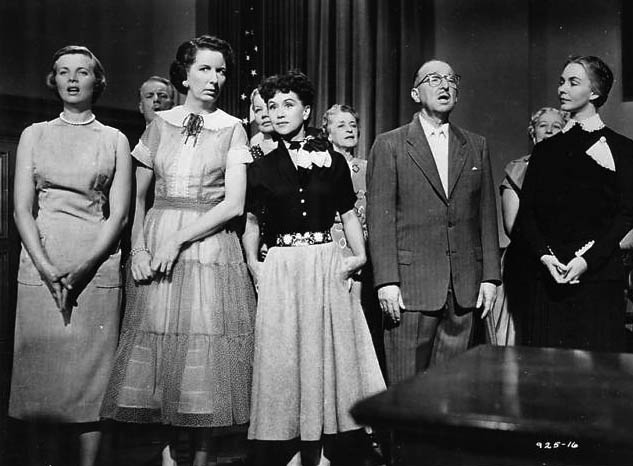
A 1955 drama that is both contemporary and nostalgic. Mary Wickes plays Miss Ellwood (second from left). Costumes by Mary Wills.

Good Morning Miss Dove!

Jennifer Jones as a small-town spinster teacher who falls ill in the film Good Morning, Miss Dove! Her stern and upright demeanor masks her personal sacrifices and devotion to her students. That world is thrown into chaos when Miss Dove experiences an acute pain and grows numb in her leg. While she is in her hospital bed awaiting risky surgery, she relates her life in flashbacks.

Later, in the 1970’s, when actress Peggy Knudsen was suffering from a debilitating illness (she died in 1980 at 57 years old), in real life she wa cared for by her close friend, Jennifer Jones.

Peggy Knudsen and Jennifer Jones

In the hospital Miss Dove is cared for by Nurse Billie Jean Green (Peggy Knudsen). Billie Jean is one of Miss Dove’s former student who left Liberty Hill and had a child out of wedlock. Back in Liberty Hill, Billie Jean is infatuated with the local policeman, Bill Holloway (Chuck Connors). Bill is another of Miss Dove’s former students and was one of her best pupils.

FIXED Untitled1

Miss Dove with former student and Liberty Hill policeman Bill Holloway (Chuck Connors). Miss Dove tells nurse Billie Jean Green how Bill first arrived to her classroom: a poor, unkempt boy being raised by an alcoholic grandmother. Miss Dove gave Bill odd jobs and bought him a suit for his grammar school graduation. After Bill entered the Marines, he wrote to Miss Dove often, and when he returned to Liberty Hill, she was the first person he came over to see for career advice.

Miss Dove emerges as a cultural symbol whose influence extends far beyond the classroom through the lives of her former students.

THE MOVIE:

In the film, Jennifer Jones portrays the titular character, Miss Dove, an intensely disciplined, upright geography teacher navigating life in a small Midwestern town. The narrative details how she began life as a vibrant, promising young woman with a loving fiancé. However, when her father unexpectedly passed away leaving behind massive bank debts, she made the agonizing decision to reject her marriage proposal. She chose a life of strict spinsterhood to systematically pay back every dime, transforming herself into the town’s famously stoic and beloved educator.

Mary Wills: Oscar-winning costume designer

The costume designer for Good Morning, Miss Dove! (1955) is Mary Wills (1914-1997). She worked mainly for Samuel Goldwyn productions and Twentieth Century-Fox, breaking into the movie business as a sketch artist for Gone With The Wind (1939). In her nearly 40-year career Mary Wills was nominated for an Oscar seven times and won the Academy Award in 1962 for her colorful designs for The Wonderful World of the Brothers Grimm. 

First woman admitted to Yale Art and Drama program. “The Fabulous Miss Wills.”

Born in Prescott, Arizona, Wills moved to Los Angeles after receiving her Master’s degree from the Yale Art and Drama School. She was the first woman admitted into that program.

Wills started designing costumes in 1944 at RKO with Belle of the Yukon and soon after designed costumes for Disney’s Song of the South (1946). She started working for Samuel Goldwyn in 1948 where she designed costumes for Enchantment. For the next six years at Goldwyn Studio the costume designer was referred to as “The Fabulous Miss Wills.”

She was regularly nominated for her costume design in the 1950’s when she designed the costumes for Good Morning, Miss Dove! including Hans Christian Anderson (1952), The Virgin Queen (1954), Teenage Rebel (1956), A Certain Smile (1958), The Diary of Anne Frank (1959), The Passover Plot (1976) and the film for which she won the Academy Award in 1962. Mary Wills also designed the Rogers and Hammerstein musical film Carousel in 1956.

Mary Wills at Samuel Goldwyn Studio

Academy-Award winning costume designer Mary Wills at the Samuel Goldwyn Studio (c. 1948). The Oscar-winning costume designer worked mainly for Samuel Goldwyn Productions and Twentieth Century-Fox.

Ice Follies. Camelot and Funny Girl.

Mary Wills demonstrated a special talent for designing historical costumes, especially after she moved to 20th-Century Fox in 1954 to make The Virgin Queen starring Bette Davis. Later she showed great aptitude for designing dance and folk costumes. A collection of her original sketches are online at the Los Angeles County Museum for live productions including the Shipstad & Johnson Ice Follies, now known as the Ice Follies. Mary Wills worked on two major films that she did not get film credit for — namely, Camelot (1967) and Funny Girl (1968). For Funny Girl, she designed the Ziegfeld show-girl brides costumes as well as the costumes for Omar Sharif.

The artistry and craftmanship of costume designer Mary Wills and makeup artist Ben Nye contributed behind the scenes to Jennifer Jones’s transformation as Miss Dove.

SOURCES:

Barrett, Michael. “The Sentimental Pedagogy of Good Morning, Miss Dove.” PopMatters, June 5, 2014. http://www.popmatters.com/review/182178-good-morning-miss-dove/.

Green, Paul. The Life and Films of Jennifer Jones. Jefferson, NC: McFarland & Co., 2011.

“Good Morning, Miss Dove.” The Makeup Gallery. Accessed September 26, 2015. http://www.themakeupgallery.info/age/1950s/dove.htm.

“Good Morning, Miss Dove Overview.” The New York Times. Accessed September 26, 2015. http://www.nytimes.com/movies/movie/93588/Good-Morning-Miss-Dove/overview.

Leach, William. “John Dewey vs. The Terrible Miss Dove: Frances Gray Patton’s Postwar Schoolmarm and the Cultural Work of Nostalgia.” Academia.edu. Accessed September 26, 2015. https://www.academia.edu/1848534/_John_Dewey_vs._The_Terrible_Miss_Dove_Frances_Gray_Pattons_Postwar_Schoolmarm_and_the_Cultural_Work_of_Nostalgia.


*The photograph copyright may be believed to belong to the distributor of the film, 20th Century Fox, the publisher of the film or the graphic artist. The copy is of sufficient resolution for commentary and identification but lower resolution than the original photograph. Copies made from it will be of inferior quality, unsuitable as counterfeit artwork, pirate versions or for uses that would compete with the commercial purpose of the original artwork. The image is used for identification in the context of critical commentary of the work, product or service for which it serves as poster art. It makes a significant contribution to the user’s understanding of the article, which could not practically be conveyed by words alone. As this is a publicity photo (star headshot) taken to promote an actress, these have traditionally not been copyrighted. Since they are disseminated to the public, they are generally considered public domain, and therefore clearance by the studio that produced them is not necessary. (See- Eve Light Honthaner, film production expert, in The Complete Film Production Handbook, Focal Press, 2001 p. 211.) Gerald Mast, further, film industry author, in Film Study and the Copyright Law (1989) p. 87, writes: “According to the old copyright act, such production stills were not automatically copyrighted as part of the film and required separate copyrights as photographic stills. The new copyright act similarly excludes the production still from automatic copyright but gives the film’s copyright owner a five-year period in which to copyright the stills. Most studios have never bothered to copyright these stills because they were happy to see them pass into the public domain, to be used by as many people in as many publications as possible.” Kristin Thompson, committee chairperson of the Society for Cinema and Media Studies writes in the conclusion of a 1993 conference with cinema scholars and editors, that they “expressed the opinion that it is not necessary for authors to request permission to reproduce frame enlargements … [and] some trade presses that publish educational and scholarly film books also take the position that permission is not necessary for reproducing frame enlargements and publicity photographs.”(“Fair Usage Publication of Film Stills,” Kristin Thompson, Society for Cinema and Media Studies.)