FEATURE Image: This color photograph of Marilyn Monroe was made by Bruno Bernard — Bernard of Hollywood — on August 3, 1952, during the poolside press party at bandleader Ray Anthony’s California home. Co‑organized by 20th Century‑Fox, the event was engineered to showcase Monroe’s rapid ascent and to promote Anthony’s novelty song, Marilyn. She is wearing the same dress used in her Niagara publicity stills and scenes, a deliberate continuity meant to reinforce her emerging screen persona. Bernard had known her since 1946, when she was still Norma Jeane, and he remained one of the few photographers able to catch her in genuinely relaxed, luminous moments. His poolside images from this period are among the most candid records of her early stardom. PHOTO: “Marilyn Monroe – 1952, Niagara” by Movie-Fan is licensed under CC BY-NC-SA 2.0.
The 1952 hit single “Marilyn” was more than a popular song. It was part of the carefully coordinated Hollywood publicity machinery that helped transform Marilyn Monroe from a rising actress into a national celebrity. The song, the media campaign surrounding it, and the highly publicized poolside event at bandleader Ray Anthony’s home illustrate how Hollywood, popular music, photography, and publicity worked together to build Monroe’s emerging star image.
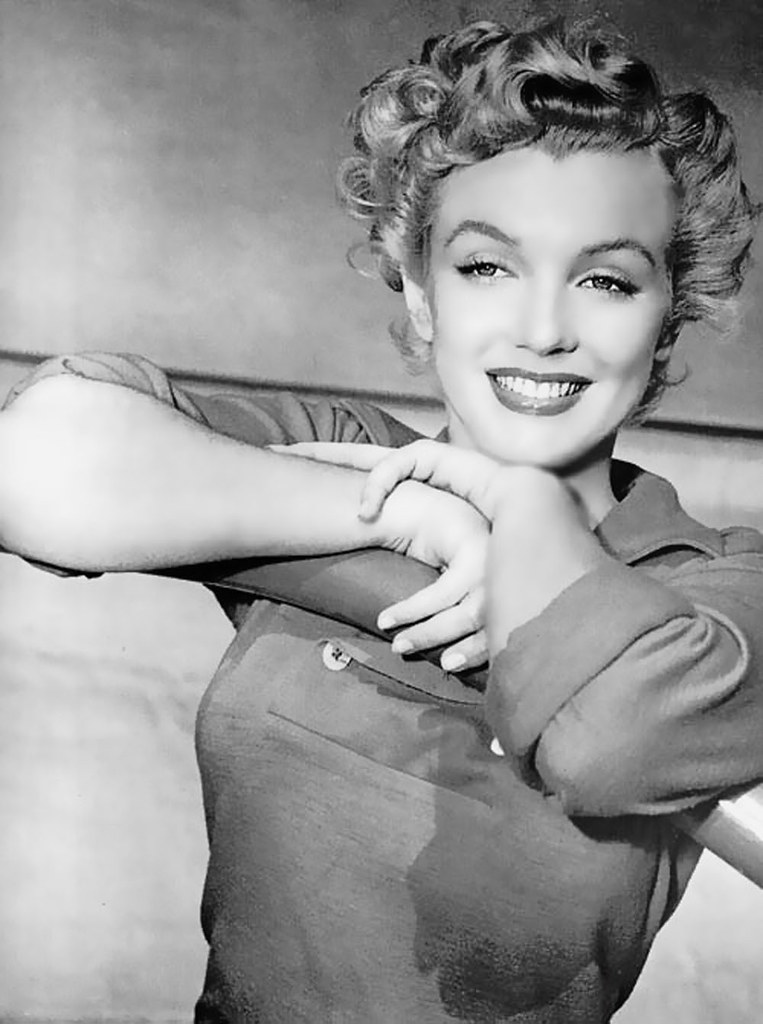
Marilyn Monroe in 1951 was emerging fast, already drawing notice from critics who tagged her as “the new blonde bombshell.” The black‑and‑white portrait of Marilyn Monroe was made in late 1951 by Ernest Bachrach, RKO’s chief portrait photographer, and syndicated widely through 1952. Shot both on location and in the studio spaces at RKO Radio Pictures in Los Angeles, the session was designed as a high‑visibility publicity campaign for Fritz Lang’s Clash by Night (1952). Monroe had pushed hard to be loaned out from 20th Century‑Fox for the supporting role of Peggy, a confident, blue‑collar cannery worker — a part she knew could shift how Hollywood viewed her.
Bachrach, a master of glamour portraiture, photographed her with the explicit aim of presenting her as a credible dramatic actress alongside veterans like Barbara Stanwyck. The film ultimately altered the trajectory of her career: for the first time, Monroe received billing above the title in a major motion picture. Bachrach’s photo campaign amplified that breakthrough, making her a household name even before the film reached theaters. It also demonstrated to studio executives that her magnetism held just as strongly in casual, sporty attire as in tight, high‑glamour wardrobe — a fusion that helped define the emerging “girl next door” aesthetic of 1950s Hollywood photography.PHOTO: “Marilyn Monroe, por Ernest Bachrach, 1951” by Antonio Marín Segovia is licensed under CC BY-NC-ND 2.0.
A widely publicized August 1952 poolside party at bandleader Ray Anthony’s California home was organized partly to promote both Monroe and the song. Hollywood had never seen an actress command the cultural conversation in one year like this. She was the original high-concept, serial franchise film star. Her face and body sold newspapers, magazines, makeup, and movie tickets at an unprecedented velocity.
Marilyn Monroe started 1953 as Hollywood’s “It” girl. The photograph shows Marilyn in a cropped frame from late 1953, captured at the Hollywood film premiere for How to Marry a Millionaire. She is wearing a famous custom white lace gown designed by William Travilla. It does relate to the August 1952 “Marilyn” party in that it is bound together by the explosive phenomenon of her meteoric rise.
In early 1953, Marilyn Monroe transitioned from a hard-working studio starlet into the absolute, undisputed “It Girl” of global popular culture. This specific phenomenon changed her life, transformed Hollywood marketing, and left a permanent mark on entertainment history.
Before 1953, 20th Century Fox viewed Marilyn as a profitable novelty. By January 1953, a perfect storm of media alignment occurred. The groundwork laid by those 1952 events—like the Ray Anthony party, the LIFE magazine cover, and the continuous press blitzes— culminated in a box-office avalanche.
In a single twelve-month span, Monroe released three consecutive, massive cinematic triumphs: Niagara in January 1953 where she starred as a dark, dangerous femme fatale; Gentlemen Prefer Blondes in July 1953 where she cemented her legendary comedic timing and musical icon status in the shocking pink Travilla gown; and How to Marry a Millionaire in November 1953 where she solidified her mass commercial appeal as a whispery “dumb blonde” comedic character.
Marilyn redefined what an “It Girl” could be. It Girls came in all types previously—from the aloof, untouchable elegance of stars like Greta Garbo or Joan Crawford to the gritty, working-class, uninhibited trail that Clara Bow and Jean Harlow blazed. Marilyn introduced a radiant, highly accessible, and deeply vulnerable form of sexuality. She projected a playful, “wink-at-the-camera” warmth that made audiences feel like she was letting them in on the fun.
A tragic irony of Marilyn becoming the ultimate 1953 “It Girl” is that the very phenomenon that made her immortal also trapped her in her “dumb blonde” or “glamour queen” roles and persona, so that in late 1954 she walked away from Hollywood temporarily after refusing typecasting roles and, when she came back, things were never quite the same. Decades later, the visual shorthand established during her 1953 peak remains the definitive blueprint for modern celebrity culture. The hyper-focus on her hair, her outfits, her dating life, and her physical form set the stage for how modern pop stars and icons are scrutinized by the media today. PHOTO: “Marilyn Monroe 1953” by Movie-Fan is licensed under CC BY-NC-SA 2.0.
Bandleader Ray Anthony released the two-minute single Marilyn in 1952 with rising film star Marilyn Monroe definitely in mind. Born Raymond Antonini to an Italian family in Bentleyville, Pennsylvania, in 1922, Ray Anthony is a living bridge to the Big Band era, the last surviving member of the original Glenn Miller Orchestra and the world’s oldest living recorded musician. After serving in the U.S. Navy during World War II, he launched the wildly successful Ray Anthony Orchestra, scoring early 1950s hits with “Marilyn,” “The Bunny Hop,” and “The Hokey Pokey,” while also topping the charts with his iconic instrumental themes for Dragnet and Peter Gunn. Now retired in the Hollywood Hills, Anthony remains one of the last direct links to the golden age of American popular music.
Hollywood mythology claims Marilyn Monroe n a bright pink dress swept into the August 1952 release party for the song Marilyn, touching down in a helicopter before exiting just as theatrically. In reality she arrived by car. The helicopter, brought in separately, became a convenient prop once publicists realized its value: they had her climb aboard and pose with Ray Anthony to manufacture the impression of a dramatic aerial entrance. The afternoon itself had the usual Hollywood chaos — Lassie trotted up to greet her, and Mickey Rooney jumped behind the drums with Anthony’s orchestra to play for her.
By the end of 1951 Marilyn had completed thirteen films, most for 20th Century‑Fox, and by 1952 she was poised on the threshold of major stardom. In 1952 she added five more. In Clash by Night (RKO), Kate Cameron of the New York News tagged her as “the new blonde bombshell.” In Fox’s We’re Not Married, Alton Cook of the New York World‑Telegram wrote that “Marilyn supplies beauty. She is Hollywood’s foremost expert.” Fox’s Monkey Business prompted Paul C. Beckley of the New York Herald Tribune to note the shift underway: “Not seen her before. I now know what’s that about.” She finished the year in Fox’s anthology O. Henry’s Full House, where Archer Winston of the New York Post singled out her “stunning proportions.”
This iconic black‑and‑white close‑up of Marilyn Monroe (above) was made in early 1953 by 20th Century‑Fox’s chief portrait photographer, Frank Powolny, as a publicity image for her breakthrough film Niagara. The styling, the expression, the heavy‑lidded “bedroom eyes” — all echo the Philippe Halsman Life magazine portrait from January 1952 (published April 7, 1952), because both sessions caught her at the exact moment she was standardizing and weaponizing her look.
The 1953 shoot took place at the Fox studios in Los Angeles, a high‑glamour promotional session meant to generate marketing material also for Gentlemen Prefer Blondes. Used widely in posters, press kits, and magazine syndication, the portrait is historically important because it crystallized her trademark expression: head tipped slightly back, eyes half‑closed, lips parted just enough to show her teeth.
Its impact was immediate. The image fixed her aesthetic in the public imagination and helped shift her from rising starlet to fully recognized global symbol of Hollywood glamour. Decades later, the tight crop — platinum curls, parted lips, beauty mark, and that unmistakable gaze — remains one of the most reproduced portraits in pop culture. It was this Powolny series that Andy Warhol appropriated for his 1962 silkscreens after her death. Marilyn didn’t merely suggest the look she had explored with Halsman; she executed it so precisely that the studio seized it and mass‑marketed its power. PHOTO: “Marilyn Monroe – 1952 / fotografiada por Philippe Halsman para LIFE” by Antonio Marín Segovia is licensed under CC BY-NC-ND 2.0.
Monroe’s public image was being carefully shaped through studio publicity, photography, magazine coverage, and promotional appearances.
Taken by Canadian journalist‑photographer Jock Carroll in June 1952 on location in Niagara Falls, Canada, this candid portrait comes from his two‑week assignment for Weekend Magazine, which had commissioned him to profile the 26‑year‑old rising actress as she filmed her breakthrough thriller Niagara. The image captures a candid, windswept moment during one of their informal walks along the Niagara River: Monroe in a simple white sleeveless top, her small medallion pendant visible, her blonde curls blown out by the mist and wind rolling off the falls.
Across the assignment Carroll shot more than 400 candid photographs. The easy rapport they developed allowed him to capture unguarded moments — including the now‑famous sequence of Monroe practicing how to smoke in her room at the General Brock Hotel for an upcoming role. A selection of his images ran with his profile in the August 9, 1952 issue of Weekend Picture Magazine.
Most of the negatives remained unseen for decades until they resurfaced in 1996 in Falling for Marilyn: The Lost Niagara Collection, which established the set as a major historical record. Today, this windswept portrait is celebrated for stripping away the studio‑manufactured bombshell veneer, offering instead an unfiltered, radiant glimpse of Norma Jeane at her most natural and effortlessly charming. PHOTO: “Marilyn Monroe by Jock Carroll, June, 1952” by thefoxling is licensed under CC BY-NC-SA 2.0.
One of Jock Carroll’s 400 candid photographs of Marilyn on location in June 1952 for Niagara, catches her from behind as she breaks into a light jog in her high heels along the concrete pier toward the Maid of the Mist as Niagara Falls thunders behind. Carroll wanted movement rather than a stiff publicity pose, something that showed her responding naturally to the environment. She wears a button‑back, off‑the‑shoulder top and a pale pencil skirt, the outfit emphasizing the clean, unforced lines of her stride.
In the finished 1953 film, director Henry Hathaway devoted 116 uninterrupted feet of film to a single shot of Monroe walking away from the camera in a tight pencil skirt — one of the longest “walking‑away” shots in cinema history. It permanently established her swinging gait as a defining element of her star power, a signature that audiences recognized instantly and never forgot.
Marilyn Monroe’s performance and appearance in Niagara in 1953 from 20th Century-Fox were highly praised. One critic observed: “Seen from any angle…Marilyn Monroe leaves little to be desired.” (A.H. Weiler, New York Times). Public Domain. in the United States. Because it was an uncopyrighted promotional still distributed freely to the public by the movie studio between 1931 and 1963, its copyright was never registered or renewed.
Publicity portrait of Marilyn Monroe as Rose Loomis in the 1953 film Niagara. By Gene Kornman (1897-1978). This work is in the public domain because it was published in the United States between 1931 and 1963, and although there may or may not have been a copyright notice, the copyright was not renewed.
Marilyn Monroe’s momentum in 1953 never faltered. Her three Twentieth Century‑Fox releases that year — Niagara, praised as “seductive,” Gentlemen Prefer Blondes, deemed “alluring,” and How to Marry a Millionaire, celebrated for her “magnificent proportions” — collectively cemented her acting career and her place as America’s enduring screen symbol.
Ray Anthony (b. 1922), one of the last living figures from post‑war Old Hollywood, belongs to the same generation whose era effectively closed with Marilyn’s death in 1962. Four years her senior, he reached his hundredth birthday in California on January 20, 2022.
Most of that remarkable cohort born in 1922 — Ava Gardner, Jason Robards, Betty White, Judy Garland, Doris Day, Cyd Charisse, Kim Hunter, Eleanor Parker, Veronica Lake, and many others — has now passed, leaving only a few witnesses to that vanished world.
Marilyn Monroe and Joe DiMaggio — the movie star and the former major‑league baseball great — married in 1954. PHOTO: “Evan Esar” by Peter K. Levy is marked with Public Domain Mark 1.0.
Ray Anthony’s rise in the early 1950s came through a wildly popular dance band that kept producing records that instantly entered American social life. Numbers like The Hokey Pokey and The Bunny Hop became fixtures at wedding receptions throughout the 1960s and 1970s, part of the soundtrack of mid‑century celebration.
When Anthony released his single Marilyn, the world’s most famous sex symbol was still unattached, though being actively courted by New York Yankees legend Joe DiMaggio. They would marry in 1954. By then Marilyn had already been declared Hollywood’s “It Girl” of 1952, her career hovering at the edge of full stardom — an excitement that made the Marilyn release party crackle.
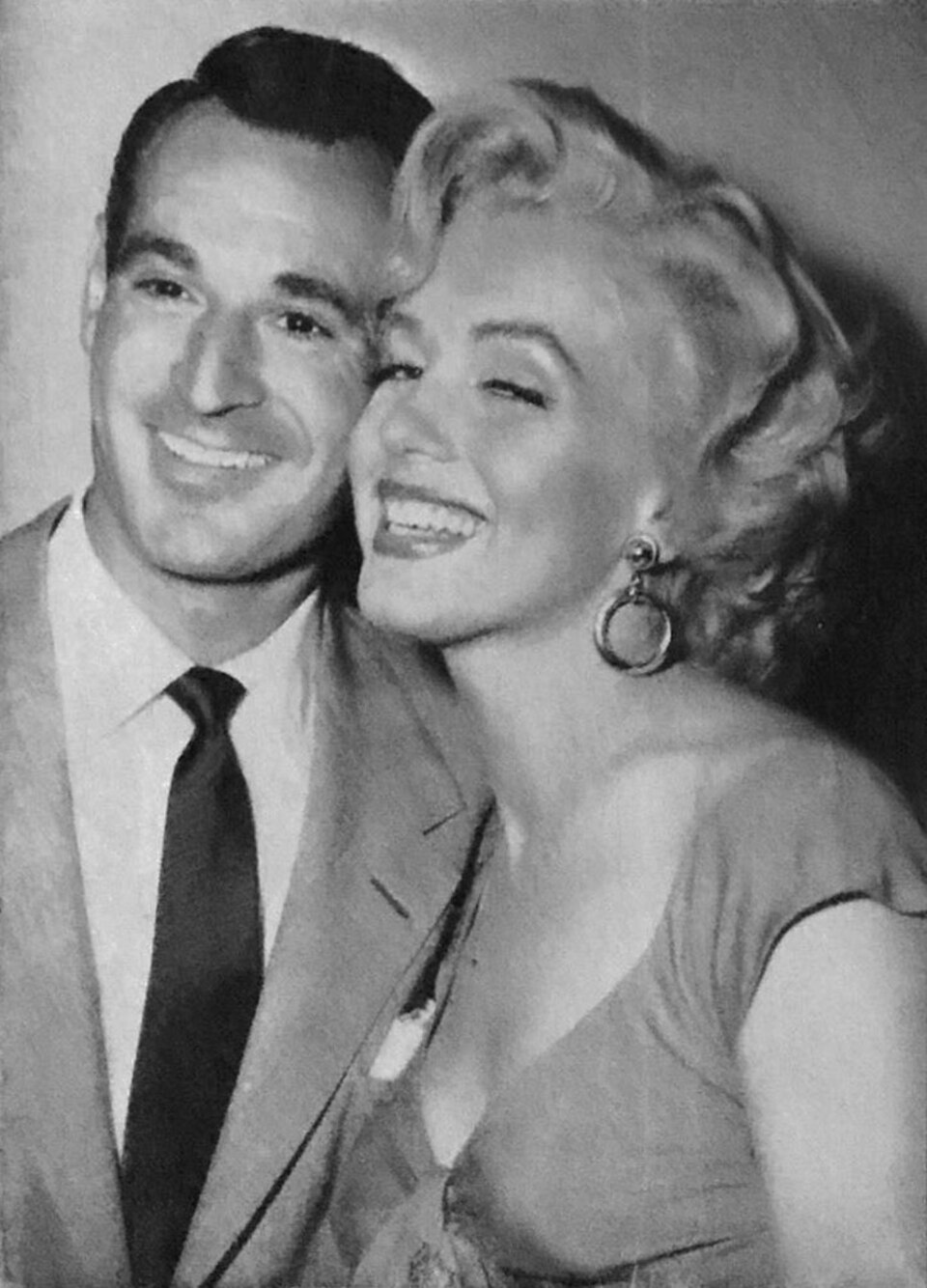
Photo of musician Ray Anthony and Marilyn Monroe from the cover of Down Beat magazine in 1952.This work is in the public domain because it was published in the United States between 1931 and 1963, and although there may or may not have been a copyright notice, the copyright was not renewed.
Anthony had a particular fondness for glamorous Hollywood blondes. He married one in 1955: Mamie Van Doren, with whom he had a son before divorcing in 1961. In 1956 he appeared alongside another blonde bombshell, Jayne Mansfield, in the musical comedy The Girl Can’t Help It.
Surrounded by beauty, music, and the energy of post‑war Hollywood, Anthony reached a fitting milestone in 1957 when he received his star on the Hollywood Walk of Fame. Marilyn Monroe received her Hollywood Walk of Fame star on February 8, 1960.
This explanatory article may be periodically updated.
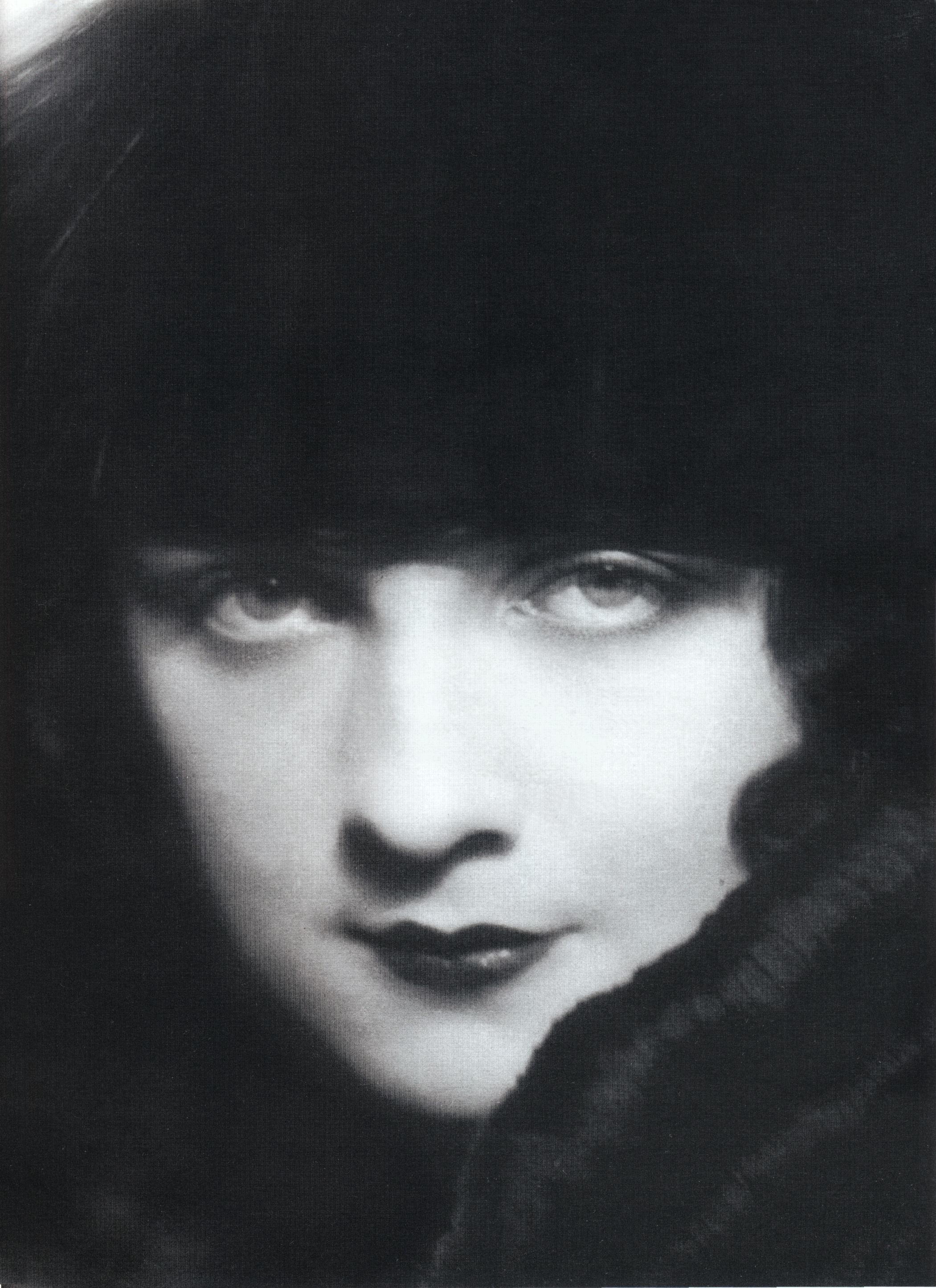
FEATURE image: Alice Terry by Melbourne Spurr, 1922. The sharp, dark, perfectly symmetrical lipstick styling seen here was the definitive high-fashion look of 1922, contrasting beautifully with the hazy diffusion applied to her eyes and hair.Spurr pioneered the aggressive close-up style that removed all extraneous background clutter. By using a specialized soft-focus diffusion lens, he softened the lines of Alice Terry’s skin, giving her face an ivory-smooth, almost airbrushed appearance that became the gold standard of 1920s celebrity photography. Public Domain.
The 1922 Alice Terry photograph by Melbourne Spurr captures the artistry, celebrity culture, and changing fortunes of early Hollywood, highlighting how both actress and photographer flourished during the silent era before the studio system transformed the industry.
GLAMOUR PHOTOGRAPHER MELBOURNE SPURR’S CAREER LAUNCHED BY SILENT SCREEN STAR MARY PICKFORD
Melbourne Spurr (1888-1964) arrived in Hollywood around 1917 at 28 years old. Spurr first worked at the studio of photographer Fred Hartsook (1876-1930) where he shot portraits of silent film stars.
Portrait of Melbourne Spurr (1888-1964) taken around 1917 when he arrived in Los Angeles to become an actor. The portrait offers a fascinating glimpse of the man before he became one of the definitive master portraitists of early Hollywood. In the promotional headshot, Spurr posed with his arms crossed with an intense, direct gaze aimed at the camera which was common formatting for a young actor’s talent portfolio during the late 1910s. Finding his acting career thwarted, Spurr shifted his creative energies to behind the camera, working at at Fred Hartsook’s portrait studio. It was there that his portraiture caught the eye of Mary Pickford, who would ultimately finance his career and help launch his legendary independent studio. Public Domain.
After Spurr photographed Mary Pickford at the Hartsook studio, Pickford personally helped Spurr launch his career as a Hollywood portrait photographer. Regarding Mary Pickford, Spurr once said “[she] always comes back to me, so I guess she thinks I’m not a bad photographer.”
By 1916 Mary Pickford (1892-1979) was a big star and had full authority over the films in which she appeared. She was earning a record-breaking $10,000 a week which was a staggering amount of money in the midteens (about $240,000 a week today).
Rufus Porter Moody operated out of a high-end theatrical studio on West 42nd Street in New York City and captured Pickford during her 1914-1915 East Coast filming era. Melbourne Spurr did not arrive in Hollywood until around 1916–1917 when he was “discovered” by Pickford.
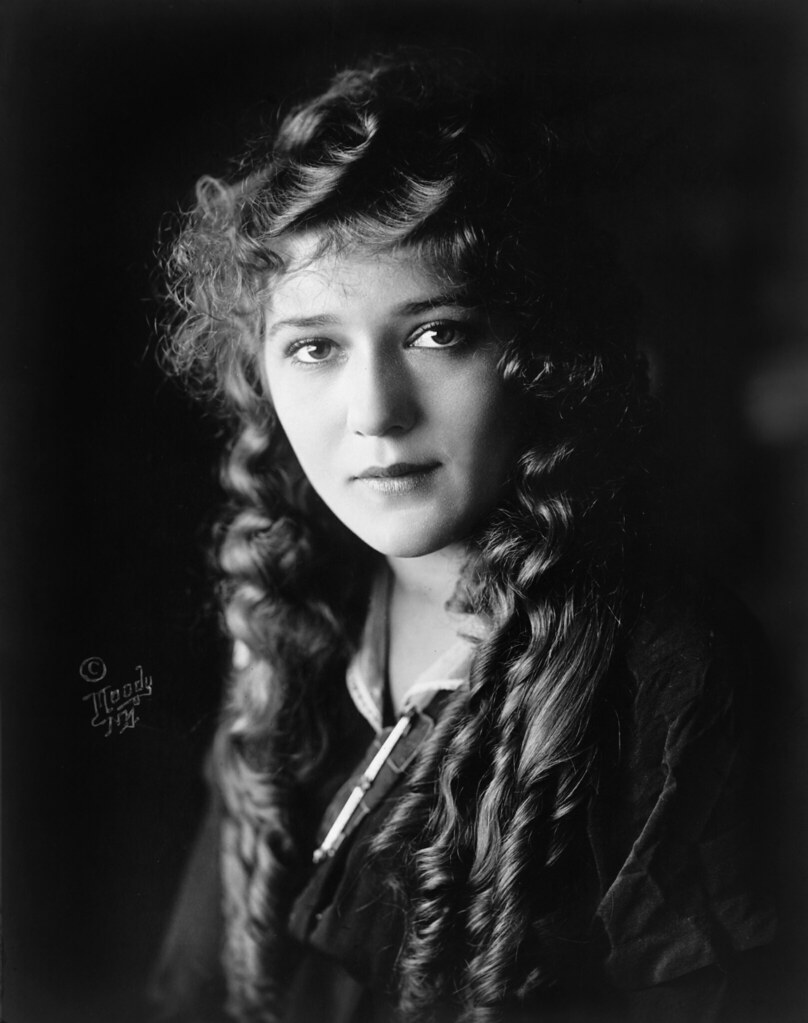
Mary Pickford (1892-1979) in a photograph taken in September 1914 was a big star in Hollywood. Taken by Rufus Porter Moody at a monumental turning point of her career, this deep-chiaroscuro portrait reveals 22-year-old Mary Pickford as she solidified her status as the cornerstone of independent cinema. The image serves as a powerful piece of corporate branding for Adolph Zukor’s Famous Players Film Company. PHOTO: “Mary Pickford by Moody, ca. 1914” by trialsanderrors is marked with CC BY 2.0.
MELBOURNE SPURR BECAME ONE OF THE MOST POPULAR CELEBRITY PHOTOGRAPHERS IN THE WORLD
Pickford’s special personal interest in Spurr’s career was matched or exceeded by the popularity of his photographs he distributed to the public. The film industry and public’s insatiable interest in Spurr’s portraits following his published Mary Pickford shots overnight made Spurr one of the most popular celebrity portrait photographers in Hollywood. By the mid1920’s Melbourne Spurr was one of the most popular celebrity photographers anywhere in the world.
Spurr’s many sitters through the roaring 20’s included Mary Astor, Marion Davies, Pola Negri, Theda Bara, Norma and Constance Talmadge, Harold Lloyd, Buster Keaton, Fatty Arbuckle, John Barrymore, Lucille Ricksen—and Alice Terry.
PORTRAIT PHOTOGRAPH OF ALICE TERRY, FILM ACTRESS AND DIRECTOR
Between 1916 and 1933 Terry appeared in 39 films. She started in Not My Sister in 1916. That same year, Terry made the anti-war film, Civilization. In 1921 she starred as Marguerite Laurier, her most acclaimed role, in prominent Irish director Rex Ingram’s film, The Four Horsemen of the Apocalypse. Alice Terry and Rex Ingram married that same year.
Alice Terry (began her career as a film actress and later director in the silent film era. Spurr’s portrait photograph of Alice Terry in 1922 presents a very close-cropped close-up with piercing, radiant eyes, perfect lips, and rich toning.
It was shot at Spurr’s studio in Hollywood and was one of his earliest solo commercial masterpieces after branching out from Fred Hartsook’s studio. In 1922 Alice Terry was at the height of her cinematic stardom having just completed filming The Prisoner of Zenda (1922), directed by her brilliant husband, Rex Ingram and this studio session was specifically engineered as a publicity drive to generate high-end, artistic portraits for top-tier film magazines and theater lobby card displays.
Alice Terry by Melbourne Spurr, 1922. The photograph deliberately reinvents her on-screen persona, isolating her face to capture the smoldering, mysterious depth that made her a box-office magnet. Cloaked in an oversized, dark winter hat and wrapped tightly in a thick, textured fur collar, the styling frames her as an enigmatic, modern woman of high style—perfectly expressing her elite rank alongside contemporary screen icons of the early twenties.
In 1925, Rex Ingram (1892-1952), was a director on Ben-Hur, an extravaganza production that started in 1923 and became one of the biggest box-office hits of the decade. Working on this film in Italy gave Alice Terry and Rex Ingram the idea to relocate to Nice on the French Riviera and set up their own film studio. In the next years the expatriate actress-director and director made several films for M-G-M on location in southern Europe and North Africa. Alice Terry made her final film in 1933 in an appearance in Baroud, a film she and Rex Ingram co-directed.
SPURR’S POPULARITY DECLINES AS STUDIO SYSTEM MANDATES IN-HOUSE PHOTOGRAPHERS
With studio consolidation and competition becoming more intense, major movie studios mandated that their stars be photographed only by studio photographers. So was inaugurated the age of motion picture inhouse operators heralding the legendary careers of glamour portrait photographers George Hurrell, Clarence Sinclair Bull, Eugene Robert Richee and others. Since Spurr chose to keep his own studio and not work for a major studio, he began to lose business. It had been for one glorious decade—the 1920’s— that Melbourne Spurr shined in Hollywood.
FEATURE image: A close-up portrait of Cary Grant taken around 1959 that captures him at the absolute zenith of his career as classic Hollywood’s gold standard of style and sophistication. It was photographed as a studio color headshot that showcased his signature look—including his famous deeply tanned skin and prominent cleft chin. At the time this photo was taken, Grant was experiencing a major career resurgence and a golden box-office era, remaining one of Hollywood’s most bankable leading men well into the 1950s and 1960s. This period directly aligns with his work on masterpieces like Stanley Donen’s Indiscreet (1958) alongside Ingrid Bergman, Blake Edwards’ massive hit Operation Petticoat (1959) with Tony Curtis, and Alfred Hitchcock’s masterpiece, North by Northwest (1959). PHOTO: “Cary Grant” by classic film scans is licensed under CC BY 2.0.
Cary Grant’s final years in Hollywood were not a leisurely epilogue but a remarkably successful closing act in which he sustained his star power through a series of popular films while simultaneously shifting his priorities from screen legend to husband and father, culminating in a carefully chosen retirement at the height of his fame.
Cary Grant in a relaxed portrait in New York City taken in 1956 by celebrity photographer Milton H. Greene. PHOTO: Cary Grant by classic film scans is licensed under CC BY 2.0.
By John P. Walsh
Cary Grant made 72 feature films between 1932 and 1966- 34 in the 1930’s, 20 in the 1940’s, 13 in the 1950’s, and 5 in the 1960’s. (Grant also appeared in 10 more short films between 1932 and 1976). His feature films ranged from all classics of the genre. The debonair English-American actor with boundless energy and superb timing tangled with THRILLERS—Suspicion (1941), To Catch a Thief (1955), North by Northwest (1959)— COMEDIES—Bringing Up Baby (1938), His Girl Friday (1940), The Philadelphia Story (1940)— ROMANCES—Notorious (1946), An Affair to Remember (1957) – and much more. Grant was nominated twice for an Academy Award for Best Actor – in 1941 for Penny Serenade (directed by George Stevens) and None but the Lonely Heart in 1944 – but did not win.
In his 34-year Hollywood career Grant made his last films in the 1960’s. These included That Touch of Mink (1962), Charade (1963), Father Goose (1964), and Walk, Don’t Run (1966). These films became some of his best work. Afterwards, Grant decided to retire at what was a professional – and personal – high note. In June 1965 the 61-year-old Grant married actress Dyan Cannon, 33 years his junior, and they both had their first child, a girl, born in February 1966. It was Dyan Cannon’s first marriage; Grant’s fourth. They divorced in 1968.
With an acting career spanning four decades—Grant’s film debut was in 1932 for Paramount Pictures’ comedy, This is the Night—Grant said good-bye to the silver screen at 62 years old. In 1970 he received his sole Oscar, an honorary one, for which he was pleased and humbled in his acceptance speech before the Academy. It was Hollywood’s Golden Age, and in that time, Cary Grant was a household name synonymous with suavity, comedy, drama, romance, and perpetually fit and tanned-and-pressed good looks.
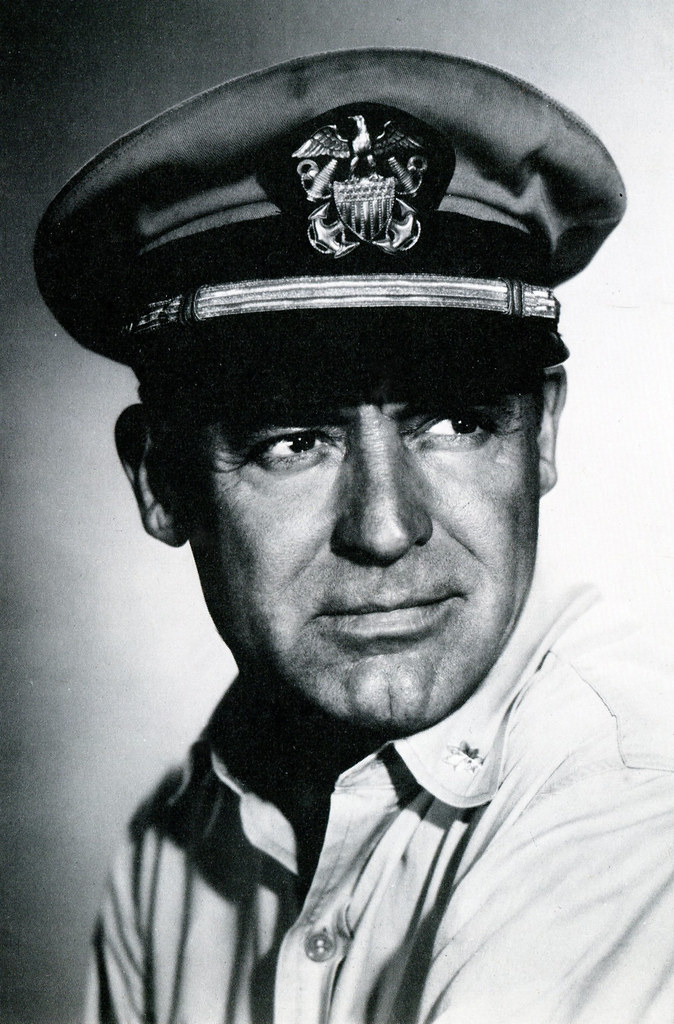
Production still from Blake Edwards’ 1959 World War II comedy Operation Petticoat. In 1959, Cary Grant was at a pivotal high-water mark of his late career and arguably the most powerful independent actor in Hollywood. In Operation Petticoat, he plays Lt. Commander Matt Sherman, the beleaguered captain of the fictional, pink-painted submarine USS Sea Tiger, starring alongside a rising Tony Curtis. By 1959, Grant didn’t just star in movies; he controlled them. He produced Operation Petticoat through his own independent company, Granart Productions and negotiated a deal with Universal that gave him a massive chunk of the gross profits. The film became a runaway box-office smash, earning over $9 million in its initial release and netting Grant the biggest single paycheck of his entire career up to that point. PHOTO: Cary Grant by classic film scans is licensed under CC BY 2.0.
The second photo from Operation Petticoat, showing him looking through a submarine periscope, showcases his unmatched gift for reactions. Even while playing a weathered military officer, Grant infused the character with his trademark double-takes and sophisticated comic timing, proving that at age 55, his charm and talent could still carry a massive blockbuster. Grant was fiercely protective of his handsome, youthful public image and grew increasingly self-conscious about aging on camera. He famously believed that audiences did not want to see a man in his late 50s or 60s playing traditional romantic leads opposite women who were decades younger than him. PHOTO: MM008600-39 by Florida Keys–Public Libraries is licensed under CC BY 2.0.
Grant’s 1970 Honorary Academy Award served as a capstone recognition of a career that had made him one of Hollywood’s defining stars.
The 66-year-old leading man and comic actor, whose film career ranged from 1932 to 1966, never won an Oscar. In 1970 he thanked the Academy whose audience that night gave him a standing ovation. Grant, who made over 80 films, including a long list of classic titles, expressed gratitude for “being privileged to be part of Hollywood’s most glorious era.”
“Ours is a collaborative medium—we all need each other,” Cary Grant said as he accepted his honorary Oscar from presenter and friend Frank Sinatra at the 42nd Annual Academy Awards ceremony on April 7, 1970 at the Dorothy Chandler Pavilion in Los Angeles, California.
Grant’s final film came in 1966 with the summer release of the comedy, Walk, Don’t Run. It was one more film made by one of Grant’s new production companies and distributed by Columbia Pictures. Grant’s departure from film coincided with the birth of his daughter, Jennifer— Grant becoming a father for the first time. Grant called her his “best production”— and now wanted to give her all his time and attention. Grant said: “My life changed the day Jennifer was born. I’ve come to think that the reason we’re put on this earth is to procreate. To leave something behind. Not films, because you know that I don’t think my films will last very long once I’m gone. But another human being. That’s what’s important.”
Cary Grant and wife Dyan Cannon with their baby daughter who was born on February 26, 1966. Newborn daughter Jennifer was roughly seven months old when this photo of the Grant family was taken in September 1966. It was an official press and publicity photo documenting a highly sentimental journey. Grant was taking his new family across the Atlantic to England specifically to introduce his baby daughter to his elderly mother, Elsie. PHOTO: Cary Grant, Dyan Cannon, and infant daughter Jennifer in September 1966. Photo: Express/Pictorial Parade/Getty Images. Fair use.
Grant left Hollywood on his own terms, retiring after Walk, Don’t Run rather than remaining in films past his prime. His relationship, marriage, and daughter with Dyan Cannon coincided with the winding down of his film career.
Grant starting wooing Dyan Cannon in 1962. Within a three-year whirlwind courtship, she became pregnant with Grant’s baby so that, in1965, the 28-year-old actress wanted a marriage proposal. Cary Grant was the epitome of cinema’s best and most important actors. After their marriage, Dyan Cannon discovered that their relationship turned polite and frostier than she had expected with Hollywood’s quintessential leading man. On March 20, 1968 — less than three years after tying the knot in a secret wedding ceremony in Las Vegas, Nevada followed by a honeymoon in England taking a private jet supplied Howard Hughes – Cannon sought and got a divorce. While Cannon received alimony from Grant to raise their daughter, the young mother and up-and-coming actress had to sort things out more completely after their break-up. Theirs had been a love affair with many memorable romantic moments. But what Grant told her when they were still dating was remembered by Cannon after the marriage failed. Grant said: “I don’t know what it is, but something happens to love when you formalize it. It cuts off the oxygen.”
Grant appears in character as an angel named Dudley in this promotional photograph for the 1947 fantasy romance film, The Bishop’s Wife. By seductively playing a certain song on the harp, Dudley convinces a rich woman to support the bishop’s cathedral building project. In real life, Grant was an ardent piano player. PHOTO: Cary Grant by twm1340 is licensed under CC BY-SA 2.0.
Grant’s last decade in film produced several commercially successful and enduring works, including That Touch of Mink (1962), Charade (1963), Father Goose (1964), and Walk, Don’t Run (1966).
That Touch of Mink (1962):
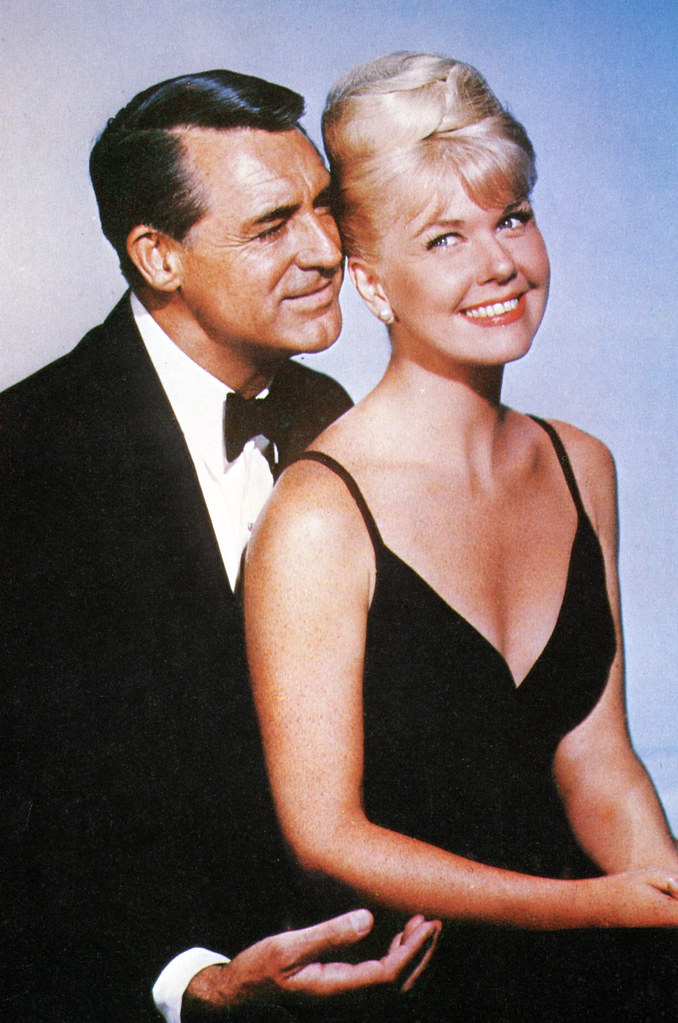
Cary Grant and Doris Day in the hit romantic comedy, That Touch of Mink. PHOTO: Cary Grant and Doris Day by classic film scans is licensed under CC BY 2.0,
That Touch of Mink co-starred Doris Day and Cary Grant. It was the hit movie of summer of 1962 though outshined in the movie world by Lawrence of Arabia and The Longest Day later that year. The romantic-comedy is great fun—it won a Golden Globe award for Best Comedy Picture-—and became a popular rerun on TV for the next decade.
Cary Grant was cast as wealthy businessman Philip Shane, a role originally meant for Rock Hudson. That Touch of Mink was, above all, intended to be a Doris Day vehicle. From 1962 to 1964 Doris Day was the top box office star in Hollywood. Her presence definitely contributed to Universal Pictures’ bottom line since That Touch of Mink was the fourth biggest money maker of the year.
Playing working girl Cathy Timberlake, the movie is basically a stylish “boy meets girl, boy loses girl, boy gets girl back”—and given a chance to learn his lesson, they get married. American audiences loved the concept as well as Day and Grant together on the big screen. The film was the fastest million-dollar earner of 1962 and set a record at the time for the highest gross earnings in an initial theatrical release.
Sitting comfortably inside the dry, luxurious interior of the car is wealthy businessman Philip Shayne (Cary Grant). The sequence relies on classic visual irony: Cathy Timberlake (Doris Day) is left standing on the rain-soaked pavement, drenched and furious, while Shayne glides away in elegance, fully aware of the chaos his vehicle has just caused. That splash serves as the catalyst for the entire story. Out of guilt, Philip later seeks Cathy out and offers to replace her ruined wardrobe, setting in motion the film’s playful cat-and-mouse romance.
Grant had wanted to work with Day for years and, as co-producer alongside her husband and manager Martin Melcher of Arwin Productions, personally helped ensure she was cast. Grant and writer-producer Stanley Shapiro then selected Academy Award-winning director Delbert Mann to helm the picture. An unusual choice for a glossy romantic comedy, Mann was best known for realistic, emotionally grounded dramas and had won the Oscar for Best Director for his feature-film debut, Marty (1955). Grant and Shapiro believed that Mann’s naturalistic approach would balance the film’s fashionable glamour and comedic situations with genuine emotional credibility. The screenplay and original story were written by veteran comedy collaborators Stanley Shapiro and Nate Monaster, whose work earned an Academy Award nomination for Best Original Screenplay.
For Grant it was his second highest grossing film of his 30-year career, which was especially prosperous since the 58-year-old actor was a co-producer. Grant made $4 million for That Touch of Mink (around $35 million in today’s money). Three weeks after its opening, Betsy Drake, Grant’s third wife, filed for divorce.
The court proceedings of the high-profile couple after over a decade of marriage were followed closely in the press. The settlement for Drake who told the papers: “I was always in love with him and I still am…but…he left me long ago,” included more than one million dollars in cash and profit sharing in every Cary Grant film ever made up to that time.
That Touch of Mink, a film thick with early 1960’s conventional sensibilities, was nominated for 3 Academy Awards. Both Grant and Doris Day never won an Academy Award. The story goes that after her exit from films Doris Day was offered the Honorary Oscar multiple times but always turned it down. Grant won and accepted his Honorary Academy Award in 1970. In 1962 That Touch of Mink was nominated for Best Sound, Best Art Direction and Best Screenplay. In the first two categories Oscar went to Lawrence of Arabia and in the third to Divorce Italian Style.
That Touch of Mink was the fastest million-dollar earner of 1962 and set a record at the time for the highest gross earnings in an initial theatrical release. It was mainly a Doris Day vehicle that co-starred Cary Grant who co-produced.
CHARADE (1963):
When Grant first asked to meet Dyan Cannon, she assumed it was for an acting part. Grant began his romance with then-25-year-old Dyan Cannon in 1962. That fall the couple flew from California to New York where Cannon began rehearsing for The Fun Couple, a Broadway comedy play starring Jane Fonda and directed by Andreas Voutsinas. Grant meanwhile worked with film director Stanley Donen on Charade, a romantic-comedy pseudo-Hitchcock mystery thriller that Grant co-starred in with Audrey Hepburn. Hepburn had been filming another romantic comedy, Paris When it Sizzles, with William Holden.
Promotional poster for Stanley Donen’s Hitchcock-inspired suspense thriller, Charade. The 1963 hit film was made in Paris in 1962 and 1963 and released during Christmas 1963. It starred Cary Grant and Audrey Hepburn. PHOTO: CHARADE by Laurel L. Russwurm is marked with CC0 1.0 PUBLIC DOMAIN
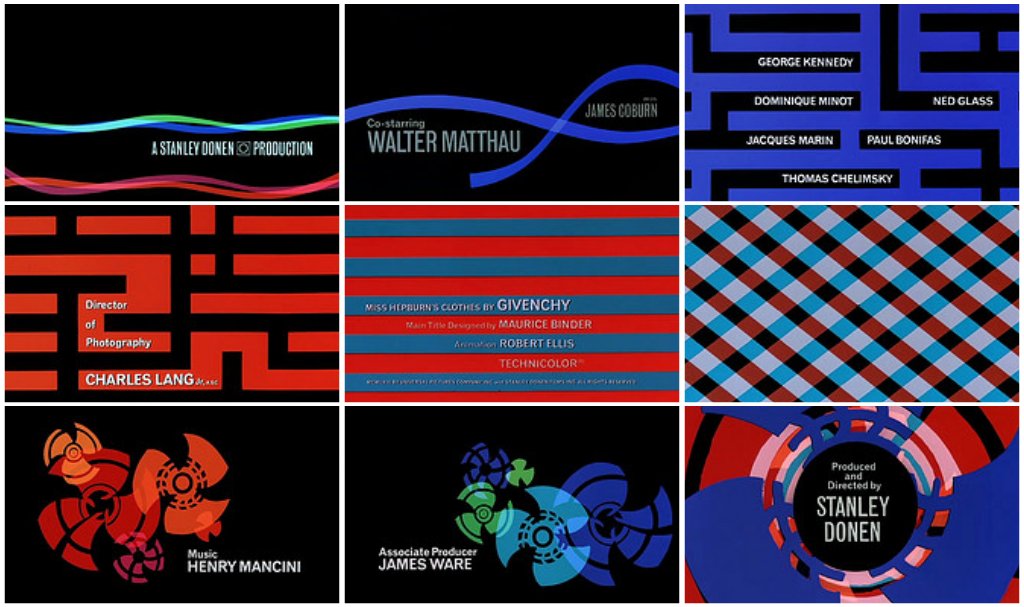
Charade’s animated Main Title and music follow a widescreen shot of a pre-dawn countryside in Europe as a speeding train finally approaches and screeches past. A body is dumped out of the moving train, plunges down the ravine and stops in a ditch, the camera providing a close-up of the dead victim’s face. Colorful animation follows of pinwheels as the wood-block-driven music heighten tension for what will be two charming lovers, Grant and Hepburn, caught in a mysterious web of criminals after money.
Stills montage of Maurice Binder’s Main Title for Charade that accompanies Henry Mancini’s music.The Main Title for Charade with its punchy animated titles by Maurice Binder (1918-1991) was composed by Henry Mancini (1924-1994). The Main Theme from Charade was the first of a number of successful film score collaborations Mancini had with film director Stanley Donen in the 1960’s. PHOTO: Public domain published in a collective work i.e. periodical in the US between 1925 and 1977 and no Copyright.
Grant reluctantly left Cannon and the comforts of his suite at the Plaza Hotel in New York City to make his way to Paris to shoot Charade (Hepburn lived near Paris). Many Paris locations were used in the film: near Notre Dame is the Pont au Double bridge, just below the Quai de Montebello. During the filming of Charade, Cary Grant and Audrey Hepburn walked along the riverbank below this bridge as they discussed who the killer is. Another location was the Musée Cernuschi just outside of Parc Monceau on the Avenue Velasquez. The museum is featured in Charade where it is used as Reggie’s apartment which she finds ransacked after returning from a holiday ski trip. Finally, the Palais Royal near the Louvre appears in Charade in its final scenes when the real Carson Dyle is revealed and shooting begins.
Shooting scenes for Charade involved many locations in Paris.Charade demonstrated Grant’s continued appeal as a sophisticated leading man and remains one of the most celebrated films of his later career. PHOTO: Charade_1963_Audrey_Hepburn_and_Cary_Grant public domain because it was published in the United States between 1925 and 1963 and although there may or may not have been a copyright notice, the copyright was not renewed
When Dyan Cannon had her first holiday break from Broadway rehearsals at Christmas 1962, she hopped on a flight to Paris. Arriving on December 26, Grant and Cannon spent the next several days together in his hotel. On New Year’s Eve, the couple were the special guests of Audrey Hepburn and her husband Mel Ferrer at their castle where a sumptuous dinner and many flights of crisp and creamy French champagne were served. Cannon flew back to the States on January 2, 1963, after a most pleasant holiday. She resumed her theater work in New York City while Grant and Hepburn stayed behind in Paris to continue filming Charade.
Cary Grant, making his 70th film, was reluctant to leave the U.S. in late 1962 for Paris to film Charade. The film premiered at Radio City Music Hall in New York City on Christmas Day 1963. PHOTO: Cary Grant, in Charade 1963 by Movie-Fan is licensed under CC BY-NC-SA 2.0
Charade opened on December 25, 1963, at Radio City Music Hall in New York City. The film made six million dollars while the reviews were mixed, though mainly positive. Critics did remark on the age difference between the romantic leads –Cary Grant was 59 years old and Audrey Hepburn at 34, was almost half his age. By early 1964 the suave and likeable leading man of the last 30 years was already thinking about retirement. PHOTO: Radio City Music Hall (2008) by jpellgen (@1179_jp) is licensed under CC BY-NC-ND 2.0.
In the 1963 romantic thriller Charade, the entire plot revolves around a frantic search for a hidden fortune that is ultimately discovered pasted in plain sight on an ordinary envelope in the form of rare stamps. This modern envelope poetically mirrors that classic climax by placing the face of the film’s star, Audrey Hepburn, onto the very postal medium that drove her most famous cinematic chase. PHOTO: Let’s continue this little Charade by Thiophene_Guy is licensed under CC BY-NC-SA 2.0.
The film Charade is well-known for its Hitchcock-style inspiration and screenplay by the original story’s author Peter Stone (1930-2003). From Stone’s 1961 short story, The Unsuspecting Wife, the film Charade offers witty lines and a head-knocking, heart-pounding whodunit. In Charade, Regina “Reggie” Lampert (Hepburn) is on winter holiday in the French Alps. Returning to her home in Paris, she is shocked to find that it has been ransacked of everything of value. The mysterious victim thrown off the train in the Main Title and the mysterious man Reggie met on holiday in Grenoble– Peter Joshua, alias Alexander Dyle, alias Adam Canfield, alias Brian Cruikshank (Cary Grant) –converge into her life to help her solve the mystery of why these crimes have occurred and what they mean. Charade is about hidden money, spies and larcenists, double-crossing and being on the run. In addition to all that, it’s a love story. Charade was one of the last of the suspense-screwball comedy films –a staple of the Hollywood film genre since the 1930’s that faded in the gritty realist films of the 1960’s and 1970’s until its reemergence in the 1980’s.
Father Goose (1964):
With Charade in the rear-view mirror, Grant came home just as Cannon became mostly absent. Throughout 1964 and much of 1965 Cannon had done no film work yet but continued a busy theater career as she was touring the country in the musical How to Succeed in Business Without Really Trying. Looking for something to do with his time, Grant formed a production company and made Father Goose.
Grant was dismayed that his 1964 romantic comedy adventure film Father Goose made less money than Charade and almost $6 million less than That Touch of Mink in 1962 and Operation Petticoat in 1959 combined. Set during World War II in the South Pacific, Father Goose follows Walter Eckland (Cary Grant), a slovenly, hard-drinking beachcomber who is blackmailed by the British Navy into serving as a solitary coast-watcher on a remote island. Given the radio code name “Mother Goose,” Walter cooperates because the Navy rewards his intelligence reports with hidden bottles of whiskey. His arrangement is upended when he rescues Catherine Freneau (Leslie Caron), the proper daughter of a French diplomat, and seven stranded schoolgirls. Forced to share his ramshackle island home, Catherine and Walter engage in a spirited battle of the sexes. She is horrified by his drinking, laziness, and lack of hygiene, while he resents the disruption of his peace and supply of liquor. Amid air raids, wartime dangers, and growing mutual respect, Walter gradually sheds his cynicism, becomes a reluctant father figure to the children, and falls in love with Catherine.
Grant was especially fond of Walter Eckland, later remarking that the role came closer than any other to reflecting the unpolished personality of Archie Leach, the man behind the Cary Grant image. Some biographers and commentators have suggested that audiences’ preference for the sophisticated Cary Grant persona over this rough-edged characterization contributed to the actor’s growing disillusionment with filmmaking. Whatever the reasons, Father Goose proved to be Grant’s penultimate feature, preceding his retirement from motion pictures just two years later.
Grant’s character, Walter Eckland, played against Grant’s film type. Ecklund was a bedraggled loner in the South Pacific during World War II who reluctantly takes under his protection an unmarried French school teacher (Leslie Caron) and her seven grade school students. They were suddenly made refugees from the war during a Japanese bombing raid. The heart-warming Father Goose was a mega-hit at its release during Christmas 1964 and made millions of dollars. Receipts, however, were significantly less than in each of Grant’s three previous films — Operation Petticoat in 1959 with Tony Curtis, That Touch of Mink in 1962 with Doris Day, and Charade. Despite a lot of pre-Oscar buzz, Grant wasn’t nominated for his performance. Father Goose was one more disappointment for Grant as he worked to possibly be given an Academy Award before he might retire.
Newly married in June 1965 to Dyan Cannon who was expecting their baby, Grant announced he was flying to Japan to make another movie. Grant returned to California permanently just in time to drive his wife to the hospital to deliver their first child, a baby daughter, born on February 26, 1966. PHOTO: 1947 Bristol-born Hollywood film star Cary Grant alighting from Bristol Freighter G-AGVC at Los Angeles, 13 Jan 1947. by Gary Danvers is licensed under CC BY-SA 2.0.
In June 1965, with Father Goose and the Oscars behind him and Dyan Cannon’s national tour ended—Grant and Cannon, who was now pregnant, got married. After a secret marriage ceremony in Las Vegas and a honeymoon, their news was eventually publicized. As the excitement began to settle down, Grant informed Cannon he would be making another film—and was traveling to Japan by himself for the next many months.
Walk, Don’t Run (1966):
Grant formed another production company and, with producer Sol C. Siegel, signed with Columbia Pictures to distribute his new film. Buying the rights to The More the Merrier, a World War II-era comedy, Grant took the role that had been nominated in the early 1940’s for an Academy Award. Grant’s 1966 remake was called Walk, Don’t Run in which he played a British industrialist, Sir William Rutland.
In the vibrant, pop-art aesthetic of the mid-1960s, the official poster for Walk, Don’t Run (1966), a lighthearted romantic comedy that permanently etched its place in cinema history as Cary Grant’s final feature film. The film plot set in Tokyo during the 1964 Summer Olympics, the film poster features a generational pairing of talent with Cary Grant playing Sir William Rutland, an English industrialist, Samantha Eggar playing Christine Easton, a young Englishwoman living in Tokyo and Jim Hutton playing Steve Davis, a handsome American Olympic competitor. Hutton was known for his tall stature and breezy, boy-next-door comedic style. Fair use.
In the film, Christine, whose tiny apartment it is, would prefer a female roommate. She sublets to Sir William because he is pushy, charming and a fellow Brit in need. But he immediately sublets half of his portion to Hutton, making for three. Comedy results from three outsized adults sharing a very small living space as they pursue their lives’ conflicting schedules as normally as possible.
Cary Grant’s Final Screen Role
By the mid-1960s, Cary Grant’s romantic comedies had become a familiar and reliable formula, allowing the newly married star and father to continue capitalizing on his enduring popularity. Even by the standards of earlier Grant vehicles such as Dream Wife (1953), Houseboat (1958), and Father Goose (1964), Walk, Don’t Run (1966) is exceptionally light entertainment.
A remake of George Stevens’s Oscar-nominated wartime comedy The More the Merrier (1943), the film transfers the story to Tokyo during the 1964 Summer Olympics, when a housing shortage forces three strangers to share an apartment: industrial magnate Sir William Rutland (Grant), American Olympic athlete Steve Davis (Jim Hutton), and British expatriate Christine Easton (Samantha Eggar). Grant assumes the role originally played by Charles Coburn, whose performance earned an Academy Award nomination for Best Supporting Actor.
Playing Matchmaker for a Younger Generation Instead of Leading Man
For his final film appearance, Grant deliberately chose not to get the girl. Instead, Sir William becomes a benevolent matchmaker, gently steering Christine away from her dull fiancé, British diplomat Julius Haversack (John Standing), and toward Steve. Grant personally selected both Hutton and Eggar for their roles, ensuring that the film’s romantic focus rested on a younger generation.
A Charming but Old-Fashioned Farewell
While the performances are appealing and the Tokyo Olympic setting provides contemporary window dressing, Walk, Don’t Run often feels like a relic from an earlier Hollywood era. The stage-bound direction and highly predictable story lend the production an old-fashioned quality despite its modern setting. Still, the film benefits from the effortless charm of its cast and a lively score by Quincy Jones, one of his earliest major Hollywood assignments. As a result, Walk, Don’t Run serves as a pleasant, if somewhat anachronistic, farewell to one of cinema’s most enduring stars.
Samantha Eggar glows in each of her scenes in Walk, Don’t Run though she hasn’t much to work with in terms of a script as evidenced here.
Reel Life and Real Life
The onscreen romance between Jim Hutton and Samantha Eggar in Walk, Don’t Run (1966) carries striking parallels to Cary Grant’s own turbulent relationship with Dyan Cannon during the film’s production. While Grant played the detached, older matchmaker on screen, his private life was dominated by a generational romance that profoundly shaped his outlook during his final film.
In July 1965, Grant married Cannon. At 61, he was 33 years older than his 28-year-old bride. Just as Sir William Rutland must adapt to the attitudes, lifestyles, and expectations of a younger generation in Walk, Don’t Run, Grant had courted and now was attempting to build a life with a woman who belonged to the same generation as Hutton and Eggar.
A Modern Woman Off Screen
In the film, Samantha Eggar’s Christine Easton is fiercely independent and resistant to being managed or placed into a conventional romantic arrangement. Her determination to chart her own course creates much of the story’s tension before she eventually finds genuine happiness with Hutton’s Steve Davis.
The dynamic echoed Grant’s marriage. Cannon was an ambitious, free-spirited actress whose career was just beginning to flourish. Friends, biographers, and Cannon herself later described Grant as deeply invested in shaping the details of her life, from her wardrobe and schedule to her public image. Much like Sir William’s attempts to orchestrate the lives of those around him, Grant sought order and control, while Cannon pushed back in defense of her independence. The film’s underlying theme of understanding a modern 1960s woman reflected a challenge Grant was simultaneously navigating at home.
Passing the Torch
Perhaps the most poignant parallel is visual and symbolic. In Walk, Don’t Run, Hutton plays the tall, handsome Olympic athlete who ultimately wins the girl. Grant’s character willingly steps aside, recognizing that youth belongs with youth and finding satisfaction in helping the younger couple discover each other.
By 1966, Grant was confronting a similar reality in his own life. He understood that the era of Cary Grant as Hollywood’s effortless romantic lead was drawing to a close. His marriage to Cannon and the birth of daughter Jennifer in February 1966 reinforced that realization. The role that had defined him for more than three decades was giving way to something different.
A Farewell in Disguise
Viewed in hindsight, Walk, Don’t Run feels less like a conventional romantic comedy than a subtle farewell. By guiding Hutton and Eggar together on screen rather than pursuing the heroine himself, Grant was symbolically relinquishing the role he had perfected since the 1930s. The debonair leading man steps aside, allowing a younger generation to take center stage. In that sense, Sir William Rutland was not merely a character. He was Cary Grant gracefully rehearsing his own exit from Hollywood and preparing for the uncertain next chapter of family life beyond the camera.
The music is by Quincy Jones including its main title, “Happy Feet.” Walk, Don’t Run was one of Quincy Jones’s first big breaks. The 33-year-old Chicago-born Jones came to score the film after its star and Executive Producer, Cary Grant, recommended him for the job. Grant met him briefly through their mutual friend, singer Peggy Lee. From that meeting Grant felt Jones’ style would be perfect for the film and he made sure he was hired. Jones went on to enormous success as the composer of numerous film scores such as In the Heat of the Night in 1967 and The Color Purple in 1985 as well as the producer of successful pop rock recordings such as Michael Jackson’s bestselling albums and the 1985 global recording phenomenon, We Are The World. In 2013, Quincy Jones was inducted into the Rock and Roll Hall of Fame.
The Last Curtain Call
After Grant returned from Asia and the baby was born, he insisted, both publicly and privately, that Walk, Don’t Run would be his last film. It proved to be true. Unlike many stars who announced retirements only to return, Grant kept his word. After more than three decades as one of Hollywood’s most successful leading men, Grant was ready to leave the movie business behind and focus on family life.
Retirement and Domestic Life
Grant also made it clear that he would not make a film with his wife, Dyan Cannon, a talented young actress whose career was just beginning. Instead, he believed Cannon should retire from acting and devote herself to being a stay-at-home mother. Cannon did not welcome those ideas, creating an early source of tension between the couple.
Leaving Hollywood Behind and Life Beyond the Legend
Even in 1966, following an exciting courtship and despite a 33-year age difference they rarely discussed publicly, Cannon had begun to wonder whether her marriage to Cary Grant was already on the rocks. As Grant exited a thirty-year film career at the very height of his fame, the private life he had chosen over Hollywood was proving more complicated than the romantic ending many imagined. The final chapter of Cary Grant the movie star had closed, but the final chapter of Cary Grant the man was still being written.
By 1966, he understood that the era of Cary Grant as Hollywood’s effortless romantic lead was drawing to a close. His marriage to Cannon and the birth of daughter Jennifer in February 1966 reinforced that realization. The role that had defined him for more than three decades was giving way to something different. Fair use.
The birth of his daughter Jennifer fundamentally altered Cary Grant’s priorities and contributed to his decision to retire from filmmaking.
CARY GRANT HOLLYWOOD FILMOGRAPHY (1962-1966):
1962:
That Touch of Mink Cary Grant as Philip Shayne Directed by Delbert Mann Released June 14, 1962 Universal Pictures
1963:
Charade Peter Joshua / Alexander Dyle / Adam Canfield / Brian Cruikshank Directed by Stanley Donen Released December 5,1963 Universal Pictures
1964:
Father Goose Walter Christopher Eckland Directed by Ralph Nelson Released December 10, 1964 Universal Pictures
1966:
Walk, Don’t Run Sir William Rutland Charles Walters Released June 29, 1966 Columbia Pictures
NOTES:
Best production— “Hollywood loses a legend”. Montreal Gazette. December 1, 1986. p. 1.
That’s what’s important— McCann, Graham (1997). Cary Grant: A Class Apart. Columbia University Press, 1998.
Fastest million-dollar earner of the year and record for highest gross earnings in an initial theatrical release – “Million-$ Gross In 5 Weeks; ‘Mink’ A Radio City Wow”. Variety, July 18, 1962. p.1. and “B’way as Spotty as Weather; ‘Town’ Big $41,000, ‘Guns’ Only Okay $20,000, ‘Grimm’ Giant 59G, ‘Mink’ 151G, 10th” Variety, August 22, 1962. p.9.
Betsy Drake settlement – Eliot, Marc, Cary Grant A Biography, Harmony Books, NY 2004, p 337.
Last film and would not make a film with his wife— Ibid., p. 352.
Might be in trouble—Cannon, Dyan, Dear Cary: My Life with Cary Grant, 2011, p. 217 ff.
This explanatory article may be periodically updated.
*The photograph copyright may be believed to belong to the distributor of the film, Universal Pictures and Columbia Pictures, the publisher of the film or the graphic artist. The copy is of sufficient resolution for commentary and identification but lower resolution than the original photograph. Copies made from it will be of inferior quality, unsuitable as counterfeit artwork, pirate versions or for uses that would compete with the commercial purpose of the original artwork. The image is used for identification in the context of critical commentary of the work, product or service for which it serves as poster art. It makes a significant contribution to the user’s understanding of the article, which could not practically be conveyed by words alone. As this is a publicity photo (star headshot) taken to promote an actress, these have traditionally not been copyrighted. Since they are disseminated to the public, they are generally considered public domain, and therefore clearance by the studio that produced them is not necessary. (See- Eve Light Honthaner, film production expert, in The Complete Film Production Handbook, Focal Press, 2001 p. 211.) Gerald Mast, further, film industry author, in Film Study and the Copyright Law (1989) p. 87, writes: “According to the old copyright act, such production stills were not automatically copyrighted as part of the film and required separate copyrights as photographic stills. The new copyright act similarly excludes the production still from automatic copyright but gives the film’s copyright owner a five-year period in which to copyright the stills. Most studios have never bothered to copyright these stills because they were happy to see them pass into the public domain, to be used by as many people in as many publications as possible.” Kristin Thompson, committee chairperson of the Society for Cinema and Media Studies writes in the conclusion of a 1993 conference with cinema scholars and editors, that they “expressed the opinion that it is not necessary for authors to request permission to reproduce frame enlargements … [and] some trade presses that publish educational and scholarly film books also take the position that permission is not necessary for reproducing frame enlargements and publicity photographs.”(“Fair Usage Publication of Film Stills,” Kristin Thompson, Society for Cinema and Media Studies.)
FEATURE image: This striking color portrait of Hedy Lamarr was photographed by the German-born émigré glamour specialist László Willinger (1909-1989), one of the Hollywood photographers who helped define the look of major stars during the late 1930s and 1940s. Commissioned by Metro-Goldwyn-Mayer as a premium publicity image for its lavish all-star production Boom Town (1940), the portrait was designed to reinforce Lamarr’s growing reputation as one of the studio’s most glamorous and sophisticated leading ladies.
The photograph is especially significant because it survives as an authentic color studio portrait from an era when most Hollywood publicity photography was still produced in black and white. At a time when color photographic processes remained expensive, technically demanding, and relatively uncommon in studio portraiture, Willinger achieved a remarkably rich and luminous result through the labor-intensive three-color Carbro printing process. The image captures the brilliance of MGM’s carefully crafted star-making machinery while preserving an unusually vivid record of how audiences were meant to see Lamarr at the height of her early fame.
In Boom Town, Lamarr portrayed Karen Vanmeer, a poised and sophisticated woman whose beauty and elegance play a central role in the film’s drama. Her wardrobe in the portrait, including the luxurious white fur wrap, dramatic pearl earrings, and oversized double-pearl ring, was carefully chosen to project privilege, refinement, and irresistible glamour. Created as a prestige publicity asset, the image was intended for distribution to leading fashion magazines, Sunday newspaper pictorial sections, and upscale theater displays, where its dazzling color and cinematic elegance could help attract audiences long before they reached the box office. Today, it remains one of the finest surviving examples of MGM’s Golden Age publicity art and of Willinger’s mastery of the Hollywood glamour portrait. Public Domain.***
László Willinger’s 1940 glamour portrait of Hedy Lamarr for Boom Town transcends routine film marketing, serving as a masterclass in mid-century studio escapism that weaponized arresting European beauty to anchor MGM’s highest-grossing, star-studded box office juggernaut.
Hedy Lamarr (1914-2000) posed for the glamour portrait in the Feature Image in 1940. The legendary Austrian beauty in Hollywood was 27 years old. Since her first American film in 1938, Algiers from United Artists, Lamarr was believed to be the most beautiful women in the world. Her beauty was so great that when she entered a room all activity in it stopped so to admire her.
The publicity photograph of Lamaar was for the 1940 American adventure film Boom Town from Metro-Godwyn-Mayer. The fast-paced American drama film set against the backdrop of the oil-well drilling industry co-starred Clark Gable, Spencer Tracy and Claudette Colbert. Boom Town was the highest grossing film of 1940.
One of the defining headshots that secured Hedy Lamarr’s legacy as an enduring icon of Golden Age glamour was this late-1939 publicity portrait by the legendary Hungarian-born photographer László Willinger, created during her early reign at Metro-Goldwyn-Mayer. Having recently arrived in Hollywood, Willinger quickly became one of MGM’s most valuable image-makers, renowned for combining sharp technical precision with the sophisticated European sensibility he brought to American studio photography. The portrait was commissioned as a major promotional vehicle as Lamarr’s star continued its rapid ascent and MGM prepared audiences for high-profile productions such as Boom Town (1940). Reproduced by the thousands and distributed worldwide to newspapers, fan magazines, exhibitors, and theater displays, the image kept Lamarr continually before the public even between film releases.
The photograph also showcases Willinger’s mastery of lighting. A glowing rim of backlight outlines Lamarr’s dark hair, separating it from the softly textured gray background and creating the subtle halo effect that became one of his signature techniques. A carefully controlled key light illuminates the left side of her face, directing the viewer’s attention toward the remarkable symmetry of her features, her luminous complexion, and her expressive eyes. Stripped of unnecessary distractions, the portrait achieves an almost sculptural purity, transforming a studio publicity photograph into one of the most memorable and enduring images of Hollywood’s Golden Age. Public Domain.***
How Does the Three-Color Carbro Process Work?
First, the photographer, in this example László Willinger, used a specialized, heavy “one-shot” color camera. Inside the camera, a system of internal prisms split the light entering the lens to expose three separate black-and-white glass plate negatives simultaneously—one through a red filter, one through a green filter, and one through a blue filter.
Next, in the darkroom, these three separation negatives were used to create three separate silver bromide prints. Those prints were then pressed against specialized carbon tissues containing cyan, magenta, and yellow pigmented gelatin. The silver in the prints chemically hardened the gelatin layer by layer.
For the final image these three delicate, colored gelatin layers were physically stripped from their backings, precisely aligned (squeegeed) on top of each other over a single paper support medium, and fixed into place.
Because Carbro prints use permanent color pigments instead of unstable chemical dyes, they retain an extraordinary, paint-like richness and remain completely immune to fading over time.
Classic 1938 studio publicity still promoting United Artists’ landmark romantic drama, Algiers, featuring its stars: Sigrid Gurie, Charles Boyer, and Hedy Lamarr. Because it was published without a copyright notice during the studio system era, the photograph, like the film itself, resides fully in the public domain. The photo perfectly distills the high-stakes, sultry romantic triangle that drives the entire plot of the movie. This film changed cinema history by introducing Hedy Lamarr to American audiences. Studio mogul Louis B. Mayer had brought her over from Europe, changed her name from Hedwig Kiesler, and lent her to United Artists for this film. The moment audiences saw her face in Algiers, she became an overnight sensation, widely dubbed “The World’s Most Beautiful Woman.” Public Domain.
In Boom Town, Austrian-born Lamarr plays Karen VanMeer, a sophisticated and elegant corporate spy. She is recruited by Clark Gable who plays “Big John” McMasters, an oil speculator.
M-G-M splurged on its star power to turn a routine oil-well story into a four-time Academy Award-nominated money gusher called Boom Town. The field was crowded with new films in 1940 just from M-G-M studio, including 18 pictures in Technicolor. Escapism was still the most rewarding M-G-M product.
Producer Sam Zimbalist brought big names to the screen in Clark Gable, Spencer Tracy, Claudette Colbert, and Hedy Lamarr backed up by an “A” list screenplay and Jack Conway’s forceful direction. The movie was the first Gable made under a new seven-year contract with MGM.
Hedy Lamarr, 1938. Photograph by Clarence Sinclair Bull (1896-1979). Captured by photographer Clarence Sinclair Bull in late 1938 or early 1939, this portrait of Hedy Lamarr stands as one of the great masterpieces of Hollywood studio photography. Following the success of her first American film, Algiers (1938), Metro-Goldwyn-Mayer moved quickly to transform its newest star into the screen’s ultimate exotic beauty. Audiences were captivated by Lamarr’s dark elegance, and Bull was assigned to create a series of portraits for MGM’s publicity files as the studio prepared to launch her upcoming films, including Lady of the Tropics (1939) and I Take This Woman (1940).
The photograph proved so successful that MGM repeatedly reissued it for later promotions, including Boom Town (1940) and Ziegfeld Girl (1941). In an era when Lamarr was usually presented beneath elaborate gowns, jewels, and headwraps, Bull and the studio made a calculated departure from the formula. Their goal was to reveal the woman behind the myth and emphasize her natural, almost sculptural beauty.
Instead of exotic glamour, Lamarr appears in a sharply tailored silk blouse marked by bold vertical stripes and oversized white buttons. The relaxed sportswear styling was unusually modern for an MGM leading lady. Her pose, with one hand resting against her head and fingers slipping through her dark curls, suggests a private moment of reflection rather than a carefully staged publicity portrait. The result is an image that balances sophistication with intimacy, transforming Lamarr from an untouchable screen goddess into a living, approachable presence while losing none of the mystery that made her a star.
More than a publicity still, the portrait demonstrates Bull’s genius for simplifying a composition until every line, shadow, and expression serves the subject. By stripping away the studio’s usual ornaments, he revealed the extraordinary face that made Hedy Lamarr one of the most unforgettable icons of Hollywood’s Golden Age. PHOTO: “Hedy Lamarr” by floorvan is marked with CC BY-SA 2.0.
This iconic “totem pole” photograph is a legendary 1941 MGM studio publicity still promoting the hit musical drama Ziegfeld Girl, featuring MGM’s powerhouse trio of female leads for the film: Lana Turner, the blonde, quintessential American girl-next-door; Hedy Lamarr, the sophisticated European exotic beauty; and Judy Garland, the immensely talented and vibrant performer. The vertical alignment was a brilliant marketing gimmick that reminded audiences that they were getting three stars when they bought one movie ticket. Prior to 1941, MGM primarily cast Lamarr as a mysterious, sometimes dangerous femme fatale or an unattainable “goddess” (such as in Algiers or Lady of the Tropics). In Ziegfeld Girl, her character is a more relatable, sweet, and sympathetic European immigrant. The publicity shot captures her with a soft, warm, and highly approachable smile, successfully humanizing her and showing audiences she could play warm, grounded dramatic roles.MGM made three high-profile movies celebrating Florenz Ziegfeld. The first (The Great Ziegfeld, 1936) and the second (Ziegfeld Girl, 1941) were both black-and-white. Its third installment, Ziegfeld Follies (1946) (which also featured Judy Garland), was filmed in Technicolor. Public Domain**
As a standalone film, Ziegfeld Girl (1941) serves as the middle chapter of Metro-Goldwyn-Mayer’s unofficial “Ziegfeld Trilogy.” Together with The Great Ziegfeld (1936) and Ziegfeld Follies (1945-46), it was one of MGM’s lavish prestige productions designed to celebrate the enduring legend of master showman Florenz Ziegfeld. Originally conceived in 1938 as a vehicle for established stars such as Joan Crawford and Eleanor Powell, the project ultimately became a showcase for MGM’s rising generation of leading ladies: Judy Garland, Hedy Lamarr, and Lana Turner.
At the time production began, Garland and Lamarr were the studio’s safer box office investments. MGM, however, was still searching for a glamorous blonde star capable of filling the void left by Jean Harlow’s death in 1937. Executive producer Mervyn LeRoy believed Turner possessed the screen magnetism to become that successor and famously ordered her hair dyed platinum blonde for the role that would transform her career. The contrast among the three stars was so striking that Garland later joked: “When Lana Turner arrived on the set, the crew would whistle. When Hedy Lamarr passed by, the technicians would sigh and fall in love. When I showed up, I was greeted with a simple, ‘Hello.'”
The film’s all-star machinery, which also included Jimmy Stewart, Jackie Coogan, Tony Martin, and Philip Dorn, culminated in a glossy backstage melodrama built around the new torch song “You Stepped Out of a Dream,” written by Nacio Herb Brown and Gus Kahn. Introduced in a dazzling Busby Berkeley production number featuring Turner and Lamarr, the song becomes the emotional thread binding the destinies of the three Ziegfeld girls. That thread ultimately leads to the film’s devastating climax: Sheila Regan, played by Turner, descending the theater staircase for the last time as a fallen Ziegfeld star. It is one of MGM’s great heartbreaking moments, bringing the film’s dreams of fame, beauty, and success crashing down in tragedy while simultaneously launching Lana Turner herself into the highest ranks of Hollywood stardom.
This portrait is another masterwork from the MGM portrait galleries, captured to promote the screwball romantic comedy The Heavenly Body (1944). This is a modern colorization version of the original black-and-white studio asset. The glamour photograph was taken by M-G-M’s László Willinger and showcases Willinger’s signature methodology for sculpting film icons. The image was commissioned as a principal publicity headshot to market The Heavenly Body. It was widely distributed to newspapers, fan magazines, and promotional theater lobbies prior to the movie’s early 1944 release.
In The Heavenly Body, Lamarr plays Vicky Whitley, the astrology-obsessed wife of a serious astronomer (played by William Powell). After years of MGM casting her as a dangerous, sultry foreign temptress (like in White Cargo), the studio used this shoot to soften her look. Willinger captured her looking upward with wide, luminous eyes—portraying an innocent, whimsical, and dreamy expression that matched her comedic character’s preoccupation with the stars and cosmos. Willinger was a master of the rim-light, backlighting technique. He placed intense lights directly behind Lamarr’s head to catch the outer edges of her hair. This created a glowing “halo” or celestial effect that intentionally played on the film’s title (The Heavenly Body).
The wardrobe choice—a simple, high-collared black dress accented by a striking, intricate silver foliate brooch—was curated by the studio to emphasize elegance. This refined presentation appealed directly to wartime fashion magazines, keeping Lamarr positioned as an elite style trendsetter. PHOTO: “Hedy Lamarr 1914 – 2000” by oneredsf1 is marked with CC BY-NC-SA 2.0. Public Domain**
Conclusion
Ultimately, László Willinger’s saturated color portraits and Clarence Sinclair Bull’s dramatic shadows cemented Hedy Lamarr’s legacy as Hollywood’s definitive “dark, exotic” beauty. In the late 1930s and early 1940s, MGM’s marketing machine leveraged this hyper-stylized gallery imagery to transform the Austrian émigré into an international icon, using her striking brunette features to redefine an industry previously dominated by traditional fair-haired blondes. While Lamarr’s breathtaking glamour frequently overshadowed her brilliant, analytical mind, it established an enduring cinematic mythology for the screen siren that permanently altered Hollywood’s aesthetic standards.
This explanatory article may be periodically updated.
*The photograph copyright may be believed to belong to the distributor of the film, Metro-Goldwyn-Mayer, the publisher of the film or the graphic artist. The copy is of sufficient resolution for commentary and identification but lower resolution than the original photograph. Copies made from it will be of inferior quality, unsuitable as counterfeit artwork, pirate versions or for uses that would compete with the commercial purpose of the original artwork. The image is used for identification in the context of critical commentary of the work, product or service for which it serves as poster art. It makes a significant contribution to the user’s understanding of the article, which could not practically be conveyed by words alone. As this is a publicity photo (star headshot) taken to promote an actress, these have traditionally not been copyrighted. Since they are disseminated to the public, they are generally considered public domain, and therefore clearance by the studio that produced them is not necessary. (See- Eve Light Honthaner, film production expert, in The Complete Film Production Handbook, Focal Press, 2001 p. 211.) Gerald Mast, further, film industry author, in Film Study and the Copyright Law (1989) p. 87, writes: “According to the old copyright act, such production stills were not automatically copyrighted as part of the film and required separate copyrights as photographic stills. The new copyright act similarly excludes the production still from automatic copyright but gives the film’s copyright owner a five-year period in which to copyright the stills. Most studios have never bothered to copyright these stills because they were happy to see them pass into the public domain, to be used by as many people in as many publications as possible.” Kristin Thompson, committee chairperson of the Society for Cinema and Media Studies writes in the conclusion of a 1993 conference with cinema scholars and editors, that they “expressed the opinion that it is not necessary for authors to request permission to reproduce frame enlargements … [and] some trade presses that publish educational and scholarly film books also take the position that permission is not necessary for reproducing frame enlargements and publicity photographs.”(“Fair Usage Publication of Film Stills,” Kristin Thompson, Society for Cinema and Media Studies.)
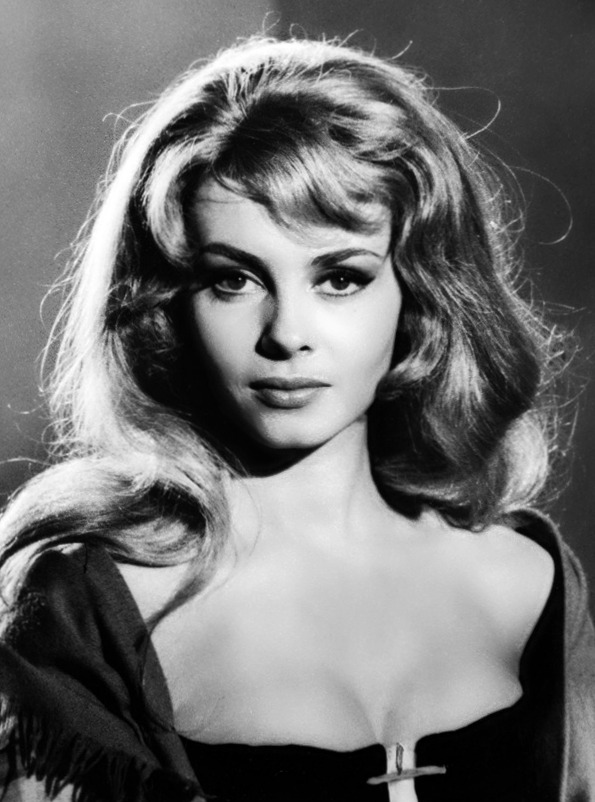
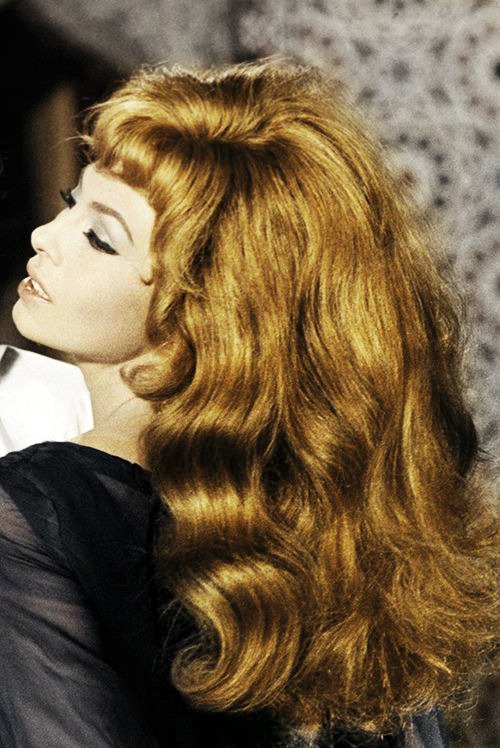
FEATURE image: Michèle Mercier c. 1965, showcasing her classic 1960s high-volume bouffant hairstyle, winged eyeliner, and mod fashion sense. This color portrait session was captured by famed French photographer Jean-Marie Mazeau. Mercier did not achieve massive international stardom until late 1964 with the release of the first Angélique film. This sudden rise to fame triggered a surge of high-end, color studio publicity shoots in 1965 to promote her as Europe’s next major screen icon. PHOTO: “Kippa – overige foto’s Reeks 1 – Michèle Mercier” is licensed under CC BY-NC-ND 4.0.
Michèle Mercier’s enduring place in film history rests overwhelmingly on her portrayal of Angélique, a role that transformed her into an international screen goddess while simultaneously defining and limiting her career. The five-film Angélique series (1964-1968) secured her cinematic immortality even as it typecast her beyond escape.
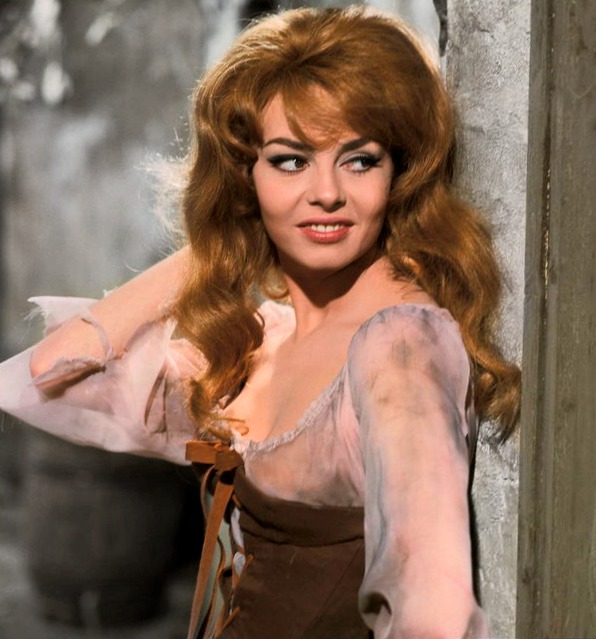
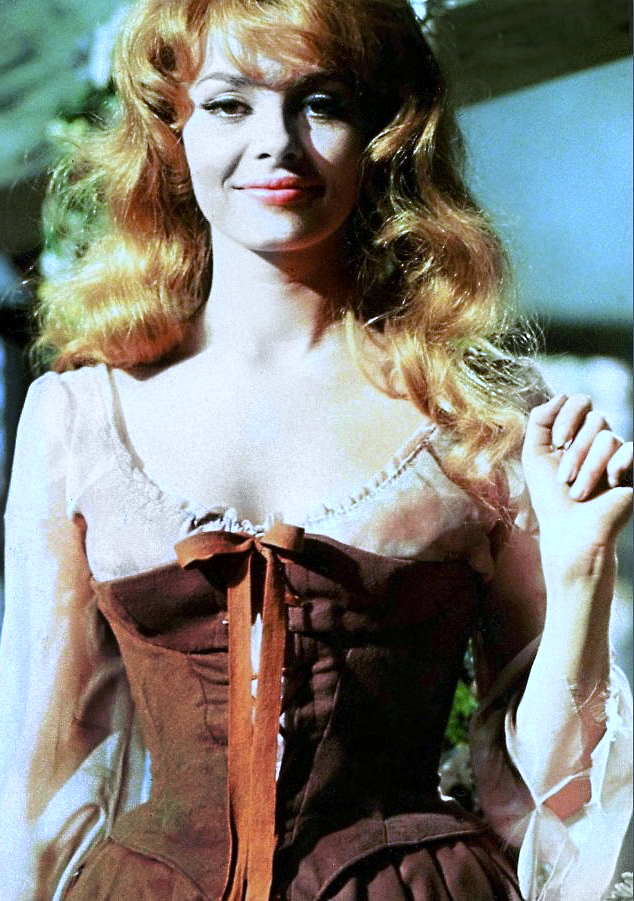
Promotional movie still and character portrait features French cinema icon Michèle Mercier, for her most famous role as Angélique. It was shot during the production on a film studio soundstage or a production set in France for the very first film in her breakthrough series, Angélique, Marquise des Anges (Angélique, Marquise of the Angels), which premiered in December 1964.
Michèle Mercier as Angélique is a French Italian beauty who has entered the pantheon of screen goddesses based largely on the legendary five-film role that stretched from 1964 to 1968.
From Novel Heroine to Screen Legend
Michèle Mercier, born New Year’s Day in 1939, is a French actress best known for playing the lead role of Angélique in the mid1960s film series of the same name based on the 1956 sensational novel Angélique, the Marquise of the Angels by husband and wife writing team of Anne and Serge Golon. Their mid-17th century character was based on a real-life Suzanne du Plessis-Bellière who was one of France’s most famous women from the time of Louis XIV, the Sun King. The historical Suzanne first appeared in a mid-nineteenth-century French novel by Alexandre Dumas, père, titled Le Vicomte de Bragelonne, ou Dix ans plus tard. Like the Angélique cycle, which had grown to six novels by 1961 and ultimately expanded to thirteen following the success of the 1964 film adaptation, Dumas’s novel was part of a larger series. The third installment in his d’Artagnan trilogy, Le Vicomte de Bragelonne was originally published in serialized form between 1847 and 1850.
The Search for the Perfect Angélique
For the part of Angélique, many other beautiful and more famous actresses were approached before Michèle Mercier who was little known in the French cinema at the time. Seasoned French film producer Francis Cosne (1916-1984) wanted sex symbol Brigitte Bardot to play the part, but she rejected the offer. Young Catherine Deneuve was considered perhaps too naive for the lusty role. American Jane Fonda spoke French but could an American play fully a quintessentially French role? Italian beauty Virna Lisi was too busy doing Hollywood films. Not being already famous eliminated statuesque Danish actress Annette Stroyberg from the running until ultimately Michèle Mercier was decided upon after almost losing the part to French actress Marina Vlady who at the last minute didn’t sign the contract.
Michèle Mercier as Angélique. The photo was taken in 1964 during the production and filming of the first movie in the saga, Angélique, Marquise des Anges. Mercier is leaning against a stone wall in an outdoor or village set and wearing a peasant-style costume. While Angélique begins her journey as an elegant, wealthy noblewoman, the plot strips her of her status when her husband is falsely accused of sorcery. The tattered, dirt-streaked fabric of her sleeves directly mirrors her forced survival among Paris’s underbelly, the Cour des Miracles (Court of Miracles). The film adaptation heavily shifted away from the spiritual tone of the original novels to lean into the era’s emerging demand for a bold, free-spirited, and highly eroticized screen siren. Her low-cut corset, exposed shoulders, and undone hair visually represent her transformation into a fierce, independent femme fatale who leverages her beauty to navigate danger and protect herself.
Even when Angélique is running a local tavern in the story, she doesn’t look like a standard, gritty medieval merchant. The production team leaned heavily into a romanticized “starlet” aesthetic rather than strict historical realism.
This picture was taken in 1964 or early 1965 during the production and filming of the second installment in the franchise, titled Merveilleuse Angélique (Marvelous Angélique), which was released theatrically in 1965. The photo depicts Angélique during her transition phase from the underbelly of Paris back toward respectability. In this portion of the story, Angélique manages to escape the squalor of the Cour des Miracles (Court of Miracles) and partners with her childhood friend Claude le Petit. She uses her wits to invest in a popular inn and tavern called The Red Mask (Le Masque Rouge) and becomes a respectable independent businesswoman.
This photograph was taken in 1965 for the second film in the franchise, Merveilleuse Angélique (Marvelous Angélique). Within the plot of the film, this outfit represents her mourning the tragic death of her true love and first husband, Joffrey de Peyrac, who was executed at the stake in the climax of the first movie.
Not the Unknown Many Assumed
When the opportunity of Angélique presented itself to Michèle Mercier, she was a relative newcomer to the French cinema. But this anonymity was not the case for her either in French theatre arts or Italian films where before 1964 she had acted in over 20 of them.
Before Angélique: From Ballet Student to French New Wave Actress
With a father who was French and mother who was Italian, Michèle Mercier from her early teens growing up in Nice, France, was determined to be a professional ballet dancer.
In 1957, at 17 years old, she moved to Paris which was a decision that changed her life. By 1960, when she was just 20 years old, she was acting in French New Wave film director François Truffaut’s second film, Shoot The Piano Player.
The photo was taken in 1965 during the filming and production of the third installment in the movie franchise, titled Angélique et le Roy (Angélique and the King). The image depicts Angélique during her introduction and peak integration into the high-society royal court of King Louis XIV at the Palace of Versailles. The intricate lace gown, wide-swept neckline, and high updo heavily adorned with fresh white roses reflect a deliberate blend of historical 17th-century court style with mid-1960s beauty standards. By this point in the saga, Angélique has overcome poverty, successfully managed her own business ventures, and successfully married her cousin, Philippe de Plessis-Bellière. This marriage restores her full aristocratic status, giving her the power and position to navigate the court politics of Versailles, capture the romantic attention of the King himself, and continue fighting to clear her first husband’s name.
A Blessing and a Curse
After Angélique, the Marquise of the Angels was released —an unlikely heroine’s role where Angélique’s singular flaming red-haired beauty is acknowledged throughout—the role became a blessing and a curse for the budding actress Michèle Mercier. It catapulted her to instant stardom so that her fame rivaled sex symbol Brigitte Bardot in celebrity and popularity, but the role in five popular films typecast her and effectively ended her film career almost as soon as it started.
Five Films, One Immortal Character
Following the first Angélique film in 1964 Michèle Mercier starred in four sequels that includes Merveilleuse Angélique in 1965, Angélique et le Roy in 1966, IndomptableAngélique in 1967 and Angélique et le Sultan in 1968. All these films in the series were directed by French film director Bernard Borderie (1924-1978) and starred Michèle Mercier which bestowed upon the stories a consistent filmic world but also encased the beautiful star in a popular role that was virtually impossible to escape from.
Behind-the-scenes photograph was taken on August 12, 1965, during the filming of the series’ third installment, Angélique et le Roy (Angélique and the King) captured outdoors on the grounds of the Château de Versailles (the Palace of Versailles). Director Bernard Borderie secured permission to shoot directly on location at the famous palace and its sweeping gardens to give the movie authentic 17th-century French historical scope rather than relying strictly on indoor studio stages. This follows her survival in the slums of Paris (Angélique, Marquise des Anges) and her stint running a local tavern (Merveilleuse Angélique). In Angélique et le Roy, she has successfully married her aristocratic cousin, Philippe de Plessis-Bellière, fully restoring her status as a high-society noblewoman. This marks the exact moment she transitions from an outcast survivor into one of the most powerful, courted, and visually radiant figures in the Sun King’s inner circle.
Legendary French actor Jean Rochefort appears alongside Michèle Mercier in the first three films (1964-1966) of the five-part Angélique franchise. He plays the prominent role of François Desgrez, a sharp and clever lawyer who later becomes a powerful police chief. Rochefort does not return for the final two globe-trotting installments (Indomptable Angélique and Angélique et le Sultan), as the storyline permanently moves away from Paris and Versailles into the Mediterranean.
Directed by Bernard Borderie, the five films created a consistent cinematic world centered on Mercier’s charismatic performance.
Michèle Mercier was featured on the magazine covers because she was riding the absolute peak of her global fame from the massive, multi-film Angélique cinematic franchise. The multi-national movie series was coming to its grand finale, making her one of the most talked-about and highly demanded actresses in Europe. Her legacy today remains inseparable from the fictional seventeenth-century heroine she played.
This cover features Michèle Mercier alongside French dancer and choreographer Jacques Chazot on the French television and entertainment weekly magazine, Télé 7 Jours, published for April 20 to April 26, 1968. The cover coincided with the major theatrical push for the final chapters of the Angélique saga including Indomptable Angélique (Untamed Angélique) released just a few months prior in late 1967 and that had become an enormous box-office smash hit across Europe and the fifth and final movie installment, Angélique et le Sultan (Angélique and the Sultan) which had just premiered in theaters in March 1968. Because the series was actively concluding in theaters during these exact weeks, French entertainment media heavily focused on Mercier to celebrate her definitive transition from a rising star into an enduring screen goddess of 1960s cinema.
At the Height of Angélique Mania
When Michèle Mercier was featured on the cover of the April 20-26, 1968, French weekly magazine, Télé 7 Jours with Jacques Chazot, she was riding high in the latest installment in the Angélique film series, Indomptable Angélique which had been released in October 1967 and was a world-wide smash hit. In the film, Angélique discovers that her first husband is alive and travels to the South of France not realizing he is now an infamous pirate. Angélique is captured by slave traders and taken far away to Crete where they intend to sell her. In March 1968, Angélique et le Sultan was released which was the fifth and unintended final entry in the Angélique series based on the novels of Anne and Serge Golon.
The Unmade Sixth Adventure
A planned sixth film called Angelique the Rebel was announced but never made.
Forever Angélique
Following the fifth and final film of the Angélique series in 1968 the French Italian beauty went on to make six more films before her career ended in 1972. Although Michèle Mercier had always appeared in a variety of film genres—the actress played dozens of other women besides Angélique— it was for this 17th century fictional character in five memorable films in 1960s France that has affixed her into the pantheon of screen goddesses for which she receives enduring adoration today.
The role of Angéliqueelevated Mercier to star status comparable to Bardot in popularity during the mid-1960s. The success of the series became a double-edged sword, as typecasting restricted opportunities beyond it.
The year 1970 marked a pivotal transition for Michèle Mercier. Seeking to escape the role that had made her an international star, she embraced modern, experimental, and contemporary European films. Dressed here in the era’s trendy mod safari style, with a belted cream tunic shirt, matching short-shorts, and knee-high leather boots, Mercier looked every inch the woman of a new decade. Yet severe typecasting followed her career. Attempts to establish herself in the United States brought only limited success, and despite playing many other roles, she would remain forever Angélique, the character who made her a star and secured her place among cinema’s enduring screen goddesses. PHOTO: “hotpants-1970-michele-mercier” by Gerard Van der Leun is marked with CC BY-NC-ND 2.0.
MICHÈLE MERCIER “ANGÉLIQUE” SERIESFILMOGRAPHY
1964: Angélique, Marquise des Anges Michèle Mercier as Angélique Directed by Bernard Borderie Released December 8, 1964 Distributed by S.N. Prodi; Gloria Film; Butcher’s Film Distributors
1965: Marvelous Angelique (Merveilleuse Angélique) Michèle Mercier as Angélique Directed by Bernard Borderie Released July 7, 1965 Distributed by S.N. Prodi; Gloria Film
1966: Angelique and the King (Angélique et le Roy) Michèle Mercier as Angélique Directed by Bernard Borderie Released February 4, 1966 Distributed by Gloria Film
1967: Untamable Angelique (Indomptable Angélique) Michèle Mercier as Angélique Directed by Bernard Borderie Released October 27, 1967 Distributed by S.N. Prodi; Gloria Film
1968: Angelique and the Sultan (Angélique et le Sultan) Michèle Mercier as Angélique Directed by Bernard Borderie Released March 13, 1968 Distributed by S.N. Prodi; Gloria Film
FEATURE Image: Saint Francis kissing the leper, Zacarías González Velázquez, oil on canvas, c. 1787, 217×264 cm, Prado, Madrid. The painting is part of a serial of thirty-three scenes on the “Life of Saint Francis” commissioned for the Basilica of Saint Francis the Great in Madrid done by multiple Spanish painters. The artist was inspired by Saint Bonaventure’s biography of St. Francis that recounts this scene of Francis, dressed in the luxurious clothes of a rich knight, as he dismounts from his steed to kiss a leper. see – Saint Francis Embracing a Leper – The Collection – Museo Nacional del Prado – retrieved October 4, 2017.
By John P. Walsh
The April 20, 1949 photograph of Roberto Rossellini and Ingrid Bergman captures a pivotal turning point at which artistic collaboration, personal scandal, and cinematic innovation converged. As public fascination with their relationship intensified, Rossellini turned toward the creation of The Flowers of St. Francis (1950), a film whose central episode, Francis’s embrace of a leper despite his initial revulsion, presents spiritual transformation as the triumph over fear and self-interest. In doing so, the Italian neorealist director fashioned a work that also served as a retreat from public controversy into a world of humility, simplicity, and faith.
Italian director Roberto Rossellini and Swedish actress Ingrid Bergman are seen in a photograph taken by an uncredited Associated Press photographer on April 20, 1949, during a press conference at Rome’s Excelsior Hotel. Bergman had just arrived in Italy after writing her famous, career-altering letter to Rossellini, and the announced purpose of the gathering was to discuss their forthcoming collaboration, Stromboli.
The image captures a pivotal moment. Rossellini was already celebrated as the leading architect of Italian neorealism through such postwar landmarks as Open City and Paisan, while Bergman was one of the world’s most admired film stars and an Academy Award winner. Their expressions and proximity suggest a shared artistic purpose and creative excitement. Yet the photograph also unintentionally records the beginning of a relationship that would soon become one of the most scrutinized scandals in international celebrity culture, dominating headlines and ultimately leading to their marriage on May 24, 1950.
From Public Scandal to Spiritual Retreat
Ironically, while caught in this intensifying media storm, Rossellini turned toward one of the most serene and spiritually focused projects of his career: Francesco, giullare di Dio (The Flowers of St. Francis, 1950). The film emerged in part from his desire to escape the relentless attention surrounding his private life. In place of scandal, fame, and controversy, Rossellini sought a subject grounded in humility, simplicity, peace, and detachment from worldly concerns.
Co-written with the young Federico Fellini, the film drew its structure and themes from two fourteenth-century Franciscan texts: I Fioretti di San Francesco (The Little Flowers of St. Francis) and La Vita di Frate Ginepro (The Life of Brother Juniper). Rather than constructing a conventional biographical narrative, Rossellini assembled a series of nine loosely connected episodes that celebrate the joy, innocence, and spiritual freedom of Saint Francis and his followers.
Neorealism and Franciscan Simplicity
Remaining faithful to his neorealist principles, Rossellini rejected professional actors and cast actual Franciscan friars from the Monastery of Nocera Inferiore as Francis and his companions. The production sought not spectacle but authenticity. Equally important was Rossellini’s ambition to strip away any cinematic artifice in favor of directness and humanity so to recreate on screen the visual spirit of Giotto’s proto-Renaissance frescoes of the Life of St. Francis.
Viewed in retrospect, the 1949 photograph of Rossellini and Bergman marks far more than the beginning of Stromboli. It stands at the intersection of two parallel stories: one a highly publicized romance that captivated the world, the other the creation of a film devoted to spiritual humility and transcendence. The contrast reveals the remarkable complexity of Rossellini’s career at the very moment his personal and artistic lives became inseparably entwined.
One of the most important episodes in the life of St. Francis of Assisi (c. 1181-1226) appears midway through Roberto Rossellini’s 1950 film Francesco, giullare di Dio (The Flowers of St. Francis). In a powerful five-minute sequence (Beginning at 41:00), Francis deliberately seeks out and embraces a leper, one of the most feared and socially ostracized figures of the medieval world.
This encounter marks a decisive turning point. Until this moment, Francis had recoiled from lepers, sharing the fears and prejudices common to his age. By overcoming that revulsion and embracing the suffering man before him, he crossed the threshold from worldly, military ambition to love, humility and poverty based in spiritual commitment.
A Moment of Spiritual Transformation
Following the embrace, Francis collapses to the ground in tears and cries out, “My God, my Lord and my all! O great God!” The emotional outpouring signals a profound inner conversion. What begins as an act of compassion becomes an encounter with the divine.
For Francis, embracing the leper means more than helping someone in need. It represents the conquest of his own fear, pride, and self-interest. The rich young man from Assisi discovers a new path rooted in humility, love, and obedience to God.
The Bridge Between Two Lives
Historically and spiritually, the embrace of the leper forms the bridge between Francis’s failed military and worldly aspirations and his lifelong dedication to radical poverty, humility, and service. In Christian tradition, it is the pivotal catalyst of his transformation, the moment when he turns away from status and ambition and begins the journey that would make him one of the most beloved saints in history.
Rossellini captures this episode as the emotional and spiritual center of The Flowers of St. Francis. By portraying Francis’s willingness to embrace society’s most vulnerable outcast, the film affirms that true conversion begins not with power or achievement, but with the courage to overcome fear and recognize the dignity and humanity of others.
Is the film scene historically accurate?
The event of the embrace is historically accurate though dramatized in Rossellini’s film after Francis’s brotherhood is established. Rather, in history it occurred at the beginning of the Italian saint’s conversion – in fact, was its cause. This is an important distinction since the embrace was most significant for St. Francis. It could even be argued that without Francis’s embrace of the leper, there would be no St. Francis of Assisi at all.
In Francis’s own Testament written in 1225—one year before his death at 44 or 45 years old—the saint stated directly that his embrace of the leper became the cause of his conversion.
For a rich young man such as Francis in medieval Europe who, during an age of many French popes, sought chivalric glory in military arms, he naturally spurned the contagion of leprosy that was an incurable disease and diligently avoided lepers. As Francis put it, when he embraced the leper he “exercised mercy” to him as Francis bridged his natural ambition and religious doubt with trust in God’s grace by embracing Assisi’s despised.
In that way, the leper— a common sight throughout medieval Europe and one that readily filled the lighthearted Francis with horror—became the astonishing means for the saint’s conversion of faith.
Special order of knights founded by pope cared for lepers in Italy.
In thirteenth-century Europe, by law lepers had to live apart from the rest of society owing to their contagious infectious disease.
As early as the 6th century under Pope St. Symmachus (495–514) there were general hospitals in Rome that cared for lepers though a network of specialized leper houses became more prevalent by the 11th-century. In 1130, the hospitaller and military Order of Saint Lazarus was established so that at the Third Lateran Council in 1179, two or three years before St. Francis’s birth, Pope Alexander III helped formalize the church’s role in the care of lepers, emphasizing their separation for care rather than mere social isolation.
St. Thomas Becket takes leave of Pope Alexander III in the autumn of 1165. 13th century miniature attributed to Matthew Paris, British Library.Public domain.
In the time period that Rossellini’s poignant film scene is set — it is either 1205 or 1206—there existed in Europe tens of thousands of church-run “hospitals” for lepers. One such leper hospital was a short walk outside Assisi’s town walls. Called San Salvatore delle Pareti, the leper hospital near Assisi that began to intrigue a young Francis is today a farm field.
Before his famous encounter of embracing the leper, Francis —then around 24 years old—had to work up gradually to the crucial moment of embracing a leper.
After Francis gave up his several quests to be a soldier, he returned to Assisi disappointed and disenchanted. Though he found refuge in the embrace of family and childhood friends, the same impulses that led Francis to abandon a military career even before it started, now prompted him to walk beyond the comforts of Assisi’s walls onto the road that led to the leper hospital.
Young Francis visits the leper hospital — and it changes his life.
Near the hospital, Francis interacted very tentatively, first with those caring for lepers —a charitable church activity first recognized by Pope Gregory the Great (540-604 CE)—and then at times with the lepers themselves.
Miniature of Gregory the Great writing under the inspiration of the Holy Spirit, in a 12th-century copy of his Dialogues, British Library, London. Public Domain.
Come la notte Francesco pregando nella selva incontro il lebbroso —or, in English, “How St. Francis praying one night meets a leper.” This specific historical and cinematic moment represents the bridge between Francis’s failed worldly, military ambitions and his lifelong commitment to love, humility and poverty based in spiritual commitment.
To start, it was the sickening smell peculiar to the leper hospital wafting into Francis’s nostrils that made him flee.
But as his visits continued Francis—who by now was living as a hermit— journeyed to the leper hospital to leave them a charitable gift. After leaving it on the roadside, Francis vanished as bell-clanging lepers appeared.
It took Francis many more visits to the leper hospital as well as, in solitude, dwelling on his own thoughts and prayers to finally reach what he believed was God’s answer for him.
As clearly dramatized in Roberto Rossellini’s wonderful film, Francis discovered a deeper courage and confidence in himself—and in the same moment a supernatural faith— when along the road to the leper hospital he stepped up to leave for the leper the charitable embrace of one of the rich sons of Assisi.
Yet, following that encounter, Francis realized that the leper had given him a gift also.
After that Francis was free to profoundly pursue whatever track God called him to run. Francis could now be called to renounce the world’s riches. He married his “Lady Poverty” in their joyous mystical marriage so that even today, in the 21st century, poverty remains a major Franciscan charism. Francis and Lady Poverty have been married for over 800 years.
Following a lifetime spent in heroic Franciscan mendicancy, this world-famous Umbrian saint “Francesco” proclaimed to his Franciscan family and the world that it was at that exact moment when he embraced the leper—and the leper embraced him—that a life in and for God truly started.
St. Francis of Assisi has the indelible mark of the leper. He conquered fear and embraced the other in love no matter how godforsaken. Done in the context of divine trust and love, that faith-filled action set each man free.
SOURCE: St Francis of Assisi: A Biography by Johannes Jørgensen (1912). Translated from the Danish with the author’s sanction by T. O’Conor Sloane, Image books, 1955.
Sassetta (c.1392-c.1451), St. Francis in Ecstasy, back of the Sansepolcro altarpiece, 1437-44, Panel, 80 3/4 x 48 inches. Villa I Tatti, Florence.
FEATURE image: The 1947 Hollywood glamour portrait of Marlene Dietrich, photographed by A.L. “Whitey” Schafer, Paramount Pictures’ head of still photography since 1941. Photo Credit: Photograph by A.L. “Whitey” Schafer / Paramount Pictures (1947). Status: Public Domain. This image is a Hollywood publicity still distributed freely to the press without a copyright notice, subsequently failing to meet statutory registration and renewal requirements under pre-1978 U.S. copyright law.
In the 1930s and 1940s, the Hollywood “glamour machine” relied on innovative studio photographers like A.L. “Whitey” Schafer and László Willinger to systematically transform actresses into larger-than-life, idealized icons.
This portrait of A.L. “Whitey” Schafer dates from about May 1936 and was taken by an unknown photographer.Captured shortly after Schafer’s appointment as head of Columbia Pictures’ still photography department, the image reflects his rising stature within the industry. He had assumed the position at Columbia in 1935 following the death of department chief William Fraker. As was customary for newly promoted studio executives, Schafer sat for a series of professional publicity portraits created by fellow photographers in the studio’s own portrait gallery. The photograph presents Schafer as not merely a technician behind the camera but conveys his personal warmth as one of the key visual architects of Hollywood’s star-making machinery during the studio era.Photo Credit: Photographer Unknown / Columbia Pictures (May 1936). Status: Public Domain. This image is an official studio promotional portrait distributed freely to trade publications and the press without a formal copyright notice or subsequent registration.
Born in in Salt Lake City and growing up in California, A.L. “Whitey” Schafer ran the leading portrait gallery at Columbia in the 1930’s and early 1940’s. His work contributed to the emerging stardom of Rita Hayworth. “Whitey” Schafer was one of Hollywood’s elite studio photographers, becoming head of Paramount’s still photography department in 1941. A visionary technician as well as an accomplished artist, Schafer wrote extensively about photographic lighting and portrait design, publishing his influential manual Portraiture Simplified in 1941. He believed that successful portraiture depended upon disciplined composition, arguing that a portrait was much like a symphony, with every element supporting a single focal point. For Schafer, that center of interest was always the subject’s head, and the highest light in the image should direct the viewer’s eye there.
That philosophy is evident in his celebrated 1947 portrait of Marlene Dietrich, where a carefully placed key light transforms her blonde hair into a radiant halo, separating her from the background and drawing immediate attention to her face. The result is both technically precise and emotionally compelling, demonstrating Schafer’s mastery of the glamour style that defined Hollywood’s Golden Age.
“Whitey” Schafer wrote an important book on glamour photography
Photographer A. L. “Whitey” Schafer started shooting stills in 1923 and continued in that line of work at Columbia Pictures when he moved there in 1932. Personally outgoing, Schafer was appointed head of the still photography department at Columbia in 1935. In the 1940’s Shafer wrote copiously on his craft and advocated for techniques in glamour photography that are seen in this Dietrich color portrait.
In 1941 Schafer published Portraiture Simplified, a book in which he argues that “portraiture’s purpose is the realization of character realistically.” Among his technical observations Schafer wrote elsewhere that “composing a portrait is comparable to writing a symphony. There must be a center of interest, and in all portraits this naturally must be the head, or your purpose is defeated. Therefore, the highest light should be on the head.” Author’s photograph.
In 1941 Schafer replaced Eugene Richee (1896-1972) as department head of still photography at Paramount Studios. Schafer remained in that position where he photographed the stars until he died at 49 years old in an accident in 1951.
MARLENE DIETRICH
Marlene Dietrich. Paramount, 1947. Photograph by A.L. “Whitey” Schafer. Public Domain.
The 1947 Hollywood glamour portrait of Marlene Dietrich (1901, Berlin – 1992, Paris), photographed by Paramount Pictures’ head of still photography A.L. “Whitey” Schafer, perfectly captures the intersection of postwar studio publicity, advanced color-imaging technology, and the meticulous construction of screen mythology. By 1947, the forty-six-year-old Dietrich was mounting a major cinematic comeback after years devoted to entertaining Allied troops during World War II. The image was created to promote her return film, Golden Earrings (1947), Paramount’s romantic spy thriller so-starring Ray Milland and one of the most important projects of her postwar career.
Produced using the tri-chrome Cabro process to simulate the rich visual impact of Technicolor, the portrait reveals the dramatic reinvention of Dietrich’s screen image. Gone is much of the shadow-drenched femme fatale persona associated with her celebrated 1930s collaborations with director Josef von Sternberg. In its place stands a radiant, golden-haloed blonde wearing a green turtleneck sweater whose precisely penciled arc eyebrows, lifted in a knowing, seductive expression, project confidence and sophistication. High, sculpted cheekbones, luminous skin, and vivid red lipstick matched to her polished fingernails create striking accents of color that reinforce both glamour and modernity.
Historically, the photograph marks a crucial turning point in Dietrich’s career. It demonstrated that her unique screen magnetism could transition seamlessly from the classic black-and-white era into the vibrant color culture of the postwar entertainment industry. At the same time, it remains a textbook example of Schafer’s mastery of Hollywood commercial photography, illustrating how a single carefully engineered image could reposition an established actress not as a fading star, but as a timeless contemporary icon.
The film’s song, “Golden Earrings,” with music by Victor Young (1900-1956) and lyrics by Ray Evans (1915-2007) and Jay Livingston (1915-2001) was sung in the movie by actor Murvyn Vye (1915-1976). It was a hit recording in 1947-48 by Peggy Lee.See- https://digital.library.unt.edu/ark:/67531/metadc1633213/m1/#track/4
1940s blondes
Like other leading ladies in the 1940’s, the Hollywood glamour machine transformed Dietrich into a golden-haloed blond which accentuated her magnificent cheekbones and sultry eyes under penciled-arc eyebrows and painted nails that A.L. “Whitey” Schafer’s color portrait makes evident.
It was also in 1947—the same year that the photograph was made— that Dietrich received the Medal of Freedom. Dietrich called it her life’s proudest achievement.
While Golden Earrings was a decent film, its main purpose was to provide the actress with a job. It led into her next project—the 1948 American romantic comedy A Foreign Affair directed by Billy Wilder. That film made Dietrich a top star again.
From Paramount Pictures, A Foreign Affair is a 1948 American romantic comedy-drama film directed by Billy Wilder. The film made Marlene Dietrich a top star in the post-war years.
Following Dietrich’s meteoric rise at Paramount Pictures starting in 1930 her acting parts later stagnated as film directors —including Josef von Sternberg and others—seemed to use her more as a piece of expensive cinematic scenery than as a serious dramatic actress.
ELIZABETH TAYLOR
1949 color portrait of Elizabeth Taylor, taken by photographer Hymie Fink for M-G-M, represents the dawn of her transition from a beloved child star into Hollywood’s definitive adult beauty.Photo Credit: Photograph by Hymie Fink / M-G-M (1949). Status: Public Domain. This image is a Hollywood studio promotional handout distributed widely to the press without a formal copyright notice or subsequent registration under pre-1978 U.S. copyright law.
In 1949, Elizabeth Taylor was only 17 years old, yet she had already spent nearly a decade before the cameras. After making her film debut at age ten, she spent the 1940s under contract to Metro-Goldwyn-Mayer, growing up before the public eye.
By the end of the decade, M-G-M’s powerful publicity machine recognized that Taylor possessed a striking beauty that seemed far beyond her years. Determined to transition her from celebrated child star to adult leading lady, the studio staged a series of glamorous portrait sessions that showcased her most distinctive features. Though not especially known for projecting a warm or gentle personal demeanor, Taylor could be photographed in ways that softened and refined her public image carefully constructed by the studio. Through dramatic lighting, rich color photography, elegant jewelry, and sophisticated gowns, photographers emphasized her legendary violet-blue eyes and luxuriant dark hair, presenting her not as a teenager but as Hollywood’s newest screen beauty.
In 1950 Elizabeth Taylor co-starred in Father of the Bride, M-G-M’s comedy film that was nominated for three Academy Awards. It was directed by Vincente Minnelli.
Portraits such as this one by Hymie Fink were part of a calculated effort to prepare audiences for Taylor’s next chapter. That campaign culminated in her breakthrough adult role as Kay Banks in Vincente Minnelli’s hit comedy Father of the Bride (1950). The young actress whom moviegoers had watched mature on screen was now being introduced as a poised and romantic leading woman, ready to enter a new phase of stardom at the dawn of the 1950s.
By prioritizing high-contrast lighting, bold colorization, and curated personal archetypes over realistic character study, these pioneering still photographers manufactured the enduring, sensuous visual mythology of the Golden Age star.
WHO IS HYMIE FINK? HIS IDENTITY REMAINS A MYSTERY
Who was Elizabeth Taylor’s photographer, Hymie Fink? Was Hymie Fink a studio photographer? Freelancer? Pseudonym for an unknown talent or combination of unknown talents?
Unlike studio heads like Whitey Schafer or László Willinger, Hymie Fink is a mysterious figure in Hollywood history. His name consistently appeared alongside the industry’s biggest stars from the late 1930s until his sudden death in the mid-1950s.
His name appears among the stars starting in the late 1930’s until his death. It was announced by Hedda Hopper when she ended her newspaper gossip column for September 28, 1956, with the epitaph: “Hymie Fink, one of the sweetest men in Hollywood, died of a heart attack on Jane Wyman’s TV set. Hymie photographed every star and every major event in (Hollywood) for twenty-five years.”
Fink was celebrated as an exceptionally warm, ubiquitous presence in the film community. His lens captured Taylor with an intimate, soft, yet vibrant quality that perfectly bridged the gap between raw star power and youthful innocence.
Hedda Hopper (1885-1966) was a powerful voice in Hollywood whose gossip columns were read by tens of millions. PHOTO: “Hedda Hopper” by Baron Adolph de Meyer, 1 Sep 1868 – 6 Jan 1946 is marked with CC0 1.0.
LANA TURNER
This 1939 color portrait of Lana Turner, taken by Hungarian-born photographer László Willinger for M-G-M, captures a fascinating and brief transitional moment in the actress’s early career before she became a household name.Photo Credit: Photograph by László Willinger / M-G-M (1939). Status: Public Domain. This image is a Hollywood studio promotional handout distributed freely to the press without a formal copyright notice or subsequent registration under pre-1978 U.S. copyright law.
Though pop culture legend remembers Lana Turner as the definitive platinum blonde of the 1940s, this unretouched 1939 photograph catches her at 18 years old as a striking redhead from Idaho named Julia Jean Turner.
Lana Turner had been discovered three years earlier at 15 years old. Her legendary discovery in a malt shop near Hollywood High School where she was a student, has entered the annals of show-biz mythology. After William R. Wilkerson (publisher of The Hollywood Reporter) spotted a 15-year-old Turner at the Top Hat Malt Shop, he referred her directly to legendary actor-turned-talent-agent Zeppo Marx. Marx did not sign her to a film contract himself; instead, he acted as her representative and immediately brought her into an interview with director Mervyn LeRoy. The immediate result of her discovery was a movie contract at Warner Bros. This is where she made her quick, star-making debut in They Won’t Forget (1937) – and audiences didn’t.
“America’s Sweater Sweetheart”
The title of Lana Turner’s first film in 1937 for Warner Brothers was They Won’t Forget. The title proved prophetic for Lana Turner’s Hollywood career as she went on to make over 50 glamorous films, most of them at M-G-M.
Lana Turner was only 16 years old when she made her film debut in a role totaling barely five minutes of screen time. Yet a brief scene of little more than 20 seconds, in which she walked down a sidewalk wearing a tight-fitting sweater and cocked beret, transformed her into an overnight sensation and one of Hollywood’s first modern sex symbols. The impact of that fleeting appearance was so great that gossip columnist Walter Winchell (1897-1972) christened Turner “America’s Sweater Sweetheart.” More importantly, it demonstrated Hollywood’s extraordinary ability to manufacture stardom through a single carefully crafted image. For the next twenty years, numerous actresses would adopt similar wardrobe styles in the hope of achieving the same sudden breakthrough that launched Turner’s career.
Walter Winchell was an influential newspaper gossip columnist and radio news commentator. PHOTO: “Walters Winchell Julius 1” by Goosefriend is licensed under CC BY 2.0.
László Willinger
Hungarian-born photographer László Willinger started his professional career in Vienna, Austria. He left Europe for America in 1937 where he joined M-G-M that same year. Soon after, he made his lush shot of 18-year-old Lana Turner in a silky green dress seated on a red divan (or chair) with her head turned and looking to one side with slightly bloodshot eyes.
Willinger’s color portrait of red-headed Lana Turner emphasizes the sensuality of her personality manifested in her full red sensuous lips and painted nails. In 1944, László Willinger left MGM and established his own photography studio in Hollywood. For the next 40 years he successfully practiced his craft among the Hollywood set.
László Willinger’s portrait photography career of film stars and celebrities started in 1937. Public Domain.
New Jean Harlow?
Turner did not arrive at MGM until 1938. When Mervyn LeRoy left Warner Bros. to accept a high-paying executive producer position at Metro-Goldwyn-Mayer, he brought his young protégée right along with him. MGM subsequently bought out her contract, bumped her weekly salary, and began heavily promoting her as their new rising siren. Turner was under contract with M-G-M at this exact moment in 1939 when the studio’s powerful “glamour machine” was actively trying to groom her to become the next Jean Harlow. The star image engineered by Willinger here leans heavily into intense, mature sensuality rather than teenage innocence. Lana Turner followed the sex-bomb script to full force in 1941 when the studio dyed her hair whitish blonde for Ziegfeld Girl. Lana, co-starring with Judy Garland and Hedy Lamarr, stole the show.
The video features the unforgettable staircase climax from Ziegfeld Girl (1941) that transformed Lana Turner into a top tier M-G-M star as she delivers one of the defining moments of Hollywood melodrama. Turner plays Sheila Regan, a humble department store elevator operator transformed almost overnight into a glamorous star of the Ziegfeld Follies. Yet the success that promises everything ultimately takes everything from her. Drawn into a world of wealth, luxury, and excess, Sheila loses her career, her health, and the love of Gilbert, played by James Stewart. Terminally ill and nearly destitute, she slips away from her sickbed to attend the opening night performance of a friend, watching from the shadows of a theater balcony.
As she prepares to leave, the strains of her signature number, “You Stepped Out of a Dream,” drift through the theater. Bent with exhaustion and grief, Sheila clings to the railing, seemingly defeated. Then instinct takes over. Conditioned by years of performing, she straightens her posture, lifts her chin, and once again becomes the perfect Ziegfeld showgirl. Clad in a stunning black gown and trailing a fur coat behind her, she glides down the grand staircase with breathtaking poise and hypnotic elegance. For a few fleeting moments, the audience sees the star she once was.
But it is her final performance. The instant she reaches the lobby floor, the illusion vanishes. Her failing heart gives out, and she collapses. The scene crystallizes the film’s central message: that fame, when pursued at the expense of love, happiness, and authenticity, can exact a devastating price.
The sequence also proved pivotal in Lana Turner’s real-life career. Her commanding presence during the staircase descent overshadowed even fellow stars Hedy Lamarr and Judy Garland, convincing MGM executives that Turner possessed the screen power of a major leading lady. The moment became one of classic Hollywood’s most celebrated images. For years afterward, whenever Turner entered fashionable nightclubs, orchestras would often greet her by playing “You Stepped Out of a Dream,” forever linking the actress to the role that elevated her into the highest ranks of stardom.
A 1941 black-and-white promotional portrait of Lana Turner, captured by MGM staff photographer Eric Carpenter for the musical drama Ziegfeld Girl, represents a definitive structural pivot in her career. This shot formally buried her old overnight moniker as “America’s Sweater Sweetheart” from her Warner Bros. discovery days. Carpenter treats her body as a living sculpture, cementing a manufactured archetype of smoldering elegance and peak dramatic star power. This is the exact moment Metro-Goldwyn-Mayer fully initiated her transformation into a classic Hollywood goddess. Photo Credit: Photograph by Eric Carpenter / M-G-M (1941). Status: Public Domain. This image is a Hollywood studio promotional handout distributed freely to the press without a formal copyright notice or subsequent registration under pre-1978 U.S. copyright law.
Conclusion
Ultimately, whether using László Willinger’s saturated jewel tones or Eric Carpenter’s sculpted black-and-white shadows, Golden Age Hollywood operated on a singular commercial mandate: manufacturing desire to sell movie tickets. As technologies shifted and public tastes evolved from pre-war vamps to post-war modern sirens, studio titans strategically engineered the changing visual archetypes of Marlene Dietrich, Elizabeth Taylor, and Lana Turner. By leveraging advanced color processes and dramatic gallery lighting, pioneering photographers transformed ordinary talent into untouchable cinematic deities. These meticulously curated glamour portraits did more than just attract eyeballs; they constructed an enduring visual mythology that remains the gold standard of stardom today.
Grace Kelly’s rise from a disciplined, ambitious Philadelphia upbringing to international stardom was not simply the story of extraordinary beauty, but of talent, professionalism, artistic ambition, and careful career choices that transformed her into one of Hollywood’s most admired actresses before she left the screen at the height of her fame to become Princess of Monaco.Her brief film career between 1951 and 1956 produced an enduring legacy that united screen acting, fashion, celebrity culture, and modern royalty.
Philadelphia-born Grace Kelly (1929-1982) had a short but dazzling film career in Hollywood. Called the “Greatest Screen Presence in Film,”1 passionate and dramatically talented Grace Kelly was Alfred Hitchcock’s favorite actress when she starred in three of his classic films of the 1950’s: Dial M For Murder (1954), Rear Window (1954) and To Catch a Thief (1955).
After Grace was discovered in 1951 by Gary Cooper who said that Grace was “different from all these actresses we’ve been seeing so much of”2—and cast in High Noon (1951) as Cooper’s movie wife—Grace Kelly’s incomparable charm and allure swiftly impressed Hollywood and the world.
From September 1951 to March 1956 Grace Kelly’s star blazed across the silver screen in eleven major motion pictures for five different Hollywood studios. Grace was at the height of her career when she exited Hollywood to get married to the prince of Monaco in Europe, in April 1956.
Grace Kelly and her stand-in Dorothy Towne on the set of High Noon (1952).
High Noon (1952), directed by Fred Zinnemann, is a classic American Western that unfolds in near real time. On his wedding day to Quaker bride Amy Fowler Kane (Grace Kelly), retiring Hadleyville marshal Will Kane (Gary Cooper) learns that Frank Miller, the outlaw he once sent to prison, has been pardoned and is arriving on the noon train seeking revenge. Though he has the chance to leave town with his new wife, whose pleas to flee grow increasingly desperate, Kane’s unwavering sense of duty compels him to stay. As the clock relentlessly counts down toward noon, he discovers that the townspeople who once depended on him are unwilling to stand beside him. Abandoned by friends, colleagues, and neighbors, Kane is left to confront Miller and his gang alone in one of cinema’s most powerful examinations of courage, conscience, and moral responsibility.
Gary Cooper, who co-starred with Grace Kelly in High Noon, took credit for discovering her. Cooper was impressed with her acting talent, good looks, work ethic, and professionalism.
Before she became known as Hollywood’s pristine, untouchable “Ice Queen” or the Princess of Monaco this photgraph was taken in October 1951 by photojournalist Carl Mydans for LIFE Magazine. It was taken on location in Burbank, California, on the outdoor backlot set of the classic Western High Noon (1952). Grace Kelly was 21 years old and filming her first major starring Hollywood role as the Quaker wife of Gary Cooper’s character. PHOTO: “Grace Kelly 1929 – 1982” by oneredsf1 is marked with CC BY-NC-SA 2.0.
Promotional photograph shows Ava Gardner (left) and Grace Kelly (right) standing together outdoors on location in Africa during the filming of the 1953 John Ford Technicolor adventure/romantic film Mogambo. With two Hollywood films under her belt (Fourteen Hours in 1951 and High Noon), Grace Kelly was nominated for her first Oscar for Best Supporting Actress in John Ford’s Mogambo (1953). Kelly plays Linda Nordley, who arrives at the camp in Africa with her husband. She soon has an affair with Marswell (Clark Gable), the camp’s big game hunter. When Marswell later tries to break off the affair to protect her marriage, it leads to a dramatic climax where a distraught Linda shoots him, an act that is ultimately covered up by Ava Gardner’s character to save Linda’s reputation.
Both actresses are captured in a candid, joyful moment, smiling away from the camera. Ava Gardner stands with her hands raised slightly, while Grace Kelly stands confidently with one hand on her hip, leaning against a rustic wooden fence structure. Despite their completely contrasting backgrounds and temperaments, Ava Gardner and Grace Kelly formed an incredibly close, lifelong friendship on the set of Mogambo (1953). Ava absolutely adored Grace and playfully nicknamed her “Gracie.” In her memoir, Ava: My Story, Gardner wrote warmly about her co-star: “She was a great lady and also great fun.” When Ava noticed Grace wearing a pair of old, worn-out shoes on set she joked, “Surely you can afford new shoes?” Grace explained they were sentimental favorites from high school. Ava also fondly remembered trying to get Grace to drink with her, noting, “She was never much of a drinker, though she tried hard…”
Grace deeply respected Ava’s raw beauty, honesty, and confidence. Grace remarked on how Ava commanded a room: “When Ava Gardner gets in a taxi, the driver knows at once she’s Ava Gardner… but not for me. I’m never Grace Kelly, I’m always someone who looks like Grace Kelly.” After Grace engaged in a brief, intense affair with their co-star Clark Gable and he broke it off, Grace sought Ava’s advice, who told her, “He likes to conquer, and when he’s done, he’s through.” When Grace married Prince Rainier III in 1956 to become the Princess of Monaco, Ava was personally invited to the wedding, though she ultimately declined to attend to avoid a media spectacle with her ex-husband Frank Sinatra, who was also on the guest list. However, Grace never forgot Ava’s birthday. No matter where Ava was in the world, a bottle of fine Dom Pérignon champagne and a handwritten card from Grace would arrive every single year. The two remained close confidantes and exchanged highly personal letters for decades, with Grace writing to Ava about the realities of settling into Monaco and her first pregnancy.PHOTO Credit: Ava Gardner and Grace Kelly on location in Africa for Mogambo (1953). Publicity still by Metro-Goldwyn-Mayer (MGM). Status: Public Domain.
Following High Noon for United Artists, Grace’s performance for M-G-M on John Ford’s Mogambo (1953) led to her first Academy Award nomination as Best Supporting Actress. This was a coup for Grace Kelly who had made two films and was only one of many actresses considered for the role. Neither was Grace the studio’s first choice for the part of Linda Nordley, but English actress Deborah Kerr. It was mostly thanks to fellow Irish-American John Ford that worked to get fellow half-Irish Kelly the role – and Grace got to see the continent of Africa, “all expenses paid.” Always looking ahead, Kelly did Mogambo for many reasons not least of which was its overseas international connection.
Location filming in Africa began in November 1952 and continued until the end of January 1953. It was a major production, and out of the nervous excitement that seemed to imbue the project for the actors and crew, there shortly developed a sense of camaraderie and confidence. Grace contributed to the exciting professional spirit and a major outcome was that the Technicolor film from M-G-M was successful both critically and at the box office. It also raised the career prospects of its principals—namely, director John Ford, and Clark Gable, Ava Gardner, and newcomer Grace Kelly.3
At dinner in the safari camp compound, Linda Nordley (Grace Kelly) and her husband Donald are newly arrived guests. While Donald is captivated by Victor Marswell’s animated account of the upcoming gorilla safari, Linda remains unusually quiet, studying him with unmistakable interest. Hovering at the edges of the conversation, Honey Bear Kelly punctuates the evening with her sharp wit and sardonic remarks, laying the groundwork for the film’s celebrated romantic triangle and its clash of personalities, classes, and desires.
The elegant lilac-lavender dress Kelly wears in this sequence became one of the most memorable fashion statements in the film. Designed by MGM’s legendary costume department, it perfectly reflects Linda’s privileged, aristocratic background. Paired with a simple strand of white pearls, matching earrings, and impeccably coiffed hair, the look projects sophistication, restraint, and social polish. Amid the rugged African setting, Linda appears every inch the refined outsider, a woman whose carefully ordered world is about to be tested by both the wilderness around her and the powerful emotions awakening within it.
Clark Gable repeated the role of big-game hunter Victor Marswell that he played in Red Dust, M-G-M’s 1932 film co-starring Jean Harlow and Mary Astor. In the 1953 film, Marswell’s competing love interests were now played by Ava Gardner as Eloise Kelly and Grace Kelly as Linda Nordley. Grace Kelly was dressed by Helen Rose (1904-1985) costumer designer at M-G-M, for Mogambo. She wore a memorable well-cut pink shirt and, during one evening dinner, a flower dress which inspired its imitation among movie-goers. In 1956 Grace would be dressed again by Helen Rose for The Swan, though it is by being dressed by older and prolific costume designer Edith Head (1897-1981) that Grace Kelly became a fashion film icon.
From left: hairstylist Annabella Levy, actor Elizabeth Taylor and costume designer Helen Rose in 1954. Helen Rose did most of her costume design work at M-G-M which was Grace Kelly’s home studio. Helen Rose dressed Grace in Mogambo (1953) and The Swan (1956). Public Domain. PD-US (licensing information : [1]) – no copyright notice (see source). https://en.wikipedia.org/wiki/Helen_Rose#/media/File:Levy-Taylor-Rose_in_Rhapsody.jpg
IN 1953 GRACE BEGINS HER FASHION COLLABORATION AND FRIENDSHIP WITH ACADEMY-AWARD-WINNING COSTUME DESIGNER EDITH HEAD.
The photograph was taken by Virgil Apger, one of the most accomplished portrait photographers of Hollywood’s Golden Age and head of MGM’s portrait gallery. Created as a studio publicity still, the image was designed to introduce Grace Kelly as Metro-Goldwyn-Mayer’s newest prestige star after the studio signed her to a seven-year contract following her breakthrough performance in Mogambo. Virgil Apger’s composition masterfully captures the “Ice Queen” archetype that came to define Grace Kelly’s celebrity persona.
Every detail of the portrait reinforces that carefully crafted image. The oversized black straw hat, pearl earrings, and single strand of pearls project elegance, wealth, and effortless refinement. Rather than following the overtly glamorous pin-up style popular in the period, MGM presented Kelly as something rarer: the embodiment of patrician chic, a woman whose beauty derived as much from grace, intelligence, and self-possession as from conventional Hollywood glamour.
The timing was perfect. In 1953, Kelly transformed virtually overnight from a promising stage and screen actress into one of Hollywood’s most sought-after stars. Her acclaimed performance in Mogambo earned her first Academy Award nomination and brought her to the attention of Alfred Hitchcock, who would soon cast her in Dial M for Murder and Rear Window, cementing her place among the era’s screen elite. PHOTO: “Grace Kelly” by twm1340 is marked with CC BY-SA 2.0.
Grace Kelly in wardrobe by Edith Head for The Bridges of Toko-Ri. Filming began in January 1954.
Grace Kelly’s Iconic Film Dresses Restored. By 1953 Grace Kelly was becoming as famous as Audrey Hepburn for her fashion sense so that legendary costume designer Edith Head found Kelly a joy to work with.https://youtube.com/shorts/ZkSOa7j1FlE?si=crKcmfrrVgoHr2Rl – retrieved March 17, 2026.
In July 1953 Grace began work on Dial M For Murder for Warner Brothers where she met Alfred Hitchcock who became a cinematic mentor. Soon after, The Bridges at Toko-Ri (1954) at Paramount Pictures began Grace’s ground-breaking multi-film collaboration with Academy-Award winning costume designer Edith Head. In the 1930’s, costume designer Edith Head leaned liberal in her costume designs. By the 1950’s, when she worked with Grace, Head’s fashion designs became more conservative. Edith Head and Grace Kelly became lifelong friends. Even after Grace left Hollywood and became Princess of Monaco, Edith Head, who had a very busy schedule as a prolific and successful costume designer in Hollywood – a record eight Academy Awards for Best Costume Design between 1949 and 1973 – visited Grace in Monaco on vacations right up to the time of Kelly’s untimely death at 52 years old on September 14, 1982 following a car accident.
In 1952 Grace Kelly played Amy Fowler Kane in Fred Zinnemann’s High Noon. In 1953 Kelly received an Oscar nomination for Best Supporting Actress for her performance as Linda Nordley, one side of a love triangle, in John Ford’s Mogambo with Hollywood stars Clark Gable and Ava Gardner. Grace had made her first of three films with Alfred Hitchcock as Margot Mary Wendice in Dial M For Murder (released in May 1954). So, when filming started in January 1954 for The Bridges at Toko-Ri, Grace Kelly, who just turned 24 years old, had already made remarkable films.
Taken in late 1953, this portrait captures Grace Kelly at the precise moment she stood on the threshold of international stardom. The photograph was made in New York City by the legendary celebrity photographer Milton H. Greene, whose gift for moving beyond the rigid glamour of the Hollywood studio system produced some of the era’s most natural and revealing portraits. Greene photographed many of the entertainment world’s biggest stars, including Marilyn Monroe and Judy Garland, emphasizing poise, personality, and vulnerability over conventional publicity poses.
The image was created for a major profile and fashion feature commissioned by Look magazine, which devoted an extensive spread to Kelly in early 1954 as Hollywood studios began promoting her as a leading new star. The timing was ideal. Within months, Kelly appeared in a remarkable succession of landmark films: Mogambo (1953), which earned her an Academy Award nomination; Alfred Hitchcock’s Dial M for Murder and Rear Window (both 1954); and The Country Girl (1954), for which she won the Academy Award for Best Actress. Seen in retrospect, Greene’s portrait preserves the image of a young actress just before one of the most extraordinary ascents in Hollywood history transformed her into an international icon. PHOTO image: “Grace Kelly 1929 – 1982” by oneredsf1 is marked with CC BY-NC-SA 2.0.
The year 1954 proved to be a banner year for Grace Kelly’s scintillating Hollywood career. In August/September 1954 Alfred Hitchcock’s Rear Window was released. The part of Lisa Carol Fremont solidified Kelly’s image as a fashion icon. Other films released in 1954 starring Grace Kelly were Green Fire with Stewart Granger, The Bridges at Toko-Ri with William Holden and The Country Girl with Bing Crosby – all December 1954 releases. In the dressed-down role of Georgie Elgin Grace Kelly’s performance brought her that year’s Academy Award for Best Actress in a Leading Role in March 1955. In May 1955 Grace Kelly met Prince Rainier III (1923-2005) of Monaco and the couple were engaged by the end of the year.
A behind-the-scenes photograph of Grace Kelly in 1954 shot by celebrity and lifestyle photojournalist Gene Lester. Captured in her studio dressing room during the filming of The Bridges of Toko-Ri, her outfit epitomizes 1950s All-American casual elegance, sometimes referred to as “patrician chic.” She wears a form-fitting, sleeveless black knit turtleneck paired with high-waisted, tailored tan slacks. While she wore high-fashion studio wardrobe designed by legends like Helen Rose and Edith Head for her movies, this minimalist, off-duty ensemble consisted of her own personal clothing rather than a formal studio design. In the film set in the Korean War, Grace played a small but pivotal role as Nancy Brubaker, wife of Lt. Harry Brubaker (William Holden). PHOTO credit: “Grace Kelly 1929 – 1982” by oneredsf1 is marked with CC BY-NC-SA 2.0
Kelly had been working constantly since 1951. She made the entertaining color action feature The Bridges at Toko-Ri for Paramount Pictures. The film is significant for the fact that it started the collaboration of Grace Kelly with costume designer Edith Head as well as was a serious film dealing with the Korean war.
Before meeting Prince Rainier III in May 1955 upon leading the American delegation that year to the Cannes Film Festival and making the Hitchcock thriller, To Catch a Thief, co-starring Cary Grant, Grace had her share of romantic involvements, including during the making of The Bridges at Toko-Ri.
In The Bridges at Toko-Ri Grace Kelly is Nancy Brubaker, the young wife of Navy pilot Lieutenant Harry Brubaker (Holden). A husband and father, Brubaker never wanted to be a flyer in the Navy and still wants out. Yet he accepts a very risky and dangerous mission during the Korean War and is killed in action. The commander asks—is it really a good mission if lives of good men are lost? The film is based on a novel by James Michener who recounted actual missions he covered as a correspondent on U.S. air craft carriers that were flying bombing missions on railroad bridges in North Korea in 1951 and 1952.
A promotional publicity still of Grace Kelly from the production of Paramount Pictures’ The Bridges at Toko-Ri (1954). She is pictured in character as Nancy Brubaker, wearing her signature elegant travel wardrobe, including a halo-style white hat and heavy winter overcoat. One of the finest major motion pictures made about the Korean war, The Bridges at Toko-Ri featured Grace Kelly playing the wife of a U.S. Navy pilot (William Holden) who is killed in action. The Bridges at Toko-Ri is based on a book by James Michener, it was filmed in Technicolor and had the full cooperation of the U.S. Navy.Image Source: Grace Kelly as Nancy Brubaker in a promotional portrait for The Bridges at Toko-Ri (1954). Publicity still by Paramount Pictures. Public Domain.
Though Kelly has a relatively small part in the war film, she is radiant in every scene. This is the first film where Grace Kelly appears in bed. Directed by prolific Marc Robson, The Bridges at Toko-Ri was one of the biggest hits of his career. Lyn Murray composed the musical score. Murray started in Hollywood in 1950 doing vocal arrangements for Walt Disney but soon was writing music for feature films throughout the 1950’s and 1960’s.
The film is a noisy and straightforward tale of one small American family in war-time. It combines humor notably provided by Mickey Rooney as CPO NAP Mike Forney that soon collides with war’s high-stakes mortal danger whose scenes look to presage Vietnam. The film’s cooperation with the U.S. Navy led to realistic and spectacular aerial and carrier action scenes that, in 1956, won the Academy Award for Best Special Effects.
Though the critical consensus surrounding Grace Kelly’s performance in The Bridges at Toko-Ri (1954) is that she is warmly sympathetic, deeply grounding, but intentionally underutilized, it showcased her versatility. Her performance as Nancy Brubaker proved she could seamlessly pivot from high-society thrillers to a grounded, emotionally raw wartime drama while effortlessly commanding the screen. This built momentum for her Oscar win as Best Actress in March 1955 for The Country Girl.
A promotional still from the 1954 Korean War drama The Bridges at Toko-Ri, the first of two films Grace Kelly and William Holden made together that year, followed by The Country Girl. Holden stars as Lt. Harry Brubaker, a World War II veteran and Naval Reservist recalled to combat service in Korea, while Kelly plays Nancy Brubaker, the devoted wife anxiously waiting for his return.
The pairing proved compelling both on and off the screen. During the production, Kelly and Holden began a passionate romance that continued through the filming of The Country Girl. In The Bridges at Toko-Ri, they portray a loving, deeply committed married couple facing the uncertainties of war, a striking contrast to the troubled and emotionally fractured relationship they would depict in their next film. At the height of their Paramount careers, their off-screen relationship added an extra layer of intensity to two of the most memorable collaborations in either star’s career. The electricity of that affair is evident in the love scenes where they played movie husband and wife.
That tension gives the photograph an added resonance today. What appears to be a conventional Hollywood publicity still also captures two major stars at the beginning of a brief but consequential romance, one that unfolded behind the carefully managed façade of 1950s studio-era glamour. Later biographers would describe the relationship as one of the most significant and emotionally charged of Kelly’s Hollywood years, although many of the more colorful stories surrounding the affair remain the subject of debate.Image Source: William Holden and Grace Kelly in a promotional portrait for The Bridges at Toko-Ri (1954). Publicity still by Paramount Pictures. Public Domain.
Holden as Airman Brubaker tenderly expresses his sense of loss when his fellow airmen Mike Forney and Nestor Gamidge (Earl Holliman) are whisked off to other navy assignments. Their entire job was to save the lives of airmen in battle—and had saved Brubaker’s – so that their sudden professional absence is personally and deeply felt.
This is a film of the mid 1950s with caring commanders who look and talk remarkably like Ike, then President of the United States and who had just ended the Korean action in July 1953. Chain smoking by nearly everyone in the cast appears to be de rigueur. Listening to navy radio Lieutenant Harry Brubaker is riveted hearing a broadcast from Chicago’s famous Chez Paree nightclub showcasing jazz trumpeter Henry Busse. The local flair and period cultural items add interest to the fine acting and timeless beauty of Grace Kelly along with the film’s fact-based war story and blockbuster action. Almost 70 years after its initial release, The Bridges at Toko-Ri continues to be a worthwhile entertainment.
Though the film was panned by many, Grace Kelly was the reason the box office thrived for Green Fire, a drama about emerald miners in South America co-starring Stewart Granger. It was produced in Cinemascope and Eastman Color.
Although Green Fire (1954) is not among Grace Kelly’s best-known films today, it was one of MGM’s most ambitious location productions of the period, filmed extensively in Colombia, South America. The Magdalena River setting gave the film an authenticity and exotic atmosphere uncommon in 1950s Hollywood adventure pictures. For Kelly, the role of Catherine Knowland continued the screen persona that was quickly becoming her trademark: intelligent, poised, and self-assured women whose elegance concealed considerable determination and strength.
Designed by M-G-M’s Helen Rose, Grace’s costume is a masterful blend of practicality and sophistication. The soft pink blouse and sturdy leather belt with matching sun hat acknowledge Catherine’s active life on a South American plantation, while the tailored silhouette preserves the refinement and understated glamour that had already become synonymous with Grace Kelly’s screen image. In Green Fire, Grace Kelly plays a coffee plantation owner in Colombia who clashes—and eventually falls in love with—an emerald miner named Rian Mitchell (played by Stewart Granger). PHOTO credit: “Grace Kelly 1929 – 1982” by oneredsf1 is marked with CC BY-NC-SA 2.0.
Taken in March 1954, this portrait captures Grace Kelly at the height of her meteoric rise to Hollywood’s front rank. Within that remarkable year, she starred in three landmark films: Alfred Hitchcock’s Dial M for Murder and Rear Window, and George Seaton’s The Country Girl, the dramatic performance that earned her the Academy Award for Best Actress. The photograph was made by Clarence Sinclair Bull, the legendary chief portrait photographer of MGM, whose images helped define the visual language of Hollywood’s Golden Age. Unlike the more intimate, candid style favored by photographers such as Milton Greene, Bull specialized in polished studio glamour. Every aspect of this portrait, from the lighting and pose to the immaculate styling, was carefully orchestrated to project elegance, refinement, and star power. The result is a quintessential MGM image: a young actress on the verge of becoming not merely a movie star, but one of the most admired and recognizable women in the world. PHOTO: “Grace Kelly” by manitou2121 is marked with CC BY 2.0
Dial M for Murder was filmed starting August 1953 and officially released in theaters on May 29, 1954. A stage play on film, the action in Dial M For Murder is limited to a few rooms. The story concerns a tennis player (Ray Milland) who arranges to kill his wife (Grace Kelly) to inherit her money. Shot in WarnerColor, the cast included Robert Cummings.
Taken in 1954, this photograph was made by legendary LIFE magazine staff photographer Loomis Dean at the absolute pinnacle of Grace Kelly’s meteoric Hollywood ascent. Renowned for his lifestyle and environmental portraiture, Dean often stepped beyond the rigid confines of studio sets, preferring to photograph celebrities in natural settings and available light. The image was created as part of a major LIFE magazine feature documenting Kelly’s emergence as the film industry’s newest “it-girl,” fashion trendsetter, and rising star.
Rather than placing her before a painted backdrop or carefully controlled studio arrangement, Dean photographed Kelly outdoors on the Paramount lot, seeking an atmosphere of effortless, ethereal glamour. He positioned her directly before the afternoon sun, employing a technique known as rim lighting. The backlighting catches the fine strands of her blonde hair, creating a luminous halo that seems to separate her from the surrounding world. The effect is both natural and carefully orchestrated, transforming a publicity photograph into an image that reinforces the qualities Hollywood was then cultivating around Kelly: elegance, poise, refinement, and an almost otherworldly beauty. PHOTO: “Grace Kelly 1929 – 1982” by oneredsf1 is marked with CC BY-NC-SA 2.0.
In the 1940s and early 1950s, Hollywood publicity was dominated by highly processed glamor portraits. Photographs of Kelly convey a completely different ideal: a natural, sophisticated, and serene presence that felt entirely authentic. It perfectly broadcasted her signature appeal—a woman of elite aristocratic poise who remained utterly relaxed and accessible.
On the set of Rear Window (1954).
The background reveals Alfred Hitchcock’s enormous Greenwich Village courtyard set, constructed on Paramount’s Stage 18 and then among the largest indoor sets ever built for a motion picture. Grace Kelly wears one of the most celebrated costumes in cinema history, designed by Edith Head for her role as Lisa Fremont. Drawing on Christian Dior’s influential postwar “New Look” silhouette, Head combined a deep-cut black velvet bodice with a sweeping, multi-layered white chiffon skirt accented by delicate black branch-and-leaf embroidery at the waist and hips. Kelly’s signature pearl necklace completes the look. The costume serves a dramatic purpose beyond fashion: it instantly defines Lisa as a sophisticated Manhattan socialite whose elegance seems worlds apart from Jeff’s rough-and-ready lifestyle. Yet as the story unfolds, she proves far more adventurous, courageous, and resourceful than her glamorous appearance initially suggests, making the gown an enduring symbol of one of Hitchcock’s most memorable heroines. PHOTO: James Stewart, Grace Kelly, and director Alfred Hitchcock on the massive courtyard soundstage set of Rear Window (1954). Publicity still by Paramount Pictures. Public Domain.
Principal photography for Rear Window began on November 27, 1953, and wrapped in early 1954. Its highly anticipated premiere was in New York City on August 4, 1954, and the film was released nationally the following month. Grace Kelly received equal billing with co-star Jimmy Stewart.
Grace refused other lucrative film offers to work again with Hitchcock, this time at Paramount Pictures, on Rear Window co-starring Jimmy Stewart. In this landmark mystery thriller film which came out in summer 1954, one of Hitchcock’s dramatic emphases for Grace Kelly’s film persona was to display her natural elegance and sex appeal—he was amused by her public image as an “Ice Queen”4—by having her costumed in an array of fabulous Edith-Head-designed lingerie, dresses, and pants. Growing up in Philadelphia Grace Kelly as an adolescent and teenager had modeled in local fashion shows but, by the middle 1950’s in her mid-twenties, she became an international fashion and style icon.
Franz Waxman’s theme at first is presented as a romanza cantabile on the piano. Because Lisa’s love for Jeff is mostly unrequited—he is stubborn and resistant to letting a high-society woman into his messy life—the lonely piano notes highlight a sense of longing and romantic frustration. However, as the film moves toward its climax and Lisa proves herself, the song mirrors her triumph.
Edith Head’s famous eau de nil suit and matching pill box hat for Grace Kelly in Rear Window (1954).
Edith-Head lingerie, dresses, and pants highlighted the differences in lifestyle between the character of Lisa played by Kelly and the photojournalist L.B. Jeffries played by Jimmy Stewart.Image Source: Grace Kelly as Lisa Carol Fremont in a promotional portrait for Rear Window (1954). Publicity still by Paramount Pictures. Public Domain.
In this scene from Alfred Hitchcock’s Rear Window (1954), Lisa Carol Fremont (Grace Kelly) arrives at the apartment of her boyfriend, L.B. “Jeff” Jeffries (James Stewart), after a long day in Manhattan. Up to this point, Jeff has dismissed Lisa as a polished Park Avenue socialite, far too refined for the rugged, unpredictable life of a globe-trotting photojournalist. Carrying a Mark Cross overnight case and dressed with effortless elegance, Lisa turns the encounter into a subtle rebuttal. Without saying a word, she demonstrates that sophistication and adaptability are not mutually exclusive.
The outfit, designed by legendary costume designer Edith Head, is among the most celebrated wardrobes in Hollywood history. Tailored from a striking pistachio green, or eau de nil, wool fabric, the ensemble features a structured jacket with a stand-up collar, rounded shoulders, and three-quarter sleeves, paired with a slim, belted column skirt. Yet the real brilliance of the design remains concealed beneath the jacket. When Lisa later removes it, she reveals a white silk halter-neck blouse with a dramatically bare back, transforming the look from impeccably professional to quietly seductive in an instant.
Completed by a pillbox hat, white gloves, a multi-strand pearl choker, matching pearl earrings, and an oversized gold charm bracelet, the ensemble perfectly captures Lisa’s world of wealth, style, and self-confidence. More importantly, it introduces one of Hitchcock’s central themes: appearances can be deceiving. Beneath the flawless couture is a woman far more daring, resourceful, and adventurous than Jeff ever imagined. The suit proved so iconic that Edith Head would later echo its distinctive silhouette and color palette in the celebrated green suit worn by Tippi Hedren in Hitchcock’s The Birds (1963).
Like Dial M for Murder before it, Alfred Hitchcock’s Rear Window (1954) transformed confinement into suspense. Where Dial M for Murder unfolded largely within a single apartment, Rear Window takes place almost entirely from the perspective of photojournalist L.B. “Jeff” Jeffries (James Stewart), who is immobilized in his Greenwich Village apartment by a broken leg.
What might have seemed a severe limitation became one of Hitchcock’s greatest strengths. Armed only with binoculars, a telephoto lens, and his restless curiosity, Jeff begins observing the lives of his neighbors and gradually becomes convinced that a murder has occurred. Set within the confines of a single apartment and an enclosed courtyard, Rear Window masterfully turns ordinary windows into stages, neighbors into characters, and voyeurism into high suspense. Both an artistic triumph and a major box-office success, the film remains one of Hitchcock’s most ingenious demonstrations that the most gripping drama can emerge from the most restricted settings.
Studio publicity still of Grace Kelly for the film Rear Window (1954). Public Domain.
The image above captures a pivotal moment in the creation of the Grace Kelly legend. Photographed by Bud Fraker, Paramount Pictures’ longtime Director of Still Photography, it presents Kelly in the celebrated black-and-white silk-and-tulle gown designed by Edith Head for Alfred Hitchcock’s Rear Window (1954). More than a costume, the dress became a visual statement of elegance, privilege, and effortless sophistication, helping define one of the most enduring star images in Hollywood history.
Although Kelly had already attracted widespread attention through Mogambo (1953) and Hitchcock’s Dial M for Murder (1954), Rear Window crystallized her screen persona. As Lisa Fremont, she embodied a rare blend of glamour, intelligence, confidence, and refinement. Edith Head’s design, with its dramatic contrast of black velvet and sweeping white tulle, perfectly conveyed the character’s status while simultaneously elevating Kelly into the ranks of Hollywood’s elite stars.
The timing could not have been more significant. Within months, Kelly would surprise critics and audiences alike by winning the Academy Award for Best Actress for The Country Girl (1954), proving that she was far more than a stylish leading lady. She followed with a remarkable run of sophisticated, high-profile productions, including To Catch a Thief (1955) and High Society (1956), films that further reinforced her association with luxury, grace, and cosmopolitan elegance.
This portrait series helped establish the public image that would captivate audiences around the world and eventually ease Kelly’s transition from Hollywood star to international royalty. By the time she met Prince Rainier III of Monaco in 1955, she was already viewed not simply as a working actress but a fairy-tale embodiment of poise, elegance, and distinction. The persona Hollywood had so carefully crafted made her transformation into Princess Grace appear less a Cinderella story than the logical culmination of an image that audiences, the press, and even a European prince had already accepted as real.
In the scene where Kelly is first introduced in the film, Stewart awakes to a full close up of Lisa coming toward him for what may be cinema’s greatest kiss. The dress Lisa describes as “fresh from the Paris plane” offered a simple neckline to frame Grace’s face for the close-up, a fitted black bodice and a full skirt to mid-calf, among other accessories. The $1,100 price tag in 1954 that Lisa talks about is about $13,000 today. Hitchcock wanted the audience to know immediately that Lisa was no ordinary woman that had arrived to Jeff’s apartment.
A silk organza floral-print day dress, designed by costume designer Edith Head for Alfred Hitchcock’s Rear Window (1954). In contrast to Grace’s introduction in the elegant black-and-white tulle gown (which established her as an untouchable, high-society creature) this dress represents a more approachable version of Lisa. She wears it during a daytime scene when she involves herself in Jeff’s neighborhood murder investigation, transitioning from a fashion ornament into a hands-on partner in solving the crime. The publicity photograph was taken by studio photographer Bud Fraker. PHOTO: “Grace Kelly in Rear Window” by thefoxling is marked with CC BY-NC-SA 2.0.
Alfred Hitchcock, actress Grace Kelly, and actor James Stewart at the Rivoli Theatre in New York City for a star-studded world premiere of Rear Window on August 4, 1954. Grace’s satin evening gown featuring a dramatic, contrasting white portrait-collar neckline, paired with her signature white opera gloves was custom-designed for her by Oleg Cassini with whom she was then seriously romantically involved. PHOTO: “Alfred Hitchcock, Grace Kelly, Jimmy Stewart (1)” by oneredsf1 is marked with CC BY-NC-SA 2.0.
Taken by theatrical and celebrity portrait photographer Erwin Blumenfeld of Grace in New York City in early winter 1955 for Cosmopolitan magazine. At this time, her Best Actress nomination for The Country Girl was a major topic of Hollywood buzz, but the voting and ceremony had not yet occurred. This exact photograph served as the front cover image for the April 1955 issue of Cosmopolitan magazine. PHOTO: “Grace Kelly 1929 – 1982” by oneredsf1 is marked with CC BY-NC-SA 2.0.
Never just a pretty face, Grace Kelly insisted in her studio contract that she be allowed regular breaks to be able to act in live theater.5 From childhood, Grace admired the art of the live stage and welcomed demanding theater and film roles that challenged and exhibited her acting range and abilities. This love of the theater was a big part of her motivation to seek the hardly glamorous but dramatically impressive role of Georgie Elgin in George Seaton’s The Country Girl (1954) for Paramount Pictures.
With co-stars Bing Crosby and William Holden, the film featured Grace playing Georgie, the long-suffering wife of an alcoholic actor struggling to resume his career (played by Crosby).
Grace Kelly studying the script during filming of George Seaton’s The Country Girl (1954). The drama film received 7 Academy Award nominations and won two Oscars – including Grace Kelly as Best Actress.
The Country Girl features actors playing against type and revealing new facets of their acting talents. William Holden plays Bernie Dodd, a stage director, who takes a chance on Frank Elgin (Bing Crosby), a great star who has lost jobs because of his dipsomania. Dodd blames Elgin’s wife Georgie (Grace Kelly) but realizes that Frank Elgin would have crumbled without her. When Frank pulls himself together for an opening night triumph, Dodd proposes to Georgie and she must decide to leave with the handsome, hardworking stage director or stay with her troubled husband.
Taken in early 1954 during principal photography on the Paramount lot, this behind-the-scenes photograph, originally shot in black-and-white and later colorized, captures Grace Kelly studying a setup through the lens line of a massive Mitchell BNC camera alongside the camera operator and crew. The image comes from the production of The Country Girl (1954), the role Kelly fought to secure after persuading MGM to loan her to Paramount so she could play Georgie Elgin, a weary, unglamorous wife far removed from her polished screen persona. More than a candid production still, the photograph documents a pivotal moment in Kelly’s career, reinforcing her transformation from celebrated fashion icon into a serious dramatic actress determined to be judged by her talent rather than her beauty. PHOTO: “Grace Kelly 1929 – 1982” by oneredsf1 is licensed under CC BY-NC-SA 2.0.
At its release, The Country Girl was a hit and nominated for seven Academy Awards. On Wednesday, March 25, 1955, at the telecast of the 27th annual Academy Awards held at RKO Pantages Theatre, the third time the ceremony was televised nationally, The Country Girl won two Oscars, including one for Grace Kelly for Best Actress.6 At 25 years old Grace Kelly of the ambitious and hugely competitive Kellys of Philadelphia had reached the pinnacle of the cinema arts holding her profession’s gold-plated statuette.
Grace Kelly backstage after the 27th annual Academy Awards on March 25, 1955.
During the evening Grace won the Oscar for Best Actress for her dressed-down and dramatic role in The Country Girl.
At the 27th Annual Academy Awards, presenter Bette Davis is joined by Marlon Brando and Grace Kelly, each holding their golden trophies for Best Actor and Best Actress.
Taken in April 1955 during a Jamaican vacation following her Academy Award win, this relaxed portrait of Grace Kelly was photographed by her favorite photographer, Howell Conant. After an exhausting year that included five feature films, Kelly sought refuge from Hollywood’s relentless demands, escaping to a private villa in Montego Bay for a lifestyle-oriented photo spread in Collier’s. By posing her against a crisp navy-and-white striped cushion, Conant stripped away the cool, sculpted “Dresden China” mystique that Alfred Hitchcock often emphasized on screen. Her vibrant coral-red dress and oversized pearl-button earrings retain an air of high-fashion elegance, yet her upturned gaze, slightly parted lips, and relaxed pose make her seem approachable and warmly human. The image captured a new American ideal: a woman who could be both glamorous fashion icon and carefree vacationer basking in the Caribbean sun. PHOTO: “Grace Kelly 1929 – 1982” by oneredsf1 is marked with CC BY-NC-SA 2.0.
Grace Kelly in a chiffon-draped gown by Edith Head in To Catch a Thief (1955).
In early 1954 Grace had flown to South America to make Green Fire (1954) for M-G-M with Stewart Granger. In May 1954 she was at the French Riviera to make her third film with Alfred Hitchcock: To Catch a Thief (1955) co-starring Cary Grant for Paramount Pictures.
Grace liked the Riviera. In April 1955 she traveled there again for the 8th annual Cannes Film Festival. It was during this early spring 1955 Mediterranean trip that Grace Kelly was first introduced to Prince Rainier III of Monaco.
Sitting in a director’s chair with her co-star Cary Grant’s name emblazoned on it, Academy-Award-winning Best Actress Grace Kelly is served a beverage by director Alfred Hitchcock on the set of To Catch A Thief.
Cary Grant’s reaction to the beach dress makes its stunning design even more iconic. “Grace Kelly” by twm1340 is marked with CC BY-SA 2.0.
Hitchcock had found his blonde muse in Grace Kelly and aided mightily to reveal her star qualities. Grace Kelly and Cary Grant in To Catch a Thief (1955). Kelly and Grant were lifelong friends. PHOTO credit: “Grace Kelly & Cary Grant, ‘To Catch a Thief’, 1955” by thefoxling is marked with CC BY-NC-SA 2.0.
Grace wears a pink dress for a walk in the south of France. Grace Kelly on the set of To Catch A Thief. “grace kelly” by ___carmendy is marked with CC BY 2.0.About Grace Kelly, friend and co-star Cary Grant recalled that the Academy-Award winning actress commanded so much respect during the filming of “To Catch a Thief” that there was almost total silence when she arrived on the set.Fair use.
Grace Kelly dressed for the ball in the penultimate scene of her penultimate film, To Catch A Thief.
Grace Kelly by Howell Conant, 1955. Conant was Grace Kelly’s friend and favorite photographer.
26-year-old Grace Kelly and 31-year-old Prince Rainier III on their first meeting at the palace in Monaco, May 6, 1955. They would be engaged to be married by the end of the year. Photo: Edward Quinn. Fair Use.
Grace Kelly stood five foot seven inches tall and weighed 118 pounds. Her dress size was two.7 She was born on November 12, 1929 into the Kelly family of Philadelphia. Grace Patricia Kelly was the third of four children and one of that Irish-German family’s three girls. Elder sister Peggy and younger sister Lizanne were athletic and shared their mother Margaret’s model looks. Margaret was the family disciplinarian who the Kelly children liked to call “the Prussian General.”8
Grace Kelly models a fashionable dress for her mother in the mid1950’s. Grace’s reflection is in the mirror.
As a child Grace was dreamy and shy while her siblings were outgoing and athletic. Yet Grace inherited a keen awareness of her body using her arms and legs to be dramatically expressive in an actress’s rather than athlete’s way.9 At 18 years old Grace’s beautiful rectangle-shaped face with soft pear-shape dimensions displayed thick blond hair, almond-shaped blue eyes, a small high-bridge nose and ruby lips evident in later glamour photographs.
Each member of the Philadelphia Kelly family was an exuberant competitor in areas of American life such as athletics, business, politics, or high society.
in addition to her remarkable beauty, one of Grace’s major strengths was her ability to focus on the goal she decided to pursue whether professionally or personally until that goal was achieved.
When Grace won the Academy Award for Best Actress in 1955 it was a brick in the Kelly family wall of ambition for success.
Before she was a teenager Grace performed in plays so that during her teenage years a desire to be a professional actress grew. Since Grace was situated within a protective and affluent family as well as educated in Philadelphia Catholic and other private schools she sought theater work in New York City instead of Hollywood. Even when she had achieved the pinnacle of film success Grace still considered New York Theater a worthwhile aspiration and Hollywood as a pitiless machine of cinematic production.10
The Kellys in Philadelphia. Grace and Peggy flank Jack and Lizanne on his shoulders, c. 1946. Grace Kelly moved to Southern California to be in motion pictures. She appeared in her first film called Fourteen Hours for 20th Century-Fox in 1951 when she was 22 years old.“Grace Kelly 1929 – 1982” by oneredsf1 is marked with CC BY-NC-SA 2.0.Grace Kelly, 1955. Four years after her arrival to Hollywood Grace Kelly was one of the most glamorous women in the world.
It was Aristotle Onassis who suggested to Prince Rainier that he marry a beautiful American movie star to bring the glitterati back to Monaco. Onassis’s list at the time did not include Grace Kelly.11
Invited to the 1955 Cannes Film Festival after she had won the Academy Award for Best Actress for The Country Girl one month before, Grace was curious enough about the prince to be introduced to him in Monaco on Friday, May 6, 1955.
What is memorable from the photographs of their meeting at the palace is that the Prince looks chic and handsome and Grace is at her most beautiful in a black silk floral print dress with her blond hair pulled back into a German-style bun.
That evening Grace returned to Cannes for the festival’s screening of The Country Girl helping to conclude a day that Grace herself called “pretty wild.”12 But Grace’s career in Hollywood wasn’t over—nor her life half begun. She was back in Paris before the festival’s winners were announced (she had won nothing there),13 and soon returned to Hollywood to make what turned out to be her final two Hollywood movies – The Swan and High Society.
Grace Kelly and Prince Rainier were engaged in December 1955. One of her female co-stars observed that the gem of Grace’s engagement ring that she received from the prince was the size of a “skating rink.”
Grace Kelly wears her engagement ring from Prince Rainier on the set of High Society.
Grace Kelly in a make-up test for the honeymoon scene in High Society.
High Society from M-G-M, starring Grace Kelly as socialite Tracy Lord, was the biggest money making film of 1956. It was a musical adaptation of M-G-M’s The Philadelphia Story (1940) starring Katharine Hepburn in the lead role. High Society co-starred crooners Bing Crosby and Frank Sinatra and songs by Cole Porter. The film was Grace Kelly’s swan song before she departed Hollywood forever. In High Society (1956) Grace Kelly plays Tracy Samantha Lord. C.K. Dexter-Haven (Crosby), her former husband, remains in love with her but she is now engaged to socially prominent and snobbish George Kittredge (John Lund). With the help of a sympathetic reporter (Sinatra), Dexter-Haven has a short window of time to convince her that she really still loves him. Costumes were by Helen Rose who worked at M-G-M from 1942. Photograph by Eric Carpenter (1909-1976), a Clarence Sinclair Bull assistant, Fair use. Grace Kelly in High Society (1956). “Grace Kelly” by thefoxling is marked with CC BY-NC-SA 2.0.Grace Kelly, The Swan.
In the same year that The Swan (1956), a film featuring royalty, was released, Grace Kelly had married the Prince of Monaco. Grace Kelly in a M-G-M publicity photograph for The Swan.
Grace behind the wheel of a Mercedes-Benz for a scene in High Society (1956).
Ultimately, a hauntingly strange fate for a life shaped entirely by a brilliant ability to command her own narrative, yet in her final chapter a series of mundane, unmanageable coincidences were in the driver’s seat. The woman who spent her career collaborating with Alfred Hitchcock to craft a flawless illusion of untouchable safety—and who walked away from Hollywood specifically to protect her legacy from the undignified realities of aging there—was undone by a crammed backseat of luggage, a short drive she never wanted to take, and a rare medical anomaly at just 52 years old on September 13, 1982, in Monaco.
Leaving “Tinsel Town” for what turned out to be forever, the 26-year-old movie star sailed for Monaco. The Kellys paid a $2 million dowry and, in April 1956, Grace married her prince. She became a wife, mother, and royal princess of a sovereign city-state and microstate on the Mediterranean Sea – and one of the wealthiest places in the world.14 Grace, however, traveled frequentl to the United States, and though her acting career had precipitously ended, she remained Hollywood royalty as well.
Grace Kelly relaxes on a beach in Montego Bay, Jamaica, in April 1955, just weeks after winning the Academy Award for Best Actress for The Country Girl (1954). Weary from the demands of the studio system and relentless media attention, she sought the Caribbean as a secluded refuge to rest and regroup. In retrospect, the trip served as a hidden farewell to Hollywood. One year later, in April 1956, Kelly retired from acting at age 26 to marry Prince Rainier III and become Princess of Monaco. The photograph was taken by her trusted photographer, Howell Conant, who would later serve as Monaco’s unofficial palace photographer for the next twenty-six years. PHOTO: “… Grace Kelly” by x-ray delta one is marked with CC BY-NC-SA 2.0.
GRACE KELLY HOLLYWOOD FILMOGRAPHY
1951:
Fourteen Hours Grace Kelly as Louise Anne Fuller Directed by Henry Hathaway Released March 6, 1951. Twentieth-Century Fox
1952:
High Noon Amy Fowler Kane Directed by Fred Zinnemann Released July 24, 1952 United Artists
1953:
Mogambo Linda Nordley Directed by John Ford Released October 9, 1953 M-G-M
1954:
Dial M for Murder Margot Mary Wendice Directed by Alfred Hitchcock Released May 18, 1954 Warner Bros.
Rear Window Lisa Carol Fremont Directed by Alfred Hitchcock Released September 1, 1954 Paramount Pictures
The Bridges at Toko-Ri Nancy Brubaker Directed by Marc Robson Released December 31, 1954 Paramount Pictures
The Country Girl Georgie Elgin Directed by George Seaton Released December 15, 1954 Paramount Pictures
Green Fire Catherine Knowland Directed by Andrew Marton Released December 29, 1954 M-G-M
1955:
To Catch a Thief Frances Stevens Directed by Alfred Hitchcock Released August 3, 1955 Paramount Pictures
1956:
The Swan Princess Alexandra Directed by Charles Vidor Released April 18, 1956 M-G-M
High Society Tracy Lord Directed by Charles Walters Released July 17, 1956 M-G-M
TEXT NOTES:
It was actually my brother Kevin who, when he was working in the Chicago Film Office, wrote to me this description of Grace Kelly and Rear Window as the greatest film ever.
Quoted in Roberts, Paul G., Style Icons Vol 4 Sirens, Fashion Industry Broadcast, p. 74.
Scott Eyman, Print The Legend: The Life and Times of John Ford, Simon & Schuster, 1999, p. 419-21; Kenda Bean and Anthony Uzarowski, Ava: A Life in Movies, Philadelphia: Running Press, 2017, p. 118
Dherbier, Yann-Brice and Verlhac, Pierre-Henry, Grace Kelly A Life in Pictures, Pavilion, 2006, p. 11.
Edith-Head-designed apparel for Rear Window – Haugland, H. Kristina, Grace Kelly: Icon of style to Royal bride (Philadelphia Museum of Art), Yale University Press, 2006, p. 956; so she could act in live theater – TBA
First meeting in Monaco of Grace Kelly and Prince Rainier III. He would tell her, “This is Europe, not America, We think differently here, and you will have to get used to it.” Fair use.
FEATURE image: Jennifer Jones in Good Morning, Miss Dove! (1955).The 36-year-old actress plays an elderly teacher taken ill at school who, in flashbacks reviewing her life, as a young woman had been about to marry the man she loved when her father died unexpectedly and was secretly heavily in debt. Miss Dove decides not to marry but to repay the debt by becoming the town’s spinster teacher.
Good Morning, Miss Dove endures because it presents the teacher as a moral center of community life, portraying personal sacrifice, discipline, and lifelong influence as virtues worth celebrating, while simultaneously reflecting mid-century America’s nostalgia for stable educational values during a period of social change.
This is the original American theatrical poster for the 1955 release of Good Morning, Miss Dove! While the British campaign poster (below) relied on abstract whimsy, the domestic poster takes a more emotionally driven marketing approach to convey romanticized nostalgia, community gratitude and pride, and the title character’s deeply felt generational legacy. The film stars Jennifer Jones, Robert Stack, Kipp Hamilton, Robert Douglas, Peggy Knudsen, Marshall Thompson, Chuck Connors, and Mary Wickes. The movie was released by 20th Century-Fox the day before Thanksgiving in 1955.
The film opened to good reviews and was popular at the box office. A New York Times review observed: “Since it is unashamedly sentimental without being excessively maudlin about its heroine, ‘Good Morning, Miss Dove’ deserves credit for being honest and entertaining.”
This gorgeous portrait captures Jennifer Jones during a pivotal creative shift in her career, specifically serving as a promotional costume test or publicity still for the 20th Century Fox drama Good Morning, Miss Dove (1955). The wardrobe seen here was orchestrated by Academy Award-nominated costume designer Mary Wills whose look relies on distinct mid-century cinematic signals to convey morality and time period. The dark navy or black dress accented by a sharp, oversized white collar is a deliberate visual nod to a schoolteacher’s uniform—signaling propriety, rectitude, and strict boundaries. The double-strand pearl necklace, white gloves, and classic straw hat firmly ground her in a bygone era of immaculate gentility. Styled with a traditional 1950s bright red lip and perfectly pinned dark curls, the look emphasizes her youth. This directly contrasts with the aging makeup and prosthetics used later in the film to transform her into the elderly version of the character.
The film balances sentimentality with thoughtful observations about duty, character, service, and education.
By John P. Walsh
Good Morning, Miss Dove! is Frances Gray Patton’s contemporary tale of a middle-aged spinster elementary school geography teacher in Liberty Hill who, when suddenly taken ill, sees the entire small town rally to her side.
It is a mythical period piece from the mid-1950’s. It depicts an unchanging town whose students obey their beloved teacher. Though directed by Henry Koster in a stagey way, the film boasts progressive casting. One year after the milestone 1954 Supreme Court decision in Brown v. Topeka Board of Education establishing racial segregation in public schools as unconstitutional, Good Morning, Miss Dove! presents a newly-integrated public school classroom in Cinemascope and De Luxe color.
Film-going audiences in 1955 loved the film.
Original British theatrical poster for the 1955 20th Century Fox cinematic drama Good Morning, Miss Dove! starring Jennifer Jones and Robert Stack. Its core tagline: “A picture of Everybody for Everybody!” conveys universal appeal and wholesome, cross-generational family entertainment. The giant, warm illustration of Jennifer Jones looking upward with a glowing smile capitalizes on her existing star power as a traditional Hollywood romantic leading lady framing the movie as an uplifting, heartwarming emotional journey rather than grim drama. The prominent placement of the CinemaScope logo and the note“in Eastman Colour” were meant to convey the film’s modern technical prestige and cinematic scale.
Awaiting a risky operation, Miss Dove (Jennifer Jones) thinks back on her life and those of her prized grown-up former students. They included Robert Stack (a surgeon), Chuck Connors (a policeman), and Jerry Paris (a playwright). All of these students overcame difficult childhoods and found worldly achievement with the help of Miss Dove.
Based on popular Book of the Month Club novel.
Patton’s novel had enjoyed success in 1954 as a Book of the Month Club and Reader’s Digest selection. Its release as a major motion picture by 20th Century-Fox continued the novel heroine’s popularity.
Release of the film during the Thanksgiving weekend 1955 was in the same year that Jennifer Jones starred in another Deluxe color film, the American drama-romance Love is a Many-Splendored Thing.
For the Academy-Award winning actress to play an elderly spinster (many early scenes feature the naturally dark-haired Miss Jones without her older character’s make-up), she moves beyond type. In the mid-1950’s as America settled into the Eisenhower years, Good Morning, Miss Dove! showed a lead film character -– the “terrible” Miss Dove played by Jennifer Jones — as an unflinching and beloved disciplinarian. Yet in the 1950’s the American public education system was undergoing copious and difficult change. In that way, the character of Miss Dove is further complicated by becoming a popular icon in the American culture by being mostly a nostalgic figure.
Released in the exact same year as her massive romantic hit Love Is a Many-Splendored Thing, Good Morning, Miss Dove was a unique departure for Jones. Known primarily for playing passionate, emotionally turbulent leading ladies, this film marked her only true character-actor role.
In 1955 Jennifer Jones was a 36-year-old beauty. Through the magic of Hollywood make-up (Ben Nye) and hair styling (Helen Turpin), she was transformed into the elderly Miss Dove for Good Morning, Miss Dove! In 1954 after Grace Kelly wore make-up for The Country Girl that hid her good looks and went against her youthful image (Kelly was 24 years old), she won the Academy Award for Best Actress for that year.
While the film itself leans into nostalgic melodrama, Jones’ performance was highly praised for balancing a severe, uncompromising facade with deep, underlying warmth. That balance was evident in the strict, modest dress she wore of a smalltown schoolteacher juxtaposed to a genuine, radiating smile.
Jennifer Jones as the elderly teacher in Good Morning, Miss Dove! set in the fictional Midwest town of Liberty Hill. Before filming began in July 1955, director Henry Koster wanted Olivia deHavillandfor the role and have it set in England. Though set in contemporary America, critics saw Miss Dove as a character out of Charles Dickens.
The audience meets the elder Miss Dove at the movie’s start—make-up and hair-styling artists Ben Nye and Helen Turpin transformed the 35-year-old Jennifer Jones into the 55-year-old Miss Dove—and by flashbacks.
The film dramatizes her youth as she is about to marry. But she receives the unexpected news that her father has died suddenly and that he has debts. To pay them back, she steels herself to remain single and take a teaching post. Her chilly veneer is part of her honor to do the proper thing along with the sober accommodation to life’s necessary sacrifices.
Miss Dove (Jennifer Jones) in a costume by Mary Wills. In the 1950’s Mary Wills was nominated for an Academy Award four times.
Young Miss Dove played by Jennifer Jones gives up marriage to the man she loves for a future as a spinster teacher so to pay back her late father’s debts. The story is based on a book by Frances Gray Patton that was itself based on her short stories. When 20th-Century Fox bought the rights for $52,000, it was the equivalent of about half a million dollars today.
A flashback scene from Good Morning, Miss Dove! Jennifer Jones as young Miss Dove with her father, Alonso Dove (Leslie Bradley). When he dies unexpectedly and in debt, Miss Dove resolves to pay it back and upends her own life’s plans to do so. Costumes by Mary Wills.
While those who did not know Miss Dove behind her back mock her and say she couldn’t have had much of a life—never married, no family, no kids, never traveled anywhere—her army of students think about her and judge her radically differently.
In Good Morning, Miss Dove! Jennifer Jones is a beautiful young woman who rejects a marriage proposal to become the town’s grade school teacher to repay her late father’s debts. Costumes by Academy Award nominated costume designer Mary Wills.
Beyond any possibly wider cultural meaning, the film presents a unique person who by the logic of her experience and the experience of her logic enters into a series of social interactions that are amusing and honest. These include the film’s penultimate scene. Miss Dove is on her sick bed when she tells her pastor, Reverend Burnham (Biff Elliot): “Life, whatever others may think, has been for me…I have been happy. I have made many mistakes. Perhaps even sinned. I admit my human limitations, but I do not in all honesty find the burden of my sins intolerable. Nor have I strayed like a sheep. I have never been AWOL. I have never spoken hypocrisy to my Maker and now is scarcely a propitious moment to begin.”
On the day of Miss Dove’s surgery, classes are dismissed and the townspeople of Liberty Hill wait outside the hospital for news of the operation’s success. The film provides a sentimental picture of mid-20th century America of Norman Rockwell proportions. Yet the film’s crisp dialogue and sharp character development engages the moviegoer. By the end of the film the outcome of Miss Dove’s surgery is as important to the audience as it is the denizens of the fictional town of Liberty Hill.
While these thoughts may be judged from different perspectives, they are expressive of a woman’s life completely dedicated to her profession and students at Cedar Grove Elementary School. The film’s denouement is powerful. Accompanied by Leigh Harline’s memorable soundtrack, it is a sentimental tribute to Miss Dove’s life which benefited many different people because of nothing other than her good character.
Jincey Baker (Kipp Hamilton), Miss Dove (Jennifer Jones), and Dr. Tom Baker (Robert Stack). Promotion for the film included advertising that encouraged moviegoers to see it for its portrayal of the state of education in the country. Costumes by Mary Wills.
A 1955 drama that is both contemporary and nostalgic. Mary Wickes plays Miss Ellwood (second from left). Costumes by Mary Wills.
Jennifer Jones as a small-town spinster teacher who falls ill in the film Good Morning, Miss Dove! Her stern and upright demeanor masks her personal sacrifices and devotion to her students. That world is thrown into chaos when Miss Dove experiences an acute pain and grows numb in her leg. While she is in her hospital bed awaiting risky surgery, she relates her life in flashbacks.
Later, in the 1970’s, when actress Peggy Knudsen was suffering from a debilitating illness (she died in 1980 at 57 years old), in real life she wa cared for by her close friend, Jennifer Jones.
In the hospital Miss Dove is cared for by Nurse Billie Jean Green (Peggy Knudsen). Billie Jean is one of Miss Dove’s former student who left Liberty Hill and had a child out of wedlock. Back in Liberty Hill, Billie Jean is infatuated with the local policeman, Bill Holloway (Chuck Connors). Bill is another of Miss Dove’s former students and was one of her best pupils.
Miss Dove with former student and Liberty Hill policeman Bill Holloway (Chuck Connors). Miss Dove tells nurse Billie Jean Green how Bill first arrived to her classroom: a poor, unkempt boy being raised by an alcoholic grandmother. Miss Dove gave Bill odd jobs and bought him a suit for his grammar school graduation. After Bill entered the Marines, he wrote to Miss Dove often, and when he returned to Liberty Hill, she was the first person he came over to see for career advice.
Miss Dove emerges as a cultural symbol whose influence extends far beyond the classroom through the lives of her former students.
THE MOVIE:
In the film, Jennifer Jones portrays the titular character, Miss Dove, an intensely disciplined, upright geography teacher navigating life in a small Midwestern town. The narrative details how she began life as a vibrant, promising young woman with a loving fiancé. However, when her father unexpectedly passed away leaving behind massive bank debts, she made the agonizing decision to reject her marriage proposal. She chose a life of strict spinsterhood to systematically pay back every dime, transforming herself into the town’s famously stoic and beloved educator.
Mary Wills: Oscar-winning costume designer
The costume designer for Good Morning, Miss Dove! (1955) is Mary Wills (1914-1997). She worked mainly for Samuel Goldwyn productions and Twentieth Century-Fox, breaking into the movie business as a sketch artist for Gone With The Wind (1939). In her nearly 40-year career Mary Wills was nominated for an Oscar seven times and won the Academy Award in 1962 for her colorful designs for The Wonderful World of the Brothers Grimm.
First woman admitted to Yale Art and Drama program.“The Fabulous Miss Wills.”
Born in Prescott, Arizona, Wills moved to Los Angeles after receiving her Master’s degree from the Yale Art and Drama School. She was the first woman admitted into that program.
Wills started designing costumes in 1944 at RKO withBelle of the Yukon and soon after designed costumes for Disney’s Song of the South (1946). She started working for Samuel Goldwyn in 1948 where she designed costumes for Enchantment. For the next six years at Goldwyn Studio the costume designer was referred to as “The Fabulous Miss Wills.”
She was regularly nominated for her costume design in the 1950’s when she designed the costumes for Good Morning, Miss Dove! including Hans Christian Anderson (1952), The Virgin Queen (1954), Teenage Rebel (1956), A Certain Smile (1958), The Diary of Anne Frank (1959), The Passover Plot (1976) and the film for which she won the Academy Award in 1962. Mary Wills also designed the Rogers and Hammerstein musical film Carouselin 1956.
Academy-Award winning costume designer Mary Wills at the Samuel Goldwyn Studio (c. 1948). The Oscar-winning costume designer worked mainly for Samuel Goldwyn Productions and Twentieth Century-Fox.
Ice Follies. Camelot and Funny Girl.
Mary Wills demonstrated a special talent for designing historical costumes, especially after she moved to 20th-Century Fox in 1954 to make The Virgin Queen starring Bette Davis. Later she showed great aptitude for designing dance and folk costumes. A collection of her original sketches are online at the Los Angeles County Museum for live productions including theShipstad & JohnsonIce Follies, now known as the Ice Follies. Mary Wills worked on two major films that she did not get film credit for — namely, Camelot (1967) and Funny Girl (1968). ForFunny Girl,she designed the Ziegfeld show-girl brides costumes as well as the costumes for Omar Sharif.
The artistry and craftmanship of costume designer Mary Wills and makeup artist Ben Nye contributed behind the scenes to Jennifer Jones’s transformation as Miss Dove.
*The photograph copyright may be believed to belong to the distributor of the film, 20th Century Fox, the publisher of the film or the graphic artist. The copy is of sufficient resolution for commentary and identification but lower resolution than the original photograph. Copies made from it will be of inferior quality, unsuitable as counterfeit artwork, pirate versions or for uses that would compete with the commercial purpose of the original artwork. The image is used for identification in the context of critical commentary of the work, product or service for which it serves as poster art. It makes a significant contribution to the user’s understanding of the article, which could not practically be conveyed by words alone. As this is a publicity photo (star headshot) taken to promote an actress, these have traditionally not been copyrighted. Since they are disseminated to the public, they are generally considered public domain, and therefore clearance by the studio that produced them is not necessary. (See- Eve Light Honthaner, film production expert, in The Complete Film Production Handbook, Focal Press, 2001 p. 211.) Gerald Mast, further, film industry author, in Film Study and the Copyright Law (1989) p. 87, writes: “According to the old copyright act, such production stills were not automatically copyrighted as part of the film and required separate copyrights as photographic stills. The new copyright act similarly excludes the production still from automatic copyright but gives the film’s copyright owner a five-year period in which to copyright the stills. Most studios have never bothered to copyright these stills because they were happy to see them pass into the public domain, to be used by as many people in as many publications as possible.” Kristin Thompson, committee chairperson of the Society for Cinema and Media Studies writes in the conclusion of a 1993 conference with cinema scholars and editors, that they “expressed the opinion that it is not necessary for authors to request permission to reproduce frame enlargements … [and] some trade presses that publish educational and scholarly film books also take the position that permission is not necessary for reproducing frame enlargements and publicity photographs.”(“Fair Usage Publication of Film Stills,” Kristin Thompson, Society for Cinema and Media Studies.)