The first national observance of Memorial Day occurred on May 30, 1868, following the U.S. Civil War. Commander in Chief John A. Logan of the Grand Army of the Republic issued General Order Number 11 designating May 30 as a day of memorial “for the purpose of strewing with flowers or otherwise decorating the graves of comrades who died in defense of their country during the late rebellion, and whose bodies now lie in almost every city, village, and hamlet churchyard in the land.” (Source: Library of Congress). It is a day for visiting cemeteries and memorials to mourn the military personnel who died in the line of duty.
Films, music, and literature about the people, places, and events in history where military personnel as individuals and as a unit are asked to pay the ultimate price and make the greatest sacrifice for freedom are among some of the greatest stories ever told.
THE CROSSING (2000). American Revolutionary War (1775-1783).
Bringing Washington’s Gamble to the Screen
Directed by Robert Harmon and adapted by Howard Fast from his novel of the same name, The Crossing stars Jeff Daniels as George Washington.
A Revolution Hanging by a Thread
In December 1776 — barely six months after the Declaration of Independence — Washington’s Continental Army was collapsing. Starved of men, artillery, and supplies, the revolution hung by a thread. So Washington made the most dangerous decision of the war: he would gamble everything on a surprise strike at Trenton, where more than a thousand feared Hessian mercenaries held the town.
Forcing the Ice-Choked Delaware
To reach them, his exhausted army would have to force a night crossing of the ice‑choked Delaware River and march toward what looked like a hopeless fight. Instead, the attack became the stunning, against‑all‑odds victory Washington had scarcely dared imagine.
A Stunning and One-Sided American Victory
Washington’s surprise attack on the Hessian garrison at Trenton on December 26, 1776, produced a stunningly one‑sided American victory. The Continental Army suffered almost no combat losses — none killed in action, two men who froze to death during the night march, and only five wounded, including a young James Monroe, later of Monroe Doctrine fame, who took a musket ball in the shoulder.
The Destruction of the Hessian Force
The Hessians, by contrast, were effectively destroyed as a fighting force: 22 killed (among them their commander, Colonel Johann Rall), 92 wounded, and about 920 captured.
GETTYSBURG (1993). The U.S. Civil War (1861-1865).
Directed by Ronald F. Maxwell whose screenplay is based on The Killer Angels, a novel by Michael Shaara, Gettysburg starred an ensemble cast including Martin Sheen, Tom Berenger, Jeff Daniels, Stephen Lang and Sam Elliott.
The Convergence of Command at Gettysburg
One of the Union army’s most respected senior commanders during the American Civil War was 42-year-old General John F. Reynolds (John Rothman) who was killed on the first day of the Battle of Gettysburg at the very start of it. Reynolds was in command of the “left wing” of the Army of the Potomac commanded by Gen. George C. Meade and which included the cavalry division of 37-year-old Brig. Gen. John Buford (Sam Elliott).
Buford’s Defensive Stand
Buford had occupied the town of Gettysburg, Pennsylvania, with his “headquarters” atop the cupola of the Lutheran seminary. With light defensive lines he resisted superior numbers of Confederate infantry brigades along the Chambersburg Pike who were blind to the Union Army’s smaller numbers because Major General J. E. B. Stuart had gone missing
The Opening Clash and a Fatal Command
When Reynolds’ I Infantry Corps arrived, he rode out ahead, met with Buford, and then accompanied some of his soldiers into the fighting. As Reynolds was supervising the placement of the 2nd Wisconsin, he shouted: “Forward men! Forward for God’s sake! and drive those fellows out of those woods.” At that moment Reynolds was shot by a sniper and fell off his horse to the ground with a mortal wound to the back of the head.
The Impact of a Leader’s Loss
The death of Reynolds impacted his troops and fellow commanders deeply. At that particular moment, they realized that any one leader (and the Union army had been through several at the top), even if he had the necessary zeal, vision, and sense of purpose, would not be enough to win the fight to save the Union. It must be a coordinated effort. Reynolds, by supporting Buford’s decision to set up defensive resistance as well as engaging his infantry, even in death effectively chose Gettysburg as that hallowed battleground for the next three days.
The Retreat to High Ground
Since Confederate numbers were superior on that first day, Union troops eventually retreated through town and rallied on Cemetery Ridge where General Meade and Maj. Gen. Winfield S. Hancock, with many others, entrenched on the high ground. They faced Confederate Gen. Robert E. Lee (Martin Sheen), and Lieutenant Generals Longstreet, Ewell, and A.P. Hill, among others. In the 1993 film, Confederate Major General Henry Heth is played by Warren Burton who was born and grew up in Chicago and attended The School of the Art Institute of Chicago. Heth was from a coal mining area near Richmond, Virginia.
The Staggering Cost of Hallowed Ground
At the Battle of Gettysburg the two armies suffered between 46,000 and 51,000 casualties. Union casualties amounted to 3,155 killed, 14,531 wounded, and 5,369 captured or missing. Reynolds’ body was immediately transported to his home-town of Lancaster, PA, where he was buried on July 4, 1863. Buford died 5 months later possibly of typhus in Washington, D.C. and was buried at West Point Cemetery in New York. Like Lincoln, Buford was born in Kentucky and grew up in Illinois (Rock Island). His father was a leading politician, but as a Democrat supported Stephen A. Douglas and opposed Abraham Lincoln.
THE FIGHTING SULLIVANS (1944). World War II (1941-1945).
Hollywood’s Tribute to a Tragic Brotherhood
Directed by Lloyd Bacon based on a story by Edward Doherty, Mary C. McCall Jr., and Jules Schermer, The (Fighting) Sullivans starred Anne Baxter, Thomas Mitchell, Selena Royle, Edward Ryan, John Campbell, James Cardwell, John Alvin, George Offerman, Ward Bond and Trudy Marshall.
The True Story of the Juneau Disaster
Released as The Sullivans in 1944, this 20th-Century-Fox drama film tells the true story of five brothers – George, Frank, Matt, Joe and Al Sullivan – who grew up in Waterloo, Iowa, and who were all killed in World War II when their ship, Juneau, was sunk in combat at Guadalcanal in November 1942.
The Honest Price of a World War
The film is a tearjerker not so much because it is sentimental but that it is honest. The final scene where the naval officer who recruited the five brothers (Ward Bond) comes to the boys’ house to tell the tragic news to their parents (Thomas Mitchell and Selena Royle) and the youngest brother’s widow (Anne Baxter) and mother of his child is one of cinema’s best conveyances of the price paid in a world war that claimed 420,000 American lives.
Through the power of cinema and visual art, these Celluloid Chronicles serve as living monuments that permanently capture the profound weight of military sacrifice. From the frozen banks of the Delaware to the bloodied ridges of Gettysburg and the tragic depths of Guadalcanal, artistic expression bridges the gap between historical duty and modern remembrance. This creative preservation ensures that the ultimate price paid by service members in every conflict—from the nation’s founding revolutionary struggles to the modern battlefields of Iraq, Afghanistan, and Iran today—is never forgotten, keeping the sacred meaning of Memorial Day alive across generations.
FEATURE Image: This color photograph of Marilyn Monroe was made by Bruno Bernard — Bernard of Hollywood — on August 3, 1952, during the poolside press party at bandleader Ray Anthony’s California home. Co‑organized by 20th Century‑Fox, the event was engineered to showcase Monroe’s rapid ascent and to promote Anthony’s novelty song, Marilyn. She is wearing the same dress used in her Niagara publicity stills and scenes, a deliberate continuity meant to reinforce her emerging screen persona. Bernard had known her since 1946, when she was still Norma Jeane, and he remained one of the few photographers able to catch her in genuinely relaxed, luminous moments. His poolside images from this period are among the most candid records of her early stardom. PHOTO: “Marilyn Monroe – 1952, Niagara” by Movie-Fan is licensed under CC BY-NC-SA 2.0.
The 1952 hit single “Marilyn” was more than a popular song. It was part of the carefully coordinated Hollywood publicity machinery that helped transform Marilyn Monroe from a rising actress into a national celebrity. The song, the media campaign surrounding it, and the highly publicized poolside event at bandleader Ray Anthony’s home illustrate how Hollywood, popular music, photography, and publicity worked together to build Monroe’s emerging star image.
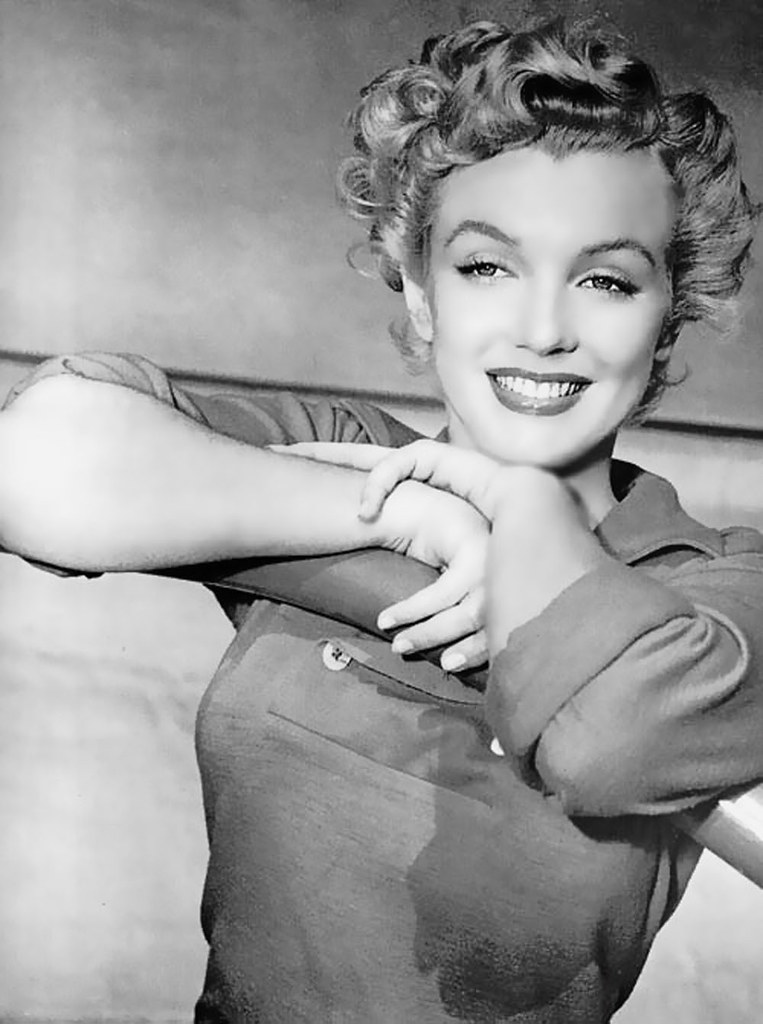
Marilyn Monroe in 1951 was emerging fast, already drawing notice from critics who tagged her as “the new blonde bombshell.” The black‑and‑white portrait of Marilyn Monroe was made in late 1951 by Ernest Bachrach, RKO’s chief portrait photographer, and syndicated widely through 1952. Shot both on location and in the studio spaces at RKO Radio Pictures in Los Angeles, the session was designed as a high‑visibility publicity campaign for Fritz Lang’s Clash by Night (1952). Monroe had pushed hard to be loaned out from 20th Century‑Fox for the supporting role of Peggy, a confident, blue‑collar cannery worker — a part she knew could shift how Hollywood viewed her.
Bachrach, a master of glamour portraiture, photographed her with the explicit aim of presenting her as a credible dramatic actress alongside veterans like Barbara Stanwyck. The film ultimately altered the trajectory of her career: for the first time, Monroe received billing above the title in a major motion picture. Bachrach’s photo campaign amplified that breakthrough, making her a household name even before the film reached theaters. It also demonstrated to studio executives that her magnetism held just as strongly in casual, sporty attire as in tight, high‑glamour wardrobe — a fusion that helped define the emerging “girl next door” aesthetic of 1950s Hollywood photography.PHOTO: “Marilyn Monroe, por Ernest Bachrach, 1951” by Antonio Marín Segovia is licensed under CC BY-NC-ND 2.0.
A widely publicized August 1952 poolside party at bandleader Ray Anthony’s California home was organized partly to promote both Monroe and the song. Hollywood had never seen an actress command the cultural conversation in one year like this. She was the original high-concept, serial franchise film star. Her face and body sold newspapers, magazines, makeup, and movie tickets at an unprecedented velocity.
Marilyn Monroe started 1953 as Hollywood’s “It” girl. The photograph shows Marilyn in a cropped frame from late 1953, captured at the Hollywood film premiere for How to Marry a Millionaire. She is wearing a famous custom white lace gown designed by William Travilla. It does relate to the August 1952 “Marilyn” party in that it is bound together by the explosive phenomenon of her meteoric rise.
In early 1953, Marilyn Monroe transitioned from a hard-working studio starlet into the absolute, undisputed “It Girl” of global popular culture. This specific phenomenon changed her life, transformed Hollywood marketing, and left a permanent mark on entertainment history.
Before 1953, 20th Century Fox viewed Marilyn as a profitable novelty. By January 1953, a perfect storm of media alignment occurred. The groundwork laid by those 1952 events—like the Ray Anthony party, the LIFE magazine cover, and the continuous press blitzes— culminated in a box-office avalanche.
In a single twelve-month span, Monroe released three consecutive, massive cinematic triumphs: Niagara in January 1953 where she starred as a dark, dangerous femme fatale; Gentlemen Prefer Blondes in July 1953 where she cemented her legendary comedic timing and musical icon status in the shocking pink Travilla gown; and How to Marry a Millionaire in November 1953 where she solidified her mass commercial appeal as a whispery “dumb blonde” comedic character.
Marilyn redefined what an “It Girl” could be. It Girls came in all types previously—from the aloof, untouchable elegance of stars like Greta Garbo or Joan Crawford to the gritty, working-class, uninhibited trail that Clara Bow and Jean Harlow blazed. Marilyn introduced a radiant, highly accessible, and deeply vulnerable form of sexuality. She projected a playful, “wink-at-the-camera” warmth that made audiences feel like she was letting them in on the fun.
A tragic irony of Marilyn becoming the ultimate 1953 “It Girl” is that the very phenomenon that made her immortal also trapped her in her “dumb blonde” or “glamour queen” roles and persona, so that in late 1954 she walked away from Hollywood temporarily after refusing typecasting roles and, when she came back, things were never quite the same. Decades later, the visual shorthand established during her 1953 peak remains the definitive blueprint for modern celebrity culture. The hyper-focus on her hair, her outfits, her dating life, and her physical form set the stage for how modern pop stars and icons are scrutinized by the media today. PHOTO: “Marilyn Monroe 1953” by Movie-Fan is licensed under CC BY-NC-SA 2.0.
Bandleader Ray Anthony released the two-minute single Marilyn in 1952 with rising film star Marilyn Monroe definitely in mind. Born Raymond Antonini to an Italian family in Bentleyville, Pennsylvania, in 1922, Ray Anthony is a living bridge to the Big Band era, the last surviving member of the original Glenn Miller Orchestra and the world’s oldest living recorded musician. After serving in the U.S. Navy during World War II, he launched the wildly successful Ray Anthony Orchestra, scoring early 1950s hits with “Marilyn,” “The Bunny Hop,” and “The Hokey Pokey,” while also topping the charts with his iconic instrumental themes for Dragnet and Peter Gunn. Now retired in the Hollywood Hills, Anthony remains one of the last direct links to the golden age of American popular music.
Hollywood mythology claims Marilyn Monroe n a bright pink dress swept into the August 1952 release party for the song Marilyn, touching down in a helicopter before exiting just as theatrically. In reality she arrived by car. The helicopter, brought in separately, became a convenient prop once publicists realized its value: they had her climb aboard and pose with Ray Anthony to manufacture the impression of a dramatic aerial entrance. The afternoon itself had the usual Hollywood chaos — Lassie trotted up to greet her, and Mickey Rooney jumped behind the drums with Anthony’s orchestra to play for her.
By the end of 1951 Marilyn had completed thirteen films, most for 20th Century‑Fox, and by 1952 she was poised on the threshold of major stardom. In 1952 she added five more. In Clash by Night (RKO), Kate Cameron of the New York News tagged her as “the new blonde bombshell.” In Fox’s We’re Not Married, Alton Cook of the New York World‑Telegram wrote that “Marilyn supplies beauty. She is Hollywood’s foremost expert.” Fox’s Monkey Business prompted Paul C. Beckley of the New York Herald Tribune to note the shift underway: “Not seen her before. I now know what’s that about.” She finished the year in Fox’s anthology O. Henry’s Full House, where Archer Winston of the New York Post singled out her “stunning proportions.”
This iconic black‑and‑white close‑up of Marilyn Monroe (above) was made in early 1953 by 20th Century‑Fox’s chief portrait photographer, Frank Powolny, as a publicity image for her breakthrough film Niagara. The styling, the expression, the heavy‑lidded “bedroom eyes” — all echo the Philippe Halsman Life magazine portrait from January 1952 (published April 7, 1952), because both sessions caught her at the exact moment she was standardizing and weaponizing her look.
The 1953 shoot took place at the Fox studios in Los Angeles, a high‑glamour promotional session meant to generate marketing material also for Gentlemen Prefer Blondes. Used widely in posters, press kits, and magazine syndication, the portrait is historically important because it crystallized her trademark expression: head tipped slightly back, eyes half‑closed, lips parted just enough to show her teeth.
Its impact was immediate. The image fixed her aesthetic in the public imagination and helped shift her from rising starlet to fully recognized global symbol of Hollywood glamour. Decades later, the tight crop — platinum curls, parted lips, beauty mark, and that unmistakable gaze — remains one of the most reproduced portraits in pop culture. It was this Powolny series that Andy Warhol appropriated for his 1962 silkscreens after her death. Marilyn didn’t merely suggest the look she had explored with Halsman; she executed it so precisely that the studio seized it and mass‑marketed its power. PHOTO: “Marilyn Monroe – 1952 / fotografiada por Philippe Halsman para LIFE” by Antonio Marín Segovia is licensed under CC BY-NC-ND 2.0.
Monroe’s public image was being carefully shaped through studio publicity, photography, magazine coverage, and promotional appearances.
Taken by Canadian journalist‑photographer Jock Carroll in June 1952 on location in Niagara Falls, Canada, this candid portrait comes from his two‑week assignment for Weekend Magazine, which had commissioned him to profile the 26‑year‑old rising actress as she filmed her breakthrough thriller Niagara. The image captures a candid, windswept moment during one of their informal walks along the Niagara River: Monroe in a simple white sleeveless top, her small medallion pendant visible, her blonde curls blown out by the mist and wind rolling off the falls.
Across the assignment Carroll shot more than 400 candid photographs. The easy rapport they developed allowed him to capture unguarded moments — including the now‑famous sequence of Monroe practicing how to smoke in her room at the General Brock Hotel for an upcoming role. A selection of his images ran with his profile in the August 9, 1952 issue of Weekend Picture Magazine.
Most of the negatives remained unseen for decades until they resurfaced in 1996 in Falling for Marilyn: The Lost Niagara Collection, which established the set as a major historical record. Today, this windswept portrait is celebrated for stripping away the studio‑manufactured bombshell veneer, offering instead an unfiltered, radiant glimpse of Norma Jeane at her most natural and effortlessly charming. PHOTO: “Marilyn Monroe by Jock Carroll, June, 1952” by thefoxling is licensed under CC BY-NC-SA 2.0.
One of Jock Carroll’s 400 candid photographs of Marilyn on location in June 1952 for Niagara, catches her from behind as she breaks into a light jog in her high heels along the concrete pier toward the Maid of the Mist as Niagara Falls thunders behind. Carroll wanted movement rather than a stiff publicity pose, something that showed her responding naturally to the environment. She wears a button‑back, off‑the‑shoulder top and a pale pencil skirt, the outfit emphasizing the clean, unforced lines of her stride.
In the finished 1953 film, director Henry Hathaway devoted 116 uninterrupted feet of film to a single shot of Monroe walking away from the camera in a tight pencil skirt — one of the longest “walking‑away” shots in cinema history. It permanently established her swinging gait as a defining element of her star power, a signature that audiences recognized instantly and never forgot.
Marilyn Monroe’s performance and appearance in Niagara in 1953 from 20th Century-Fox were highly praised. One critic observed: “Seen from any angle…Marilyn Monroe leaves little to be desired.” (A.H. Weiler, New York Times). Public Domain. in the United States. Because it was an uncopyrighted promotional still distributed freely to the public by the movie studio between 1931 and 1963, its copyright was never registered or renewed.
Publicity portrait of Marilyn Monroe as Rose Loomis in the 1953 film Niagara. By Gene Kornman (1897-1978). This work is in the public domain because it was published in the United States between 1931 and 1963, and although there may or may not have been a copyright notice, the copyright was not renewed.
Marilyn Monroe’s momentum in 1953 never faltered. Her three Twentieth Century‑Fox releases that year — Niagara, praised as “seductive,” Gentlemen Prefer Blondes, deemed “alluring,” and How to Marry a Millionaire, celebrated for her “magnificent proportions” — collectively cemented her acting career and her place as America’s enduring screen symbol.
Ray Anthony (b. 1922), one of the last living figures from post‑war Old Hollywood, belongs to the same generation whose era effectively closed with Marilyn’s death in 1962. Four years her senior, he reached his hundredth birthday in California on January 20, 2022.
Most of that remarkable cohort born in 1922 — Ava Gardner, Jason Robards, Betty White, Judy Garland, Doris Day, Cyd Charisse, Kim Hunter, Eleanor Parker, Veronica Lake, and many others — has now passed, leaving only a few witnesses to that vanished world.
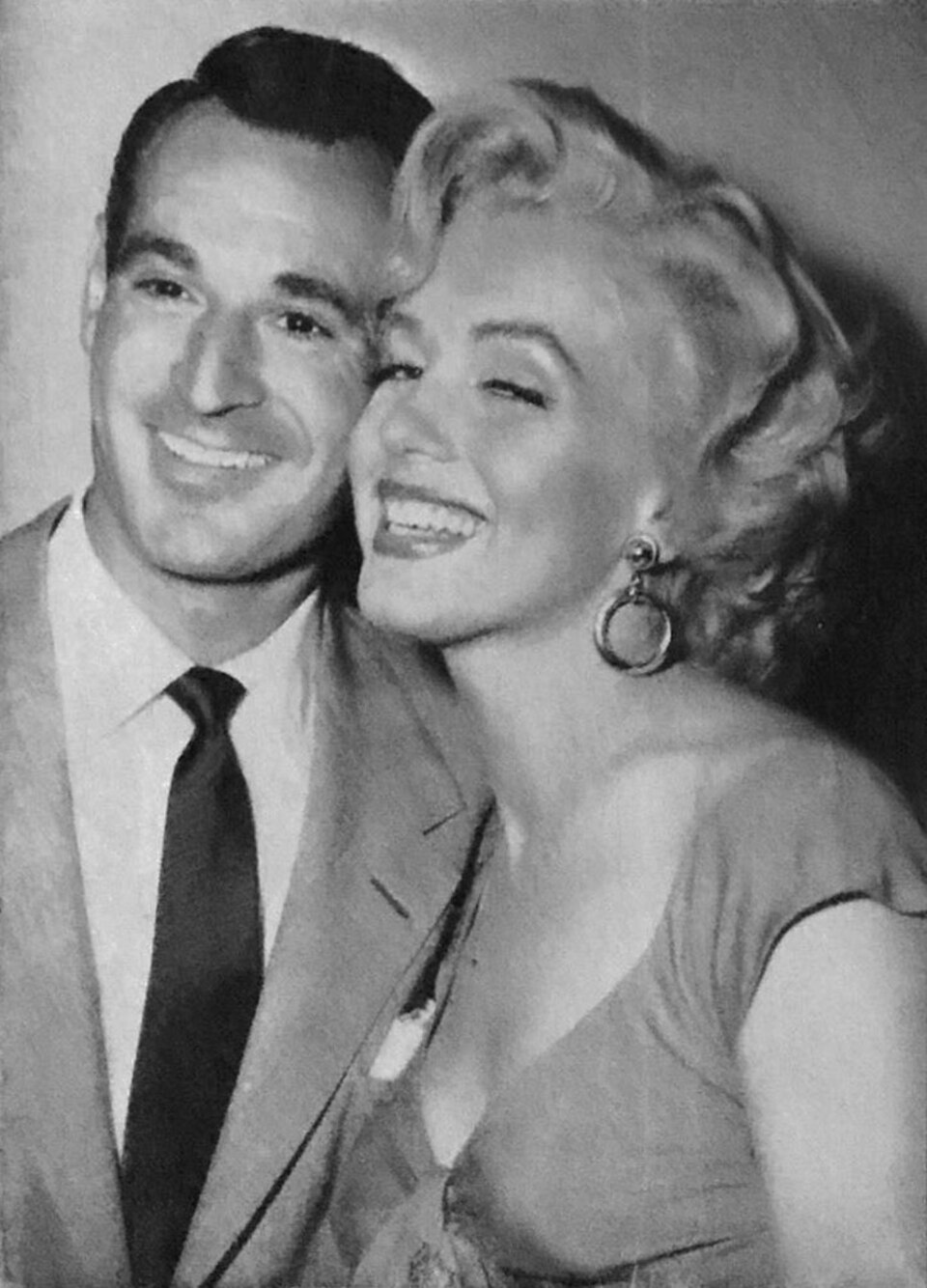
Marilyn Monroe and Joe DiMaggio — the movie star and the former major‑league baseball great — married in 1954. PHOTO: “Evan Esar” by Peter K. Levy is marked with Public Domain Mark 1.0.
Ray Anthony’s rise in the early 1950s came through a wildly popular dance band that kept producing records that instantly entered American social life. Numbers like The Hokey Pokey and The Bunny Hop became fixtures at wedding receptions throughout the 1960s and 1970s, part of the soundtrack of mid‑century celebration.
When Anthony released his single Marilyn, the world’s most famous sex symbol was still unattached, though being actively courted by New York Yankees legend Joe DiMaggio. They would marry in 1954. By then Marilyn had already been declared Hollywood’s “It Girl” of 1952, her career hovering at the edge of full stardom — an excitement that made the Marilyn release party crackle.
Photo of musician Ray Anthony and Marilyn Monroe from the cover of Down Beat magazine in 1952.This work is in the public domain because it was published in the United States between 1931 and 1963, and although there may or may not have been a copyright notice, the copyright was not renewed.
Anthony had a particular fondness for glamorous Hollywood blondes. He married one in 1955: Mamie Van Doren, with whom he had a son before divorcing in 1961. In 1956 he appeared alongside another blonde bombshell, Jayne Mansfield, in the musical comedy The Girl Can’t Help It.
Surrounded by beauty, music, and the energy of post‑war Hollywood, Anthony reached a fitting milestone in 1957 when he received his star on the Hollywood Walk of Fame. Marilyn Monroe received her Hollywood Walk of Fame star on February 8, 1960.
This explanatory article may be periodically updated.
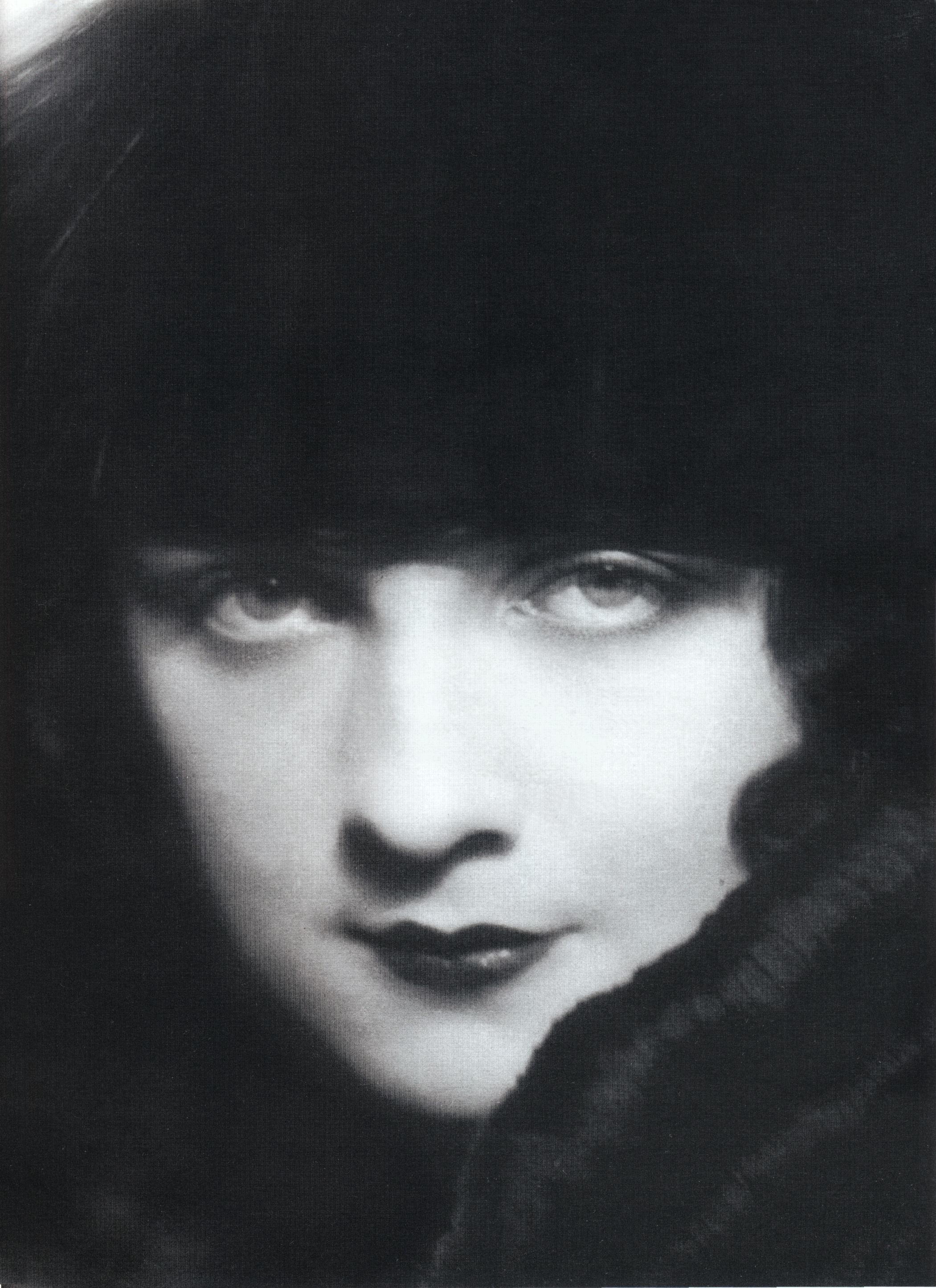
FEATURE image: Alice Terry by Melbourne Spurr, 1922. The sharp, dark, perfectly symmetrical lipstick styling seen here was the definitive high-fashion look of 1922, contrasting beautifully with the hazy diffusion applied to her eyes and hair.Spurr pioneered the aggressive close-up style that removed all extraneous background clutter. By using a specialized soft-focus diffusion lens, he softened the lines of Alice Terry’s skin, giving her face an ivory-smooth, almost airbrushed appearance that became the gold standard of 1920s celebrity photography. Public Domain.
The 1922 Alice Terry photograph by Melbourne Spurr captures the artistry, celebrity culture, and changing fortunes of early Hollywood, highlighting how both actress and photographer flourished during the silent era before the studio system transformed the industry.
GLAMOUR PHOTOGRAPHER MELBOURNE SPURR’S CAREER LAUNCHED BY SILENT SCREEN STAR MARY PICKFORD
Melbourne Spurr (1888-1964) arrived in Hollywood around 1917 at 28 years old. Spurr first worked at the studio of photographer Fred Hartsook (1876-1930) where he shot portraits of silent film stars.
Portrait of Melbourne Spurr (1888-1964) taken around 1917 when he arrived in Los Angeles to become an actor. The portrait offers a fascinating glimpse of the man before he became one of the definitive master portraitists of early Hollywood. In the promotional headshot, Spurr posed with his arms crossed with an intense, direct gaze aimed at the camera which was common formatting for a young actor’s talent portfolio during the late 1910s. Finding his acting career thwarted, Spurr shifted his creative energies to behind the camera, working at at Fred Hartsook’s portrait studio. It was there that his portraiture caught the eye of Mary Pickford, who would ultimately finance his career and help launch his legendary independent studio. Public Domain.
After Spurr photographed Mary Pickford at the Hartsook studio, Pickford personally helped Spurr launch his career as a Hollywood portrait photographer. Regarding Mary Pickford, Spurr once said “[she] always comes back to me, so I guess she thinks I’m not a bad photographer.”
By 1916 Mary Pickford (1892-1979) was a big star and had full authority over the films in which she appeared. She was earning a record-breaking $10,000 a week which was a staggering amount of money in the midteens (about $240,000 a week today).
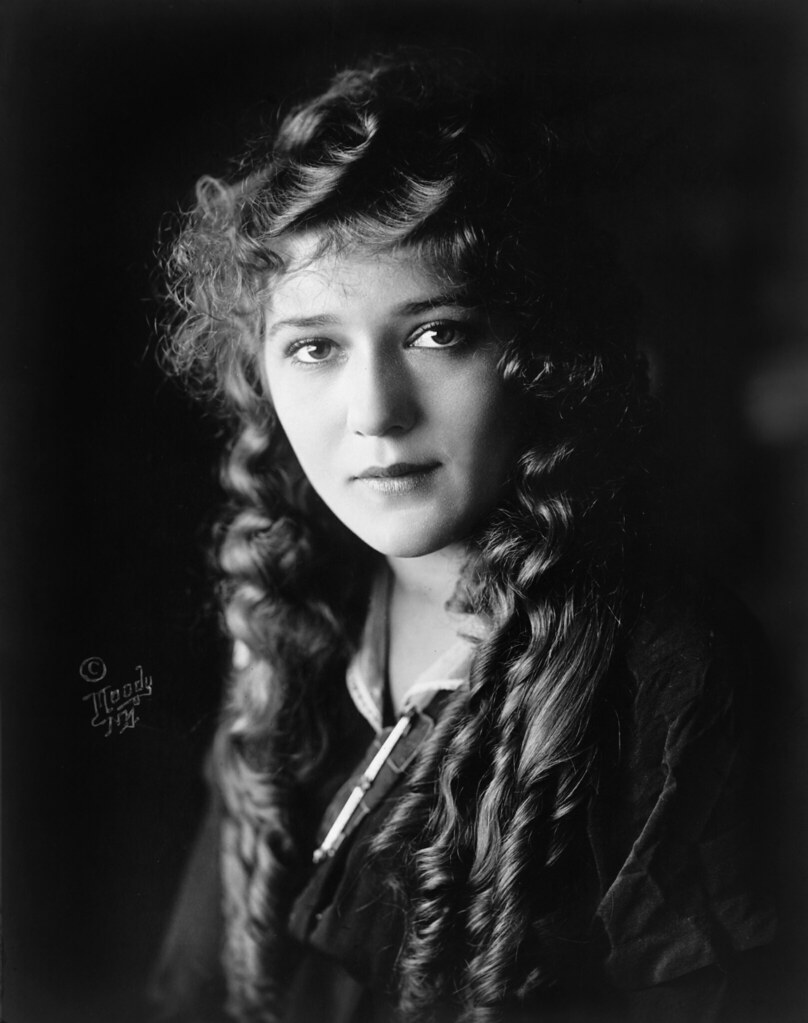
Rufus Porter Moody operated out of a high-end theatrical studio on West 42nd Street in New York City and captured Pickford during her 1914-1915 East Coast filming era. Melbourne Spurr did not arrive in Hollywood until around 1916–1917 when he was “discovered” by Pickford.
Mary Pickford (1892-1979) in a photograph taken in September 1914 was a big star in Hollywood. Taken by Rufus Porter Moody at a monumental turning point of her career, this deep-chiaroscuro portrait reveals 22-year-old Mary Pickford as she solidified her status as the cornerstone of independent cinema. The image serves as a powerful piece of corporate branding for Adolph Zukor’s Famous Players Film Company. PHOTO: “Mary Pickford by Moody, ca. 1914” by trialsanderrors is marked with CC BY 2.0.
MELBOURNE SPURR BECAME ONE OF THE MOST POPULAR CELEBRITY PHOTOGRAPHERS IN THE WORLD
Pickford’s special personal interest in Spurr’s career was matched or exceeded by the popularity of his photographs he distributed to the public. The film industry and public’s insatiable interest in Spurr’s portraits following his published Mary Pickford shots overnight made Spurr one of the most popular celebrity portrait photographers in Hollywood. By the mid1920’s Melbourne Spurr was one of the most popular celebrity photographers anywhere in the world.
Spurr’s many sitters through the roaring 20’s included Mary Astor, Marion Davies, Pola Negri, Theda Bara, Norma and Constance Talmadge, Harold Lloyd, Buster Keaton, Fatty Arbuckle, John Barrymore, Lucille Ricksen—and Alice Terry.
PORTRAIT PHOTOGRAPH OF ALICE TERRY, FILM ACTRESS AND DIRECTOR
Between 1916 and 1933 Terry appeared in 39 films. She started in Not My Sister in 1916. That same year, Terry made the anti-war film, Civilization. In 1921 she starred as Marguerite Laurier, her most acclaimed role, in prominent Irish director Rex Ingram’s film, The Four Horsemen of the Apocalypse. Alice Terry and Rex Ingram married that same year.
Alice Terry (began her career as a film actress and later director in the silent film era. Spurr’s portrait photograph of Alice Terry in 1922 presents a very close-cropped close-up with piercing, radiant eyes, perfect lips, and rich toning.
It was shot at Spurr’s studio in Hollywood and was one of his earliest solo commercial masterpieces after branching out from Fred Hartsook’s studio. In 1922 Alice Terry was at the height of her cinematic stardom having just completed filming The Prisoner of Zenda (1922), directed by her brilliant husband, Rex Ingram and this studio session was specifically engineered as a publicity drive to generate high-end, artistic portraits for top-tier film magazines and theater lobby card displays.
Alice Terry by Melbourne Spurr, 1922. The photograph deliberately reinvents her on-screen persona, isolating her face to capture the smoldering, mysterious depth that made her a box-office magnet. Cloaked in an oversized, dark winter hat and wrapped tightly in a thick, textured fur collar, the styling frames her as an enigmatic, modern woman of high style—perfectly expressing her elite rank alongside contemporary screen icons of the early twenties.
In 1925, Rex Ingram (1892-1952), was a director on Ben-Hur, an extravaganza production that started in 1923 and became one of the biggest box-office hits of the decade. Working on this film in Italy gave Alice Terry and Rex Ingram the idea to relocate to Nice on the French Riviera and set up their own film studio. In the next years the expatriate actress-director and director made several films for M-G-M on location in southern Europe and North Africa. Alice Terry made her final film in 1933 in an appearance in Baroud, a film she and Rex Ingram co-directed.
SPURR’S POPULARITY DECLINES AS STUDIO SYSTEM MANDATES IN-HOUSE PHOTOGRAPHERS
With studio consolidation and competition becoming more intense, major movie studios mandated that their stars be photographed only by studio photographers. So was inaugurated the age of motion picture inhouse operators heralding the legendary careers of glamour portrait photographers George Hurrell, Clarence Sinclair Bull, Eugene Robert Richee and others. Since Spurr chose to keep his own studio and not work for a major studio, he began to lose business. It had been for one glorious decade—the 1920’s— that Melbourne Spurr shined in Hollywood.
FEATURE image: This striking color portrait of Hedy Lamarr was photographed by the German-born émigré glamour specialist László Willinger (1909-1989), one of the Hollywood photographers who helped define the look of major stars during the late 1930s and 1940s. Commissioned by Metro-Goldwyn-Mayer as a premium publicity image for its lavish all-star production Boom Town (1940), the portrait was designed to reinforce Lamarr’s growing reputation as one of the studio’s most glamorous and sophisticated leading ladies.
The photograph is especially significant because it survives as an authentic color studio portrait from an era when most Hollywood publicity photography was still produced in black and white. At a time when color photographic processes remained expensive, technically demanding, and relatively uncommon in studio portraiture, Willinger achieved a remarkably rich and luminous result through the labor-intensive three-color Carbro printing process. The image captures the brilliance of MGM’s carefully crafted star-making machinery while preserving an unusually vivid record of how audiences were meant to see Lamarr at the height of her early fame.
In Boom Town, Lamarr portrayed Karen Vanmeer, a poised and sophisticated woman whose beauty and elegance play a central role in the film’s drama. Her wardrobe in the portrait, including the luxurious white fur wrap, dramatic pearl earrings, and oversized double-pearl ring, was carefully chosen to project privilege, refinement, and irresistible glamour. Created as a prestige publicity asset, the image was intended for distribution to leading fashion magazines, Sunday newspaper pictorial sections, and upscale theater displays, where its dazzling color and cinematic elegance could help attract audiences long before they reached the box office. Today, it remains one of the finest surviving examples of MGM’s Golden Age publicity art and of Willinger’s mastery of the Hollywood glamour portrait. Public Domain.***
László Willinger’s 1940 glamour portrait of Hedy Lamarr for Boom Town transcends routine film marketing, serving as a masterclass in mid-century studio escapism that weaponized arresting European beauty to anchor MGM’s highest-grossing, star-studded box office juggernaut.
Hedy Lamarr (1914-2000) posed for the glamour portrait in the Feature Image in 1940. The legendary Austrian beauty in Hollywood was 27 years old. Since her first American film in 1938, Algiers from United Artists, Lamarr was believed to be the most beautiful women in the world. Her beauty was so great that when she entered a room all activity in it stopped so to admire her.
The publicity photograph of Lamaar was for the 1940 American adventure film Boom Town from Metro-Godwyn-Mayer. The fast-paced American drama film set against the backdrop of the oil-well drilling industry co-starred Clark Gable, Spencer Tracy and Claudette Colbert. Boom Town was the highest grossing film of 1940.
One of the defining headshots that secured Hedy Lamarr’s legacy as an enduring icon of Golden Age glamour was this late-1939 publicity portrait by the legendary Hungarian-born photographer László Willinger, created during her early reign at Metro-Goldwyn-Mayer. Having recently arrived in Hollywood, Willinger quickly became one of MGM’s most valuable image-makers, renowned for combining sharp technical precision with the sophisticated European sensibility he brought to American studio photography. The portrait was commissioned as a major promotional vehicle as Lamarr’s star continued its rapid ascent and MGM prepared audiences for high-profile productions such as Boom Town (1940). Reproduced by the thousands and distributed worldwide to newspapers, fan magazines, exhibitors, and theater displays, the image kept Lamarr continually before the public even between film releases.
The photograph also showcases Willinger’s mastery of lighting. A glowing rim of backlight outlines Lamarr’s dark hair, separating it from the softly textured gray background and creating the subtle halo effect that became one of his signature techniques. A carefully controlled key light illuminates the left side of her face, directing the viewer’s attention toward the remarkable symmetry of her features, her luminous complexion, and her expressive eyes. Stripped of unnecessary distractions, the portrait achieves an almost sculptural purity, transforming a studio publicity photograph into one of the most memorable and enduring images of Hollywood’s Golden Age. Public Domain.***
How Does the Three-Color Carbro Process Work?
First, the photographer, in this example László Willinger, used a specialized, heavy “one-shot” color camera. Inside the camera, a system of internal prisms split the light entering the lens to expose three separate black-and-white glass plate negatives simultaneously—one through a red filter, one through a green filter, and one through a blue filter.
Next, in the darkroom, these three separation negatives were used to create three separate silver bromide prints. Those prints were then pressed against specialized carbon tissues containing cyan, magenta, and yellow pigmented gelatin. The silver in the prints chemically hardened the gelatin layer by layer.
For the final image these three delicate, colored gelatin layers were physically stripped from their backings, precisely aligned (squeegeed) on top of each other over a single paper support medium, and fixed into place.
Because Carbro prints use permanent color pigments instead of unstable chemical dyes, they retain an extraordinary, paint-like richness and remain completely immune to fading over time.
Classic 1938 studio publicity still promoting United Artists’ landmark romantic drama, Algiers, featuring its stars: Sigrid Gurie, Charles Boyer, and Hedy Lamarr. Because it was published without a copyright notice during the studio system era, the photograph, like the film itself, resides fully in the public domain. The photo perfectly distills the high-stakes, sultry romantic triangle that drives the entire plot of the movie. This film changed cinema history by introducing Hedy Lamarr to American audiences. Studio mogul Louis B. Mayer had brought her over from Europe, changed her name from Hedwig Kiesler, and lent her to United Artists for this film. The moment audiences saw her face in Algiers, she became an overnight sensation, widely dubbed “The World’s Most Beautiful Woman.” Public Domain.
In Boom Town, Austrian-born Lamarr plays Karen VanMeer, a sophisticated and elegant corporate spy. She is recruited by Clark Gable who plays “Big John” McMasters, an oil speculator.
M-G-M splurged on its star power to turn a routine oil-well story into a four-time Academy Award-nominated money gusher called Boom Town. The field was crowded with new films in 1940 just from M-G-M studio, including 18 pictures in Technicolor. Escapism was still the most rewarding M-G-M product.
Producer Sam Zimbalist brought big names to the screen in Clark Gable, Spencer Tracy, Claudette Colbert, and Hedy Lamarr backed up by an “A” list screenplay and Jack Conway’s forceful direction. The movie was the first Gable made under a new seven-year contract with MGM.
Hedy Lamarr, 1938. Photograph by Clarence Sinclair Bull (1896-1979). Captured by photographer Clarence Sinclair Bull in late 1938 or early 1939, this portrait of Hedy Lamarr stands as one of the great masterpieces of Hollywood studio photography. Following the success of her first American film, Algiers (1938), Metro-Goldwyn-Mayer moved quickly to transform its newest star into the screen’s ultimate exotic beauty. Audiences were captivated by Lamarr’s dark elegance, and Bull was assigned to create a series of portraits for MGM’s publicity files as the studio prepared to launch her upcoming films, including Lady of the Tropics (1939) and I Take This Woman (1940).
The photograph proved so successful that MGM repeatedly reissued it for later promotions, including Boom Town (1940) and Ziegfeld Girl (1941). In an era when Lamarr was usually presented beneath elaborate gowns, jewels, and headwraps, Bull and the studio made a calculated departure from the formula. Their goal was to reveal the woman behind the myth and emphasize her natural, almost sculptural beauty.
Instead of exotic glamour, Lamarr appears in a sharply tailored silk blouse marked by bold vertical stripes and oversized white buttons. The relaxed sportswear styling was unusually modern for an MGM leading lady. Her pose, with one hand resting against her head and fingers slipping through her dark curls, suggests a private moment of reflection rather than a carefully staged publicity portrait. The result is an image that balances sophistication with intimacy, transforming Lamarr from an untouchable screen goddess into a living, approachable presence while losing none of the mystery that made her a star.
More than a publicity still, the portrait demonstrates Bull’s genius for simplifying a composition until every line, shadow, and expression serves the subject. By stripping away the studio’s usual ornaments, he revealed the extraordinary face that made Hedy Lamarr one of the most unforgettable icons of Hollywood’s Golden Age. PHOTO: “Hedy Lamarr” by floorvan is marked with CC BY-SA 2.0.
This iconic “totem pole” photograph is a legendary 1941 MGM studio publicity still promoting the hit musical drama Ziegfeld Girl, featuring MGM’s powerhouse trio of female leads for the film: Lana Turner, the blonde, quintessential American girl-next-door; Hedy Lamarr, the sophisticated European exotic beauty; and Judy Garland, the immensely talented and vibrant performer. The vertical alignment was a brilliant marketing gimmick that reminded audiences that they were getting three stars when they bought one movie ticket. Prior to 1941, MGM primarily cast Lamarr as a mysterious, sometimes dangerous femme fatale or an unattainable “goddess” (such as in Algiers or Lady of the Tropics). In Ziegfeld Girl, her character is a more relatable, sweet, and sympathetic European immigrant. The publicity shot captures her with a soft, warm, and highly approachable smile, successfully humanizing her and showing audiences she could play warm, grounded dramatic roles.MGM made three high-profile movies celebrating Florenz Ziegfeld. The first (The Great Ziegfeld, 1936) and the second (Ziegfeld Girl, 1941) were both black-and-white. Its third installment, Ziegfeld Follies (1946) (which also featured Judy Garland), was filmed in Technicolor. Public Domain**
As a standalone film, Ziegfeld Girl (1941) serves as the middle chapter of Metro-Goldwyn-Mayer’s unofficial “Ziegfeld Trilogy.” Together with The Great Ziegfeld (1936) and Ziegfeld Follies (1945-46), it was one of MGM’s lavish prestige productions designed to celebrate the enduring legend of master showman Florenz Ziegfeld. Originally conceived in 1938 as a vehicle for established stars such as Joan Crawford and Eleanor Powell, the project ultimately became a showcase for MGM’s rising generation of leading ladies: Judy Garland, Hedy Lamarr, and Lana Turner.
At the time production began, Garland and Lamarr were the studio’s safer box office investments. MGM, however, was still searching for a glamorous blonde star capable of filling the void left by Jean Harlow’s death in 1937. Executive producer Mervyn LeRoy believed Turner possessed the screen magnetism to become that successor and famously ordered her hair dyed platinum blonde for the role that would transform her career. The contrast among the three stars was so striking that Garland later joked: “When Lana Turner arrived on the set, the crew would whistle. When Hedy Lamarr passed by, the technicians would sigh and fall in love. When I showed up, I was greeted with a simple, ‘Hello.'”
The film’s all-star machinery, which also included Jimmy Stewart, Jackie Coogan, Tony Martin, and Philip Dorn, culminated in a glossy backstage melodrama built around the new torch song “You Stepped Out of a Dream,” written by Nacio Herb Brown and Gus Kahn. Introduced in a dazzling Busby Berkeley production number featuring Turner and Lamarr, the song becomes the emotional thread binding the destinies of the three Ziegfeld girls. That thread ultimately leads to the film’s devastating climax: Sheila Regan, played by Turner, descending the theater staircase for the last time as a fallen Ziegfeld star. It is one of MGM’s great heartbreaking moments, bringing the film’s dreams of fame, beauty, and success crashing down in tragedy while simultaneously launching Lana Turner herself into the highest ranks of Hollywood stardom.
This portrait is another masterwork from the MGM portrait galleries, captured to promote the screwball romantic comedy The Heavenly Body (1944). This is a modern colorization version of the original black-and-white studio asset. The glamour photograph was taken by M-G-M’s László Willinger and showcases Willinger’s signature methodology for sculpting film icons. The image was commissioned as a principal publicity headshot to market The Heavenly Body. It was widely distributed to newspapers, fan magazines, and promotional theater lobbies prior to the movie’s early 1944 release.
In The Heavenly Body, Lamarr plays Vicky Whitley, the astrology-obsessed wife of a serious astronomer (played by William Powell). After years of MGM casting her as a dangerous, sultry foreign temptress (like in White Cargo), the studio used this shoot to soften her look. Willinger captured her looking upward with wide, luminous eyes—portraying an innocent, whimsical, and dreamy expression that matched her comedic character’s preoccupation with the stars and cosmos. Willinger was a master of the rim-light, backlighting technique. He placed intense lights directly behind Lamarr’s head to catch the outer edges of her hair. This created a glowing “halo” or celestial effect that intentionally played on the film’s title (The Heavenly Body).
The wardrobe choice—a simple, high-collared black dress accented by a striking, intricate silver foliate brooch—was curated by the studio to emphasize elegance. This refined presentation appealed directly to wartime fashion magazines, keeping Lamarr positioned as an elite style trendsetter. PHOTO: “Hedy Lamarr 1914 – 2000” by oneredsf1 is marked with CC BY-NC-SA 2.0. Public Domain**
Conclusion
Ultimately, László Willinger’s saturated color portraits and Clarence Sinclair Bull’s dramatic shadows cemented Hedy Lamarr’s legacy as Hollywood’s definitive “dark, exotic” beauty. In the late 1930s and early 1940s, MGM’s marketing machine leveraged this hyper-stylized gallery imagery to transform the Austrian émigré into an international icon, using her striking brunette features to redefine an industry previously dominated by traditional fair-haired blondes. While Lamarr’s breathtaking glamour frequently overshadowed her brilliant, analytical mind, it established an enduring cinematic mythology for the screen siren that permanently altered Hollywood’s aesthetic standards.
This explanatory article may be periodically updated.
*The photograph copyright may be believed to belong to the distributor of the film, Metro-Goldwyn-Mayer, the publisher of the film or the graphic artist. The copy is of sufficient resolution for commentary and identification but lower resolution than the original photograph. Copies made from it will be of inferior quality, unsuitable as counterfeit artwork, pirate versions or for uses that would compete with the commercial purpose of the original artwork. The image is used for identification in the context of critical commentary of the work, product or service for which it serves as poster art. It makes a significant contribution to the user’s understanding of the article, which could not practically be conveyed by words alone. As this is a publicity photo (star headshot) taken to promote an actress, these have traditionally not been copyrighted. Since they are disseminated to the public, they are generally considered public domain, and therefore clearance by the studio that produced them is not necessary. (See- Eve Light Honthaner, film production expert, in The Complete Film Production Handbook, Focal Press, 2001 p. 211.) Gerald Mast, further, film industry author, in Film Study and the Copyright Law (1989) p. 87, writes: “According to the old copyright act, such production stills were not automatically copyrighted as part of the film and required separate copyrights as photographic stills. The new copyright act similarly excludes the production still from automatic copyright but gives the film’s copyright owner a five-year period in which to copyright the stills. Most studios have never bothered to copyright these stills because they were happy to see them pass into the public domain, to be used by as many people in as many publications as possible.” Kristin Thompson, committee chairperson of the Society for Cinema and Media Studies writes in the conclusion of a 1993 conference with cinema scholars and editors, that they “expressed the opinion that it is not necessary for authors to request permission to reproduce frame enlargements … [and] some trade presses that publish educational and scholarly film books also take the position that permission is not necessary for reproducing frame enlargements and publicity photographs.”(“Fair Usage Publication of Film Stills,” Kristin Thompson, Society for Cinema and Media Studies.)