


FEATURE image: Alice Terry by Melbourne Spurr, 1922. The sharp, dark, perfectly symmetrical lipstick styling seen here was the definitive high-fashion look of 1922, contrasting beautifully with the hazy diffusion applied to her eyes and hair. Spurr pioneered the aggressive close-up style that removed all extraneous background clutter. By using a specialized soft-focus diffusion lens, he softened the lines of Alice Terry’s skin, giving her face an ivory-smooth, almost airbrushed appearance that became the gold standard of 1920s celebrity photography. Public Domain.
The 1922 Alice Terry photograph by Melbourne Spurr captures the artistry, celebrity culture, and changing fortunes of early Hollywood, highlighting how both actress and photographer flourished during the silent era before the studio system transformed the industry.
GLAMOUR PHOTOGRAPHER MELBOURNE SPURR’S CAREER LAUNCHED BY SILENT SCREEN STAR MARY PICKFORD
Melbourne Spurr (1888-1964) arrived in Hollywood around 1917 at 28 years old. Spurr first worked at the studio of photographer Fred Hartsook (1876-1930) where he shot portraits of silent film stars.

Portrait of Melbourne Spurr (1888-1964) taken around 1917 when he arrived in Los Angeles to become an actor. The portrait offers a fascinating glimpse of the man before he became one of the definitive master portraitists of early Hollywood. In the promotional headshot, Spurr posed with his arms crossed with an intense, direct gaze aimed at the camera which was common formatting for a young actor’s talent portfolio during the late 1910s. Finding his acting career thwarted, Spurr shifted his creative energies to behind the camera, working at at Fred Hartsook’s portrait studio. It was there that his portraiture caught the eye of Mary Pickford, who would ultimately finance his career and help launch his legendary independent studio. Public Domain.
After Spurr photographed Mary Pickford at the Hartsook studio, Pickford personally helped Spurr launch his career as a Hollywood portrait photographer. Regarding Mary Pickford, Spurr once said “[she] always comes back to me, so I guess she thinks I’m not a bad photographer.”
By 1916 Mary Pickford (1892-1979) was a big star and had full authority over the films in which she appeared. She was earning a record-breaking $10,000 a week which was a staggering amount of money in the midteens (about $240,000 a week today).
Rufus Porter Moody operated out of a high-end theatrical studio on West 42nd Street in New York City and captured Pickford during her 1914-1915 East Coast filming era. Melbourne Spurr did not arrive in Hollywood until around 1916–1917 when he was “discovered” by Pickford.
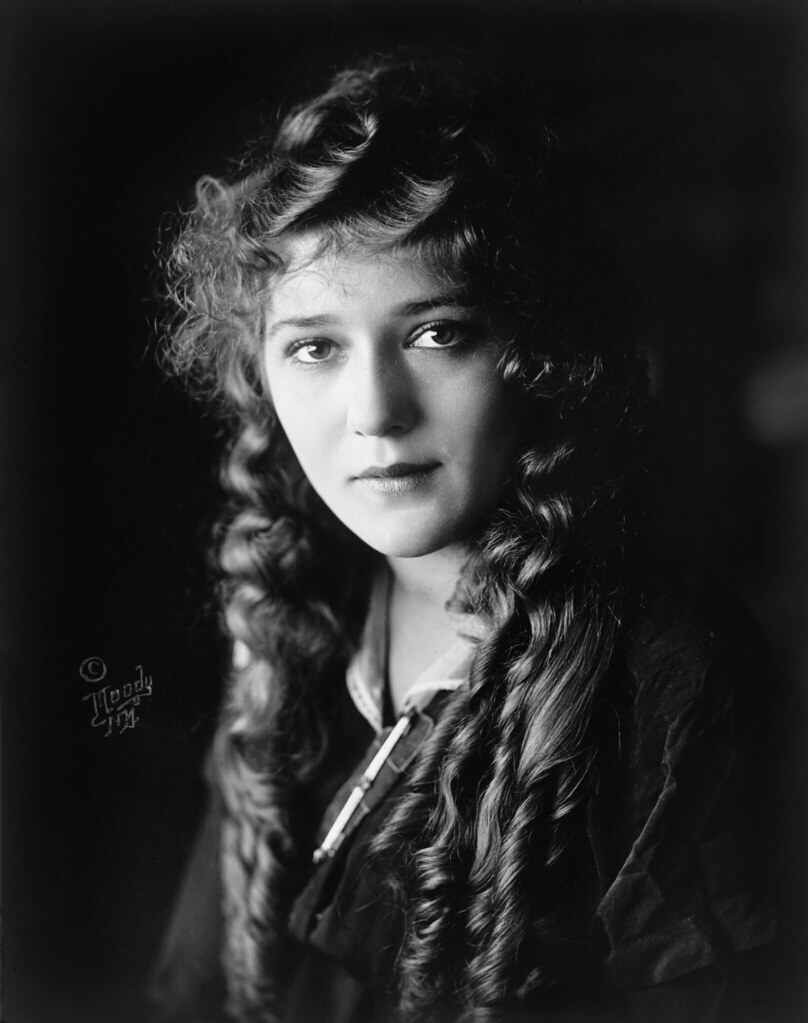
Mary Pickford (1892-1979) in a photograph taken in September 1914 was a big star in Hollywood. Taken by Rufus Porter Moody at a monumental turning point of her career, this deep-chiaroscuro portrait reveals 22-year-old Mary Pickford as she solidified her status as the cornerstone of independent cinema. The image serves as a powerful piece of corporate branding for Adolph Zukor’s Famous Players Film Company. PHOTO: “Mary Pickford by Moody, ca. 1914” by trialsanderrors is marked with CC BY 2.0.
MELBOURNE SPURR BECAME ONE OF THE MOST POPULAR CELEBRITY PHOTOGRAPHERS IN THE WORLD
Pickford’s special personal interest in Spurr’s career was matched or exceeded by the popularity of his photographs he distributed to the public. The film industry and public’s insatiable interest in Spurr’s portraits following his published Mary Pickford shots overnight made Spurr one of the most popular celebrity portrait photographers in Hollywood. By the mid1920’s Melbourne Spurr was one of the most popular celebrity photographers anywhere in the world.
Spurr’s many sitters through the roaring 20’s included Mary Astor, Marion Davies, Pola Negri, Theda Bara, Norma and Constance Talmadge, Harold Lloyd, Buster Keaton, Fatty Arbuckle, John Barrymore, Lucille Ricksen—and Alice Terry.
PORTRAIT PHOTOGRAPH OF ALICE TERRY, FILM ACTRESS AND DIRECTOR
Between 1916 and 1933 Terry appeared in 39 films. She started in Not My Sister in 1916. That same year, Terry made the anti-war film, Civilization. In 1921 she starred as Marguerite Laurier, her most acclaimed role, in prominent Irish director Rex Ingram’s film, The Four Horsemen of the Apocalypse. Alice Terry and Rex Ingram married that same year.
Alice Terry (began her career as a film actress and later director in the silent film era. Spurr’s portrait photograph of Alice Terry in 1922 presents a very close-cropped close-up with piercing, radiant eyes, perfect lips, and rich toning.
It was shot at Spurr’s studio in Hollywood and was one of his earliest solo commercial masterpieces after branching out from Fred Hartsook’s studio. In 1922 Alice Terry was at the height of her cinematic stardom having just completed filming The Prisoner of Zenda (1922), directed by her brilliant husband, Rex Ingram and this studio session was specifically engineered as a publicity drive to generate high-end, artistic portraits for top-tier film magazines and theater lobby card displays.
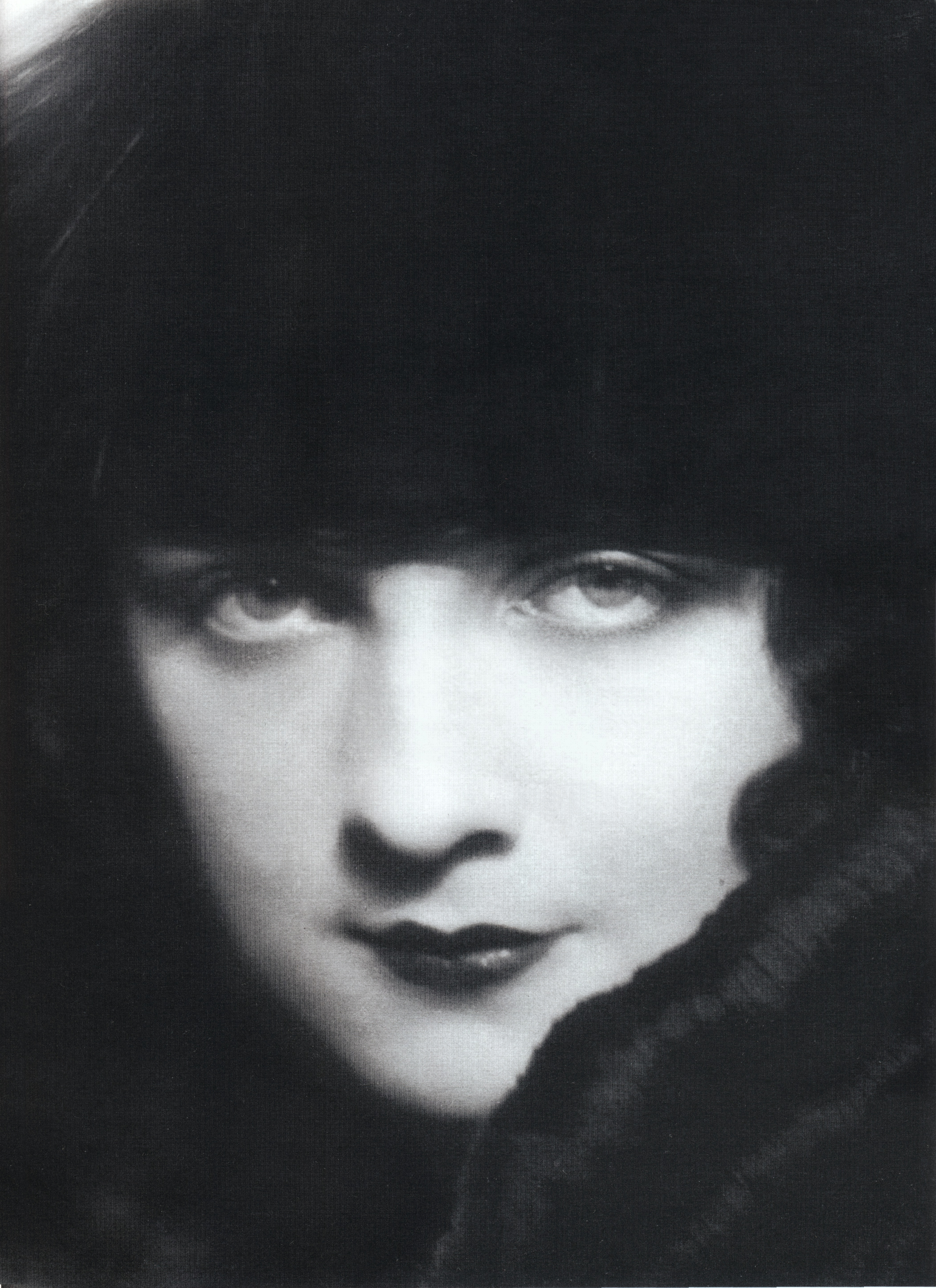
Alice Terry by Melbourne Spurr, 1922. The photograph deliberately reinvents her on-screen persona, isolating her face to capture the smoldering, mysterious depth that made her a box-office magnet. Cloaked in an oversized, dark winter hat and wrapped tightly in a thick, textured fur collar, the styling frames her as an enigmatic, modern woman of high style—perfectly expressing her elite rank alongside contemporary screen icons of the early twenties.
In 1925, Rex Ingram (1892-1952), was a director on Ben-Hur, an extravaganza production that started in 1923 and became one of the biggest box-office hits of the decade. Working on this film in Italy gave Alice Terry and Rex Ingram the idea to relocate to Nice on the French Riviera and set up their own film studio. In the next years the expatriate actress-director and director made several films for M-G-M on location in southern Europe and North Africa. Alice Terry made her final film in 1933 in an appearance in Baroud, a film she and Rex Ingram co-directed.
SPURR’S POPULARITY DECLINES AS STUDIO SYSTEM MANDATES IN-HOUSE PHOTOGRAPHERS
With studio consolidation and competition becoming more intense, major movie studios mandated that their stars be photographed only by studio photographers. So was inaugurated the age of motion picture inhouse operators heralding the legendary careers of glamour portrait photographers George Hurrell, Clarence Sinclair Bull, Eugene Robert Richee and others. Since Spurr chose to keep his own studio and not work for a major studio, he began to lose business. It had been for one glorious decade—the 1920’s— that Melbourne Spurr shined in Hollywood.
SOURCE:
https://www.portrait.gov.au/people/melbourne-spurr-1917
http://library.rit.edu/findingaids/html/RITDSA.0011.html



