Tag Archives: #Photography

Royal Patronage and Popular Life: Francisco de Goya’s First Tapestry Cartoons for the Princes of Asturias, 1775-1778.

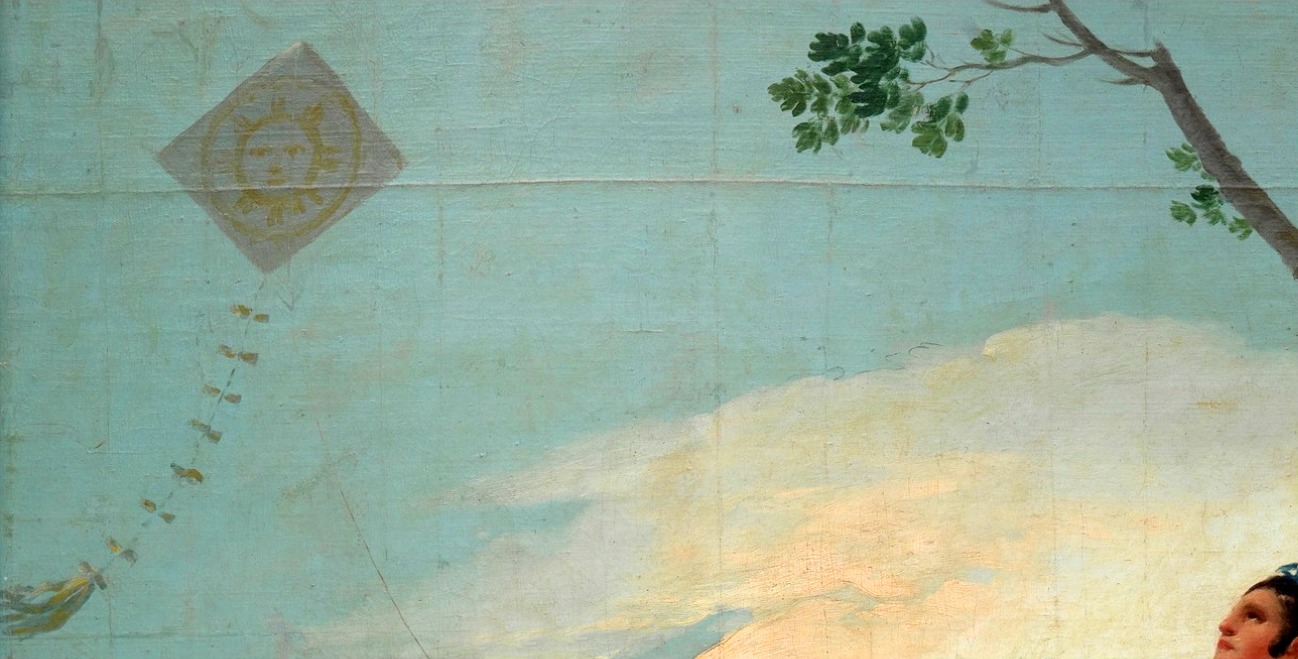
FEATURED image: Francisco de Goya (1746-1828), The Kite (detail), 1777/78. Oil on canvas, 269 x 285 cm.

Francisco de Goya’s first tapestry cartoons for the Princes of Asturias (1775-1778) reveal the young artist at the beginning of his royal career, transforming scenes of everyday Spanish life into sophisticated works of design that celebrated national identity, courtly leisure, and Enlightenment-era ideals, while foreshadowing the artistic genius that would later redefine Spanish painting.

These are a selection of the first two suites of decorative tapestry cartoons (or designs) completed for El Escorial in 1775 and El Palacio Real del Pardo between 1776 and 1778 by Spanish artist Francisco de Goya (1746-1828) .

Both of these palaces were the residences of the future Carlos IV (reigned, 1788-1808) and his wife, Queen consort of Spain, María Luisa de Parma—they are the Prince and Princess of Asturias for whom the artist did these works.

1. DINING ROOM OF THE PRINCES OF ASTURIAS IN SAN LORENZO DE EL ESCORIAL, 1775.

Goya’s first major royal commission was to produce tapestry cartoons for the dining room of the Princes of Asturias, the future Charles IV and Maria Luisa. The series depicts popular Spanish customs, hunting scenes, rural festivities, games, and leisure activities.

1. Decoy Hunting 1775. Oil on canvas, 112 x 179 cm.

The cartoon called Decoy Hunting is part of the first commission that Goya received for the Royal Tapestry Factory of Santa Bárbara in 1774-1775.

It was part of a series of fourteen tapestries—of which Goya rendered nine of them. They depicted hunting subjects, a keen passion for the Spanish nobility, to hang as decoration in the dining room at El Escorial of the Prince and Princess of Asturias.

Newly arrived to Madrid in January 1775 , Goya completed and submitted his cartoons for this commission between May and October 1775.

untitled6fixed
untitled10fixed

The cartoon called Decoy Hunting is part of the first commission that Goya received for the Royal Tapestry Factory of Santa Bárbara in 1774-1775.

It was part of a series of fourteen tapestries—of which Goya rendered nine of them. They depicted hunting subjects, a keen passion for the Spanish nobility, to hang as decoration in the dining room at El Escorial of the Prince and Princess of Asturias.

Newly arrived to Madrid in January 1775 , Goya completed and submitted his cartoons for this commission between May and October 1775.
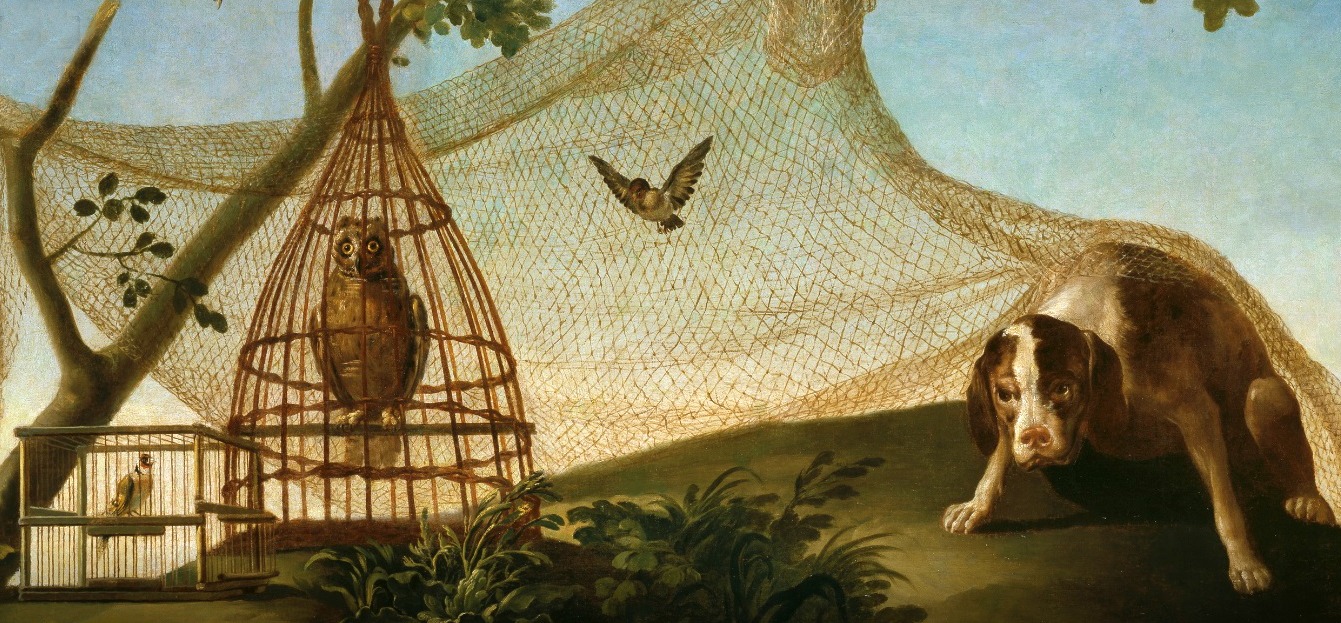
2. Dogs on a leash 1775. Oil on canvas, 112 x 174 cm.

This is Goya’s tapestry cartoon of two hunting dogs chained together—one of which sits up and holds a fixed gaze on the viewer—with hunters’ tools on the ground. It is part of a series of decorative tapestries depicting hunting subjects for the new Bourbon rooms installed in 1773 by the architect Juan de Villanueva (1739-1811) at El Escorial.

Goya, newly arrived to Madrid from Zaragoza in 1775, was brought into the project because one of its originators, Ramón Bayeu y Subías (1746-1793), after having completed five of the intended fourteen cartoons by March 1775, was appointed to assist painter Anton Raphael Mengs (1728–1779) at El Palacio Real de Madrid in the execution of several frescoes there. 

Goya rendered the remaining nine cartoons, six of which are included in this blog post.

untitled16fixed2

3. Hunting Party 1775. Oil on canvas, 290 x 226 cm.

Hunting Party is one of the nine cartoons Goya provided for the royal dining room at El Escorial. This cartoon scene displays different types of hunting.

While Goya worked closely with the designs of Ramón and elder brother Francisco Bayeu y Subías (1734-1795), the originators of this project, the young artist placed his own stamp upon the commissioned work.

For instance, in the background, Goya’s sprinting greyhound provides an original and engaging study of how to represent rapid animal movement in a painting.

untitled4fixed

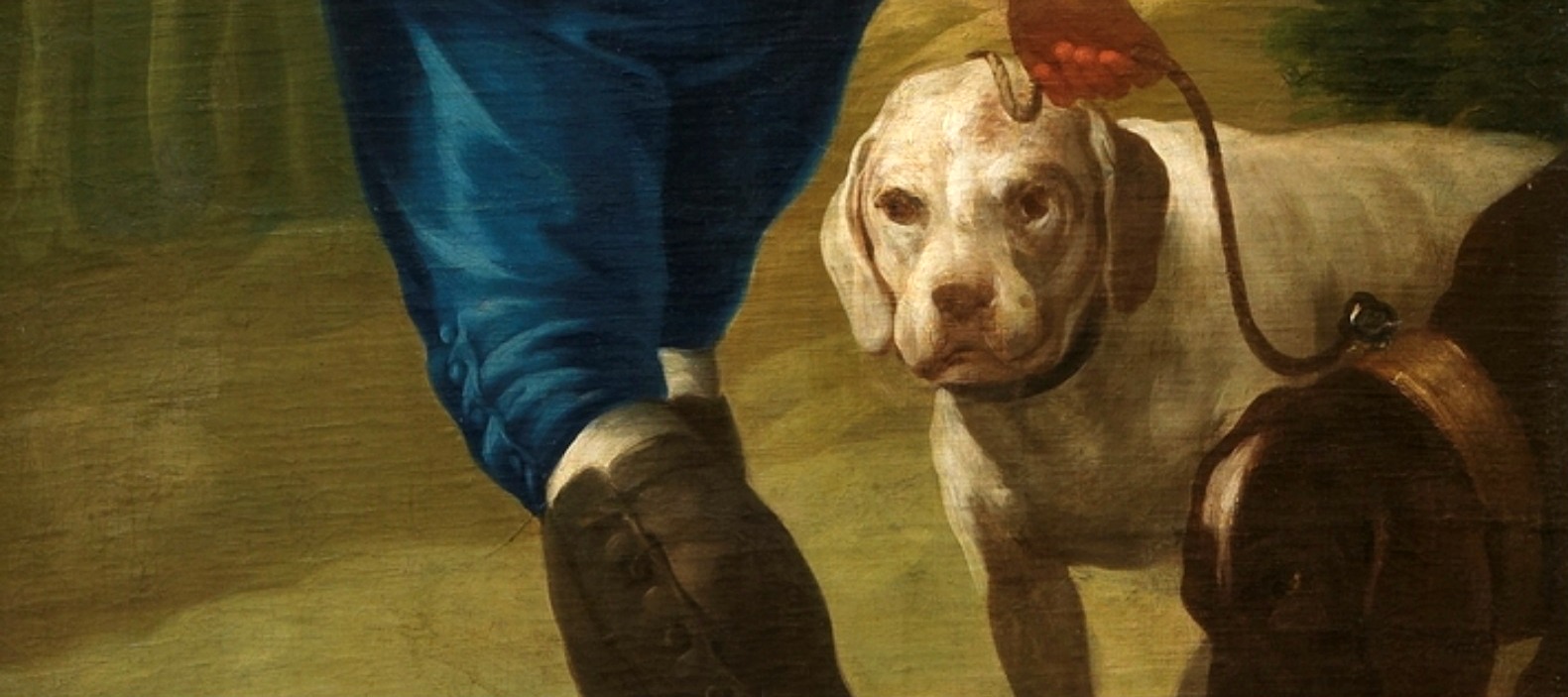
4. Hunter with his Hounds 1775. Oil on canvas, 268 x 67.5 cm.

The two cartoons below called Hunter with his hounds and Hunter Loading his Rifle are paired for a tapestry in El Escorial to hang by a window or door.

The cartoon is notable in part for Goya’s successful rendering of a hunter depicted from the back with a rifle on his shoulder and two leashed dogs — a “modern figure in a landscape.” Goya’s late 18th-century artistic accomplishment became a leading challenge for later 19th century French Impressionists such as Claude Monet (1840-1926) and Pierre-Auguste Renoir (1841-1919) to attempt the same sort of figural art work.

untitled8fixed

5. Hunter loading his Rifle 1775. Oil on canvas, 292 x 50 cm.

Goya’s cartoon is called Hunter loading his rifle. It is paired with Hunter with his hounds. the cartoon depicts a face-forward hunter with a sitting dog who stares at the viewer. In the background are others in the hunting party.

The design is for a dining room tapestry at El Escorial for the future Carlos IV (1748-1819) and his wife, María Luisa de Parma (1751-1819).

untitled9fixed

6. The Angler 1775. Oil on canvas, 289 x 110 cm.

Two activities are represented in this cartoon scene—fishing and hunting. A transition between them is marked by the sports’ different tools that overlap in the middle of the canvas. 

The Angler completed the commission begun in 1774 by Francisco and Ramón Bayeu to prepare a set of fourteen tapestry cartoons for the decoration of the dining room of the future Carlos IV and María Luisa de Parma at El Escorial, of which Goya produced nine of them. 

The theme of hunting was specifically selected to merge with the monarchs’ use of El Escorial in the autumn as a hunting grounds.

Two activities are represented in this cartoon scene—fishing and hunting—with a transition between them marked in the sports’ different tools overlapping in the middle of the canvas. 

The Angler completed the commission begun in 1774 by Francisco and Ramón Bayeu to prepare a set of fourteen tapestry cartoons for the decoration of the dining room of the future Carlos IV and María Luisa de Parma at El Escorial, of which Goya produced nine of them. The theme of hunting was specifically selected to merge with the monarchs’ use of El Escorial in the autumn as a hunting grounds.

2. DINING ROOM OF THE PRINCES OF ASTURIAS IN THE PALACE OF EL PARDO, 1776-1778.

7. The Picnic 1776. Oil on canvas, 271 x 295 cm.

The Picnic is part of Goya’s 10-tapestry decorative cartoon series depicting leisure in the countryside for a dining room tapestry at El Pardo for the Prince and Princess of Asturias.

Notable for its foreground still life, this scene depicts young revelers sitting on the banks of the Manzanares River at Madrid’s periphery.

The Picnic is joined in Goya’s second cartoon series by Dance on the Banks of the Manzanares, A Fight at the Venta Nueva, An Avenue in Andalusia (or The Maja and the cloaked Men), The Drinker, The Parasol, The Kite, The Card Players, Children blowing up a Bladder, and Boys picking Fruit. 

untitled13fixed
untitled12fixed

8. A Fight at the Cock Inn 1777. Oil on canvas, 41.9 x 67.3 cm.

An early draft called El Mesón del Gallo by Goya for his preparatory sketch for the cartoon of A Fight at the New Inn.

Goya’s artistic models for the cartoon range from typical seventeenth century Flemish and Dutch genre scenes to elements of Italian classicism.

The 32-year-old Goya displays a creative edginess in a tapestry that is to hang in the royal house. The artist presents a brutal and ironically humorous scene showing country folk from diverse regions of Spain and of varying social roles using several weapon types to violently contest a card game involving money.

Although created for royal interiors, the series focuses on common people rather than aristocratic subjects. The works represent a transitional moment between Rococo elegance and the more realistic, psychologically complex vision that would characterize Goya’s mature career.

untitled15fixed

9. Dance on the Banks of the Manzanares 1776 – 1777. Oil on canvas, 272 x 295 cm.

The resulting tapestry was to be hung on a wall of the dining room at the Palacio de El Pardo in Madrid for the princes of Asturias. Progressing from his hunting cartoon suite done on behalf of the brothers Bayeu the year or so before, this 10-part series of country life scenes was completely Goya’s own invention.

Goya’s cartoon called Dance on the Banks of the Manzanares depicts a scene of majos and majas (country folk) dancing the seguidillas, a dance that was popular in Madrid and throughout Spain’s Castile region.

The view of the river banks and the figure of the man clapping his hands are composition elements preserved in Goya’s drawing notebook suggesting they were taken from life.

untitled17fixed-2

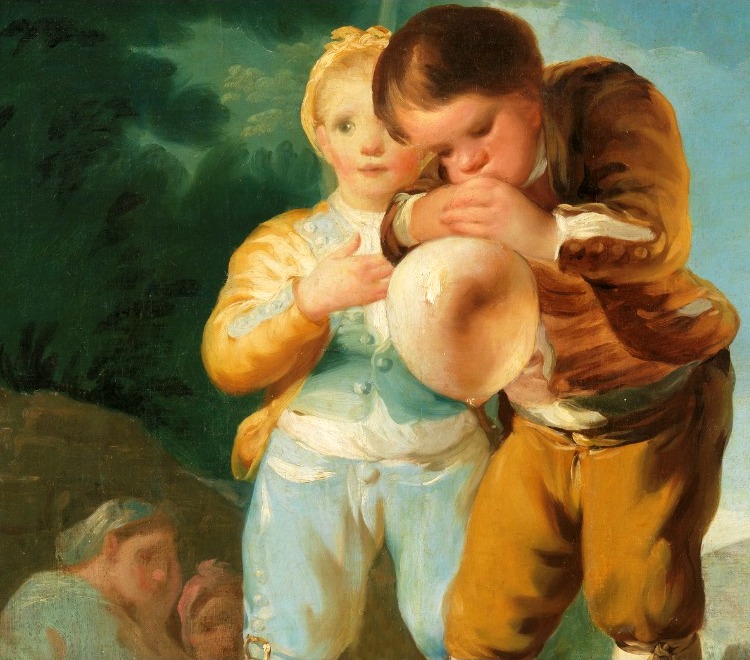
10. Children blowing up a Bladder 1777 – 1778. Oil on canvas, 116 x 124 cm.

The tapestry resulting from this cartoon hung in the dining room of the future Carlos IV and Queen consort María Luisa de Parma in El Palacio de El Pardo in Madrid.

With his cartoon Goya started his childhood scenes in this series of ten tapestries of “country” subjects for the royal house.

In a playful yet dramatic scene, a boy of about 7 years old inflates an animal bladder as his companion awaits the outcome raising one hand to her heart.

Two women seated in the background are perhaps the children’s mothers. One of the women displays a melancholic disposition as she holds a hand to the head while the other looks straight at the viewer.

Bright colors, lively figures, and naturalistic settings distinguish the cartoons from the more formal court art of the period.
untitled18fixed

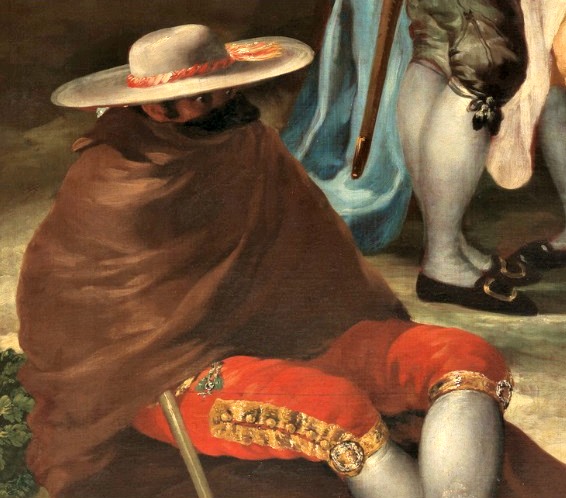
11. An Avenue in Andalusia or The Maja and the cloaked Men 1777. Oil on canvas, 275 x 190 cm.

This tapestry cartoon presents an ostensible love scene of a well-dressed young woman with her companion. in the tapestry factory invoice Goya identified both figures as gitanos, or gypsy people.

The scene is populated with other stealthily dressed figures, perhaps with their own sinister intent, suggesting an undercurrent of jealous spying on the gitano pair.

For a Madrid royal palace’s dining room (El Pardo), Goya considered this scene a fanciful contemporary walk in far-off Andalucia in southern Spain.

untitled21fixed

The tapestry cartoons demonstrate Goya’s ability to blend decorative function with artistic innovation.

untitled20fixed
untitled19fixed

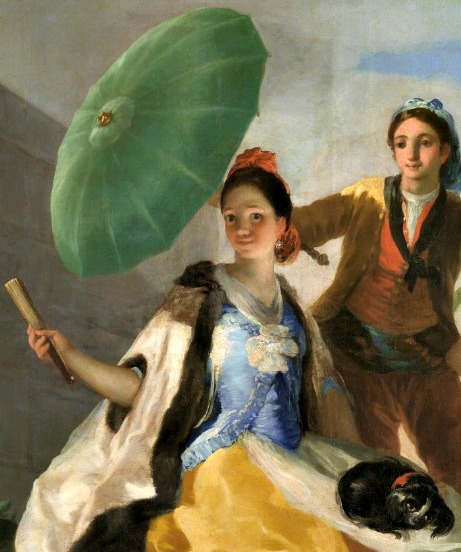
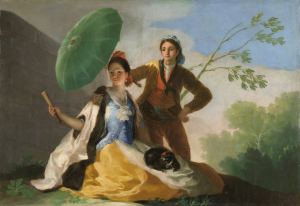
12. The Parasol 1777. Oil on canvas, 104 x 152 cm.

A bottom-to-top perspective view joined to its format indicates that this tapestry cartoon for the El Pardo dining room was intended to decorate an over-arch.

A cortejo holds a green-color parasol to shade an elegant young woman from the Iberian sunshine.

Goya’s cartoon could have possibly been modeled on the work of Jean Ranc (1674–1735), a French portrait painter or on a lunette entitled Vertumnus and Pomano by Italian painter Pontormo (1494-1557).

If it is the Pontormo that inspired Goya then, in this instance, the artist creatively transformed what was an ancient mythological subject into a scene of modern Spanish life.
untitled22fixed-closer

The paintings reflect Enlightenment interest in ordinary life and national culture as these works helped establish Goya’s reputation within the Spanish court.

13. The Kite 1777 – 1778. Oil on canvas, 269 x 285 cm.

In this mid-to-late eighteenth century contemporary scene, possibly drawn from life, Goya describes it as young people who “have gone out to the field to fly a kite.”

A majo is smoking, body splayed upon the ground, sending smoke into the air. In the cartoon’s center three majos fly the popular kite with a sun face on it. One figure holds the spindle, another guides its string, and a third in heroic stance, launches and maintains the kite aloft.

In the background, couples chat and watch the kite’s flight, while a dog sits and looks towards the viewer.

The building in the cartoon’s upper right part has been interpreted as an astronomical observatory, a scientific project popularly spoken of in the days of Carlos III (1716-1788).

untitled23fixed
untitled24fixed
untitled25fixed
untitled26fixed

14. The Drinker 1777. Oil on canvas, 107 x 151 cm.

A cartoon for a tapestry in the dining room in the Palace of El Pardo in Madrid, one of a series of ten made by Goya between 1776 and 1778.

The scene has been interpreted as has been seen as Goya’s allegory of gluttony. A young man drinks from a boot and a boy eats a raw turnip snatched out of a collection of meager vegetables with a round loaf of bread that constitutes the cartoon’s still life.  

These images would be based on characters from a 1554 Spanish novella entitled The Life of Lazarillo de Tormes and of His Fortunes and Adversities. The novella tells the story of a boy named Lazarillo who learns the world’s wiles from a blind beggar with whom he is apprenticed.

The format and bottom-to-top perspective view indicates the modern tapestry cartoon was for an over-window decoration.

untitled28fixed
untitled29fixed

15. Boys picking Fruit 1778. Oil on canvas, 119 x 122 cm.

Boys picking Fruit is another of Goya’s childhood scenes. It is one of four scenes of a set with Children blowing up a Bladder, The Parasol, and The Drinker which hung as overhead decorations in the dining room at El Pardo. 

The joyful and playful cartoon depicts four boys gathered at a tree to shake down its fruit.  It is part of a series of ten tapestry cartoons of “country” subjects—all conserved in the Prado Museum in Madrid—that Goya composed and produced.

untitled30fixed
untitled31fixed

16. The Card Players 1777 – 1778. Oil on canvas, 270 x 167 cm.

To give this scene an appearance of realism, Goya carefully crafted each individual face and unique expression for each figure. These creative details enriches the depiction of country folk cheating and being cheated at cards.

Goya’s accurate study of the contrast of light and shadow enhances his varied colors which works to heighten the scene’s realism.

A group of majos situate themselves in a field as three of them play card. They gather under a man’s cloak placed on a tree branch which shadows them from the sun at siesta.

With gold coins tossed into a hat on the ground by one of the players, the two other majos study their hands, each with an expression of concern.

Darkly humorous, the cartoon revealed to its viewer the accomplices standing behind two players and who are sending signals to a third player about the unsuspecting victims’ cards.

The Card Players concludes Goya’s 10-part cartoon series of scenes of country life for the tapestries in the dining room of El Pardo for the princes of Asturias.

untitled32fixed

CONCLUSION.

Between 1775 and 1792, Goya painted more than 60 cartoons for the Royal Tapestry Factory located in Madrid since 1720. (It moved to its present site by the main train station in the nineteenth century). Like Les Gobelins, an older counterpart in Paris, the Royal Tapestry Factory supplied the Spanish royal court with tapestries which were among the most prestigious objects owned by them.

By the late eighteenth century, large tapestries were hung in palaces mainly for decoration. Goya’s contemporary scenes from that period illuminated newly-built Bourbon rooms at El Escorial and the dining room at El Pardo.

In 1775, that the Prince and Princess of Asturias were hanging tapestry scenes about the hunt—an activity that would become the future Carlos IV’s passion —or about peasant life had been the fashionable choice for the ruling class for around two hundred years already.

For Goya’s designs to display the artist’s playfully sensuous inventions joined with a dark and ironically humorous wit—along with the candid appreciation of the modern scene based on first-hand observation (especially the costumes) as well as using stock social characters doing things that can intelligently impress and amuse a royal audience and their guests—makes these disposable cartoons the more remarkable.

Further, the fact that they were retrieved largely intact from the basement of a Madrid royal palace almost a century after Goya’s death and are now housed in the Prado makes their firsthand study in the 21st century altogether amazing.

SOURCES:

On Goya’s cartoons:

https://www.goyaenelprado.es/obras/lista/?tx_gbgonline_pi1%5Bgocollectionids%5D=5-56;

Goya, Robert Hughes, Knopf, New York, 2003.

On tapestries:

http://www.artic.edu/aic/collections/exhibitions/divineart/usefunctap;

http://www.millefleurstapestries.com/en/history-of-tapestries.

The Heartland Revealed: Photographs from Midwest Roads.

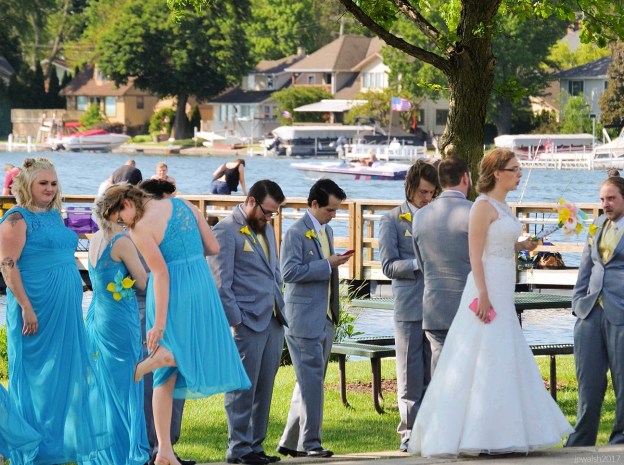
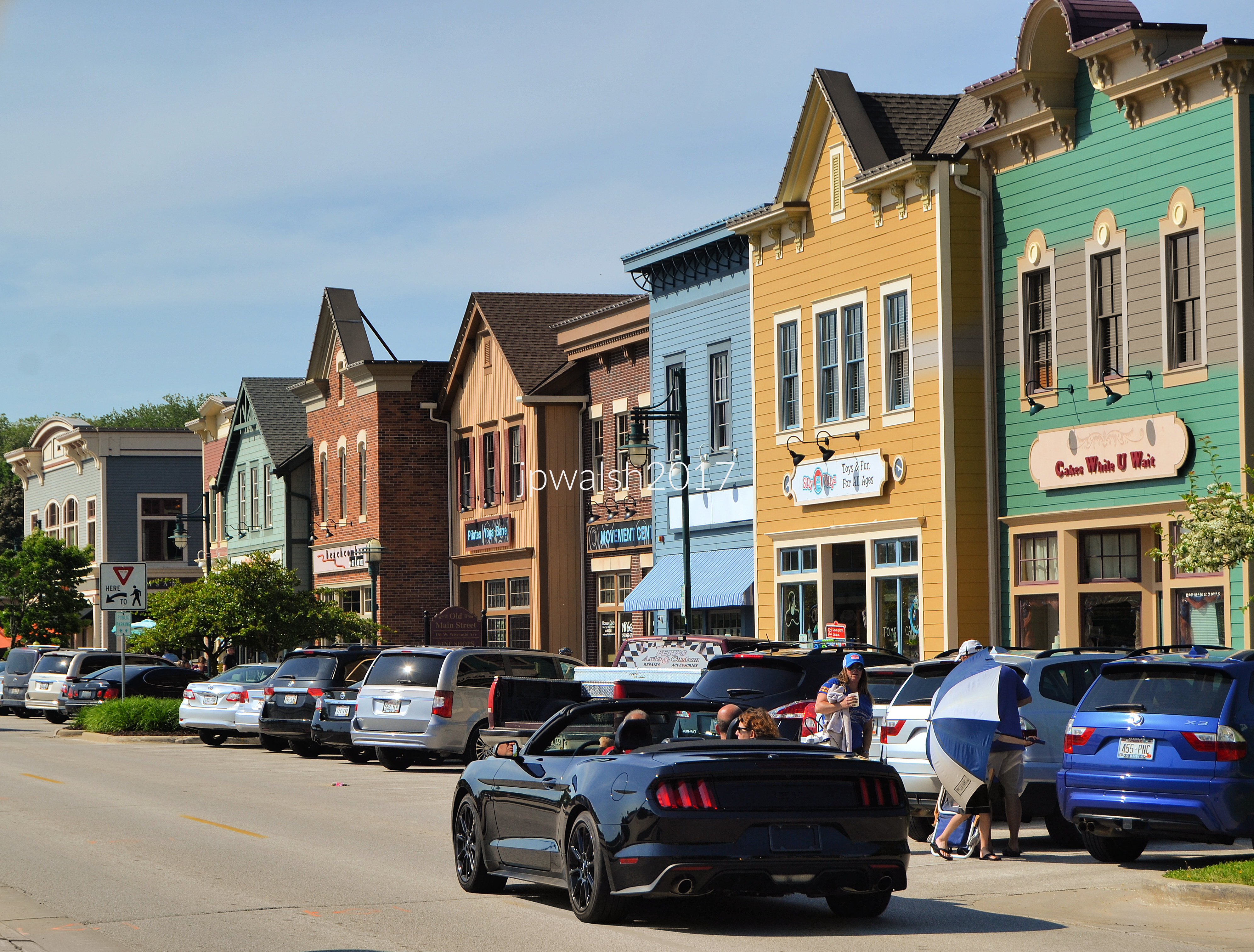
FEATURE Image: June 2017. Pewaukee, WI. Wedding party.

Midwest roads provide a pathway into the history, culture, landscapes, and everyday experiences that define America’s heartland.

All photographs and text by John P. Walsh.

July 2017. LaSalle Co., IL. 1964 Ford Galaxie 500XL Convertible.
May 2024. DeKalb Co., IL. 5.22 mb _6595 (1)

Introduction.

Here are some of my photographs featuring the people, places, and things I have seen on today’s U.S. Midwest roads.

I have a personal affinity and affection for the American Midwest. I grew up in Chicago and its suburbs, and went to school here and live here today. My family has been in Illinois since at least the 1830s.

Growing up in the Midwest, my experiences included family, friends, diverse outings, engaging jobs, and being married here. I love to explore this vast region that’s rightly called “The Heart of America.”

Memories of the Middle West — its sights, sounds, smells, and tastes — and mostly in Illinois, Wisconsin, Indiana and Michigan — are the mother’s milk of my life. In steamy summers, multi-colored autumns, ice-bitten winters, and flowering, reawakening springs to get outside to walk and ride on Midwest roads are pure adventure, then and now.

The American Midwest is filled with human stories and diverse and awesome natural beauty. There is timeless nostalgia, and, if such things don’t entice for the moment, unexpected curiosities.

For those who love it, the Midwest terrain carries all Edgar Lee Masters (1868-1950) spoke on in his last major book, The Sangamon. There is “magic in that soil, in the plains, the borders of forest, the oak trees on the hills,” the poet wrote. Masters was sure that “if you should drive through (this region)…strange dreams would come to you, and moreover those dreams would tally with mine.”

The region continues to offer the sightseer magical things. This includes its primordial aspects, such as animals, birds, natural outcroppings and waterways, as well as impressive remnants of Native American mound-building culture from the Midwest’s southern to northern reaches.

Edgar Lee Masters understood that it is the Midwest’s people – often defined as individualistic, hospitable, diverse, industrious, good-willed, courageous and independent – who imbue the region its greatest distinction. It is a populace and setting that, despite various economic setbacks and pockets of unfortunate decline, build and display what is often photographed on Midwest roads: historic canals, roads, barns and farms, houses. In the 21st century new things of interest can be seen on Midwest roads such as cellphone towers and wind turbines as older things, like barns and even some towns, decay or disappear.

Many famous American and international figures have lived and traveled on Midwest roads such as U.S. presidents, writers, actors, artists, business people, etc. This includes James Monroe (in 1785), Charles Dickens (1842), John Muir (1849), Henry David Thoreau (1861), Antonín Dvořák (1893), Winston Churchill (1946). Midwest natives include Carl Sandburg, Ernest Hemingway, Thomas Edison, Edgar Lee Masters, Walt Disney, Mark Twain, Jane Addams, Harry S Truman, Dwight Eisenhower, Ronald and Nancy Reagan, Barack and Michelle Obama,  Frank Lloyd Wright, Kurt Vonnegut Jr., John Wayne, Wyatt Earp, “Wild Bill” Hickok, Jesse James, F. Scott Fitzgerald, Judy Garland, Dinah Washington (“Queen of the Blues”), and many, many more.

But It is Abraham Lincoln whose memory is most famously linked to Midwest Roads. Riding on his horse, “Old Bob,” Lincoln loved to travel the Eighth Judicial Circuit in central Illinois as a defense lawyer. It is to the 16th U.S. president and a Midwestern spirit he manifested to whom this photographic essay is dedicated.

SOURCES: E.L. Masters quotes from The Sangamon by Edgar Lee Masters with Introduction by Charles E. Burgess, University of Illinois Press, Urbana & Chicago, 1988 (first published 1942), p.6.

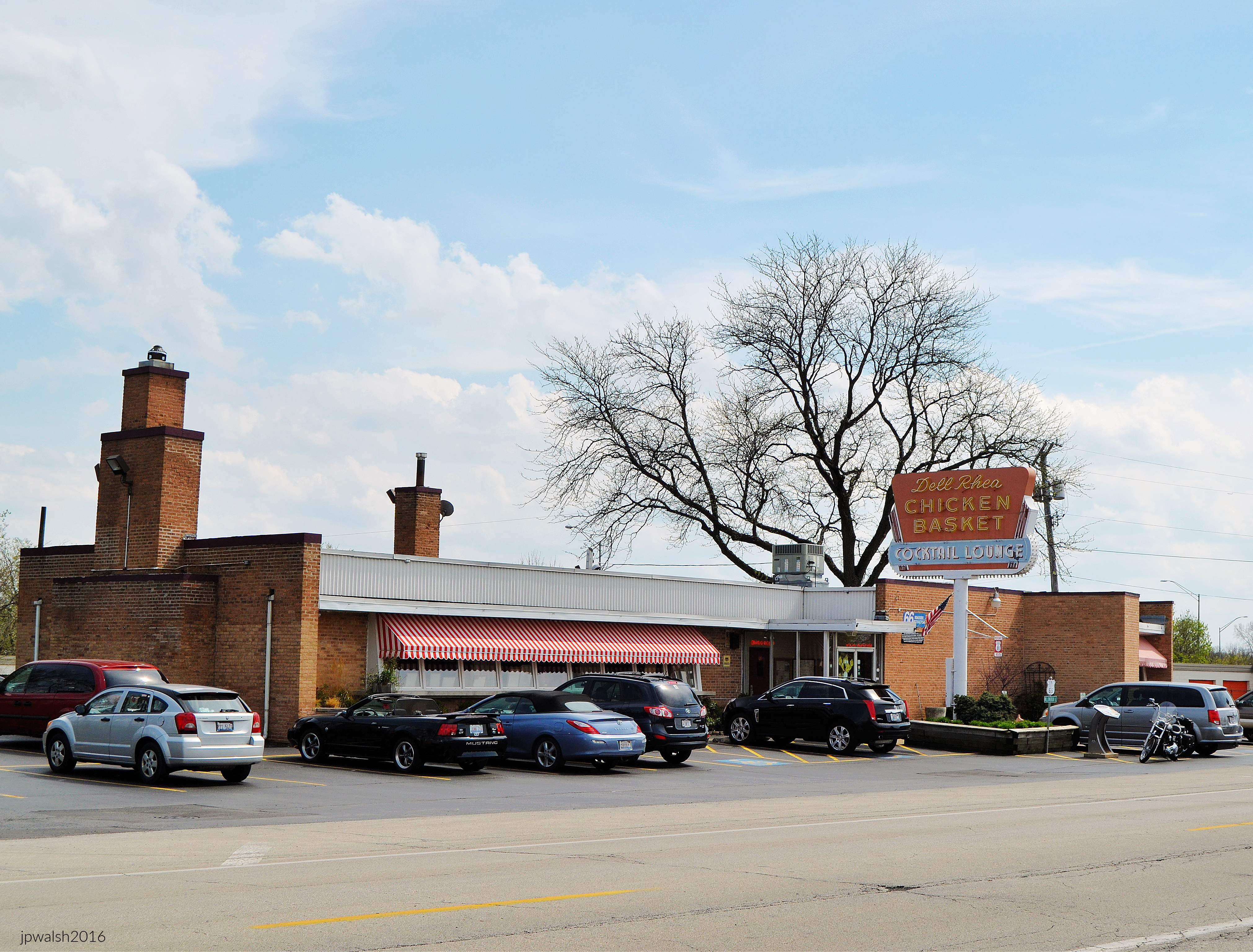
“(Get Your Kicks on) Route 66” is a popular rhythm & blues standard composed in 1946 by American songwriter Bobby Troup (1918-1999). It was a hit that same year for Nat King Cole who, with the King Cole Trio, first recorded the song. Troup got the idea for the song when taking a ten-day cross country trip with his wife in a Buick from Pennsylvania to California on U.S. Routes 40 and 66. The lyrics include some of the popular cities and towns on the route. Troup, who later became a film and television actor, certainly drove by what is today Dell Rhea’s Chicken Basket on that historic road trip.

Dell Rhea’s Chicken Basket at 645 Joliet Road in Willowbrook, Illinois, is 22 miles southwest of downtown Chicago.

April 2016. Willowbrook, IL. Chicken Basket. 6.53 mb

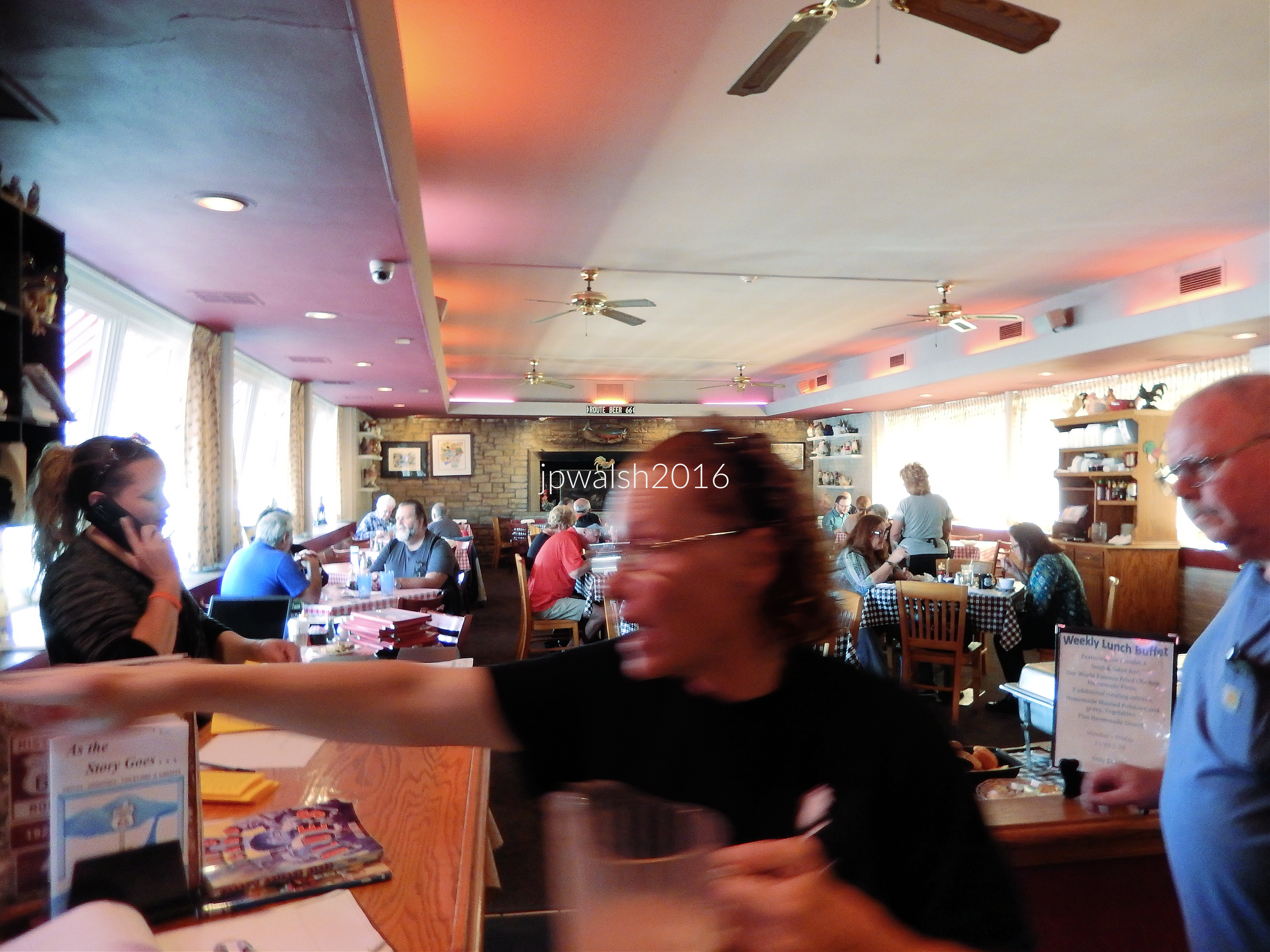
The Chicken Basket is a mandatory dine-in or carry-out stop on a “Midwest Roads” visit. Vintage roadhouse decor and family-oriented service is joined to the menu which features fresh, succulent fried chicken cooked-to-order.

Opened in 1926

The business first opened in 1926 as a gas station and lunch counter on the brand-new Route 66. U.S. Route 66 traveled from Chicago to Los Angeles, California —a distance of more than 2,000 miles.
In 1939, fried chicken was served for the first time by its original owner, Irv Kolarik.

In 1946 the present one-story brick commercial building was designed and built by architect Eugene F. Stoyke (1912-1993) next to the original building. It was during the post-World-War-II travel (and baby) boom that it became a full-service restaurant.

Original windows and signage

Dell Rhea’s bay of 9 single-light-glass-and-wood-canted windows is original where an immense fireplace anchored the dining area’s north wall. The neon-and-metal sign in the photograph was original when this photograph was taken. It was replaced in 2017 with an exact replica. In 1956, a cocktail lounge was added to the south.

Bluebird Bus stop to St. Louis

In 1962 Interstate 55 opened—the major expressway connecting Chicago, St. Louis, Memphis and New Orleans—and effectively retired U.S. Route 66 in this part of Illinois.
In front of the restaurant there was a Bluebird Bus stop (founded in 1927) which people could take to St. Louis or use to send packages across country.
New Owners

In 1963 the Chicken Basket was bought by Chicago businessman Delbert Francis “Dell” Rhea (1907-1992) who knew how to invigorate the eatery while maintaining its tradition for a new era.

The popular Chicken Basket was owned and managed by the Rhea family until 2019. The Lombardi family took over with the promise to keep intact the original recipe which is unchanged since 1946 and continue the same Chicken Basket tradition.

SOURCES: http://www.chickenbasket.com/ and https://www.nps.gov/nr/travel/route66/dell_rheas_chicken_basket_hinsdale.html.

October 2016. Chicken Basket. 7mb DSCN4085

White Fence Farm Main Restaurant 1376 Joliet Rd, Romeoville, IL is 30 miles southwest of downtown Chicago.

White Fence Farm is 30 miles southwest of downtown Chicago at 1376 Joliet Road in Romeoville, Illinois. In the 1920s Stuyvesant “Jack” Peabody (1888-1926), son of a wealthy coal baron, opened White Fence Farm to feed his personal guests who visited his 500-acre horse farm on the opposite side of the newly-opened U.S. Route 66.

In the mid1930s Peabody started to promote the domestic wine industry by featuring California wines at the Romeoville restaurant.

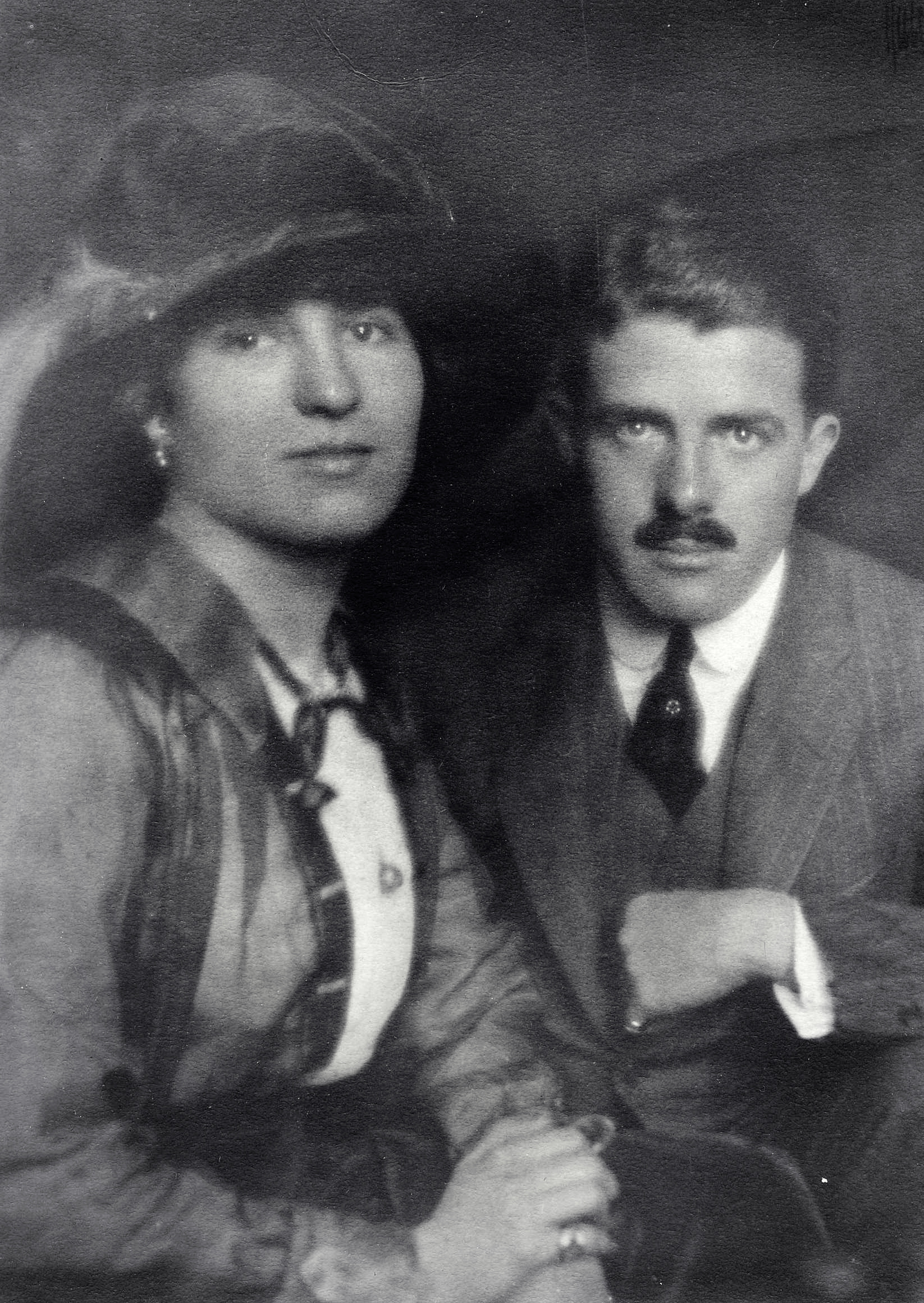
May Henderson Peabody Osborne (1891-1936) and Stuyvesant “Jack” Peabody (1888-1946)

(Above) Children of coal magnate F.S. Peabody (1859-1922) in a photograph from around 1910. When May died at 44 years in 1936 her estate was valued at around $500,000 – about $10 million in 2021. F.S. Peabody was the largest coal producer in the U.S. He died in 1922 in Oakbrook, Illinois, at 63 years old after he suffered a heart attack at a house- warming party he was giving to celebrate the completion of his new mansion.

Since 1954, the Hastert family has owned and operated White Fence Farm. Advertising itself as the “World’s Greatest Chicken,” the restaurant building has been expanded many times under the Hasterts. Within a country farm manor ambience, the popular restaurant boasts several dining rooms that can seat over 1,000 diners. White Fence Farm continues to offer some of freshest and best-tasting fried chicken in and around historic U.S. Route 66. The restaurant is a perennially popular destination, especially on weekends and during the warm weather months, where tourists and locals arrive in droves.

see – https://www.findagrave.com/memorial/207904858/francis-stuyvesant-peabody; https://www.findagrave.com/memorial/213107315/may-henderson-osborne; https://www.findagrave.com/memorial/176456605/stuyvesant-peabody – retrieved October 19, 2021.

May 2017. Will Co. Romeoville, IL, White Fence Farm.
May 2017. Romeoville, Illinois. 3.59mb DSC_0217 (1)

Dari Fair at 2813 Kilburn Ave. Hwy. 70 in Rockford, Illinois.

July 2017. Rockford, IL 2.45 mb see – https://www.wifr.com/2023/05/14/rockfords-dari-fair-under-new-ownership/ – retrieved February 19, 2024.

Since 2023 the old-fashioned walk-up ice cream window shop is under new ownership by Rockford natives and called Willyums Dari Fair.

Rich & Creamy is on the old Route 66 highway at 920 N. Broadway Street in Joliet, Illinois.

May 2017. Joliet, IL. 7.15 mb 99%

Rich & Creamy with its figures of “Joliet” Jake and Elwood Blues (“The Blues Brothers”) atop its flat roof is a classic ice cream stand on the old Route 66 highway.

U.S. Route 20 is the longest road in the country.

May 2017. McHenry Co. Near Coral, IL.

U.S. Route 20 stretches from Boston, Massachusetts, to Newport, Oregon. That’s about 3,100 miles. Route 20 began its development on the East Coast in the early-mid1920’s. The road reached Illinois in 1938 and is mostly unchanged since that time. In 1955 the Illinois General Assembly designated the road’s length in Illinois the U.S. Grant Memorial Highway. The sign was produced in late 2006.

July 2021. DuPage Co.
July 2018. Downers Grove, IL. 246kb
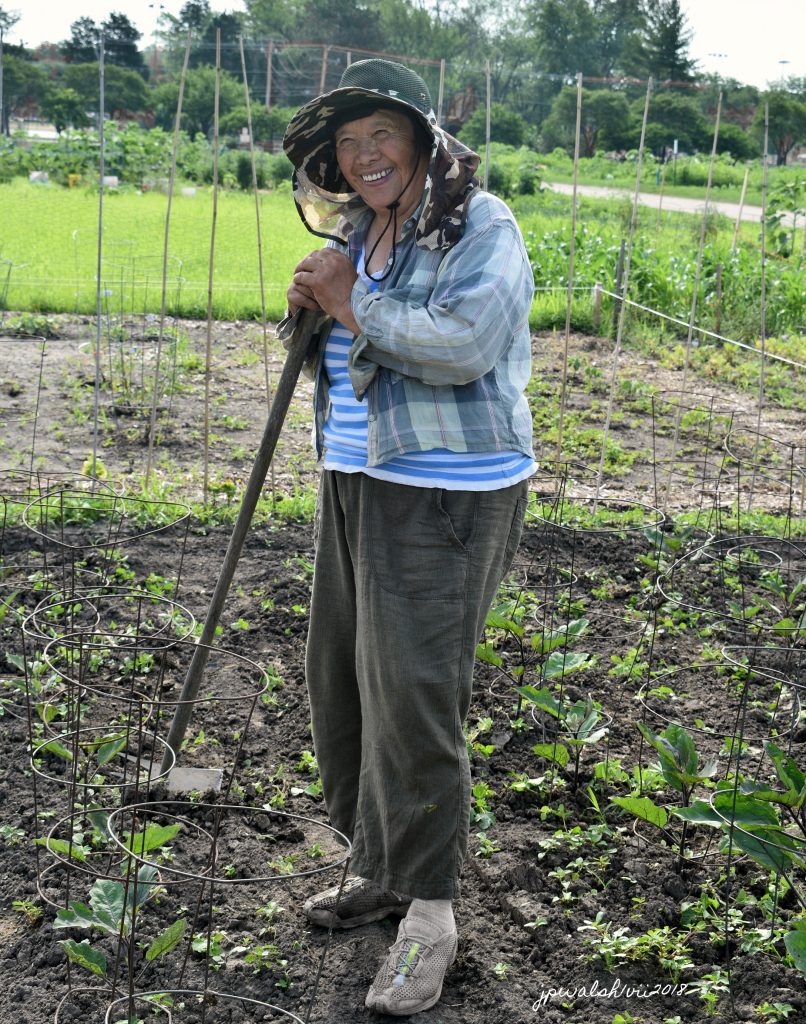
Asian Garden (Man), July 2018
July 2018. Downers Grove, IL.
June 2017. June 2017. Pewaukee, WI. Wedding party. 531 kb 50%
September 2016. Tazewell Co., IL.
September 2016. LaSalle/Grundy Cos. Seneca, IL.
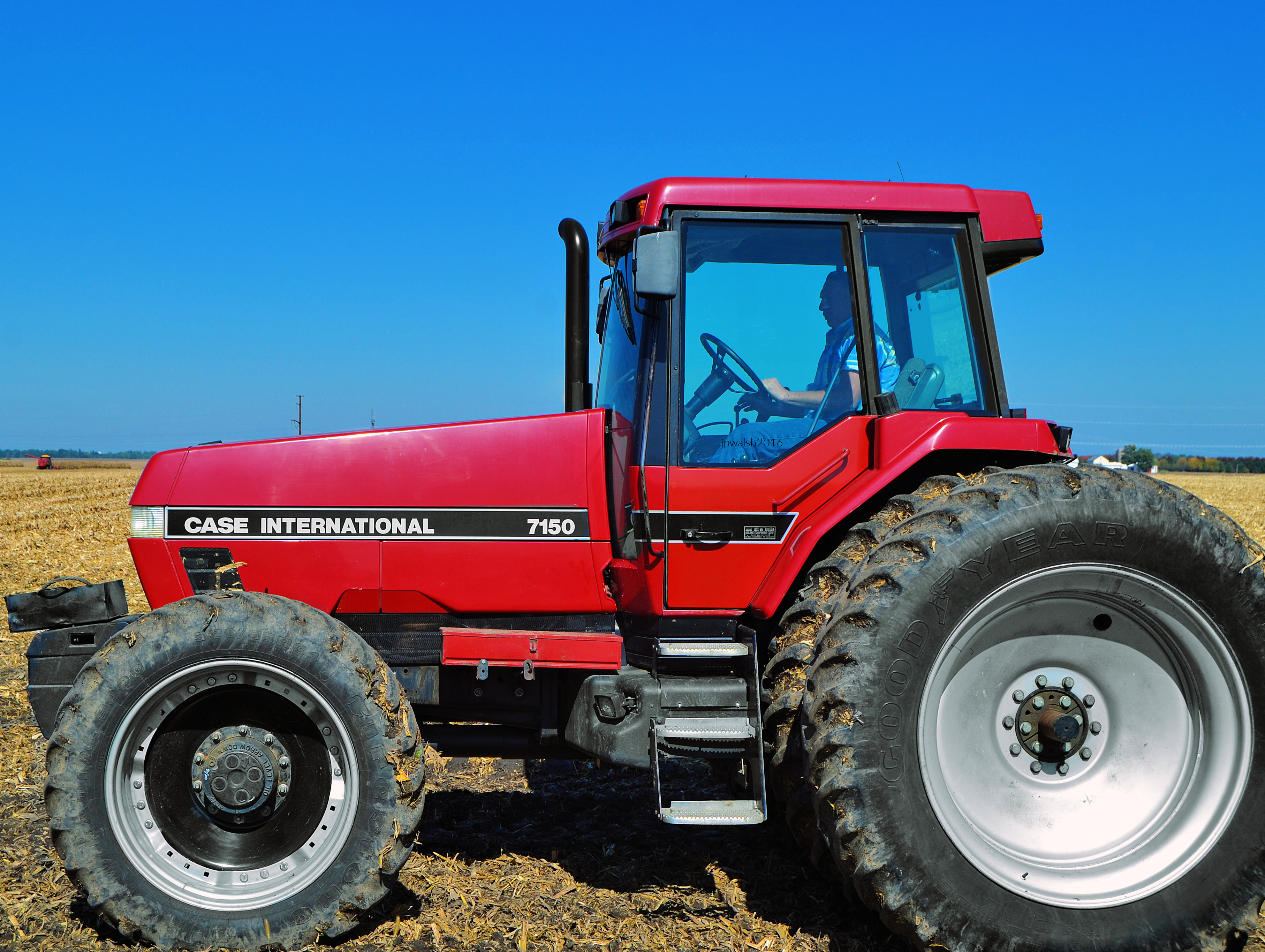
October 2016. DeKalb Co., IL. 1992 Case IH 7150 3.53mb
July 2017. Kirkland, IL (DeKalb Co.) 3.21mb (10)
August 2016. Oglesby, IL LaSalle Co. 5.84mb
August 2016. Ottawa IL 2.24mb 35%
Midwest roads.
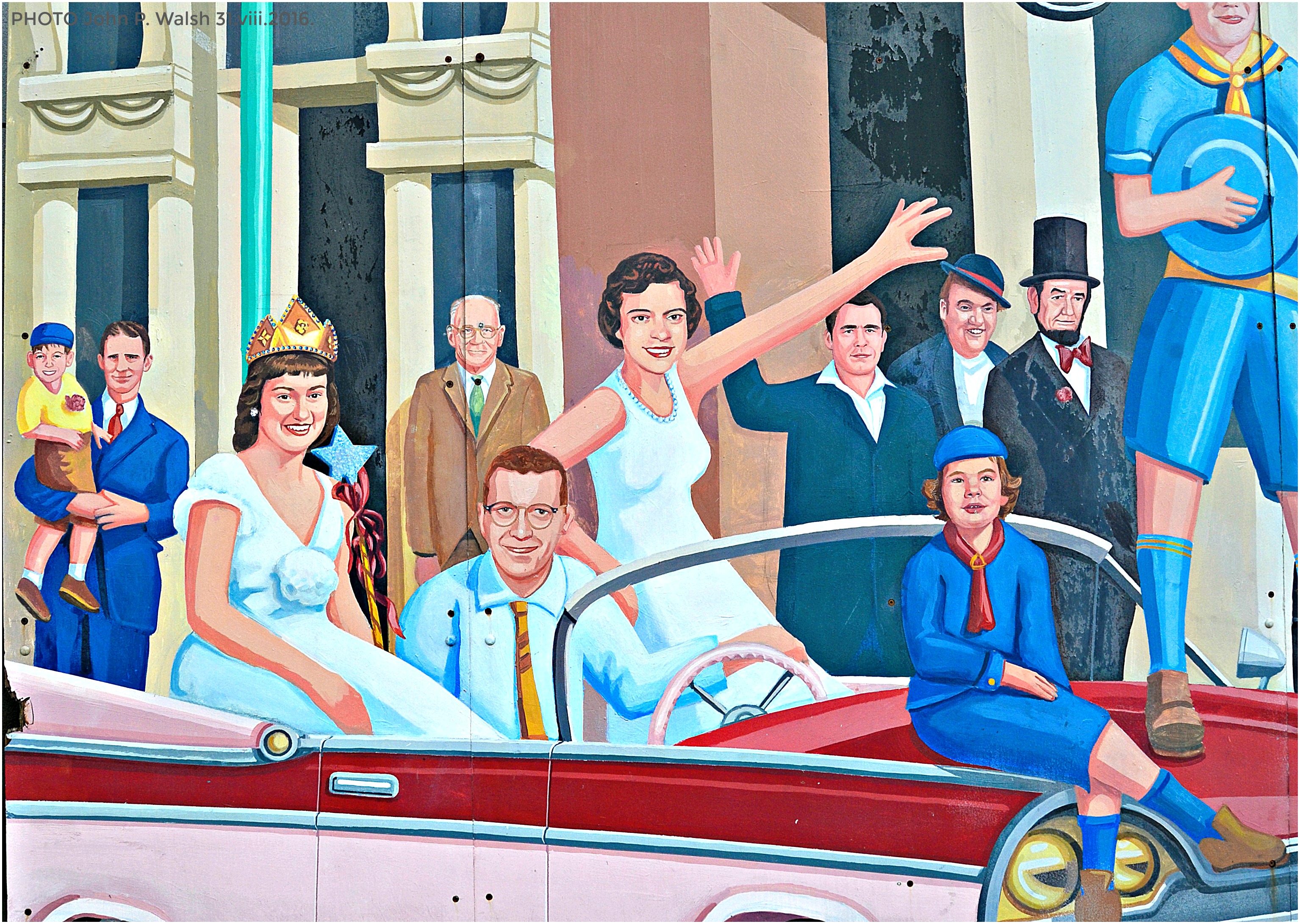
September 2016. Ottawa, IL. Bi-centennial mural (detail).
August 2017. Watseka, IL.
September 2016. DeKalb Co., IL. 3.48 mb
May 2017. Lake Geneva, WI.
July 2017. Rockford, IL.
July 2017. Rockford, IL
August 2017. Watseka, IL.

Corn for sale.

August 2014. Fox River, Kane Co., IL 8/2014
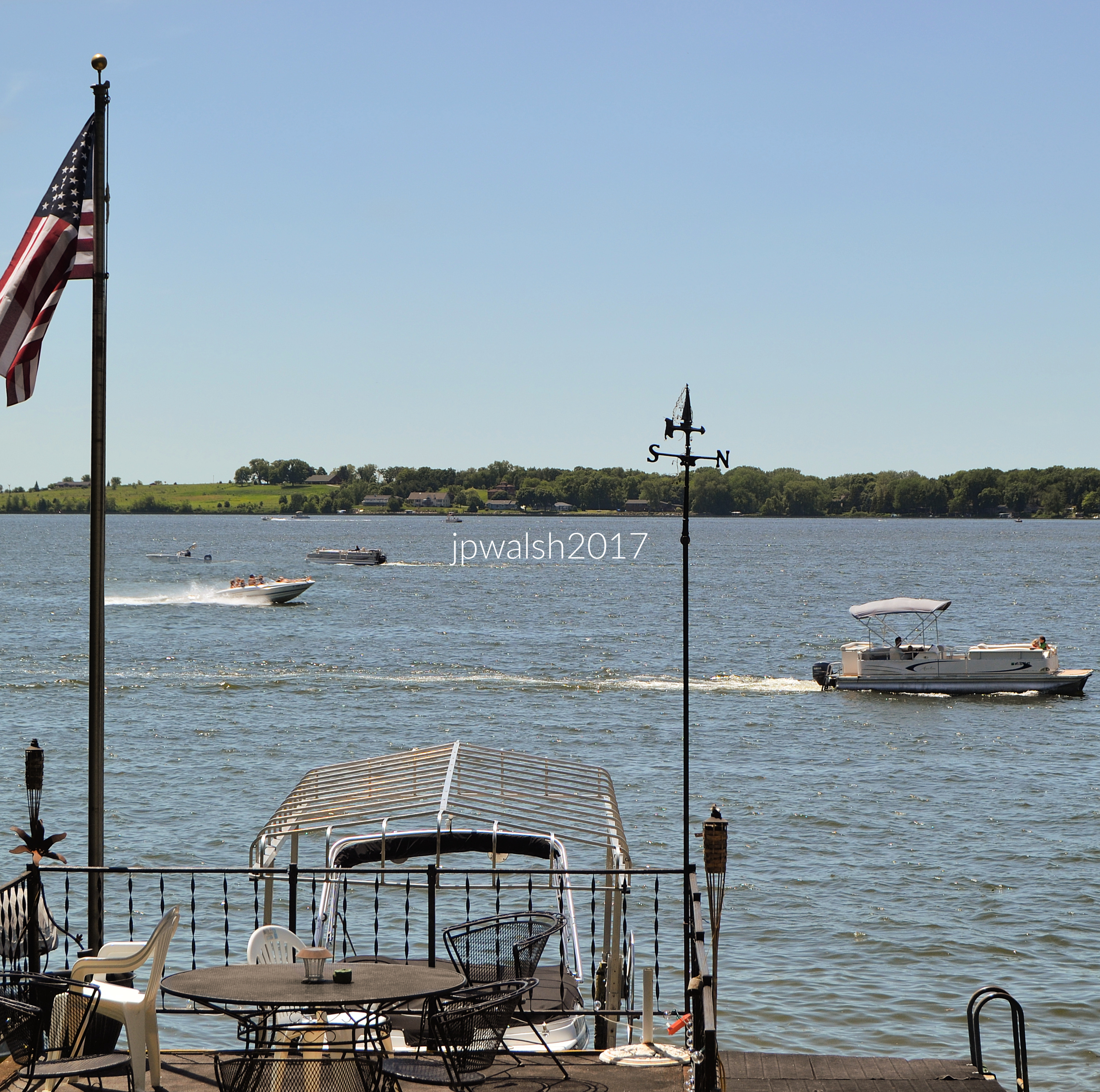
June 2017. Pewaukee Lake, Waukesha Co., WI. 7.37 mb (30)
May 2017. Lake Geneva, Wisconsin. 5.27mb DSC_0420
October 2017. Downers Grove, IL.
November 2023. 3.68mb
August 2015. Herrick Lake, Wheaton, IL.
September 2021. Farmer’s Market. Downers Grove, IL.
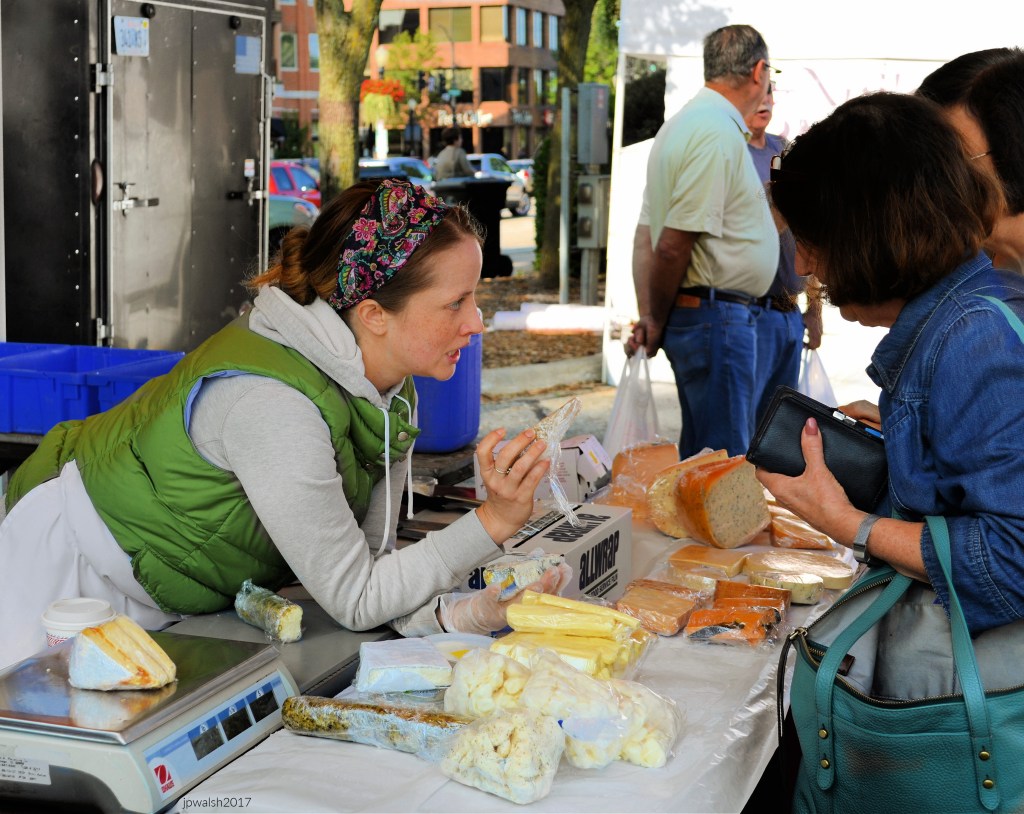
September 2017. Farmer’s Market (cheese seller), Downers Grove, IL.
August 2014. West Dundee, IL.

The small frame house, c. 1860, was moved or demolished before November 2018. The candy store, in business in West Dundee since 1998, reopened in another location “around the corner” by March 2017. see – https://www.chicagotribune.com/suburbs/elgin-courier-news/ct-ecn-west-dundee-around-corner-candy-moved-st-0312-20170310-story.html – retrieved July 2, 2021.

May 2016. Kline Creek Farm, Wheaton, IL.
June 2018. Cedarburg, WI (Ozaukee Co.) 6/2018
August 2016. Ottawa, IL. 2.46 mb
September 2016. Metamora, IL (Woodford Co.) 6.46 mb (40)
August 2023. DuPage Co. 5.89mb
May 2021. Joliet, IL.

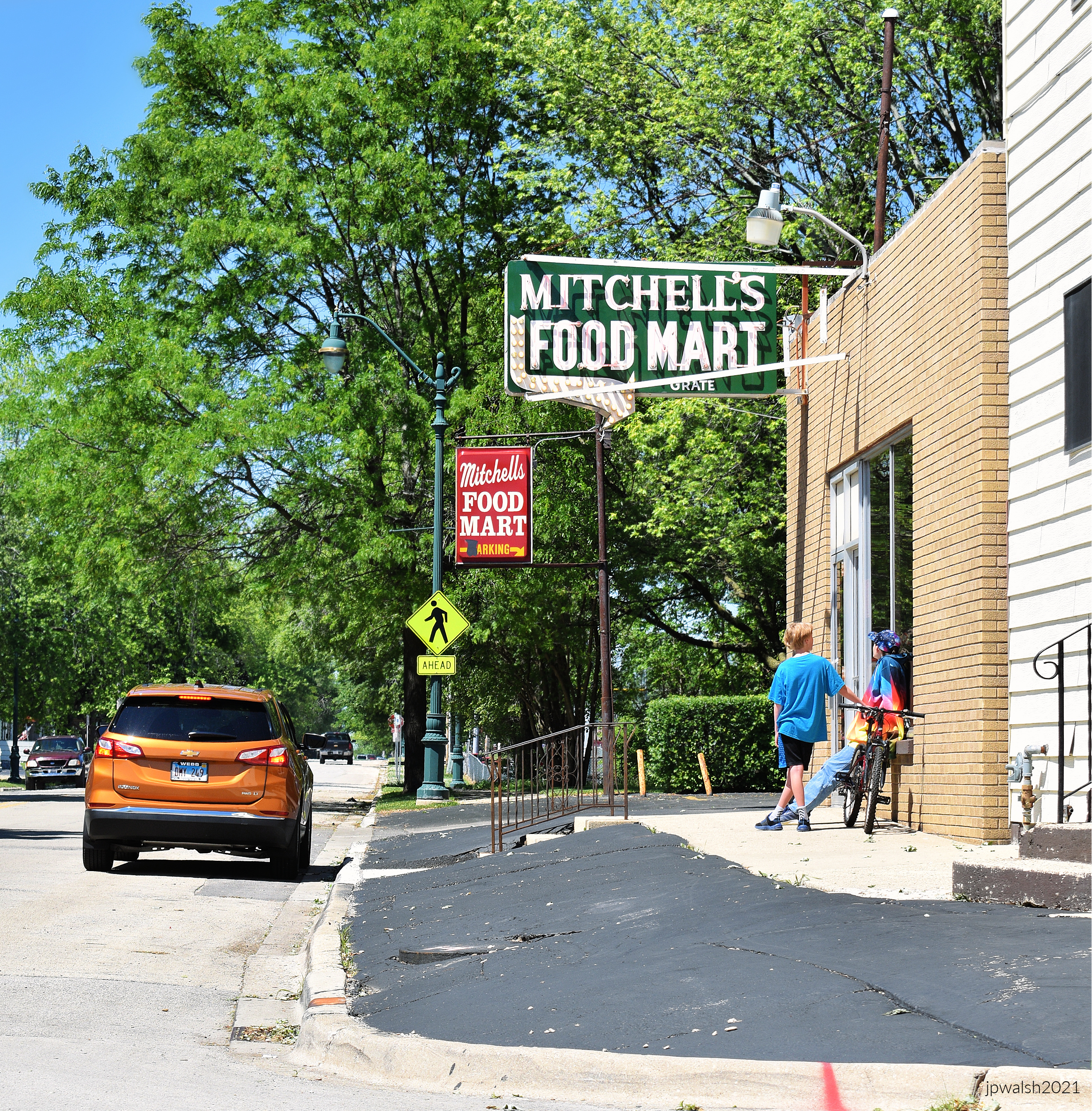
In the early 1950’s, Alfred, Jr. (Mitch) and Norma Mitchell opened a small grocery store on the corner of Raynor and Curtis Avenues. In 1957, it was expanded to the present location adjacent to the original building. A short time later, Harley Mitchell joined his brother.

July 2023. DuPage Co. 7.93mb 79%
August 2016. La Salle Country Courthouse, Ottawa, IL. 4.13 mb

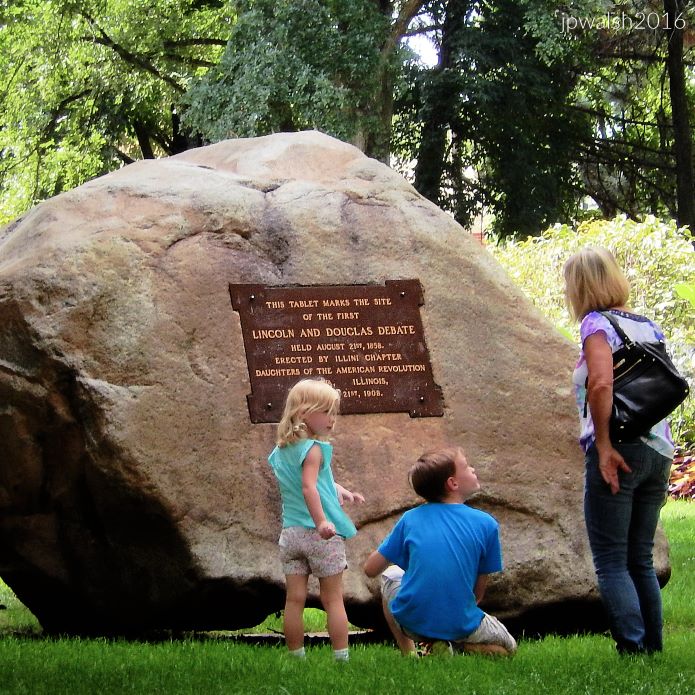
“In honor of ABRAHAM LINCOLN Who practiced law from 1851 to 1859 Before the Supreme Court of Illinois At its sessions then held in the old La Salle County Court House on this site Erected by the Illini Chapter Daughters of the American Revolution 1922.”

May 2018. Santuario de Guadalupe, Des Plaines, IL.
Grundy Co., IL. 2016 
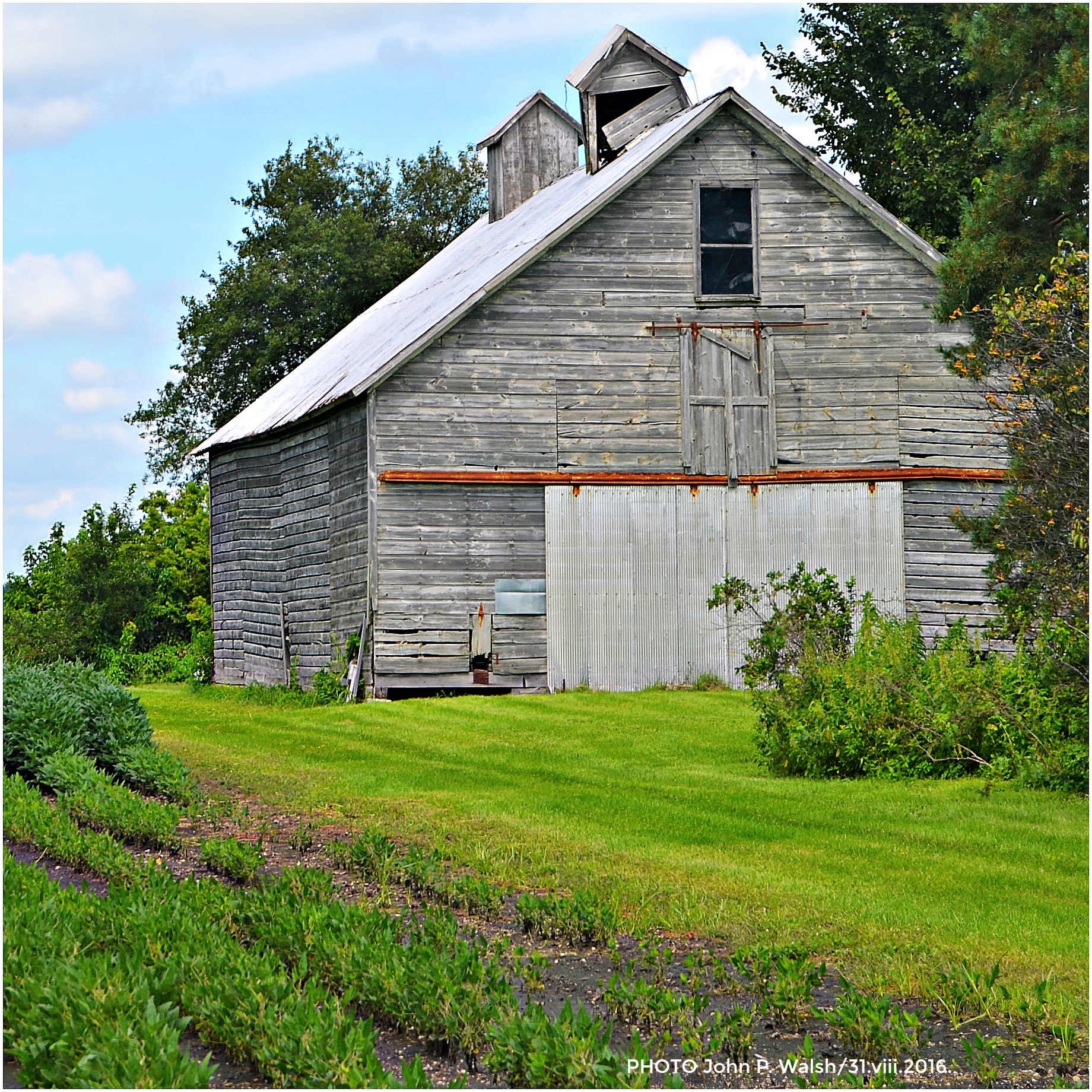
Illinois Farm (Bureau County IL) June 5, 2017.
June 2017. Bureau Co., IL.
working farm 5.31.17 jpw
May 2017. Walworth Co., WI.
red barns jpwalsh
July 2017.
June 2017. Walworth Co., WI.
Midwest Roads.
September 2016. Grundy Co., IL.  
Midwest Roads.
August 2016. Wauconda, IL.  
September 2016. Kendall Co., IL
September 2016. Grundy Co., IL.
Midwest Roads.
September 2016. LaSalle Co., IL.  
Midwest Roads.
August 2016. LaSalle Co., IL. 
Midwest roads.
August 2016. Grundy Co., IL.  
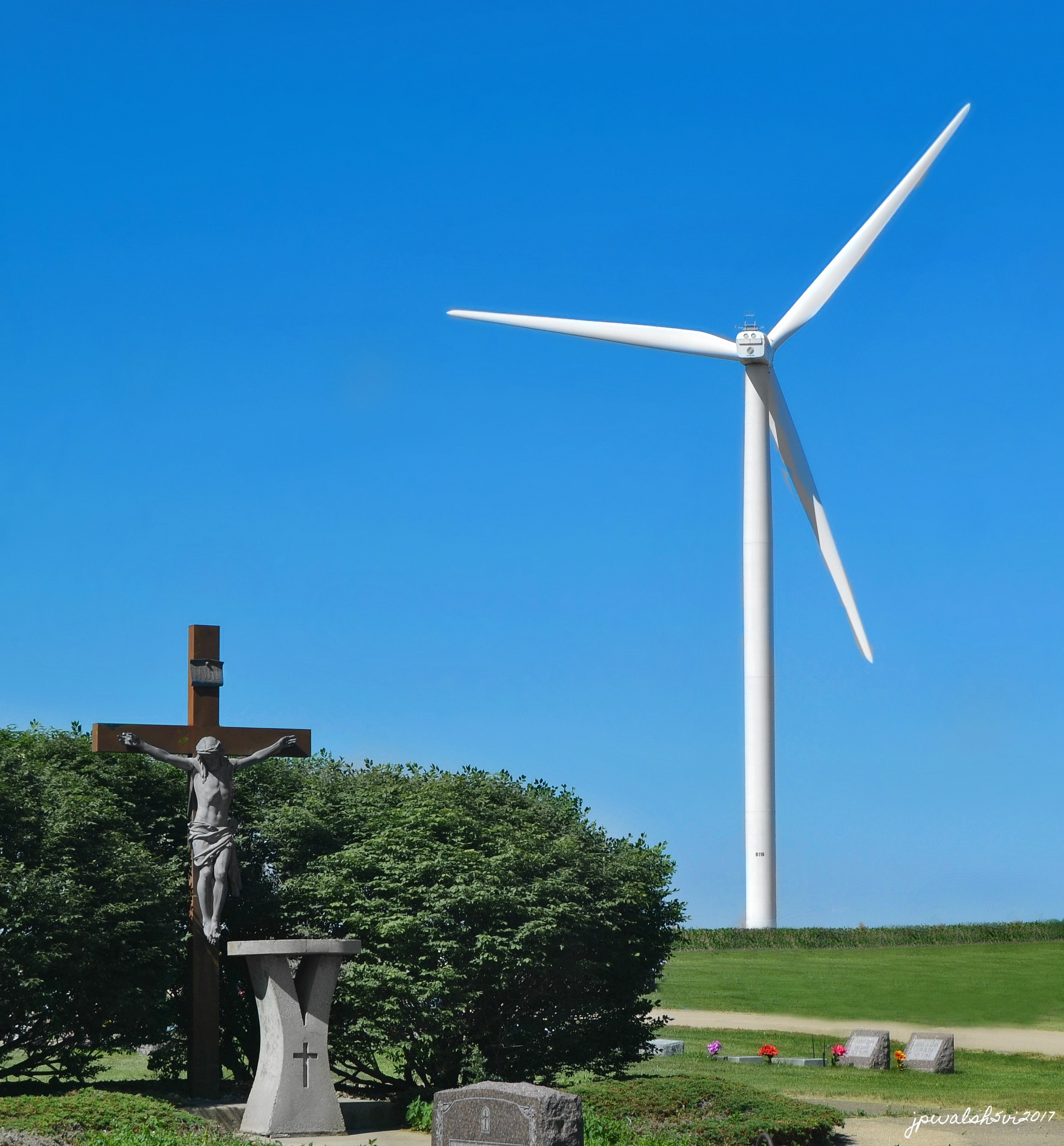
Crucifix and wind turbine (Bureau County IL), June 5, 2017.
June 2017. Bureau Co., IL.
April 2016. Oswego, IL.
April 2018. Downers Grove, IL.
April 2018. Wheaton, IL.
Wheaton, IL. 2016
June 2020. DuPage Co., IL.
May 2006. Macomb, IL (McDonough Co.)
June 2017. Lee Co., IL.
August 2017. Downers Grove, IL. Converted barn house.
August 2017. Goodland, IN (Newton Co.)
January 2021. Downers Grove, IL
June 2017. Dane Co., WI 5.69 mb
May 2017. McHenry Co., IL.
June 2017 Dane Co., WI. 4.48 mb
May 2017. Marengo IL 4.60 mb
August 2017. Iroquois Co., IL 3.16 mb
May 2023. Downers Grove IL 5/2023 7.95mb 97%
June 2023. Downers Grove, IL 7.84 mb 73%
June 2021. Wheaton, IL 7.93mb 94%
August 2023. Downers Grove, IL 7.74mb 80%
August 2017. Iroquois Co., IL 6.43 mb
October 2023. 6.83mb 99%
May 2024. Sycamore IL 99% 7.45mb (80)
August 2016. 99% 7.24mb DSCN3773 (1)
October 2022. Downers Grove, Illinois. 93% 7.92mb_8818
May 2024. 78% 7.87mb _6726 (1)

Air Classics Museum of Aviation, Sugar Grove, IL. NORTH AMERICAN AVIATION P-51D MUSTANG was an American long-range, single-seat fighter/bomber used during World War II. At the start of the Korean War, the Mustang was the main fighter of the United Nations until jet fighters (such as the F-86) took over. In the background is the CURTISS-WRIGHT CORP P-40 WARHAWK made famous by the Flying Tigers that were flown in China in 1941.

May 2024. 90% 7.61 mb _6613

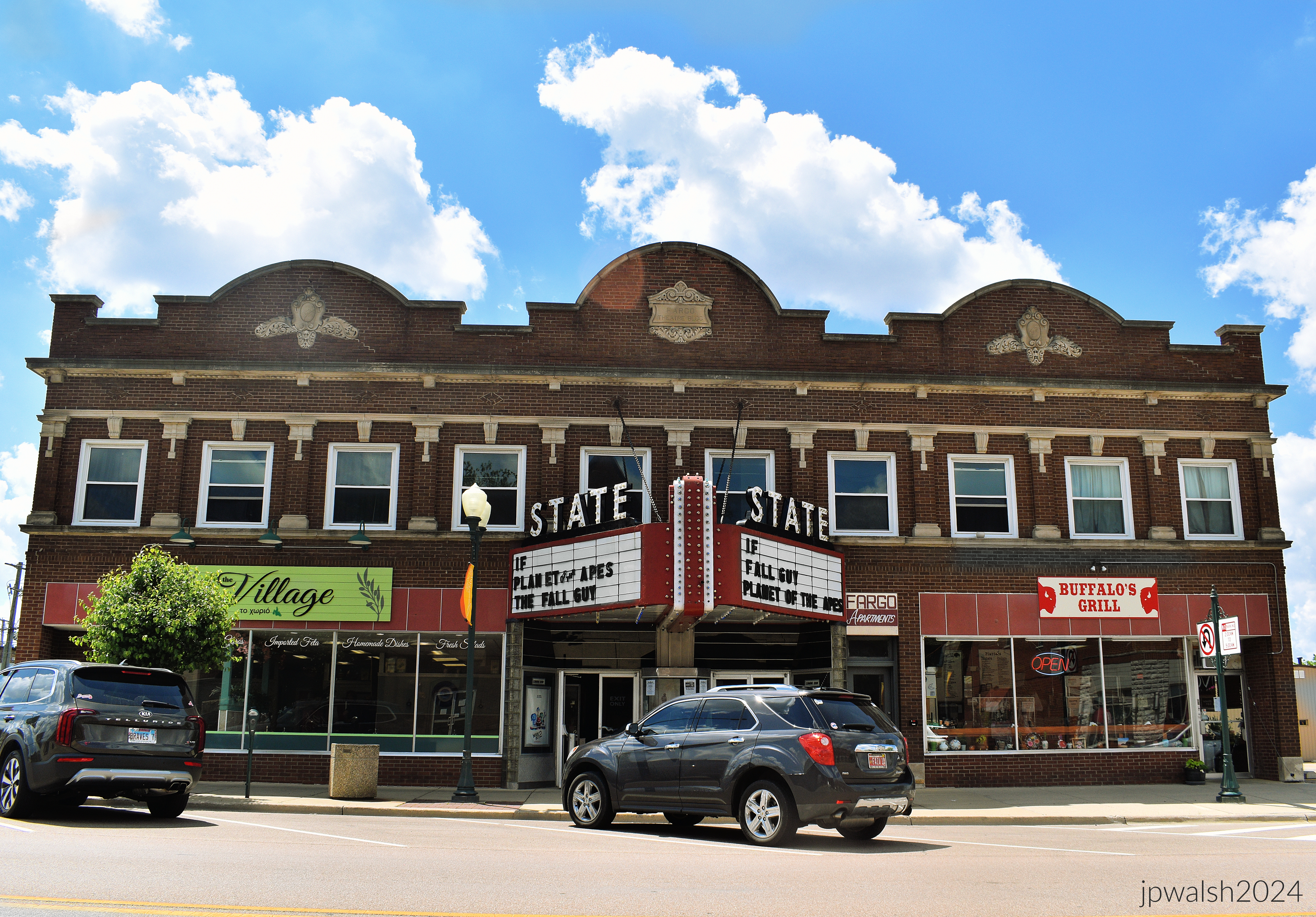
The State Theater in Sycamore, Illinois, opened as the 900-seat Fargo Theater on December 12, 1925. It was equipped with a Geneva pipe organ. It closed on November 2, 1938, and reopened later that month with 491 seats. On August 6, 1940, it was renamed the State Theater. Today it is triplex theater showing first run films. In summer 1996 we saw “Independence Day” here. https://cinematreasures.org/theaters/1658 – retrieved January 19, 2025.

May 2024. Batavia, IL 90% 7.85_6324.

Founded in 1833, Batavia (originally, “Head of the Big Woods”) is the oldest city in Kane County.

July 2016. Barge, Chicago. 4.05mb DSC_0872
August 2016. Schaumburg, IL. 4.06mb DSCN3873
February 2025. Downers Grove, IL. 78% 7.82mb DSC_7408
June 2017. Main Street Amboy, IL 5.23mb DSC_0948
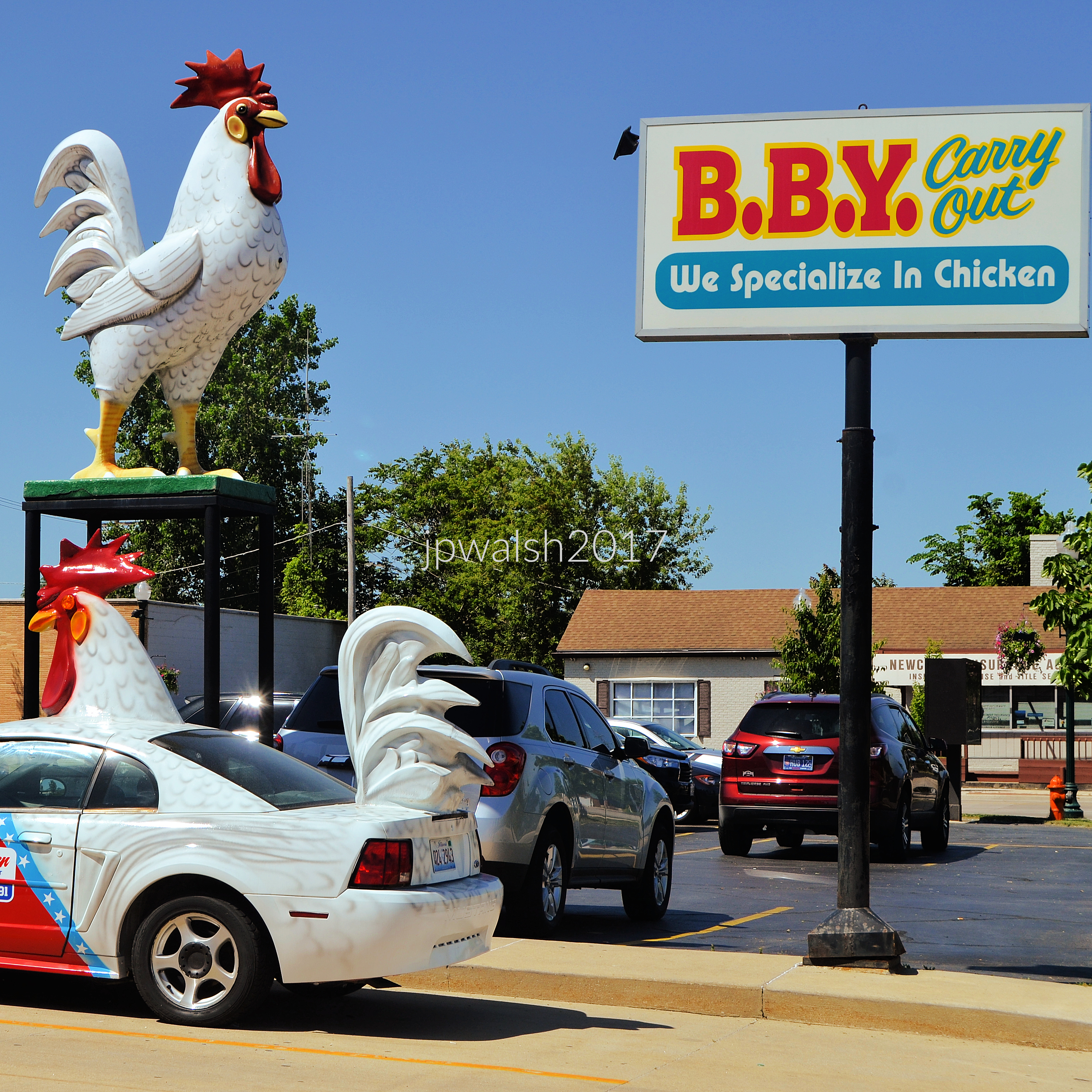
June 2017. American restaurant, since 1996. 216 W River Street, Dixon, IL. 4.01 mb DSC_0788 see – https://www.manta.com/c/mm03d4w/b-b-y-chicken-and-carry-out – retrieved June 7, 2025.
May 2016. 5.27mb DSCN2891 (1)
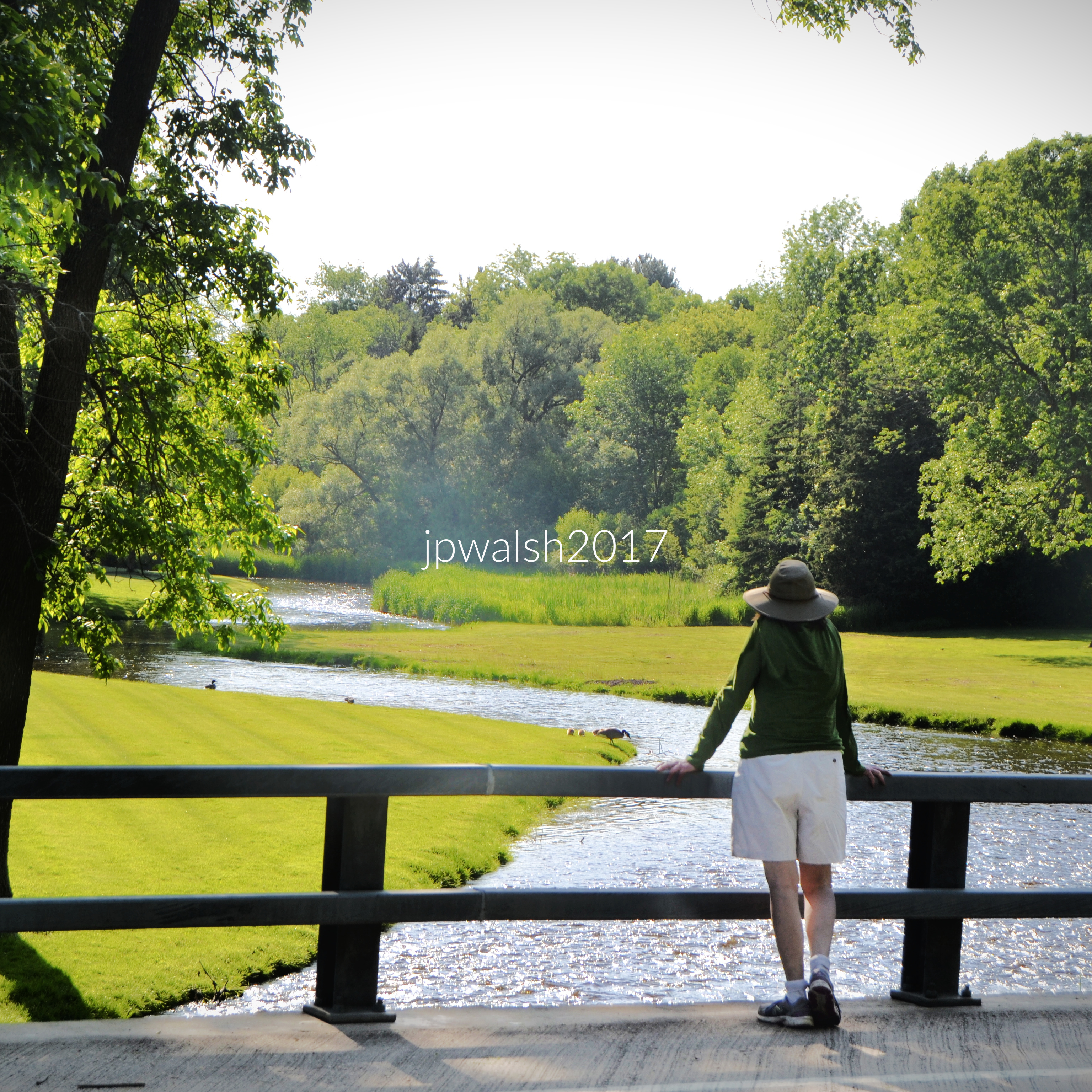
June 2017. Southern Wisconsin. 3.82mb DSC_0362 (1)
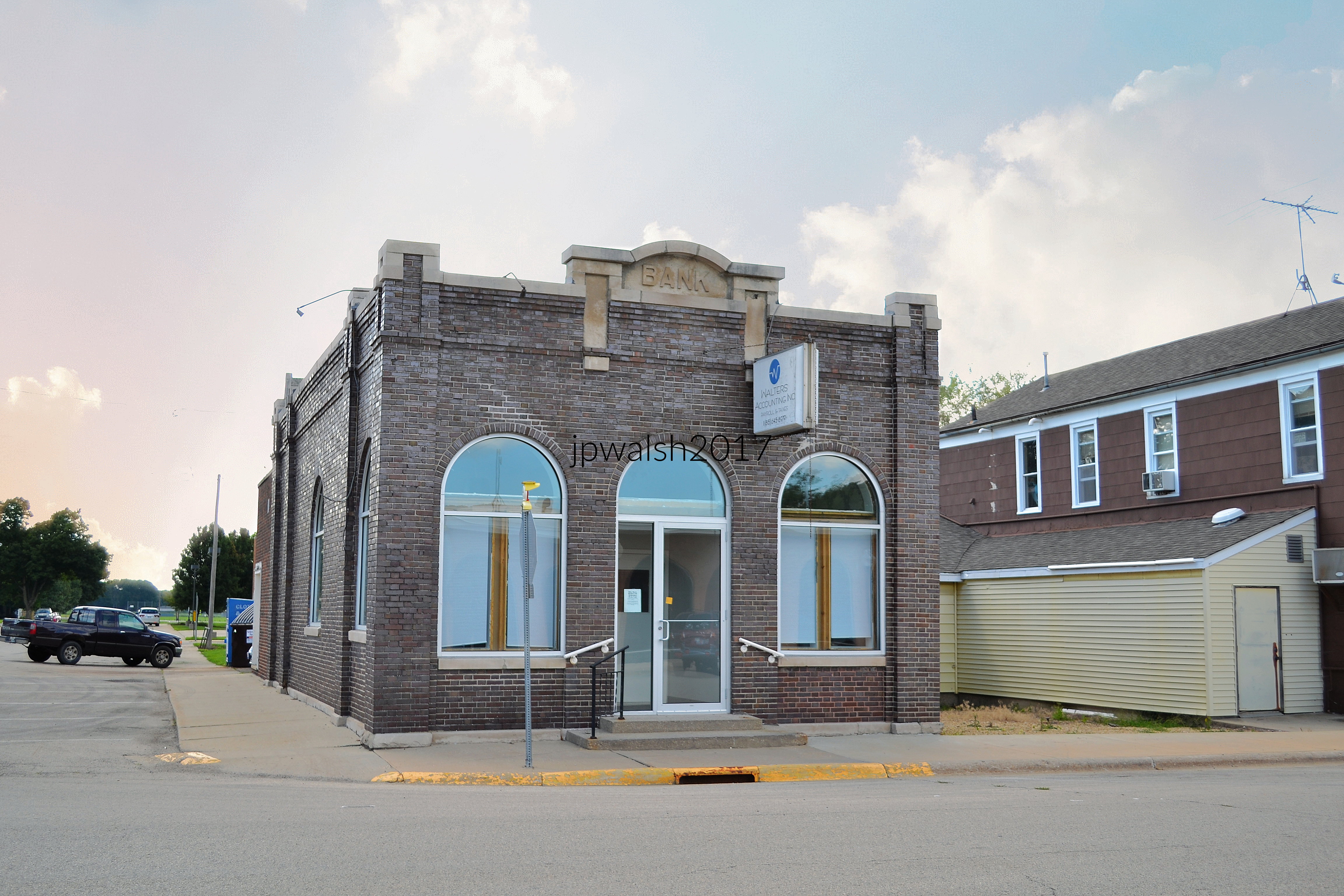
July 2017. Old bank. Ogle County IL 5.38mb DSC_0935 (1)
August 2017. Iroquois Co, Illinois 3.70mb DSC_0993
May 2016. Kline Creek Farm, West Chicago, Illinois. 6.09mb DSCN2904 (1)
August 2017. First Baptist Church, Kankakee County, IL. 6.63 mb

The event’s website claims: “”

July 2021 7.85mb. Wheaton, IL.

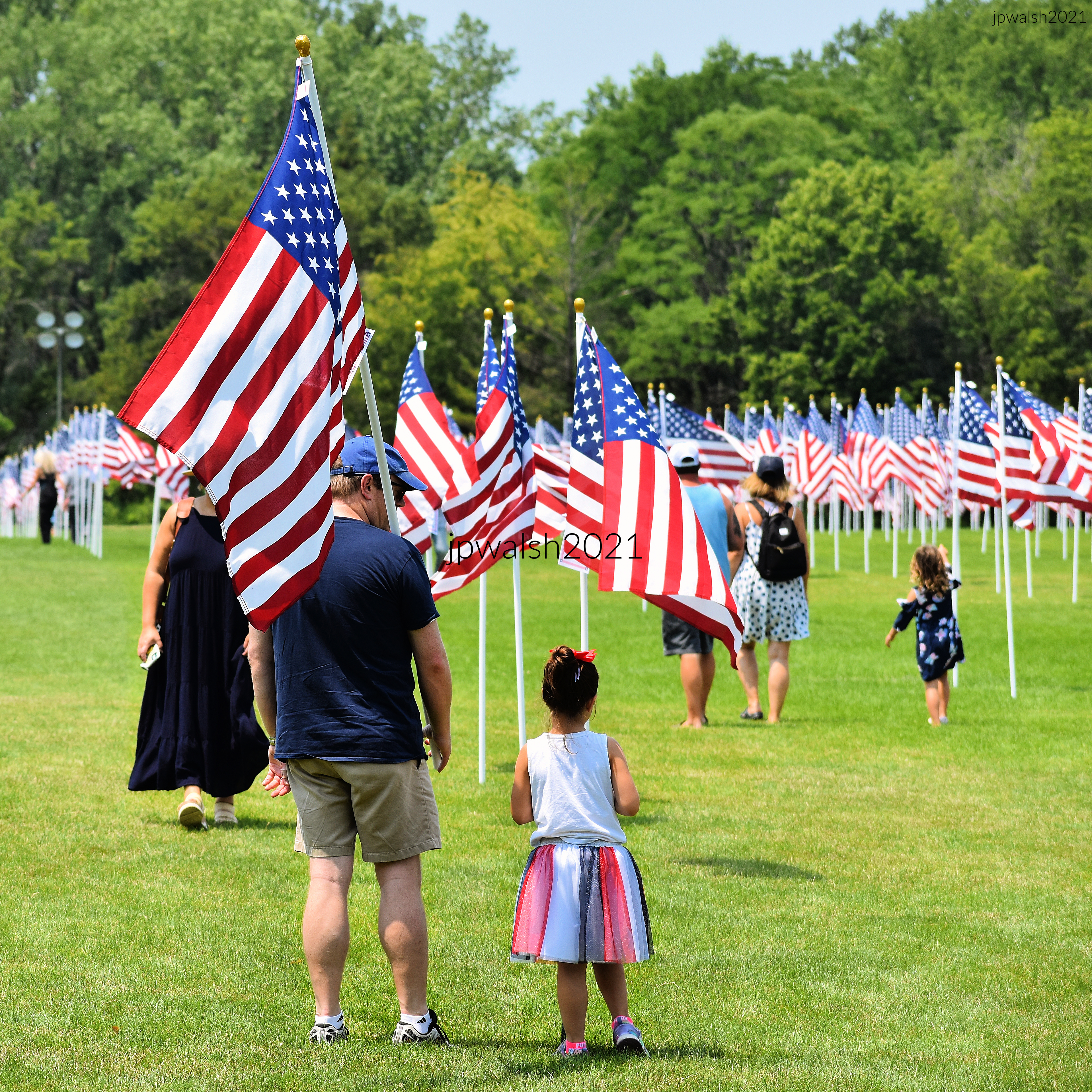
“Among the quiet rows of flags, a new generation learns what remembrance looks like. This stirring display of 2,000 flags brings the community together in a patriotic tribute to honor our heroes.”

April 2016. 1.52mb DSC_0319 (1)
June 2016. 3.05mb DSC_0719 (1)
June 2016. 3.26 mb DSC_0830 (1)
June 2016. Warrenville, IL. 2.90mb DSC_0926 (1)
July 2016. DuPage County. 2.58mb DSC_0521 (1)
July 2016. DuPage County. 2.75 mb DSC_0507 (1)
July 2016. DuPage Co. 4.53mb DSC_0670 (2)
July 2016. 215 Lincoln Highway, Rochelle IL. 6.30mb DSCN3448 (1)
July 2016. DeKalb, IL. 8.83mb DSC_0968 (1)
July 2016. Franklin Grove, IL 2.56 mb DSC_0085 copy (1)
August 2016. Chicago. 1.72mb DSCN3771 (2)
August 2016. Hanover Park, IL. 6.30mb DSC_0712 (1)
August 2016.  Prairie Preserve. 2.72mb DSC_0798 (1)
August 2016. 5.34mb DSC_0771 (1) “I went to the woods….to see if I could not learn what it had to teach (Thoreau).”
August 2016. Crete Township, IL. 6.39mb DSC_0002 (1)
August 2016. Lake Zurich, IL. 6.64mb DSC_0022 (1)
August 2016. 2.22mb DSC_0105 (1)
August 2016. Richmond, IL. 4.96mb DSC_0193 (1)

The oldest surviving building in Richmond, Illinois, was built 1844 by Charles Cotting, a pioneer who platted the town and built its first mill. The house sits on a river stone foundation.

August 2016. 6.23mb DSCN3971 (1)
September2016. Seneca, IL. 3.34 mb DSC_0363 (2)
September 2016. Plattville, IL. 4.12 mb DSC_0310 (1)
September 2016. 5.10mb DSC_0294 (1)
September 2016. Illinois field. 5.36mb DSC_0334 (1)
September 2016. Seneca, IL 3.60mb DSC_0361 (1)
September 2016. DeKalb County, IL. 2.85mb DSC_0574 (1)
September 2016. 5.98mb DSC_0635 (1)
May 2017. 3.92mb DSC_0579 (1)
May 2017. 3.84mb DSC_0508 (1)
May 2017. near IL-WI state line. 5.67mb DSC_0374 (1)
May 2017. Lake Geneva, WI. 4.06mb DSC_0431 (1)
May 2017. Lake Geneva, WI. 4.65mb DSC_0440 (1)
May 2017. 2.60mb DSC_0413 (1)
June 2017. Wisconsin. 1.83mb DSC_0985
June 2017. Wisconsin. 3.68mb DSC_0975 (1)
June 2017. Wisconsin. 4.70mb DSC_0829 (1)
June 2017. Wisconsin. 7.15mb DSC_0978 (1)
June 2017. Wisconsin, Lake Country. 5.75mb DSC_0279 (1)
June 2017. Pewaukee, WI 4.95mb DSC_0313 (1)

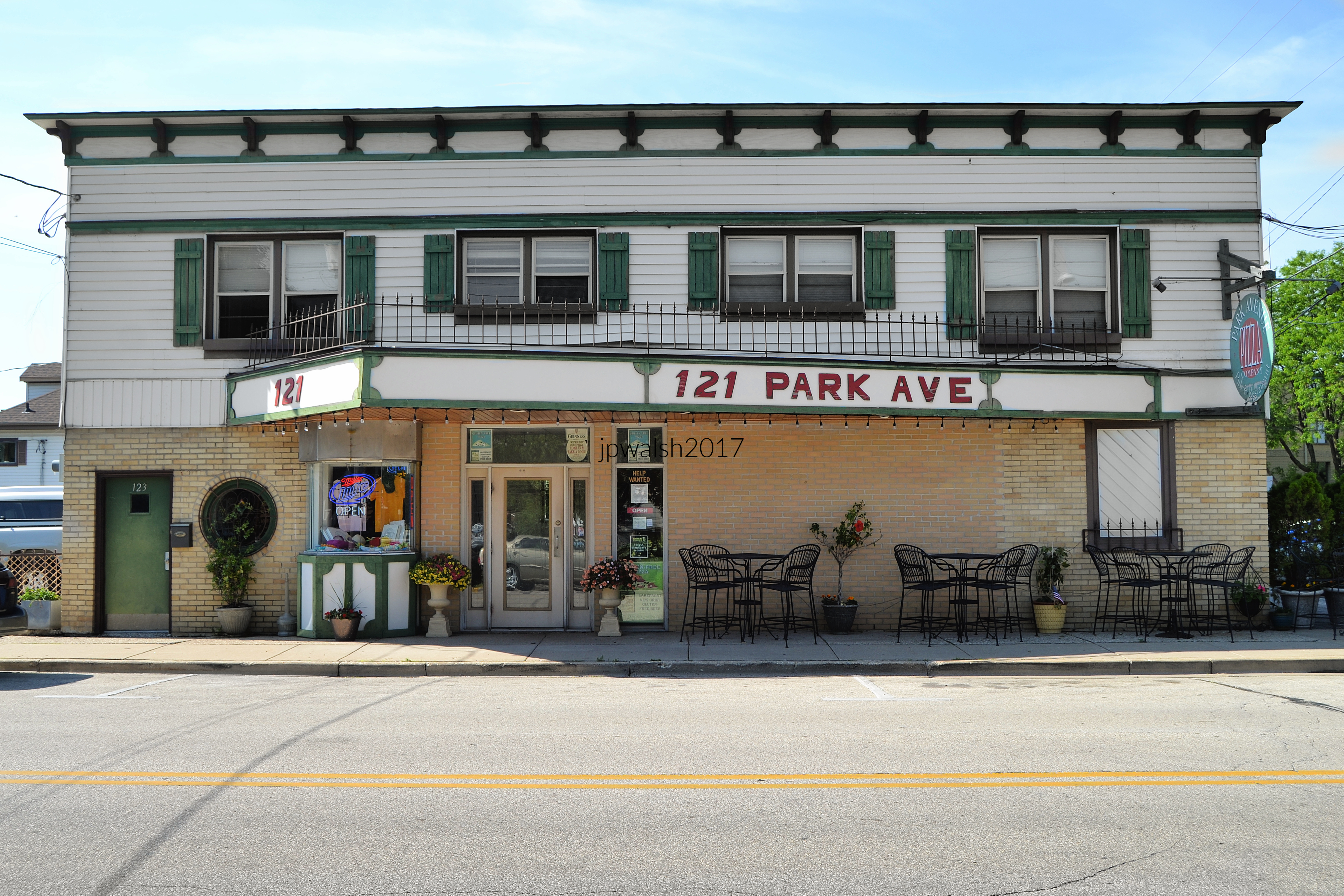
121 Park Avenue, Pewaukee, WI 53072. Opened in 1948 as the Lake Theatre, the venue closed in 1977. By 1983 the building reopened as Park Avenue Pizza Company restaurant. The ticket booth from the building’s days as a movie theater can still be seen under the canopy at left.

June 2017. Pewaukee, WI 4.87mb DSC_0321 (1)
June 2017. Pioneer museum, Aztalan, WI. 3.48mb DSC_0521 (2)
June 2017. Lake Mills, WI. 3.21mb DSC_0621 (1)
June 2017. Southern Wisconsin. 6.04 mb DSC_0638 (2)
June 2017. Dane Co., WI. DSC_0719 (2)
June 2017. 5.01mb DSC_0963 (1)
June 2017. Dixon, IL. 3.56mb DSC_0928 (2)

1552 US-52 Dixon IL. St. James Evangelical Congregational Church of Dixon, IL. Early churches in Dixon, IL, originated around 1836–1837, with Methodist and other denominations forming early congregations.

July 2017. Illinois farm. 5.52 mb DSC_0598 (1)
July 2017. LaSalle County, IL. 82% 7.85mb DSC_0396
July 2017. LaSalle County, IL. 98% 7.93mb DSC_0571
July 2017. Lutheran church. Leland, IL. 99% 7.07mb DSC_0579 (1)
July 2017. Steel barn, LaSalle County, IL. 99% 7.29mb DSC_0564
July 2017. LaSalle County, IL. 99% 7.57 mb DSC_0384
July 2017. LaSalle County, IL. 5.88mb DSC_0420 (1)
July 2017. LaSalle County, IL. 5.88mb DSC_0445 (1)
July 2017. Ottawa, IL. 5.85mb DSC_0617 (2)

Freight rail today, Ottawa was historically a stop on the Chicago, Rock Island and Pacific Railroad.

July 2017. Ottawa, IL. 2.42mb DSC_0623 (2)

Many Lutherans in and around Ottawa, IL, had been converted in Norway before emigrating to this country, but most of them came to life in God in the revivals that swept Northern Illinois in the first decades of the 1900’s. see – History – Bethel Lutheran Brethren Church – retrieved May 1, 2026.

July 2017. Near Norway, IL. 6.78 mb DSC_0967
July 2021. Wheaton, IL. 7.63mb DSC_8710 (2)

“A stilt‑walking Uncle Sam takes tentative steps and sends a ripple of excitement through the crowd.”

August 2017. 1.95mb DSC_1035
August 2017. Indiana. 2.21mb DSC_1082 (1)

Street Photography (1) and the Visual Record of Modern Life.

Feature Image: August 2021. Chicago, Michigan Avenue. 1.68mb Photographs ©John P. Walsh

All photographs and text by John P. Walsh.

May 2021. Chicago. 5.63 mb
August 2021. Chicago. DuSable Bridge. 7.23 mb. 95%
October 2016. Chicago. Old Town. 3.89 mb
October 2016. Chicago. Lakefront Park. 2.35 mb
May 2021. Chicago. Millennium Park. 2.85 mb
July 2021. Naperville, IL. 10.6 mb
May 2021. Chicago. Union Station. 2.98 mb
August 2021. Chicago. Michigan Avenue. 7.7 mb 97% (10)
August 2021 Chicago. Mag Mile. 316 kb 25%
August 2021. Chicago. Loop. 7.97 mb
August 2021. Farmers’ Market Chicago Streeterville. 5.32 mb 99% – *
August 2021. Chicago. 5.58 mb
July 2016. Chicago. 3.87 mb
August 2021. Chicago. 384kb 35%
August 2021. Chicago. 540kb 30%
June 2022. Ogden Avenue. 7.63mb
June 2022. Chicago. 5.02mb 99%
June 2022. Chicago. 5.79 mb 98% (20)
July 2015. Chicago. 3.47 mb
July 2016. Chicago. 3.52mb
June 2022. Chicago. 820kb 35%
June 2019. Oakbrook. 6.90mb 99%
June 2022. Chicago. 6.85 mb
May 2021. Chicago. 6.54 mb
June 2022 Chicago. 300kb 80%
August 2021. Chicago. 7.36 mb 99%
August 2021. Chicago. 5.22 mb
August 2021. Chicago. 7.65 mb
August 2021. Chicago. 7.72 mb
August 2021. Chicago. 5.20 mb
June 2022. Chicago. 7.93mb 99%
June 2022 Chicago. 7.89 mb 87%
June 2022 Chicago. 6.41 mb
June 2022 Chicago. 7.80 mb 90%
June 2022 Chicago. 7.97 mb 96%
August 2021. Chicago. 7.45 mb 99%
June 2022. Chicago. 7.01mb 99%
June 2018. Chicago. 6.07 mb 99%
June 2022. Chicago. 388 kb 25%
August 2021. Chicago. 6.09mb
May 2021. Chicago. 7.96 mb
August 2021. Chicago. 7.84 mb 90%
August 2021. Chicago. 7.75 mb 88%
September 2015. Chicago. 4.70 mb
June 2022. Chicago. 7.85 mb 95%
April 2023 Downers Grove, IL 1.14mb 30%
May 2023 Naperville IL. 6.08 mb
May 2022. Naperville IL. 4.91 mb
June 2023. Hinsdale, IL 3.95 mb
June 2023 7.56 mb
June 2023 Father’s Day. 6.16mb
June 2023 Hinsdale, IL 7.75mb 73%
June 2023 Hinsdale, IL 40%
August 2021. Chicago. 7.84mb 94%
July 2023 Westchester IL. 7.87 mb 86%
July 2023. July 4. 5.44 mb
June 2023 7.68 mb 74%
July 2023 6.48mb
July 2023 7.87 mb 80%
July 2023 7.81 mb 94%
August 2023. Wheaton IL. 7.86mb 59%
September 2023. Downers Grove, IL. 4.39mb
June 2023 Naperville, IL. 3.76 mb
May 2023 6.66 mb
August 2021. Chicago. 7.02mb
August 2021. Chicago. 6.60mb 99%
August 2021. Chicago. 6.77mb
June 2022. Chicago. 5.44mb
February 2024. 70% 7.83 mb
May 2024 5.49mb
May 2024 3.77mb
August 2021 Chicago 99% 7.20mb
August 2021 Chicago 80% 7.96mb
August 2024 81% 7.87mb 0938
August 2024 Chicago. 5.72mb _1510
August 2024 Chicago. 7.58 mb _1522 (1) (90)
August 2024 Chicago. 4.35.mb 1466 (1)
November 2024. 85% 7.92mb _4977
April 2015. 5.43 mb_0819 (1)
August 2016. Chicago 5.03mb DSC_0500
August 2016. Chicago 5.07mb DSC_0425
August 2017. Chicago 99% 6.58 mb DSC_1814
July 2015. Chicago. 3.38mb DSC_0362 (1)
May 2022. Chicago. 7.91mb DSC_5449 (2)
May 2022. Chicago. 99% 7.50mb DSC_5451
May 2022. Chicago. 3.37 mb DSC_5443 (2)