
Category Archives: Music – Country

Dolly Parton, Beloved American Icon Whose Legacy Spanned Music, Film, and Literacy, Dies at 80.

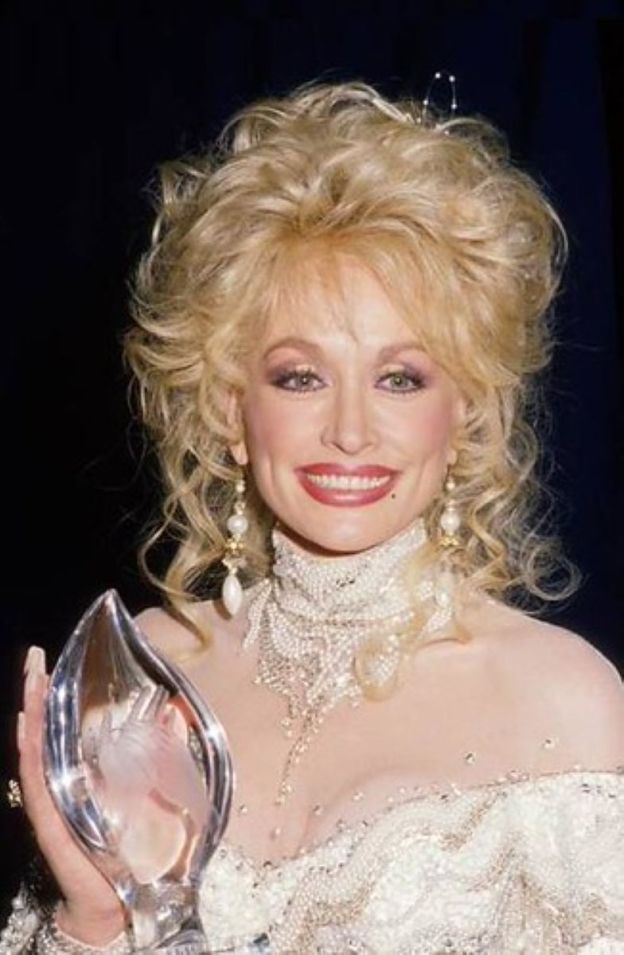
FEATURE image: Country music superstar Dolly Parton beams at the 14th annual People’s Choice Awards at 20th Century Fox Studios in Los Angeles on March 13, 1988, proudly holding the crystal flame trophy she won for Favorite Female All‑Around Entertainer. Dressed in her signature “more is more” glamour, Parton wears a custom off‑the‑shoulder white gown lavishly adorned with hand‑sewn beads, pearls, and Swarovski crystals. She completes the look with a dramatic pearl‑and‑crystal statement choker, pearl drop earrings, and her iconic feather‑teased platinum hair — a moment of pure Dolly radiance. PHOTO: “Dolly Parton 1988” by Alejo Castillo is licensed under CC BY-SA 2.0.

Country music legend Dolly Parton, who rose from Appalachian poverty to become one of the most beloved cultural figures of the past century, died on August 25, 2026, at age 80 after a brief and courageous battle with cancer. Her passing marks the end of a seven‑decade career that added soulfulness and humanity to American music, film, philanthropy, and popular culture.

Parton sold more than 100 million records worldwide, powered by era‑defining hits like Jolene, 9 to 5, and I Will Always Love You. She built a global fan base on the strength of her songwriting brilliance, crystalline voice, and unmistakable persona—equal parts wit, warmth, and steel. Beyond music, she became a formidable business force, launching Dollywood, starring in hit films, and transforming childhood literacy through her Imagination Library, which has gifted hundreds of millions of books to children around the world.

Released as a country single on March 11, 1974, Dolly Parton’s original acoustic recording of I Will Always Love You reached no. 1 on the Billboard Hot Country Songs chart on June 8, 1974. She had written both “I Will Always Love You” and Jolene on the same afternoon in 1973—a burst of creativity that produced two of her most enduring songs.

Her catalog remains one of the most influential in American songwriting. Released in 1974, “I Will Always Love You” topped the country charts and quickly became one of her signature achievements. Parton wrote it as a farewell to her mentor and longtime duet partner Porter Wagoner, crafting a song of honesty and dignity rather than heartbreak. Its emotional clarity made it a classic. Elvis Presley hoped to record it, but his manager, Colonel Tom Parker, demanded half the publishing rights—an ultimatum Parton refused, protecting a song she often described as one of her “children.” That decision proved prescient: the track generated millions in royalties and later became a global phenomenon when Whitney Houston’s 1992 cover spent 14 weeks at no. 1 on the Billboard Hot 100.

In 1980 Dolly Parton was 34 and Dabney Coleman 48 when 9 to 5 hit theaters. In the film, Coleman’s character—Franklin Hart Jr., the office’s chauvinistic boss—has just been confronted by Parton’s Doralee Rhodes after she discovers he’s been spreading rumors that they’re sleeping together. Furious that the entire office now treats her like a “dime store floozy,” Doralee calls him out. Hart tries to smooth it over, steps in close, and grabs her by the waist, telling her, “Now let’s don’t get excited,” as he minimizes his behavior. Doralee shoves him off, calls him “scummy,” and warns she has a gun in her purse. As Hart nervously backpedals—“All right, now wait, let’s just sit down and—” —Doralee cuts him off and delivers her iconic threat.

Parton’s film career produced its own cultural landmarks. In 9 to 5 (1980), she delivered one of the decade’s most memorable confrontations as Doralee Rhodes, standing up to her predatory boss Franklin Hart Jr. The film became the first female‑driven movie to cross the $100 million mark, cementing Parton as a Hollywood force and expanding her reach far beyond country music.

Written and produced by the Bee Gees, “Islands in the Stream” became one of the defining pop crossovers of the 1980s, topping the charts for two weeks in October 1983 and turning a chance collaboration into a global phenomenon. Before recording it, Kenny Rogers and Dolly Parton barely knew each other.

Her collaborative instincts also shaped pop history. In 1983, she joined Kenny Rogers for “Islands in the Stream,” a Bee Gees‑penned duet originally intended for Diana Ross or Marvin Gaye. Rogers was already a crossover titan, but Parton’s presence electrified the track. Her bright, buoyant delivery transformed a solemn love ballad into a breezy, optimistic anthem. The chemistry between the two singers felt effortless, helping the song become one of the decade’s defining pop‑country crossovers.

Dolly Parton’s death leaves a void that stretches far beyond Nashville. She was a songwriter of staggering range, a performer of rare charisma, a philanthropist who changed lives at scale, and a cultural figure whose influence touched generations. Her legacy will endure in the songs that shaped American life, in the millions of children who learned to read because she cared, and in the joy she carried into every room, every stage, every story. She will be missed—deeply, widely, and for a very long time.
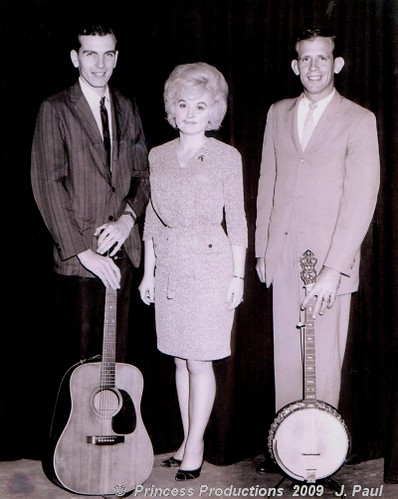
Larry Mathis, Dolly Parton, and Bud Brewster perform together as The Pick’n Grin Bluegrass Band in an early‑1960s promotional studio shoot for Cas Walker’s Farm and Home Hour in Knoxville, Tennessee. The image captures Parton at the very dawn of her musical career, years before she became a beloved American icon. Walker, a grocery magnate and media personality, gave the teenage Parton one of her first paid radio and television jobs, pairing her with seasoned local musicians like Mathis and Brewster. Those formative broadcasts helped her build stage confidence, refine her Appalachian bluegrass‑inflected vocal style, and gain the early exposure that set her on the path toward Nashville stardom. PHOTO: “Larry Mathis – Dolly Parton – Bud Brewster” by PRINCESS THEATER – Raising the Curtain is licensed under CC BY 2.0.

Olivia Newton-John’s Late-’70s Pop‑Rock Turn: A Little More Love from Totally Hot (1978).

FEATURE IMAGE: Olivia Newton-John, November 24, 1978. “File:Aankomst zangeres Olivia Newton John op Schiphol Olivia Newton John in de persk, Bestanddeelnr 930-0132.jpg” by Bert Verhoeff / Anefo is marked with CC0 1.0.

In a recording career that spanned over five decades, the singer, actress, environmentalist and animal rights activist, won 4 Grammy Awards, had 5 no.1 hit singles and several Platinum-selling singles and albums.

In 1978 Olivia Newton-John starred in Grease which grossed over $150 million worldwide (more than $680 million in 2022 dollars). The movie musical produced three hit singles that year: You’re the One That I Want sung with John Travolta (no.1 – June 10), Hopelessly Devoted to You (no.3 – September 23) and Summer Nights (no. 5 – September 30). Newton-John also appeared in 1978 in the film Xanadu, whose soundtrack went Double Platinum. With Totally Hot released in November 1978, Newton-John had a top-ten album (no.7) and single, A Little More Love (no.4). As Totally Hot reinforced the singer’s new sexier image, it reached No. 4 on the Billboard Country Albums chart.

A Little More Love is a song recorded and released as a single in October 1978 by Olivia Newton-John. It was her follow-up to her latest hit single Summer Nights, released in August 1978, which reached no.5 on the Billboard Hot 100. The single A Little More Love anticipated the release of Newton-John’s 10th studio album, Totally Hot, on November 21, 1978 where the song appeared as the lead track on side 2. .

A Little More Love became a worldwide top-ten hit single in 1979. Both the new album and single were another wildly successful collaboration for Olivia Newton-John and John Farrar, her record producer and songwriter, in the 1970’s and 1980’s.

John Farrar, 1972. Public Domain. “A Little More Love” was written and produced by John Farrar, Olivia Newton‑John’s longtime studio architect and closest musical collaborator. Farrar shaped many of her biggest hits, including “You’re the One That I Want” and “Hopelessly Devoted to You” from Grease, as well as her 1980 chart‑topper “Magic.”

A Little More Love peaked at no.4 on the Billboard Hot 100 in February 1979 and Totally Hot became Newton-John’s first top-ten album (no.7) on the Billboard 200 chart since Have You Never Been Mellow in 1975.

In the course of 1979, when My Sharona by The Knack, Y.M.C.A. by Village People, Ring My Bell by Anita Wood, Too Much Heaven by the Bee Gees, and Heart Of Glass by Blondie were some of Billboard’s year-end top 20 singles, Olivia Newton-John’s A Little More Love ranked no. 17.

Across a recording career that stretched more than five decades, singer, actress, environmental advocate, and animal‑rights activist Olivia Newton‑John earned four Grammy Awards, five No. 1 singles, and a long run of Platinum‑selling albums and singles. Her breakthrough film moment came in 1978 with Grease, which grossed more than $150 million worldwide (over $770 million today) and generated three hit singles. That same year she appeared in Xanadu, whose soundtrack went Double Platinum.

With the release of her tenth studio album, Totally Hot, in November 1978—an album that cemented her shift to a bolder, more contemporary pop‑rock image—Newton‑John scored a Top 10 album (No. 7) and a Top 5 single, “A Little More Love” (No. 4), on Billboard’s Hot 100 and Country Albums charts. The single ultimately ranked as Billboard’s No. 17 song of 1979.

The official music video for “A Little More Love,” directed by Alan Metter, places Newton‑John in a late‑’70s club setting—small stage, neon lighting, and a mood that captures her transition in 1978 from country‑pop ingénue to sleek, leather‑edged pop‑rock performer. Singing into a prominent vintage studio microphone to a live audience, she channels the immediacy of a live television appearance, feeding that raw, on‑camera energy directly into the lens, and reflecting the clean, performance-driven promotional clips that director Metter specialized in for musicians during that era. The lineup miming along in the club‑stage video is the very same circle of West Coast A‑list session players who performed on the studio recording—an ensemble whose presence underscores just how tightly the video is tied to the record’s original sound.

LYRICS: Night is dragging her feet
I wait alone in the heat
I know, know that you’ll have your way
‘Til you have to go home
No is a word I can’t say

‘Cause it gets me nowhere to tell you no
And it gets me nowhere to make you go

Will a little more love make you stop depending?
Will a little more love bring a happy ending?
Will a little more love make it right?

Where, where did my innocence go?
How, how was a young girl to know?
I’m trapped, trapped in the spell of your eyes
In the warmth of your arms, in the web of your lies

But it gets me nowhere to tell you no
And it gets me nowhere to make you go

Will a little more love make you stop depending?
Will a little more love bring a happy ending?
Will a little more love make it right?

Gets me nowhere to tell you no
And it gets me nowhere to make you go

Will a little more love make you stop depending?
Will a little more love bring a happy ending?
Will a little more love make it right?
Will a little more love make it right? Hey

Gets me nowhere to tell you no
And it gets me nowhere to make you go

Will a little more love make you stop depending?
Will a little more love bring a happy ending?
Will a little more love make it right?
Gets me nowhere to tell you no

Note: British-Australian singer Olivia Newton-John died of cancer on Monday, August 8, 2022. Newton-John was 73 years old.