FEATURE image: Henry Miller, photographed by Carl Van Vechten, 1940. Public Domain. This work is from the Carl Van Vechtan Photographs collection at the Library of Congress. According to the library, there are no known copyright restrictions on the use of this work. As the restrictions on this collection expired in 1986, the Library of Congress believes this image is in the public domain. However, the Carl Van Vechten estate has asked that use of Van Vechten’s photographs “preserve the integrity” of his work, i.e, that photographs not be colorized or cropped, and that proper credit is given to the photographer.
We have two American flags always: one for the rich and one for the poor. When the rich fly it, it means that things are under control; when the poor fly it, it means danger, revolution, anarchy. The Air-Conditioned Nightmare (1945).
The world dies over and over again, but the skeleton always gets up and walks.The Wisdom of the Heart, “Uterine Hunger,” (1941).
Actually we are a vulgar, pushing mob whose passions are easily mobilized by demagogues, newspaper men, religious quacks, agitators and the like. To call this a society of free peoples is blasphemous. What have we to offer the world besides the superabundant loot which we recklessly plunder from the earth under the maniacal delusion that this insane activity represents progress and enlightenment?The Air-Conditioned Nightmare, Preface (1945) on the people of the U.S.
Perhaps I am still very much an American. That is to say, naïve, optimistic, gullible…In the eyes of a European, what am I but an American to the core, an American who exposes his Americanism like a sore. Like it or not, I am a product of this land of plenty, a believer in superabundance, a believer in miracles.Big Sur and the Oranges of Hieronymous Bosch (part 3), “Paradise Lost,” 1957.
The mission of man on earth is to remember. To remember to remember. To taste everything in eternity as once in time.Remember to Remember, 1947.
Everything which evokes raptures from me, in connection with France, springs from the recognition of her Catholicity. Remember to Remember, 1947.
To make whole, universal, to include everything, that is the pristine sense of being catholic. It is the attitude which the healer adopts.Remember to Remember, 1947.
I began to realize that I was living in a treasure garden, the garden of France at which the whole world casts loving, yearning glances.Remember to Remember, 1947.
To penetrate the spirit of France one has to examine her art; it is there she reveals herself absolutely.Remember to Remember, 1947.
The obsession for beauty, for order, for clarity – why should I not add “for charity”? – that is what underlies the spirit of creation, which is the true seat of resistance.Remember to Remember, 1947.
The [artists] are, as we have been told so often, the eternally young. They ally themselves with all that endures, with that which triumphs even over defeat.Remember to Remember, 1947.
The artist is not a revolutionary, he is a rebel. Remember to Remember, 1947.
Henry Miller, Paris. Photography by Brassaï, 1931.
FEATURE image: The Millers in 1920. Lee, Erik, Theodore, Florence and John.
The Millers, Theodore, Elizabeth Lee, Erik, John and Florence, in 1923.
By John P. Walsh
In the first decades of the twentieth century it became increasingly common practice for established American families to reflect and display their personal lives as well as social status in the timely gathering of photographic portraits. Progressively, the American family unit grew more compact in tandem with its greater personal affluence in an economy increasingly dominated by mechanization and the manufacture of consumer goods, all of which worked relentlessly to replace farming as the engine of American enterprise.
The Millers of Poughkeepsie, New York – a seventeenth century town eighty miles north of New York City which in the eighteenth century had progressed to an early state capital and, by 1910, a significant stop on the railroad line1 – shared that prototypical family form as they gathered for their family portraits between 1914 and 1932.
After 1900, camera availability and quality had markedly improved. Moving into the popular culture, photography allowed the display of a family image that is relaxed and natural as well as a time capsule of its members. In the instance of the Millers their formal and informal photographic portraits capture what appears to be a cohesive family unit expressive of their times. They are within a thoughtfully creative pose and posture likely managed by the head of the household, Theodore Miller (1872-1971), an energetic lifelong amateur photographer.
These portraits are ambitious for an aesthetic which manifests as a controlled vibrancy in the sitters as well as overall composition. The outcome for these portraits which all include Lee Miller as a child and teenager are photographs that combine the qualities of the fine arts with the more delicate workings of a machine.
Lee Miller at about eight months old, c. December 1907. Taken by her father Theodore Miller, the amateur photographer would photograph his daughter near incessantly from her childhood into adulthood. Part chronicle, part creative project, their photographer-model relationship could be unusual as he photographed his daughter nude at times over the same time period.
Lee Miller at 8 years in a photograph by her father, Theodore Miller, in 1915.
The Millers, headed by highly credentialed mechanical engineer and amateur photographer Theodore Miller and his wife Florence (1881-1954), saw the couple produce a handsome family: brothers John MacDonald (December 15, 1905-2008) and Erik Theodore (born May 22, 1910-?) and middle daughter, Elizabeth Lee, later Lee Miller, Lady Penrose (April 23, 1907-1977).
In childhood, Lee was curious, had her special interests and likes, especially the newly invented movies, and was encouraged by her parents to be free and active. Rambunctious in youth, Li-Li (Elizabeth Lee’s nickname) expressed herself as a sort of tomboy and later a definite teenage rebel. In school she was often undisciplined and, as the ringleader, provocative.2
When she was ten years old in 1917, her father gave Li-Li an inexpensive and popular Kodak Brownie to take photographs. Kodak used the box camera to sell more products and popularize photography. Almost more like a toy, the Brownie series was first introduced in 1900 and extensively marketed to children,3 although they were taken by soldiers into World War I.
Kodak Brownie similar to the first camera Lee Miller had when she was 10 years old that was given to her by her father.
In the age of American invention, teenage Li-Li Miller, intelligent and creative, was fascinated by her father’s enduring experimentation with new camera gadgets including stereoscopy. That photographic application produced two-dimensional images which, when combined in the brain, gave the perception of three-dimensional depth.4
The Millers in 1914. Florence, Erik, Lee, John, Theodore.
Lee Miller and her mother in 1914.
In an almost desperate search for an academic program to constructively engage their daughter’s interest, the Millers placed Li-Li in and out of several schools around Poughkeepsie. Lee traipsed through Governor Clinton school to Oakwood Quaker to St. Mary’s Catholic to Eastman Business College to Putnam Hall known as the prep school for local Vassar College.
Even with extra-curricular dance and theater activities as well as sojourns into creative writing – along with extended trips to New York City and, accompanying her father on business trips, such as to Puerto Rico on a cruise – by 1920 Li-Li seemed only most uniquely prepared to embrace the intrepid nonchalance of the flapper whose age had arrived thanks to the appearance of This Side of Paradise by F. Scott Fitzgerald.
“The Flapper” as conceived by American illustrator Frank Xavier Leyendecker (1876-1924) for Life magazine in 1922. It seemed by the start of the 1920’s, the teenage rebel and provacateur Lee Miller was ready to embrace the Flapper’s nonchalant image.
The Millers in 1920. Lee, Erik, Theodore, Florence and John. The teenager bobbed and later permed her golden hair to match a new decade’s fashionable style as she looked for the next exit out of Poughkeepsie.
At the end of a record-cold spring of 1925, Li-Li, called spoiled and well-to-do by many of her neighborhood classmates, took a ship for Paris, France, on May 29 of that year. The Millers’ intention was not to internationalize the shortcomings of their daughter’s educational career, but to assist in the rebellious 18-year-old’s discovery and development of a talent and skill to match her artistic temperament.5
No one could predict in 1925 that after spending this short period of time in Europe as a teenager, Li-Li Miller of Poughkeepsie, New York, will, as Lee Miller, finally return to Europe to spend most of the rest of her life, over 50 years. In those adult years, Miller became a celebrated artist’s and cinema’s muse as well as an important World War II photographer.
In the cold spring of 1925, Lee Miller is joined by her father as the 18-year-old Lee boards the ship that will take her to Paris to study. The family’s hopes include that in Paris Lee will find and develop some talented skill to express her artistic temperament.
FOOTNOTES:
1. Burke, Carolyn, Lee Miller: A Life, Alfred A. Knopf, New York, 2006, p.6. 2. Haworth-Booth, Mark, The Art of Lee Miller, Yale University Press, 2007, p. 14; provocative-Burke, p. 24. 3. Roberts, Hilary, Lee Miller: A Woman’s War, Thames & Hudson, 2015, p. 190. 4. see Lincoln, Tom, Exercises in Three Dimensions, 2011. http://www.lincolntom.com/pages/Exercises%20in%203D.html- retrieved April 17, 2019 5. Roberts, p.194; https://thestarryeye.typepad.com/weather/april/page/2/
FEATURE image: In each academic year the Tuskegee University Golden Voices Choir performs extensively throughout the state of Alabama, as well as nationally and internationally , including Michigan, Ohio, Indiana, and Canada in 2018. Fair Use.
Tuskegee University Golden Voices Choir
The Christmas Concert is held each December in the University Chapel under the direction of Dr. Wayne Anthony Barr. Dr. Barr is assisted by Mrs. Brenda Shuford at the piano who herself is a lifelong music educator and ordained minister at her Baptist church in Montgomery. Also taking significant part is Warren L. Duncan who heads the Department of Fine & Performing Arts at Historic Tuskegee University.
The choir has had a momentous performance history performing before American presidents and this entire concert offers the listener the flavor of its wonderful spirit and deep talent shared at Christmas-time.
The concert is approximately two hours and fifteen minutes.
The Choir founded by Booker T. Washington in 1886
Tuskegee’s first singing groups were organized by Washington as early as 1884 with the choir formally founded by Washington in 1886. Booker T. Washington, who grew up in slavery as a child, had witnessed music and singing’s central value to the African-American experience.
In chapter one of his highly readable and interesting American classic autobiography, Up From Slavery, Washington writes: “Finally the war closed, and the day of freedom came. It was a momentous and eventful day to all upon our plantation. We had been expecting it. Freedom was in the air, and had been for months… As the great day drew nearer, there was more singing in the slave quarters than usual. It was bolder, had more ring, and lasted later into the night. Most of the verses of the plantation songs had some reference to freedom. True, they had sung those same verses before, but they had been careful to explain that the “freedom” in these songs referred to the next world, and had no connection with life in this world. Now they gradually threw off the mask, and were not afraid to let it be known that the “freedom” in their songs meant freedom of the body in this world.“
Booker T. Washington (1856-1915) was called “The Sage” of Tuskegee Institute outside Montgomery, Alabama. Founded by Booker T. Washington in 1881, the Institute thrives today as Tuskegee University, home to more than 3,000 students from the U.S. and dozens of foreign countries.
The historically African-American college boasts several academic distinctions today, especially in the broad range of the sciences, engineering, medicine and math. This stems from the coeducational school’s founding value of industrial education.
Tuskegee’s deep love and appreciation for the arts, especially music
Washington insisted that Tuskegee’s always augmenting student body at the Christian nondenominational school sing spirituals at weekly Chapel worship services. Washington, and all Tuskegee’s successor presidents to the present day, have maintained a deep love and appreciation for the arts, especially above all music. Booker T. Washington wrote the students, exhorting them: “…If you go out to have schools of your own, have your pupils sing [Negro spirituals] as you have sung them here, and teach them to see the beauty which dwells in these songs…“
Tuskegee is home to the first bioethics center in the United States: the National Center for Bioethics in Research & Health Care. Founded in 1999, the Center is devoted to the exploration of the core moral issues which underlie research and medical treatment of African-Americans as well as other under-served populations by bringing together in dialogue the sciences, humanities, law and religion.
In addition to excellence in these important academic fields, Tuskegee, with over 60 degree programs, offers study in the Liberal Arts, Fine Arts, and Humanities. This includes The Tuskegee University Golden Voices Choir in the Department of Fine & Performing Arts.
FEATURE image: Paul Laurence Dunbar (1872-1906), African-American poet, standing, at right, in a photograph of the Howard University Class of 1900. William Grant Still extensively used Dunbar’s poetry in his Symphony No. 1 in A-flat, “Afro-American” in 1930.
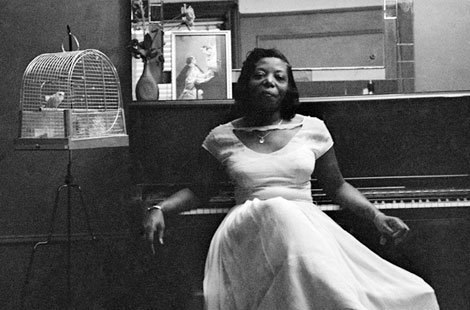
African American pianist, composer and arranger, and vocalist Mary Lou Williams (1910-1981). She demonstrated remarkable musical talent in modern genres as diverse as classical, free jazz, hard bop, swing, big band, and gospel.
By John P. Walsh
Following the tradition set down by President Jimmy Carter in 1979, the White House officially announced that June 2017 was to be African American Music Month. The proclamation in part reads: “During June, we pay tribute to the contributions African Americans have made and continue to make to American music. The indelible legacy of these musicians who have witnessed our Nation’s greatest achievements, as well as its greatest injustices give all Americans a richer, deeper understanding of American culture. Their creativity has shaped every genre of music, including rock and roll, rhythm and blues, jazz, gospel, hip hop, and rap.” A very nice tribute although I would hasten to attach onto its last sentence – “and all other American musical genres.” This could then include the significant contributions by African American artists to classical music such as William Grant Still (1895-1978), Florence B. Price (1887-1953), Harry T. Burleigh (1866-1949), William Levi Dawson (1899 – 1990), and Mary Lou Williams (1910-1981).
William Grant Still (1895-1978).
William Grant Still, Symphony No.1 in A flat major “Afro-American” (1930) performed by the Detroit Symphony Orchestra conducted by Neeme Järvi. When this symphony was performed in 1931 by the Rochester Philharmonic Orchestra, Williiam Grant Still became the first African-American composer to have a symphonyperformed by a leading orchestra.
William Grant Still (1895-1978) is the “dean” of African-American classical music composers.
Born in Mississippi, William Grant Still grew up in Little Rock, Arkansas, and attended Wilberforce University and Oberlin Conservatory of Music, both in Ohio.
In addition to composing over 150 works— including five symphonies and eight operas— William Grant Still is an African American composer with several musical “firsts” to his name.
He is the first African American composer to conduct a major American symphony orchestra—the Los Angeles Philharmonic Orchestra in 1936.
He is the first to have a symphonyperformed by a leading orchestra—his Symphony No. 1 in A-flat, “Afro-American” (1930) bythe Rochester Philharmonic Orchestra in 1931.
Still’s first symphony (he wrote five) sought to express Black culture within mainly European classical symphonic tools and forms available at that time.
About his intentions for the music, Still wrote: “I seek in the ‘Afro-American Symphony’ to portray not the higher type of colored American, but the sons of the soil, who still retain so many of the traits peculiar to their African forebears; who have not responded completely to the transforming effect of progress.” (see- Catherine Parsons Smith’s William Grant Still: A Study in Contradictions, Berkeley and Los Angeles, CA: University of California Press, 2000, p. 121.)
Arranged in four movements of about 6 minutes each, Still headlined each movement with quotes from poems by early 20th-century African-American poet Paul Laurence Dunbar (1872-1906). In 1899 Dunbar published his Poems of Cabin and Field and died tragically of tuberculosis at 33 years old in 1906. The “Afro-American” Symphony’s 4 movements are entitled: I. Moderato assai (“Longing”); II. Adagio (“Sorrow”); III. Animato (“Humor”) and IV. Lento, con risoluzione (“Aspiration.”)
The stanza by Paul Laurence Dunbar that William Grant Still selected to follow the fourth movement reads:
“Be proud, my Race, in mind and soul, Thy name is writ on Glory’s scroll In characters of fire. High ‘mid the clouds of Fame’s bright sky, Thy banner’s blazoned folds now fly, And truth shall lift them higher.”
Paul Laurence Dunbar (1872-1906), African-American poet, standing, at right, in a photograph of the Howard University Class of 1900.
William Grant Still is the first to have an opera performed by a major opera company—his Troubled Island (1939) by The New York Opera Company in 1949.
Finally, William Grant Still is the first to have an opera performed on national television—his A Bayou Legend (1941) in 1981.
William Grant Still, In Memoriam of the Colored Soldiers Who Died for Democracy (1944) performed by the Boston Symphony Orchestra conducted by George Szell.
Florence B. Price (1887-1953).
Florence B. Price (1887-1953) is the first African-American female composer to have a major symphonic composition performed by a leading American symphony orchestra. This occurred on June 15, 1933 in Chicago in conjunction with the city’s A Century of Progress International Exposition (Chicago was founded in 1833).
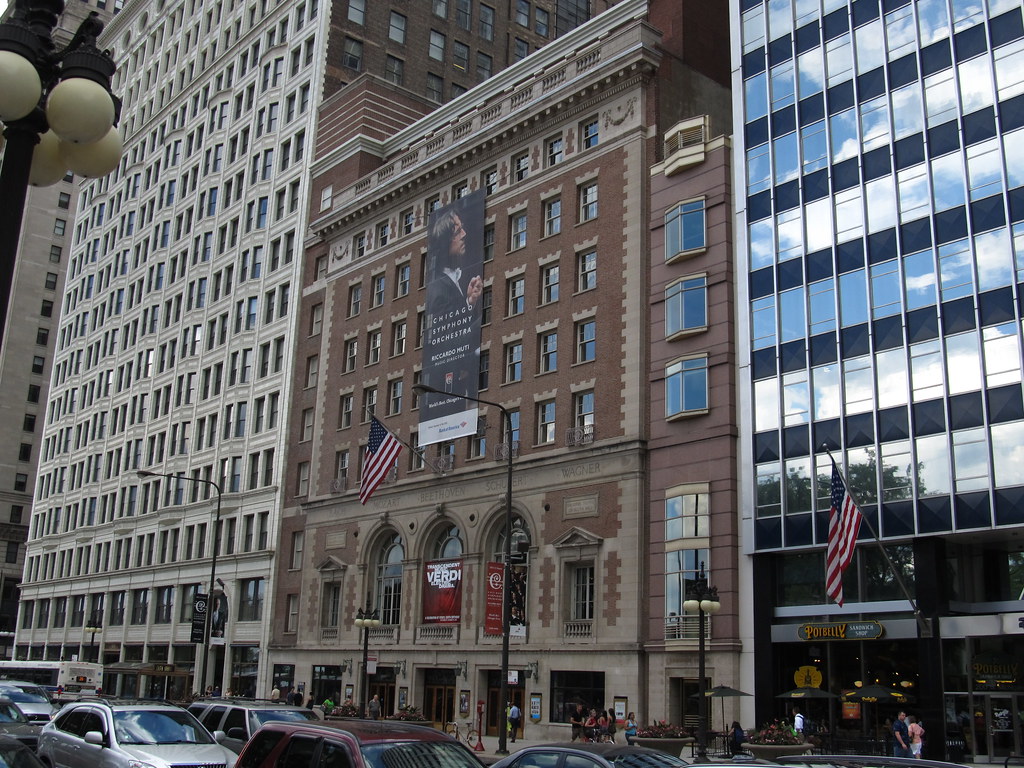
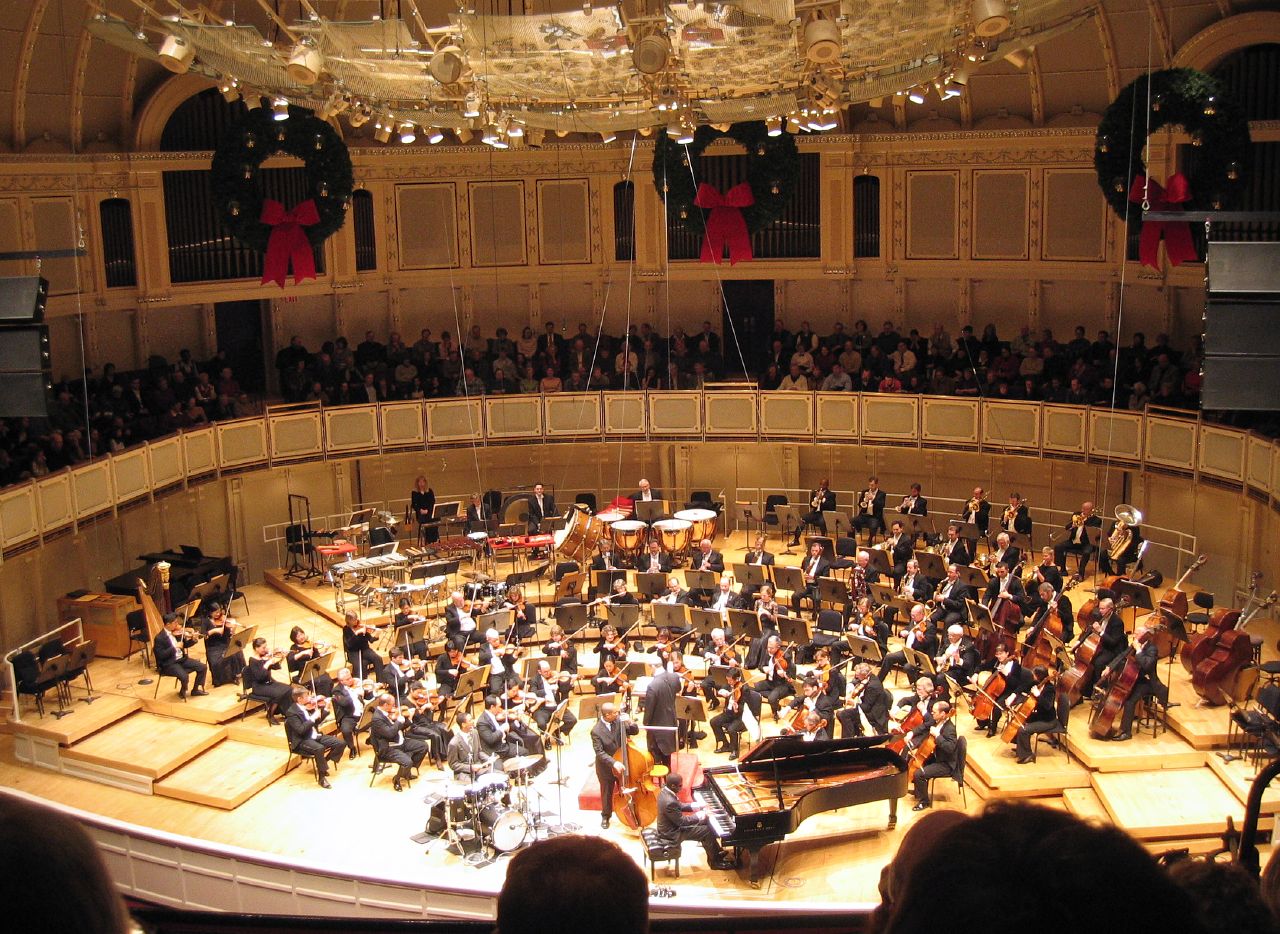
Visitors can still see the Auditorium Theatre on Michigan Avenue where the Chicago Symphony Orchestra performed Price’s Symphony No. 1 in E minor completed in 1932in a world premiere performance. That historic concert also included musical works by Harry T. Burleigh (main entry below), tenor Roland Hayes (1887-1977), and mixed-race English composer Samuel Coleridge-Taylor (1875-1912) who was known as the “African Mahler.”
Florence B. Price was born in Little Rock, Arkansas into a mixed-race family (her father was a prominent dentist and African American) and later studied at the New England Conservatory of Music in Boston and taught piano, organ and voice at Clark Atlanta University in Georgia as well as privately.
In 1927 she moved to Chicago where in a musical career as a composer that produced over 300 works, her métier blossomed. Price’s music often incorporated rhythms expressed in Africa-based musical traditions and African-American folk tunes and spirituals arranged in elaborate orchestrations derived from the European Romantic composers.
In addition to Symphony No. 1 in E minor (1932), some of Florence B. Price’s best known works include her Fantasie Negre (1929), Mississippi River suite (1934), and Symphony No. 3 in C Minor (1940). In 1940 Florence B. Price was the first female African American composer inducted into the American Society of Composers, Authors and Publishers (ASCAP).
A word on Florence B. Price’s well-known Mississippi River suite (1934): Price composed it in 1934 with a dedication to one of her prominent teachers at the American Conservatory of Music in Chicago where Price continued her musical studies after she arrived to the city in 1927.
The suite uses the contrivance of a boat navigating the Mississippi River and along its path experiencing its diverse expressions of human life and history as told in musical sections.
The FIRST part depicts dawn on the river.
The SECOND part portrays its American Indian heritage by using an array of percussion.
The THIRD part expresses the African American experience along the river utilizing well-known negro spirituals— such as, Nobody Knows the Trouble I’ve Seen; Stand Still Jordan;Go Down, Moses; and Deep River.
The FINAL part has the suite conclude with a melodic cacophony of contemporary tunes during the 1930’s including River Song, Lalotte, and Steamboat Bill.
The Negro Speaks of Rivers by Langston Hughes (1902-1967).
Langston Hughes (1902-1967).
Langston Hughes, who was born in Joplin, Missouri, said he wrote the poem, The Negro Speaks of Rivers, after he was crossing the Mississippi River into Illinois in 1919 and inspiration struck. Even after he helped lead the Harlem Renaissance in New York City as a poet, novelist, and playwright in the 1920’s, Hughes, who grew up in the American Midwest (Kansas, Illinois and Ohio), said he always knew the Heartland best.
Florence Price – from Symphony No. 3 in C Minor (1940). I. Andante – Allegro ORF Vienna Radio Symphony Orchestra John Jeter
William Levi Dawson (1899 – 1990).
William L. Dawson (1899-1990), born in Alabama, was a composer and arranger, trombonist, and music educator. Dawson continually was learning so to use the rich heritage of African American music and later African music as the basis for many types of music that he composed and arranged.
After graduating with highest honors from Tuskegee Institute he studied music and composition in Kansas City and Chicago. For many years he performed as first trombonist with the Chicago Civic Orchestra.
It is Dawson’s work as music director with the 100-voice Tuskegee Institute Choir that led to many distinguished and celebrated national and international choral performances in the mid-twentieth century.
As a composer William Dawson is most famous for his Negro Folk Symphony which he wrote in 1934 but revised in 1952 after studying indigenous African music throughout West Africa. Dawson visited several countries in West Africa that year to study indigenous African music. The experience inspired him to revise his Negro Folk Symphony which was recorded in 1961 by Leopold Stokowski for Decca Records.
The three movements of the symphony are entitled: “The Bond of Africa,” “Hope in the Night” and “O, le’ me shine, shine like a Morning Star!”
William Dawson conducts the Tuskegee Institute Choir in 1955 in his arrangement of the negro spiritual Listen to the Lambs written by R. Nathaniel Dett first performed in 1913.
In 1952, Dawson visited several countries in West Africa to study indigenous African music. The experience inspired him to revise his Negro Folk Symphony which was first written in 1934. The new work was recorded in 1961 by Leopold Stokowski for Decca Records.
Harry T. Burleigh (1866-1949).
Harry Burleigh (1866–1949), born in Erie, Pennsylvania, was an eminent African-American baritone, and influential classical composer and arranger.
As a student at New York City’s National Conservatory of Music of America, Burleigh became associated with Antonín Dvořák (1841-1904) who heard the baritone sing spirituals and encouraged him to create arrangements for these melodies.
With the Czech composer’s active interest, Burleigh developed into one of America’s most important composers and arrangers of spirituals. He created arrangements for more than 100 songs including “Deep River,” “Swing Low, Sweet Chariot,” and “Nobody Knows the Trouble I’ve Seen” which are classics today. Burleigh’s “In Christ there is no East or West” remains a church hymnal standard. Burleigh set poems by Walt Whitman to music also.
When Burleigh was accepted in 1894 as baritone soloist at St. George’s Episcopal Church in Manhattan—a post where he stayed for over 50 years—it was by a vote of the congregation which had never allowed African-Americans to worship there before. The congregation voted to a tie—that was broken in Harry Burleigh’s favor by congregant by J. P. Morgan.
While Burleigh’s advocacy of negro melodies through writing, speaking engagements and new arrangements was always indefatigable, he found time to coach many well-known singers, including Enrico Caruso, Roland Hayes, Marion Anderson, and Paul Robeson.
Mary Lou Williams (1910-1981).
A self-taught pianist, by the time she was 20 years old Mary Lou Williams was a professional musician and touring bandleader.
In her formative years she looked for inspiration to Chicago bandleader and composer “Lovie” Austin (1887–1972). Quite soon Williams’ own records as a pianist and arranger began to sell briskly.
In a 50-year-plus career she wrote and arranged music for bandleaders such as Duke Ellington (1899-1974) and Benny Goodman (1909-1986) and served the beloved mentor to slightly younger African-American musical artists who became household names in the world of jazz: Thelonious Monk (1917-1982), Charlie Parker (1920-1955), Miles Davis (1926-1991), Tadd Dameron (1917-1965), Bud Powell (1924-1966), and Dizzy Gillespie (1917-1993), to name a few.
Though Mary Lou Williams’ musical accomplsihments are not well-known in popular culture, almost 40 years after her death, her recordings are a treasure to listen to and she is much honored for her inspiring work by her admirers—many of whom are artists and great institutions.
Mary Lou Williams’ album, Zodiac Suite, released in 1945 and remastered here from the original acetates, is a 12-part interpretation of the astrological zodiac composed and performed on the piano by Mary Lou Williams who is accompanied by two of her hand-picked session musicians—all innovators from the clubs of New York—namely, Canadian jazz double-bassist Al Lucas (1912-1983) and American jazz and rhythm & blues drummer Jack “The Bear” Parker.
Each movement is a set of classically-inspired jazz tone poems for the signs of the horoscope: Aries, Taurus, Gemini, Cancer, Leo, Virgo, Libra, Scorpio, Sagittarius, Capricorn, Aquarius, and Pisces.
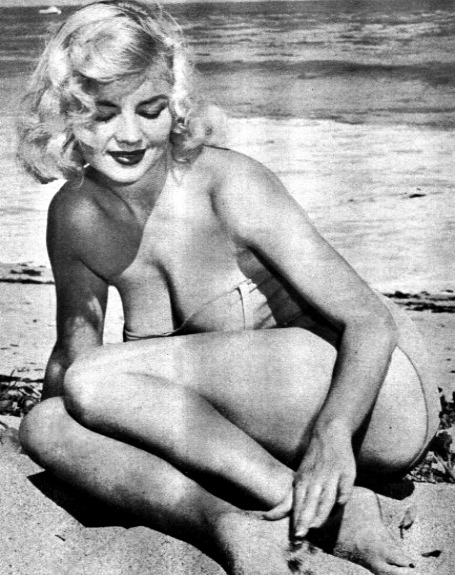
Dane Arden (1934-2013) was an international magazine model in the 1950’s and 1960’s. She was born Elsa Sørensen on March 25, 1934 in Copenhagen, Denmark. Following her win of the title of Miss Denmark as a teenager she went to live with her family in Vancouver, Canada.
Her debut in the September 1956 issue of Playboy magazine gave her much publicity. Elsa Sørensen went on to appear multiple times in that American men’s entertainment/lifestyle publication. As Dane Arden, she modeled for other magazines such as the U.S. versions of Australia’s Adam magazine and Milan, Italy’s illustrated weekly news magazine, Tempo, among others.
Elsa moved to Los Angeles, California and married twice. She died at 79 years old on April 18, 2013 from complications following a bicycle accident in Vero Beach, Florida.
Dane Arden (Elsa Sørensen) in 1956 in her carhop uniform.
In one favorite set of non-nude color photographs of Dane Arden—this from 1956, the same time as her Playboy shoot— the 22-year-old Danish model expresses her beauty, physical dynamism and engaging personality as she poses as a carhop bringing fast food to people in their cars at drive-in restaurants.
Working carhops first appeared in the early 1920’s along expanding and popular interstate roads. In the 1920’s the carhops were mostly boys and men. During and after World War II, the service role was increasingly performed by women.
By the mid1950’s, abundant drive-ins had to compete for customers in fast-moving automobiles and so carhop uniforms had to be eye catching. Uniforms on busy roads would often be creatively thematic with military, airline, space age, and cheerleader uniforms predominating.
The 1956 color photograph of Dane Arden as a carhop (or waitress) is by Los Angeles-based glamour photographer Peter Gowland (1916-2010), the son of a Hollywood film actor and actress. In a photography career spanning over six decades and characterized by technical innovation, Gowland’s glamour and celebrity photography appeared on over one thousand magazine covers.
Dane Arden is an especially alluring carhop who wears a skimpy plaid-patterned matching fringed halter top and short shorts with fringed apron cut to size. Wearing the typical flat shoes and head gear worn by many female car hops at the time, Dane Arden proffers the perfect uniform to greet her customers with their lime-green cups of hot coffee.
Former Miss Denmark Elsa Sørensen, known professionally as Dane Arden, was a popular glamour model in the mid-1950’s and early 1960’s. Dane Arden posed in American men’s entertainment and lifestyle publications in the nude and non-nude.
Dane Arden displayed the blonde bombshell image that became very popular in mid-20th century American culture. She posed both nude and non-nude for pop-culture magazines in the 1950’s and 1960’s.
Dane Arden good-humoredly believed there was no “nuttier business” to be in than posing for cheesecake pictures in these popular magazines. In her magazine spreads, Dane Arden shared with its mainly male readership that it took her longer to achieve an attractive “disheveled look” in a swimsuit for a beach shoot than if she was preparing for a fancy dress-up costume ball.
There is a short color documentary filmed in the mid 1970’s at the legendary Keller’s Drive-In in Dallas, Texas. Though shot at the end of an era for drive-in car hops along America’s open roads since the 1920’s, the film makes it easier to imagine the pace and purpose of Dane Arden’s 1956 glamour photograph of a female carhop at a popular mid20th century American roadside eatery.
The documentary about carhops and American Graffiti-style drive-in culture which once littered America’s roads coast to coast–and Dane Arden’s glamour photograph dressed as a car hop–placed the model’s photographic career smack dab in the middle of mainstream American culture.
Keller’s Drive-In which is featured in the film is a classic spot to enjoy a no-frills burger and cold beer. Its founder Jack Keller once worked at Kirby’s Pig Stand which became the nation’s first drive-in restaurant empire. Keller passed away in 2016 at 88 years old.
Keller’s original location opened in 1950 and closed in 2000. The oldest restaurant in the American chain today is the one that opened in 1955 on Northwest Highway in Dallas. There are two other Keller’s restaurants in Dallas.
In addition to Playboy, Elsa Sørensen appeared in the U.S. version of Adam magazine using the name Dane Arden which she used for all her non-Playboy modeling assignments.
FEATURE image: Sir Georg Solti conducting the CSO in Orchestra Hall in November 1971.
By John P. Walsh
PART I: Fritz Reiner, Jean Martinon, & Georg Solti.
In 2013 just ahead of Game Four of the Stanley Cup Finals the principal conductor and music director of the Chicago Symphony Orchestra dressed up in a Chicago Blackhawk’s sweater to conduct his orchestral version of their pep rally song.1 Riccardo Muti (Italian, born 1941) has worn many hats as opera and classical music conductor in a forty-year career but perhaps none with such hometown flair.
In the decades before his 2010 CSO appointment Riccardo Muti appeared to have had a knack for getting into all sorts of fine arts trouble – his resignation as music director from La Scala in summer 2005 is recent although early in his career Muti walked away from productions in Florence, Milan, and Paris because of irreconcilable differences over artistic questions. Despite these encounters, Muti continues to be one of today’s celebrated Mozart and Verdi specialists while unconventionally asserting his prestige by mounting major productions of lesser known composers. From his earliest days as principal conductor of the opera festival Maggio Musicale Fiorentino in 1968 to his appointment as chief conductor of the London Philharmonia in 1972 – both posts held into the early 1980s – as well as a longstanding association with the Salzburg Festival starting in 1971, Muti is only recently being acclaimed in America for what he has long been famous for in Europe – as a first order musical firebrand who makes opera scores spring to vivid life.2
When Riccardo Muti was made music director of the Philadelphia Orchestra in 1980 – a prestigious post with an American orchestra which had had only two previous music directors since 1912 (namely, Leopold Stokowski and Eugene Ormandy) – Muti almost immediately stepped into the annals of controversy as a conductor in America. Classical music lovers bred on the Philadelphia Orchestra’s broad, brilliant live and recorded performances under Stokowski and Ormandy found a nemesis in Muti. Verging on his 40s, the new conductor’s ideas for this venerable orchestra with a traditionally lush and enveloping string sound were received by Philadelphia audiences with dismay. It seemed that Muti strictly observed notated musical scores and shaped distinctive interpretations from them which altered a 75-year-old sound brand. Still touting its “distinctive sound”3 today as well as other past glories, the Philadelphia Orchestra under the 44-year reign of Eugene Ormandy (1936–1980) earned 3 Gold records and 2 Grammy Awards.4 In 2014, more than 20 years after Muti’s resignation from Philadelphia, critics continue to weigh in on his enduring influence. One hears the heaving sigh of relief that Muti revolutionized less than they feared.5 Musical idealism remains Muti’s calling card coming into Chicago. Do his efforts at parceling annotated music merit negative criticism? The “very clean sound” which CSO musical director Fritz Reiner (1953-1963) brought to Chicago at a time when the orchestra was looking for stable leadership is praised; the “lean sound” which Muti brought to Philadelphia following 70 years of stable leadership produced misgivings.6 At the October 3, 2014 CSO matinée performance of Polish-themed music (Panufnik, Stravinsky, and Tchaikovsky’s Third Symphony) it is evident that Chicago’s premier group of players is subjected to a similar set of permuted articulations under Muti’s command. Yet these CSO musicians are mindful of their musical worth and perform at a high level whoever appears on the podium responding to what is asked of them.
Music Director of the Philadelphia Orchestra Eugene Ormandy (Hungary, 1899-1985) with orchestra members in the 1960s.
Riccardo Muti (Italy, born 1941) rehearsing the Philadelphia Orchestra for his 1972 guest conductor debut with the ensemble.
Under music director Fritz Reiner the CSO’s celebrated brass section was born; later, Sir Georg Solti (1969-1991) gave it luster and clarity while Daniel Barenboim (1991-2006) added richness and depth. What is Muti doing?7 Since its founding in 1891 Riccardo Muti is the CSO’s tenth music director. Each of his predecessors had their own style but not all had the same impact or influence on the orchestra which harbors its own strong personality.8 I began my CSO concert subscription when today’s Symphony Center was Orchestra Hall and Sir Georg Solti was its music director. Like most everyone else in Chicago I was in awe of Solti. By 1985 he had with the CSO and chorus won 7 Grammy Awards for a succession of Mahler symphonic recordings plus 15 more Grammys for his Verdi, Puccini, Schoenberg, Berlioz, Mozart, Haydn, Bruckner, and Brahms. Over the next six years when I was regularly in the Hall Solti’s CSO won another 6 Grammy Awards – for his Liszt, Beethoven, Bartók, Wagner, Bach and Richard Strauss. Solti’s accomplishment in this area is wonderfully mind boggling.9 Both music director Fritz Reiner and Jean Martinon (1963-1968) wished to heighten the orchestra’s national and international profile by recordings and tours but it was maestro Solti who fulfilled and then surpassed these earlier objectives. When Solti finally left his post as music director in 1991 after 22 years at its helm he had the legacy of having established Chicago as one of the very best orchestras in the world.
Fritz Reiner (Hungary, 1888-1963) was the sixth music director of the CSO from 1953 to 1963. Russian composer Igor Stravinsky (1882-1971) said that Reiner “made the Chicago Symphony into the most precise and flexible orchestra in the world.”
The CSO’s seventh music director (1963-1968) was talented composer Jean Martinon (French, 1910-1976). Never gaining the complete acceptance of orchestra members, Martinon improved the musicians’ work conditions and introduced the CSO to a new repertoire of French and contemporary classical music.
While music director in the early 1960s at Covent Garden Georg Solti (Hungary, 1912-1997) was known as “the screaming skull” for his outbursts in rehearsals.
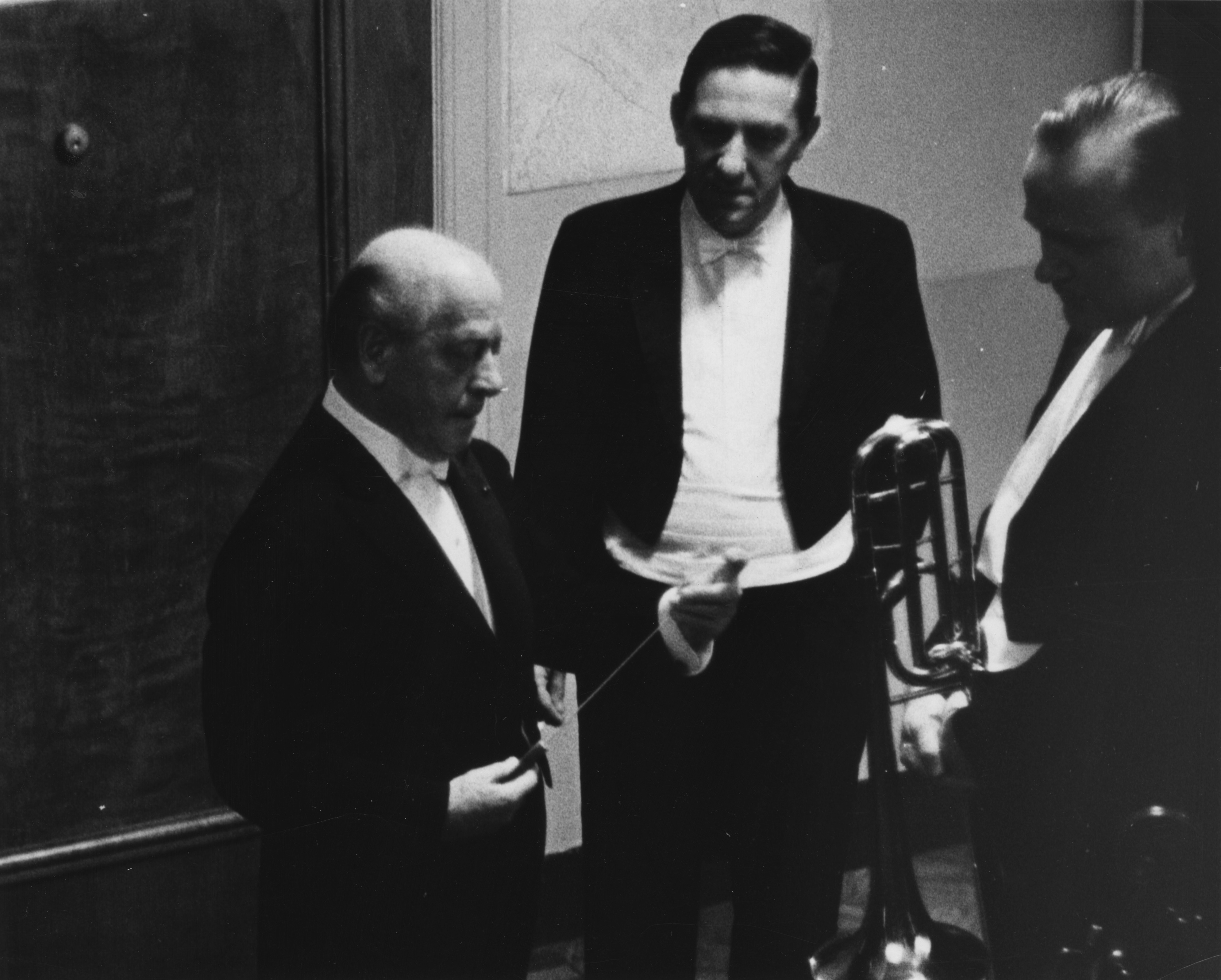
As music director at Covent Garden for ten years starting in 1961 Solti generated a reputation for being “the screaming skull”10 because of his intense and at times bruising style. But musicians not much later in Chicago saw a different and more complex man. Solti did not bait or act harshly toward them as Reiner had done in the mode of Arturo Toscanini (Italy, 1867-1957). Reiner, in the first hour of the first rehearsal as music director, fired one of the musicians. He worked constantly after that to instill fear into his orchestra. He insisted on being called “Dr. Reiner” and inflicted cruel verbal tests onto his men to test, to his mind, their character. While believed to be utterly lacking in ready wit or sensitivity as sometimes displayed by the combustible Reiner, Solti was seen by his musicians to turn inwards into a private world.11 Unlike Leonard Bernstein, Solti could appear fashion challenged – he showed up at rehearsal in baggy pants and a simple coat thrown over a rumpled shirt. Nor did Solti drive a flashy sports car à la von Karajan or act podium showman like Stokowski. While Martinon and Solti were “late starters” to music, a 53-year-old Martinon came to the orchestra fully formed while 57-year-old Solti continued an intense drive to advance.12
The 1970s underway, Solti proved to be not the terror in rehearsal Reiner had been nor seeking anyone’s approval like Martinon. And while Solti was accessible and sometimes sought to be an intermediary to certain first-rank players’ intramural conflicts, he remained markedly tense. Solti did admit to “gentle bullying”13 in Chicago but only to get his way with the music. Respect for the CSO is high among its music directors while at Covent Garden Solti admiited he had been “a narrow-minded little dictator.”14 Under Solti’s leadership the CSO’s technical brilliance produced clear, lustrous, and notably loud sound – known as “Der Solti-Klang.” With Solti the CSO’s 1970 appearance at Carnegie Hall was a rousing success and for its first European tour in 1971 the orchestra basked in stellar reviews. In six weeks they played in Scotland, Belgium, Finland, Sweden, Germany, Austria, Italy, France and England. By 1972 the CSO won its first Grammy Awards under Solti for Mahler Symphonies 7 and 8, whose music was first suggested to Solti to conduct by Theodor Adorno. Sir Georg Solti and Chicago made for a winning team and the city shared in its glory.15
Louis Sudler (1903-1992) president of the Orchestral Association from 1966 to 1971, chairman from 1971 to 1977 and chairman emeritus from 1977 until 1992 announces that Georg Solti will become the CSO’s eighth music director beginning with the 1969-70 season.
Sir Georg Solti conducting the CSO in Orchestra Hall for the three-act opera (third act unfinished) “Moses and Aaron” by Arnold Schoenberg (Austrian, 1874-1951) on November 13, 1971.
Ticker tape parade turns north onto LaSalle Street in Chicago’s downtown financial district following the CSO musicians return from their autumn 1971 European concert tour. It was first such international event for the orchestra in its history.
In performance Solti’s large conducting gestures could appear stiff and stylized – one more aspect of the Toscanini temperament he dismissed. As Solti espoused Toscanini’s belief that music cannot be chopped up and must relax and flow Solti did not follow Toscanini’s lead – as Riccardo Muti, a Toscanini admirer, does not- to forego the written musical score on the conductor’s podium during a concert. If Muti’s reason is to read and interpret a score’s annotations, Solti’s was a psychological one. Like Toscanini Solti committed the music to memory but kept the annotated score ever-present to serve as an insurance policy for musicians, especially singers, who Solti believed needed reassurance that the conductor had everything under control during a performance. Despite this careful preparation, a recurring criticism of Solti’s work is that it “lack[ed] refinement…finesse and, above all, attention to detail.” 16 For the keen musical mind of Daniel Barenboim who brought neither Solti’s or Muti’s purpose to the podium he nearly always conducted like Toscanini with no score.
Arturo Toscanini (1867-1957) demonstrating conducting gestures for a crescendo.
Sir Georg Solti in rehearsal with mezzo-soprano Josephine Veasey (British, born 1930) in Covent Garden, 1966.
Daniel Barenboim in a typical conducting stance at the Veranos de la Villa Festival in Madrid.
Riccardo Muti conducts the CSO in an October 4, 2012 performance at Carnegie Hall.
When Sir Georg Solti died suddenly in September 1997 there was the critical reaction linking him to the passing of an era – an erstwhile time of “old school toughness” when a conductor was a “super-hero” who did not negotiate musical interpretation but demanded it and never shared credit or fame with any musician. But this, of course, is largely myth. The era of “democratic playing” which is criticized as today’s musical model – that is, one of dialogue and partnership between conductor and ensemble – is in fact something that started in the United States and elsewhere around 1960 when Solti was embarking on the next four decades of his best work.17 In what ways is Muti’s directorship affecting “the Chicago sound”? How is this new and highly experienced, talented and forceful conductor – conducting Stravinsky’s “The Firebird” on October 3, 2014 Muti jabbed the air like a boxer – an old Solti gesture – changing this vital orchestra? CSO’s future lies in Muti’s head, heart and hands and while players are incredibly talented (no orchestra plays Strauss and Mahler better) Muti keeps them on a tight leash. How do the musicians respond to his direction? Results from such control and semiotic interpolation of a composer’s intention in the score should be the grounds on which the public will judge Riccardo Muti over time. The CSO strives to play to its Chicago audience, not to one in Asia or Europe, and so the case for Muti’s rise or fall will essentially be local.
1 Huff post Chicago, “Chicago Symphony Orchestra Plays ‘Chelsea Dagger’ In A Classy Show Of Support For The Hawks,” 06/20/2013. Retrieved October 2014.
2 irreconcilable differences – http://www.encyclopedia.com/topic/Riccardo_Muti.aspx. Retrieved October 2014; makes opera scores spring to vivid life – Peter G. Davis, “The Purist,” Opera News, October 2014, vol. 79, no. 4. Retrieved October 2014.
5James R. Oestreich, “The Big Five Orchestras No Longer Add Up,” New York Times, June 14, 2013. Retrieved October 2014.
6 William Barry Furlong, Season With Solti: A Year in the Life of the Chicago Symphony, Macmillan Publishing Co., 1974, p. 52.
7 whatever is asked of them – Donald Peck, The Right Place, the Right Time: Tales of Chicago Symphony Days, Indiana University Press, Bloomington and Indianapolis, 2007, p. 6; brass born under Reiner – Oestreich; luster and clarity – Furlong, p. 84; richness and depth – Emanuel Ax, http://www.gramophone.co.uk/editorial/the-world%E2%80%99s-greatest-orchestras.
11 insisted on being called “Dr. Reiner” – Peck, p. 2; private world – Furlong, p. 52.
12 flashy sports car – Furlong, p.79; podium showman – Furlong, p.81; “late starters” – Furlong, pp. 58 and 87; fully formed – Furlong, p.60; intensely driven – Furlong, p. 83, 141.
13 Furlong, p.86.
14 Furlong, p. 88.
15 technical brilliance – Furlong p.81; “Der Solti-Klang” – Furlong, p. 85; “stellar reviews” – Review of ”The Chicago Symphony Orchestra by Robert M. Lightfoot; Thomas Willis,” by M. L. M., Music Educators Journal, Vol. 61, No. 4 (Dec., 1974), pp. 87-88; European itinerary – http://csoarchives.wordpress.com/2012/08/18/solti-26-1971-tour-to-europe/. Retrieved October 2014; suggested to Solti by Theodor Adorno – Sir Georg Solti, Memoirs, Knopf, NY 1997, p. 100.
16 On Solti’s and Toscanini’s relationship – see Furlong, pp. 86; 93-94, 141; for quote “lack[ed] refinement…” – Furlong, p. 85. Solti first worked with Arturo Toscanini (1867-1957) at the Salzburg Festival in 1936 and was invited by him to New York in 1939.
17 Old school toughness – Review of “The Right Place, the Right Time! Tales of the Chicago Symphony Days by Donald Peck,” by Lauren Baker Murray, Music Educators Journal, Vol. 95, No. 1 (Sep., 2008), pp. 21-22; “super hero” – “Editorial: Leading from the Front,” The Musical Times, Vol. 138, No. 1857 (Nov., 1997), p. 3; dialogue and partnership… started in…1960 – Furlong, p.110.