


FEATURE Image: Three adult periodical cicadas (Magicicada) clinging to the purple petals of a clematis flower, with the possible legs of a fourth cicada tucked beneath a wilting bloom. During mass emergences, cicadas instinctively climb upward onto whatever plants, fences, or garden flowers are nearby. Climbing higher helps them warm up in the sunlight, stay off the ground away from crawling predators, and launch into flight toward nearby trees to find mates. June 8, 2024 6.87mb 8154
Through photography and historical context, this post documents one of the rarest natural events in North American history: the simultaneous emergence of 17-year Brood XIII and 13-year Brood XIX cicadas in 2024, a biological phenomenon not witnessed since 1803, revealing the extraordinary rhythms of nature that unfold across centuries rather than seasons.
Photographs and text by John P. Walsh.
A Once-in-221-Year Awakening
Since late May 2024, Illinois has been the epicenter of one of the most extraordinary natural events in American history: the emergence of trillions of cicadas whose relentless chorus is expected to continue into July.
The Return of Brood XIII
On cue after seventeen years underground, the Northern Illinois Brood, Brood XIII, erupted from the soil across much of the state. Having spent nearly two decades hidden beneath the earth, these red-eyed insects emerged to mate, lay eggs, and continue one of nature’s most remarkable life cycles.
The Great Southern Brood XIX Emerges
At the same time, another giant brood surfaced across the central United States. Known as Brood XIX, or the Great Southern Brood, these cicadas completed their own lengthy underground development before emerging in vast numbers across a broad swath of the country.
A Historic Convergence
What makes 2024 truly historic is that Broods XIII and XIX are emerging simultaneously. This rare overlap has not occurred since 1803, when Thomas Jefferson was serving as the third President of the United States. More than two centuries later, the descendants of those same broods have returned together, creating a once-in-a-lifetime spectacle for naturalists, photographers, and anyone fortunate enough to witness nature’s ancient timetable in action.

Thomas Jefferson (1743-1826) was in his first term as the third president of the United States when the dual emergence of these two groups of cicadas last occurred in 1803 and which is taking place in 2024. PHOTO: “Biography of Thomas Jefferson (Third President 1801-1809)” by Tony Fischer Photography is licensed under CC BY 2.0.
Illinois is the epicenter of 2024’s historic cicada invasion
According to a 2024 publication by the Ohio Biological Survey of “The 2024 Emergence of Periodical Cicada Broods XIII and XIX” by renowned cicada expert Dr. Gene Kritsky, Professor Emeritus of Biology and former Dean of the School of Behavioral and Natural Sciences at Mount St. Joseph University, the Brood XIII emergence extends from the center of the state of Illinois around Springfield and spreads as far north as southern Wisconsin. Brood XIX also extends from around Springfield, Illinois, to points south past Cairo, Illinois. “This is not just a cicada year,” Dr. Kritsky observed, “it’s an historic convergence of Broods XIII and XIX, making it a once-in-a-lifetime experience for enthusiasts and researchers alike.” See- https://www.msj.edu/news/2024/01/dr-gene-kritsky-releases-book-cicada-emergence.html – retrieved June 15, 2024.
The Next Emergence
As trillions of cicadas mate and lay their eggs this year, the buzzing activity will gradually fade and 2024’s broods of adult cicadas die. Their offspring of 2024 will emerge, in the case of Brood XIII, during its next 17 year cycle in 2041.

While the cicada’s life is mostly spent under the soil, they use their legs to emerge from the soil where they molt and mate. Cicadas emerge after the soil temperature is higher than 64 degrees Fahrenheit. Their emergence from the ground turns over large amounts of soil, and after they die their decaying bodies contribute a massive amount of nutrients to the soil. June 15, 2024 79% 7.89 mb 8563

GHOST TREES. Homeowners in Chicago have wrapped their small trees with mesh netting in preperation of the arrival of trillions of molting mating cicadas. The wrapped mesh is to prevent cicadas from damaging young trees. Once cicadas molt and mate, female cicadas lay their fertilized eggs in the bark of trees. April 2024 7.46 mb
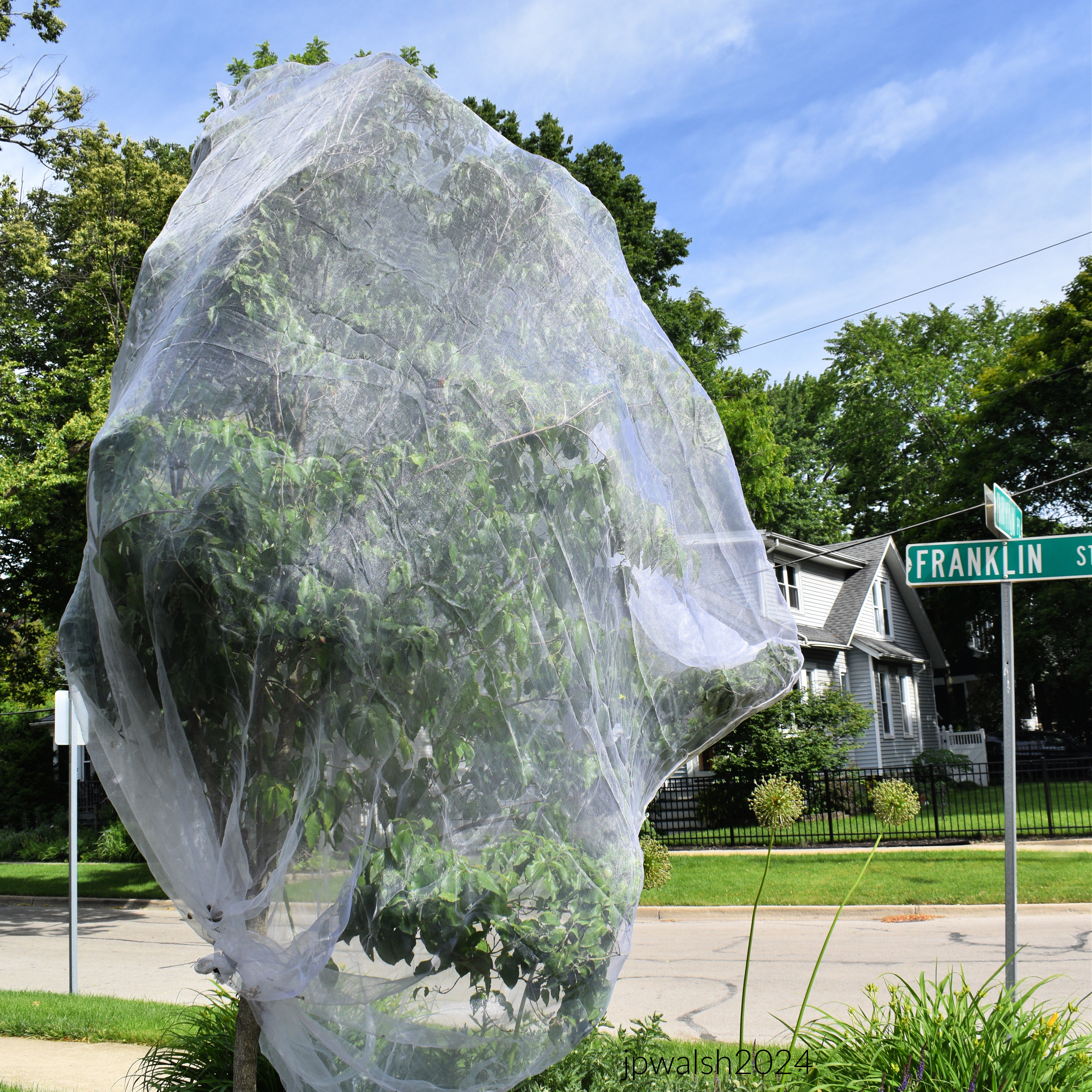
GHOST TREES. Periodical cicada years are quite beneficial to the ecology of the region. Their egg-laying in trees is a natural pruning that results in increased numbers of flowers and fruits in the succeeding years. May 31, 2024 99% 6.92 mb 7779

GHOST TREES. June 15, 2024 95% 7.66 mb 8565 (2)

GHOST TREES. June 3, 2024 89% 7.80 mb 7917

GHOST TREES. May 28, 2024 90% 7.69 mb 7588
During May and June 2024, the 17-year Northern Illinois Brood XIII emerged in and around Chicago, across northern Illinois and in portions of northwest Indiana, southern Wisconsin and eastern Iowa.

Cicadas converge on a backyard playset. May 28 2024 95% 7.69 mb 7557
Cicadas do not sting or bite, and do not carry diseases.

Waiting Beneath the Surface
Called molting, cicadas emerge from their shell. These broods spend either 13 or 17 years living approximately two feet underground before emerging as wingless nymphs rather than true larvae. As they tunnel upward toward the surface, they wait for the soil temperature at a depth of 8 inches to reach about 64°F (18°C) before emerging, usually at dusk.
The Molting Process
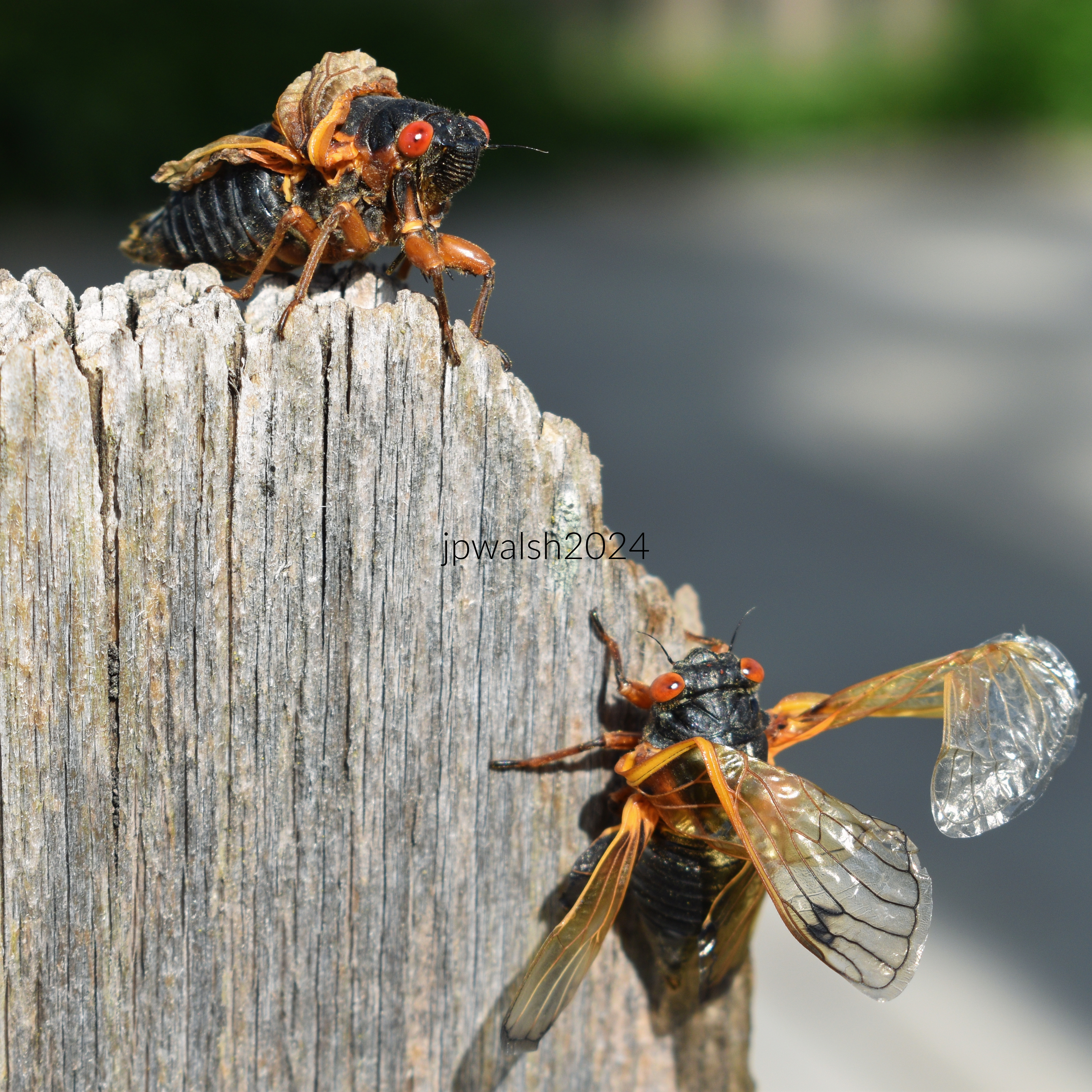
Once above ground, the transformation begins quickly. Most nymphs start molting within an hour of reaching the surface. The empty brown shell, known as an exuvia, preserves the exact shape of the underground nymph that left it behind. The newly emerged adult cicada is still carrying part of its discarded husk, caught in the brief transition between life stages.
Preparing for Flight
Although free of its shell, the insect is not yet fully mature. It takes another four to six days for the cicada’s exoskeleton and delicate wings to darken, harden, and strengthen before it is ready to take flight and join the deafening chorus of millions of other cicadas in the treetops.
May 28 2024 95% 7.67 mb 7667
Cicadas are more closely related to aphids (i.e., black flys) than grasshoppers.

A cicada resting motionless on a weathered painted surface, with its five eyes clearly visible. Because their compound eyes bulge outward on the sides of their head, cicadas have nearly a 360-degree field of view. While their vision is blurry and low-resolution—like a grainy mosaic—they are built to detect sudden movement and approaching predators instantly.
Trillions of male cicadas sing through sound-producing structures called tymbals on either side of the abdomen under the wings. Their singing is a mating call to the female.
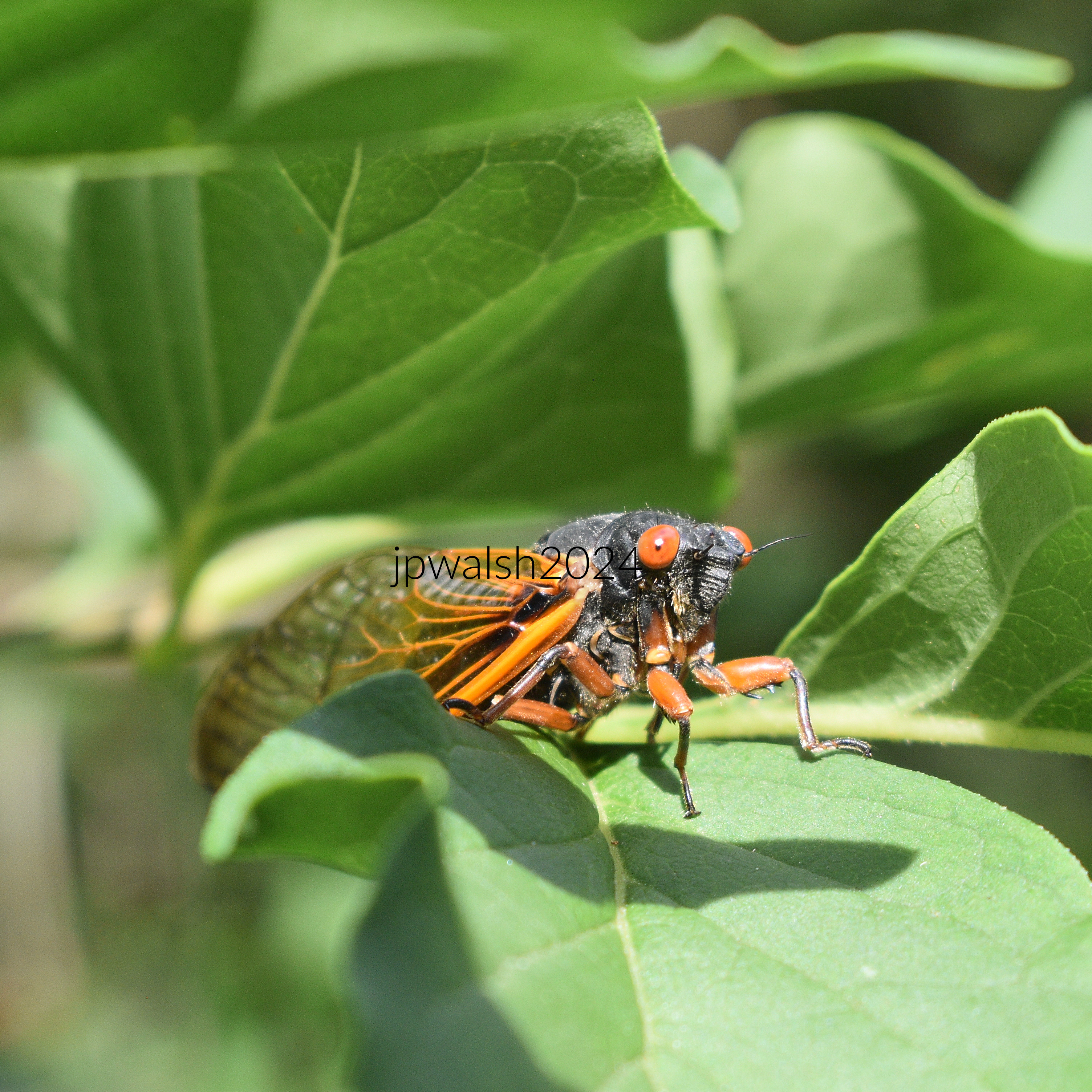
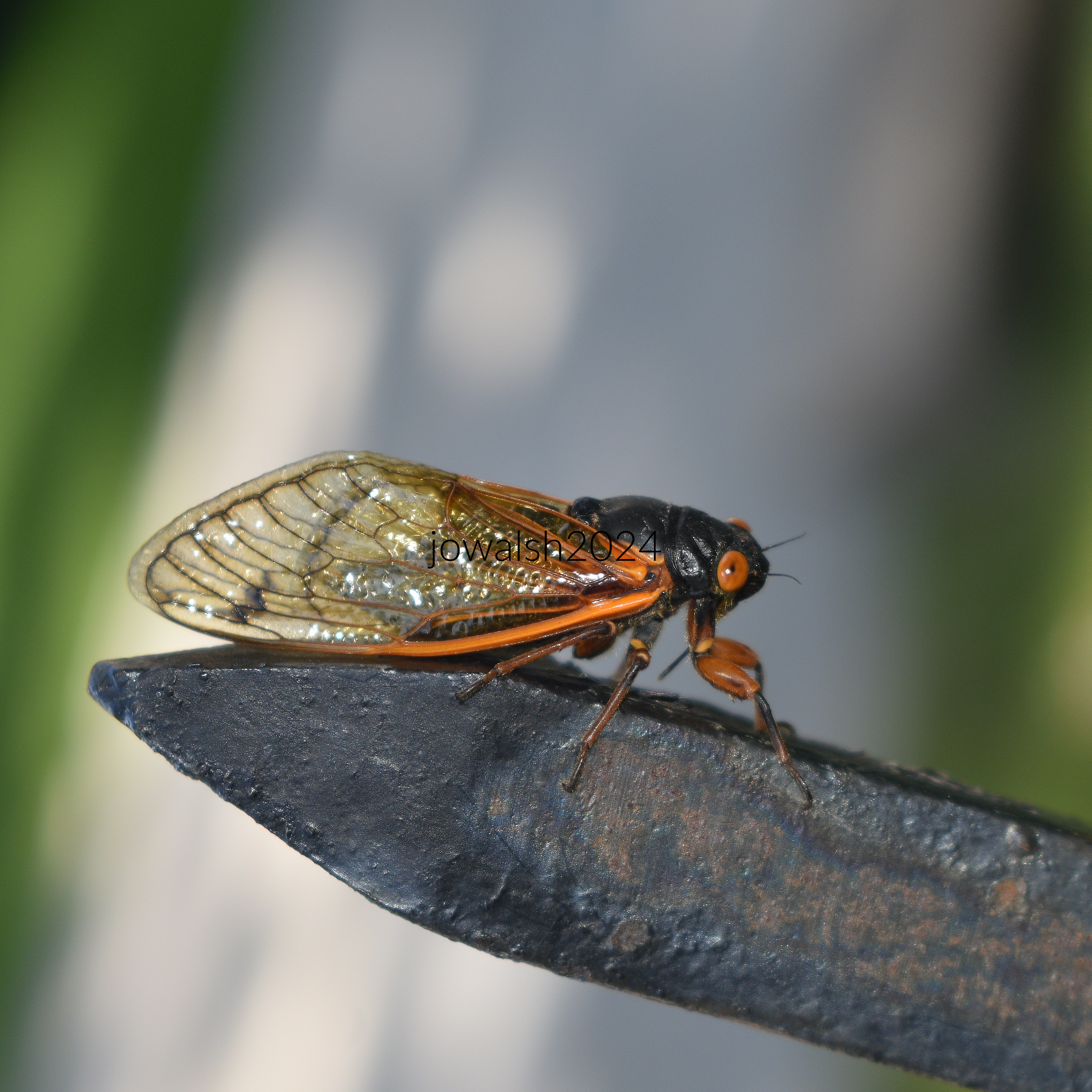
The cicada has bright red-orange compound eyes and orange-banded legs. Its translucent, glassy wings are folded neatly back over its body, displaying prominent amber and orange veins near the base and leading edges. June 7, 2024 4.20mb 8117

May 31, 2024 5.47mb 7700
May 31, 2024 5.03mb 7719
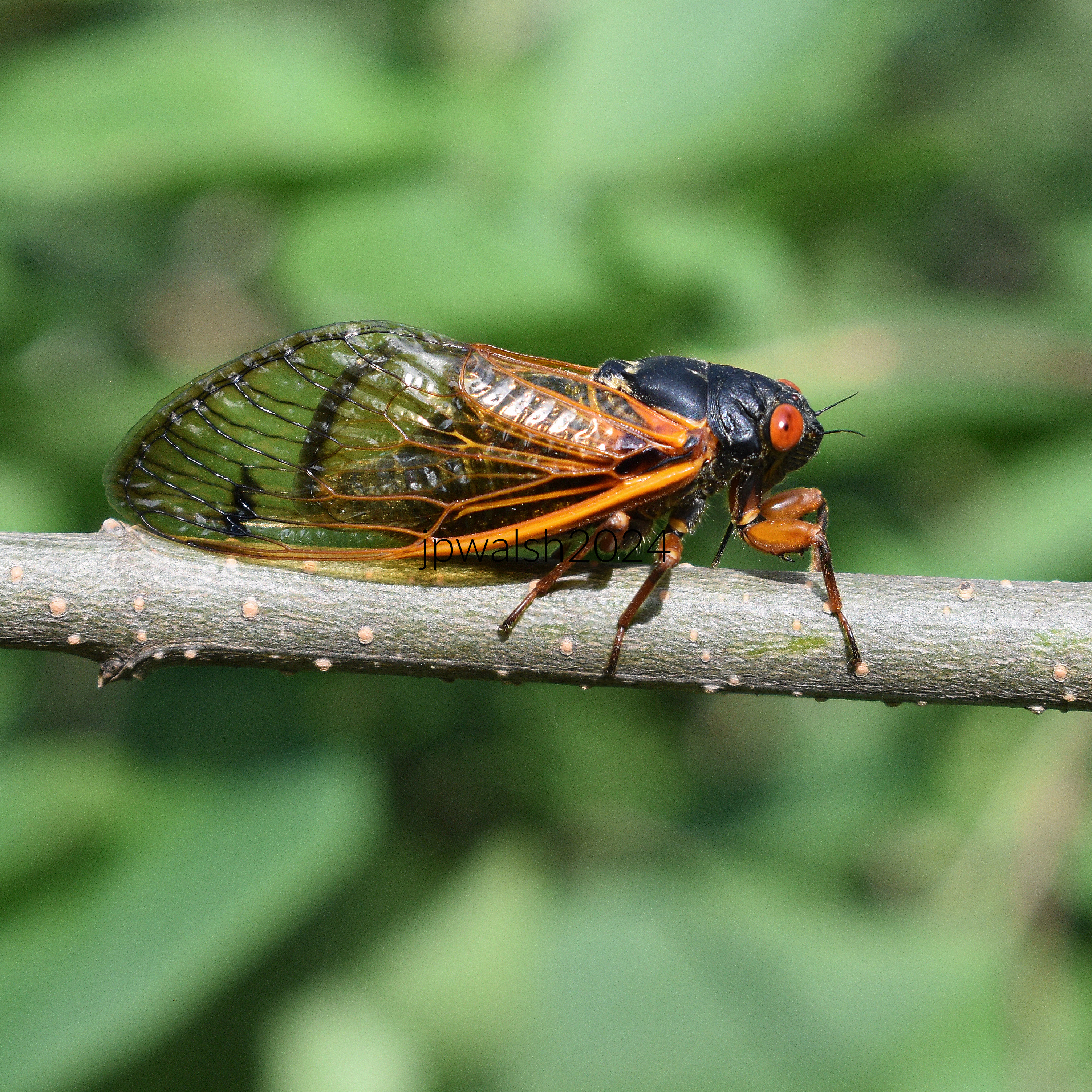
The cicada is perched quietly in direct sunlight on a flat wooden surface, gripping the texture with its clawed, orange-segmented legs. Because insects are cold-blooded, basking in the sun helps raise its body temperature so its wing muscles are warm enough for flight. May 31, 2024 5.80mb 7801

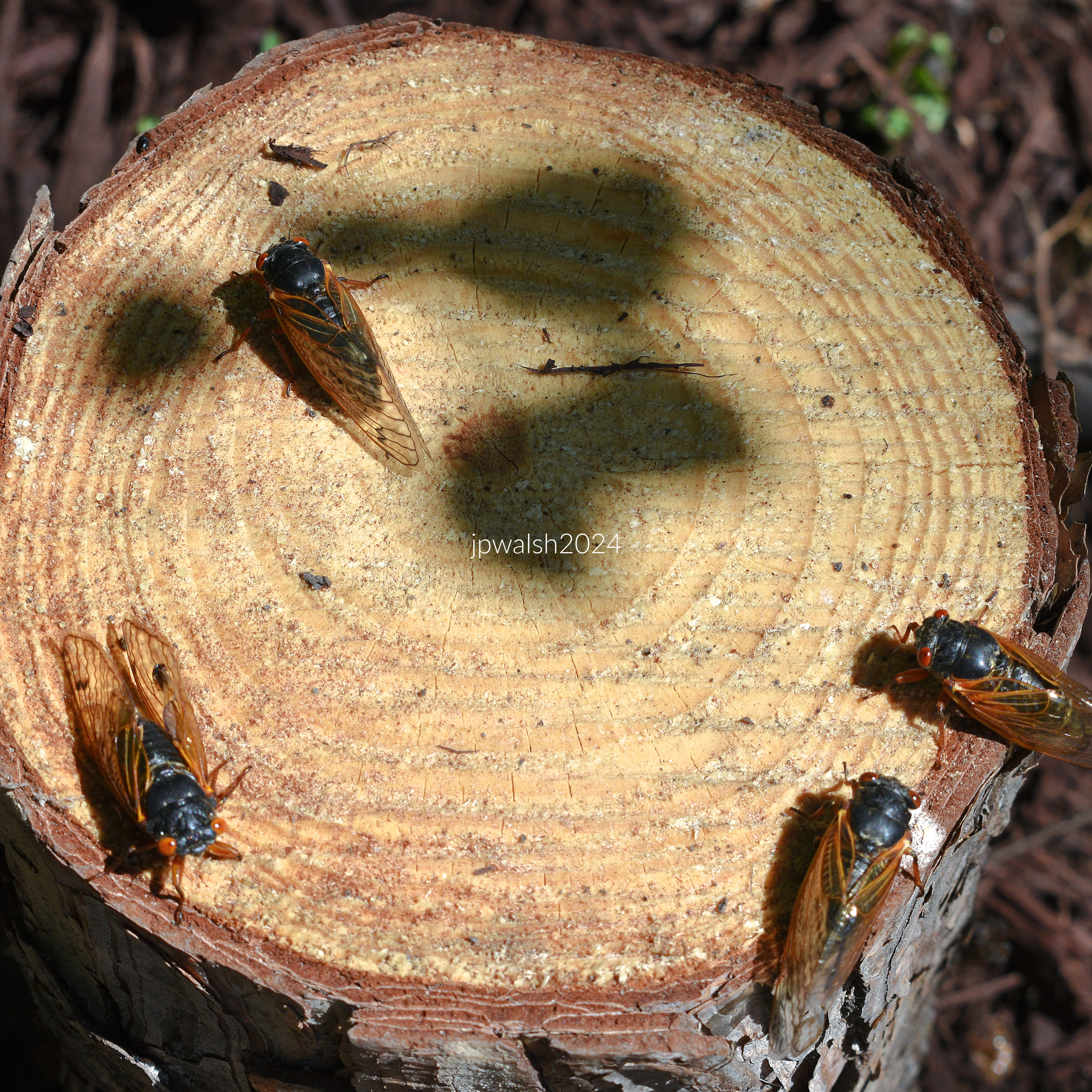
Cicadas resting on dead wood simply to warm up and gather. Adult cicadas lack chewing jaws and feed only by drinking watery plant fluids through a needle-like straw.
June 3, 2024 99% 6.40mb 7911
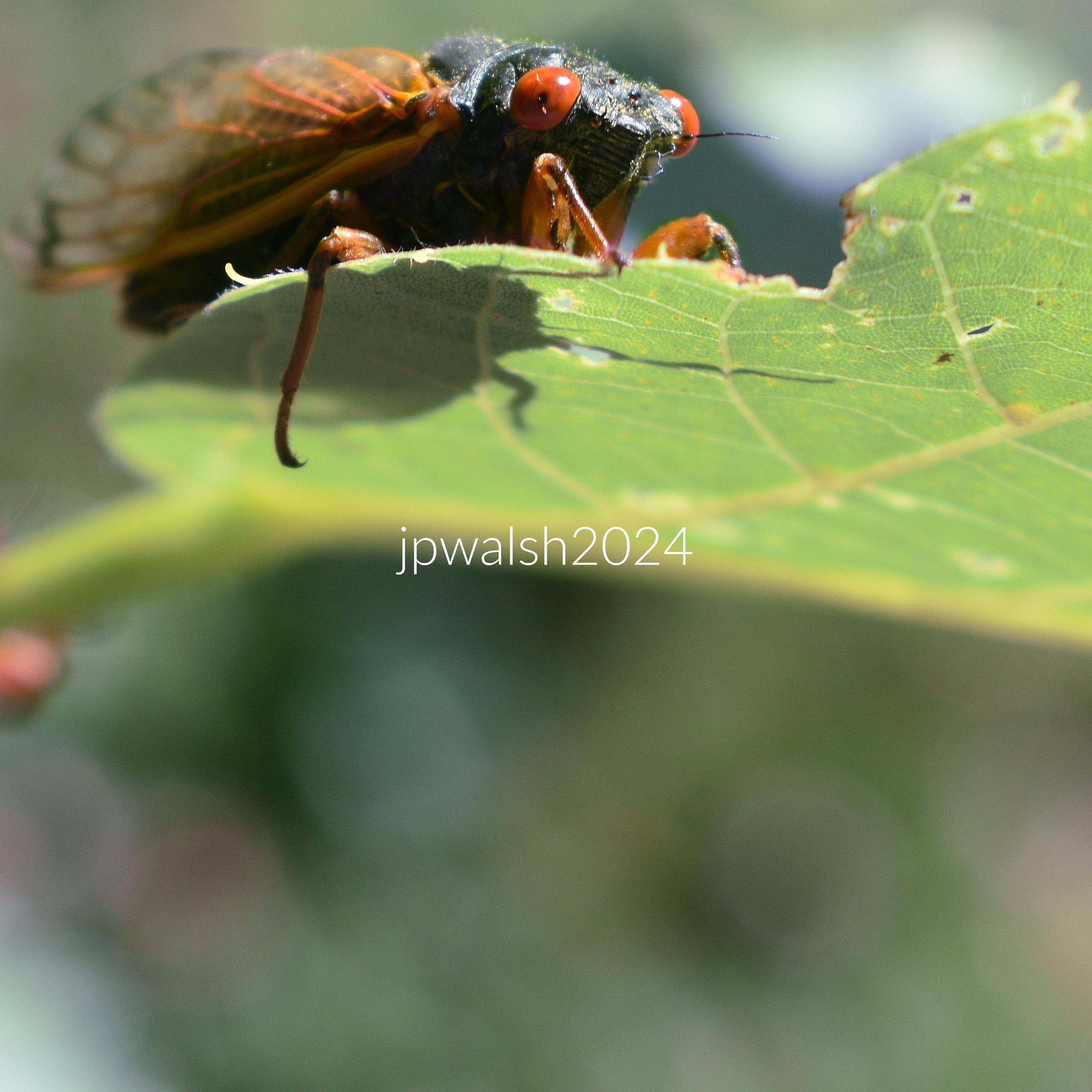
Cicadas do not eat solid food, but do drink fluids to avoid dehydration. They cannot chew leaves, bark, or dead wood. May 28, 2024 2.73mb 7563
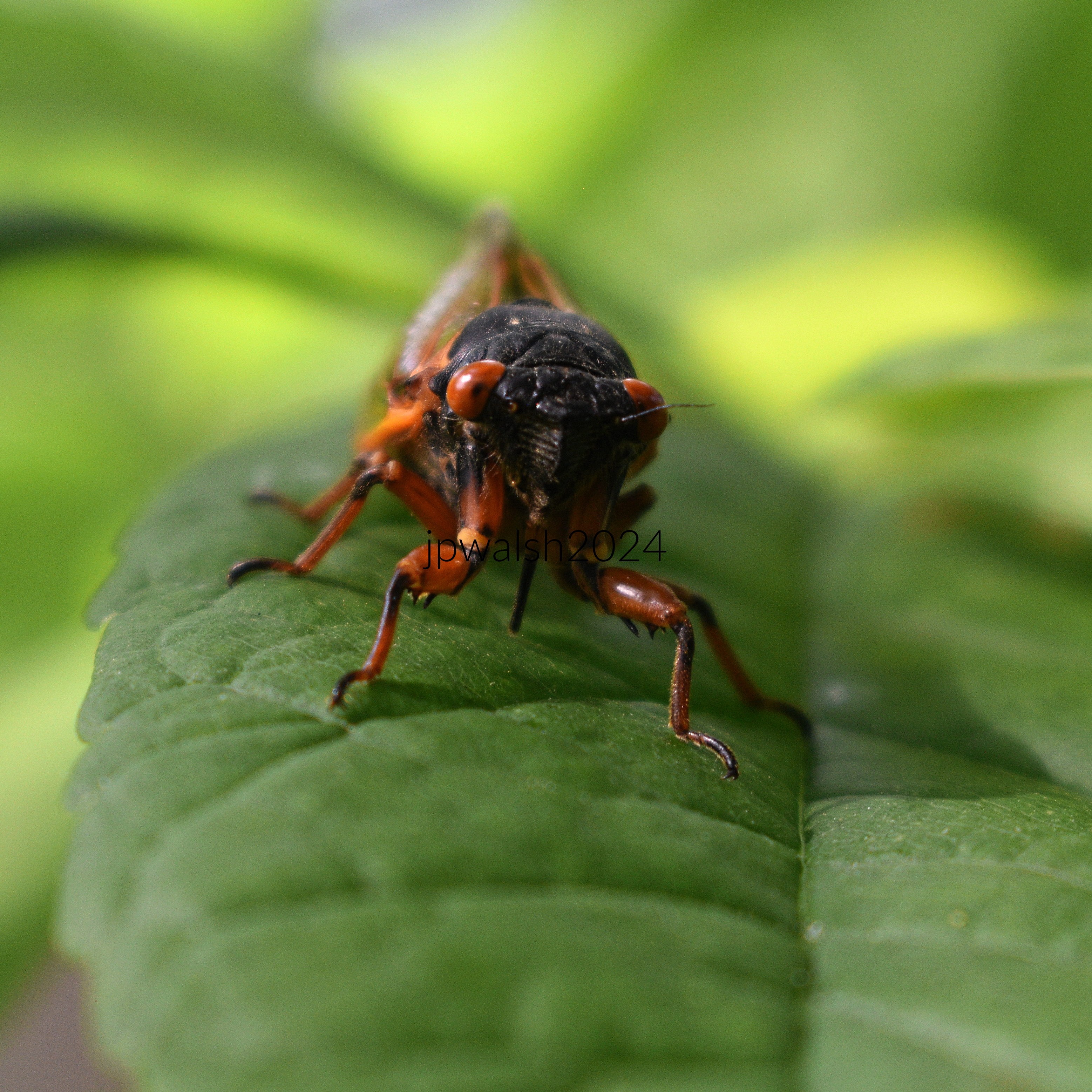
Cicadas have a piercing-sucking mouthpart called a rostrum (similar to a hypodermic needle) to drinking sap and watery plant fluids. They do not sleep. Instead, they enter at night a state of torpor at night and during cool, cloudy weather. Because they are cold-blooded, dropping temperatures slow their metabolism, causing them to cling motionless to branches and bark until the morning sun warms their wing muscles back up enough to fly. June 7, 2024 4.84mb 8111
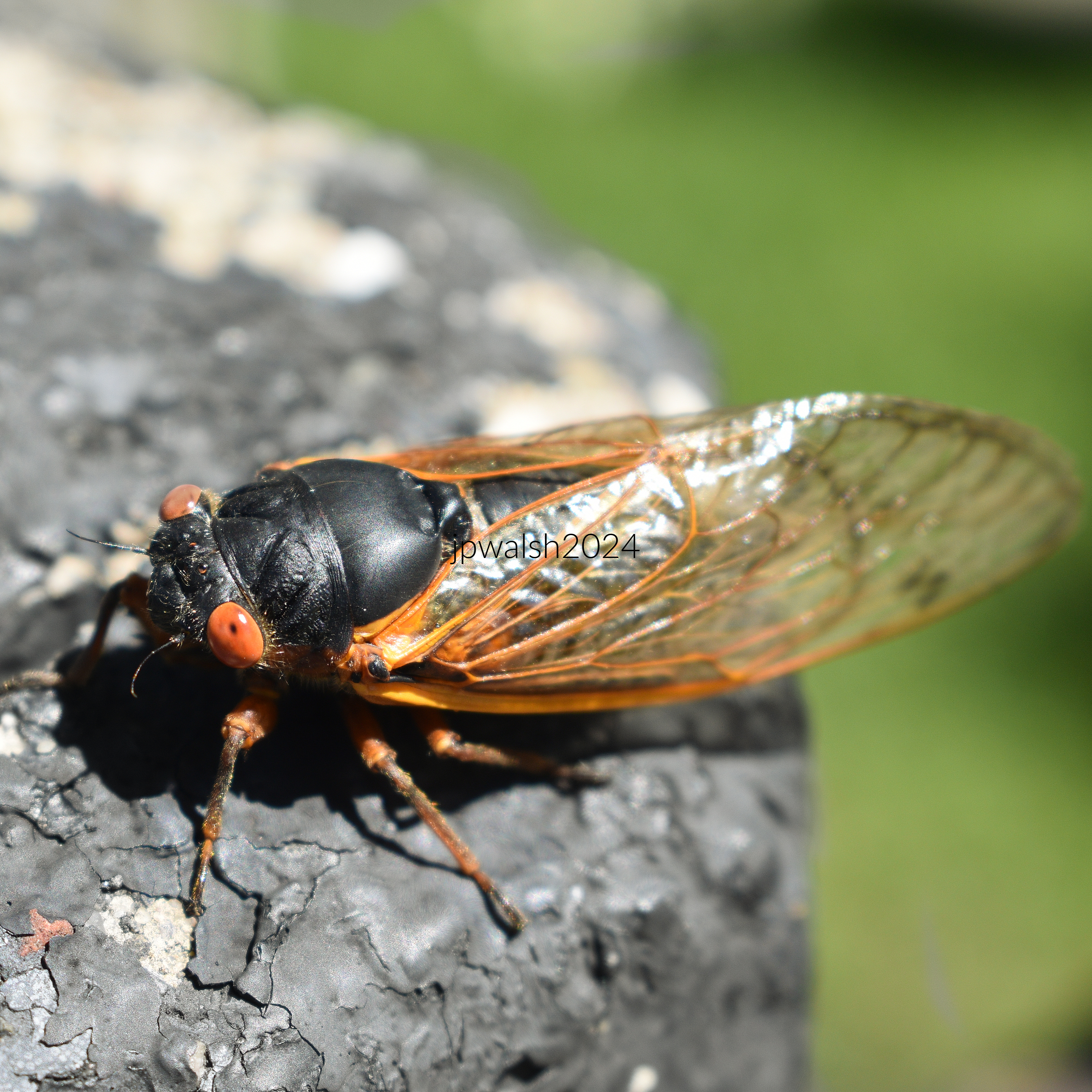
June 10, 2024 7.02mb 8473
An Unexpected Delicacy
Cicadas are edible and have been eaten by people around the world for centuries. Rich in protein, low in fat, and naturally gluten-free, they are often described by foragers as having a mild, nutty flavor reminiscent of shrimp, asparagus, or toasted nuts. After being briefly blanched in boiling water, they can be sautéed with butter and garlic, air-fried with seasonings, added to stir-fries and tacos, or even dipped in chocolate.
A Warning for Shellfish Allergy Sufferers
Not everyone, however, should sample this unusual food. The FDA advises that anyone with allergies to shrimp, crab, lobster, or other shellfish avoid eating cicadas. As arthropods, cicadas contain the same allergenic muscle proteins, including tropomyosin and arginine kinase, that are found in crustaceans and can trigger similar allergic reactions.
What Foragers Should Avoid
There are other reasons to be selective. Because periodical cicadas spend 13 or 17 years underground feeding on fluids from tree roots, they can accumulate traces of lawn chemicals, fertilizers, and other contaminants from the soil. Foragers are also advised to avoid any adult cicada displaying a chalky white or yellowish plug where the back of the abdomen should be. Such insects are infected with the parasitic fungus Massospora, one of the most unusual and disturbing pathogens in the insect world.
Egg-Laying in trees
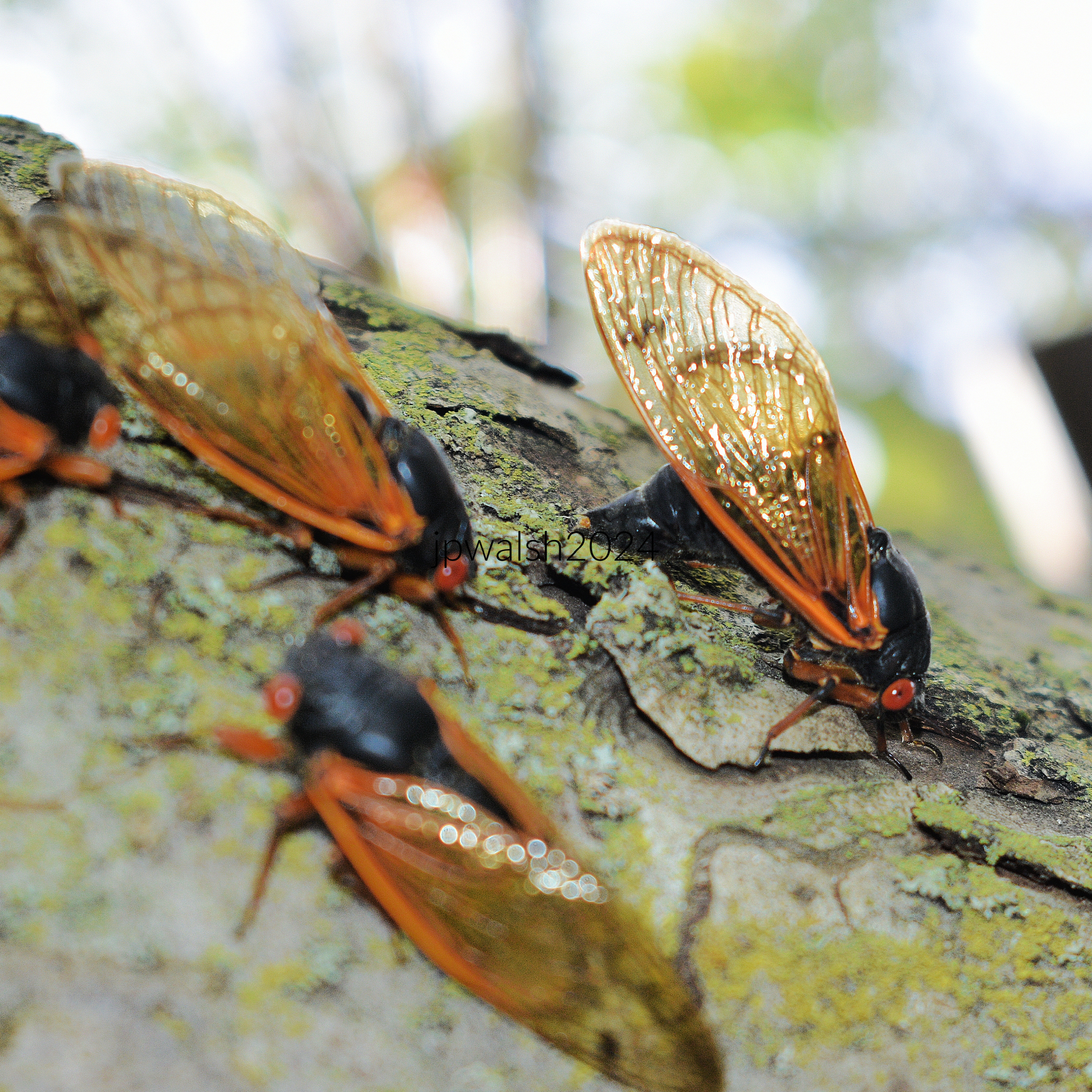
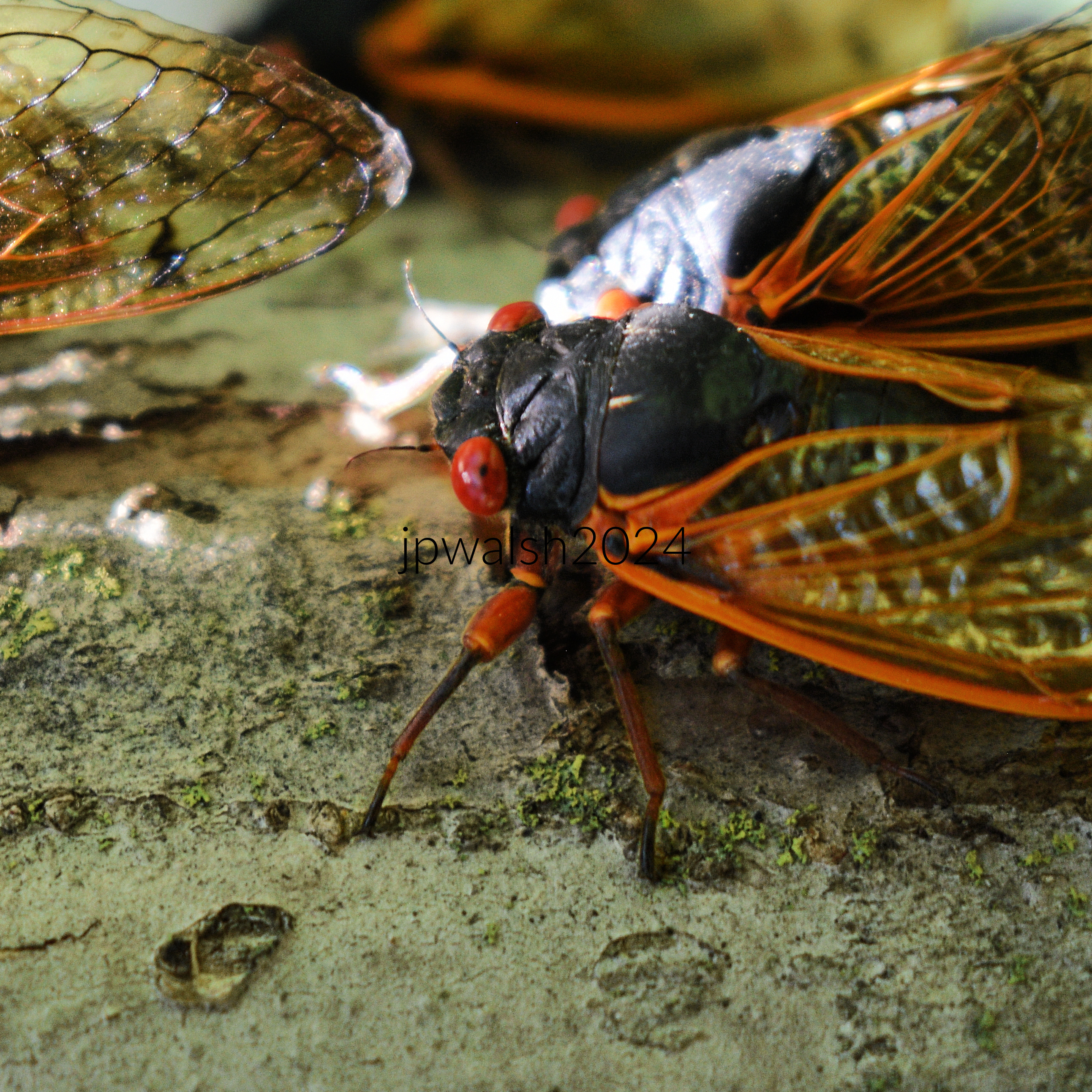
After mating in late May or June, the female uses a sharp, saw-like organ called an ovipositor to slice tiny grooves into slender tree twigs and deposit up to 400 to 600 eggs. About 6 to 10 weeks later—typically in mid-to-late summer—the eggs hatch and the tiny nymphs immediately drop to the ground and burrow into the soil. They survive underground for 13 or 17 years by sucking watery sap from tree roots and living inside protective earthen feeding cells. Newly hatched nymphs are tiny—about the size of a grain of rice or a small ant—and do almost all of their growing underground over the course of 13 or 17 years. June 7, 2024 4.03mb 8094
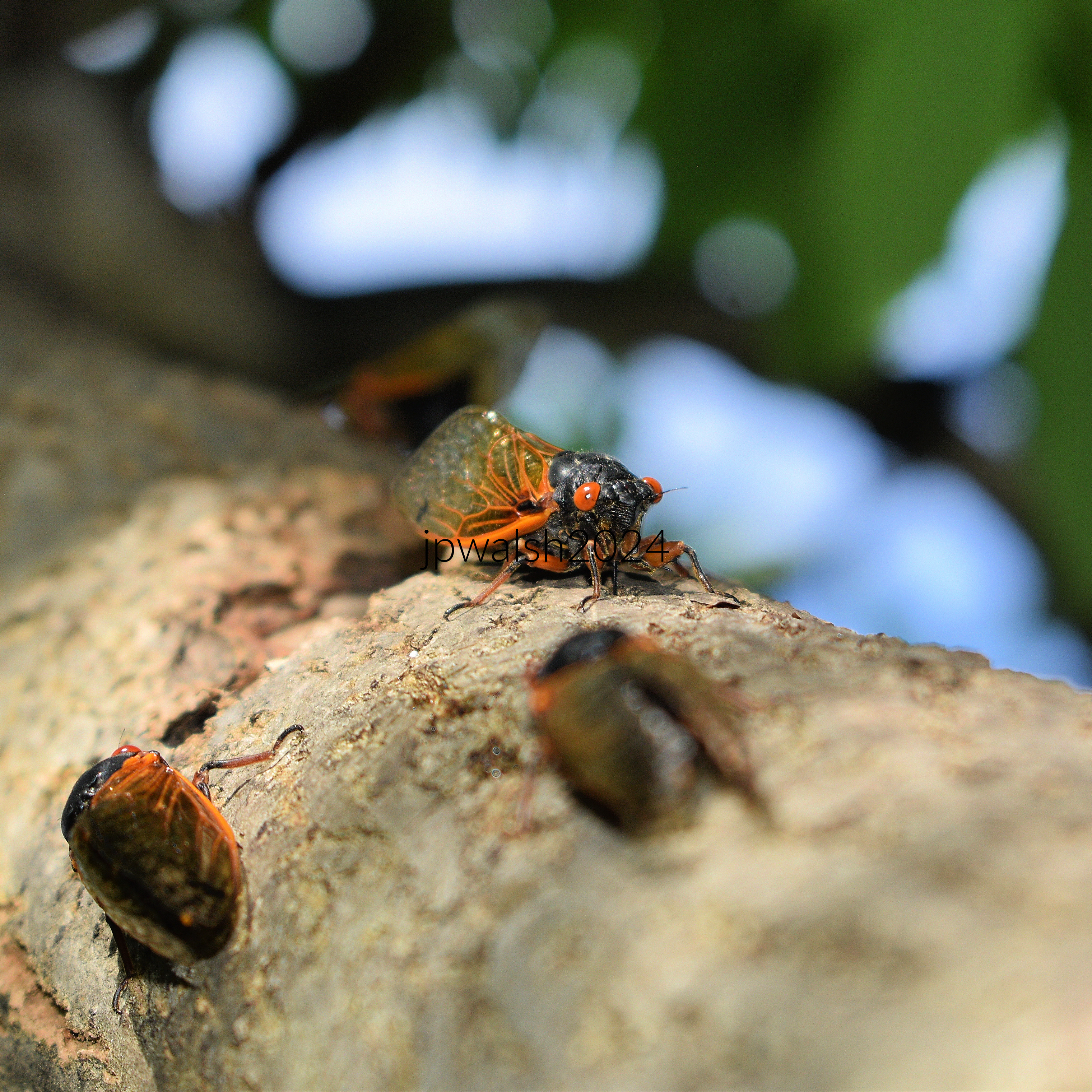
June 7, 2024 6.12mb 8112
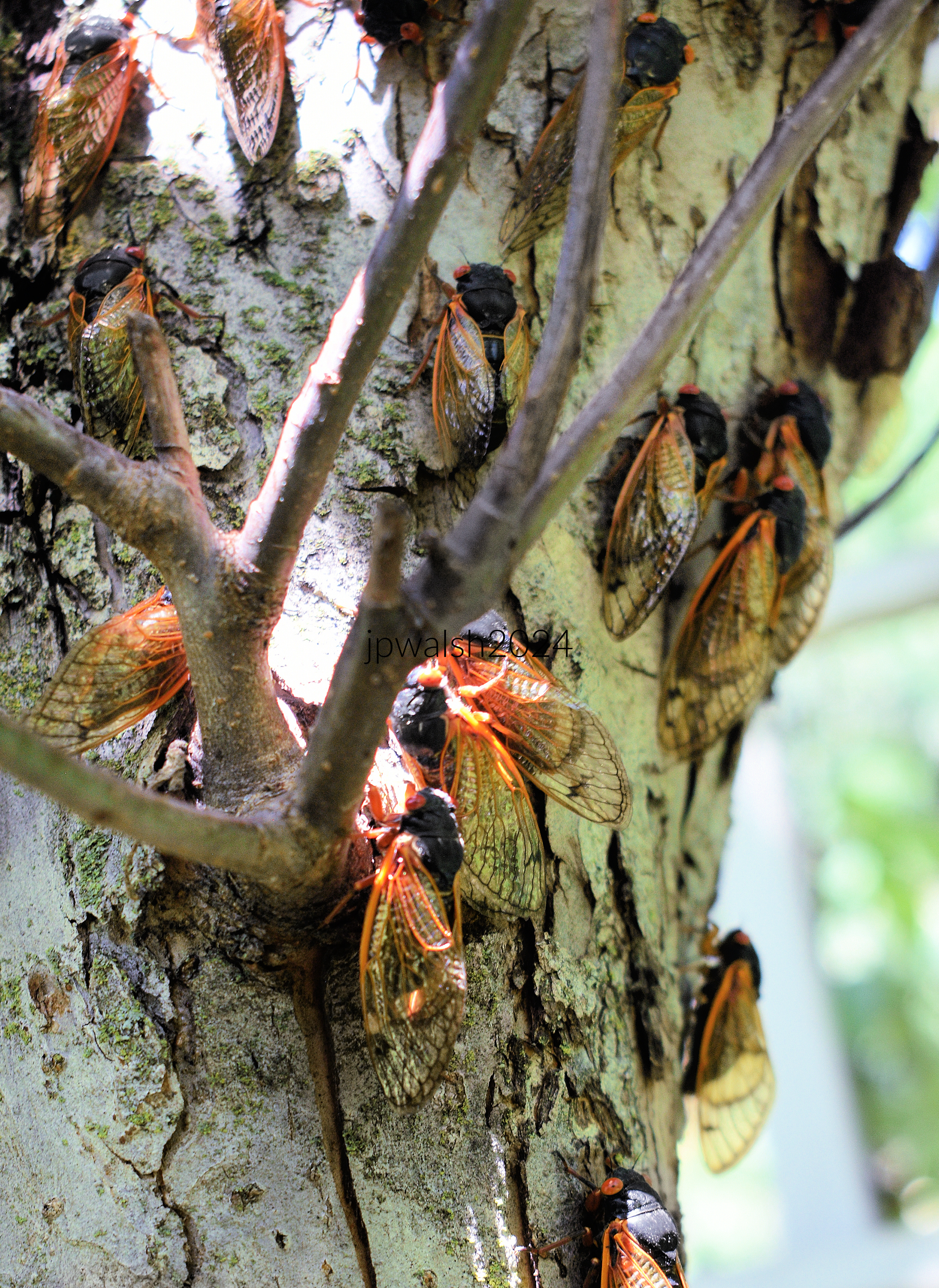
Males gather in large “singing centers” in the treetops to amplify their mating calls, creating a massive acoustic beacon that attracts females from across the neighborhood. June 7, 2024 90% 7.92mb 8088
Until 2041…
June 10, 2024 6.34mb 8477


