The Chicago Harbor Lighthouse (1893) stands as a symbol of the city’s rise as the principal commercial gateway between the Great Lakes and the American interior. More than a navigational aid, the lighthouse helped facilitate the maritime commerce, transportation networks, and industrial expansion that transformed Chicago into the economic capital of the Midwest.
Constructed in 1893, the year of the World’s Columbian Exposition, during a period of extraordinary growth for Chicago.
Known as the “Chicago Light,” the Chicago Harbor Lighthouse is an active automated lighthouse dating from 1893.
About one-half mile beyond Navy Pier, the lighthouse stands at the north of the main entrance of the Chicago Harbor in Lake Michigan. The lighthouse has had a significant role in the development of Chicago and the American Midwest and remains an active aid to nautical navigation today.
For more than a century, the U.S. Coast Guard has staffed this lighthouse at the breakwater outside the Chicago Harbor Lock. The lock separates Lake Michigan from the mouth of the Chicago River.
Guided ships on Lake Michigansafely into Chicago Harbor built in 1880, supporting both commercial shipping and passenger traffic.
The lock was built in the mid-1930’s and is operated by the U.S. Army Corps of Engineers. The lock is one of the entrances into the Illinois Waterway system at the Great Lakes. The waterway system is a commercial and recreational shipping connection to the Gulf of Mexico by way of the Illinois and Mississippi rivers.
The “Chicago Light” is at that waterway system’s headwaters as it stands in the outer harbor constructed in 1880. The Chicago Light’s conical tower dates from 1893. Twenty-five years later, in 1918, the tower was reconstructed and the base building which contains a fog-signal room and boathouse was added. The architects are not identified.
Through its breakwaters, the main entrance into Chicago Harbor is 580 feet wide. The Chicago Harbor Lighthouse was designated a Chicago Landmark on April 9, 2003. It is the only surviving lighthouse in Chicago and one of two remaining examples in the state of Illinois.
What a view from the frozen waters of Lake Michigan! CBS 2 photojournalist Alfredo Roman shot this drone video of the Chicago Harbor Lighthouse, which has endured a lot of icy weather since it was built.
About one mile ahead from this photograph’s location is the Chicago Harbor Lock. Built in the 1930’s, it provides the entrance/exit to the Illinois Waterway system at the Great Lakes. The waterway system is a commercial and recreational shipping connection from the Great Lakes to the Gulf of Mexico by way of the Illinois and Mississippi rivers.
As a historic landmark, the Chicago Light represents the often-overlooked maritime foundations of Chicago’s wealth and development as it continues to serve as an active aid to navigation today.
The Park Tower Condominium (1973) exemplifies how Chicago’s late modernist architects adapted the high-rise residential tower to the city’s lakefront, creating a landmark that combines urban density, engineering sophistication, and panoramic engagement with Lake Michigan.
Park Tower Condominium, 5414 N. Sheridan Road, Chicago, SCB, 1973. View from east looking west. August 2015. Author’s photograph. 3.15mb.
Park Tower Condominium is on the lakefront next to north Lake Shore Drive and across from Foster Beach in Lincoln Park. Its address is 5414 N. Sheridan Road, Chicago
Constructed in 1973 by Solomon, Cordwell, Buenz (SCB), a Chicago architectural firm founded in 1931, the tower was planned as the first of three towers in a triangular formation but the others did not materialize.
Tallest building outside Downtown Chicago for 8 miles north to Foster Beach. Located on North Sheridan Road in the Edgewater neighborhood, directly adjacent to Lake Michigan, its height and slender profile make it a prominent visual landmark on Chicago’s northern lakefront.
At 55 stories tall (513 feet high), Park Tower Condominium is the tallest structure between downtown and Foster Beach and one of the tallest structures in Chicago outside the downtown area.
Park Tower Condominiumis one of the largest all-residential buildings in the city.It was originally built as luxury rental apartments, though the building became condos in 1979.
In the Edgewater neighborhood, Park Tower Condominium is one of three residential towers in Chicago with black Miesian windows and three rounded lobes. The others are Lake Point Tower (505 North Lake Shore Drive) and Harbor Point (155 North Harbor Drive).
The tower reflects the modernist emphasis on efficiency, structural clarity, and residential density.
Park Tower Condominium, 5414 N. Sheridan Road, Chicago, SCB, 1973.View from northeast looking southwest. August 2015. Author’s photograph. 3.15mb.
The curtain wall of the Park Tower Condominium is beautifully detailed and proportioned.
Park Tower Condominium Is a lens into late modernist Chicago residential architecture, lakefront urban development, and the emergence of high-rise luxury living along Sheridan Road.
SOURCES:
Architect Magazine. “Solomon Cordwell Buenz.” Accessed October 23, 2026. architectmagazine.com.
Emporis. “Park Tower Condominiums, Chicago, IL, USA.” Building ID 117420. Accessed October 23, 2026. emporis.com.
The links are dropped because the Emporis database was permanently shut down in 2022, and the specific URL you provide for Architect Magazine now leads to an inactive or broken page.
John P. Walsh, 2015. All rights reserved. All text and photos are the property of the author, except for materials explicitly credited as public domain or licensed content. Photographs were taken by the author on August 7, 2015.
Art outdoors transforms streets, parks, plazas, and building walls into public galleries where history, memory, community identity, and creative expression become part of everyday life, demonstrating how art can engage audiences beyond the traditional museum setting.
All photographs & text by John P. Walsh.
September 2001. Philadelphia, Pennsylvania 70% Progress of Women was completed by artists Larissa Preston Danowitz and Cesar Viveros and collaborators in 2001. At 1307 Locust Street the mural shows work of the New Century Guild to promote women in the workforce. At the top of the mural is the visage of Eliza Turner (1826-1903) who founded the New Century Guild in 1882 and lived in Philadelphia.
October 2003. Corcoran Gallery of Art, Washington, D.C. The Renoir-inspired outdoor sculpture (“Dance at Bougival,” 1883, The Boston Museum of Fine Arts) was in conjunction with that year’s exhibition called “The Impressionist Tradition in America.” Closed in 2014, the former museum is today the Corcoran School of the Arts and Design, a part of the George Washington University.
November 2017. Crown Fountain, Jaume Plensa [Krueck + Sexton Architects], Millennium Park, Chicago. 368kb 35%
October 2015. Chicago. 4.48 mb
June 2018 Chicago. 4.65 mb
July 2015. Chicago. 4.32 mb
May 2014. Chicago. 4.72 mb
June 2022. Chicago. 7.89 mb 86%
December 2013. Chicago. 6.79 mb
June 2022. Chicago (Rogers Park). 4.20 mb
June 2022. Chicago. 7.66 mb 84%
June 2022. Chicago 11.71 mb
June 2022. Chicago 2.38 mb 50%
August 2015. Chicago. 7.92 mb 96%
August 2018. Chicago. 7.29 mb
August 2015. Chicago. 5.26 mb
October 2016. Chicago. Daniel Buren (b. 1938), Attrape-soleil, 2013. 4.49 mb.
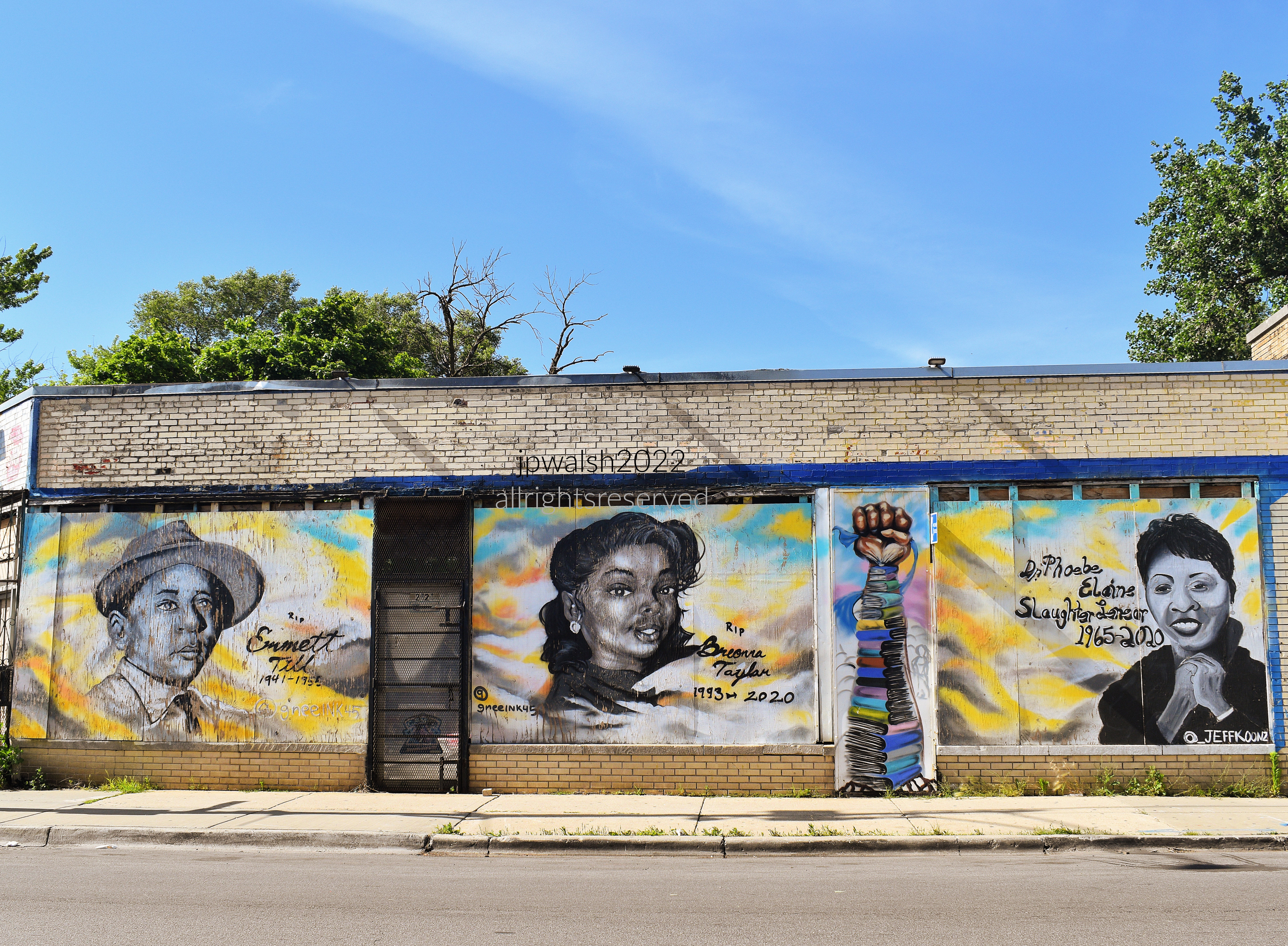
Featured on the exterior wall of a building in the Englewood/Morgan Park area located on the South Side of Chicago, three prominent civil rights figures and community leaders are memorialized in this mural created in 2020. Emmett Till (1941–1955) is A 14-year-old Chicago youth whose brutal lynching in Mississippi became a primary catalyst for the American Civil Rights Movement; Breonna Taylor (1993–2020) is a 26-year-old emergency room technician who was fatally shot by police officers in her Louisville, Kentucky home. And Dr. Phoebe Elaine Slaughter-Lenear (1965–2020) is a respected local Chicago educator, humanitarian, and community leader. Created in the midst of the nationwide civil rights protests that summer, the mural was painted as a collaboration by Chicago-based visual artists GNEE ART (@gneeink45) and Calin Bruett, professionally known as JEFF K%NZ (pronounced “Jeff Koonz”).
November 2017. Chicago. Opened in July 2004, Crown Fountain in Millennium Park was designed by Spanish artist Jaume Plensa (b. 1955) and executed by Krueck and Sexton Architects. 66% 7.91 mb DSC_3423
April 2013. Chicago Pilsen. 4.89mb102_0165 (1)
July 2015. Chicago 5.66mb DSC_0083 (1)
December 2015. Chicago (State Street). 5.13mb DSCN1936 (1)
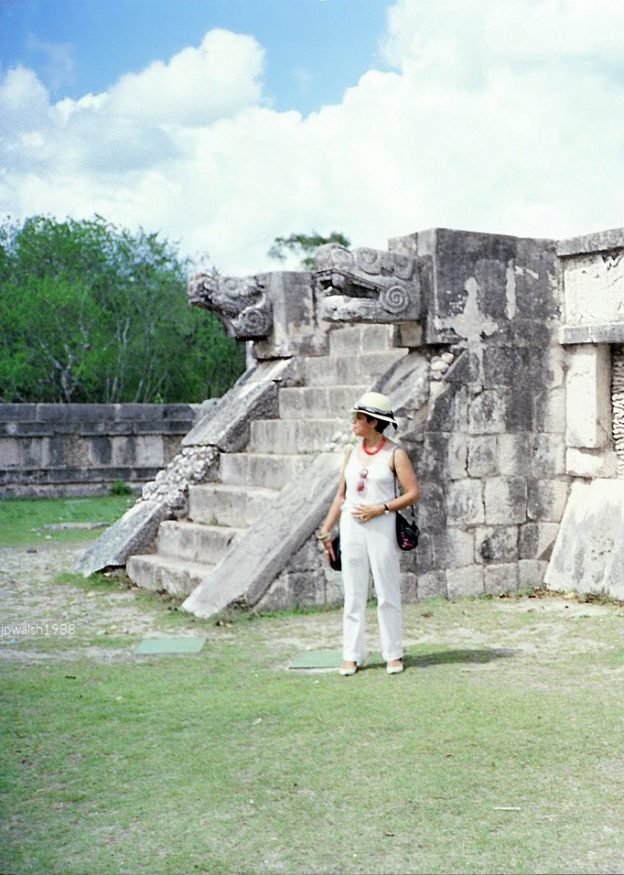
FEATURE image: Chichén-Itzá serpent head sculptures guard a staircase. May 1988. Author’s photograph.
All text and photographs by John P. Walsh, except where noted.
Rising from the jungles of the Yucatán, Chichén Itzá reveals the intellectual, architectural, and spiritual achievements of the Maya, whose temples, pyramids, and astronomical observatories transformed a remote landscape into one of the most remarkable urban centers of the ancient world.
Serpent head at the base of El Castillo. May 1988. Author’s photograph.
Cancún: Gateway to the Ancient Maya
Cancún’s sandy spit of land at the northern tip of the Yucatán peninsula was uninhabited by the ancient Mayans. It was trodden by the conquistadores and used by pirates as a hide-out. Today, oozing like wet plaster into the Caribbean sea, the beaches are a new jet-age resort. I visited the Yucatán from Chicago for a few days in May 1988.
Though the tourist board in Cancún was telling of more resort development by the mid-1990s, it already boasted of 85 hotels and about 9,000 guest rooms during my trip.
Leaving the Resort Coast for the Yucatán Interior
After two days acclimating myself nicely to the Caribbean climate and working my way un poco with the Spanish language, I signed up with a local tour operator for a 12-hour bus tour. The destination was to one of the most famous sites on the Yucatán peninsula and the world: the ancient Mayan archeological site of Chichén-Itzá.
With its mysterious, virtually-intact looming pyramids and temples as well as startling tales of human sacrifice and one of the world’s most accurate cosmic calendar systems—all over 1,000 years old—I was excited to adventure out of the comfort of Cancún’s “Zona Hotelera” into the Yucatán jungle interior.
The ancient Mayan cities and later Spanish colonial ones that sit on top of them are a stark contrast to the touristy jet-set beaches of Cancún.
Across the Jungle Peninsula
An extensive jungle stretches across the Yucatán’s three states of Quintana Roo, Campeche, and Yucatán that are inhabited by human communities as well as wild animals such as jaguars. We frequently saw black-headed, blue-bodied birds called Yucatán jays. We saw iguanas on sun-washed rocks.
In the landscape of Chichén-Itzá there are a variety of mammals, hundreds of species of birds and many reptiles. On the Yucatán peninsula there are almost 150 varieties of snakes, many of which, including at the archeological site, are highly venomous. May 1988. Author’s photograph.
I left the hotel and met the bus in Cancún town at 8:00 a.m. Francisco drove the air-conditioned 40-seater as Raúl toted a microphone and told the group about some of the things we were seeing along the way.
They took us out of Quintana Roo’s Cancún to Yucatán’s Chichén-Itzá about 125 miles away. On arrow-straight highway 180 we drove into small local communities along the two-lane road. We would reach Chichén-Itzá out of Valladolid, the Mayan/Spanish colonial city which is sometimes called the most colorful town in Mexico.
Chichén-Itzá’s famous complex of Mayan ruins dates from the Classic period of 600 CE to 1200 CE. Important archeological sites in the Yucatán still await reclamation from the jungle today –such as smaller Cobá in Quintana Roo. Guided tours are recommended for an extensive and remarkably safe visit into these interesting backwater places.
Yucatán’s South 180: Route From Cancún to Valladolid. May 1988. Author’s photograph.
The bus climbed onto south highway 180 and followed it through villages such as Cocoyol, Catzin, Chemax, Xalaú, and others. Along the route there were thatched-roof dwellings which held patterned hammocks inside. Outside, dogs slinked around and small farm animals sometimes shared the road. The entire Yucatán peninsula is sparsley populated with only a fraction (about 4%) of Mexico’s total population.
Traditional Mayan Life in Modern Yucatán
Francisco told us that the thatched-roof dwellings were durable. One such dwelling could last almost 20 years. The huts were made of sticks which we were told kept dwellers cool and comfortable year-round. Raúl said that the average year-round temperature on the peninsula was 93 degrees Fahrenheit. Starting in April, humidity levels rose and the temperature hovered over 100 degrees. Thatched hut dwellings were the predominant local housing we saw from highway 180.
Traditional Mayan homes. May 1988. Author’s photograph.
With exceptions, the lifestyle of modern Mayans has not strayed from their ancestors’ of the last millennia. Traditional Mayan homes are oval-shaped huts made of sticks bound together to form walls. Palm fronds are laid upon the wood frame for a peaked roof. Inside there is a main room usually with a dirt floor. Hammocks create a sleeping area.
Valladolid: A Colonial City Built on Maya Ground
In Valladolid, a Spanish colonial town founded in 1543, there were larger stores. From the bus windows, we saw local women in the huipil, the traditional garment worn by indigenous women from central Mexico to Central America, doing their errands. They outnumbered men on the street who were mostly absent on this sunny and hot May morning in the middle of the week.
Valladolid. May 1988. Author’s photograph.
Larger Stores in Valladolid. May 1988. Author’s photograph.
Raúl said the men worked in Cancún during the week for about eight dollars a day, This wage was significantly higher than the $5 a day usually earned on the peninsula. The workers, Raúl said, are “smart” because when they are working, they live at the hotels where they eat, shower, and live rent-free. When they return home to the villages, they bring all of their earnings with them to their families. In most of these outlying towns it requires about $40 per week in income to meet living expenses, whereas workers in Cancún can earn nearly twice that amount.
The Church of San Servacio (1545) and the Crime of Mayors in 1703
The Iglesia de San Servacio is in the center of Valladolid on the south side of the main square. It was founded and built by Fr. Francisco Hernandez on March 24, 1545.
In 1705 part of the original church was demolished by order of the Benedictine bishop of Yucatán, Pedro Reyes de los Ríos de Lamadrid (1657-1714). The bishop ordered this partial demolition following the desecration of the sacred building during a political battle in July 1703 known as the “Crime of Mayors.”
San Servacio in Valladolid, Mexico. May 1988. Author’s photograph.
After Captain Hipólito de Osorno lost political favor in Valladolid he decided, together with his lawyer Pedro Gabriel de Covarrubias, to take refuge in the church of San Servacio.
But the political excitement of the time had reached an uncontrollable situation. In the pre-dawn hours of July 1703, a frenzied mob, led by Valladolid’s newly-elected mayors, Señors Avuso and Tovar, broke into the sacred enclosure.
The lawyer De Covarrubias was killed in the church after being driven through by a spear. His blood spilled on the altar and stained it. The captain was mortally wounded when the mob found him hidden behind the organ. The ruckus in no way benefitted the two new mayors. Both Señors Ayuso and Tovar were found guilty of murder and hanged.
Due to this murder in the cathedral the bishop had it rebuilt in 1706 as it is seen today. The altar’s position was moved to face north and west towards Rome. The church building is located on Valladolid’s main square named after Francisco Cantón Rosado (1833-1917), a conservative governor of Yucatán (1898-1902).
In early 18th Century Yucatán, a Benedictine Bishop and Franciscan Church
The church building’s main façade has a coat of arms carved on stone with arabesques, a royal crown, and a Franciscan cord. There are images of an eagle and a palm that were frequently used in the decoration of Franciscan churches in the Yucatán. Two square-shaped towers rise on either side of the central façade.
Downtown Valladolid. May 1988. Author’s photograph.
Origins of the Maya Civilization: Ancient Mayans are 1,000 years older than the oldest books of the Bible
The Mayan civilization is shrouded in the mists of history. Archeologists, anthropologists and historians have speculated that they originated in about in 2600 BCE in the middle of the Bronze Age (3300 BCE to 1300 BCE). The origins of the Mayans therefore predate the oldest books of the Bible by 1,000 years.
Science, Astronomy, and Urban Planning
Mayan technical skill extended to complex calendar systems and hieroglyphic writing whose images are in evidence at Chichén-Itzá. Mayan artisans were skillful weavers and potters and artifacts have been found in vast quantities at the site. The ancient Mayans also cleared routes for trade. Their main source of fresh water was from cenotes (sink-holes) and they stored rainwater in reservoirs called chultun.
Mayan culture made remarkable advances in mathematics and astronomy. Mayans are known for their impressive urban planning, farming methods, and architectural achievements. All of these impressive achievements are to be seen at Chichén-Itzá in its pyramids, temples, ball courts, palaces, and astronomical observatories.
The Rise and Decline of a Maya Empire
By 300 BCE Mayan society had evolved into a hierarchical social structure where kings and priests ruled. Stretching from Cancún through the Yucatán, Belize, and Guatemala to the coast of the Pacific Ocean, Mayan civilization was a highly structured society. It consisted of several independent states, each possessed of several classes—a ruling class, warrior class, and agricultural class. The society reached its apex in the Classic period from about 200 CE to 900 CE.
The stone monuments at Chichén-Itzá were built as a ceremonial center during the Classic period. As it continues to impress visitors today, it accomplished the same thing for ancient Mayans over 1,000 years ago.
The decline of ancient Mayan civilization started around 900 CE as they began to surrender their independence to the Toltecs who absorbed them. The Toltecs were another pre- Colonial Mesoamerican civilization located in central Mexico that reached its height between around 900 to almost 1200 CE. Though Chichén-Itzá as a ceremonial center would not die for another 250 years, the city became a vestige of itself whose remnants alone of a great civilization survived when conquered by the Spanish colonists in the 15th century.
Arrival at Chichén-Itzá
A visitor climbs atop the Nunnery, the Mayan temple complex built in the Puuc style during the Classic period of 600-1200 CE at Chichén-Itzá. May 1988. Author’s photograph.
It was hot and humid when we arrived into Chichén-Itzá. Discovered by explorers as early as the 1830’s—and opened to the public in 1922—it was today an impressive and expansive series of ancient stone monuments on a grassy 1200-acre campus carved out of jungle. Do people live further into the jungle? Raúl said about one mile from the road there are small communities of two or three hundred people who live in farther from the main road.
Kukulcan and the Toltec Influence
The pyramids and temples of Chichén-Itzá are the Yucatán’s best known monuments. The Mayan city was absorbed by the Toltecs in 987 CE. According to legend, a man named Kukulcan—who is the same figure as Quetzalcoatl from the Toltec capital of Tula —arrived from the west “for the redemption of his people.” In Chichén-Itzá, Kukulcan built this magnificent city which combined the Puuc style of the Mayans and the motifs of the Toltecs, namely, the feathered serpent, warriors, eagles and jaguars.
Rediscovering the Lost City
Starting in the midnineteenth century and again at the end of the century, there was a range of scientists and explorers associated with the discovery and excavation of the archeological site of Chichén-Itzá that is seen today.
Lithograph of a maize god by Frederick Catherwood in Views of Ancient Monuments in Central America, Chiapas, and Yucatán published in 1844. Public Domain.
Edward Thompson and the Sacred Cenote
As its great natural water well (or cenote) likely gave Chichén-Itzá its name, one major figure worth considering is the early American explorer Edward Thompson (1857-1935). For most of his adult life Edward Thompson lived and worked at Chichén-Itzá including famously dredging and diving into the sacred well in search of treasure and human remains for evidence of legends of human sacrifices.
A diplomat by profession and an amateur archeologist, Thompson had an indefatigable curiosity about the ancient Mayan ceremonial city and did important work here.
Stephens, Catherwood, and the Maya Revival
As a young scholar Thompson was inspired by the writings of American explorer and diplomat John Lloyd Stephens (1805-1852). Together with English artist Frederick Catherwood (1799-1845) they were pivotal figures in the rediscovery of Maya civilization in Central America.
Catherwood’s detailed drawings of the ruins of the Maya civilization explored by Stephens led to best-selling books published in the early 1840s such as Incidents of Travel in Central America, Chiapas and Yucatán and Incidents of Travel in Yucatán. These were illustrated works that introduced Europe and the United States to the civilization of the ancient Maya.
Portrait of John Lloyd Stephens, whose Incidents of Travel in Central America, Chiapas and Yucatán was published in 1854. Public Domain.
Stephens and Catherwood in turn had been inspired by earlier pioneers of scientists and explorers. Two figures who influenced them were Alexander von Humboldt (1769-1859) and Juan Galindo (1802–1840).
Portrait of Alexander von Humboldt by Joseph K. Stieler (1843). Charlottenhof. Public Domain.
Juan Galindo before 1839. From the book Ancient Maya Cities: The Hidden Wonders in the Forest. Public Domain.
Von Humboldt was a Prussian geographer, naturalist, and explorer whose work in botanical geography led to the development of the field of biogeography. Galindo was an Anglo-Irish military and administrative officer in the short-lived liberal Federal Republic of Central America (1823-1841) and who was actively engaged in Maya archeology.
Exploration After the Caste War
In 1847 the Caste War of Yucatán broke out limiting access to the Yucatán’s unexcavated ruins. The Caste War restricted the borders of Yucatán and Quintana Roo to all but indigenous Maya for nearly 60 years, making travel to the area dangerous. When the United States appointed Edward Thompson archaeological consul to the Yucatán in 1895 he became one of the first to explore the land since the Caste War.
Edward Thompson, before 1920. Thompson famously dredged and dived the sacred well at Chichén-Itzá and brought up a fortune of gold and jade as well as human skeletons providing evidence for legends of ancient human sacrifice. Public Domain.
Edward Thompson arrived in the Yucatán at Mérida in 1895. He had purchased land in 1894 that included the unexcavated site of Chichén-Itzá. For the next 30 years Thompson dedicated his life to exploring the site.
ThompsonSearches the Depths of the Sacred Well
In 1904 Thompson started to explore the bottom of the sacred well— the cenote sagrado. Thompson used divers (including himself) and dredges. Over six years he brought up a fortune in gold, copper and jade as well as a wealth of vases, obsidian glass knives and Maya incense called copal. Thompson did some of his explorations for major American museums such as The Field Museum in Chicago and the Peabody Museum at Harvard University, among others.
From his arrival, the sacred well attracted Thompson’s intense interest. In his 1932 book, People of the Serpent, Thompson stated he became intrigued with the murky waters of the great well as soon as he first saw it from the top of El Castillo.
Though most ancient Maya artifacts as well as its codice books with its written language were destroyed by the local Catholic Church authorities in the 16th century, Thompson read the colonial Spanish accounts of Mayan history.
Spanish Franciscan Fray Diego de Landa (1524-1579), colonial bishop of Yucatán. De Landa later regretted destroying the Maya civilization’s cultural treasures and wrote a history of the Mayas (Relación de las cosas de Yucatán, c. 1566) to make up for his thoughtless, wholesale destruction. Edward Thompson read the bishop’s account of the “cenote,” where Fray Diego detailed the pilgrimages of ancient Maya priests and farmers to the sacred well to “appease the gods.” These pilgrimages included throwing gold and ornaments into the waters. The bishop’s history also told of human sacrifices there as well. Public Domain.
To implement his plan to explore the cenote, Thompson returned to his hometown of Boston where he raised money, took diving lessons, and constructed a specialized diving mechanism. Thompson sent the dredging bucket, winch, tackles, steel cables, derrick and 30-foot boom to Chichén-Itzá.
Controversy and Discovery
The dredge buckets brought up ornaments and objects of daily life. Thompson’s and another diver’s plunges discovered more precious treasures, including human skeletons. These discoveries were controversial. The fact that this ancient site was being disturbed brought critics. Further, Thompson was neither a scientist nor academic but simply an enthusiastic amateur. He published his Maya civilization studies in Popular Science Magazine. But these critiques aside, Thompson’s field work virtually single-handedly put Chichén-Itzá on every world explorer’s own bucket list.
Sacred cenotes played a vital role in Maya religious life and ritual practices.
Cenote from the platform of El Castillo. This is the view Edward Thompson had when he first became fascinated with the sacred well in the late 1890’s. May 1988. Photograph by author.
Edward Thompson dredged the sacred well at Chichén-Itzá between 1904 and 1910. Public Domain.
Thompson excavated graves at the Ossario (High Priest’s Temple), the mid-sized step-style pyramid within the Ossario Group complex of Mayan temples found just south of the Kukulkan pyramid series. Thompson’s discoveries offered an outcome not unlike the cenote. In the Ossario pyramid and its cave Thompson found more jade, pottery, human bones, and various other ancient Mayan artifacts.
Building a Maya City
Close to Chichén-Itzá Thompson discovered pits with quarried veins oflime gravel that the Mayan’s used for mortar. Nearby he found stones of calcite (to hammer), flint (to pick) and smooth stones used to produce flat surfaces on walls. Ancient Mayan craftsmen had no metal tools, but these stone implements helped scientists to reconstruct how the monumental buildings could be constructed. Thompson also uncovered shards of nephrite (a type of jade) as well as the so-called Mayan “date” stone, known later as the Tablet of the Initial Series. This stone let iconographers decipher the dates of Chichén-Itzá’s Classic period.
In 1926 Thompson’s land was seized by authorities of Mexico’s new nationalist government and Thompson was charged with removing artifacts illegally. It was only in 1944, almost a decade after Thompson’s death, that the Mexican Supreme Court ruled in the North American explorer’s favor.
Major sites at Chichén-Itzá
El Castillo (Temple of Kukulcán) is among the world’s most recognizable pyramids and reflects sophisticated celestial alignments
Visitors climb El Castillo’s steps to the top in May 1988. A visit to the pyramid (Temple of Kukulkan), is a highlight at Chichén-Itzá. May 1988. Photograph by author.
El Castillo: Pyramid of the Feathered Serpent
It is frankly thrilling to see the pre-Columbian Mesoamerican step pyramid. At nearly 80 feet tall, the pyramid dominates the center of the archaeological site of Chichén-Itzá. It was built between 700 and 1100 A.D.
Chac-Mool statue on top of the Temple of the Warriors at the ancient Mayan archeological site of Chichén-Itzá on the Yucatán peninsula. The impressive sculpture was used in ancient times as an altar for sacrifices. May 1988. Author’s Photograph.
Chichén-Itzá relief carving depicting a Mayan warrior in elaborate headdress and jewelry. Warriors were one of the major classes in Mayan society in the Classic period. May 1988. Author’s photograph.
Architecture as a Calendar
El Castillo served as a temple to the god Kukulkan. Each side of the pyramid has 91 steps for a total of 364 steps. With the platform at the top, it equals the 365 days of the year. There are 52 smooth stone panels on each side of the pyramid which coordinates with the ancient Mayan calendar’s 52-year cycle. The nine terraces on each side of the pyramid represent the 18-month solar calendar.
Twice during Spring Equinox (March 21) at sunrise and sunset, the sunlight is observed to move down stair by stair from the top stair of the northern stairway until it touches the famous serpent head stone carving at the base of the pyramid. In a marvel of nature, sunlight and shadow work to form a “serpent” that appears to descend into the earth. The cosmological phenomenon was an important fertility symbol for the Mayans whose society was agricultural. It signaled that the golden sun had entered the earth in the form of a serpent and that it was time to plant corn.
Unexcavated El Castillo in 1882 in a photograph by Teobert MalerTeobert Maler (1842–1917) was a pioneer of ancient Maya research. Maler’s expeditions to over 150 ruins in the Yucatán began secretly in the 1870s.Several ruins Maler described and photographed had been discovered by him, and his photographs of its architecture and inscriptions aided further research in ancient Maya civilization.Many sites Maler photographed were not visited by scientists until decades later. As the ruins were often further damaged by climate events or human impact—Maler’s photographs remain some of the best record of Maya ruins.Because of Maler’s work at Chichén-Itzá and elsewhere, the German explorer is regarded as one of the most important research photographers of the 19th century.
El Castillo dominates the Great North Platform Series. Known as the Kukulkan Pyramid and the Temple of Kukulkan, the 8-story 1,500-year-old stone structure is a masterpiece of ancient Mayan Cosmovision. Author at Chichén-Itzá. May 1988. Author’s collection.
Snakehead sculpture at Chichén-Itzá in Mexico. There are smaller pyramids inside the Chichén-Itzá ruins with “snakehead” statues scattered around. The wife at Chichén-Itzá. May 1988. Author’s photograph.
Author walking with another tourist towards the Nunnery complex with the stone steps of its north side in the distance. May 1988. Author’s collection.
This 1892 photograph of El Palacio (Templo de tres Cuerpos) of the building complex called the Nunnery at Chichén-Itzá gives record to one of Teobert Maler’s many expeditions. Public Domain.
Same El Palacio in the building complex called the Nunnery. Edward Thompson used these buildings as his headquarters during his first explorations of Chichén-Itzá. May 1988. Author’s photograph.
Buildings of the Nunnery (Las Monjas) include La Iglesia (partial view, left). At Chichén-Itzá, Mayan-temple structures in the Puuc style. These buildings at Chichén-Itzá shared similar designs with the ruins at Kabah and Uxmal about 100 miles to the southwest of Chichén-Itzá. May 1988. Author’s photograph.
Temple of Warriors. The Chac-Mool sits atop the platform of this temple dedicated to the Mayan warrior class. May 1988. Author’s photograph.
The site demonstrates advanced knowledge of astronomy, mathematics, and engineering.
The El Caracol observatory temple at Chichén-Itzá. We visited the dark recesses of El Caracol’s central circular tower. The Mayas built the observatory over an extended period of time to coincide its construction with their increasing knowledge of day-time and night-time skies. The Mayas’ objective in building and using the observatory was to acquire more exact measurements of cosmic bodies. May 1988. Author’s photograph.
The “Venus” staircase of the observatory at Chichén-Itzá. The highly sophisticated Maya calendar system was based on their study of the movements of the sun, moon, and planets, particularly Venus’s orbit. The position of El Caracol’s front staircase aligns with Venus’s most northern position while the building‘s corners are affixed to the sun’s position at sunrise of summer solstice (June 21) and sunset of winter solstice (December 21). May 1988. Author’s photograph.
The Observatory temple at Chichén-Itzá in a photograph by Teobert Maler. When explorers first viewed the ruin in the late 19th century, it was buried in centuries of natural debris. Public Domain.
Maya Calendar System. Ancient Maya time-keepers designed highly accurate methods to measure time that interwove calendars as space/time cycles. Mayan calendars formed an understanding of the interrelationships of cosmic bodies—the moon orbiting the Earth; the Earth orbiting the sun; and the sun as it travels in the galaxy. May 1988. Author’s photograph.
In the day’s heat and humidity, the profligate flora delights the visitor’s senses at Chichén-Itzá. On the site’s 1200 acres, the blooms of jungle growth offer a feast of fragrances, colors and living forms. From the Temple of Warriors, the visitor can see nestled beyond a field of red flowers the Grupo de las Mil Columnas (“The Forest of 1,000 Columns”). These stone columns may once have had a thatched ceiling to enclose an expansive space. May 1988. Author’s photograph.
Grand Ballcourt—field of play.Almost two football fields in length (181 yards), it is enclosed by 13-foot high stone walls and is the largest ball court in ancient Mesoamerica. Sports arenas like this were a staple in the sacred complexes of ancient Mayan cities. Some archeological anthropologists believe the nature of play in the ball courts had a purely sporting purpose, though the games may have had high-stakes cosmological and mythological dimensions. May 1988. Author’s photograph.
Chichén Itzá served as a political, religious, and economic center in the Yucatán Peninsula and remains one of the most important archaeological sites in the Americas and a powerful symbol of Mexico’s pre-Columbian heritage.
FEATURE Image: November 2017. Michigan-based Saints basketball team visiting in downtown Chicago.
All photographs and text by John P. Walsh.
August 2021.July 2016. Chicago. September 2015. Chicago. Michigan Avenue. July 2019. Oakbrook, IL. November 2017. Chicago.June 2022. Chicago. 948 kb 30% July 2018. Downers Grove, Illinois. February 2013. 1.70mb 101_6378 (1)
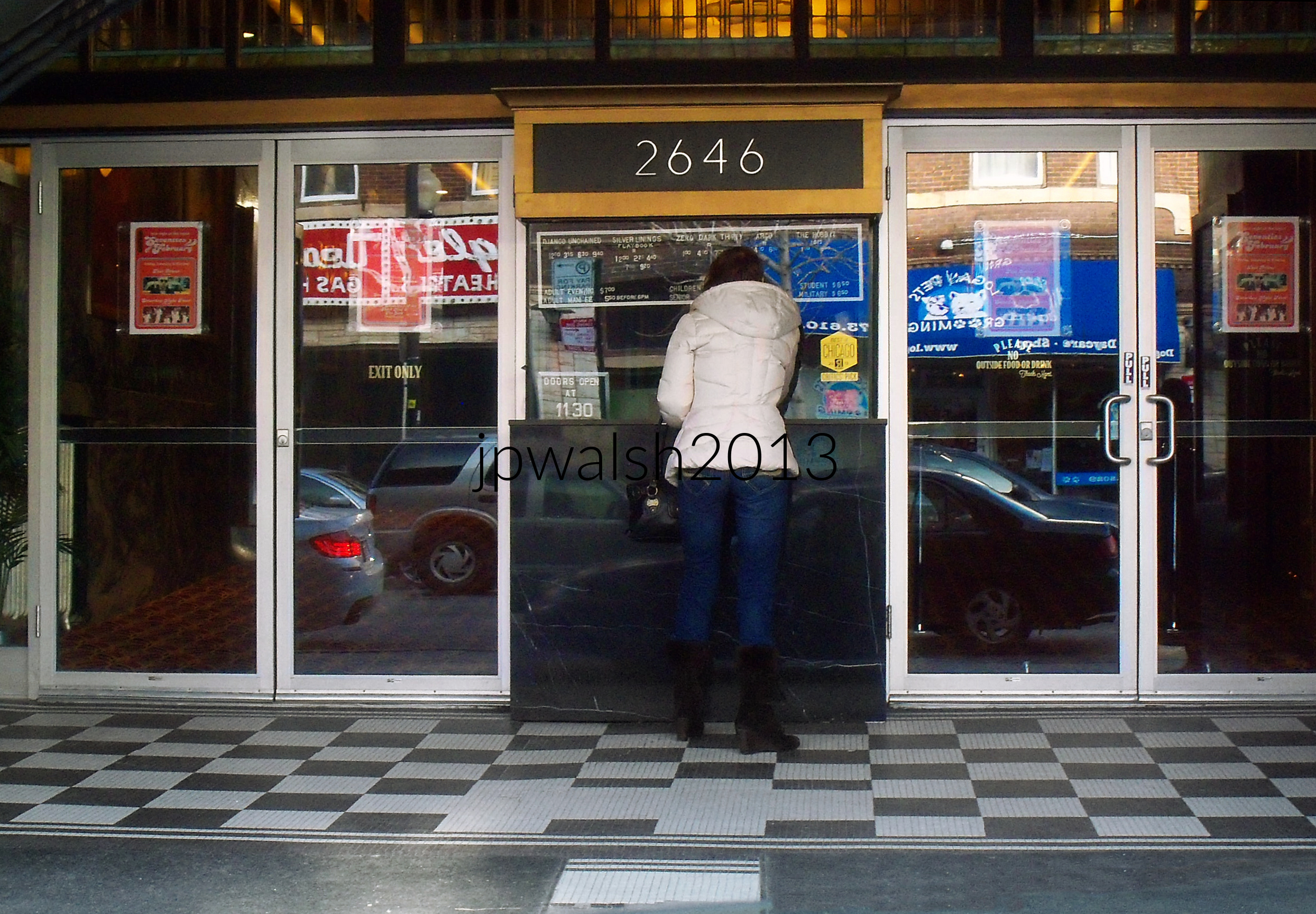
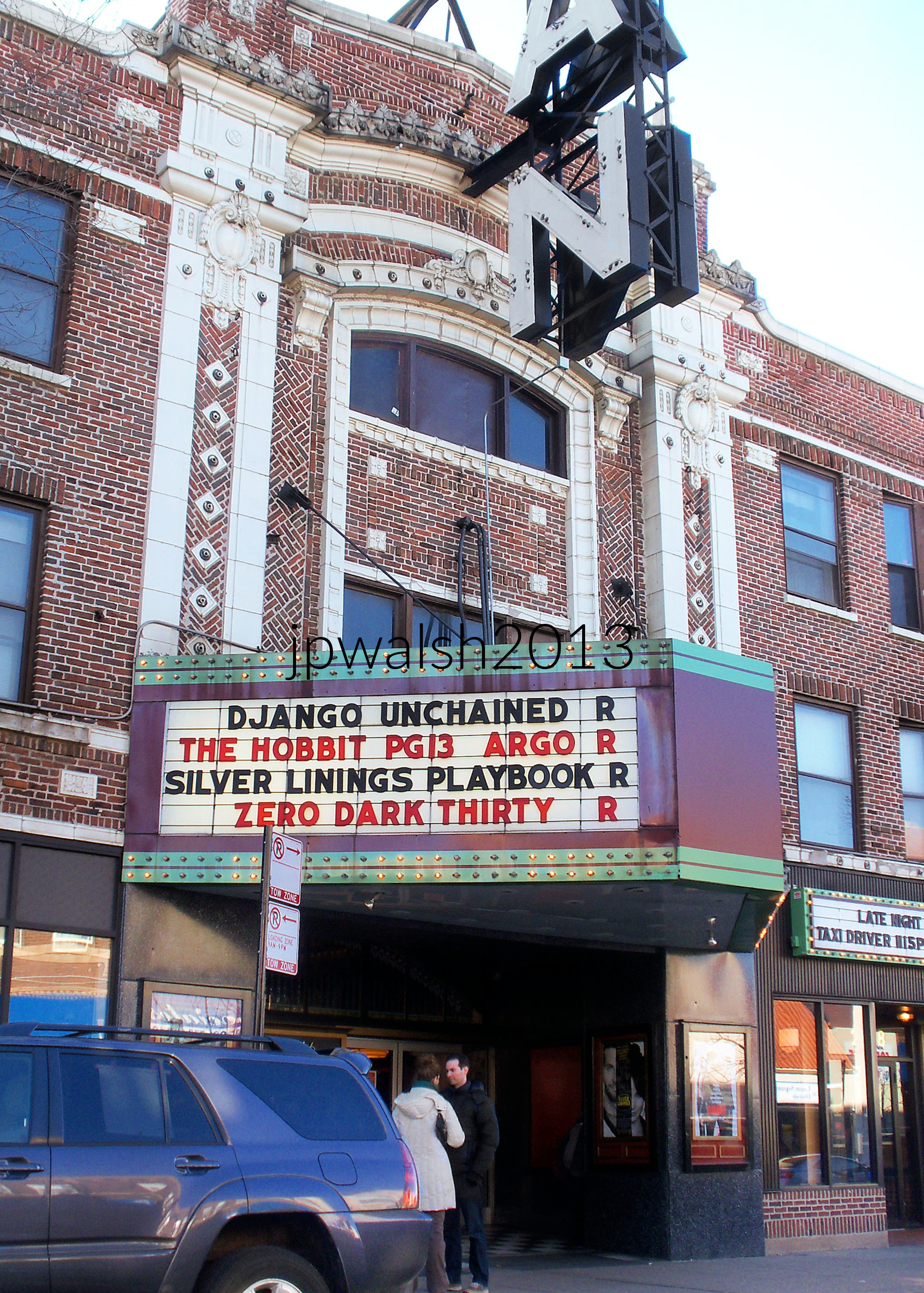
The Logan Theatre at 2646 N. Milwaukee in Chicago opened in November 1915 as The Paramount Theatre. It was operated by Lubliner & Trinz that started operating movie theaters in Chicago around 1914. At their peak, Lubliner & Trinz operated about nineteen theaters and leased or built about 36 theaters until 1934. The Paramount had seating for 988 in orchestra level and was equipped with a Weickhardt organ, based in Milwaukee, Wisconsin. It was renamed the Logan Theatre in 1929 when it was taken over by Essaness, a Chicago-based movie theater chain. The company owned and operated 33 theaters in the Chicago area, including the Pantheon and Biograph theaters. see – Lubliner & Trinz Theater History – The Clark Theater ; Logan Theatre in Chicago, IL – Cinema Treasures – retrieved January 18, 2026.
February 2013. 2.48mb 101_6324 (1)October 2017. Chicago. 315kb 20%December 2017 Chicago Downtown. 3.79 mb May 2014. Chicago. Michigan Avenue. July 2016. Chicago.July 2016. Chicago. July 2016. Chicago. July 2015, Chicago. September 2016. Chicago. Navy Pier. October 2016. Chicago. West Loop/East Garfield Park. September 2016. Chicago. Millennium Park. (20)September 2016. Chicago (Grand Boulevard/Bronzeville). Mount Pisgah Missionary Baptist Church, 4600 S. King Drive. Built by German Jewish immigrants whose synagogue was founded in 1861, the neo-Classical building was home to Chicago Sinai Congregation from 1912 until the 1940s. The church moved into the building in 1961. With a commitment to social justice, the church played an instrumental role in bringing Dr. Martin Luther King Jr.’s Southern Christian Leadership Conference to Chicago in the 1960’s. September 2015. Chicago. Navy Pier.May 2019. Downers Grove, IL.June 2020. Downers Grove, IL.June 2018. Milwaukee, WI. June 2014. Chicago. July 2019 Oakbrook, IL. July 2019 Oakbrook, IL.May 2016. Chicago. Magnificent Mile.June 2014. Chicago. North Rush Street. August 2017. Chicago. September 2015. Chicago. 30%September 2015. Chicago. August 2017. Chicago. Old Town. August 2017. Chicago. Downtown. August 2017. Chicago. Downtown. September 2015. Chicago. Downtown.August 2015. Chicago. (40)September 2015. Chicago.1.88 mbJune 2016. Wilmette, IL. June 2019. Oakbrook, IL.October 2017 Chicago. 6.39 mbOctober 2017. Chicago. 3.93 mbDecember 2017. Chicago. 5.87 mbJuly 2016. Chicago. 3.86 mb (50)October 2016. Chicago. Ukrainian Village. 332 kb 27%September 2015. Chicago. 5.02 mbJanuary 2016. Chicago. 4.74 mbJuly 2016. Chicago. 2.60 mbAugust 2021. Chicago. 6.75 mbOctober 2021. Chicago. 3.99mbDecember 2015. Chicago. 1.52 mb 35%October 2015. Chicago. 6.53 mb (70)October 2015. Chicago. 1.21 mb 35%October 2015. Chicago. 1.18 mb 35%October 2015. Chicago. 7.81 mbOctober 2015. Chicago. 6.25 mbMay 2021. Chicago. 7.82 mbJune 2022. Chicago. 4.13 mbJuly 2016. Chicago. 2.23 mbOctober 2015. Chicago. 5.59 mbJuly 2021. Wheaton, IL. 3.92mbMay 2013 4.06mbOctober 2015. Chicago. 5.90 mbJuly 2022. Chicago. 4.17 mbSeptember 2015. Chicago. 25%August 2016. Chicago. 5.07 mbMay 2024. Chicago. 5.82 mbMay 2024 Chicago. 99% 7.12 mbMay 2024. Chicago. 5.75 mb June 2018 852 kb October 2015. Chicago (Garfield Park). 6.80 mb N1733 (1) (2)August 2016. Chicago. 6.21 mb DSC_0507August 2016. Chicago (Logan Square). 6.63 mb DSC_0482 (1)August 2016. Chicago (Pilsen). 3.91mb DSC_0684February 2018. Goodman Theatre, Chicago. Opened in 1922 by New York theatrical producer Sam H. Harris and brothers Archie and Edgar Selwyn, the Harris and Selwyn Theatres were the Chicago home to some of the most famous plays and performers of the Broadway stage. 4.25mb DSC_0897 January 2016. Chicago Lawn (Marquette Park). 7.99mb DSCN2030February 2013. Chicago (Logan Square). 2.85mb101_6385 (1)April 2013. Chicago (Pilsen). 3.58mb 102_0007 (1)April 2013. Chicago (Pilsen). 4.48mb 102_0042 (1)August 2015. Chicago (Edgewater). 2.76mb DSC_0042 (2)August 2015. Chicago. 2.01 mb DSC_0576 (2)August 2015. 3.87mb DSC_0732 (1)June 2014. Chicago. 3.65mb DSC_0407 (1)May 2015. Chicago. 3.67mb DSC_0454 (1)August 2015. Chicago.1.85mb DSC_0958 (1)August 2015. Chicago. 4.32mb DSC_0955 (1)August 2015. Chicago. 7.03mb DSC_0950 (1)August 2015. Chicago. 2.08mb DSC_0526 (3)August 2015. Chicago. 5.71 mb DSC_0479 (1)September 2015. Chicago 3.35mb DSCN1222 (1)October 2015. Chicago. 2.87mb tDSCN1443 (1)October 2015. Chicago. 4.62mb DSC_0117 (2)October 2015. Chicago. 5.81 mb DSCN1680 (1)November 2015. Chicago. DSC_0060 (1)November 2025. Chicago. 2.75mb DSC_0425 (1)December 2015. Chicago. 12 S. Michigan. 4.11mb DSC_0696 (1)
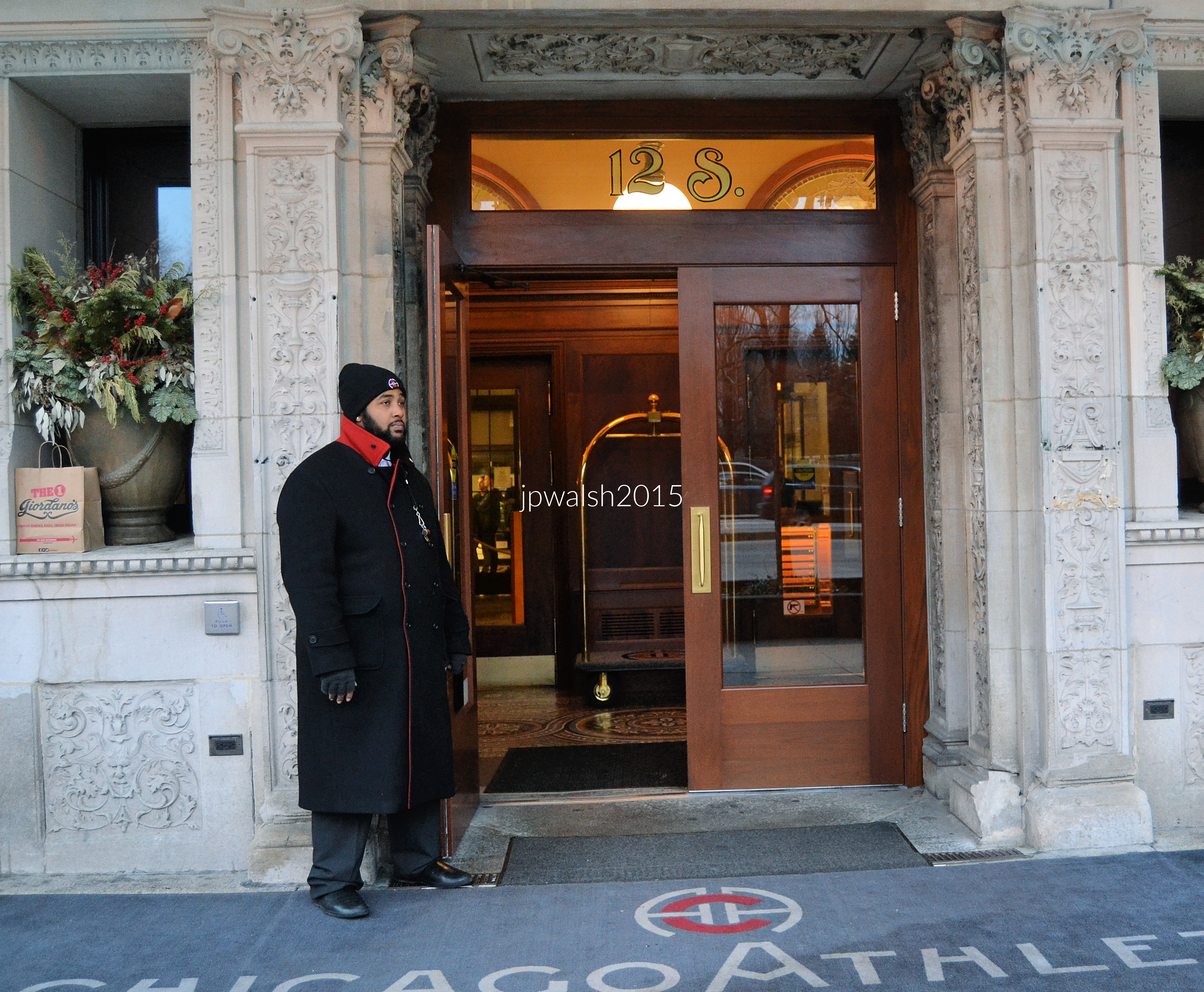
The Chicago Athletic Association (CAA) was a historic men’s club and athletic team based in Chicago, Illinois, formed in 1890 and closed in 2007. The 1893 building was designed by prolific architect Henry Ives Cobb (1859-1931). Transformed into the Chicago Athletic Association Hotel, it opened as a boutique hotel, welcoming the public and preserving its rich history.
December 2015. Chicago. 1.91mb DSC_0689 (1)
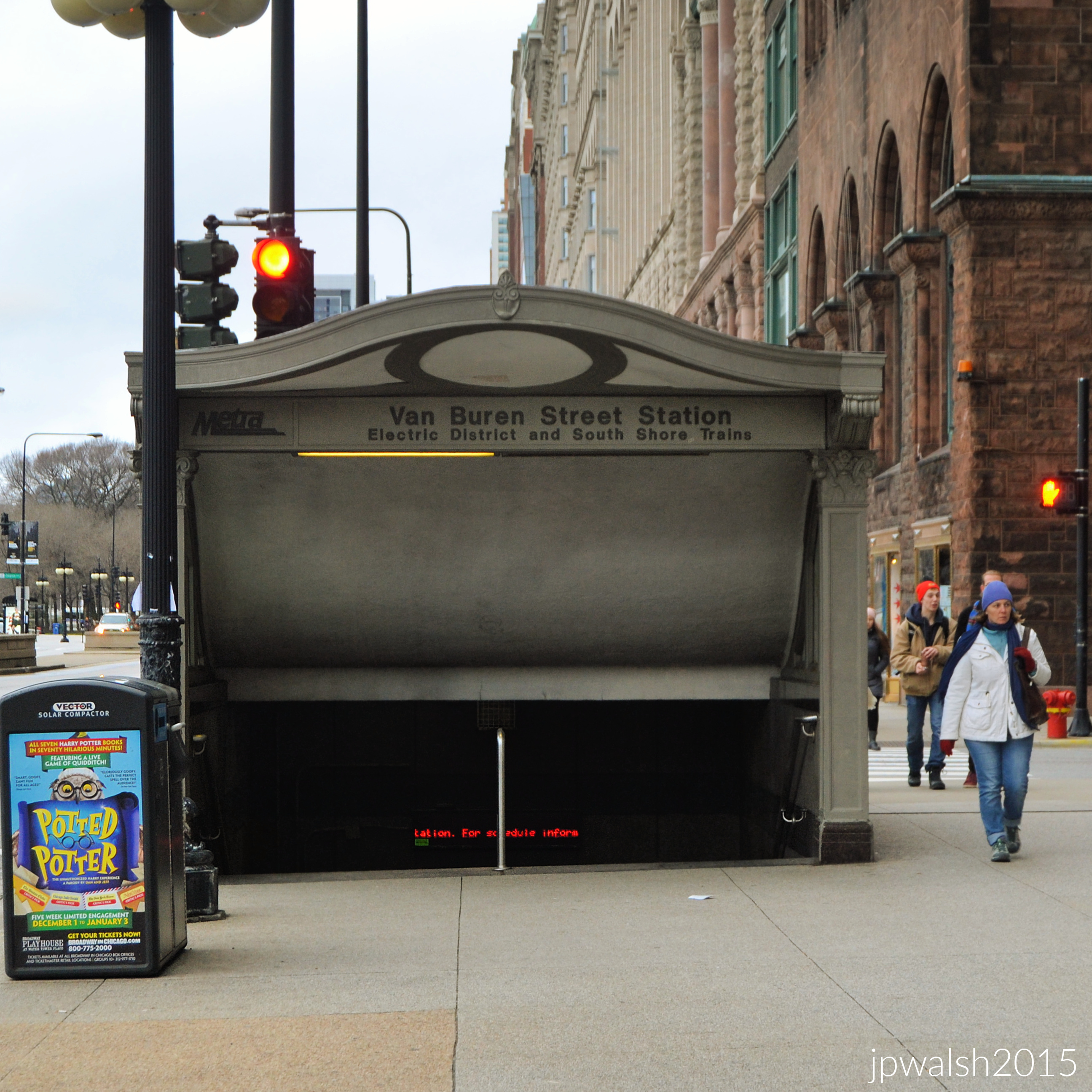
Van Buren Street Station is a commuter rail station in downtown Chicago that serves the Metra Electric Line to University Park, Blue Island, and South Chicago neighborhood and the South Shore Line to Gary and South Bend, Indiana.
FEATURE image: July 2015. Chicago. 134 S Wabash Ave, Chicago 60603. According to their website, Miller’s Pub was established as a bar in 1935 which was bought in 1950 by Pete, Nick and Jimmy Gallios, three brothers of Greek descent. A fourth brother, Vannie, worked his way into a stake in the business in 1953. Miller’s Pub thrived in the same location until 1989 when they moved around the corner into another of their restaurants they owned located at 134 S. Wabash. Over the years entertainers, politicians and sports figures have patronized Miller’s Pub in Chicago’s Loop including Chicago mayors, Jimmy Durante, Marilyn Monroe, Bill Veeck, Harry Caray, Tony Bennett and Bob Fosse’s dancers who came for an after-show nightcap. 3.68 mb
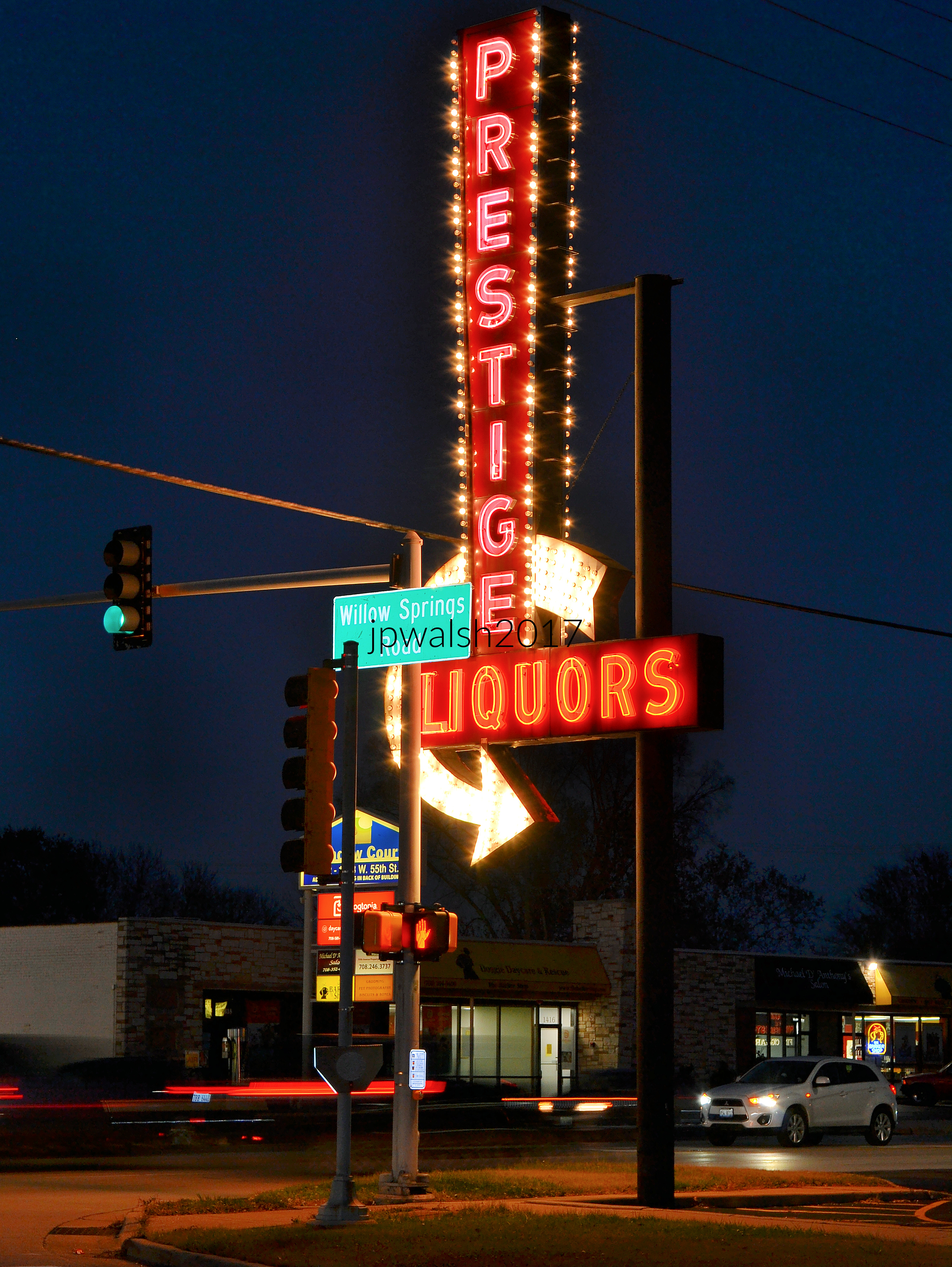
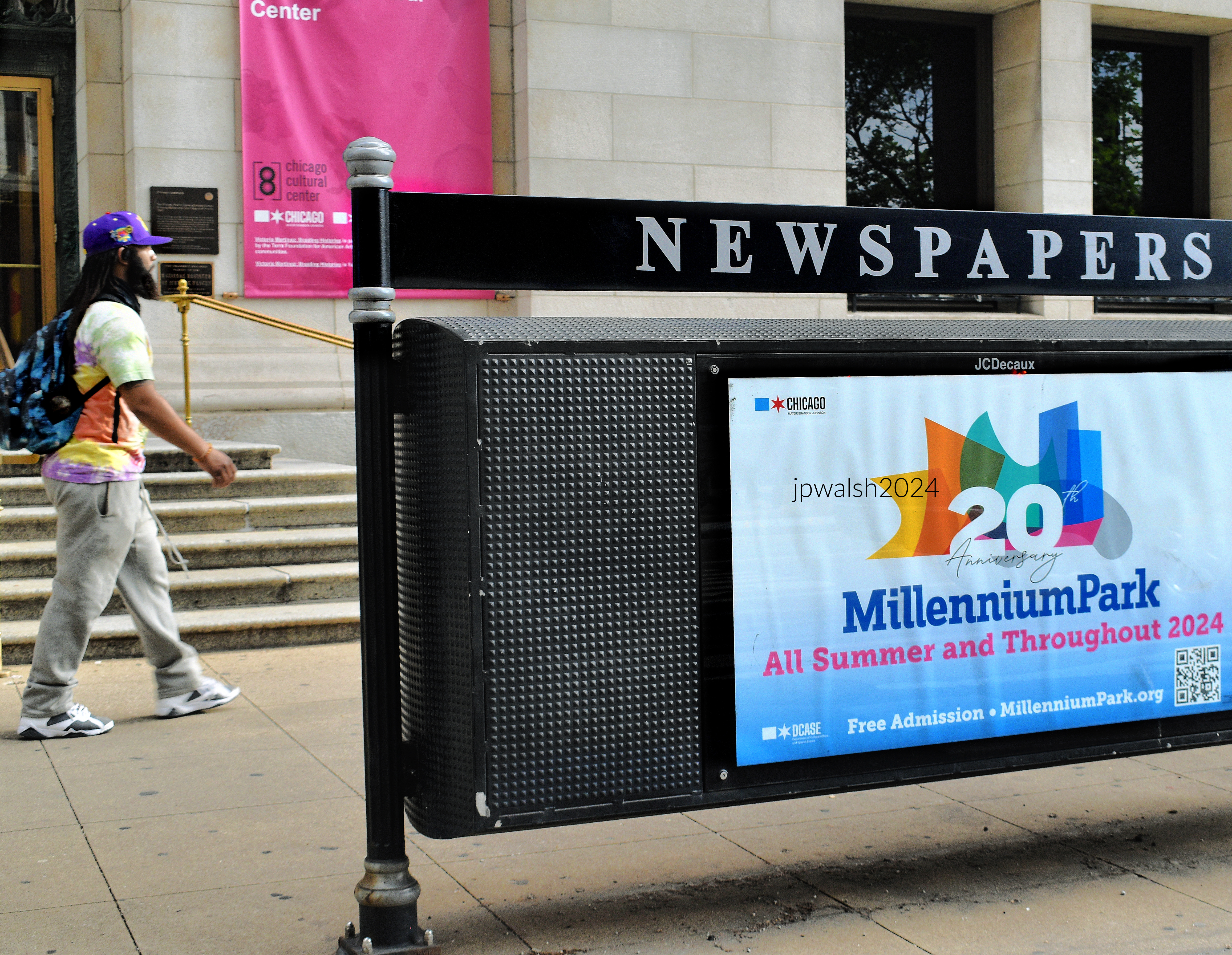
Signs are visual artifacts of community identity, capturing cultural and economic shifts, institutional history, and the continual transformation of a landscape. By anchoring everyday culture, commerce, religion, and memory, they provide a powerful record of the times in which they exist.
All photographs and text by John P. Walsh.
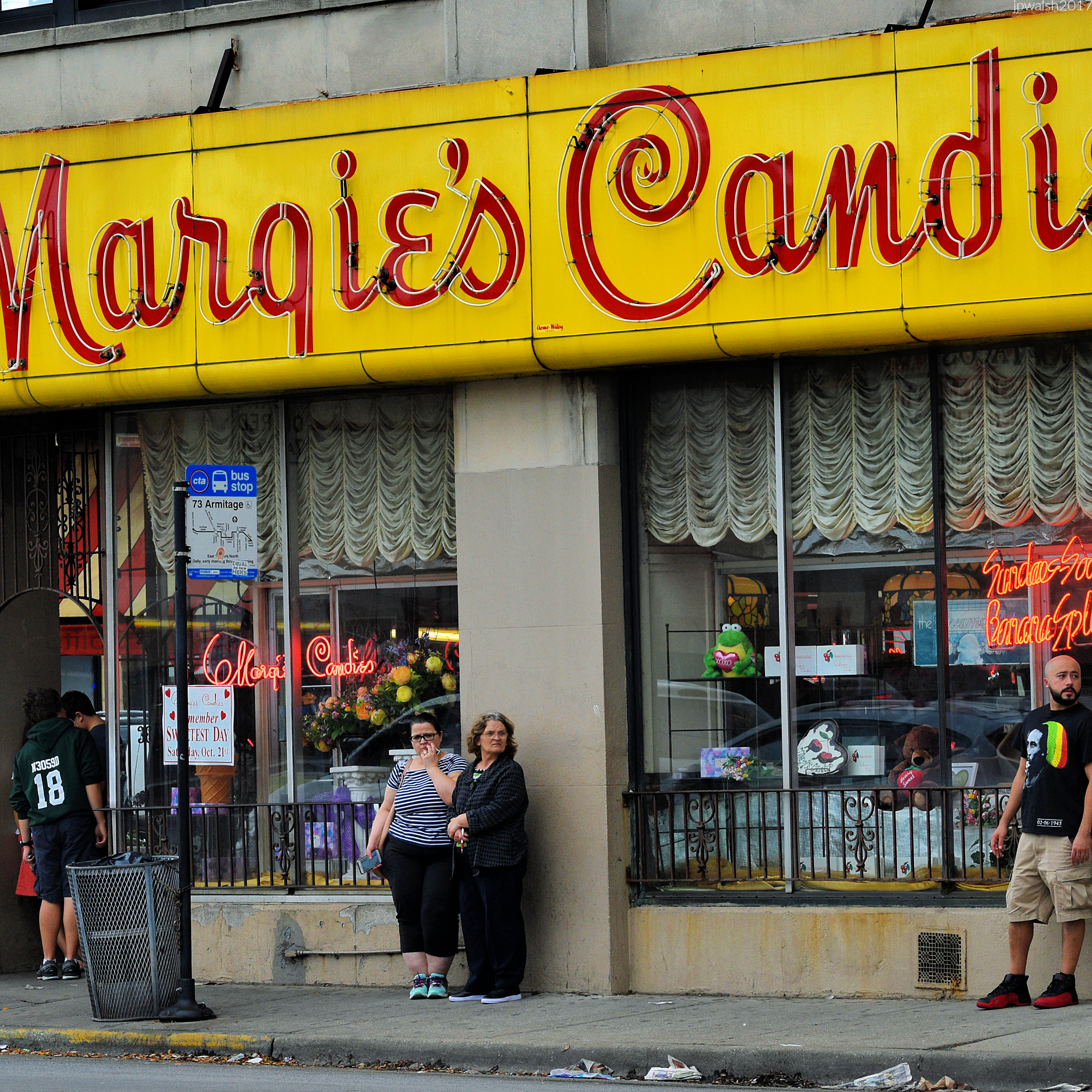
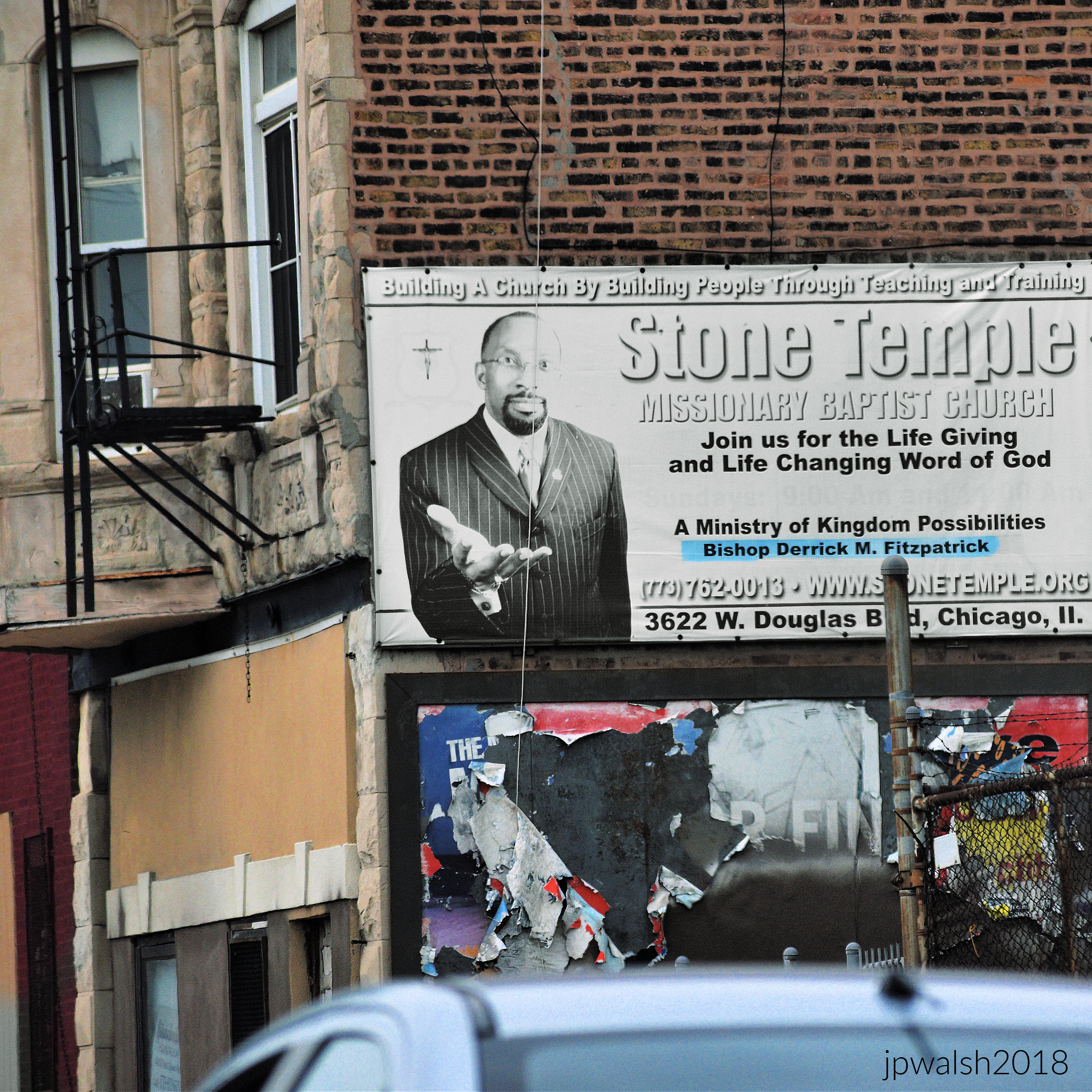
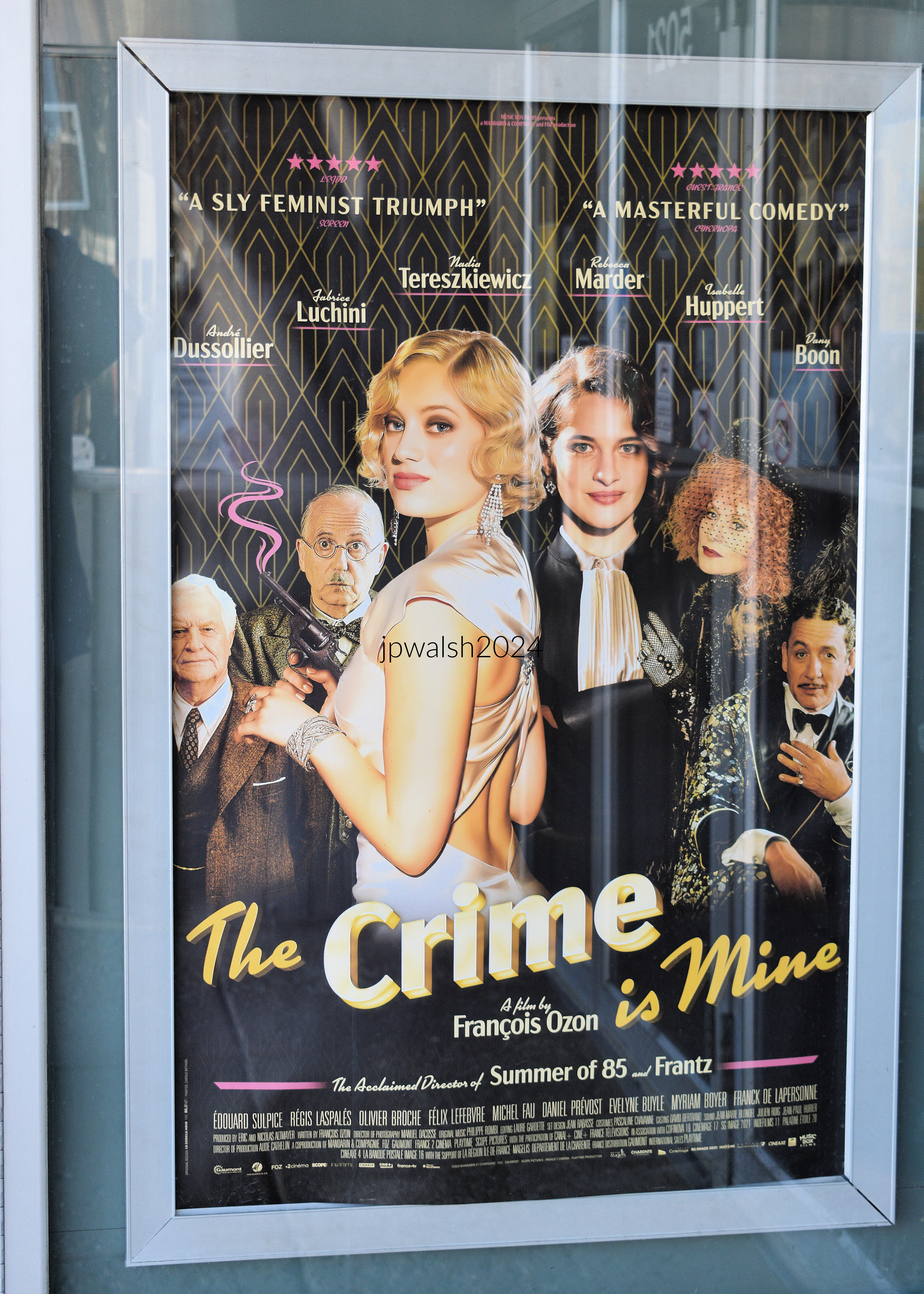
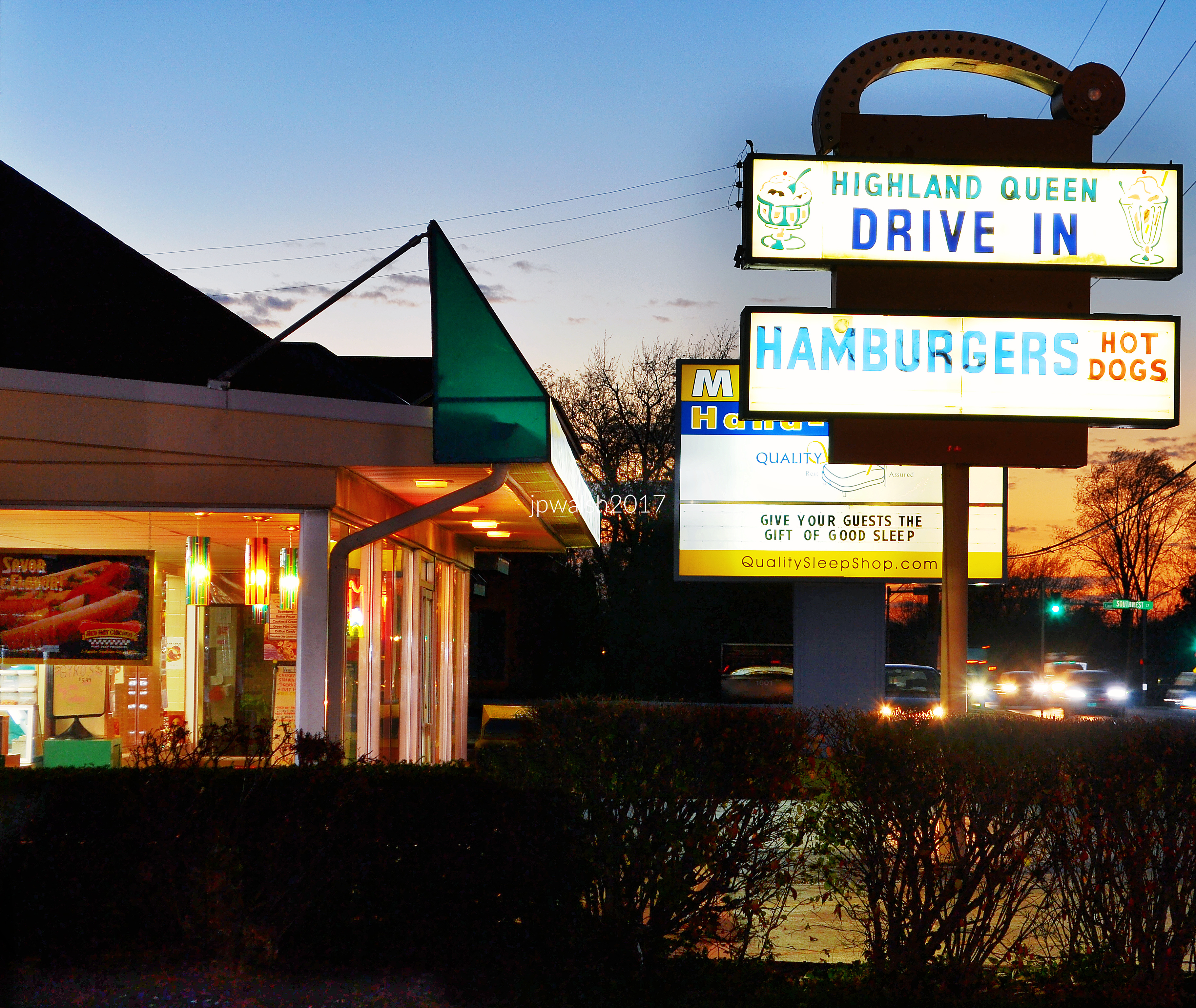
January 2024. 7.89 mb 80%October 2023. 6.86mb 99%August 2021. Chicago 7.43 mb 70%August 2015. Chicago. Michigan Avenue.Chicago. 6.30 mb 95%July 2015. Chicago. 40%October 2014. Chicago. Symphony Center. 1.99 mbOctober 2014. Chicago. Symphony Center. 2.51 mbDecember 2016. Chicago. Auditorium Theatre. January 2018. Chicago. Macy’s State Street. 872kb (10)September 2016. Forest Park, Iilinois. 5.11 mbSeptember 2015. Chicago. 3.82 mbJanuary 2018. Oak Park, Iilinois. 2.40 mbSeptember 2015. Chicago (Streeterville). 2.75 mbOctober 2016. Chicago (Chinatown). 4.78mb DSCN4244 (1)August 2015. Chicago (Chinatown). 3.44 mbJuly 2016. Chicago (Chinatown). 5.01 mb February 2018. Chicago. 4.74 mbDecember 2017. Westmont IL. 7.83 mb 98%September 2017. Chicago. 2.80 mbJune 2022. Chicago. 7.79mb 77%October 2017. Margie’s Candies at 1960 N. Western Avenue in the Bucktown neighborhood in Chicago was founded in 1921. It was renamed Margie’s Candies in 1933. In August 1965 Margie’s Margie’s hosted the Beatles who came in after they played a concert at Comiskey Park in Bridgeport. The Fab 4 ordered “Fudge Atomic Sundaes” that are still on the menu today which can complement to Margie’s since much of its décor is original from its first day of business. 3.03 mb May 2018. Villa Park, Illinois. 4.06 mbOctober 2022 5.80 mb 99%February 2019. Evanston, Illinois. 4.94 mbJune 2022. Evanston, Illinois. 7.70 mbApril 2020. Downers Grove, Illinois. 7.39mbMarch 2018. Lisle, Illinois. 3.38 mb (30)July 2015. Chicago. 3300 W. 111th St, 60655. 4.16 mbJuly 2023. 7.65 mb 74%August 2015. 4900 N. Broadway Chicago. 3.54 mbApril 2020. Cancelled & re-scheduled. 4.15 mb. see – Frida Kahlo: Timeless — CCMA – retrieved Dec. 26, 2025. June 2020. Downers Grove, Illinois. 4.59 mbSeptember 2015. Chicago (South Loop). 3.82 mbAugust 2017. Watseka, Illinois. 6.24mb August 2017, Kentland, Indiana. 3.16mbJune 2018. Chicago. 558 E 79th St, 60619 3.64mbJune 2021 95%June 2018. Cedarburg, Wisconsin. 6.23 mb 95% February 2018. Chicago (Kennedy Expressway). 6.58 mb (40)June 2018. 80% 7.82 mb DSC_0641. In 1966 when Dr. Martin Luther King, Jr. and Coretta Scott King lived in Chicago on the West Side at 1550 S. Hamlin Avenue Dr. King preached at Stone Temple Baptist Church at 3622 W. Douglas Boulevard, a ten-minute walk away. Built in 1926 as a synagogue in the North Lawndale neighborhood the building became a Baptist church in 1954. Already in the 1950’s and early 1960’s Dr. King had delivered several speeches at Stone Temple MB Church in his civil rights efforts and used the church during his 1966 Chicago residency as a base for his civil rights and fair housing advocacy. His efforts led to the signing of the 1968 Fair Housing Act on April 11, 1968, a week after his assassination. Today, Stone Temple is led by Bishop Derrick M. Fitzpatrick, the grandson of Rev. James Marcellus, the church’s founder.February 2018. Chicago (Loop). 3.63 mbDecember 2015. Chicago (Michigan Avenue). 4.30 mbNovember 2017. Chicago (South Loop). 3.50 mbFebruary 2018. Chicago. 6.18 mbSeptember 2015. Chicago. 6.33 mbJune 2022. Chicago. 5.86 mb December 2012. Chicago. 6.67 mb 99%May 2022. 7.33mb 98% (50)October 2023 7.78 mb 68%June 2022 7.02mbMarch 2017. Post Office. 4.11 mbSeptember 2022. Lisle Illinois. 6.57 mbAugust 2016. Kendall Co., IL. 3.48mbAugust 2022. 7.57 mb 99%August 2021. Chicago. 6.25 mb 99%August 2015. Chicago, 8611 S Pulaski Rd 60652. 7.71 mb 87%May 2022. Wheaton, Illinois. 917 E Roosevelt Rd, 7.76 mb 99%July 2017. Alsip, IL (demolished). 4.56 mb (60)August 2015. Chicago. 2116 W. 95th Street, 60643. 7.13 mbJune 2014. Waukegan, Illinois. 7.10mbMay 2023. Downers Grove, Illinois. 7.09 mb 99% August 2023. Wheaton, Illinois. 7.75 mb 61%August 2023. Tivoli. 7.17mb 99%September 2023. Downers Grove, illinois. 7.84mb 91%June 2023. Downers Grove, Illinois. 7.95mbSeptember 2023. 7.60 mb 80%July 2023. Darien, IL. 7.94mb 85%January 2019. 4.04mb (70)June 2022. Chicago. 7.41mb 99%December 2017. Chicago. 141 kb 25%March 2013.Chicago. 65%November 2023. 7.84mb 96%– *December 2023. 7.92 mb 94%April 2024. Downers Grove, Illinois. 99% 7.06mbApril 2024. 99% 6.65 mbApril 2024. 90% 7.79mb (2.15 minutes). Based on a 1934 French stage play, The Crime Is Mine (“Mon Crime’) is 2023 French film about a young actress (Nadia Tereszkiewicz) who becomes celebrated overnight after being acquitted of murdering a French movie producer in self-defense. But is she really innocent – or has she just gotten away with murder? The crime-comedy film was directed François Ozon who conceived it as a tale “ultimately about the triumph of sorority” and influenced by French directors Jean Renoir and Francois Truffaut and Americans Ernst Lubitsch, Frank Capra and Blake Edwards. Ozon based Isabelle Huppert’s character on French stage actress Sarah Bernhardt. The plot and characters of the original stage play by Georges Berr and Louis Verneuil became the basis for two Paramount Pictures’ films in the 1930s and 1940s – “True Confessions” starring Carole Lombard in 1937 and “Cross My Heart” starring Betty Hutton in 1946. Reviews for The Crime is Mine have been generally favorable citing particularly its star power.November 2017. Countryside, Illinois. 5.44 mb November 2017. Countryside, Illinois. 5.35 mb (80)2015. Chicago.7.69 mbMay 2024. 7.17mbMay 2024. 99% 7.35 mbMay 2024. Burger King was founded in Miami, Florida in 1954. Downers Grove, Illinois. 6.61mbChicago. May 2024 7.71 mbbuild to suit (dream home). May 2024 75% 7.68 mb – *June 2024. 99% 7.71 mb 8077May 2017. Marengo, Illinois. 1.29 mb 0247July 2024. 4.31mb 7746 (1)August 2024. Naperville, Illinois. 99% 7.60 mb 1161 (1)May 2024. Downers Grove, Illinois. II 81% 7.71 mbChicago. May 2024 3.24 mbChicago (Chinatown). 4/2013 2.86 mbChicago. 6/2022 7.72mb 85% July 2024. Woodridge, Illinois. 85% 7.81mb 0646November 2012. Wheaton, Illinois. 2.59mb 101_0382February 2013. Chicago. 1.85mb101_6384 (1)February 2013. Chicago. 3.67mb 101_6792 (1)March 2013. Chicago. 2.38mb 101_7015 (1)March 2013. 4.68mb 101_7023 (1)February 2013. 2.04mb 101_6508 (1)February 2013. 1.95mb 101_6610 (1)March 2013. Chicago 3.58mb 101_8578 (1)
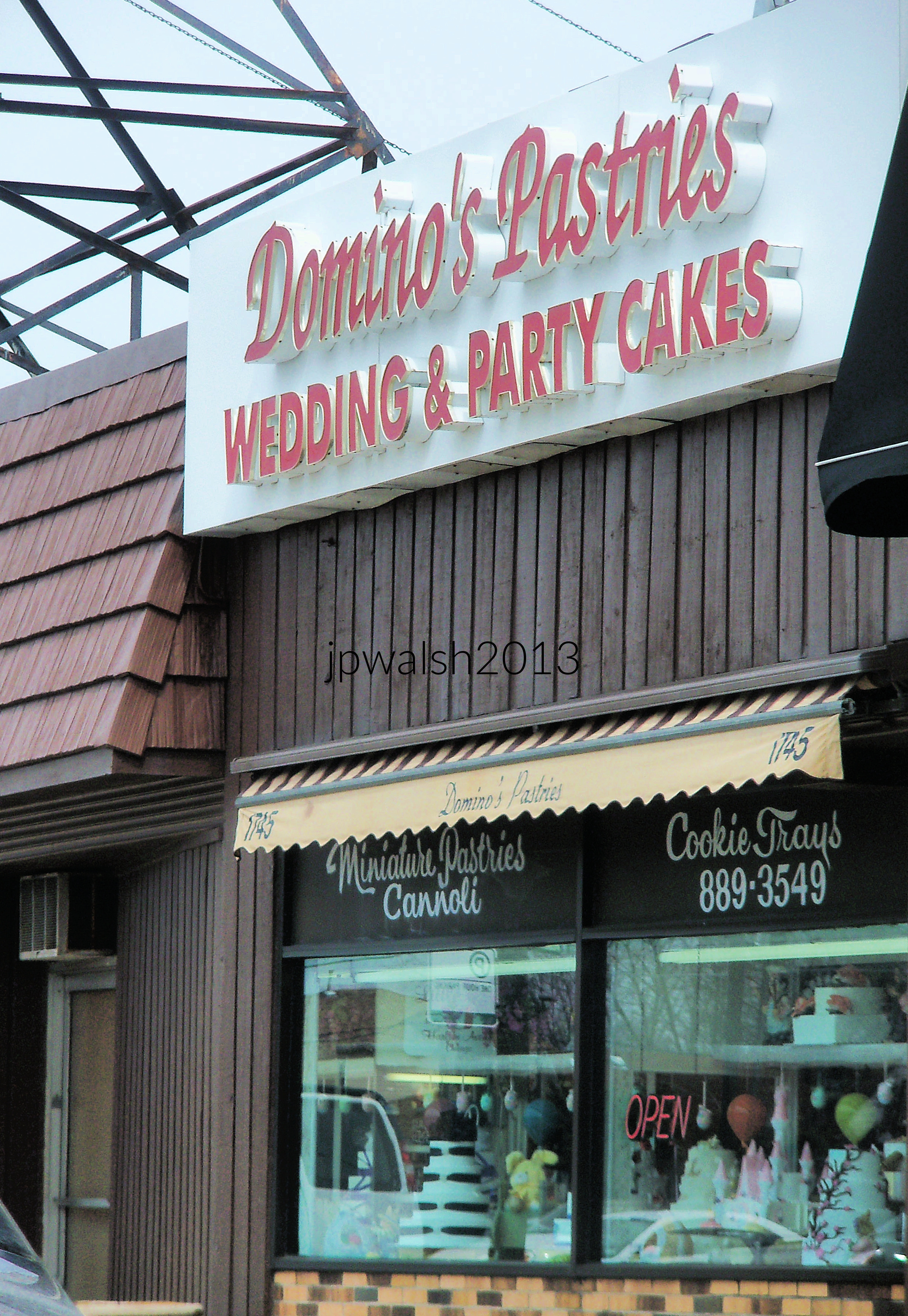
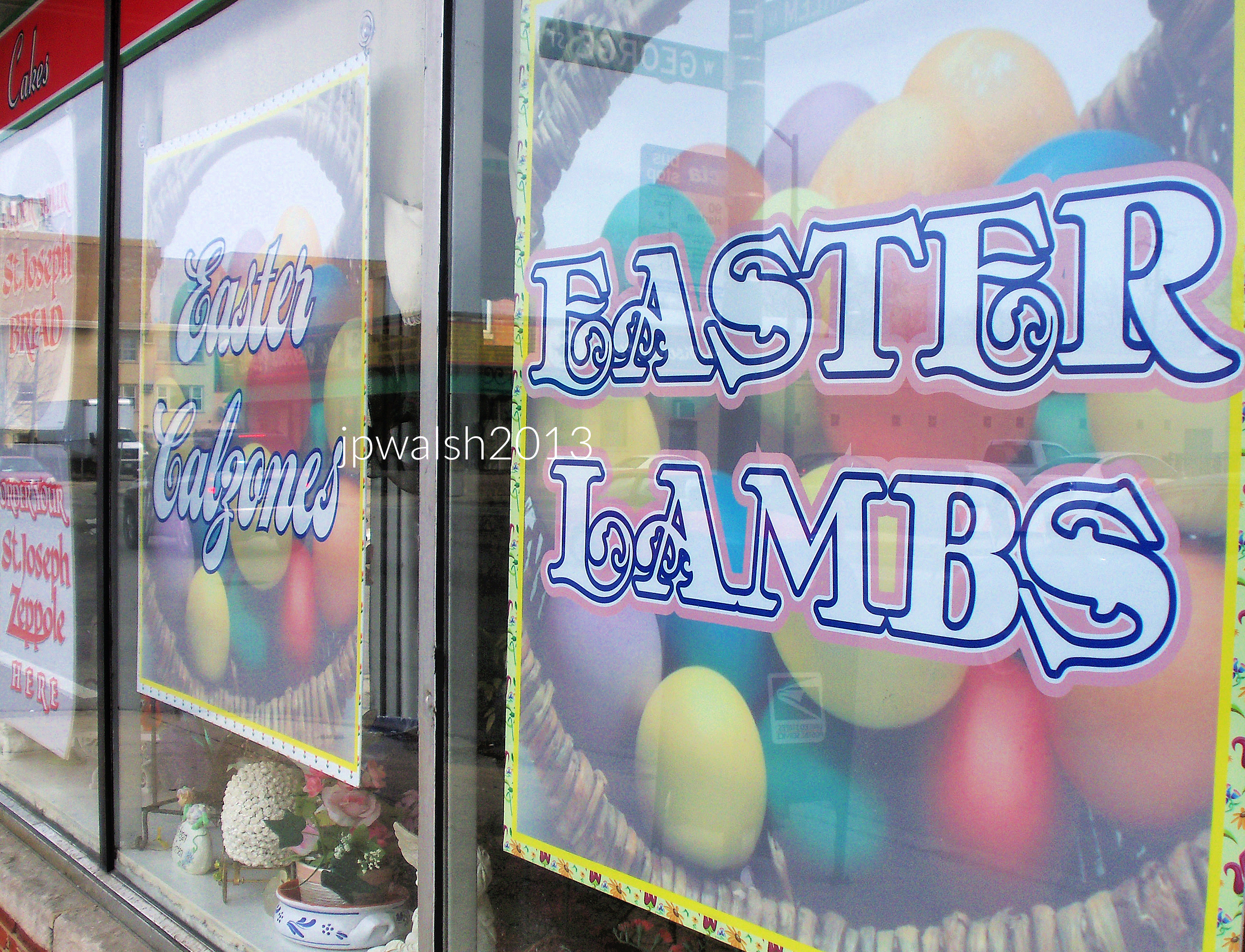
The owner came to the US from Italy through Ellis Island in 1938. The family business, Domino’s Pastries, was founded in this location in Chicago in 1952. Their loyal customer base is witnessed when the same couples who ordered their wedding cakes at Domino’s ordered many years later their anniversary cakes.
March 2013. Chicago. 4.58mb 101B8629 (1)April 2013. 4.28mb 101_9593 (1)April 2013. Chicago. 3.89mb 102_0152 (1)May 2013. Chicago. 3.84mb 102_1487 (1)August 2013. Aurora, Illinois. 3.48mb DSC_0848 (1)February 2016. 7.47mbDSCN2087 (1)April 2016. Joliet, Illinois. 6.12mb DSCN2341 (1)May 2016. Wheaton. 5.16 mb DSC_0597 (1) Last Slice Served At Jack Straw’s Pizza In Wheaton | Wheaton, IL Patch – retrieved March 9, 2026.June 2016. 6.30mb DSC_0803 (1)June 2016. 5.65mb DSC_0913 (1)
FEATURE image: May 2015. Michigan Avenue Main Lobby. The Art Institute of Chicago. 4.57mb DSC_0366 (1)
Whether displayed in museums, galleries, historic houses, homes, offices, public buildings, sculpture gardens, or private collections, the focus of this collection remains the artwork itself. Through photography, it explores painting, sculpture, design, and other forms of visual expression while also acknowledging how their settings can enrich our understanding of their artistic, historical, and cultural significance.
Photographs and Text by John P. Walsh.
September 2015. 7.68 mb 99%
Michigan Avenue entrance of The Art Institute of Chicago.
May 2015.
Sculpture Court, The Art Institute of Chicago.
September 2015.
Modern Wing, The Art Institute of Chicago.
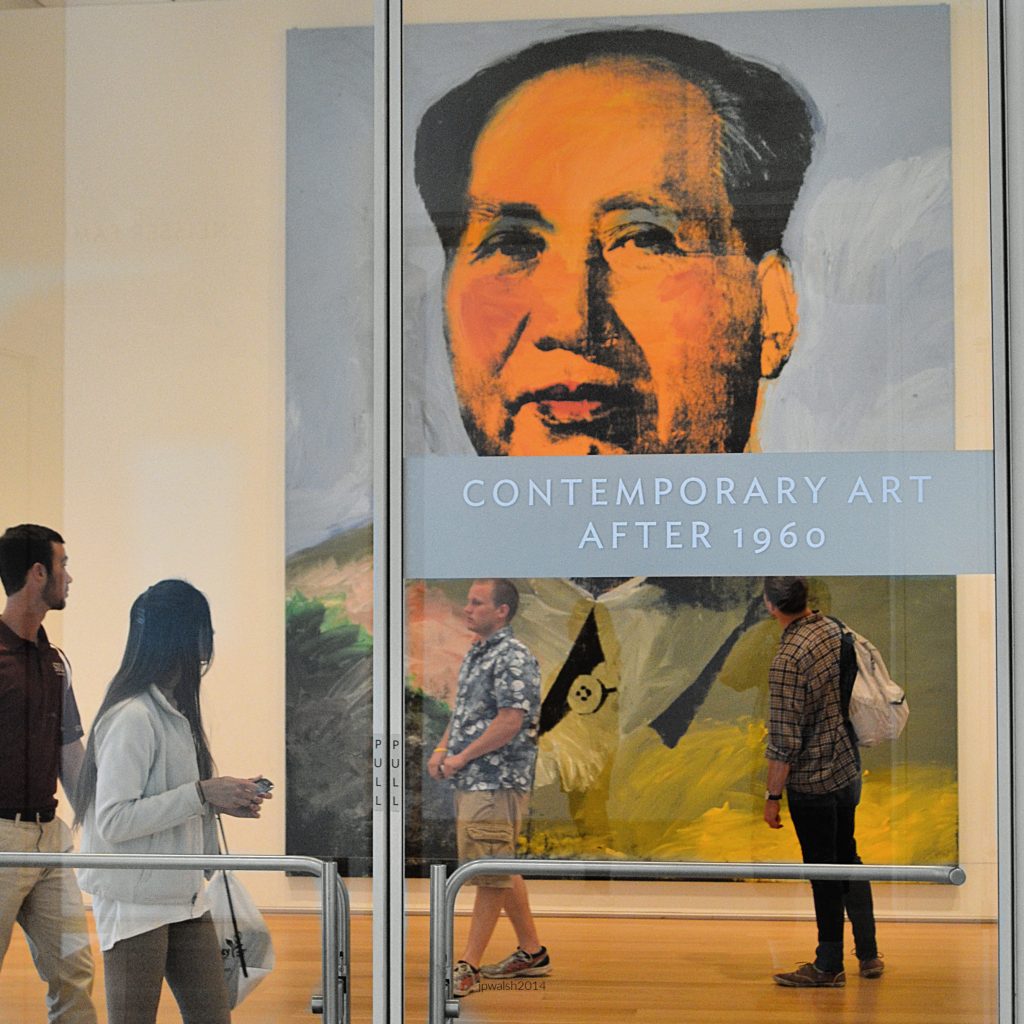
June 2014. The Art Institute of Chicago. 20th Century. American. Pop.
Andy Warhol (1928-1987), Mao, 1972, Acrylic, silkscreen ink, and pencil on linen, 448.3 × 346.7 cm (176 1/2 × 136 1/2 in.). The Art Institute of Chicago.
June 2014. The Art Institute of Chicago. 40%
The Chauncey McCormick Gallery refers to exhibition space (often featuring Asian and European decorative arts) at the Art Institute of Chicago named after Chauncey Brooks McCormick (1884–1954), a prominent Chicago businessman, philanthropist, and president of the museum from 1944 until his death
June 2014. 5.59mb
Robert Irwin (1928-2023), Untitled, Acrylic lacquer on cast acrylic disk, 1969. The Art Institute of Chicago. Irwin was a pioneering figure in California Light and Space art.
February 2013. Galleries 124–127, The Art Institute of Chicago.
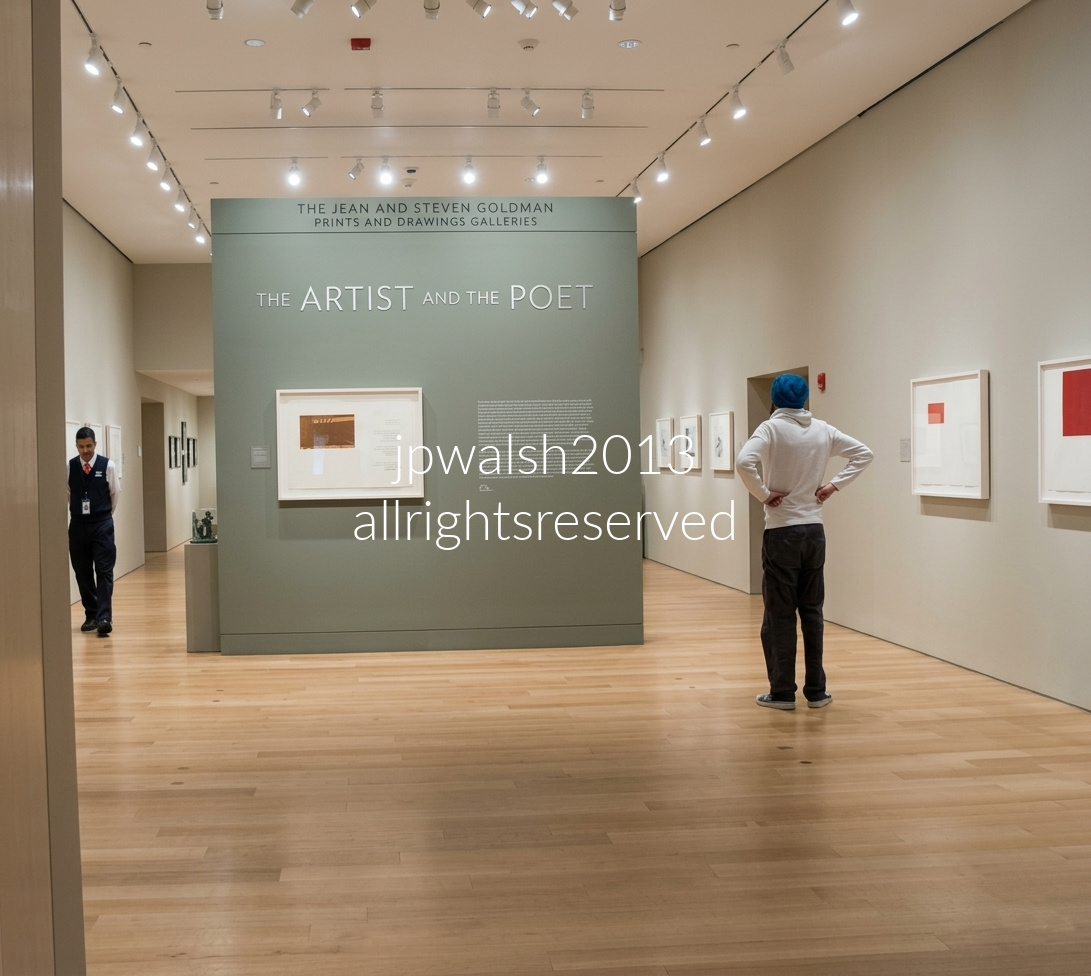
The exhibition “The Artist and the Poet” at the Art Institute of Chicago ran from February 1 to June 2, 2013, exploring the dialogue between visual art and literature through works on paper, prints, and illustrations. It was presented in the Jean and Steven Goldman Prints and Drawings Galleries (Galleries 124–127), located on the first floor of the museum’s historic Ryerson and Burnham Libraries building.
September 2015. 6.25 mb
Modern wing, The Art Institute of Chicago.
August 2015. The Art Institute of Chicago. 21st Century. American.
Frances Stark (1967-) from Intimism, 2015. The Art Institute of Chicago.
August 2015. Alexander McKinlock Memorial Court. AIC. 20th Century. Nordic. Sculpture.
Carl Milles (1875-1955), Triton Fountain, 1926, bronze, Alexander McKinlock Memorial Court, The Art Institute of Chicago. Swedish sculptor Carl Milles (1875-1955) studied in Paris from 1897 to 1904, working in the studio of Auguste Rodin (1840-1917). Yet Milles departed from the prevailing naturalism that dominated sculpture in the Belle Époque era, and embraced ideas and forms that reflected the artist’s independent spirit, his knowledge and appreciation of classical and Gothic sculpture, and his Nordic roots.
Speaking of his fountain at the Art Institute of Chicago, Milles observed: “The great classicists knew that it was impossible to reproduce the appearance of flesh in marble, and they set themselves to create forms of pure beauty that would merely suggest and symbolize the living creature, and then to invest those forms with a meaning that mankind would feel intuitively to be universal and significant. This is what I have tried to do.”
September 2015. The Art Institute of Chicago. 21st Century. American. Sculpture.
Charles Ray (1953-), Young Man, 2012, Solid Stainless Steel.
May 2015. The Art Institute of Chicago.
Lorado Taft (1860-1936), Fountain of the Great Lakes, 1913. South Garden. The Art Institute of Chicago.
November 2017. North Garden, The Art Institute of Chicago.
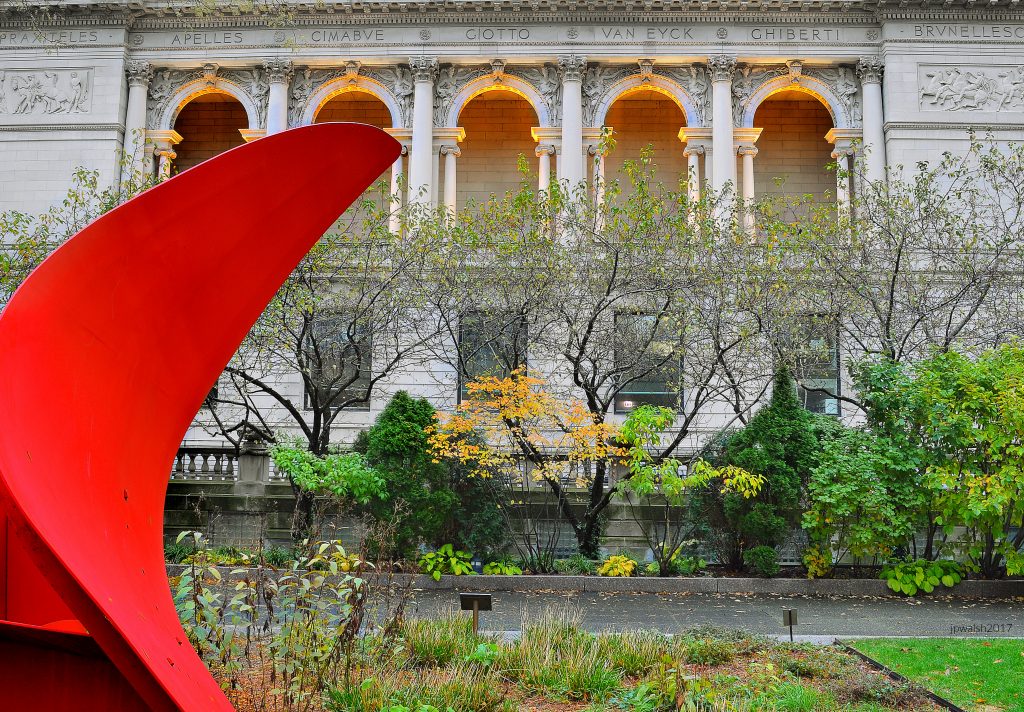
Alexander Calder (1898-1976), Flying Dragon, 1975, Steel plate and paint, 365 × 579 × 335 cm (120 × 228 × 132 in.), North Garden, The Art Institute of Chicago. 20th Century. American. Sculpture. Modernism.
November 2017. North Garden, The Art Institute of Chicago. Partial view: Flying Dragon, Alexander Calder, 1975. November 2017. North Garden, AIC. 20th Century. British. Modernism. Sculpture.
Henry Moore (1898-1986), Large Interior Form, bronze (ed. of 6), 1953/4, 16 ft. 9 in., North Garden, The Art Institute of Chicago. Henry Moore’s 16-foot sculpture was made when the 84-year-old British artist was concerned with the construction of three-dimensional space, internal forms within solid volumes, and placing his work in a natural setting. Moore had worked primarily in stone but as these formal concerns emerged, he shifted to modeling and bronze casting. Large Interior Form explores mass and void as well as gravity and growth within a nature-inspired artist-created form.
March 2010. Washington, D.C.
Aristide Maillol (1861-1944), Nymph—Central Figure for the Three Graces, 1930, The Hirshhorn Museum and Sculpture Garden, Washington D.C. Acquired by the museum in 1966, photographs show that the statue stood in an open location by a garden pool at the museum. In 1991 following a whirlwind of euphoria associated with the successful completion of Operation Desert Storm, a victory celebration at the Mall in June of that year involved hovering military jets and helicopters. Their downdraft sent gravel footpath debris flying in the air that scratched and cracked several statues in the sculpture garden. Though none appeared to sustain damage beyond some repair, the Nymph—Central Figure for the Three Graces suffered the most damage as the nude female statue had pitted indentations on her backside. In 2010 when this photograph was taken, the sculpture was located in front of a protective garden wall. See- https://www.baltimoresun.com/news/bs-xpm-1991-06-12-1991163158-story.html 20th Century. France. Sculpture. Modernism.
August 2015. The Art Institute of Chicago. 1.43 mbMay 2015. Art Institute of Chicago. 3.34 mb
Indian and Islamic Art.
September 2015. The Art Institute of Chicago. 6.90 mbMay 2015. Frédéric Bazille. The Art Institute of Chicago. 19th Century. France. Impressionism.
Frédéric Bazille, Self-portrait, 1865/6. The Art Institute of Chicago.
November 2012. Toledo (Ohio) Museum of Art. 18th Century. France. Terracotta.
Clodion (1738-1814). The See-Saw. 1775. Toledo (Ohio) Museum of Art.
November 2012. Toledo (Ohio) Museum of Art. 17th Century. France. Sculpture.
Michel Anguier (1612-1686), Amphitrite, marble, 1684. Toledo (Ohio) Museum of Art.
November 2012. Toledo (Ohio) Museum of Art.
Venus, Roman, Asia Minor, marble, c.165 CE, Toledo (Ohio) Museum of Art.
September 1993. Museum of Anthropology, UBC, Vancouver, B.C. 20th Century. Canada.
Bill Reid (1920-1998), Birth of the World or The Raven and the First Men/Humans, yellow cedar, 1980. Museum of Anthropology, UBC, Vancouver, British Columbia.
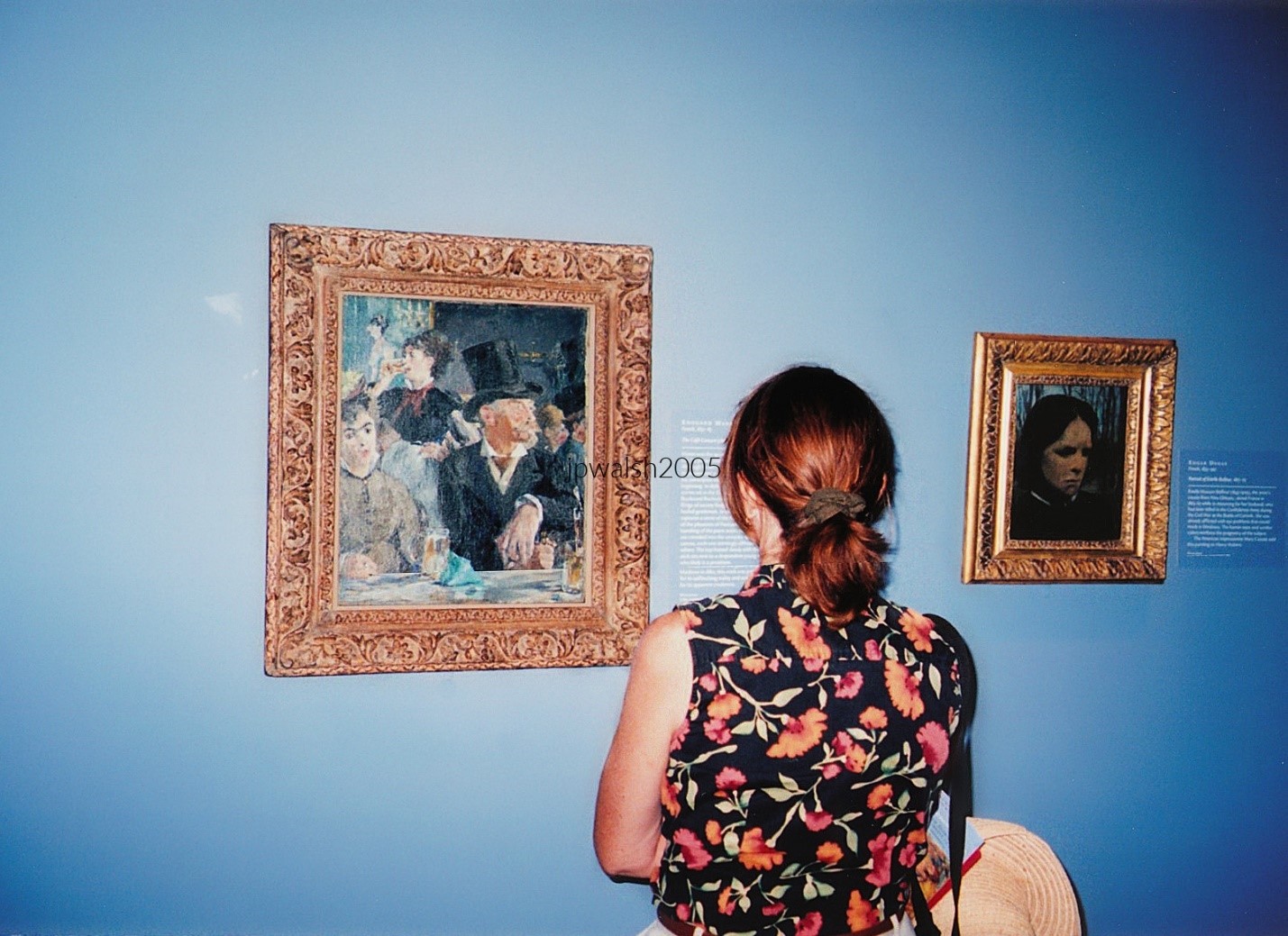
August 2005. National Gallery of Art, Washington, D.C.
“The Café-Concert,” Édouard Manet, c. 1879. The Walters Art Museum, Baltimore at the National Gallery of Art, Washington, D.C. Next to it is Portrait of Estelle Balfour by Edgar Degas, c. 1863-65, oil on canvas mounted on panel, also at The Walters.
September 2016. Milwaukee Art Museum. 20th Century. Germany. France. Fauvism. Expressionism.
From right to left: Kees van Dongen (1877-1968), Woman with Cat, 1908, and Quai, Venice, 1921; Gabriele Münter (1877-1962), Portrait Young Woman, 1909. Milwaukee Art Museum.
August 2015. The Art Institute of Chicago. 16th Century. Japan.
Mikazuki (male deity) Noh Mask, cypress wood, brass, colors. The Art Institute of Chicago.
May 2014. The Art Institute of Chicago. Impressionist galleries.
Pierre-Auguste Renoir (1841-1919): Chrysanthemums, 1881/2; Acrobats at the Cirque Fernando (Francisca and Angelina Wartenberg), 1879; Fruits of the Midi, 1881; Seascape, 1879; Lucie Berard (Child in White), 1883. The Art Institute of Chicago.
September 2013. The Art Institute of Chicago. Impressionist galleries.
Berthe Morisot (1841-1895), Woman in a Garden, 1882/3, The Art Institute of Chicago.
September 2012. Snite Museum of Art, Notre Dame, Indiana. 20th Century. American. Realism.
William Glackens (1870-1938), The Dressing Table, c.1922, oil on canvas. Snite Museum of Art, Nore Dame University, South Bend, Indiana.
September 2016. Milwaukee Art Museum. 20th Century. Germany. Expressionism.
Gabriele Münter (1877-1962): Kirche von Reidhausen, oil on canvas board, 1908 and Mädchen mit Puppe, oil on cardboard, 1908/9. August Macke (1887-1914), Geraniums Before Blue Mountain, oil on canvas, 1911. Milwaukee Art Museum.
May 2015. The Art Institute of Chicago.
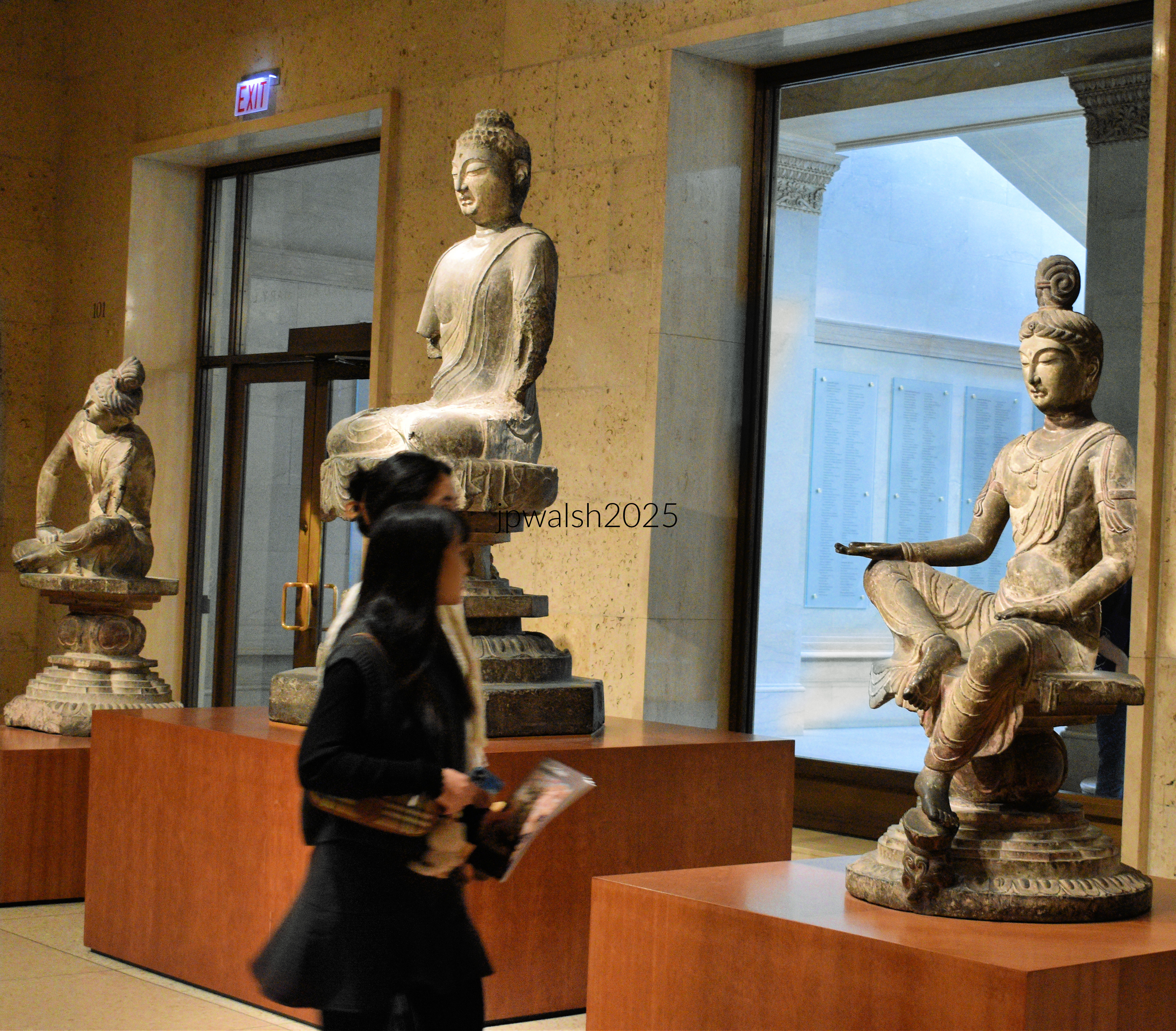
Above and below: Bodhisattva; Diety; Buddha. 4th-6th Centuries. Afghanistan/Pakistan. Stucco. The Art Institute of Chicago.
May 2015. The Art Institute of Chicago. September 2015. Room 235, The Art Institute of Chicago. September 2015. The Art Institute of Chicago. August 2015. The Art Institute of Chicago.May 2015. At The Art Institute of Chicago.
Charles Collins (1680-1744), Still Life with Game, 1741. Private Collection. 18th Century. Ireland.
May 2015. At The Art Institute of Chicago.
James C. Timbrell (1807-1850), Carolan the Irish Bard, c. 1844, oil on canvas. Private collection. 19th Century. Ireland.
May 2015. The Art Institute of Chicago. 256 kb 25%May 2015. At The Art Institute of Chicago.
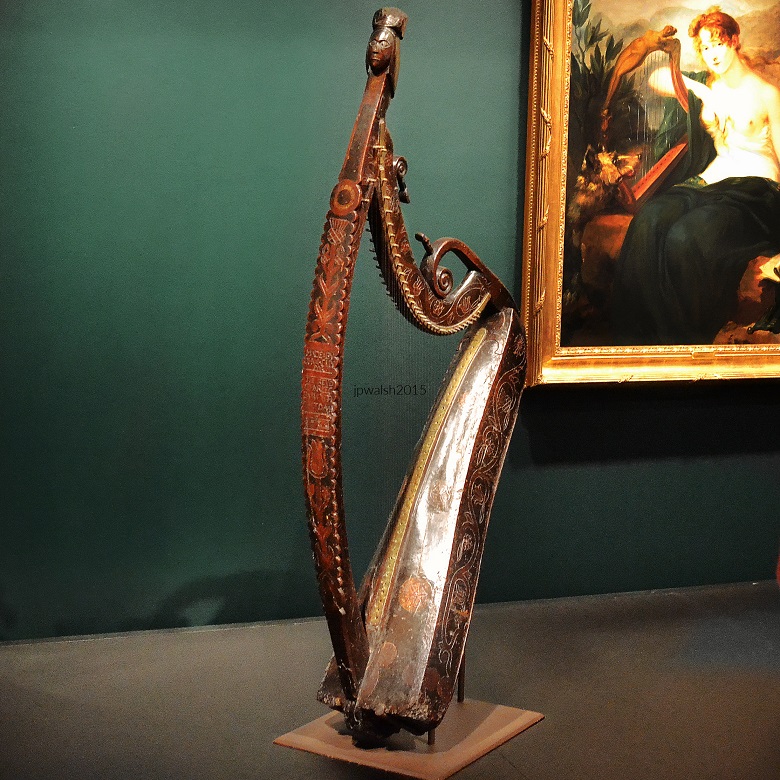
John Kelly, wire-strung Bunworth harp, 1734, Museum of Fine Arts, Boston, and Robert Fagan (c. 1761-1816), Portrait of Lady as Hibernia, c. 1798. Private collection. The Bunworth harp is inscribed: “made by Iohn Kelly for the Revd Charles Bworth Baltdaniel 1734″. The wire-string harp was made by Catholic instrument maker John Kelly for the Reverend Charles Bunworth, also of Baltdaniel, who was the Protestant rector of Buttevant, County Cork. The many aspects of the instrument—from soundbox, harmonic curve, fore-pillar, tuning pegs, and ornamentation and color— invite interest. Though it may be the female head at the top of the harmonic curve that at first most intrigues. (see – https://harp.fandom.com/wiki/Bunworth_Harp and http://www.earlygaelicharp.info/harpmakers/ – both retrieved October 14, 2021). Robert Fagan was an Irish painter who was born in London but spent most of his artistic career in Rome and Sicily (Fagan first arrived into Italy in 1781). Though an expatriate, Fagan’s oil on canvas depicts a woman who represents Ireland careessing the strings of the harp, the country’s national instrument and symbol. Seated next to an Irish wolfhound, she holds a scroll that reads: “Ireland Forever” (“Erin go bragh“). 18th century. Ireland.
August 2005. Yale Center for British Art, New Haven, CT.
Includes (below) John Dodd, of Swallowfield, Berkshire, 1739, John Vanderbank (1694 – 1739) and (above) Portrait of a Woman, Probably Elizabeth Aislabie, of Studley Royal, Yorkshire, c. 1749, Thomas Hudson (1701-1779), Yale Center for British Art, New Haven, CT.
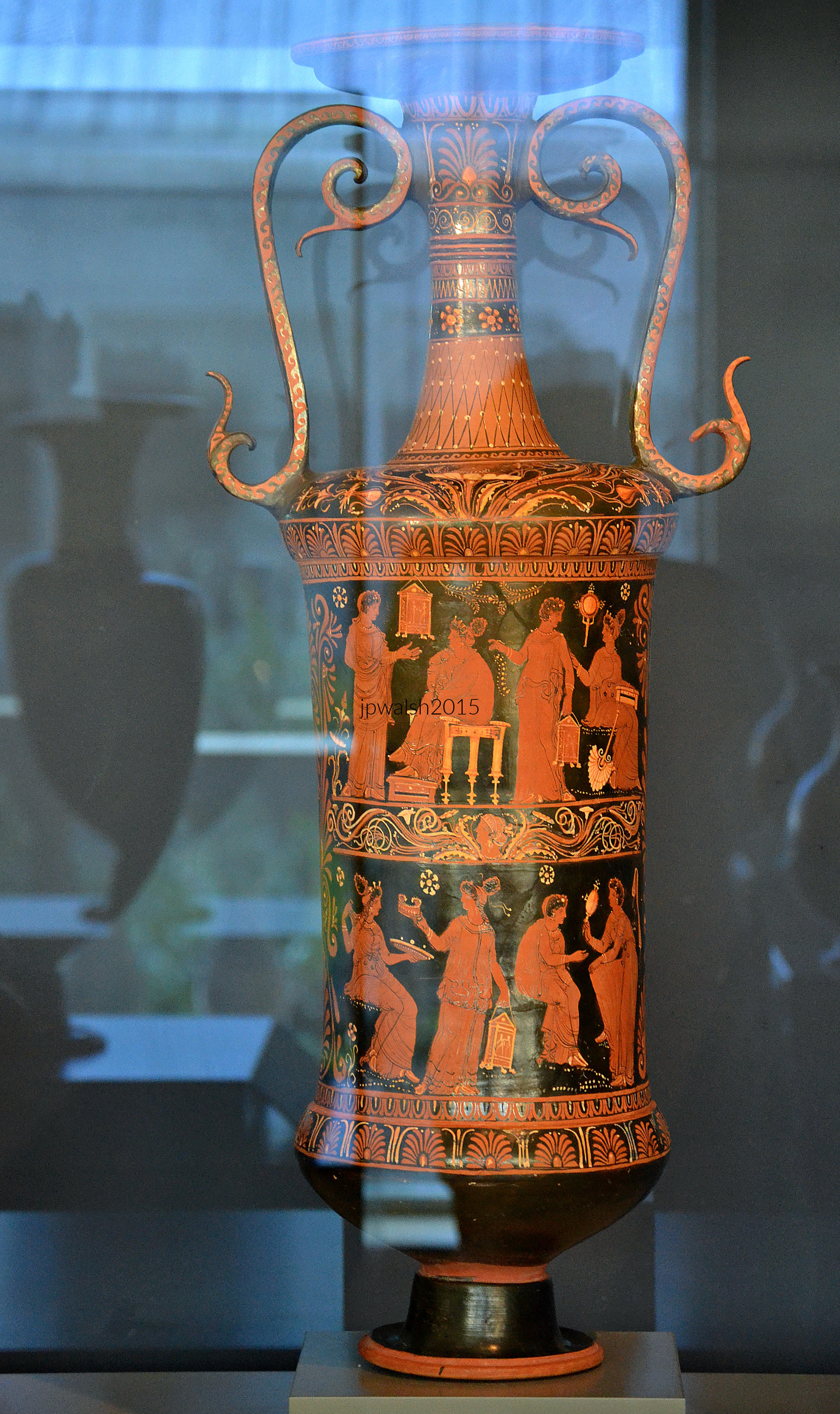
August 2015. The Art Institute of Chicago.
Loutrophoros (Bath water vase), 4th Century BCE. Greece. Italy (Apulia). Terracotta. The Art Institute of Chicago.
August 2015. Ancient Greek and Roman Art, The Art Institute of Chicago. October 2014. AIC. 6.64mb 35%The Art Institute of Chicago.
Black-figure painting was the primary technique for decorating Greek vases for over 200 years. The technique started in Corinth and expanded east to Athens in the mid first millennium BCE (700- 500 BCE). In this time period ancient Corinth was, with almost 100,000 people, one of the largest cities of Greece. In 146 BCE the Romans besieged, captured and demolished Corinth. The site lay deserted for almost 100 years until the Romans rebuilt it as a new city populated with around 50,000 Romans, Greeks and Jews.
August 2015. The Art Institute of Chicago.
Oil Jar, 450 BCE, Athens, Greece, terracotta. The Art Institute of Chicago.
May 2015. The Art Institute of Chicago. 19th Century. France. Impressionism.
Gustave Caillebotte (1848-1898), Paris Street; A Rainy Day (“Rue de Paris, Temps de pluie”), 1877. The Art Institute of Chicago.
October 2014. The Art Institute of Chicago. 19th Century. American.
Abbott Handerson Thayer (1849-1921). Winged Figure, 1889, oil on canvas. 130.8 × 95.9 cm (51 1/2 × 37 3/4 in.). The Art Institute of Chicago.
October 2014. The Art Institute of Chicago. 19th Century. American.
James McNeill Whistler (1834-1903), The Artist in his Studio, c. 1865-66, oil on boarded mounted on panel, 62 × 46.5 cm (24 7/16 × 18 5/16 in.). The Art Institute of Chicago.
May 2014. The Art Institute of Chicago. 19th Century. France. Sculpture. Modernism.
Auguste Rodin (1840-1917), Eternal Springtime, 1884. Bronze. Fonderie Alexis Rudier, Paris (20th century). The Art Institute of Chicago.
May 2015.The Art Institute of Chicago. 19th Century. France. Impressionism. Sculpture.
Edgar Degas (1834-1917), Spanish dance (c.1883), Arabesque (c.1885), and Woman seated in an armchair, (c.1901), bronze (cast later). The Art Institute of Chicago.
May 2014. The Art Institute of Chicago. 19th Century. French. Sculpture. Modernism.
Auguste Rodin (1840-1917), Adam, 1881. Bronze. The Art Institute of Chicago.
September 2015. Africa. The Art Institute of Chicago.
Headdresses. 19th/20th Century. Africa. The Art Institute of Chicago. The headdresses at the right and at the left are Gelede headdresses. The headdress in the middle is perhaps a Gelde or Efe headdress. The headdress at the left is made of wood and the oldest of the headdresses. It was made in Nigeria or Benin by the Yoruba community in the late 19th/early 20th centuries. Gelede headdresses often portray women. The headdresses in the center and at right depict women. One is wearing a head tie and the other is showing a woman with a plaited hairstyle. These were made in Nigeria by the Yoruba community in the early 20th century. The Gelede festival of the Yoruba community in western Africa is a public spectacle which uses colorful masks that combines art and ritual dance to educate, entertain and inspire worship. Gelede includes the celebration of “Mothers,” a grouping that includes female ancestors and deities as well as the elderly women of the community whose power and spiritual capacity in society is convoked. The Efe is a nighttime public performance held the day before the Gelede.
May 2015. 7.05 mb The Art Institute of Chicago.
Mariano Fortuny (1838-1874), African Chief, 1870, oil on canvas, 41 × 32.9 cm (16 1/8 × 12 15/16 in.). The Art Institute of Chicago. African Chief in The Art Institute of Chicago was recently exhibited in a 2017-2018 monographic retrospective at the Prado in Madrid. The show, simply entitled “Fortuny (1838-1874),” reflected the Prado’s holdings of many of this artist’s masterpieces. The Prado’s collection is due to their own acquisitions but mainly the generous bequests of the artist’s oils, watercolors, and drawings by late 19th century Mexican collector Ramón de Errazu (1840-1904) as well as the painter’s son, Mariano Fortuny y Madrazo. Fortuny’s artwork is often Orientalist in style that reflects the many trips he made to North Africa. In his career, Fortuny was noted for his precision of anatomy and archaeological scrupulousness though African Chief tends to the modern broken brush style for which the Spanish artist was prescient following his many trips to Paris. 19th century. Spain. Romanticism.
October 2014. The Art Institute of Chicago.
Left to right: Kramer Brothers Company (Dayton, Ohio), Settee, c. 1905/25; Cecilia Beaux (American, 1855-1942), Dorothea and Francesca, 1898, oil on canvas; Daniel Chester French (American, 1855- 1931), Truth, 1900, plaster.
September 2015. The Art Institute of Chicago. 19th Century. American. Modernism.
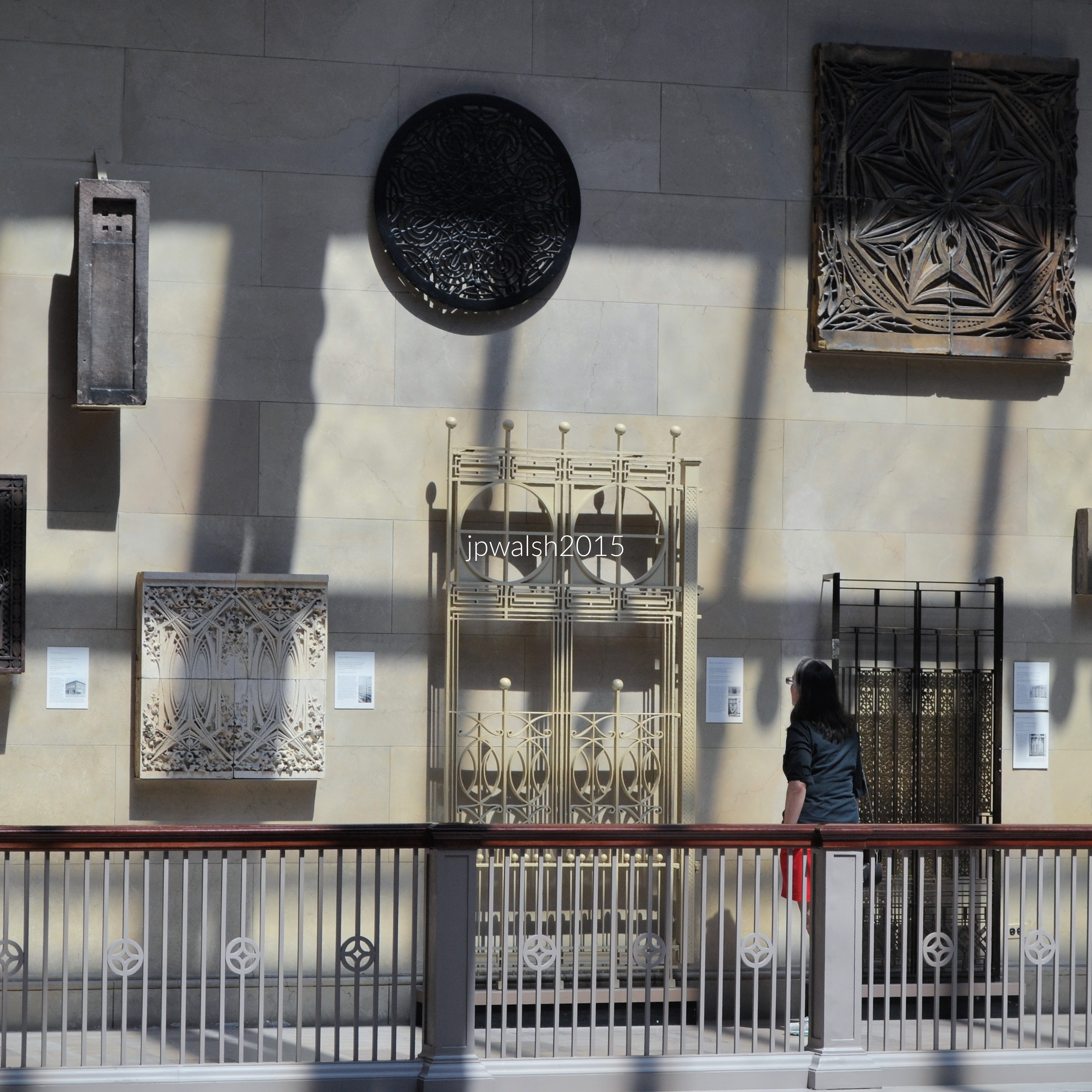
Above and next three below: Fragments, Dankmar Adler (1844-1900) and Louis Sullivan (1856-1924), The Art Institute of Chicago. 19th Century. American. Modernism.
September 2015. The Art Institute of Chicago. 560kb 40%August 2015. The Art Institute of Chicago. 2.87mb DSC_0644 (1)November 2015. 6.38mb DSC_0352 (1)
With the arm detail of Rodin’s bronze Adam (1881), the landing of the Grand Staircase at The Art Institute of Chicago.
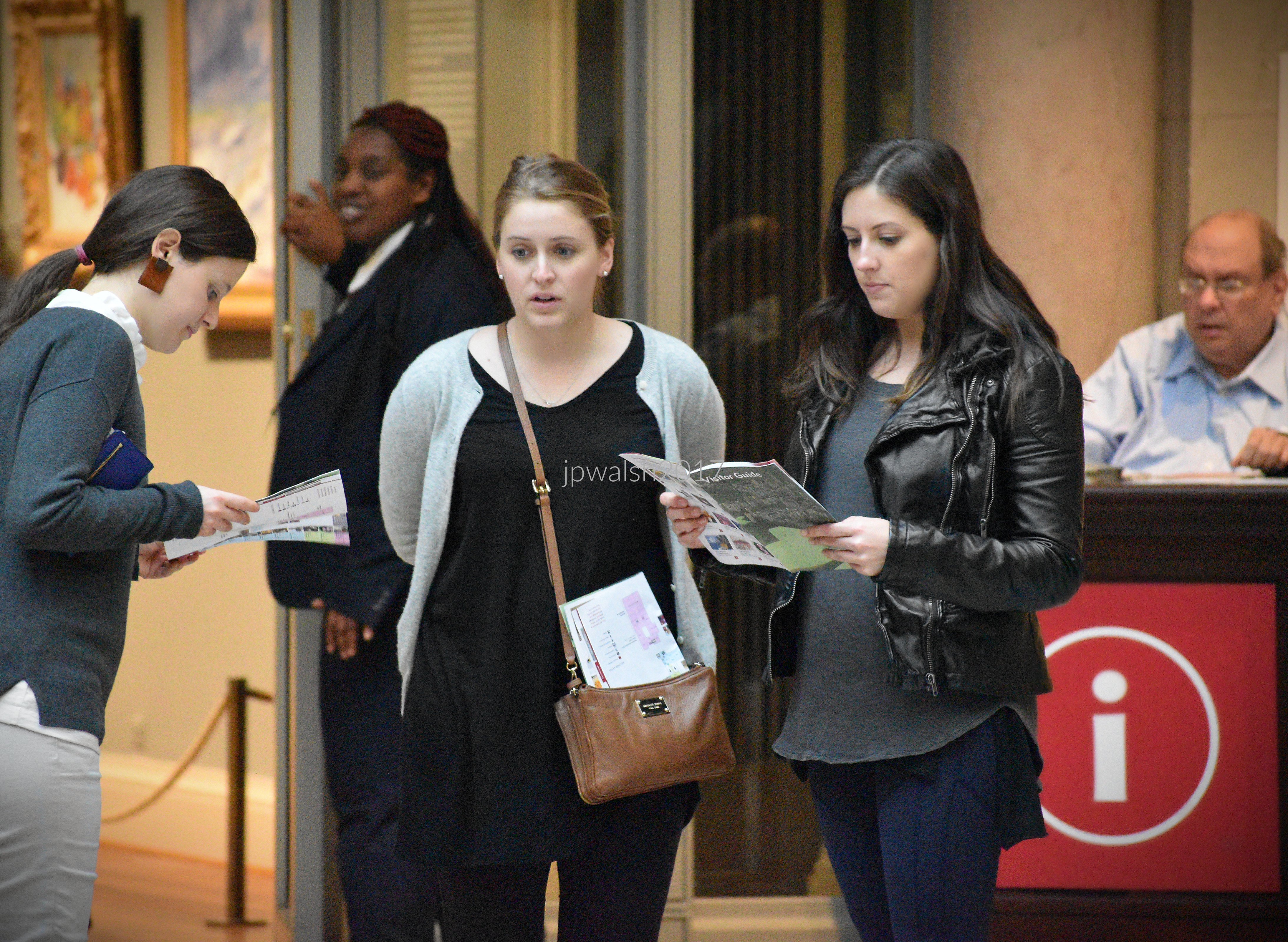
September 2015. Help desk, The Art Institute of Chicago. May 2021. 7.35 mb The Art Institute of Chicago.
Bisa Butler (1973-), The Safety Patrol, 2018, by Bisa Butler. Cotton, wool, and chiffon; appliquéd and quilted. The Safety Patrol considers the potential of a group of children as future caretakers of the world led by a boy in a sash with outstretched arms whose duty it is to protect the others. Bisa Butler uses the technique of appliqué quilt making to create her work. For the figures, the artist cuts, layers, and pins together fabrics and arranges them on the ground fabric. This comprises the quilt top. Between this quilt top and a backing fabric is a layer of fiber “batting” or stuffing. These layers are stitched to form the quilt with the thread lines part of the structure, texture and details of the image. Butler seeks to use fabric colors and patterns to contribute to the quilt’s subject and narrative. 21st Century. American.
May 2014. The Art Institute of Chicago. 18th century. France. (60)
Hubert Robert (French, 1733-1808), The Fountains, 1787, oil on canvas, 255.3 × 221.2 cm (100 1/2 × 88 1/8 in.). The Art Institute of Chicago.
May 2015. 7.73 mb The Art Institute of Chicago.
Joseph Wilson (d. 1800), Adephi Club – Belfast, oil on canvas, 1783.
May 2015. 6.62 mb The Art Institute of Chicago.
The State Ballroom, Saint Patrick’s Hall, Dublin Castle, oil on wood, c. 1845, signed and inscribed: F. J. Davis/Dublin. St Patrick’s Hall had long been a key location for Ireland’s political, military and social elite to gather (B. Rooney, Creating History, Stories of Ireland in Art, 2016, p.179). These dance proceedings are overseen by the Lord Lieutenant of Ireland and his wife visible at the end of the hall. The 1840s was a period of fashion indulgence. The social ball with attendees in sumptuous costume took place during the period of the Irish famine (1845-1849) where approximately one million people died. Another one million or more emigrated out of the country at the same time, many to the United States. Court dress for gentleman allowed personal expression in fabric and style for the waistcoat. Military officers and political office holders wore court uniforms indicating their position and rank. For ladies, to signal their marital situation, unmarried women wore jewelry and fresh flowers in their hair. Conventionally-minded single ladies added two ostrich feathers behind one ear. Matrons sported a third ostrich feather in their hair and wore lace ribbons.
May 2021. The Art Institute of Chicago. 16th Century. Spain.
El Greco (Doménikos Theotokópoulos) (1541-1614), Saint Francis Kneeling in Meditation, c. 1595, oil on canvas. 92 × 74 cm (36 3/16 × 24 1/8 in.). The Art Institute of Chicago.
October 2014. The Art Institute of Chicago. 19th Century. American.
Arthur Wesley Dow (1857-1922), Boats at Rest, c. 1895, oil on canvas, 66 × 91.4 cm (26 × 36 in.). The Art Institute of Chicago.
October 2016. Ukrainian National Museum (2249 W. Superior Street), Chicago. 4.55 mbMay 2015. Aurora, IL. The David L. Pierce Art & History Center (20 East Downer Place). 4.15 mbMay 2014. The Art Institute of Chicago.
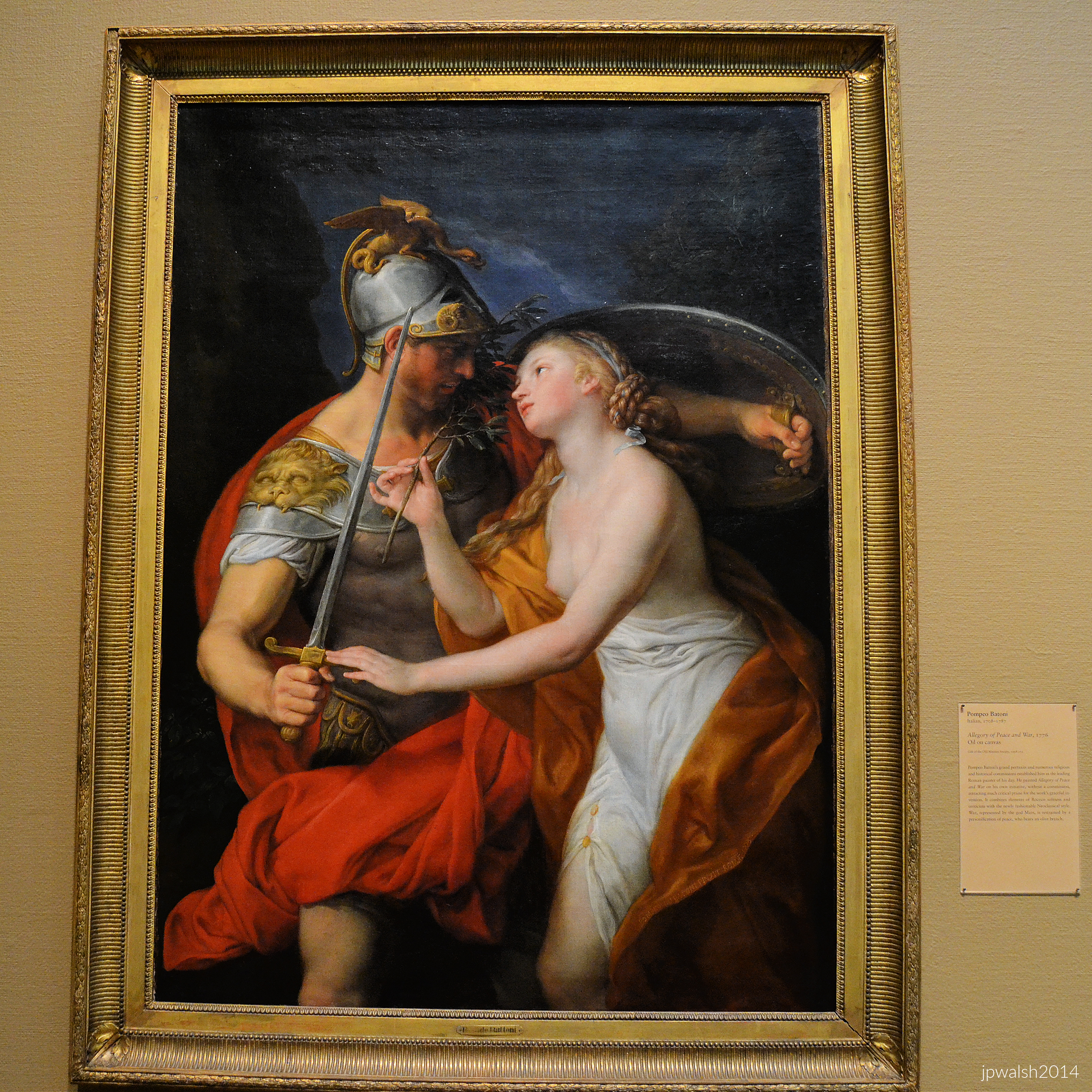
Pompeo Batoni (Italian, 1708-1787), Allegory of Peace and War, 1776, oil on canvas, 53 1/2 × 39 in. The Art Institute of Chicago. 5.73 mb Pompeo Batoni was a leading 18th-century Roman painter. The artist was known for his portraits and commissioned large format historical and religious paintings. The painting entitled “Allegory of Peace and War” represented the mythological figure of the god Mars being restrained by a semi-nude embodiment of peace. Peace lays her hand on War’s sword and bears to him an olive branch. The painting was the result of Batoni’s own invention – no one commissioned this artwork – and it stayed in the artist’s studio until at least the early 1780s.
December 2015. Chicago Cultural Center. 3.62 mb March 2002. Louvre, Paris. 312 kb
Statue of Aphrodite, called Venus de Milo because it was found on the Greek Island of Milos in the Aegean Sea. It dates from around 150 B.C. In the Louvre in Paris, the Venus de Milo is one of the most famous statues in the world. Its soft, sensual handling of the marble was characteristic of the late Hellenistic period. She is monumental – the topless, armless Venus de Milo stands, independent of her base and pedestal, six feet five inches in height. In the course of the second half of the 19th century, the Venus de Milo became a favorite statue of Parisians and its visitors. It was around 1875 that it was moved away from the wall which it stood against and placed in the middle of a 17th century room so that it could be viewed completely around. It was accorded this baroque effect first used at Versailles at the start of the 18th century so to isolate monumental sculpture for display to produce maximum impact and enjoyment of the artwork. SOURCES: Masterpieces of the Louvre, Marcel Brion, NY: Abrams; Creators Collectors and Connoisseurs, Niels Von Holst, NY: G.P. Putnam’s Sons.
November 2017. 74% 7.84mb DSC_3350 The Art Institute of Chicago.
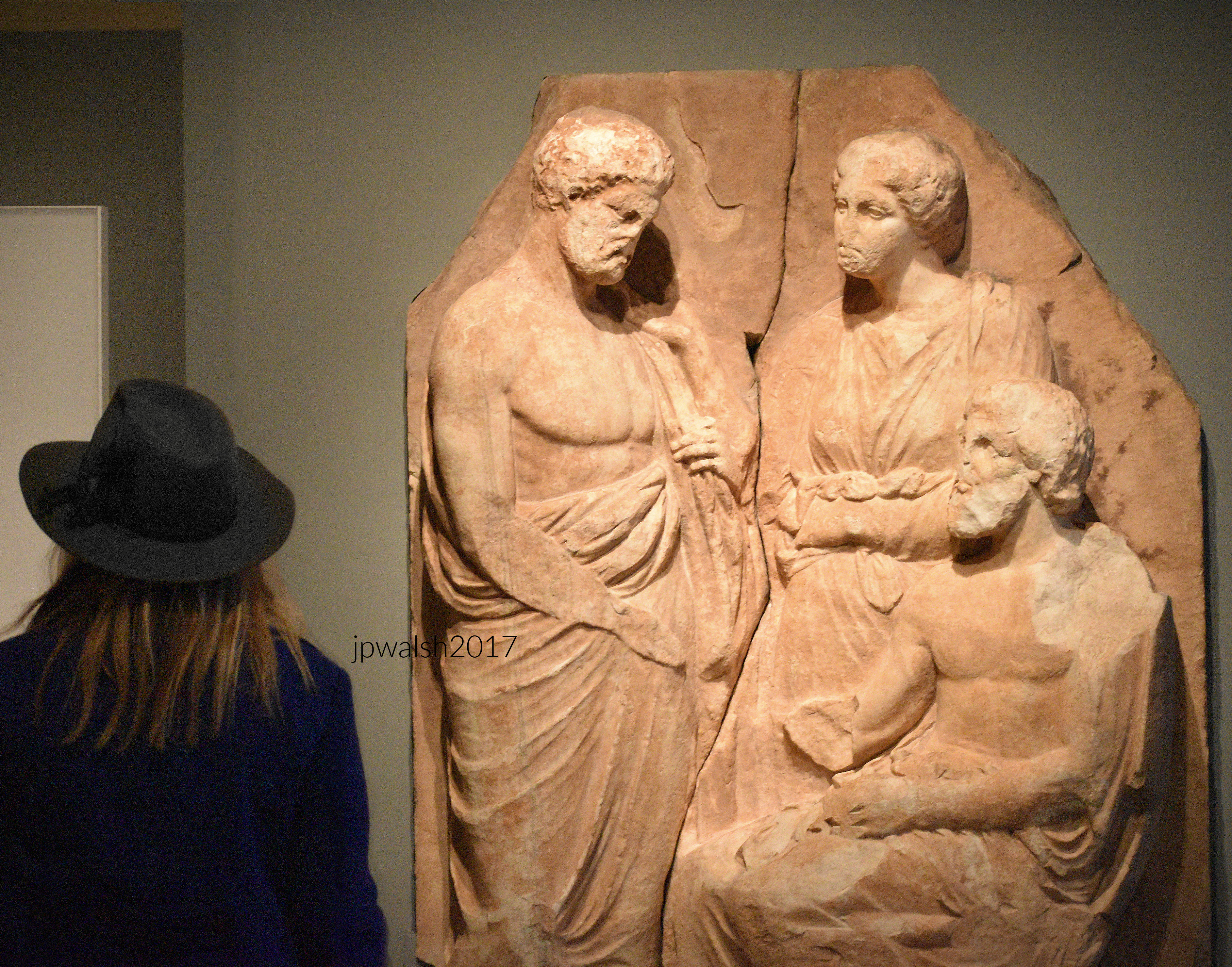
Fragment of a Funerary Monument, c. 330 BCE Greek; Athens, 152.4 × 111.8 × 33 cm (60 × 44 × 13 in.), The Art Institute of Chicago. see- https://www.artic.edu/artworks/55887/fragment-of-a-funerary-naiskos-monument-in-the-shape-of-a-temple – retrieved March 31, 2025. This is one of the fashionable burial markers, whether of Greek or Roman families, encountered by the public in ancient times. Made in all sorts of shapes and sizes, this large stone monument from the 4th century BCE shows three figures carved in very high relief so much so that they are nearly in the round. The two male figures’ gestures of parting indicate that it is a funerary scene. The standing man is likely the person who has died and this funerary marker depicts his sharing a final farewell with loved ones – their relationship, obviously close, after 2500 years, completely unknown.
November 2017. 69% 7.88mb DSC_3355 The Art Institute of Chicago.
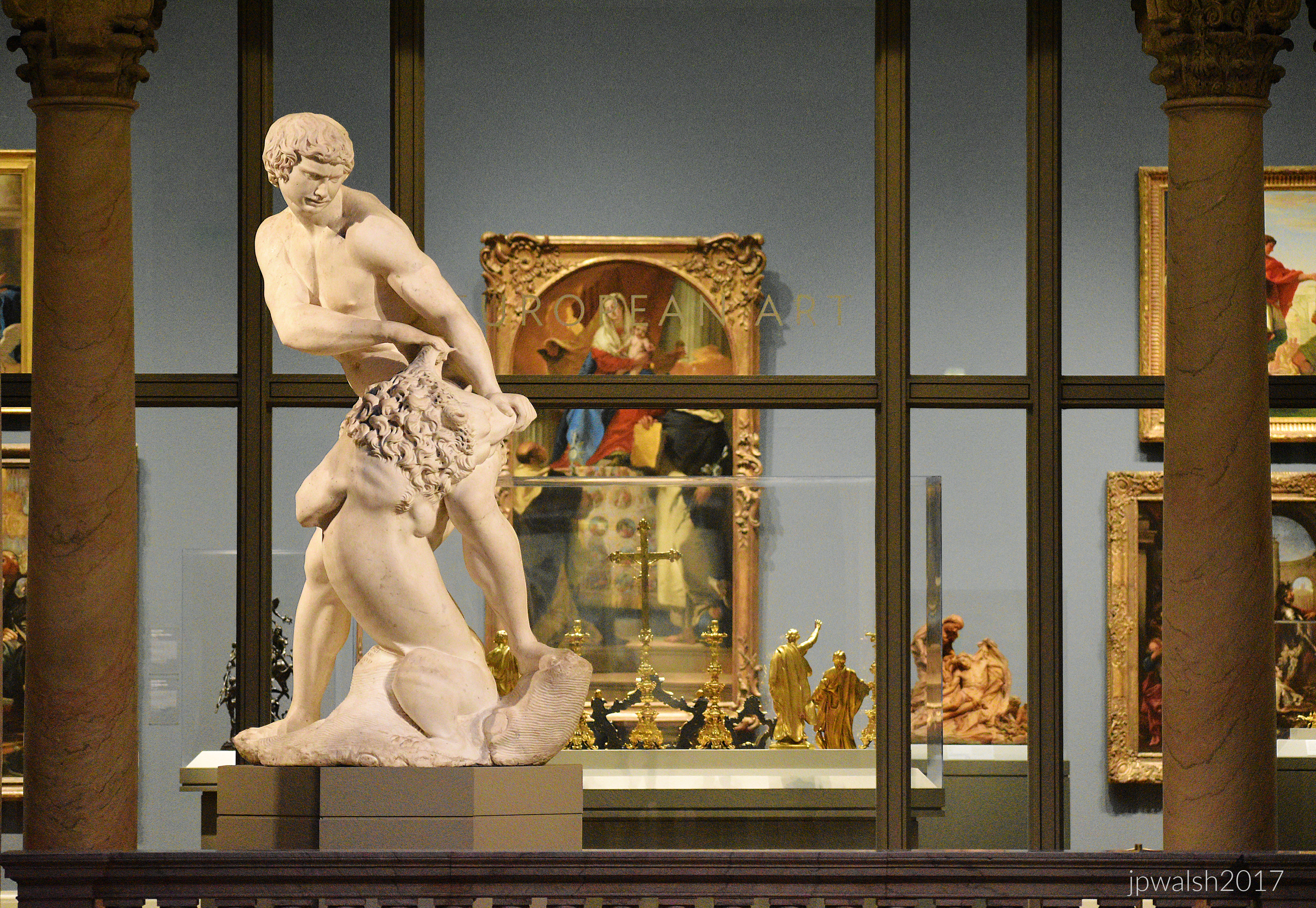
Cristoforo Stati (Italian, 1556–1619). Samson and the Lion, 1604-1607, marble, 210 × 112 × 84 cm (82 11/16 × 44 1/8 × 33 1/8 in.). The Art Institute of Chicago. see – https://www.artic.edu/artworks/146875/samson-and-the-lion – retrieved April 1, 2025. Stati studied in Florence under Giambologna (1529-1608). In 1601, Tuscany’s archduke, Ferdinando I de’ Medici (1549-1609), sent a sculpture of Samson by Giambologna to the palace of Spain’s prime minister in Valladolid as a gift. Later, Stati’s sculpture of Samson and the Lion was also sent to Spain as a complementary gift and installed in Madrid. The work was in a Swiss private collection before it was acquired by The Art Institute of Chicago in 1996.
November 2017. The Art Institute of Chicago. 80% 7.88mb DSC_3315December 2012. 1st century. Roman. The Art Institute of Chicago. .2.25mb 101_1469
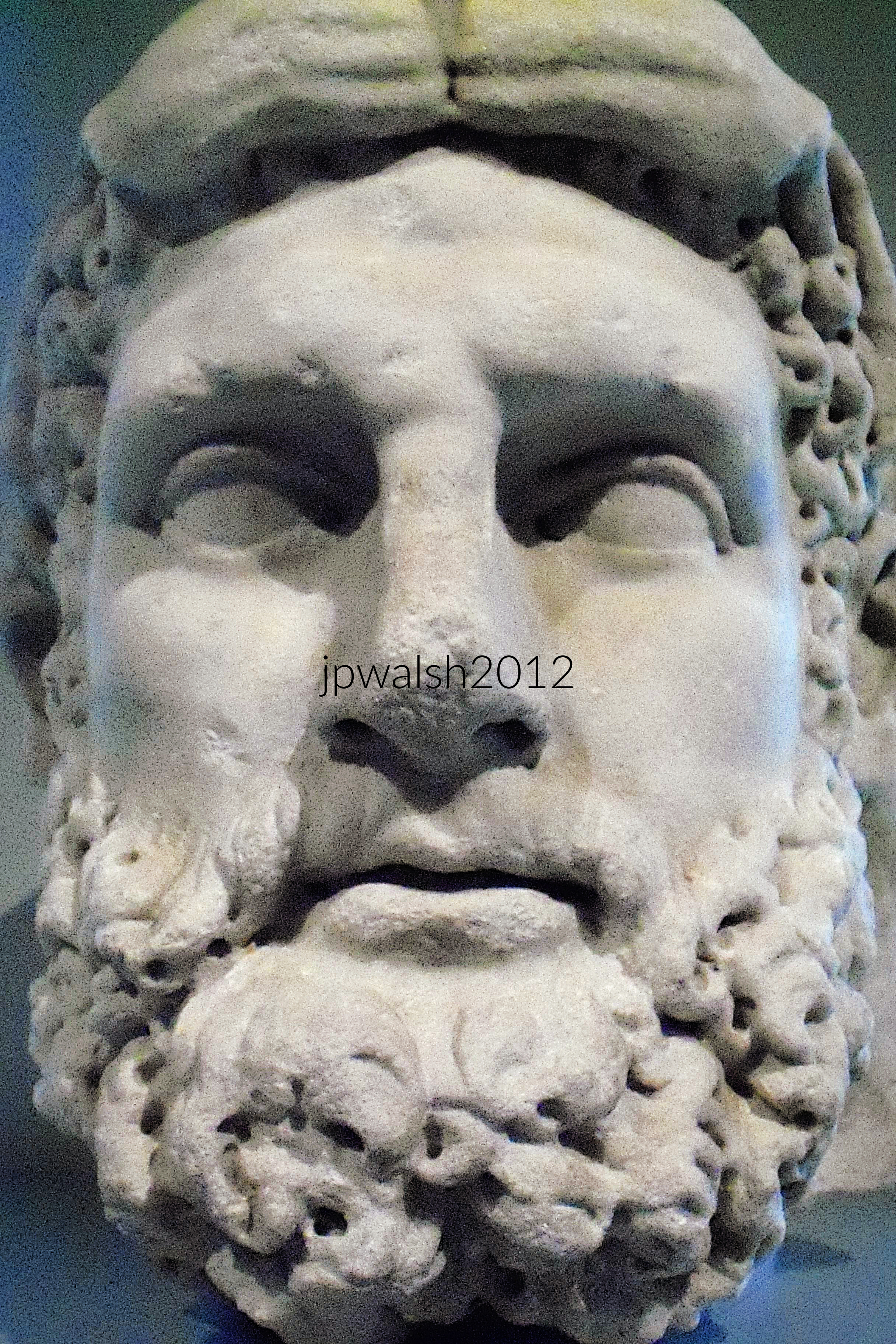
Head of Hercules. Roman, First Century CE. The Art Institute of Chicago. The Romans adapted the stories of Hercules’ superhuman feats of strength from the Greeks. The earlier Greeks viewed him as a demigod, the later Romans saw him as one of their hero figures.
May 2016. The Art Institute of Chicago. 7.44mb DSCN2611 (1)
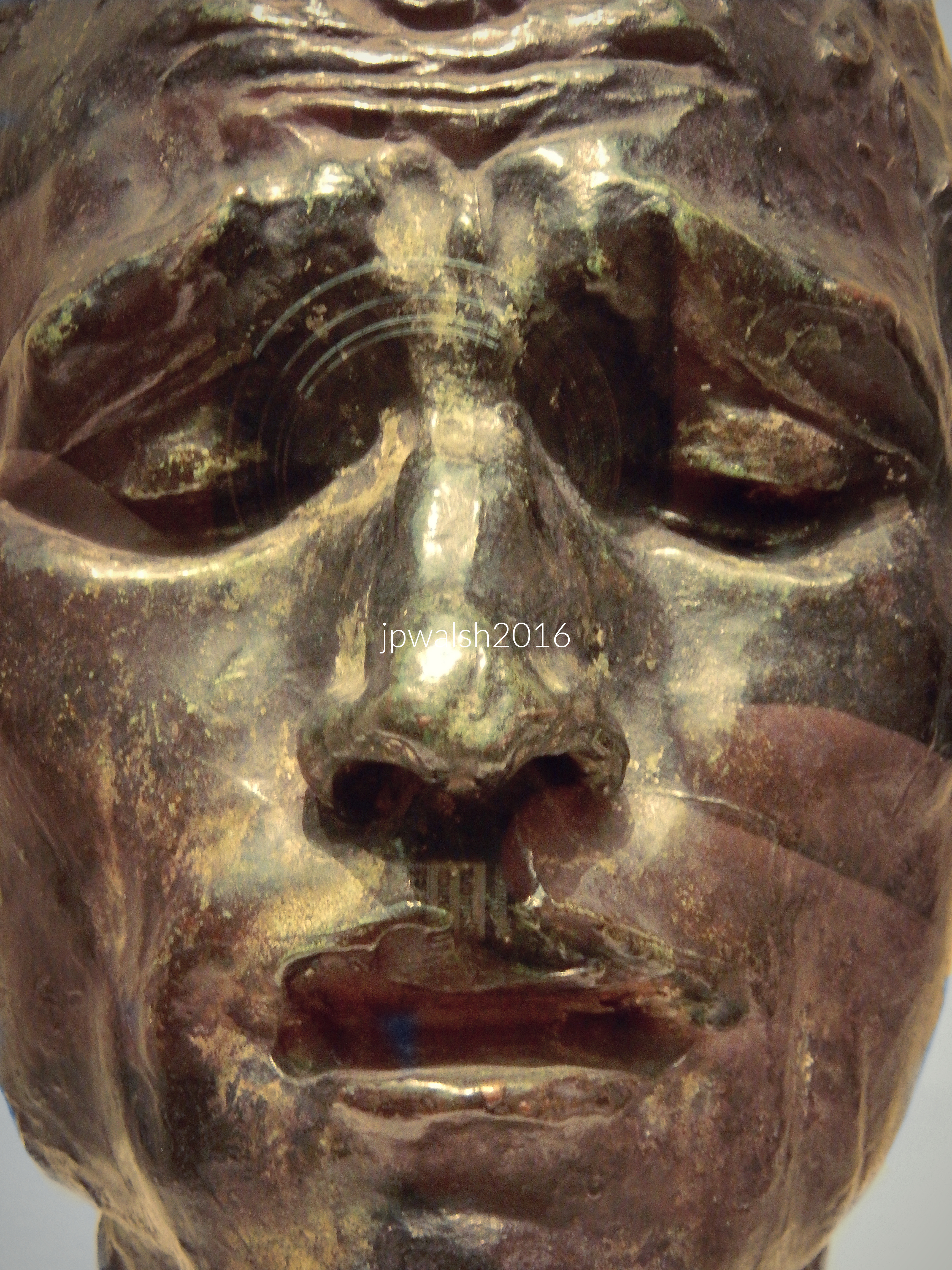
Head of Pierre de Wissant (1889) by Auguste Rodin, part of The Burghers of Calais (1884–89) in the collection of the Art Institute of Chicago, originates from the larger sculptural ensemble commemorating the six citizens of Calais who offered themselves as hostages to the English during the Hundred Years’ War. When displayed independently, the head emphasizes Rodin’s exploration of psychological intensity and human vulnerability. The sculpture conveys a moment of profound emotional anguish: the downward gaze, deeply furrowed brow, and partially opened mouth collectively articulate a state of acute despair and inner turmoil. Through these expressive distortions, Rodin captures not only the historical gravity of the subject’s sacrifice but also the universal experience of psychological suffering.
December 2025. 98% 7.84mb DSC_9937The Art Institute of Chicago.
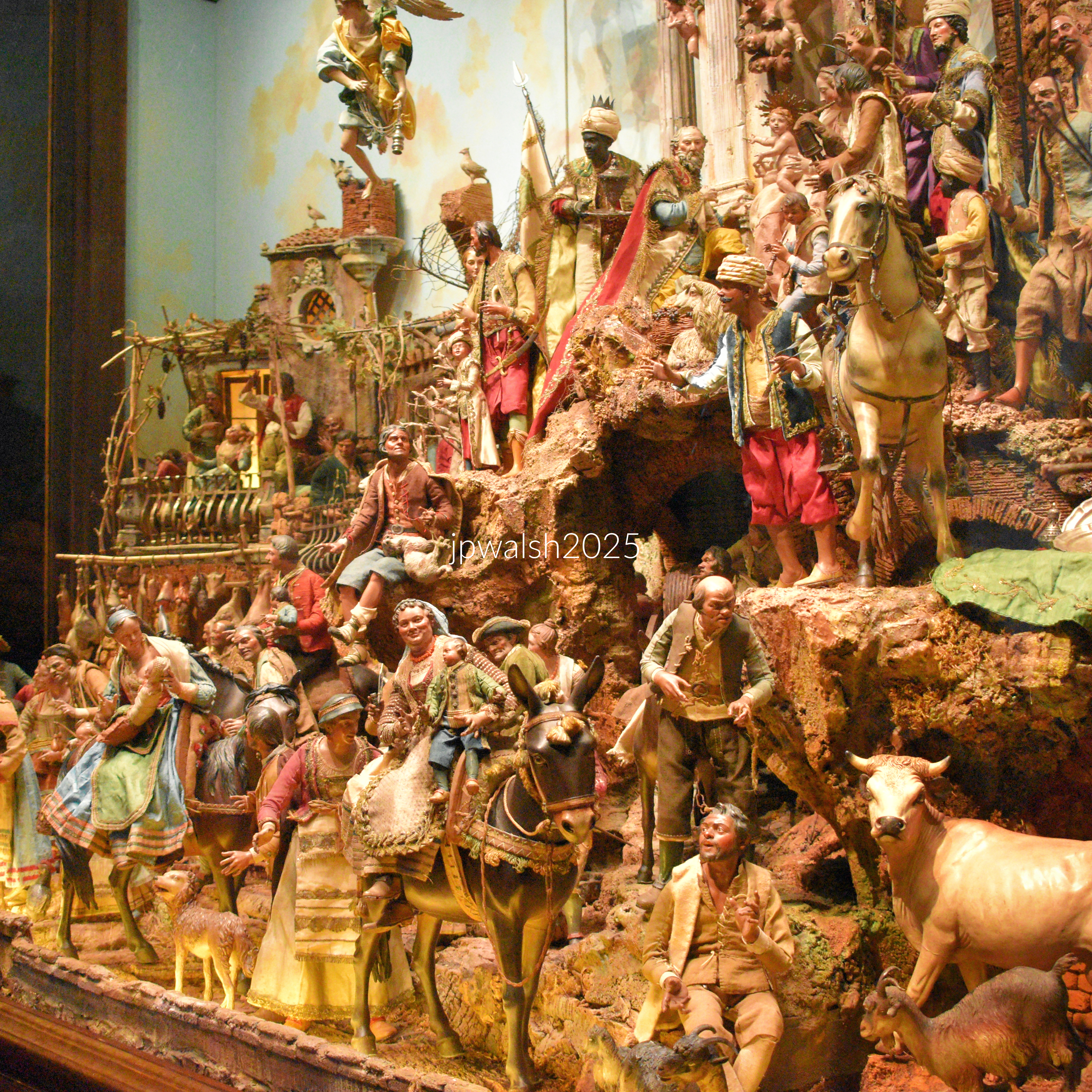
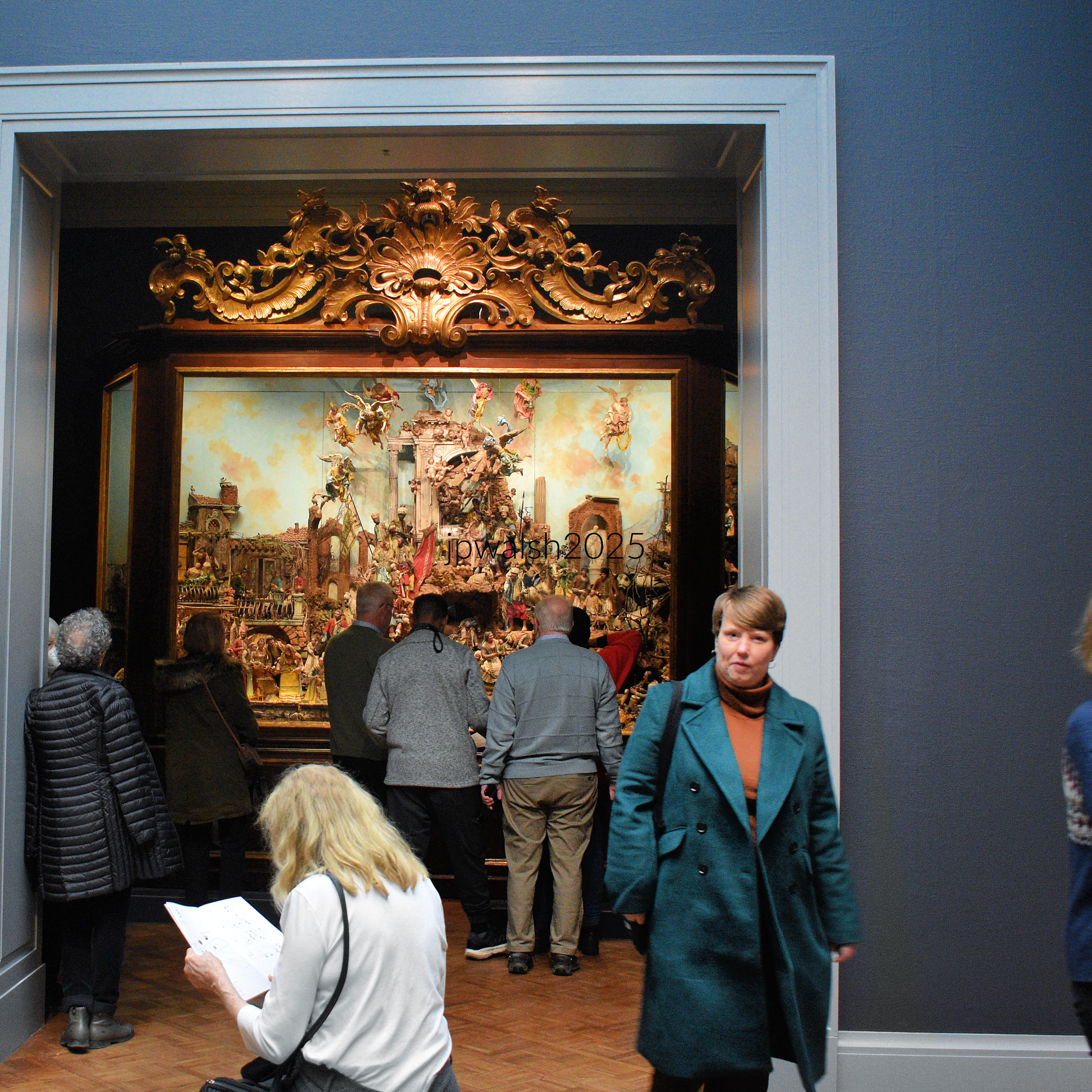
Crèche, mid-18th century, Naples, Italy. Details of daily life are connected to the biblical narrative of the Nativity of Jesus Christ.
December 2025. The Art Institute of Chicago. 7.33mb DSC_9933 (1)
The mid-18th century Neapolitan Crèche invites viewers to witness the miraculous among the mundane. The Art Institute of Chicago. see – Neapolitan Crèche | The Art Institute of Chicago – retrieved December 14, 2025.
December 2025. The Art Institute of Chicago.7.66mb DSC_9896 (1)
Auguste Rodin (1840-1917), A Burgher of Calais (Jean d’Aire), modelled 1889, plaster, 82×26 in. The figure was exhibited in the 1893 World’s Columbian Exposition in Chicago and entered the Art Institute’s collection that same year. The monument includes six individualized figures on a heroic scale and was commissioned in France in 1884. Completed in 1889 by Rodin the monument was installed in Calais’s town hall square in 1895. Rodin depicts Jean d’Aire, one of the town fathers, in sackcloth with the keys of the city, surrendering to the English during the Hundred Years War, in exchange for their lifting a nearly year-long siege that led to the starvation of the city’s inhabitants.. see – Monument to The Burghers of Calais | Musée Rodin – retrieved December 15, 2025.
December 2025. The Art Institute of Chicago. 73% 7.86mb DSC_9847
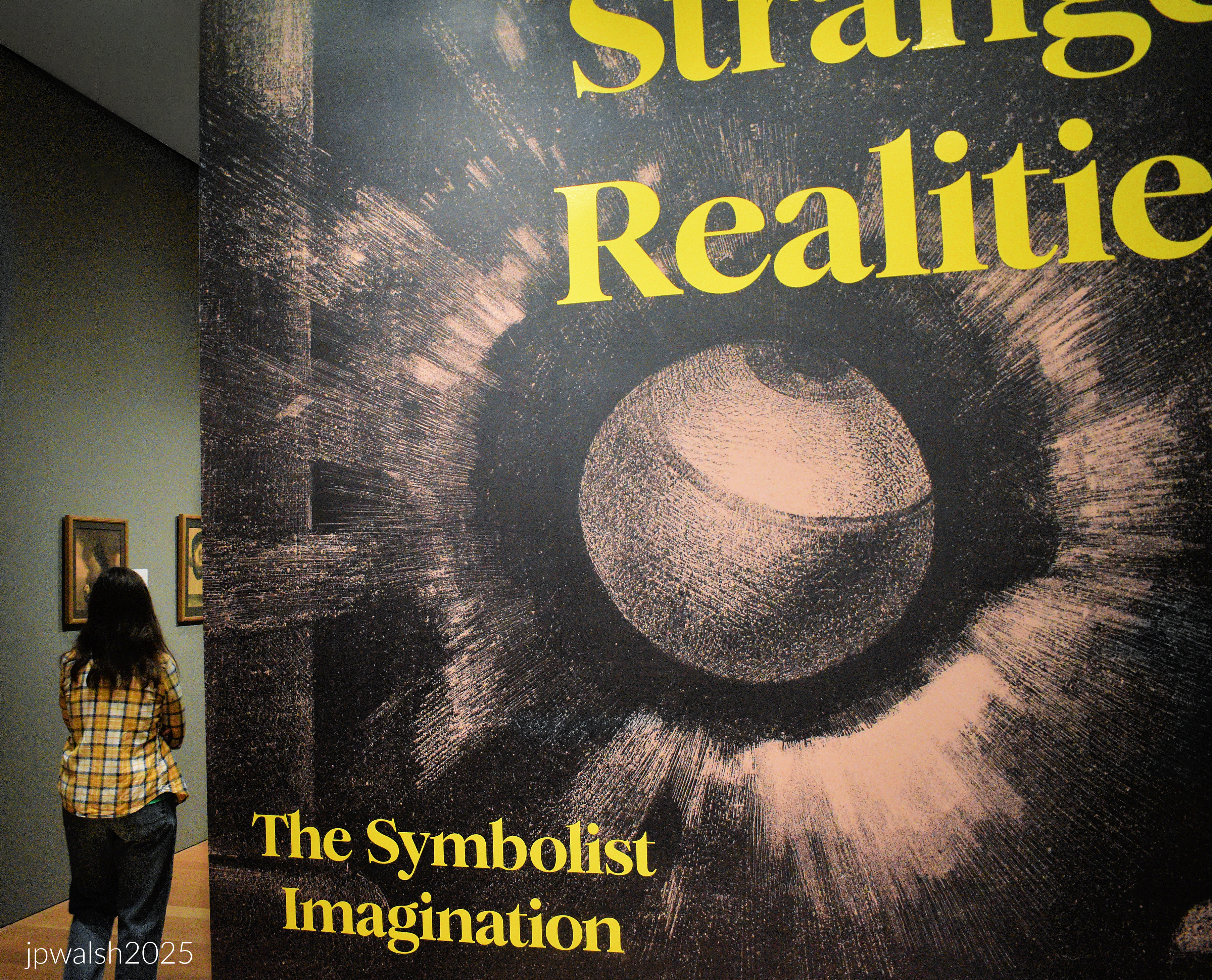
Exhibition Strange Realities: The Symbolist Imagination (October 4, 2025- January 5, 2026). Over 85 works of major artists including Odilon Redon, Paul Gauguin, and Edvard Munch, drawn from the Museum’s collection of drawings and prints exploring the late 19th century pan-European Symbolist movement of art, literature and theatre.see – Strange Realities: The Symbolist Imagination | The Art Institute of Chicago – retrieved December 16, 2025.
December 2025. The Chauncey McCormick Gallery, The Art Institute of Chicago. 93% 7.89mb DSC_9889September 2014. The Art Institute of Chicago. 3.55mb DSC_1038 (1)
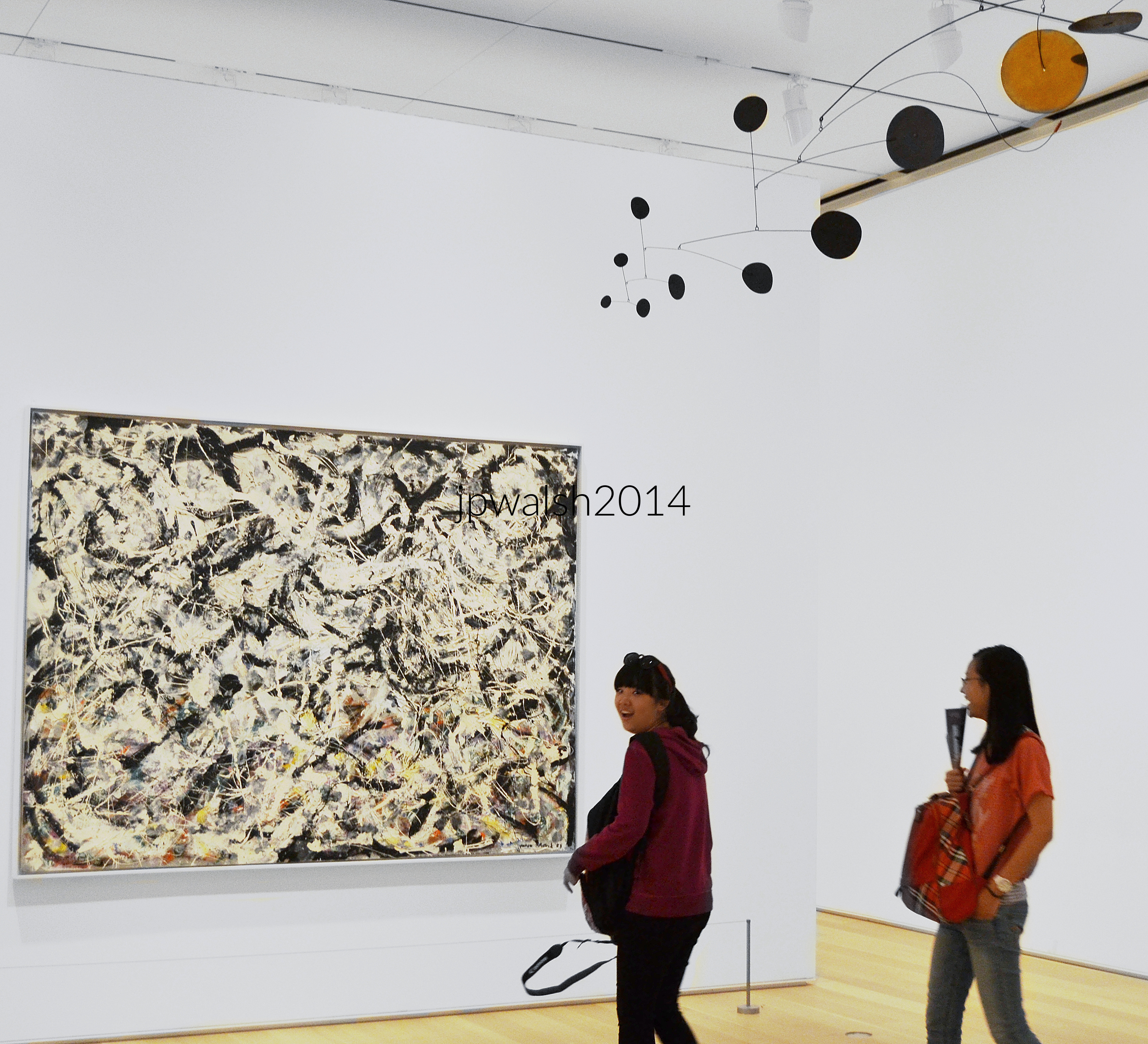
Greyed Rainbow, 1953, Jackson Pollock, oil on linen, 182.9 × 244.2 cm (72 1/16 × 96 3/16 in.) and Streetcar, 1951, Alexander Calder, Brass, sheet metal, rod, wire, and paint, 9’8″ long, Art Institute of Chicago. See – Streetcar (1951) | Calder Foundation – retrieved Jan. 29, 2026 and Greyed Rainbow | The Art Institute of Chicago – retrieved Jan. 29, 2016.
Ed Harris’s December 2000 biographical film Pollock reconstructs the mid-20th-century modern art world through a meticulous ensemble cast, highlighted by Marcia Gay Harden’s Academy Award-winning portrayal of pioneering Abstract Expressionist painter Lee Krasner.
POLLOCK: IF PEOPLE WOULD JUST LOOK AT THE PAINTINGS I DON’T THINK THEY’D HAVE ANY TROUBLE ENJOYING THEM. IT’S LIKE LOOKING AT A BED OF FLOWERS. YOU DON’T TEAR YOUR HAIR OUT OVER WHAT IT MEANS.
In a stellar cinematic year defined by Gladiator, Traffic, Almost Famous, and Erin Brockovich, Marcia Gay Harden triumphed at the Academy Awards, winning Best Supporting Actress for her riveting performance in Pollock. Harden portrayed Lee Krasner (1908–1984), the pioneering American Abstract Expressionist painter and wife of the biographical film’s brilliant but tortured title character, Jackson Pollock (1912–1956). In addition to her Oscar victory, Harden secured the Best Supporting Actress prize from the New York Film Critics Circle.
Ed Harris pulled impressive double duty on the project, earning an Academy Award nomination for Best Actor in what also marked his directorial debut. Behind the camera, Harris assembled a flawless ensemble cast to bring the mid-20th-century modern art world to life. The film features Jennifer Connelly as Ruth Kligman (1930–2010), the American abstract artist and romantic partner to both Pollock and Willem de Kooning. Val Kilmer portrays the iconic Dutch-American abstract expressionist de Kooning (1904–1997) himself, alongside Bud Cort as writer and dealer Howard Putzel (1898–1945).
Rounding out the historic inner circle are Jeffrey Tambor as art critic Clement Greenberg (1909–1994), John Heard as sculptor Tony Smith (1912–1980), Robert Knott as Jackson’s older brother Sande Pollock (1909–1963), Sada Thompson as Pollock’s mother Stella (1875–1958), and Amy Madigan as American art collector Peggy Guggenheim (1898–1979). Much like its Pollock and Krasner’s revolutionary artwork, the film made an indelible splash upon its December 2000 release, remaining a memorably fine and enduring effort. https://youtu.be/z0xiovbDML0?si=XupBbr5gZnhuTVqP – retrieved Jan. 30, 2026.
September 2014. Modern Wing, Art Institute of Chicago. 3.49mb DSC_1061 (1)August 2015. Modern Wing, Art Institute of Chicago. 3.76mb DSC_0672 (1)August 2015. The Art Institute of Chicago. 3.14mb DSC_0068 (1)August 2015. The Art Institute of Chicago.4.14 mbDSC_0181 (1)August 2015. The Art Institute of Chicago. 1.22mb DSC_0014 (1)October 2015. Art exhibit. Oak Park, IL. 4.72mb DSCN1739 (2)November 2015. Art Institute of Chicago. 3.77 mb DSC_0094 (1)September 2016.Milwaukee Art Museum. 2.63mb DSC_0054 (1)
Thomas Hart Benton, Poker Night (from A Streetcar Named Desire), 1948(Whitney Museum of American Art),Milwaukee Art Museum. 2.63mb DSC_0054 (1)
September 2016. Haggerty Art Museum, Milwaukee, WI. 3.54mb DSC_0922 (1)Frida Kahlo (1907-1954), Untitled called Self-Portrait with Thorn Necklace and Hummingbird (“Autorretrato con Collar de Espinas y Colibrí”), 1940, oil on canvas mounted to board, 61.2 cm × 47 cm (24.11 in × 18.5 in),Harry Ransom Center, Austin, Texas. The Ransom Center acquired the self-portrait in 1965 as one of a large collection of artworks assembled by photographer Nickolas Muray (American, b. Hungary, 1892–1965). Kahlo gifted the painting to Muray soon after it was completed in 1940.
Frida Kahlo’s Self‑Portrait with Thorn Necklace and Hummingbird (1940) is a concentrated display of her mature portrait style. Despite its small scale, the composition is intricate, drawing the viewer’s eye across a dense constellation of figures and symbolic objects. At the center sits Kahlo herself, rendered with imaginative realism and surrounded by a menagerie: a monkey on her left, a cat on her right, and a lifeless hummingbird suspended at her throat. Beneath her signature joined eyebrows, she meets the viewer with a calm, unwavering gaze that feels both resolute and quietly intense.
The animals around her animate the scene with contrasting energies. The monkey, distracted, toys with the thorn necklace, while the cat appears tense and ready to strike. The necklace itself encircles her neck and extends downward, its sharp thorns pressing into her half‑length figure. Against this harshness, delicate butterflies—whether real or hair clips—rest motionless in her hair, and above them hover two dragonflies, creatures that in Mexican art often signal a link between nature and the spirit world, messengers of transformation and guardians of the soul.
Within this symbolic framework, the monkey can be read as an emblem of lust or moral temptation, the cat as mysticism and freedom, and the thorn necklace as a sign of bodily suffering and constraint. It also evokes Christ’s crown of thorns, allowing Kahlo to cast herself in a mode of imitatio Christi—a figure bearing pain, betrayal, and emotional anguish after failed relationships. In this light, the butterflies and dragonflies become signs of renewal, hinting at the possibility of resurrection emerging from her world’s suffering.
Finally, hummingbirds (colibríes) are powerful symbols of the warrior spirit, deeply linked to Aztec mythology, embodying courage, vitality, and the fierce renewal of life. By the modern era hummingbirds have also come to represent love, hope, joy, and inner strength while being understood as messengers carrying the presence of departed loved ones returning in brief, luminous visitations.
FEATURE image: EXPO CHICAGO 2018, Festival Hall, Navy Pier.
EXPO CHICAGO 2018 demonstrates how Chicago functions as a global crossroads for contemporary and modern art, bringing together international galleries, artists, and audiences while transforming Navy Pier’s Festival Hall into a temporary museum of worldwide creative exchange and experimentation.
EXPO CHICAGO 2018 is the 7th annual exhibition of international contemporary and modern art held in Chicago at Navy Pier’s Festival Hall. It took place September 27-30, 2018. Expo Chicago/2018 presented 135 galleries and exhibitors representing 27 countries and 63 cities from around the world.
EXPO CHICAGO 2018 includes exhibitors four sections categorized to a specific aim: Exposure are galleries founded since 2010 featuring one or two artists; Profile are international galleries featuring solo or collective artists with focused installations, exhibitions and projects; Editions + Books highlight artist books, editions, prints, collectibles, photography, collage, drawing, etc.; Special Exhibitions” feature site specific work.
More EXPO CHICAGO 2018 sections include: IN/SITU highlighting curated large-scale installations (a second, outside version features large-scale sculptures in various Chicago locations); EXPO VIDEO highlighting curated film, video and new media work; EXPO SOUND highlighting curated sound installations and projects.
All photographs & texts by John P. Walsh
EXPO CHICAGO 2018 was held in Festival Hall on Navy Pier in Chicago. The annual event, held since 2012, is in its seventh year.EXPO CHICAGO 2018 attracts thousands of attendees to visit with hundreds of gallery owners and artists from all over the world.Expo Chicago is a major modern and contemporary art event held each year to open the Fall art season. It is held nearby to downtown Chicago and the Magnificent Mile on historic Navy Pier which is one of Chicago’s most popular tourist magnets.One of the information desks at EXPO CHICAGO 2018. EXPO CHICAGO 2018 welcomed 135 international art galleries from 27 countries and 63 cities.Georgia Scherman Projects, Toronto. Within the framework of the show’s sections, each booth showcases the artwork of their choosing .Artwork of Marcus Jansen was featured at Casterline/ Goodman Gallery, Aspen, CO, Chicago, and Nantucket, MA.Artist Gina Pellón (center) at Cerunda Arte, Coral Gables, FL.Surrealist painter Fred Stonehouse, Night King, 2018, acrylic on canvas, Tory Folliard Gallery, Milwaukee, WI.Richard Hughes, Hot Step, 2017, cast polyester resin and enamel paint, Anton Kern Gallery, New York.Ridley Howard, Blue Dress, Blue Sky, 2016, acrylic on linen, Frederic Snitzer Gallery, Miami, FL.admissions. Library Street Collective, Detroit, MI. Artist Francesco Clemente, 2018, oil on canvas at Maruani Mercier Gallery, Brussels, Belgium.Artwork of Larry Poons, Yares Art, New York, Palm Springs, Santa Fe.Artwork of Austin White, 2018, Jenkins Johnson Gallery, San Francisco and New York.In/Situ: Postcommodity, Repellent Fence, 2015, Bockley Gallery, Minneapolis, Minnesota.Peter Blake Gallery, Laguna Beach, CA.Artwork by Asmund Havsteen Mikkelsen at the booth shared by Fold Gallery, London, and Galleri Kant, Copenhagen.Prune Nourry, River Man (detail), 2018, patinated copper tubes, Galerie Templon, Paris.Gérard Garouste, The Eagle Owl and the One-Eared Woman, 2016, Galerie Templon, Paris.Jaume Plensa’s Laura Asia in White, 2017, polyester resin and marble dust, at Richard Gray Gallery, Chicago.Jaume Plensa’s Laura Asia in White, 2017, polyester resin and marble dust, at Richard Gray Gallery, Chicago.William Kentridge, Blue Rubrics, 2018, lapis lazuli pigment on thesaurus pages, NFP Field Tate Editions, Royal Academy of Arts, London.Frances Stark, According to This…, 2018, Silk screen on linen on panel, Gavin Brown’s Enterprise, New York and Rome.David Driskell (b. 1931), Jazz Singer (Lady of Leisure, Fox), 1974, oil and collage on canvas, 52 x 44 in., DC MooreGallery, New York City.Jansson Stegner, Swordswoman, 2018, oil on linen, Nino Mier Gallery, Los Angeles.Brian Calvin, Eternal Return, 2009, acrylic on canvas, Anton Kern Gallery, New York.Margot Bergman, Gloria, 2014, acrylic on linen, Corbett vs. Dempsey, Chicago.Ceysson & Bénétière, New York Luxembourg Paris Saint-Étienne.Julie Heffernan, Self-Portrait with Nuala, 2018, oil on canvas, Zolla/Lieberman Chicago.Chloe Wise, You would have been a castle for a moment, 2016, Galerie Division, Montreal and Toronto.EXPO CHICAGO 2018. EXPO CHICAGO 2018. Artwork of Devan Shimoyama, De Buck Gallery New York City.EXPO CHICAGO 2018. Chie Fueki, Kyle, 2017, DC Moore Gallery, New York City.Naudline Pierre, Deal Kindly and Truly With Me, 2018, oil on canvas, 56 x 52 inches, Shulamit Nazarian, Los Angeles.Clare Sherman, Sea Cave, 2017, oil on canvas, 84 x 66 in., DC Moore Gallery, New York City.Roberto Fabelo, Gothic Habanero, n.d., oil on canvas, Cerunda Arte, Coral Gables, FL.EXPO CHICAGO 2018 brings the world of modern and contemporary art to Chicago for the collector.EXPO CHICAGO 2018 offers the art lover opportunities to encounter the latest in modern and contemporary art from around the world.EXPO CHICAGO 2018 covers tens of thousands of square feet with modern and contemporary art of many kinds from 27 countries and 63 global cities.EXPO CHICAGO 2018Sculpture, painting, and other visual art forms were in evidence at Expo Chicago/2018. There is a popular on-site cafe that serves snacks and beverages.EXPO CHICAGO 2018EXPO CHICAGO 2018EXPO CHICAGO 2018Juan Roberto Diago, Grito, 1997. The artist talks about his artistic debt to Jean-Michel Basquiat.Fort Gansevoort, New York City.Artwork of Nick Dawes, 2018, Galerie Kornfeld, Berlin.Tsailing Tseng, Black Moor, Spring/ Sun/ Winter/ Dread/ Everything Everything, 2018, oil on linen, SAIC Booth (Tuttle Fellowship).Roberto Lugo, porcelain china, paint, luster, 2018, Wexler Gallery, Philadelphia. PA.Lavar Munroe, Spy Boy, 2018, acrylic and earring stud on canvas, Jenkins Johnson Gallery San Francisco New York.In/Situ: Ivan Argote, Among Us — Across History…, 2017.Richard Hudson, Tear, 2016, polished mirrored steel, Michael Goedhuis London Beijing New York. Aniela Sobieksi, Girl with a Garden, 2018, oil on panel, Tory Folliard Gallery, Milwaukee. The painting next to it sold just before I took this photograph.The Hole NYC.Barnaby Barford (b. 1977), Celebrity, 2018, Giclée Print, David Gill Gallery, London.